Monthly Archives: March 2025

The Road Not Taken: SOL25 Day 3

The city has been threatening to resurface our street for months now. Those triangular sawhorse-like structures have held signs shouting: “No parking December 23rd from 7am-5pm.” And then nothing happens. We had many changes of dates announced in December…and then with both relief and the frustrating anti-climax of streets that need work but don’t get work, we just assumed that road repair was not happening.

Most of the signs were picked up (I’m not sure how they miss a sign here and there, just to find them leaning against a tree or face down on the sidewalk) and no communications were forthcoming from the city…until about a week ago.

Suddenly, the signs were back! This time accompanied by a doorknob hanger explaining that we needed not only to not park on the street, but to also know that the street would be closed to ALL traffic until the sealant was dry. Our first date this time around was Friday, so we dutifully made sure we were out of the neighborhood before 7am (not a problem for me on a work day) and made plans for alternative parking at the end of the day. But on Friday it seems that the only work completed was the application of some kind of plastic over the manhole covers…and the work was done well before I arrived home before 4pm so I could head back out for a beach walk. (Lucky for me, my husband was home and clued me in on the availability of the street so I could avoid all the detouring.). But they did warn, Monday would be the resurfacing day…so again be out by 7am and plan not to return on the street until after 5.

So this morning, we were both out before 7, as instructed. According to my husband, we he returned home around 9:30 or so there was no road work or road closure. As he went about his business, he continued to check on the progress (or lack thereof) on the street. By mid afternoon he had decided that once again the road work was not happening. But then, after hearing some truck sounds sometime after 2pm, he went out to discover that indeed the street was closed off and resurfacing had happened!
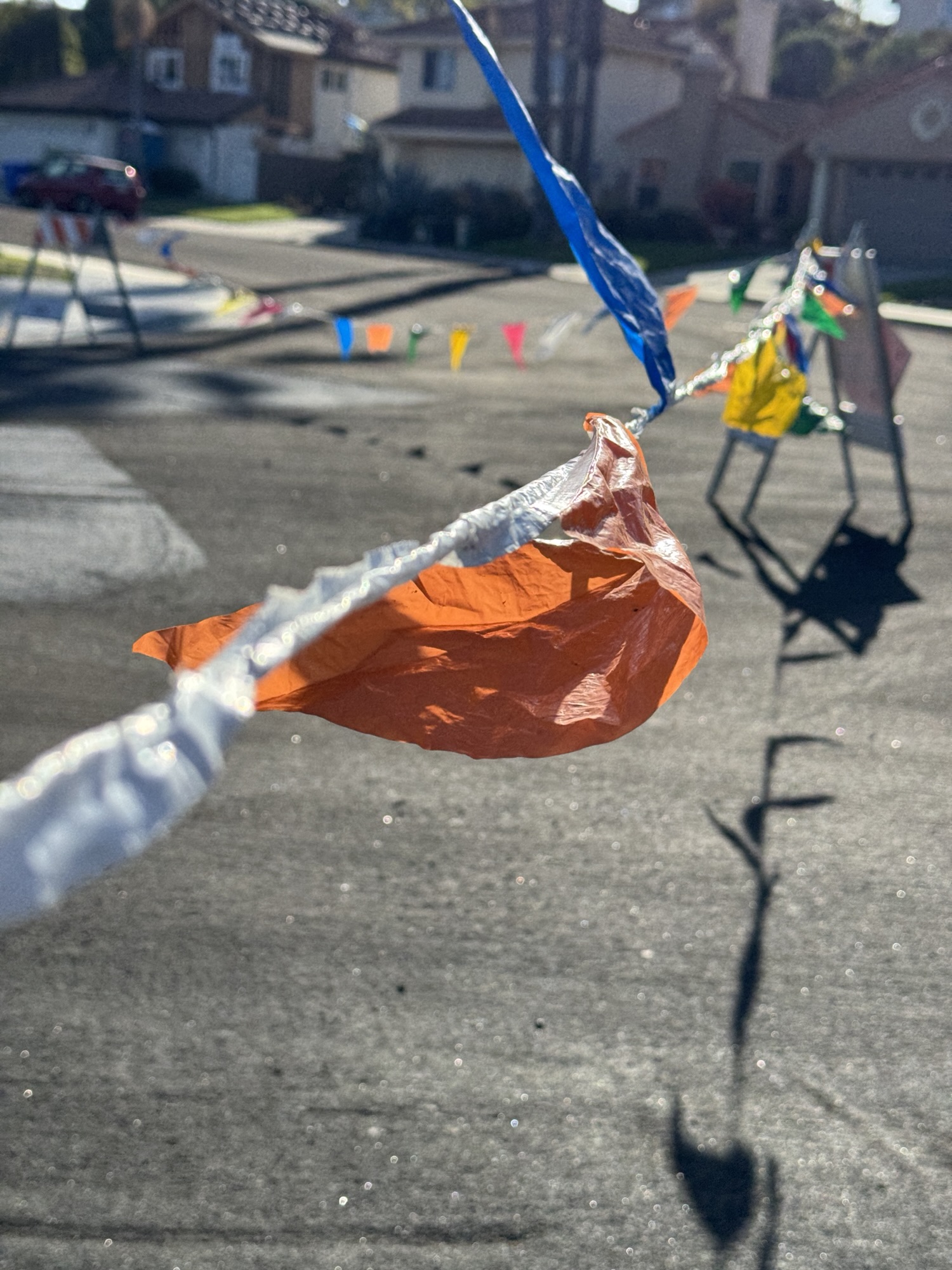
So instead of driving home to my street, I had to take the secret back door detour through another neighborhood, through a gate that has been locked tight for 20 years (you can walk through it, but it is ALWAYS closed to cars), to park alongside my house. As I write, the street is still closed to traffic. But on our walk, we did notice that perhaps a couple of neighbors got caught by surprise and trapped in their driveways. We saw some evidence of car tracks through the freshly resurfaced streets–and in one case a neighbor out with a power washer scrubbing asphalt from the sidewalk.

Yes, they warned us. But how many “wolves” do you get before no one really believes the messaging? I can imagine the neighbor who went out to get in the car to pick up the kids from school only to realized the car was trapped. Then what decision do you make? With all of the technology we have today, why is it that simple communication seems in decline?

Here’s hoping the resurfacing holds up, the streets look good, and no one has too much asphalt carried into their homes on tires, shoes, or doggie paws! (And phew! I hope that’s the end of all the street signs and warnings of road work for a while!)

How to Take a Photograph: SOL25 Day 2

Have you read Kwame Alexander’s picture books? I love How to Write a Poem and use it with my first graders to help them understand metaphor and metaphorical thinking. Last week I read How to Sing a Song first to remind my students about metaphor and its power in writing and then again a few days later to use a mentor text.

I had taught my students some photography techniques (bird’s eye view, bug’s eye view, and rule of thirds) and then we all headed out to our fairy garden (as they kids call it–adults know it as the pollinator garden) and the playground to try out the techniques. Once back in the classroom, each student picked a favorite photo and studied it carefully.

That’s when that second reading of How to Sing a Song came in. We looked at the text carefully, noticing how the writing was working to describe music. Then came the challenge. Students (yes, first graders) set out to write a How to Take a Photograph version of these books we love. I also suggested that my students consider using their senses to help them come up with their metaphors.

Here are just a few of my students’ works in progress:

First, make a target then decide if you like or not, then take a deep sniff of the blazing violet flowers.

The snap of my iPad is like thunder in the forest, the sound of birds chirping as if they are instruments.

The wispy chews on the leaves look like they got beaten up by a caterpillar.  It sounds like the green leaves are talking to me.

I took this photo on our playground.

And alongside my students I wrote this draft with them as my audience:

How to Take a Photograph

Step out. Breathe in everything you see like a cool breeze. Zoom in close like a magnifying glass. Tilt and find the perfect diagonal where the palm tree overlaps with the climbing structure. Taste the cool of the silvery metal and frame it in the lower third. Listen with your eyes and hear the sounds of children playing, hanging from the braided ropes. Push the button….slowly, carefully, purposefully. Your photo will sing for others to hear and sing along.

If you haven’t had a chance to read these books (there’s another called How to Read a Book), I highly recommend them–even if you don’t have a class of children to read them to! What are your favorite picture books that every adult should know?

Writing a Hope Kit: SOL25 Day 1

This week has been packed to the gills, overflowing with meetings, a flight to SFO on Wednesday (after leaving a meeting early) for a conference on Thursday, another flight home late Thursday for a full day of teaching on Friday and then capped this morning with the 17th annual San Diego Area Writing Project (SDAWP) Spring Conference.

As you might imagine, I was not excited that I needed to be up early this morning and on the road before 7am to be present at the university, helping with set up and preparation. Today’s hiccup was catering not showing up! (What! No coffee for teachers who are up early navigating UCSD parking for our half-day conference?). After several calls we were assured that coffee and pastries would arrive–not when expected, but before it would have been too late.

And as always happens when I am in the presence of writing project teachers, I forgot how much I didn’t want to get up, how much I would have loved a morning with a leisurely start, and was immediately engaged and stimulated by presentations and conversations…and just seeing colleagues who are brilliant and caring and always looking after what is best for their students.

Sessions like Writing for Change: Empowering Student Advocacy Through Project-Based Learning, Academic Writing with Heart: Centering Student Voice, and Hope Starter Kit: Writing Our Way to Resilience (to name only a few) offered inspiration, intellectual stimulation, ideas for classroom implementation, and an opportunity for writing. It also offered an escape from all that feels wrong right now.

As part of my hope kit writing, I had to figure out who (someone real or imagined, still living or long dead) to address a problem I was grappling with–the idea that each of us could tap our inner wisdom through this letter writing/response (inspired by the book Ask Baba Yaga: Otherworldly Advice for Everyday Troubles by Taisia Kitaiskaia). I decided that I would channel my cat, Phil, who died quite a few years ago, but who my husband is convinced still hangs around the house. Here’s my letter and response:

Dear Phil,

How do I manage the guilt of not doing enough to take action in light of all of the chaos and destruction in our current government?

Distraught Citizen

Dear Distraught Citizen,

Screech and roar and scratch…and even pretend to mark the walls and furniture with the scent of your body and beliefs in your spaces. Don’t let your perceived inaction silence you. Rub your scent subtly, weaving in and out of the pant legs of those who are near. Find pockets of comfort, places where the rumble of your inner motor can vibrate, offering moments of relief and contentment for you and others as well. In addition to comforting one another, find the small cracks for action, even if they seem to be big enough for only the tiniest grains of sand.

Phil

Channeling Phil reminds me (and maybe you too) that action can manifest in many different ways. I will keep seeking out all the small spaces where I can make a difference. You likely won’t find me on the picket line or the telephone bank, but that doesn’t mean I don’t care or won’t take actions to right the wrongs that are happening. Thanks to my colleague Stacey for the inspiration and to Phil for the advice.