Category Archives: Connected Learning

Coming to a Close

As I wrote last week (here), beginnings and endings are challenging for young writers.  They often dive right into the heart of the writing…and then end abruptly when they come to the end of their content.  “The End” seems like a perfect ending for many of my students.

photo-9

And so…in an attempt to help our students with both beginnings and endings, we turned to some mentor texts to study and learn from.  In my work with the San Diego Area Writing Project (SDAWP), I am repeatedly asked for lists of mentor texts to use with students.  And I repeatedly remind teachers that great mentor texts are often within reach…right in their own bookshelves!

I do admit to being a bit of a book addict…constantly on the lookout for wonderful children’s books.  Books that are beautiful to look at.  Books that contain language that sings from the pages.  Books that present information in interesting and accessible ways.  And I use them as mentor texts…just like I use excerpts from text books, articles in the Scholastic News, texts from the internet…

Back to teaching conclusions…  Today we returned to the same books we used to teach introductions.  We revisited the graphic we created to remind students the importance of introductions and conclusions… (Here’s a rough sketch)

photo-8

The point of the thought bubble as a symbol for the conclusion is that we want to leave the reader thinking.  And so we studied our mentor texts with that in mind.

We started with Life in the Rain Forest, a Smart Words Reader by Scholastic.  This book concludes with an entire page that goes back to the big picture of the importance of the rain forest.  It ends with these last two sentences:

Many of the plants and animals in this book are in danger of becoming extinct.  Only by learning about rain forests can people work to protect them.

Students decided that was a “learn more” ending.  Then we turned to Let’s Go Rock Collecting by Roma Gans.  We decided that this book’s conclusion was an invitation to do something.

Rock collecting is fun.  And one of the best things about it is that you can do it anywhere. Wherever you go, try to find new rocks and add them to your collection.

In What Do You Do When Something Wants to Eat You? by Steve Jenkins, we noticed the use of a question that asks you to apply the information learned from the text.

What would you do if something wanted to eat you?

And a Scholastic News article from the October 28th issue entitled Supersized Pumpkins offered this ending.

Now Wallace is back in the pumpkin patch working on his next record breaker.  “I have my sights set on 2,500 pounds!” he says.

We decided that conclusion made us curious about what would happen next.

With those examples in mind, students returned to their writer’s notebooks to try out their own conclusions.  With the piece they had written about animal defenses in mind, they set out to “try on” some possible conclusions.

In some ways we made this a bit hard.  We didn’t give students back the writing they had done previously about animal defenses–so they had to depend on their memory.  But then, last week when we did give back the writing we had a number of students “forget” to focus on the mini lesson and instead either copied what they had already written or continued on from where they left off.

So at the “stuck” spot, we asked students who weren’t stuck to share their early attempts at conclusions.

Here’s a few examples:

From a third grader:  “Every single animal wants to stay alive…hiss…and some animals are defending themselves right now!”

From a second grader:  “All the animals try to stay alive and use their defenses.  One might be using one right now…you never know!”

From a first grader:  “Would you play dead of something wanted to eat you?”

Another third grader:  “Have you even seen an animal use its defense?  Did it play dead? Did it run? Did it roll up in a ball?”

Another second grader:  “What do you know that I don’t about animal defenses?”

I feel like it was a good first attempt.  We’ll continue with another try with a different topic tomorrow.

So here’s what I’ve learned.  Introductions and conclusions are hard.  It takes study and practice to figure out how to make them work in our writing.  And we need to experiment to see what the possibilities are.  In our class, we plan to continue to revisit introductions and conclusions throughout the year to help our students internalize this important aspect of their writing.

I also know that there is no “magic” mentor text…and in fact, especially with things like beginnings and endings it is important for students to see that there are multiple approaches rather than a “right answer” or formula.  So I will continue to “read like a writer” and mine everything I read for its potential as a mentor text…for introductions, conclusions, language use, grammatical constructions, use of evidence and examples, and more.

What mentor text is your current favorite?  How do you use it with your student writers?

Stamina for Writing

Over at the NWP iAnthology, Janet Ilko has invited teachers to consider, “How do you build writers with stamina?”  As a middle school teacher, she talks about how daily journaling is a way to build stamina in her young writers.  (She works to build her own writing stamina through her blog, Writing in My Hand, as well.)

Stamina and fluency are important characteristics of writers.  Fluency allows for the words to flow onto the page and stamina means working through the hard parts of writing to keep on writing, to rework writing, to improve writing, to understand the importance of writing to learning and thinking and communicating.

One of the ways we build stamina in our classroom is by creating a culture where writing is the norm.  It’s no big deal…we write all the time.  We write to explain our mathematical thinking as we explore math concepts.  We write to describe what we are learning through our science labs.  We write to learn about spelling patterns and grammatical concepts.  We write stories, poems, arguments, and to share information with others.  We write to plan, to remember, and we write to reflect.

This week we asked students to do some reflective writing in preparation for student-led conferences next week.  We asked them to think about their learning in math, reading, writing, science, and with our iPads.  And what I notice is that these students have stamina for writing.  They know that writing gives voice to their learning.  It matters to them, to us as their teachers, to their parents…and to each other.

We are a community of writers.  And writers write.  They write because writing helps them think, and remember, and communicate.  And sometimes they publish too.  But mostly they write because writing matters in our community of learners.

photo-7

I hope it lasts a lifetime.  How do you build stamina in your writers?  How do you build your own writing stamina?

Planning for Coding

You might remember that I’ve been exploring computer programming (or coding) with my young students.  You can go back here and here to see our early attempts.  The basic idea is clear…you write code to make your electronic device do something.  At first, ANY something was fun.  And then we all learned to make a specific something (square and triangle).

Today we asked students to make a plan for their code and then carry it out.  They drew a quick sketch (we reminded them to keep it simple and to use what they already knew about squares and triangles to get started) in their notebook and then move to Hopscotch on the iPad to carry it out.

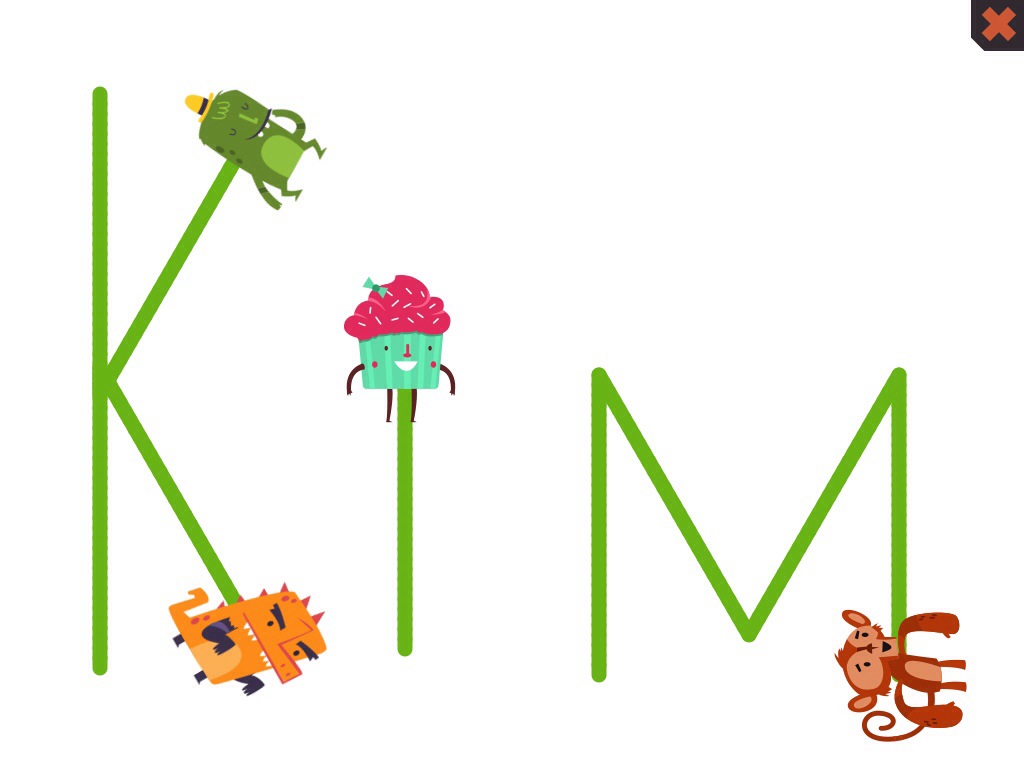
I showed them how I had gone home and figured out how to write my very simple name with straight lines and angles similar to those we had used to make our squares and triangles.

20131112-201406.jpg

What I’ve learned is that not all students take to coding equally…and that doesn’t surprise me.  Some students find it hard…and they are at a loss of how to proceed.  I encourage them to study what they have done before, but they need more of the one to one support of having someone sit and talk them through their choices.  Others are quite persistent.  This first grade boy worked and worked to draw this house.  He struggled with the final side, and while it’s not quite straight…he was proud of his accomplishment!

photo_3

Lots of girls liked my idea of drawing letters or writing their own name.  This second grade girl figured out how to make several characters come together to make an “E” to represent her name.

photo_2

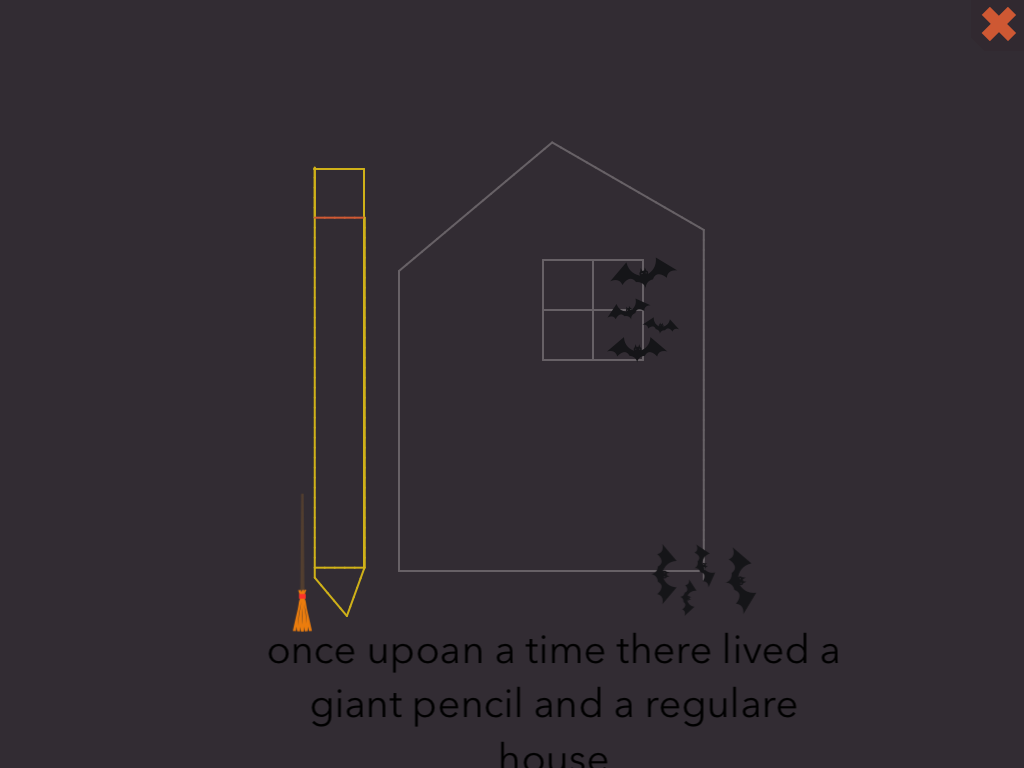
And others risked creating something more complex.  This third grader managed to create a picture along with some words of a story.  I got him to take this screen shot for me, but after that he was still adjusting his code and working to make it look just the way he wanted.

photo_1

I love the way that programming allows students to work at their own edge…and teach each other as they figure out something new.  We ran short of time today, but I know that I want to give students time to share how they made their designs with each other (and me).

Using Hopscotch makes me realize just how much more I need to know about angles and rotation in order to get past the basics of squares and triangles!  I just figured out how to make a circle as I was waiting for a dinner meeting tonight!

Have you tried Hopscotch or another basic programming tool?  What do you suggest as next steps for my students?

One Photo, Three Ways

When daylight savings time ended early Sunday morning, our daylight hours also shrunk. Instead of getting home with some daylight left, it is now dark.

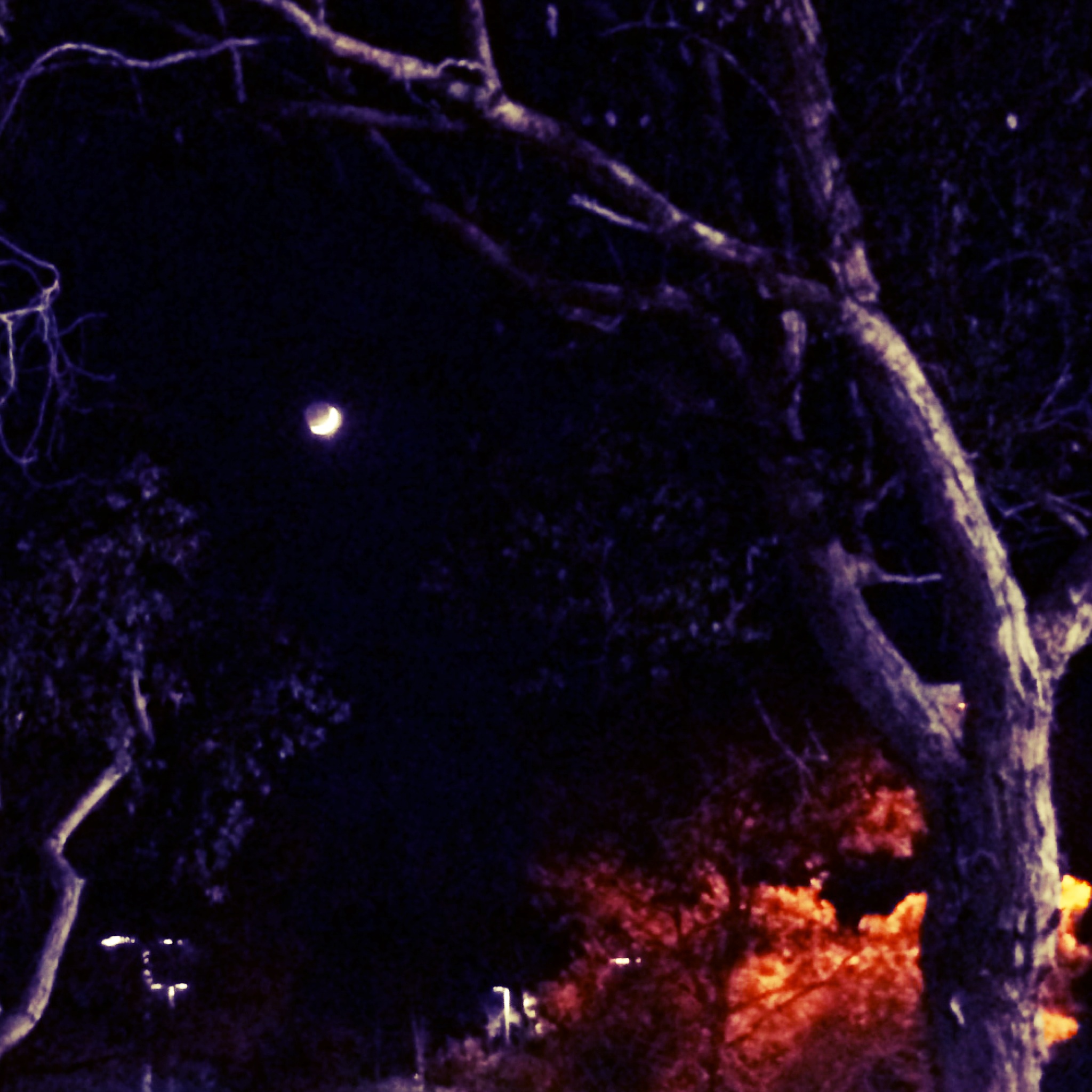
As I left the university this evening, it was already dark.  Looking into the dark, evening sky I noticed the beautiful fingernail of a moon.  Even knowing that my iPhone doesn’t take great pictures of the moon, I couldn’t resist pausing to take a shot.

photo_3

When I got home I thought I would play with this image (which was better than I anticipated) using the app Tadaa.  It has some interesting filters that work particularly well with playing with light and shadow.

Here’s a dark version:

photo_1

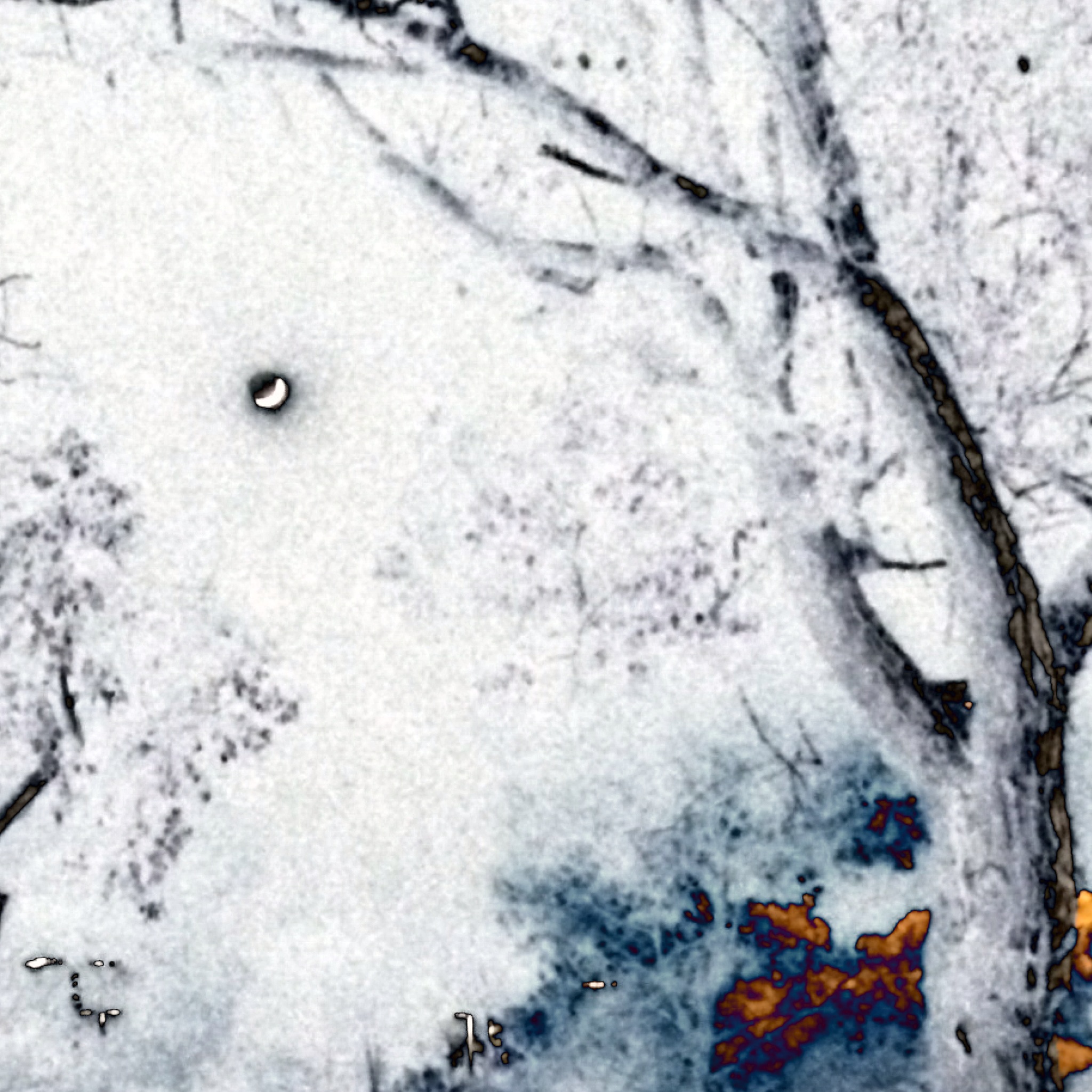
I like the way the trees frame the moon in the distance and the reds and oranges are nested in the foreground.  I couldn’t resist trying one of my favorite filters, otherland, and was surprised when it turned my dark, nighttime image to white.  I love the way the moon is silhouetted in the white sky.

photo_2

The filters dramatically change the mood and setting of this photo.  Each tells a different story by a simple change of the filter.

What stories do you see in these images?  I hope you’ll take a few minutes to write your ideas in the comments here!

Working from the Why

Everyone loves a field trip…right?  Or maybe not…  As a teacher I like the way that field trips give my students a shared experience and helps to make abstract science or social studies concepts more concrete.  I also like to give my students access to experts in the field and help them imagine professions where this content learning is applied.  But…to get these outcomes, teachers have to plan carefully and connect classroom learning to the resources of the field trip destination.

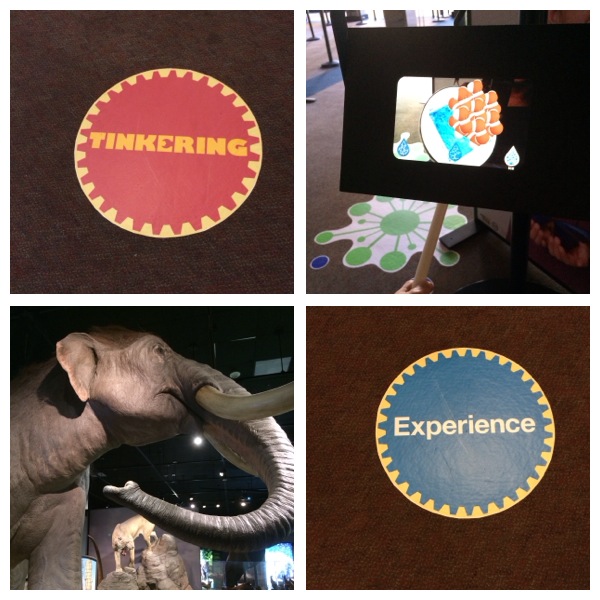
The San Diego Area Writing Project (SDAWP), along with the San Diego Natural History Museum (SDNHM) and the Reuben H. Fleet Science Center (Fleet) are partnering in a National Writing Project (NWP) and Association of Science and Technology Centers (ASTC) initiative investigating the intersections of science (or STEM) and literacy (with an emphasis on writing).  Yesterday we launched our work  with ten formal educators (who work in public schools) and ten informal educators (who work in the museums mentioned above), with a particular focus on field trips.

photo-7

The facilitation team (of which I am a part) decided to launch our work by focusing on the why of the work.  Why is it important to re-examine field trips and consider ways to improve the experience for students and to create supportive structures for teachers and other adults who accompany young people to museums and other field trip sites?

Inspired by a TED Talk by Simon Sinek entitled How Great Leaders Inspire Actionwe spent our first (of 5) sessions focused not on the what or how of our project.  We sent teams of educators out into the museums to observe and experience an exhibit through a set of prompts that invited them to look and try through a variety of different lenses, and write about their experiences.  They critiqued the exhibit–not to find fault with it–but as a way to consider what structures might support learners’ interest, inquiry, and pique curiosity.

photo-6

Our short, but intense day left us with a desire to take action…to figure out how to make field trips amazing learning experiences, with students at the center.  One comment from the end of the day reflections is still bouncing in my head,

…the “why”has the power to transform educational practices.  From field trips to worksheets to projects, I wonder how many educators push past the “what.”

Our goal with this project is to do just that–to push past the what and consider the why. The why is where the action sits…and we want to take action toward improving field trip experiences for students by supporting the adults who facilitate them: teachers, museums educators, chaperones, and parents.

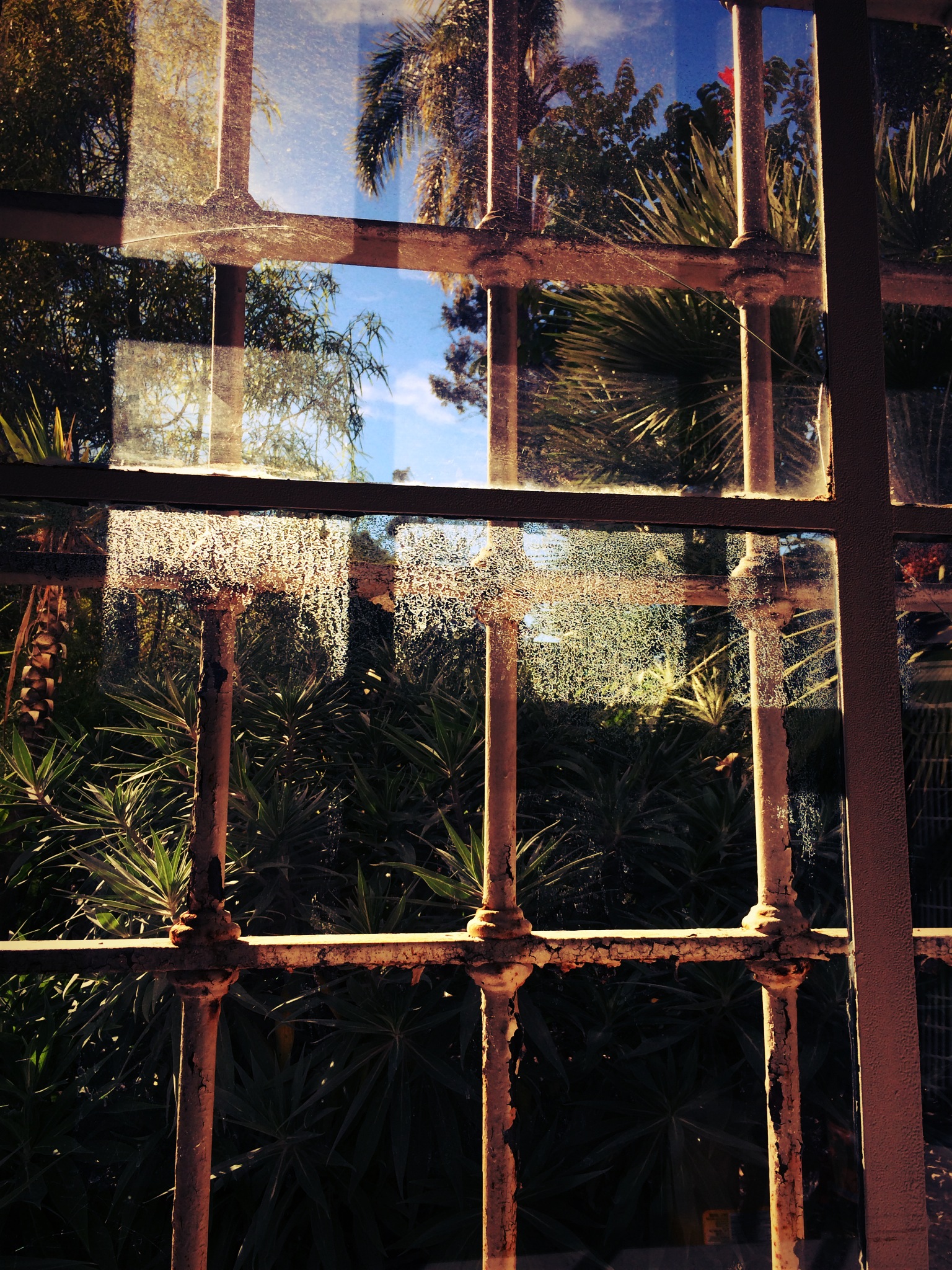
I can’t wait to see where this project takes us…  If only I had a window into the future to get a hint at just what the possibilities might be!

photo-8

What do you love about field trips?  What does your ideal experience look like, feel like, leave you thinking about?

Sense-ing Your World: November’s Photo-a-Day Challenge

November is a month that tickles our senses.  Delicious tastes of holiday traditions, the smells of fragrant fall spices, the sounds of crunching leaves, and the caress of breezes hinting of winter to come…

Alexandra Horowitz, in her book On Looking: Eleven Walks with Expert Eyes, reminds us:

“To a surprising extent, time spent going to and fro–walking down the street, traveling to work, heading to the store or a child’s (or one’s own) school–is unremembered.  It is forgotten not because nothing of interest happens.  It is forgotten because we failed to pay attention to the journey to begin with.  On the phone, worrying over dinner, listening to others or to the to-do lists replaying in our own heads, we miss the world making itself available to be observed.  And we miss the possibility of being surprised by what is hidden in plain sight right in front of us.”

November’s photo-a-day challenge is an invitation to pay attention by “seeing” through your other senses.  How can you capture taste, smell, sound, or touch in a photo?

Each week we will focus on a different sense.  Feel free to interpret the prompt in the broadest possible way.  Be playful and creative…and most of all, have fun!

Be sure to post your photo each day to Instagram, Twitter, Facebook, Google+, or Flickr using the hashtag #sdawpphotovoices.  (You can post anywhere, but if you want others to be able to follow your photos, Instagram and Twitter are best!)

November 1-8: taste

November 9-15:  sound

November 16-22: touch

November 23-30: smell

I can’t wait to see what we all come up with!  You might also want to reflect on what you learned with each sense and curate your favorite photos.  It would make a great blog post!  Be sure to provide a link to your blog post in the comments below.

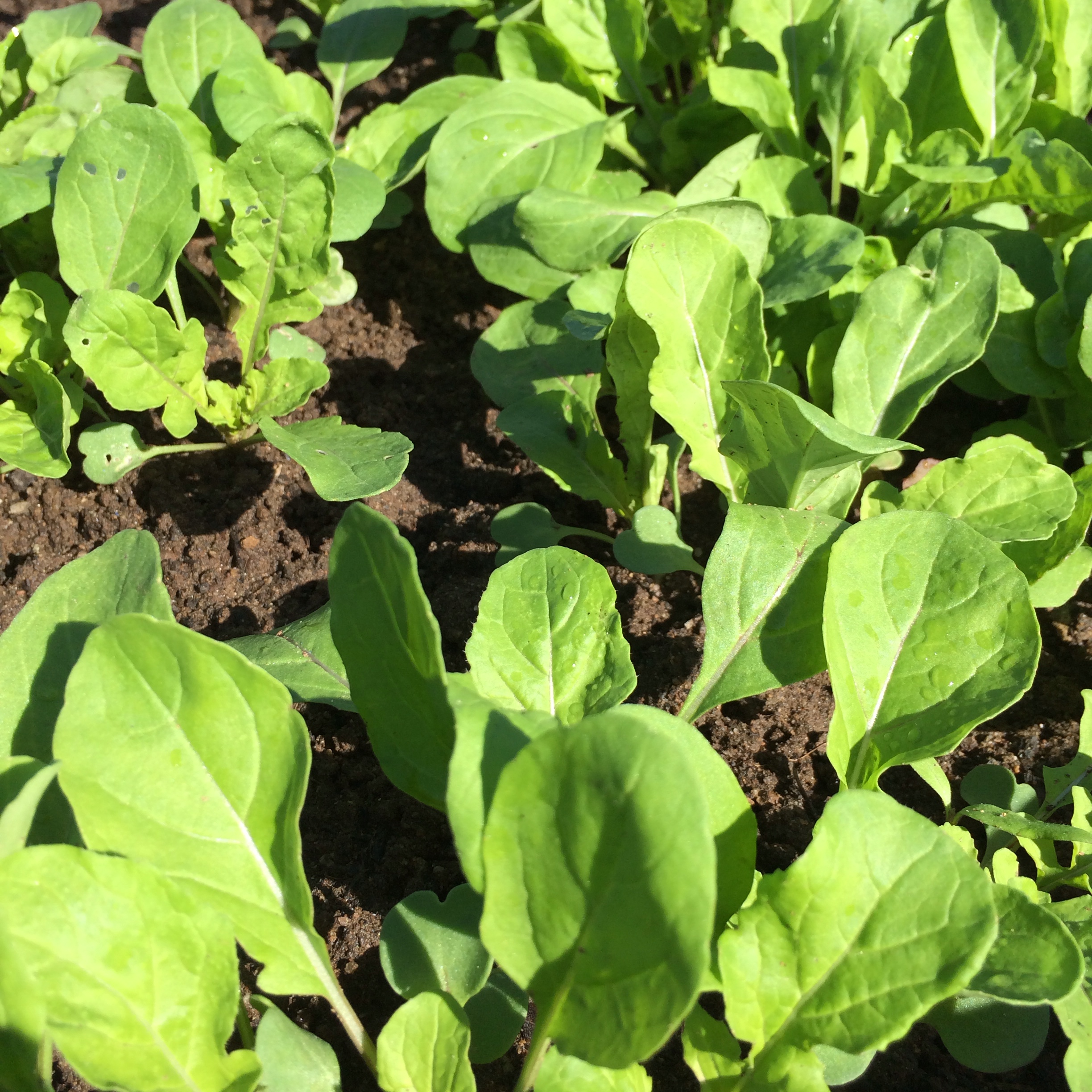
Here’s a preview entry from my time in our school’s garden today:

Young arugula will soon find its way into a #tasty salad.

Young arugula will soon find its way into a #tasty salad.

You are invited to post every day, once a week, or whenever you can find the time.  Join in the fun!  November is a great month to begin! (or begin again!)

Thinking about MOOCs

MOOCs (Massively Open Online Courses) are becoming more prevalent.  They seem to be the new “thing” in learning.  Zac over at Autodizactic is asking folks to help him think about MOOCs.

I’m not sure I even know what I think about MOOCs.  Like Zac, I have signed up for MOOCs that I have then abandoned.  It seems easy to both sign up for something that sounds interesting and that you can “attend” asynchronously.  And then when it actually begins, it seems easy to let it go when life gets too busy or the tasks seem too arduous or mundane.

I’m currently signed up for a MOOC, led by people whose work I admire, focused on academic language development for English language learners…and I’m very interested in the subject matter.  But already I’m having trouble finding time to do the readings and complete the tasks assigned.  I’m pretty certain I won’t be completing this MOOC.

This summer I had a completely different experience with the Connected Learning MOOC, clmooc, through the National Writing Project.  And maybe the most important difference was in the way the acronym “mooc” was defined.  Instead of being a “Massive Open Online Course”, the clmooc was defined as a Massive Open Online Collaboration.

There were still facilitators.  And instead of assignments, there were make cycles.  And participants were invited to add to make cycles, interpret them in their own ways, create totally new makes…generally make the experience work for them.

I found the experience exhilarating!  I expected to “lurk” around the edges of this experience.  I knew when I signed up that this would be an extremely busy time for me.  I was coordinating the SDAWP Summer Institute, starting a new grant-funded project, and supporting resource development for another project.  But, because I found it relevant and because of the interaction with facilitators and participants, I was compelled to continue and experiment and learn and grow.

Drawing on Connected Learning principles, my learning was interest-driven, peer supported, and openly networked.  It was also production-centered, academically oriented, and had a shared purpose.  And best of all, it was fun.  Each effort made me interested in trying something else.

I was both connected and learning…and I have a badge to show for it!

badge_be1ee794-764e-4739-981e-69a447770c74

I have many reservations about MOOCs, especially those that are trying to be courses.  I am all for open learning opportunities–I’m just not so sure that we need “courses,” in the formal sense of the word, to achieve the goal of opening access to learning.  And for me, the “course-ness” is the very quality that causes me to “drop out” of MOOCs.

So, Zac (and anyone else who is thinking about MOOCs), I’m not so sure my musing are helpful here…but this thinking is helping me understand why the CLMOOC worked for me and these other MOOCs haven’t.

And now about those badges…I’m not so sure I’m sure what I think about them either. And I have two of them…

Here’s my other one.  It was awarded me by a peer for being a connected educator.

ca43b8ed66346f49da41321ab07a1c5f6c3740de0ce4dd3181a89916ac13cd0a

What are you thinking about MOOCs…and about badges?

Structures

I treated myself to a walk on the beach today after a writing project meeting at the university.  So instead of walking on the beach near where I live, I walked on the beach down the hill from the university.  It was foggy and cool, a perfect day for thinking and reflecting.

As I was walking I was thinking about the meeting…a follow up to the Invitational Summer Institute (a 4-week intensive leadership institute in the teaching of writing)…and the structures that we need as learners to move along the continuum from novice to expert (with the endpoint constantly moving) and from follower to leader.

The structure of the Summer Institute (SI) is designed to immerse teachers in writing, researching, reflecting on their practice, and critical conversations about teaching and learning.  The structure is strong and well built, based on the 40-year-old model developed by National Writing Project founder, Jim Gray.

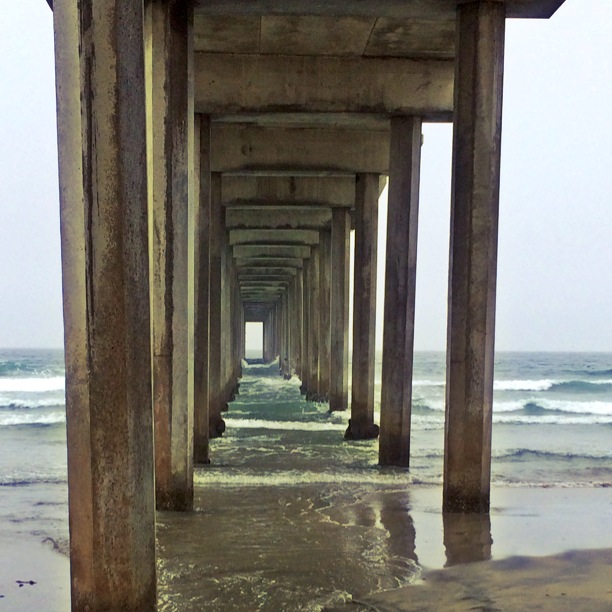
photo_1

This pier is also a carefully designed, well built structure made to withstand the battering waves of the Pacific Ocean and the relentless wind and sun.  I love the way when you look through the pier it narrows and provides a window through the corridor of surf out to sea just like the SI helps teachers look carefully at policy and practice and then focus on instruction that best supports the students in front of them.

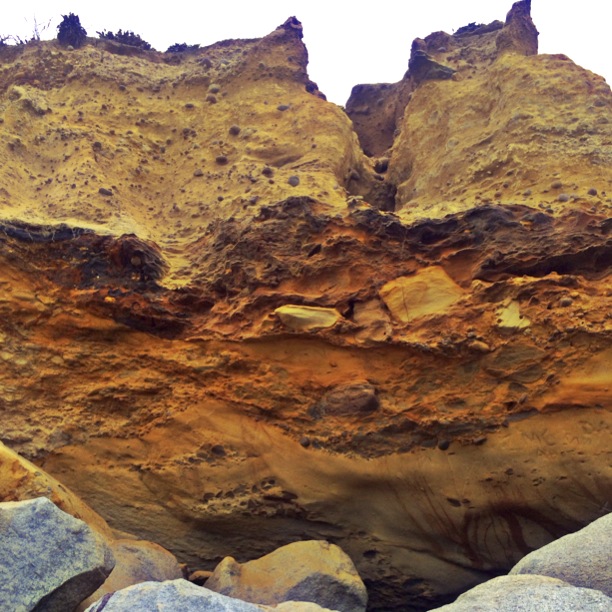
And some of the structures we depend on are organic like these cliffs.

photo_3

They are shaped by the natural environment.  I watched our SI participants create their own structures as well.  They gathered this morning, organically, catching up with each other as we, as facilitators, finalized our last minute plans.

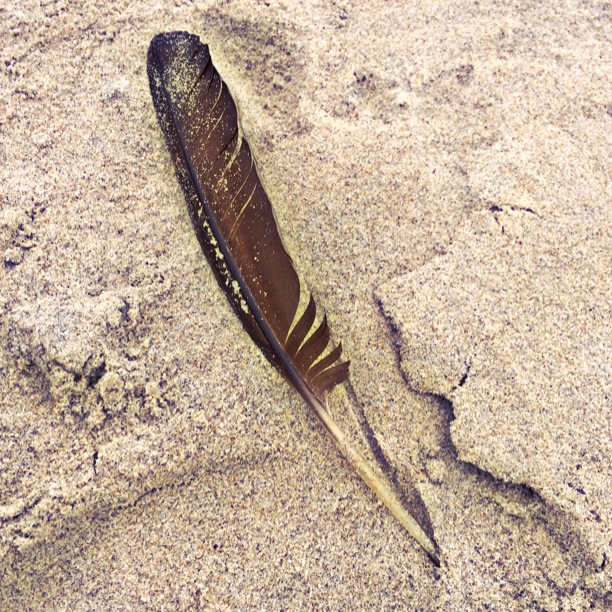
And then there are structures that are light and flexible, like this feather on the beach.

photo_2

It makes me think of our Twitter Fellow of the Week.  This playful use of social media supports more weight than you might imagine.  While we originally saw this program as a way to connect to one another within our project by giving each other a glimpse into a week in the life of an SDAWP educator, it has proven to do more.  When teachers use Twitter as a professional learning network, their interactions begin to impact their practice.  Suddenly they are reading more professional articles about education, “listening in” to debates about policy and practice, getting and sharing ideas from others (within our site and beyond our site), and making their own classroom practice more visible.

Today we asked our SI 2013 cohort to sign up as Twitter Fellows…and starting tomorrow we will begin to get a glimpse into their lives.  (You can follow @SDAWP_Fellow on Twitter) Those who are more confident on Twitter signed up first…but others are willing to dip a toe into this unfamiliar world of tweets and hashtags and mentions.  And they have the rest of the SDAWP community who are happy to help…and the others in their cohort will also be “listening” on Twitter, ready to respond and retweet and favorite…so they won’t be hollering into the dark.

My beach walk today was quiet and introspective as I thought about all the structures I noticed…and those we use to support learners.  Structures can help us stretch and reach and connect as we learn and grow.  What structures support you?  What structures support your students?

Horizons: The Edge of Learning

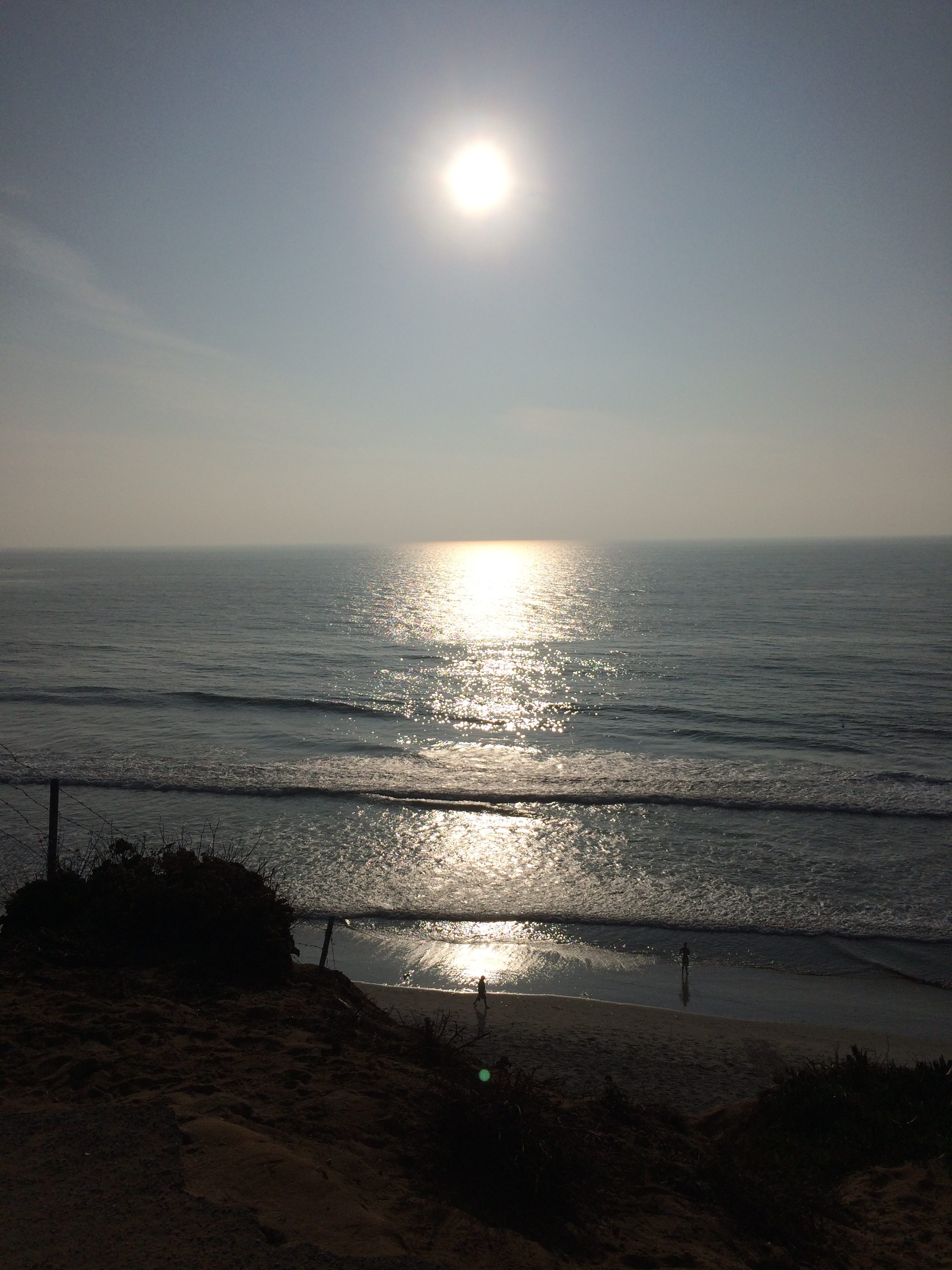
Today’s Weekly Photo Challenge on the Daily Post is about horizons…that place where the earth meets the sky.

photo-2

And as I headed to the beach to capture one of my favorite horizon vistas, I found myself thinking about the comfort of familiar places like the beach…and the stretch of reaching for new horizons.

In some ways my horizon photo this afternoon represents my feeling of reaching for new horizons and feeling the “edge” of learning as I work with my students to learn computer programming.  There’s that sparkle and shine and thrill of the new along with the hazy sun and encroaching marine layer representing all of the unknown and uncertainty.

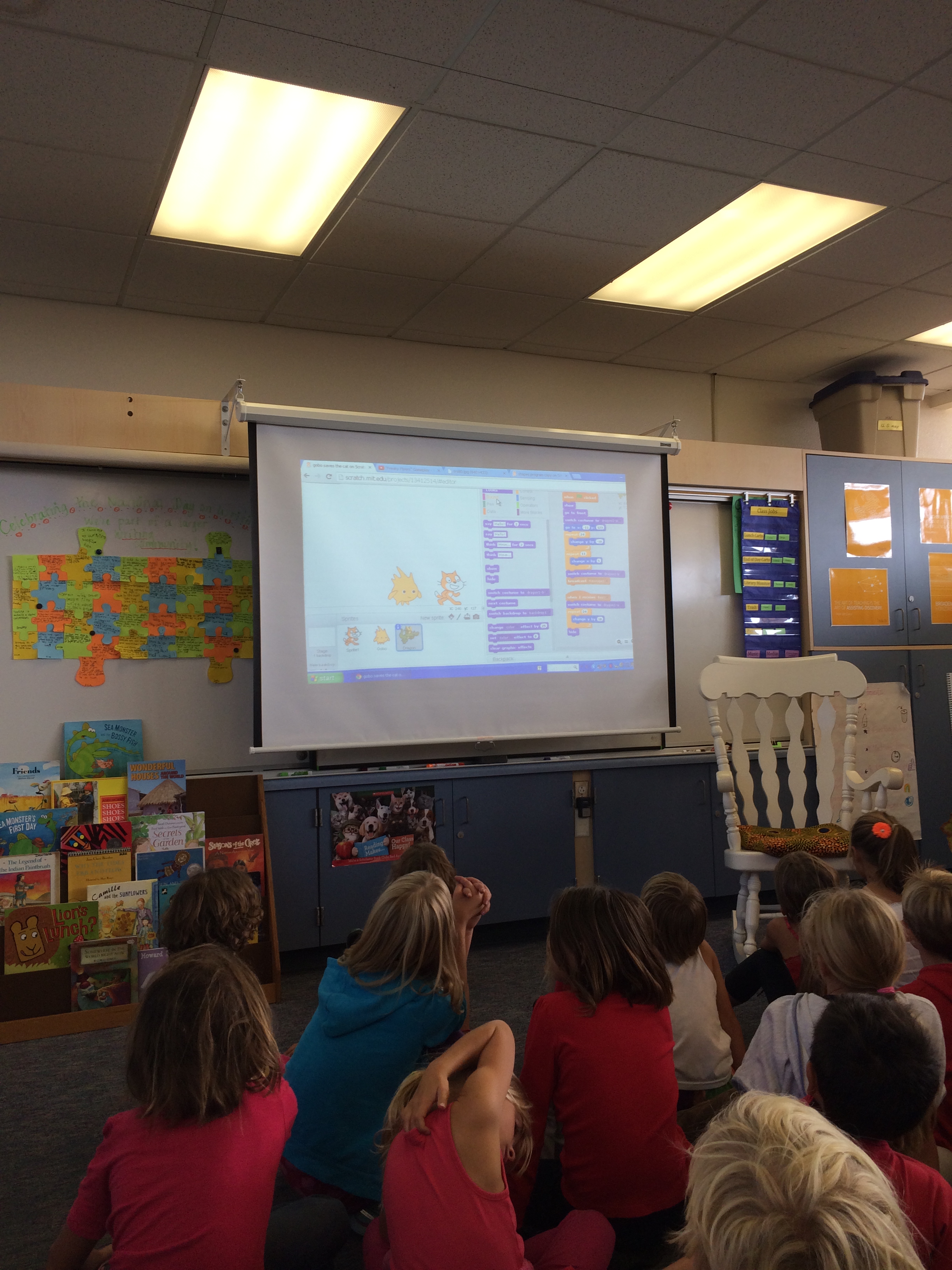
Today a parent in our classroom came in and shared his work as a video game programmer with our students.  He showed us a few of the games he has made…

photo_1-2

the first with a team of three including him.  The most recent included a team of 1,000!

Then he helped to connect this work that he does with our work on Hopscotch (an app), built on the shoulders of Scratch (a program developed at MIT).  He showed us a few kid-made Scratch programs and had the kids make suggestions for changes.  In a matter of a few minutes, he showed how the iterative process is essential for programming.

photo_2-2

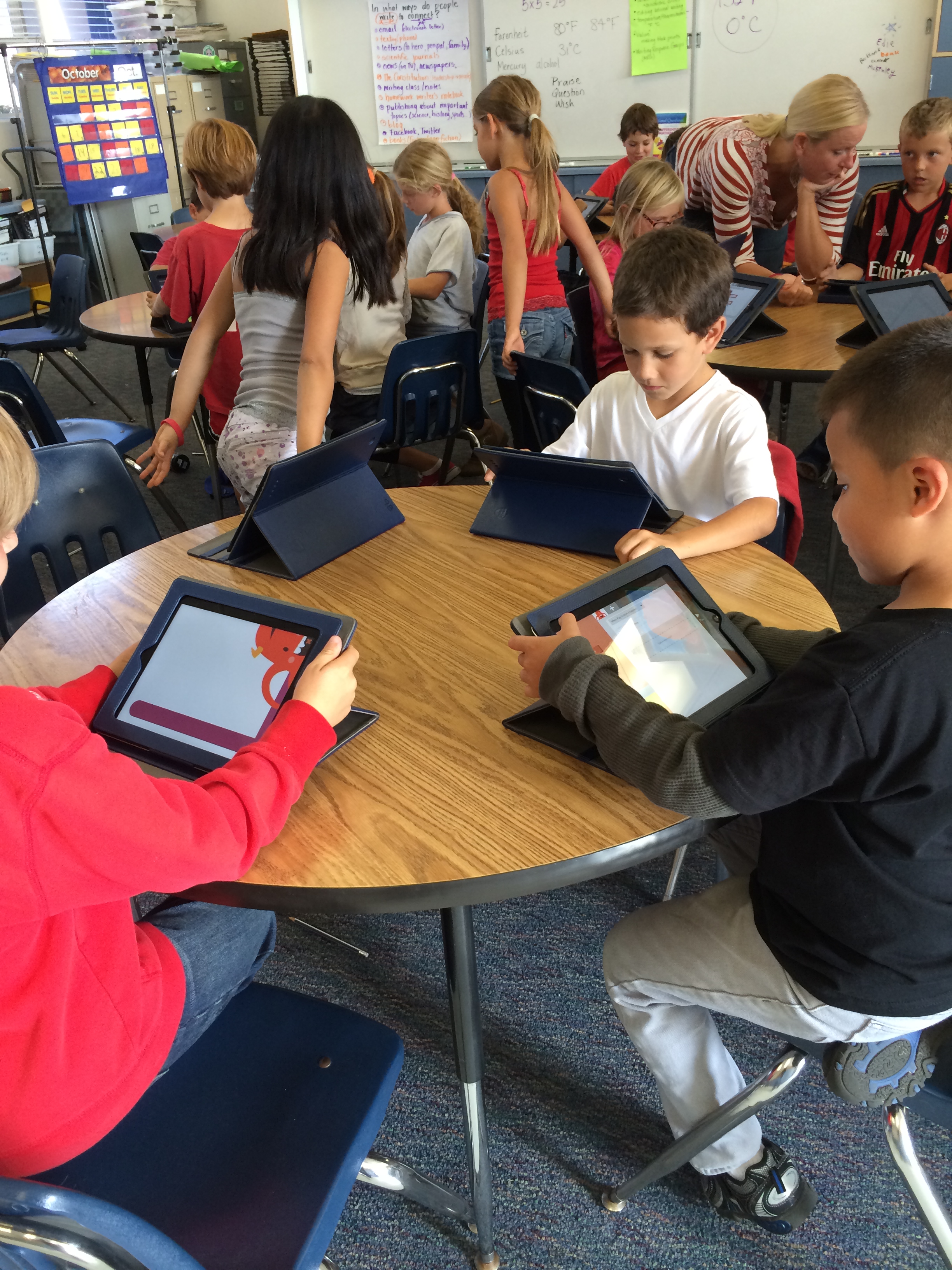
At this point there were about ten minutes before recess, so we offered our students this short time to return to Hopscotch and try their hand at some more programming.  Students were quick to get set up…and were immediately focused and engaged with working with code.

photo-3

I watched them try something and then go back and make a change and run their program again.  When students showed me something they had created, I also asked them to show me the code–and in many cases asked them explain their thinking behind the code–so I can learn along with them.  When it was time for recess, we offered students a choice…they could put their iPad away and go out for recess or they could stay inside and continue their coding.  Only 8 of our 44 students chose to go out.  The rest were totally absorbed with programming on Hopscotch!

I’m working at my edge on this new horizon of learning to code with my students…and it’s uncomfortable at times.  But knowing that this is also where learning happens is exciting.  I’ll probably spend some more time on Hopscotch (or maybe even Scratch) this weekend.  If you have any coding advice, I’m happy to receive it!

Here’s a great TED Talk by Mitch Resnick, one of the creators of Scratch, explaining why students should be involved in programming.  Maybe we should all try it out!

And if it’s not coding, what new horizons are in your future?  What are you doing to find the “edge” of learning?

Making…and Learning

Making…a powerful venue for learning.

Our students have been doing a lot of making…and learning lately.  Sometimes that making looks and feels a lot like play.  And that’s a good thing.

This week we were lucky enough to have the Lux Art Institute come to our classroom with The Story Box from their Valise Project.  On Tuesday our students spent an hour examining the wood carving, block prints, and sculptures of Jim Lawrence based on fairy tales…and were invited to either write their own fairy tale or pick a favorite to create a block print image today.

Our students were excited to think about fairy tales…and write their own.  The creativity of children is amazing…their stories sometimes meander a bit, but there is no shortage of imagination and wonder.

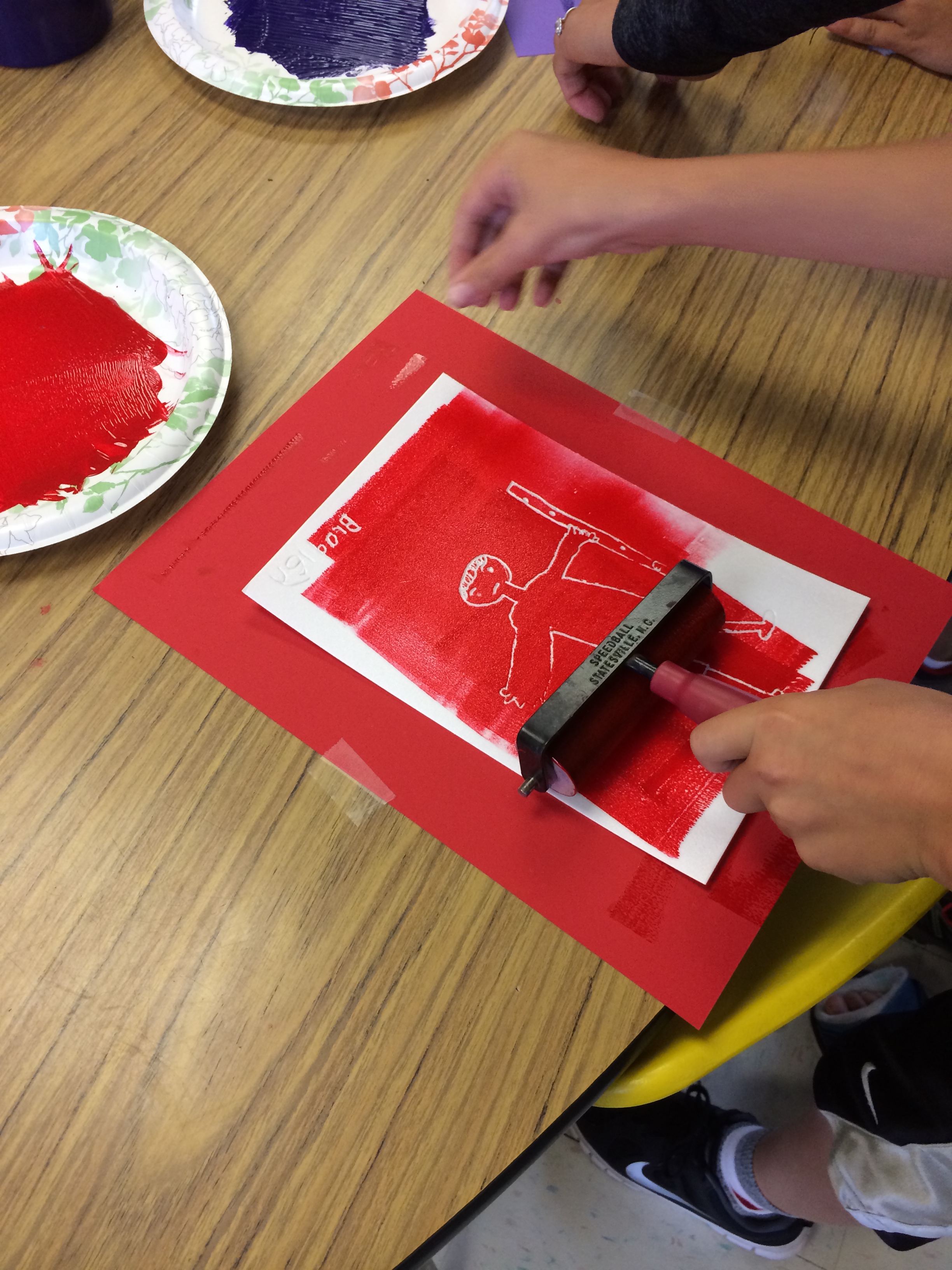
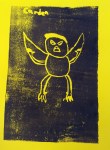
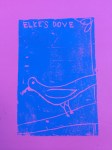
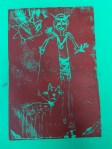
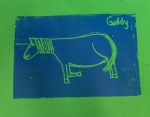
And today they had the opportunity to create their own “blocks” for printing.  Using styrofoam sheets, they used pencils to etch indentations of their image…and even learned some techniques for writing their names and other words backwards so they would print forwards.  (They made a few mistakes…but that, too, is part of the learning process.)

Using a brayer and paint, they smoothed paint onto the surface of their etching and then pressed it onto colored paper to create their prints.

photo_1

They created beautiful images…whimsical, cute, fanciful, scary…and everything in between.

For more than an hour, my students were happily engaged with drawing, etching, painting, and writing.  They had to think critically and problem solve.  They had to practice patience as they waited their turn to paint.  They focused and produced.  They were making.  Making art.  Making stories.  Making memories.  Making connections.  Making understanding.  And they were learning.

What have you made lately?