Tag Archives: connected learning

Learning to Code

It seems perfect that this month that includes the National Day on Writing and Connected Educators’ Month is also the time when we have ventured into teaching coding to our students (and ourselves).  My teaching partner and I talked about doing this last year during our 1:1 iPad pilot…but were thwarted by the fact that Scratch requires flash and won’t work on our iPads.  We had even thought about it the year before, that but 30 minutes of computer time per week just didn’t seem adequate.

So to push myself to realize this goal of coding with my students, I have been telling people that I want to do this.  I know myself enough to know that if I don’t make my goals public, somehow it is easier to push them aside when they feel “hard.”  And In our school district this year we have a new Educational Technology teacher.  A credentialed teacher who was hired specifically to help teachers integrate technology into their teaching–in addition to the tech people in our district who help when our technology isn’t working.  I mentioned our desire to teach our students to code in an introductory meeting with the Ed Tech teacher before school began…and he was interested and excited about the prospect.

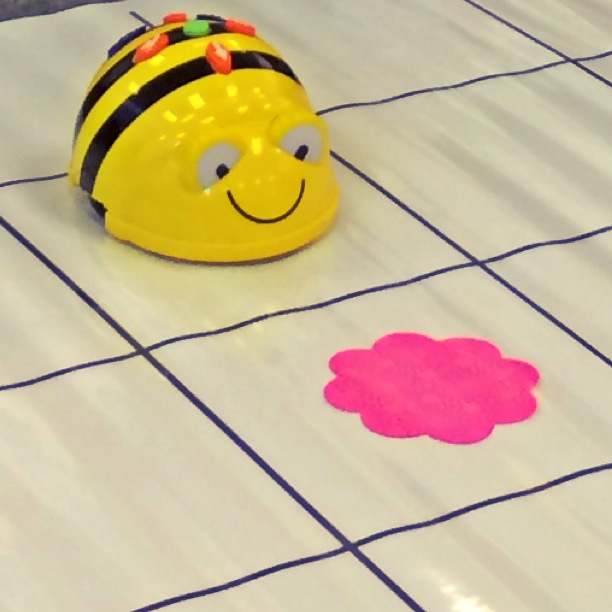
And so last week he ventured into our classroom at a perfect time to talk…and pinned me down on getting started with coding.  He would come in and get students started–using the Beebot I had purchased at the end of the summer and the Hopscotch app he had learned about.
photo

I love the way the simple, mechanical Beebot illustrates the basics of programming.  And I love that it also demonstrates how easy it is to have mistakes in your code, and the need to problem solve and “debug” through repeated trials and iteration.  My students were quick to understand the basics and very interested in the Beebot.  First graders could easily explain their thinking–and could figure out where they had made mistakes (older kids could too, and made mistakes too!).
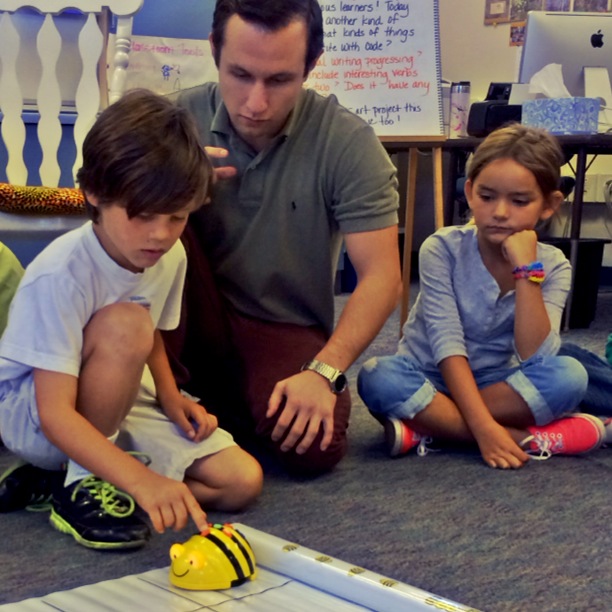
photo-1

After exploring how to make Beebot move, we turned to our iPads and opened Hopscotch.  Similar to Scratch, Hopscotch uses interlocking blocks to make the characters move.  After trying a few moves in common and learning to make their character spin, we set students loose to explore the possibilities.

photo-2

And they began to “write” their own code!  We gave students the opportunity to share cool things they had figured out with all of us…and promised that we would give them more time to explore this app and create more code.

I don’t know any more about coding at this point than my students do, so we will continue to learn together.  And I think I am as excited about learning to code as they are.  I’m glad our Ed Tech teacher pushed us to set a date to start to work on coding with our students…and I’m glad he was there to get us started.  His checking in on our progress will also be an incentive to continue this with our students.  I have tons more to learn…but who better to learn it with than our students?

Making Rockets and More…

I spent yesterday at UC Davis at a conference we threw for ourselves to celebrate the 40th anniversary of the California Writing Project.  The conference was an opportunity to teach each other strategies, structures, and approaches that we find successful at our local writing project sites across the state…and to learn together.  And we did that…and more.

At lunchtime there was an informal “making” session led by the director of the Northern California Writing Project.  Using transparency film (Finally!  A practical use for the boxes of the stuff schools have sitting around since document cameras have replaced overhead projectors.), colored electrical tape, cardboard, and hot glue, we crafted rockets (using a piece of pvc pipe as a mold).

photo_3

We would then test them by firing them from a bicycle pump, air powered launcher.  (Directions on Instructable…here) You’ll notice we sealed the tops and taped around them in hopes they would soar…rather than explode.

photo_2

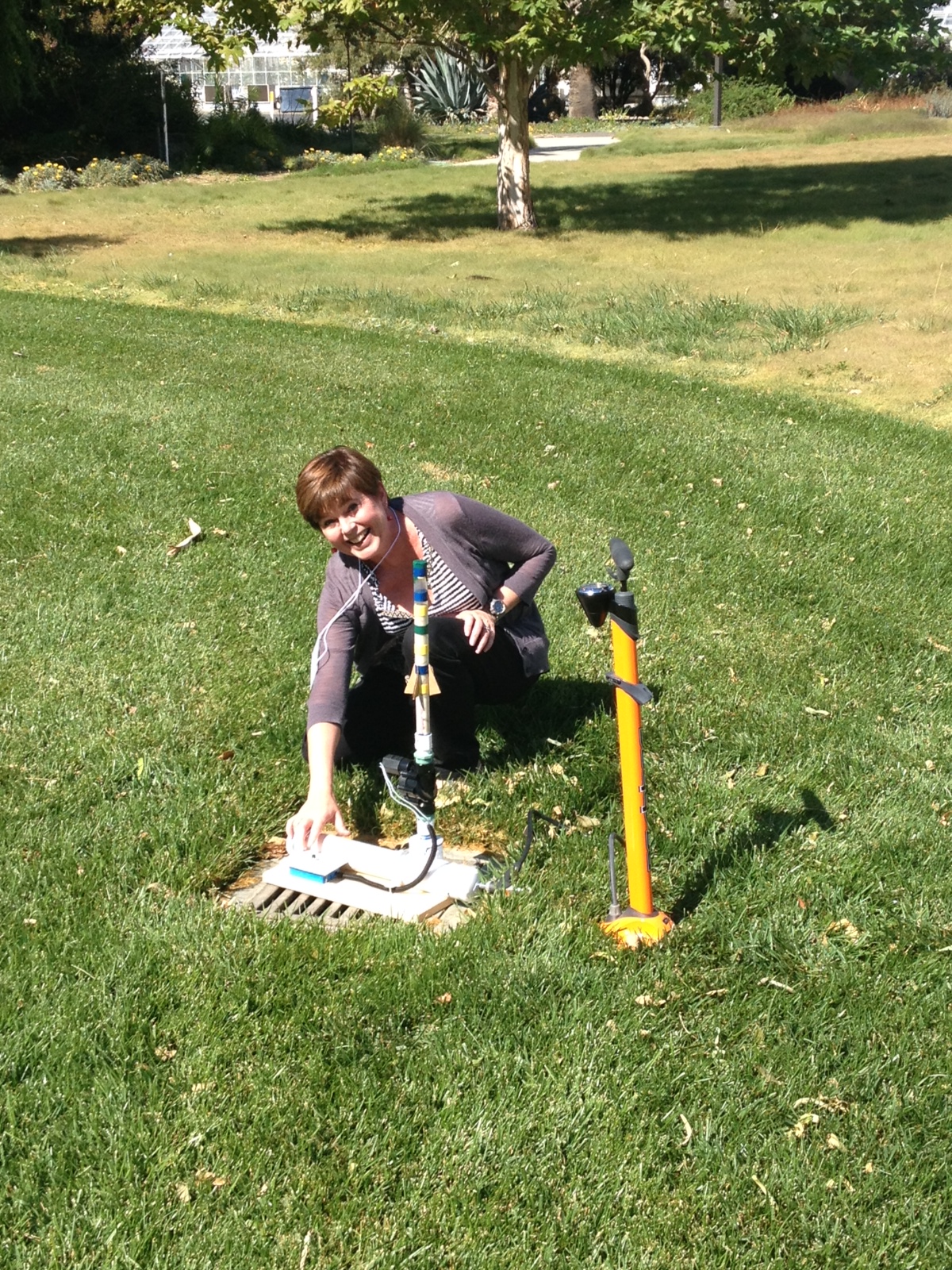
When our rockets were ready, we headed outside with the launcher and our rockets to test our creations.  We had to place our rocket on the launch pad and then pump with the bicycle pump to build pressure in the system.  We aimed for between 50 and 60 pounds of pressure.

photo-4

After pumping, we pressed a button to release the pressure into our rockets and… POW!!! They shot high into the air and then turned down to land in the grass.

photo-5

I’m looking forward to offering my students more opportunities to build and test and tinker.  They might be building and launching rockets some day soon.

And building these rockets in much like the work we do in the writing project. At the San Diego Area Writing Project we build programs to support teachers and students with writing and writing instruction.  Then we test them out, paying close attention to how they “fly”–what design elements are working, where do we need to tweak our design?  What can we do to help these programs and approaches meet the “mark” we are aiming for?  And then we continue to tinker. How can we make this work better?  What improvements are needed?  Which teachers and students are we reaching?  Who is missing?

I had a lot of fun building and testing rockets with my friends and colleagues yesterday.  And I love building and testing programs for teachers and students.  Writing itself is a lot like building a rocket.  Writers need opportunities to compose and test, get some feedback, and then tinker (or start over) until it gets closer to the desired target.  Sometimes it takes some tangible tinkering with rocket design to remind me of all the tinkering that happens in my life and in my classroom and in our writing project.

So, go out and tinker today…  What rockets have you launched lately?

Building Rhythms

As we enter the fourth week of school, I can feel the rhythm settling in.  It’s not the dulling thrum of never-changing routine, but the strong heartbeat of a community in progress.  You might think that because two thirds of our students remain the same each year, that the beginning of the year would be seamless.  But in fact, we feel the transition even with so much remaining the same.

Each year students take on a new role in the classroom. Those veteran third graders, who have already spent two years in the classroom with us, are figuring out just how to be a classroom and school leader.  They are considering how to provide support to their younger classmates while still maintaining their emerging “cool” image…not an easy balancing act!  Second graders, who used to be those “little kids,” are wrestling with stepping up to the demands of the being in the middle–no longer needing as much support, and yet grappling with no longer being the youngest.  And our brand new first graders have spent the last several weeks trying to figure out what it means to be a part of our multiage class.  A place with a history–a legacy of shared learning that pops up regularly, and they feel left out of.  They are learning to work with others, to accept help from their older peers, and to risk adding their contributions to our classroom learning.

This week feels like the turning point.  We are feeling like a cohesive community learning together.  Students are taking risks, supporting each other, and settling in…with the calm hum of learning-in-progress filling the room.

I can feel the rhythm building and soon the melody will come into focus.  I look forward to our voices blending and harmonizing as we grow together.

I love these moments of teaching.

Birds on a Wire: Connections and Interconnections

I often ask my students to make connections.  Connections between books we read.  Connections between things that happen at school and at home.  Connections between our math lessons and our social studies lessons.  And I find myself constantly making connections.

A couple of weeks ago our garden teacher introduced the word interconnected along with the word ecosystem.  His emphasis was that the garden is an ecosystem where the plants and animals…all the living things are interconnected.  When something happens to one, there is an impact on the others.

This morning in the New York Times Magazine I read an article about emotional intelligence and its impact on student learning and success.  While the article debated methods of providing instruction in emotional intelligence, it had me thinking about the microcosm of the classroom and other communities of practice in my life.  Our actions and attitudes impact those around us–whether we intend it or not.

When I arrived at the beach this afternoon for a short walk, I noticed a whole line of birds on a power wire.  I felt compelled to capture this image with my camera–even knowing that my iPhone is not the best tool for capturing images at a distance.  I walked as close as I could get and snapped the birds from a few different angles.

birds on a wire

In some ways these birds remind me of the idea of interconnections. Some fly into an open space on the wire, others fly off.  They are all sharing the same space, with the movement of one impacting all the birds in some way.

Like the birds on the wire, each student in the classroom has an impact on the others.  We are both interconnected and interdependent.  As a result, as teachers it is important to consider students’ emotional well-being and help them learn to handle conflict, stress, frustration, and disappointment.  These skills are not in our Common Core Standards and are not tested on annual standardized testing measures.  But they matter…to all of us.

I don’t have convincing data-based evidence that attention to students’ emotional needs will result in successful, well-adjusted adults–but I know it can’t hurt.  Students who learn to build consensus in group work can carry that skill beyond the classroom.  When conflicts can be resolved with words and compromise rather than fists and tears, we all benefit.  Students who have strategies and tools to manage difficult situations will be better equipped to deal with the obstacles that life deals them.

In the garden, in my classroom…and on the wire, interconnectedness means our actions and decisions impact those around us.  And in our increasingly connected global society, we are all birds on a wire.

What do you do to support your own emotional well-being?  How do you help build the interpersonal skills of the young people in your life?

Sorting Quiet

Today was a sorting and categorizing kind of day in my classroom.  Yesterday we read The Quiet Book by Deborah Underwood.

quietbook

In it she describes quiet in lots of evocative ways…here’s a couple of lines:

Last one to get picked up from school quiet.  Swimming underwater quiet.  Pretending you’re invisible quiet.  Lollipop quiet.  First look at your new haircut quiet.  Sleeping sister quiet.

Then we asked our students to think about the best kinds of quiet they have experienced. They had so many wonderful ideas including things like lost in a good book quiet, waking up before everyone else quiet, playing your favorite video game quiet, watching your favorite cartoon on television quiet…  They wrote their best kind of quiet on an index card before the end of the day.

Today to help us think about sorting and categories we read Shoes, Shoes, Shoes by Ann Morris–a book about shoes from around the world used for a variety of purposes.  We thought about the categories our shoes fit into…and the ways they cross categories: school shoes, running shoes, playing shoes…  And then, in groups of four students shared their best kinds of quiet and thought about ways to group their “bests” into categories.  We asked each group of four to try to find 2 categories that their 4 index cards would fit.  They came up with lots of categories: electronics quiet, family quiet, in-the-zone quiet, playing quiet, learning quiet…

And as a class we were able to narrow their categories down to four that we will use to create a class graph of our best kinds of quiet tomorrow.  Can’t wait to see what the data tells us!

What’s your best kind of quiet?

Noticing Texture: September’s Photo-a-Day Invitation

September arrives on our doorstep tomorrow and announces the unofficial end of summer. There’s something about the way Sssss roll off the tongue that suggests a texture that you can feel if you pay enough attention.  This month, for the September photo-a-day challenge, you are invited to notice texture in your world and capture it in photographs.  There are no rules–you are in charge in determining whether your photo fits the category!

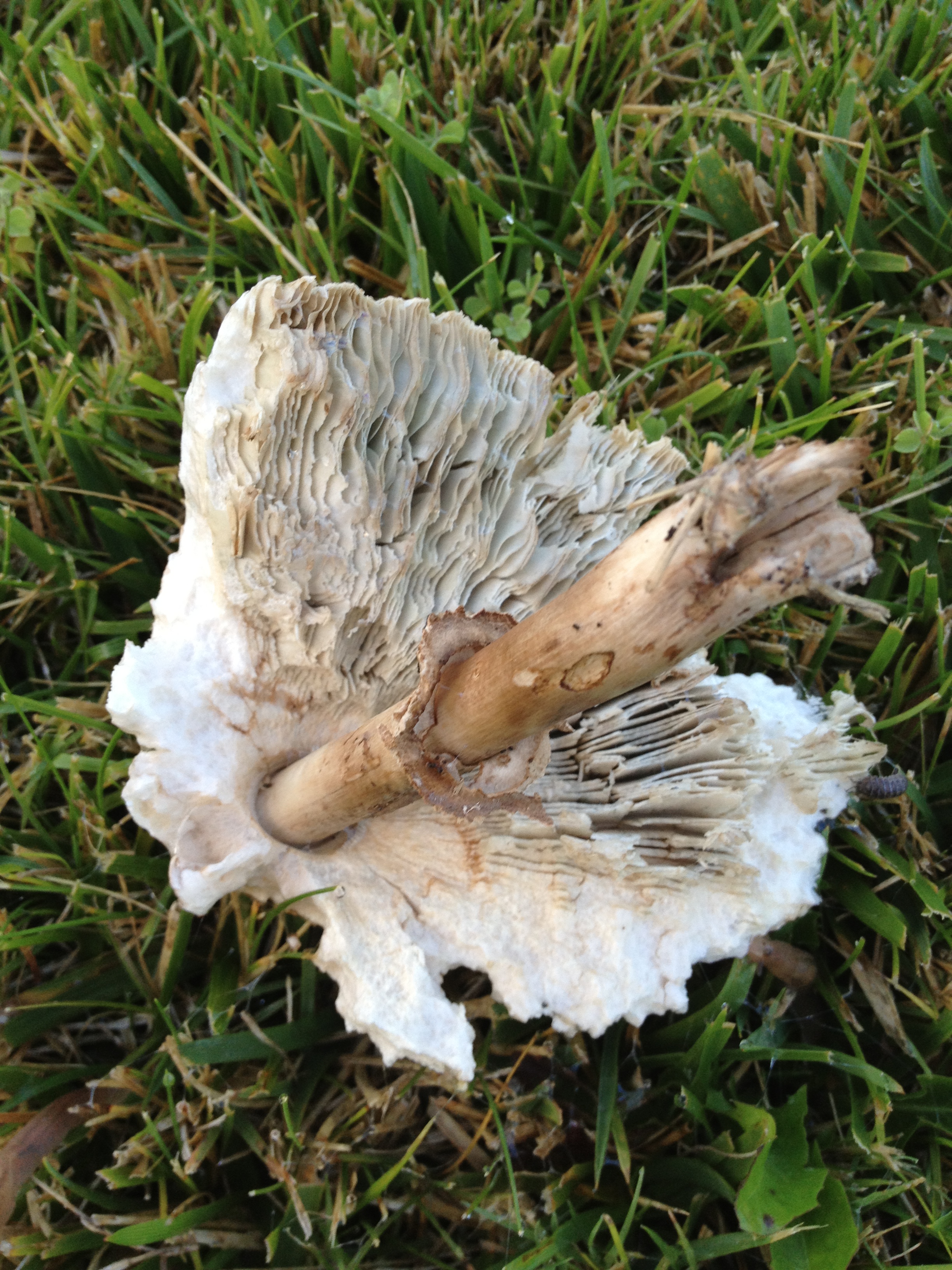
The #scaly inside of a mushroom.

The #scaly inside of a mushroom.

Take a picture each day that captures the spirit and feeling of the texture and post it to Instagram, Twitter, Facebook, or Flickr using the hashtag #sdawpphotovoices.  (You can post anywhere—if you want others to be able to follow your photos, Instagram and Twitter are best!) For more information about posting click here.  At the end of each week let’s add an additional challenge:  curate your pictures from the week and select one to highlight.  You might post it on your blog along with some musings about why you selected it.  If you don’t have a blog of your own, you have a couple of choices—you can create a blog (be sure to share it with us by including your blog address in the comments here—or better yet, tweet it using the hashtag #sdawpphotovoices) or you can post to the SDAWP Voices blog.

September 1-8:   smooth

September 8 or 9: reflect on your week and share your thinking and picture (or collage) on the link up

September 9-15:  scratchy

September 15 or 16:  reflect on your week and share your thinking and picture (or collage) on the link up

September 16-22:  scaly

September 22 or 23:  reflect on your week and share your thinking and picture (or collage) on the link up

September 23-30:  silky

September 30:  reflect on your week and share your thinking and picture (or collage) on the link up

As an extra invitation, at the end of the month, pick your five favorites to inspire a bit of writing or art or something else you want to make.  Be sure to share your creativity and what you discover through the process.

What will you find to photograph as you explore the texture in your world?  Join us…for a day, a week, or the entire month!

One Shot, Two Ways…Revision, Photo Style

One of the benefits of blogging is that other people like and follow my blog…and when they do that I often take a glimpse at what they are blogging about–it’s a lot like my experience with the CLMOOC.  Yesterday shotwithmyphone.com liked my blog post and I spent some time perusing the photos he posts…all shot with his iPhone (like me!).  One of his posts was titled One Shot, Two Ways and is part of a challenge posted here.  The challenge invites photographers to take two photos of the same shot–one with a vertical orientation and one with a horizontal orientation and to post them side by side.

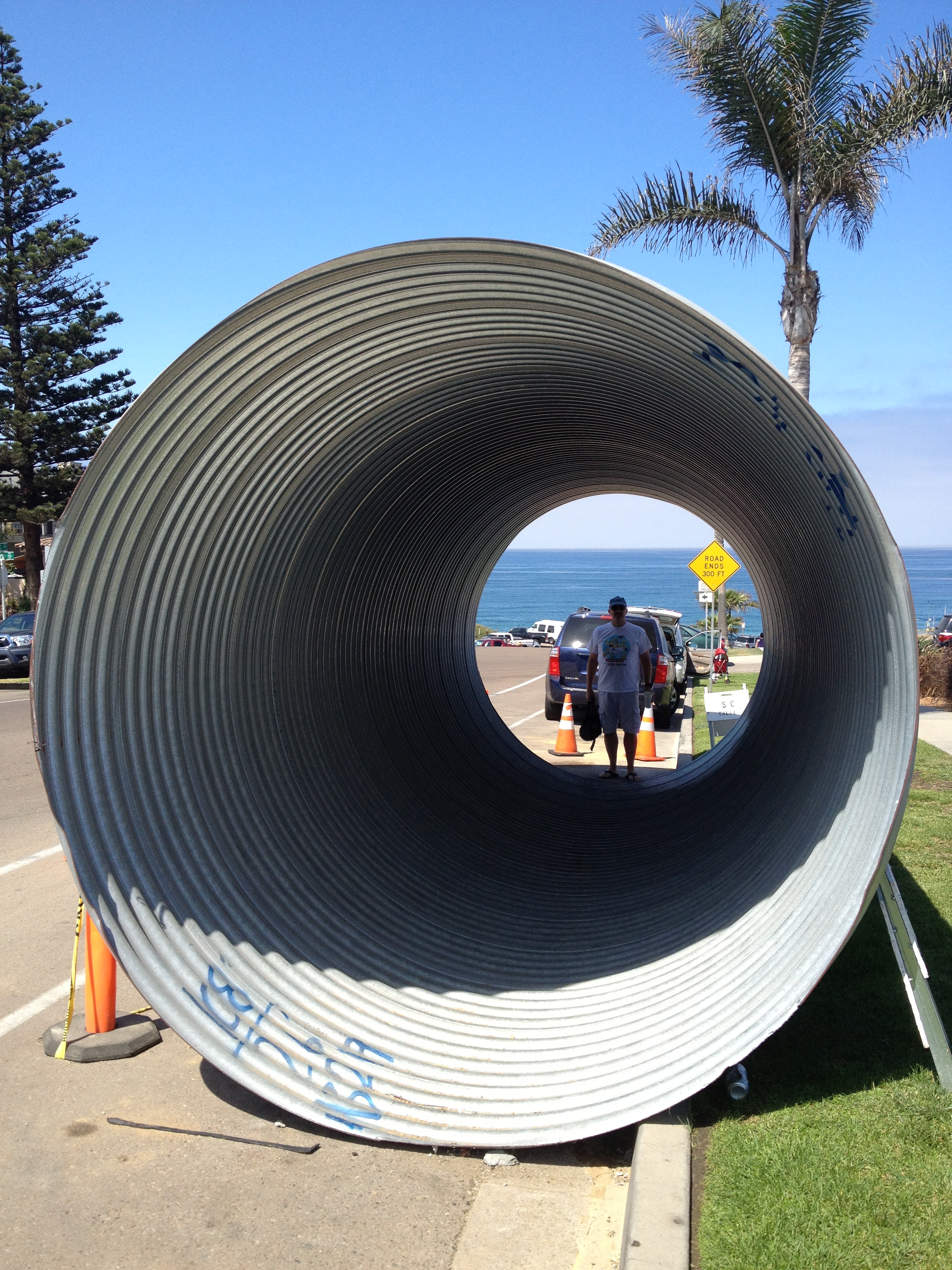
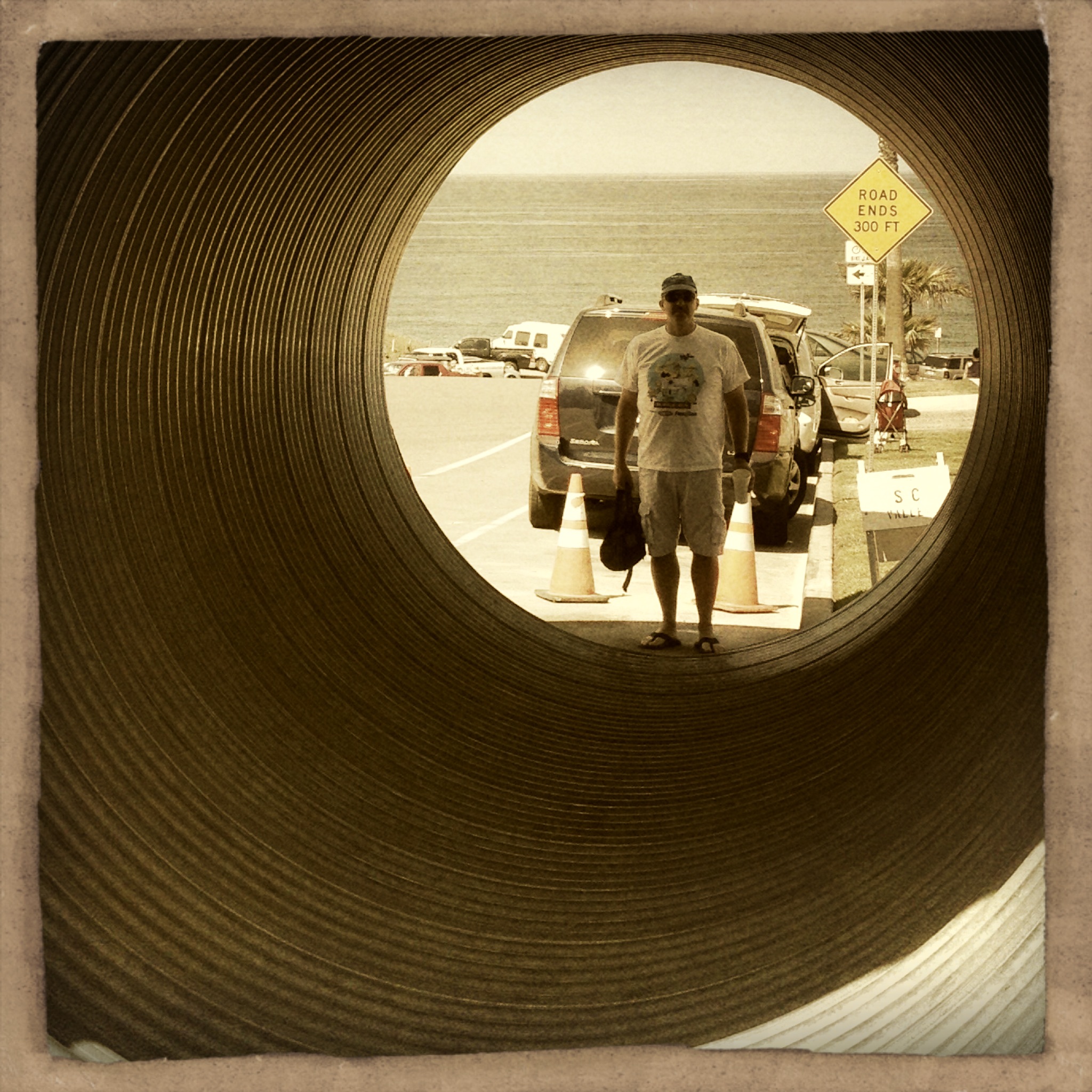
Inspired by those ideas (and looking at a few photos) I decided to try a variation on that theme and show two views of the same photo–one original and one with some editing and filters applied.  In some ways the editing process I apply to my photos feels a lot like revision in the writing process.  It’s the part of the process where I zoom in (or out), crop out distracting details, brighten up the setting, or change the mood.  In many cases, revision in writing and editing in photography transforms the end product and helps the reader/viewer see it differently.

Here’s are a couple from my beach walk on Sunday:

photo-12pipe

photo-10turtle

And here’s a couple from yesterday’s excursion to the Living Coast Discovery Center:

photo-13photo-14

photo-11photo-1

There are times when I post my photos without editing, but I like experimenting with how to take a photo and work with it to convey the message I have in mind–or one that emerges as I play with it.

What do you think?  How does the editing change the way you see the photo?  How does it change the message of the image?  How does this relate to writing and writing instruction?  I’d love to know your thoughts!

10 Picture Books on August 10th

I’ve done a couple of recent posts about mentor texts I use in my classroom and recently I noticed a challenge by some other teachers about a Picture Book 10 for 10 Challenge.  #pb10for10  Their invitation is to share ten picture books you can’t live without on August 10th.  So today is August 10th…and my picture books are all in my classroom.

I had almost abandoned the idea of sharing my picture book favorites since I don’t have easy access to them today.  But then I spent the morning with my SDAWP colleagues at UCSD thinking about complex texts–both reading and writing–which led me to think about the ways I use texts in combination in the classroom.  So I started thinking about some of favorite picture books for the classroom…and how I often layer books to create more complexity and deeper meaning with my students.  These books come from the top of head (with the help of the web to sort out the actual titles and authors)…you don’t get pictures or excerpts…just what I can remember!

photo

I’ll start with a few that I used with my students to examine abstract concepts.  Most of them use the idea of color in different and interesting ways.

1.  The Other Way to Listen by Byrd Baylor:  This book is a gem (like most of the others by this author).  I love the way she describes colors using senses other than sight.  I wish I had my book handy to include an excerpt!  Read it — you won’t be disappointed!

2.  The Black Book of Colors by Menena Cottin:  This book, all in black in white, is gorgeous!  The use of texture and Braille add a fresh dimension to this book…and reinforces the need to use powerful sensory language in descriptions.

3.  The Sound of Colors by Jimmy Liao:  This book describes the experience of a blind girl as she travels in the New York subway system.  Imagination takes the girl on a powerful journey. What do you experience when you aren’t able to see?

4.  The Colors of Us by Karen Katz:  This books offers way to describe the colors of our skin in beautiful and appreciative ways.

5.  What Does Peace Feel Like? by Vladimir Rudunsky:  This book is a collection of similes and metaphors from students describing peace–helping to bring some concreteness to this big and abstract concept.

6.  If… by Sarah Perry:  This books takes a fanciful journey into the imagination and invites students to imagine if worms had wheels and other fanciful and surrealistic ideas.

And I also love books that are about math and nature.  Two more favorites that I used this past year to support my students’ understanding of the Fibonacci sequence and its appearance in the natural world.

7.  Wild Fibonacci: Nature’s Secret Code Revealed by Joy N. Hulme:  This book explores the appearance of Fibonacci numbers in the natural world–mostly focusing on the spiral.

8.  Swirl by Swirl: Spirals in Nature by  Joyce Sidman:  This book is another look at Fibonacci’s sequence and spirals using spectacular illustrations.

And to round out my ten, two other books I purchased this summer and intend to use with students this year.

9.  One Hen by Katie Smith Milway:  A book about micro loans and how small investments can make a huge difference in someone’s life.

And one more math and science focused book

10.  Dave’s Down-to-Earth Rock Shop by Stuart J. Murphy;  This book combines geology and classification as the characters devise new ways to sort and display their rock collection.

I look forward to seeing what picture books other people love.  I’m always looking for new books to inspire my students’ thinking and to help them understand complex concepts.  I’m especially interested in those hidden treasures that somehow don’t get the attention of the large bookstore chains…and yet have wonderful content, language, and illustrations.  What picture books do you love?

A Summer of Making: Reflections on CLMOOC

If you’ve been reading my blog at all you know that I participated in something called the CLMOOC this summer.  The Connected Learning Massive Open Online Collaboration was an opportunity to experiment with the principles that underlie Connected Learning.  This short video gives some more information or check the link above.

http://vimeo.com/49645115

When I originally signed up to participate in the MOOC I thought I would stay on the fringes, read what others posted, and think about how the participants interacted.  I knew I would be time challenged, after all I would be facilitating the SDAWP Summer Institute during the bulk of the MOOC.  But somehow, I was quickly drawn into action.  I used my photo-a-day work as my introduction and posted a couple of photos.  Immediately I began to get feedback, comments, and links to others’ work with a similar focus…I was hooked!  Then came the #vineoffmonday. I was already playing with Vine and with Instagram video, so it was fun to see what others were doing.  I loved Kevin’s invitation to make a seven second story and even though I wasn’t particularly successful, the challenge was valuable–and it’s something I can see having my students try (even if they don’t use a social media platform like Vine to do it).

I’d been thinking about starting a blog for a couple of years…and have had a couple of false starts where I posted once or twice and then never returned.  With the CLMOOC community around me, I decided to create a new blog AND to challenge myself to posting 30 days in a row. Remember, this was not a “summer’s off” undertaking–with this community around me, I made my decision to blog right in the middle of the SI I talked about earlier.  (And if you know writing projects at all, you know that it is an intense and focused time of meaningful, challenging work–even as a facilitator.)

My blog became my space for “makes.”  I explored my photography in a variety of ways, thought about learning and spaces for learning, considered my own classroom and how I might approach my teaching differently, and wrote and wrote and posted and posted…today is my 34th consecutive post!

And…I earned my first badge!

badge_be1ee794-764e-4739-981e-69a447770c74

To earn the badge I had to submit one of my makes, reflecting on its significance.  I chose my Spaces for Learning post that I wrote in response to an invitation from Terry to respond to a Washington Post article about teachers and teaching.

I am strangely proud of my badge.  It represents a summer of exploration and of putting myself “out there.”  It has been about writing every day even when I am busy and tired and would rather just hang out or watch some mindless TV.  It has been about being public with my learning process and trying things beyond my comfort zone.  And I still see lots of spaces for my learning to grow.  I definitely have a better understanding of the Connected Learning principles and how they support my own learning and risk taking.  I plan to create more spaces for this kind of learning for my students…and for the teachers I come in contact with.  It has definitely been a summer of making and connected learning for me…and I don’t want it to stop!

Carousel Horses: What Stories Do They Tell?

With my photography this week, I have been focusing on curves.  And somehow, when I am out taking pictures that concept/word “curves” keeps getting translated in my head to “round.” Now I know that round and curves are related–that curved surfaces often result in roundness. So yesterday when I parked for a meeting in Balboa Park–our city’s urban park–the carousel immediately drew my attention.  I could hear the festive music as the merry-go-round started its trip around and around.  I took a few pictures as I thought about this curved trajectory and the combination of movement around and up and down.

horse

I like the way this photo (with no filters applied) shows the movement of the carousel horse.  I can also see the curved lines above.  The people riding–adults and children–were energetic, giving off that feeling of summertime fun.  I decided to move to my hipstamatic app–and dialed a couple of film types and lenses.  One of them, this gangsta lens creates a round frame.

photo

And while the curved frame works for my photo-a-day theme, what I love about this picture–and I knew it when I tapped to take the picture–is that somehow I had caught the guy with the while cowboy hat in the frame.  In some ways this particular picture feels timeless–the “tough” guy in the white cowboy hat (doesn’t that make him a hero?) with the white t-shirt and jeans on a carousel horse with the young woman nearby.  He’s on the outside so he can reach out for the brass ring, showing everyone his skills on this classic summertime ride.

photo-3

This third photo is another hipstamatic photo using Americana film and lens that gives a retro feel to the picture.  It also gives the sense of movement–but doesn’t have the same feel of summer as the other more colorful photos.

I’m wondering how photos like these might prompt my students’ writing and storytelling.  How does the visual invoke the powers of imagination?  What evidence is contained in these photos that leads to character development?  An advertisement?  An argument of some sort?  Where would you go with one of these photos as a prompt?