
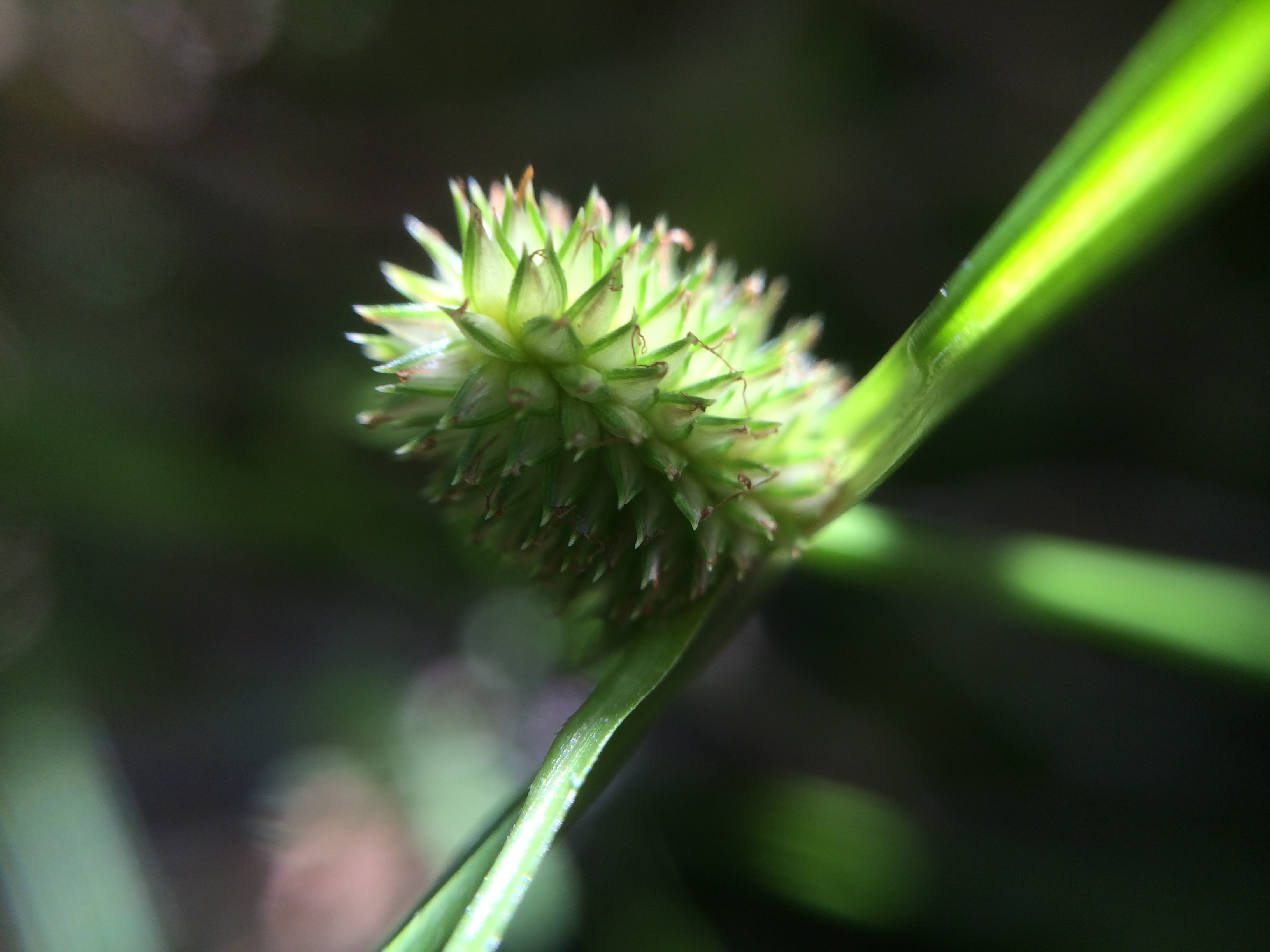
Today was a prickly kind of day in the SDAWP SI. There’s something about confronting formulaic writing that sticks in your socks like those little burrs you find on weeds that seem to plant themselves in the most unlikely places.
Over the weekend we read a collection of articles about formulaic writing, thinking about why this approach to writing instruction persists, and the implications for student writing. Even teachers who are proponents of using a formulaic approach to teaching writing still complain about the deadening experience of reading the resulting student writing. Who wants to read paper after paper of repetitive phrasing and uninspired thinking?
I contrast that with the playfulness of this week at the CLMOOC. This week’s make is to hack your writing. And already on day two interesting writing is filling my feeds. I woke up this morning to a poem by Kevin “stolen” from yesterday’s blog post:
I live in contrasts
in the space between here
and there
I find the nook to hide in
and observe the world
through many lenses
I seek but never find
the whys of the world
so that every movement is
equally beautiful, equally interesting
and entirely different from each other
but only if we take the time to pause
and notice.
And this creation by Sherri:
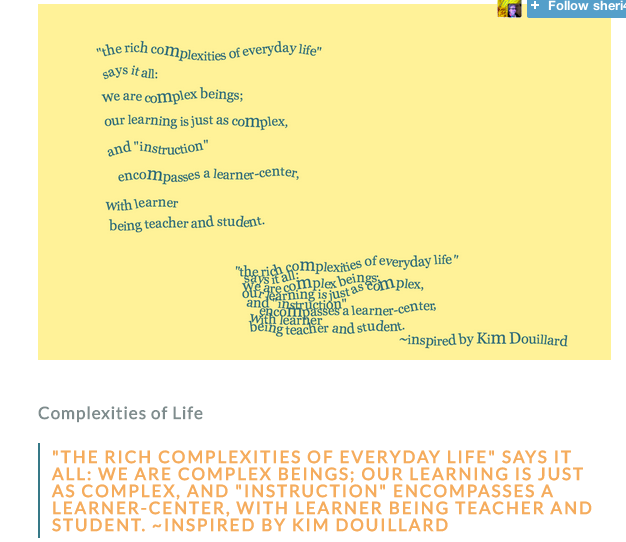
Both Kevin and Sherri played with language and writing, creating their own message and meaning from words I had written. They wrote for fun, for their own purpose, and gifted their words to me on my blog. I grant you that they are adults and they are not composing “academic” texts, but I know that the spirit of fun and play supports them as writers.
I worry about who in our schools gets the most formulaic writing. Why are our English learners, our students of color, our students who live below the poverty line most likely to get writing instruction that is pre-chewed, scaffolded to the point that no thinking is required? In the name of being helpful, we are robbing students of the opportunity to make sense of their thinking through writing.
And yet, letting go of the formulaic means inviting messiness, losing control, welcoming confusion in order to find clarity and coherence. What replaces the formula? That is a question that I am asked over and over again. The answers aren’t easy, they aren’t neat, and they mean teaching writers rather than writing.
Sometimes that search for answers feels like a burr in your sock. But if you look closely–maybe using your macro lens–you’ll see the details of the beautiful weed, a natural hacker, springing up where you least expect it.
 Thinking Through My Lens