Tag Archives: learning

Experiencing the Underbelly

I often write about the benefits of being a connected educator.  Today I experienced a bit of the underbelly.

As I do everyday, I spent my morning teaching students.  We sang, discussed, explored some new math strategies, wrote and shared.  From the time school started until lunch, I didn’t have time to email or post or tweet.  But apparently my twitter account did…

When I looked at my phone at lunchtime I noticed a number of twitter alerts and text messages visible on the lock screen.  Texts from my son and my nephew warning me that I’d been hacked alongside DM (direct message) notices from people I don’t know (even virtually) recommending web links to me–and one from a friend asking if I had been hacked.  I had a few twitter mentions from some virtual friends suggesting I change my password because they were getting DMs from me.  A peek at my email showed some more messages from people I know recommending that I change my password–they too were getting DMs from me.

I also got an email from Twitter telling me my password had been reset.  Apparently my account had been quite busy while I was otherwise occupied with my teaching!

So I spent some time resetting my password, and then responding to my friends and family to let them know that I appreciated their advice and warning.  I also noticed that I wasn’t the only one victimized by Twitter spamming today.  Here are a couple of other tweets pointing out the problem.

Screen Shot 2013-10-16 at 7.28.41 PM

Screen Shot 2013-10-16 at 7.29.24 PM

I don’t like that my account was hacked or that it looked like I was sending out annoying messages to my Twitter community.  But I also know that this goes with the territory.  Being a connected educator means that I have to deal with the hassles of technology and social media as well as reap the benefits of it.

I appreciate that my Twitter community remains cool and matter of fact even when faced with annoying and sometimes confusing security breaches…and they help me know how to act when I experience these same issues.

And in spite of the problems, I remain a connected educator.

Learning to Code

It seems perfect that this month that includes the National Day on Writing and Connected Educators’ Month is also the time when we have ventured into teaching coding to our students (and ourselves).  My teaching partner and I talked about doing this last year during our 1:1 iPad pilot…but were thwarted by the fact that Scratch requires flash and won’t work on our iPads.  We had even thought about it the year before, that but 30 minutes of computer time per week just didn’t seem adequate.

So to push myself to realize this goal of coding with my students, I have been telling people that I want to do this.  I know myself enough to know that if I don’t make my goals public, somehow it is easier to push them aside when they feel “hard.”  And In our school district this year we have a new Educational Technology teacher.  A credentialed teacher who was hired specifically to help teachers integrate technology into their teaching–in addition to the tech people in our district who help when our technology isn’t working.  I mentioned our desire to teach our students to code in an introductory meeting with the Ed Tech teacher before school began…and he was interested and excited about the prospect.

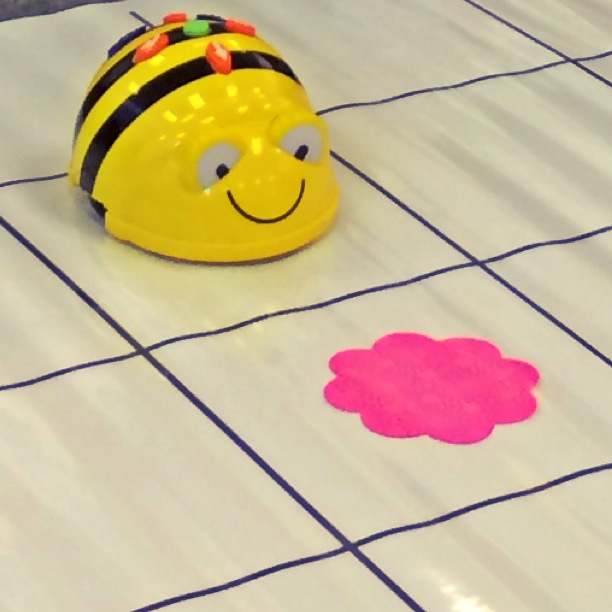
And so last week he ventured into our classroom at a perfect time to talk…and pinned me down on getting started with coding.  He would come in and get students started–using the Beebot I had purchased at the end of the summer and the Hopscotch app he had learned about.

photo

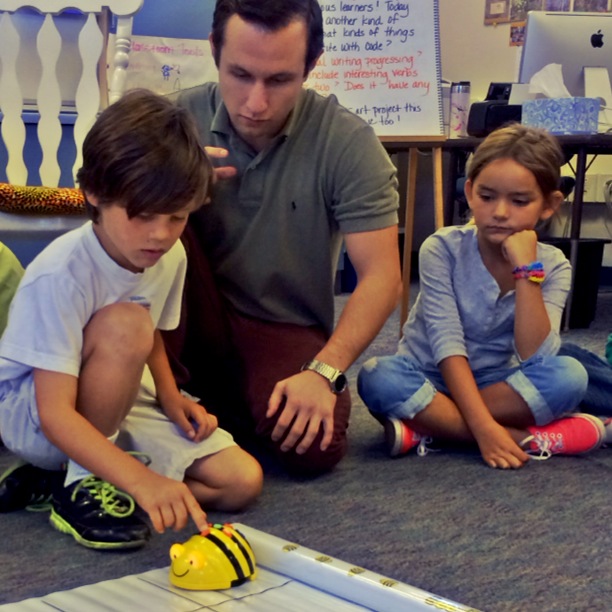
I love the way the simple, mechanical Beebot illustrates the basics of programming.  And I love that it also demonstrates how easy it is to have mistakes in your code, and the need to problem solve and “debug” through repeated trials and iteration.  My students were quick to understand the basics and very interested in the Beebot.  First graders could easily explain their thinking–and could figure out where they had made mistakes (older kids could too, and made mistakes too!).

photo-1

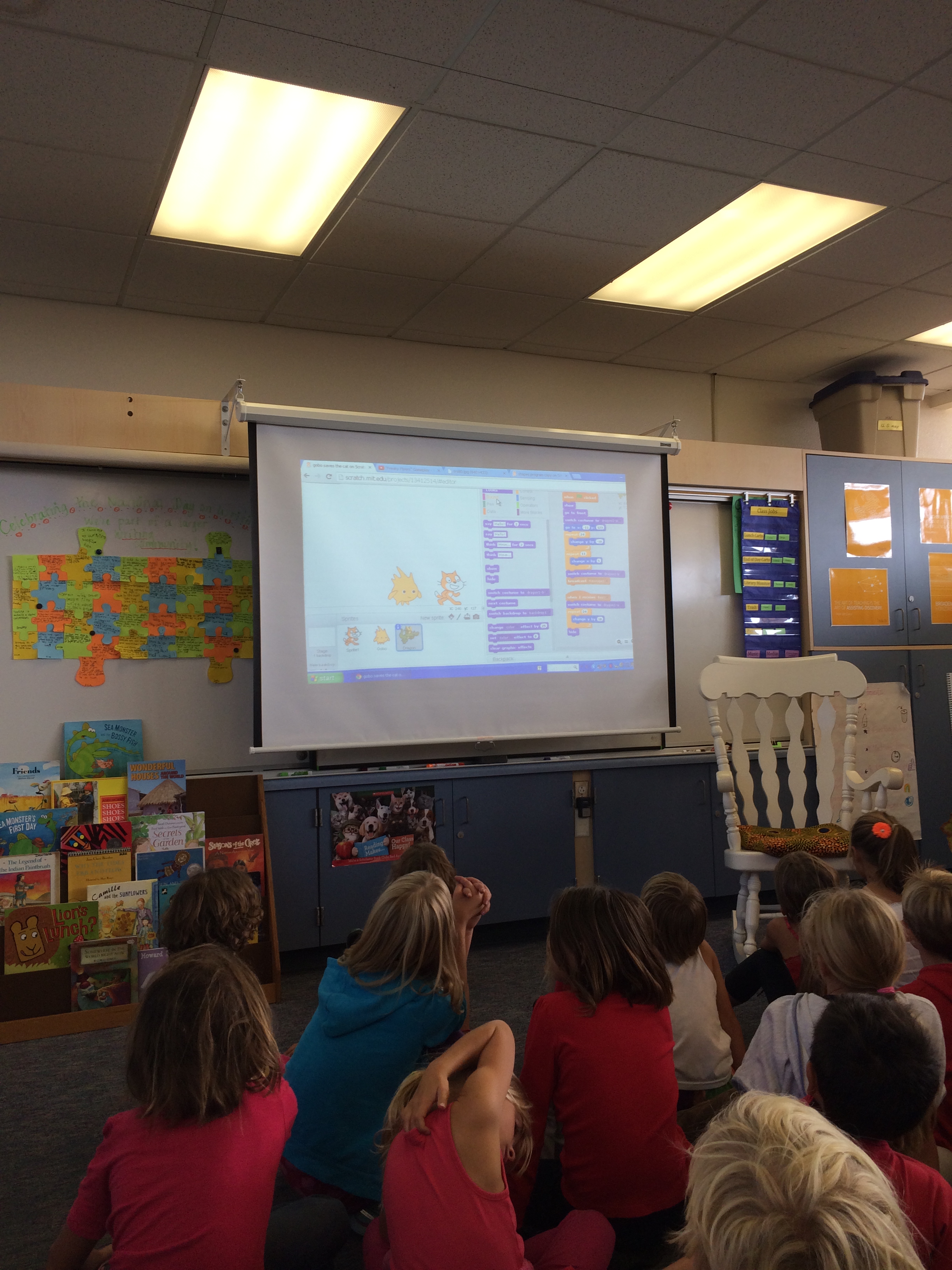
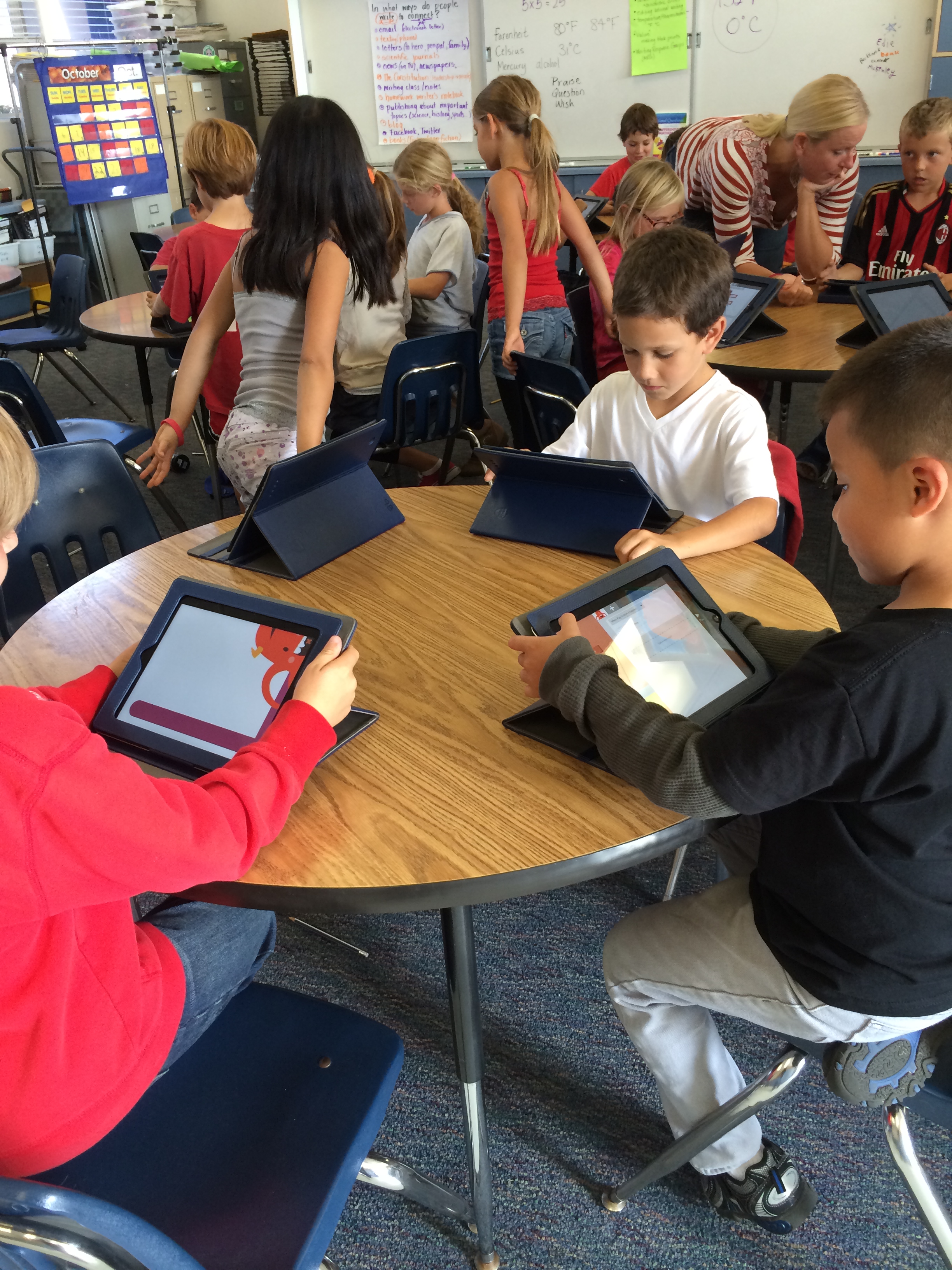
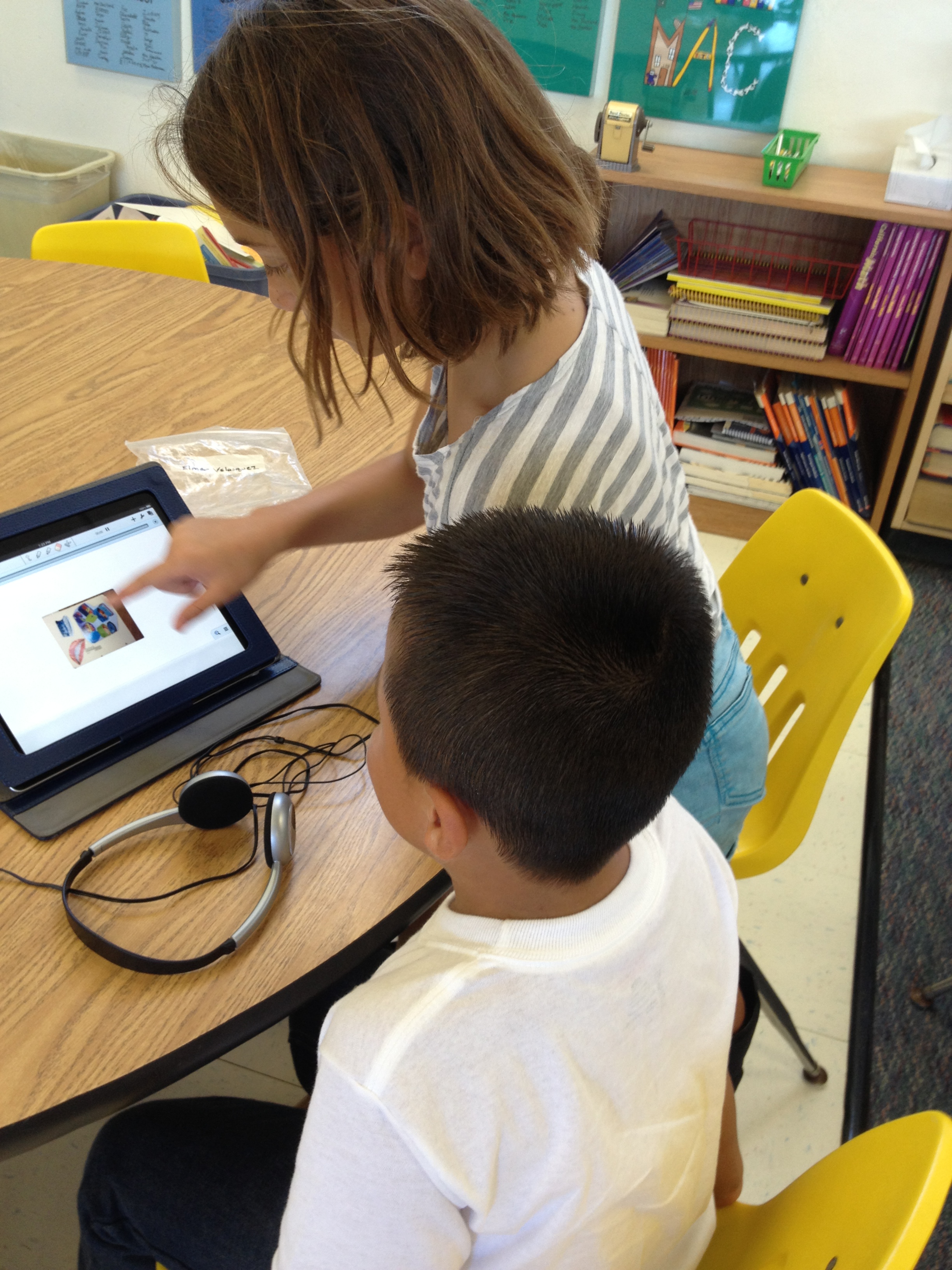
After exploring how to make Beebot move, we turned to our iPads and opened Hopscotch.  Similar to Scratch, Hopscotch uses interlocking blocks to make the characters move.  After trying a few moves in common and learning to make their character spin, we set students loose to explore the possibilities.

photo-2

And they began to “write” their own code!  We gave students the opportunity to share cool things they had figured out with all of us…and promised that we would give them more time to explore this app and create more code.

I don’t know any more about coding at this point than my students do, so we will continue to learn together.  And I think I am as excited about learning to code as they are.  I’m glad our Ed Tech teacher pushed us to set a date to start to work on coding with our students…and I’m glad he was there to get us started.  His checking in on our progress will also be an incentive to continue this with our students.  I have tons more to learn…but who better to learn it with than our students?

Ordinary

Today, out of necessity, I had to scrap a plan and invent another without notice.  For teachers, this is something that happens with some regularity and most of us pride ourselves on our flexibility. And I love it when that spontaneous plan blossoms into a wonderful learning moment.

We always have picture books at the ready to read to our class.  Some are set aside for specific purposes and lessons, others we know we want to read but are waiting for the perfect time to present itself.  Last year we read Spoon by Amy Krouse Rosenthal–a book that our students loved.  We revisited it a number of times throughout the school year for different purposes…from mentor sentences to a situation for opinion writing.

At the end of the year, I came across a new book by Amy Krouse Rosenthal: Exclamation Point. So today, in that moment when I needed a plan at a moment’s notice, I picked up Exclamation Point, reminded my returning students (two thirds of them) that this was the author of Spoon, and started to read.  I love those moments when each student’s attention is fully engaged…and they were hooked by the bright yellow cover and the whimsical smiling exclamation point. They noticed right away that there wasn’t a title…at least not written in words. The exclamation point itself stood as the title.

15815400

We read and discussed and noticed and connected all the way through the book.  We delighted in the words and the pictures and the message.  And we were inspired to write our own stories about punctuation.

And then later in the day we managed to get packed up and ready to go home with enough time for a book before the dismissal bell.  Overwhelmingly, students wanted me to read Spoon. It was sitting near Exclamation Point…and suddenly today became the day for a mini author study.  The second and third graders were treated to an old friend, and the first graders were anxious to get acquainted!

After reading, students volunteered their observations, connections, reactions, reflections. They had so many thoughtful comments and ideas for their own writing.  And one student pointed out that Amy Krouse Rosenthal wrote about ordinary things…in wonderful ways.  We started thinking about all the ordinary things we might write about and how our writing could transform them beyond the ordinary.  They were excited to write as the dismissal bell rang today…I hope they sustain that excitement long enough to actually get to the writing.

I’ve also been noticing the power of the ordinary.  Yesterday’s post was about the transformation of an ordinary photo into something I was willing to name as art.  And today on five minute friday the prompt is ordinary.  Today in the classroom the ordinary business of reading a book because an extraordinary opportunity to notice the magic of writers and writing…and turned students into active learners making meaning for themselves.  Today I was reminded that ordinary is a state of mind, and each of us has the power to re-look and re-see the ordinary in new ways.  I love when that wonderful learning moment in the classroom means that I learn too!

Crows

As I walked across the parking lot toward my office today I heard a crow cawing. I looked and noticed it sitting in a tree at the edge of the parking lot. It was loud and totally unconcerned that I stopped to take a photograph.

20131001-232143.jpg

Thinking about that crow made me realize how much attention I pay to the crows in my life. Those that are loud or otherwise command my attention get more of my time and energy than those that are quieter and less assuming.

Too often that’s true in my classroom too. How often do I seek out the quiet, still child? Instead, all too often I am drawn to that loud voice or the wiggly body that can’t seem to keep in its own space.

I’m glad I stopped to photograph the crow today. I want it to serve as a reminder to look for and notice the quieter beings–the roly polies, the snails, the chickadees and sparrows– that blend into their surroundings and go about their lives without calling for attention.

What am I missing when I only see the crows? What can I learn by tuning my eyes and ears and other senses to the quieter students in my classroom? I’m going to find out…

Engagement, Learning, and Technology

How do we, as teachers, use technology in ways that improve opportunities for student learning in our classrooms?  Now in our second year with 1:1 iPads, this question is always on our minds.  My teaching partner and I are always thinking about ways to increase student engagement and participation in all aspects of the classroom–in line with our beliefs that engagement and participation play an important role in learning.  Sometimes those ideas involve our iPads–and somethings they don’t, we are always considering student learning rather than iPad use as the goal.  Paula over at Amplifying Minds wrote earlier today about the role technology should or could play in enabling learning.

This week we experimented with using the app educreations as a tool during our morning calendar time to encourage more interaction and participation.  My immediate observation is that more students can share their mathematical equation generation since the white board feature allows students and teachers to see many more attempts than were available orally.  And the novelty factor is certainly at work–students are interested in using the iPad, so there is more immediate engagement.  I do realize we could do a similar process using our actual handheld white boards and markers–messier, but similar.

I’m also seeing students use different aspects of the educreations app for their equation generation–the typing feature, the writing feature, a variety of colors…  (And it’s way less messy than the markers!) I feel like this is just the tip of the iceberg of possibilities, and I suspect that students will show us more ways to use this tool.

And an added bonus was reported back to me…a guest teacher who worked for my teaching partner on Wednesday using this new tool in our classroom implemented this strategy in another classroom later this week.  She was quite excited about the success and engagement the students experienced, and proud of her own ability to implement a new strategy with the students.

photo-4

Sometimes it take a new tool, like the 1:1 iPads to push our thinking about ways to modify our own teaching strategies…to move out of comfort zones and try new ways of working with and engaging students.  I don’t have any illusions that this particular strategy being a ground-breaking innovation in learning, but even small steps can improve the learning experience for students.  We just have to keep moving forward…and be open to experimentation and listen to student ideas about innovation as well!

How are you supporting and enhancing student learning in your classroom?

Building Rhythms

As we enter the fourth week of school, I can feel the rhythm settling in.  It’s not the dulling thrum of never-changing routine, but the strong heartbeat of a community in progress.  You might think that because two thirds of our students remain the same each year, that the beginning of the year would be seamless.  But in fact, we feel the transition even with so much remaining the same.

Each year students take on a new role in the classroom. Those veteran third graders, who have already spent two years in the classroom with us, are figuring out just how to be a classroom and school leader.  They are considering how to provide support to their younger classmates while still maintaining their emerging “cool” image…not an easy balancing act!  Second graders, who used to be those “little kids,” are wrestling with stepping up to the demands of the being in the middle–no longer needing as much support, and yet grappling with no longer being the youngest.  And our brand new first graders have spent the last several weeks trying to figure out what it means to be a part of our multiage class.  A place with a history–a legacy of shared learning that pops up regularly, and they feel left out of.  They are learning to work with others, to accept help from their older peers, and to risk adding their contributions to our classroom learning.

This week feels like the turning point.  We are feeling like a cohesive community learning together.  Students are taking risks, supporting each other, and settling in…with the calm hum of learning-in-progress filling the room.

I can feel the rhythm building and soon the melody will come into focus.  I look forward to our voices blending and harmonizing as we grow together.

I love these moments of teaching.

A Lesson in Resilience

Learning is what school is all about…and I’m lucky to learn with my students every day.  Today’s lesson was all about resilience.

We have 1:1 iPads in our classroom–for the second year in a row.  It’s one of those mixed blessings:  a flexible tool that kids love to learn with, and a tool with a mind of its own that creates havoc with lessons from time to time.  Last week, before the students arrived, Margit and I spent time sorting out our returning students’ iPads and assigning the newly “cleaned” iPads to our new students.  We made sure to sync the entire batch to our “cart account” to ensure that all our apps were on all the iPads and we also charged the iPads so they would be ready to use.

We introduced (or reintroduced) the iPads on Tuesday (the first day of school) with our focus on care, basic operations, and getting the IPads out and putting them away.  Students constructed rules for iPad use yesterday…and we had grand plans for a project involving the iPads today.  Things began smoothly…we split the students this morning with returning students in one room “cleaning up” their iPads and new students in the other room personalizing theirs. Students were successful and engaged–helping one another and taking care of business.  That wonderful “buzz” permeated the classroom as we all were reintroduced to our tools after a summer away from them.

We moved on to our project…working with personal “artifacts” to tell a story about ourselves. Each student photographed their artifact.  They worked to ensure they captured the item in the photo, careful to keep fingers out of the way and not let the iPad cover block the lens.

After recess we moved on to the next step: using the Notability app to import the photo and then record their voice telling the story of the artifact.  We walked through the basics of the directions confident that students would help each other through the steps.  And then the rumbles began…

It quickly became clear that our new students did not have the Notability app on their iPads–in spite of our syncing last week–and it wasn’t a quick fix.  Times like these doubly reinforce the benefits of co-teaching.  Margit worked with the IT support as I encouraged students to rehearse for their eventual recording, even without the iPad.

As you might expect, there was some anxiety from those without iPads–wondering if they would get to work on their projects and the sense of frustration that comes with plans gone awry.  But overall, resilience won out.  Our projects did not get done today and students have been reassured that they will get to return to the work tomorrow…with Notability installed on all the iPads.  As teachers, we once again learned the importance of resilience and flexibility and a sense of calm in the face of a potential storm.

I know that in spite of the frustration, our students will benefit from learning how to respond when technology complicates our best laid plans.  We hear plenty about this generation’s need for immediate gratification and inability to wait…often attributed to new technologies.  And sometimes I don’t think I am any more patient than they are!  But what I know from experience is that the use of these digital tools in the classroom is the perfect venue for teaching delayed gratification, problem solving, cooperation, and resilience…important life lessons for all of us.

The First Day

What do you remember about the first day of school?

photo-3

As a teacher, I continue to experience the first day of school every year.  And every year I have those same feelings of nerves and excitement. In my multiage class I get the best of all worlds–I get to loop with my students entering second and third grade and I get new first grade students every year.

Today was our first day of school and it began with hugs and smiles…from returning students and parents.  We got to catch up a little and students easily said good-bye to their parents as the school day began.  And we met our new students with the excitement of beginnings.  Nervous energy–ours and theirs–reminded us of the important milestone of starting a new school year.  Those first days are filled with establishing the routines that will mark our community all year long.

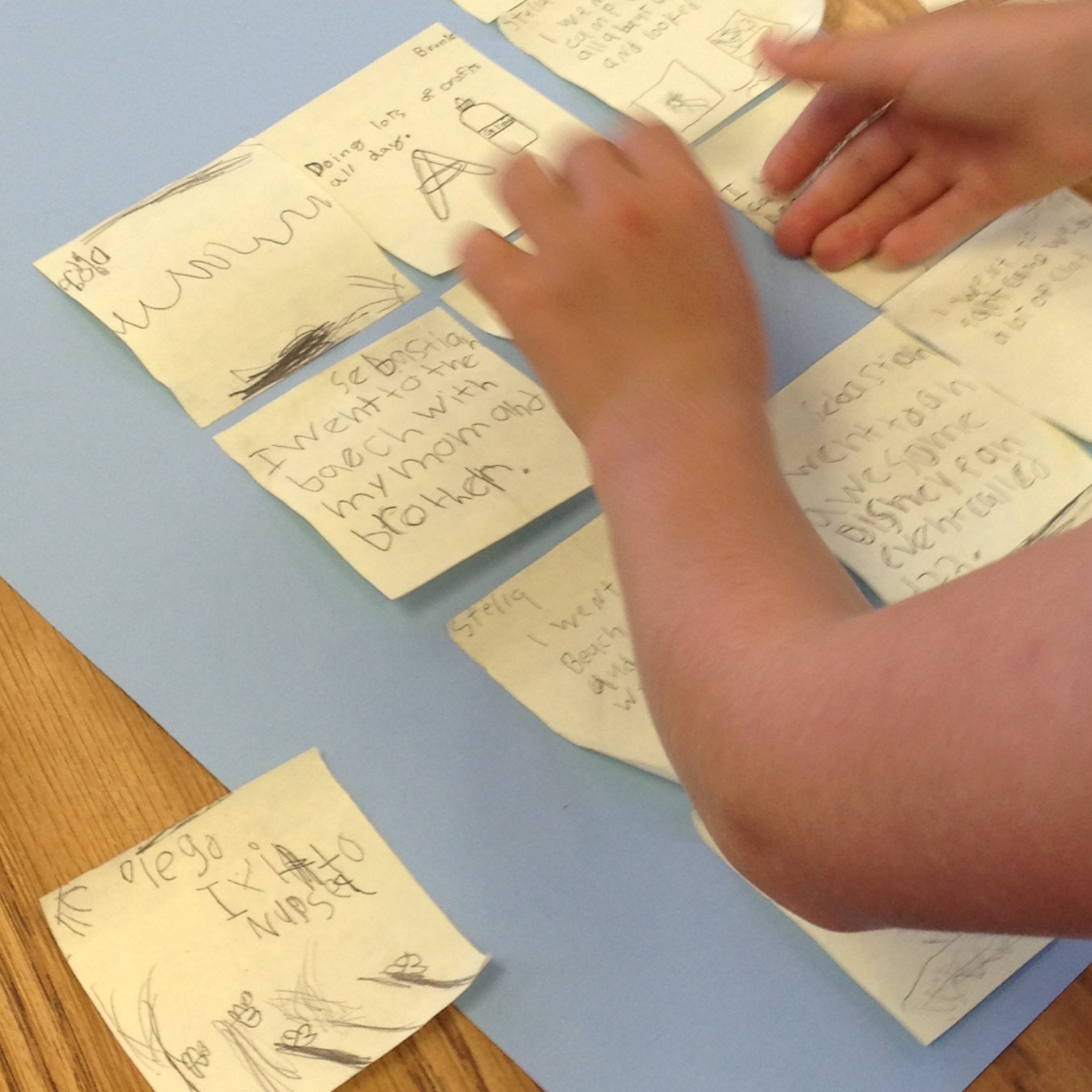
My highlight of the day was watching my students work in groups, returning students facilitating the activity for their younger classmates.  After discussing the highlights of their summer (everything from watching TV to running through the sprinklers, trips to visit cousins and grandmas to plenty of beach time, camps of every type–have you ever gone to fishing camp?–to playing at the park near home), students selected four of them to draw and write on sticky notes.  Then as a table group (teams of four), they sorted their summer favorites and created categories to describe them.  Finally each group created a graph that we will come back to in the next few days to both learn more about graphing and about each other.

photo-4

While we wrote and read, sorted and classified we also began to form ourselves as a learning community where everyone has something to offer and much to learn–teachers and students alike.

I was exhausted at the end of the school day…and I suspect the same was true of my students.  But I can’t wait until tomorrow.  The first day of school marks a milestone, but it the days that follow that are the reason I teach.

What do you remember about the first day of school?

Learning from Patterns

This week the #sdawpphotovoices photo-a-day focus has been patterns.  And while I have taken photos of the patterns I have found, I have also been thinking about my own patterns…patterns of thinking and patterns of behavior.

Being back at work definitely re-directed my attention from photography to my classroom.  On Monday I remember getting home, feeling tired and realizing I hadn’t taken a single photo all day!  Taking a look around the house for interesting patterns led me to my macro lens…I took pictures of the center of the succulents in the kitchen window.  Using picstitch I put four pictures together and posted with the caption, “What patterns do you see?”

photo

Is it cheating to create your own pattern by stitching photos together?  Tuesday and Wednesday were also days where the photos I posted didn’t really reflect patterns as they are defined in the design world.  I didn’t want to post photos of tiles or carpet or brick or other typical patterns.

On Thursday I was more inspired and had already taken several photos of patterns when I squeezed in a five minute pattern walk between errands in the afternoon.  (You can see more of Thursday’s patterns here.)  This was the day when I realized how important it is to take some time every day to do something just for yourself.  Those five minutes I spent looking for and photographing patterns were energizing and relaxing.  This is a practice I want to make sure to develop.

Most of the patterns I photographed this week were organic–nature’s beauty unveiled in heirloom tomatoes, cactus blossoms, clouds, and kelp.  Even the man-made patterns I captured often had an element of nature to them, I found myself looking at shadows and seeing patterns repeated by the sun’s angles.

photo-1

picstitch

photo-2

photo-3

photo-2

So I’ve noticed that my photo-a-day theme does make me look at the world differently than I might without it, but that regardless of the theme, I take pictures that catch my eye…and then play with language and ideas to make them work as I post.

So my two take aways for the week are:

1.  Take time to do something I enjoy each day (photography is an example of this), even if the photos don’t match the theme.

2.  It’s okay to play with the theme if it works for the photography–isn’t that the point after all?

What patterns do you notice in your life?  Which will you change and which will you embrace?

Next week is repetition…I wonder what that will teach me?

Developing a Practice

One of my favorite weekend morning activities is the opportunity to lounge in bed and read. It’s such a luxury since even on weekends I often have to be up and about and out of the house early.  This morning I was reading Natalie Goldberg’s latest book, The True Secret of Writing: Connecting Life With Language.  I’ve read most of her books–and while this one doesn’t rank as my favorite–the chapter I read this morning on the importance of developing and committing to a practice struck me.  Here’s what Natalie says about practice:

…we established a different slant to practice other than “practice makes perfect”: It’s something you choose to do on a regular basis with no vision of an outcome; the aim is not improvement, not getting somewhere.  You do it because you do it.  You show up whether you want to or not.  Of course, at the beginning it’s something that you have chosen, that you wanted, but a week, a month in, you often meet resistance.  Even if you love it, inertia, obstacles arise: I can make better use of my time, I’m tired, I’m hungry, this is stupid, I need to listen to the evening news.  Here’s where you have the opportunity to meet your own mind, to examine what it does, its ploys and shenanigans.  That’s ultimately what practice is:  arriving at the front–and back door–of yourself.  You set up to do something consistently over a long period of time–and simply watch what happens with no idea of good or bad, gain or loss. No applause–and no criticism.

To get myself blogging, I gave myself a challenge (maybe that is one variation on a practice) to write and post a blog daily for 30 days.  That short term challenge felt doable.  I didn’t create the challenge for myself because I hoped to become a professional blogger (or writer), but because I wanted to feel what it would be like to consistently blog.  But, I am on the verge of establishing a blogging practice.  I have continued to write and post daily on this blog, well past the 30 days of the challenge…but I am sure as the school year begins on Tuesday that this daily practice will need to morph to a regular practice that is more like a three times weekly practice.  But what I love about the practice is that I have written and posted every day–even when I was tired and couldn’t seem to think of anything interesting to write.  I have pushed past my comfort zone and figured out how to generate ideas and get something composed each and every day.

And I can authentically share my experience of developing a practice with my students.  I can help them develop a regular writing practice.  It doesn’t have to be my practice–writing and publishing a daily blog post–but the act of developing a practice and “showing up” on a regular basis help us each learn something about ourselves.  It also helps us to develop those valuable traits of persistence and grit–hanging in there even when things seem hard.  Because ultimately it’s our drive that determines success and learning.  Talent is great…but effort over time is everything.

This reminds me of my time working for McDonald’s Restaurants before I decided to go into teaching.  Ray Kroc, McDonad’s founder, was inspired by this quote by Calvin Coolidge…which I kept for years on the bulletin board in our home office.

Nothing in the world can take the place of persistence. Talent will not; nothing is more common than unsuccessful men with talent. Genius will not; unrewarded genius is almost a proverb. Education will not; the world is full of educated derelicts. Persistence and determination alone are omnipotent. The slogan “press on” has solved and always will solve the problems of the human race.

Natalie recommends keeping a log of your practice–even if you skip–and rather than giving up when you miss a day, just make note of it and resume the next day.  I like this recommendation…and I like that my blog keeps track for me.  I can easily see which days I have “practiced.” What practice will you develop?