Category Archives: teaching

Lighting a Spark

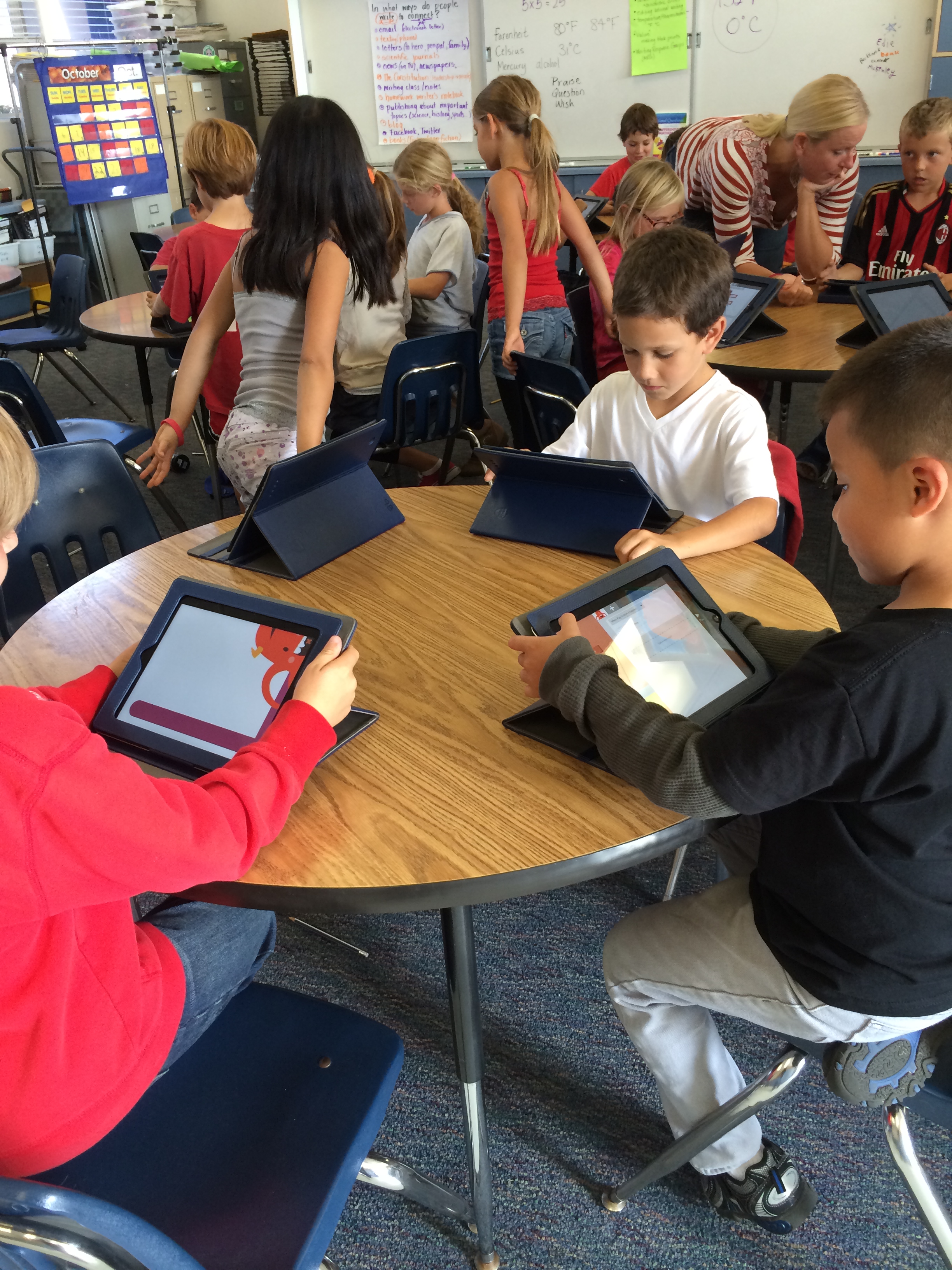
In my last blog post (here) I touched on that idea of work and play and the way that they are often interconnected in the way I experience my life and work.  And as I am thinking through some of my conference experiences, I see the blurriness…and maybe even more than that, the overlap of work and play.

When one of my colleagues asked me about what sessions I intended to attend at the conference, I told her that I was planning to make my selections based on what sounded interesting and fun rather than what I “should” do for the good of my writing project site or someone else’s expectations.  I was already pre-registered on Friday for a session about Scratch, the platform designed for teaching computer programming to kids, and a session on e-textiles involving puppet making and circuitry.

When I arrived at the welcome event for the National Writing Project Annual Meeting on Wednesday, I was drawn to a table near the door loaded with little notebooks…that upon closer examination had copper foil, watch batteries and LED lights.  Chatting with David, I learned about Jie’s graduate work and interest in the intersections between art, writing, and engineering.  Right away I knew that Jie’s session was one that I would prioritize!
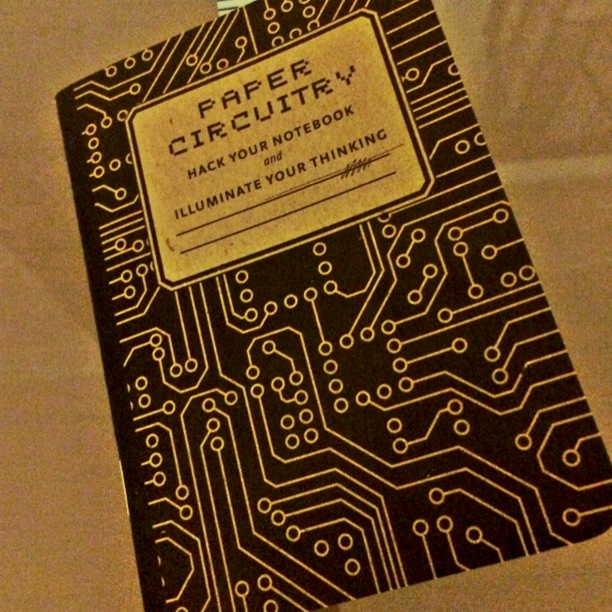
photo_1

After two other sessions where I presented, a stimulating and thought-provoking plenary panel (more on that later), and a networking lunch, I headed off to the session with Jen, David, and Jie called Hacking the Notebook.

You could feel the energy surging in the room as we were handed notebooks, copper tape, a battery, and LED lights.  We listened to Jie share some of her work and thinking behind the idea of “lighting up” notebooks and stories and doodles…of combining science, technology, engineering and math with literacy and art (that STEM to STEAM connection).  She showed us an amazing work of art she created of dandelions that you could blow on to light up the puffs of white fluff.  (I encourage you to take the time to view this vimeo)

And then she walked us through the template she had created to teach about circuitry in these little notebooks that are a combination of background theory, documentation of Common Core and Next Generation Science Standards, instructional diagrams, sandbox for experimentation, engineering notebook…and more!

Our first task was to follow specific instructions and a diagram to lay down the copper tape, attach the LEDs, and then attach the battery to make the lights light up.  We followed a very specific diagram while learning (or being reminded) about the basics of circuitry.  That part was pretty easy…we just had to make sure that the pluses and minuses were facing in the right direction, that foil touched the electronics and didn’t touch places that would make a short.  And when we were successful, turning the page resulting in the light shining through the page and illuminating a lightbulb that we were then invited to draw and write around.
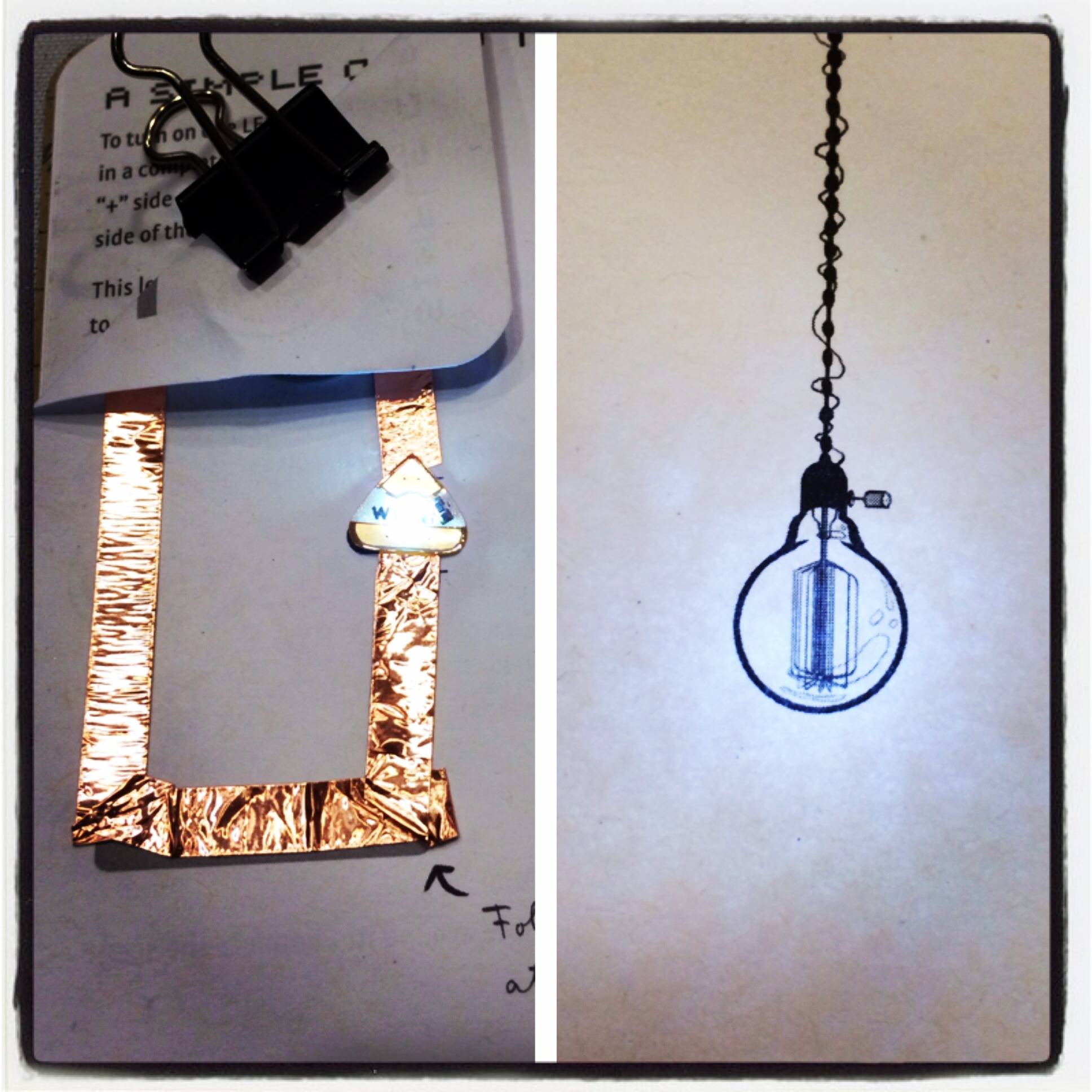
photo-2

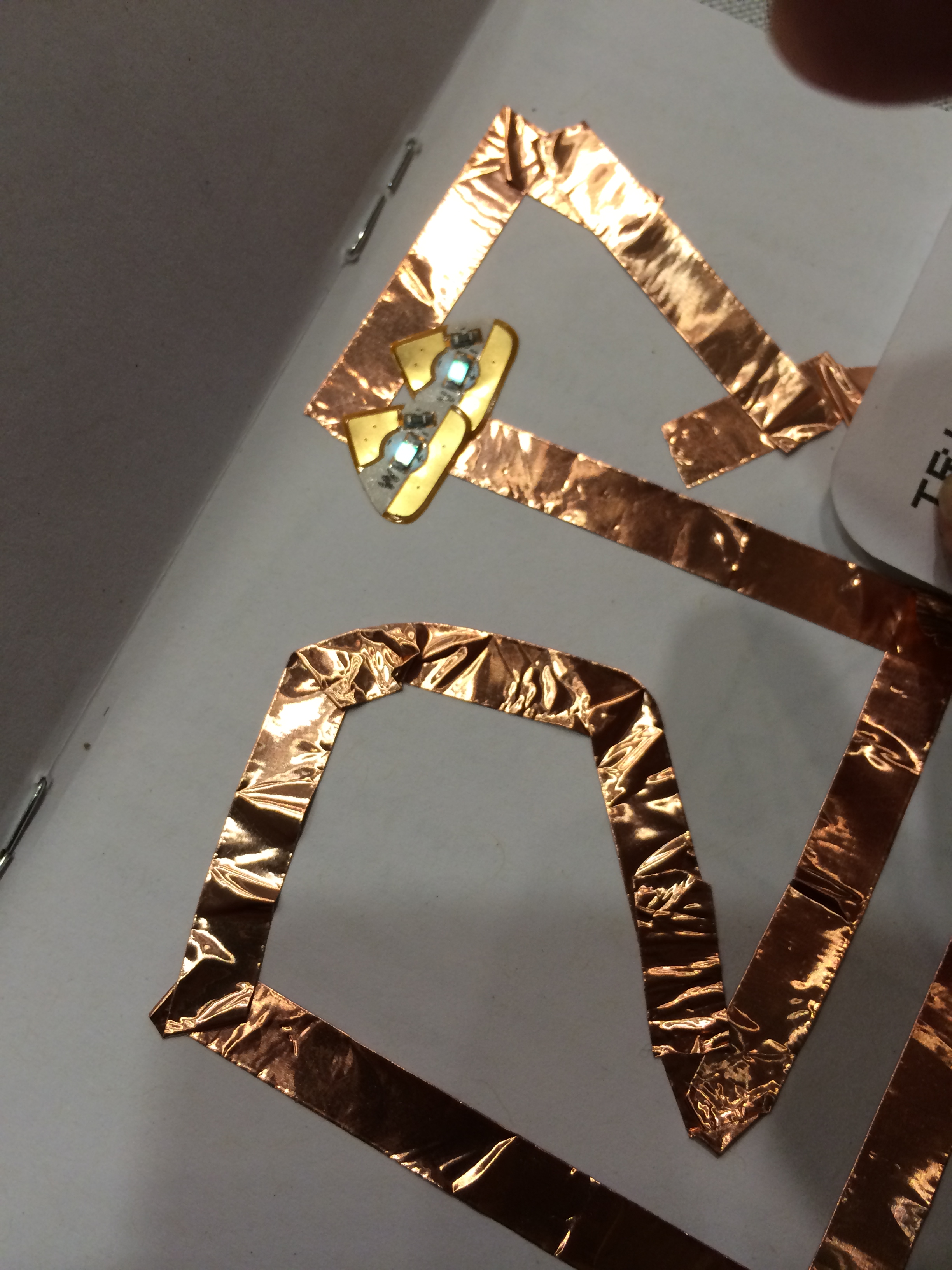
And that’s when the task took us to the next level of thinking.  Taking what we had just learned about circuitry, we turned the page and were to create our own light up design with copper and bulbs.  We had a number of lights…so were encouraged to move beyond our simple experimentation of the previous page.  Jie encouraged us to notice how the copper tape could curve and how pieces could combine to create whatever we could imagine.  And…we had to remember how to make the lights go on.  I tried to get a bit tricky, adding two lights in a series…carefully lining up the poles to ensure it would work.  And it didn’t!  What was wrong?  Was it a connection (or lack of connection), an overlap that redirected the current, too much demand by the lights to allow a single battery to power them?

Problem solving and iteration became essential as I traced and retraced my circuits.  I consulted with my tablemates and observed their works-in-progress.  And I enlisted the help of Eunice, a graduate student helping out in the session.  With Eunice’s help I figured out that the serial circuit was likely requiring more power that my battery had to offer (my first light in the series would light, but the second stubbornly refused to light, even after making adaptations).  She suggested I try a parallel circuit design instead, explaining how if the lights were side by side they would require less energy to light.

And after more iteration and problem solving, I got both lights to light up!
photo

But what I wasn’t able to accomplish in that short, 90-minute session was both the science and a creative story-driven project.  I knew that for me, I wanted to focus on figuring out how to make my lights work and consider the possibilities before working on the story.  I struggle with the “creativity on demand” mode…but do have some more copper tape and lights…and my battery, so I plan to go home and do some more exploration on the creative, art and language-based, side of my project to combine with my knowledge of circuitry.

But my experience was not everyone’s experience.  Some people knew exactly where their stories and drawings would begin…and followed them as they experimented with their copper and lights.  And some people were so flummoxed by the science that progress was slow and frustrating.

In talking with Jie later that evening at the social event she said that she had learned a lot by working with us.  Writing project teacher leaders do a lot of meta-narrative thinking and talking, examining their own processes and experiences in service of the work they do with students and teachers.

And I did ask her how that dandelion art works since I couldn’t figure out how blowing would make lights go on!  She said the lights were connected to sound sensors and the blowing caused the sensors to hear the breath, like wind, and cause the lights to illuminate!

I can’t wait to get home and lay out my supplies and think and work through a piece of writing and art that will light up.  And I can’t wait to share this work with others as I consider how I might do this with students…my own and/or others that we might work with through the writing project.  I’ll let you know how it goes!

If you’re interested, here is page that lists the supplies and where you can get them.  I’d love to know what you create and discover when you play with circuits and lights in your notebook!

Work and Play

I’ve been accused–more than few times–of being a work-a-holic.  And maybe there is some truth to that notion, but it is because my work is so much fun that a lot of times it seems like play.

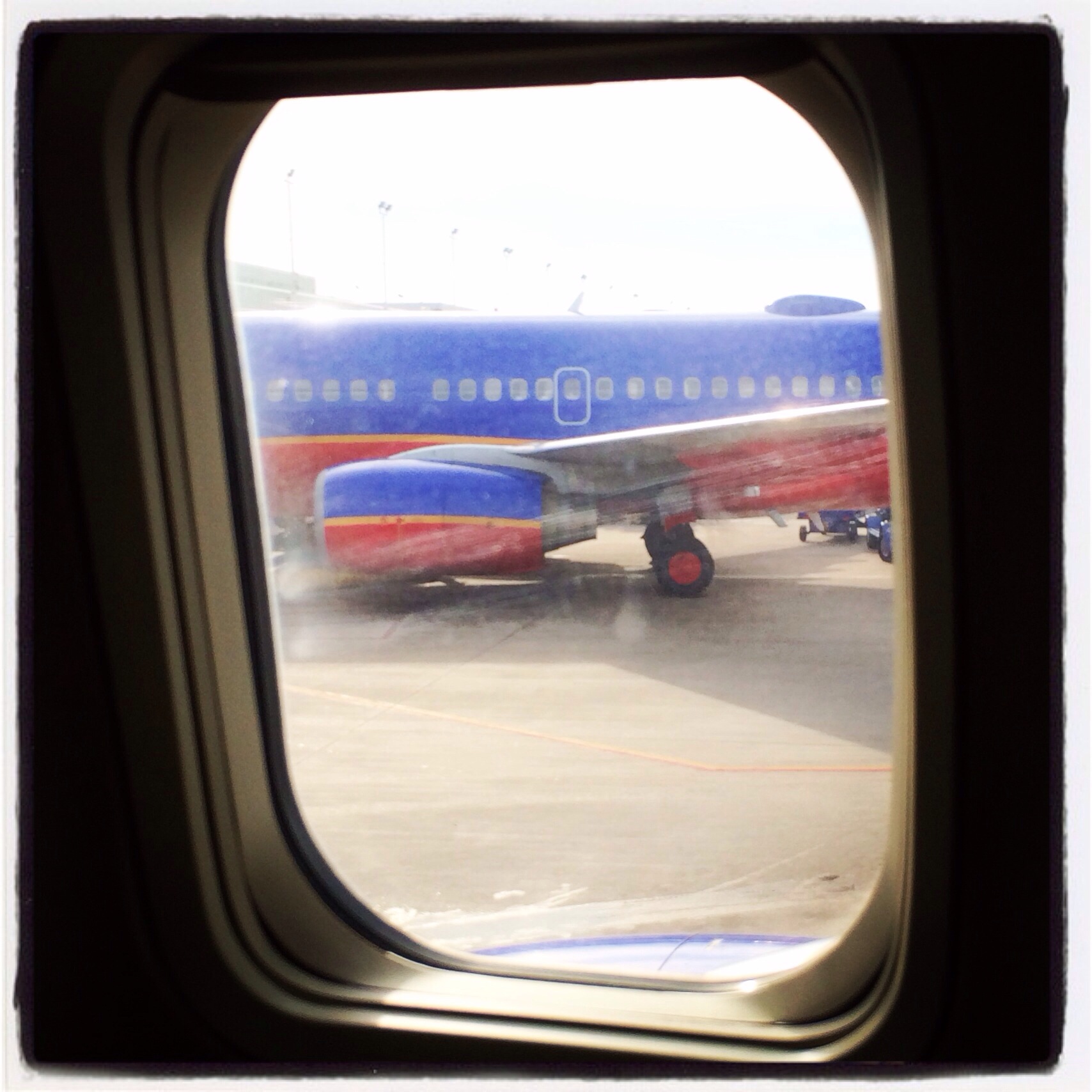
I headed out at the crack of dawn Wednesday morning to fly across the country to join my writing project colleagues in Boston for the National Writing Project Annual Meeting that is held every year in conjunction with the Annual National Council of Teachers of English (NCTE) conference.

20131120-231705.jpg

The Annual Meeting is an opportunity to gather with writing project people from all over the country, to learn from each other, to share ideas and reconnect.  And it is fun!

This conference begins by seeing old friends and learning about what is happening in their places and then offers more formal opportunities for learning from each other.

We’ll spend all day Thursday and Friday in more formal settings, thinking about our students and our teaching…and thinking about how to support teachers and their learning too.  We’ll consider writing in all possible contexts, across all content, across platforms, and across ages and experiences.  And even though we will think hard, write a lot, and at the end of each day feel exhausted, we will continue our conversations over dinner, walking to and from our hotels, over an evening cocktail, and maybe even into our dreams as we finally sleep.  Because these moments spent face to face with our colleagues from all over the nation are to be savored.  They are work and they are play.

We’re here, Boston!  Ready to work and play in this special place.

photo

Reach for the Sky

I spend many Saturday mornings immersed in professional learning.  This morning was our first meeting of this year’s SDAWP Study Groups (a hybrid of book study and teacher research).  Sixty teachers met this morning to participate in one of five groups…and the energy in the room was palpable!

In three hours we wrote, discussed our writing and the connections of our processes and preferences to the students we teach…and then broke into smaller groups to get to know one another, explore our new book, and make plans for reading and exploring ideas in our classrooms.  All this on our own time, because we want to grow professionally with others who are also passionate about teaching and learning.

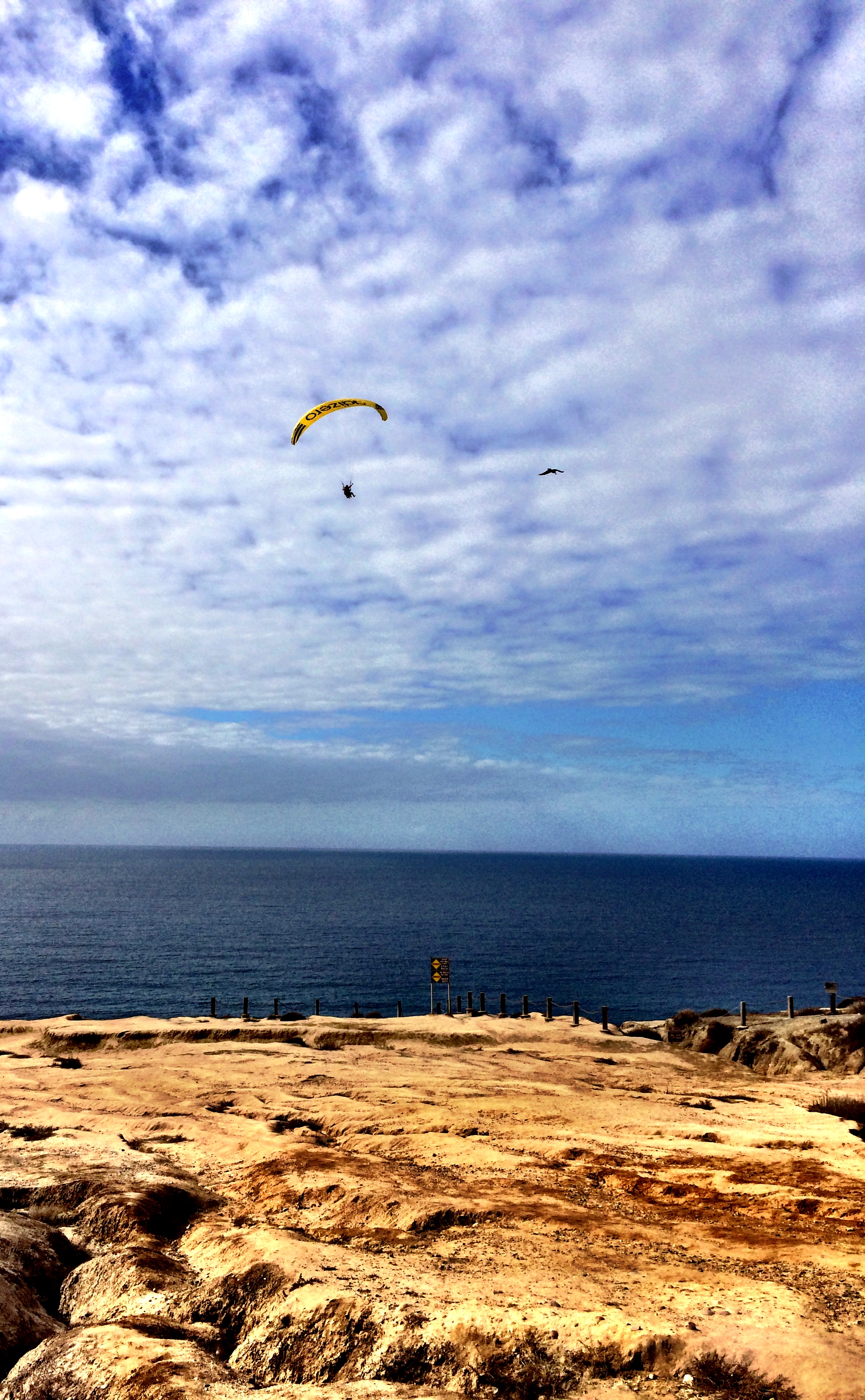
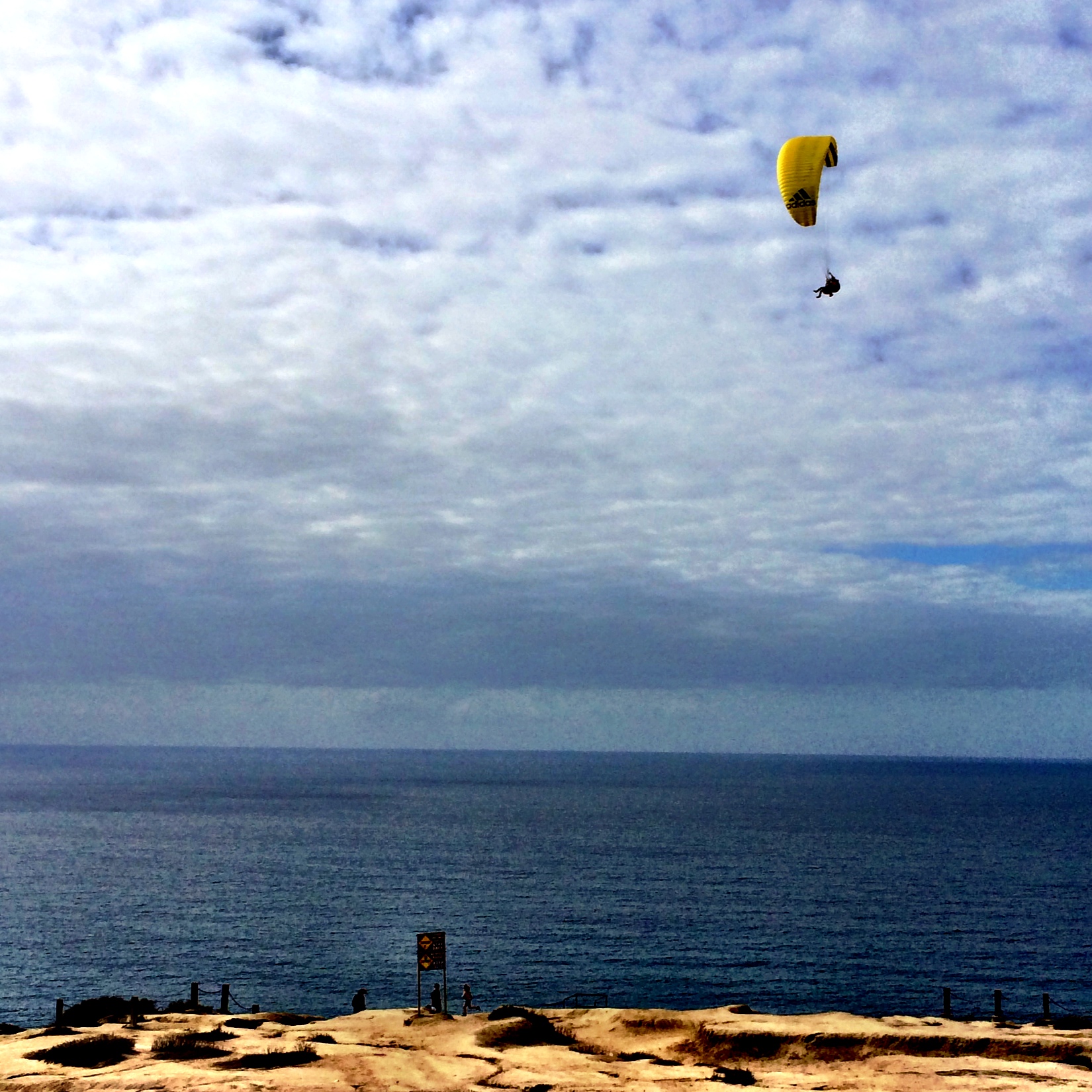
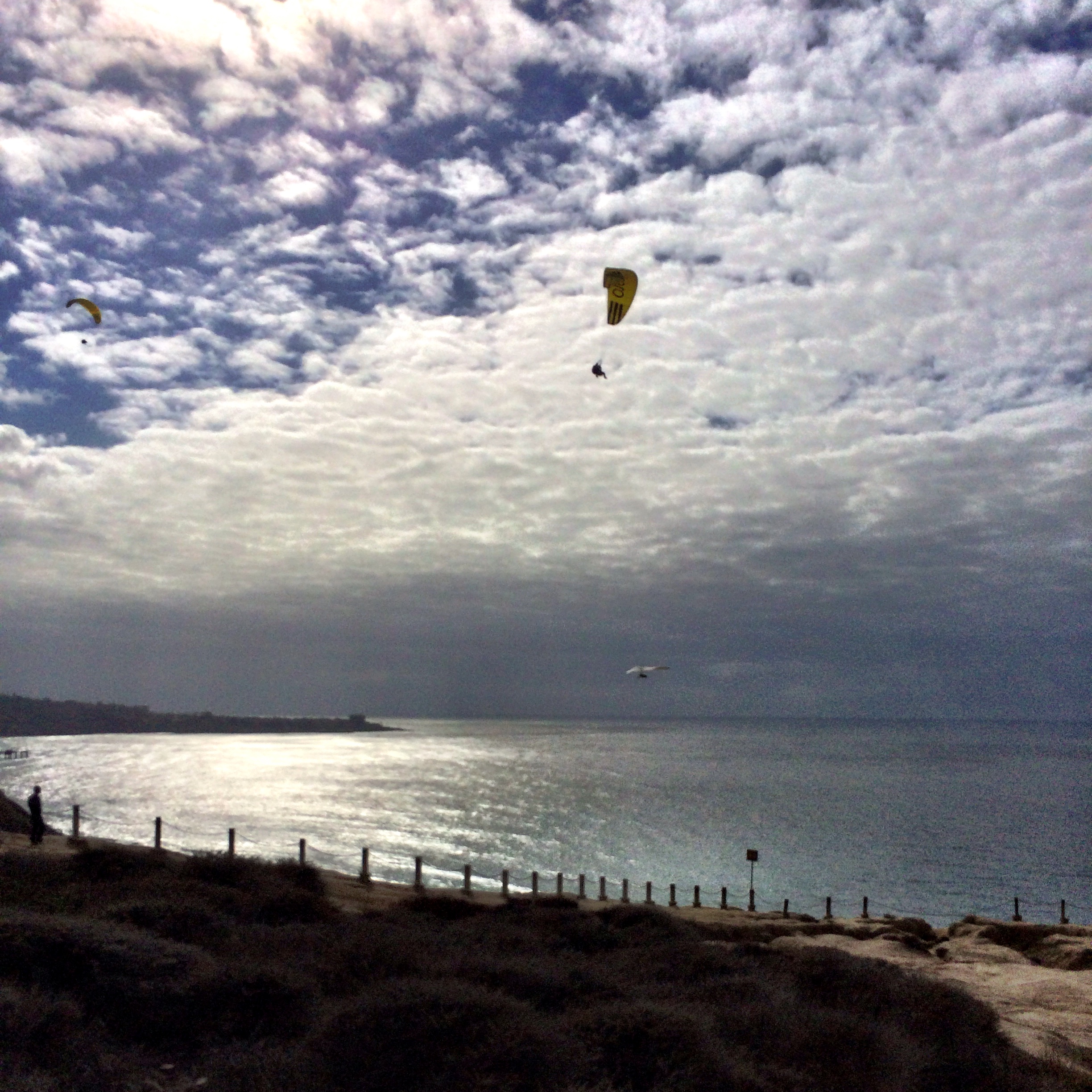
As I was leaving, I noticed hang gliders and paragliders soaring in the sky near the university.  I remembered that the Torrey Pines Gliderport turn off was nearby, so I turned and followed the road down to a dirt parking lot.  And there, along the cliffs overlooking the Pacific Ocean, was a spectacular view of the gliders and the ocean!

photo_1

In spite of the cooler weather (after our 80 degree temps earlier in the week), the conditions were perfect for gliding…and for watching and photographing the gliders in action.

photo_2

While I have no real desire to glide over the beautiful beaches of San Diego, I understand the urge to fly…to experience the freedom and excitement of soaring with the wind currents and looking at the world from a new perspective.

In some ways my experience in study groups this morning was a lot like hang gliding.  There is energy and excitement in gathering with other interested educators to continue learning together.  Interactions with teachers of all levels (K-college) and a variety of schools, districts, and teaching demographics offers new perspectives and views of teaching.  Rich conversations stimulate thinking and encourage actions…we can’t wait to come back next month to share our beginnings and continue our conversations and learning.

photo-3

What conditions for learning allow you to soar?  How do you set up those conditions for your students?

Layers

Today’s Weekly Photo Challenge asks us to think about layers…how they reveal, conceal, and make things more complex.  When I think about layers, I think about teaching and learning.

photo_1

When I teach I have to decide if I will start with the broad overview…the big picture and then zoom into the details.  Or if I will start with a detail and continue to pull back to let the bigger picture be revealed.  The best teaching is layered…creating a foundation that is continually built up so that learners can access the tools they need to keep growing.  Learners need to see the beauty so they will continue to dig and uncover the magic of the subject at hand.  This pier makes me think of all those different views, it’s like windows layered on each other, creating a view of possibility.

photo

Some layers are more like the supportive structure of bridges or scaffolding.  The layers create footholds and braces for continual progress.  They are less about the view, but more about feeling safe enough to take some risks.  It helps to know that when you stretch to reach the next rung, there are some toe holds to prevent a total collapse.  When I teach, I want to layer supports like this bridge does, allowing students places to hang on to as they reach and stretch toward the next level.

photo-2

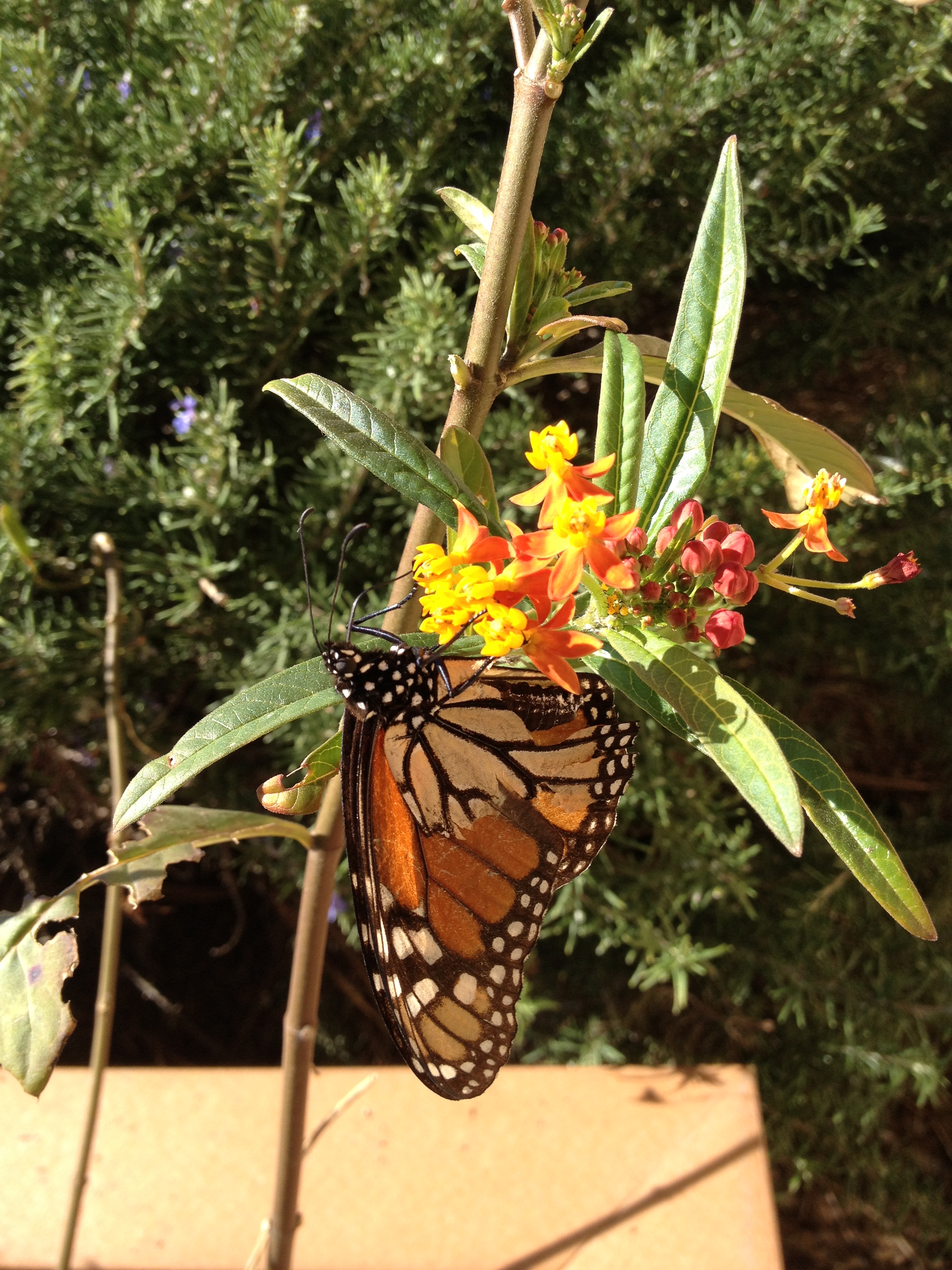
Other layers are more like the stripes on these monarch caterpillars.  The stripes represent the way our knowledge and skills continue to grow and build, layer upon layer.  It makes me think of the small group of students who gathered in the classroom before school this morning.  We’ve been learning computer programming…and some made a bit of a breakthrough earlier this week (see this post), and have been working in whatever stolen moments they can find to continue the designs they started.  They’re excited and motivated…and they’re teaching each other and learning from each other as they learn from their successes and their mistakes along the way.

Like these caterpillars, they have been layering on their knowledge, black on white on yellow, black on white on yellow…as they experiment with the programming tools in Hopscotch.  And like these caterpillars, they are getting bigger and stronger…and closer and closer to transforming into beautiful butterflies.

photo-6

Layers are like that!

Planning for Coding

You might remember that I’ve been exploring computer programming (or coding) with my young students.  You can go back here and here to see our early attempts.  The basic idea is clear…you write code to make your electronic device do something.  At first, ANY something was fun.  And then we all learned to make a specific something (square and triangle).

Today we asked students to make a plan for their code and then carry it out.  They drew a quick sketch (we reminded them to keep it simple and to use what they already knew about squares and triangles to get started) in their notebook and then move to Hopscotch on the iPad to carry it out.

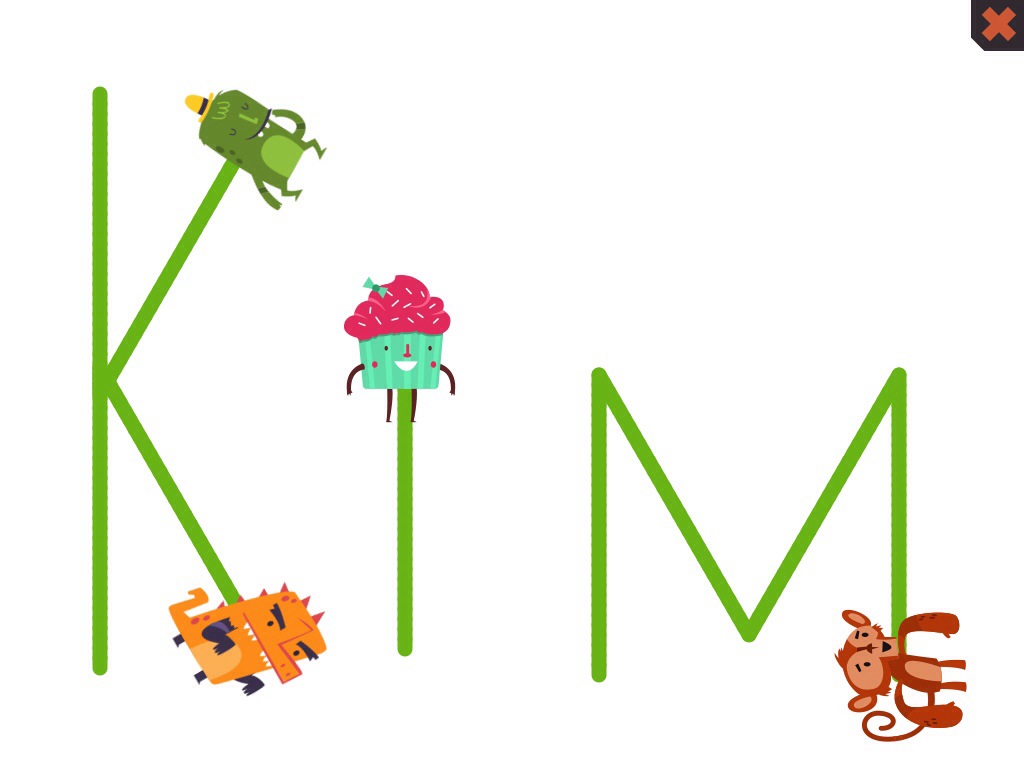
I showed them how I had gone home and figured out how to write my very simple name with straight lines and angles similar to those we had used to make our squares and triangles.

20131112-201406.jpg

What I’ve learned is that not all students take to coding equally…and that doesn’t surprise me.  Some students find it hard…and they are at a loss of how to proceed.  I encourage them to study what they have done before, but they need more of the one to one support of having someone sit and talk them through their choices.  Others are quite persistent.  This first grade boy worked and worked to draw this house.  He struggled with the final side, and while it’s not quite straight…he was proud of his accomplishment!

photo_3

Lots of girls liked my idea of drawing letters or writing their own name.  This second grade girl figured out how to make several characters come together to make an “E” to represent her name.

photo_2

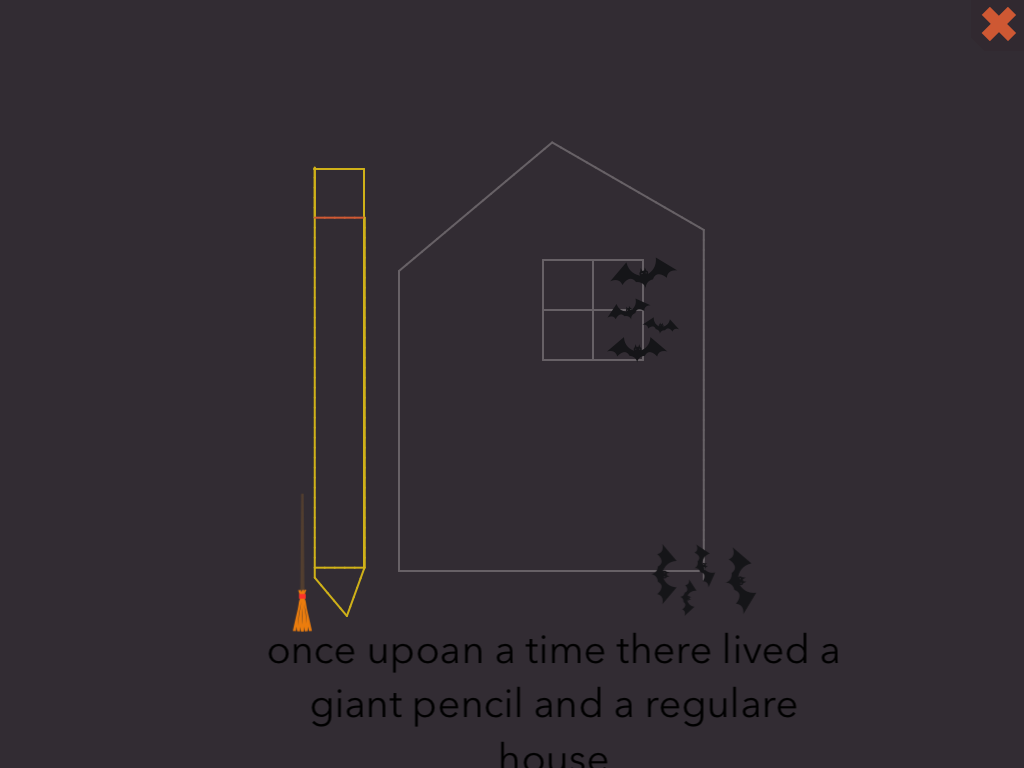
And others risked creating something more complex.  This third grader managed to create a picture along with some words of a story.  I got him to take this screen shot for me, but after that he was still adjusting his code and working to make it look just the way he wanted.

photo_1

I love the way that programming allows students to work at their own edge…and teach each other as they figure out something new.  We ran short of time today, but I know that I want to give students time to share how they made their designs with each other (and me).

Using Hopscotch makes me realize just how much more I need to know about angles and rotation in order to get past the basics of squares and triangles!  I just figured out how to make a circle as I was waiting for a dinner meeting tonight!

Have you tried Hopscotch or another basic programming tool?  What do you suggest as next steps for my students?

Introducing…

Beginnings and endings often confound writers.  And yet they are critical to the success of a piece of writing.  Many of the young writers I work with simply dive into their content…regardless of genre or text type.

We recently gave our students a writing performance task to inform our teaching of informational writing.  Students watched a short video about animal defenses and either read a short article on the same topic or listened to a picture book on that topic.  After reading, watching, taking notes, and answering a few questions, they were prompted to write an article describing and comparing animal defenses.  Our students were immediately engaged in the task, eagerly taking notes and excitedly writing about the animals.  It was clear that they understood the material and wrote effectively about the content.

But…many of our students dove directly into the body of their writing without any kind of introduction at all.  They started with sentences like, “The porcupine has sharp quills…” or “Puffer fish blow their bodies up so other animals can’t eat them.”

I’ve often wondered why this lack of introduction is so noticeable (not just in my class) in prompted writing and less evident in classroom products that make their way through the writing process, including the use of mentor texts and mini lessons along the way.  Does the written prompt encourage students to see the writing as an answer to a question rather than writing that stands alone?  Or is the missing step the writing response group or individual teacher conference?  Or maybe it’s a combination of all of the above.

My teaching partner and I have thought long and hard about this phenomenon and decided that we would use our students’ prompted writing, and our analysis of it, as an opportunity to teach our students about introductions and conclusions.

In planning our introductions mini lessons, we took a careful look at non-fiction/informational texts we had read in our classroom recently.  We ended up using both texts from the performance task…a picture book and a short article.  We also used an article about pumpkins from Scholastic News that we had read as a class, a book about rock collecting, and then an unrelated book about rain forests that we had not read.  We chose all of these because they demonstrated different approaches to introductions.  With our students we noticed a “preview” introduction, one that set the stage with a context and overarching idea, an anecdote that took us right into a place, and one that used a list to get started.

We sent students off to try our a new beginning for their animal defenses piece…with varying success.  Some of our younger students actually started rewriting the same information they had already provided!  As a class, we looked at a couple of student examples and noticed what they had tried out.

Today we returned to our introduction mentor texts and reminded ourselves about the purpose of the beginning.  And then we asked students to write a short piece about the fruit trees we had been out photographing and studying yesterday.

photo_1-3

With beginnings fresh in mind, students began to write.  We limited the time…giving them 7 minutes of “power writing” to write their beginning and whatever else they had learned about fruit trees.

Here are a few examples;

photo_1-2

So here’s a second grader’s attempt, “Hey, want to know about trees?”  I’m not that crazy about the “Hey” or the simple rhetorical question…but it is an attempt at at a beginning.

photo_3-2

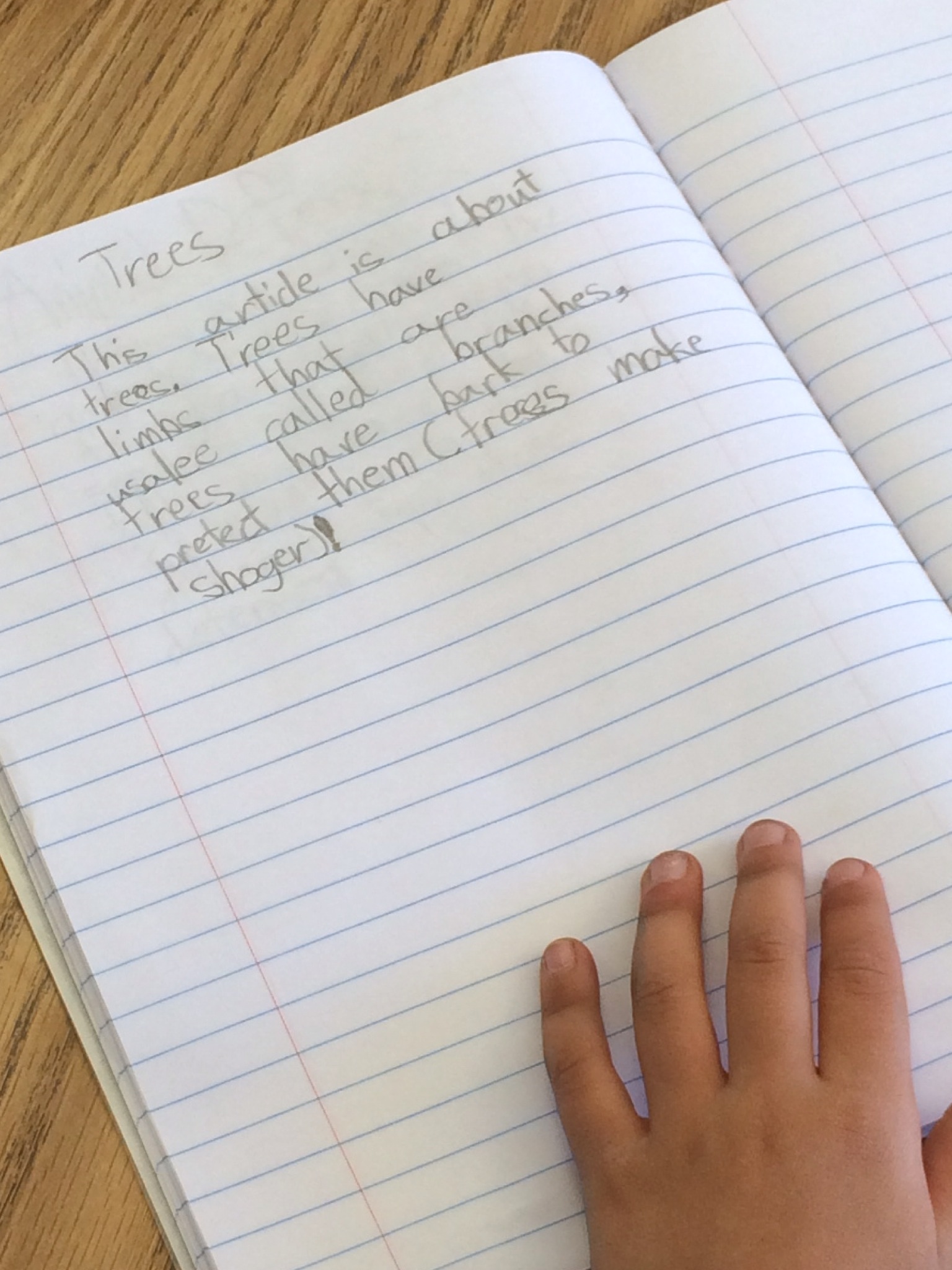
This first grader took a very formal approach, “This article is about trees.”  She made a very definite attempt to set the context and expectations for her writing.

photo_2-2

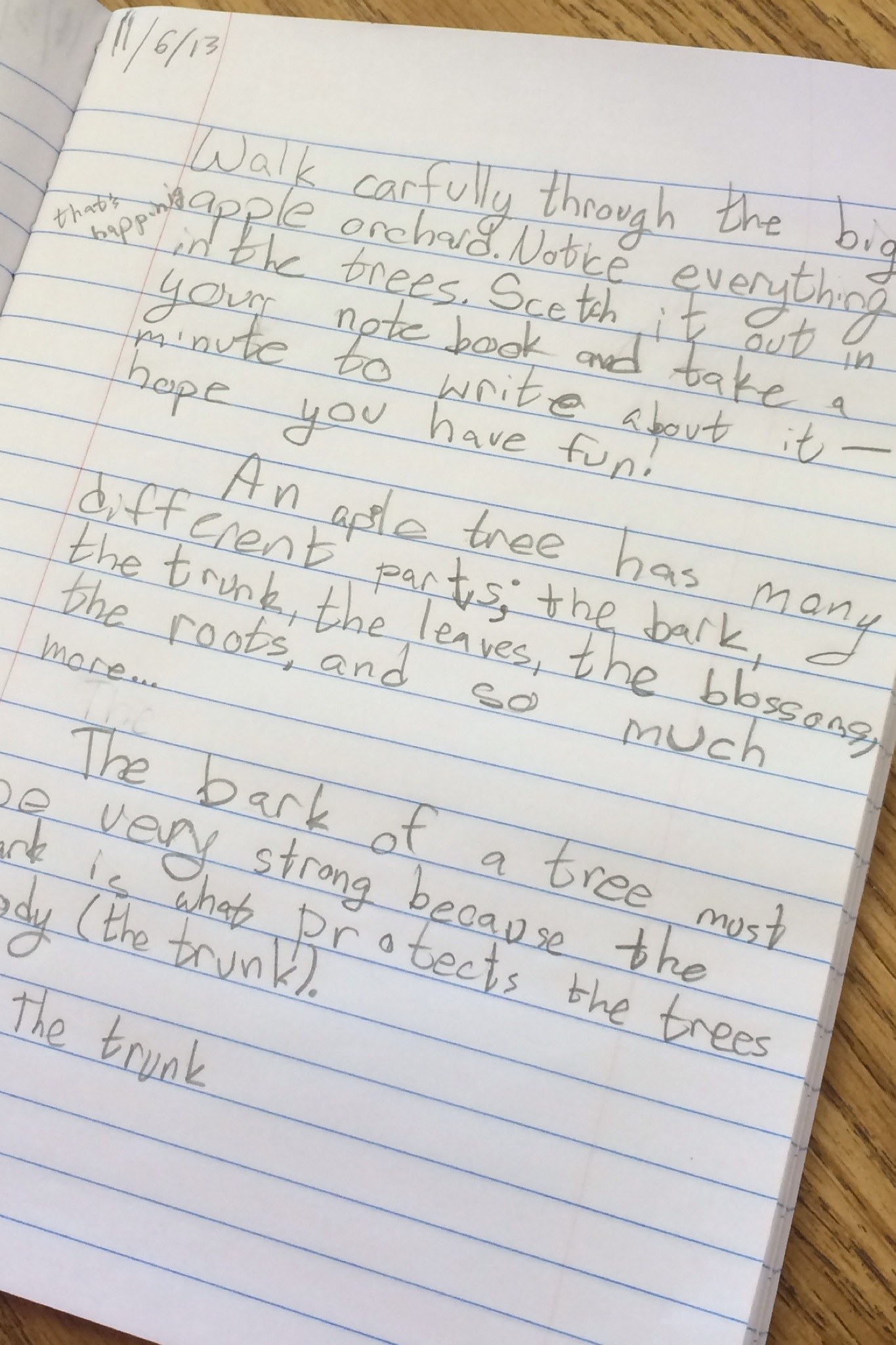
This third grader attempted the more complex and creative anecdote approach, “Walk carefully through the big apple orchard.  Notice everything that has happened in the trees. Sketch it out in your notebook and take a minute to write about it–hope you have fun!”

photo_4

And this second grader tried out a broad overarching idea, “Trees are amazing parts of Mother Earth.”

I feel like our students are getting the idea of the importance and variety of introductions. Tomorrow we will take another look at introductions–both from our mentor texts and from some student examples.  And then we will ask students to write another short informational piece about another topic they are familiar with…with an emphasis on the introduction.

And then next week we will shift our focus to endings…and continue to explore ways to support our students’ development of writing that includes beginnings and endings as well as rich content!

Writing is complex…and we can always work to make our writing better.  How do you support student writers?

photo_2-3

Working from the Why

Everyone loves a field trip…right?  Or maybe not…  As a teacher I like the way that field trips give my students a shared experience and helps to make abstract science or social studies concepts more concrete.  I also like to give my students access to experts in the field and help them imagine professions where this content learning is applied.  But…to get these outcomes, teachers have to plan carefully and connect classroom learning to the resources of the field trip destination.

The San Diego Area Writing Project (SDAWP), along with the San Diego Natural History Museum (SDNHM) and the Reuben H. Fleet Science Center (Fleet) are partnering in a National Writing Project (NWP) and Association of Science and Technology Centers (ASTC) initiative investigating the intersections of science (or STEM) and literacy (with an emphasis on writing).  Yesterday we launched our work  with ten formal educators (who work in public schools) and ten informal educators (who work in the museums mentioned above), with a particular focus on field trips.

photo-7

The facilitation team (of which I am a part) decided to launch our work by focusing on the why of the work.  Why is it important to re-examine field trips and consider ways to improve the experience for students and to create supportive structures for teachers and other adults who accompany young people to museums and other field trip sites?

Inspired by a TED Talk by Simon Sinek entitled How Great Leaders Inspire Actionwe spent our first (of 5) sessions focused not on the what or how of our project.  We sent teams of educators out into the museums to observe and experience an exhibit through a set of prompts that invited them to look and try through a variety of different lenses, and write about their experiences.  They critiqued the exhibit–not to find fault with it–but as a way to consider what structures might support learners’ interest, inquiry, and pique curiosity.

photo-6

Our short, but intense day left us with a desire to take action…to figure out how to make field trips amazing learning experiences, with students at the center.  One comment from the end of the day reflections is still bouncing in my head,

…the “why”has the power to transform educational practices.  From field trips to worksheets to projects, I wonder how many educators push past the “what.”

Our goal with this project is to do just that–to push past the what and consider the why. The why is where the action sits…and we want to take action toward improving field trip experiences for students by supporting the adults who facilitate them: teachers, museums educators, chaperones, and parents.

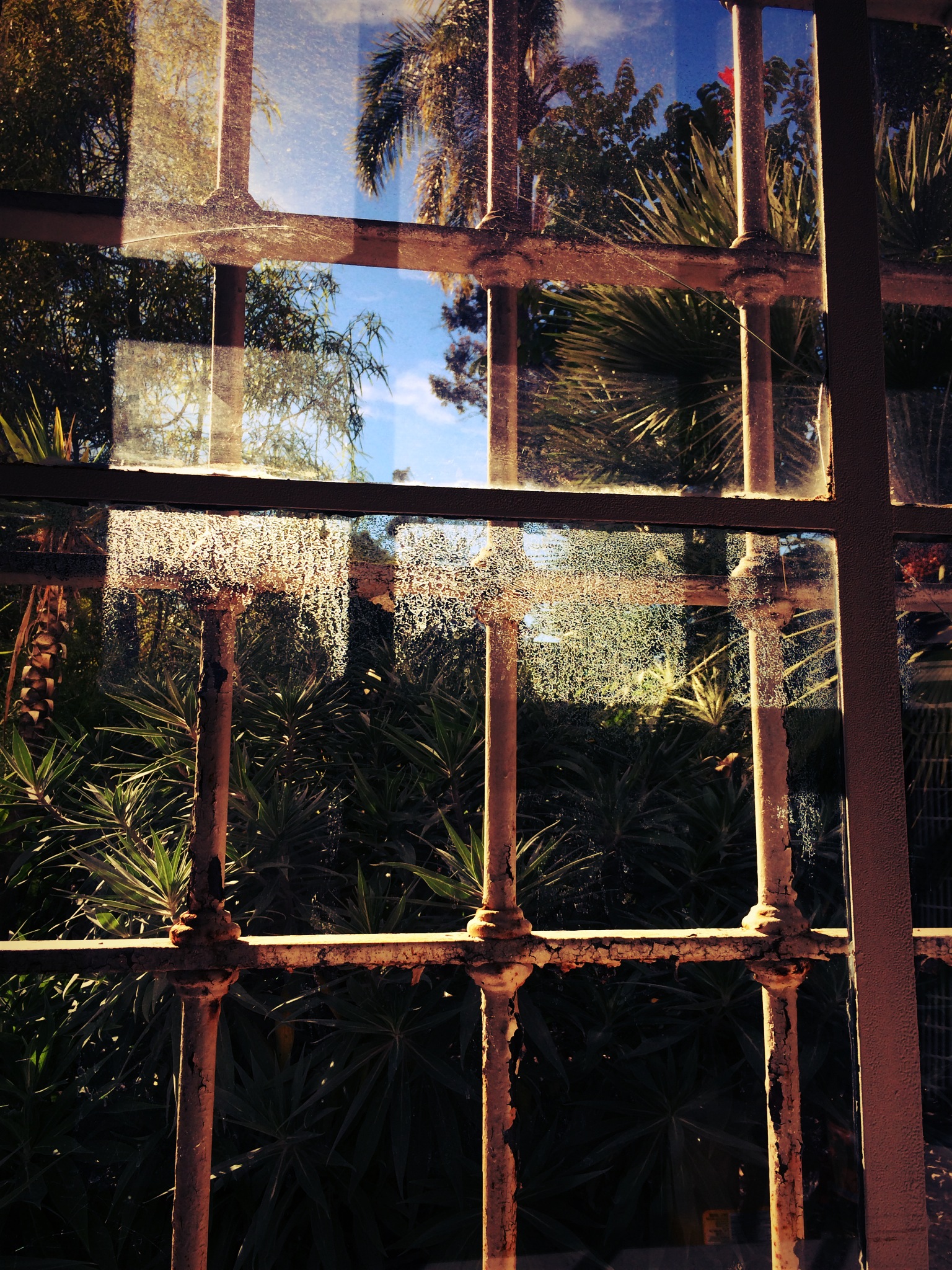
I can’t wait to see where this project takes us…  If only I had a window into the future to get a hint at just what the possibilities might be!

photo-8

What do you love about field trips?  What does your ideal experience look like, feel like, leave you thinking about?

More Adventures in Coding

It’s Halloween…the perfect day to continue our adventures in coding with our first, second and third grade students!

And thanks to Mark, our ed tech guy, the kids had the advantage of having someone other than their regular teachers reinforce their initial learning and suggest some next steps.

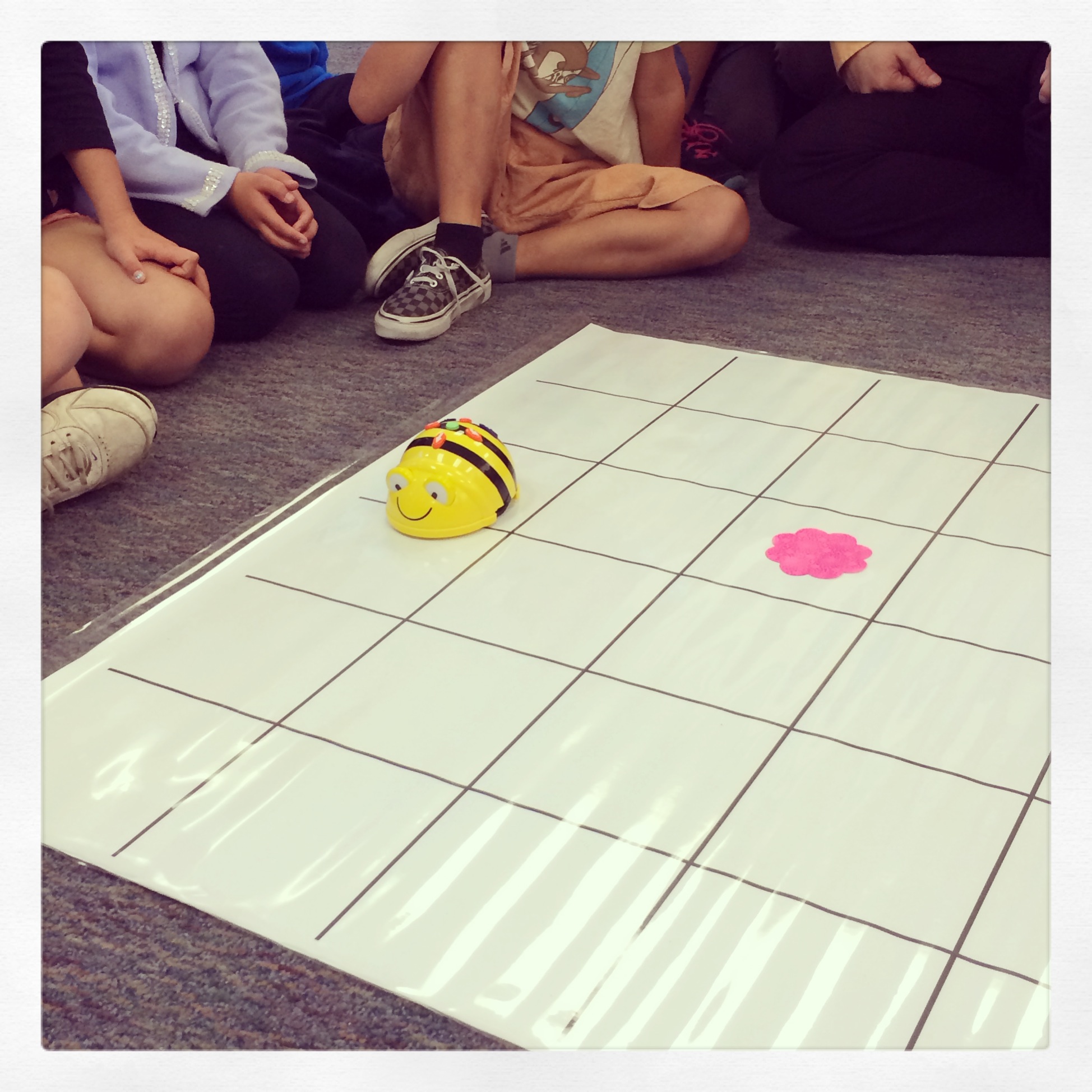
We returned to Beebot today.  Our students love this friendly bee that responds to their fingertip commands.  And it becomes the perfect vehicle (pun intended) for reminding them that programmers have an idea in mind for their code.  Today’s challenge:  can we make Beebot travel in a square and return to where he began?  (The answer was yes!)

photo-4

And then we transitioned to Hopscotch.  And our students were in for a treat!  Hopscotch characters were dressed for Halloween today…a special Halloween update.  (The room was electric as the students discovered this new edition on their iPads!)

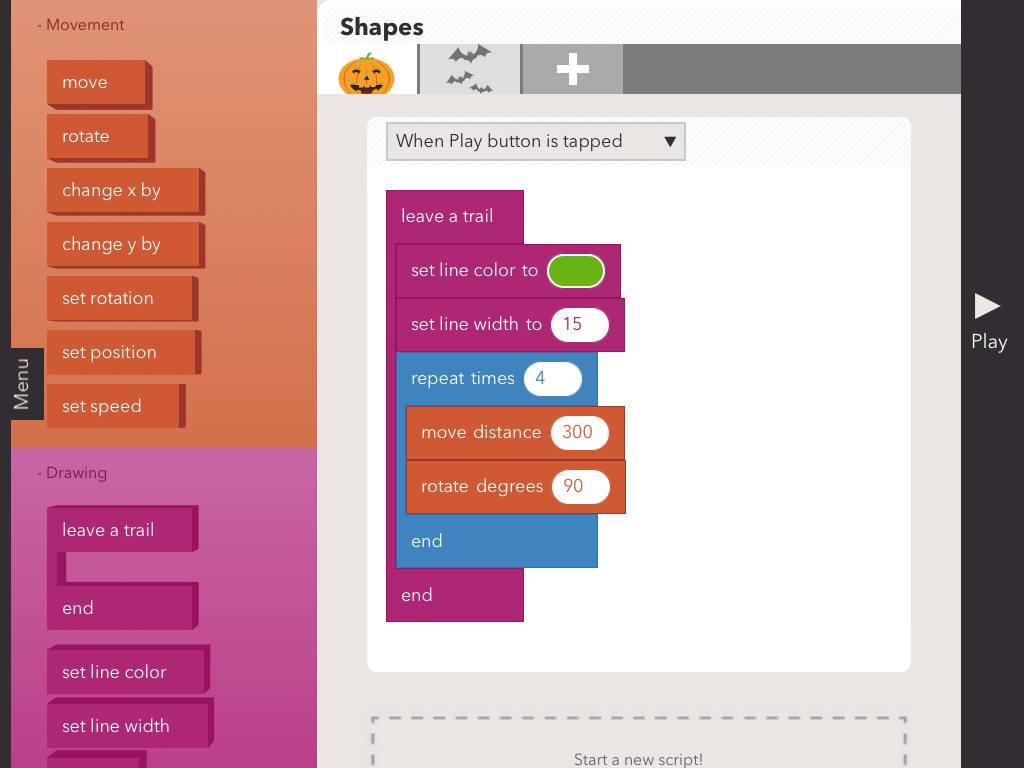
Mark guided the students as they matched the commands they used on Beebot to the blocks on Hopscotch.  And they carefully coded their first character to make a square.

photo_1

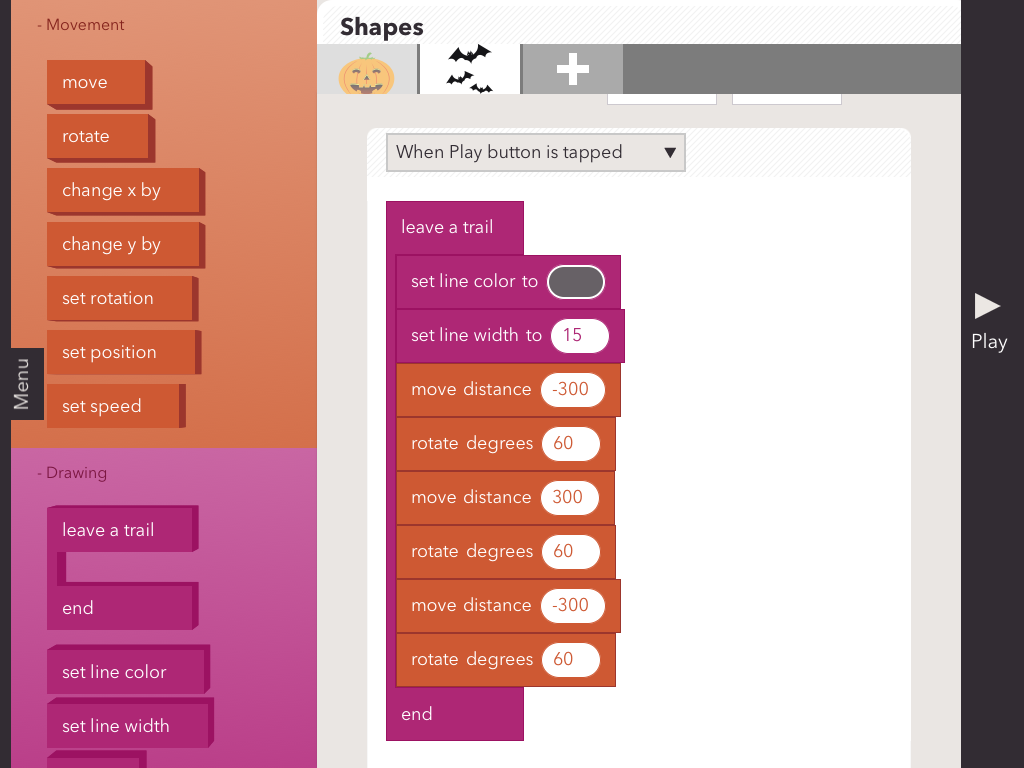
As you might expect, there were a few glitches…a perfect opportunity to do some “debugging.”  And then we all tackled making a triangle.

photo_2

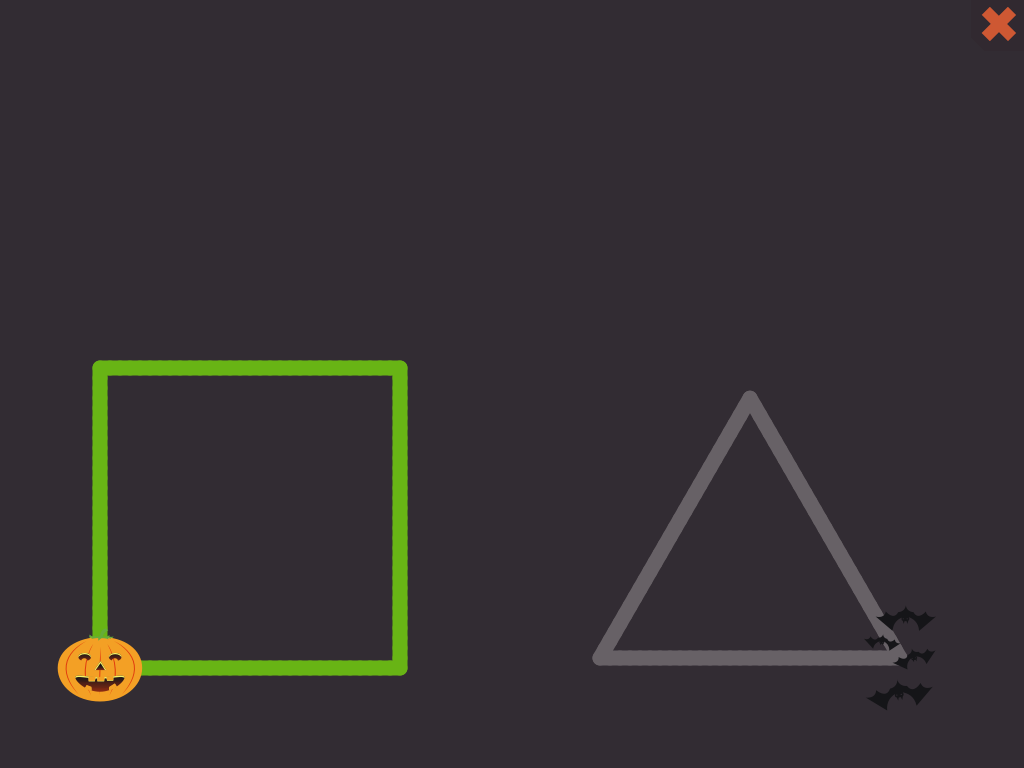
That was a bit harder.  And some students figured out if you used the repeat block, some interesting triangle designs resulted!  And here is the basic square and triangle we aimed to code for today.

photo

I hope students take away the value of being able to make the characters do what they want them to do.  This planning is not to get in the way of “happy accidents” but instead to help students do more than move blocks and push play randomly.  I know that many of our students can hardly wait to create some more triangle designs.  Our next invitation might be, what picture can you make with triangles and squares?

The Halloween costumes will go away the next time we update the app…but I hope the lessons learned on Halloween will remain…and become a platform for continued learning. I know I learned a lot today and am more interested in programming than I was before!  I can’t wait to figure out what my students (and I) will do next!

Structures

I treated myself to a walk on the beach today after a writing project meeting at the university.  So instead of walking on the beach near where I live, I walked on the beach down the hill from the university.  It was foggy and cool, a perfect day for thinking and reflecting.

As I was walking I was thinking about the meeting…a follow up to the Invitational Summer Institute (a 4-week intensive leadership institute in the teaching of writing)…and the structures that we need as learners to move along the continuum from novice to expert (with the endpoint constantly moving) and from follower to leader.

The structure of the Summer Institute (SI) is designed to immerse teachers in writing, researching, reflecting on their practice, and critical conversations about teaching and learning.  The structure is strong and well built, based on the 40-year-old model developed by National Writing Project founder, Jim Gray.

photo_1

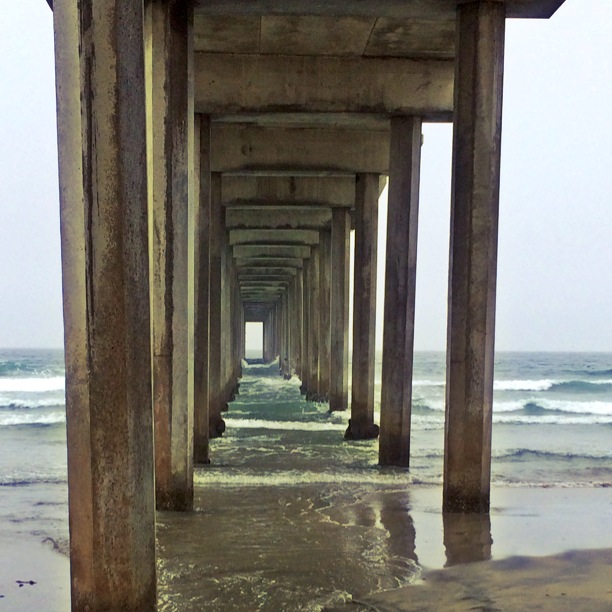
This pier is also a carefully designed, well built structure made to withstand the battering waves of the Pacific Ocean and the relentless wind and sun.  I love the way when you look through the pier it narrows and provides a window through the corridor of surf out to sea just like the SI helps teachers look carefully at policy and practice and then focus on instruction that best supports the students in front of them.

And some of the structures we depend on are organic like these cliffs.

photo_3

They are shaped by the natural environment.  I watched our SI participants create their own structures as well.  They gathered this morning, organically, catching up with each other as we, as facilitators, finalized our last minute plans.

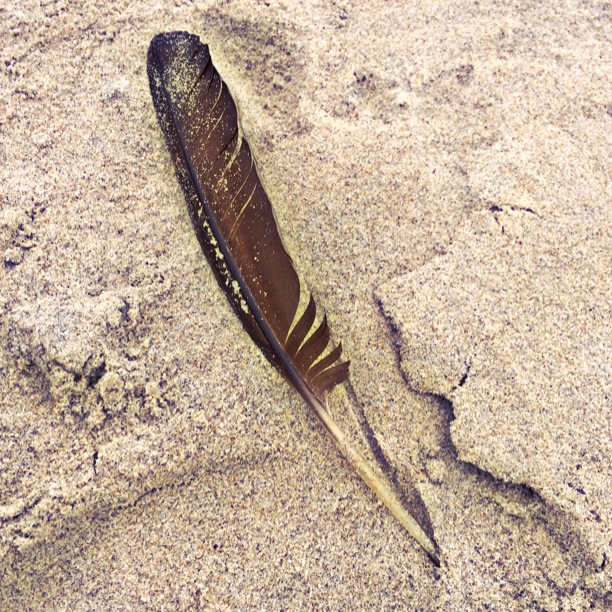
And then there are structures that are light and flexible, like this feather on the beach.

photo_2

It makes me think of our Twitter Fellow of the Week.  This playful use of social media supports more weight than you might imagine.  While we originally saw this program as a way to connect to one another within our project by giving each other a glimpse into a week in the life of an SDAWP educator, it has proven to do more.  When teachers use Twitter as a professional learning network, their interactions begin to impact their practice.  Suddenly they are reading more professional articles about education, “listening in” to debates about policy and practice, getting and sharing ideas from others (within our site and beyond our site), and making their own classroom practice more visible.

Today we asked our SI 2013 cohort to sign up as Twitter Fellows…and starting tomorrow we will begin to get a glimpse into their lives.  (You can follow @SDAWP_Fellow on Twitter) Those who are more confident on Twitter signed up first…but others are willing to dip a toe into this unfamiliar world of tweets and hashtags and mentions.  And they have the rest of the SDAWP community who are happy to help…and the others in their cohort will also be “listening” on Twitter, ready to respond and retweet and favorite…so they won’t be hollering into the dark.

My beach walk today was quiet and introspective as I thought about all the structures I noticed…and those we use to support learners.  Structures can help us stretch and reach and connect as we learn and grow.  What structures support you?  What structures support your students?

Horizons: The Edge of Learning

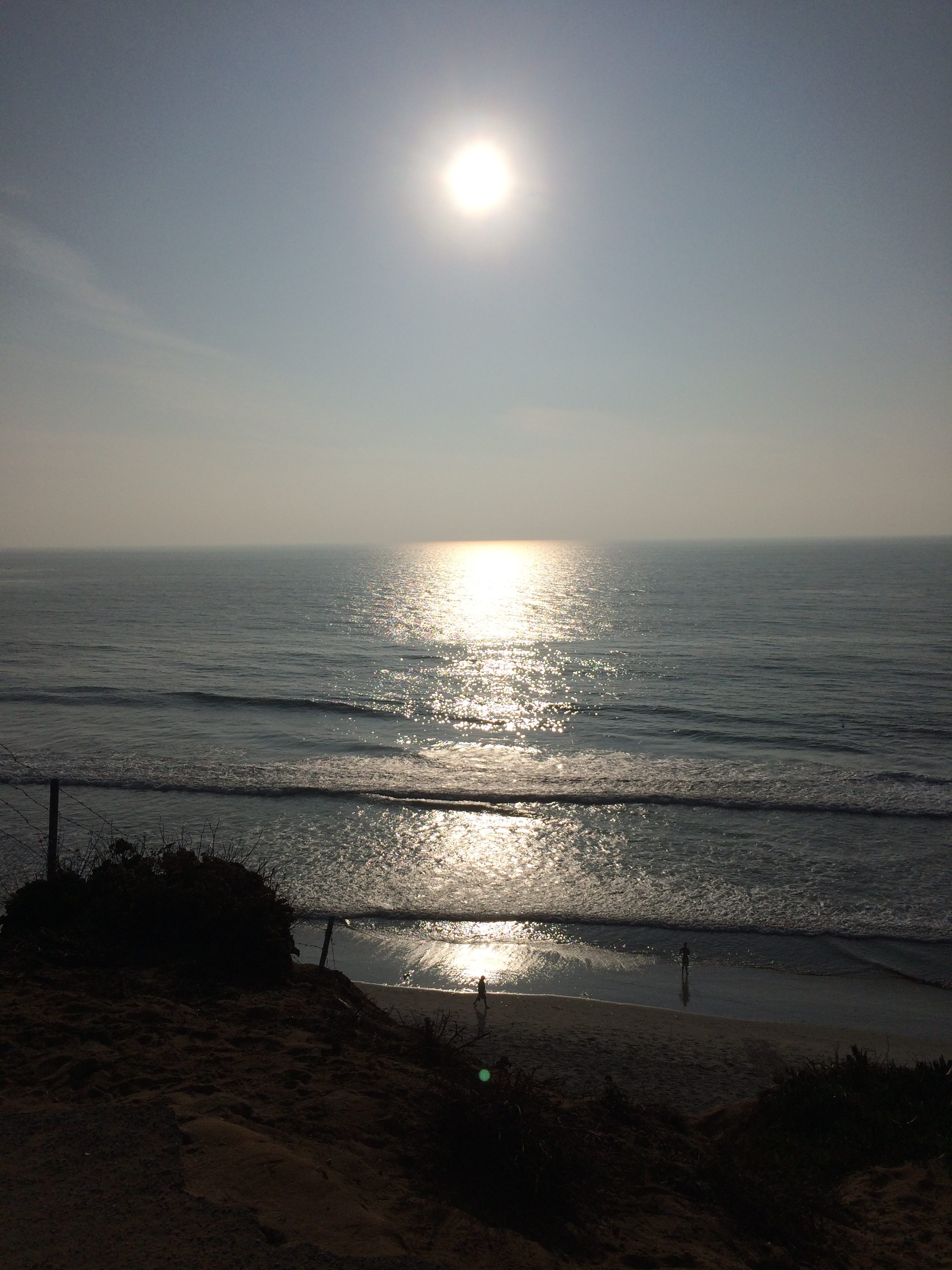
Today’s Weekly Photo Challenge on the Daily Post is about horizons…that place where the earth meets the sky.

photo-2

And as I headed to the beach to capture one of my favorite horizon vistas, I found myself thinking about the comfort of familiar places like the beach…and the stretch of reaching for new horizons.

In some ways my horizon photo this afternoon represents my feeling of reaching for new horizons and feeling the “edge” of learning as I work with my students to learn computer programming.  There’s that sparkle and shine and thrill of the new along with the hazy sun and encroaching marine layer representing all of the unknown and uncertainty.

Today a parent in our classroom came in and shared his work as a video game programmer with our students.  He showed us a few of the games he has made…

photo_1-2

the first with a team of three including him.  The most recent included a team of 1,000!

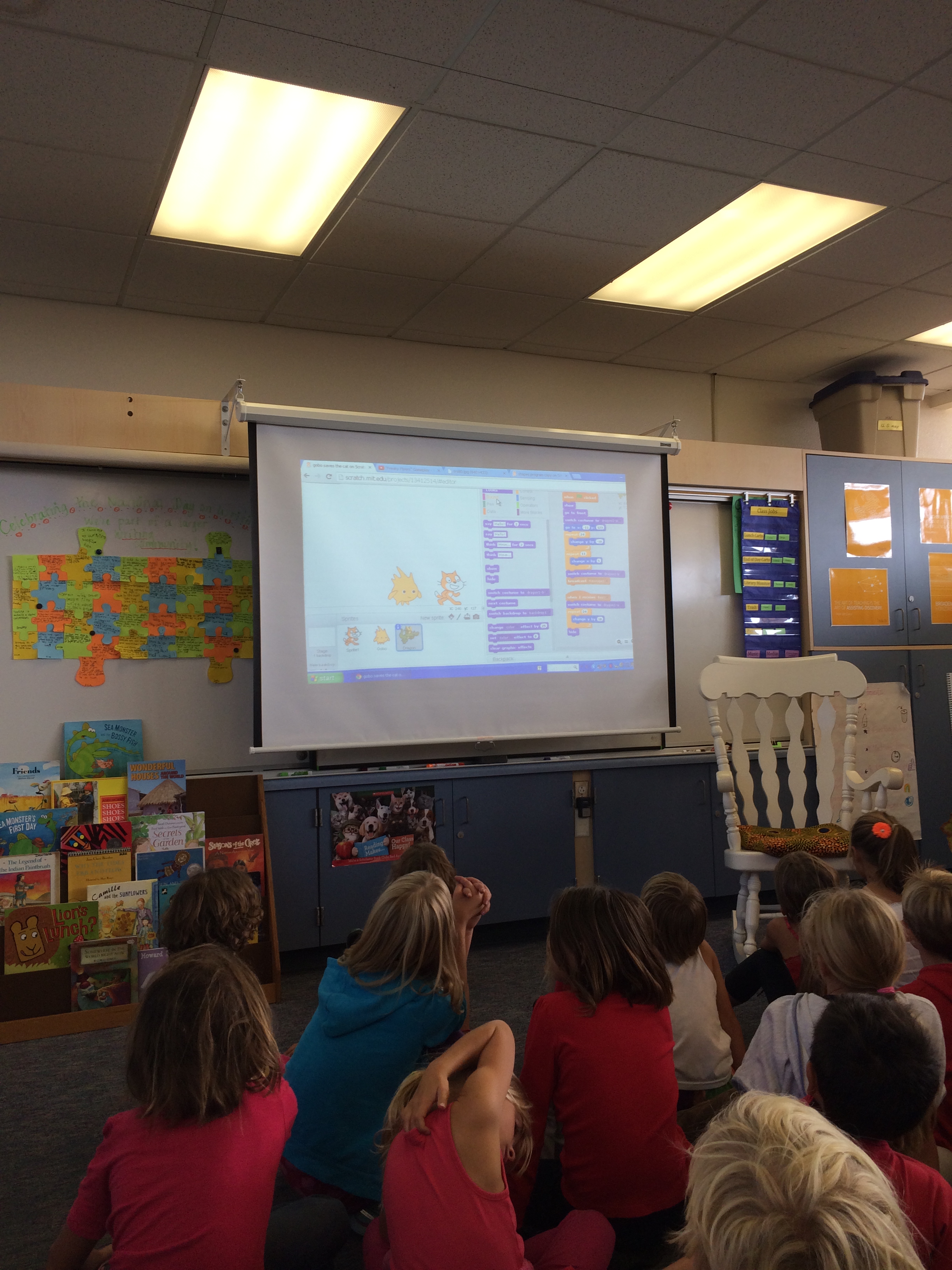
Then he helped to connect this work that he does with our work on Hopscotch (an app), built on the shoulders of Scratch (a program developed at MIT).  He showed us a few kid-made Scratch programs and had the kids make suggestions for changes.  In a matter of a few minutes, he showed how the iterative process is essential for programming.

photo_2-2

At this point there were about ten minutes before recess, so we offered our students this short time to return to Hopscotch and try their hand at some more programming.  Students were quick to get set up…and were immediately focused and engaged with working with code.

photo-3

I watched them try something and then go back and make a change and run their program again.  When students showed me something they had created, I also asked them to show me the code–and in many cases asked them explain their thinking behind the code–so I can learn along with them.  When it was time for recess, we offered students a choice…they could put their iPad away and go out for recess or they could stay inside and continue their coding.  Only 8 of our 44 students chose to go out.  The rest were totally absorbed with programming on Hopscotch!

I’m working at my edge on this new horizon of learning to code with my students…and it’s uncomfortable at times.  But knowing that this is also where learning happens is exciting.  I’ll probably spend some more time on Hopscotch (or maybe even Scratch) this weekend.  If you have any coding advice, I’m happy to receive it!

Here’s a great TED Talk by Mitch Resnick, one of the creators of Scratch, explaining why students should be involved in programming.  Maybe we should all try it out!

And if it’s not coding, what new horizons are in your future?  What are you doing to find the “edge” of learning?