Category Archives: teaching

Thinking about Poetry

Over at The Nerdy Book Club, Cindy has invited readers to share their favorite poets or poems.

I love poetry…especially in the classroom.  Each week in our classroom we study a poem, noticing what the poet is doing and paying attention to the images it creates in our minds.  We read it aloud and notice how the words feel in our mouths.  Individual students read and together we read chorally.

Later in the week, we revisit our poem and create an illustration that captures our understanding of the poem.  We glue our poem and illustration into a composition book we call our poetry anthology.  By the end of the school year, students have read, studied, and illustrated more than 30 poems…over the course of the three years they spend in our multiage classroom, they have close to 100 poems collected and illustrated to take home and treasure.

One of my favorite poets to share with my young students is Valerie Worth.  I love her short poems.  They are accessible to children.  And I love that she writes about ordinary things.  But these are not simple poems…they are full of imagery, word play, and figurative language.

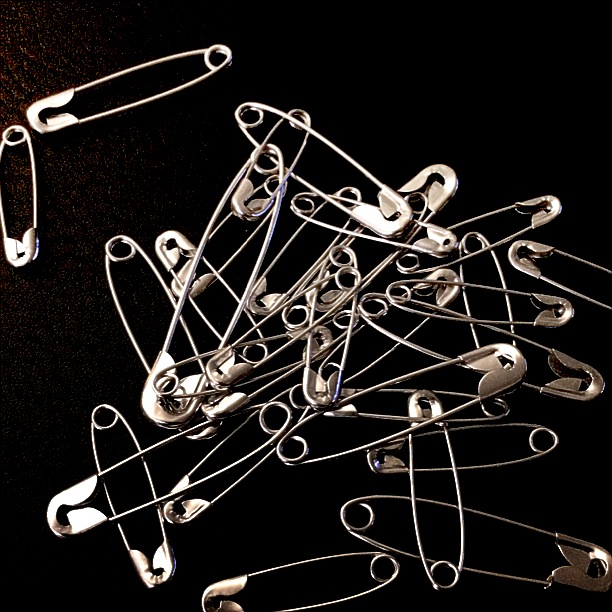
One of my favorites is Safety Pin.

safety pin

Valerie Worth

Closed, it sleeps On its side Quietly,
The silver Image

Of some Small fish;

Opened, it snaps Its tail out
Like a thin Shrimp,

and looks
At the sharp Point with a Surprised eye.

photo

What poets and poetry do you love?

Remixing and the Cardiff Kook

Tomorrow my class is traveling up the hill (a mile or so) to the other school in our district to write with the older students in the other multiage class (many of whom were in our class a year or two ago).  We’re doing this to celebrate writing and the National Day on Writing and this year’s theme: write2connect.

In the spirit of connection and Jim Gray (the founder of the National Writing Project) and even the Common Core State Standards (CCSS), we will “try on” writing about the same topic in three different ways.  While the CCSS text types (narrative, informational, opinion/argument) will constitute our broad categories, students will be able to fuse and mold the writing to fit their own interests and purposes.

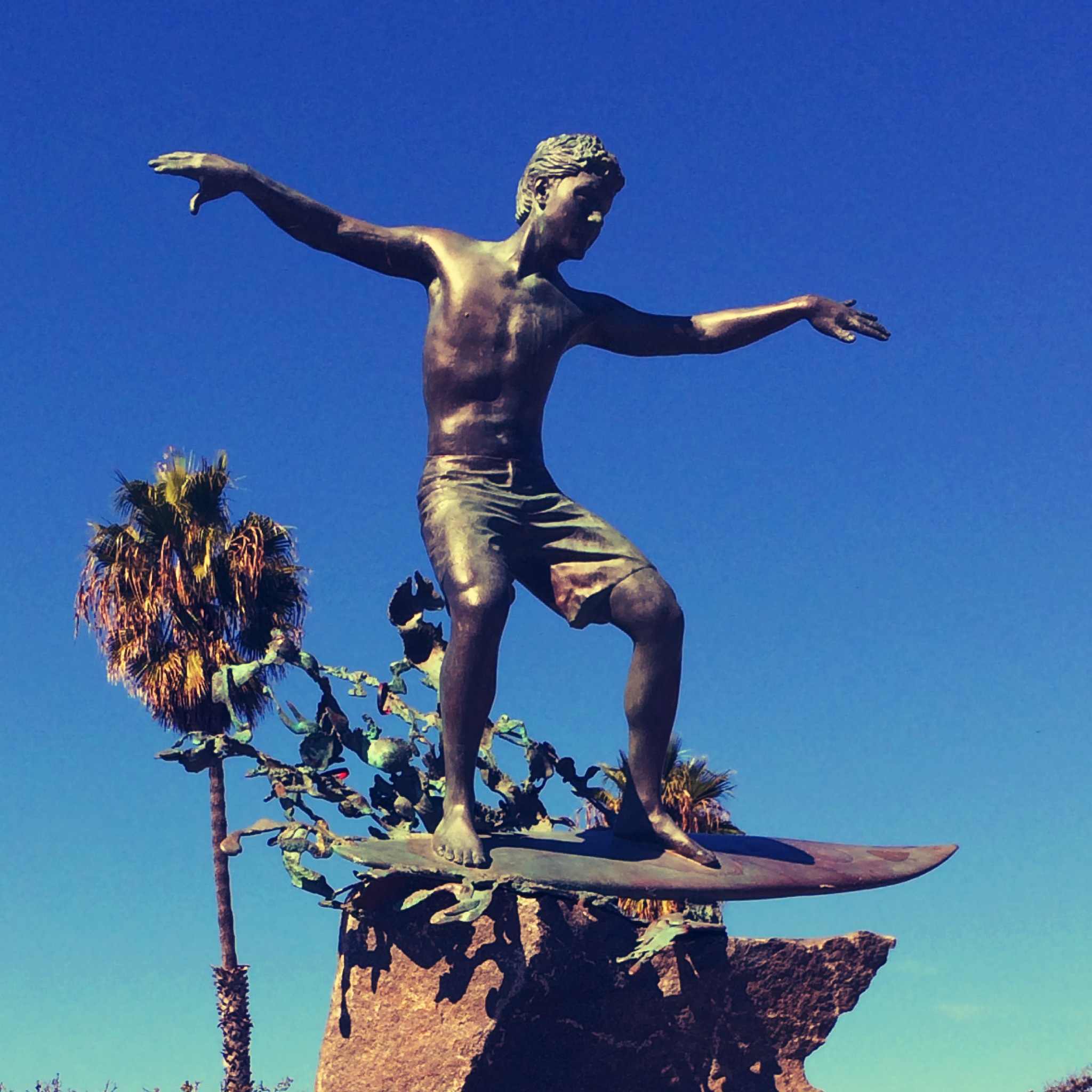
So…to get students started thinking about opinion/argument, this post will be my attempt to create an opinion piece focused on the Cardiff Kook.  The Cardiff Kook, a piece of public sculpture officially named “Magic Carpet Ride,” has been the center of mischief and controversy in the small coastal town where I teach.

photo-3

So here I go:

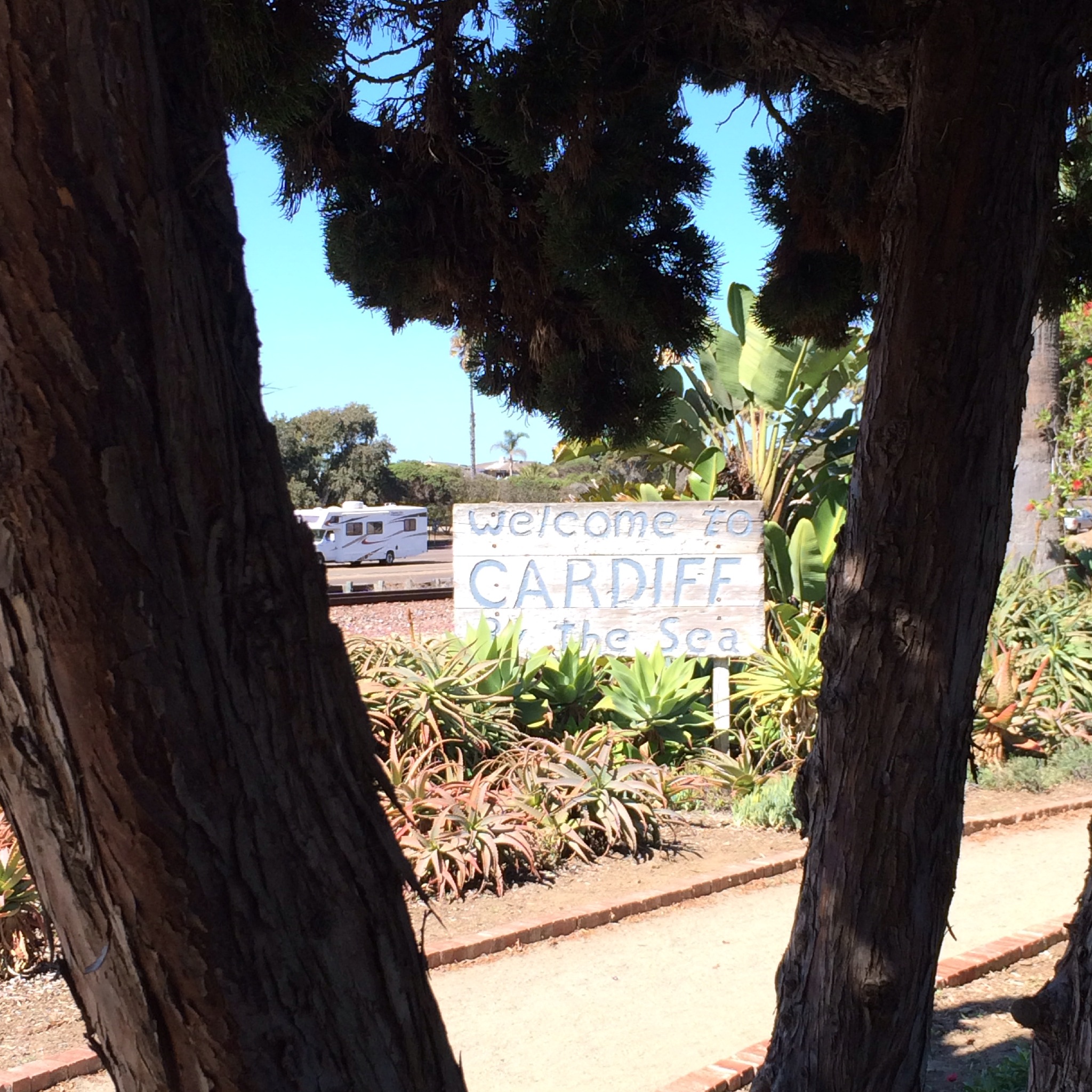
Love it or hate it, the Cardiff Kook has become an iconic image in the seaside town of Cardiff-by-the-Sea.  Guerrilla artists creep up to the statue originally named “Magic Carpet Ride” in the dark of night to creatively adorn the controversial surfer in any number of theatrical props.  It has been transformed into Oprah in celebration of the last Oprah show, engulfed in the jaws of a great white shark, and carried off by a prehistoric flying creature.  I love the Cardiff Kook. It’s a great ambassador for Cardiff, bringing in tourists from all over and creating opportunities for community building within the town.

photo_2

It’s fun to see the kook all dressed up.  There is never a time when I drive by the statue at the intersection of 101 and Chesterfield Drive when I don’t slow down to take a look to see if there is a new creation.  For a while, a couple of years ago, the kook was transformed regularly and extravagantly. Lately that has slowed down and most days it looks like it did today when I took the photo in this post.  I love to take out-of-town guests and family members by to take a look at the statue…always hoping that it might be dressed up in some interesting way.

I recently read that images of the kook are now copyrighted and will be licensed to fund the upkeep of a public garden across the train tracks from the statue.  I’m guessing that was the thinking behind the Cardiff Kook calendar and maybe even the annual Cardiff Kook Run. These kinds of products and events can bring a community together as we all connect through our experiences with the kook.

Mostly, though, I just think the kook is fun.  I think the point of public art is to create conversation.  Some people will like some pieces and some won’t. But the conversations and arguments and conflict make us all think and engage and pay attention.  Not liking the original surfer sculpture resulted in creative and playful ways to re-envision this piece of public art.  And most of the time it remains unadorned as the sculptor created it…but every once in a while others add their own spin to the art, remixing the original artist’s vision with their own to create something new, different, interesting…and create a new conversation.  And for me, that is much more valuable than looking at a static,  unchanging piece of art day after day, year after year.  The Cardiff Kook reminds us to be playful, to have fun…and to connect with each other.

What do you think?

20131017-204042.jpg

Ordinary

Today, out of necessity, I had to scrap a plan and invent another without notice.  For teachers, this is something that happens with some regularity and most of us pride ourselves on our flexibility. And I love it when that spontaneous plan blossoms into a wonderful learning moment.

We always have picture books at the ready to read to our class.  Some are set aside for specific purposes and lessons, others we know we want to read but are waiting for the perfect time to present itself.  Last year we read Spoon by Amy Krouse Rosenthal–a book that our students loved.  We revisited it a number of times throughout the school year for different purposes…from mentor sentences to a situation for opinion writing.

At the end of the year, I came across a new book by Amy Krouse Rosenthal: Exclamation Point. So today, in that moment when I needed a plan at a moment’s notice, I picked up Exclamation Point, reminded my returning students (two thirds of them) that this was the author of Spoon, and started to read.  I love those moments when each student’s attention is fully engaged…and they were hooked by the bright yellow cover and the whimsical smiling exclamation point. They noticed right away that there wasn’t a title…at least not written in words. The exclamation point itself stood as the title.

15815400

We read and discussed and noticed and connected all the way through the book.  We delighted in the words and the pictures and the message.  And we were inspired to write our own stories about punctuation.

And then later in the day we managed to get packed up and ready to go home with enough time for a book before the dismissal bell.  Overwhelmingly, students wanted me to read Spoon. It was sitting near Exclamation Point…and suddenly today became the day for a mini author study.  The second and third graders were treated to an old friend, and the first graders were anxious to get acquainted!

After reading, students volunteered their observations, connections, reactions, reflections. They had so many thoughtful comments and ideas for their own writing.  And one student pointed out that Amy Krouse Rosenthal wrote about ordinary things…in wonderful ways.  We started thinking about all the ordinary things we might write about and how our writing could transform them beyond the ordinary.  They were excited to write as the dismissal bell rang today…I hope they sustain that excitement long enough to actually get to the writing.

I’ve also been noticing the power of the ordinary.  Yesterday’s post was about the transformation of an ordinary photo into something I was willing to name as art.  And today on five minute friday the prompt is ordinary.  Today in the classroom the ordinary business of reading a book because an extraordinary opportunity to notice the magic of writers and writing…and turned students into active learners making meaning for themselves.  Today I was reminded that ordinary is a state of mind, and each of us has the power to re-look and re-see the ordinary in new ways.  I love when that wonderful learning moment in the classroom means that I learn too!

Rain and the Common Core

October in San Diego is often a hot and dry month characterized by Santa Ana conditions, creating a high risk for wildfire.  We’ve already had many “red flag” warning days.  These warm, dry October days are both wonderful…an extension of summer…and terrifying, having lived through some horrific urban wildfires in the last decade or so.

Rainy days are a rare occurrence here.  We average less than ten inches of rain a year…and I can’t remember the last time it rained!  (Was it in May or June?  Or even before that?)

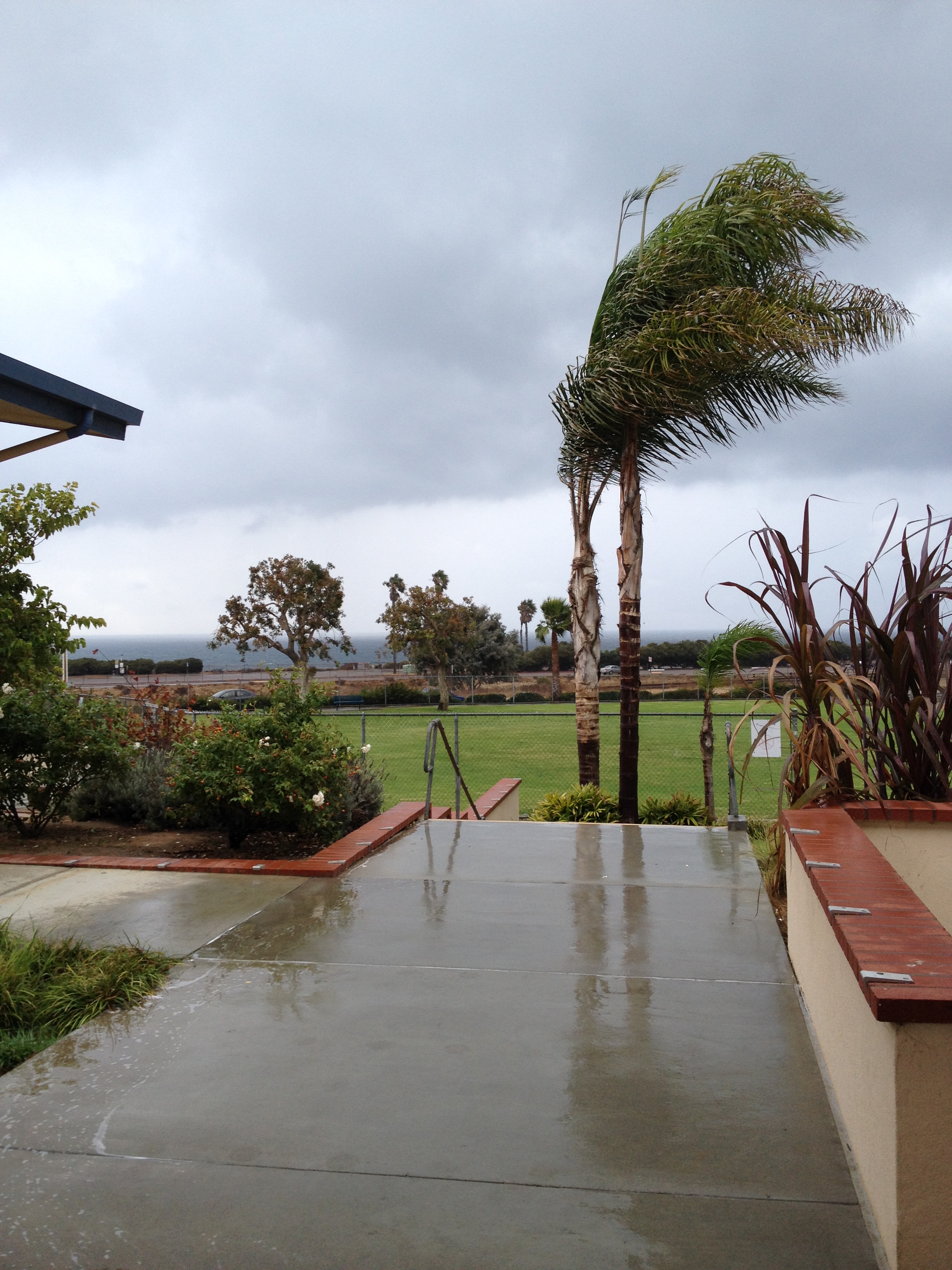
With rain in today’s forecast, my students were dressed in an odd assortment of post-summer attire: shorts with sweatshirts, boots with tank tops, hoods and hats…  Like having one foot in summer and one ready for the impending storm.  Students were excited, edgy–some complaining of cold (in the 60+ degree temps), others in sleeveless tops running happily in the almost-weather.  The blustery conditions hinted at “real” weather–weather that didn’t arrive during the school day today.

An hour or so after school ended for the day, the much anticipated rain arrived.  Not just the drizzles the we so often get, but real soak-the-ground kind of rain.

photo

Meteorologists, through the media, announce our “severe weather” and the roadways are a mess with spin outs and collisions caused by slippery conditions and out-of-practice rainy day drivers.  And yet, we need this rain.  We need it to ease the fire conditions that come with the parched earth.  We need it to lessen the demands on our over-stressed reservoirs.  We need it to water our lawns and gardens and native foliage.

And the rain is a reminder that change can be a catalyst.  In a place where the weather seldom changes, it’s easy to see rain as inconvenience.  It tangles the traffic, scares customers from the local farmer’s market, and causes many events to be canceled.  (Like I said, rain is rare here!) But change, like rain, is an opportunity to rethink everyday routines.

At lunch today, some of my colleagues and I were talking about the Common Core State Standards (CCSS) and the stormy conditions they are creating for many teachers.  They feel threatening like severe weather (or a rainy day in San Diego)…requiring a change in the ways teachers think about instruction and classroom routines.  It will take more than pulling on some rain boots to create an environment for deep learning, a place where students make sense of concepts rather than memorize facts and procedures.  Change feels hard and scary, but like the rain in San Diego, we need it.

And like my students on an almost rainy day, some teachers are ready to embrace the change and rethink their instruction and consider new ways to support students to more critical thinking and in-depth analysis.  And others will make more cosmetic changes, renaming old practices and repackaging old projects.  There will be an odd assortment like the tank tops and boots and shorts and hoods my students wear–a mish-mash in our educational system–as we figure out just how to deal with the change.

I’m choosing to embrace change and see it as an opportunity rather than an inconvenience. We need the rain in San Diego…and we need change in our educational system.

Planting Seeds

We planted seeds today…in the garden and in our writer’s notebooks.  There are many garden metaphors about learning and students–especially at the elementary level and as I watched my students today, I can understand why.

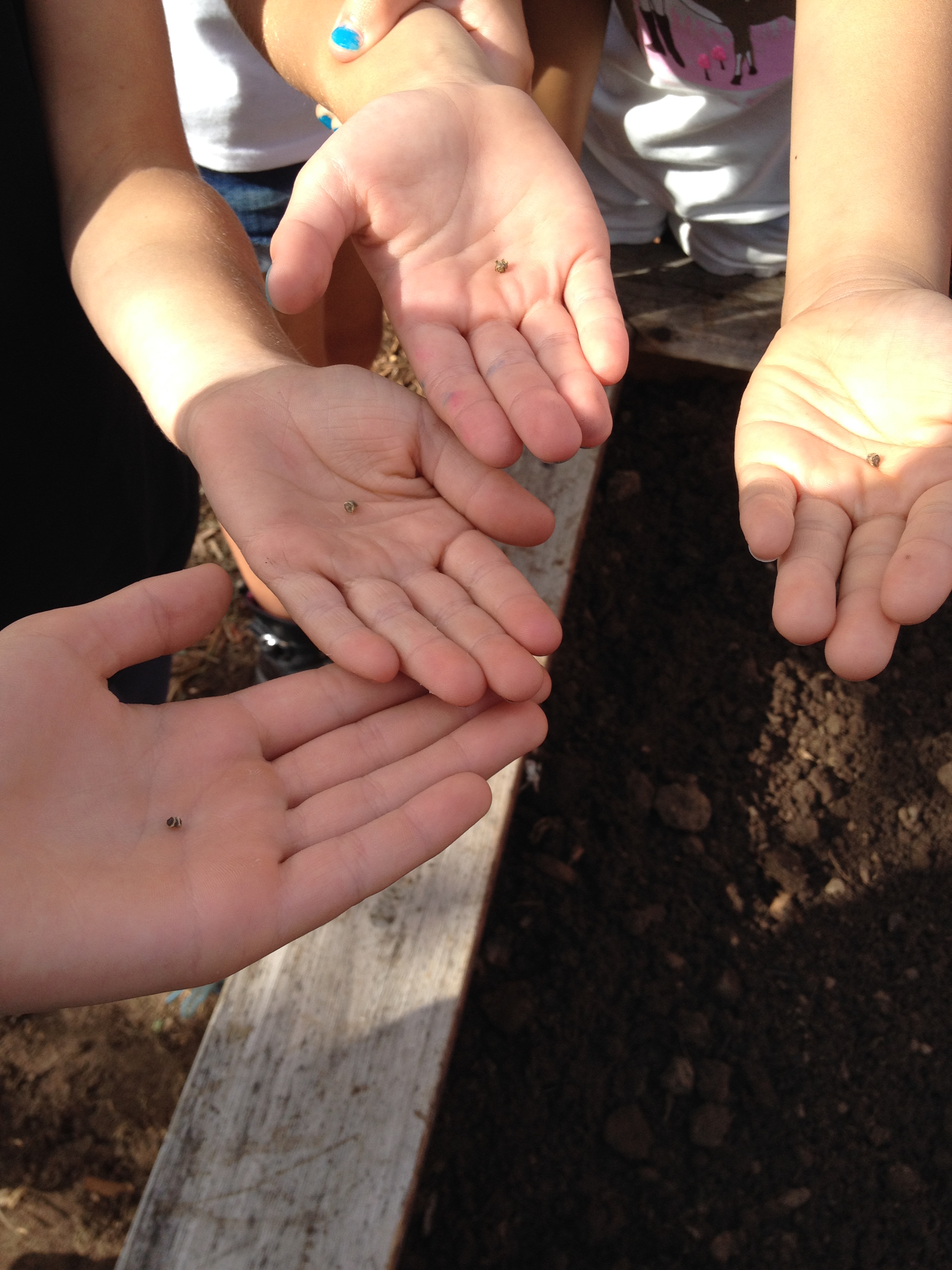
The beet seeds were small and for some of my students, hard to hang onto.  Some seeds slipped to the ground, blending in with the earth.  Those students needed another seed to plant in our garden bed.  Other students delighted in the tiny seeds and noticed every detail. They were able to keep track and carefully nestled the seed into the soil.

photo

During our writing lesson a bit later, I noticed that some of my students took the lesson on similes and easily “planted” their ideas in their writer’s notebooks.  A few stretched even further and played with language and the technique of simile to create fresh and interesting images.  Others had dropped their “seeds” and needed some extra support to “plant” a seed or two in their notebooks.

In the garden, after planting our seeds, students carefully watered the soil to create an environment to support the seeds’ germination.  They managed the heavy watering cans and negotiated turn taking as fledgeling gardeners.

photo-1

In the classroom, we left our writing seeds to germinate too after carefully sowing them in our notebooks.  Time was short and ideas were flowing…students can’t wait to come back to share their writing and extend their ideas.  This is an environment ripe for more writing tomorrow! Today we used Stubborn as a Mule and Other Silly Similes by Nancy Loewen to “prime the pump” and get us thinking about similes and how we might use them in our writing.

We planted beets, peas, arugula, spinach, beans, kale, and sunflowers today.  As our gardening teacher reminded the kids, we plant all the time because we want to eat all the time.  And as writers and learners, we need to write and play with language and writing so our ideas and stamina and capacity for writing and learning will also grow. We celebrate the National Day on Writing in October each year as a reminder of the importance of writing in our lives and learning.  But just as we don’t only plant our gardens in October, we can’t just plant our writing in October.  We have to write all year long, in lots of ways for lots of reasons to nurture our writing…and our writers so they too will grow strong and tall.

photo-2

How do you nurture writers and learners?  What seeds did you plant today?

Making Rockets and More…

I spent yesterday at UC Davis at a conference we threw for ourselves to celebrate the 40th anniversary of the California Writing Project.  The conference was an opportunity to teach each other strategies, structures, and approaches that we find successful at our local writing project sites across the state…and to learn together.  And we did that…and more.

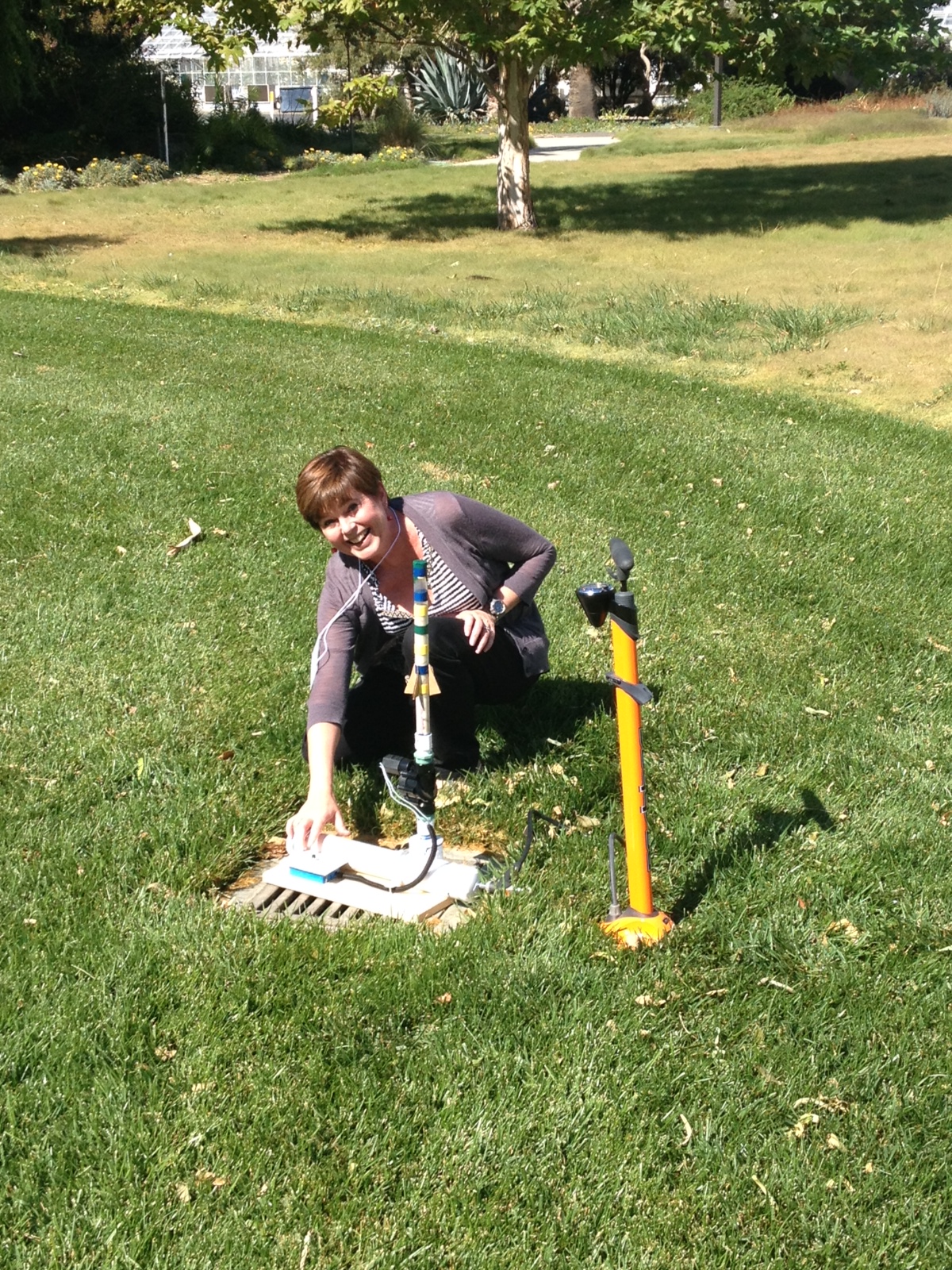
At lunchtime there was an informal “making” session led by the director of the Northern California Writing Project.  Using transparency film (Finally!  A practical use for the boxes of the stuff schools have sitting around since document cameras have replaced overhead projectors.), colored electrical tape, cardboard, and hot glue, we crafted rockets (using a piece of pvc pipe as a mold).

photo_3

We would then test them by firing them from a bicycle pump, air powered launcher.  (Directions on Instructable…here) You’ll notice we sealed the tops and taped around them in hopes they would soar…rather than explode.

photo_2

When our rockets were ready, we headed outside with the launcher and our rockets to test our creations.  We had to place our rocket on the launch pad and then pump with the bicycle pump to build pressure in the system.  We aimed for between 50 and 60 pounds of pressure.

photo-4

After pumping, we pressed a button to release the pressure into our rockets and… POW!!! They shot high into the air and then turned down to land in the grass.

photo-5

I’m looking forward to offering my students more opportunities to build and test and tinker.  They might be building and launching rockets some day soon.

And building these rockets in much like the work we do in the writing project. At the San Diego Area Writing Project we build programs to support teachers and students with writing and writing instruction.  Then we test them out, paying close attention to how they “fly”–what design elements are working, where do we need to tweak our design?  What can we do to help these programs and approaches meet the “mark” we are aiming for?  And then we continue to tinker. How can we make this work better?  What improvements are needed?  Which teachers and students are we reaching?  Who is missing?

I had a lot of fun building and testing rockets with my friends and colleagues yesterday.  And I love building and testing programs for teachers and students.  Writing itself is a lot like building a rocket.  Writers need opportunities to compose and test, get some feedback, and then tinker (or start over) until it gets closer to the desired target.  Sometimes it takes some tangible tinkering with rocket design to remind me of all the tinkering that happens in my life and in my classroom and in our writing project.

So, go out and tinker today…  What rockets have you launched lately?

Tinkering with Design

Tinkering…  My students experimented with design this week…and then tinkered with their design after talking about it with their classmates.

Based on a nonfiction article about how zoos are experimenting with keeping their animals stimulated–including designing toys based on animals’ natural behaviors, we invited our students to try their hands at designing a toy for a favorite zoo animal.

They drew and labeled and explained their designs.  And evaluated their own and classmates’ designs by asking a few questions:  Is it safe for the animal?  Are the size and materials right for the animal?  Is it fun for the animal?

And then, with feedback in mind, students returned to their designs again…and created a new iteration.  They either started from scratch or improved on their original design.  This design was created by a six-year-old with an elephant in mind!

photo-2

I’m looking forward to our next tinkering opportunity–when students will take some materials and design a “thing” from them.  I can’t wait for them to start making!

Driving in Los Angeles

Driving in Los Angeles is an unique experience. It can be daunting, stressful, confusing, exhausting, and sometimes downright harrowing! The roads and freeways are a relic of the L.A. of yesterday when there were fewer people, fewer cars, and lower speeds. As the city grew and sprawled, freeways were added that interconnect and crisscross…some to the left, some to the right, often with short on ramps and sometimes an immediate need to change lanes. The surface streets aren’t much better. Many are narrow with lanes unexpectedly ending or suddenly cars parking in what used to be your driving lane. There is evidence of attempts to update the roadways and to improve the driving experience, but most work is mostly cosmetic…keeping what already exists functional, while attempting to make the improvements when possible to the roads and freeways in use.

Sometimes our educational systems feels like driving in Los Angeles. Many of the structures in place are relics of days gone by. Schedules and groupings are mostly as they have always been. But we have more students, diverse learners, more access to information, and as a result of all of that, changing expectations for outcomes for student learning. With the Common Core State Standards (CCSS) there is a move to go in and remake some of those roads (to carry out the L. A. driving metaphor), the improve access to and delivery of robust learning experiences for students. But in many cases, instead of reconsidering the educational system…including testing, funding, organizing, professional development…teachers are being asked to fill in the potholes. They are taking old practices and adding a new activity or two to meet the new standards.

And I understand why this is happening…both with L.A. roads and our educational system. Change is hard and often painful. We would have to make sacrifices to tear down what isn’t really working and build new structures to meet emerging needs and those in the foreseeable future. Wow, I tackled a complex topic late on a Wednesday. There’s so much more to think about here…

Crows

As I walked across the parking lot toward my office today I heard a crow cawing. I looked and noticed it sitting in a tree at the edge of the parking lot. It was loud and totally unconcerned that I stopped to take a photograph.

20131001-232143.jpg

Thinking about that crow made me realize how much attention I pay to the crows in my life. Those that are loud or otherwise command my attention get more of my time and energy than those that are quieter and less assuming.

Too often that’s true in my classroom too. How often do I seek out the quiet, still child? Instead, all too often I am drawn to that loud voice or the wiggly body that can’t seem to keep in its own space.

I’m glad I stopped to photograph the crow today. I want it to serve as a reminder to look for and notice the quieter beings–the roly polies, the snails, the chickadees and sparrows– that blend into their surroundings and go about their lives without calling for attention.

What am I missing when I only see the crows? What can I learn by tuning my eyes and ears and other senses to the quieter students in my classroom? I’m going to find out…

Listening: Becoming a Connected Educator

Earlier in the week I posted about being a Connected Educator.  Since then I’ve also been thinking about those educators who are connected but not yet putting their voices out in the digital space professionally.  Lurker is the term I’ve heard to describe people who read on social media but don’t comment or post themselves.  But lurker has such an evil sound to it–as though they lurk in order to gain information for underhanded reasons.  In some ways they seem to me to be listeners, like those students in my classroom who are soaking everything up like sponges but can’t yet bear to raise their hand and make a public comment.

Like the students in my classroom, I suspect that those digital listeners will at some point begin to comment and post for themselves, they just aren’t ready…yet.  And since I started this blog (almost three months ago), I have had many instances of people making comments about my content when I’ve had no evidence of their interaction.  It feels a bit odd at first.  Almost like someone is eavesdropping on a conversation that they are not participating in.  But then again, I am making a choice to put my writing and thinking out in the public sphere.  And whether people chose to comment or “like” my blog post is a decision for them to make.  It also reminds me as a reader of blogs and other social media that I read substantially more than I comment or otherwise indicate my presence.

And I also know that sometimes it just takes the right condition to get someone to dip their toe into the social media waters.  If you listen to the NWP radio show on being a Connected Educator you will hear Abby and Janis and Barb talk about getting started and how much it helps to have support, like when our SDAWP teachers take on the Twitter account as @SDAWP_Fellow for a week.  (We adapted that idea from Sweden’s practice of having a citizen take on the country’s Twitter account.)  It’s also like having Barb and Matt’s support when trying out blogging on our collaborative blog, SDAWP Voices.

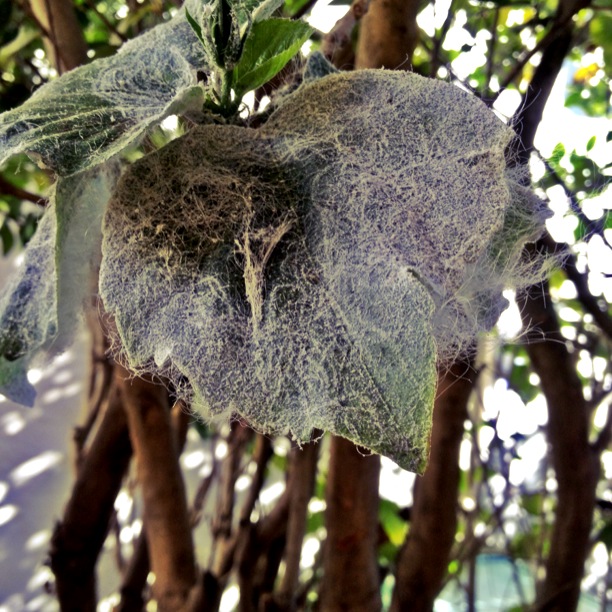
Today for my #sdawpphotovoices photo-a-day I took a photo of what I thought was some kind of fungus making a silky white coating on the leaves of our hibiscus plant.  When I posted it to Instagram and Twitter, I got a response from one of my colleagues from my school site via Twitter telling me that this “fungus” was in fact white flies.  I knew my colleague had a Twitter account, but she seldom tweets.  I do try to nudge my colleagues when I see something that I think will interest them by “mentioning” them on Twitter.  (I know I’m more likely to respond when someone “elbows” me and points me to something that has been posted.)  I did this on Friday with my colleague when I saw an app I thought she might find interesting.  And she acknowledged that tweet by replying.  And then today, without a nudge, she shared valuable information with me about my plant.

photo

There are stages to being connected.  Most people start slow (I know I did) and then work up to more active participation.  For most of us that’s how we learn to do a lot of things.  We watch, we listen, we test, we get some feedback and then continue to increase our confidence and participation–or abandon that thing altogether.  As educators we can’t afford to abandon digital literacy or being connected educators, but it isn’t necessary to jump in the deep end. There are lots of support systems out there.

In what ways are you connected?  What is the one thing you will do in the next week to increase your connectedness?  Will you comment on a blog?  Respond to a tweet?  Tweet a link to an interesting article or blog post?  Start a Twitter account?  (You are welcome to follow me @kd0602)  I’d love to know if you are willing to post your goal as a comment!