Category Archives: Uncategorized

Planting Seeds

I love the opportunities to spend informal, conversational time with my students.  I often find that time on our walk to the garden.  It’s a longish walk and away from the classrooms, so some conversation doesn’t disturb anyone.  I made the walk with students four times today…twice going there and twice coming back (with my class split in half–the other half was in the classroom with my co-teacher).

photo

On my final walk back to the classroom I was bringing up the rear with some second grade girls in my class.  As I listened in to their conversation, I noticed that they were talking about math and creating math stories that included elements of the garden.  When they noticed me listening they let me know that they were planning a “math playdate.”  A math playdate!  What an amazing idea!  They had made a case to their parents that they needed this playdate…with a math focus.  They had planned that the mom at the house they were going to would write up some math problems for them to solve and they would create their own math story problems (like the one I overheard).  We talked about whether they would include some of the other strategies we use in the classroom–like the way I pose problems, “If the answer is 15, what is the question?”

Honestly, this conversation surprised me.  These are not my confident, competitive math students (yes, I have a few of those!).  These are my pretty quiet, but definitely competent girls.  I work hard to make math fun in the classroom.  We play around with numbers and math concepts daily, with an emphasis on explaining thinking and problem solving.  We look for multiple approaches to solving problems and take time to learn from our mistakes.  Learning that these students see math as a fun way to spend their time together delights me!

I got to harvest more than pumpkins today!  As teachers, we never know when those seeds will germinate and grow and blossom.  What seeds did you plant to today?
Who Are Your Mentors?

“Children want to write.”  These words written by Donald Graves before I even began my teaching career echo in my head and push me to improve my teaching…and my own writing.  Each and every day.

Donald Graves also influenced my view of myself as a teacher researcher early in my career. Through his writing and conference presentations, I learned to view my teaching as a work in progress responsive to the needs of the students in front of me.  Through his work I learned to pay close attention to my students and to listen carefully.

Children will continually surprise us if we let them.  This is what happens when we slow down, listen, and let the children lead.  That is the joy of both research and teaching.” Donald Graves

Some days teaching writing is hard.  I have students who resist and say, “I don’t know what to write.”  And I know exactly how they feel.  Some days I don’t know what to say in my writing either.  But I strive to struggle through…and I ask them to do that too.  In the Writing Project we say that the best teacher of writing is a writer his/herself.  And I know this is true, because I know what makes writing hard because I write.  And I know that writing is the answer to that struggle to write.  Some days I have to write through the struggle just to find out what I have to say.

“Write yourself. Invite children to do something you’re already doing. If you’re not doing it, ‘Hey,’ the kids say, ‘I can’t wait to grow up and not have to write, like you.’ They know. And for the short term and the long term, you’ll be doing yourself a favor by writing. All of us need it as a survival tool in a very complex world. The wonderful thing about writing is that it separates the meaningless and the trivial from what is really important. So we need it for ourselves and then we need to invite children to do what we’re doing. You can’t ask someone to sing a duet with you until you know the tune yourself.”

We all need mentors in our lives.  Donald Graves was one of mine, and his writing remains to continue to guide my thinking.  And those he mentored continue his work and provide guidance for the next generation of teachers and writers.  My students also mentor me.  They continually remind me to have high expectations and limitless patience.  And they prove Donald Graves right, “Children want to write.”

Who are your mentors?  How do you continue their work?

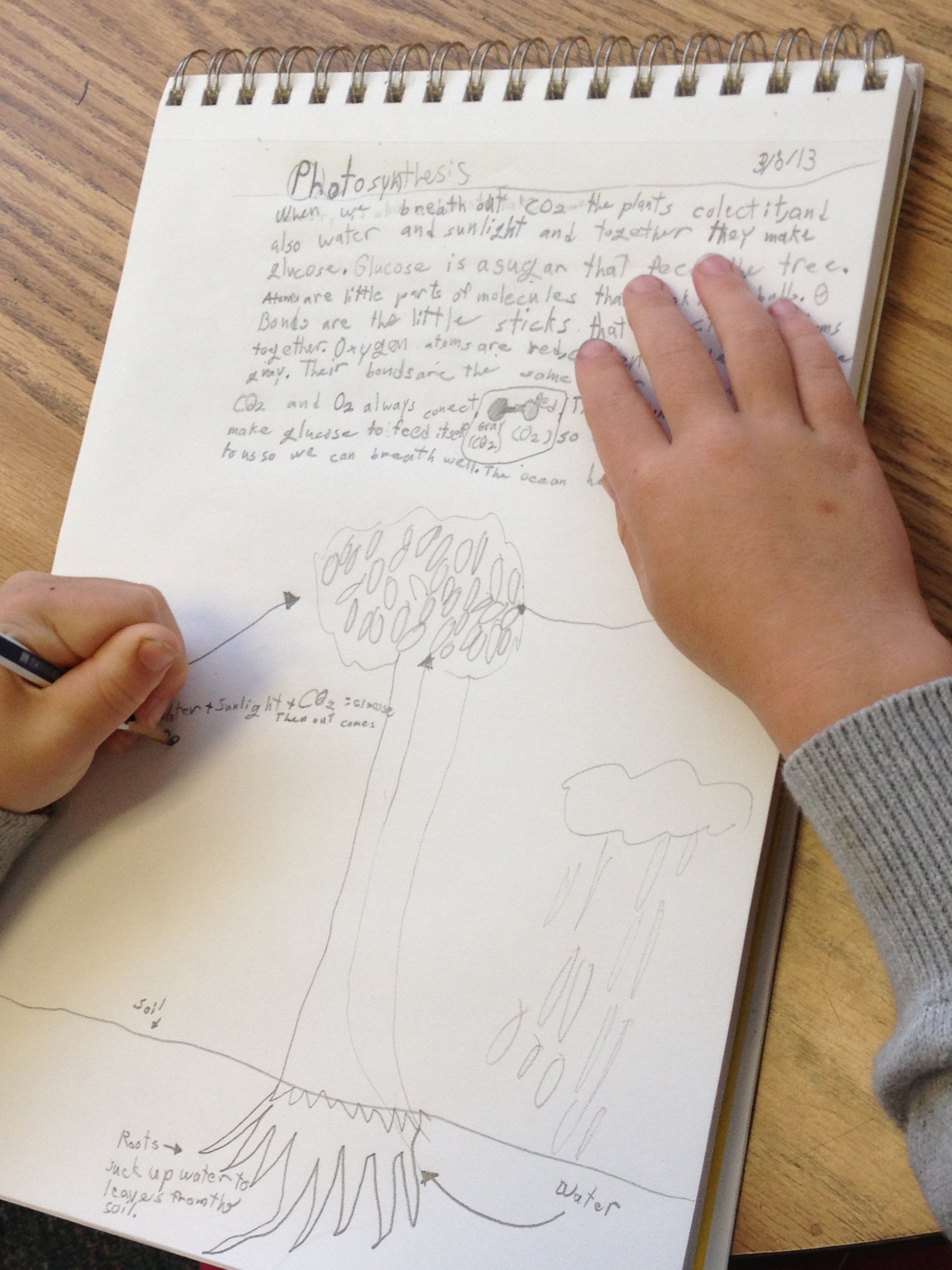
student reflection

Playing with Perspective in the Garden

We’re lucky enough to have a school garden thanks to support from our school district, our local community, and a non-profit developed by a couple of teachers at my site called Scrumptious Schoolyards.  My students had time with the gardening teacher today observing how the garden has changed over the summer…before it is harvested and cleaned up for fall planting. While watching them and listening to their comments and looking at what they noticed, I also had time to snap a few iphone photos.

I’ve been playing around with perspective and point of view, trying a variety of angles–looking up, looking down, getting down low.  Here’s one looking up into the “face” of a sunflower.

photo-2

I purposely got close, wanting to capture the texture of the sunflower’s surface.  I love the bright yellow-orange of the petals around the top…and you can see just a hint of the chain link fence around the bottom.  This photo is unedited and not cropped…it’s just as I took it.

Another unedited and uncropped photo I took today is this one of squash blossoms.  I love the slight shadow on the blossom and the peek at the squash growing in the background.

photo

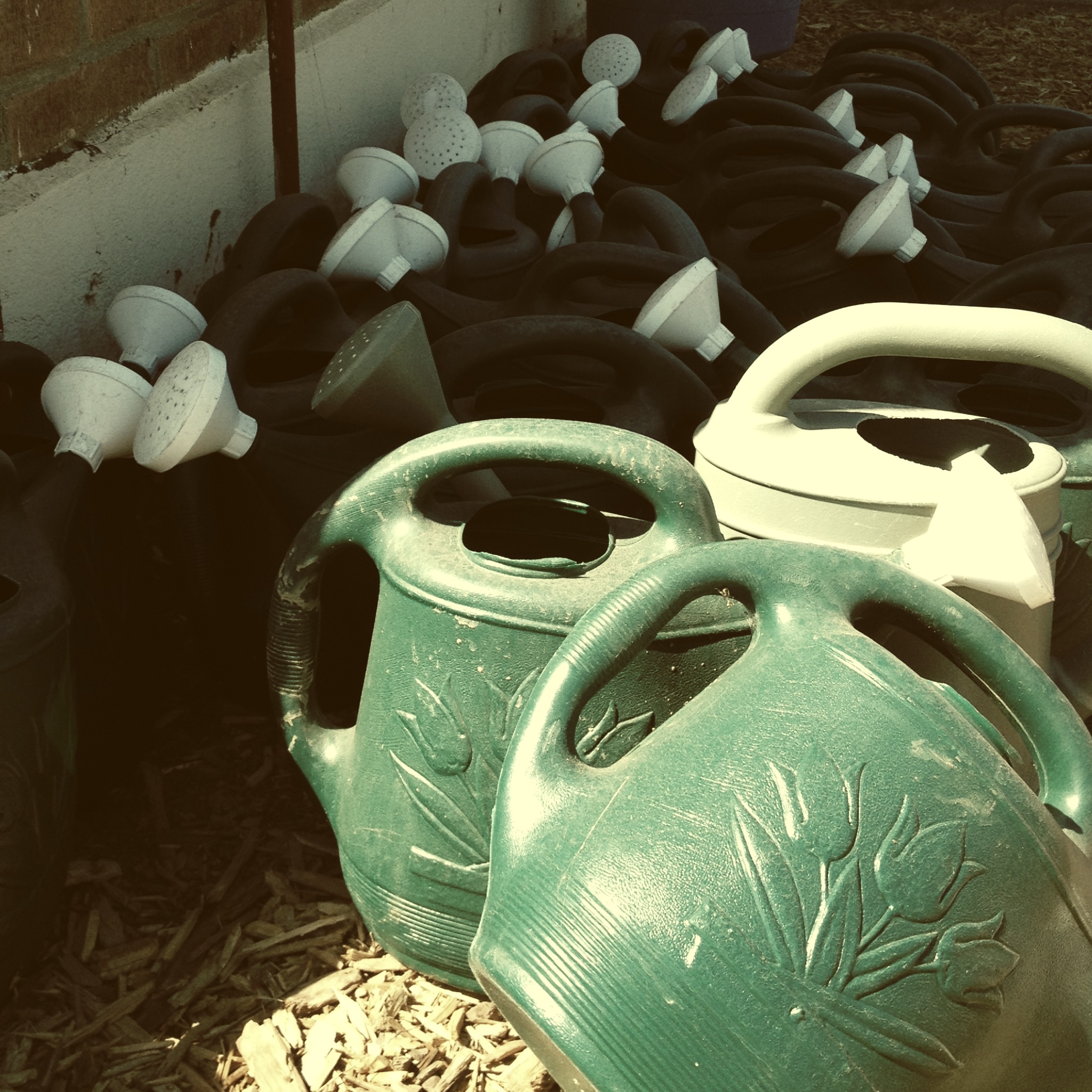
I also played around a bit with cropping and filters on this photo of the pile of watering cans. Only in a school garden would so many watering cans be sitting together just waiting to be used!

photo-1

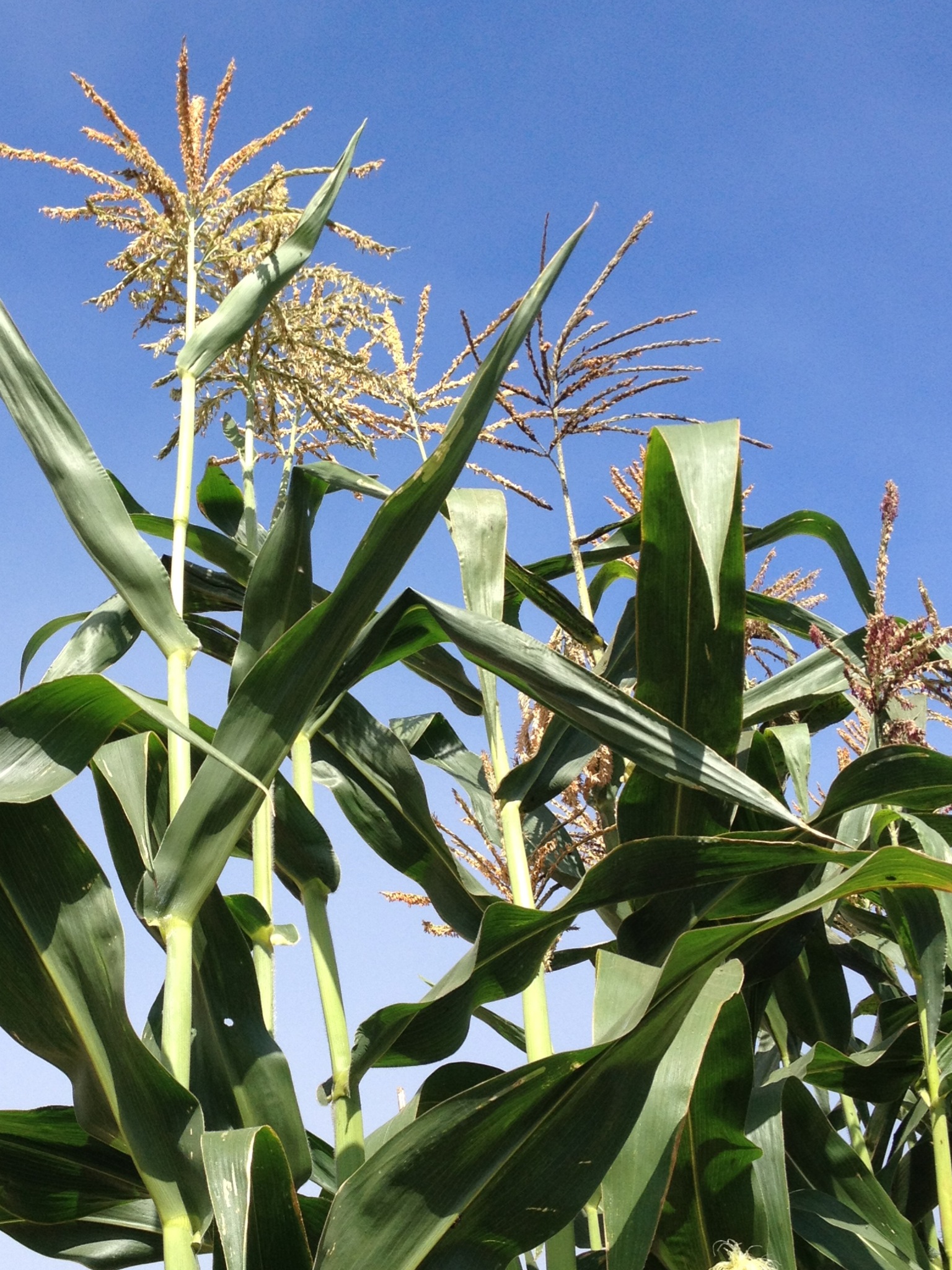
We also have a small corn crop growing tall!  With this photo I cropped to focus the photo on the corn and not on the background…and wanted to move the viewer’s eye upward to emphasize the height (while including beautiful blue sky!).

photo-4

There is so much more that I noticed in the garden today–and saw through my students’ eyes that I wasn’t able to capture in photos.  I love their wonder and fascination with bugs and plants.  They uncovered caterpillars, carefully held ladybugs (both with and without spots–how I wish I had my macro lens handy!), avoided those big green beetle bugs, and noticed the dragonflies darting overhead.  They were astounded by the size of the tomatoes (heirlooms as one student pointed out) and the pumpkins.  And they can’t wait to literally dig in and get to the real work on gardening!

What did you see today through someone else’s eyes?  How does that change your perspective?

Some Thoughts About Labor on Labor Day

Today is Labor Day, most often referred to as the unofficial end of summer.  On Friday morning when I asked my students what they knew about our upcoming holiday, they were stumped.  I even heard a comment or two saying, “My mom said she doesn’t know what Labor Day is.”  I did a bit of double-checking my own understanding of Labor Day and its history and we revisited the concept of Labor Day before the students left for the day.  We talked about labor and the ways other people’s labor helps us and how our labor helps others.  We also talked about the fact that not everyone gets the day off from work on Labor Day.

Today was not an official work day for me, and while I enjoyed my Labor Day holiday I was also thinking about labor and what that means in my work as a Writing Project director and educator.  Teachers often get a bad rap about their summers off and short work days based on the hours that students are physically present.  And yet, outside of those hours spent directly with students there is a lot of labor going on.  This invisible labor–the work of planning, preparation, communicating, collaborating, researching–frequently is not seen as work at all.  I understand that this work is not physical, backbreaking labor and yet without it the quality and effectiveness of our profession is diminished.

And I’m often reminded that I make a choice to work beyond my official work hours, and I admit that much of the work I do is a labor of love.  I love creating spaces for learning and working out ways to support the learners that walk through my doors.  But I also spend time doing things that are expected that I don’t love–preparing for standardized testing, attending meeting after meeting after meeting, writing and preparing report cards–but I do those things too.

I’m interested in the role that invisible labor plays in our society.  I am also wondering how labor is viewed depending on your point of view.  Here’s an example that comes to mind: some people in my neighborhood pay a gardener to mow their lawns and keep their yards trimmed and healthy, other people do their own yard work–often less frequently than the gardeners. Clearly the paid gardeners’ labor is acknowledged–they charge a fee and make their living doing yard maintenance. What about those who do their own yard work?  Is their labor considered a hobby?  A chore?  What role does it play in our economy?  Does the fact that some people do their own yard work somehow diminish the importance or skill required of professional gardeners?

What invisible labor do you take for granted?  Whose labor is diminished because it seems like work anyone can do?  What invisible labor do you provide?  What do you wish others knew about your work?

Hope you all had a happy Labor Day, especially if you had to work today!

Some Thoughts on Digital Learning: #Leadership Day 2013

Scott McLeod over at Dangerously ! Irrelevant is celebrating the 7th anniversary of his blog today and inviting educators to share views on effective school technology leadership on what he calls Leadership Day 2013.

In lots of way I have been fortunate in my district with technology–our administrators employ a person to provide tech support to troubleshoot problems, send me to trainings if I ask to go, and trust me to figure out what is best for my students.  But I would say that those conditions are not enough to ensure participation of teachers who feel less confident with digital literacy and need more direction and support to implement robust technology use in their classrooms.

But instead of saying just how to support these teachers, in this post I will talk about the pieces of technology leadership that I feel are most often overlooked.  They are two very different but very important aspects of digital literacy:

  • Consideration of the impact of technology on student learning
  • Leadership by example by being a user of digital tools

Consideration of the Impact of Technology on Student Learning

There seems to be lots of attention to hardware decisions in education–Macs or PCs, tablets or chrome books, smart boards, document cameras…  The list goes on.  And there’s lots of attention to software and applications and how technology supports teachers–ease of grading, presentation tools, record keeping…  What is missing for me are meaningful conversations about the ways technology and digital literacy impact student learning.  Instead of asking each other what apps to use on classroom iPads, I think we need to ask how digital tools support student learning.  How can students transform information in ways that make it relevant and meaningful–and accessible in novel situations?  Instead of deciding between Evernote and Notability, we need to have conversations about how and why students will use this type of application–and it probably doesn’t matter which you choose if you have reasons that support student learning.

Leadership by Example by Being a User of Digital Tools

What I notice from my own Professional Learning Network (PLN) on Twitter is that educators who are thinking about the ways digital tools impact student learning are also actively using digital tools for their own learning.  They are blogging about their professional learning, tweeting articles and links about research and thinking about digital tools, they are experimenting with new ways to represent their own learning with video, digital photography, infographics, and other digital tools, and they are actively learning with and from other educators trying similar tools.   I do see a few administrators and district leaders joining in this effort–and it seems that those who do have a bigger impact on the implementation of technology in their districts. The more district leaders use digital tools themselves, the better positioned they are to understand the benefits and challenges of them–and the potential implementation possibilities for use with students.

Our students will be using digital tools–they are pervasive in our lives.  Our question as educators is how do we use these tools to support our students’ learning…and help our students (and ourselves) see and use these technologies in ways that make us all more thoughtful, efficient, and productive?  Leadership is essential to successful implementation.  I hope my suggestions give some food for thought for those in leadership positions for the implementation of technology in education.

On Symmetry

I teach symmetry to my young students each year.  As a math concept it’s about those lines, you know, the ones that if you fold a shape along lines of symmetry the shape will be the same on each side.  But in practice, in life, symmetry is more than that.

Here’s my collection of #symmetry photos for the first four days of August:

The pure mathematician might argue with the validity of my symmetry photos.  But what I love most about looking for symmetry is that I am also noticing other interesting design elements…and the places where symmetry falls apart, and the places where symmetry is intentionally absent.

Sometimes I think symmetry gets confused with balance.  You know, like the scales where you have to have equal weight on each side to make the buckets hang at exactly the same level. Sometimes I love symmetry…two sides that perfectly mirror one another.  And other times I love the impact of asymmetry, purposeful disruption of that mirror image.

Exploring symmetry makes me think about choices we make in our lives.  I think balance may be overrated.  Sometimes we simply need to go overboard–and follow our passions to the extreme.  That is where creativity lives, pushing the limits and following whims without regard to the rules of design or achieving balance.  And that’s the beauty of iteration, revision, or even failure…it gives us the opportunity to look again, try again, and see what we might do differently the next time around.  Learning is like that.

Writing, Learning, and Time

Time is one of those precious commodities that we never seem to have enough of.  There are so many demands on our time—work and family, the business of maintaining homes and cars and health and beauty.  And then there are all those things we want to do: play and make and explore and learn.

We’re often impatient, wanting to see the fruits of our labor immediately, especially as teachers.  We want to see our students grasp new concepts and show us they are learning.  We often forget that learning is not fast and often follows a zig-zaggy trajectory rather than that even slope of progression that seems to be the meme for learning.

Yesterday, Judy shared this short, eloquent piece from Ralph Fletcher in his book Mentor Author, Mentor Texts: Short Texts, Craft Notes, and Practical Classroom Uses, who writes about his experience spending a day with eighty-year-old doctor.

We worked together planting baby trees in New Hampshire.  The saplings were little bitty things, no more than six or eight inches tall.

“It’ll take twenty years before they’re even close to maturity,” he admitted with a wry smile.  “Guess I won’t be around to see it.”

I was struck by the quiet heroism of this act, planting trees that would never bring him shade.  As writing teachers, we do the same thing.  It won’t happen today.  It may not even happen this year, or next.  But you can count on it: one day our young writers will blossom, even if we’re not there when it happens.  Except I actually think we will be there, buried deep inside them.

I think this is true—when we are being the best teachers we can with student learning at the center of our practice—but I also think that some of our young writers “die on the vine” at school, from lack of water, sun, and nutrients necessary for growth.

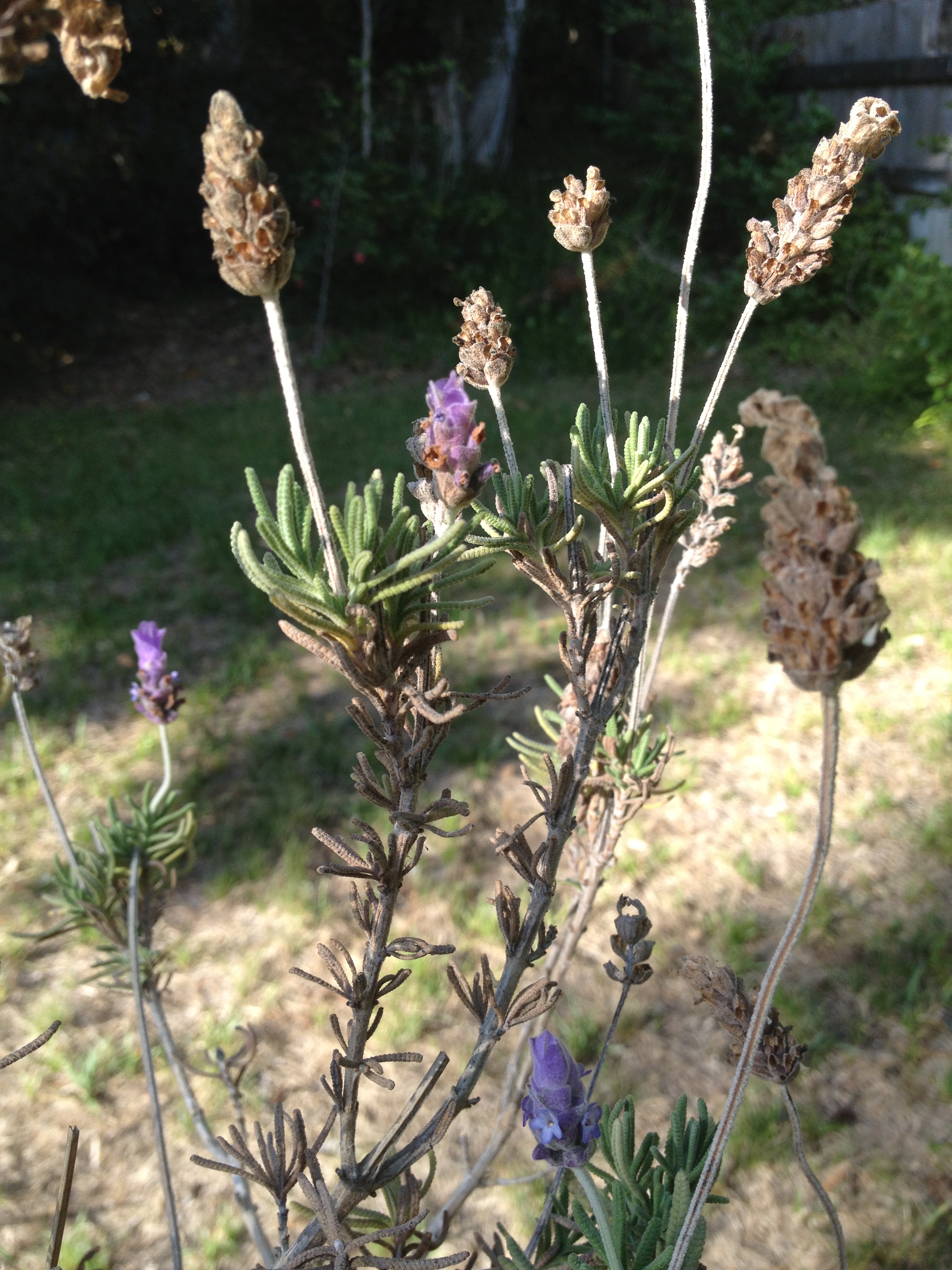
And I’m also remembering my beautiful lavender plant from my front yard that got relegated to the wilds of the backyard during our early spring plumbing disaster—a place where “out of sight, out of mind” meant a lack of watering and near death.  And yet, we didn’t discard it, assume that it had died.  Instead…as we became more mindful and intentional about caring for it and nurturing it (and with strategic placement where it gets some water from the automatic lawn sprinklers), it is beginning to come back.

photo

We can do that for our students too.  Instead of feeling bad for not being the best possible teacher for the students who came before, we can work to nurture the learners we have before us.  We can keep learning ourselves and share that learning with these young people in our care.  Time will always be a challenge…for fitting in our own learning and for uncovering evidence of our students’ learning.

And then I think of myself as a writer.  How often do the demands of work and life suck up time necessary for writing and thinking and dreaming…the lifeblood of composition.  I’m working to find ways to be more intentional about my writing life; creating strategic ways to find spaces for writing and thinking and dreaming.

What do you do to nurture the young writers in your life?  How do you nurture your own writerly life?

SDAWP Photo Voices: Red

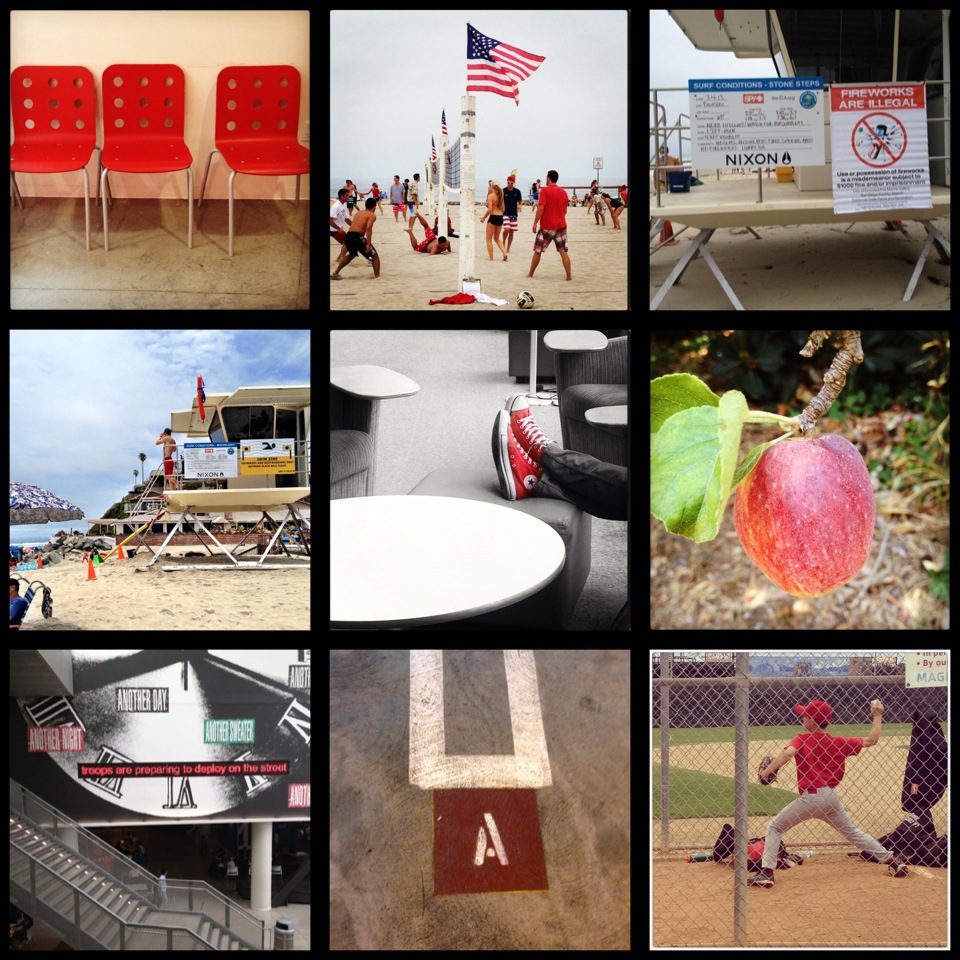
At SDAWP Photo Voices this month we are doing something different: a single prompt (they happen to be colors) for an entire week.  This week was red.  Rather than picking a single picture to highlight (although there is one that is the header for this blog!), I decided to create a collage (using collageit) or map of my week (a nod to my experience with the Connected Learning MOOC).  I did throw in a couple of extra red photos that I didn’t post as part of our photo-a-day challenge.

Red

I was surprised just how easy it was to find red…everywhere.  Because of the 4th of the July holiday, I was at the beach several days this week–and I found red without a challenge!  My favorite is the red shoes picture (edited with the app colorsplash), but I also love the unexpected red apple in my own backyard and the odd assortment of three red chairs.  I’m looking forward to seeing others’ red favorites today and tomorrow as they get them posted on our SDAWP Voices “red” page!

Up next…yellow.  Hmmm…

frames

With each photo I take with my cell phone, I spend more and more time thinking about how to frame the picture I see. I’ve learned that using the zoom feature on my phone helps me see the object clearly in the moment, but degrades the quality of the photograph when I go to edit. I can reframe in the editing process, pulling the image in closer, eliminating some of the background noise. If I shoot too “big” I often find myself with a nondescript landscape. Finding some kind of focal point makes the photo more interesting–and often evokes the curiosity of viewers.

This article in the New York Times on July 2, 2013 also has me thinking about frames and framing.  The author plans an outing for his 6 year old nephew based on both his budget and his nephew’s interests and personality.  A focus on Grady’s interest in art and low-key, meandering pace in life creates a day filled with drawing and art museums punctuated with opportunities for Grady to interact with working artists, study a variety of art forms, and enjoy a leisurely day with his uncle.  Framed in another way, Grady could have been disenfranchised, alienated by having to hurry here and there without the time to study and try out what he found interesting along the way.  Uncle Seth’s focus created spaces for Grady’s curiosity to blossom.

This has me thinking about ways I can use this idea of framing in my classroom and in my work with teachers, foregrounding student interests while keeping the skills and processes needed for learning success in mind.  I’m wanting each of my students to feel like Grady did on his outing with his uncle: like learning is what you do when you’re enjoying what interests you.  That’s what happening with my photography.  I’m learning as I play around–and through connections with others with a wide variety of interests and skills that relate to what I am doing.  My photography (and the photos themselves) are not framed in a permanent shape with a single focus, I am continually exploring frames and how they work with the images and ideas for each shot.

School curriculum often feels like it exists in the noun “frame” rather than used flexibly with the verb “frame”–ignoring students’ strengths, challenges, and existing interests and knowledge.  Does the frame/framing metaphor work for teaching and learning?  I’d love to know what you think!