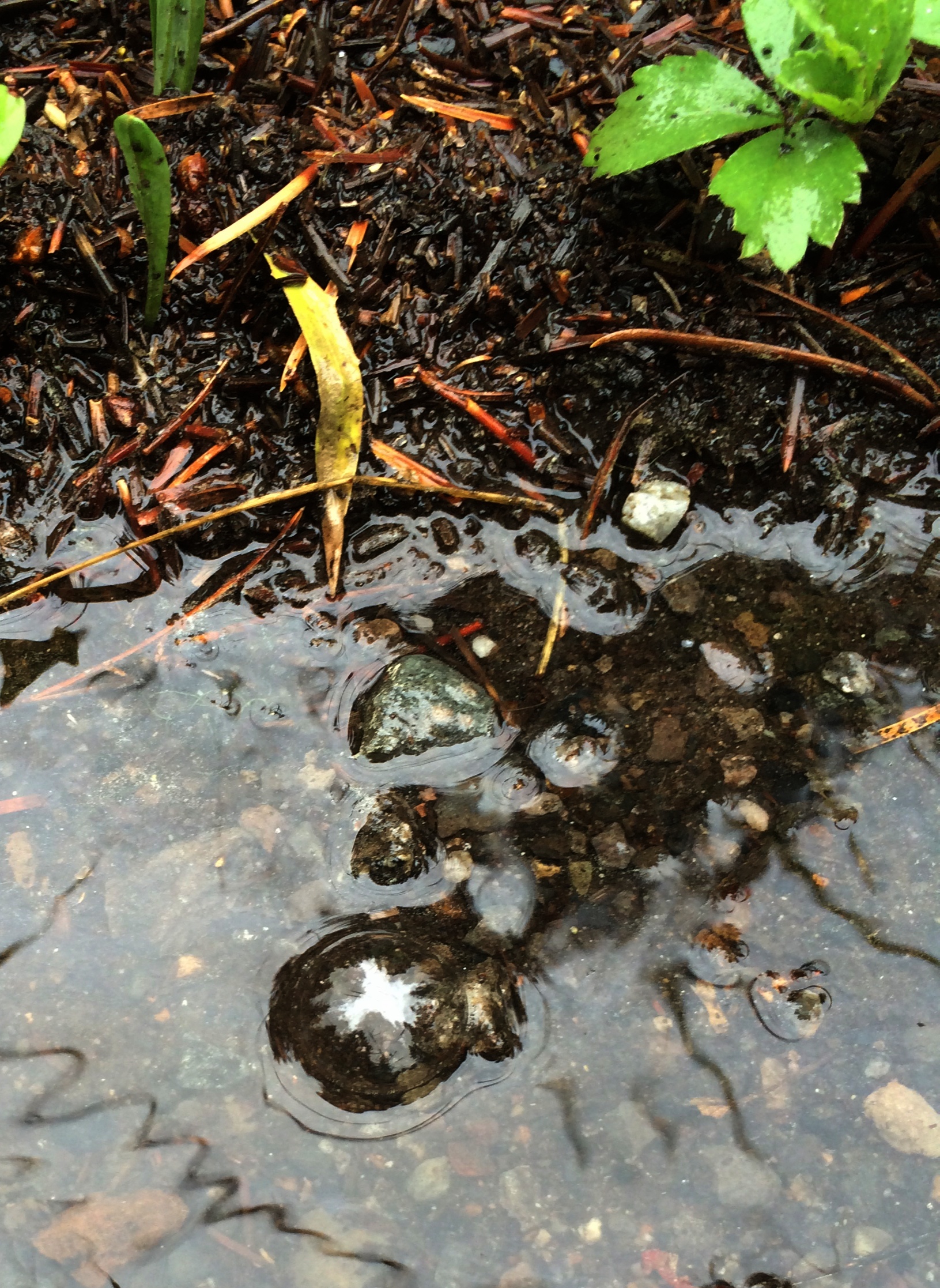
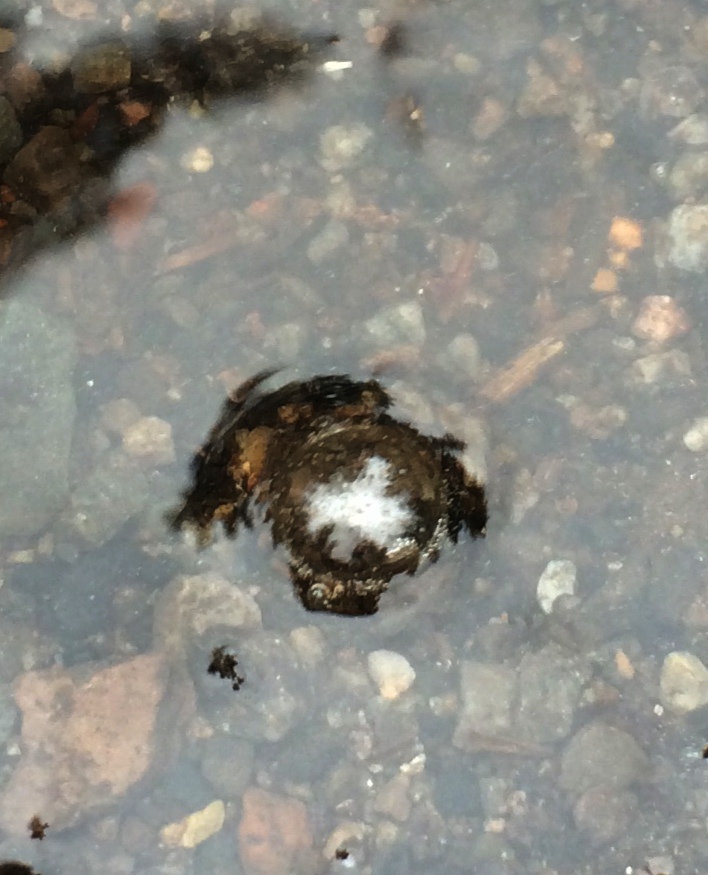
A Learning Walk: Relics
Inspired by an upcoming trip to Montana and an opportunity to explore Yellowstone National Park, I have taken up hiking. It’s a pastime my husband has enjoyed–without me– for quite some time. And yet, inspired by play and my photography, we make an effort to include some kind of adventure–with an opportunity to explore through my lens–on our days off from work. So for the past three weeks we have hiked, exploring the local backcountry with our feet.
What I like best about hiking is being outdoors, enjoying the sun, the natural terrain, noticing the native flora and fauna, and finding views and interesting photo subjects that aren’t available without hiking in at some distance. It gets hot in the backcountry around here, so we headed out pretty early this morning to hike before the mid-day heat. After climbing some distance, I looked out to see this view of the mountains in the distance veiled by the clouds that were just beginning to yield to the sun.
And there are relics of days gone by in these wide open spaces. Evidence of the native peoples who lived here before the white settlers, knowing that the native plants served as a food source and pharmacy…that this arid place sustained life long before our modern conveniences.
Tucked up in the hills of the Daley Ranch, on an offshoot of the Sage Trail, we found this rusted old water tower.
After a much longer hike than we had anticipated (at about our 7 mile mark), we came across the old ranch buildings from the days when this land was a working ranch. It’s interesting to me to think about how much smaller buildings tended to be in days gone by. Compared to some of the surrounding homes, these buildings are barely the size of a single room of modern buildings.
But it was this relic that made me take a second look. More than a mile from the trail head, near these old buildings, sat a more modern relic, something that is seldom used these days…a pay phone!
We ended up hiking more than 8 miles today! Much longer than we planned, but also entirely enjoyable. The weather was warm, but not hot. The trails were varied and interesting, but not incredibly steep. It was a perfect learning walk and photographic adventure…with some exercise and fresh air thrown in as well. And who can resist a shadow selfie…this one is a hiking shadow selfie!
I wonder what relics future generations will find as they hike and look at evidence left from our lives. How will our remains help them understand a life they haven’t experienced? What will amuse and confuse them?
Weekly Photo Challenge: Light
Do you speak in images? Enjoy taking photos to document your experiences or just to express what you notice in the world? Love to share them with others? Welcome to the weekly photo challenge! I post a new challenge each week…check in regularly and join the fun!
One of the things I love best about the summer is the light. Days are longer and filled with warmth and flooded with light. I find myself noticing how light shines from different angles, how different objects catch light, and how some light seems harsh while other light feels soft somehow.
I’ve been messing around with selfies (and subjecting my husband to them too!), trying to capture different angles and places and light too. I love the sky in this one and the way the light catches my hair and shoulder.
During a late afternoon glance around the back yard I noticed the way the light and shadow played with this succulent.
And I was drawn to the burr on this weed and the way the light served to highlight the prickly spines. I had to get my macro lens to capture it’s miniature beauty.
Yesterday was Hack Your Notebook Day, which meant we were playing around with lights and writing and notebooks…and I captured Henry testing the limits of his parallel circuit, lighting up one, two, three, four…
Today I was craving the outdoors and sunshine and solitude…so I took a lunchtime photo walk out on the UCSD campus.. There are so many interesting art installations (part of the Stuart Collection) on campus…I found myself heading off toward the rock bear and noticing the light bouncing off the boulders that are the bear.
And if you look closely into the light and shadow of this shrub you might just see the little bunny rabbit that froze when it saw me…allowing me to snap a photo (although I couldn’t get close enough for a great shot of the rabbit).
So this week’s challenge is to find the light in your photos. Indoor light, outdoor light, dim light, bright light, direct light, diffuse light…take advantage of all the light that summer has to offer!
You can post your photo alone or along with some words: commentary, a story, a poem…maybe even a song! I love to study the photographs that others’ take and think about how I can use a technique, an angle, or their inspiration to try something new in my own photography. (I love a great mentor text…or mentor photo, in this case!)
I share my photography and writing on social media. You can find me on Instagram and Twitter using @kd0602. If you share your photos and writing on social media too, please let me know so I can follow and see what you are doing. To help our Weekly Photo community find each other, use the hashtag #light for this week and include @nwpianthology in your post.
Chase the light with your lens…can’t wait to see what lights up your life!
An Invitation to Hack
On Hack Your Notebook Day I found myself thinking about all the possibilities for hacking curriculum. Especially as we think about our students and who we are and are not reaching with our teaching,, we often think about the materials we are compelled or choose to use. I feel strongly about the need for teachers to hack their curriculum on the behalf of their students…and to encourage students to hack the curriculum for themselves too.
By curriculum, I don’t just mean those self-contained programs in binders and workbooks, but also the novel unit, the teacher-developed projects and materials, the cute unit inspired by a pin on pinterest… Even the lessons we have poured heart and soul into–they all deserve careful scrutiny with our students’ needs in mind.
We all have students who need scaffolds and we all know (or are) teachers who need scaffolds…there’s nothing wrong with leaning on some support structures. The problem, for me, is when the structures get in the way of student learning and teacher development. My least favorite words out of the mouth of a teacher are, “Just tell me what you want me to do!” And I’m not really fond of those words from students either. They imply a lack of investment, a lack of agency, a lack of understanding of purpose and audience. And all of those might be true.
So what do we (I) do about it? I propose that we hack. Let’s carefully examine the materials we are required to use and/or decide to use. Who do they work for in our classroom? Who benefits? Who doesn’t? Who do we give permission to “break the rules?” Who is handcuffed by the materials?
A Burr in Your Sock
Today was a prickly kind of day in the SDAWP SI. There’s something about confronting formulaic writing that sticks in your socks like those little burrs you find on weeds that seem to plant themselves in the most unlikely places.
Over the weekend we read a collection of articles about formulaic writing, thinking about why this approach to writing instruction persists, and the implications for student writing. Even teachers who are proponents of using a formulaic approach to teaching writing still complain about the deadening experience of reading the resulting student writing. Who wants to read paper after paper of repetitive phrasing and uninspired thinking?
I contrast that with the playfulness of this week at the CLMOOC. This week’s make is to hack your writing. And already on day two interesting writing is filling my feeds. I woke up this morning to a poem by Kevin “stolen” from yesterday’s blog post:
I live in contrasts
in the space between here
and there
I find the nook to hide in
and observe the world
through many lenses
I seek but never find
the whys of the world
so that every movement is
equally beautiful, equally interesting
and entirely different from each other
but only if we take the time to pause
and notice.
And this creation by Sherri:
Both Kevin and Sherri played with language and writing, creating their own message and meaning from words I had written. They wrote for fun, for their own purpose, and gifted their words to me on my blog. I grant you that they are adults and they are not composing “academic” texts, but I know that the spirit of fun and play supports them as writers.
I worry about who in our schools gets the most formulaic writing. Why are our English learners, our students of color, our students who live below the poverty line most likely to get writing instruction that is pre-chewed, scaffolded to the point that no thinking is required? In the name of being helpful, we are robbing students of the opportunity to make sense of their thinking through writing.
And yet, letting go of the formulaic means inviting messiness, losing control, welcoming confusion in order to find clarity and coherence. What replaces the formula? That is a question that I am asked over and over again. The answers aren’t easy, they aren’t neat, and they mean teaching writers rather than writing.
Sometimes that search for answers feels like a burr in your sock. But if you look closely–maybe using your macro lens–you’ll see the details of the beautiful weed, a natural hacker, springing up where you least expect it.
This and That: Consider the Microclimates
I live in a place filled with contrasts. There is the breezy casual of the beach to the west and less than a thirty minute drive away you can be hiking into dry, hot hillsides, exploring vineyards or admiring the abundance of avocado groves. Our weather reporters call them microclimates…and we tend to be adapted to the microclimate where we spend most of our time. But what I love most about this place that I call home is that it is not either/or, it is this and that.
Just this weekend I spent time in two of these contrasting spaces…equally beautiful, equally interesting, but entirely different from each other. I loved exploring the old oak forest as I walked in the dappled sunshine…and looking up in surprise as I watched a mule deer leap across the path I was walking. It was hot early as I hiked uphill and I could see evidence of wildfires past and the dry brush that continues to be a threat for future fires.
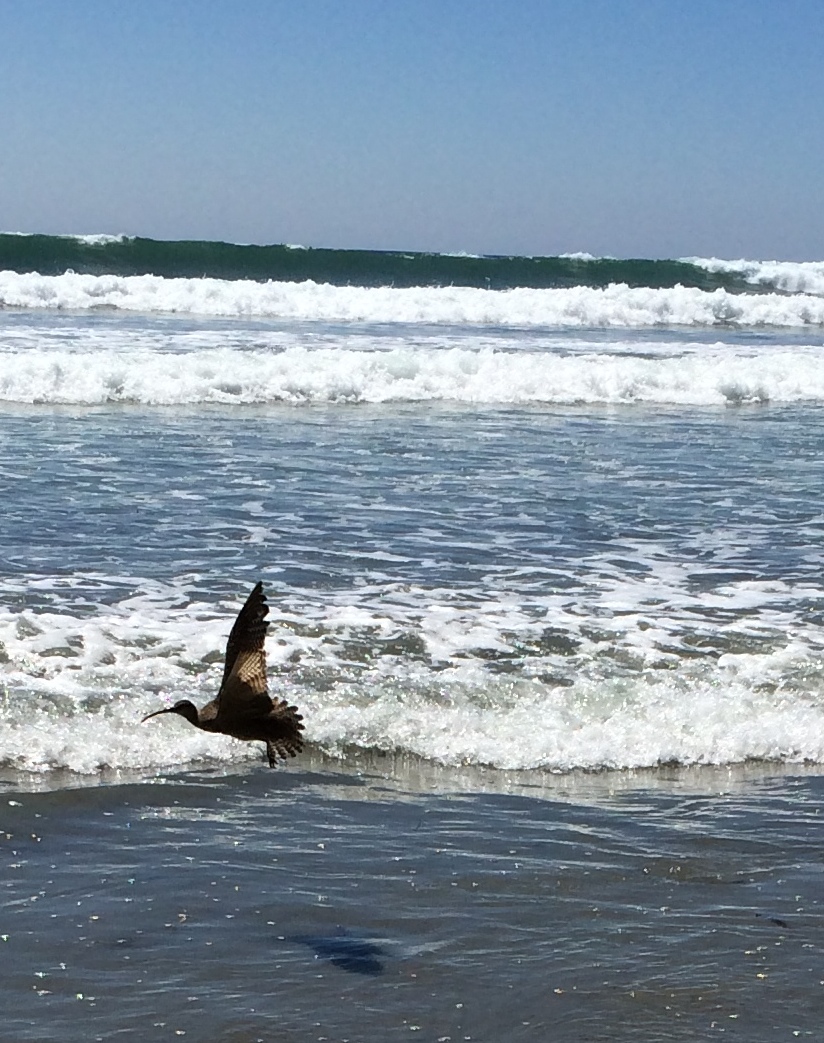
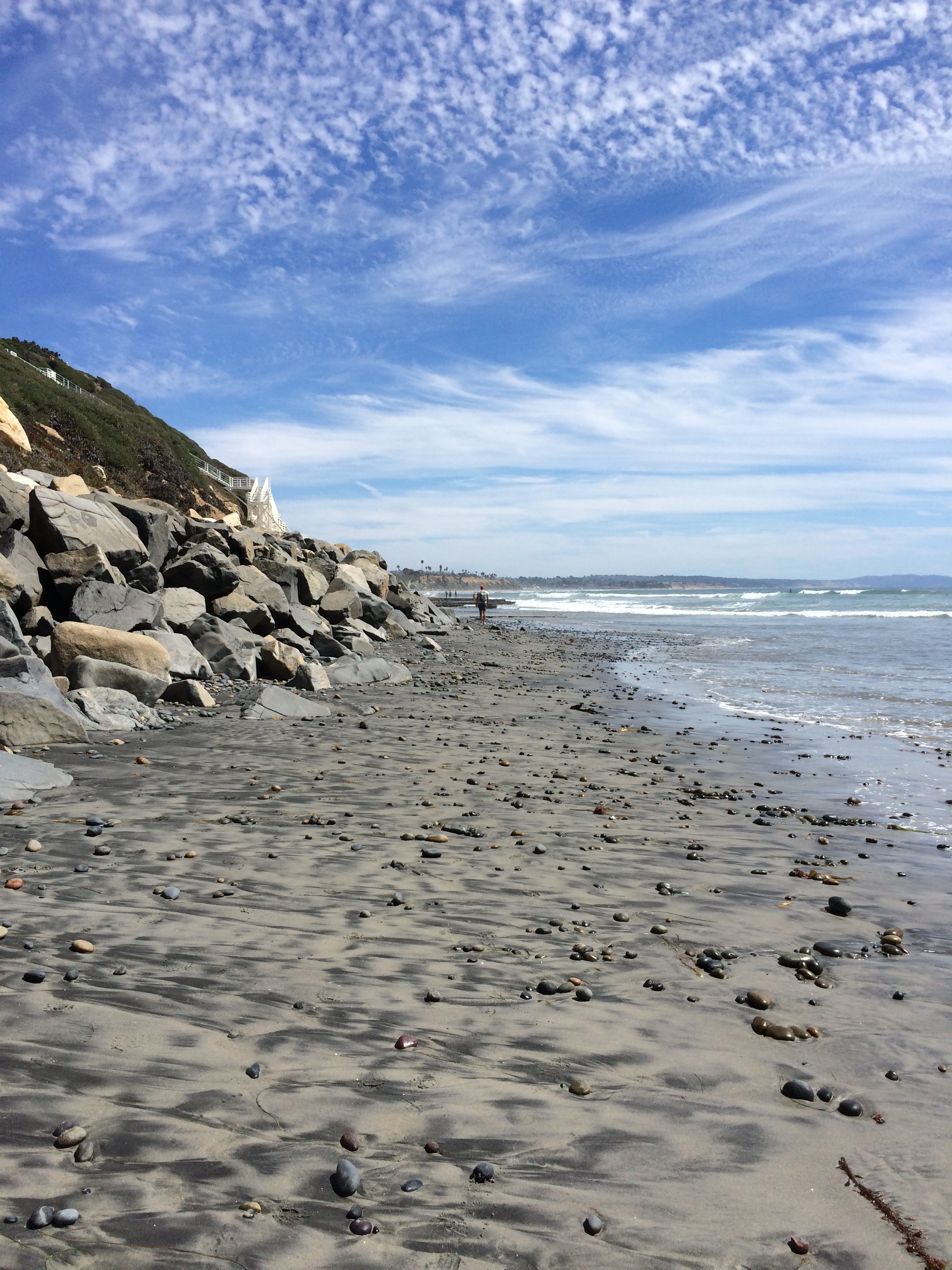
And the beach is always a source of inspiration. The holiday weekend prompted us to get up early and walk the beach before the crowds arrived. It was sunny and warm and the water was unusually clear. We noticed sand sharks and stingrays swimming a few yards from us as the waves crashed. The water was warm by our standards…up to 70 degrees, perfect for barefoot walking.
I’m so happy that I don’t have to chose to love and visit only one part of my place. I’m feeling like there is such a push to simplify our choices, to turn every decision and discussion to the binary choice. Right or wrong, left or right, boxers or briefs, apples or oranges. In my experience, those binaries just don’t represent the rich complexities of everyday life. Just this morning a friend sent an article about “balanced literacy” where the author lamented the kind of “conventionally rigorous” instruction he had received as a young English learner. The article implied that “balanced literacy” was essentially an absence of teaching compared to the experience with the effort-full teaching he had received in his childhood.
I’m reminded of the reading wars in the not too distant past. The phonics versus whole language debate that implied an either/or approach to teaching. These arguments miss the subtleties and complexities of teaching and learning. This “all teacher” or “all student” approach ignores the body of student-centered teaching that effective teachers practice every day. It dismisses the diversity of the needs and interests of students as irrelevant and assumes that if the teacher simply transmits enough information, students will learn what they need to learn.
Let’s start a new conversation. One that is about learners: teacher learners and student learners. Let’s bring their microclimates into the conversation.
Blog Birthday: A Reflection
Today marks one year since I began this blog. I began with a 30 day blogging challenge for myself–creating an urgency to blog every day for 30 days in a row. And in retrospect, that was a smart move to help me establish a habit of writing every day, day in and day out, even when I wasn’t feeling like I had anything to say. In the last 365 days, I posted a blog post 293 of them…that’s a little over 80% of the days in the year!
This morning I had plans to read all 293 posts and then create some kind of reflection based on that reading. And while I think it’s a good idea to go back and read all my posts, I only managed to get through the first 30 days before my life called and I was off to the beach and running those errands that just don’t get accomplished during the work week.
(Making time to photograph and play pushes me to create more balance in my professional and personal life…a good thing, I think!)
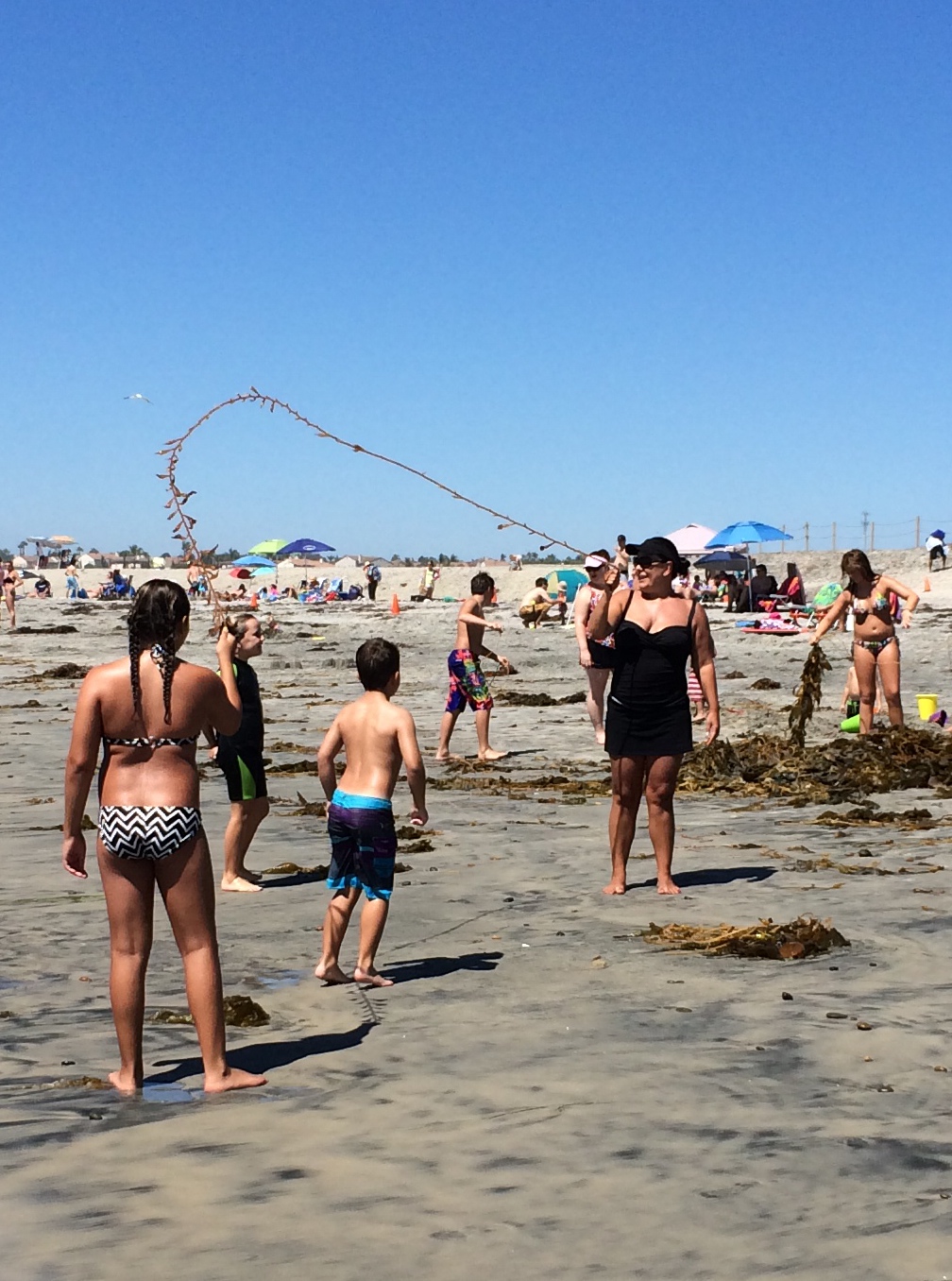
I’ve noticed lots of bull kelp on the beach in the last week. There is something beautiful and fascinating about these large floats…definitely evokes the wabi sabi for me!
So instead of reflecting on the year’s worth of posts, I decided to highlight five from those first 30 days that continue to speak to me…and I know that I returned to their themes throughout the year–and may continue to return to them.
1. Dandelions: A Photo Essay – I noticed that I had a number of posts about my fascination with the ordinary, and what I learned about myself and my students by paying attention to small details. This particular post continues to be one of my favorites.
2. Fireflies – This is another post about something little–that many people take for granted. I loved learning that fireflies are the most ordinary of insects, and the most extraordinary! We southern Californians miss so much by not having these lights in our everyday lives!
3. Spaces for Learning – Hmmm…I just discovered I have two posts from last July with the same title! I like this one that talks about “third spaces” for learning, outside the spaces claimed by hierarchies and organizations. These are the spaces we claim for ourselves as learners. I’m not done thinking about this idea… and it keeps emerging over and over again in my life…as a teacher, as a learner, and as a human. (The other post was about Genius Hour, which is related…)
4. A Small Orange Bead – This post is really about the power of connections and connectedness as a learner. Opportunities to learn in a community create deep pathways and provide support that matters to learners.
5. Boys and Bears – There is a physicality to learning that we sometimes forget as adults. My observations of boys at the polar bear exhibit pushed me to think about how physical interactions have the power to pique curiosity and deepen learning experiences.
A year of blogging has taught me so much about myself as a writer, as a learner, as a photographer, and as an explorer in the world. It has heightened my senses as I lean closer to my surroundings to understand them and myself through my writing and photography. When I chose the blog title, Thinking Through My Lens, I wanted to play on the word lens to represent more than a camera’s eye…I also wanted it to represent my own biases, questions, and goals.
I look forward to another year of Thinking Through My Lens…and hope you will continue to bump your thinking against mine, sharing your insights and discoveries so that we can learn more about our world and ourselves, together.
Rubbing Elbows with Nature
The Wabi Sabi photo-a-day challenge has me looking at my surroundings differently. I find myself looking for beauty that presents itself in unusual ways.
Today I had the opportunity to head out around the UCSD campus for a short learning walk in conjunction with a demo presented by a kindergarten teacher in our SDAWP Summer Institute. She explained how nature inspires her own writing and some of the ways she inspires writing with her students. As I headed out with the charge to spend some time in nature, tuning in the sights, sounds, smells, and feels, I also had my phone/camera in hand ready to capture evidence of my experience.
Down the metal stairs, past the row of ATM machines, across the cement walkways, sandwiched between the architectural wonder of the Geisel Library and the tall buildings that are Warren College, lies a secret garden. Garden often conjures lush foliage and brilliant blooms, but the space lives under a canopy of Eucalyptus trees. And to my surprise, growing from a fallen trunk were three new tall, thin trees.
Heading off to the Snake Path, an art installation leading to the library inspired by Milton’s Paradise Lost, I found the natural beauty and familiar smells of the native plants that thrive in our arid, coastal climate. With phone/camera in hand, I noticed the contrast of the angular, metal and glass library poking up behind the fragrant, wild-ranging brush.
As I continued my walk, I came around the front of the library and found myself drawn to to the barrier poles laying on their side…with flowers growing nearby.
As I headed back to our meeting room, I noticed another of our participants lounging on some large boulders and working on her writing. I admit, I snuck up on her–wanting to capture the image that tells a story in one frame. (She does know about the photo…and has approved of it!)
I find myself looking for the Wabi Sabi of nature rubbing shoulders with the not always so beautiful man-made. And some of that Wabi Sabi I noticed was not only visual…I heard the buzzes of insects and the chirps of birds joining with the melody of car engines, back-up beeps, and snippets of conversation in the songs that are uniquely UCSD.
Where do you find nature rubbing shoulders with man made structures? Have you noticed any Wabi Sabi?
Finding Beauty in the Ordinary: July’s Wabi Sabi Photo-a-Day Challenge
Summer is about the ordinary, it’s often the time we rediscover our playful selfs as we encourage children (and maybe ourselves) to run through the lawn sprinklers, lick popsicles from the ice cream truck, and spit watermelon seeds as we sit on the front porch. We roll up our sleeves, walk barefoot, and sip glass after glass of iced tea in tall frosted glasses that drip, almost crying with the pleasing coolness on a hot, summer day.
I first heard of Wabi Sabi from my friend Susan a few years ago when she asked her students to focus on the ordinary in research projects they were doing in her middle school English class. I remember how excited she was that they were discovering the beauty in the “old school”—typewriters, rotary dial phones, handwriting…and so much more than I can’t even begin to remember now.
Wikipedia offers us this definition:
Wabi-sabi (侘寂?) represents a comprehensive Japanese world view or aesthetic centered on the acceptance of transience and imperfection. The aesthetic is sometimes described as one of beauty that is “imperfect, impermanent, and incomplete”.
My photography has heightened my awareness of the complexities of beauty in the ordinary as I have learned to tune my eye to seek out the familiar in new ways. So when Margit gifted me with the picture book, Wabi Sabi by Mark Weibstein, I found myself thinking about the Wabi Sabi around me. Weibstein pairs his story of a cat named Wabi Sabi with Haiku, following the Americanized three-line, 5-7-5 syllable pattern, that helps the definition-seeking cat understand its name…and adds this definition, for us slower to understand folks, as well:
Wabi Sabi: a way of seeing the world. It finds beauty and harmony in what is simple, imperfect, natural, modest, and mysterious. It can be a little dark, but it is also warm and comfortable. It may best be understood as a feeling rather than as an idea.
The more I have been thinking about this concept of Wabi Sabi, the more I want to explore it more intentionally through my lens.
Here’s a few of my ideas…along with a Haiku attempt with each. Each of these represents my interpretation of Wabi Sabi, an appreciation of the imperfect, often fleeting beauty I find through my lens. Letting 17 syllables speak for me is a challenge, but an interesting one, creating another layer of Wabi Sabi for me.
A flurry and munch!
Time for posing and sunning
Scaly modeling
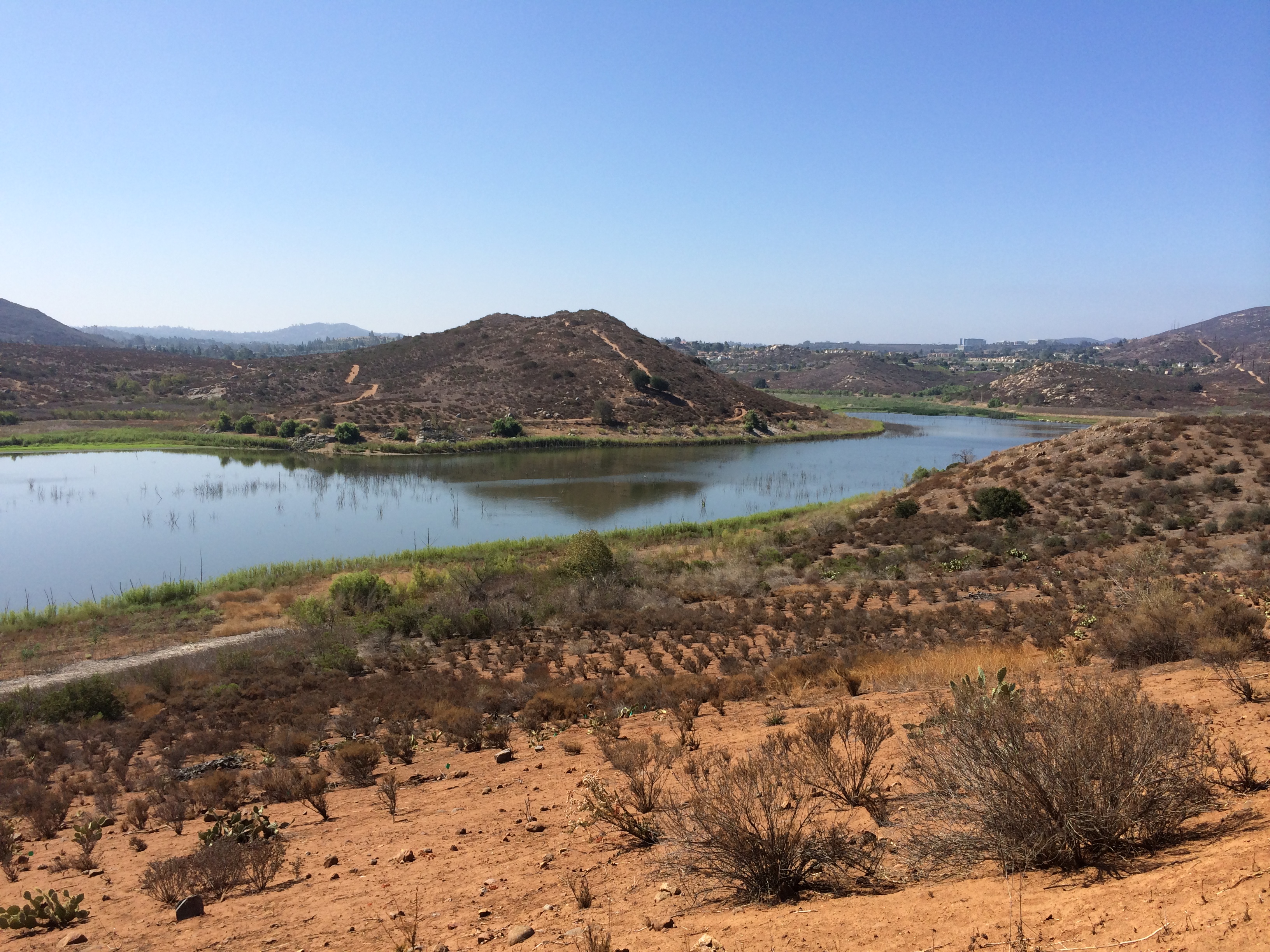
Purple mountains stand
Off in the distance watching
Both desert and beach
It’s a hard knock life
Reflecting privilege’s promise
Strong enough to thrive
Kegs and art mingle
Chatting on a street corner
Exchanging cultural news
And to stretch my exploration (and yours too) I have come up with a list of potential prompts or categories to consider. (I notice that I tend toward nature for my photographic exploration of beauty–these prompts are meant to push my thinking and seeing in new ways.)
1. On the corner
2. Nature
3. People
4. Celebrate
5. Inside
6. Under
7. Home
8. Outside
9. Places
10. Animals
11. Food
12. Personal
13. Things
14. Mood
15. Looking up
16. Sitting down
17. Looking down
18. Early
19. Growing
20. Morning
21. Sound
22. Growing
23. Feeling
24. Places
25. Night
26. Light
27. Hot
28. Early
28. Travel
29. Between
30. Smell
31. Icy
So now it’s your turn. Explore what Wabi Sabi means to you as you examine the ordinary in your life this summer. After you shoot, post a photo each day with the hashtag #sdawpphotovoices to Twitter, Instagram, Flicker, Google+ and/or Facebook (the more the better!), so that we can all enjoy the posts. Try your hand at an accompanying Haiku and explore how it expands, defines, or changes the meaning of the image you share. You are invited to create a pingback by linking to this url or post your blog address in the comment section. It’s fun for me to see what others are doing with the same prompts I am using!
With summer in full swing, it’s the perfect time for some playfulness and experimentation…look for beauty and the unexpected in the ordinary–let it surprise and delight you! You can post every day, once a week, or even sporadically throughout the month…whatever works in your life. You can play this game by posting your pictures in the order of the prompts or post the one you find on the day you find it. You get to make your own rules! Be sure to share and tag your photos with #sdawpphotovoices so we can find them!