Horizons: The Edge of Learning

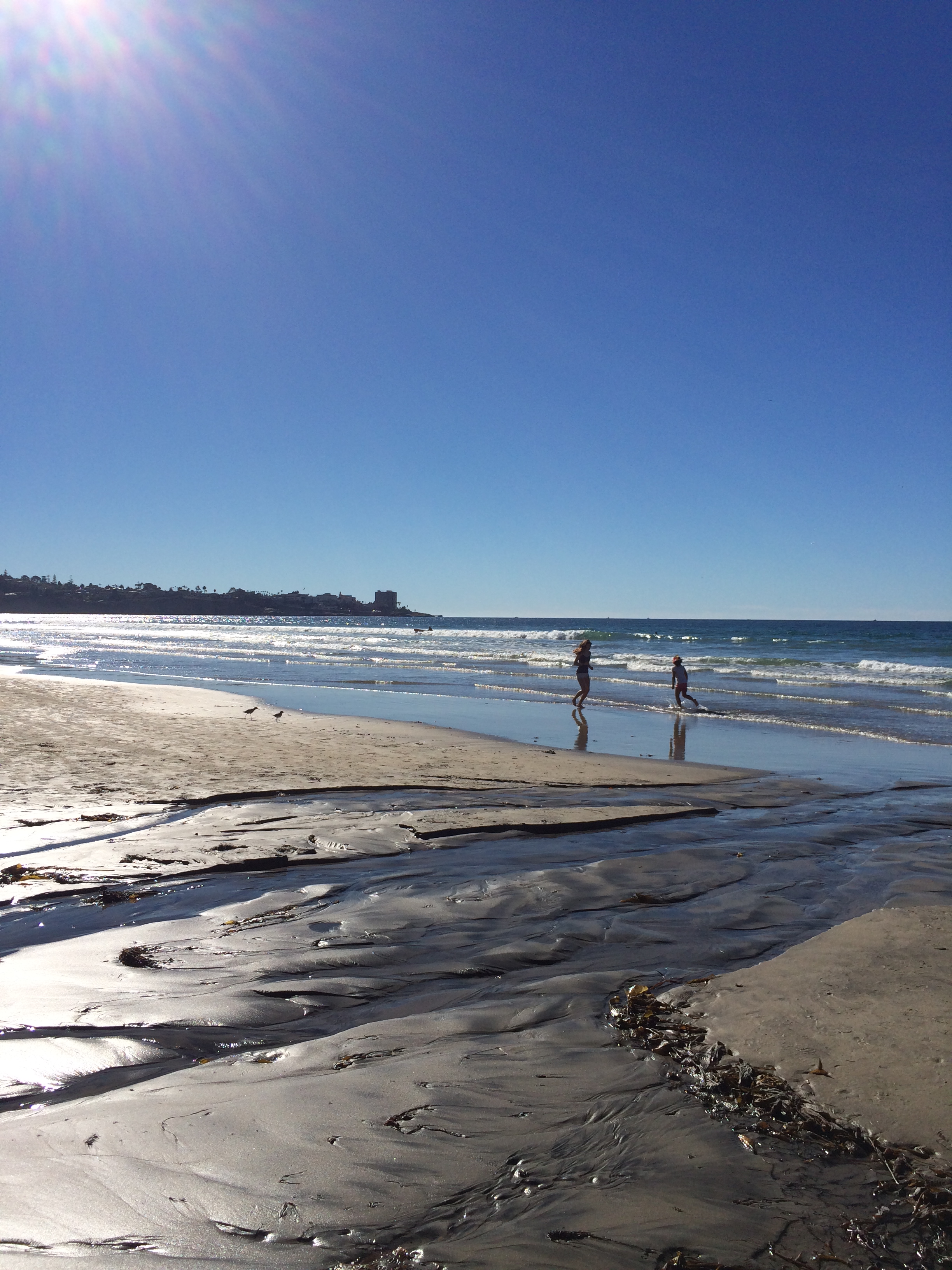
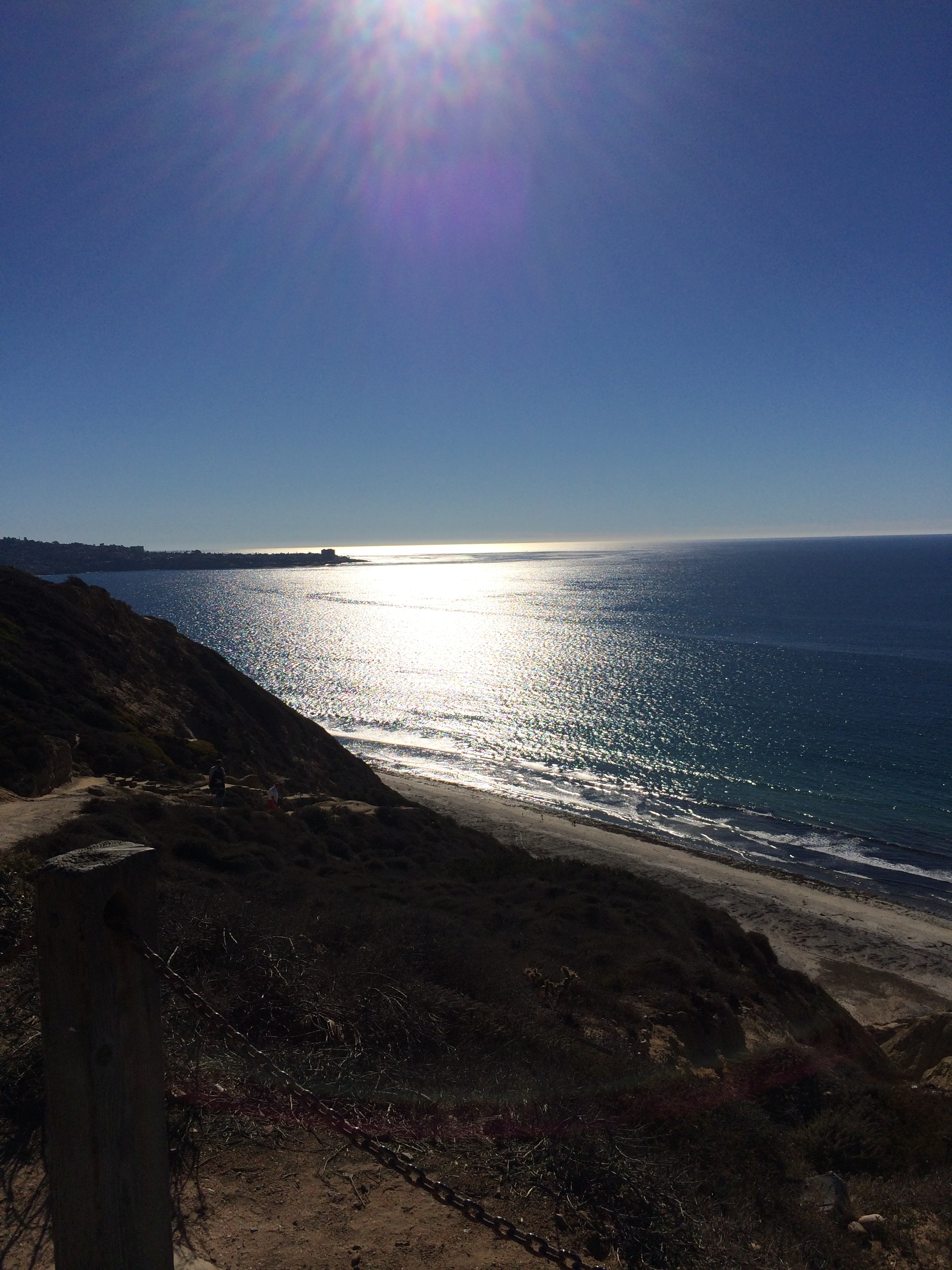
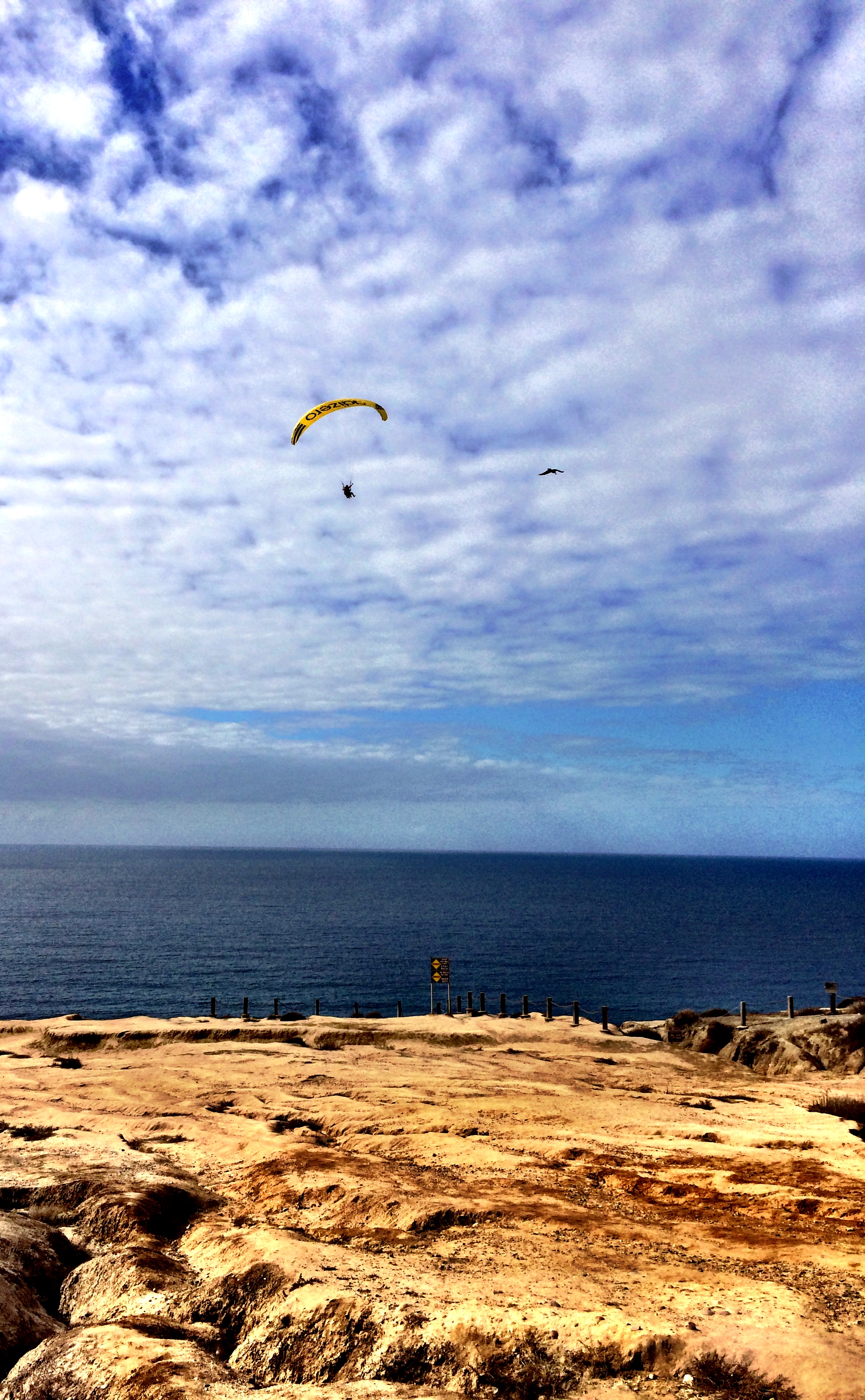
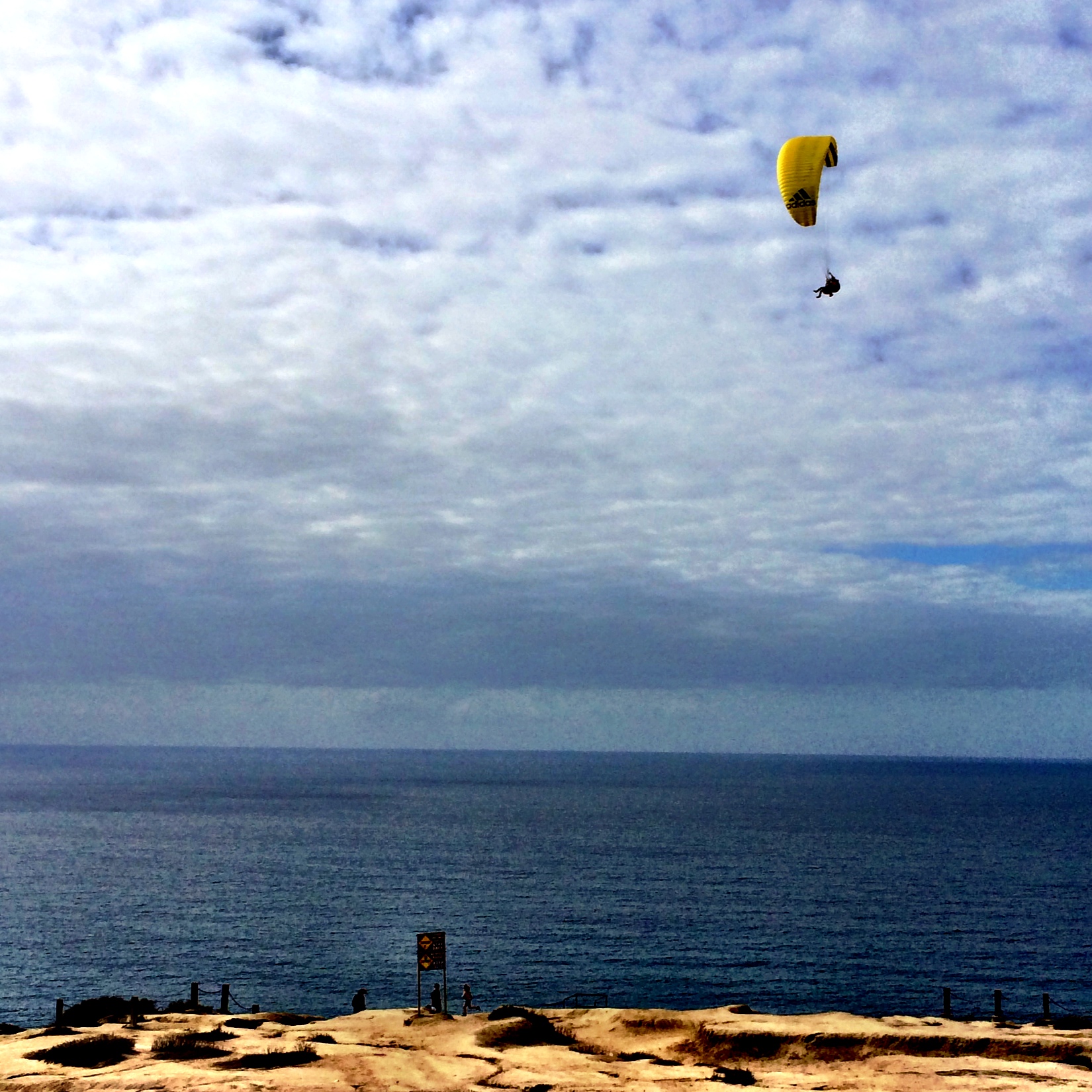
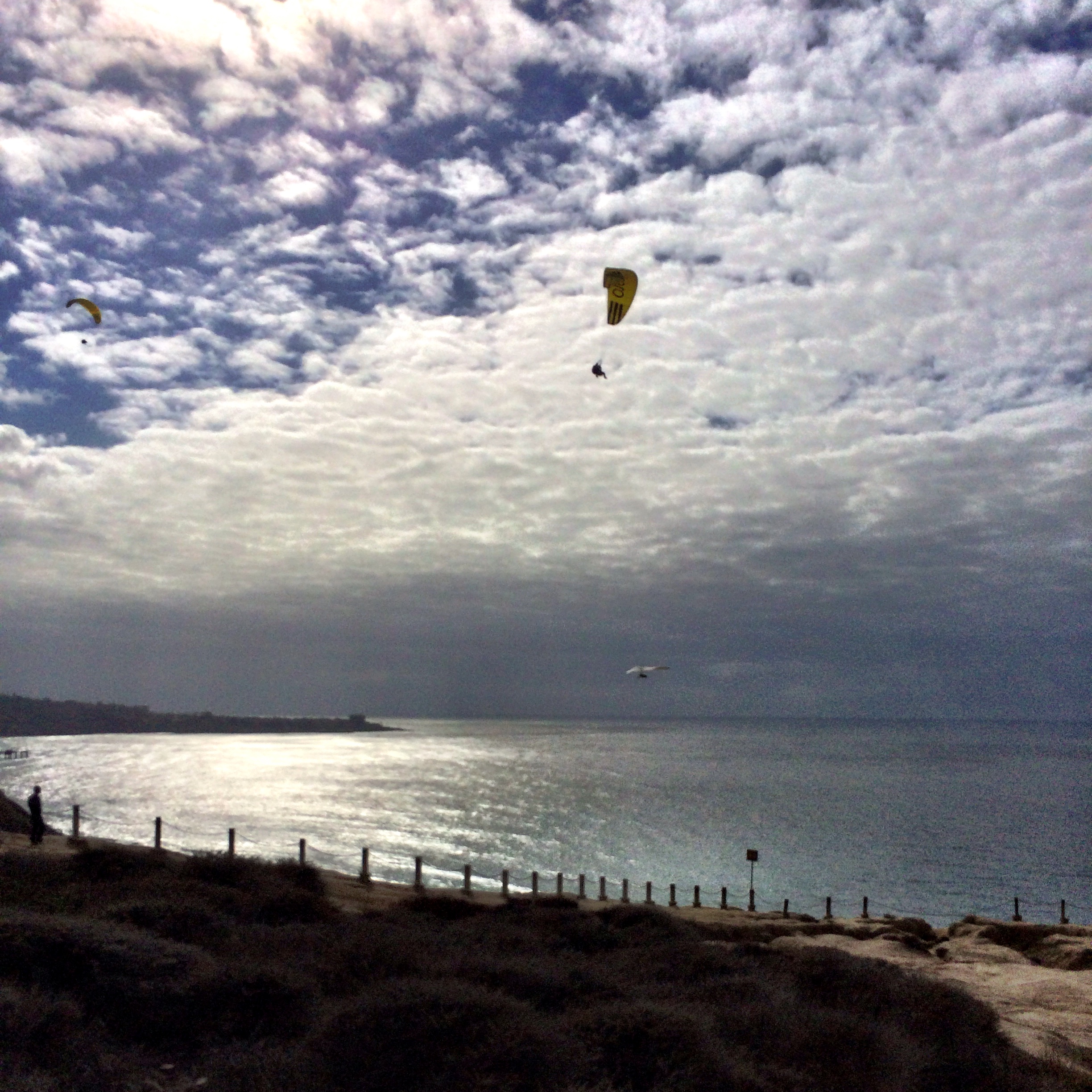
Today’s Weekly Photo Challenge on the Daily Post is about horizons…that place where the earth meets the sky.

photo-2

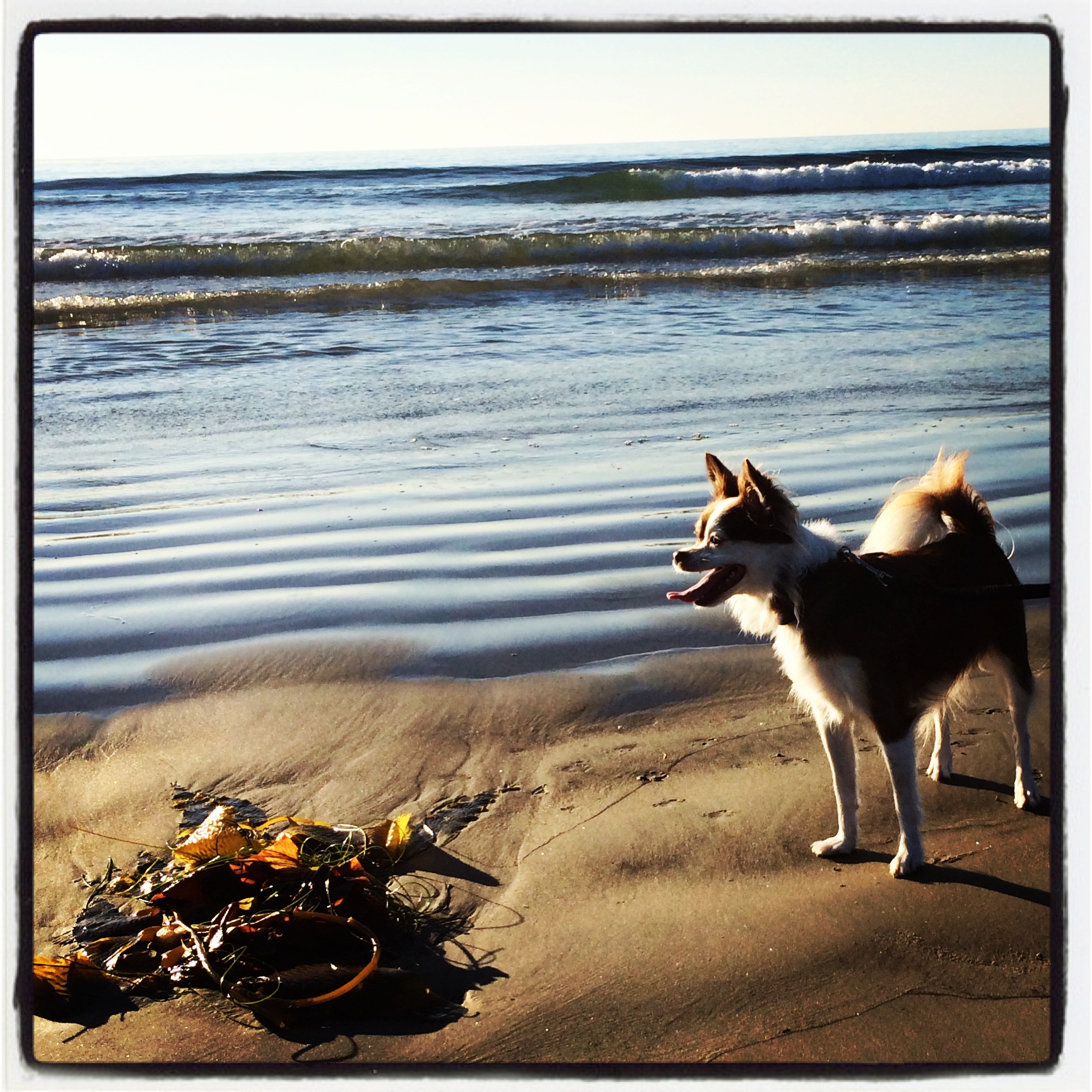
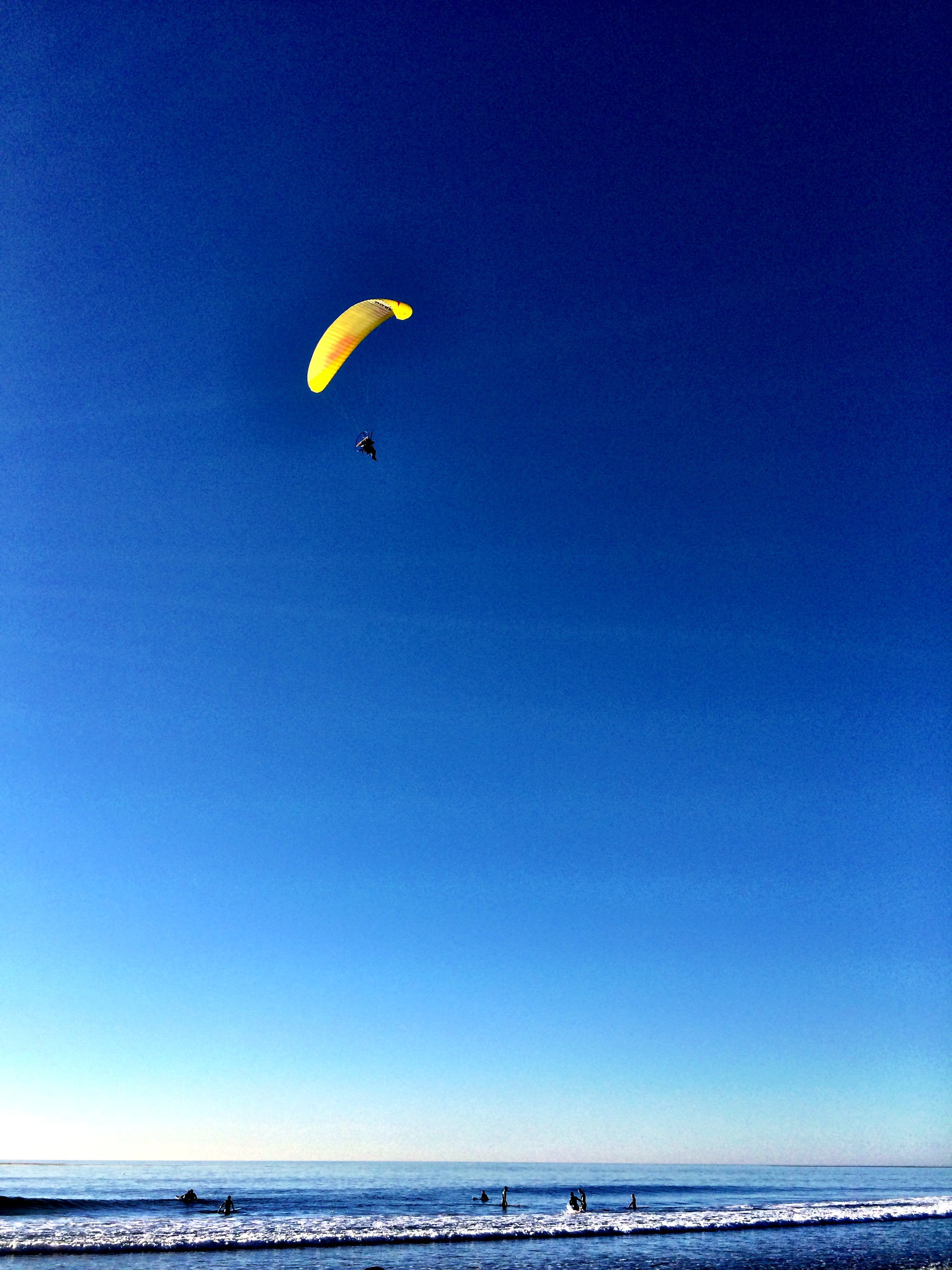
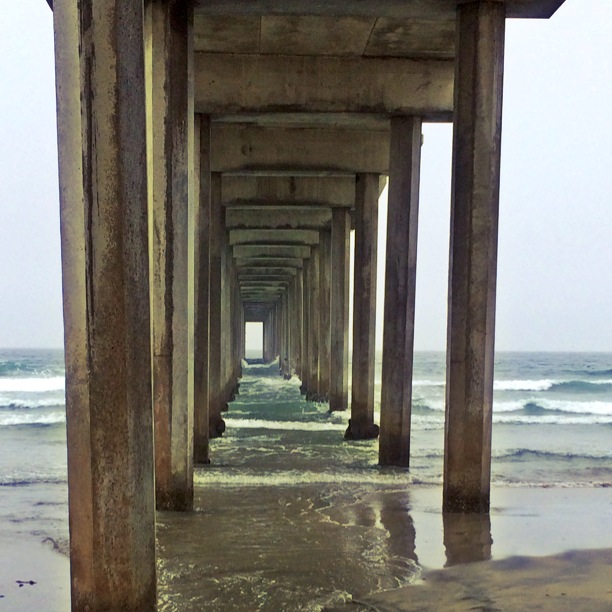
And as I headed to the beach to capture one of my favorite horizon vistas, I found myself thinking about the comfort of familiar places like the beach…and the stretch of reaching for new horizons.

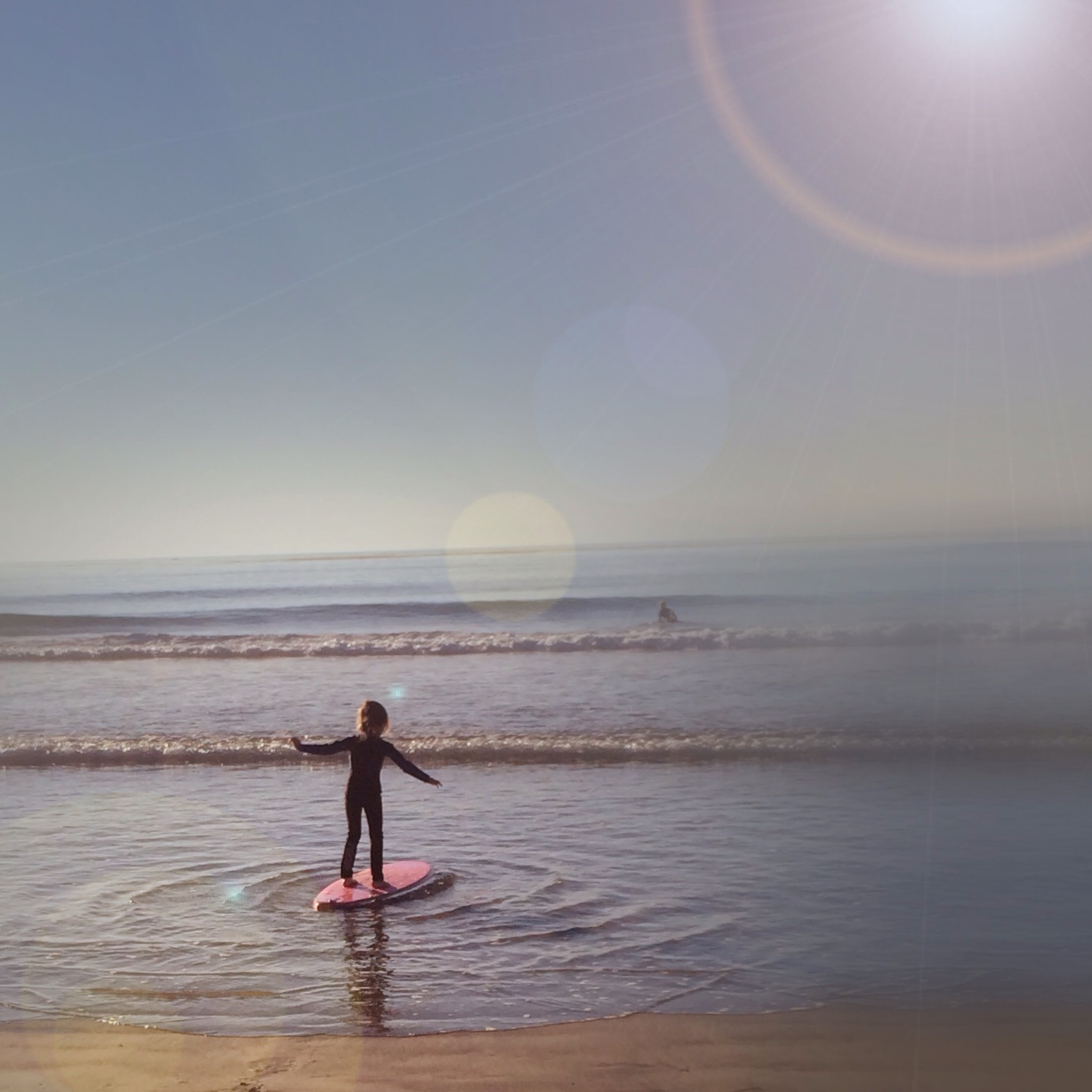
In some ways my horizon photo this afternoon represents my feeling of reaching for new horizons and feeling the “edge” of learning as I work with my students to learn computer programming.  There’s that sparkle and shine and thrill of the new along with the hazy sun and encroaching marine layer representing all of the unknown and uncertainty.

Today a parent in our classroom came in and shared his work as a video game programmer with our students.  He showed us a few of the games he has made…

photo_1-2

the first with a team of three including him.  The most recent included a team of 1,000!

Then he helped to connect this work that he does with our work on Hopscotch (an app), built on the shoulders of Scratch (a program developed at MIT).  He showed us a few kid-made Scratch programs and had the kids make suggestions for changes.  In a matter of a few minutes, he showed how the iterative process is essential for programming.

photo_2-2

At this point there were about ten minutes before recess, so we offered our students this short time to return to Hopscotch and try their hand at some more programming.  Students were quick to get set up…and were immediately focused and engaged with working with code.

photo-3

I watched them try something and then go back and make a change and run their program again.  When students showed me something they had created, I also asked them to show me the code–and in many cases asked them explain their thinking behind the code–so I can learn along with them.  When it was time for recess, we offered students a choice…they could put their iPad away and go out for recess or they could stay inside and continue their coding.  Only 8 of our 44 students chose to go out.  The rest were totally absorbed with programming on Hopscotch!

I’m working at my edge on this new horizon of learning to code with my students…and it’s uncomfortable at times.  But knowing that this is also where learning happens is exciting.  I’ll probably spend some more time on Hopscotch (or maybe even Scratch) this weekend.  If you have any coding advice, I’m happy to receive it!

Here’s a great TED Talk by Mitch Resnick, one of the creators of Scratch, explaining why students should be involved in programming.  Maybe we should all try it out!

And if it’s not coding, what new horizons are in your future?  What are you doing to find the “edge” of learning?

Making…and Learning

Making…a powerful venue for learning.

Our students have been doing a lot of making…and learning lately.  Sometimes that making looks and feels a lot like play.  And that’s a good thing.

This week we were lucky enough to have the Lux Art Institute come to our classroom with The Story Box from their Valise Project.  On Tuesday our students spent an hour examining the wood carving, block prints, and sculptures of Jim Lawrence based on fairy tales…and were invited to either write their own fairy tale or pick a favorite to create a block print image today.

Our students were excited to think about fairy tales…and write their own.  The creativity of children is amazing…their stories sometimes meander a bit, but there is no shortage of imagination and wonder.

And today they had the opportunity to create their own “blocks” for printing.  Using styrofoam sheets, they used pencils to etch indentations of their image…and even learned some techniques for writing their names and other words backwards so they would print forwards.  (They made a few mistakes…but that, too, is part of the learning process.)

Using a brayer and paint, they smoothed paint onto the surface of their etching and then pressed it onto colored paper to create their prints.

photo_1

They created beautiful images…whimsical, cute, fanciful, scary…and everything in between.

For more than an hour, my students were happily engaged with drawing, etching, painting, and writing.  They had to think critically and problem solve.  They had to practice patience as they waited their turn to paint.  They focused and produced.  They were making.  Making art.  Making stories.  Making memories.  Making connections.  Making understanding.  And they were learning.

What have you made lately?

Improving my Craft

Taking lots of photographs means that sometimes things start to get a bit mundane…I get stuck in a rut of taking the same photo the same way time after time.  I have to remind myself to shift my position, pay attention to the lighting, look for natural frames, and play around with angles.

On Saturday I took lots of pictures of trees.  And many turned out looking like pictures of trees, pretty enough but nothing that would make you take a second look.

But here’s one that involves an interesting angle that captures the light in a way that highlights the leaves.  This is the original photo–no cropping and no filters.

photo

I’ve also been experimenting with taking pictures of things, paying attention to composition but not doing any arranging other than moving myself to create a better composition.

I like this one of metal tubs I found on my weekend adventures.  The haphazard arrangement and the mottled light creates interest and provokes questions for me.

photo-1

I find myself examining my photos carefully and critiquing them–a lot like responding to a piece of writing.  I’m looking for what is working (even some lousy shots have some things that work) and noticing what I might do differently with the next shot I take.

I still have a long way to grow in my photography skills…but I’m having fun learning!

What do you do to improve your craft?  How do you challenge yourself? (And I welcome tips and constructive critique on my photography too!)

Thinking about Poetry

Over at The Nerdy Book Club, Cindy has invited readers to share their favorite poets or poems.

I love poetry…especially in the classroom.  Each week in our classroom we study a poem, noticing what the poet is doing and paying attention to the images it creates in our minds.  We read it aloud and notice how the words feel in our mouths.  Individual students read and together we read chorally.

Later in the week, we revisit our poem and create an illustration that captures our understanding of the poem.  We glue our poem and illustration into a composition book we call our poetry anthology.  By the end of the school year, students have read, studied, and illustrated more than 30 poems…over the course of the three years they spend in our multiage classroom, they have close to 100 poems collected and illustrated to take home and treasure.

One of my favorite poets to share with my young students is Valerie Worth.  I love her short poems.  They are accessible to children.  And I love that she writes about ordinary things.  But these are not simple poems…they are full of imagery, word play, and figurative language.

One of my favorites is Safety Pin.

safety pin

Valerie Worth

Closed, it sleeps On its side Quietly,
The silver Image

Of some Small fish;

Opened, it snaps Its tail out
Like a thin Shrimp,

and looks
At the sharp Point with a Surprised eye.

photo

What poets and poetry do you love?

A Writing Kind of Day

Today was a writing kind of day.

On Friday we began celebrating the National Day on Writing with a field trip and a puzzle piece that I wrote about here.

But today was the cherry on top of the writing sundae.

Our morning began with a version of a chalk talk.  My teaching partner taped white butcher paper to the wall ball court and posted a few questions for students at our school to respond to: How do you use writing to connect?  Where do you like to write? and Who are your favorite authors or what are you favorite books?

With markers in hand, our students started writing.

They wrote about places they love to write: writing on couches, on the beach, and in libraries.  They love Shel Silverstein, Beverly Cleary, Roald Dahl, and J.K. Rowling.  They write letters, texts, emails, books, notes and more.

They wrote and wrote and wrote.  And when they weren’t writing, they were reading the writing of their classmates on the wall.

Our school-wide puzzle was also on display in the wall ball court today.

photo-1

And students enjoyed reading what other classes at our school wrote for their puzzle piece (and finding their own and reading it again!).

photo-2

And then we went on with our regular classroom activities…and more writing!  Our students have been drafting a just-for-fun piece of writing about an animal of their choice. And they were applying what they have been learning about using figurative language (similes), specific and interesting verbs, and sensory imagery (sound, movement) to write a “moment” featuring their animal.  Today they took some time to give their writing a “check up” (you know like the doctor does to make sure you are healthy).  They reread their writing and looked for the features mentioned above…and then went back to their writing to make it even better.

And the best part of the day was that these writers enjoyed writing, sharing writing about their writing on Twitter, and even revising their writing…because they are writers.  And today was all about writing.

Photo-Inquiry…Art, Science, and Writing

I’ve been taking pictures every day for more than a year now.  Some days it’s a struggle, other days it’s pretty easy.  But one of my favorite things about being a photographer (albeit, amateur) is that it makes me pay attention…and ask lots of questions.

Yesterday I was up in our local mountains enjoying all that fall brings…colors and pumpkins and apples…on a warm fall day.  As I was photographing some beautiful leaves turning orange and red and yellow, I noticed this beautiful pine tree.

photo-12

Looking closely, I was fascinated by the texture of the bark on the tree.  And an even closer look revealed all these tiny holes…with many filled with acorns or other nuts.

photo_1

That observation set off a million questions…how does this happen, what animal does it? Does it hurt the tree?  Is it squirrels?  And then I noticed this nearby fence post.

photo_2

So it’s not only about trees…it’s about wood.  I noticed the nearby utility pole also had holes and nuts.

With all these questions running through my head, we continued our adventure and I continued to look for interesting subjects for my photography.  A while later, at the edge of a little pumpkin patch I looked up and saw a beautiful blue bird with red markings high up on a utility pole.  I thought it might be some kind of jay, but my husband was quick to point out that it was tapping the pole…a woodpecker!

We watched closely, listening to the persistent tapping as it pecked into the top of the pole.  I attempted several photographs…but one thing the iphone camera is not good at is long distance photos!  Here’s an attempt.

photo

If you look closely you can see a tiny silhouette at the top the pole.  As I watched I started to make connections to the pine tree and fence post I had photographed earlier.  These holes with the acorns in them were the work of an acorn woodpecker!  A little internet search today led me to this information:

The group will guard their territory, and will often have a single tree in which they store their acorns; known as a granary. A single granary may contain tens of thousands of acorns. The acorns themselves are placed individually into a hole drilled into the tree. Acorn Woodpeckers also feed on insects (including aerial flycatching), sap, and fruits.

I love that photography always ends up teaching me interesting things about nature and about the world.  It makes me pay attention, notice details, and ask questions.  It makes me curious…and makes me wonder…a perfect tool for inquiry!  And as I write this on the National Day on Writing, I get to share my photography and learning with you!  #write2connect in action!

How do you write to connect?  What do you learn from the activities you love?

San Diego Fall: The Hue of You

Living in a place like San Diego, seasons are all about subtlety.  Rather than piles of fluffy white snow or icy winds in winter, we have chilly mornings and nights and mostly sunny, cool days.  Spring is our rainy season (note: 10 inches of rain per year is our maximum!), the nights and mornings are a bit warmer than winter and most days are cool and sunny–although late spring brings the dreaded “May Gray,” that marine layer that pushes the sun away from the coast.  Summer in San Diego starts slowly.  June is characterized by “June Gloom” (just like May Gray), with the sun appearing for a cameo in the late afternoon before the fog rolls in again.  And fall in San Diego is gorgeous!  It’s warm and sunny, often well into November and even December.  But it can also be scary with dry Santa Ana winds that whip up the fire danger in our arid, desert-like climate.

Today we decided to trek up to a local mountain town about an hour east of my house in celebration of fall.  Julian is known for fall…filled with apple pies, apple cider, and other iconic fall features.  But those vivid red and orange and yellow leaves that shout fall in other regions, whisper fall in San Diego.  And even in Julian where San Diegans go for fall, the autumn hues are subtle.

photo-6

And they’re positioned between the greens and browns and reds of the pines and manzanitas and California live oaks that are native to the region.

photo-12

photo-11

And then there are the iconic fall images we know so well…pumpkins, scarecrows, apples.

photo-8

photo-10

photo-7

So, the hues of you for me as a San Diegan in fall are a rich, but subdued, palette of oranges, yellows, greens, browns, and reds.  And I can feel them and smell them and taste them as much as I can see them.  Warm and dry and spicy…and yummy.  Like this apple dumpling I had today.

photo-13

What hues evoke fall for you?

Write2Connect!

People all over the nation are celebrating the power of writing this week and next.  October 20th is the National Day on Writing…and with it falling on a Sunday, there are even more days to celebrate writing.

We’ve planned for multiple parts to our celebration of writing…in our classroom, at our school, in our district…and beyond.  And with the theme, write2connect, we’ve focused on how writing connects.

In our district every class has worked to create a puzzle piece highlighting student writing…that interconnects with the other puzzle pieces to create a collage of writing at each school site.  For our pieces (we have two since our class has two teachers and twice as many students) each student has a puzzle piece that interconnects to create the larger puzzle piece.  In their individual puzzle piece each student answers the question, how does writing connect us?  They included answers like writing letters to grandparents, sending emails, writing books and notes, and connecting with teachers in their Homework Writer’s Notebooks.

puzzle

Our school-wide puzzle will be unveiled on Monday…stay tuned!

Today we also physically connected with older students at our other school to write together.  Nearly 100 students in grades one through five spent the morning playing with writing.  Using the Common Core text types as broad categories, they explored writing about the same topic in three different ways.  This whirlwind of writing was such fun…and successful.  Students wrote an amazing amount–and such variety, they wrote about soccer and horses and books and clubs and so much more.  In our last few minutes at the end of our allotted time, a few students read their writing aloud while the others guessed whether the writing was primarily narrative, informational, or opinion in nature.

I love watching writers at work!  They were so focused and engaged as they scribbled ideas into their writer’s notebooks.  They all wrote and wrote and wrote…and we didn’t have nearly enough time to hear all who wanted to share!

photo-5

And we have more in store on Monday!  We will be participating in a large-scale “chalk talk” posted in our wall ball courts…and admiring our puzzles of connected writing.  We also plan to initiate our class twitter account and share some of the amazing and thoughtful ideas students are writing!  Check out the #write2connect hashtag on twitter!

How are you celebrating the National Day on Writing?

Remixing and the Cardiff Kook

Tomorrow my class is traveling up the hill (a mile or so) to the other school in our district to write with the older students in the other multiage class (many of whom were in our class a year or two ago).  We’re doing this to celebrate writing and the National Day on Writing and this year’s theme: write2connect.

In the spirit of connection and Jim Gray (the founder of the National Writing Project) and even the Common Core State Standards (CCSS), we will “try on” writing about the same topic in three different ways.  While the CCSS text types (narrative, informational, opinion/argument) will constitute our broad categories, students will be able to fuse and mold the writing to fit their own interests and purposes.

So…to get students started thinking about opinion/argument, this post will be my attempt to create an opinion piece focused on the Cardiff Kook.  The Cardiff Kook, a piece of public sculpture officially named “Magic Carpet Ride,” has been the center of mischief and controversy in the small coastal town where I teach.

photo-3

So here I go:

Love it or hate it, the Cardiff Kook has become an iconic image in the seaside town of Cardiff-by-the-Sea.  Guerrilla artists creep up to the statue originally named “Magic Carpet Ride” in the dark of night to creatively adorn the controversial surfer in any number of theatrical props.  It has been transformed into Oprah in celebration of the last Oprah show, engulfed in the jaws of a great white shark, and carried off by a prehistoric flying creature.  I love the Cardiff Kook. It’s a great ambassador for Cardiff, bringing in tourists from all over and creating opportunities for community building within the town.

photo_2

It’s fun to see the kook all dressed up.  There is never a time when I drive by the statue at the intersection of 101 and Chesterfield Drive when I don’t slow down to take a look to see if there is a new creation.  For a while, a couple of years ago, the kook was transformed regularly and extravagantly. Lately that has slowed down and most days it looks like it did today when I took the photo in this post.  I love to take out-of-town guests and family members by to take a look at the statue…always hoping that it might be dressed up in some interesting way.

I recently read that images of the kook are now copyrighted and will be licensed to fund the upkeep of a public garden across the train tracks from the statue.  I’m guessing that was the thinking behind the Cardiff Kook calendar and maybe even the annual Cardiff Kook Run. These kinds of products and events can bring a community together as we all connect through our experiences with the kook.

Mostly, though, I just think the kook is fun.  I think the point of public art is to create conversation.  Some people will like some pieces and some won’t. But the conversations and arguments and conflict make us all think and engage and pay attention.  Not liking the original surfer sculpture resulted in creative and playful ways to re-envision this piece of public art.  And most of the time it remains unadorned as the sculptor created it…but every once in a while others add their own spin to the art, remixing the original artist’s vision with their own to create something new, different, interesting…and create a new conversation.  And for me, that is much more valuable than looking at a static,  unchanging piece of art day after day, year after year.  The Cardiff Kook reminds us to be playful, to have fun…and to connect with each other.

What do you think?

20131017-204042.jpg

Experiencing the Underbelly

I often write about the benefits of being a connected educator.  Today I experienced a bit of the underbelly.

As I do everyday, I spent my morning teaching students.  We sang, discussed, explored some new math strategies, wrote and shared.  From the time school started until lunch, I didn’t have time to email or post or tweet.  But apparently my twitter account did…

When I looked at my phone at lunchtime I noticed a number of twitter alerts and text messages visible on the lock screen.  Texts from my son and my nephew warning me that I’d been hacked alongside DM (direct message) notices from people I don’t know (even virtually) recommending web links to me–and one from a friend asking if I had been hacked.  I had a few twitter mentions from some virtual friends suggesting I change my password because they were getting DMs from me.  A peek at my email showed some more messages from people I know recommending that I change my password–they too were getting DMs from me.

I also got an email from Twitter telling me my password had been reset.  Apparently my account had been quite busy while I was otherwise occupied with my teaching!

So I spent some time resetting my password, and then responding to my friends and family to let them know that I appreciated their advice and warning.  I also noticed that I wasn’t the only one victimized by Twitter spamming today.  Here are a couple of other tweets pointing out the problem.

Screen Shot 2013-10-16 at 7.28.41 PM

Screen Shot 2013-10-16 at 7.29.24 PM

I don’t like that my account was hacked or that it looked like I was sending out annoying messages to my Twitter community.  But I also know that this goes with the territory.  Being a connected educator means that I have to deal with the hassles of technology and social media as well as reap the benefits of it.

I appreciate that my Twitter community remains cool and matter of fact even when faced with annoying and sometimes confusing security breaches…and they help me know how to act when I experience these same issues.

And in spite of the problems, I remain a connected educator.