Learning to Code

It seems perfect that this month that includes the National Day on Writing and Connected Educators’ Month is also the time when we have ventured into teaching coding to our students (and ourselves).  My teaching partner and I talked about doing this last year during our 1:1 iPad pilot…but were thwarted by the fact that Scratch requires flash and won’t work on our iPads.  We had even thought about it the year before, that but 30 minutes of computer time per week just didn’t seem adequate.

So to push myself to realize this goal of coding with my students, I have been telling people that I want to do this.  I know myself enough to know that if I don’t make my goals public, somehow it is easier to push them aside when they feel “hard.”  And In our school district this year we have a new Educational Technology teacher.  A credentialed teacher who was hired specifically to help teachers integrate technology into their teaching–in addition to the tech people in our district who help when our technology isn’t working.  I mentioned our desire to teach our students to code in an introductory meeting with the Ed Tech teacher before school began…and he was interested and excited about the prospect.

And so last week he ventured into our classroom at a perfect time to talk…and pinned me down on getting started with coding.  He would come in and get students started–using the Beebot I had purchased at the end of the summer and the Hopscotch app he had learned about.

photo

I love the way the simple, mechanical Beebot illustrates the basics of programming.  And I love that it also demonstrates how easy it is to have mistakes in your code, and the need to problem solve and “debug” through repeated trials and iteration.  My students were quick to understand the basics and very interested in the Beebot.  First graders could easily explain their thinking–and could figure out where they had made mistakes (older kids could too, and made mistakes too!).

photo-1

After exploring how to make Beebot move, we turned to our iPads and opened Hopscotch.  Similar to Scratch, Hopscotch uses interlocking blocks to make the characters move.  After trying a few moves in common and learning to make their character spin, we set students loose to explore the possibilities.

photo-2

And they began to “write” their own code!  We gave students the opportunity to share cool things they had figured out with all of us…and promised that we would give them more time to explore this app and create more code.

I don’t know any more about coding at this point than my students do, so we will continue to learn together.  And I think I am as excited about learning to code as they are.  I’m glad our Ed Tech teacher pushed us to set a date to start to work on coding with our students…and I’m glad he was there to get us started.  His checking in on our progress will also be an incentive to continue this with our students.  I have tons more to learn…but who better to learn it with than our students?

Celebrating 100 Posts!

I never would have believed when I started this blog way back in July that I would get to 100 posts…and except for one day a week or so ago, all those posts were consecutive days!  So to celebrate, here are some thoughts on the value of blogging…and writing every day.  (And a silly picture of a balloon I saw at the grocery store)

20131014-193420.jpg

1.  Writing every day gives me authenticity as a writer.  I’m not just talking about the value of writing–I am “walking the walk” of a writer.  As my friend Janis stated in her blog post yesterday,

We must write when we are inspired, and we must write when we are not. We need to feel the joy and the pain of the process in order to understand what our students experience.

I work through my own blocks and figure out ways to find topics to write about and put words on the page.  I am also more aware of the writing of others and notice how they put words together.

2.   As a blogger, I have joined a community of other writers.  I would never have believed that I would have 99 followers to my blog…most of whom I have never met.  And yet these new friends encourage my writing and my photography by their mere presence.  And I’ve come to realize that people read my blog even when they don’t make their presence known.  I get little hints now and then from an unexpected reader and I realize again that my audience stretches beyond me.

3.  Blogging has taught me the value of commenting on other people’s blog posts.  I have definitely been guilty of reading blog post after blog post…and never commenting.  As a blogger myself, I know that comments can push my thinking and increase my motivation to write.  I now take the time to comment on a regular basis and I read blogs differently–always looking for the ways bloggers make connections and create energy around their posts.

4.  Blogging pushes me as a writer and as a photographer.  My photography inspires my writing and my writing inspires my photography.  Both practices encourage me to look closely at my world and pay attention to the little things.  And both have become regular practices in my life…habits! (The good kind!)

5.  Blogging connects me.  I am producing content on the web as well as consuming content.  I am more connected to other educators…all over the world, and more conscious of sharing ideas and resources.  I join in with challenges that other bloggers post, linking my blog posts to theirs…and inspiring some different kinds of writing that I might not undertake on my own.  I continue to look for ways to connect, to learn from others, and to share with others. That is the heart of being a connected educator.

The timing couldn’t be more perfect.  I am celebrating my 100th blog post in the middle of Connected Educator’s month!

Are you thinking about blogging?  Start small…and keep at it.  I’d love to know what you find valuable about blogging.

Ordinary: A Photoessay

When I get busy I don’t take the time to pursue my personal interests, instead I get bogged down with the intricacies of my work and the demands of my schedule.  When I finally get a chance to catch my breath, I also find myself needing to tend to demands of ordinary life…you know, housework and errands and such.  And my exercise routine also falls to the wayside (even though I know that exercise is essential to energy, health, and well-being).  So today I decided to do two things that have been neglected…take a walk and take some photos.

And continuing my theme over the last few days of ordinary…this was an ordinary walk.  I threw on my tennies and took a walk around the neighborhood.  And while I was walking I was also taking a close look at my surroundings…alert for interesting images.

Lots of people in my area have hibiscus bushes with beautiful red or yellow flowers.  As I walked by one house today I noticed this blossom with snails nestled up in the center of the blossom!  While I’m sure it isn’t good for the flower, I love the idea of the snails becoming the center of the flower.

vintique_image

I often hear about how people in other locales have four seasons…and we, in southern CA, don’t.  (Somehow our temperate weather gets construed as sameness)  As a native to the area I feel like the seasons are quite distinct…and fall is definitely in the air!  There’s a difference in light, in the way the air feels (even warm feels different in the fall), and in the foliage.  We do have plenty of evergreen trees…but there are deciduous trees like this too.

vintique_image-1

Sometimes when I walk, I find myself “in my head,” not really paying attention to my surroundings.  But today I was alert and tuned in to the dragonflies flitting by, the abandoned Santa toy wedged in the ground cover, the granny smith apple in the gutter, and this tiny lizard that skittered in front of me.  He was cooperative enough to stop and let me take a photo…unlike the dragonfly!

vintique_image-2

I’ve been noticing the variety of palms in my area.  I commented just yesterday about the fact that the banana leaf palms are pretty uncommon…and then I saw one on my walk today.  And as I headed back to my house I noticed this palm with all these little berries at the center.

vintique_image-3

I love the way the ordinary…a neighborhood walk…becomes something more when you take the time to pay attention and notice details.  And I feel refreshed and relaxed…ready to tackle another busy work week.  I’m sure I will need to remind myself to take time to notice, to tune into the ordinary, and enjoy the moments in the moment!

Celebrating the Ordinary

I wasn’t going to post today…and if you’ve been following me you will know that is significant. In the last 98 days I have only not posted on one day, and the practice of writing and posting each day has become very important, so when I decide not to post it feels like a major decision.  And then I got a tweet from my friend Janis (check out her blog!) pointing me to Ruth Ayres’ Saturday Celebrations (this is the practice week).

This week I have been celebrating the ordinary.  You can see it in my blog posts here and here. And today was a blissfully ordinary day. I slept in, spent a quiet morning puttering about, ran a few errands, had lunch with my hubby, ran a few more errands…and bought a new book. Flora and Ulysses by Kate DiCamillo.  The first few chapters are promising… elements of graphic novels right in the novel itself! It will be my bedtime reading tonight.

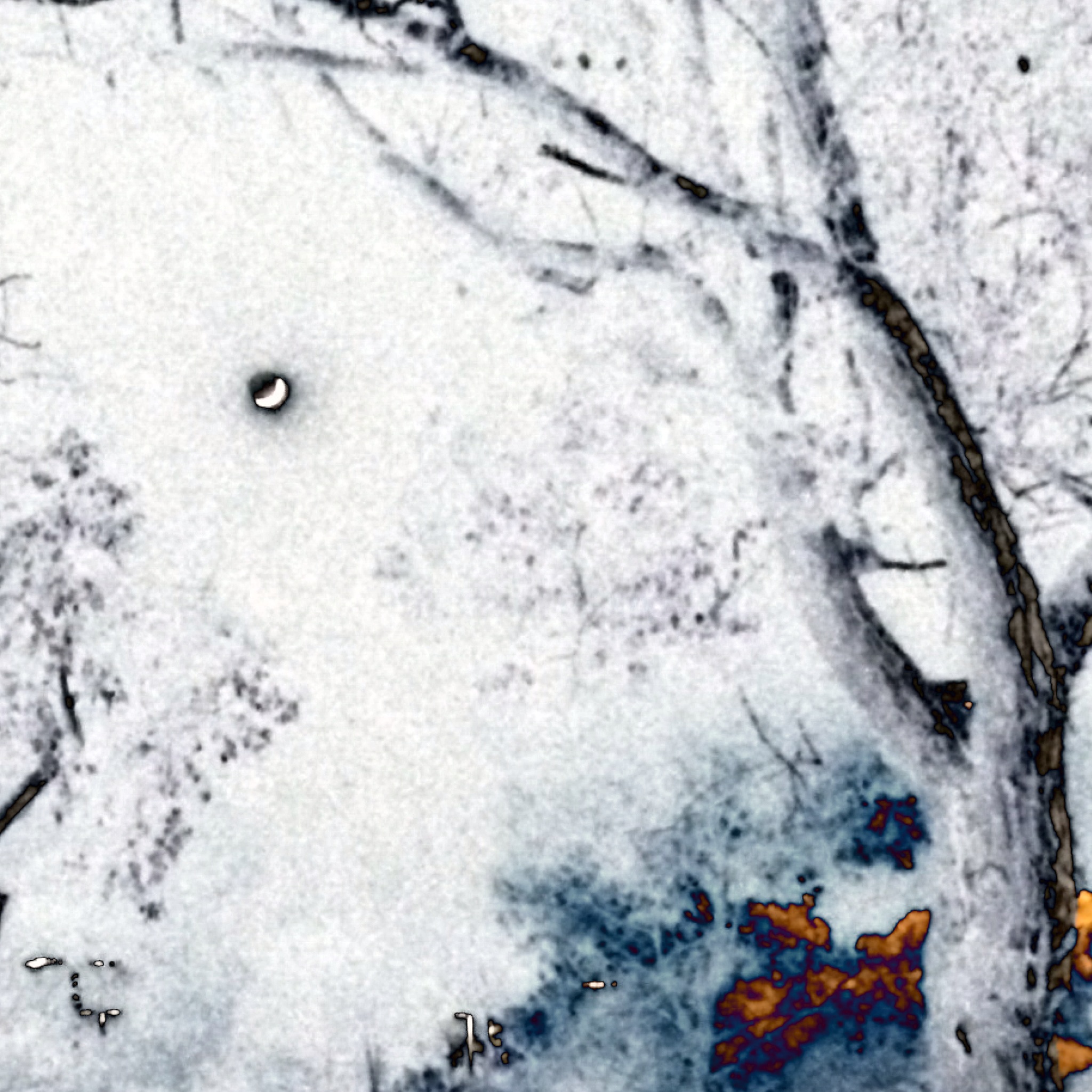
This month for #sdawpphotovoices we are using writing as our photo prompt.  And while writing is valuable to me…creating interesting photographs that reflect writing has been challenging.  How do you make something ordinary, like writing, look like art?  I’ve been experimenting with cropping and filters to get some new and different effects.  Here is collage of a few of of my photos from this month.

photo-4

So thanks, Janis, for the nudge to think about what I have to celebrate this week…and for the nudge to write and post today.

What are you celebrating this week?

Ordinary

Today, out of necessity, I had to scrap a plan and invent another without notice.  For teachers, this is something that happens with some regularity and most of us pride ourselves on our flexibility. And I love it when that spontaneous plan blossoms into a wonderful learning moment.

We always have picture books at the ready to read to our class.  Some are set aside for specific purposes and lessons, others we know we want to read but are waiting for the perfect time to present itself.  Last year we read Spoon by Amy Krouse Rosenthal–a book that our students loved.  We revisited it a number of times throughout the school year for different purposes…from mentor sentences to a situation for opinion writing.

At the end of the year, I came across a new book by Amy Krouse Rosenthal: Exclamation Point. So today, in that moment when I needed a plan at a moment’s notice, I picked up Exclamation Point, reminded my returning students (two thirds of them) that this was the author of Spoon, and started to read.  I love those moments when each student’s attention is fully engaged…and they were hooked by the bright yellow cover and the whimsical smiling exclamation point. They noticed right away that there wasn’t a title…at least not written in words. The exclamation point itself stood as the title.

15815400

We read and discussed and noticed and connected all the way through the book.  We delighted in the words and the pictures and the message.  And we were inspired to write our own stories about punctuation.

And then later in the day we managed to get packed up and ready to go home with enough time for a book before the dismissal bell.  Overwhelmingly, students wanted me to read Spoon. It was sitting near Exclamation Point…and suddenly today became the day for a mini author study.  The second and third graders were treated to an old friend, and the first graders were anxious to get acquainted!

After reading, students volunteered their observations, connections, reactions, reflections. They had so many thoughtful comments and ideas for their own writing.  And one student pointed out that Amy Krouse Rosenthal wrote about ordinary things…in wonderful ways.  We started thinking about all the ordinary things we might write about and how our writing could transform them beyond the ordinary.  They were excited to write as the dismissal bell rang today…I hope they sustain that excitement long enough to actually get to the writing.

I’ve also been noticing the power of the ordinary.  Yesterday’s post was about the transformation of an ordinary photo into something I was willing to name as art.  And today on five minute friday the prompt is ordinary.  Today in the classroom the ordinary business of reading a book because an extraordinary opportunity to notice the magic of writers and writing…and turned students into active learners making meaning for themselves.  Today I was reminded that ordinary is a state of mind, and each of us has the power to re-look and re-see the ordinary in new ways.  I love when that wonderful learning moment in the classroom means that I learn too!

Making Art

Participating in photo-a-day means that I am always on the lookout for an interesting photo opportunity.  And even though this whole month is themed writing, that doesn’t mean that I don’t take and post other interesting photos.

Driving to work is one of those times when I keep my eyes peeled for promising places to return to for a photo or two.  Over the last few weeks I’ve noticed a house not far from my school that seems to be made of concrete.  It’s huge, looks over the ocean, and has floor to ceiling windows…obviously designed for maximum visual impact, from inside and from outside.

And today as I drove by, I noticed skeletons and zombies and other creepy things through the windows and on the deck.  I knew I would stop by later and take some photos.  When I stopped on my way home I struggled to get a photo that captured what I could see with my eyes.

photo-1

So I took this photo and used an editing app to play around with it.  Could I pull the photo in and see those full sized bodies standing on the deck?  Could I see through the windows?  Here is what I was able to produce from the picture above using the app Tadaa and the filter otherland.

photo

I love that moment when a snapshot becomes a piece of art.  I wonder if that is what the owners of that house also had in mind?

Rain and the Common Core

October in San Diego is often a hot and dry month characterized by Santa Ana conditions, creating a high risk for wildfire.  We’ve already had many “red flag” warning days.  These warm, dry October days are both wonderful…an extension of summer…and terrifying, having lived through some horrific urban wildfires in the last decade or so.

Rainy days are a rare occurrence here.  We average less than ten inches of rain a year…and I can’t remember the last time it rained!  (Was it in May or June?  Or even before that?)

With rain in today’s forecast, my students were dressed in an odd assortment of post-summer attire: shorts with sweatshirts, boots with tank tops, hoods and hats…  Like having one foot in summer and one ready for the impending storm.  Students were excited, edgy–some complaining of cold (in the 60+ degree temps), others in sleeveless tops running happily in the almost-weather.  The blustery conditions hinted at “real” weather–weather that didn’t arrive during the school day today.

An hour or so after school ended for the day, the much anticipated rain arrived.  Not just the drizzles the we so often get, but real soak-the-ground kind of rain.

photo

Meteorologists, through the media, announce our “severe weather” and the roadways are a mess with spin outs and collisions caused by slippery conditions and out-of-practice rainy day drivers.  And yet, we need this rain.  We need it to ease the fire conditions that come with the parched earth.  We need it to lessen the demands on our over-stressed reservoirs.  We need it to water our lawns and gardens and native foliage.

And the rain is a reminder that change can be a catalyst.  In a place where the weather seldom changes, it’s easy to see rain as inconvenience.  It tangles the traffic, scares customers from the local farmer’s market, and causes many events to be canceled.  (Like I said, rain is rare here!) But change, like rain, is an opportunity to rethink everyday routines.

At lunch today, some of my colleagues and I were talking about the Common Core State Standards (CCSS) and the stormy conditions they are creating for many teachers.  They feel threatening like severe weather (or a rainy day in San Diego)…requiring a change in the ways teachers think about instruction and classroom routines.  It will take more than pulling on some rain boots to create an environment for deep learning, a place where students make sense of concepts rather than memorize facts and procedures.  Change feels hard and scary, but like the rain in San Diego, we need it.

And like my students on an almost rainy day, some teachers are ready to embrace the change and rethink their instruction and consider new ways to support students to more critical thinking and in-depth analysis.  And others will make more cosmetic changes, renaming old practices and repackaging old projects.  There will be an odd assortment like the tank tops and boots and shorts and hoods my students wear–a mish-mash in our educational system–as we figure out just how to deal with the change.

I’m choosing to embrace change and see it as an opportunity rather than an inconvenience. We need the rain in San Diego…and we need change in our educational system.

Planting Seeds

We planted seeds today…in the garden and in our writer’s notebooks.  There are many garden metaphors about learning and students–especially at the elementary level and as I watched my students today, I can understand why.

The beet seeds were small and for some of my students, hard to hang onto.  Some seeds slipped to the ground, blending in with the earth.  Those students needed another seed to plant in our garden bed.  Other students delighted in the tiny seeds and noticed every detail. They were able to keep track and carefully nestled the seed into the soil.

photo

During our writing lesson a bit later, I noticed that some of my students took the lesson on similes and easily “planted” their ideas in their writer’s notebooks.  A few stretched even further and played with language and the technique of simile to create fresh and interesting images.  Others had dropped their “seeds” and needed some extra support to “plant” a seed or two in their notebooks.

In the garden, after planting our seeds, students carefully watered the soil to create an environment to support the seeds’ germination.  They managed the heavy watering cans and negotiated turn taking as fledgeling gardeners.

photo-1

In the classroom, we left our writing seeds to germinate too after carefully sowing them in our notebooks.  Time was short and ideas were flowing…students can’t wait to come back to share their writing and extend their ideas.  This is an environment ripe for more writing tomorrow! Today we used Stubborn as a Mule and Other Silly Similes by Nancy Loewen to “prime the pump” and get us thinking about similes and how we might use them in our writing.

We planted beets, peas, arugula, spinach, beans, kale, and sunflowers today.  As our gardening teacher reminded the kids, we plant all the time because we want to eat all the time.  And as writers and learners, we need to write and play with language and writing so our ideas and stamina and capacity for writing and learning will also grow. We celebrate the National Day on Writing in October each year as a reminder of the importance of writing in our lives and learning.  But just as we don’t only plant our gardens in October, we can’t just plant our writing in October.  We have to write all year long, in lots of ways for lots of reasons to nurture our writing…and our writers so they too will grow strong and tall.

photo-2

How do you nurture writers and learners?  What seeds did you plant today?

Good Morning

When I saw the Weekly Photo Challenge on the Daily Post this week I realized that even though I am a morning person, I don’t take many photos in the morning.  So the prompt, Good Morning, has made me think about that.

Saturday, because I was at a conference at UC Davis, I stopped by our favorite bagel shop right next to the Starbucks for a quick and carry breakfast.  And while I was waiting for my order I noticed the beauty of the donuts in the case near the cash register.  That shiny chocolate was tempting…I resisted the donut, but did take a photo!

donuts

I also took a photo of the sun through the fall trees…and then played with it in one of my photo editing apps.

photo_2

Earlier in the week I spent some time with my son and daughter-in-law and stayed in this funky little hotel.  I took this photo as I headed to check out in the morning.

photo_3

I like the hint of light over the top of the hills in the distance.  And then at my son’s apartment I noticed the tools in his shower.  Why don’t I have a pad of waterproof paper and a pencil hanging in my shower for those soothing water-induced inspirations in the morning?

photo_1

I found this one this morning on my way to work as the sun rose through the Torrey pines.

photo

What says good morning to you?

Making Rockets and More…

I spent yesterday at UC Davis at a conference we threw for ourselves to celebrate the 40th anniversary of the California Writing Project.  The conference was an opportunity to teach each other strategies, structures, and approaches that we find successful at our local writing project sites across the state…and to learn together.  And we did that…and more.

At lunchtime there was an informal “making” session led by the director of the Northern California Writing Project.  Using transparency film (Finally!  A practical use for the boxes of the stuff schools have sitting around since document cameras have replaced overhead projectors.), colored electrical tape, cardboard, and hot glue, we crafted rockets (using a piece of pvc pipe as a mold).

photo_3

We would then test them by firing them from a bicycle pump, air powered launcher.  (Directions on Instructable…here) You’ll notice we sealed the tops and taped around them in hopes they would soar…rather than explode.

photo_2

When our rockets were ready, we headed outside with the launcher and our rockets to test our creations.  We had to place our rocket on the launch pad and then pump with the bicycle pump to build pressure in the system.  We aimed for between 50 and 60 pounds of pressure.

photo-4

After pumping, we pressed a button to release the pressure into our rockets and… POW!!! They shot high into the air and then turned down to land in the grass.

photo-5

I’m looking forward to offering my students more opportunities to build and test and tinker.  They might be building and launching rockets some day soon.

And building these rockets in much like the work we do in the writing project. At the San Diego Area Writing Project we build programs to support teachers and students with writing and writing instruction.  Then we test them out, paying close attention to how they “fly”–what design elements are working, where do we need to tweak our design?  What can we do to help these programs and approaches meet the “mark” we are aiming for?  And then we continue to tinker. How can we make this work better?  What improvements are needed?  Which teachers and students are we reaching?  Who is missing?

I had a lot of fun building and testing rockets with my friends and colleagues yesterday.  And I love building and testing programs for teachers and students.  Writing itself is a lot like building a rocket.  Writers need opportunities to compose and test, get some feedback, and then tinker (or start over) until it gets closer to the desired target.  Sometimes it takes some tangible tinkering with rocket design to remind me of all the tinkering that happens in my life and in my classroom and in our writing project.

So, go out and tinker today…  What rockets have you launched lately?