Rocks to Ponder: SOL23 Day 4

As I slipped and slid over mounds of rocks today, he announced, “You know, walking over uneven surfaces is good for people our age.”

What the $%@*!

I was not feeling the joys of rocks and their slippery unevenness as I walked along the beach today. And “people our age,” what does that even mean?

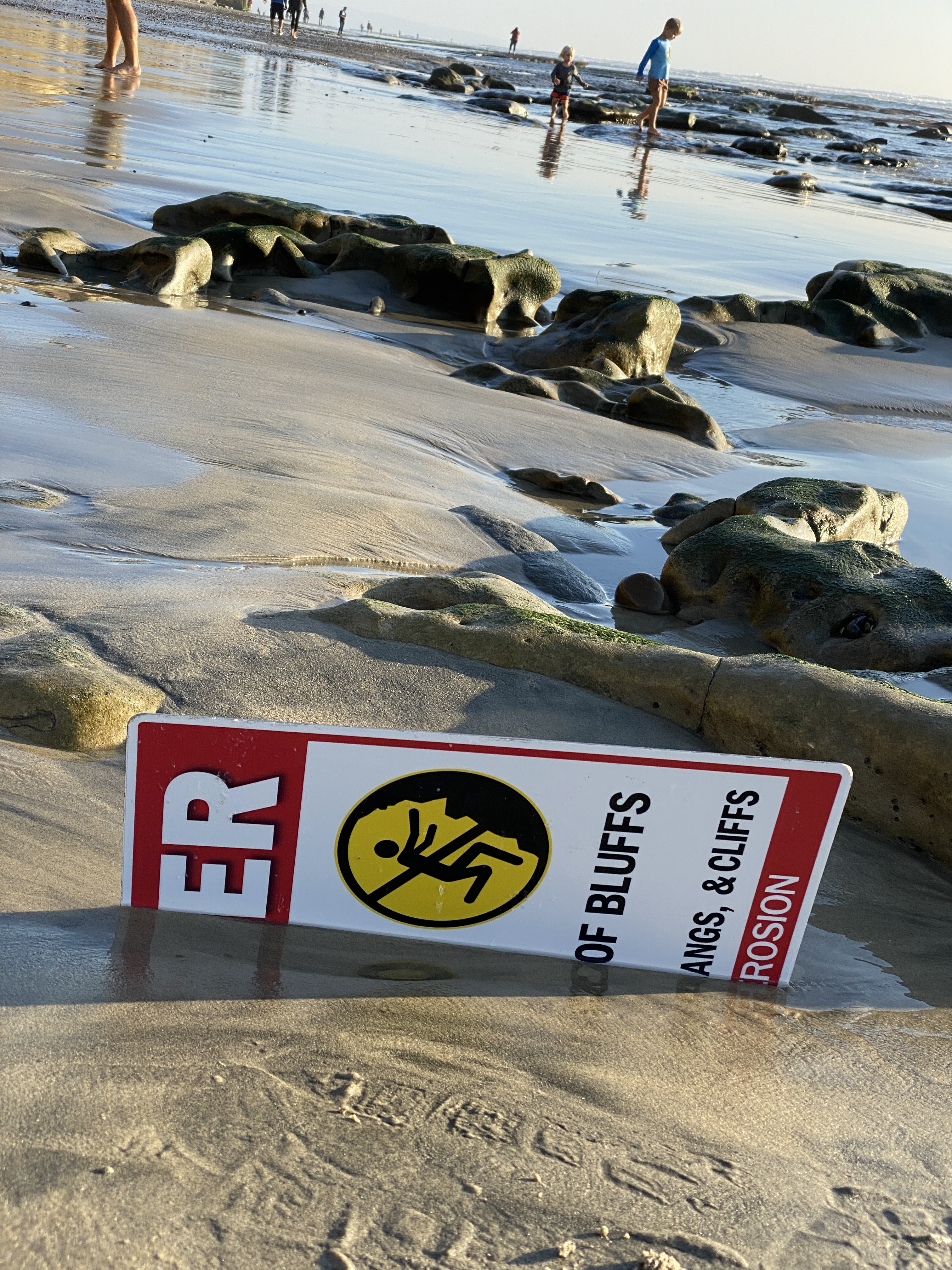
Hmmpf! But I must admit, mounds of rocks do not keep me away from the beach. Even though I am a bit confounded by just why our beautiful sandy beach turns into a rock monster in the fall and winter.

Then I started noticing the different rock qualities. Does smaller gravelly rock count as an uneven surface? It is definitely easier to walk on, less slipping and sliding and maybe even a bit less sweating involved.

The larger rocks, ranging in from the size of my fist to the size of my foot, definitely create more unevenness and I find myself needing to concentrate on my footing to stay upright while trying not to turn an ankle or worse. They seem to roll and rumble, mini avalanches always a possibility. And while the photo doesn’t capture it well, they always seem to be piled up on a slant.

But then I started thinking about some non-beach rock experiences with much bigger rocks. In hiking terminology climbing up larger rocks is called scrambling (at least that is my understanding). My most vivid memory of this kind of climbing was on a hike in South Dakota a few summers ago where we scrambled to a peak with gorgeous views. It was not my favorite kind of hiking–lots of feeling like my feet were ready to skid out from under me. My solution was to lower my center of gravity and use my hands.

So just what exactly is supposed to be good about navigating over rocks or other uneven surfaces? I’m guessing this is about working on balance, building up the kinds of muscles that help with balance, maybe even developing confidence that traversing these surfaces is a possibility. Now I’m wondering, does this also apply to surfaces like snow and ice where footing is also sometimes in question? And is this physical activity also good for the brain where concentration and problem solving are needed, taking the automaticity that we take for granted on smooth surfaces?

Hmmm…more to ponder.

In My Boots: SOL23 Day 3

I didn’t know I needed hiking boots until I did. Athletic shoes (which I typically refer to as “tennies”) are fine for hiking, I would insist. But time off sidewalks on uneven trails or up rocks and boulders convinced me that I needed some additional support to feel comfortable, so a decade or so ago I bought my first and only pair of hiking boots.

Last week, we headed off to the Pacific Northwest to spend some time exploring Olympic National Park. And while we didn’t think we would need hiking boots for the entire trip, we wanted to have them with us. But packing hiking boots would take a lot of luggage space–and they’re on the heavy side. So we made the decision to wear our boots on the plane and to pack our tennies in our luggage.

Typically, my hiking boots get several hours worth of wear here and there. I put them on as I head off on a hike and often change back to my tennies once I get back to the car. They are comfortable for hiking–but they’re also heavy and hold my ankles pretty firmly. But last week they got nearly non-stop wear!

Day 1: on at daybreak for an early flight, off after dinner once we made our way to our hotel.

Day 2: on before breakfast anticipating a day on the snow. They work perfectly with snowshoes AND keep my feet warm. I did take them off before dinner and wore tennies to the restaurant.

Day 3: on again before breakfast as we planned a full day of rainy day hiking, off after dinner once we returned to the hotel.

Day 4: change of plans–we had thought we would wear tennies for comfort in town and on our feet all day, but predicted low 30’s weather made us decide to wear hiking boots as we explored the city of Victoria, BC. Rain was predicted (no rain), but it was cold. We were doubly thankful for the boots when we returned to snow and snowy roads as we left the ferry. Another full day of hiking boots.

Day 5: into the city, and still in our hiking boots. Cold weather + hiking boots=warm, comfy feet. By now the tennies are feeling neglected and I’m wondering why I even packed them!

Day 6: heading back to the airport. No room in luggage for hiking boots so the decision is made. It’s a hiking boots day! (And the longest day of all…finally returning home the next day at 1am!)

Six days in hiking boots. My feet stayed warm and comfortable. I had the grip I needed to deal with rain and snow and muddy trails, and no one once asked why are you wearing hiking boots?

Schooled: SOL23 Day 2

They’re everywhere. Seemingly multiplying when they come in close proximity. Some are orange, others lime green. Like a school of fish, we all move together shifting left then right, never getting out of formation for fear of an impending tumble, or worse still, a dreaded crash! If you’re lucky, you can hear them coming up behind you. If you’re not, that frozen feeling creeps up your back and you don’t know whether to move right or left or just stand still until they pass.

And they move fast! The hurry is built right into the design. No need to push off or keep the roll going with the swing of a leg. Just stand up, hold on, and go! Bikes have bells, cars have horns, and even skateboards have the click clack of wheels over concrete…but electric scooters are pretty much stealthily silent. Blank-faced riders looking straight ahead with no pretense of athletics, no helmets or elbow pads, often not even athletic footwear. Some are even actively engaged with phones, scrolling, viewing, sometimes even filming.

If only they solved the parking problem on campus or become part of the mitigation of fossil fueled commuting. Unfortunately, they seem to create their own hazards as ownerless transport left in growing herds. Maybe I need to hop on one and find their charm for myself.

Under the Influence: SOL23 Day 1

This week in my first grade class, we have been learning about Jane Goodall. My students love that, just like they do, she loves animals. I love that they recognize patience is a tool she used in her research, that building relationships takes time and effort–and sometimes that effort means just being present until trust is built. Showing up, paying attention, and caring are key.

Jane Goodall, according to her picture book biography The Watcher by Jeannette Winter, was always curious and a supreme observer from an early age. She watched bugs and chickens, recognizing that careful observation was a rich source of information.

To try on Jane’s observational skills, we headed outside with notebooks and pencils in hand to use our senses in the school pollinator garden (better known by the students as the fairy garden). The directions were simple: find something interesting, watch and notice using all your senses (we acknowledged we wouldn’t be tasting anything before we headed out), make a sketch of whatever you are observing, include writing to add details about what you are noticing.

The synergy of observing under the influence of Jane Goodall and writing outside resulted in a magical writing experience. Students were focused and engaged–there is nothing like watching a formerly struggling writer putting words independently on the page and then asking for more time because he had more to say. And the unexpected, “thank you for teaching me today,” from the high performing student–who had experienced joy writing outdoors. This experience with ordinary nature, the ants, the sticks, the fallen leaves, some lavender, a few bees, the sun on our shoulders and pencils in hand inspired us. We wrote and learned and shared under the influence of Jane Goodall and her indomitable spirit and the magic of being outside, in nature.