Tag Archives: acorns

Exploring Acorns: A #writeout Adventure

When life gives you acorns…make art and poetry!

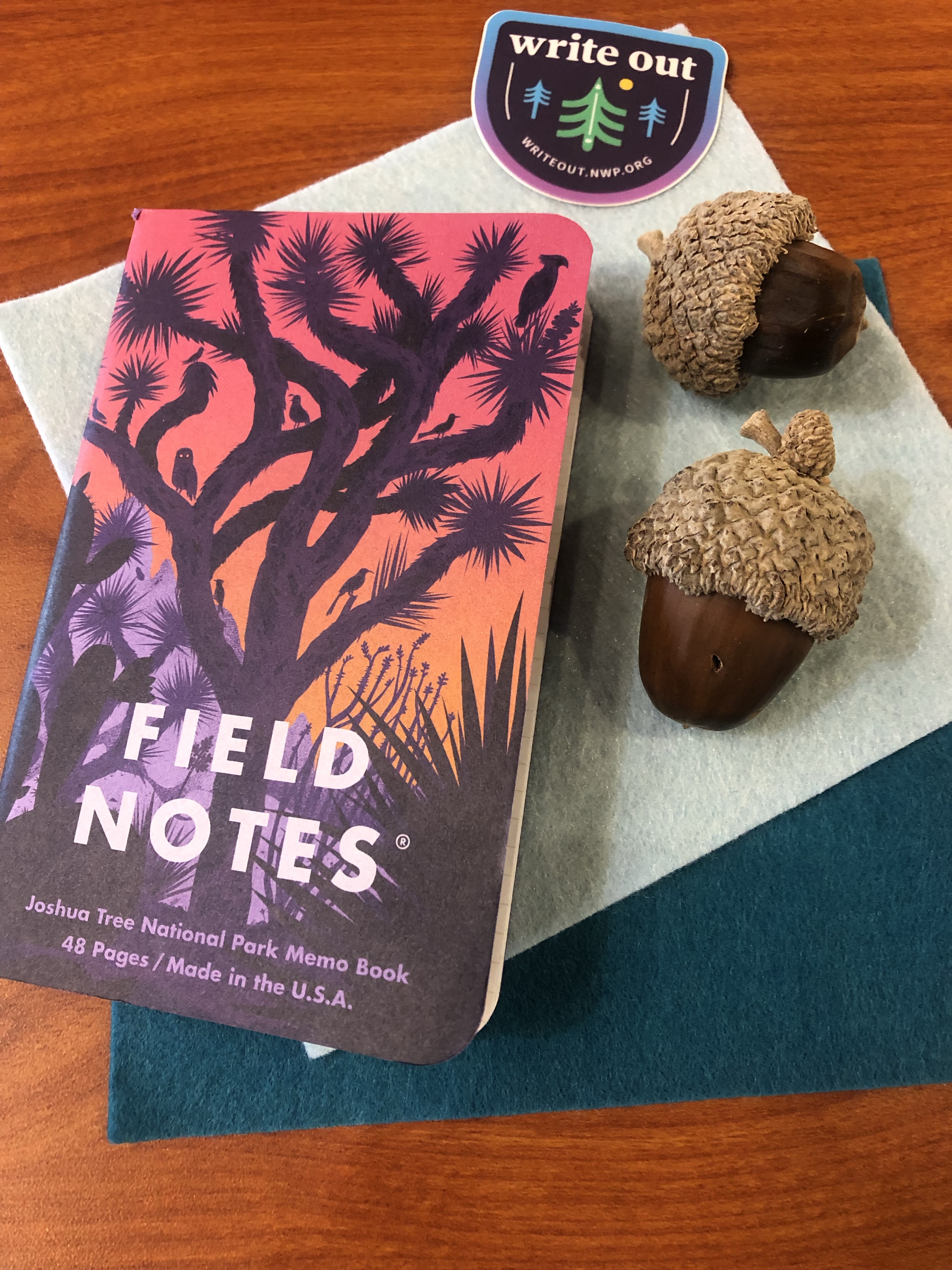
Most weeks I work with my friend and colleague Carol over Zoom since we live in different parts of the state. So when we got to meet in person a few weeks ago, I was delighted to be gifted with a bag of acorns to explore with my students. The acorns where Carol lives are huge…and they have the caps that look like knitted beanies.

So, in honor of #writeout, a collaboration between the National Writing Project and the National Park Service, we got out the acorns and the hand lenses AND our sketchbooks to really study them carefully. We also read two wonderful picture books: Because of an Acorn by Lola Schaefer–a book about the interdependence of the ecosystem where acorns thrive–and Acorn Was a Little Wild by Jen Arena–a fanciful book about an adventurous acorn who after an encounter with a hungry squirrel preparing for winter, ended up as an adventurous oak tree.

And…we had to watch the wonderful video with Ranger McKenzie from Sequoia National Park about how oak trees drop tremendous numbers of acorns every few years…all at the same time in a process called masting, and that scientists have figured out that trees “talk” to each other through their root systems.

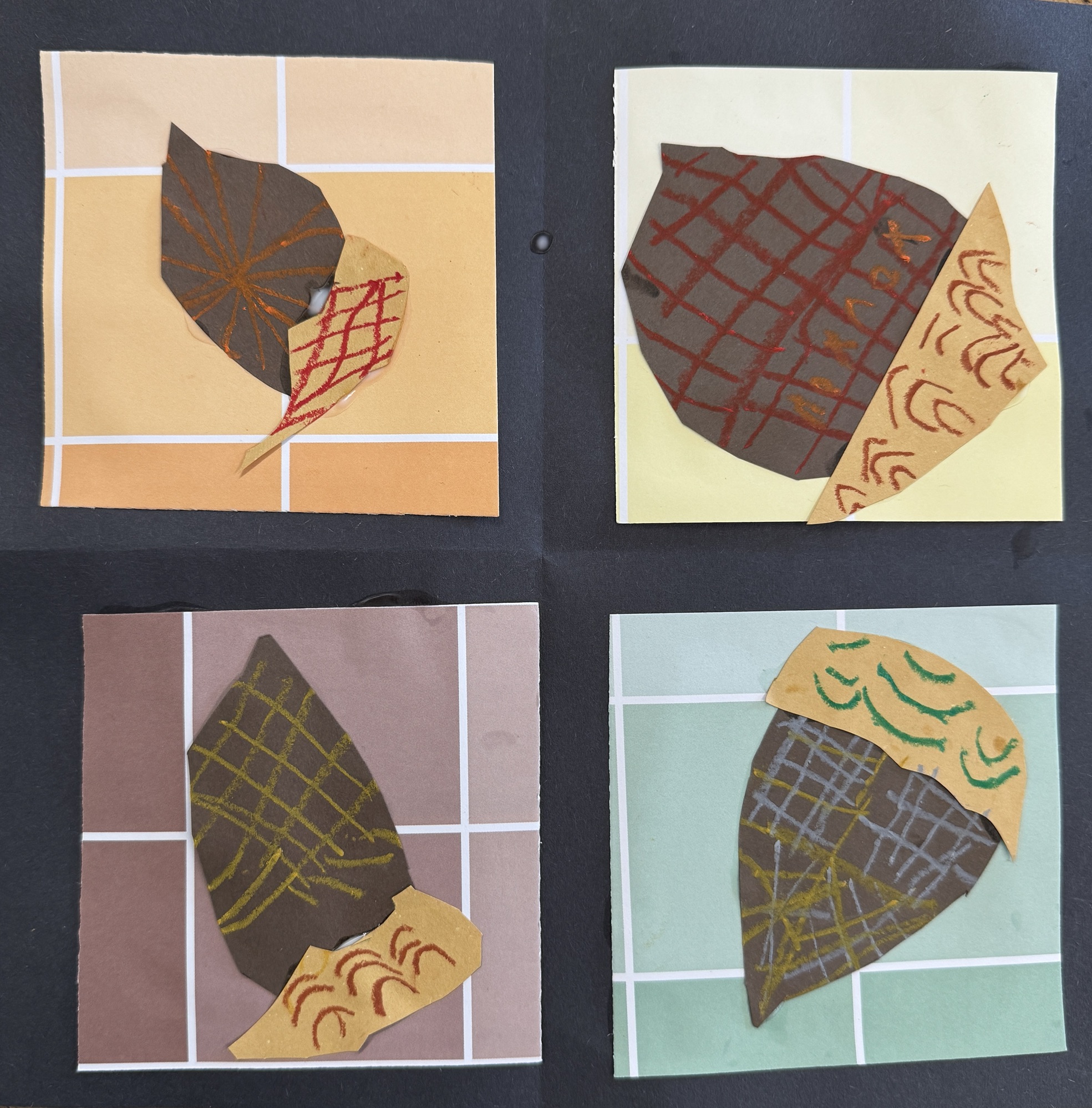
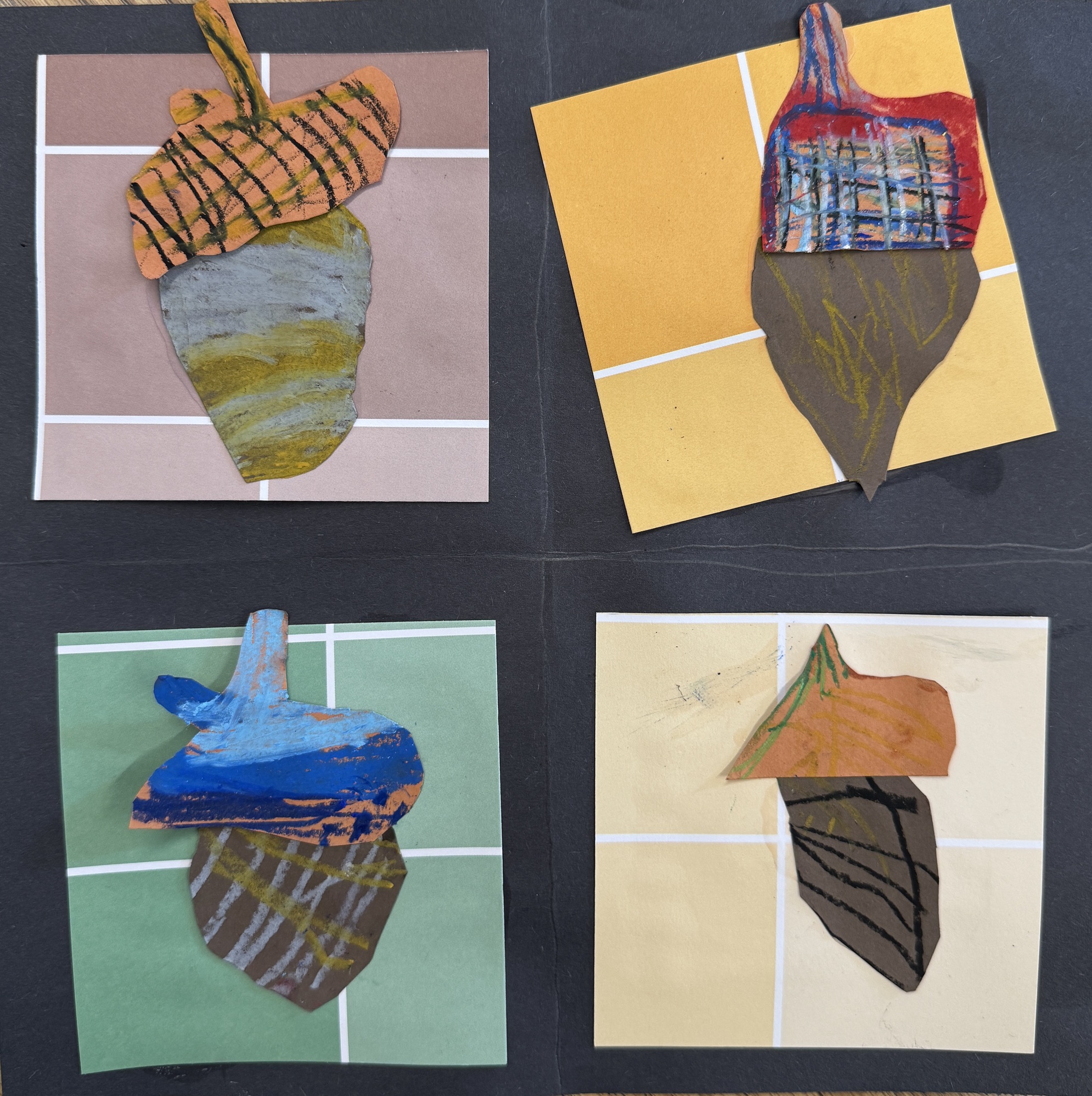
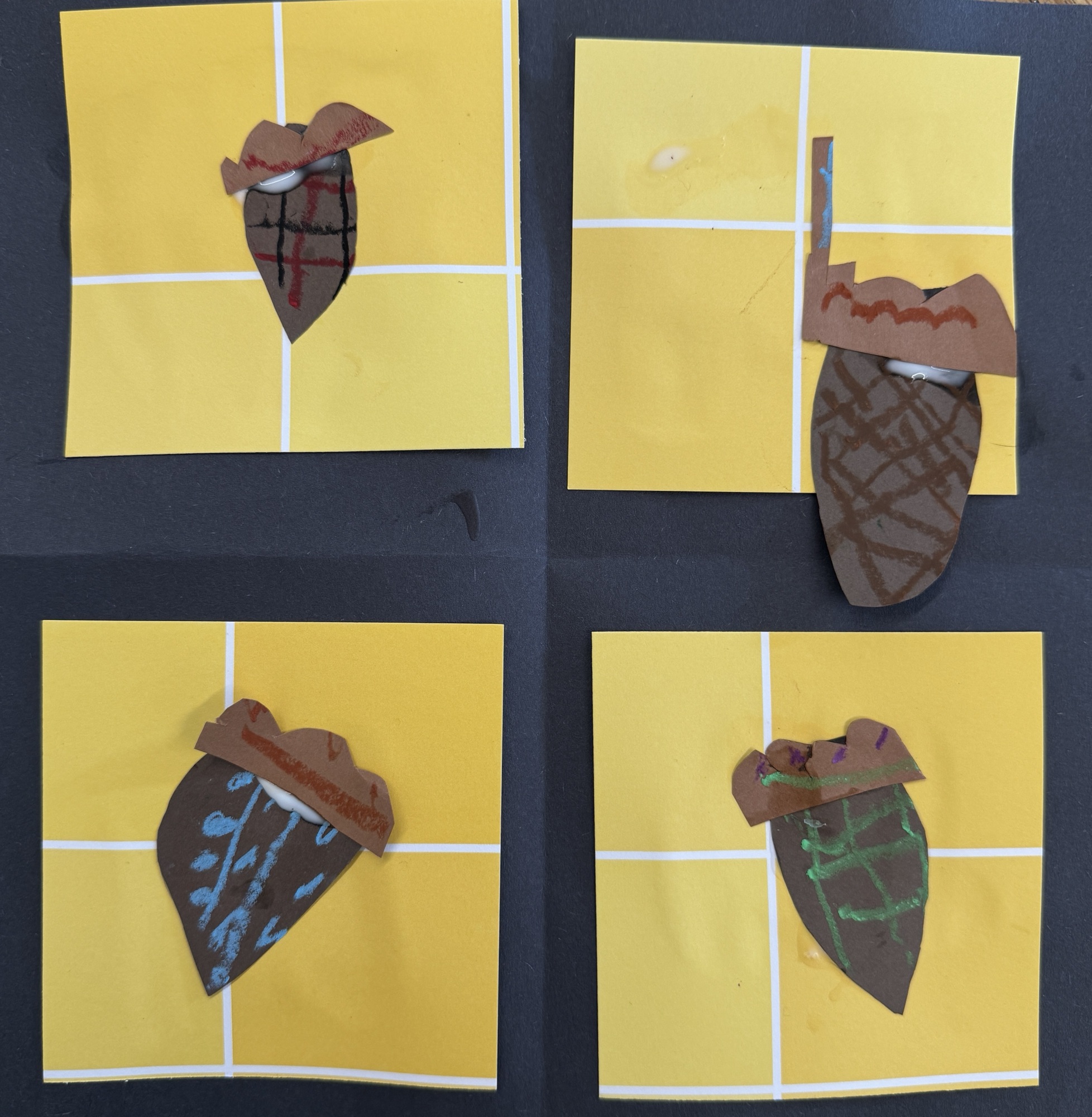
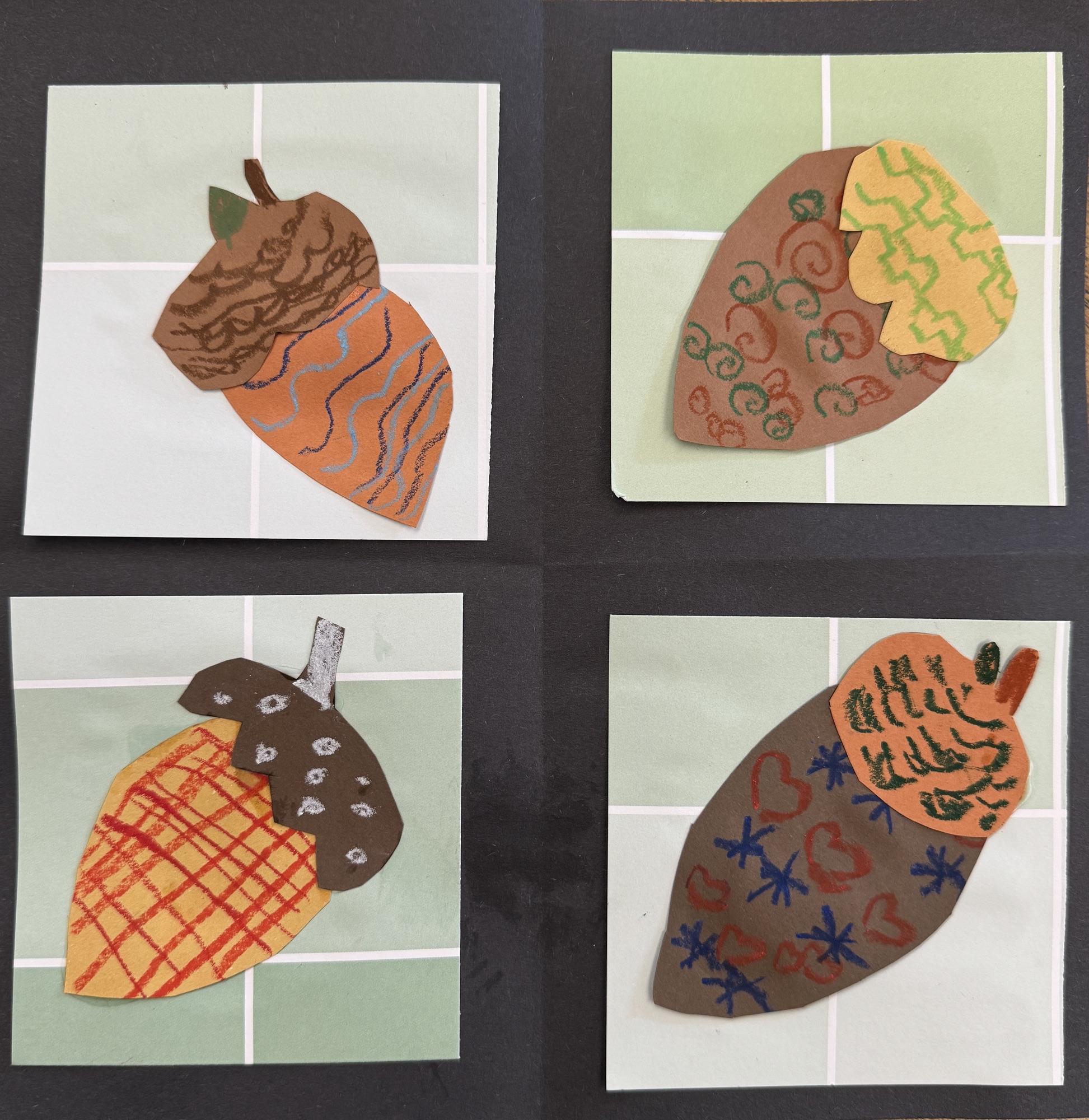
All this science and nature provided the perfect foundation for an art project inspired by Andy Warhol and the Pop Art movement. Today the first graders in my classroom used scissors, construction paper, oil pastels…and wait for it…white glue to create the most adorable acorn art. Scissor work can be challenging for young learners, and to add to the scissor demand I didn’t provide a template. Instead I showed them how to trim the square of paper into the shape of the acorn nut…and another square of paper into the shape of an acorn cap. A few students expressed frustration, but with some encouragement and insistence that they keep trying, all students were able to cut out acorns and their caps independently.

We added some whimsical texture with oil pastels…and then the most challenging part, they had to use white glue to attach their acorn pieces to the background we had assembled. Trust me, white glue can be downright scary in the hands of young artists! But with admonitions to use the glue sparingly, we were successful!
Of course we had to do some writing. Poetry seemed in order–after all this year’s #writeout theme is Poetry for the Planet and I was wanting to keep it short…so we attempted a first grade version of Haiku–a three line poem (without worrying about the syllable count). Here are a few first grade attempts.

J wrote:

Acorns are hard

cozy as fall nears

Spiny as a hedgehog

O wrote:

Don’t fall yet.

Squirrels will get you.

Crunch!

And R wrote:

Acorns look like a balloon that got blown by a man.

Acorns look like a man with a helmet riding a bike to the store.

Acorns look like a top that someone is spinning on the table.

#Writeout we’re off and running! We’d love to know how all of you are celebrating nature and the outdoors in your classrooms and in your lives!
Under the Influence of Acorns

On some days, my students and I head outside for inspiration for our writing and learning and on other days, we bring nature right inside the classroom. Fall is known for leaves changing colors, animals preparing for winter, acorns dropping… But in southern California that isn’t what we see outdoors. Our trees are mostly green, the weather is warm, and no one really hibernates. But in first grade students don’t seem to notice that our fall is different…and so, we often import the icons of fall.

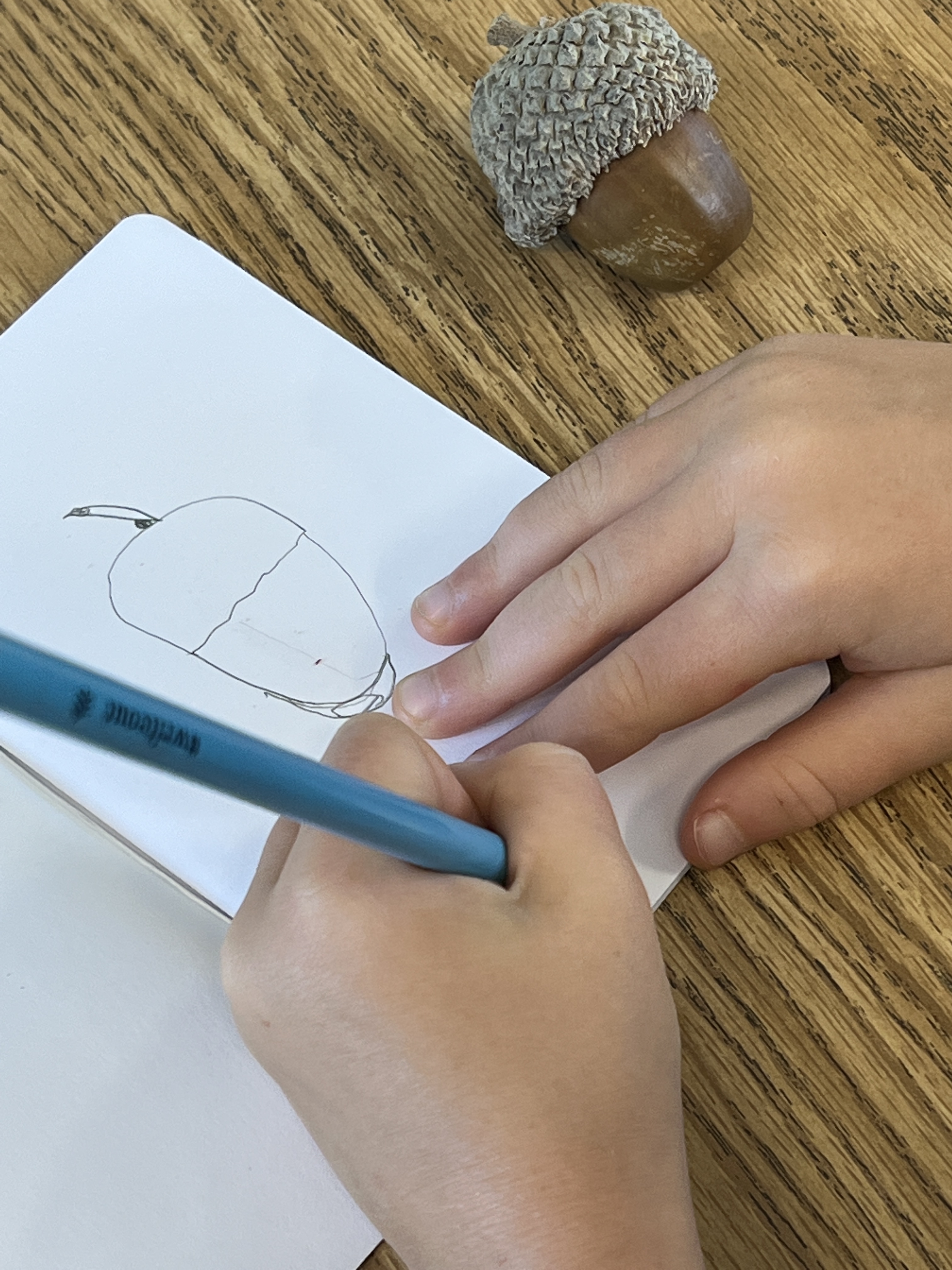
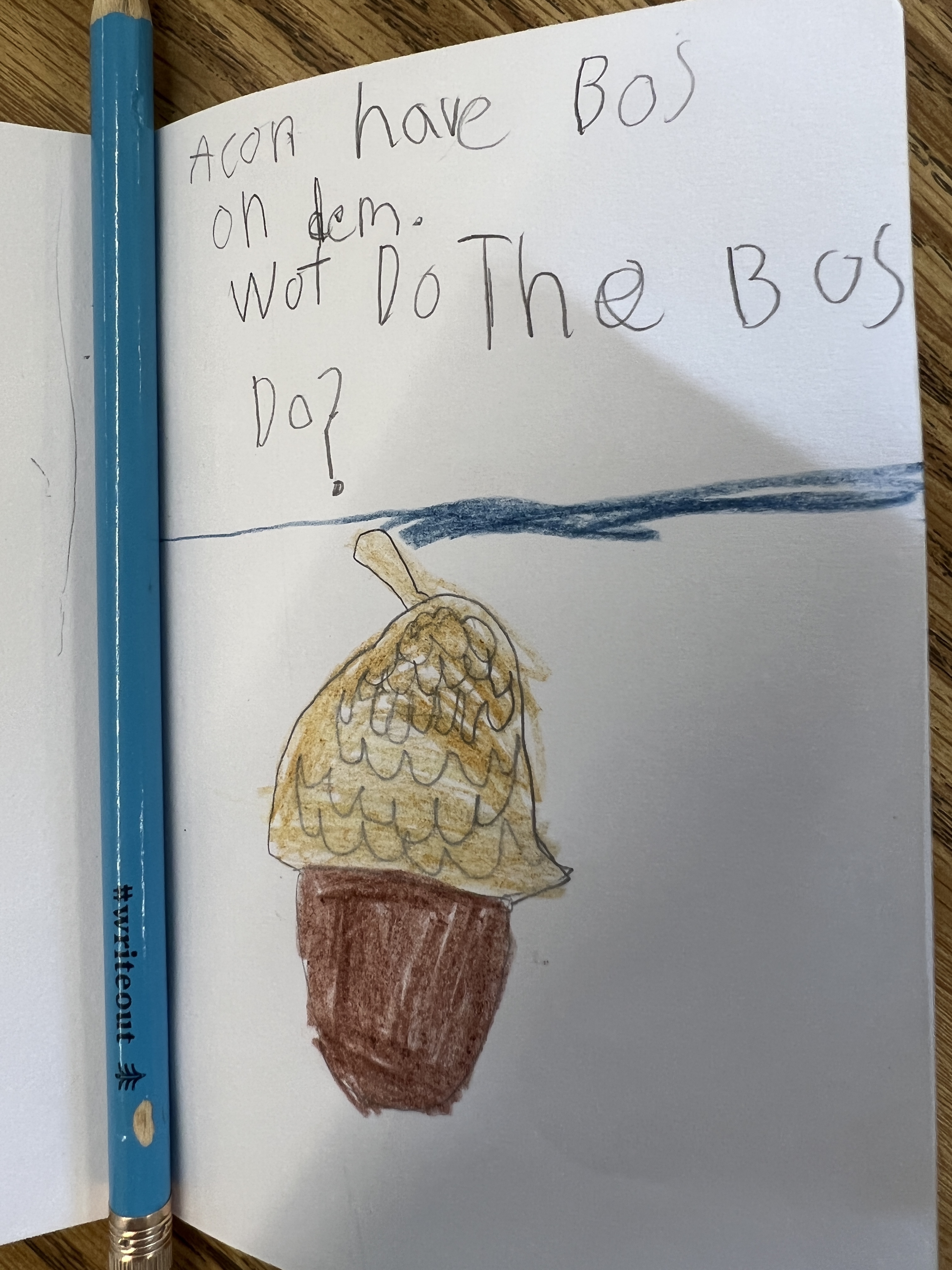
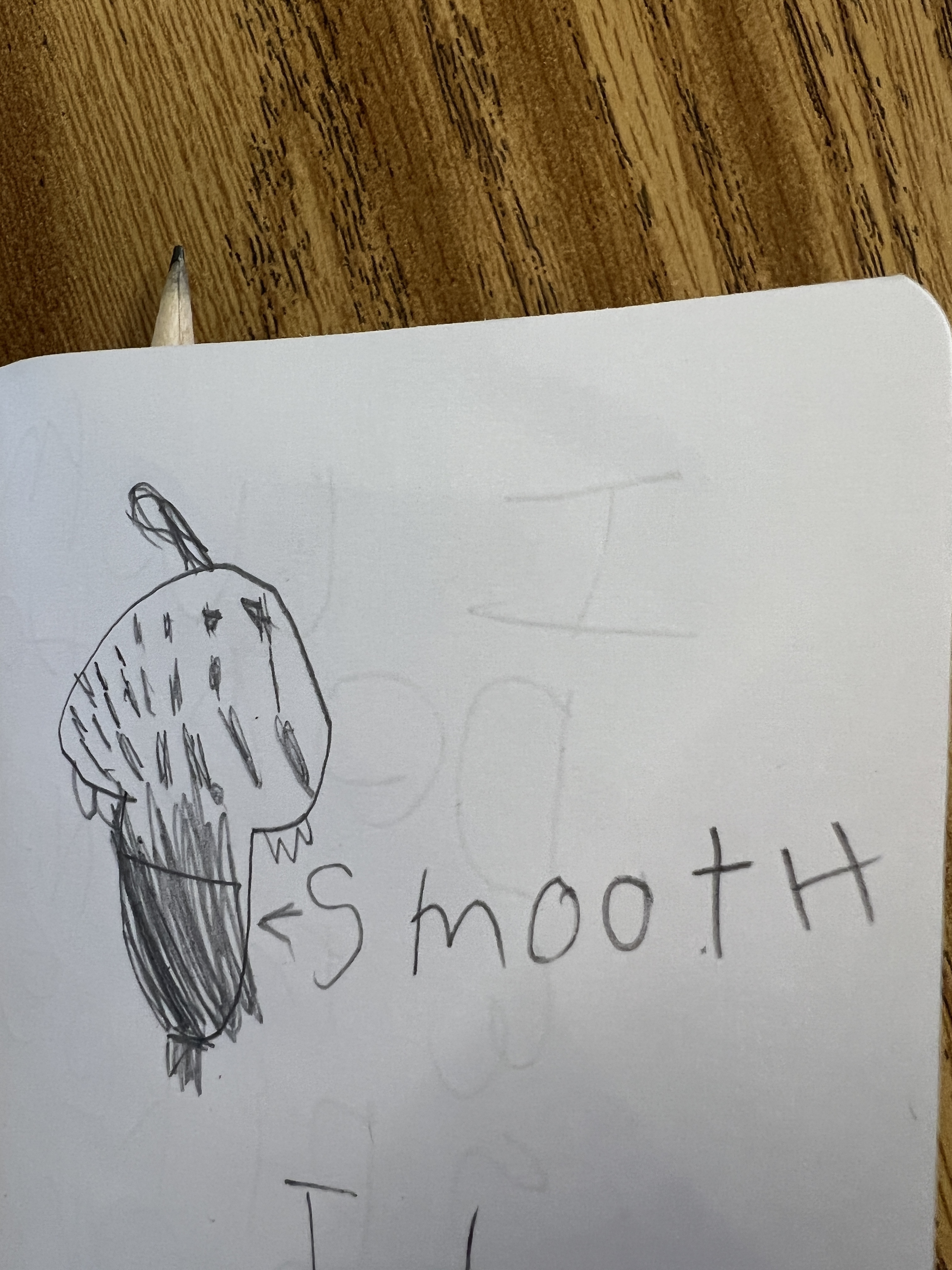
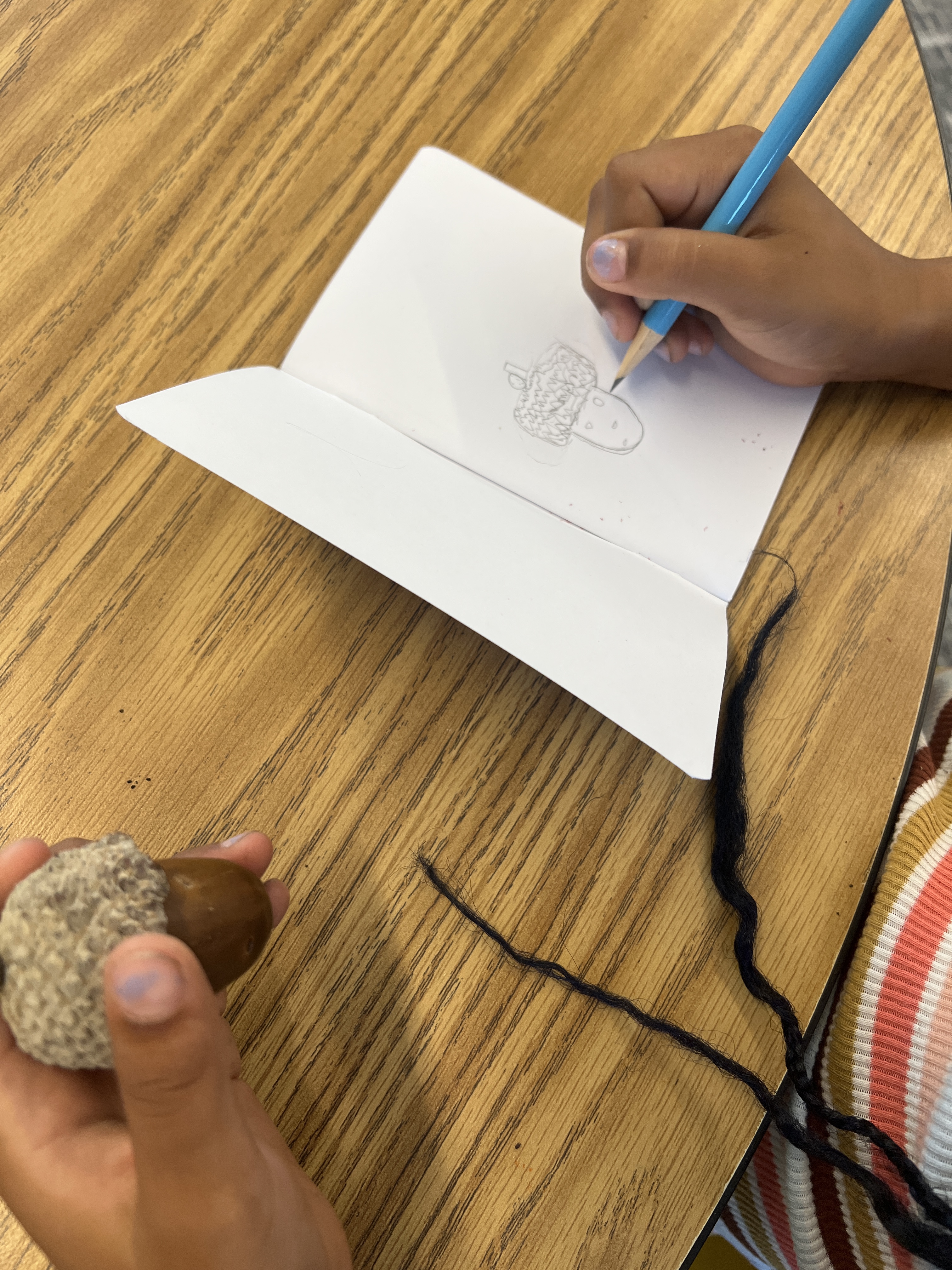
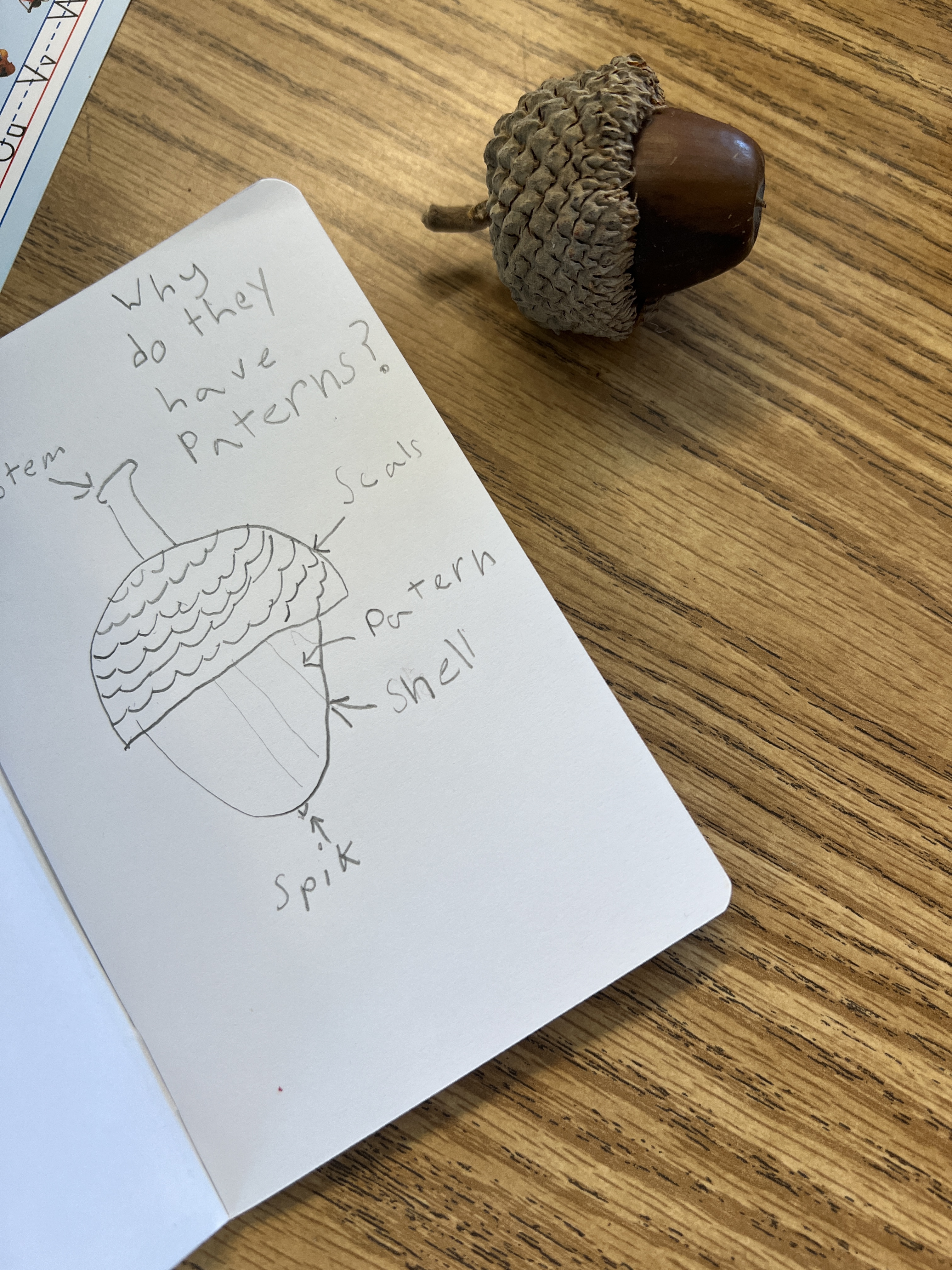
Yesterday after reading, Because of an Acorn and talking about the interconnectedness of plants and animals, we watched a video from a park ranger at Sequoia National Park where we learned more about oaks, acorns, and the communications between trees. And then I pulled out my stash of acorns, saved from a year ago when a friend from the central part of our state shared some from her neighborhood. My students examined these extra large acorns carefully, delighting in the texture of their caps, the smoothness of the acorn itself, and the way it rattled when they shook it (they have dried out somewhat after being in my classroom for a year). Then then carefully sketched the acorns and some oak leaves (using our book as reference). Many spontaneously began adding notes, noticing the point at the bottom, the variations in color, and more. Obviously the note taking carried over from our nature notebooking described in my previous post.

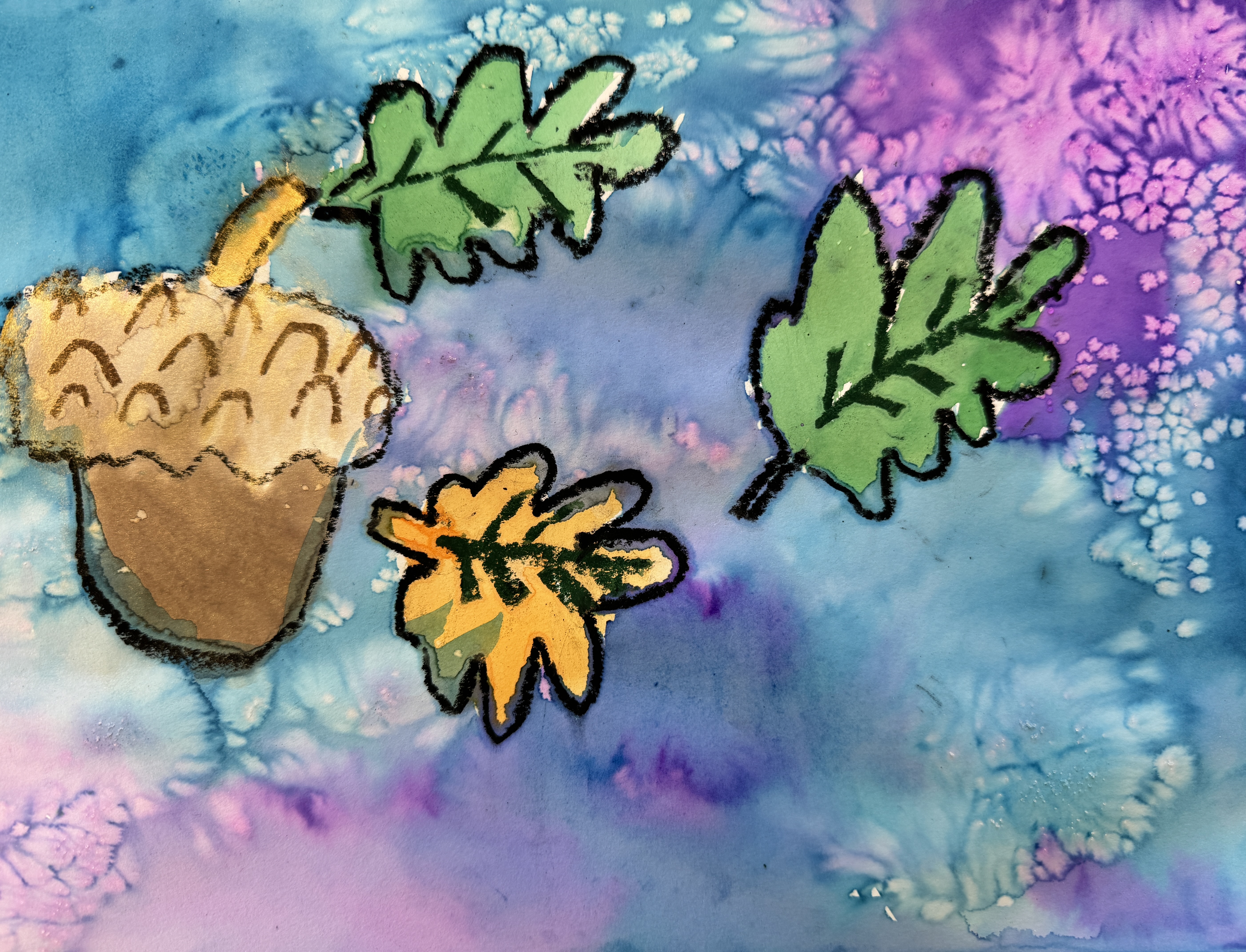
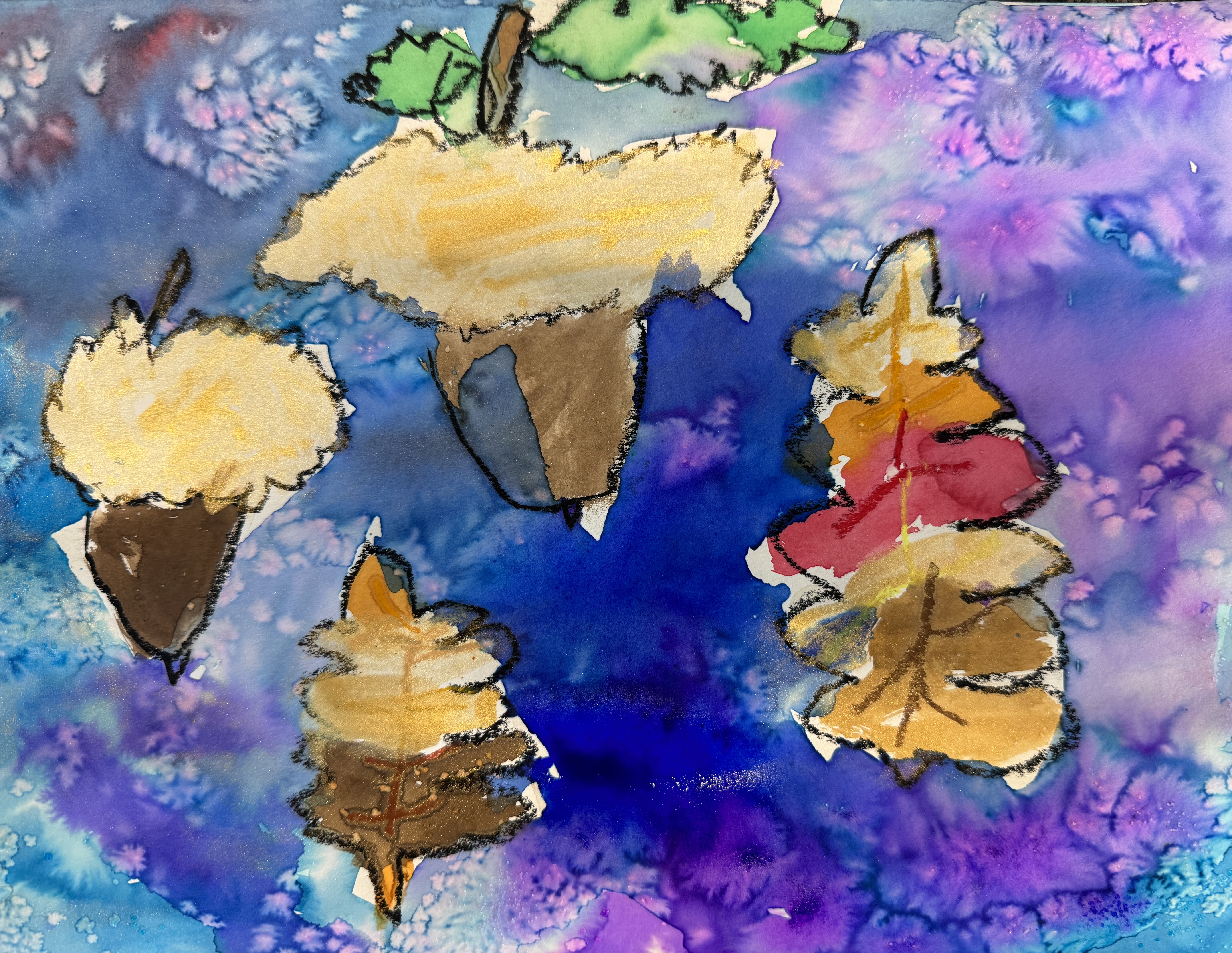
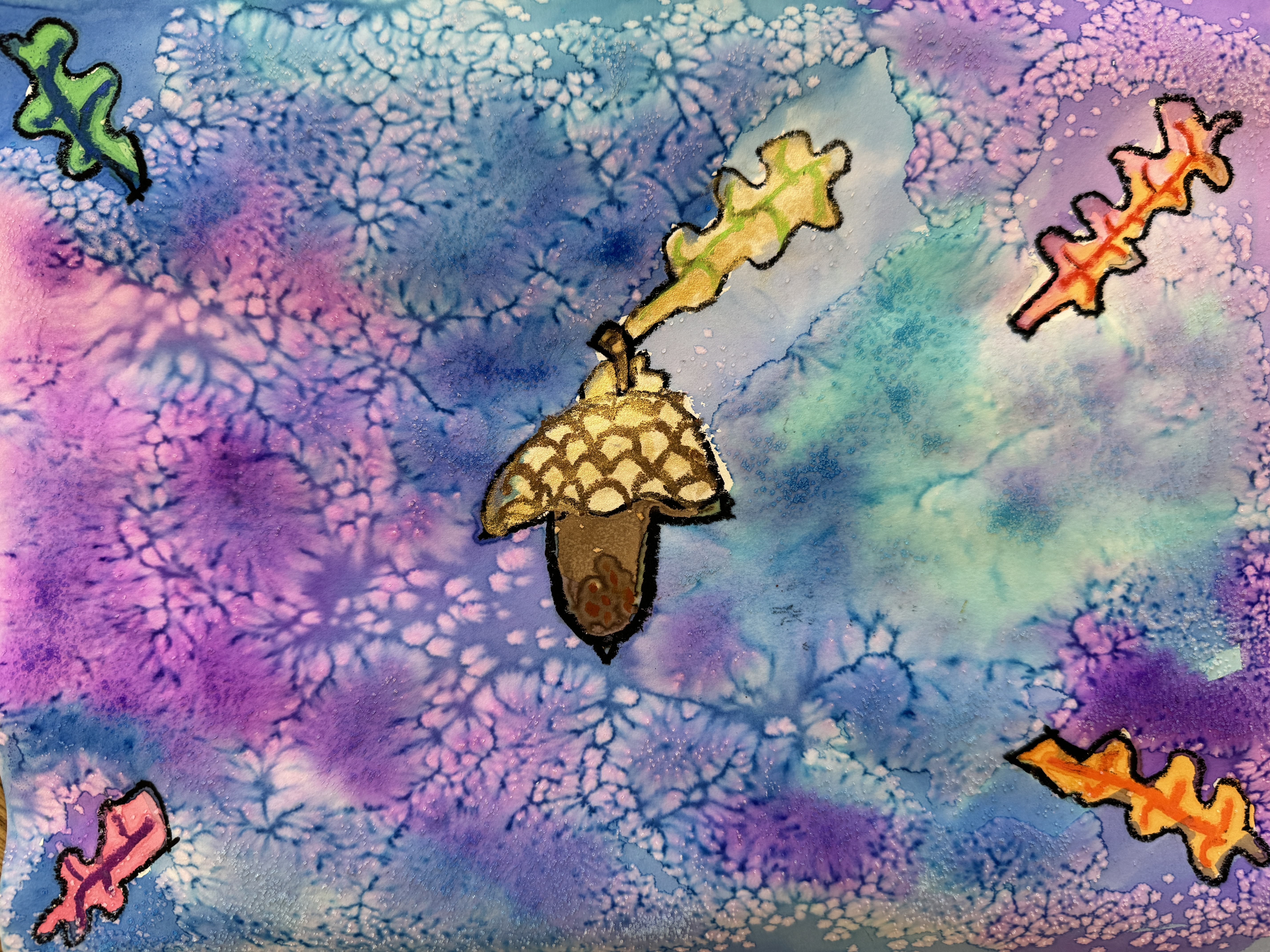
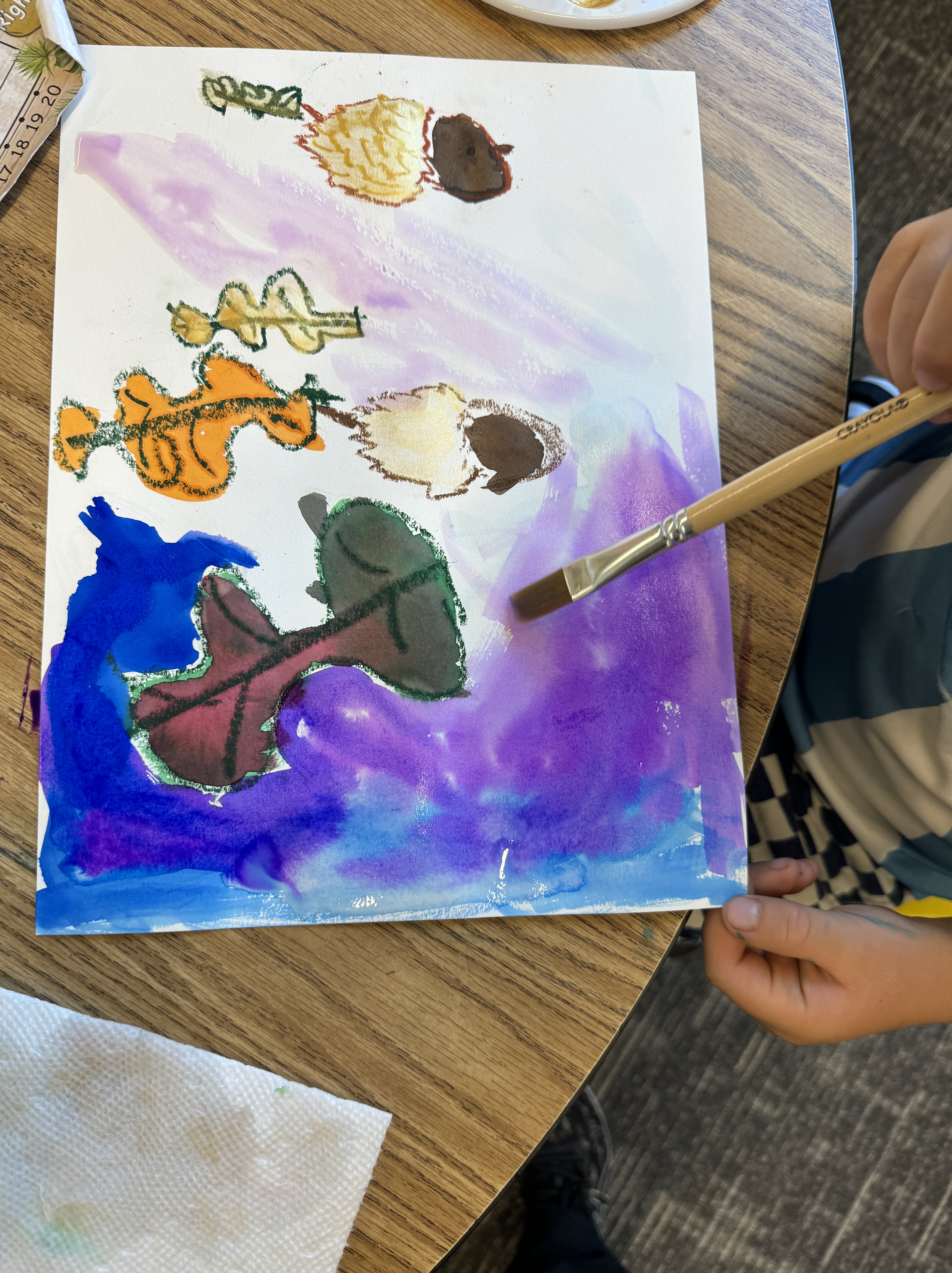
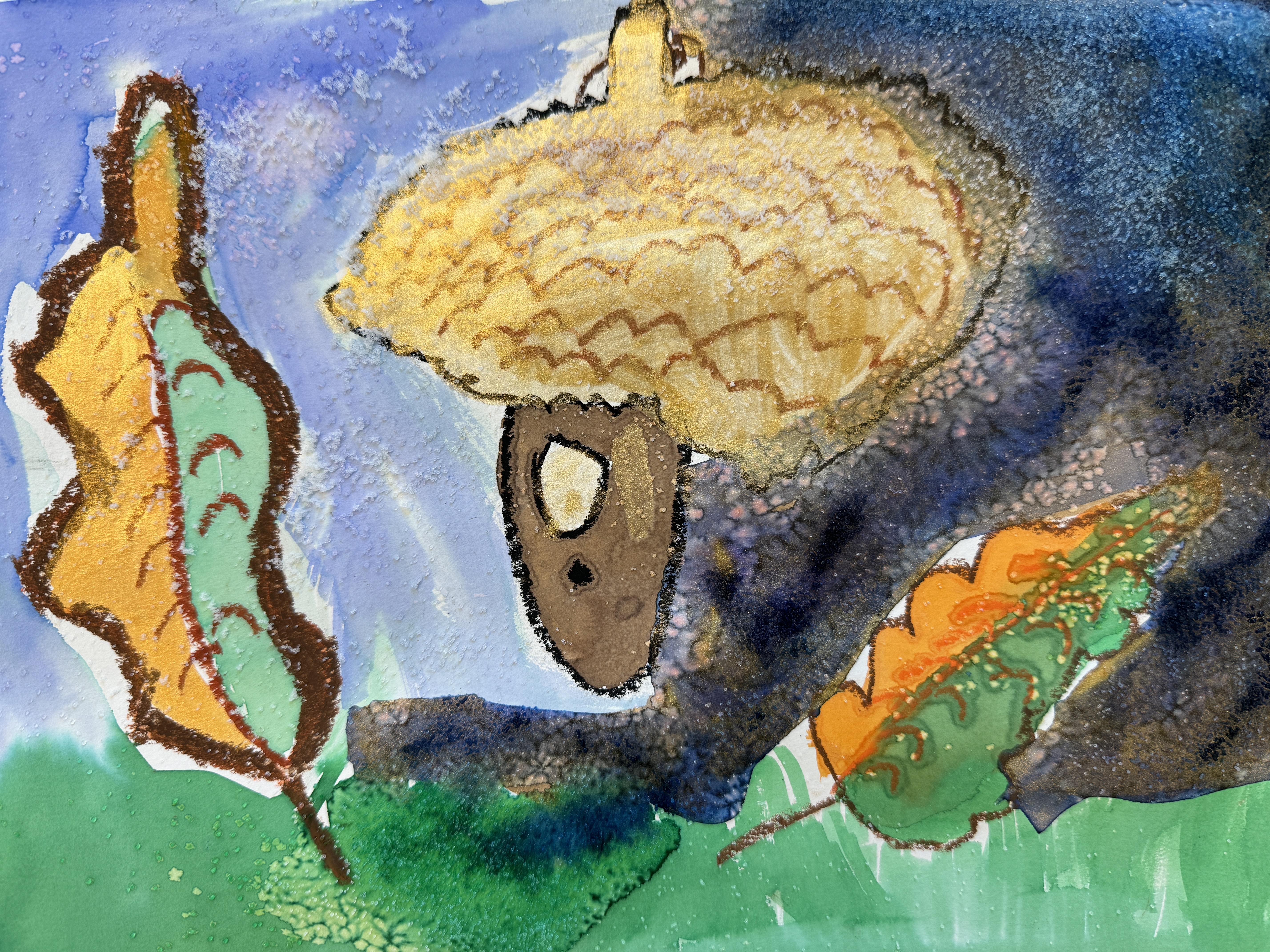
In this case, the goal of the sketching was practice for a watercolor project. Our subject was the acorn, and then we experimented with three different watercolor techniques: oil pastel resist (using oil pastel to create a border to keep paint from running), wet on wet (painting the background with water before applying the paint), and then adding some pinches of salt to create a starburst effect. First graders have so much freedom as artists, they grab the oil pastel with confidence, seemingly not worrying that they will not be able to erase a mistake. They drew and painted…with stunning outcomes.

And since the ranger in the video offered as a prompt, imagine a dialogue between trees…which we expanded to include a conversation between acorns and oaks, students experimented with writing about that interaction. They are new to the writing of dialogues, but their first drafts show some promise. Here’s a couple (typed by me for ease of reading).

An acorn falls off an oak tree. Am acorn hangs from a branch. An acorn drops and a chipmunk will eat it. Hi oak. Are you going to drop the acorns? Oh. I will when it is fall. Hey oak trees, you want to drop acorns! Now it is fall. The oak trees wait. Let me tell the other oak trees so they know. Now it is winter. The animals are hibernating. The bunnies are gathering food for winter.

And…

A squirrel asks an oak tree, can I have one acorn? The oak tree said no you can not have an acorn. Acorn said please! Okay said oak tree but I’m keeping an eye on you! And if you grow into a tree then I will talk to a scientist, so don’t forget squirrel. But wait! I have to tell the other oak trees so we can do a masting said oak tree. Hey oak trees, let’s do a masting yelled oak tree. The oak trees did.

My students were most impressed with their own volume of writing, most filling more than a page with their words. I love that they picked up on some of the science from the video–the idea of a masting, the phenomenon where oaks drop an extreme number of acorns every 3-5 years was information directly from the park ranger.

How are you letting #writeout influence your writing and the writing of your students?

#writeout: Because of an Acorn

When life gives you acorns…turn it into a #writeout inspiration!

On Saturday I found myself at UC Davis meeting with an incredible group of writing project teachers from all over the state as we launched year 2 of our CWP Environmental Literacy and Justice Collaborative. In that space we imagined all the ways to support our students as they learn about the earth and its systems, grow their appreciation of the natural world and resources we share, and use writing to think, to reflect, to question, and to advocate for the world we need and want for ourselves and for our future.

My colleague Carol brought some wonderful acorns she found in her neighborhood as inspiration for a making project…and lucky me, I ended up taking the extras home with me to use in my classroom. These acorns are bigger than the ones I am familiar with…and so beautiful!

And they were perfect for the book I had already borrowed from the library to read this week–Because of an Acorn by Lola Schaefer. After reading and studying this deceptively simple text, we talked about what they noticed in the book. They were quick to notice that it included aspects of life cycles…and they loved the cutouts on the first and last pages. Serendipitously the NWP Write Out newsletter included a link to a video about acorns by a park ranger at the Sequoia and Kings Canyon National Park. My students loved learning more about acorns–and the ways that trees communicate with each other.

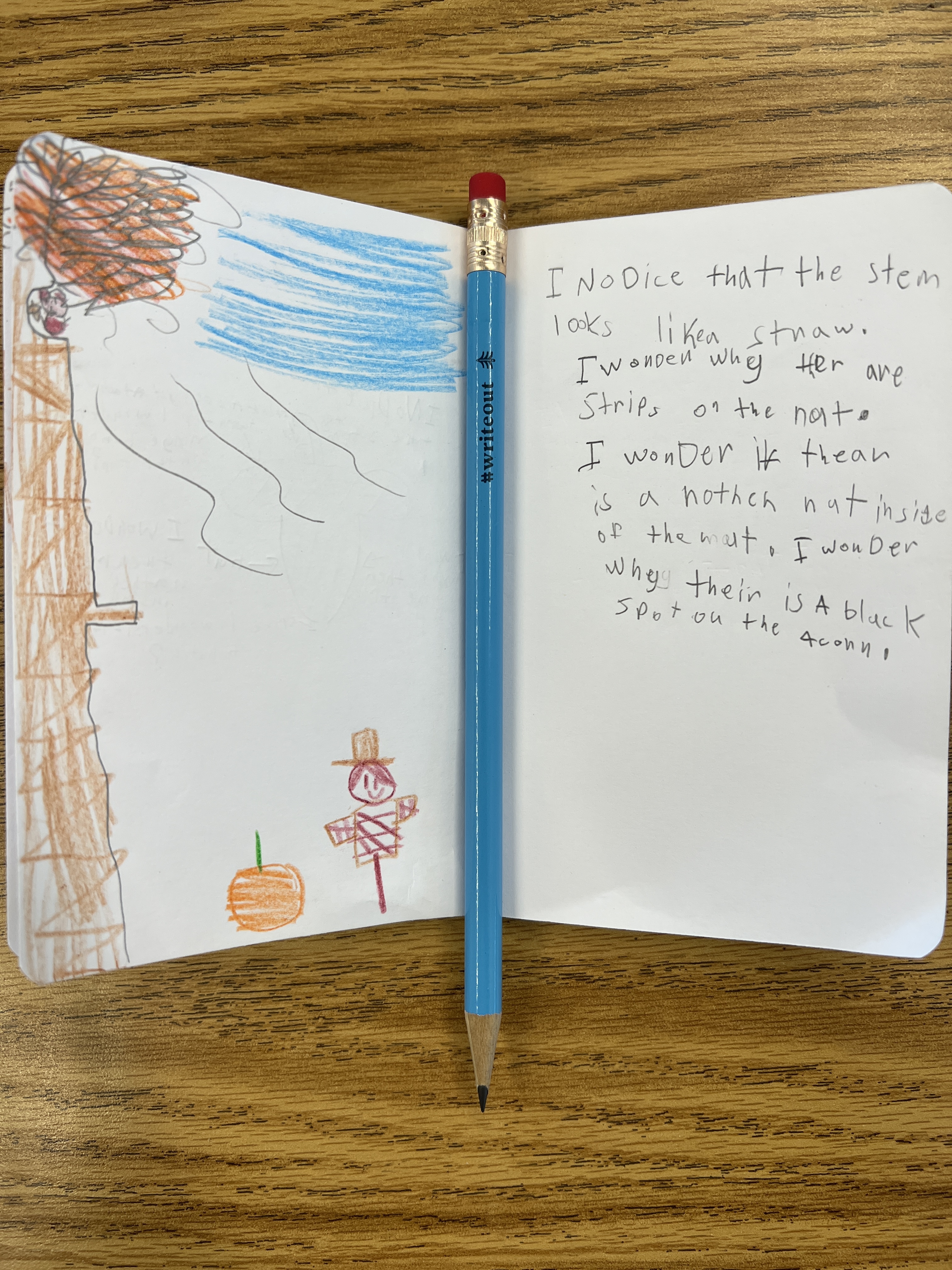
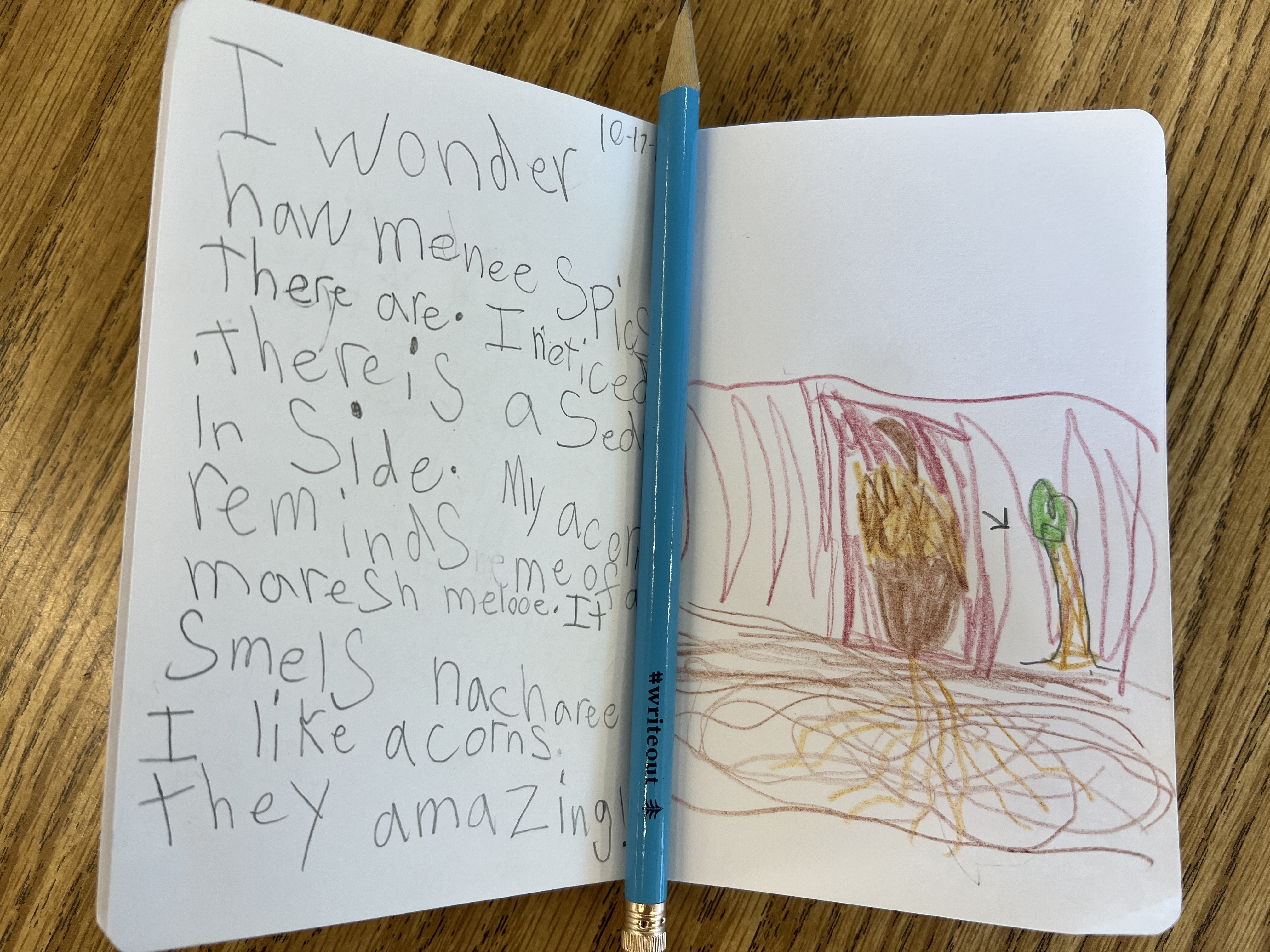
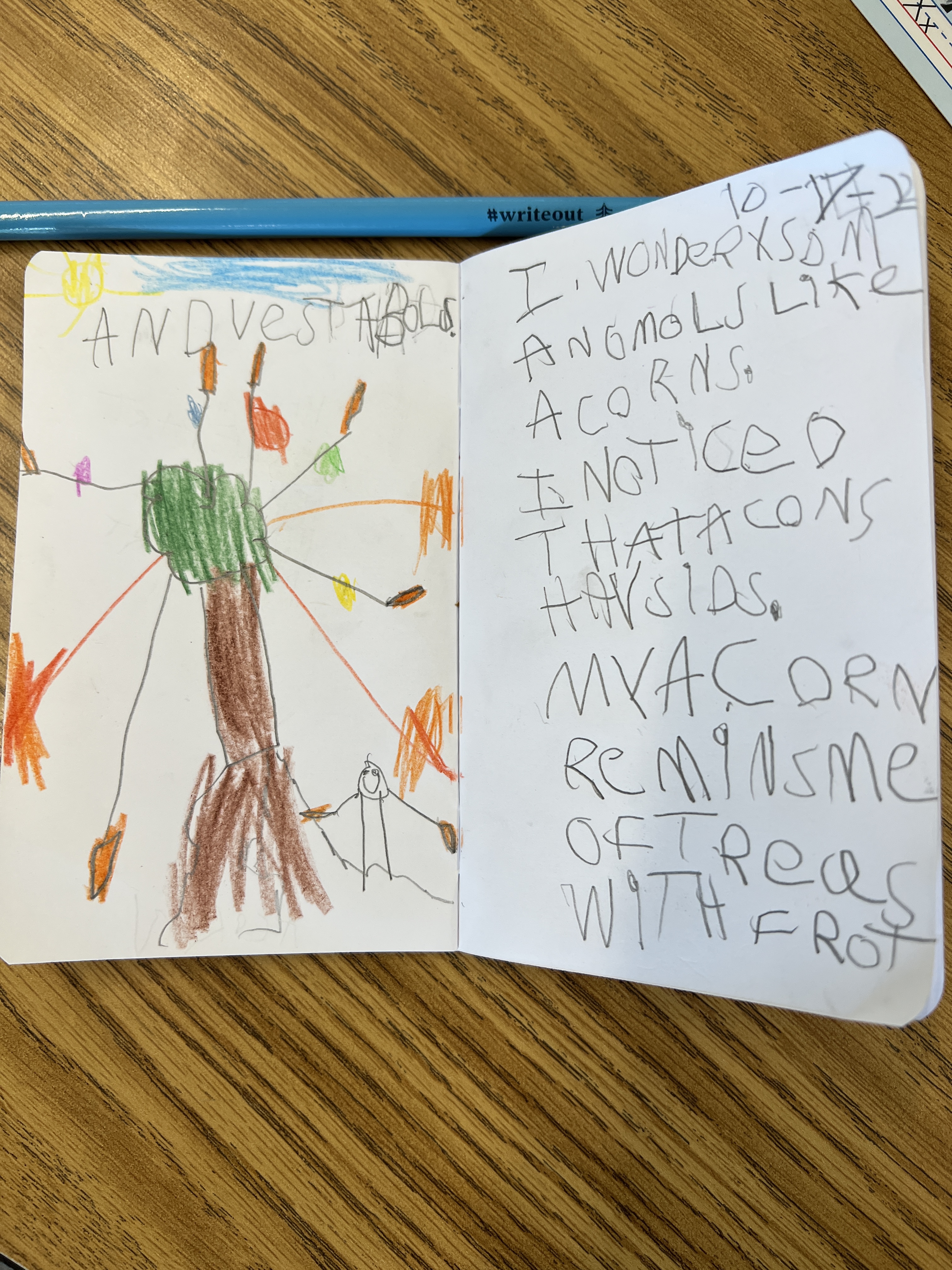
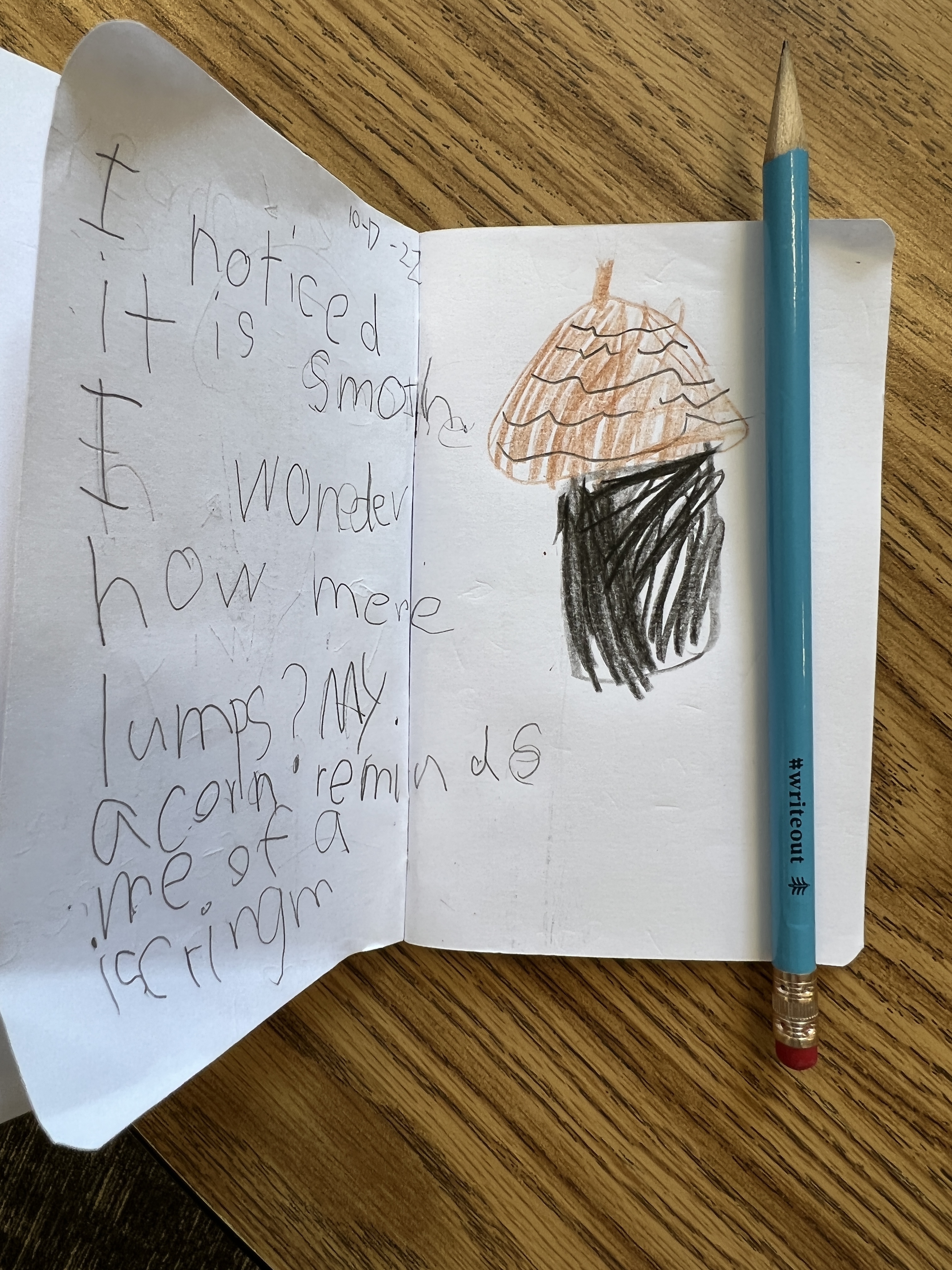
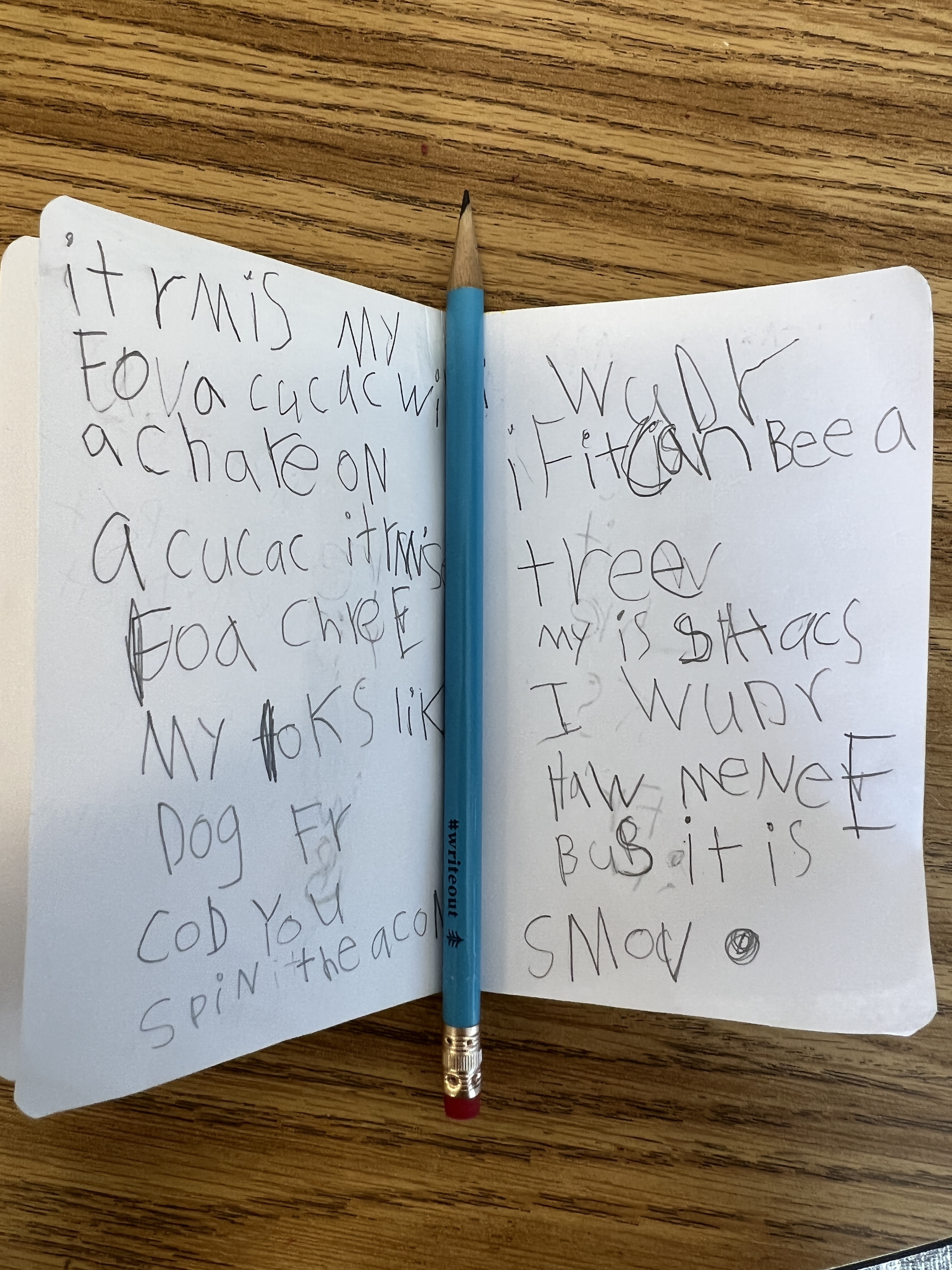
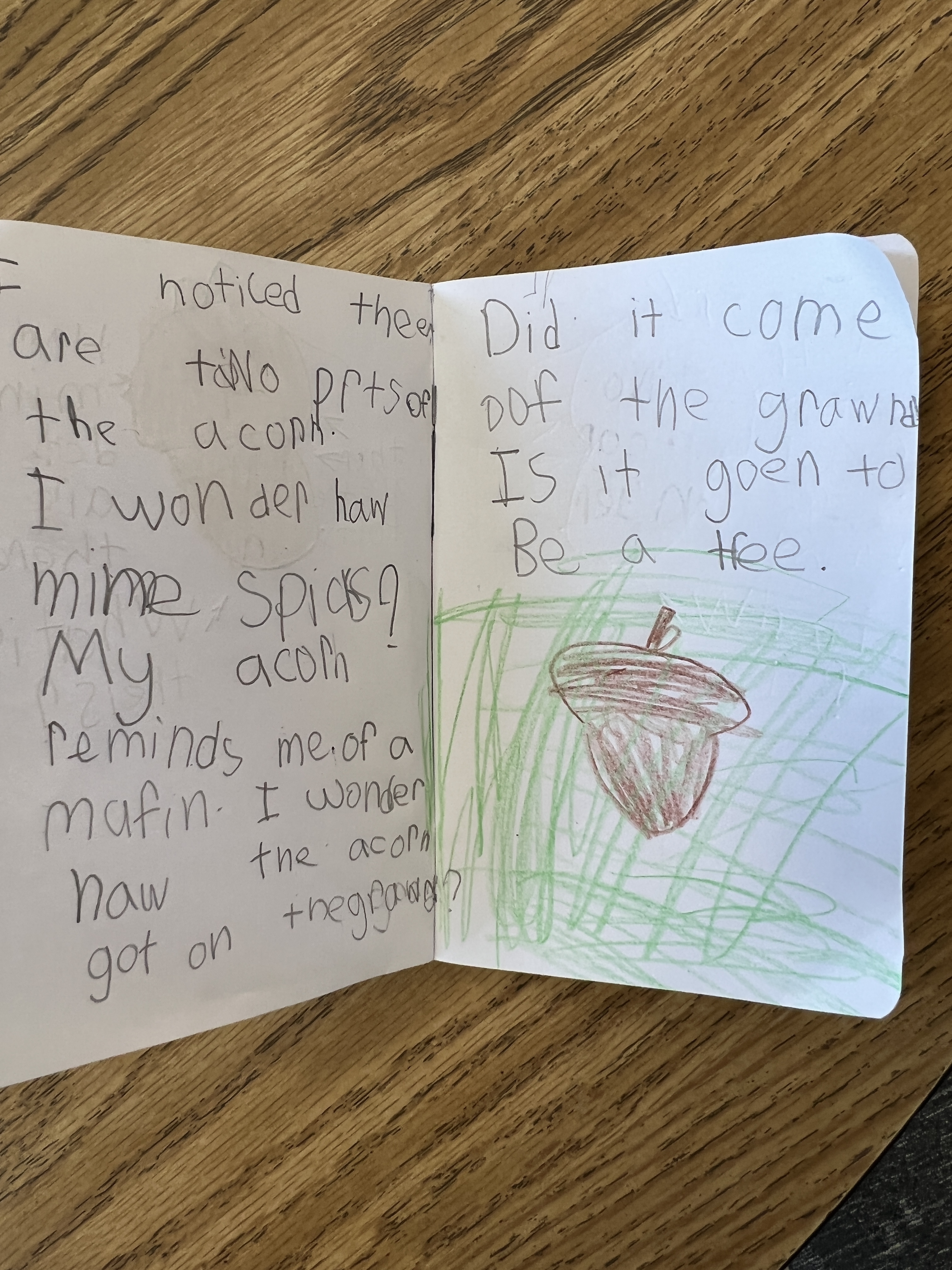
Then it was time to pull out our #writeout pencils and notebooks. We took time to look carefully at the acorns and sketch them in detail. Students were encouraged to use numbers and words in addition to their sketch to capture information about their acorn.

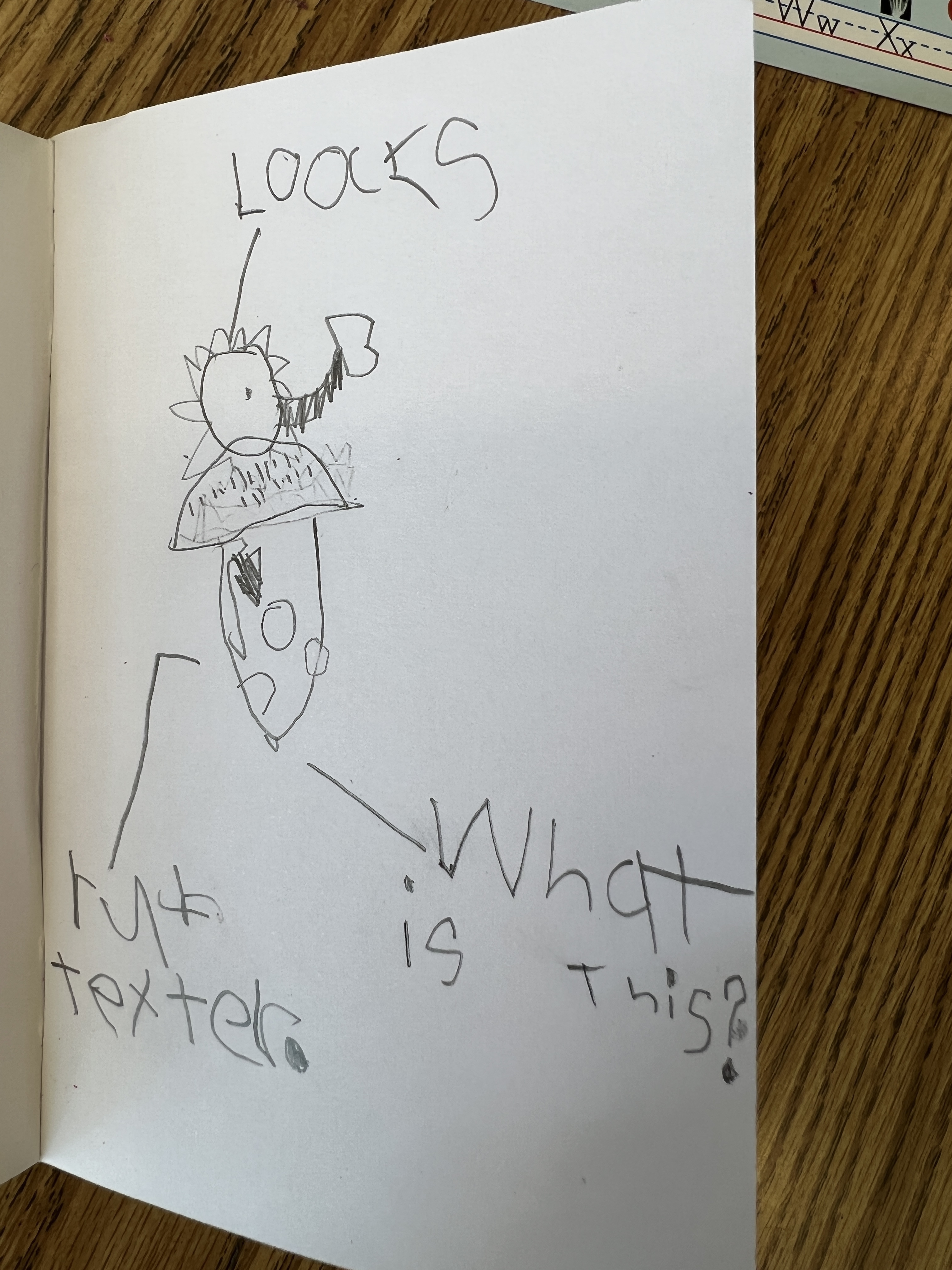
After a break for their music class and recess, we returned to our notebooks for some writing. To push students’ thinking, we used the prompts: I noticed…, I wonder…, and It reminds me of to describe the acorn we had studied and sketched. These first graders had no hesitation. They had plenty to write about and were eager to get started! To keep the words flowing, students were encouraged to use their best “kid writing” (or phonetic spelling), prioritizing ideas over correctness.

Best of all, my students are paying attention to the environment and appreciating all that it has to offer. It is my goal that this immersion in nature will lead us toward advocacy as we consider the ways all of us, as community members–young and old(er), can be a catalyst for change to make the world a better place.