Tag Archives: book review

One Day This Tree Will Fall: A mini #writeout book review

I love children’s picture books. I might even fancy myself a connoisseur of sorts. I have old favorites, but I am always on the look out for new titles. Apparently I have a “type” when it comes to books. Our school librarian can pick a book for me…and most of the time, it is a perfect book for me.

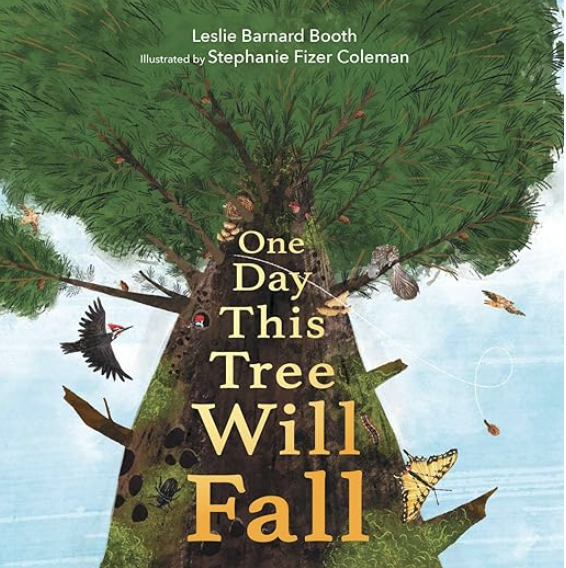
One Day This Tree Will Fall by Leslie Barnard Booth appeared in my book bag a week or so ago…and before I even opened the cover, I was pretty sure it was a book for me. When I opened it and read through it, I nodded to myself. Yes, I’ll be reading this to my students, I said to myself. But of course, the true test is reading it aloud to kids.

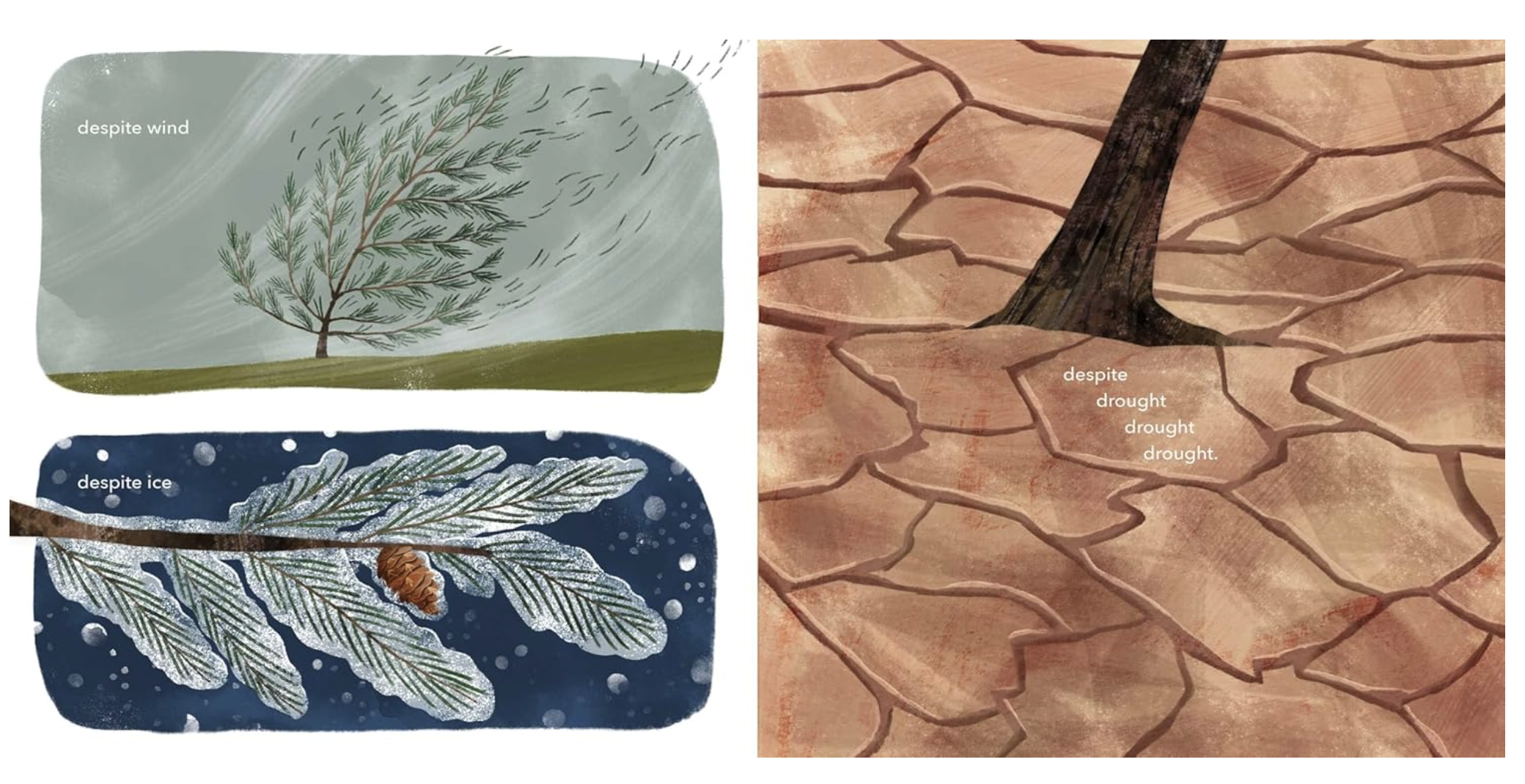
Ah…the language flowed. Rhymes mingled with repetition, questions jumped in creating a refrain like a long lost friend. And wrapped in this gorgeous package was an appreciation of nature and an acknowledgement of the resilience and fragility of this ecosystem along with the introduction of important concepts like drought and decomposition (we had quite a discussion about drought–something we deal with regularly in our Southern California community).

Honoring the value of scars and hardship is a river that runs along the story of the tree. It’s a story of ecology and of acceptance and inclusion. When I finished reading it I told my students I knew I would read it again.

And I did. Later that same day, before we headed into some writing under the influence of acorns, I read the book to my students again. They didn’t complain. They noticed more…and so did I. I’ll be reading this one again…probably even buying my own copy. If you love great non-fiction for children, written with attention to the beauty and purposefulness of language…you’ll love this book. I’ll probably read this book to my students again before the school year ends! It really is that good.

If: NPM25 Day 29

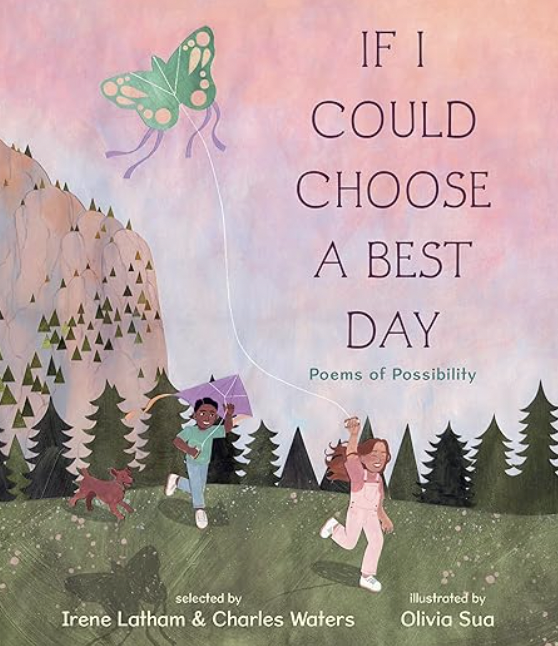
Last week I came across a list of someone’s favorite children’s books of 2025 and was immediately drawn to If I Could Choose a Best Day. It’s a collection of poems that all begin with the word If, edited by Irene Latham and Charles Waters. I do love a great collection of poetry–especially a collection that includes living poets. I’m sure that no one is surprised that I needed to buy yet another poetry book to read to my students.

Before reading the book today, I had asked my students, as part of our morning message, what poem they might write if the poem began with the words If I… Their imaginations went right away to ideas like If I could fly… and If I met a unicorn…

After recess, it was time to read the book. (It had arrived on Saturday and I read through the poems over the weekend). Like Welcome to the Wonder House (that we read last week and I wrote about here), the book is organized into different categories of poems. They include: Everyday Magic, The Power of You, Kinfolk and Companions, and Anything is Possible. I read a variety of poems from each section. My students recognized poets we had read before and they noticed that all the poems began with the word If, but only a few began with If I. There were poems about pencils, poems about bikes, poems about birds, and poems about words. There were poems about friendship, poems about wishes, and poems about peace.

And then it was time for some writing. Under the influence of the possibilities offered by the word If, my students began to craft their own poems. I love when ideas pour rather than trickle. Ideas were flowing, but there was only enough time to hear a few students read an early draft. I’m hoping to have time to go back to these poems tomorrow.

So in the spirit of following the If… Here is my own early draft:

If the ocean were my bedroom

my dreams would be salty and big enough

to hold a blue whale

balancing the earth on a single puff of breath

before diving back into the depths of sleep

If the ocean were my bedroom

I would be lullabied by sea birds

and rocked to sleep by sea stars dancing on tiny tube feet

and wake

to the beauty of biodiversity

and possibility of interconnectedness

lessons learned in watery dreams

waiting to be lived

today

@kd0602

You’ll notice that I have not included a title for my poem. Stefani over at Verselove has reminded us today that titles matter and influence our reading of poems. Any suggestions for this one of mine?

Safe Harbor: NPM25 Day 14

I’ve been reading a memoir called The Salt Path by Raynor Winn–and while I’m not yet halfway through–I’m struck by the way the relationship between the couple sustains them despite the hardships they are experiencing: financial difficulties, the loss of the family home, a devastating medical diagnosis… And yet they decide on the most improbable solution given their circumstances–they decide to undertake a walk of hundreds of miles.

This morning, Padma at Verselove offered a prompt she calls Finding a Safe Harbor and offers as mentor text Safe Spaces, a poem from her novel in verse, Safe Harbor. The poem describes the library as that safe place. As I started thinking about safe spaces, harbor from the hardships of the world, I found myself thinking not of a place, but a person. Here’s my draft:

My Safe Place

When clouds roll in

threatening storms and unsettled air

stirring troubling thoughts

When skies are clear

skin warmed

emotions sailing high above

like a kite on a string

Whether the weather

is calm or turbulent

there is only one place for me

A place of comfort

of support

A place to relax

and be myself

No judgement

no worries

no doubts

It’s my place

our place

nowhere but everywhere

all at once

It’s my safe place

It’s the only place for me

My place is with you

@kd0602

I don’t think we’ll be taking off on a hundreds of miles walk anytime soon, but I do count myself lucky to have a sustaining relationship and a safe harbor…for however long it lasts.

James—A Recommendation: SOL25 Day 19

I’m a reader. I pretty much always have a novel going to read before going to bed.

I just finished reading James by Percival Everett. Knowing it was a Huck Finn story, I wasn’t sure I wanted to read it when it first came out. I remember Tom Sawyer at some point in my life, but I’m not sure I’ve ever read The Adventures of Huckleberry Finn. I feel like I know about the story—through cultural references and other indirect avenues.

Then people started talking about James—exclaiming about the book. It started to win awards and was getting lots of critical acclaim. But it took a recommendation from my son before I committed to reading it. (He said he read it in one sitting!). I started by putting a hold on it on my library app. Because of its popularity it was going to be a several month wait.

Then after Christmas I had a gift card AND Barnes and Noble had their big hardback book sale. So I picked it up along with a couple of other titles and it spent some time teetering in my TBR pile.

I started it last week and the story immediately sucked me in. I could feel the connections to the Huck Finn story—but there was so much more.

Perspective matters. Assumptions don’t tell anyone’s truth. People are complex and multifaceted. I loved the dialogue and dialect and that surprised me.

If you’re looking for a thought-provoking read, pick this one up. I found it to be a pretty quick and compelling read. And I’m still thinking about it.

What are you reading that you would recommend?

Poetry Comics: SOL24 Day 26

Another book review? Is it even allowable to write three slices that double as book reviews?

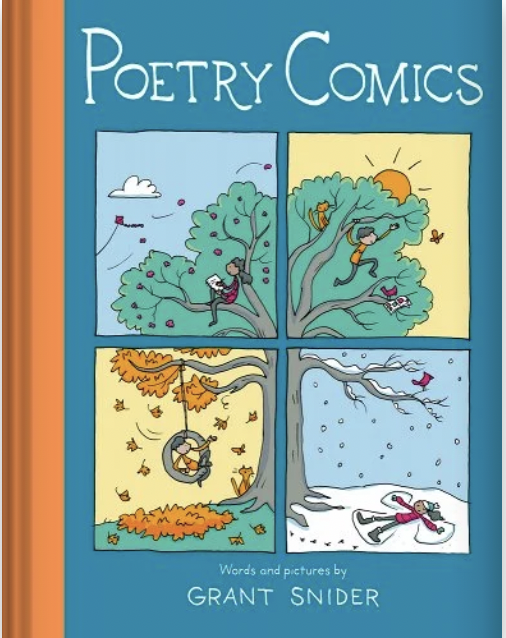
But I simply couldn’t resist. I’ve been following Grant Snider for a while on Instagram/X and I am constantly inspired by his comic writing (for lack of a better term). Somehow he has a knack for simplifying complex ideas into 4 panels or 9 panels where the combination of images and words slices through and hits me right in the heart.

I preordered Poetry Comics, knowing that I needed to have this book not on my Kindle, not from the library, but right in my hands. Ironically, my school librarian got a copy last week and put it in my box a week before my preorder arrived today. I’ve been savoring each page, connecting both as an adult and as a teacher.

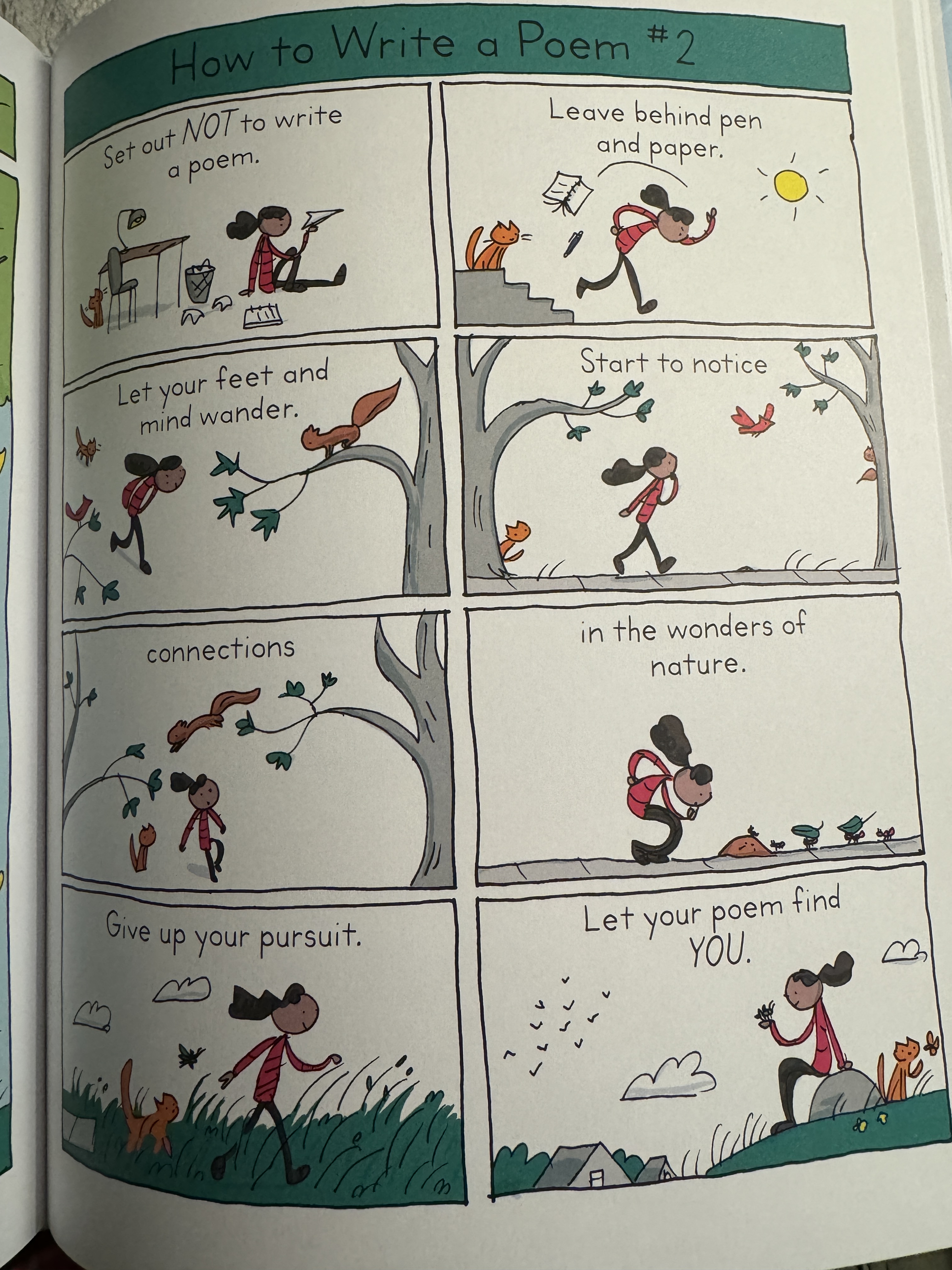
I know I will be having my students study a few of these poems and try their own hand at crafting their own poetry comic. There are so many great choices it’s making it hard for me to choose. Here’s one I am considering.

I can’t wait to see what my students will create as they explore poetry comics! How about you? Will you try to craft a poetry comic as we head into National Poetry Month?

Even if you don’t, I highly recommend Grant Snider’s Poetry Comics. There’s plenty to love in this deceptively simple volume.

The Women: SOL24 Day 24

I’m a reader. Well…maybe not a refined reader. Like many readers, I read to escape, to learn, to experience time and history from others’ points to view. I read lots of junk–often intense mysteries and crime novels–maybe as a counter balance to all of the professional reading I do.

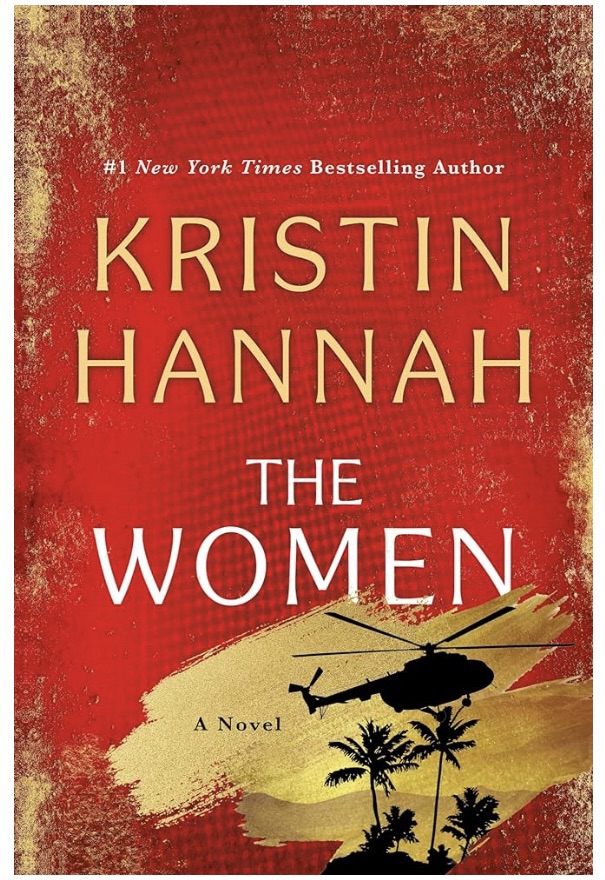
I’ve also read my share of war novels, many set in World War II, and to be honest, lately I’ve been avoiding that particular genre. But when I saw that Kristin Hannah had written a new novel set in the Vietnam war with a focus on women who had served, I was interested. I’m trying not to buy every new book that piques my interest, more out of space consideration than monetary expenditure. So I went onto Libby (the online library reserve system for checking out e-books) and put a hold on The Women. In the meantime I continued reading a variety of novels, finishing one last weekend.

Screenshot

And then earlier this week, my hold came up. I downloaded The Women onto my kindle and started reading it midweek. It felt a little stilted at the beginning–stiff, maybe even cliche, but it was set in San Diego (Coronado to be specific) and who doesn’t love a book that refers to places you know well?

It was when the book took a deep dive into the Vietnam experience of nurses “in country” (meaning in Vietnam) that the book turned for me. The characters became multi-dimensional and I became invested. I enjoyed the focus on a women’s experience and the struggles returning home to a time and place that was rejecting the war and those who served…and also finding, even within veterans’ groups and services, that women’s service was barely acknowledged if it was acknowledged at all.

If you have read Hannah’s other novels, you’ll recognize her style and likely enjoy this one too. I appreciated the research and attention to detail in this book and was clearly invested enough that I spent too much of my day reading today, finishing the book this afternoon.

If you’re looking for a sometime’s emotional read in a historical fiction novel about the Vietnam war, pick up The Women. I was engrossed–makes me think about my dad and all the other Vietnam war vets who returned from service, whether or not they were in actual combat on the ground in Vietnam, to mixed feelings about their worth as soldiers in a war that seemed never-ending. I feel like I’ve still got some thinking to do on this one.

Big…a mini review: SOL24 Day 6

I love picture books. I do have some old favorites, but I am passionate about reading my students newer books, especially those that represent positions and characters that haven’t historically gotten enough attention. In some years I look for stories that help my students see themselves, in other years I look for ways for my students to see beyond themselves.

We have an amazing school librarian who has been making an effort to make sure the teachers know about new books–especially those that represent diverse experiences and address issues of equity and inclusion. Big by Vashti Harrison was a book I had been hearing some buzz about, but I hadn’t yet come across it in person. So when I saw it in the basket of books in the teacher’s lounge, I had to pick it up. As I began to read it, surrounded by my colleagues chatting and eating, I felt drawn into a quiet place. It was just me and the words and images. My breathing slowed, my heart raced, and I could feel tears welling. The careful selection of words and the powerful, beautiful pictures grabbed hold of my heart. I needed to read this book to my first grade students, even though not a single one of them can be described as “big” in these terms. Maybe that’s why this book seemed perfect for them.

My class tends to run on the chatty side. They have a lot to say about everything. As I opened this book and started to read I heard a few comments about the baby, but as I got a few pages in a hush settled over the classroom. I watched students lean in, faces serious. When we got to the pages with no words (a powerful series of images), it was almost as if they were holding their breath. They stayed quiet and seemed to have a communal exhale as the book ended. After a breath or two, they had some things to say. They felt sad for the girl in the story and they were thinking hard about how the words had hurt her.

I read this book for a second time this week (I read it for the first time to students on Monday) because this book has so much to say. Again, my students settled into quiet attention. They paid close attention to the illustrations, noticing the use of color and space…and the ways that words were also part of the illustrations. We talked a bit about my favorite page…the one where the girl has a hand full of their hateful words and says, “These are yours. They hurt me.” as she hands them back to the people who used them.

This book won the Caldecott award and is a Coretta Scott King honor title and I can see why. I highly recommend this book not just for younger children, but for people of all ages. Bias–both implicit and explicit is something we can all learn more about and pay attention to in our daily interactions, especially as educators. And don’t miss the author’s note at the end! Add Big to your TBR pile today!

A Small Book… : SOL22 Day 20

Some days you just need a small book. One that takes only a few minutes to read, but that stays with you once you’ve read it. It might even make you want to pick it up and read it again.

A friend of mine gifted me this book a while ago. I read it then, then put it aside.

Today it found me again. I picked it up and read it again…and then again.

There aren’t many words, but the words there feel significant and the spare inky drawings seem just right.

Here’s a favorite page of mine:

“Do you have a favorite saying?” asked the boy.

“Yes” said the mole.

“What is it?”

“If at first you don’t succeed, have some cake.”

“I see, does it work?”

Every time.”

Some days you just need to have some cake. And maybe read this book, The Boy, the Mole, the Fox and the Horse by Charlie Mackesy, who says in the introduction, “This book is for everyone, whether you are 80 or 8–I feel like I’m both sometimes.”

If you need a lift…try this book, there are many more gems inside. Maybe I’ll read it to my class this week.

Mini Book Review: SOL22 Day 8

I’ve been reading quite a bit lately…so this must be the perfect time for a mini book review!

I recently finished Daniel Pink’s new book, The Power of Regret: How Looking Backward Moves Us Forward. As someone who is a huge proponent of reflection–for students, for teachers, and humans of any kind, Pink’s conclusions didn’t surprise me.

Without giving away anything, here’s a few highlights:

There are benefits of regret–improving decisions, boosting performance, and deepening meaning. If feeling is for thinking, and thinking is for doing, then feeling can help us think…and then take action.

There are 4 general categories of regret: Foundation regrets (decisions that have to do with stability), Boldness regrets (chances you didn’t take in life), Moral regrets (choices that compromise our beliefs or when we behave poorly), and Connection regrets (relationships with people). These categories can blur and overlap, but Pink argues that regrets fall into these 4 general categories.

I loved the opening to chapter 11 where there is a comparison between regret and photography. (The old-fashioned version of photography where film and negatives are in play.) Pink talks about how on a film negative, the light spots appear dark and the dark spots light. He then goes on to say, “The four core regrets operate as a photographic negative of a good life. If we know what people regret the most, we can reverse that image to reveal what they value the most. (p.149)

There are strategies for using regret to move forward positively. One metaphor I enjoyed was the description of self-distancing which, “…changes your role from scuba diver to oceanographer, from swimming in the murky depths of regret to piloting above the water to examine its shape and shoreline.” (p.178)

And Pink connects regret to storytelling. He says, “Open the hood of regret, and you’ll see that the engine powering it is storytelling. Our very ability to experience regret depends on our imagination’s capacity to travel backward in time, rewrite events, and fashion a happier ending than in the original draft. Our capacity to respond to regret, to mobilize it for good, depends on our narrative skills–disclosing the tale, analyzing its components, and crafting and recrafting the next chapter.” (p.208)

While the book is not earth shattering in its revelations, it is interesting and reads in a pretty typical Daniel Pink way. I personally like the connections to the power of reflection–and the way it refutes the idea of a “no regrets” approach to life.

What are you reading? I’d love to hear your recommendations!

Paint Chips and #USvsHate: NPM 2019 Day 22

I finally got the chance to break out the Paint Chip Poetry with my students–and they loved it! I shared a few of my attempts, explaining how the poems don’t have to be about color…they could use the paint chip words with whatever topic they wanted.

img_0562

And because there is an #USvsHate deadline for student anti-hate messaging on Friday, I encouraged students to write anti-hate poetry.

I wish I had taken a photo of the paint chips upside down on the back table where students were invited to choose 3 or 4 at random.  Some cheated a bit–giving back chips that they didn’t understand or didn’t like.  And some “borrowed” paint chip words that they saw and liked…from one of my poems or something they saw as I showed the huge variety they would have to choose from.

Some of the poems were simple…but oh, so interesting.  Aspen pulled “Sahara” as one of the paint chips and wrote this:

As I moonwalk

in the Sahara desert

I look up and see

the magical blue moon

and then look ahead at the

endless dunes

Luca (who broke his arm over the weekend and had to write wrong-handed today) wrote about the Earth on Earth Day.

Earth

It’s the neighbor

to the red planet

but unlike Mars

with its radical red

our world has a verdant green

and heavenly blue

with white clouds

like a blank canvas.

And Hudson, often reluctant to commit words to a page, wrote this piece in about 2 minutes! Clearly paint chips inspired him!

As I cross

those pearly gates

and cross the antique brass

I boarded that old ship

and expected smooth sailing

But soon a blizzard

created an iceberg

and before you know it

a big chunk of ice

sank that old ship that they called

the Titanic

And a couple anti-hate poems.  It was fun to see both the paint chip influence AND the influence of some of our class read-alouds.  We recently finished reading Save Me a Seat about a 5th grader who had recently immigrated from India to a school in New Jersey.  He found himself the victim of a charismatic, mean bully–making fun of him and treating him badly–to the point that he wanted to quit school.  The characters learn a lot about themselves…including the power of reflecting on their own actions.  I see evidence of this book in Elli’s poem:

Her name is Sunset

people think its weird

but I don’t get it

As she watches the bird making a nest

someone out of nowhere said

I hate you and hate the birds

As your wisdom tooth is growing

and the fire is blowing

hate shouldn’t be a thing

but kindness should always be a part of our life

the kindness of our joy

will bring us love

bad names like curryhead or bom bom butt

say who cares because that’s junk

things that do matter

are happily happy things

hate or no hate?

And Henry is thinking about how to make a difference through his poem.

US vs Hate

In a garden bed

with four leaf clovers

A boy makes good luck

turn into real life.

His wish was for everyone

to feel like they’re special.

A tiny change

makes a big change

A tiny change

makes everyone change.

For my poem I pulled four chips: wonderful wisteria, smoke signal, black tie, and lily of the valley.

img_0565

Sending Signals

Watch out for words

thoughts’ smoke signals

have fire to burn

causing damage beneath the skin

Don’t let a disguise

of suit and black tie

mask the danger,

excuse the vitriol

Listen carefully to your own words too

smell them

consider how they will affect others

Are you spreading wonderful wisteria,

lily of the valley

or the stink of malice

and stereotype?

©Douillard