Tag Archives: ecosystem

One Day This Tree Will Fall: A mini #writeout book review

I love children’s picture books. I might even fancy myself a connoisseur of sorts. I have old favorites, but I am always on the look out for new titles. Apparently I have a “type” when it comes to books. Our school librarian can pick a book for me…and most of the time, it is a perfect book for me.

One Day This Tree Will Fall by Leslie Barnard Booth appeared in my book bag a week or so ago…and before I even opened the cover, I was pretty sure it was a book for me. When I opened it and read through it, I nodded to myself. Yes, I’ll be reading this to my students, I said to myself. But of course, the true test is reading it aloud to kids.
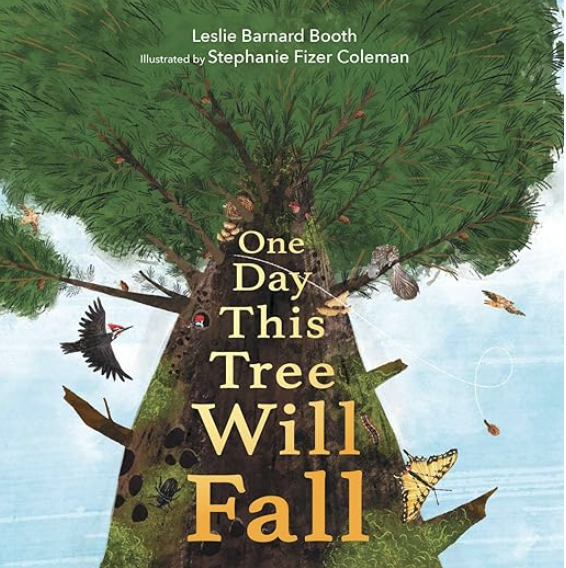
Ah…the language flowed. Rhymes mingled with repetition, questions jumped in creating a refrain like a long lost friend. And wrapped in this gorgeous package was an appreciation of nature and an acknowledgement of the resilience and fragility of this ecosystem along with the introduction of important concepts like drought and decomposition (we had quite a discussion about drought–something we deal with regularly in our Southern California community).
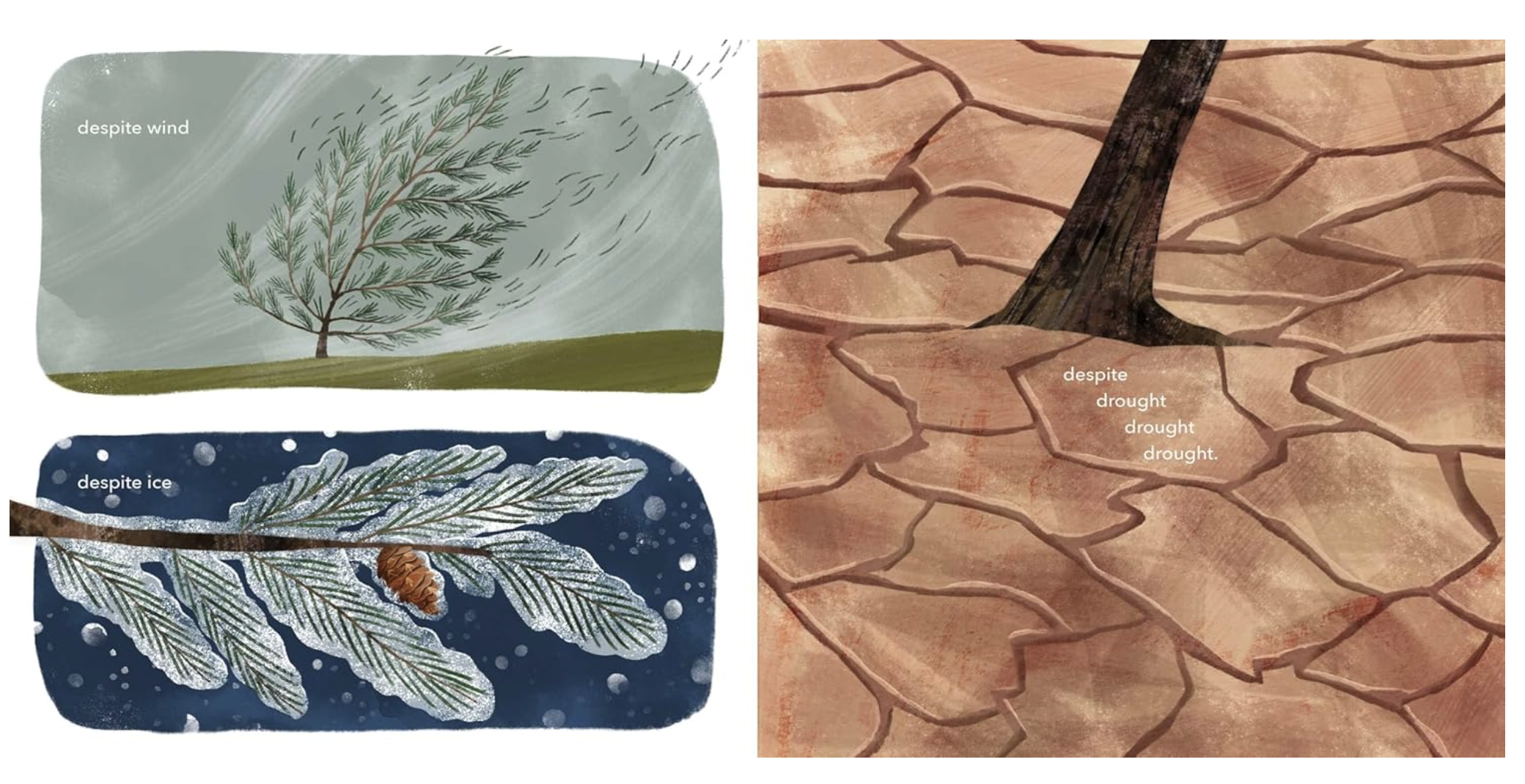
Honoring the value of scars and hardship is a river that runs along the story of the tree. It’s a story of ecology and of acceptance and inclusion. When I finished reading it I told my students I knew I would read it again.

And I did. Later that same day, before we headed into some writing under the influence of acorns, I read the book to my students again. They didn’t complain. They noticed more…and so did I. I’ll be reading this one again…probably even buying my own copy. If you love great non-fiction for children, written with attention to the beauty and purposefulness of language…you’ll love this book. I’ll probably read this book to my students again before the school year ends! It really is that good.
Poetry Ecosystem: NPM25 Day 8

Some days it’s the unplanned lessons that have the best results. A few weeks back I came across a picture book that looked interesting. I ordered it, it arrived, and I set it aside. Then yesterday, our first day back after spring break, I found myself with some unclaimed time and reading a book seemed like the perfect solution.

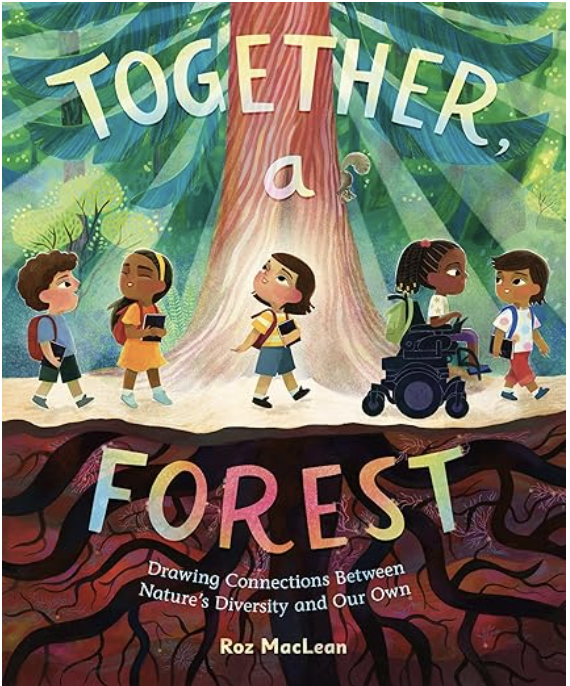
I walked over to the shelf where I stash the books I haven’t gotten to yet…and Together, a Forest: Drawing Connections Between Nature’s Diversity and Our Own called out to me. I started reading the book and those wiggling post-lunch students settled. We learned about different students in the book and their affinity to plants and animals in the forest. There was the student who was interested in everything–and forgetful–just like the squirrel who buried acorns and the ones it forgot later grew into trees.

We started to think about the plants and animals who were like us…and while we didn’t have enough time to finish the book, the seed was planted in the poetry ecosystem that is our classroom.

Today our planned ceramics project went well and we finished successfully before recess. That meant the time I had allowed for the completion of the project after recess was now open and free. So, we went back to Together, a Forest and completed the reading and discussion. And then we started thinking about that question from yesterday…what plant or animal are you like?

The first graders grabbed their notebooks and started to write. They asked the usual questions, “Does it have to be a plant?” (No) “Does it have to be a part of a forest?” (No) “Can I use metaphorical thinking?” (Yes). I wrote–and I made the rounds around the classroom peeking over shoulders, listening to ideas, watching these comparisons turn into small poems, taking root in this poetry ecosystem.

J wrote:

I am an army ant. My super power is strength and I work with people. I eat fruit and I get it at the store then bring it home. My strength is teamwork.

H wrote:

I am an octopus. I am smart. I act like I have eight hands and I am super fast and tricky and change colors.

B wrote:

I am moss. I am like moss because I soak up everything I hear. I remember everything and if it is something bad I can squeeze it out.

And I wrote:

I am an egret. I am quiet and still. Patience is my super power. Most of the time I am good at waiting and thinking. Other times I startle and fly off in a flurry of feathers. I am good at being alone without being lonely. I love to reconnect with my family at the end of the day.

These first drafts will be fodder for the writing we will continue to do, this month and into the future. Right now, my students are writing easily, adding details and elaboration, beginning to play around with language and ideas…and willing and eager to read their writing aloud to their classmates. We have truly built an ecosystem of poetry and writing in our classroom.

Birds on a Wire: Connections and Interconnections

I often ask my students to make connections.  Connections between books we read.  Connections between things that happen at school and at home.  Connections between our math lessons and our social studies lessons.  And I find myself constantly making connections.

A couple of weeks ago our garden teacher introduced the word interconnected along with the word ecosystem.  His emphasis was that the garden is an ecosystem where the plants and animals…all the living things are interconnected.  When something happens to one, there is an impact on the others.

This morning in the New York Times Magazine I read an article about emotional intelligence and its impact on student learning and success.  While the article debated methods of providing instruction in emotional intelligence, it had me thinking about the microcosm of the classroom and other communities of practice in my life.  Our actions and attitudes impact those around us–whether we intend it or not.

When I arrived at the beach this afternoon for a short walk, I noticed a whole line of birds on a power wire.  I felt compelled to capture this image with my camera–even knowing that my iPhone is not the best tool for capturing images at a distance.  I walked as close as I could get and snapped the birds from a few different angles.

birds on a wire

In some ways these birds remind me of the idea of interconnections. Some fly into an open space on the wire, others fly off.  They are all sharing the same space, with the movement of one impacting all the birds in some way.

Like the birds on the wire, each student in the classroom has an impact on the others.  We are both interconnected and interdependent.  As a result, as teachers it is important to consider students’ emotional well-being and help them learn to handle conflict, stress, frustration, and disappointment.  These skills are not in our Common Core Standards and are not tested on annual standardized testing measures.  But they matter…to all of us.

I don’t have convincing data-based evidence that attention to students’ emotional needs will result in successful, well-adjusted adults–but I know it can’t hurt.  Students who learn to build consensus in group work can carry that skill beyond the classroom.  When conflicts can be resolved with words and compromise rather than fists and tears, we all benefit.  Students who have strategies and tools to manage difficult situations will be better equipped to deal with the obstacles that life deals them.

In the garden, in my classroom…and on the wire, interconnectedness means our actions and decisions impact those around us.  And in our increasingly connected global society, we are all birds on a wire.

What do you do to support your own emotional well-being?  How do you help build the interpersonal skills of the young people in your life?