I went to an animated movie yesterday, with no children in tow. On purpose. And I enjoyed it.
I’d seen the trailer. Gotten good reviews from one son and grandson. Read a review from an environmental blogger about it. It was enough to push me to get up early on a Saturday and make my way to movie theater. With popcorn in hand (is it ever too early for popcorn?), we sat with 2 other movie goers and watched.
I was drawn to the movie because of its environmental plot. I love that the opening scene was a young student rescuing class pets from captivity, because she clearly and completely loved animals. And I love that the solution to the trouble she kept getting into at school was spending time in nature with her grandmother.
For some years now I’ve worked to make attention to the environment and cultivating students’ love and understanding of it “ordinary” in the classroom. I want students to make lifestyle choices with the environment in mind. Luckily I teach at a school with a wonderful garden (that includes 40 minutes of time with a garden teacher each week), a pretty strong recycling ethic, and a system for children to compost their food waste. My students also go to school across the street from the ocean, so access to the wonders of our planet is right in front of them.
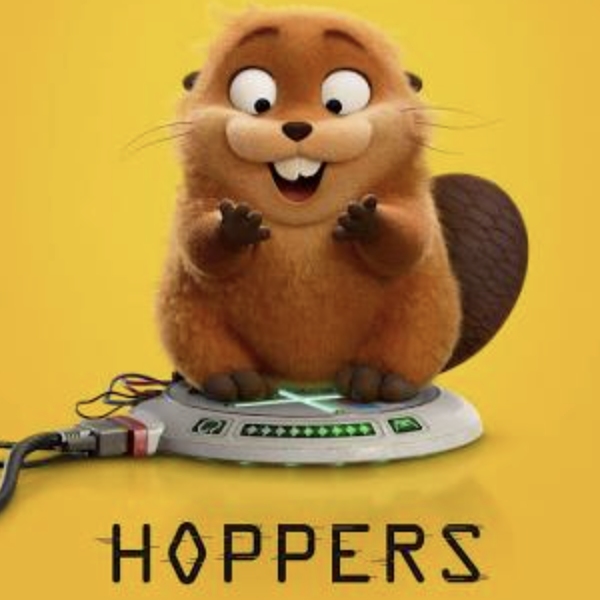
Back to Hoppers. The story includes a short-sighted politician who uses some underhanded, certainly unethical, practices to convince the public to go along with his plans. And the local university has a teacher/scientist using “cutting edge” technology to better understand local wildlife.
If you’re interested in a positive environmental message in a cute movie, you’ll enjoy Hoppers. There’s a couple of scary parts if your children are very young…and honestly, you don’t need kids to enjoy the movie. I can feel a bit of influence from Wild Robot in this story–and love when animals and humans are able to communicate effectively.
If you get a chance to check it out, let me know what you think.
I’m gulping in the beach walks this week, taking advantage of the warm weather and the low tides and attempting to counter balance the intensity of parent-conference week.
Shore birds are regular beach goers too. From the most common seagulls, those pesky scavengers who make a practice of poking their beaks into any beach bags left unattended and then chasing one another around, squawking to high volume, trying to abscond with the treasure, to infrequent sightings of great blue herons, tall and stately cousins to the snowy egrets that I delight in photographing.
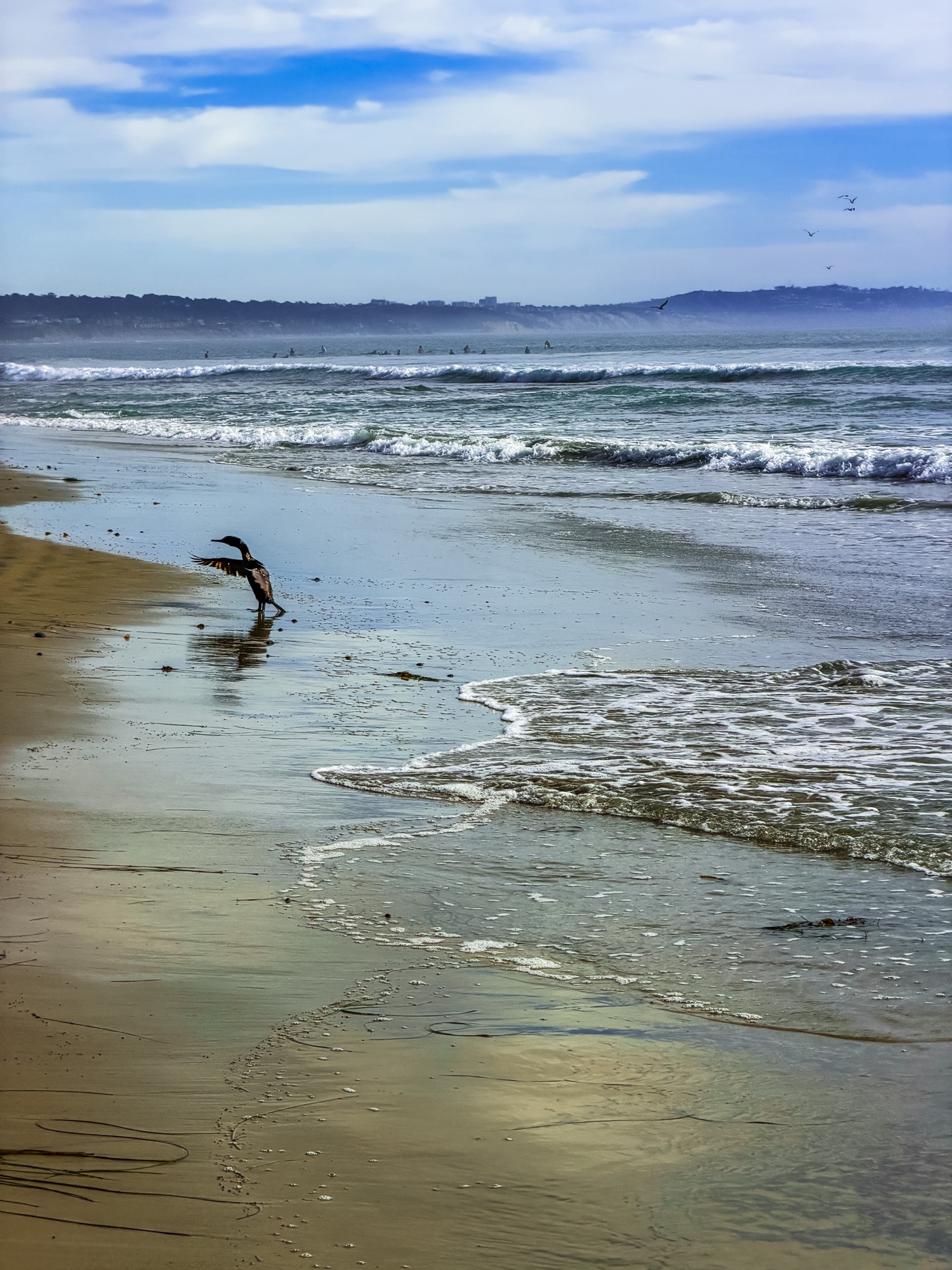
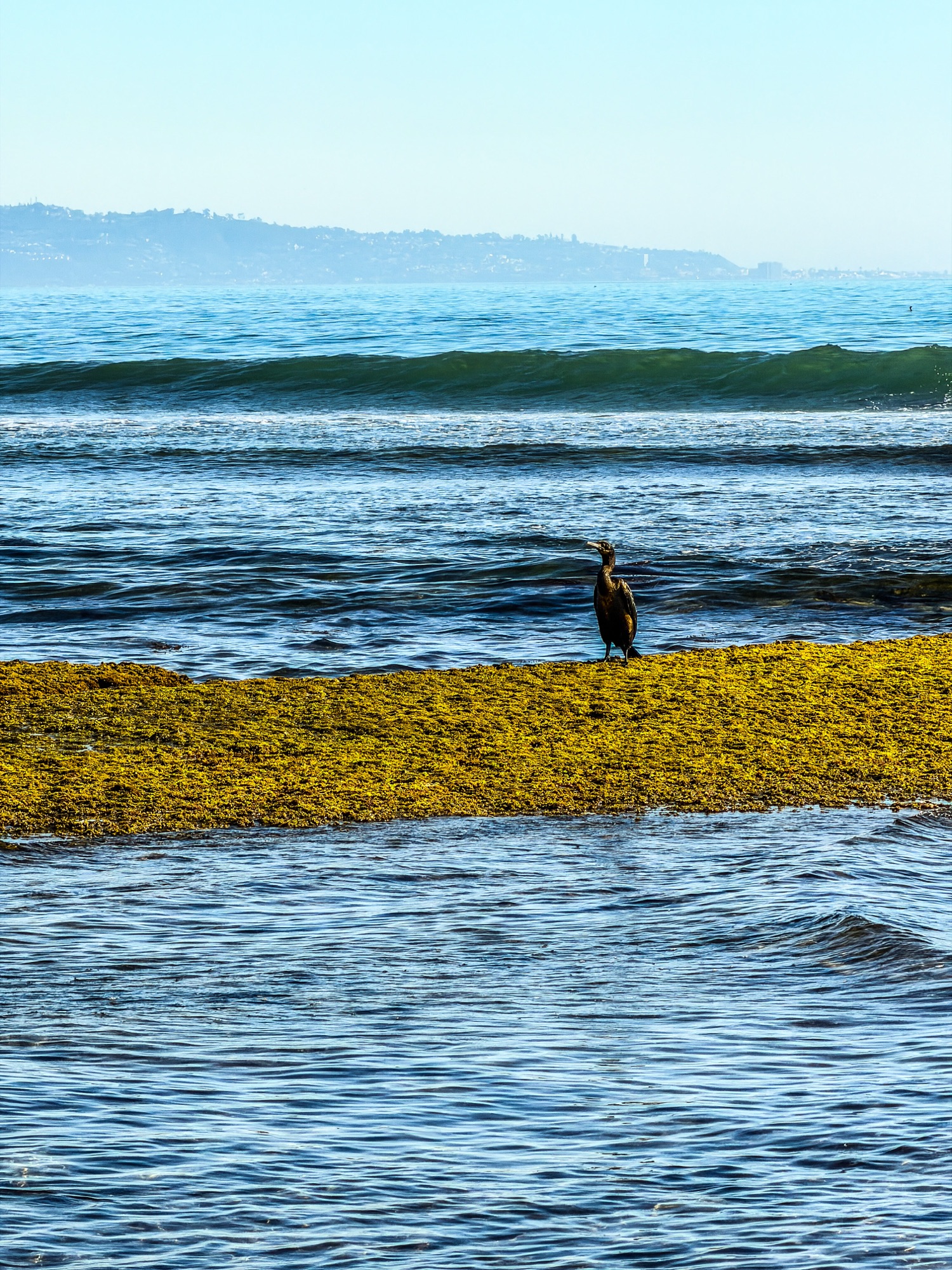
In the last few days it has been cormorants that I keep seeing on the beach. I don’t think they are technically shore birds, I more commonly see them flying over the beach or sunning themselves on piers or in lagoons. They are described as strong swimmers and they have these big, awkward webbed feet that are definitely not ideal for walks on the beach!
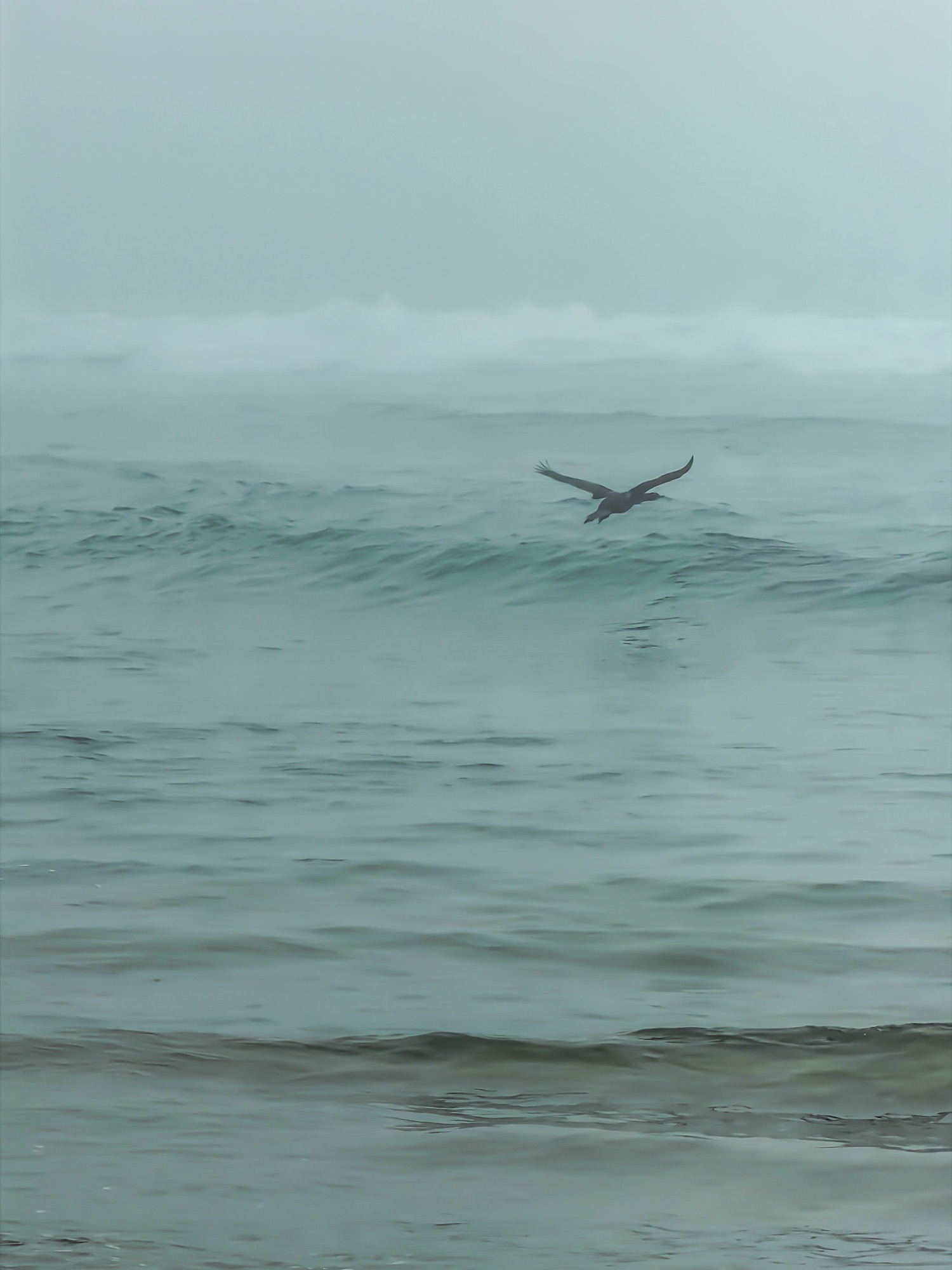
I even spied one flying in the fog on Monday. They have a distinctive flying style, flapping their wings much more quickly than other birds. It makes them seem like they are in a big hurry and trying to catch up.
I find myself wondering if these cormorant sighting are related to the weird weather, the high heat, the lack of winter… Are they confused, lost, having trouble finding their usual food?
Clearly I have some research to do! But for now, I will enjoy watching these distinctive birds and appreciating their unique characteristics. And I can never take enough photos!
Yesterday I wrote about my moist and cool foggy walk on the beach, today was like whiplash. Clear and twenty degrees warmer meant the beach felt like summer. At almost 7pm it is still in the low 80s! (Thinking of all my friends not on the west coast who are dealing with storms and cold temperatures!). None of this is normal or expected. While spring breakers are loving it, I’m not convinced this is a good thing.
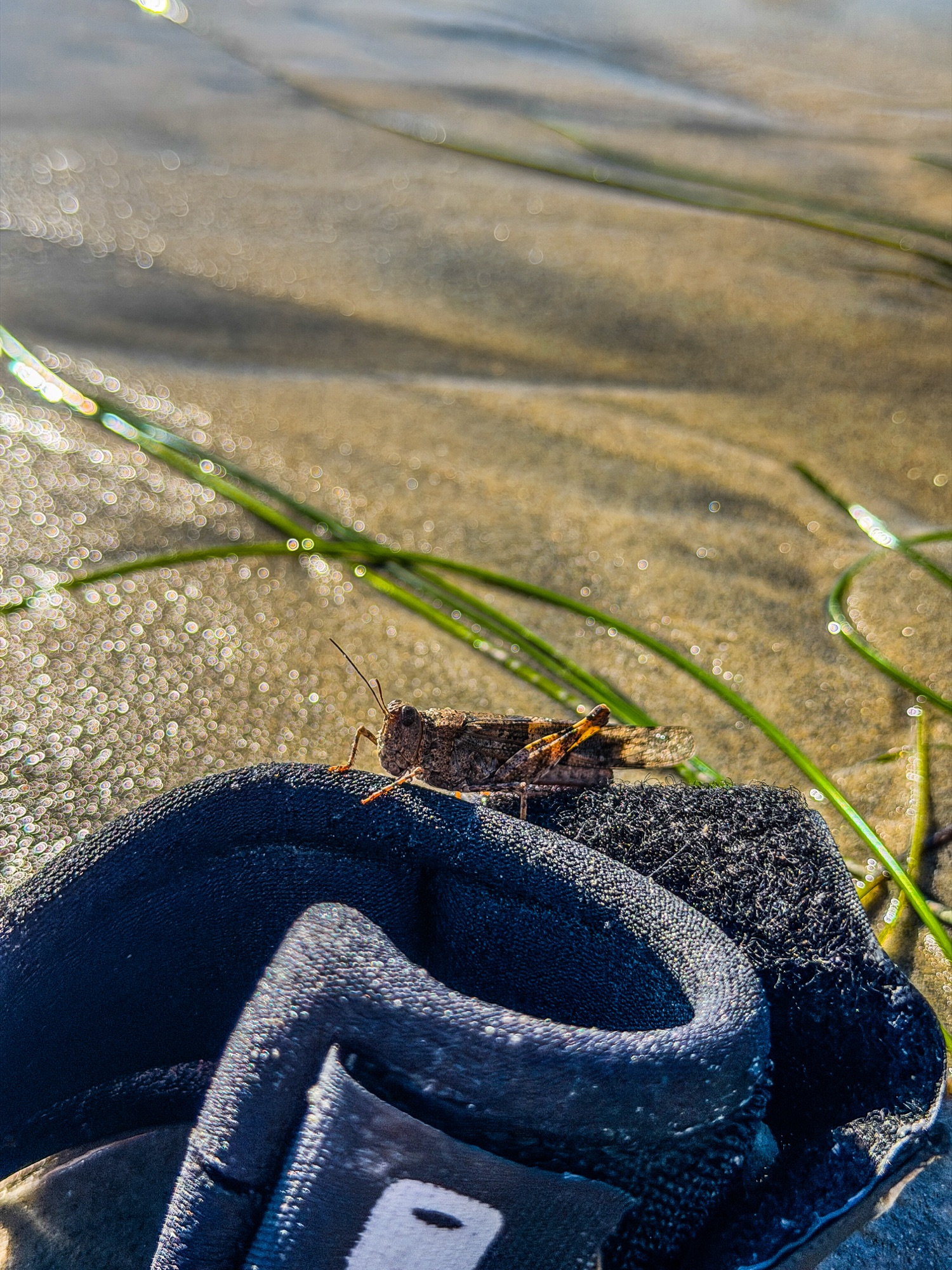
As we meandered along the shore I noticed a grasshopper perched on an abandoned piece of surfboard leash. What? Grasshoppers are not usual beach inhabitants. I leaned in close, trying to get a grasshopper portrait without making it leap away. I wanted to get close enough to see details and not capture that blur that happens when the focus and distance don’t line up. After a few tries, I got this unexpected shot.
I was feeling a bit uncertain about how this St. Patrick’s Day would go, especially when my students greeted me this morning with tales of leprechaun escapades that happened in their homes overnight. Glitter in the toilet, messes in the kitchen–and kids so excited they could barely contain themselves. But somehow, all that excitement channeled into a pretty calm classroom–that was unexpected (and felt like a St. Patrick’s Day gift).
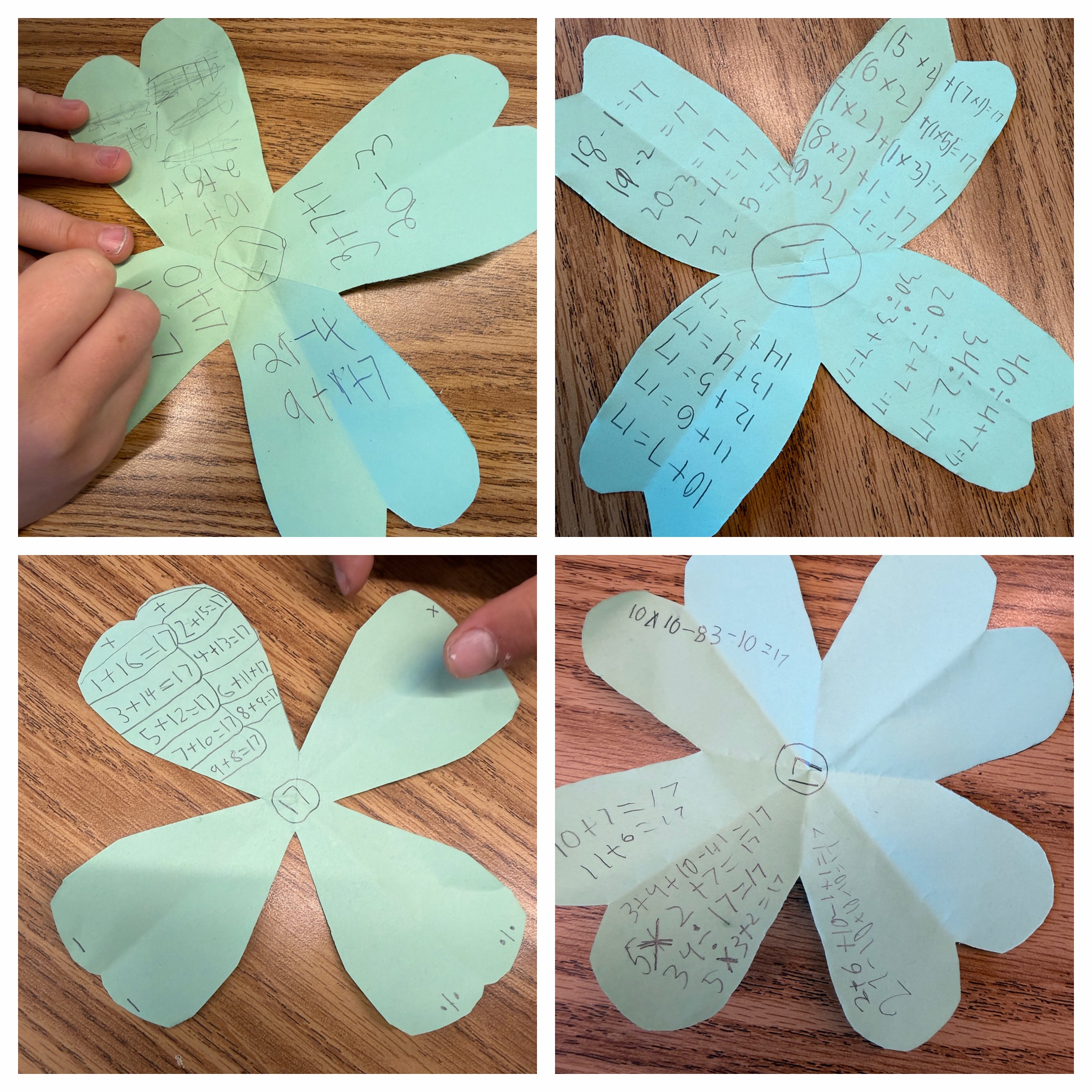
We did some folding and cutting to create some lucky 4-leaf clovers–after we talked about their magical qualities (many of the first graders said they had experienced finding these rare and magical items). Most students were successful right away, and those who weren’t got theirs to come out whole on their second attempt. Then we turned them into some fun math. They wrote the number 17 in the middle (after all, it is March 17th) and then wrote math problems that equaled 17. Another unexpectedly fun and successful activity.
I like when the unexpected makes my day easier and more interesting. I also like paying attention to what is unexpected and why I identify it that way. Is it too much to wish for the rest of the week to be as pleasingly unexpected?
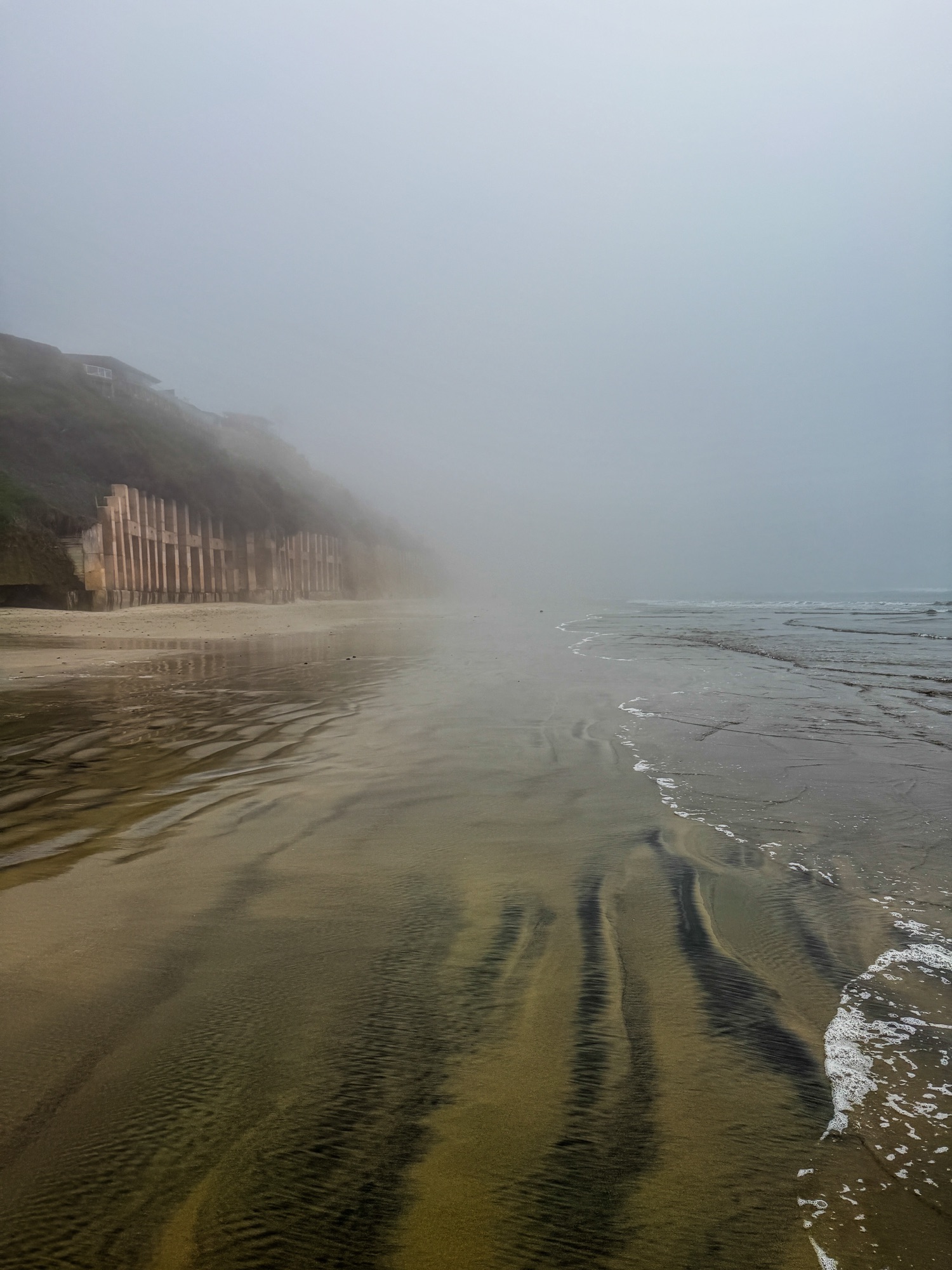
I should have known–my student meteorologist this morning posted foggy and cool (while the sun was shining) in spite of the protests of his classmates. With a heat advisory posted on the weather app, everyone was expecting hot and sunny with record March temperatures, not a thick marine layer. But sure enough, by about 11:30 this morning, that pesky blanket of gray was wafting onto the playground. By the time I left school after 3, the coast was pretty much socked in the fog.
But the tides are low this week during my walking time, and walking on the beach is always better than walking around the neighborhood, so I pulled on my sweatshirt and headed into those very low clouds.
Dense fog is a lot like walking into a tunnel. Peripheral vision is limited, you can only see what is immediately before you. I found myself trusting the muscle memory of my feet and legs rather than depending on landmarks to find my way. In some ways it made distance fade away as I was forced to stay in the present rather than anticipate what lay ahead. Before I knew it miles passed.
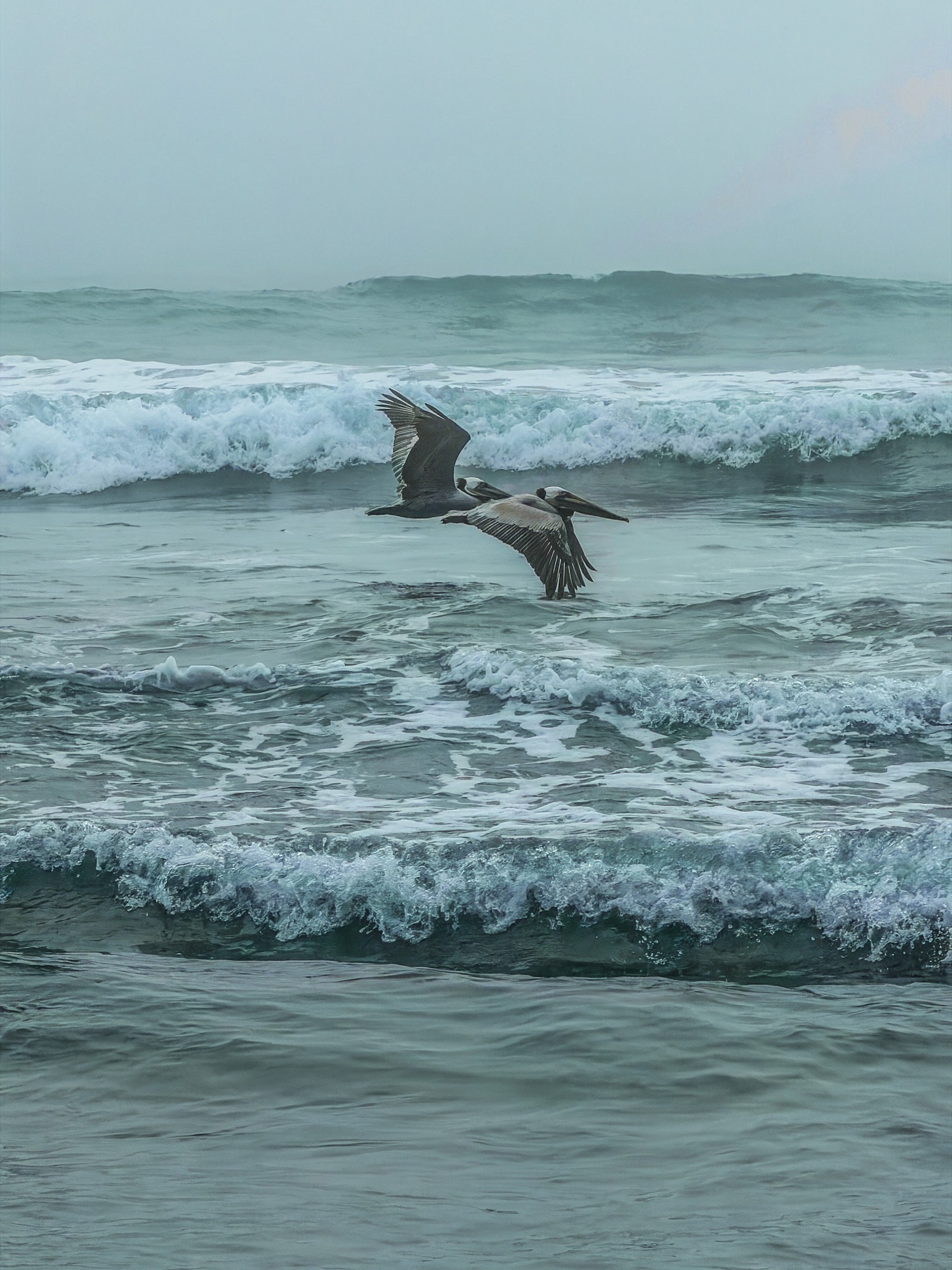
Along the way back I noticed pelicans. Often they fly overhead, dipping and diving, surfing the waves. But today they were hanging out near the shore…just floating in the shallows. Sometimes lifting into flight just as I pulled my phone from my pocket to take a photo. Were they also experiencing the tunnel effect? Seeing the ocean differently through the thick gray damp of fog?
I enjoyed my tunnel view this afternoon, staying present and available to the shrouded beauty right in front of me. I soaked in the cool damp air, breathing in the sea and exhaling the worries about the world as my feet were treated to nature’s spa treatment–a cool salt water rinse. A perfect way to end my work day.
Yesterday the time change didn’t seem to have any impact on me. Today, however, it is playing havoc with my internal clock. A meeting went late, I had emails to write before I left school, and I arrived home still needing my walk. Luckily, the time change meant the walk was lovely, still bright and sunny out rather than in the shadowy dusk.
All that pushed dinner late, along with a fun phone call with my son and grandsons. It feels like it’s 6pm, but the clock is telling me something different. Will I get all my “stuff” done and still get to bed at a reasonable hour so that tomorrow will allow me to be well-rested and at my best?
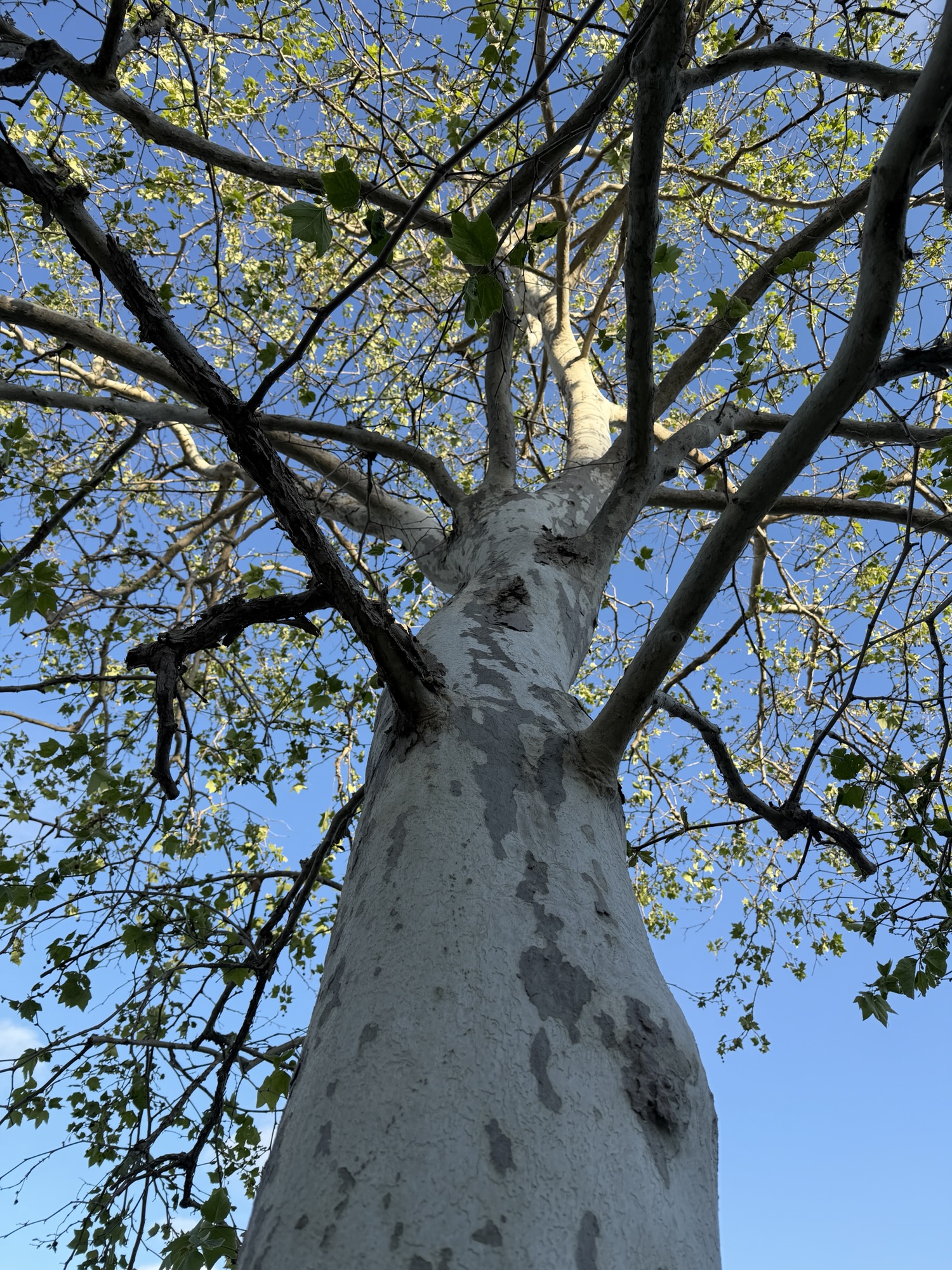
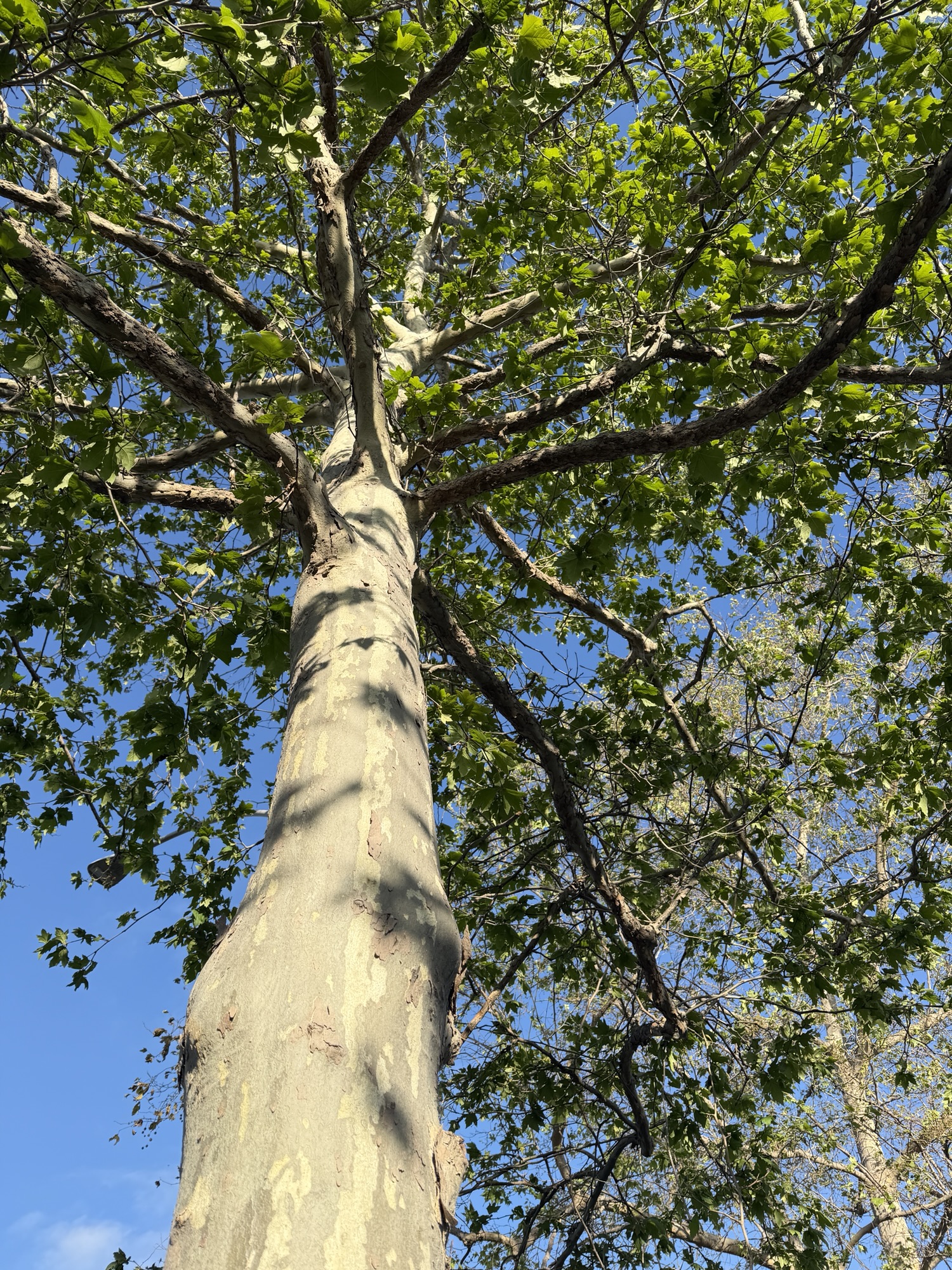
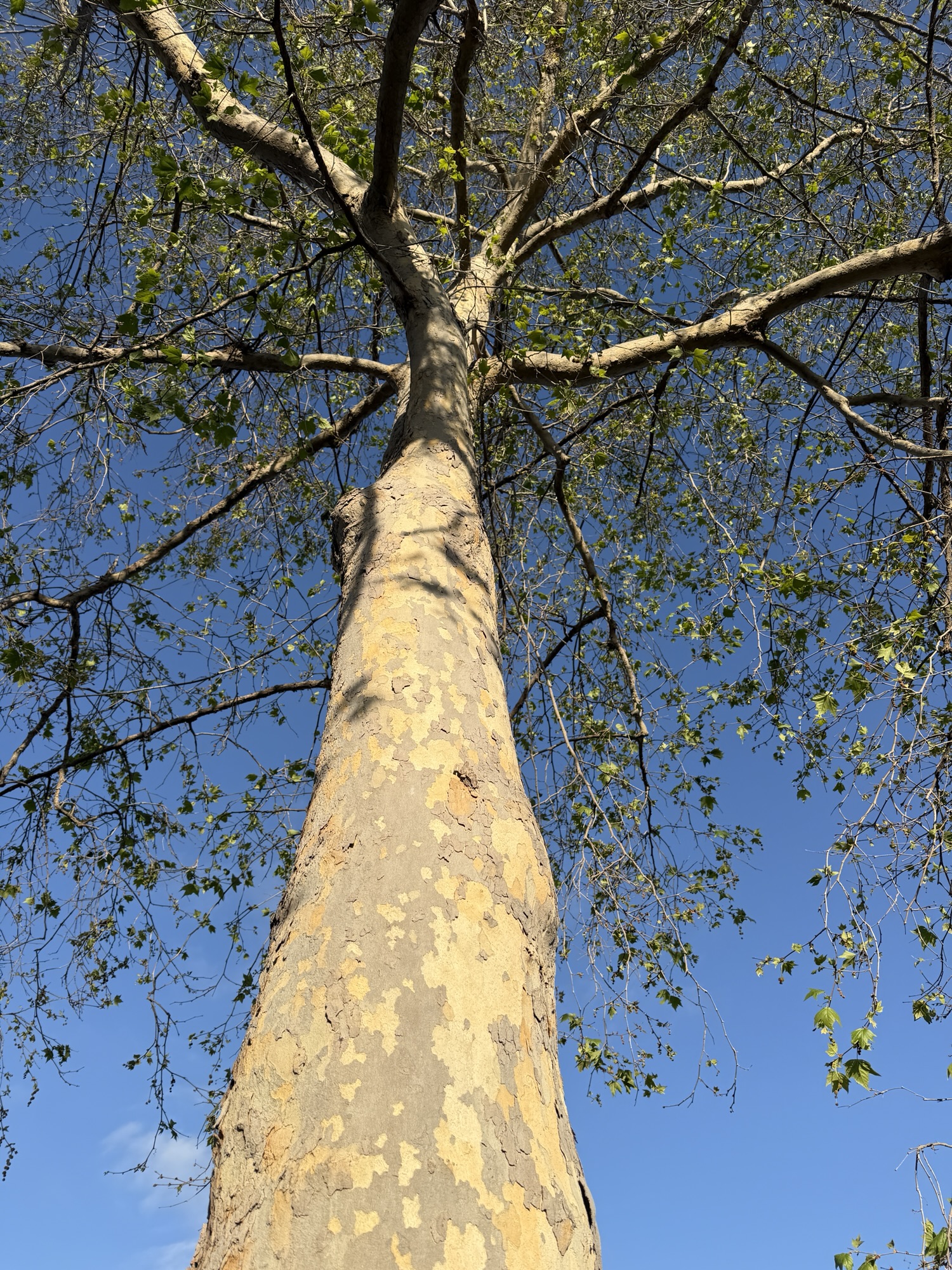
I don’t know if that will work out. But back to that walk…it is wonderful taking a sunlit walk in the evening. I was drawn to the trees (probably related to some tree study I did with students today–more about that later). And they were showing off their new spring finery…and we’re still over a week away from the official start of spring.
So, while my body tries to adjust to clocks, I will enjoy the trees. I hope you do too.
I love children’s picture books. I might even fancy myself a connoisseur of sorts. I have old favorites, but I am always on the look out for new titles. Apparently I have a “type” when it comes to books. Our school librarian can pick a book for me…and most of the time, it is a perfect book for me.
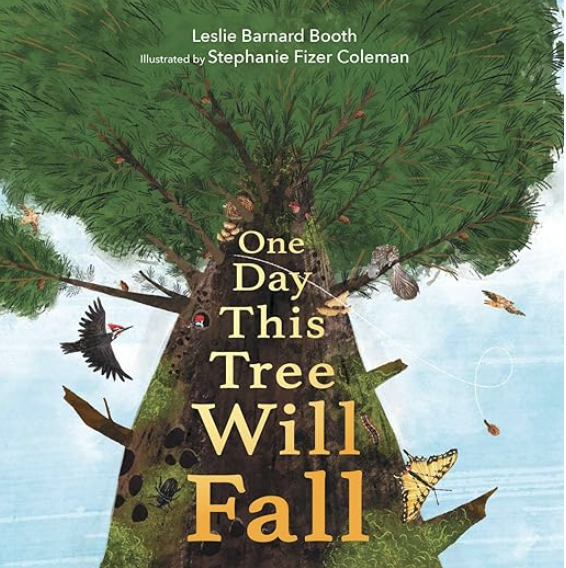
One Day This Tree Will Fall by Leslie Barnard Booth appeared in my book bag a week or so ago…and before I even opened the cover, I was pretty sure it was a book for me. When I opened it and read through it, I nodded to myself. Yes, I’ll be reading this to my students, I said to myself. But of course, the true test is reading it aloud to kids.
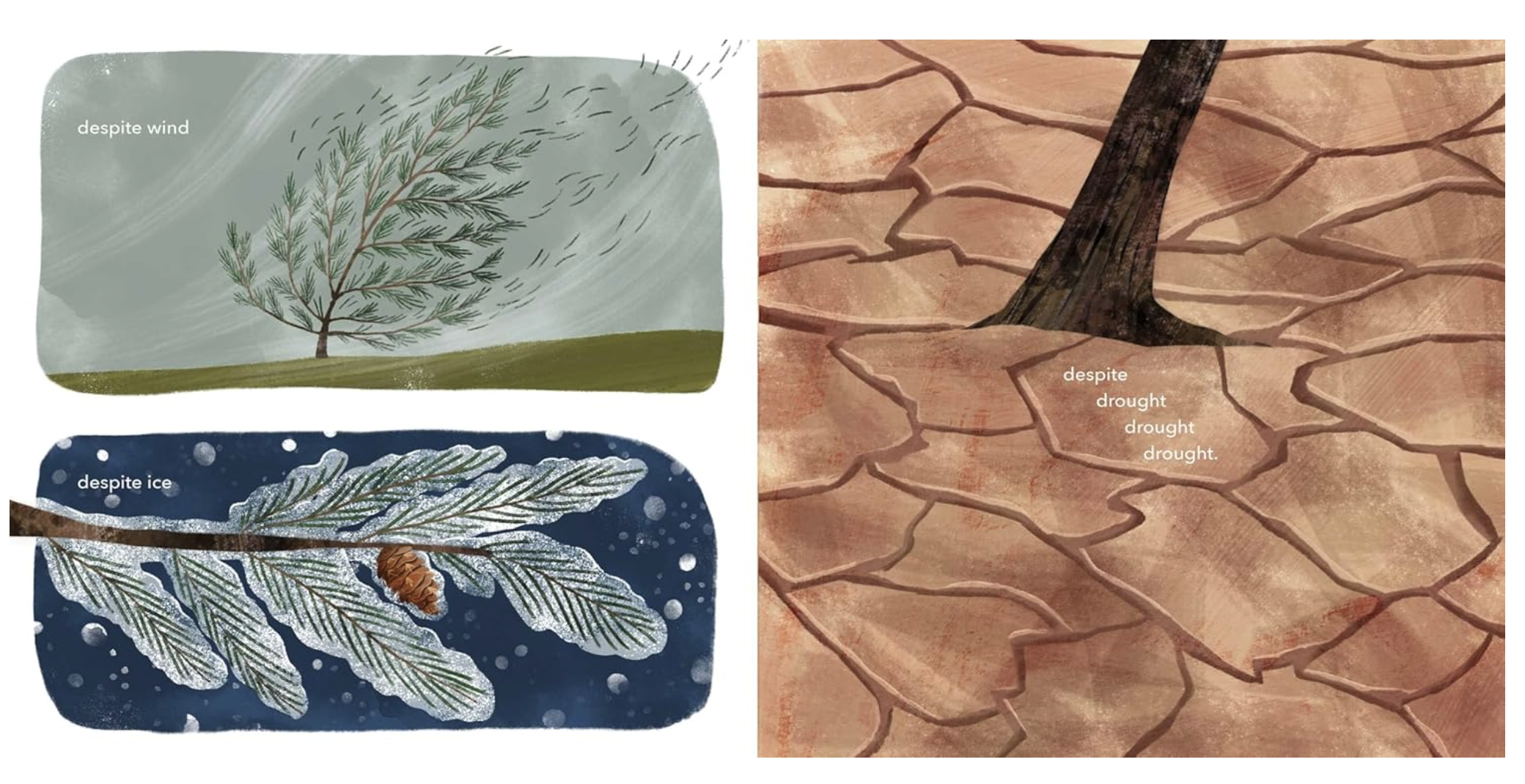
Ah…the language flowed. Rhymes mingled with repetition, questions jumped in creating a refrain like a long lost friend. And wrapped in this gorgeous package was an appreciation of nature and an acknowledgement of the resilience and fragility of this ecosystem along with the introduction of important concepts like drought and decomposition (we had quite a discussion about drought–something we deal with regularly in our Southern California community).
Honoring the value of scars and hardship is a river that runs along the story of the tree. It’s a story of ecology and of acceptance and inclusion. When I finished reading it I told my students I knew I would read it again.
And I did. Later that same day, before we headed into some writing under the influence of acorns, I read the book to my students again. They didn’t complain. They noticed more…and so did I. I’ll be reading this one again…probably even buying my own copy. If you love great non-fiction for children, written with attention to the beauty and purposefulness of language…you’ll love this book. I’ll probably read this book to my students again before the school year ends! It really is that good.
In my first grade classroom, we started #writeout way back in August. Our school garden is a perfect place for observation and writing. By the second week of school we were out in the garden with our clipboards looking closely, sketching carefully, and adding captions as well as considering what the object they were examining (a passion fruit, a ladybug, a yellow cherry tomato) reminded them of. (I start planting that seed of figurative language very early in the school year!). We continue to venture outside, at least monthly, with our sketchbooks in hand, sometimes on a color walk, sometimes in search of questions… You can check out a variety of past explorations through this year’s #WriteOut choice board. Let’s Take a Wonder Walk is my offering.
While sharing information about #WriteOut at a recent San Diego Area Writing Project conference, I overheard someone mention the book, Through Georgia’s Eyes, which reminded me of the powerful connection of Georgia O’Keeffe’s art and close observation in nature. I returned to my classroom, pulled that old favorite picture book out along with another Georgia O’Keeffe picture book, Georgia’s Bones and created a plan for introducing my students to this incredible artist, encouraging close observation, carefully enlarged sketching, and descriptive writing.
We’d been on a Wonder Walk the previous week, using nature collectors to pay attention to small natural items around our schoolyard. Students picked one and sketched it. They were small drawings, nicely done, and the perfect prelude to this introduction to Georgia O’Keeffe and her attention to detail. Knowing I had a bin of seashells stashed in a cabinet in my classroom, I pulled them out and picked out a selection of some of the most interesting–enough that every student would have variety to choose from and varied enough that the shells were mostly different from one another.
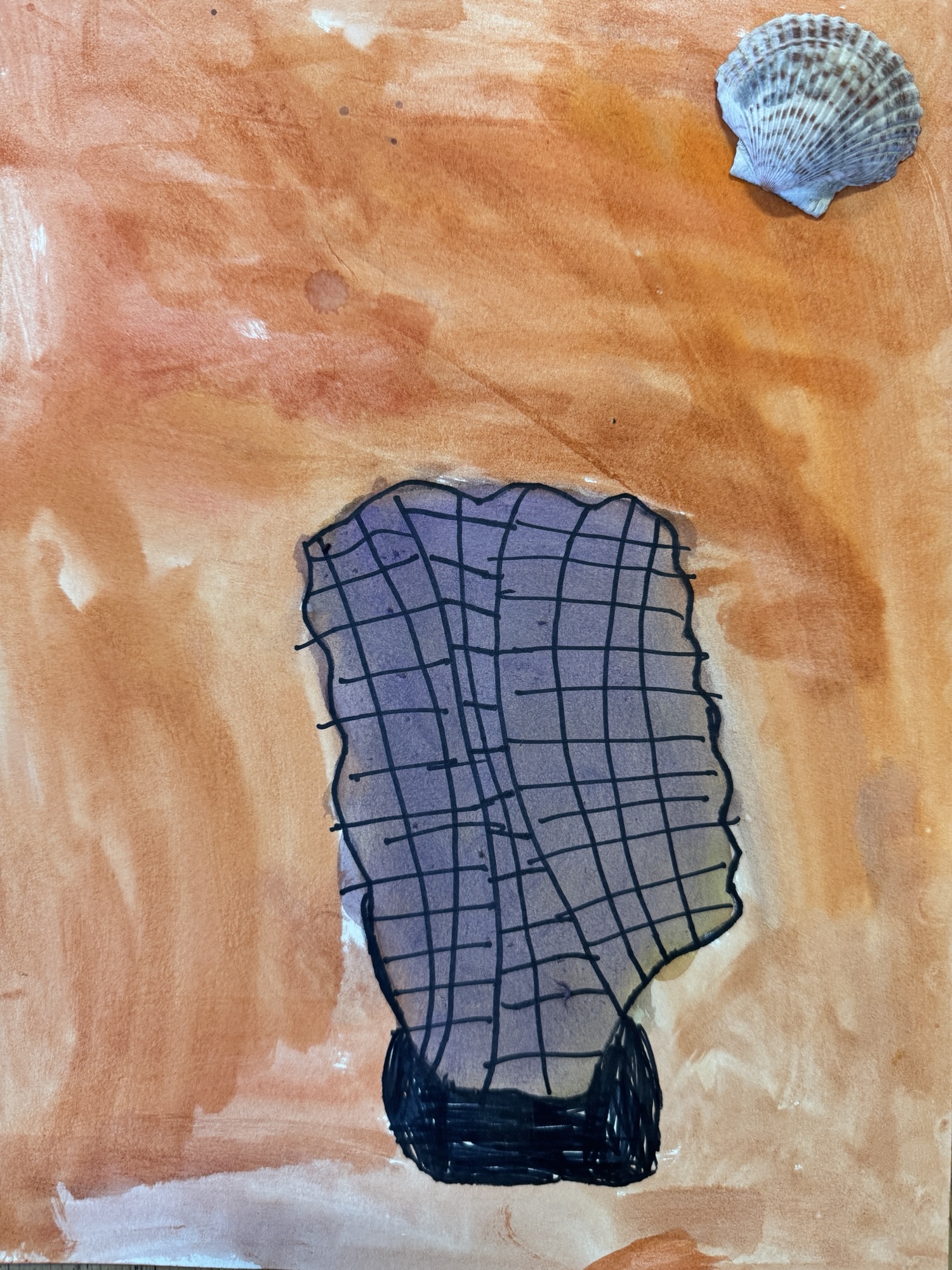
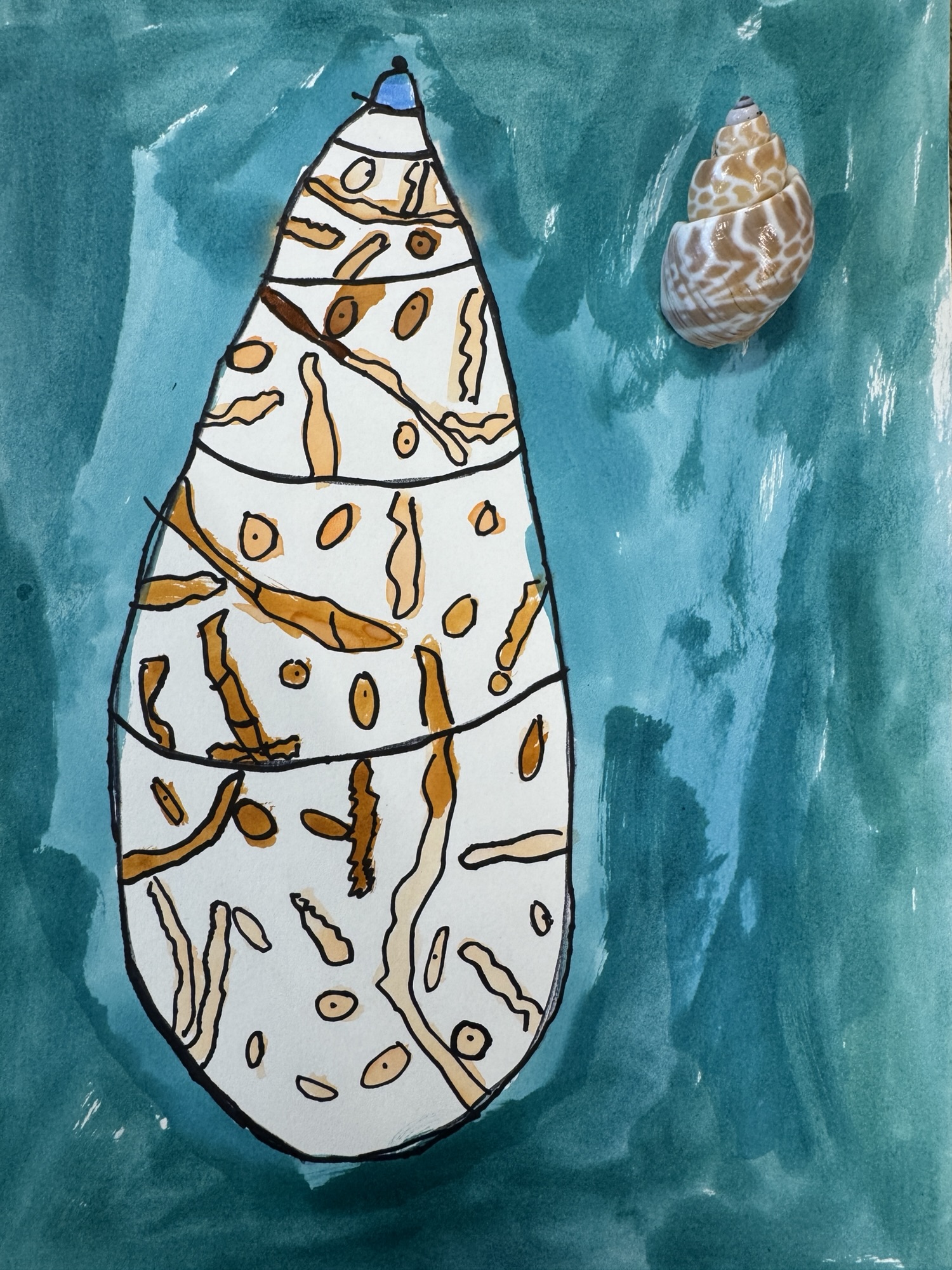
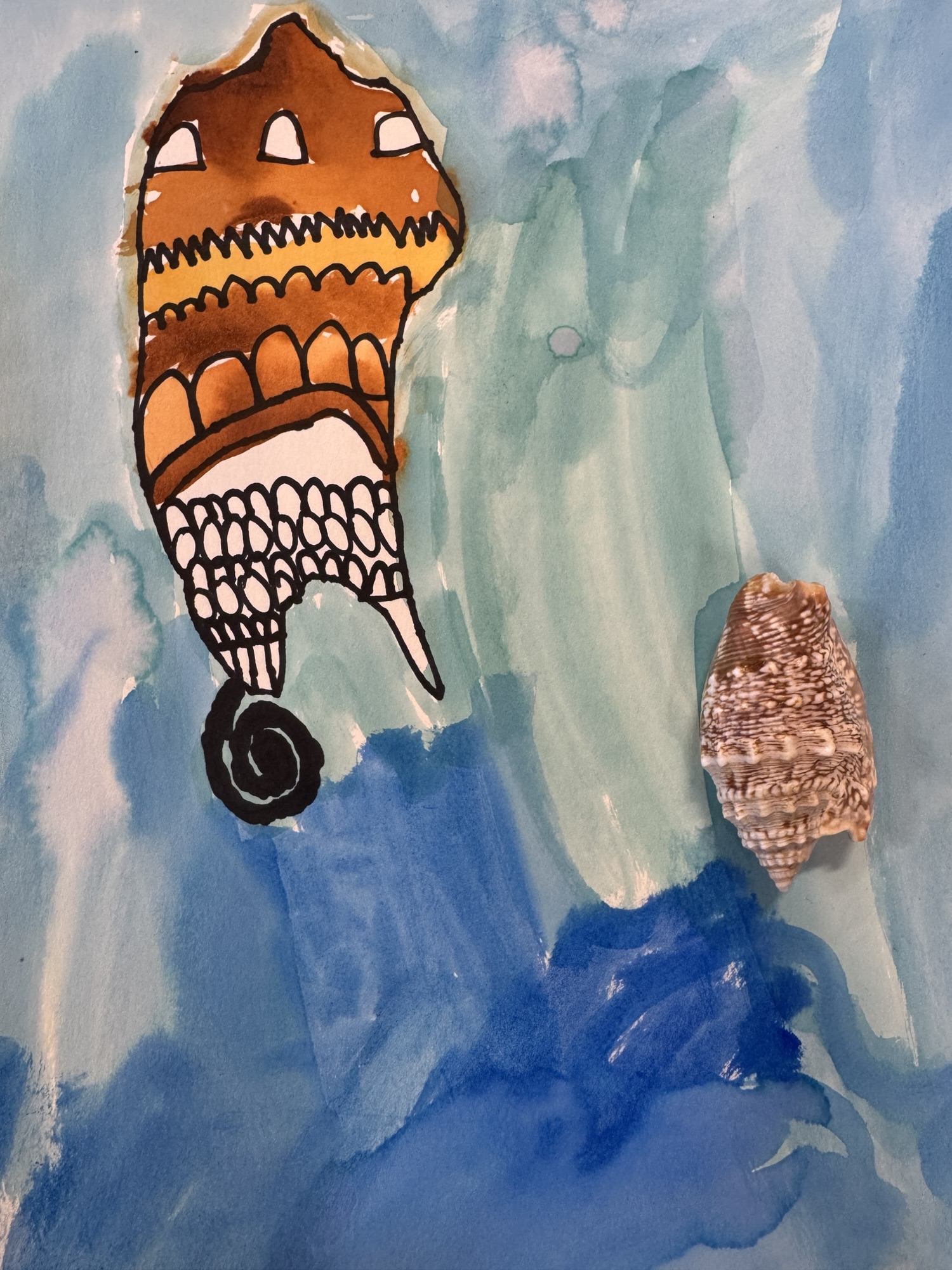
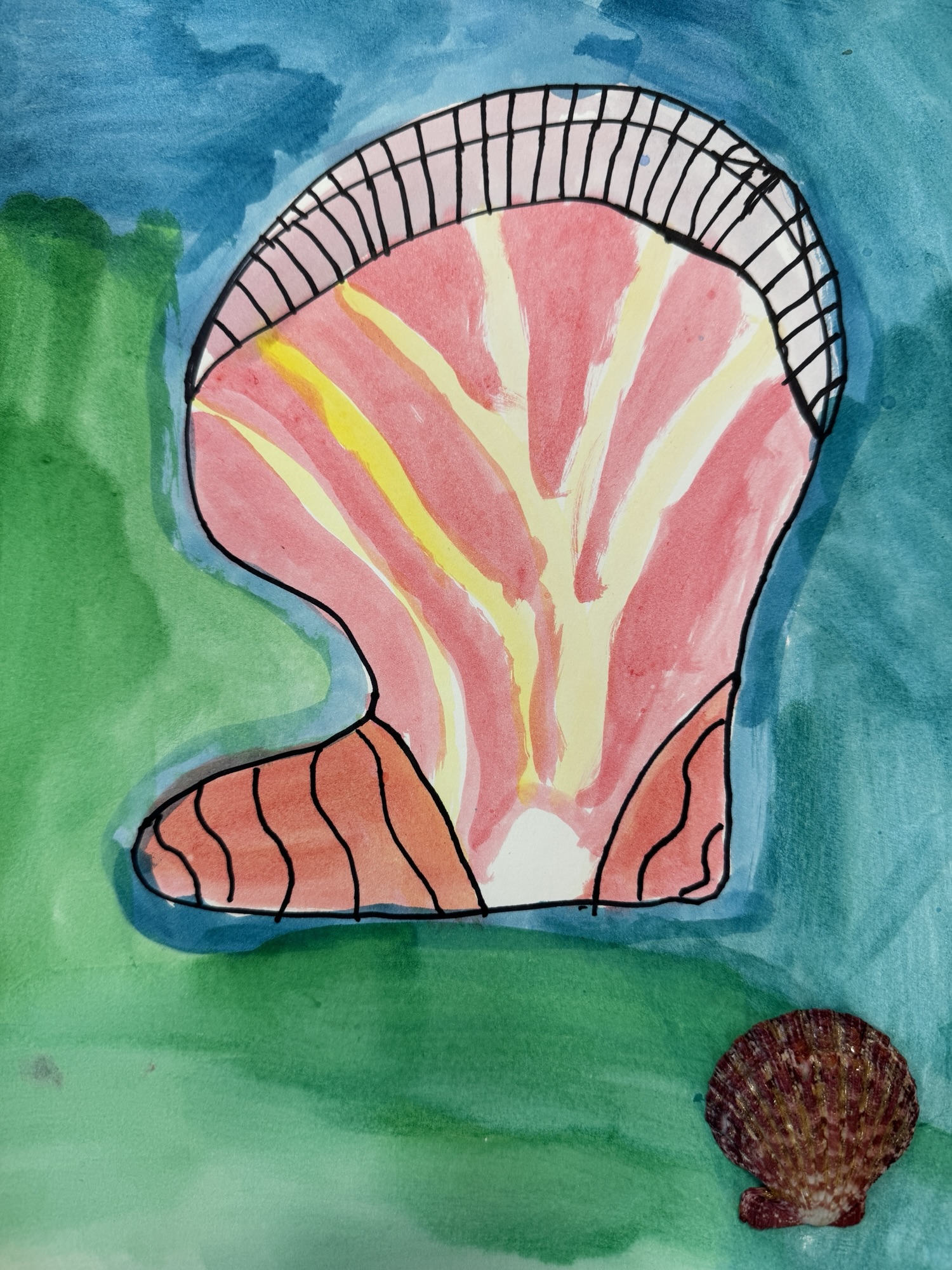
After reading Through Georgia’s Eyes, we talked about the way that O’Keeffe loved to make her paintings large, bringing attention to things others might otherwise miss. Students each picked a shell from my collection and studied it carefully. We took out our sketchpads. Students were encouraged to sketch the shell, filling the page with every detail they could. Drawing big is hard for young students, so practicing this technique is important. Then I gave them a larger piece of watercolor paper and a sharpie marker and asked them to draw their shell again, even larger!
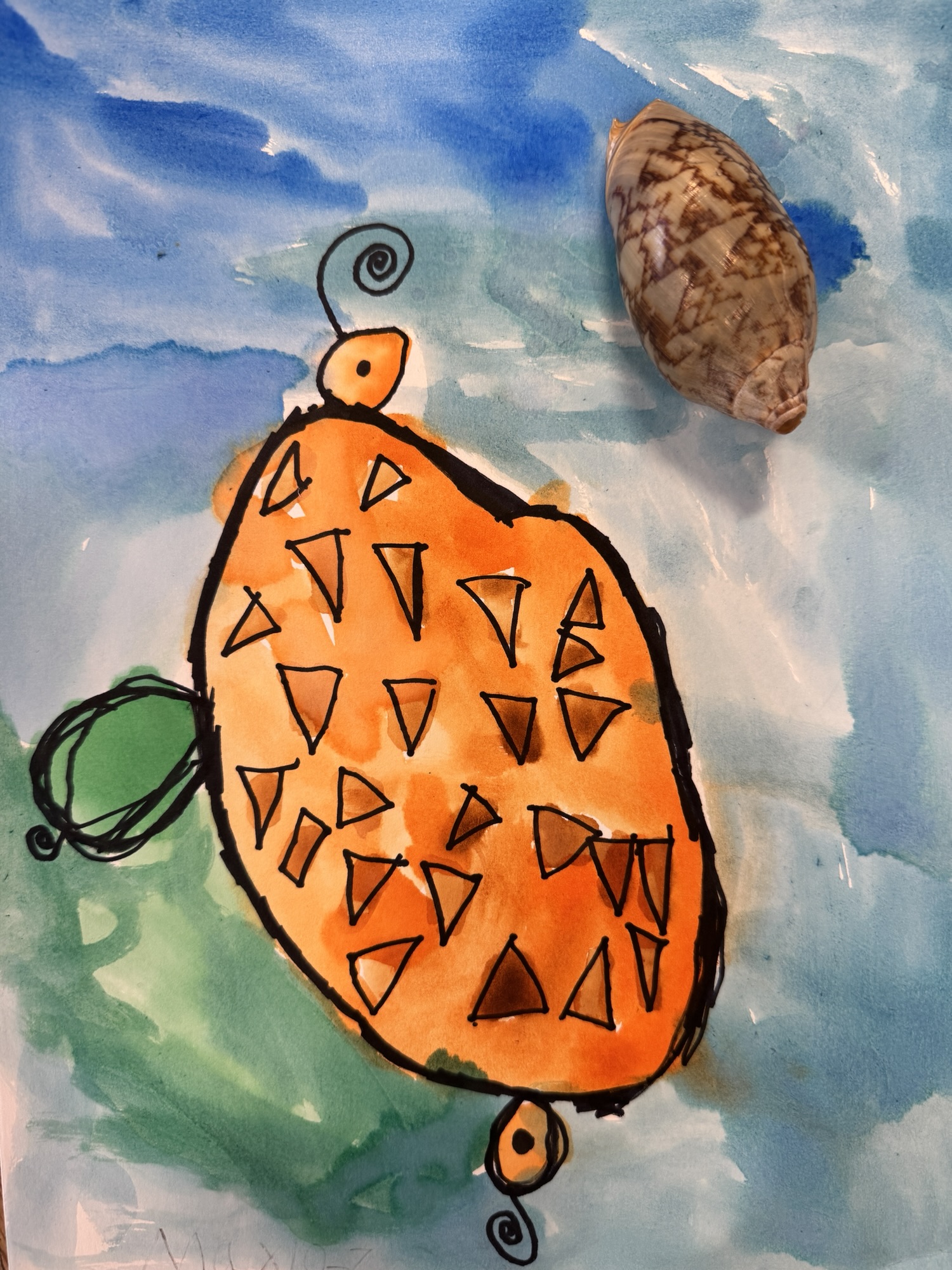
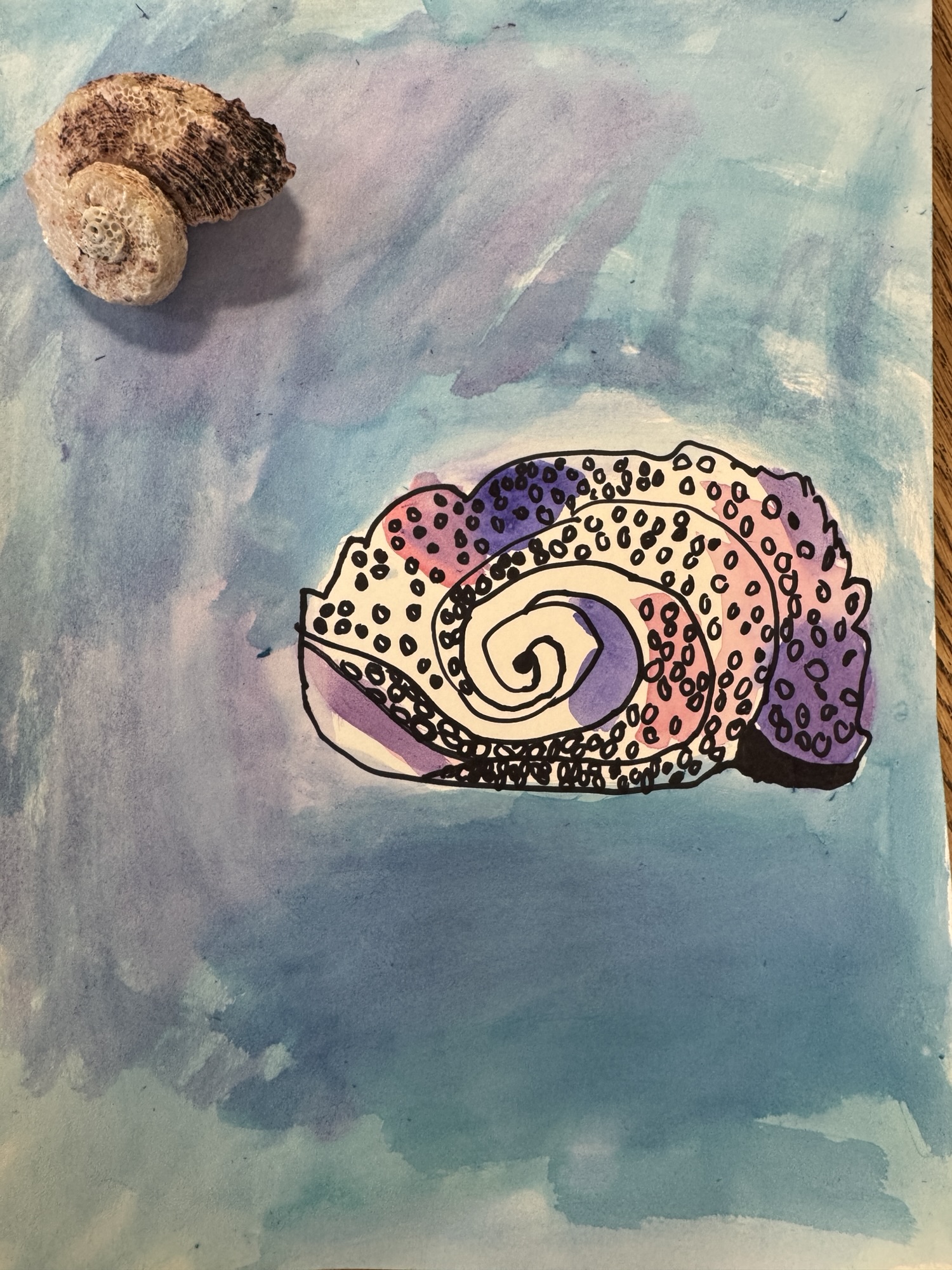
The following day, after reading the second picture book about Georgia O’Keeffe, we pulled out the trusty trays of crayola watercolor paints, mixing colors in the lids to capture the details of the shells. They looked carefully again, noticing nuance in coloring and shading, figuring out how to best capture the beauty of their shell. They also painted a background color to help their shell stand out. The results were stunning! (I decided to photograph them with the shell to show how much their study of the shell influenced the paintings.)
I was already excited about the work students were doing. These 6-year-olds were impressive with their attention to detail and care using watercolor paint–which can be unforgiving! My next request of them was something they initially found perplexing. I told them now we were going to paint our shells with words. What?!? I explained that our words were going to be the paint that helped others “see” the shell through our eyes. As is typical, I pulled my writer’s notebook out, took a close look at my teeny tiny shell, and started to think aloud about my shell. I wrote a few sentences, continuing to talk through my decisions. And then it was their turn.
You know that magic is happening when that hush falls over the room. First graders are not quiet writers so I get glimpses of their thinking as they work through words, help each other with spelling, ask questions about sounds, and speak the words they are putting on the page. I also knew something special was happening when no one was “done,” even when we had to stop for our reading groups and lunch. While my students were out of the classroom I walked around the room reading their words. Every single student was truly painting with words!
After lunch I gave students a few minutes to read through their writing and finish what they were working on. Then I pulled out the highlighters (first time this year!). I explained how I wanted them to use the highlighter–but first they had to pick a “golden line,” their favorite idea they had written about their shell. After highlighting we had a whip around where every student read their golden line out loud. My heart was full.
T wrote seriously, using all the time available to describe the shell.
My shell has a swirl in its window. Beige is the color that is the starting color but then white takes over. It has a pattern it goes purple to white. My shell has lines that curve to the end. My shell is very flat. In the inside there is white. If you touch its tip you would get poked on the finger. My shell has some green. It reminds me of a whale tail flaming in the ocean. My shell’s window is by the tip. It reminds me of a bucket of water filled. It’s my favorite shell.
M is an emergent reader and writer, working hard to capture sounds in words. This took effort and great perseverence to produce independently.
My shell has a triangle. My shell has a spiral inside. My shell has a window. My shell has pink.
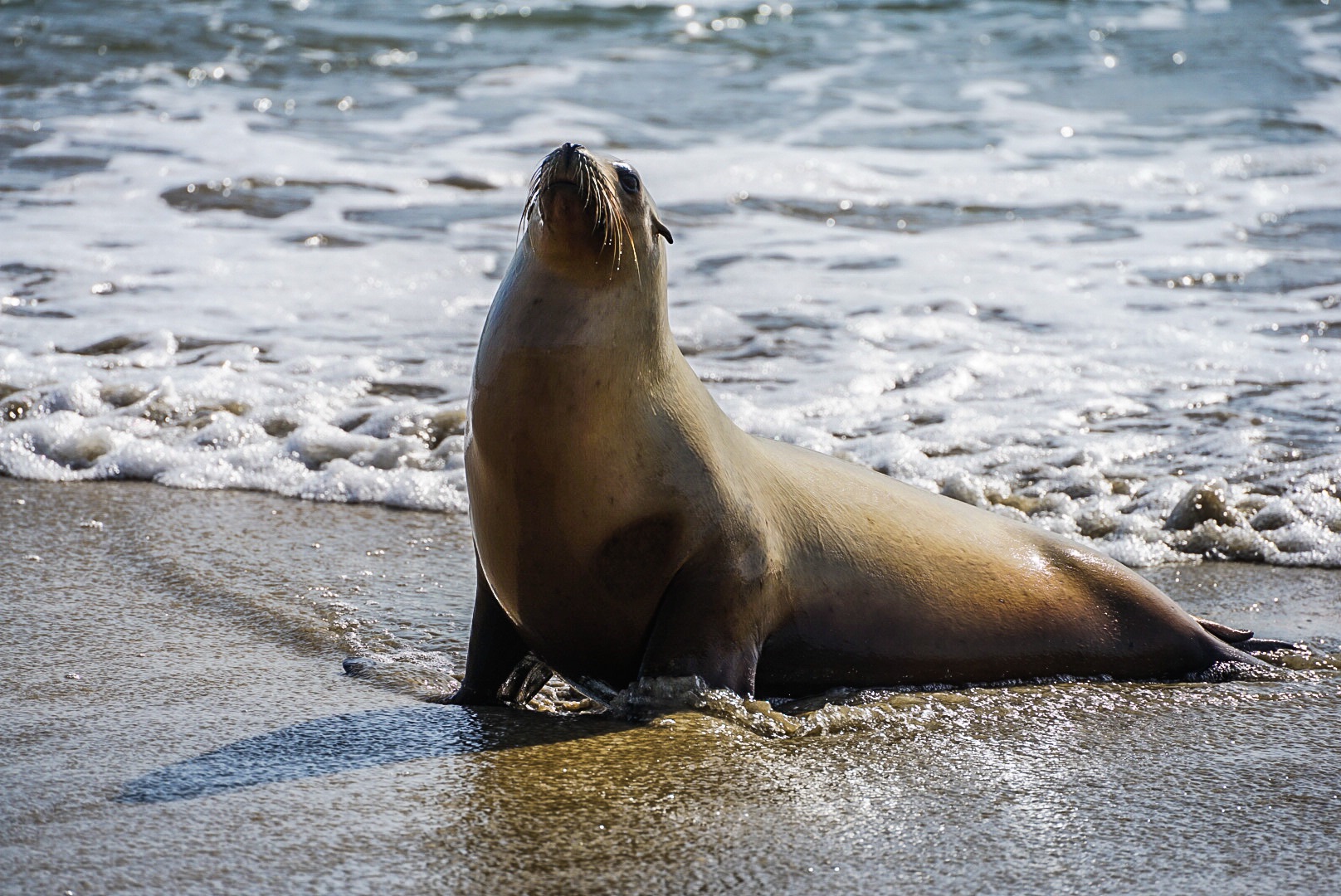
“Ort, ort” That’s the sound of sea lions. In my family, we’ve taken to calling them orts (which also means if we’re not sure from a distance whether it’s a sea lion or a seal, ort works for either).
Today while walking on our usual beach, we encountered this sea lion…who almost seemed to pose as I worked to capture this photo.
Unfortunately, this beautiful animal was probably this close to shore because it is experiencing negative effects from the algae bloom along the coast. I just heard a news report on our local NPR station explaining that the algae bloom produces a neurotoxin that harms sea life. Sea World has been rescuing sea lions and trying to save them.
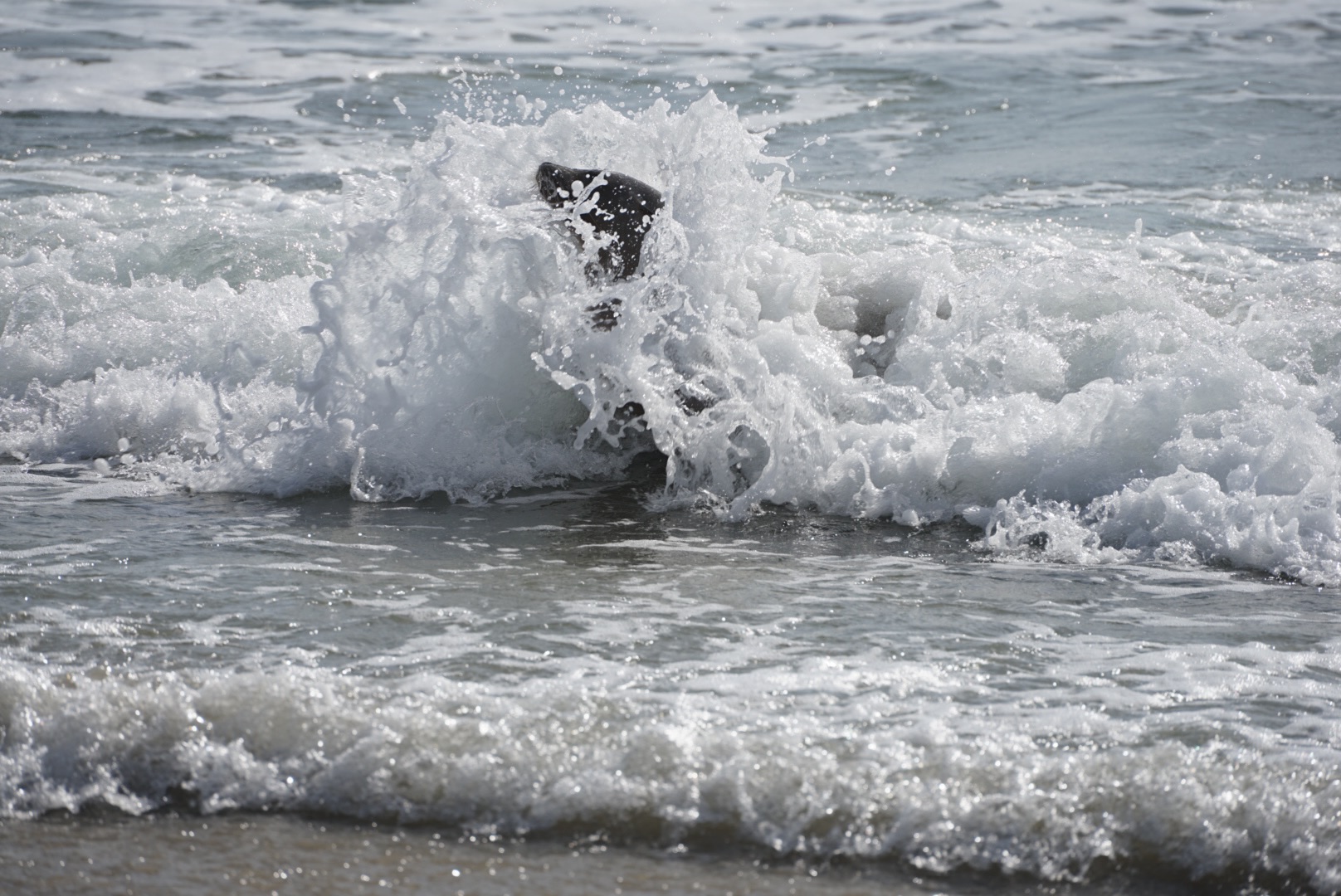
I loved getting to watch this sea lion up close and was happy that it didn’t seem to be beached. When I stopped to photograph, it was swimming in the waves and walking along the shore–which also let me try my hand at some action photography. On my way back, I noticed it out a bit further in the water–I hope that is a good sign!
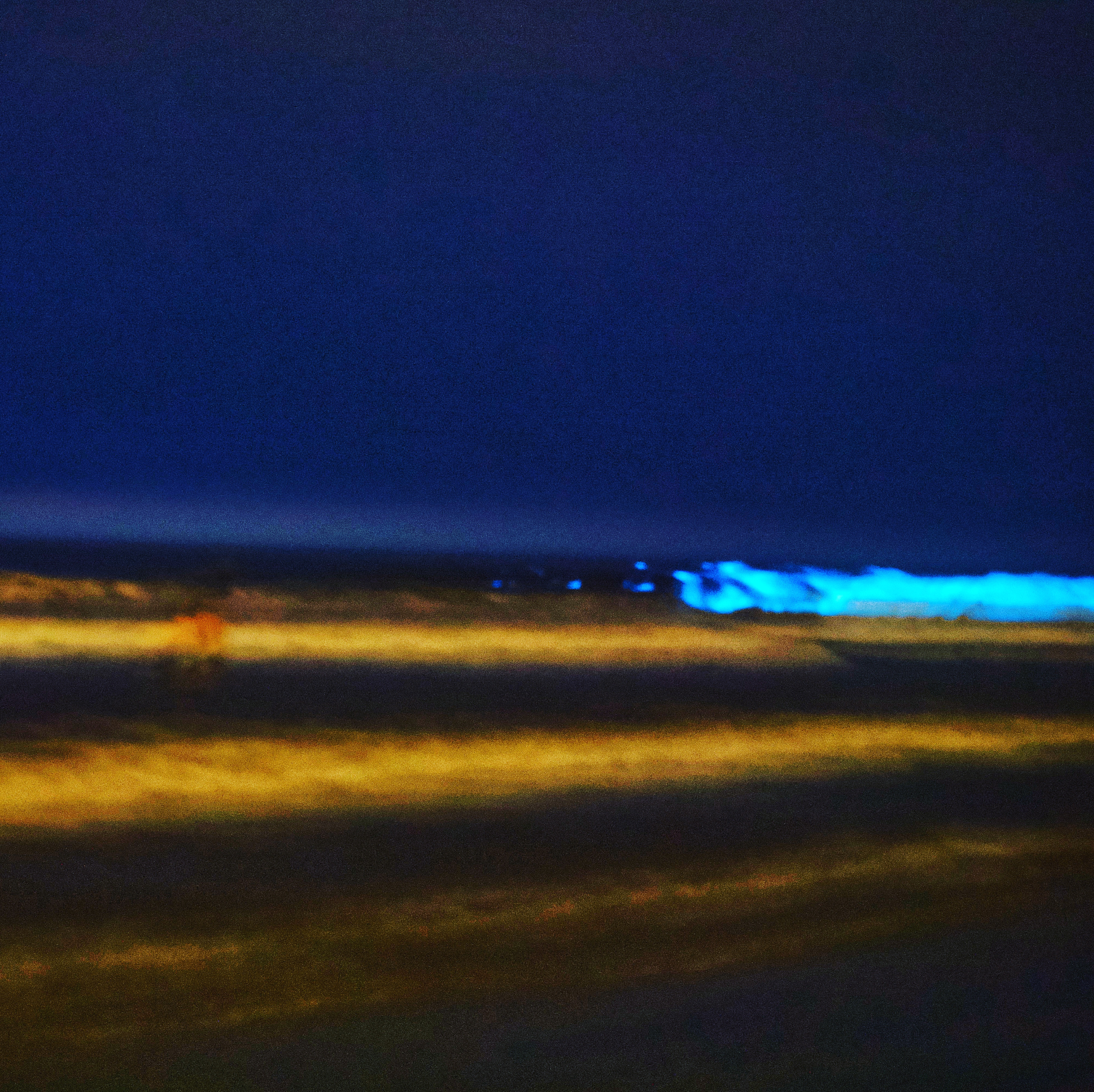
Algae blooms have become a regular occurrence on our beaches. At worst, we experience lots of sea life deaths. At best, we get spectacular bioluminescence displays where the beach lights up at night as the waves crash.
Photo of bioluminescence from 2020
I’m grateful to live where I get to experience nature’s wonder and beauty…and understand that there will be some bad things that come with the spectacular sightings. I also know that it is important to protect our natural resources–and foster a love for nature and help children learn to take care of these spaces.
Yesterday a sea star, today an ort…what will tomorrow bring?


 Thinking Through My Lens