Tag Archives: writing

A Summer of Making: Reflections on CLMOOC

If you’ve been reading my blog at all you know that I participated in something called the CLMOOC this summer.  The Connected Learning Massive Open Online Collaboration was an opportunity to experiment with the principles that underlie Connected Learning.  This short video gives some more information or check the link above.

http://vimeo.com/49645115

When I originally signed up to participate in the MOOC I thought I would stay on the fringes, read what others posted, and think about how the participants interacted.  I knew I would be time challenged, after all I would be facilitating the SDAWP Summer Institute during the bulk of the MOOC.  But somehow, I was quickly drawn into action.  I used my photo-a-day work as my introduction and posted a couple of photos.  Immediately I began to get feedback, comments, and links to others’ work with a similar focus…I was hooked!  Then came the #vineoffmonday. I was already playing with Vine and with Instagram video, so it was fun to see what others were doing.  I loved Kevin’s invitation to make a seven second story and even though I wasn’t particularly successful, the challenge was valuable–and it’s something I can see having my students try (even if they don’t use a social media platform like Vine to do it).

I’d been thinking about starting a blog for a couple of years…and have had a couple of false starts where I posted once or twice and then never returned.  With the CLMOOC community around me, I decided to create a new blog AND to challenge myself to posting 30 days in a row. Remember, this was not a “summer’s off” undertaking–with this community around me, I made my decision to blog right in the middle of the SI I talked about earlier.  (And if you know writing projects at all, you know that it is an intense and focused time of meaningful, challenging work–even as a facilitator.)

My blog became my space for “makes.”  I explored my photography in a variety of ways, thought about learning and spaces for learning, considered my own classroom and how I might approach my teaching differently, and wrote and wrote and posted and posted…today is my 34th consecutive post!

And…I earned my first badge!

badge_be1ee794-764e-4739-981e-69a447770c74

To earn the badge I had to submit one of my makes, reflecting on its significance.  I chose my Spaces for Learning post that I wrote in response to an invitation from Terry to respond to a Washington Post article about teachers and teaching.

I am strangely proud of my badge.  It represents a summer of exploration and of putting myself “out there.”  It has been about writing every day even when I am busy and tired and would rather just hang out or watch some mindless TV.  It has been about being public with my learning process and trying things beyond my comfort zone.  And I still see lots of spaces for my learning to grow.  I definitely have a better understanding of the Connected Learning principles and how they support my own learning and risk taking.  I plan to create more spaces for this kind of learning for my students…and for the teachers I come in contact with.  It has definitely been a summer of making and connected learning for me…and I don’t want it to stop!

Dream Weaver: a Mentor Text

Sometimes it is the simplest books that pack a powerful punch.  When I started to consider a recommendation for the #113texts Mentor Text Challenge so many books came to mind.  I expect to add more than one!

dream weaver

Dream Weaver by Jonathan London is one of those simple books with beautiful language.  The verbs create an orchestra of sound and movement.

A sudden wind, and the trees hum, the branches creak, and Yellow Spider’s web shimmers, like wind across a pond.  But she hangs on and you stay with her.  The whole world is in these leaves.

Besides the language, there are two other features of the book that I love.  One is the way the books uses the space on the page and draws you in close to feel the insect view and then pulls back to give a human perspective.  I also love that the back of the book includes facts about spiders.  (The fiction/non-fiction mix is one of my favorites!)

This year we used this book as one of several to teach beginnings.  Here’s the text of the first page:

Nestled in the soft earth beside the path, you see a little yellow spider.

This beginning takes the reader directly to the “place” in the book.  Our students wrote a piece where they highlighted the qualities of our local community–exploring ways to share their opinions with evidence from their own experience.  But like most young writers, they are still working to build effective beginnings.  So they studied this beginning from Jonathan London and many tried their hand at making this structure work in their own writing.  (Nestled did become a favorite word in our class!)

Here’s a couple of examples from students:

“B” , a second grader wrote this opening

Nestled between the blue beach and the desert there’s a small town called Cardiff-by-the Sea

Okay–I’m not sure that the beach and desert are quite close enough to “nestle” this little town, but she definitely got the idea!

“K”, a third grader tried this version where the setting is revealed in a similar way without using the word “nestled.”

A little town called Cardiff lies between two other towns in Southern California: Encinitas and Del Mar.

There are many ways to use this book as a mentor text.  I highly recommend it, especially for students in grades K-3.  I’d love to know how you’ve used this book (or others like it)!

Connected Wondering

A friend of mine gave me two books the other day.  One I have read all the way through and the other I have browsed through.  They are alike…and they are 100% polar opposites.  The first, more of a coffee table/picture heavy book is called A Lifetime of Secrets by Frank Warren. Warren invited people to send a secret to him on a postcard or in a letter that he curated as an art installation.  They range from unthinkably horrible to silly, yet their arrangement and juxtaposition creates a powerful message.  This idea of sending anonymous secrets on the back of postcards is an interesting one–and one, and one that people seem to get relief from the sending…and maybe relief in reading the anonymous secrets of others.  Here’s a related website.

The other book is The Book of Awesome by Neil Pasricha.  This is a collection of little things that make people happy…like when you find cash in your coat pocket or the grocery store opens up a new line just when you think the wait is endless.  Each is written as short vignette–as short as a sentence or two to as long as a couple of pages.  This book also has a related website where people can submit their own awesome moments (in 1000 words or less).

What strikes me about both of these pieces is the way people want to connect–even if it is anonymously.  People seem to have an urge to know that those things that burden or delight them also resonate with others, that they are not alone.  Like these water lilies I photographed today, tangled connections seem to help us as we live and grow.

photo-1

So as my thinking often does, I came back to the classroom with my thoughts about these books.  So how does the sharing of secrets and the sharing of awesome moments connect to the classroom?  I’m thinking about all those little things we do in the classroom to establish a trusting, cooperative, and collaborative community.  The ways we work to support each other in spite of our differences.  And a lot of that happens through writing–just like it did in these books.  Our writing uncovers our lives and lets others in.  It exposes our interests and our fears, our hopes and our dreams.

In response to my thinking about establishing a genius hour in the classroom in yesterday’s post, another friend commented about her experience seeing “wondering walls” in classrooms where students wrote down their questions–those things they are wondering about.  I’m already thinking about how a wondering wall might serve as an entry place for developing student-generated projects…and for encouraging students to use their classmates wonderings as springboards for their own.  Would that be like Postsecrets and The Book of Awesome — a place to connect and learn from each other?  A way to develop community and create collective interest as we pursue our individual wonderings?  What do you think?

Connected Learning…a Challenge

At the San Diego Area Writing Project (SDAWP) we are always looking for ways to learn from each and ways to support each others’ learning in our mission to improve writing instruction for the young people in our area.  For a while now we’ve been wanting to create a shared resource of mentor texts that teachers love and have used successfully to teach writing in their classrooms.  We’ve thrown a bunch of ideas around about how to do that–and nothing has really stuck.

Enter Barb–SDAWP Teacher Consultant and one of the administrators of our SDAWP Voices blog, the collaborative blog we’ve been experimenting with over the last year.  In another part of her life she is an artist with fabric–creating beautiful quilt projects–and maintains a sewing focused blog where she also participates in challenges and contests and blog link-ups.  Sharing her experience with textile artists and their social media world is helping us at the SDAWP experiment with new ways to build connections…and learning experiences.

So starting today we’re asking people–everyone is invited–to commit to the 113 Mentor Texts by the End of 2013 challenge.  Committing means agreeing to add at least one mentor text that you’ve used to teach writing or used to support your own writing that you would recommend to others.  There are lots more details on the SDAWP Voices blog here.

So join us…and please share with your friends and colleagues so we can reach our goal of 113 mentor texts by the end of 2013!

Being Intentional

Barb’s blog post about her yellow walk on Wear the Cape Tuesday takes me back to a week or so ago when I first heard of something called streetview that seems to be some version of something we are tagging in the Connected Learning MOOC as a #learning walk.  The streetview/learning walk is not really something new, it involves that ever important skill of noticing that I wrote about the other day and adds another intentional element: documenting the noticing.  The documenting described in the sreetview make was photography—convenient for me!

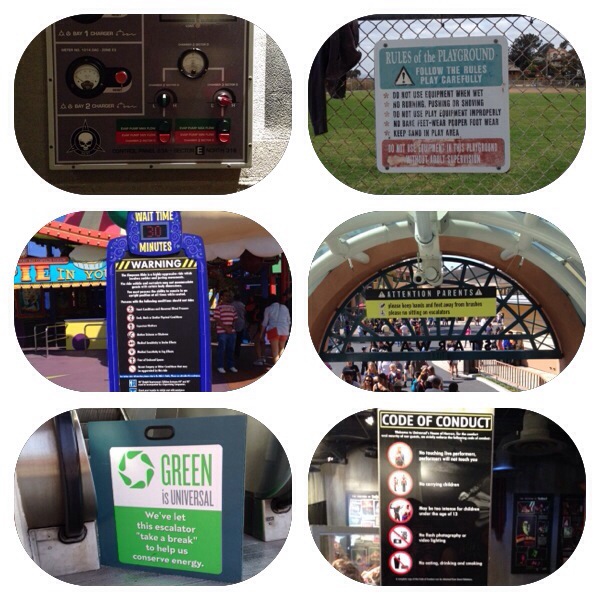
I tried my own version of a learning walk last week focused on the parking garage at UCSD.  I took some pictures, found an app that would let me put them in a collage (many collage apps seem to have a six photo limit—but I needed more), and then thought about what that composition said to me about my experience.

photo

I love that this composition takes away a lot of the cold, institutional feel of the garage and highlights the icons, textures, and angularity.  It would be interesting to capture the smells and sounds of the garage as well as the things to see–capturing more layers of the garage experience.  Mostly what occurs to me by doing this exercise is that I was more aware of interesting details, noticing things I hadn’t noticed before.  (I hadn’t been aware of the electric cart parking space–is that for the all the golf cart-like vehicles?  I’ve never seen one parked in the parking garage!)

In addition to my streetview and Barb’s yellow walk, on Wednesday Linda @hirshmiller, who is also participating in SDAWP Photo Voices photo-a-day, read a piece of writing about her increased noticing as a result of her search for yellow this week.  We were all incredulous as she described her amazement at noticing that her cat, Flounder, had yellow eyes.  And how that discovery sent her on a mission to wake the sleeping pets and peer into their eyes to see what color they are.  (For me, that would have been a small job…for her with her husband’s animal rescue mission and her kids’ aspirations toward animal-focused careers, that meant checking the eyes of 55 animals!)

These experiences are reminding me how important it is to be intentional as we move through our lives, to be open to noticing new details, and to uncovering interesting connections.  Writing does that too…when I write regularly (like I am doing now with this new blogging adventure) I pay close attention to the world around me and make connections in unexpected ways.  What have you noticed lately?

Writing, Science, and Making

On my way to UCSD yesterday morning I listened to this story on our local public radio station about a zombie horror video game inspired by a nature documentary, with commentary from a local entomologist from the San Diego Natural History Museum, Michael Wall.  I’m not much of a video game player, but I love the idea that a nature documentary and the very real behavior of parasites inspired the story of this game.  I started to think about the ways that science and writing are natural partners and the roles that curiosity and creativity play in both.

And then I started to think about the ways that curiosity and creativity often get squished in schools in the name of supporting our learners.  We’ve been reading, writing, and debating formulaic writing in the SDAWP Invitational Summer Institute this week and asking ourselves what is gained and what is lost when writers, especially young writers, are encouraged or even forced to fit their thinking and ideas into five paragraphs (or three or…) predetermined and highly structured by a formula?

I’ve heard people say that “structures” (provided by formulaic writing) free young writers from the frustration of figuring out effective organization for their ideas and their writing.  But I’m guessing that neither the writer of the nature documentary nor the video game maker used a formula to craft the stories behind their movie and game.  I wonder if they even thought they were writing (as in school writing) as they crafted the narrative structures that hold their work…or were they simply making and/or playing as they explored the ideas in their heads?  I’m also wondering if they worked with collaborators–and how that shaped their stories and their productions.  (It sounds like both making and playing to me…and fun!)

My brain is already on fast forward to the new school year as I think about how my students might be inspired to write video games and documentaries and radio podcasts like the one above and who knows what else!  I know I won’t be providing any fill-in-the-blank formulas to structure their compositions.  Instead, I will help them locate mentor texts (texts in the broadest sense of the word) to play with, examine, and study to figure out how they will construct their own.  And I will create and compose along with them.

And for those of you who think your ideas are not clever or original or good enough, take a look at this video (thanks Kristina Campea for sharing on google+ at the #clmooc).

So what inspires your writing and creating?  What structures do you depend on to move from ideas to composition?