
Last week we returned to school after our two-week winter break. The first graders in my class were eager to talk, telling each other about all the things that had happened while they were apart. Knowing that students would be chatty, I planned lessons that would allow interaction and conversation on our first day back in class.
I’d been thinking about having students craft a collaborative poem for a while now. We’ve been studying poems and writing some of our own all school year, but still, it seemed that the time was ripe for something more. I began our lesson with Kwame Alexander’s delightful picture book, How to Write a Poem, illustrated brilliantly by Melissa Sweet. We read and noticed first, with students intrigued by the use of collage, the lyrical language, and colorful images. Before I began reading, I had asked my students what they knew about metaphorical thinking. What? That was their response. So after reading and talking about the book, we went back through the book so I could point out examples of metaphor…and just about then, my principal walked in. She comes in from time to time, pulls up a chair and sits and listens. She doesn’t interact and her poker face is nearly unreadable. I just went on with the lesson, feeling students pulled in as we talked about words falling from the sky like rain. We imagined ourselves outside, heads tipped, tongues out, ready to catch those words. As we became the metaphors we were studying, we talked about how metaphor lets us use ideas from our imaginations to make our writing become more clear…and more fun! When my principal left, I still had my students full attention as they grappled with this abstract idea of metaphorical thinking.
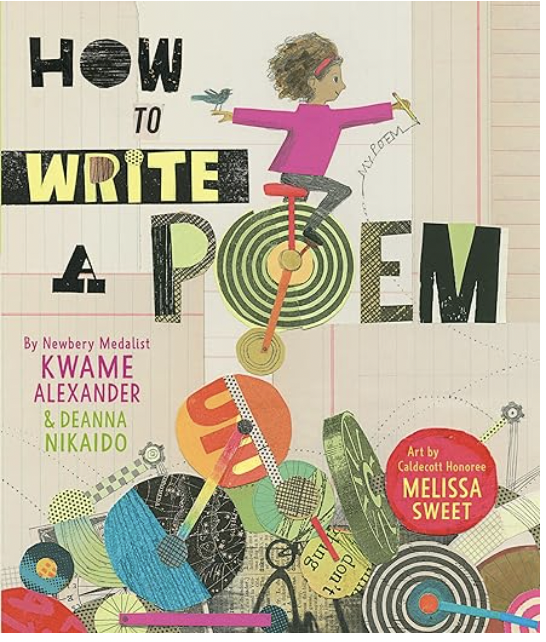
Now, we needed to try it on for ourselves. I decided on having students create a collaborative poem by having each student contribute one line to a “winter is…” poem. So I asked them, how might you use metaphorical thinking to describe what winter is? The first responses had them leaning back on what they already knew. Winter is cold, winter is when trees lose their leaves. In some ways, this was the perfect next step. We talked about how those are facts about winter…now we needed to think about how to make comparisons that were surprising. When one of my students got to snow was white cotton candy, I knew we were heading in the right direction! I had them try a few “winter is…” lines, and just when they were running out of steam, I pulled out the colorful sticky note sentence strips for each student to write their favorite “winter is…” line on. I could feel the motivation lift and even my most reluctant student eagerly chose a color and started writing his line (although there were none written in the notebook at this point). Once they had written, they stuck their post it on the white board.
I wasn’t quite sure where we were at this point. I let the post its sit over night and pulled them off the next morning with the intention of typing up their lines to form a poem. As I typed I divided the ideas into 3-line stanzas, that seemed to help give the poem shape. I was pleasantly surprised when the ideas seemed to come together into a poem that I felt we could all appreciate.
Winter Is…
Winter is white puffy cotton candy
A time for snowflakes that look like crystals
When snow foxes dig holes to keep their cubs warm
Winter is a cold hug in your heart
The wind at the beach
Time for hot chocolate
Winter is snowflakes blowing
Clouds melting
A freezing tree giving words to my pencil to write down
Winter is a snowflake full of thoughts
A snowflake falling down as fast a rocket
Pine trees covered with snow
Winter is a cold place to relax and slide your pencil to write down your mind
Snow soft and crunchy like people walking on the snow
Full of puffy snow like white cotton candy
Winter is a frozen lake waiting for spring
Holidays in your mind
A snow of thoughts flying through the air
Winter is a chilly place where it snows
Winter is so fun because you can play
Winter is a time for joy!
By Room 3 First Graders
1-8-24
I can see where students were inspired by their classmates and where some students are still not quite there when it comes to moving away from facts as they craft a line about winter, but I am pleased with this as a starting point. And even better, my principal saw me eating lunch on Wednesday and commented on the book and lesson–in a very positive way. She loved that I was introducing metaphorical thinking to first graders.
But honestly, the real payoff started to emerge in small moments as the week went on. My students started to point out metaphorical thinking throughout the school day, and in their own speech. On Tuesday, we returned to the book, Kiyoshi’s Walk by Mark Karlins as we embarked on writing 3-line poems about the cardinals we had created in the style of Charley Harper the day before.
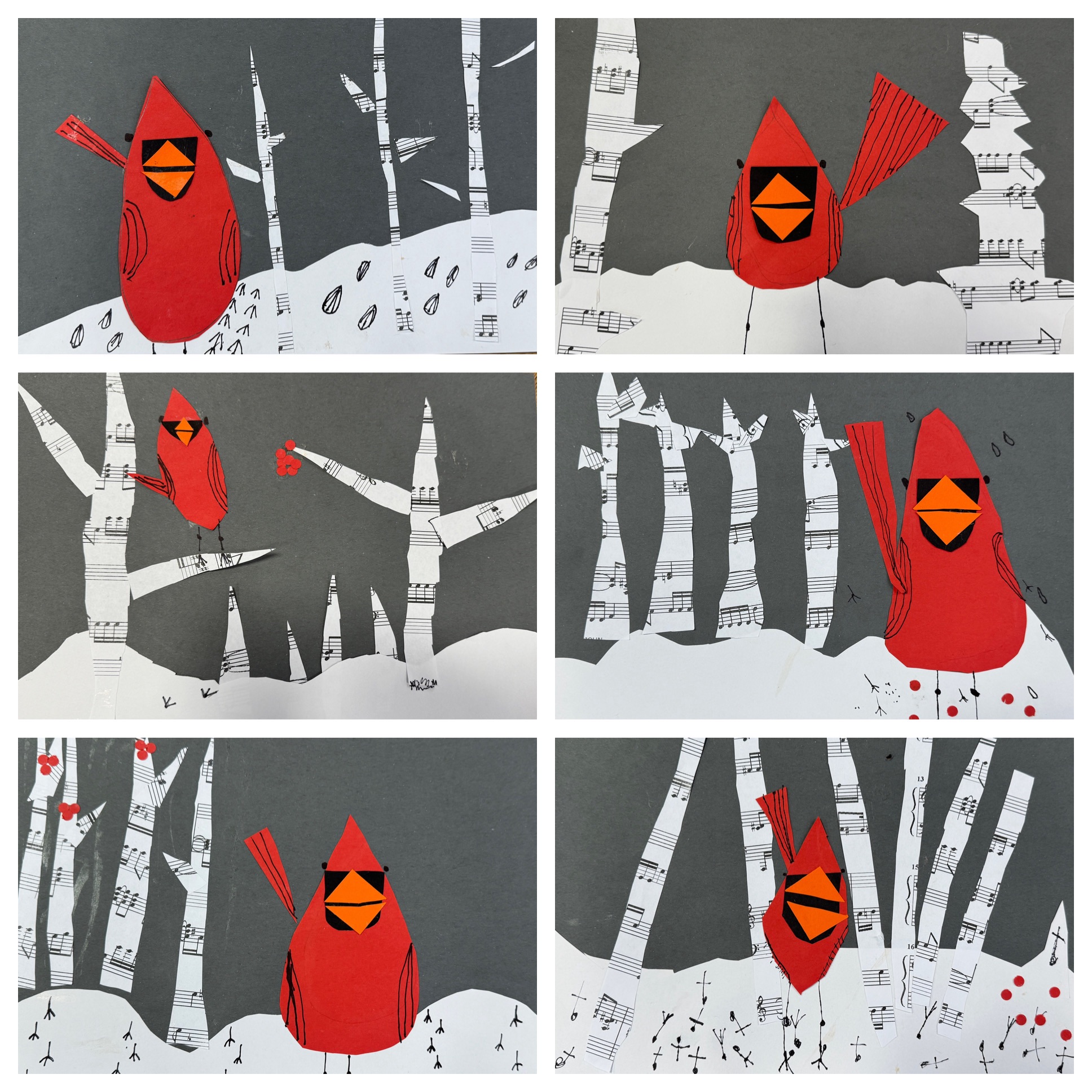
As I read the Haiku in Kiyoshi’s Walk, they pointed out the metaphors…a pile of oranges described as a “hill of orange suns.” Again, not every student is yet ready to employ metaphor effectively…yet, but the seeds are planted. So we wrote 3-line poems on Tuesday (I try not to have these poems be about syllable counts–trying instead to focus on ideas and word choice) and then on Wednesday, I asked students to go back to their poems and improve them by changing a word or two or adding another detail (revision!). Here’s a student who was clearly influenced by Eto’s poem in Kiyoshi’s Walk.
Cardinals
Champ 1964 St. Louis Wins
Cardinals fly to win
Trophy of suns
By J
When J read the poem to me, he pointed out that since trophies are golden, they are shiny like golden suns–something he changed from his first draft the day before. And I know, clearly his mind was on the St. Louis Cardinals (a favorite team) rather than on the bird we crafted the day before. But the win is in the poem–three lines, metaphor, revision…and pride in writing! I’ll take it! Another student wrote this to describe his cardinal.
The Red Cardinal
The red poinsettia feathers
keep me warm
and they fill the forest with love
By F
And there were also more subtle attempts like this.
Flying in the Wind
I see that cardinal
flying in the tree
just like the wind
By O
What I see is students experimenting, playing with ideas, playing with words…and growing as writers and poets (as well as readers and thinkers). I love that something as deceptively simple as reading How to Write a Poem resulted in our writing community learning together, composing together, and risking trying on some new techniques together. I am reminded once again of the power of poetry…so yes, I will continue to say, “More poetry please.”
A few years back I got annoyed at the way that Instagram selected my “best 9” photos of the year and created a practice for myself of selecting my own “best” photos of the year. This year I have continued this tradition of taking time to look through my daily photos (it’s a rare day when I don’t take a photo) in order to find a subset that I will call the “Best of 2023.” The forced choice of picking a best for each month pushes me to think about what makes a photo best. Is it the subject matter? The experience that accompanied the photo? The actual photo itself? Other’s reactions to the photo? I think the answer may be a combination of all of the above!
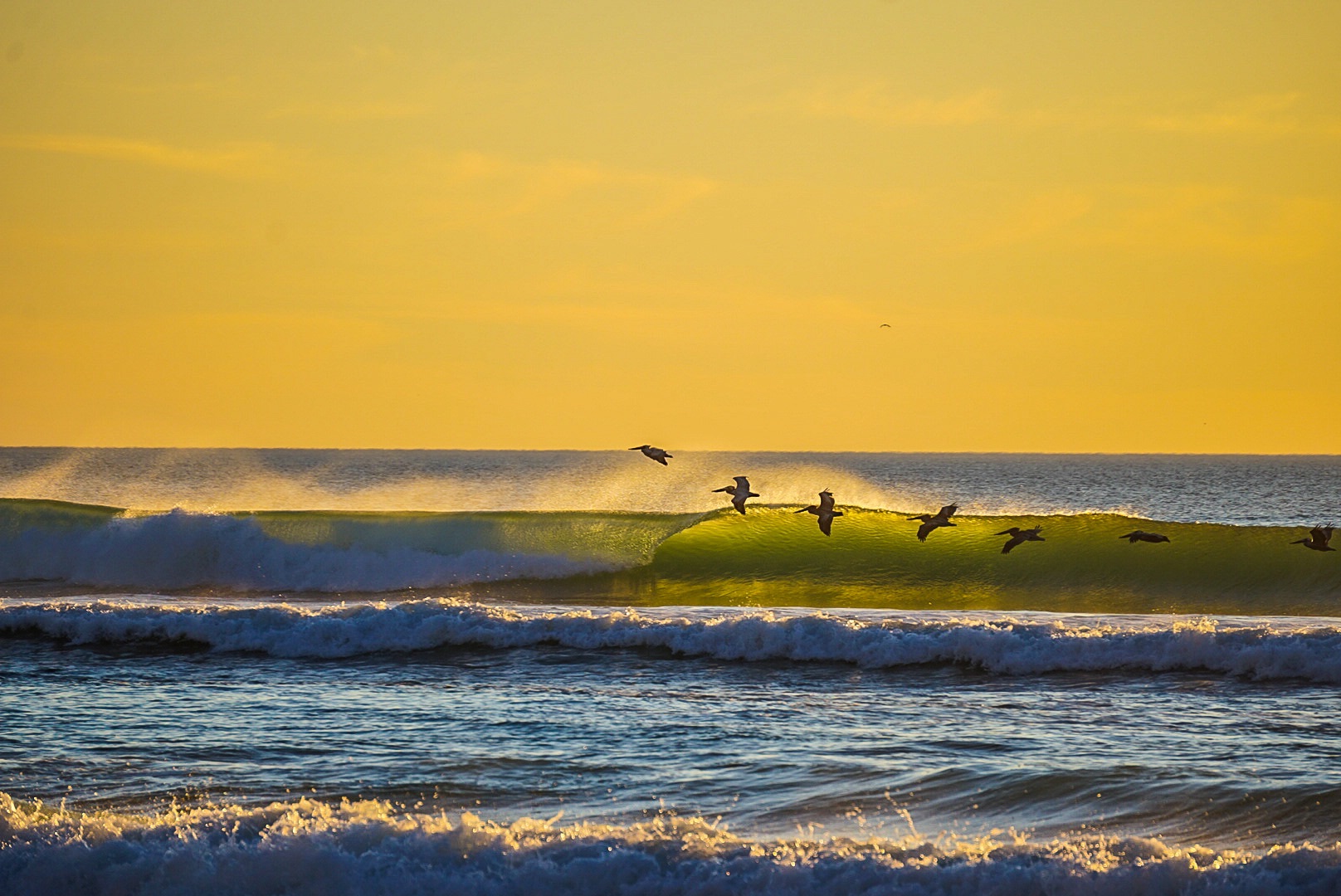
My January 2023 photo captures my wonder when watching pelicans. I marvel at how they get low and skim the waves, seemingly almost running their wings along the edge of the swell. In this photo I love the way the squadron of pelicans in formation demonstrates this “surfing” behavior while also capturing the energy and movement of the waves and the range of colors of the water as the sun does its magical work. If I could change anything about this photo I would want to get closer (that would require a stronger zoom lens)…and I think a sunset version would be magnificent.
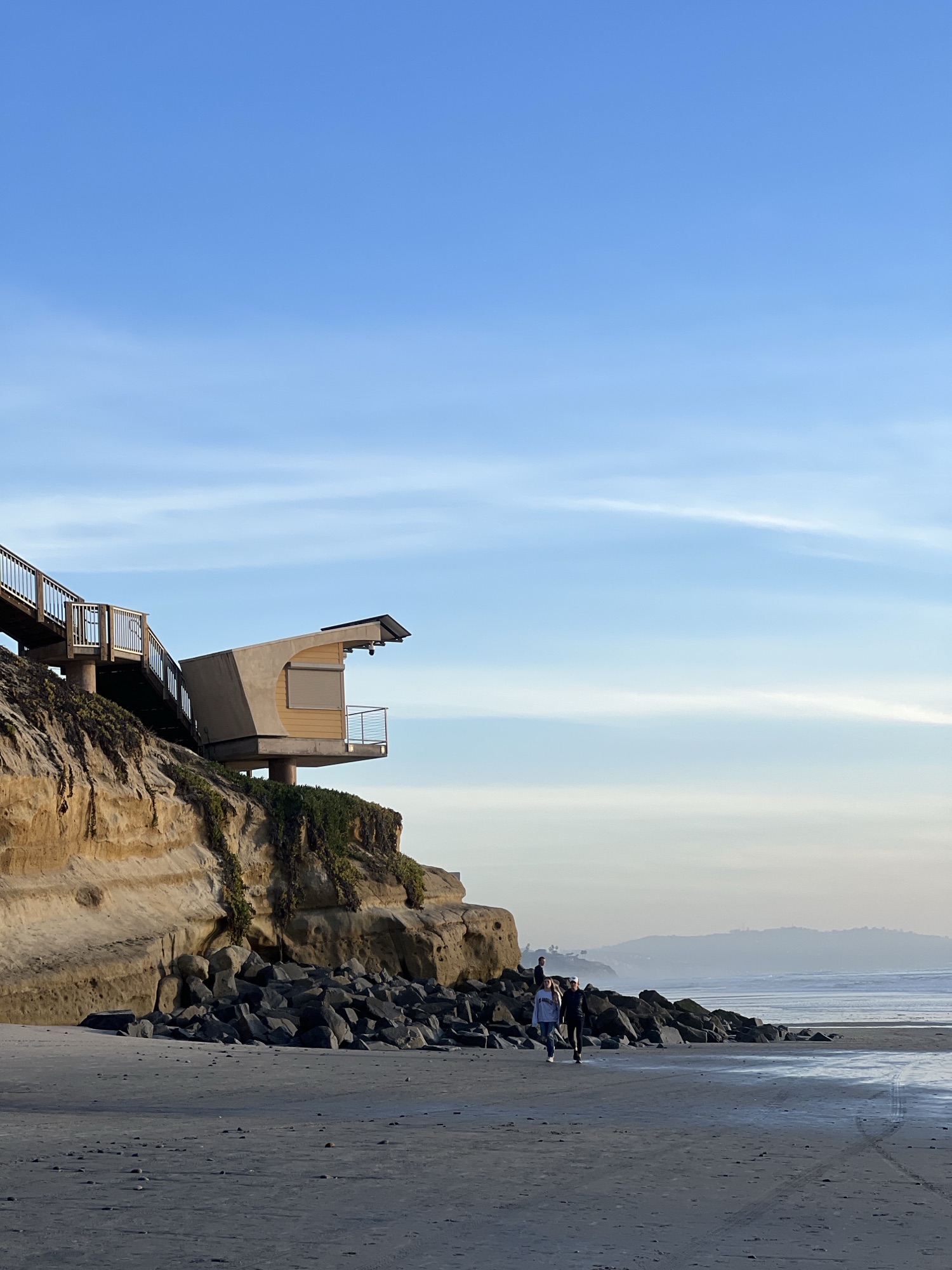
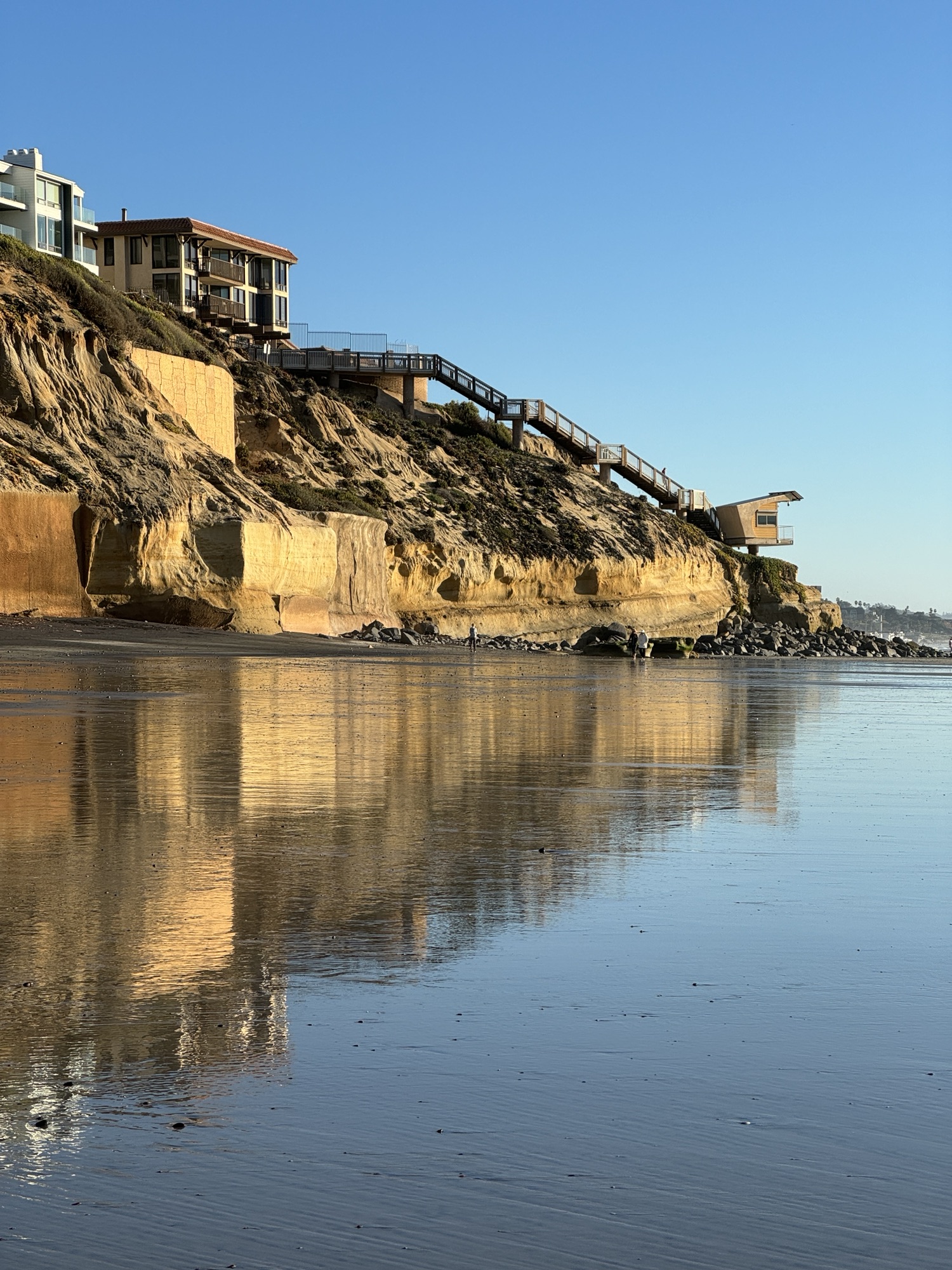
There is something so compelling about this tiny lifeguard tower in Solana Beach that perches on the cliff, jutting out into the sea. I’ve taken many version of this photo–and this is my favorite direction to shoot from. I love the low tide exposure, showing the rocks that are oftentimes covered with the sea. This unfiltered photo shows the February light on an afterwork walk, capturing the ordinary beauty of this less-than-ordinary, but functional building. I’d love to know more about the history of the building, who decided it needed to be here, why this design…and even when the decision was made to make lifeguard towers less permanent and more portable.

March shows off the playful aspects of daily photos. I’m constantly trying to capture movement in still photos. This was a windy day and the palms were showing their flexibility. To make the photo more dramatic and interesting, I did some filter play, enhancing the colors and showing the interplay of sun, sky, clouds, and wind (through the movement of the trees). I go with the adage that the best camera is the one that you have with you…and you’ll notice that many of my photos are taken with my phone.
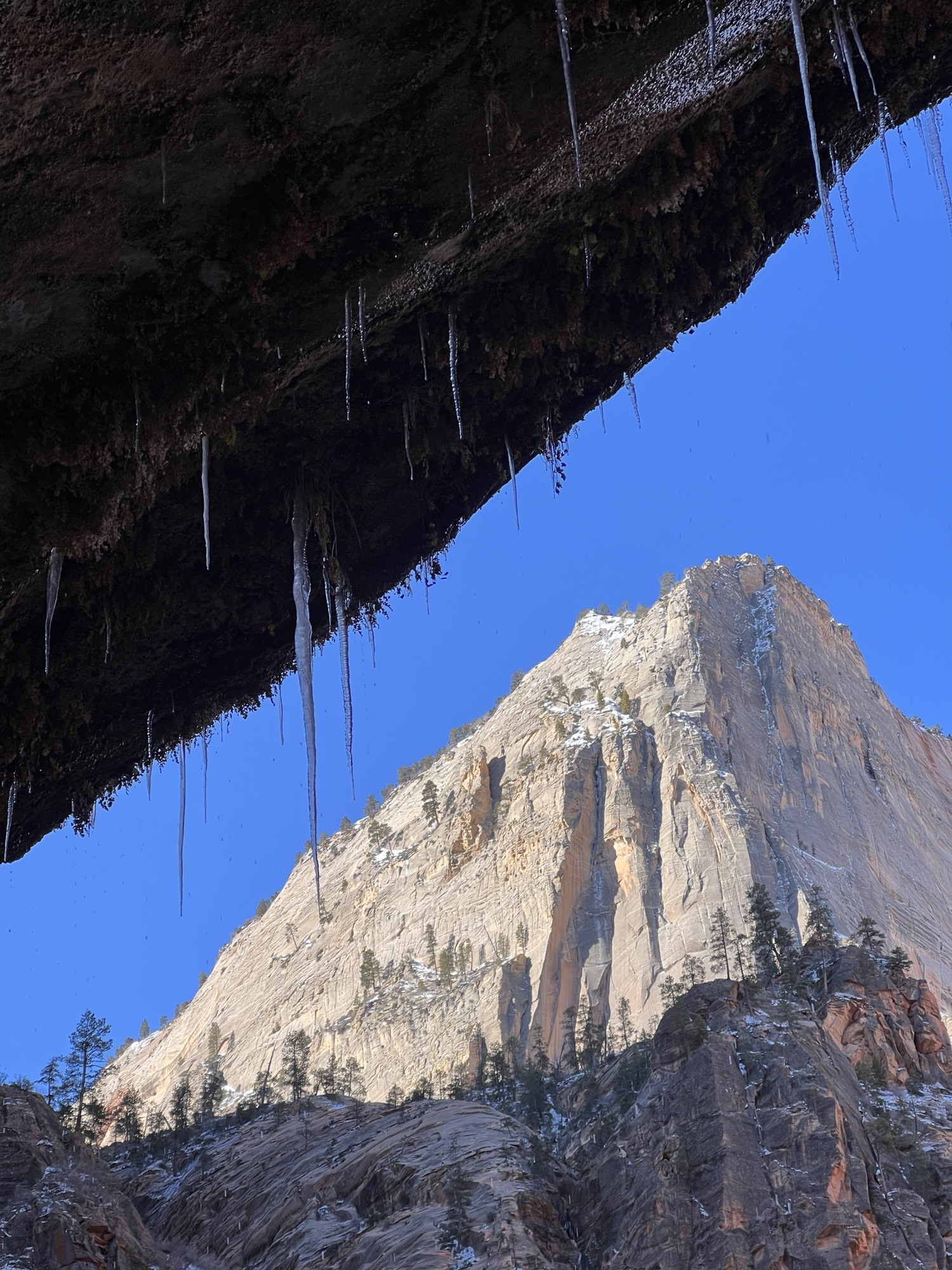
April meant Spring Break, and in 2023 our break included a road trip to Zion National Park in Utah. In spite of that fact that it was “Spring” break, the weather was unseasonably cold…and while you’ll notice bright sun in this photo, we experienced snow, ice, wind, and rain on this trip. None of that kept us from hiking and taking photos. I love the contrast in this image of the white of the cliffs and the blue of the sky along with the long, sharp icicles hanging down. Angles and light and shadow keep drawing me back to this image…along with the brilliant blue of the April sky.

Lucky for me, I don’t have to go far from home to find interesting subjects to photograph. In May, a trip to the local lagoon brought me up close to this teeny tiny hummingbird. A colder than usual spring meant that the trees were still relatively bare, allowing a good view of this tiny gem against the steel gray sky.
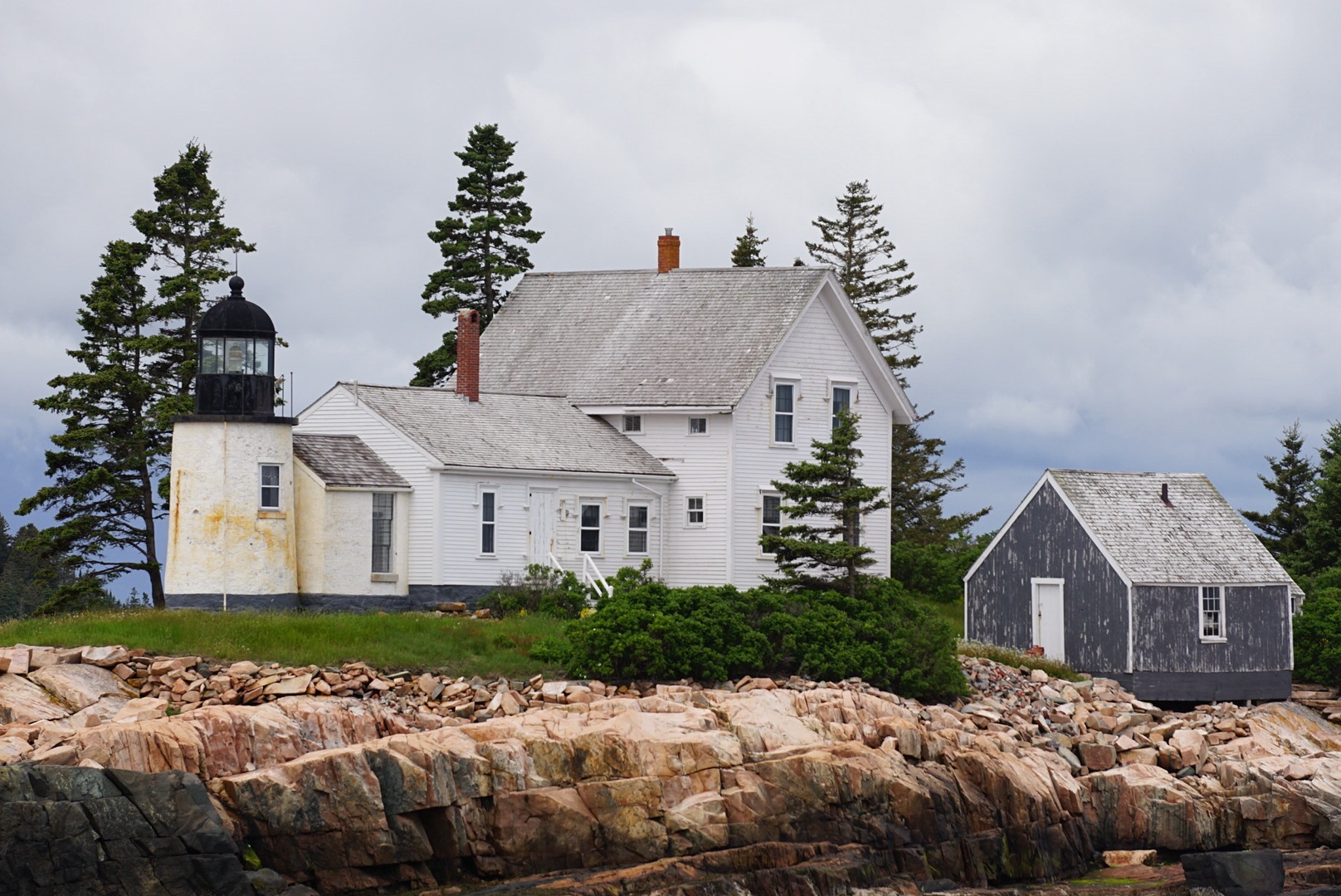
But in June, I did travel a long way to find some different, interesting subjects to photograph. And inclement weather was a theme all year. With our school year ending earlier than usual (on June 2nd!), we hopped on a plane and headed to Maine to explore Acadia National Park. While it rained almost every day we were there, we didn’t let it dampen our adventurous spirits. We were lucky to get a short reprieve from stormy seas to head off on a boat to see puffins (which we did) and also get some spectacular views of lighthouses like this one. This composition reminds me of a postcard, filling the space both side to side and up and down. If only the light were illuminated! (Unfortunately, this was not a working lighthouse.)
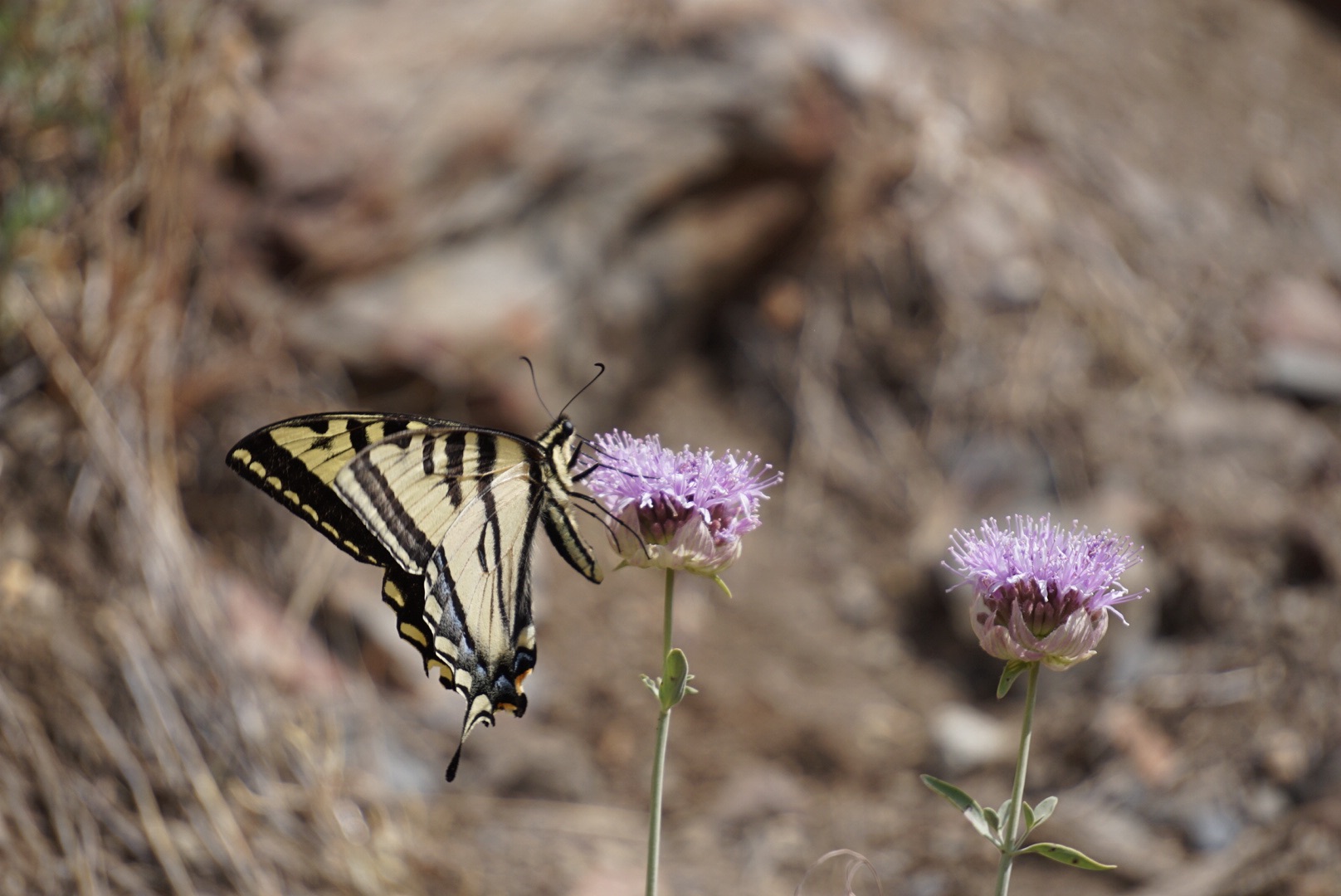
Back in California, in July we took another roadtrip to explore the mountains in the middle of the state. Mammoth Mountain includes snowy peaks, gorgeous lakes and geologic phenomenon as well as interesting flora and fauna. While exploring Convict Lake I found myself mesmerized by the swallowtail butterflies fluttering, flitting, and feeding on the local flowers. They were everywhere and in constant motion. This time I was trying to capture the stillness of these pollinators rather than action!
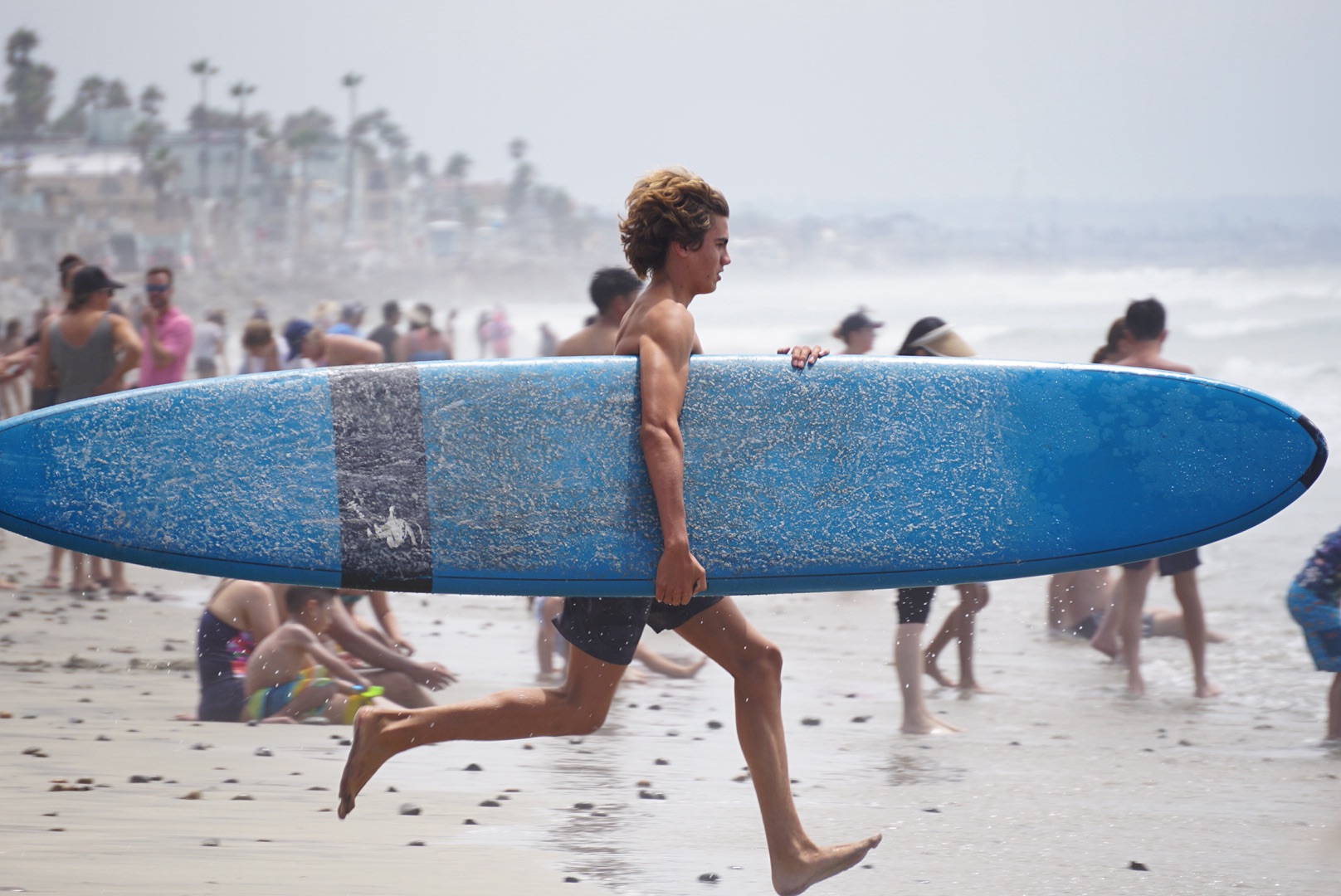
In spite of the fact that school now begins in early August, this is truly the heart of the summer. I love to watch surfing competitions and lucky for me, there are often quite a few to choose from at our local beaches. This longboard contest also included something they called a paddle out relay where surfers organized themselves into teams that raced (with long surfboards under their arms) to the water, paddled out and around a designated buoy and then returned to shore to tag a teammate and continue the race. I love the way this photo captures the action, the length of the board, and even the muscle definition of the surfer.

UCSD is the home of the San Diego Area Writing Project and the end of September was the date of our annual Fall Conference. Early Saturday mornings on a college campus are quiet, offering opportunities for photos that do not feature students. I love to take photos of the iconic Geisel library…and in this shot you can see Fallen Star (a Stuart Collection art installation) perched on the engineering building in the distance. I love the light and clouds reflected in the many windows of the library. I definitely have fonder memories of photographing this library than studying in it!
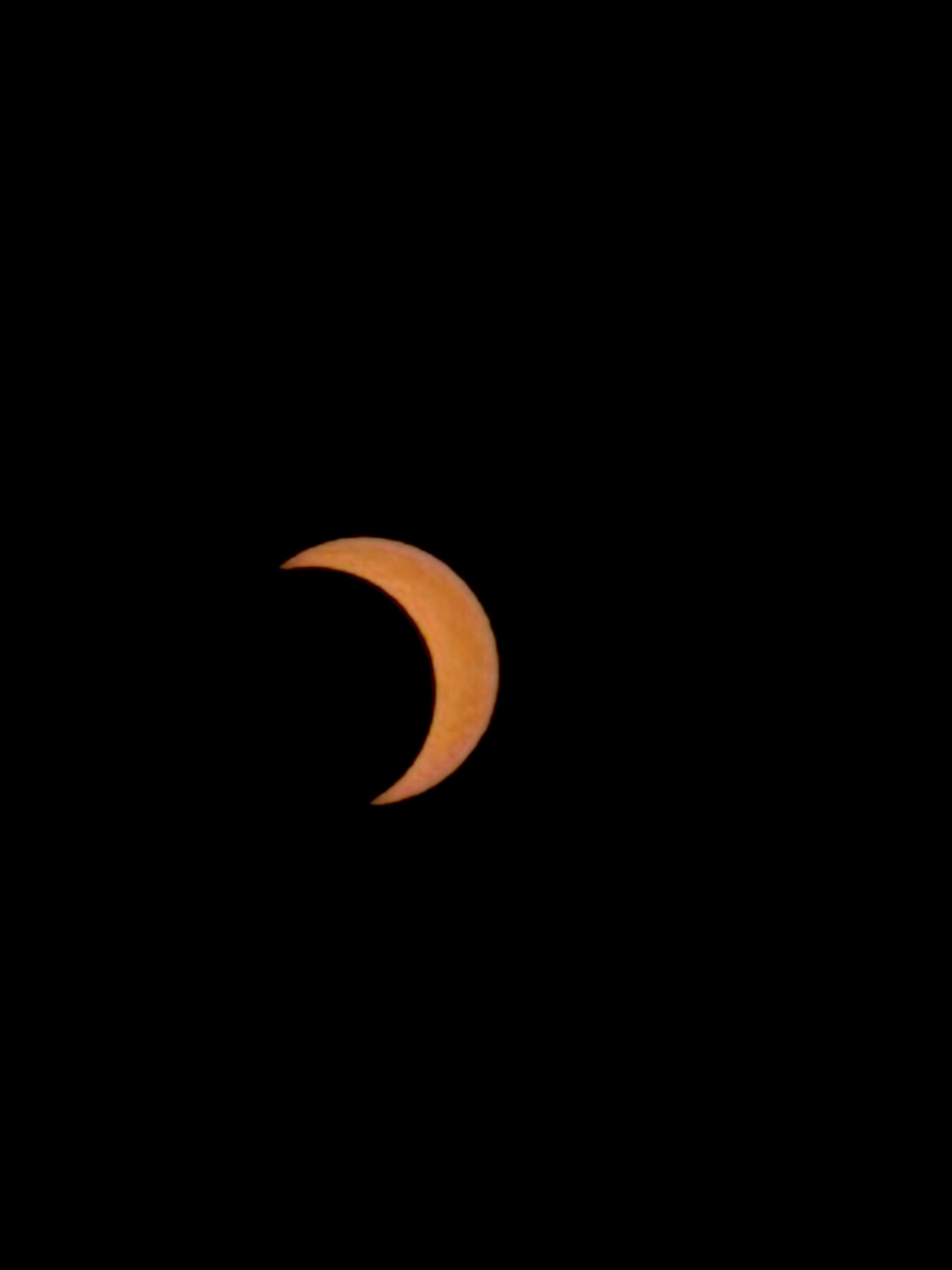
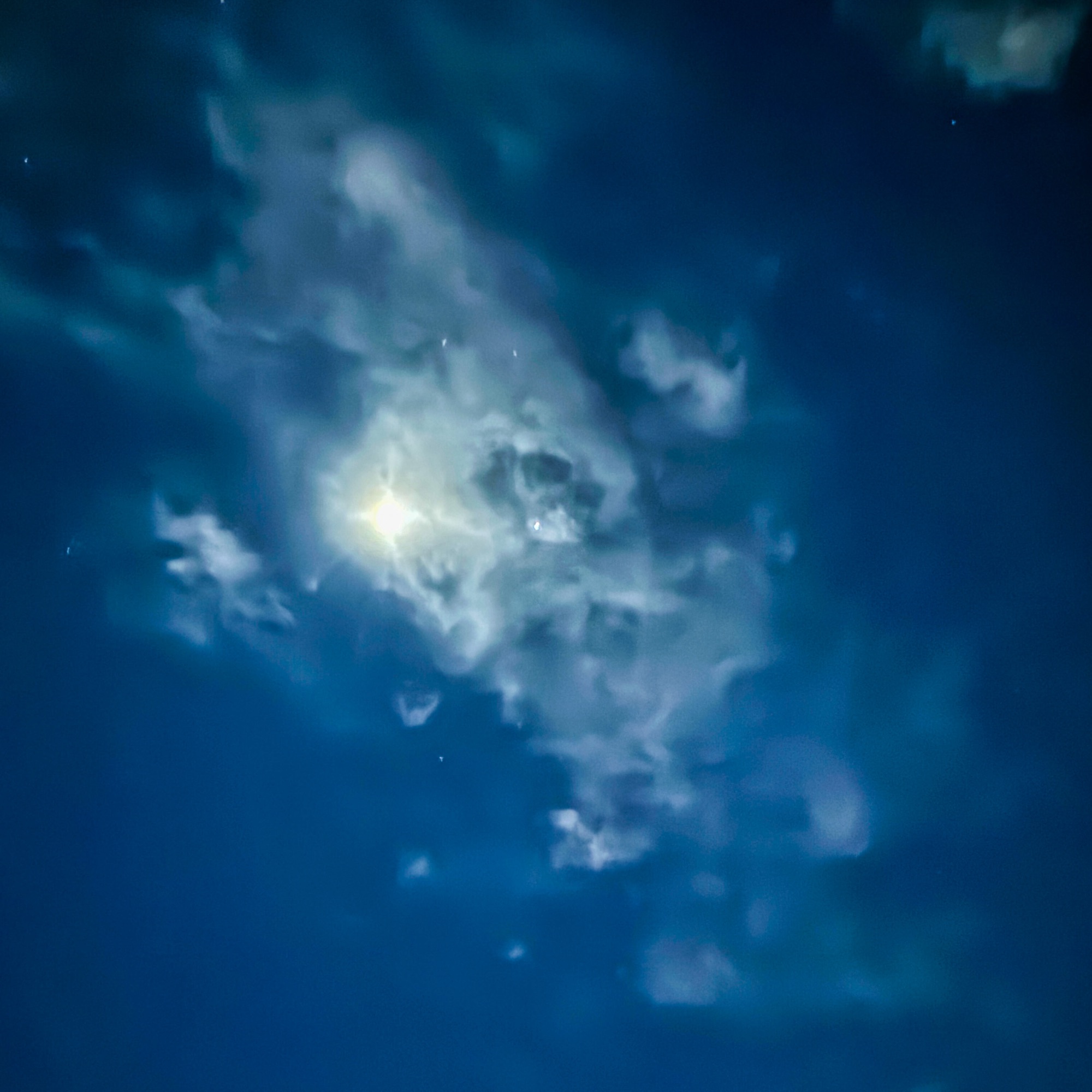
No, this isn’t night photography. This is a photo of the partial solar eclipse we experienced in October. Using an app called Solar Snap and a special sun filter to protect my eyes, I was able to enjoy this not-too-common event and capture this image of the moon passing in front of the sun giving the illusion of a crescent moon when what you are actually seeing is the sun with the moon in front of it. This is one of those images where the experience was an interesting part of the photography process.
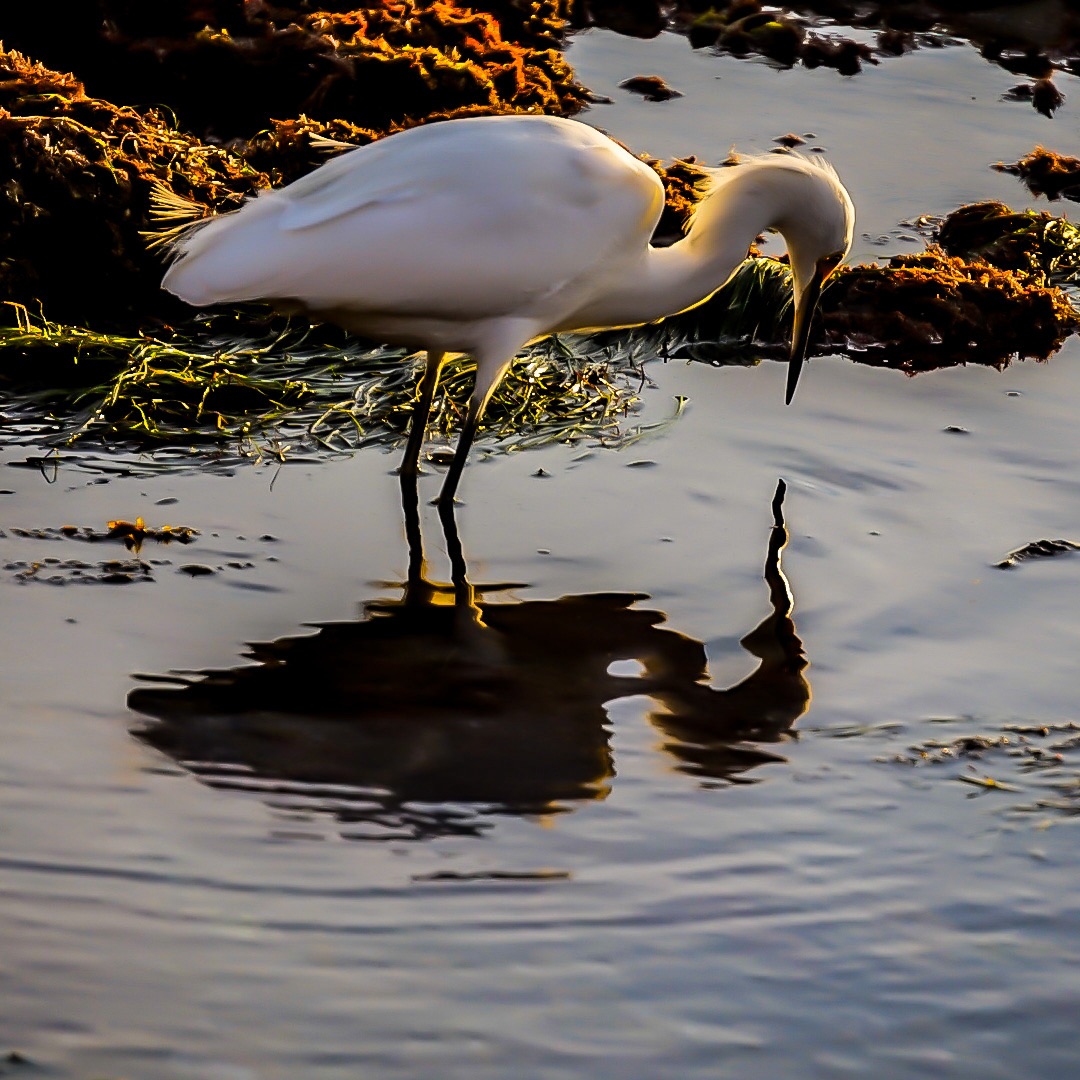
I don’t think I could do a “best of” set of photos without at least one of my favorite bird to photograph! I take many photos of snowy egrets, some better than others. I love this one from November where the reflection is so mirror-like. One of the benefits of the early dark after daylight saving time ends is that sunsets and my daily walk often coincide. My photos show the magic of the “golden hour,” where the light is perfect and photos have that magical quality that is otherwise so hard to obtain.
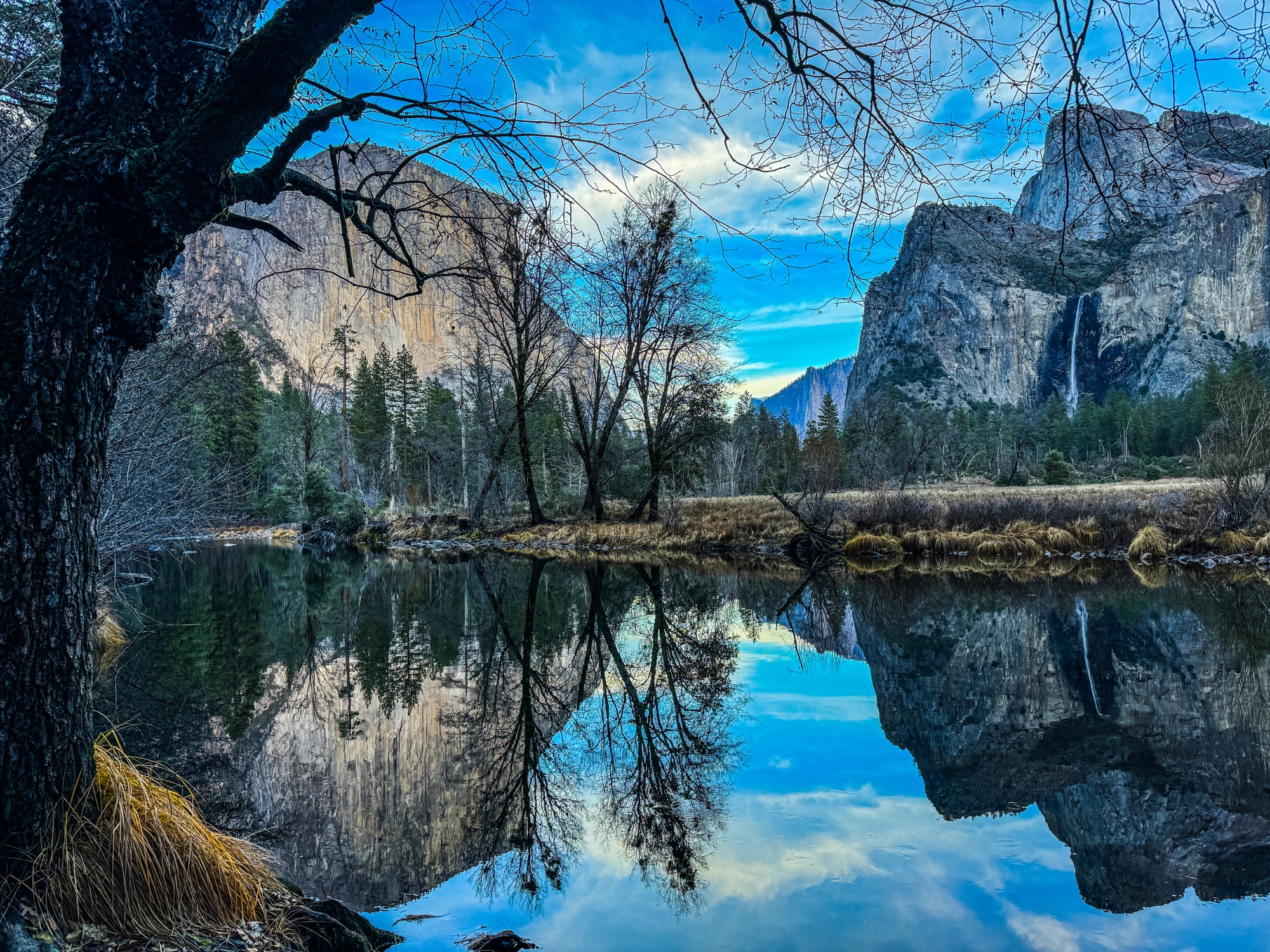
Somehow in December, between holiday celebrations and visits to and from family, we managed to squeeze in a trip to Yosemite. I’m not sure there is a bad day in this very special place. This late afternoon light was perfect for capturing the reflection of El Capitan and Bridalveil Falls in the Merced river.
Even as I write about these twelve photos as my “best of,” I find myself questioning my choices. There isn’t a single sunset photo featured although I have taken many. I didn’t include any of the many selfies we use to document adventures (for good reason!). I tried to pick photos that represented a range of subjects and maybe even some photography techniques. I notice how I often use rule of thirds to my advantage and how I am drawn to natural frames and reflection. I’ve been working hard to capture action and I think that shows in some of these selection too.
Do you have a favorite of these twelve? How do you select your own “best of” photos? What makes one photo better than another?
I can be a bit serious. Okay, maybe a lot serious. And sometimes that means that the classroom can seem like all work and no play…and we all know that first graders (and maybe all students) both want and NEED some play to help learning move along.
For some reason, my school decided that again this year our winter holidays (two weeks of no school) would bump right up against Christmas. I’ll be loving the holiday when January gets here, but to be honest, it’s brutal right now. Instead of children who are focused on learning to read and write (and all our other subjects of study), they have visions of sugarplums dancing in their heads! (Or maybe that is just the candy cane overload coursing through their bodies!)
I made a deal with myself as I planned lessons for this week–leave spaces for play, expect silliness and louder than usual volume, smile and laugh more, enjoy the moments.
So…I planned a small writing lesson.
I remembered this wonderful book of poems called The Proper Way to Meet a Hedgehog and Other How To Poems selected by Paul Janeczko and started flipping through. If I had my students write a “how to” something, they would have many choices of topic and could draw on all that they already know. But which poem would work as a useful mentor text to get them started? There are many good choices…but I was looking for something short, a bit whimsical, and an idea that my students might find unexpected. How to Scare Monsters by Rebecca Kai Dotlich was just right! It starts out easy, “Keep a light on, that’s the thing… and turns a bit in the second (of two) stanzas with “Aim for the toe (did you know this?)…
I read it a few times, letting students soak into the language. They noticed the strange notation (parentheses) and were intrigued. We talked about the extra information in there and they definitely picked up on the personal, friendly tone. We brainstormed things we are “experts” at doing, and that list included A LOT of sports! After I wrote a poem in front of them (How to take Photos of Egrets), they opened their notebooks and began their own How To poems.

Students immediately got to their writing (along with plenty of talking) and a number of them included the parentheses in their poems. As they began to finish and read their writing to me, I could feel the smile genuinely creeping onto my face. The poems were fresh and their voices came through loud and clear. Some of the topics were predictable, but some were not…like this one by O:
How to Catch a Rattlesnake
Go to a desert.
Find a hole.
(Maybe it’s a snake hole.)
If it’s a snake hole,
get a good stick.
And do not grab it by the tail,
grab it by the neck.
If you grab it by the tail
they will swing and bite you.
If you grab it by the neck
they will not move
except their tail.
Did you notice the parentheses? I had encouraged students to pick small topics rather than trying to explain a whole game. But, you know, some students want to do what they want to do. But somehow J captured this game in a nutshell. I bet you know what game it is!
How to Play Ball
Get two teams
9 is enough
9 innings
1,2,3 bases and
one home plate in a square.
(One out is three hittable balls
Four balls you can not hit go to 1st base)
A hit
run as fast as you can go
until you are thrown out
or tagged out
You are out.
Three outs is an inning
touch home plate to get a point.
who has the most points wins
if you are tied
overtime.
And who doesn’t love a how to poem about riding a bike? It’s obviously a childhood classic! Here is O’s rendition. (This is a different O–I have many in this year’s class!)
How to Ride a Bike
This is how we ride a bike
without training wheels.
First put your helmet on
and then get on your bike.
And try not to look down
look straight ahead and pedal
and make sure nothing is in front of you.
And that is how you ride a bike
without training wheels.
And a short but sweet one by V who did take my advice and decided not to capture all of gymnastics but to instead focus on a single trick.
How to do a Cartwheel
Start in a lunge
Put your hands on the ground
Then when you put your hands on the ground
Kick your legs up
(One foot up first, then the other)
Land with hands by your ears.
These small poems started this week off with a dose of joy. Students enjoyed writing and reading them, I enjoyed hearing them and rereading them. No one whined that they had nothing to write about, no one got teary with frustration (including me), and we all enjoyed writing and sharing and teaching someone else about our individual expertise.
Reminder to myself: be playful, small can be powerful, enjoy the wonders of childhood and read and write more poems!
So…if you need to add a bit of joy to your teaching or writing life, take a look at How to Scare Monsters and write some how to poems!
 Thinking Through My Lens