Yesterday the time change didn’t seem to have any impact on me. Today, however, it is playing havoc with my internal clock. A meeting went late, I had emails to write before I left school, and I arrived home still needing my walk. Luckily, the time change meant the walk was lovely, still bright and sunny out rather than in the shadowy dusk.
All that pushed dinner late, along with a fun phone call with my son and grandsons. It feels like it’s 6pm, but the clock is telling me something different. Will I get all my “stuff” done and still get to bed at a reasonable hour so that tomorrow will allow me to be well-rested and at my best?
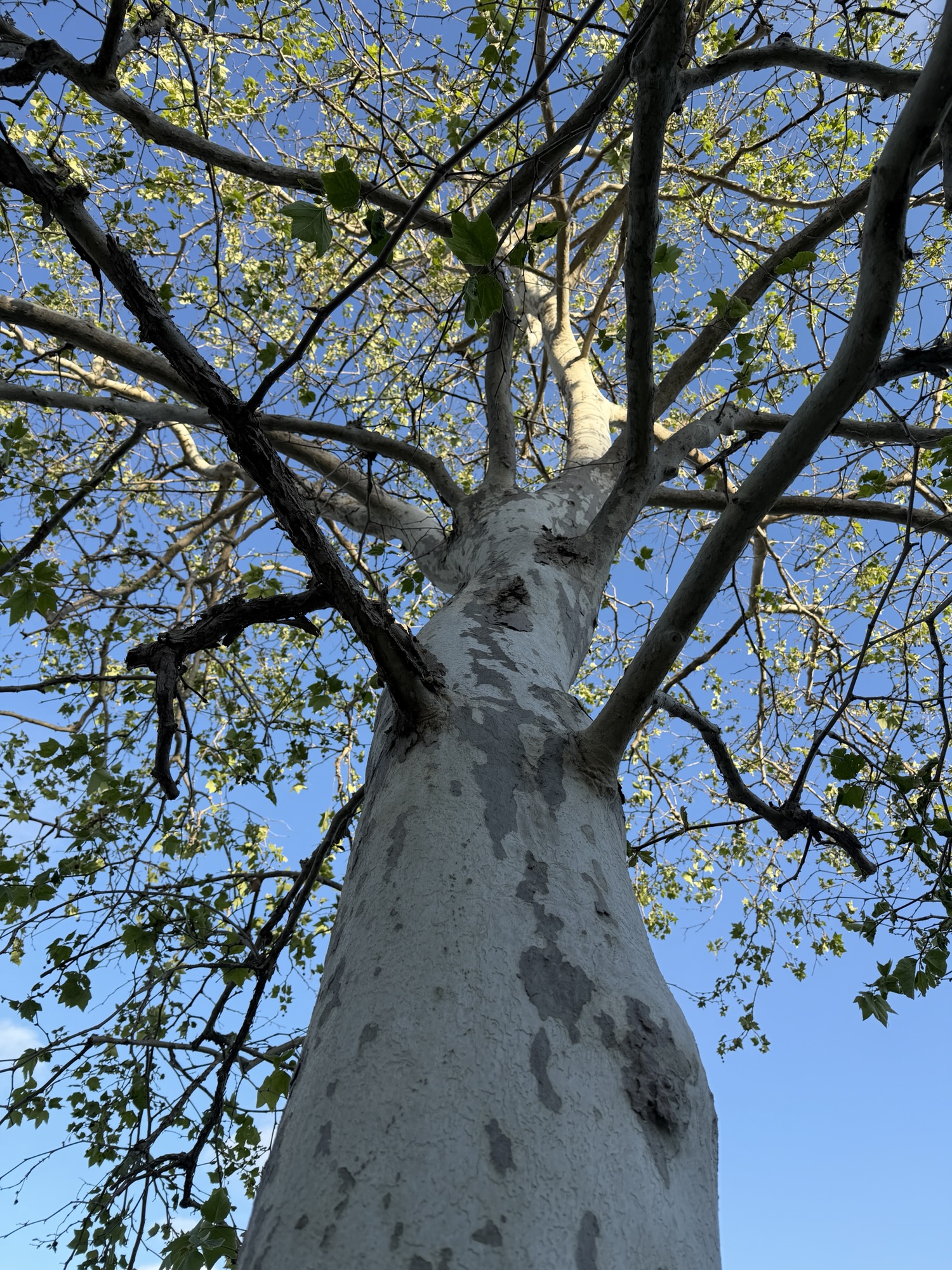
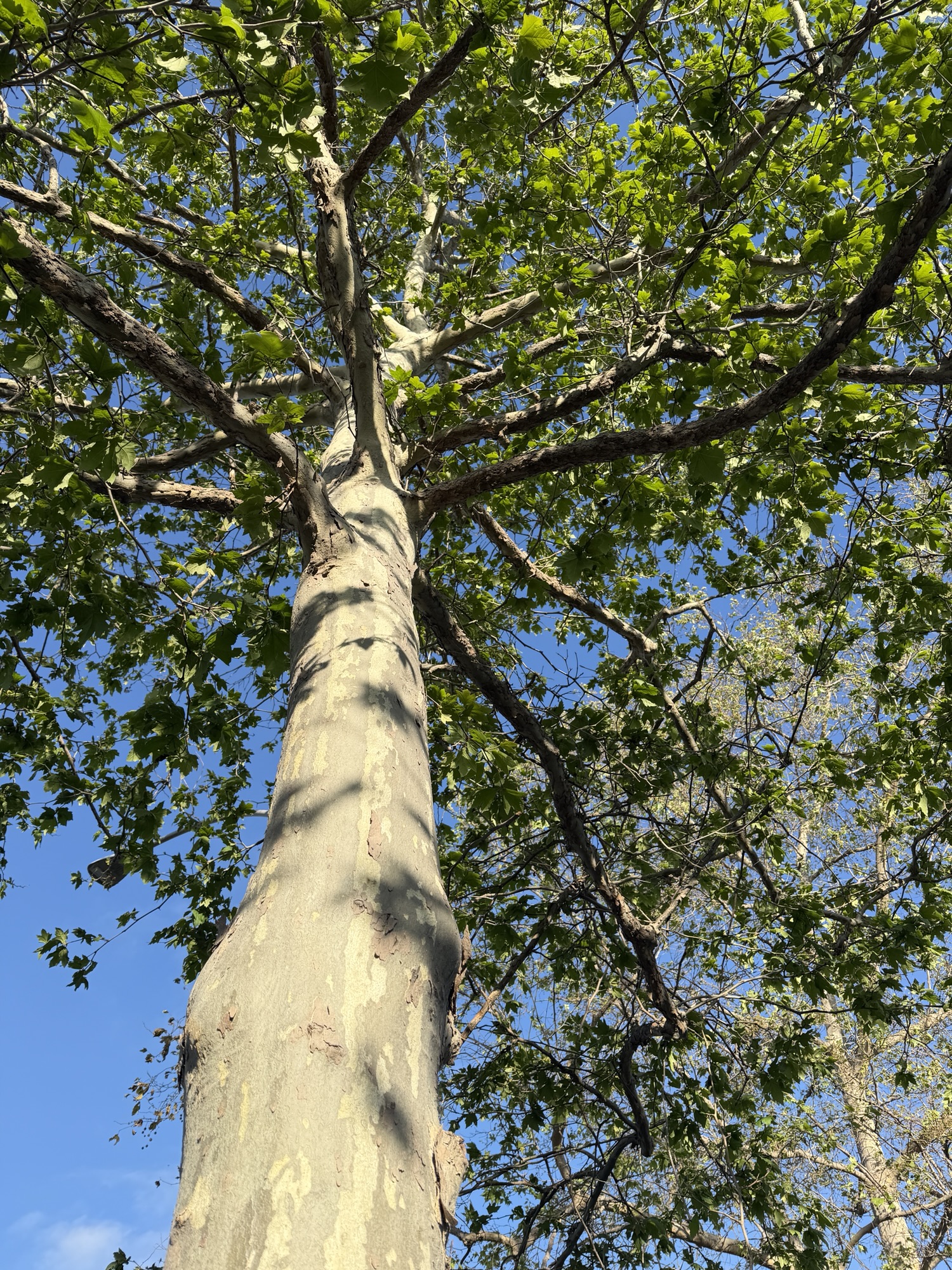
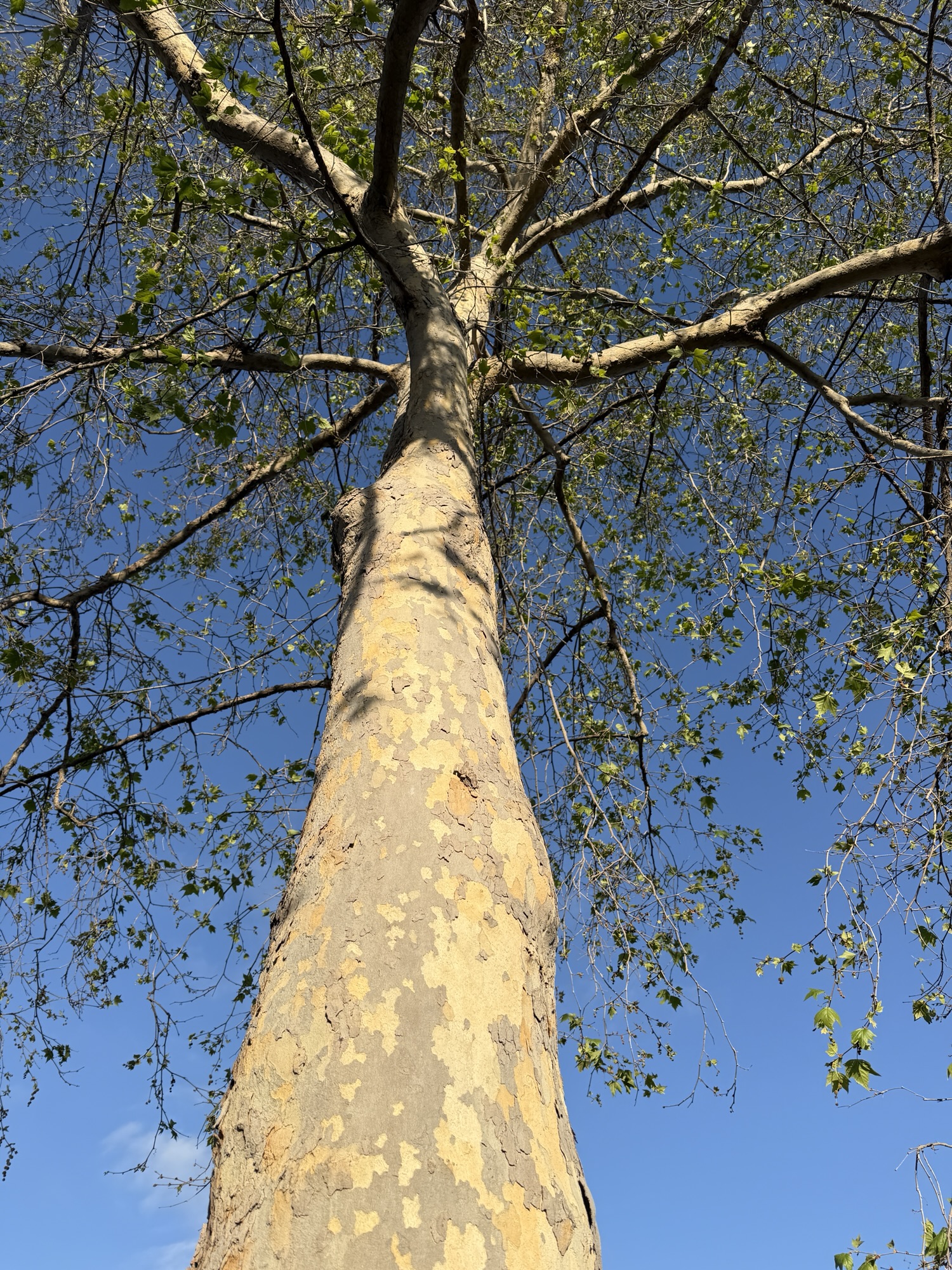
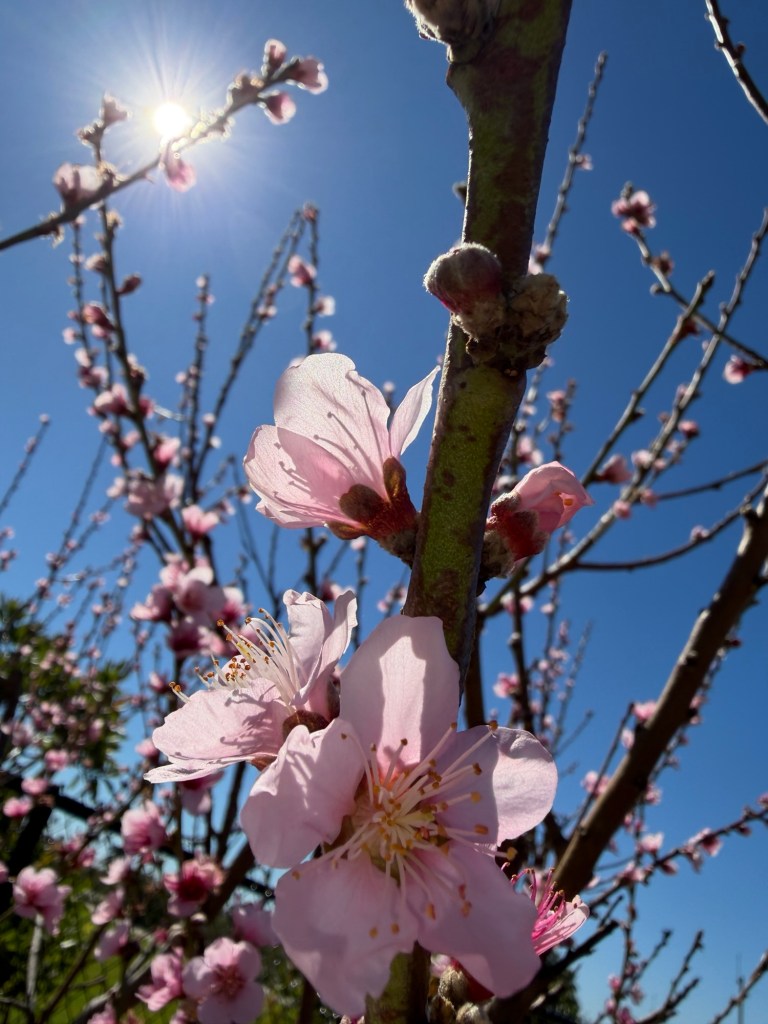
I don’t know if that will work out. But back to that walk…it is wonderful taking a sunlit walk in the evening. I was drawn to the trees (probably related to some tree study I did with students today–more about that later). And they were showing off their new spring finery…and we’re still over a week away from the official start of spring.
So, while my body tries to adjust to clocks, I will enjoy the trees. I hope you do too.
Shore birds are fascinating. They come in many shapes and sizes and have distinctive ways of moving. There are different beaks, adapted to whatever they love to eat, and different feet. I love the elegance of egrets with their sleek curved necks and bright yellow feet. I’ve written about them and photographed them frequently, here are just a couple of the many posts. You can find them here and here. I love the power of ospreys who patiently watch the world from on high and then dive, picking up their prey (large-ish fish) in their sharp talons. You can find posts about them here and here.
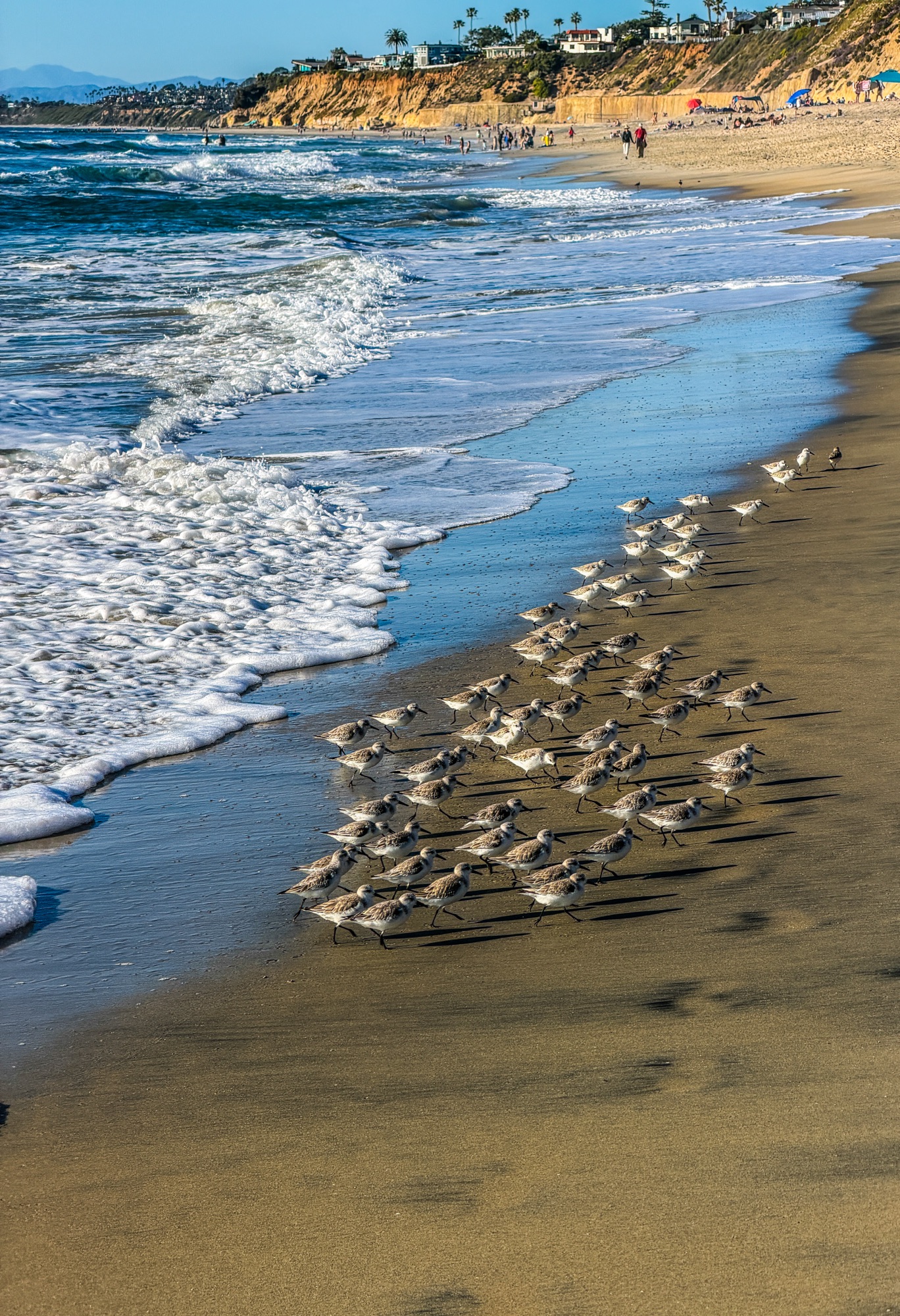
Sandpipers, tiny and nimble, mostly move as a unit. They remind me of those cartoons of the roadrunner where their feet move so fast they almost look like wheels. Waves flow in and the birds move up the shoreline, the tide ebbs back and they rush down to find some tasty tidbits, somehow always staying just along the edges of the water. Their colors change as their direction changes, almost like a wave themselves.
If I move too close, they lift en masse, flying out over the sea, often settling back on the shore a few hundred feet away. I watch and snap photos endlessly, continually curious about these tiny little birds.
What piques your curiosity? What sends you out with your camera and a bottomless pit of questions?
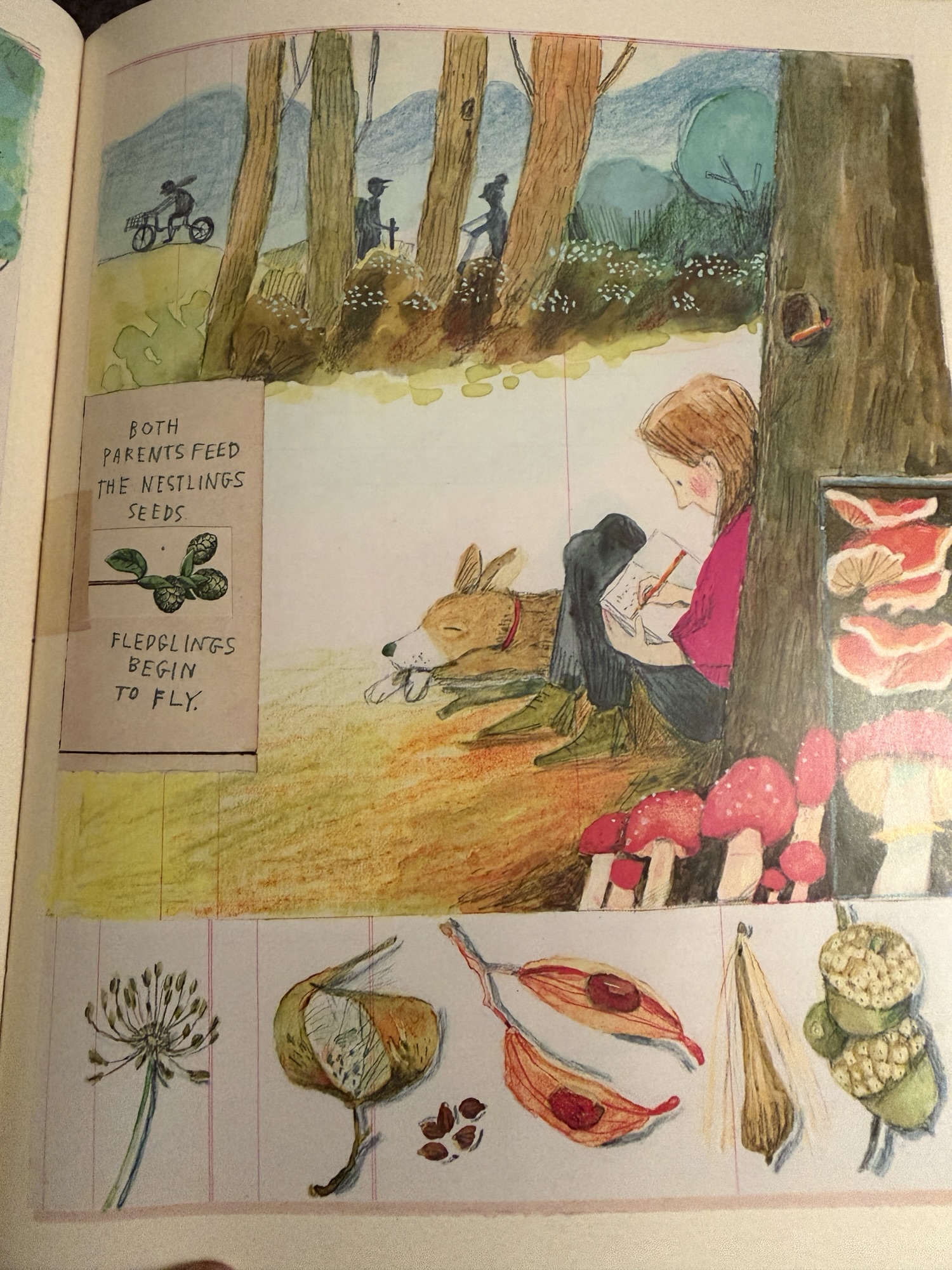
Earlier this week my social media feed introduced me to the picture book, Goldfinches by Mary Oliver, illustrated by Melissa Sweet, published this week. I was immediately drawn in, quick to look up this Mary Oliver poem. I absolutely love Melissa Sweet’s art–and have many books she has illustrated. I resisted purchasing the book for a few hours, then relented and pushed the “buy” button. It arrived on my front porch this evening.
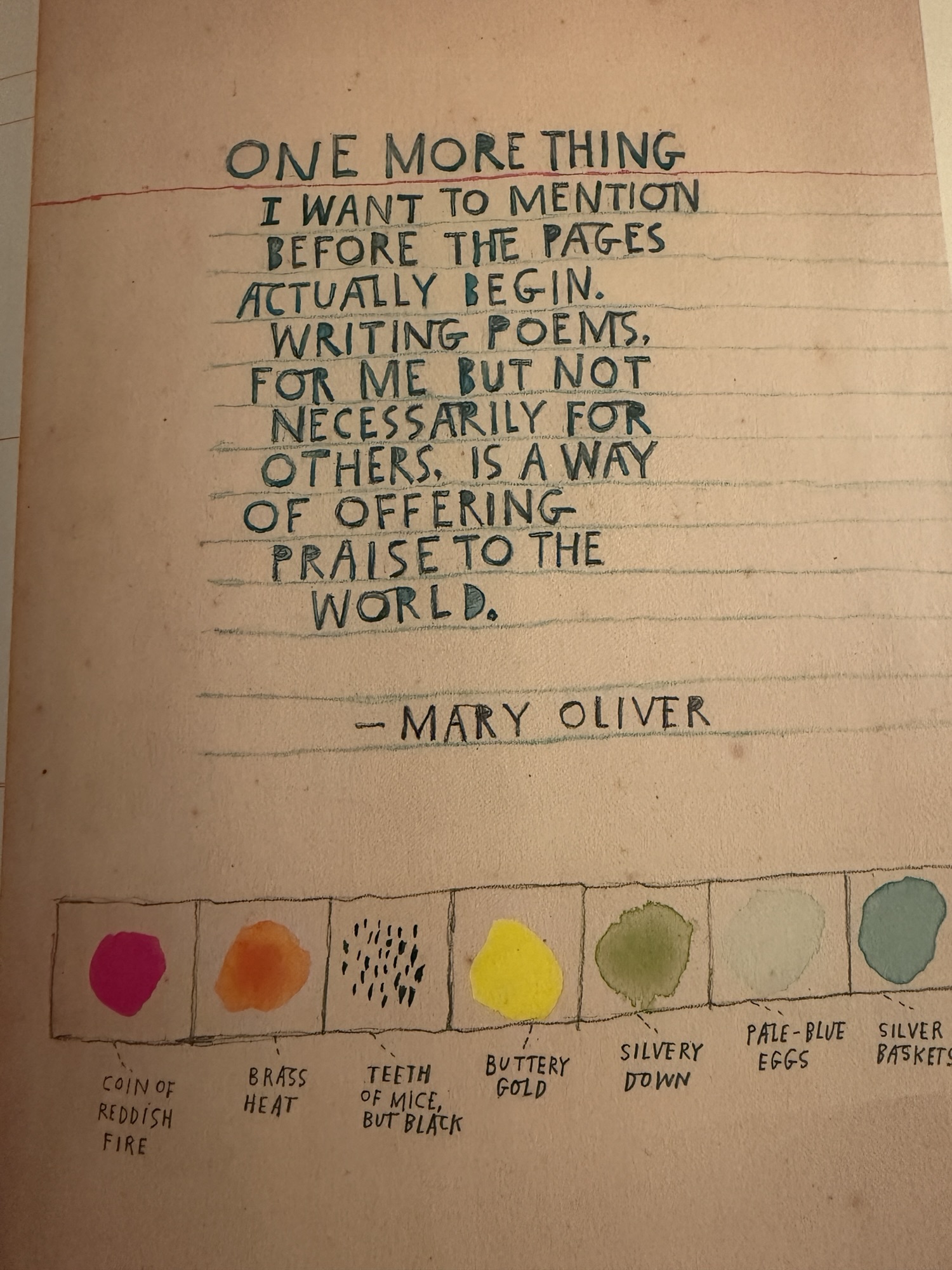
The brilliant pink of the cover along with the word Goldfinches embossed in gold had me swooning. As I open the cover I am greeted with a quote from Mary Oliver (I did check, she died in 2019) that resonates. Writing poems as a way of offering praise to the world…yes. Of encouraging close observation in the natural world. Of paying attention and appreciating what is in front of you. I know I will be using this book with my students soon.
If you asked me about a favorite poet, I might not mention Mary Oliver. I would probably say Naomi Shihab Nye (I love Valentine for Ernest Mann). I might mention Pablo Neruda (Ode to my socks or Ode to an Onion come to mind). I do love many Mary Oliver poems…and I have been discovering so many more since one of the families in my class this year gave me a copy of her collected works. I was not familiar with Goldfinches until this week. If asked my about my favorite poet today, I might just answer, Mary Oliver.
In addition to the gorgeous illustrated poem, this book also includes back pages. It includes Mary Oliver’s poem written in its standard way along with a copy of a bird list written by her. There is also a note from Melissa Sweet that begins with the Mary Oliver quote:
No poem is about one of us, or some of us, but it is about all of us.
The note includes Melissa’s process of research and learning about goldfinches so she could effectively illustrate the poem along with descriptions of Mary’s forays into the woods as a child–even stashing pencils in trees so she would always have one to write things down when inspiration struck. I love that Melissa Sweet creates pages that are like a nature notebook, including notes about the birds along with illustrations of plants.
It was love at first sight for me with this book. I know I will continue to pore over it, studying both the art and words (and the birds I see outside my own place) so I can use it effectively with my students. I can only hope they will love it as much as I do…and connect to Mary Oliver’s beautiful poem and Melissa Sweet’s amazing artwork.
Do you ever put anything in the actual snail mail? (You know the place: the USPS, the Post Office, that place where you go when someone sends you a package and you get that little sticky paper on your door that you need to go and pick it up. And the hours are very limited and the lines are very long–is it really worth going?)
I do.
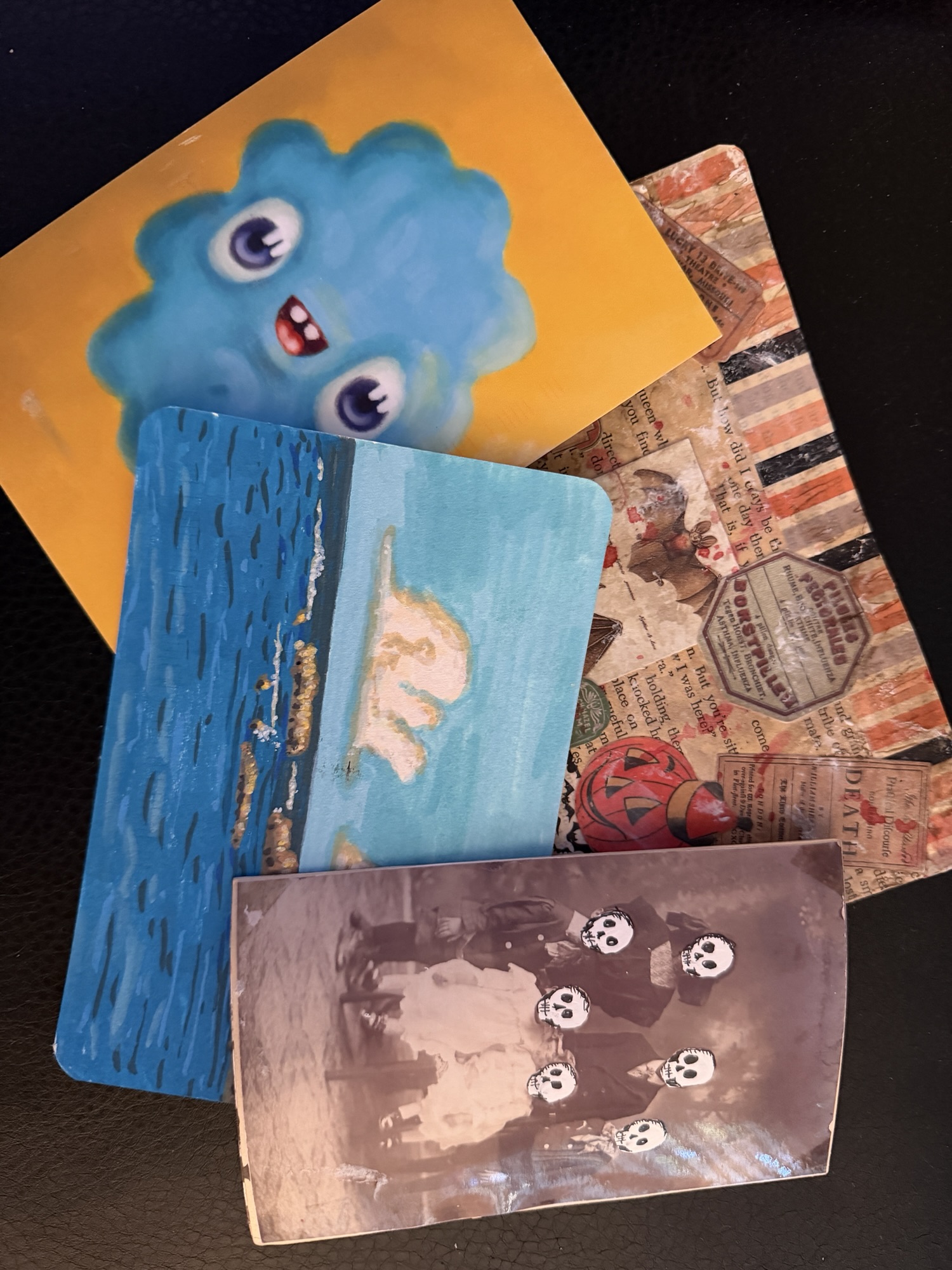
Mostly I mail postcards. Mostly when I travel somewhere. Mostly to my grandsons. And to my classroom so my students can see what a postcard is and how fun it is to get one in the mail.
I like to search out postcards when I get someplace. Find a postcard that is interesting in some way. (Or sometimes it is the only one available.). Some places have free postcards. Some places have cool postcards. Palm Springs has these cool mid-century modern-styled postcards. They’re a little more expensive, but fun to send to another adult.
I discovered that I need to write my postcards within about 24 hours of buying them…and then get them in the mail right away. I’ve learned where there are post offices in some pretty out of the way places–and the smaller the town, the more likely the post office is to be on the main road–highly visible. And I actually carry postcard stamps in my backpack so there is no barrier to mailing them.
Whenever my students go somewhere or we have a break from school, I remind them to find a postcard and mail it to the class. I’ve learned that there are parents who are not familiar with postcards and how they work. And that they are parents who are quite creative and help their child create their own postcard rather than purchasing one.
It’s such fun to have a postcard arrive in the mail. In the classroom, the student who wrote the postcard reads it to the class. They we hang it up on the whiteboard. By this point in the year, we have quite a collection growing! We even have some grandparents who have sent postcards to their grandchild and our class. We have them from as close as Encinitas (our own town) and as far away as Thailand, Australia, and England.
My son sends me postcards. He doesn’t live all that far away, but he is an artist and either makes his own postcards with original art or transforms something existing. It’s such fun to get a postcard in the mail.
What’s your relationship with postcards? With snail mail?
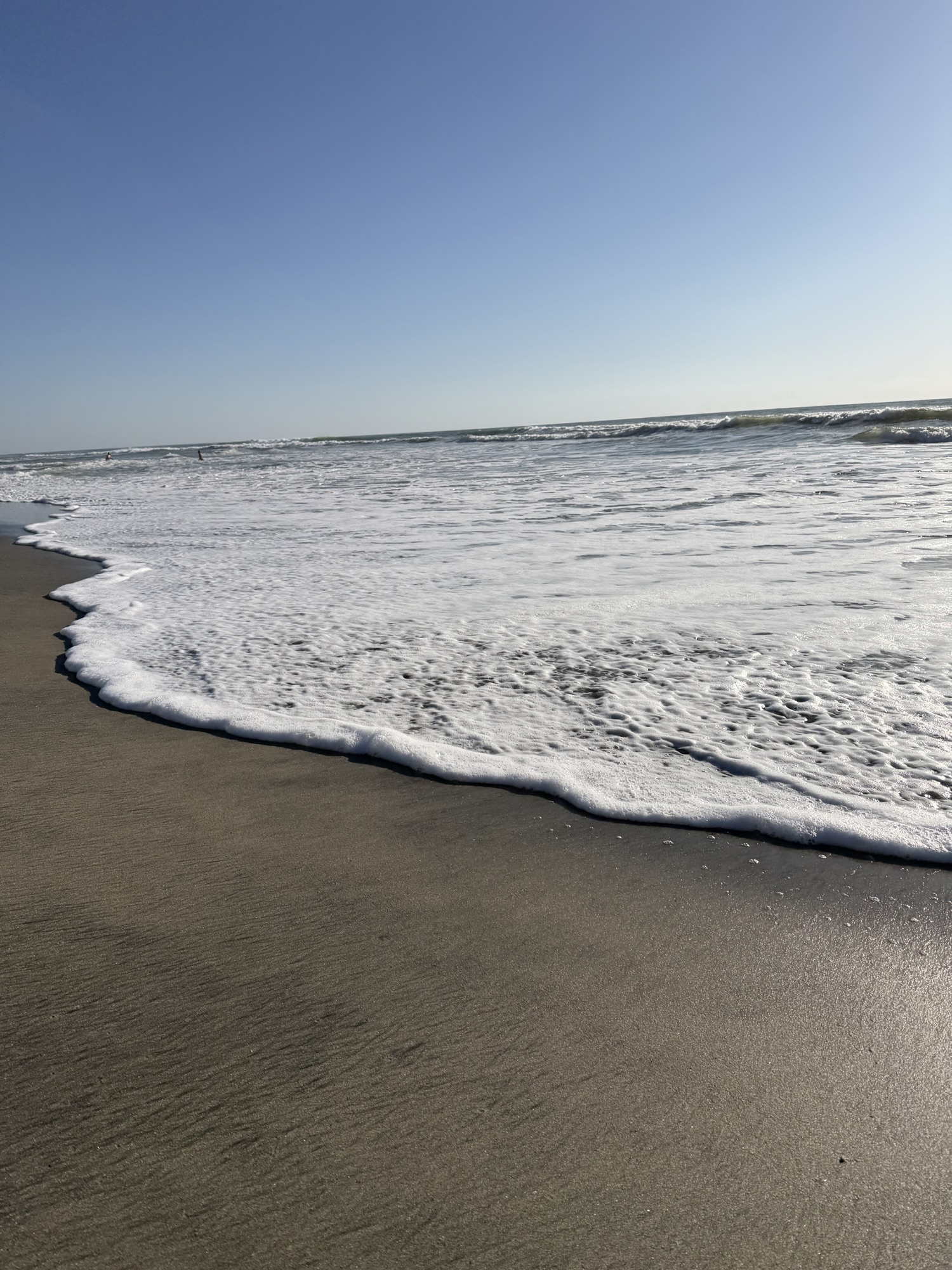
I love the way water ripples. Something disrupts—a pebble, a water droplet, even a wave—changing the course or disturbing the calm and ripples move out. Layers and layers in movement. Energy in motion: palpable, visual, sonic.
I’ve been feeling those ripples in my life this week. The connection to another blogger’s post that has me sharing the post with this person and that person…because they HAVE to read it. They will want to try what this blogger described. The email from a colleague about the conference session I presented on Saturday and used her book as a mentor text…and then she learned about it from those in attendance who were so excited to meet her at a different event. The friend I haven’t heard from in months who reached out because she happened on yesterday’s post and felt that closeness we used to share when we lived in the same city.
I can feel that energy driving me, encouraging me to reach out and connect too. That ripple of touch continues to spread, the concentric circles widening until it spills into the milky froth of foam sliding along the shore.
For nearly 14 years I have been taking a photo (nearly) every day and posting it to social media, specifically to Instagram (you can find me @kd0602). In many ways it is a part of my writing practice. The camera helps me pay attention and when I pay attention words begin to flow. (I also started my blog at about the same time)
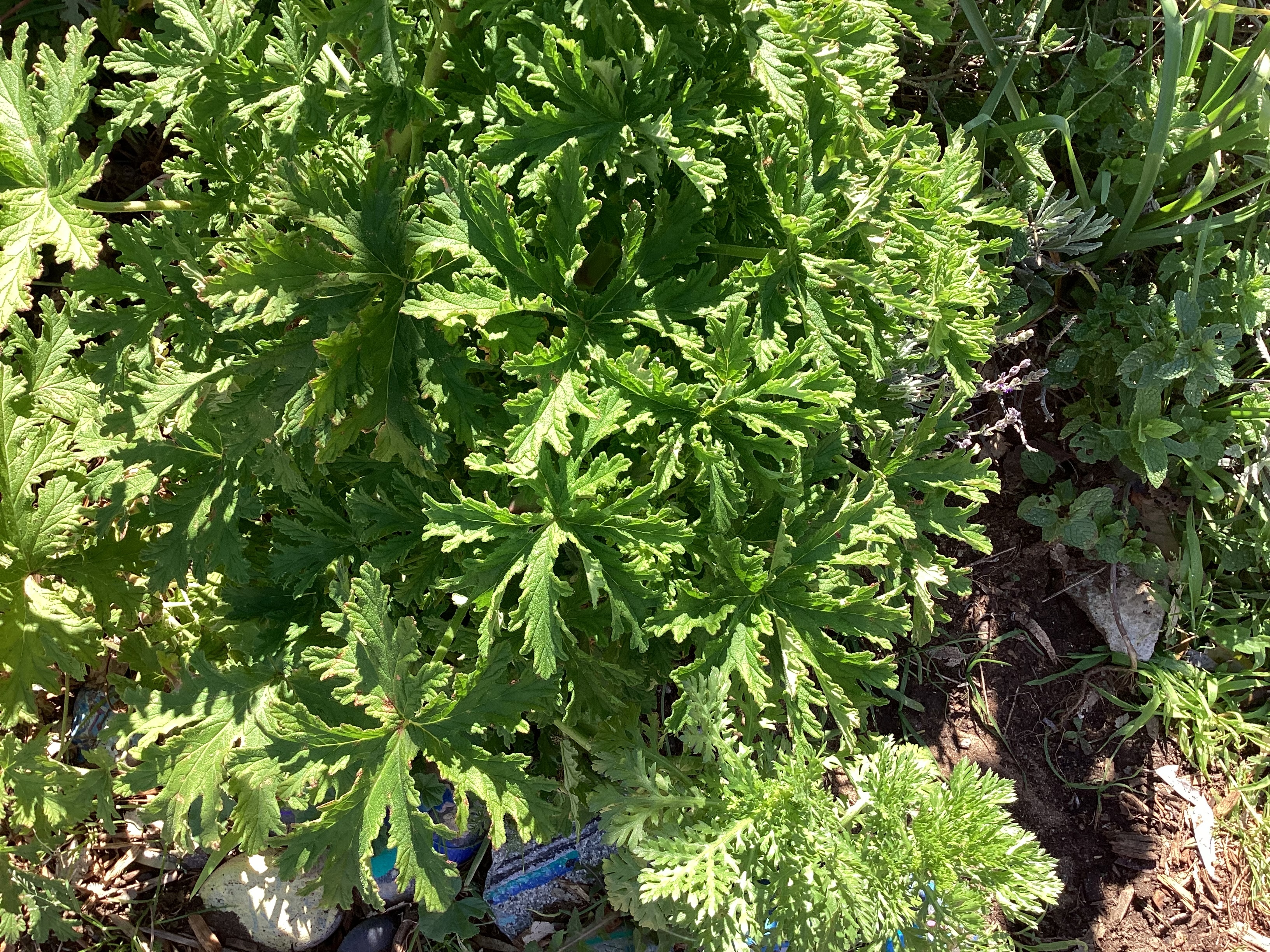
I’ve gotten in the habit of sharing my photography practice with my students, specifically teaching them some techniques to try on in their photography. Last week I showed first graders examples of photos taken from a bug’s eye view, a bird’s a view, and using the rule of thirds. They were excited to try this out! We headed out to our school garden where students were to take three photos using each technique. (And to try not to all take the same photos!). We returned to the classroom to take a close look at the 9 photos and select the one that would then become the basis of the writing we would do.
I was pleased with these photos taken my 6 and 7-year olds. I can see the bug’s eye view, the rule of thirds, and the bird’s eye view (and my students were eager to explain their perspective to me!). We are so fortunate to have such an amazing space to practice our photography.
Before we began writing, I read Kwame Alexander’s How to Sing a Song,a beautiful book filled with figurative language. We’ve been working to add metaphorical thinking to our writing (similes and metaphors). After reading and talking about the book, we began thinking about how to write about the photo we had taken.
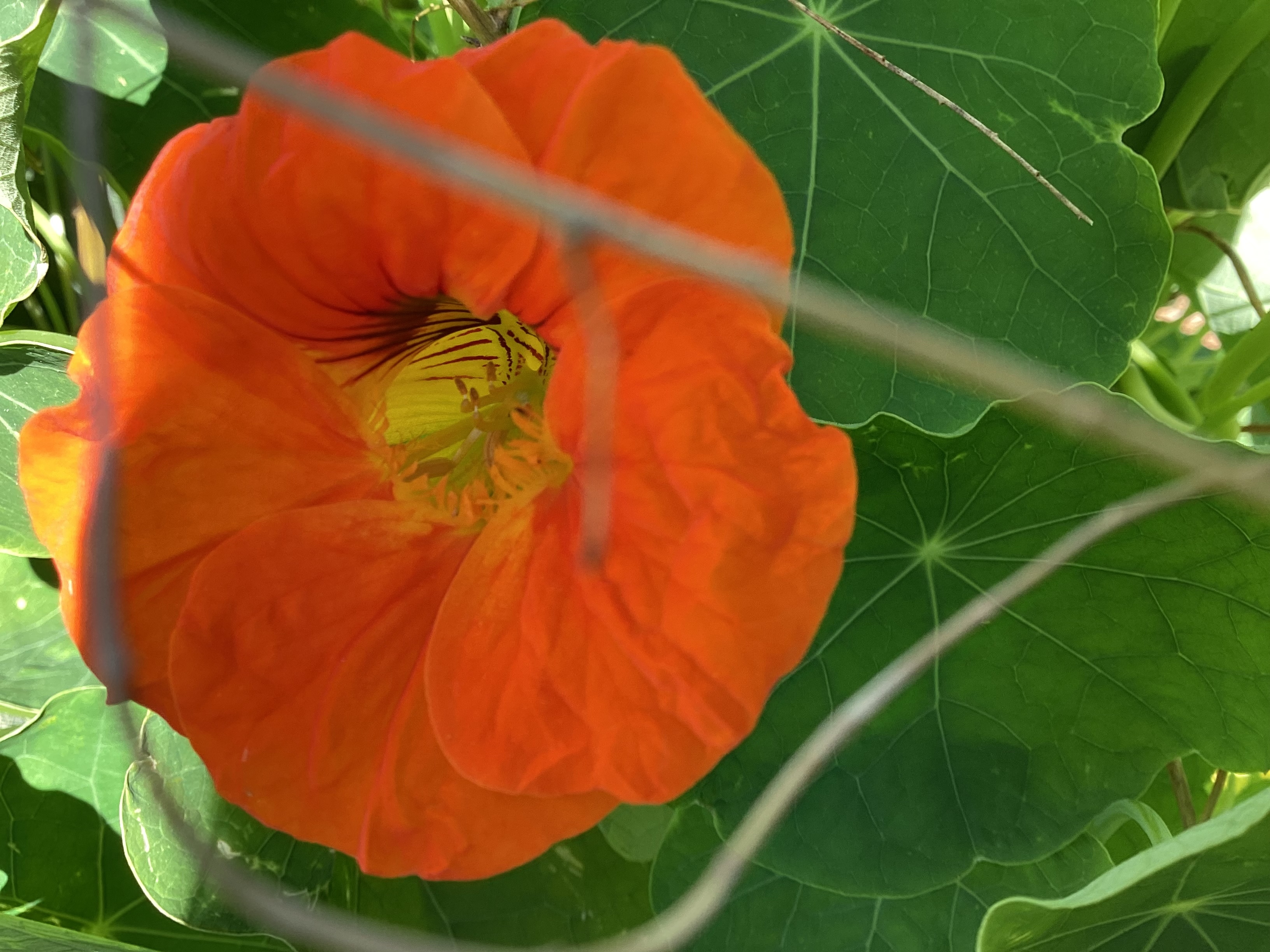
The student who took the photo of the orange nasturtium wrote:
How to Grow a Garden
First you put a seed in a ground like putting a baby in its crib. Then you water it with care and let it grow for a little while. Now you have an orange flower. Inside there is yellow, black, and very light green. The petals are crinkly and bumpy. It has little yellow gold flaky things inside like crumbs from crackers.
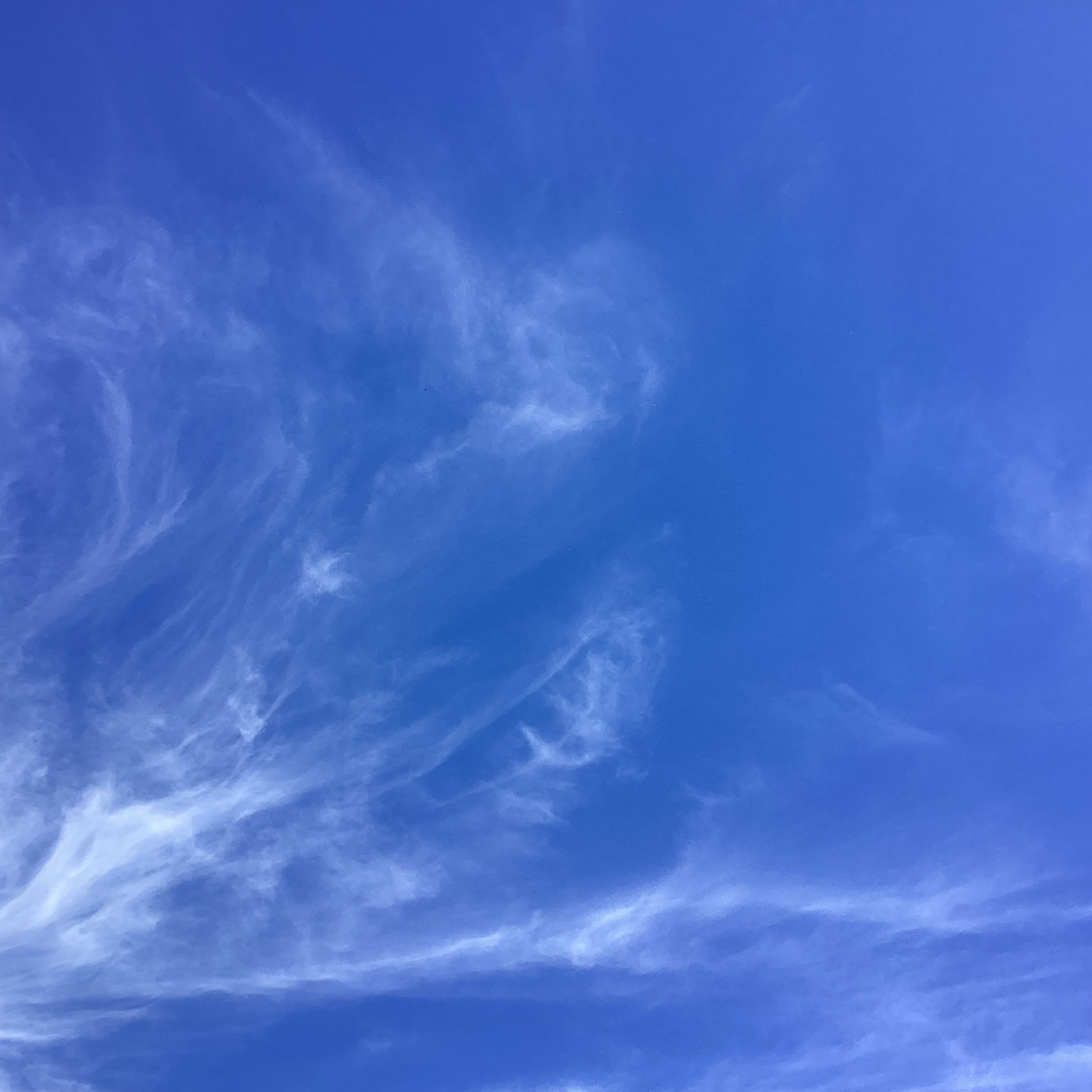
The student who took the photo of the sky wrote:
How to Love the Sky
Look up and listen. Hear the birds, don’t just listen to them, listen to them from your heart. Then hear the sky talking to you. See the blue of the sky and the white of the clouds and love.
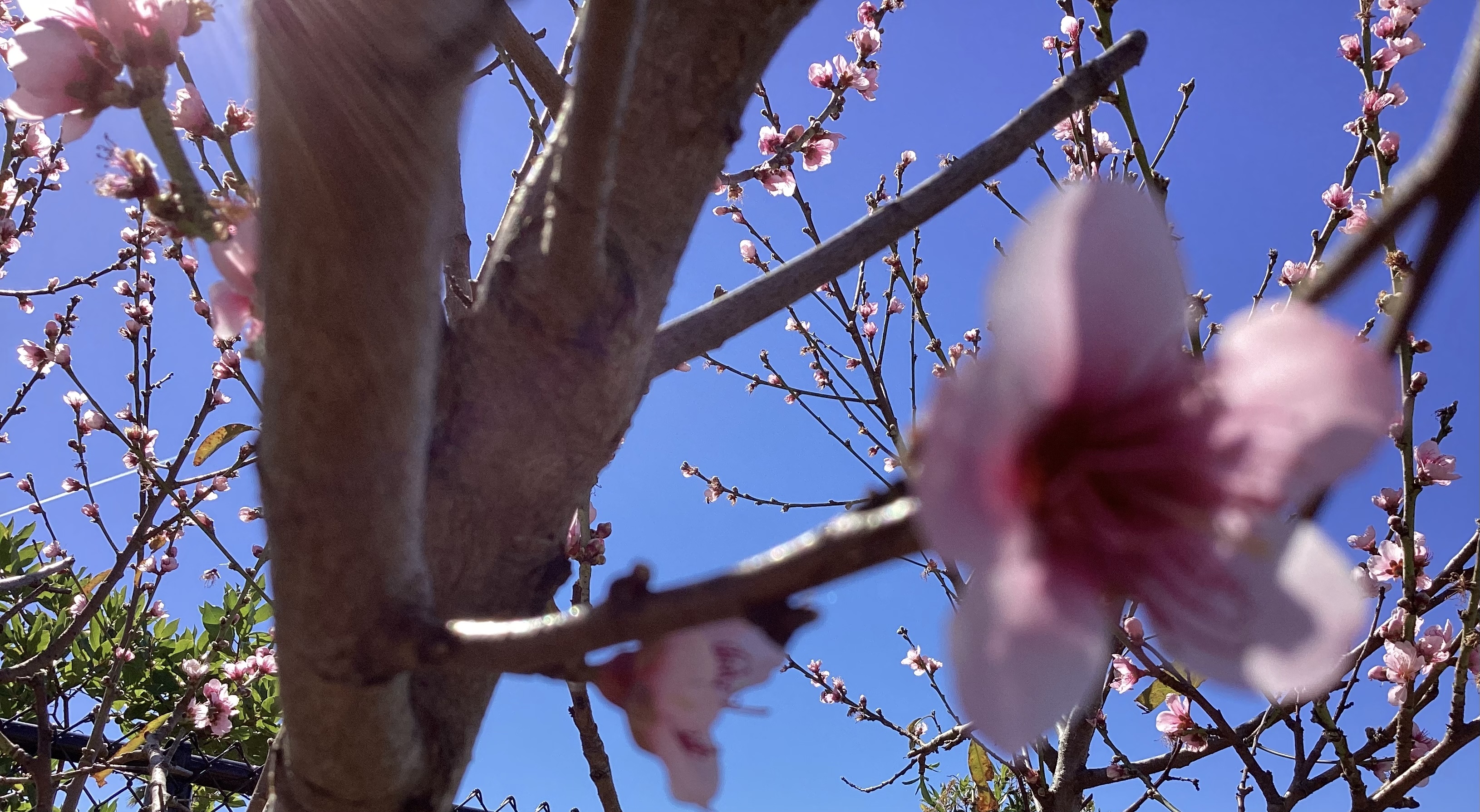
My own photo was of our cherry tree with the sun peeking through.
I only managed a sentence before students were calling me over to read their developing drafts. I borrowed the first word from How to Sing a Song.
How to Grow a Cherry Tree
Hush! Focus your eyes on the softest pink, gently dancing in the light afternoon breeze.
Maybe I’ll continue the piece one of these days, but for now I’m excited to watch my students become confident and accomplished writers…with a metaphorical flair!
Tuesday Treats: a burst of protein (deviled eggs, cheese and crackers), some blue tortilla chips with salsa, and a spoonful of pastel M&Ms. The perfect boost at recess (for teachers) for energy to manage the rest of the day. (Our students did NOT see their shadow in February and they are in full spring behaviors!)
Afternoon recess duty: sunny and mild with a view of the blue Pacific Ocean. The PE teacher wrangling the competitive basketball boys to an organized line shooting baskets, so I didn’t need to put my attention there. Instead, I rescued the many basketballs that had rolled off the blacktop. As I tossed them back I noticed a couple of girls retrieving them and putting them back on the ball rack. I love when kids are helpful just for fun. A relaxing and non-stressful recess for me!
My daily walk: getting home in time to squeeze my walk in before my Zoom meeting. A chance to reconnect and debrief my day with my hubby, mentally clearing space for the complex thinking needed for planning a collaborative project with colleagues from the California Reading and Literature Project (CRLP).
Comfort Food: Yum! Spaghetti dinner prepared by our resident chef (not me!). Perfectly filling, hot and savory, satisfying without feeling heavy.
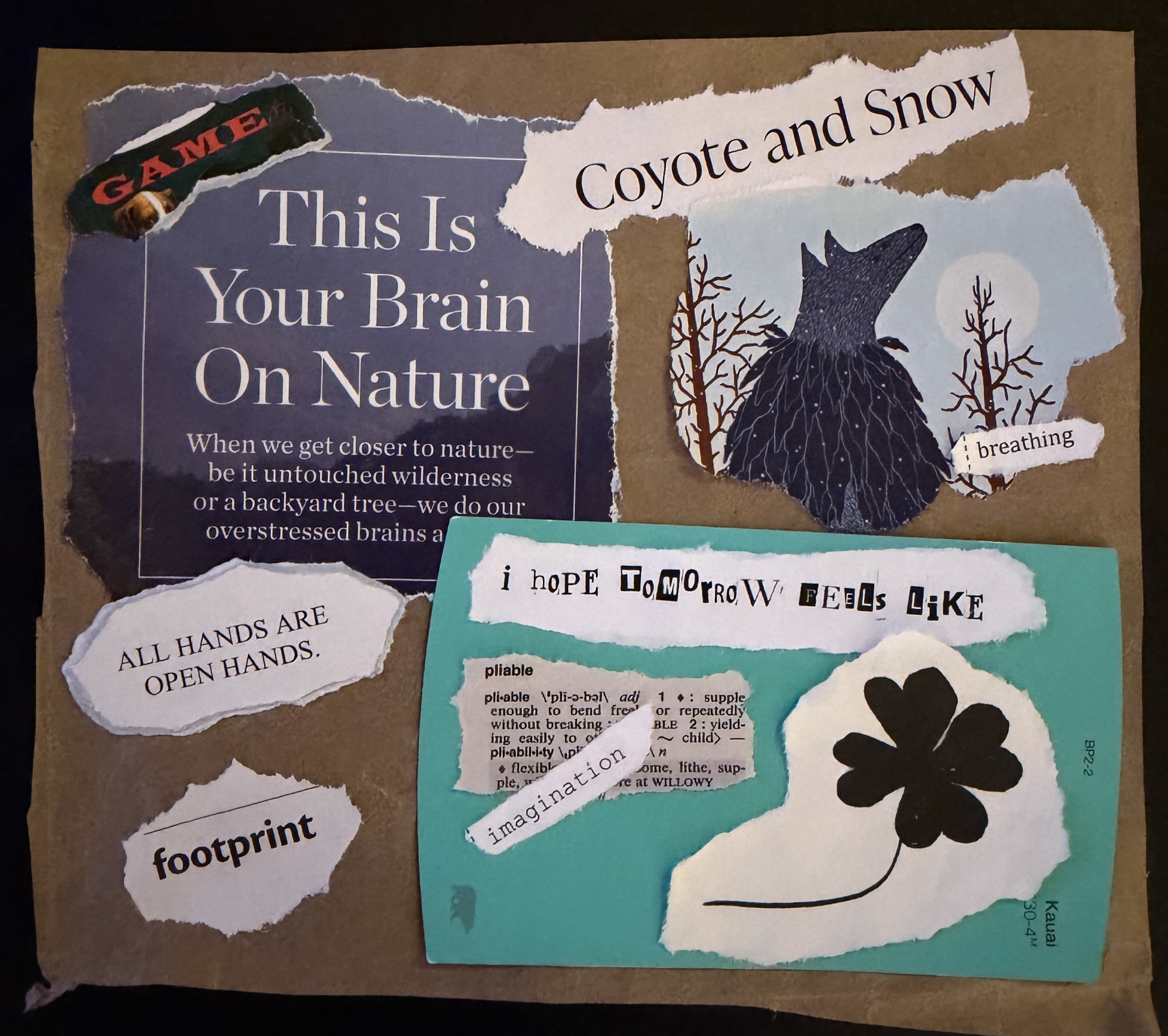
Saturday marked the 18th annual Spring Conference put on by the San Diego Area Writing Project (SDAWP). I had asked a friend and colleague if she would lead a session on writing as adults, knowing that she is writer through and through. She quickly responded that she wasn’t writing–she was struggling to find words as she dealt with some challenging life events. Instead, she replied, she was foraging, finding words in the wild using collage, black out poetry, playing cards, making zines, and more–and using these same techniques with her middle school students.
Wait! Finding words? I couldn’t get back to her fast enough. THIS was a session we needed for teachers (and their students)! Thank goodness she agreed.
As participants walked into her session they sat down to a pile of magazines, paint chips, a page with some open ended prompts and lists of words, scissors, glue sticks and encouragement to just get started. When there weren’t enough scissors, I watched one participant pull her Swiss army knife (the kind with the little scissors) out of her backpack, other just started tearing. Maybe 5 or 10 minutes into the session, our presenter introduced herself and began talking about this premise of foraging for words as we continued to make and tear and glue.
The energy in the room was electric. Teachers cut and tore, glued and foraged. Words emerged from dictionary pages torn from books no longer in use. Images spilled words, words build images, poems emerged from black sharpie markers, playing cards became nudges to dance or sing… Students used pages torn from the novels they were reading in class (extra books acquired for this purpose) to create blackout poetry, tastes of a chapter of a book they would soon read. They folded zines, summarizing novels in 6 words (or 12 words), illustrated with found images. (Ala Cozy Classics board books)
We were reminded that sources of collage material are everywhere! That “Next Door” app on Facebook, the Friends of the Library freebies, not to mention the casual discards (like the backing papers from the nametags we used at the conference) that often are just tossed.
We left with a work in progress and ideas overflowing. Some participants left with a pile of magazines, others with an emerging piece of art. We all left with the conviction that there are multiple ways to get at writing…and to get unstuck when the words simply won’t come.
My work in progress
While I’m not sure exactly where this piece will lead me…or if it will just find a place in my notebook, I know these ideas will continue to marinate. I’m already thinking about ways to use this idea of foraging and collage with my own students.
Writers find a way…even when words are not flowing. Now to make sure that students also know that there are many ways to write…and to ignite writing. Forage away!
There’s something contagious about play that brings up belly laughs–even in serious adults!
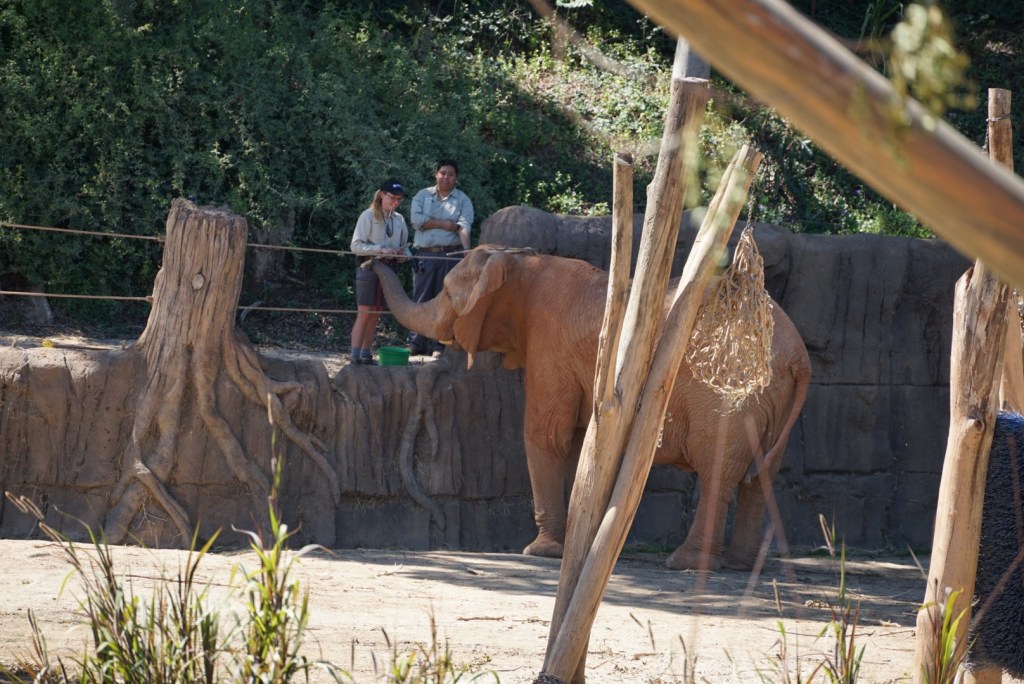
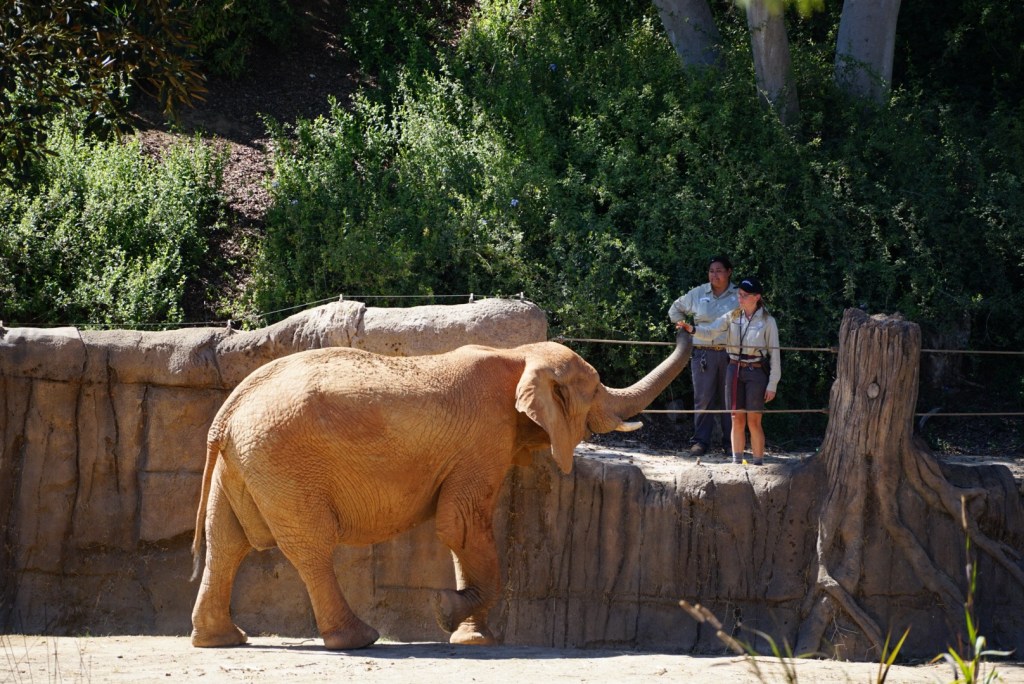
It was hot today–in the high 80s at our local Safari Park. We headed out to attend a preview of the new Elephant Valley–the enclosure where the eight elephants live. Elephants are special–smart, social, and full of personality. And I have to admit, I have gotten to know a lot more about them since my niece became an elephant keeper.
This new enclosure is special. It gives the elephants lots of space…and makes it easy to watch elephants. This preview meant the crowds were large–and that is never my favorite. We were lucky enough the find a place to sit in the shade (many thanks to the couple who shared their table with us)–right in front of the little pond and a mud hole.
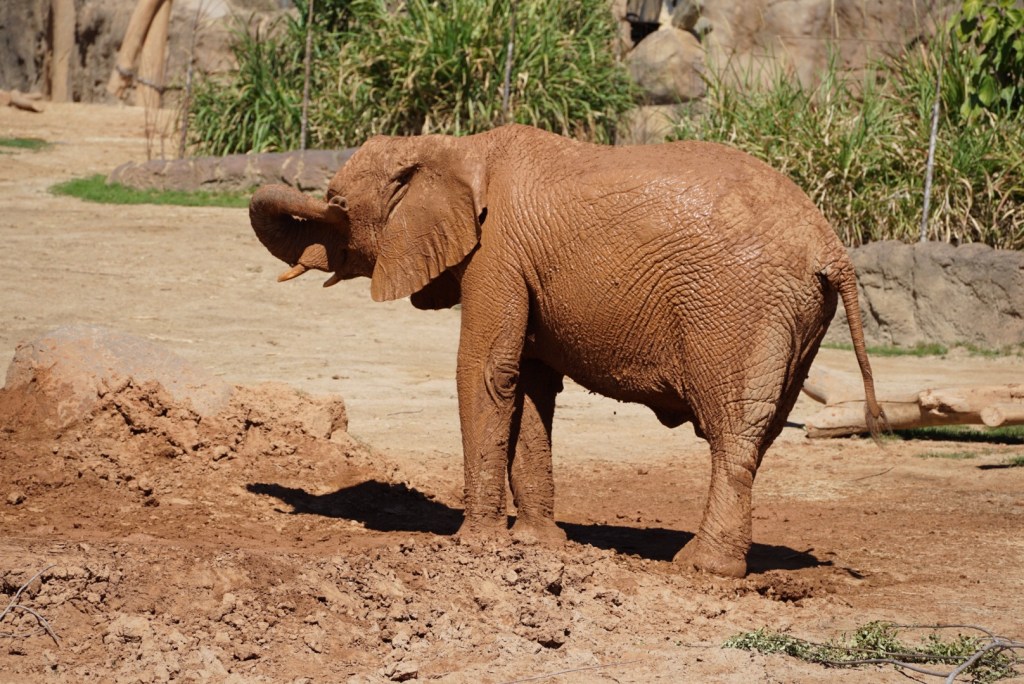
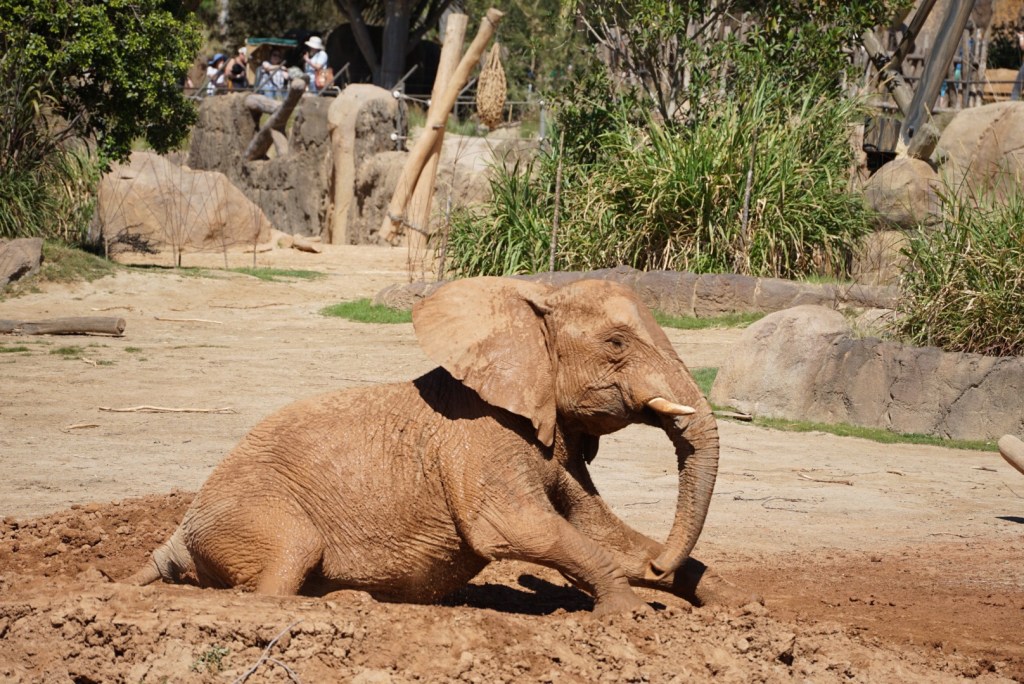
The elephant keepers were doing some enrichment/training with the elephants, creating spectacular moments for visitors. And afterwards, the elephants clearly needed to cool off. As we sat we watched one of the teenaged elephants head over to the mud hole and start rolling and splashing the mud all over. Watching these huge animals nimbly get down to the ground and play in the mud is a delight! We could hear the echoes of laughter as visitors enjoyed the spectacle. Then another elephant moves toward the mud–a hole clearly big enough for one, but for two? We watch the elephants nudge and push until they fall into a full-on wrestling match, playful and muddy, trunks swinging, mud flying. At some points butt to butt, fully enjoying the cool mud and each other as they played together in the not-quite-big-enough-for two mud hole.
I am reminded again and again of the importance of play–not just for children and not just for elephants…but for all of us. It is so easy to get serious, to spend our time worrying about the world, worrying about our families, taking care of business, getting through the daily stuff of living and forget to take time to play, to laugh, to delight, to find a place in the mud to cool off and let off some steam.
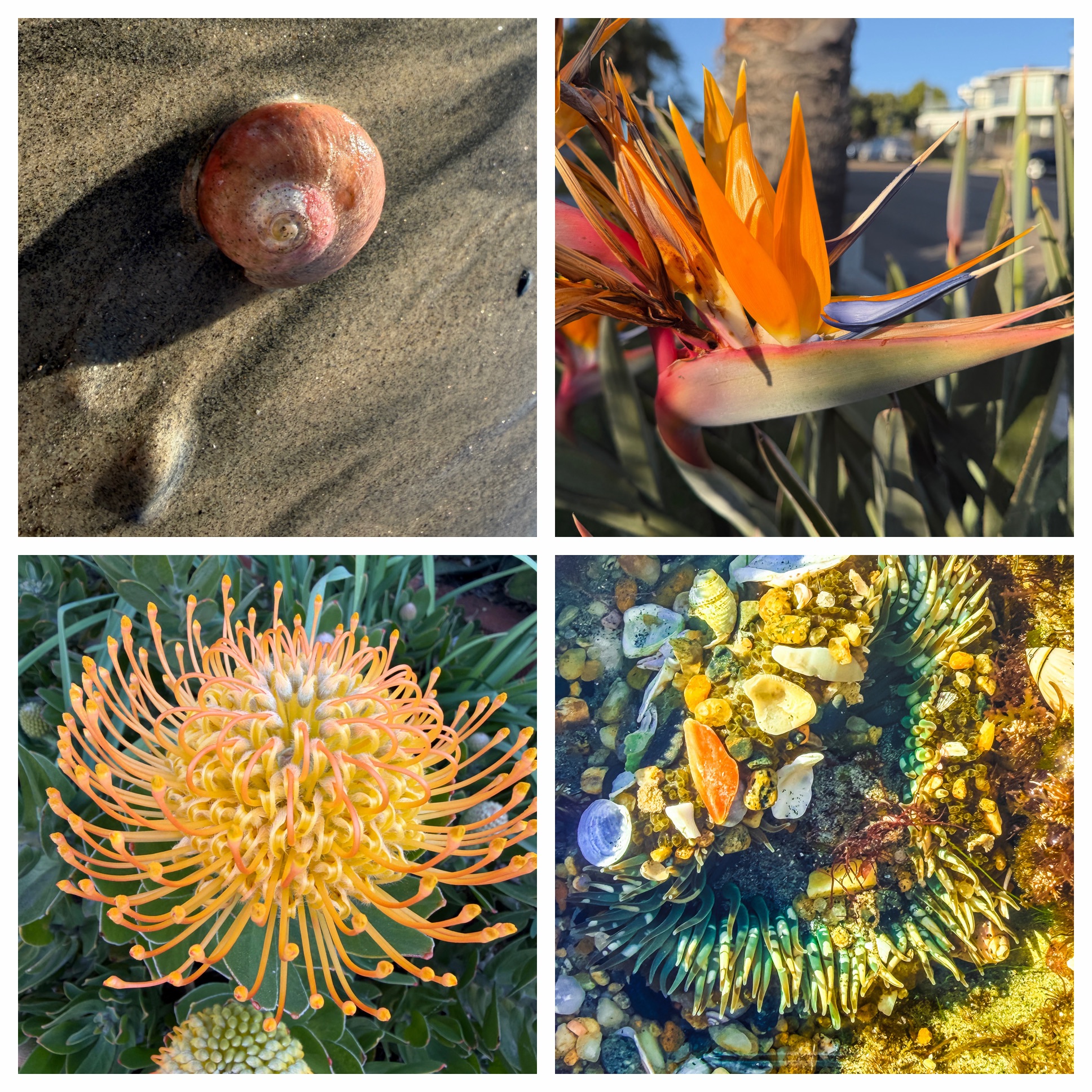
I was talking with my sister last weekend and she mentioned she had done a color walk with a friend at the beach. I’ve done color walks with my students around the school, often picking a color that I think they’ll have to look hard to find. I like the way that a focus on something: a color, a shape, a something…opens up new possibilities for what you might notice.
Of course, for me a color walk is also a photography walk…and lately a poetry walk as well. The tide has been low this week during my walking times, so the tide pools have been calling my name.
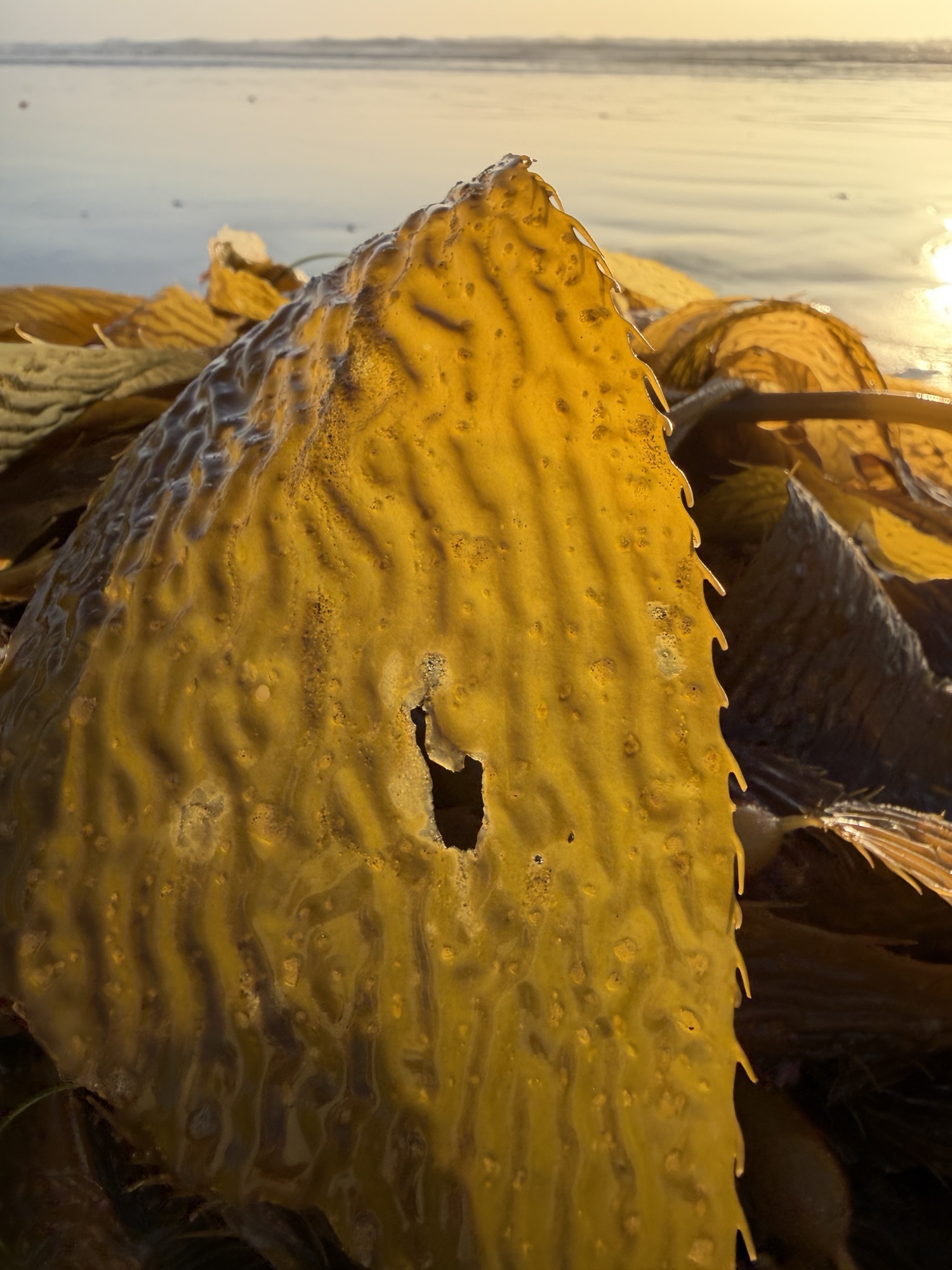
The color of giant kelp (macrocystis pyrifera) kept calling my name. An amber, goldish, kind of orangish color. And weirdly enough I felt like it was echoed in the landscaping I walked by (I did have quite a trek since we had summer over the weekend and parking also felt like summer–like looking for a needle in a haystack!).
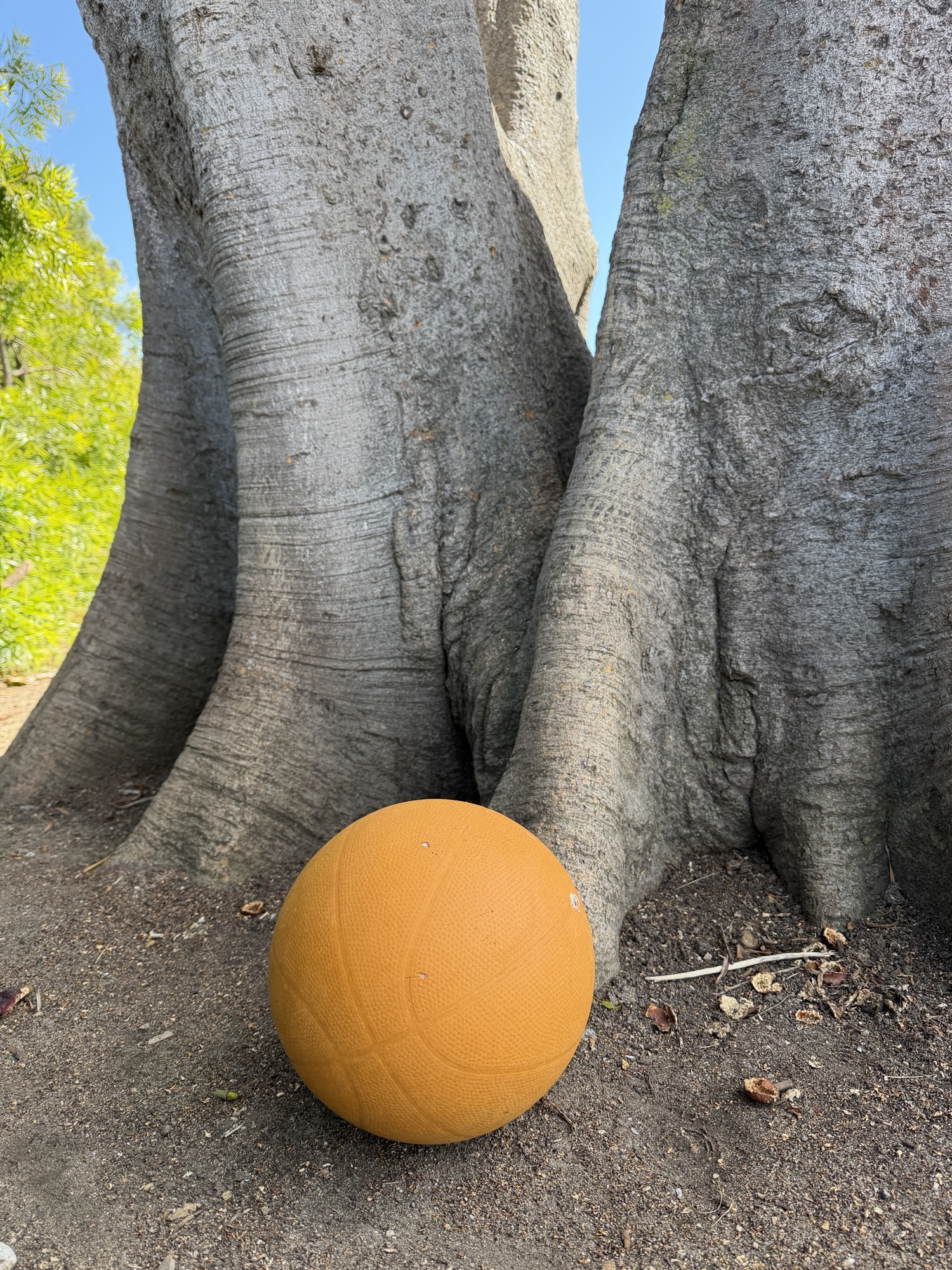
With orangish on my mind, I pulled a small collection of photos from my walk, and then used them to inspire some small poetry. To be honest, I dreamed poems all night on Sunday, tossing and turning, writing and revising in my head. And then when I woke up it was all gone.
So, in the spirit of orangish, I’m going to try again. (Although I doubt I can conjure what seemed so urgent and perfect in those busy, persistent writing dreams.)

 Thinking Through My Lens