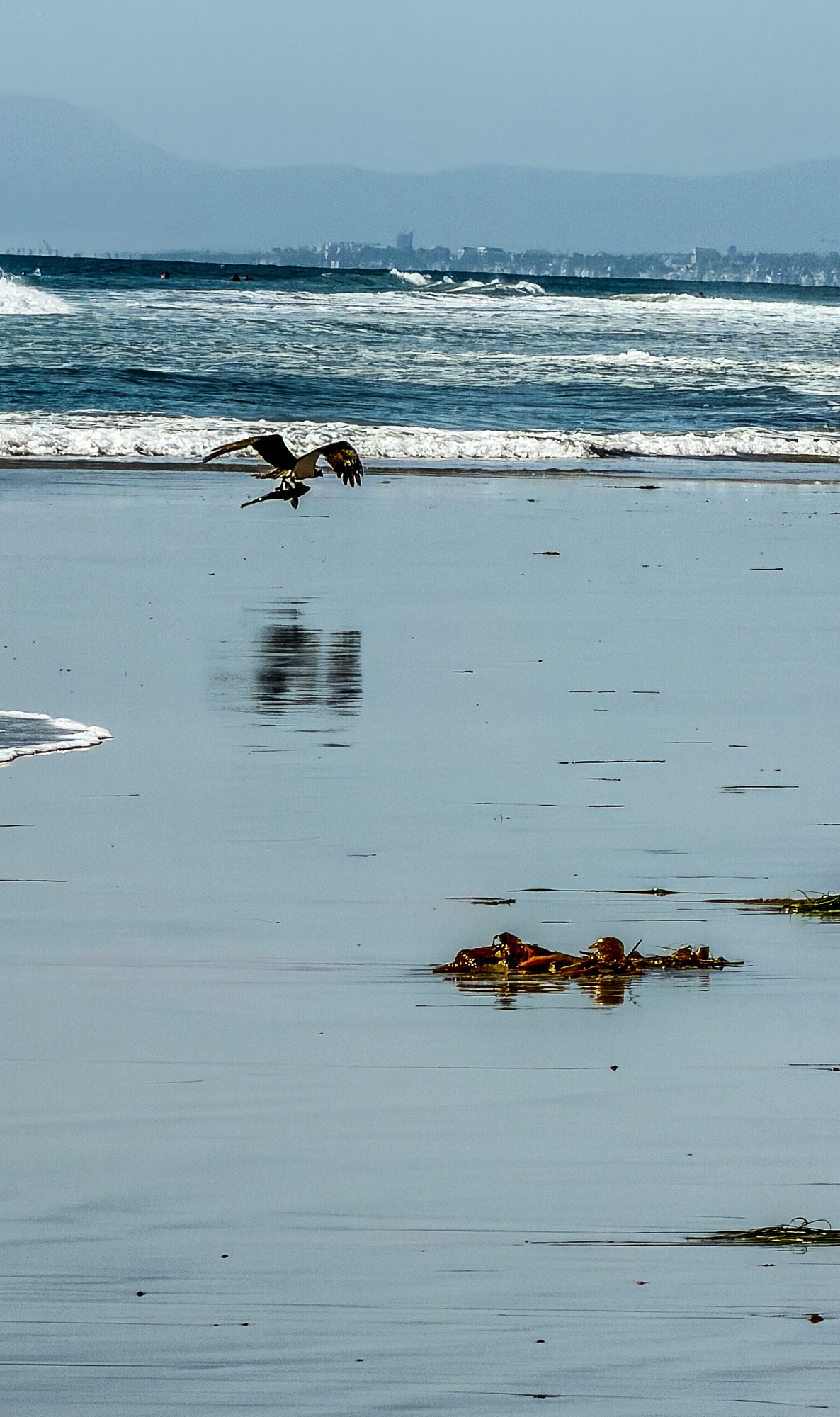
I caught the flicker of feathers out of the corner of my eye. Osprey! And then it dove. Wait, was that an osprey or a pelican? Then up it came with a fish in the talon–a big ol’ heavy fish. Down went the osprey, back into the water. I’ve never seen an osprey tread water–until today. It seemed to be riding the waves, flapping when the wave lifted, an enormous fish still firmly in its grasp. When up didn’t work, the next step was to surf in toward the shore. Using the fish as the surfboard, it glided onto shore. Then took a bit of time to adjust, not risking losing that prize dinner, before lifting off and heading north to find a place to sit and dine on fresh seafood.
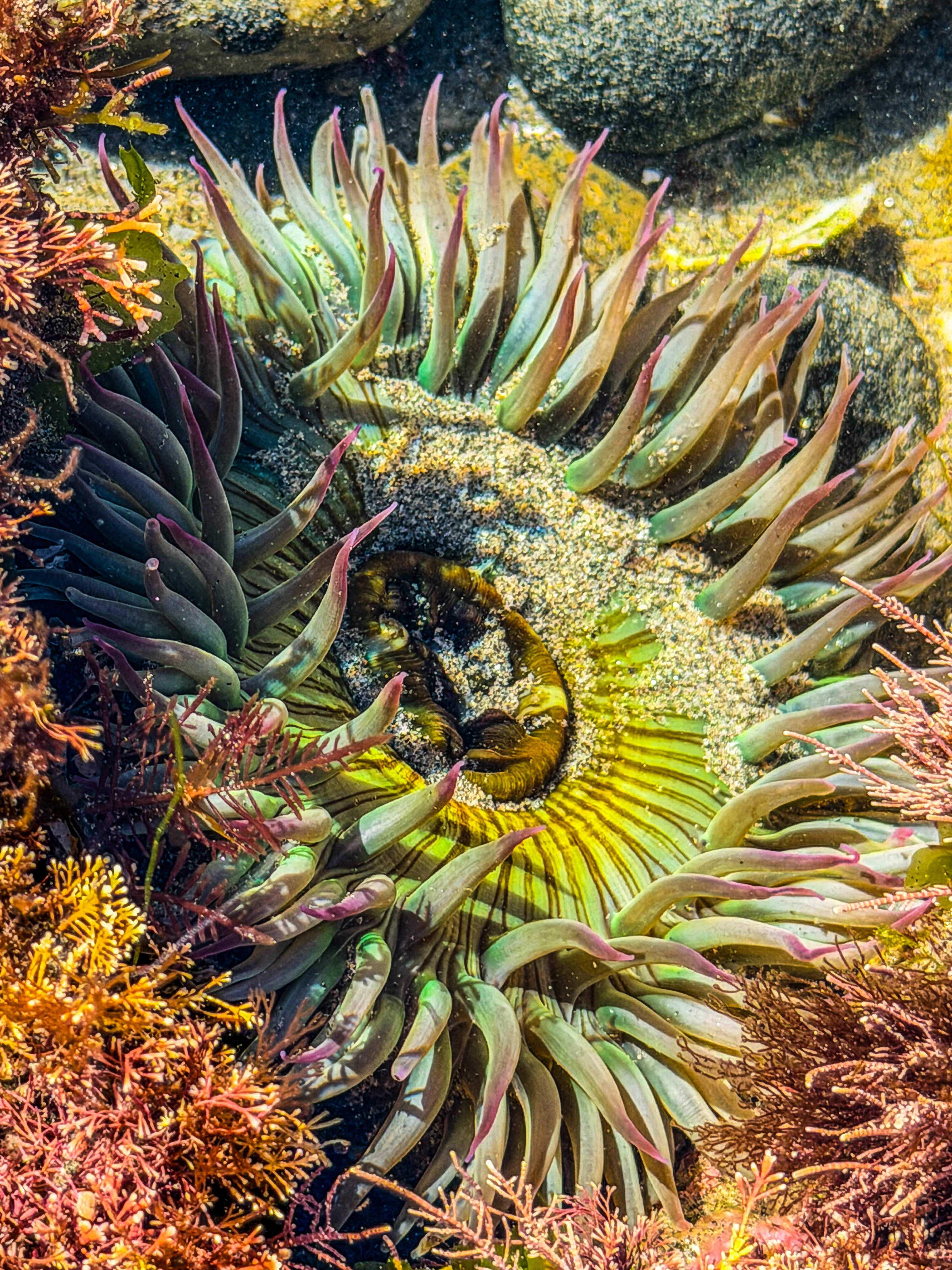
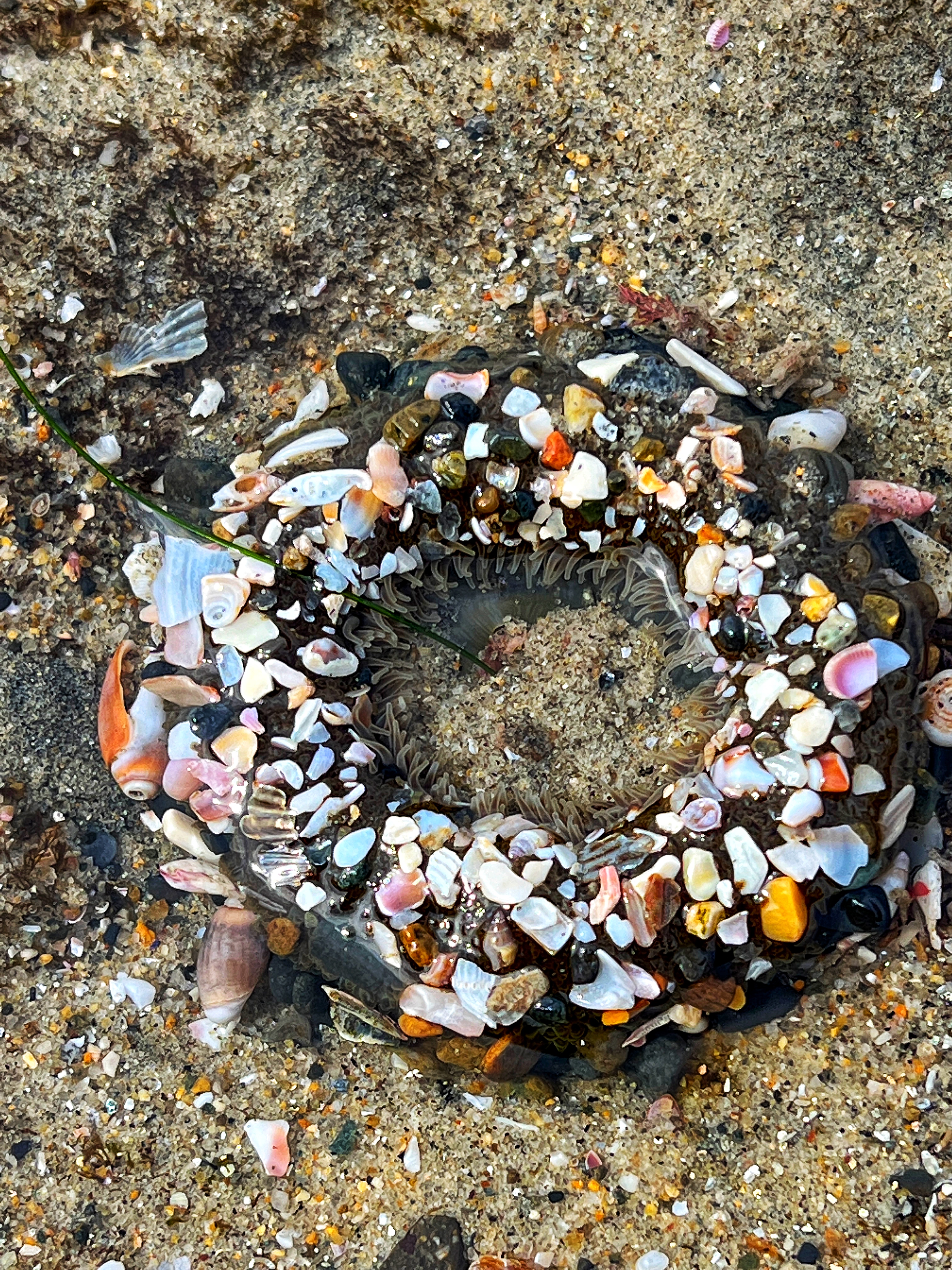
Deceptively benign to view, sea flowers blossom in the harsh environment of the tide pool. These beautiful flowers are actually sea anemones, described as “predatory marine invertebrates,” animals designed to paralyze their prey with their venomous tentacles. These carnivorous chameleons sometimes cover themselves in shells—looking like sprinkle-covered donuts rather than fierce, long living sea life. I love to photograph them, noticing the ways their colors change with the light and water, and reveling in their resilience.
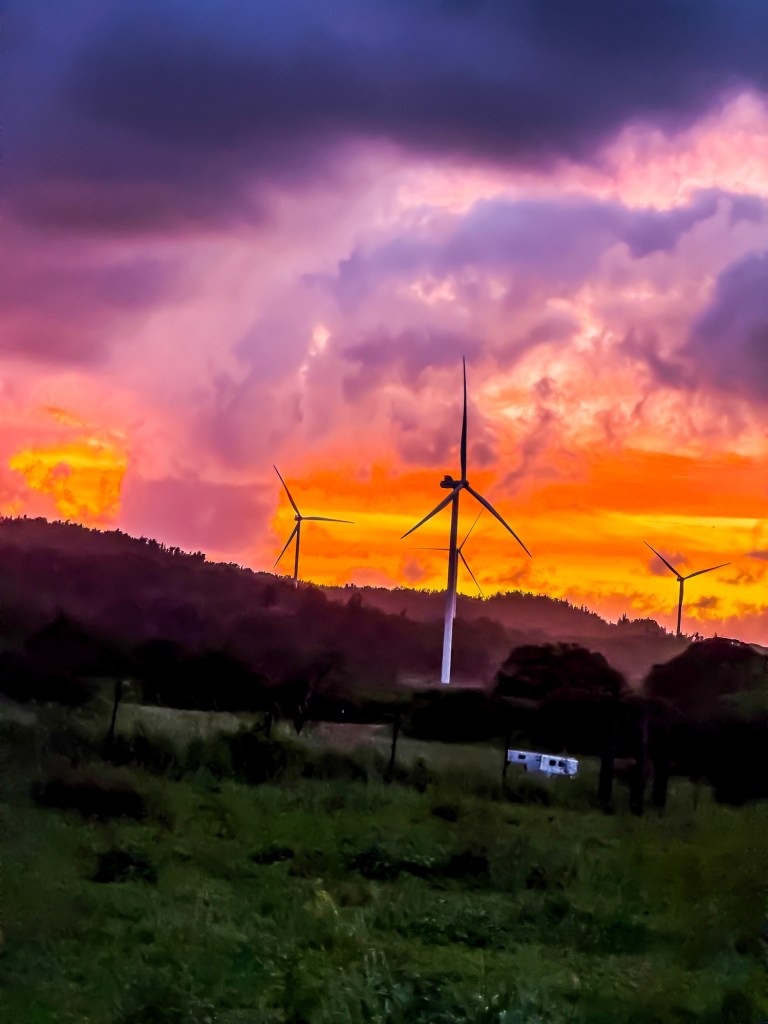
When the day dawns cloudy and you have a sunset event planned, dreams of color fade to black and gray. Rain teased, moments of downpour mixed with fizzled drizzle. Nothing to keep you inside or suggest storm. Jacket nor umbrella made their way to into the day’s supplies. Time nears and the sun makes a path through the maze of clouds, an unexpected guest appearance.
Sometimes a prompt inspires me. That was my experience when I read Padraig O Tuama’s prompt– the one that arrives in my email inbox each week. After reading a poem by Jane Mead, O Tuama suggested describing a place you go to. I’m a beach goer–and this week offers low-tide walking beaches timed to fit in after I finish work each day. So instead of taking my daily walk around the neighborhood, I’m heading to the beach each afternoon–my favorite beach–to walk and breathe and appreciate this place not far from where I live.
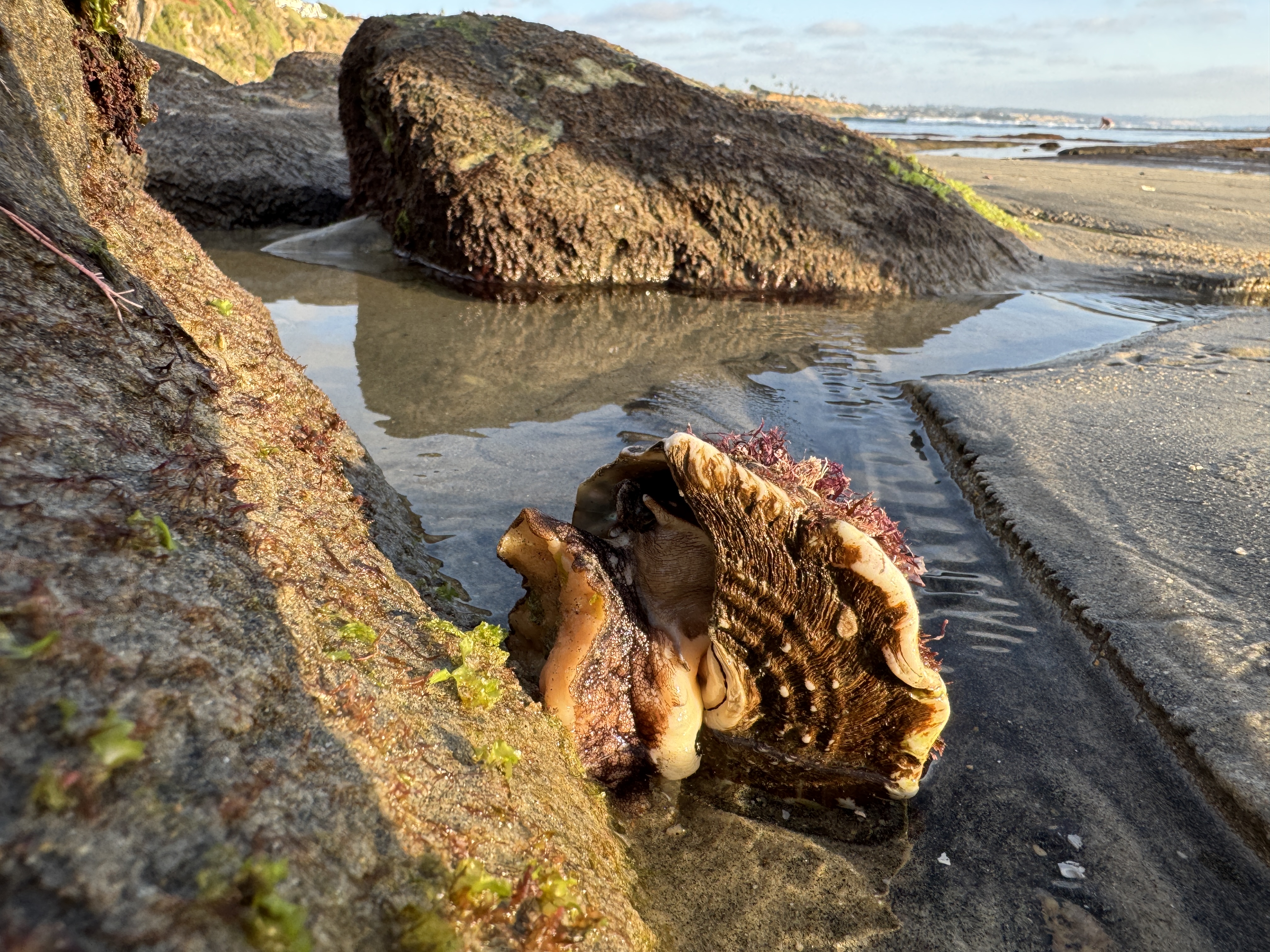
Today I decided to go with a Haibun–that form that allows for some meandering prose followed by Haiku. And while the beach is always enough, it is such a delight when I come across something special. Today it was a wavy turban snail–one of those hearty sea creatures that thrives in the intertidal zone, a harsh place that is exposed during low tide.
The puzzle of tides keeps me guessing as I walk the shoreline. Familiarity interlaced with mystery, each day brings new treasures to discover. Fall, summers’s sister, opens space to breathe, mixes heat with edges of crispy coolness, feet immersed in the translucent turquoise only the sea can offer. This is my place, ordinarily extraordinary.
Spring is a time for bees and buds and blossoms. It seems that everything is in motion, including my students. We’ve passed the time of settled in and are now in the time of change. Plants are sprouting in all the shades of green and my students are sprouting in all the volumes of loud. There is so much they need to say: to each other, to me, to anyone passing by.
Roly polies have become their latest obsession. Those tiny pill bugs are everywhere. And my students are intent on “saving” them (or squishing them, depending on the student). What was once a line of first graders walking to class has now become a mob of children on hands and knees scooping up these little curled crustaceans to protect them from the feet of their peers. Except instead of just moving them to a safer place than the hallway sidewalk, these small creatures often find themselves tucked into pockets and backpacks, or being “petted” by a soft 7-year-old finger on its ribbed back.
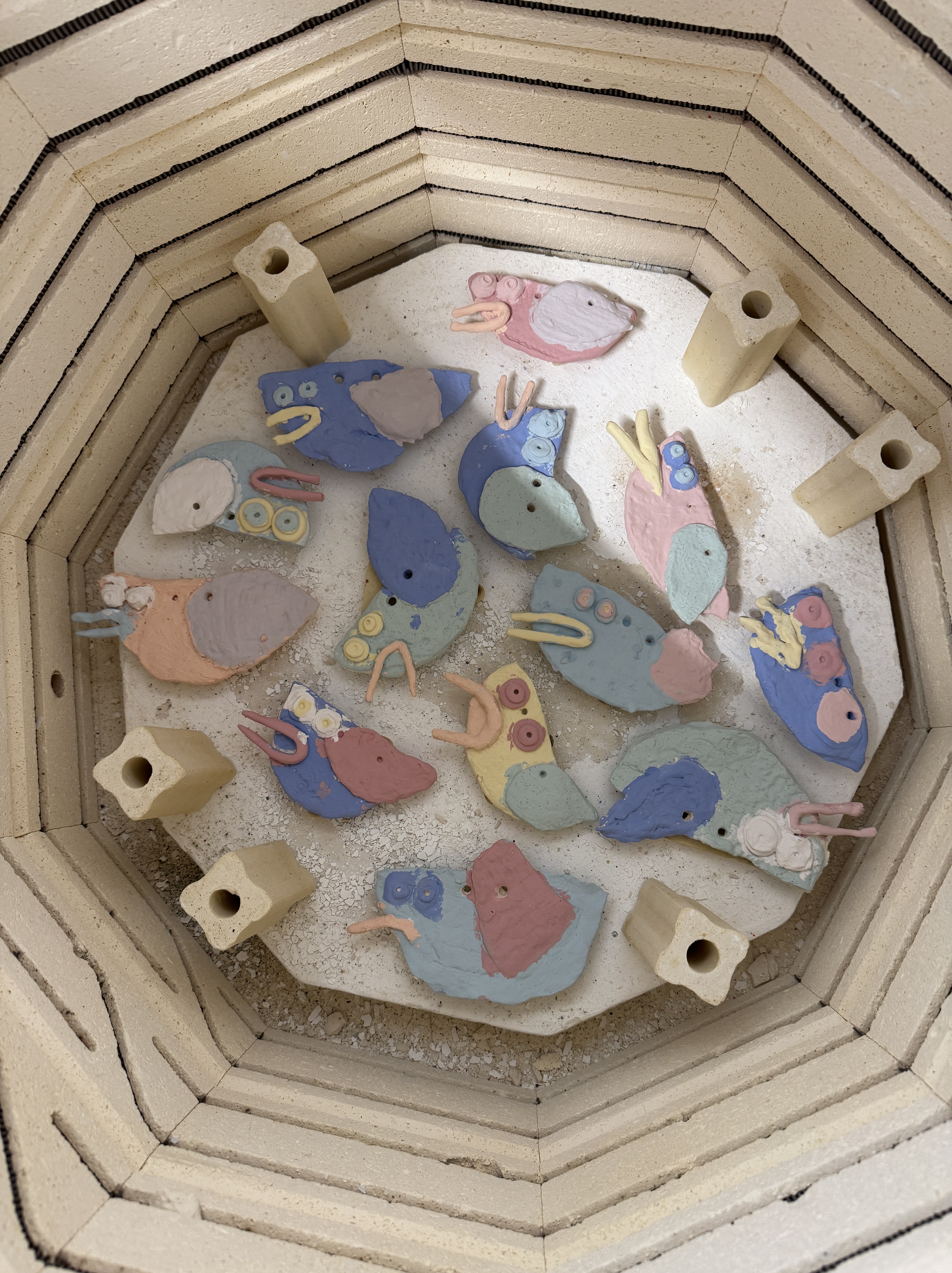
In science they are studying birds: their beaks, their feet, their wings. And considering how those parts work together to help the birds survive. In class we took balls of clay, used the meaty part of the side of our hands to flatten and shape them, and crafted our own ceramic birds. A mistake on my part means that the feet they molded will not be attached…but that is another story.
In spring students show off. They strut their stuff. Confidence levels are spiking. They are testing the limits, the boundaries, the rules, their own abilities. It’s the most wonderful time of the year and the hardest season for teaching. But sunshine helps, clay helps, and carefully constructed classroom community prevails…even in spring.
Today’s #verselove prompt asks for poetry inspired by a place your favorite writer loves. I have so many favorite poets, but honestly know little about their favorite places. Today as I explored CA central coast beaches, my writer-mentor became clear.
Rachel Carson is best know as a scientist and environmentalist, but her writing evokes the essence of poetry. An internet search uncovered an article where historian and author Jill Lepore described Carson as a “scientist poet of the sea.” Just what I was looking for.
So I let the sea inspire my poetry today. Today dawned cloudy and cool, yesterday’s sunshine merely a memory. To try to capture both the science aspect and some spare nature poetry, I chose a Haibun as my format.
Sea-spiration
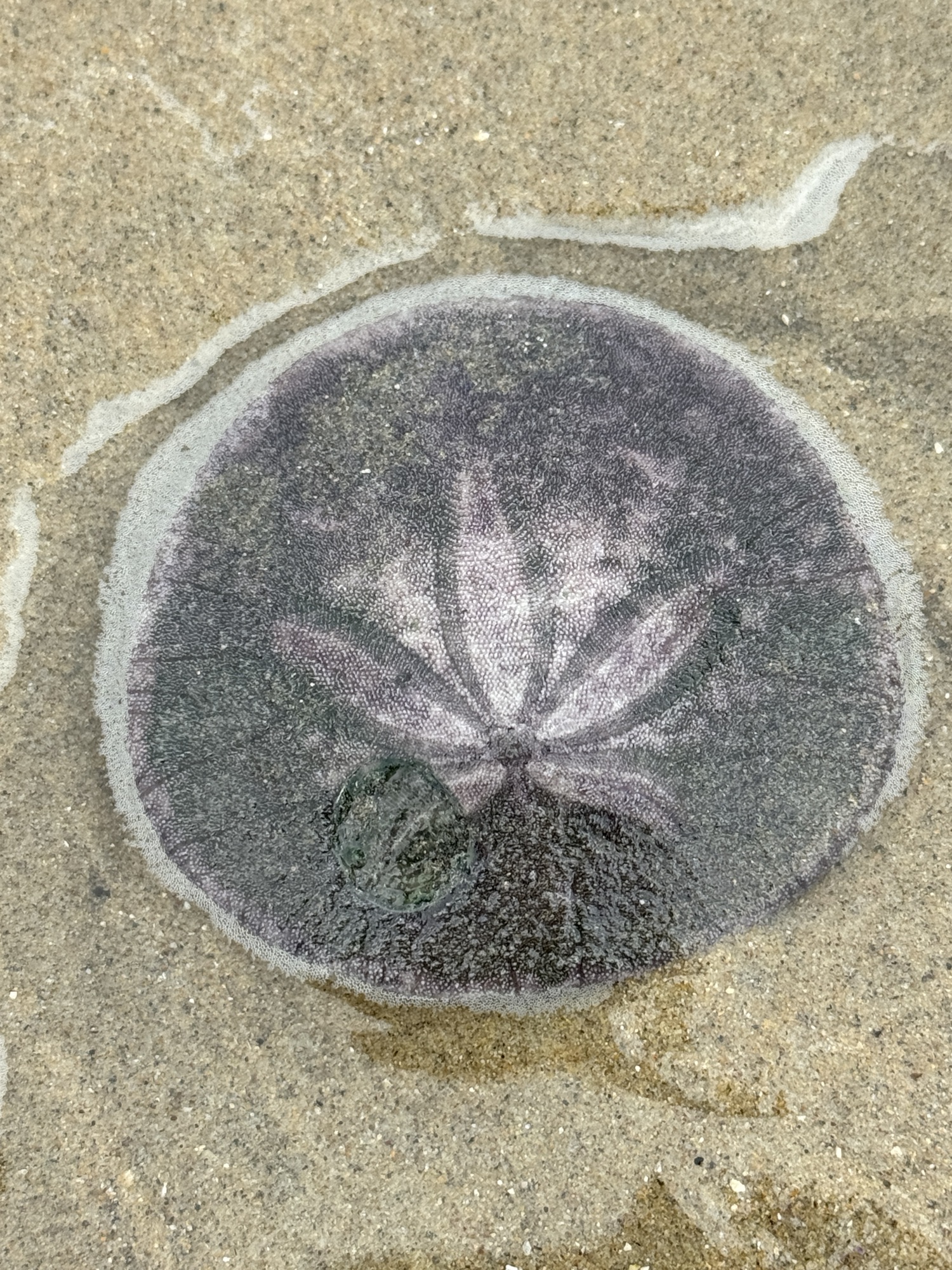
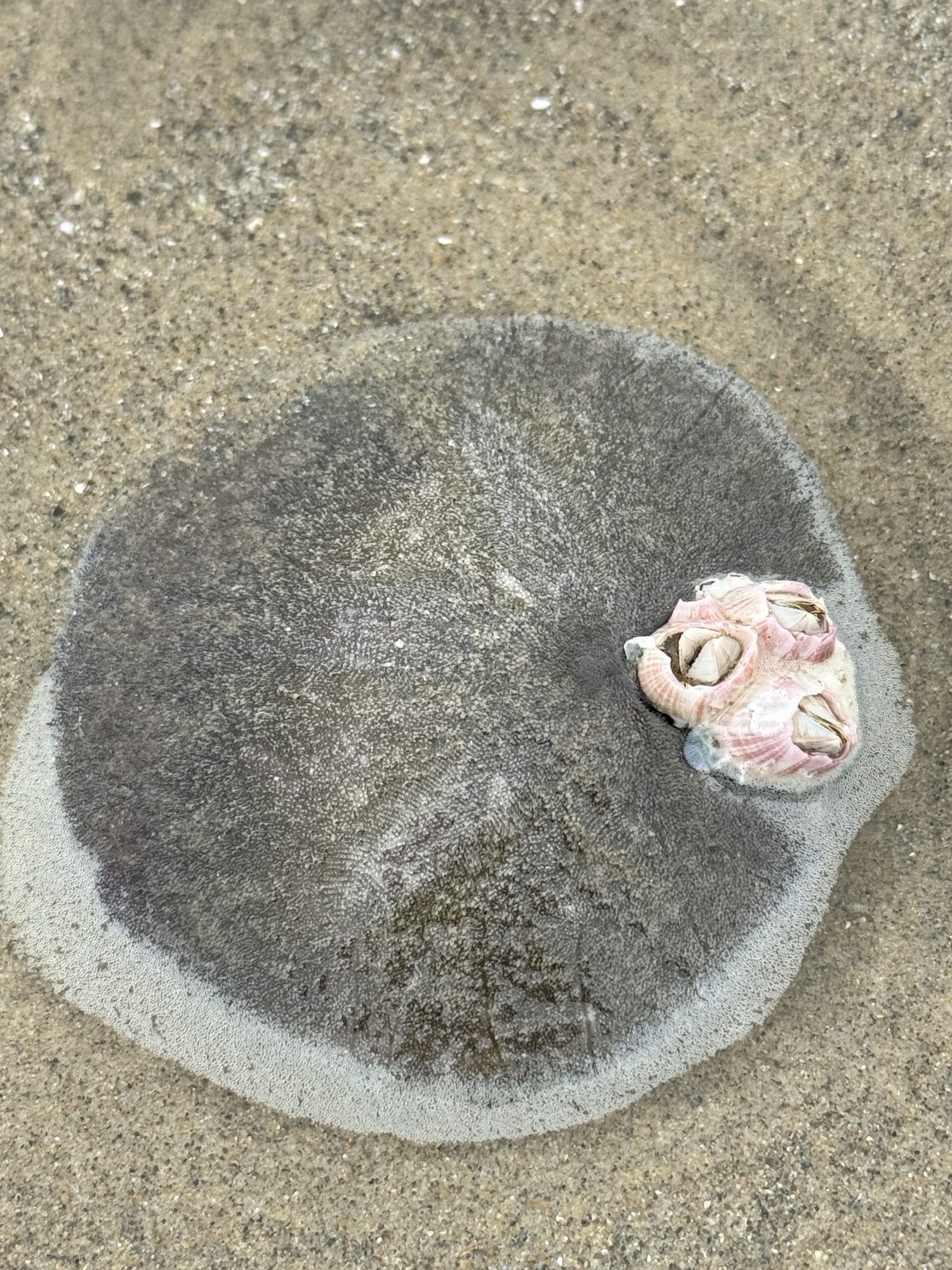
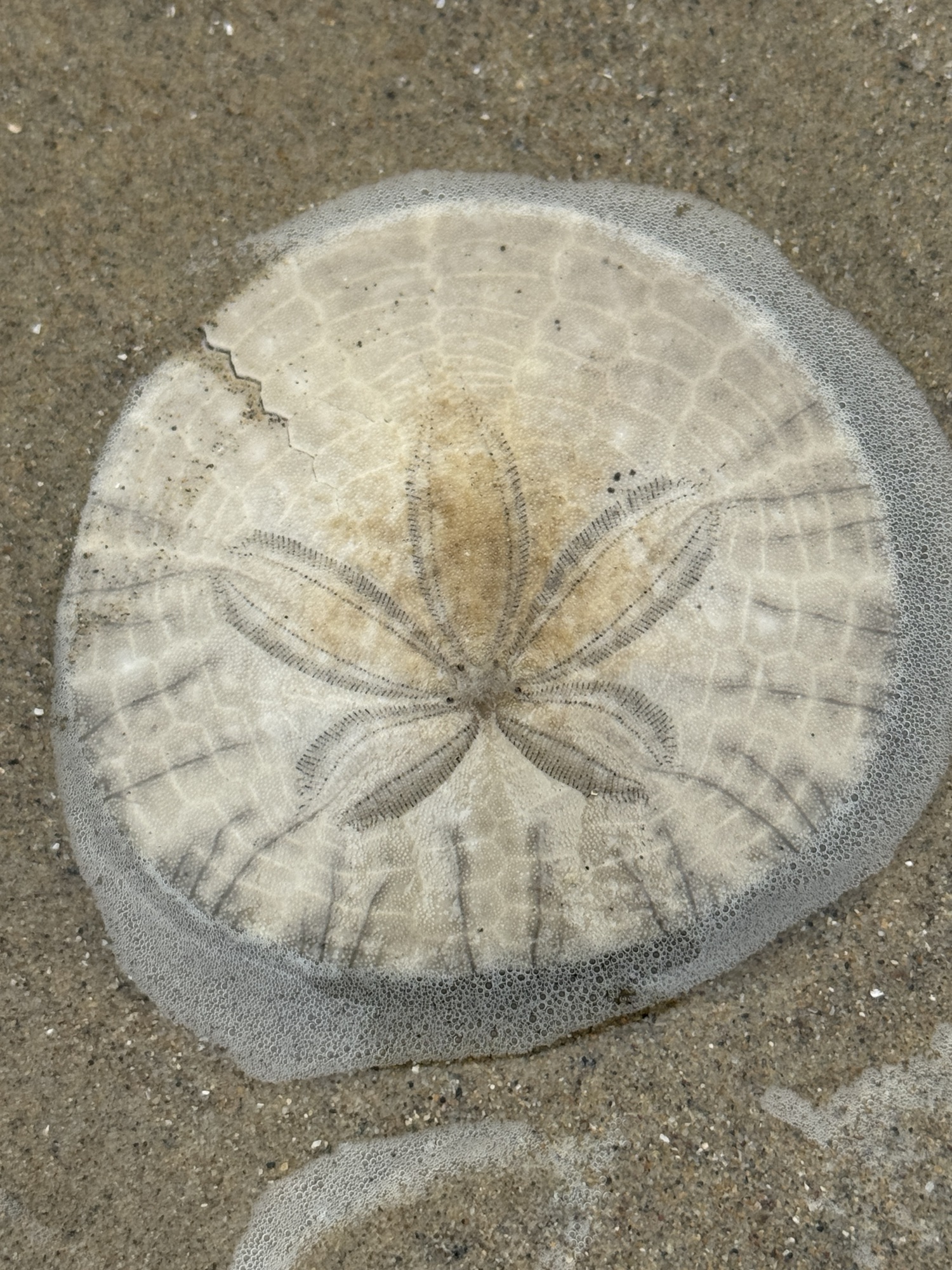
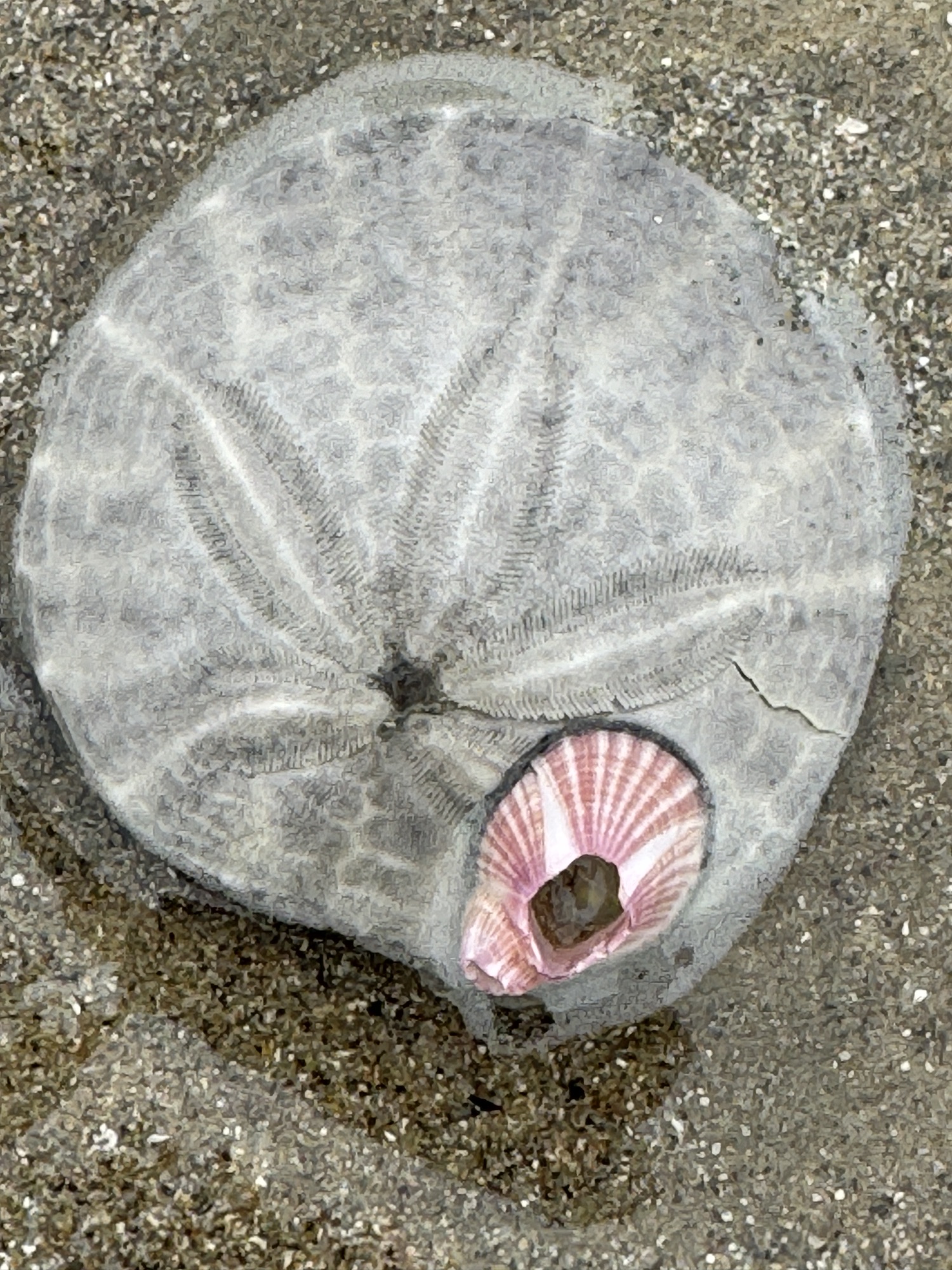
Into the clouds we plunged, shrinking my field of vision. Purple sand dollars waved from the wet low-tide sand, many sporting a barnacle rider or two. As they lighten, becoming delicate skeletons, a charcoal-traced design appears. Like the sand dollars, I tunnel in, finding quiet in the symphony of wave and wind. Beauty emerges in the smallness.
It’s the first day of National Poetry Month…and that’s no joke! When I awoke this morning I saw that #verselove over at Ethical ELA had a haibun prompt. Hmmm…. I don’t think I have ever written a haibun, but I had just read about it as I reviewed the picture book Wabi Sabithat I will be using with my students after we come back from break. This form begins with some prose poetry and then ends with a Haiku.
So after quite a full first day of spring break…here is my haibun.