Weekly Photo Challenge: Night

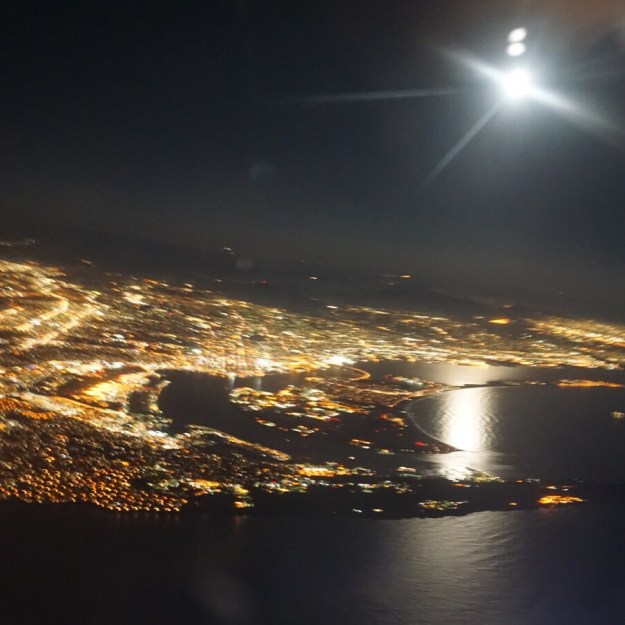
Night is a challenge for me as a photographer.  I have a tendency not to be out taking pictures at night…and when I am, I realize the challenges that night photography poses.  Last night, on a flight to Tucson I had the opportunity to sit in a window seat.  I realize that I often fly during the day, so once I was seated my eye was drawn to the lights against the dark of the night sky.  And as I snapped photos of San Diego from the air, I noticed the moon, nearly full, casting a glow on the water below.

img_2907

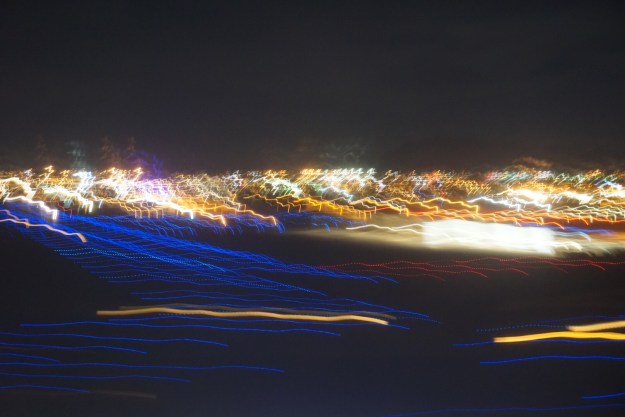
And every time I try to take night photos, I realize how slowly the shutter closes in low light.  And the slowness means that it’s easy to create blurs, even with the slightest of movement.  So from a plane, blurs become quite prominent.  I love the fun abstraction of this image taken as we landed in Tucson.

img_2916

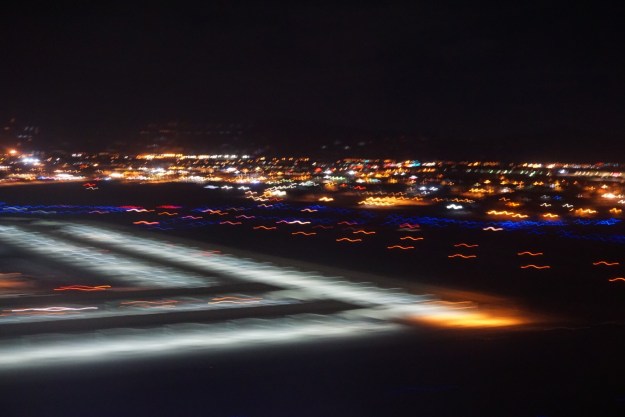
So of course, when I saw this one, I had to try another as we taxied toward our gate.

img_2917

Before that, up in the air, I was treated to an amazing light show.  I watched an electric storm light up the clouds like fireworks in the distance.  Since I wasn’t able to get a photograph because of the darkness, I decided to try my hand at some video.  And while it isn’t perfect, you do get to see the beauty of the lightening lighting up the sky.  I know I should figure out how to strip the sound of the aircraft and add some music or something…maybe one of you can give me suggestions for how to best do that!

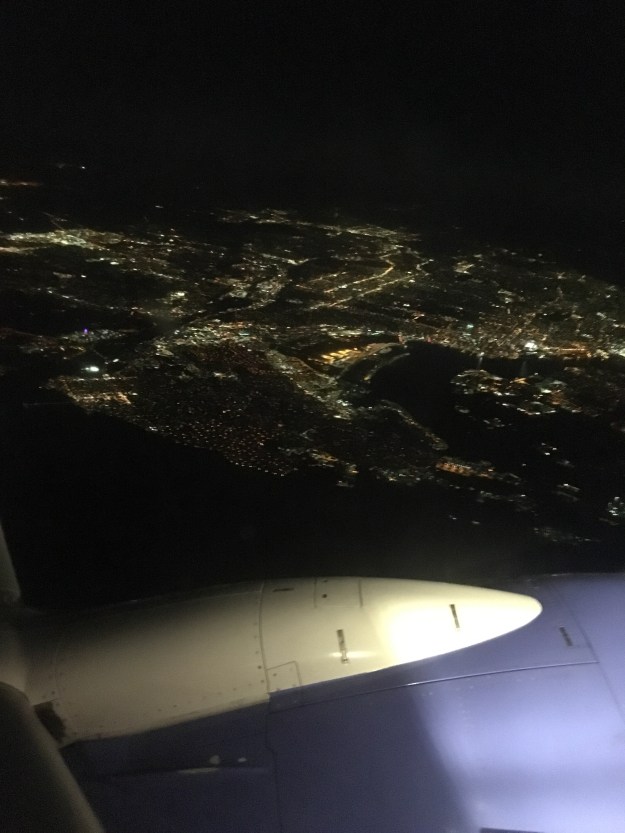
Once we flew away from the storm, the lights of the city began to appear in the distance.  And as we got closer and began to fly lower, my picture was less blurry and abstract.  I also suspect that the plane’s light, that seems to come on at a certain altitude, helped give more light to my lens to make the shutter speed a bit faster.

img_2896

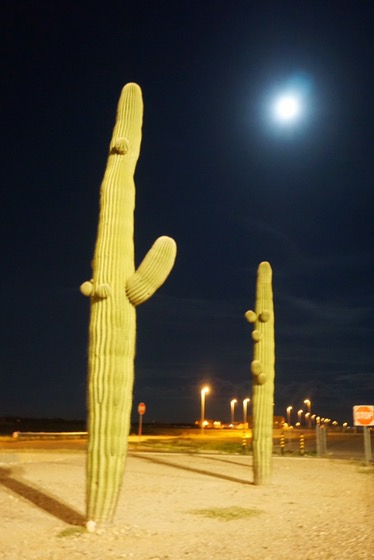
After renting a car and heading out of the airport, I just had to take a photo of the iconic saguaro cacti, especially when I noticed the full moon behind them.  My husband was nice enough to pull over so I could get out to take a few pictures of these magnificent plants.

snapseed

So, try out a little night photography this week.  What happens when the light is low?  What light will you capture when the sky is dark?  You don’t need an airplane for this exploration, you can try looking out the window of your house…or maybe even standing outside looking in!

You can post your photo alone or along with some words: commentary, a story, a poem…maybe even a song! I love to study the photographs that others’ take and think about how I can use a technique, an angle, or their inspiration to try something new in my own photography. (I love a great mentor text…or mentor photo, in this case!) I share my photography and writing on social media. You can find me on Instagram and Twitter using @kd0602. If you share your photos and writing on social media too, please let me know so I can follow and see what you are doing. To help our Weekly Photo community find each other, use the hashtag #night for this week and include @nwpianthology in your post.

So head out into the dark of night with your camera (or phone) in your hand.  What will you find with night as your lens?  I can’t wait to see what you find!


Weekly Photo Challenge: Climb

I live at sea level so you wouldn’t think I would have much opportunity to climb, but as I’ve been noticing this week, there is elevation all around.

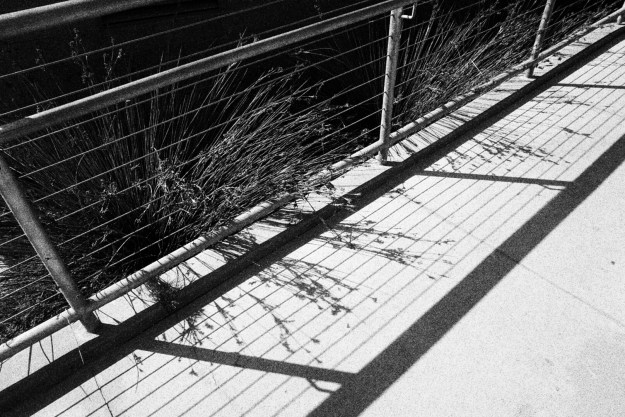
To even get to the beach there is always a climb–usually down to get to the shore and then the challenging climb back up.  This ramp is a familiar one for me as it leads to the parking lot at the beach I frequent most. And it’s a steep one!  (I always think of it as a good cardio routine as I trek up and down.)  I took this picture on a day I was noticing light and shadow and the ways that they played with the railings and the plants growing nearby.

snapseed

On an early morning walk earlier this week I felt lucky to see the sun burning through the clouds and peeking over the houses as it climbed higher in the sky after plenty of summer gloom along the coast.  I know there is a rule of photography about not shooting into the sun, but I kinda like the effect…so I keep doing it!

img_2766

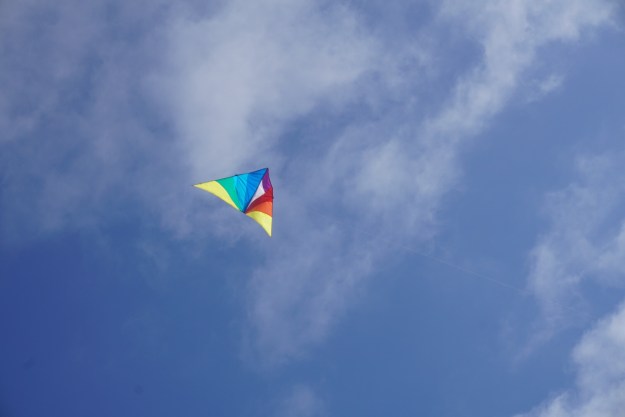
Kites climb high along the beach too with plenty of breeze to keep them aloft.  I’m consistently surprised to find that it is adults who fly kites…although they sometimes have a child alongside helping them out!

img_2702

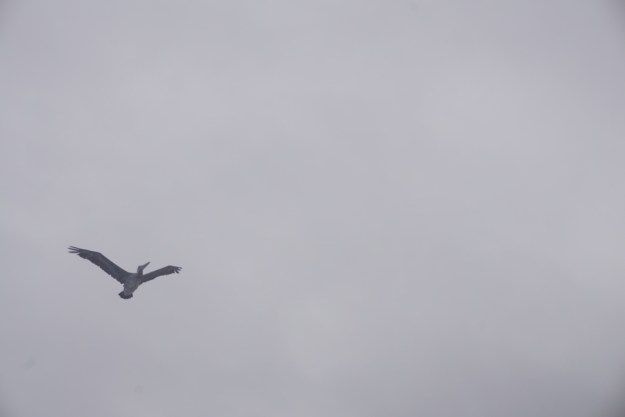
Seabirds are fascinating to watch and I see most of them scurrying along the shore in search of food with their long beaks.  But pelicans fit into a class all their own.  These huge birds are graceful flyers who climb to great heights and also go low, barely skimming the surface of the waves. They dive into the sea scooping fish into their bucket-like beak and then climb into the sky with amazing speed and strength.  My photos don’t even begin to capture all that I see as watch these magnificent birds.

img_2752

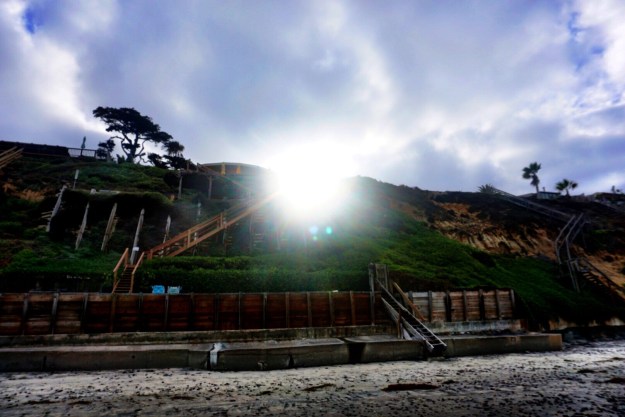
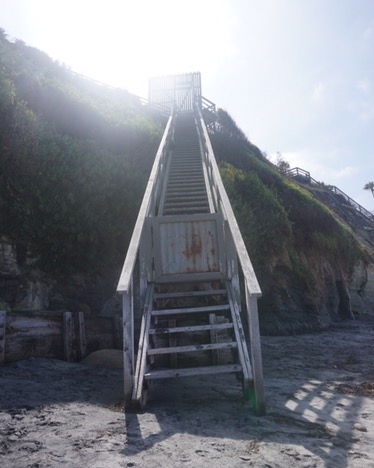
And then there are the stairs all along the cliffs.  Some seem to start and end nowhere, relics of a time when they were the access to the beach. But mostly these interesting staircases are symbols of exclusive beach access from the multimillion dollar homes perched on the edge of the cliffs. This steep staircase, with a gate at the bottom seemed to climb right into the sun when I noticed it yesterday.

img_2790

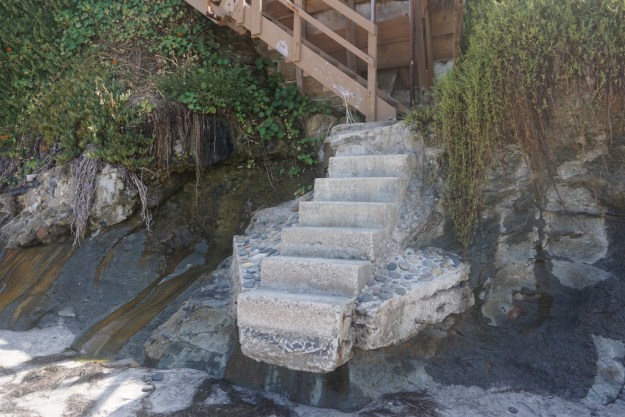
And these cement steps seem to anticipate the rise and fall of the sand and water as they currently sit far above the ground.  I wonder if they came before or after the wooden stairs?

img_2788

So what does it look like to climb where you are?  Are there stairs or mountainsides?  The sun or moon climbing into the sky? Does it involve birds, or children, or something else?

You can post your photo alone or along with some words: commentary, a story, a poem…maybe even a song! I love to study the photographs that others’ take and think about how I can use a technique, an angle, or their inspiration to try something new in my own photography. (I love a great mentor text…or mentor photo, in this case!) I share my photography and writing on social media. You can find me on Instagram and Twitter using @kd0602. If you share your photos and writing on social media too, please let me know so I can follow and see what you are doing. To help our Weekly Photo community find each other, use the hashtag #climb for this week and include @nwpianthology in your post.

Take a look around for something to climb or take a look at something that’s climbing.  Be sure to share your climb with the rest of us!

Weekly Photo Challenge: Collection

Like a line of ants, the trucks follow the leader up the length of the state of California along Interstate 5.  An elaborate dance, faster trucks dart out knowing they will slow the flow of traffic then edge back in a bit further ahead in line. Vacationers and other travelers join the line too. Sometimes they patiently blend into the caravan of trucks, other times they show their frustration as they weave in and out of the line accelerating only to slow again and again.

Road trips are an exercise in balancing focus and boredom.  Endless hours in the car–especially when motion sickness limits acceptable activity–means coming up with creative ways to entertain yourself, and hopefully the driver too.  My husband’s old iPod meant an endless stream of oldies to sing along with and my camera reminded me to pay attention to the details of the environment.

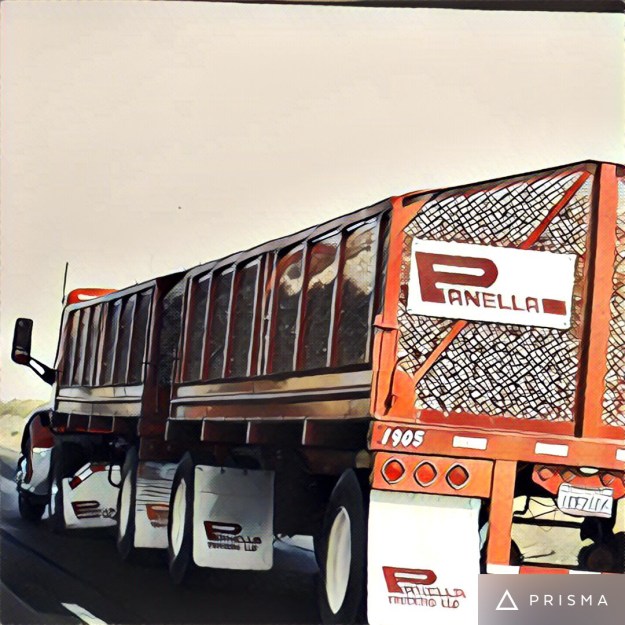
The tomato trucks got my attention, double trailers filled with red fruit (or is it a vegetable?) in heaps visible from afar.  I started by taking a photo of one (through the car window as we drove) and sending it to my dad.  He’s always talked about driving tomato trucks in his retirement…  Then I started seeing tomato truck after tomato truck, of all varieties and colors and I started snapping photos.  I tried different angles and distances as we approached and passed these trucks, sometimes taking the photo from a distance and other times waiting until we came right up on the truck.  Timing was tricky, sometimes it was hard to get a crisp focus.

Like a learning walk, this was a kind of learning drive–an opportunity to pay attention to the trucks that drive up and down our state.  I noticed that tomato trucks going north were full, those going south were empty. Trucks carrying produce (tomatoes, nuts, garlic) were most prevalent in the mid section of the state.  I never see them in my part of the state.

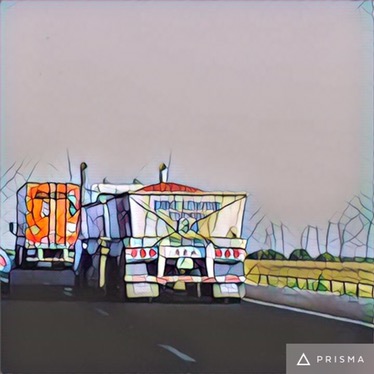
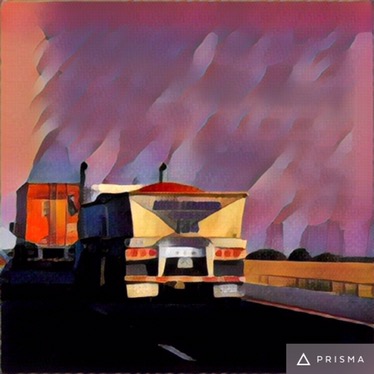
Then I started playing with the Prisma app, turning photos of trucks into a series of truck art.  I started with the tomato truck.

img_2530img_2529

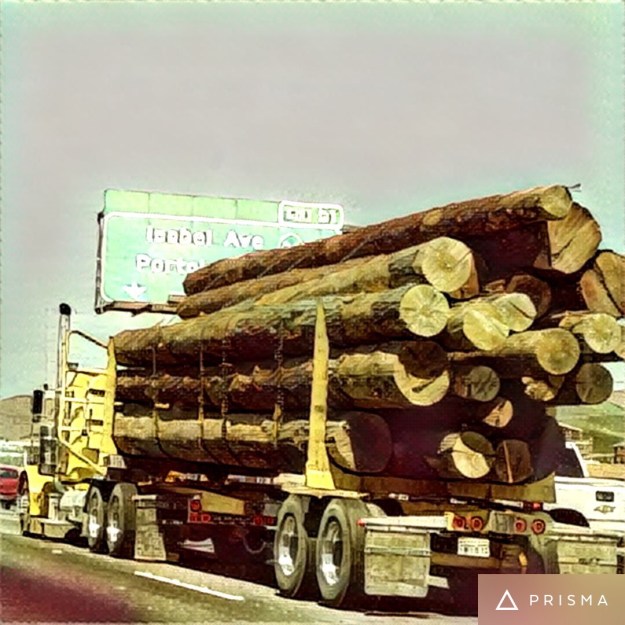
And then moved onto other trucks like the log truck.

img_2581

And the garlic truck (we had to pass several before I figured out that those were garlics in the truck!).

img_2594

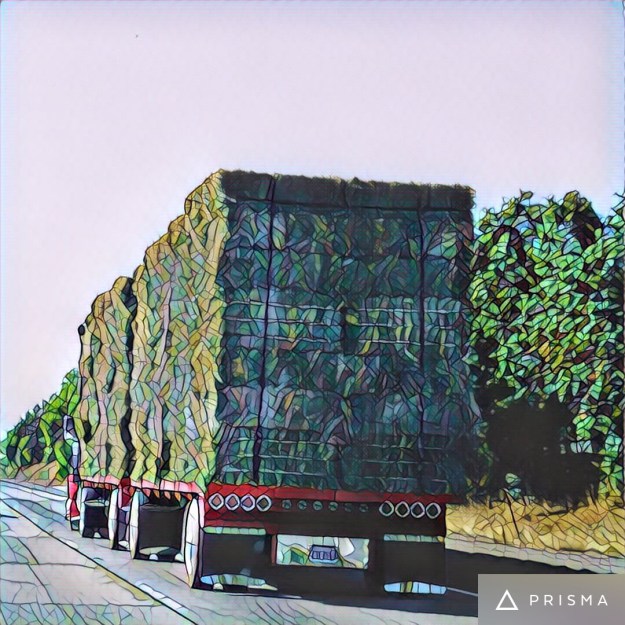
And even the hay truck.

img_2690

So, to my surprise, I now have a collection of truck photos and a greater appreciation of the  truckers who move goods, particularly food, up and down our state.

As I think about this collection of trucks, I realize that I often create collections of photos.  I have quite a collection of seagulls.  I’ve collected sandcastles, sunsets, trees, flowers, surfers, and more.  So this week’s challenge is to share one of your collections–or create one!

You can post your photo alone or along with some words: commentary, a story, a poem…maybe even a song! I love to study the photographs that others’ take and think about how I can use a technique, an angle, or their inspiration to try something new in my own photography. (I love a great mentor text…or mentor photo, in this case!) I share my photography and writing on social media. You can find me on Instagram and Twitter using @kd0602. If you share your photos and writing on social media too, please let me know so I can follow and see what you are doing. To help our Weekly Photo community find each other, use the hashtag #collection for this week and include @nwpianthology in your post.

As always, you can define what collection means to you.  It might be a couple of photos of the tree in your front yard, the birds on the fences in your neighborhood, your favorite flowers growing in the garden, the meals you ate in the last week…  What collection will you showcase this week?  I can’t wait to see your collections!

Weekly Photo Challenge: Infinity

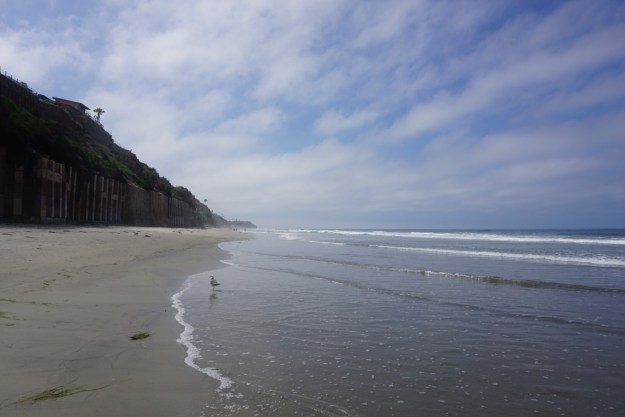
Some weeks my photos zoom in close, capturing details and vivid colors. This week, however, my lens took the long view–seeming to reach for infinity.  Even walking those familiar steps up and down the beach, when I look out I see the infinite horizon, the ocean stretching and reaching as far as the eye can see.

img_2488

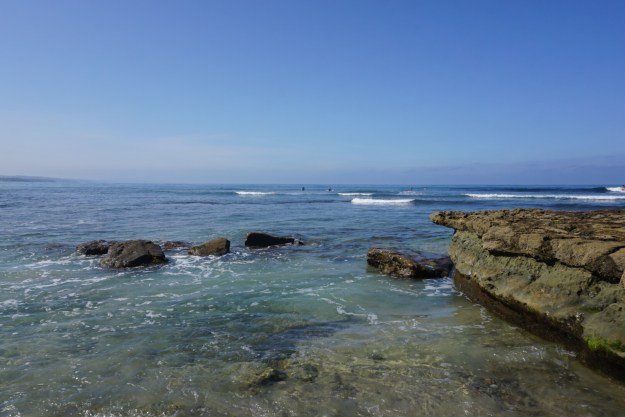
The intricacies of blues and greens that reach up to touch the blues of the sky add to that feeling of infinity.  Where does the ocean end and the sky begin?

img_2509

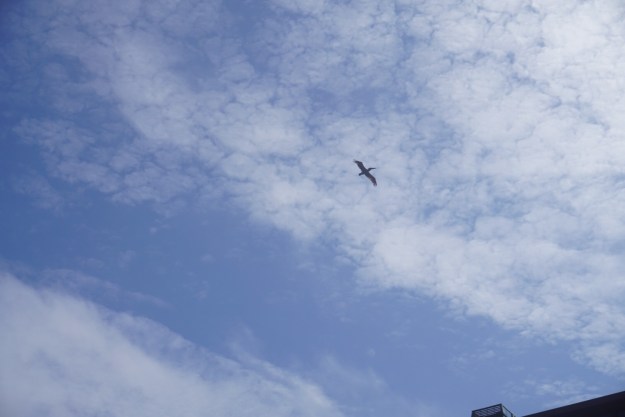
And I do spend some time looking up, noticing the changing shapes of the clouds, the subtleties of the blues and grays, and the birds soaring above my head.

img_2491

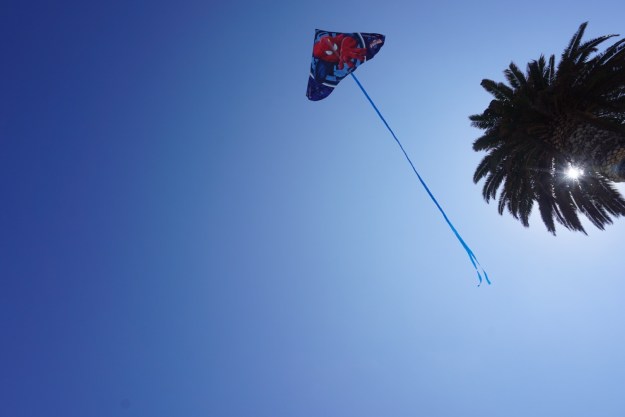
Today it was a kite that got my attention, spiderman floating in the sky above the beach.

img_2505

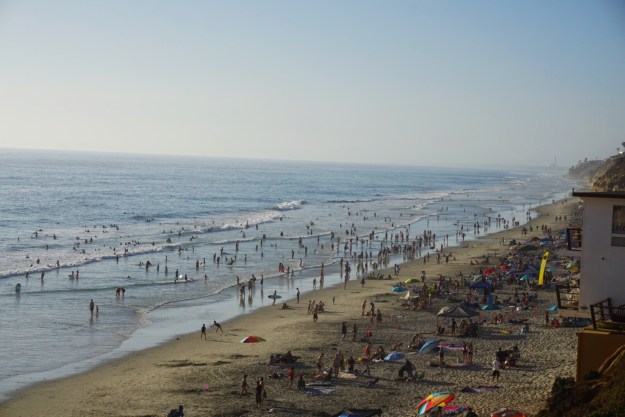
Of course, there is also the seemingly endless supply of people on the beach now that we are in the heart of the summer.  (And this was taken late in the day, well past the peak of beach attendance!)

snapseed

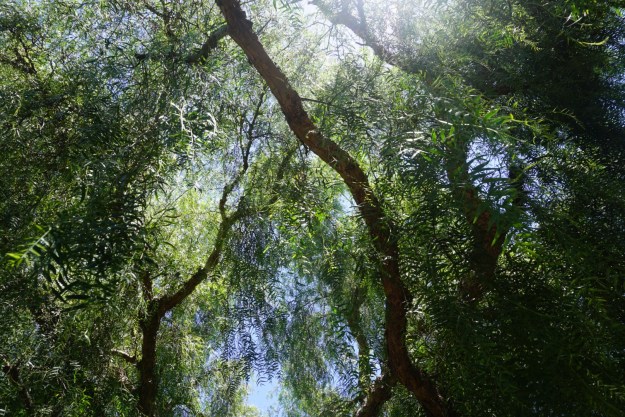
Infinity isn’t only present on the beach.  I noticed the infinite quality of the light as it poured through the leaves of the pepper tree, and the infinite quantity of these tiny leaves that seem to go on forever.

img_2430

So take a look around, what does infinite look like through your lens?  Will you find it in the endless line of traffic or time that seems to go on forever?  Will nature show you infinity or can you find it in your kitchen?  As always, it’s up to you to interpret infinity for yourself.

You can post your photo alone or along with some words: commentary, a story, a poem…maybe even a song! I love to study the photographs that others’ take and think about how I can use a technique, an angle, or their inspiration to try something new in my own photography. (I love a great mentor text…or mentor photo, in this case!) I share my photography and writing on social media. You can find me on Instagram and Twitter using @kd0602. If you share your photos and writing on social media too, please let me know so I can follow and see what you are doing. To help our Weekly Photo community find each other, use the hashtag #infinity for this week and include @nwpianthology in your post.

Take the long view this week as you look around at the infinite possibilities around you.  How will you document what infinity means to you?  I can’t wait to find out!

Walking

I’ve been out walking this week.  Not in exotic locales or even for exercise (although I know I should), but just to walk.  And as I walk on the well worn paths, places where my bare feet already know the way and the waves toss rocks until they are smooth and round, my thoughts wander and the muscles in my shoulders relax.

There is something indefinable that happens when my feet move, my arms swing, the wind brushes my hair away from my face, and the sun warms my shoulders. This movement–not aimed at getting me from one place to another or to raise my heart rate–engages my body and lets my brain disconnect from the worries and demands of everyday life. I start to notice details of the world around me, details that I miss when I’m focused on getting there for a meeting or staying here to complete this paperwork.

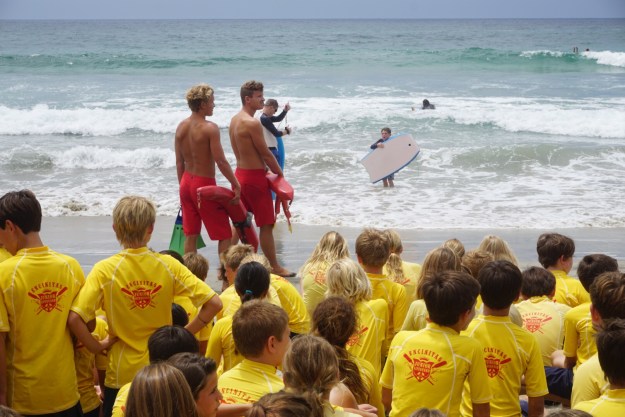
Today I noticed all the children on the beach who are attending camps: volleyball camps, surf camps, and the local staple–junior lifeguards. I found myself thinking about the job opportunities for young people that are available because of those camps as I watched young adults (or almost adults) mentoring younger children.  I also wondered about the kids who don’t have access to these camps and who may not see this public beach as their place. What does summer look like for kids whose parents can’t afford camps like these or who don’t have the luxury of dropping their kids off at 9 and picking them up at noon?

img_2478

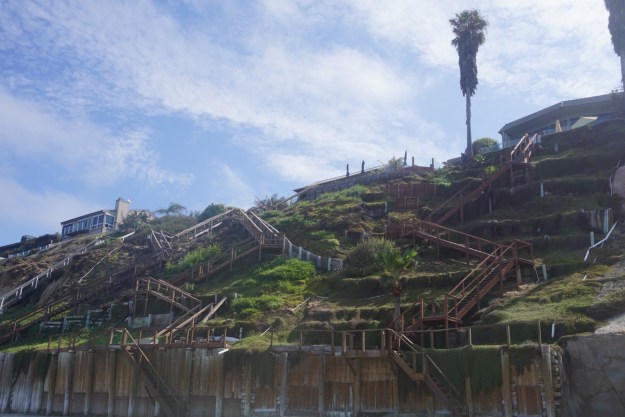
And I thought about privilege as I looked up at the sea cliffs above this magnificent beach where I walk.  Perched at the top are multimillion dollar homes with expanses of windows facing the sea. If you look closely, you’ll notice the stairs criss-crossing the cliff face.  Exclusive access to the public beach below.  I am grateful that the beach is public, regardless of who lives on the cliff above.

img_2492

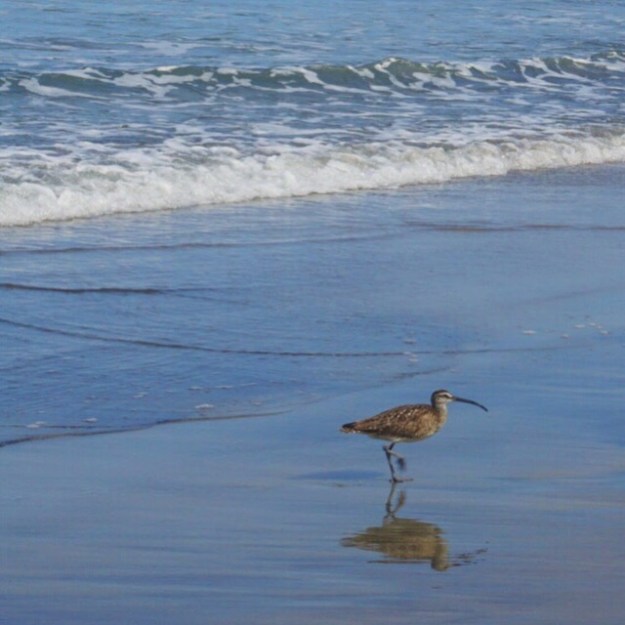
There were lots of seabirds today.  The seagulls are regulars, they hang out at the beach all the time. (I’ve written about them a lot, see this post.) Feeling a shadow overhead, I looked up to see graceful pelicans flying in formation.  My husband calls them bombardiers, they remind him of our military aircraft in precision flight.  These birds are huge, but in flight they are agile and delicate. At one point I looked up and caught sight of a white and gray bird overhead.  It took me a moment to realize that this bird was not a seagull.  It was an osprey–also known as a sea eagle, with a whole fish in its talons, racing through the sky.  I was riveted watching this elegant bird of prey, feeling fortunate that I had the opportunity to see it in action.  I didn’t snap a photo, but I did enjoy the moment.  And there are my friends–the sandpipers.  I love their curved bills and high pitched whistles. They’re a bit shy and wary, making me appreciate them even more.

img_2498

I walked for miles.  And like this post, my thoughts meandered, pausing on a bird, on a child squealing with delight, on a surfer shredding through the break of the wave. The cool water contrasted with the warmth of the sun on my cheeks just like my observations of the seabirds contrasted with my awareness of issues of privilege and access present on this beach that I love. And even though I don’t have any ready answers, I left the beach with a clear head and sandy feet, refreshed and renewed ready to tackle whatever life throws my way.

I wonder what tomorrow’s walk will bring?


Playing with Postcards

It’s CLMOOC time…in fact it’s the break/brake week, meaning that without specific prompts or even general guidelines, I have been thinking about ways to make and connect.

There’s been lots of talk about the postcard project in the CLMOOC community (and by the way, if you haven’t stopped by yet, everyone is invited!) and I’ve been tempted to join the fun to send and receive (through snail mail) postcards to CLMOOC friends.  I knew I wanted to incorporate my photography into the process but hadn’t really worked that out yet. And then I saw a post on Teachers Write, a Facebook group focused on getting teachers writing in the summer, where Madelyn Rosenberg offered her version of a quick write called Postcards!

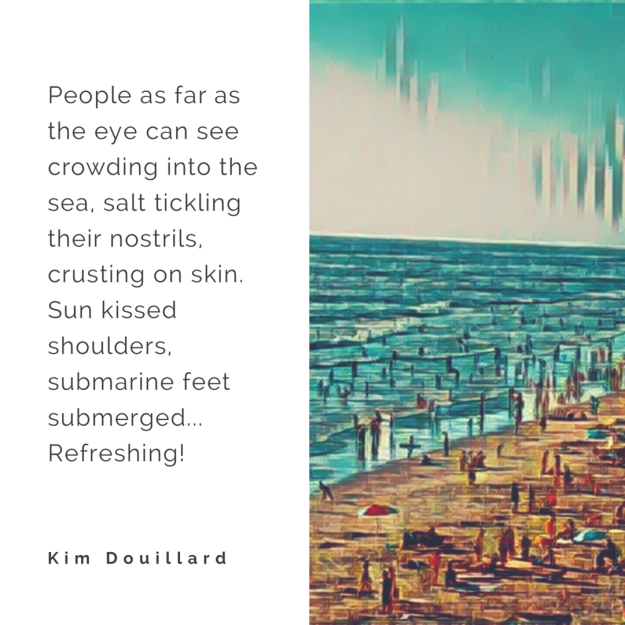
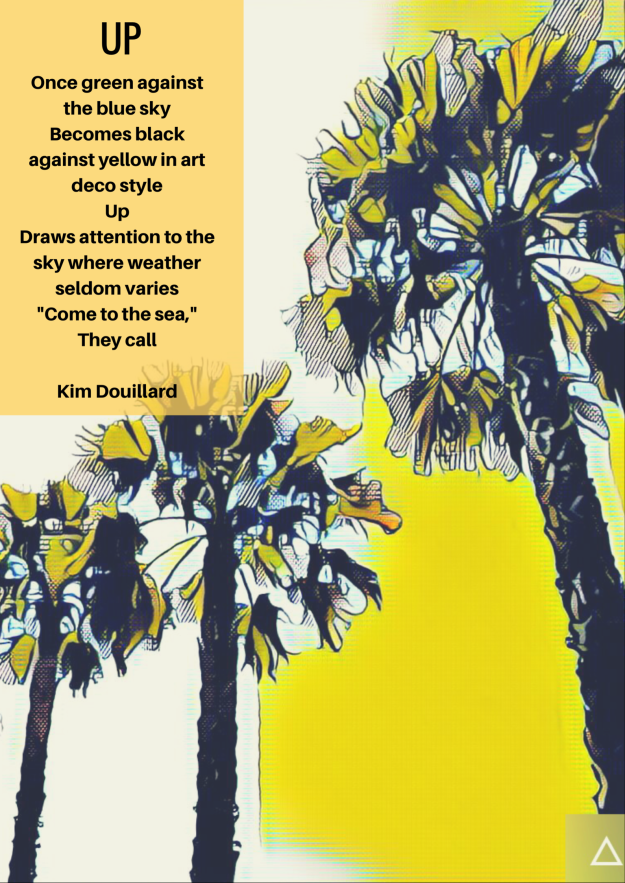
Earlier today I broke down and gave into my impulse to try out Prisma, a photo app that turns your photos into art (some of the effects are really cool!).  And then I buckled down and tried on Madelyn Rosenberg’s Postcards quick write strategy.  With words and an image, I headed over to Canva to combine the words and images.

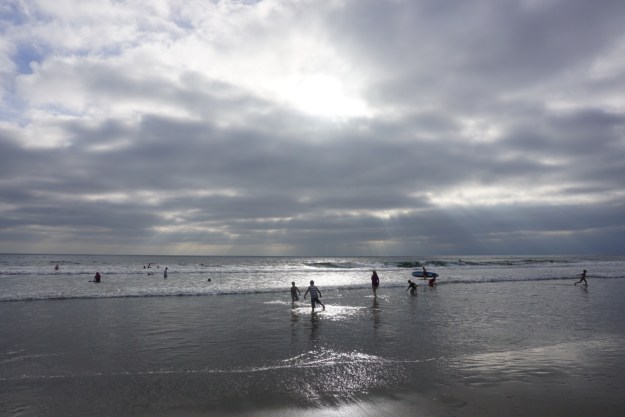
On Sunday my husband and I stopped by the beach around 6:30pm for a pre-sunset walk and I was amazed at how many people were in the water…still.  I took a photo from above the beach to try to capture the numbers of people in the water.

Combining my words with my photo, here’s my postcard:

img_2481

And who can resist beautiful, stately palm trees?  Of course I have taken many photos of them, so it was fun to transform my photo into something that looks kind of art deco to me (also in Prisma)…here’s my palm tree postcard:

img_2482

I think the re-imagined photographs and short form writing work well as postcards, so my next step will be to transform these digital postcards into analog postcards to address and slip into the mail…to surprise…someone!


Stories in Glass: Reflections on Making and Learning

Intense heat and human breath give shape to these vessels. Twirling, pinching, another breath, back into the fire, working and reworking until art emerges from what was once sand and rock. Is this what makes us human? The ability, the desire, the necessity to make…to create from the materials around us?

Evidence abounds, from cave paintings to stained glass creations, super-sized cloth installations that line valleys and islands and spray-painted graphics on the sides of railroad trestles and freeway overpasses. They all suggest a need to make and mark our world.

A visit to the Chihuly glass museum in Seattle served to pique my interest in this question of making and art. I love an art museum and had heard from others that this was a museum worth visiting. I had seen photos of glass art and had already visited a glass studio, just down the street from our favorite donut shop in Seattle. Yet, I was prepared to be underwhelmed, to see beautiful bowls and other vessels, delicate blown glass creations too pricey for my budget.

Instead, I walked into the first display and was mesmerized. My eyes were drawn to the white: shiny glass lighting up a dark room. Long stalks of lighted glass protruding like shoots from irregularly shaped bulbs. As in nature, the irregularities were an essential part of the beauty as this stalk curved, that bulb leaned. It was impossible to see where one piece ended and the reflection from the shiny black floor began, creating a sense of infinity that stretched the exhibit well beyond its actual size. This wasn’t a piece of blown glass that I was enticed to purchase, this was an installation of many glass pieces arranged and lit to create an effect. I was drawn to the description “…created by simultaneously blowing and pouring molten glass from a stepladder to the floor below…electrically charged by argon and mercury…” I stopped to take a picture or two, knowing that I would want to look at it and think about it again and again.
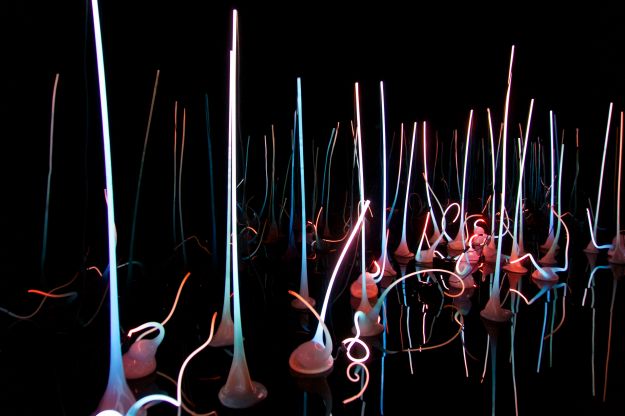
glass_white

I moved from space to space, now intensely curious about what each turn would offer. In one room an enormous sculpture twisted and curled to the ceiling; fish, octopi, and other sea creatures nestled within it. In another, the room was bare…until I looked up and found a glass ceiling filled with individual pieces that together created a stained-glass effect of intense color and variation. When did glass bowls and balls morph into something more: stories in glass, sweat, heat and breath?

I find myself thinking not just about the exhibits and sculptures, but about the maker and making behind the art. I’m a maker too. As a writer and blogger I use words to pull ideas closer so that I can think about them, poke and prod at them, turn them over and look under them, and invite others to look along with me. As a photographer, light becomes my medium to inscribe meaning through my camera lens. And I know that ideas in my head often don’t come out through my words or my lens in the ways I intend. But that, for me, is part of the allure…the seduction of making. I surprise myself with new understandings born from moving my fingers on the keyboard or ducking under the bench to get closer to the weed growing along the crack in the sidewalk.

I’m reminded of Seymore Papert and his theory of constructionism. In this theory, different from constructivism, learning happens when the learner is engaged in a personally meaningful activity outside of their head that makes the learning real and shareable. The activity could be making something tangible like a robot, a puppet, or a model bridge—or it can be something less concrete like a poem, a conversation, or a new hypothesis. What’s important is that the making come from the learner rather than being strictly imposed and directed from the outside (from a teacher or an employer). This element of choice and ownership often propels the maker to tinker and improve their make to meet their own criteria for better, allowing for reflection and reworking based on that reflection. This self-directed making can be a challenge in the classroom.
Traditionally it is teachers who direct and make decisions about student learning. So it’s important to create spaces that allow students to see possibilities beyond their own experiences, yet still offer choice and opportunity for experimentation and iteration. Chihuly’s first experience with glass blowing came from a college classroom assignment that required him to incorporate a nontraditional, non fabric material into a weaving. He wasn’t directed to use glass, but may not have experimented with glass without the constraints and possibilities of the assignment.

Making is about transformation. Transformation of materials, like glass or words, or images through a lens. It is also about transformation of thinking and ideas. And it begins in playfulness. Mitch Resnick of the MIT media lab describes a cycle of learning (and making) based on his observation of young children. Beginning with imagination and spiraling out to creating, children make and learn based on their ideas. As they play with their creations and share the ideas and creations with others, they have opportunities for iteration and reflection on their experiences, which leads them back again to imagine new ideas and new projects to work on or ways to improve their original idea.

I could see this in Chihuly’s glass creations. Elements of one sculpture showed up in new ways in another, chandeliers hanging from ceilings in one display turned into bigger and more elaborate free standing sculptural elements in another. And yet, each also showed new thinking—about color, about translucence and light, about placement and size, about cultural references and interactions with the larger world. I watched a few videos that included Chihuly’s reflection on his work where he talked about how his experience with a particular exhibit gives him vision for the next. I was particularly interested in the garden beneath the Space Needle in Seattle and its origins. I learned that this space, formerly a parking lot, was a blank canvas for Chihuly, something he—in collaboration with the landscape architect—could transform to allow others to see the beauty of his hometown in new ways, to expand their experience beyond the glass into the fairyland where light and glass and flowers and bees play with the backdrop of Mount Ranier and the Space Needle. Chihuly’s reflective videos helped me see and understand the spiral of experience and design and how it propeled him to new ideas and new thinking about his chosen media.

Photography is like that for me. I find myself looking at my world through the lens of my camera, and instead of limiting my view, the lens draws my attention to details of light and shadow. I see the variation of blues in the ocean waves and the foamy white of the lacey breakwaters. The white head of the bald eagle catches my attention and I watch, rapt, as it dives and swoops and then soars into the trees. I have many photos that are not taken, where I’ve missed the moment because I moved too slowly, had the wrong lens in place, or simply had to stop and wait and watch. But those missed photos become inspiration and information for tomorrow’s attempts. As I imagine, make, share and reflect, new thinking emerges and my understandings transform.

I want this for my students too. Opportunities to make and create new understandings, to transform the world as we know it. Learning, like blowing glass, needs to nestle close to the flame—the flame of needing and wanting to know and understand—and then the learner takes a breath and blows out and maybe even includes the breath of another to add dimension, depth, and diversity. Learning needs to be shaped by the learner, to expand beyond basic facts and figures and matter in the world, and in the world of the learner. Learning needs space for reflection and nudging from co-learners and outsiders—and teachers and employers—to expand the realm of the possible. Maybe we need a museum for visitors so they can walk through the breathtaking beauty of learning at the hands of those who learn best: children.

Rather than pushing children to think more like adults, we might do better to remember that they are great learners and to try harder to be more like them. –Seymore Papert