An Invitation to Hack

On Hack Your Notebook Day I found myself thinking about all the possibilities for hacking curriculum.  Especially as we think about our students and who we are and are not reaching with our teaching,, we often think about the materials we are compelled or choose to use.  I feel strongly about the need for teachers to hack their curriculum on the behalf of their students…and to encourage students to hack the curriculum for themselves too.

hacking hands

By curriculum, I don’t just mean those self-contained programs in binders and workbooks, but also the novel unit, the teacher-developed projects and materials, the cute unit inspired by a pin on pinterest… Even the lessons we have poured heart and soul into–they all deserve careful scrutiny with our students’ needs in mind.

We all have students who need scaffolds and we all know (or are) teachers who need scaffolds…there’s nothing wrong with leaning on some support structures.  The problem, for me, is when the structures get in the way of student learning and teacher development.  My least favorite words out of the mouth of a teacher are, “Just tell me what you want me to do!”  And I’m not really fond of those words from students either.  They imply a lack of investment, a lack of agency, a lack of understanding of purpose and audience.  And all of those might be true.

So what do we (I) do about it?  I propose that we hack.  Let’s carefully examine the materials we are required to use and/or decide to use.  Who do they work for in our classroom?  Who benefits?  Who doesn’t?  Who do we give permission to “break the rules?”  Who is handcuffed by the materials?


A Burr in Your Sock

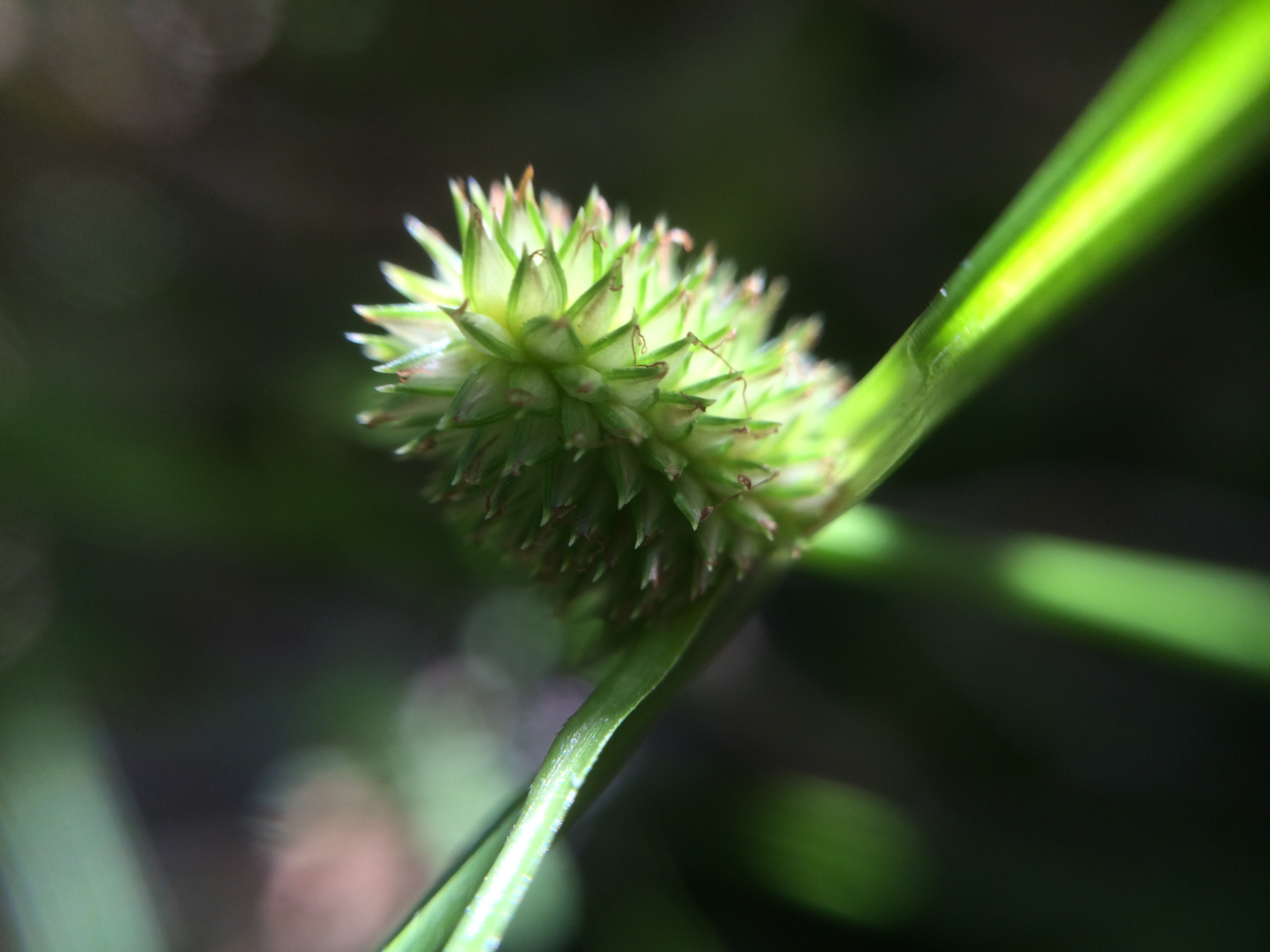
Today was a prickly kind of day in the SDAWP SI.  There’s something about confronting formulaic writing that sticks in your socks like those little burrs you find on weeds that seem to plant themselves in the most unlikely places.

burr

Over the weekend we read a collection of articles about formulaic writing, thinking about why this approach to writing instruction persists, and the implications for student writing.  Even teachers who are proponents of using a formulaic approach to teaching writing still complain about the deadening experience of reading the resulting student writing.  Who wants to read paper after paper of repetitive phrasing and uninspired thinking?

I contrast that with the playfulness of this week at the CLMOOC.  This week’s make is to hack your writing.  And already on day two interesting writing is filling my feeds.  I woke up this morning to a poem by Kevin “stolen” from yesterday’s blog post:

I live in contrasts
in the space between here
and there
I find the nook to hide in
and observe the world
through many lenses
I seek but never find
the whys of the world
so that every movement is
equally beautiful, equally interesting
and entirely different from each other
but only if we take the time to pause
and notice.

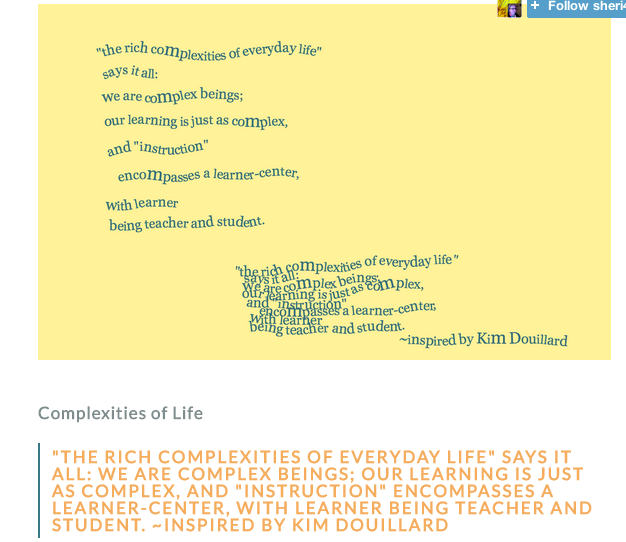
And this creation by Sherri:

Screen Shot 2014-07-08 at 8.41.27 PM

Both Kevin and Sherri played with language and writing, creating their own message and meaning from words I had written.  They wrote for fun, for their own purpose, and gifted their words to me on my blog.  I grant you that they are adults and they are not composing “academic” texts, but I know that the spirit of fun and play supports them as writers.

I worry about who in our schools gets the most formulaic writing.  Why are our English learners, our students of color, our students who live below the poverty line most likely to get writing instruction that is pre-chewed, scaffolded to the point that no thinking is required?  In the name of being helpful, we are robbing students of the opportunity to make sense of their thinking through writing.

And yet, letting go of the formulaic means inviting messiness, losing control, welcoming confusion in order to find clarity and coherence.  What replaces the formula?  That is a question that I am asked over and over again.  The answers aren’t easy, they aren’t neat, and they mean teaching writers rather than writing.

Sometimes that search for answers feels like a burr in your sock.  But if you look closely–maybe using your macro lens–you’ll see the details of the beautiful weed, a natural hacker, springing up where you least expect it.

This and That: Consider the Microclimates

I live in a place filled with contrasts.  There is the breezy casual of the beach to the west and less than a thirty minute drive away you can be hiking into dry, hot hillsides, exploring vineyards or admiring the abundance of avocado groves.  Our weather reporters call them microclimates…and we tend to be adapted to the microclimate where we spend most of our time.  But what I love most about this place that I call home is that it is not either/or, it is this and that.

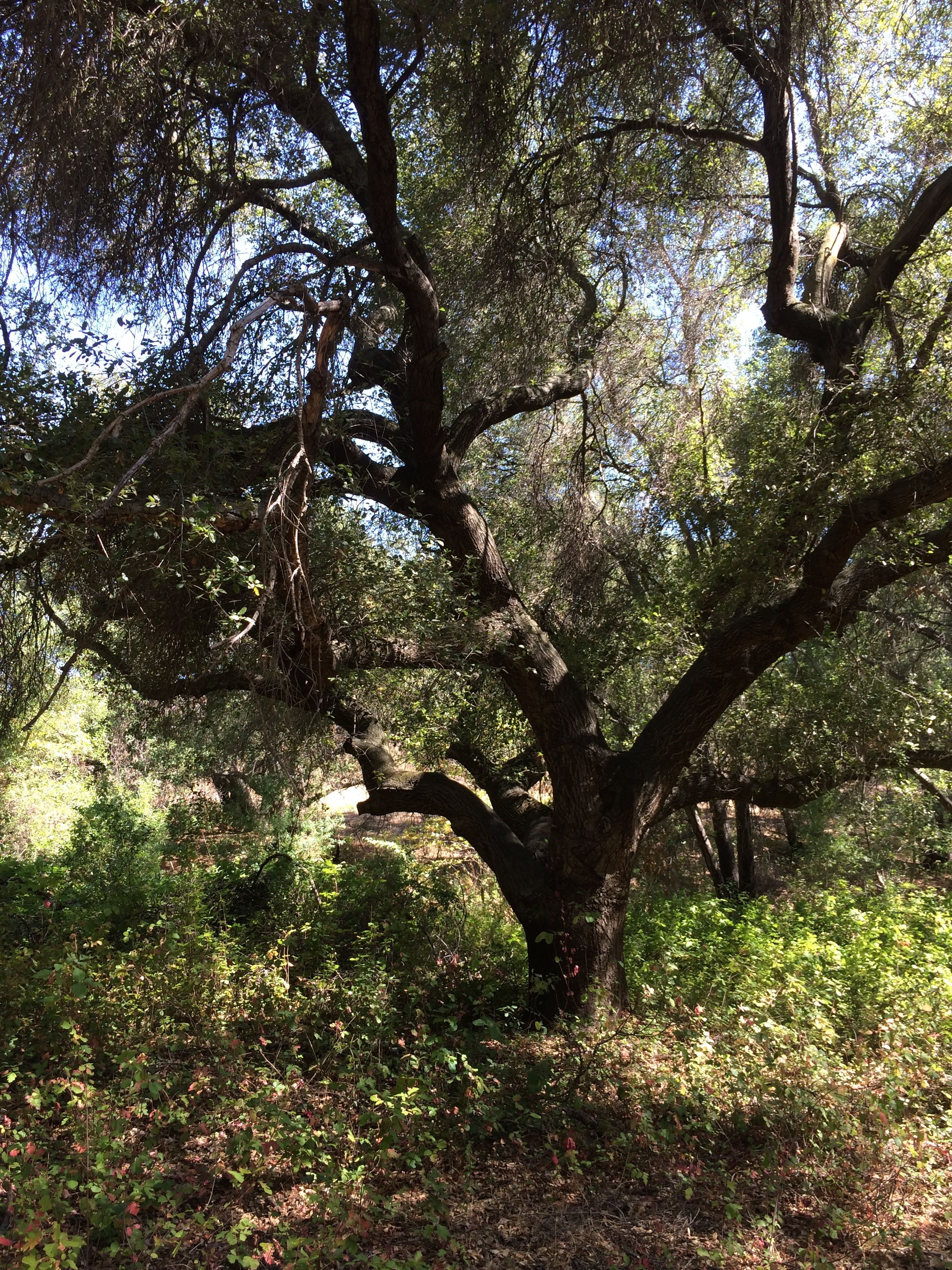
Just this weekend I spent time in two of these contrasting spaces…equally beautiful, equally interesting, but entirely different from each other.  I loved exploring the old oak forest as I walked in the dappled sunshine…and looking up in surprise as I watched a mule deer leap across the path I was walking.  It was hot early as I hiked uphill and I could see evidence of wildfires past and the dry brush that continues to be a threat for future fires.

coast live oak

And the beach is always a source of inspiration.  The holiday weekend prompted us to get up early and walk the beach before the crowds arrived.  It was sunny and warm and the water was unusually clear.  We noticed sand sharks and stingrays swimming a few yards from us as the waves crashed.  The water was warm by our standards…up to 70 degrees, perfect for barefoot walking.

beach castles

I’m so happy that I don’t have to chose to love and visit only one part of my place.  I’m feeling like there is such a push to simplify our choices, to turn every decision and discussion to the binary choice.  Right or wrong, left or right, boxers or briefs, apples or oranges.  In my experience, those binaries just don’t represent the rich complexities of everyday life.  Just this morning a friend sent an article about “balanced literacy” where the author lamented the kind of “conventionally rigorous” instruction he had received as a young English learner.  The article implied that “balanced literacy” was essentially an absence of teaching compared to the experience with the effort-full teaching he had received in his childhood.

I’m reminded of the reading wars in the not too distant past.  The phonics versus whole language debate that implied an either/or approach to teaching.  These arguments miss the subtleties and complexities of teaching and learning.  This “all teacher” or “all student” approach ignores the body of student-centered teaching that effective teachers practice every day.  It dismisses the diversity of the needs and interests of students as irrelevant and assumes that if the teacher simply transmits enough information, students will learn what they need to learn.

Let’s start a new conversation.  One that is about learners: teacher learners and student learners. Let’s bring their microclimates into the conversation.

Blog Birthday: A Reflection

Today marks one year since I began this blog.  I began with a 30 day blogging challenge for myself–creating an urgency to blog every day for 30 days in a row.  And in retrospect, that was a smart move to help me establish a habit of writing every day, day in and day out, even when I wasn’t feeling like I had anything to say.  In the last 365 days, I posted a blog post 293 of them…that’s a little over 80% of the days in the year!

This morning I had plans to read all 293 posts and then create some kind of reflection based on that reading.  And while I think it’s a good idea to go back and read all my posts, I only managed to get through the first 30 days before my life called and I was off to the beach and running those errands that just don’t get accomplished during the work week.

(Making time to photograph and play pushes me to create more balance in my professional and personal life…a good thing, I think!)

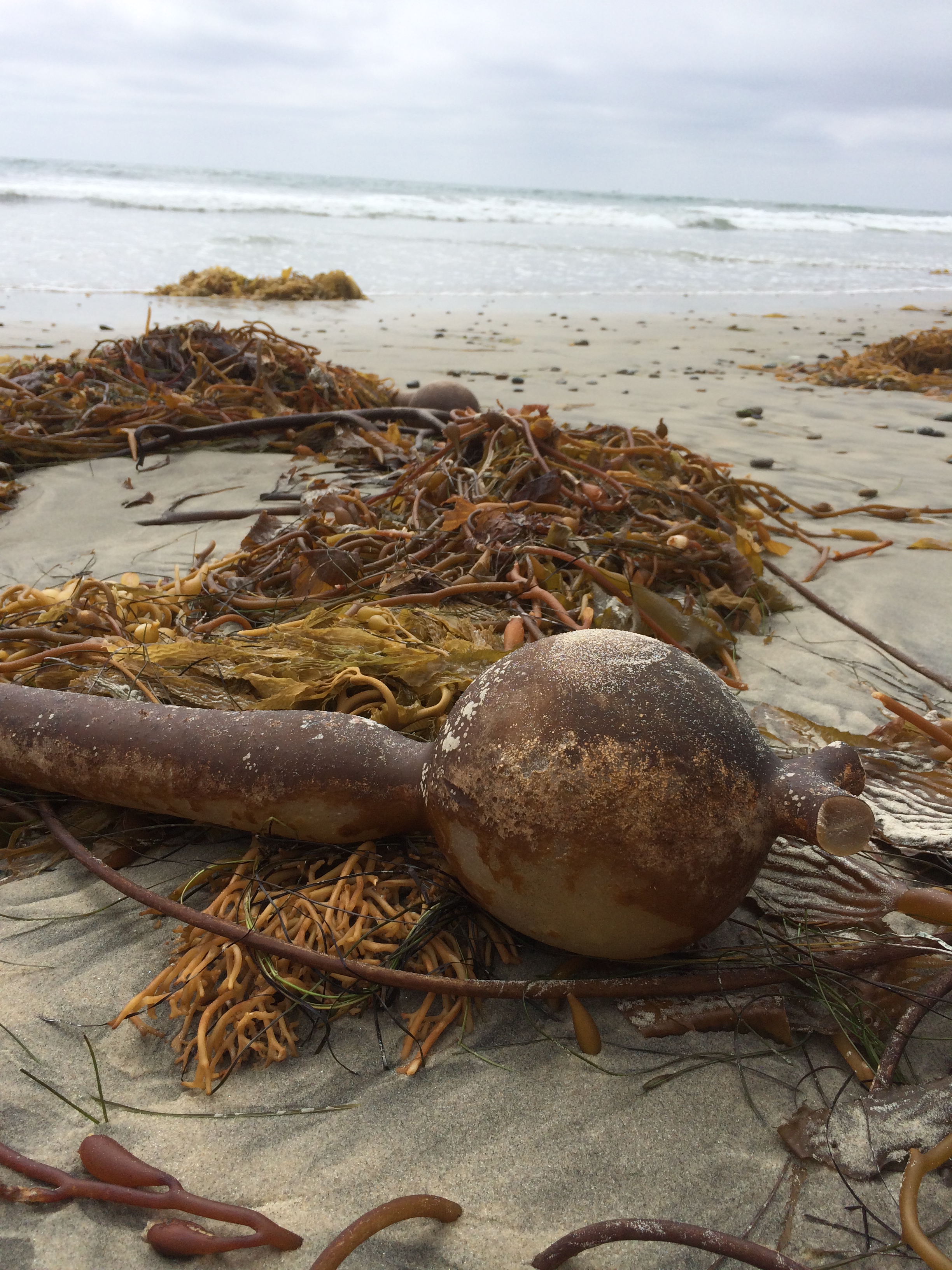
I’ve noticed lots of bull kelp on the beach in the last week.  There is something beautiful and fascinating about these large floats…definitely evokes the wabi sabi for me!

bull kelp

So instead of reflecting on the year’s worth of posts, I decided to highlight five from those first 30 days that continue to speak to me…and I know that I returned to their themes throughout the year–and may continue to return to them.

1.  Dandelions: A Photo Essay – I noticed that I had a number of posts about my fascination with the ordinary, and what I learned about myself and my students by paying attention to small details.  This particular post continues to be one of my favorites.

2.  Fireflies – This is another post about something little–that many people take for granted.  I loved learning that fireflies are the most ordinary of insects, and the most extraordinary!  We southern Californians miss so much by not having these lights in our everyday lives!

3.  Spaces for Learning – Hmmm…I just discovered I have two posts from last July with the same title!  I like this one that talks about “third spaces” for learning, outside the spaces claimed by hierarchies and organizations.  These are the spaces we claim for ourselves as learners.  I’m not done thinking about this idea… and it keeps emerging over and over again in my life…as a teacher, as a learner, and as a human.  (The other post was about Genius Hour, which is related…)

4.  A Small Orange Bead – This post is really about the power of connections and connectedness as a learner.  Opportunities to learn in a community create deep pathways and provide support that matters to learners.

5.  Boys and Bears – There is a physicality to learning that we sometimes forget as adults.  My observations of boys at the polar bear exhibit pushed me to think about how physical interactions have the power to pique curiosity and deepen learning experiences.

A year of blogging has taught me so much about myself as a writer, as a learner, as a photographer, and as an explorer in the world.  It has heightened my senses as I lean closer to my surroundings to understand them and myself through my writing and photography.  When I chose the blog title, Thinking Through My Lens, I wanted to play on the word lens to represent more than a camera’s eye…I also wanted it to represent my own biases, questions, and goals.

I look forward to another year of Thinking Through My Lens…and hope you will continue to bump your thinking against mine, sharing your insights and discoveries so that we can learn more about our world and ourselves, together.


Rubbing Elbows with Nature

The Wabi Sabi photo-a-day challenge has me looking at my surroundings differently.  I find myself looking for beauty that presents itself in unusual ways.

Today I had the opportunity to head out around the UCSD campus for a short learning walk in conjunction with a demo presented by a kindergarten teacher in our SDAWP Summer Institute. She explained how nature inspires her own writing and some of the ways she inspires writing with her students.  As I headed out with the charge to spend some time in nature, tuning in the sights, sounds, smells, and feels, I also had my phone/camera in hand ready to capture evidence of my experience.

Down the metal stairs, past the row of ATM machines, across the cement walkways, sandwiched between the architectural wonder of the Geisel Library and the tall buildings that are Warren College, lies a secret garden.  Garden often conjures lush foliage and brilliant blooms, but the space lives under a canopy of Eucalyptus trees.  And to my surprise, growing from a fallen trunk were three new tall, thin trees.

eucalyptus growing from a stump

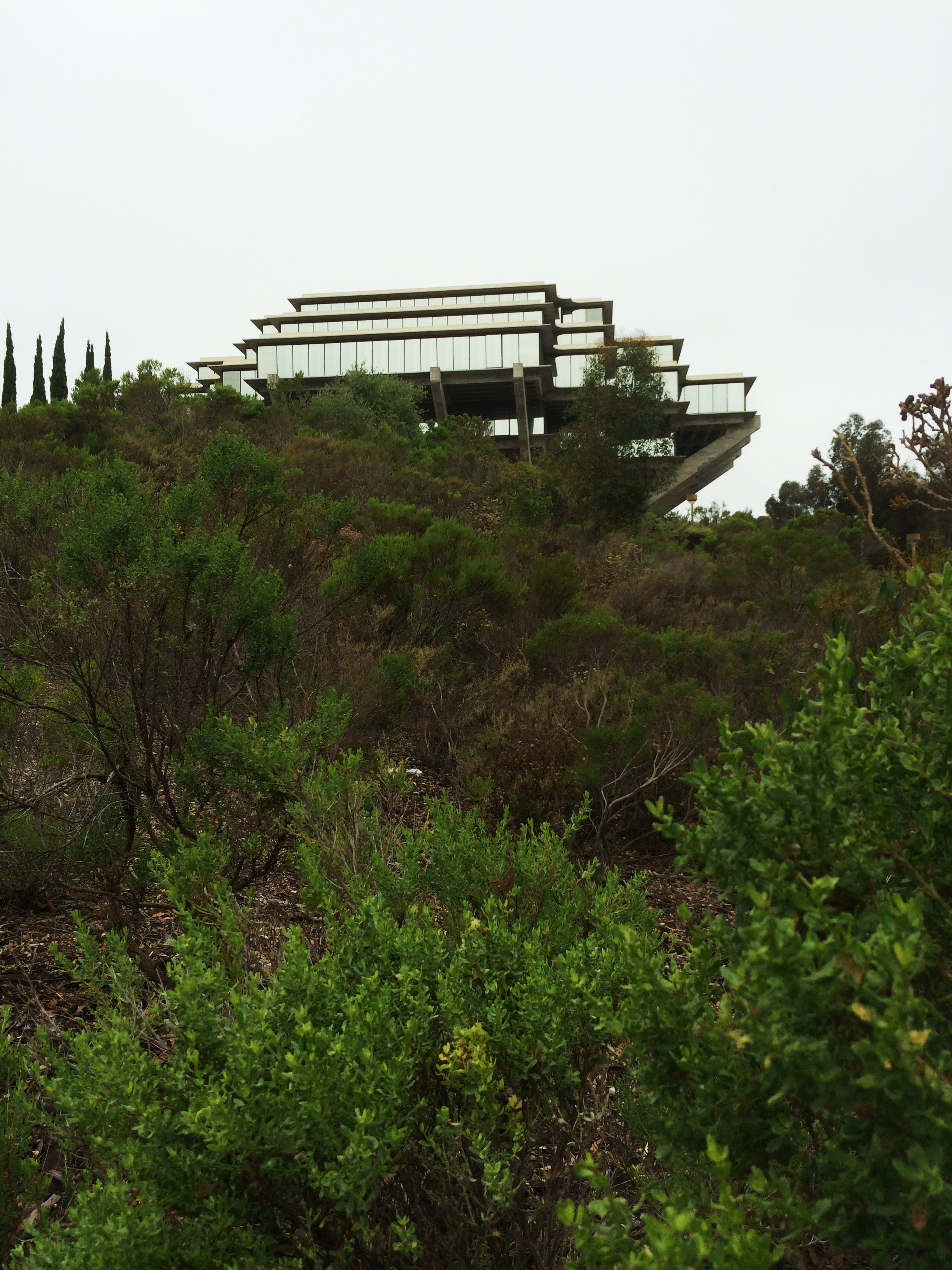
Heading off to the Snake Path, an art installation leading to the library inspired by Milton’s Paradise Lost, I found the natural beauty and familiar smells of the native plants that thrive in our arid, coastal climate.  With phone/camera in hand, I noticed the contrast of the angular, metal and glass library poking up behind the fragrant, wild-ranging brush.

library ucsd

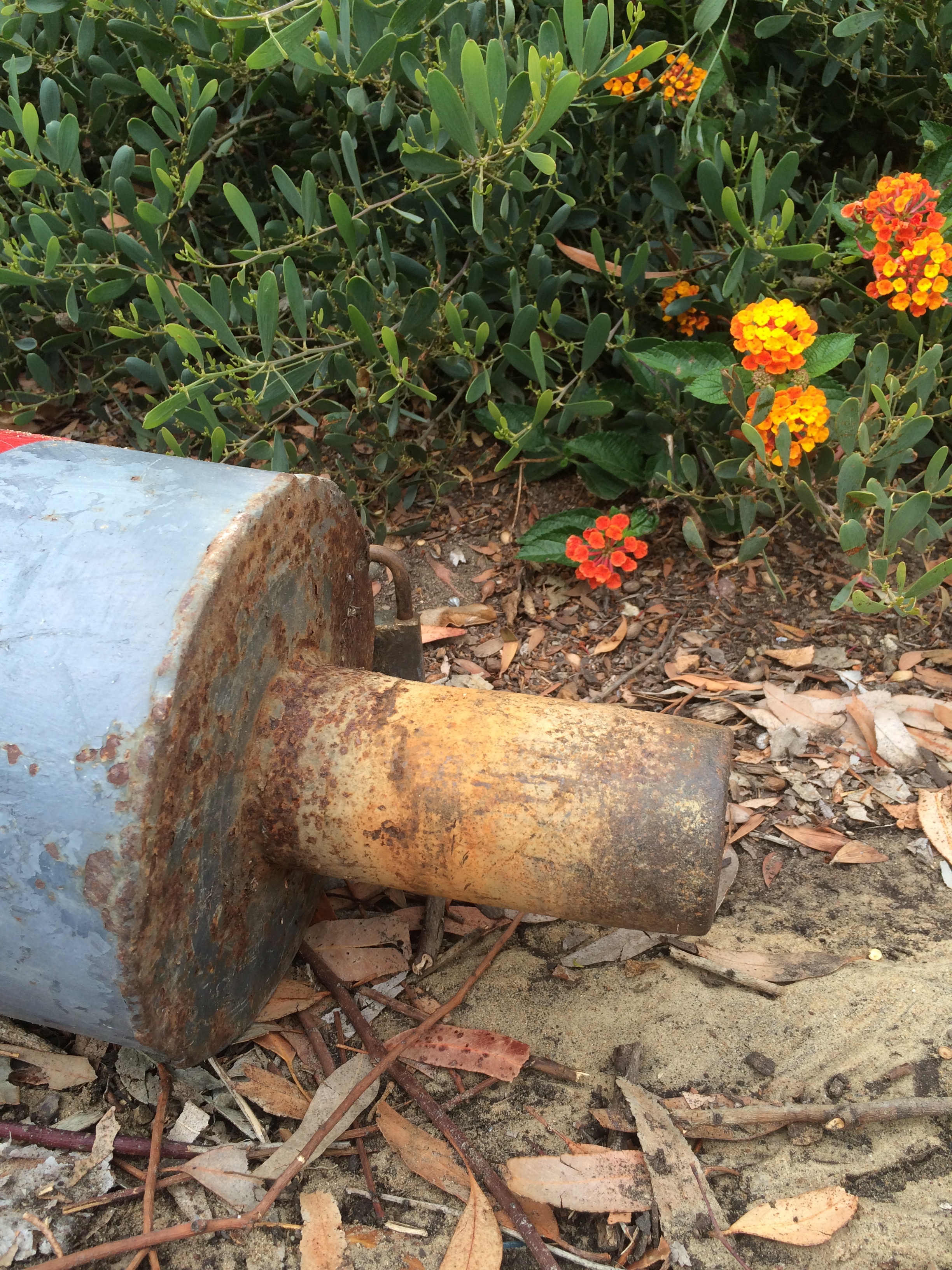
As I continued my walk, I came around the front of the library and found myself drawn to to the barrier poles laying on their side…with flowers growing nearby.

flower and pole

flower and pole 2

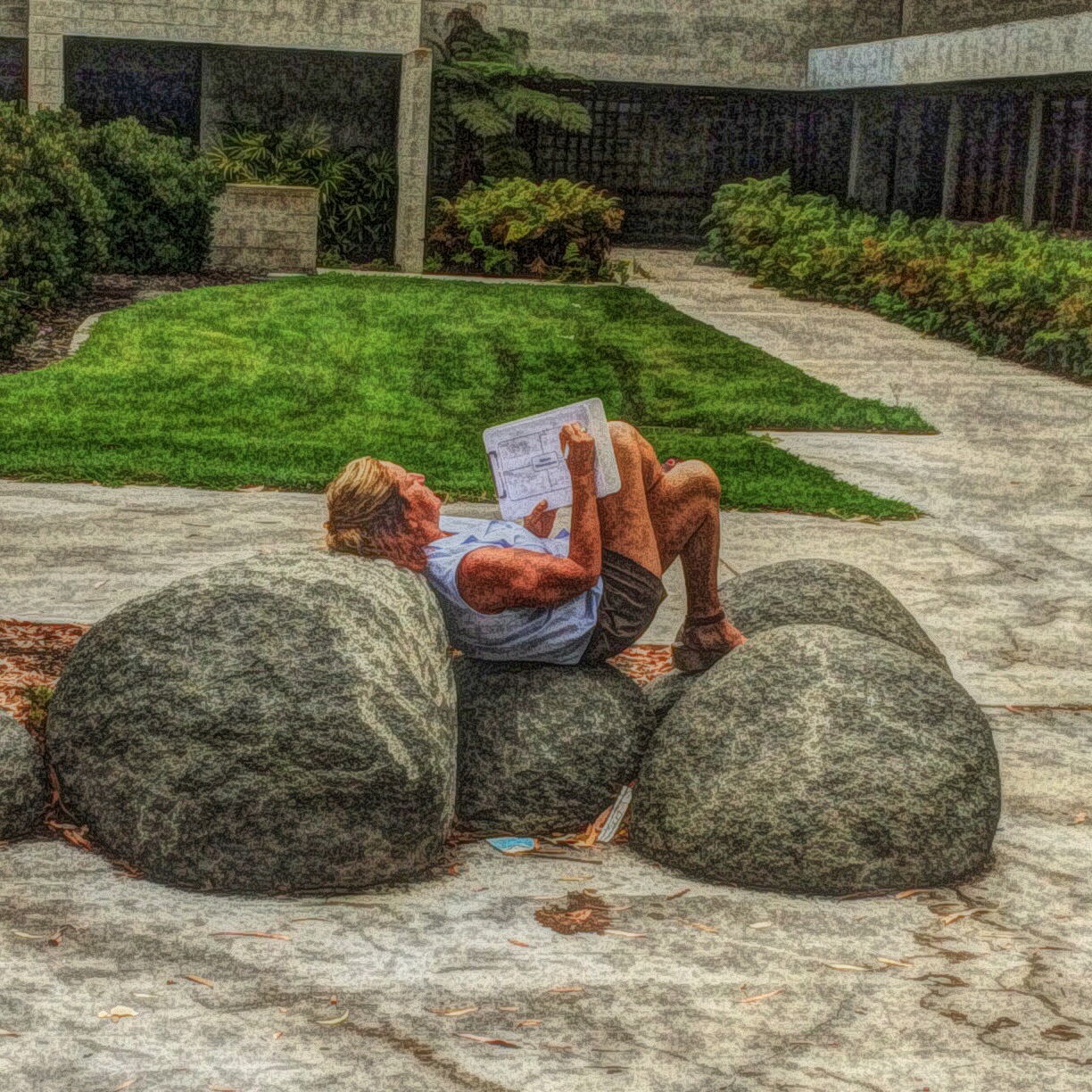
As I headed back to our meeting room, I noticed another of our participants lounging on some large boulders and working on her writing.  I admit, I snuck up on her–wanting to capture the image that tells a story in one frame.  (She does know about the photo…and has approved of it!)

writing on the rocks

I find myself looking for the Wabi Sabi of nature rubbing shoulders with the not always so beautiful man-made.  And some of that Wabi Sabi I noticed was not only visual…I heard the buzzes of insects and the chirps of birds joining with the melody of car engines, back-up beeps, and snippets of conversation in the songs that are uniquely UCSD.

Where do you find nature rubbing shoulders with man made structures?  Have you noticed any Wabi Sabi?

Finding Beauty in the Ordinary: July’s Wabi Sabi Photo-a-Day Challenge

Summer is about the ordinary, it’s often the time we rediscover our playful selfs as we encourage children (and maybe ourselves) to run through the lawn sprinklers, lick popsicles from the ice cream truck, and spit watermelon seeds as we sit on the front porch.  We roll up our sleeves, walk barefoot, and sip glass after glass of iced tea in tall frosted glasses that drip, almost crying with the pleasing coolness on a hot, summer day.

I first heard of Wabi Sabi from my friend Susan a few years ago when she asked her students to focus on the ordinary in research projects they were doing in her middle school English class.  I remember how excited she was that they were discovering the beauty in the “old school”—typewriters, rotary dial phones, handwriting…and so much more than I can’t even begin to remember now.  

Wikipedia offers us this definition:

Wabi-sabi (侘寂?) represents a comprehensive Japanese world view or aesthetic centered on the acceptance of transience and imperfection. The aesthetic is sometimes described as one of beauty that is “imperfect, impermanent, and incomplete”.

My photography has heightened my awareness of the complexities of beauty in the ordinary as I have learned to tune my eye to seek out the familiar in new ways.  So when Margit gifted me with the picture book, Wabi Sabi by Mark Weibstein, I found myself thinking about the Wabi Sabi around me.  Weibstein pairs his story of a cat named Wabi Sabi with Haiku, following the Americanized three-line, 5-7-5 syllable pattern, that helps the definition-seeking cat understand its name…and adds this definition, for us slower to understand folks, as well:

Wabi Sabi: a way of seeing the world. It finds beauty and harmony in what is simple, imperfect, natural, modest, and mysterious. It can be a little dark, but it is also warm and comfortable. It may best be understood as a feeling rather than as an idea. 

The more I have been thinking about this concept of Wabi Sabi, the more I want to explore it more intentionally through my lens.  

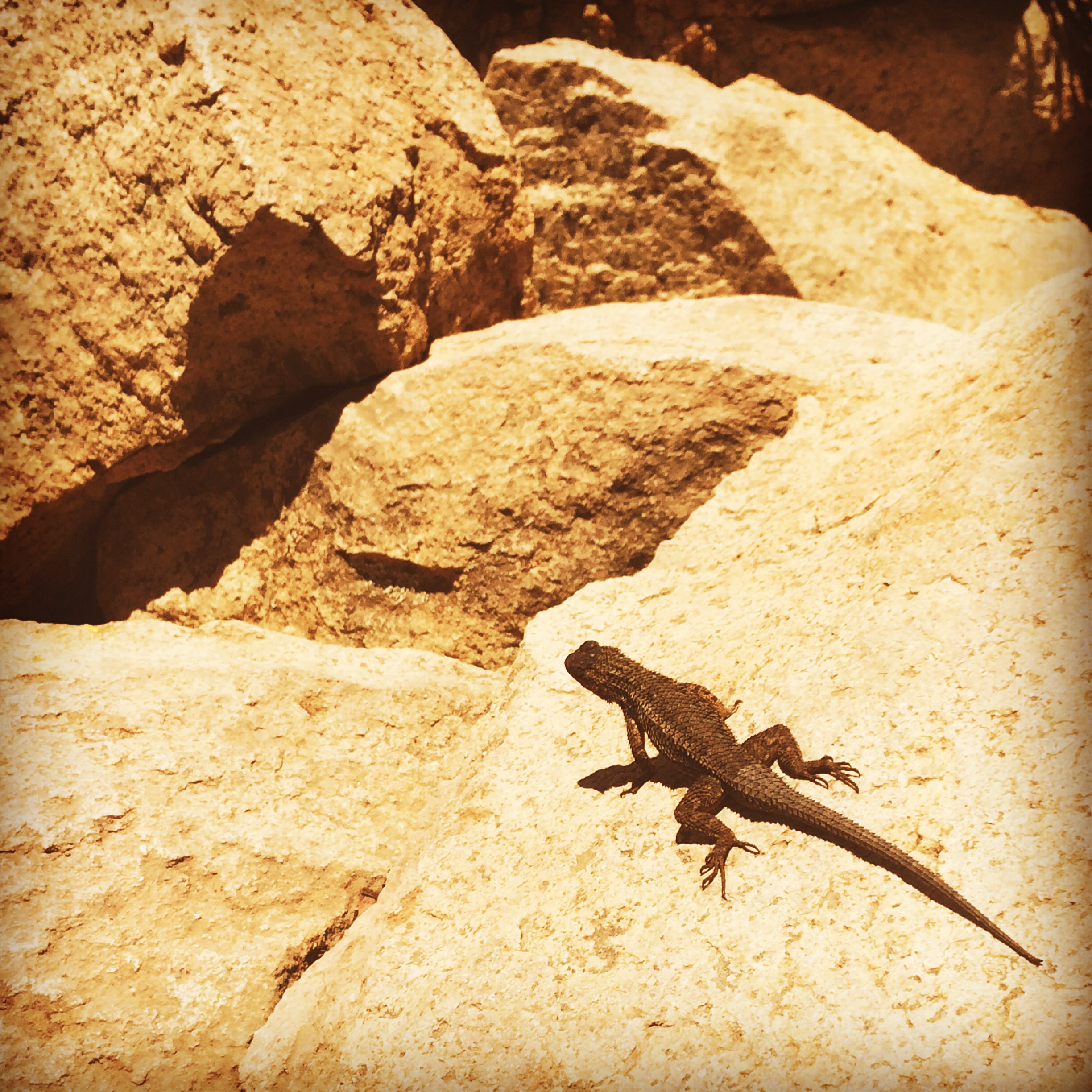
Here’s a few of my ideas…along with a Haiku attempt with each.  Each of these represents my interpretation of Wabi Sabi, an appreciation of the imperfect, often fleeting beauty I find through my lens.  Letting 17 syllables speak for me is a challenge, but an interesting one, creating another layer of Wabi Sabi for me.

Lizard_wabi sabi

A flurry and munch!

Time for posing and sunning

Scaly modeling

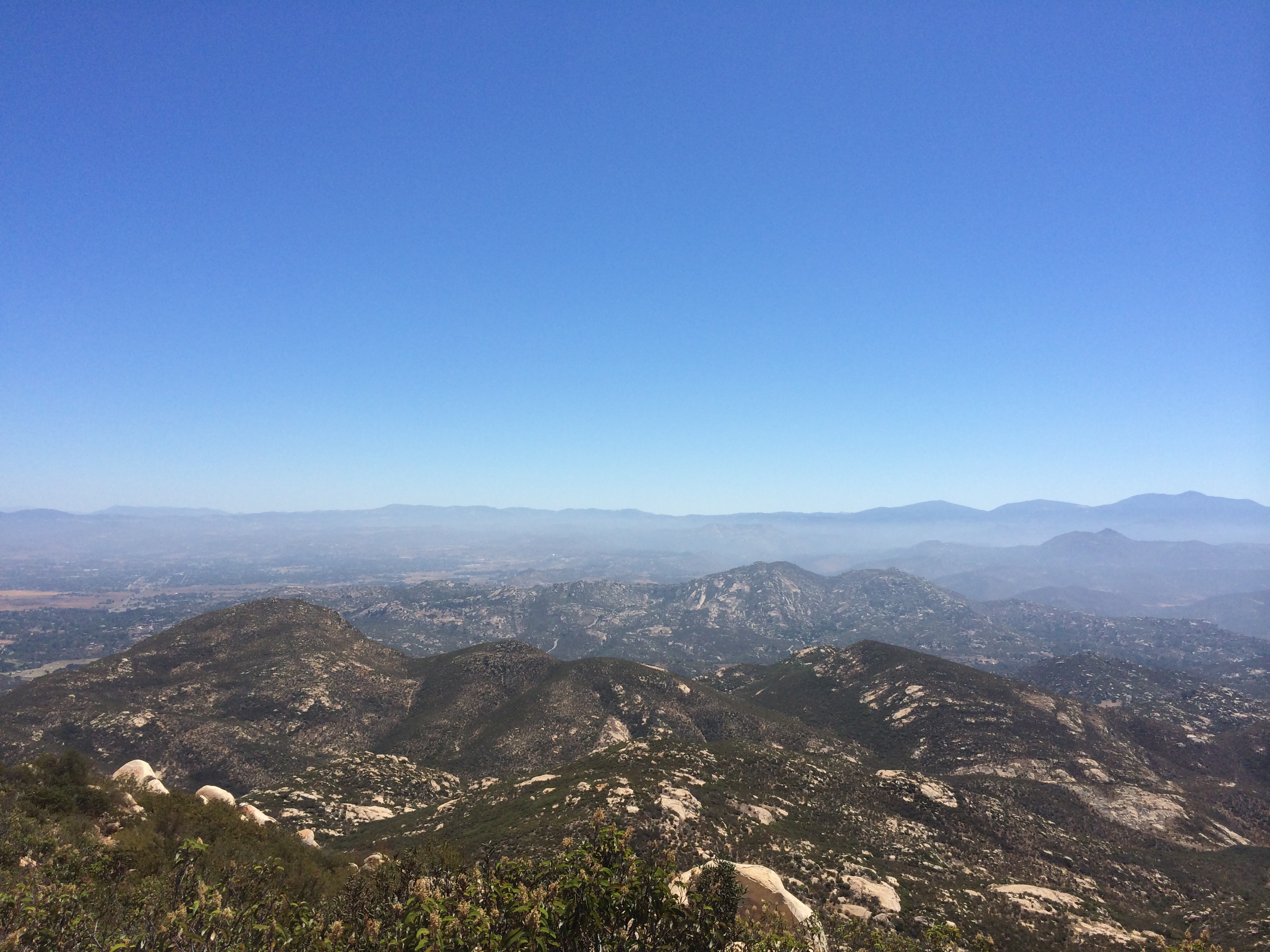
Mountains from Iron Mountain

Purple mountains stand

Off in the distance watching

Both desert and beach

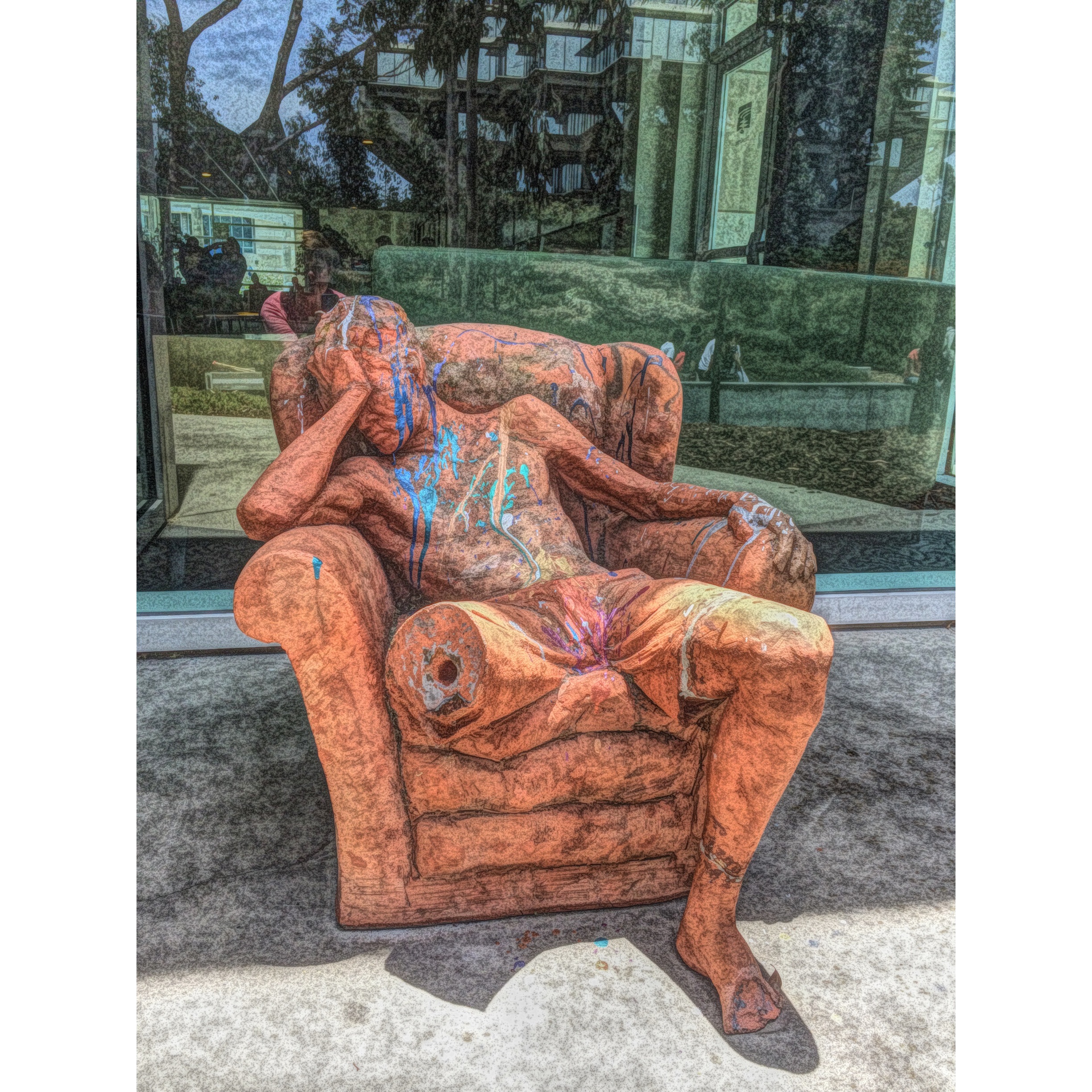
broken sculpture ucsd

It’s a hard knock life

Reflecting privilege’s promise

Strong enough to thrive

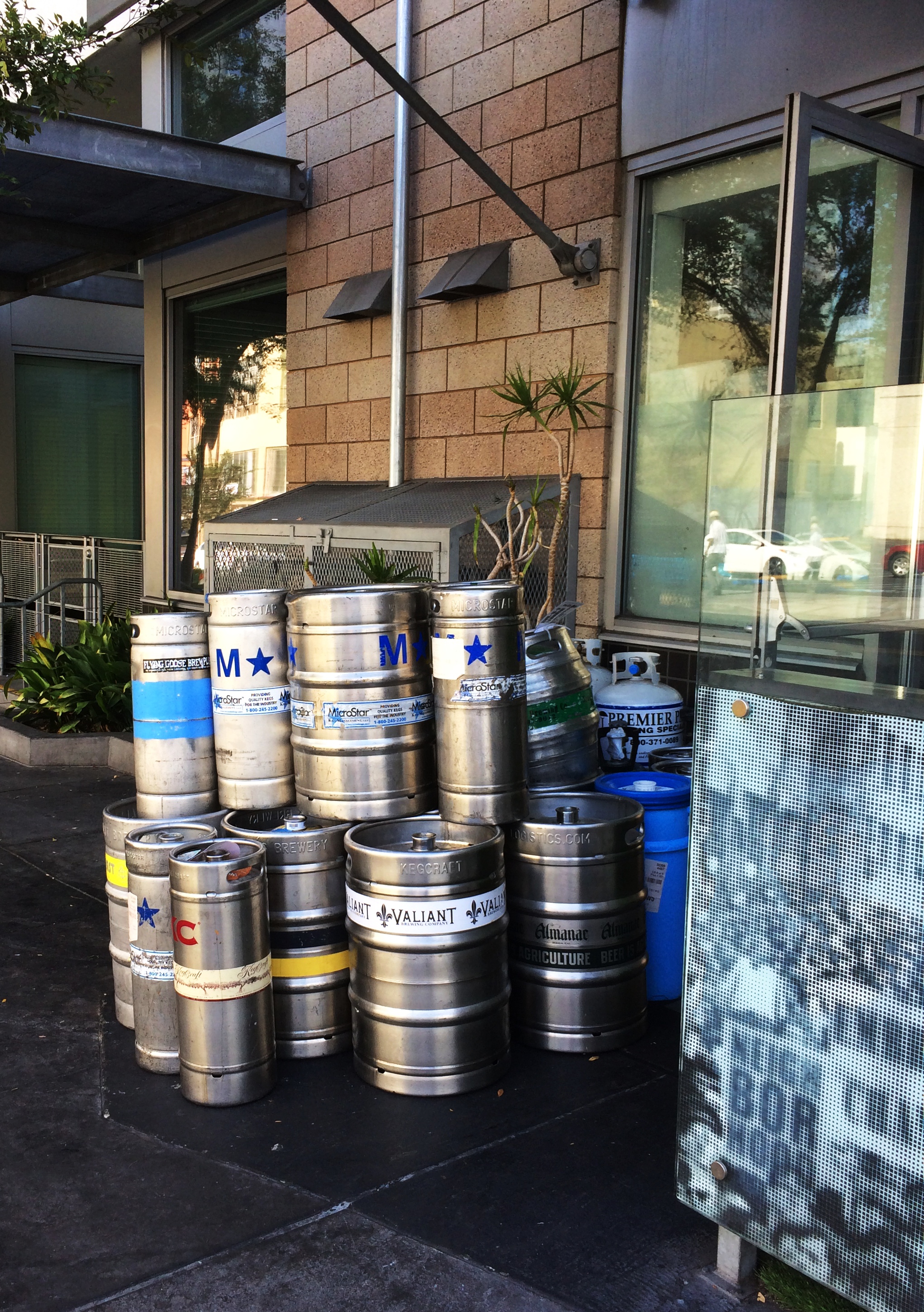
kegs

Kegs and art mingle

Chatting on a street corner

Exchanging cultural news

And to stretch my exploration (and yours too) I have come up with a list of potential prompts or categories to consider.  (I notice that I tend toward nature for my photographic exploration of beauty–these prompts are meant to push my thinking and seeing in new ways.)

1.  On the corner

2.  Nature

3.  People

4.  Celebrate

5.  Inside

6.  Under

7.  Home

8.  Outside

9.  Places

10.  Animals

11.  Food

12.  Personal

13.  Things

14.  Mood

15.  Looking up

16.  Sitting down

17.  Looking down

18.  Early

19.  Growing

20.  Morning

21.  Sound

22.  Growing

23.  Feeling

24.  Places

25.  Night

26.  Light

27.  Hot

28.  Early

28.  Travel

29.  Between

30.  Smell

31.  Icy

So now it’s your turn.  Explore what Wabi Sabi means to you as you examine the ordinary in your life this summer.  After you shoot, post a photo each day with the hashtag #sdawpphotovoices to Twitter, Instagram, Flicker, Google+ and/or Facebook (the more the better!), so that we can all enjoy the posts. Try your hand at an accompanying Haiku and explore how it expands, defines, or changes the meaning of the image you share. You are invited to create a pingback by linking to this url or post your blog address in the comment section. It’s fun for me to see what others are doing with the same prompts I am using!

With summer in full swing, it’s the perfect time for some playfulness and experimentation…look for beauty and the unexpected in the ordinary–let it surprise and delight you!  You can post every day, once a week, or even sporadically throughout the month…whatever works in your life. You can play this game by posting your pictures in the order of the prompts or post the one you find on the day you find it.  You get to make your own rules!  Be sure to share and tag your photos with #sdawpphotovoices so we can find them!


Beach Contrasts

Beach walks are full of surprises…if you are looking for them.  Summer Saturdays are jam-packed with people…families, birthday parties, couples, teenagers, and so many more. Parking is a challenge and a beach walk means dodging paddle ball games, frisbees, sand castle builders, surfers, toddling just-beyond-babies, footballs…

And today’s surprise was all the flowers strewn on the beach.  My husband loves to pick up trash as we walk and we noticed the petals immediately.  They weren’t trash, but they were quite a contrast to what we usually see on the beach.  At first we wondered if there had been a memorial service–not so unusual in the surfing community.  But the flowers and petals continued as we walked and walked.

rose on the beach

Was it a wedding?  There were many different kinds of flowers…purples and whites, yellows and oranges.  White roses, red roses, yellow roses…  Like a trail of bread crumbs leading to a story not yet told.

yellow roses in the kelp

I imagined a flower truck overturning and dumping its load into the ocean…a flower festival on a boat offshore where flowers were thrown into the surf as part of a ceremony…a flower field for fish that washes onto the shore when the growing season ends…my imagination took over creating more and more scenarios.

sunflower on the beach

By then my mind was tuned for contrasts and I began to notice others, like the pair of surfers with their boards on their heads…one in a full wetsuit, the other in a bikini.

surfer girls

And the patch of nasturtiums growing along the cliffs instead of the usually bare sandstone.

nasturtiums on the beach

And then there was the colorful seawall…someone whose property extends all the way to the beach.  This stretch always reminds me of that Kevin Costner movie, Waterworld, with the floating buildings made of seaworn wood, metal, and whatever could be salvaged…this seawall has that quality.

beach wall

And there was more…light and shadow, age and youth, affluence and poverty.  The beach is full of contrasts, when you take the time to look and notice.


More than a Game

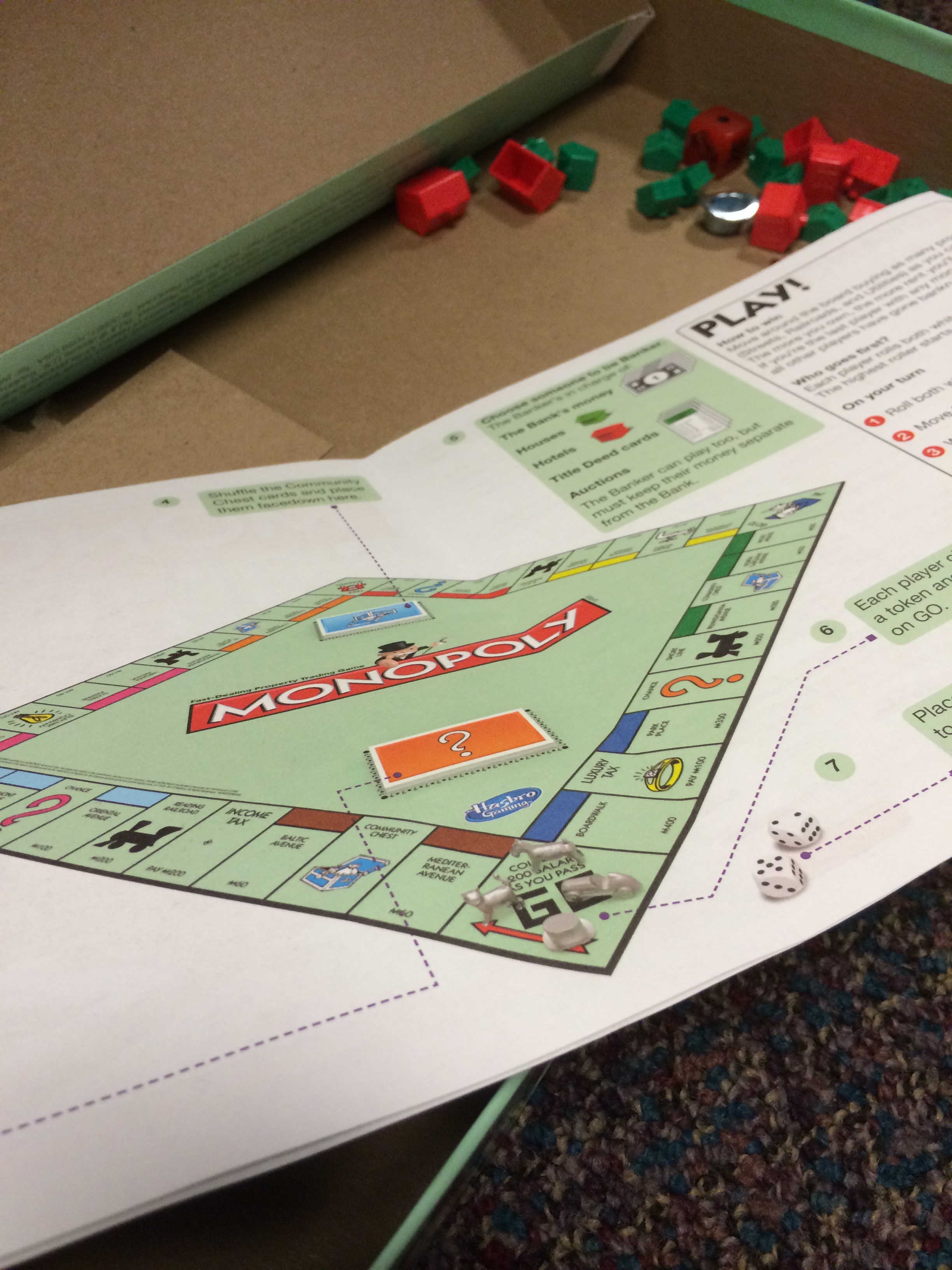
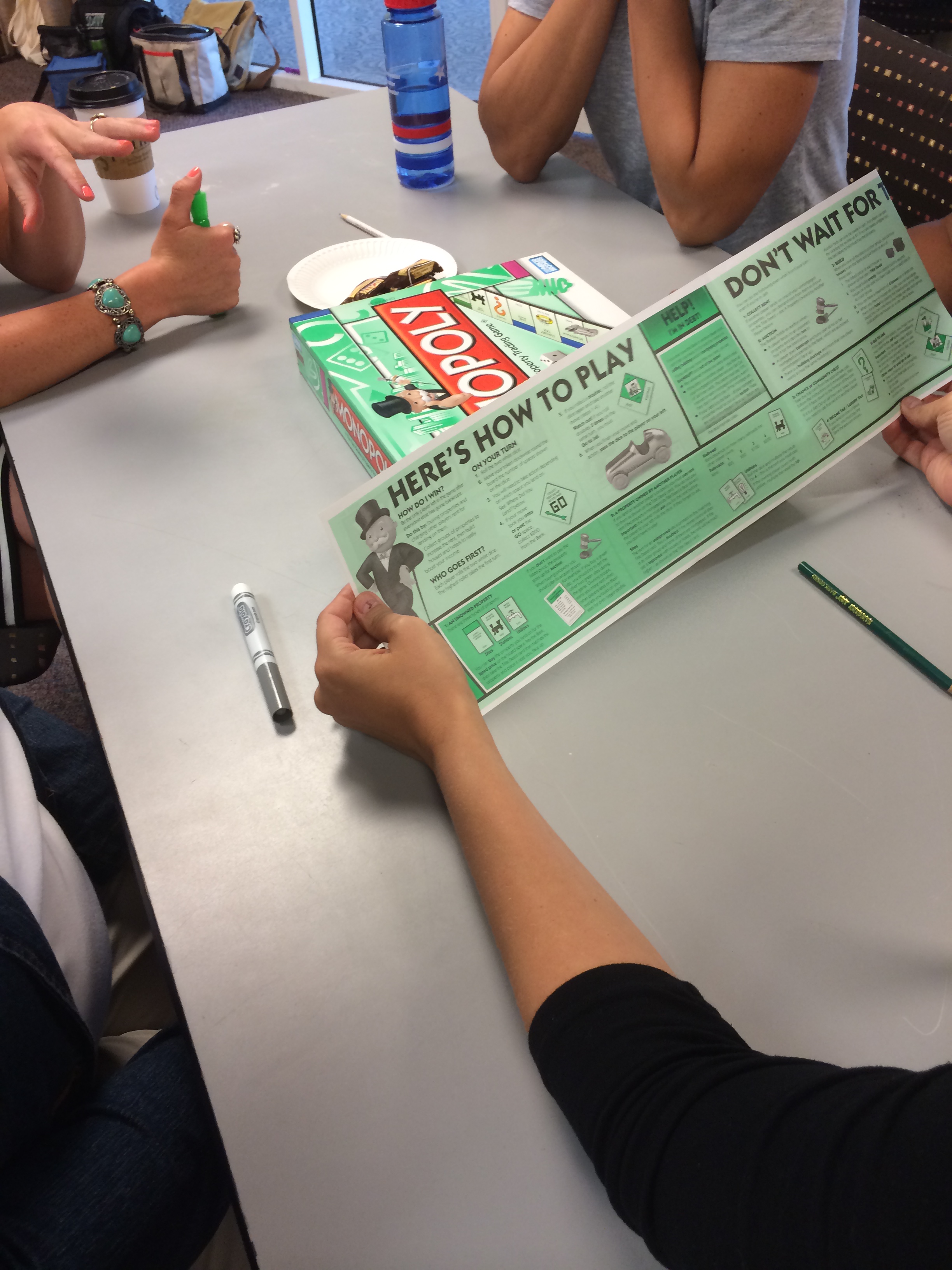
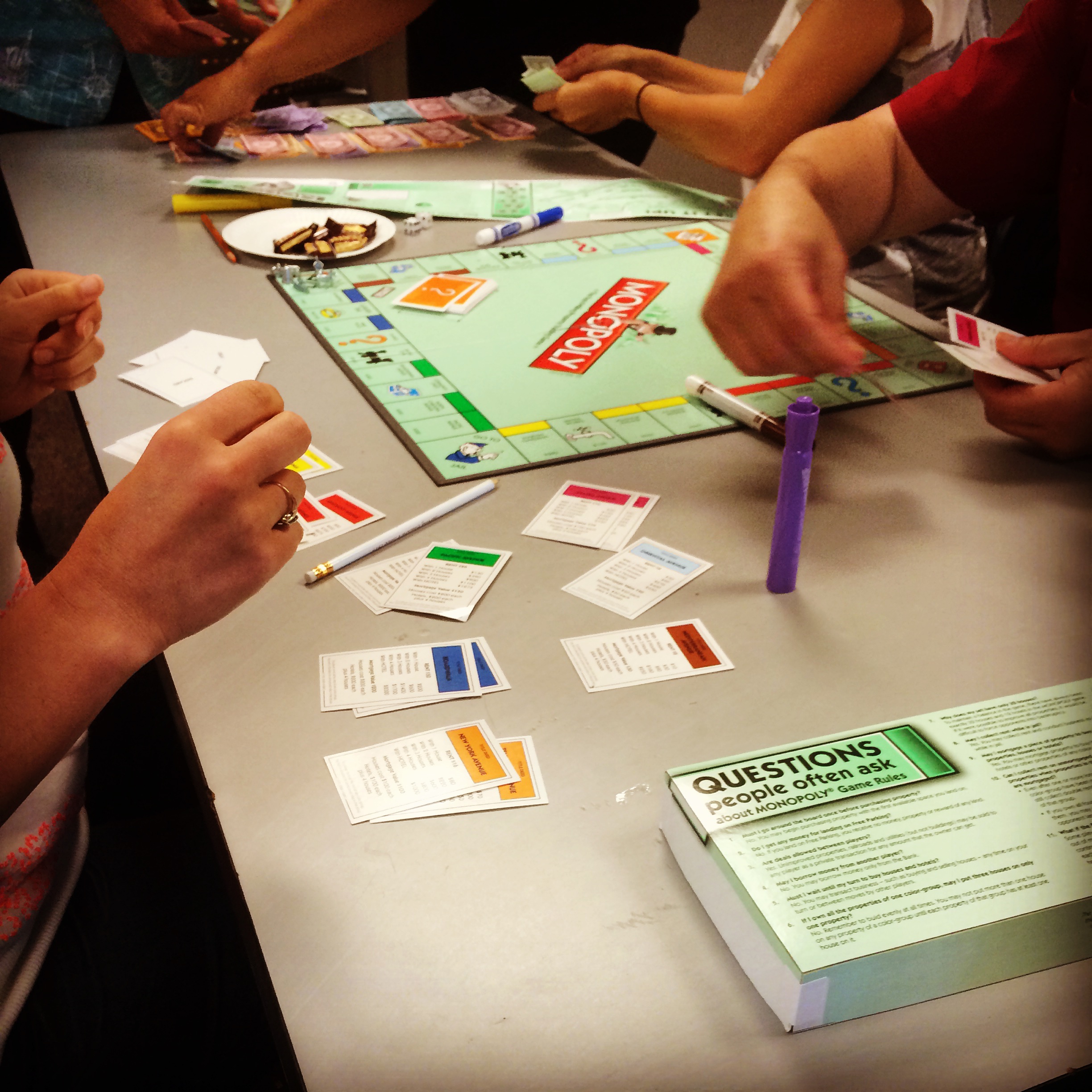
Today we played Monopoly.  We played in our Summer Institute…a leadership development program for teachers of writing.  And as you might imagine, this play had more than one purpose!

monopoly box

There is something wonderful about giving a group of dedicated educators a Monopoly box and asking them to play a game during an intensive professional development experience.  In our 4th day of a four week institute, we have already begun to bond, building trust and opening up, willing to be vulnerable even when faced with difficult topics and challenging situations.

The group seemed almost giddy about the thought of playing…even though based on the previous three and a half days, they knew this was not simply a board game break.  They started by forming groups of five or six and then selecting a writing utensil from a plate on their table.  A colored pencil, a smelly marker, a highlighter, an SDAWP pencil, and either one or two Crayola markers were mystery icons of the game to come.  After spending time as a group reviewing the written rules of the game and setting up to begin, the significance of the choice of the writing utensil became apparent.

Figuring out how to play

Those holding the Crayola markers were asked to begin playing…the others at the table were only allowed to watch.  In my role as observer I got watch as some started to play with trepidation while others raced forward with delight…”Hurry, let’s get what we can while we can!”  After the first player or players had played for five or ten minutes, the second group of players were invited in.  At indeterminate intervals and not knowing which category would be called next, the players who waited and watched seemed to withdraw and lose interest in the game.

playing monopoly

This version of Monopoly, which immerses players in an experience where everyone plays by the same rules…but the game is still not fair, is adapted from an article by Jost and Jost.  Our goal is to get our participants to think about equity beyond what is experienced by individuals and consider the systemic influences of poverty and racism.

As the game continued we saw our participants behave in some interesting ways.  Those that entered the game early seemed to play either with zeal…or with the weight of guilt on their shoulders.  They frequently assumed the role of helper…often moving the pieces for their late starting peers or even acting with seeming generosity, offering “get out of jail free” cards or waiving some small rents due to them.  The late starters either become apathetic about the game or downright devious…sneaking money from the bank or even wishing to land in jail so they wouldn’t have to pay fees that they saw coming as their money dwindled with each turn.

We saw early players become rule sticklers…at one point carefully explaining the rules to a late starter.

checking the rules

When time was called on the game, players were asked to take note of the results and then sent off to reflect on their experience.  What did they notice about themselves, their peers, the experience?  What implications does this experience have for them as educators, parents, human beings?

Our discussion was rich and layered…and sometimes downright contentious.  This experience opened up space for talking about systems: economic, social, educational…and the differences in access and equity that are often dismissed or not considered with our more typical focus on individuals.  And we’re not finished with these discussions…because although there are some who might ask, “What does equity have to do with the teaching of writing?”, we know that equity plays a crucial role in who has access to high quality teaching and learning…and who can see themselves as successful learners.  This game “hack” is just a beginning for us…we have much more in store in our next three weeks!