#writeout: Because of an Acorn

When life gives you acorns…turn it into a #writeout inspiration!

On Saturday I found myself at UC Davis meeting with an incredible group of writing project teachers from all over the state as we launched year 2 of our CWP Environmental Literacy and Justice Collaborative. In that space we imagined all the ways to support our students as they learn about the earth and its systems, grow their appreciation of the natural world and resources we share, and use writing to think, to reflect, to question, and to advocate for the world we need and want for ourselves and for our future.

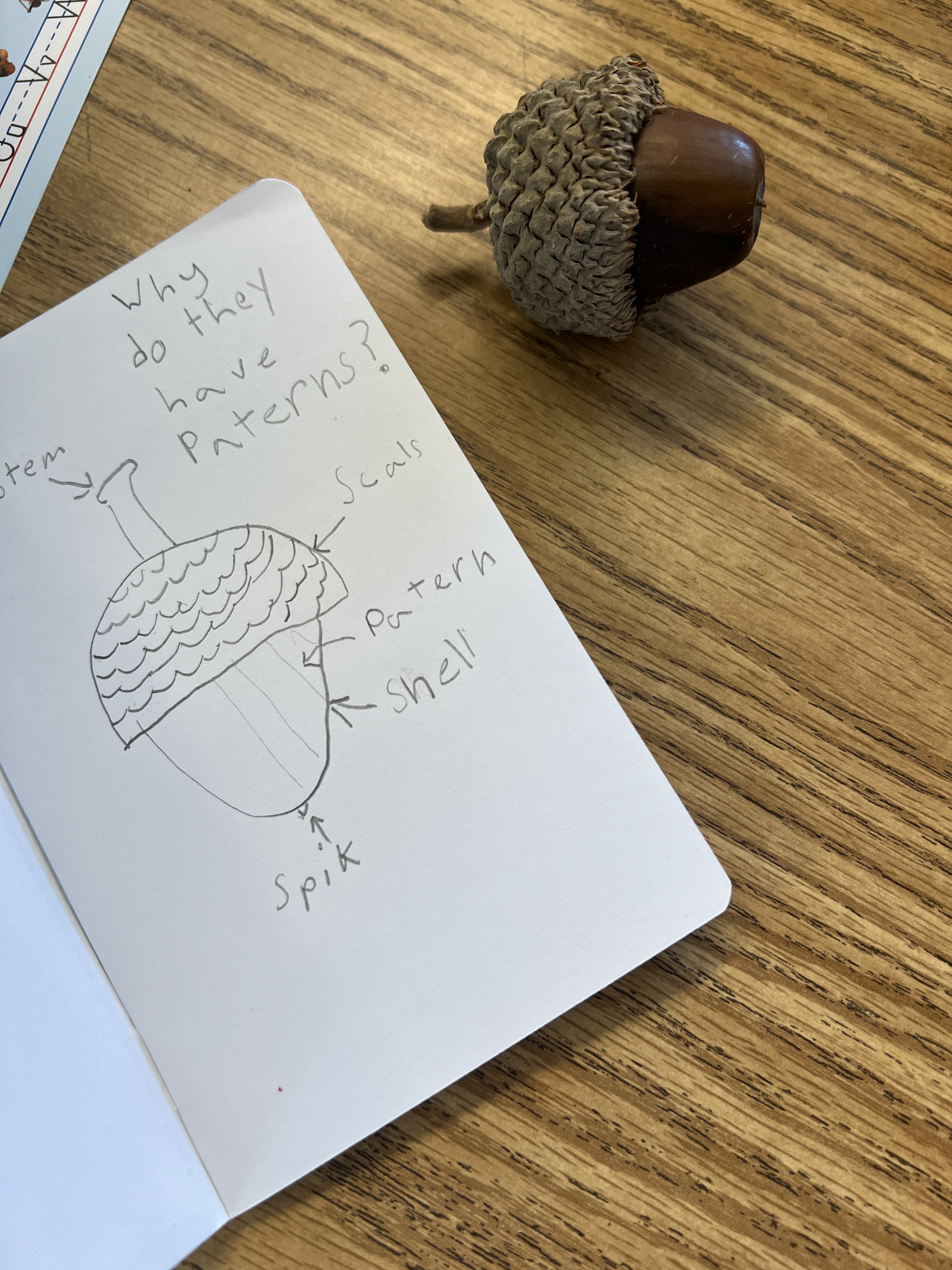
My colleague Carol brought some wonderful acorns she found in her neighborhood as inspiration for a making project…and lucky me, I ended up taking the extras home with me to use in my classroom. These acorns are bigger than the ones I am familiar with…and so beautiful!
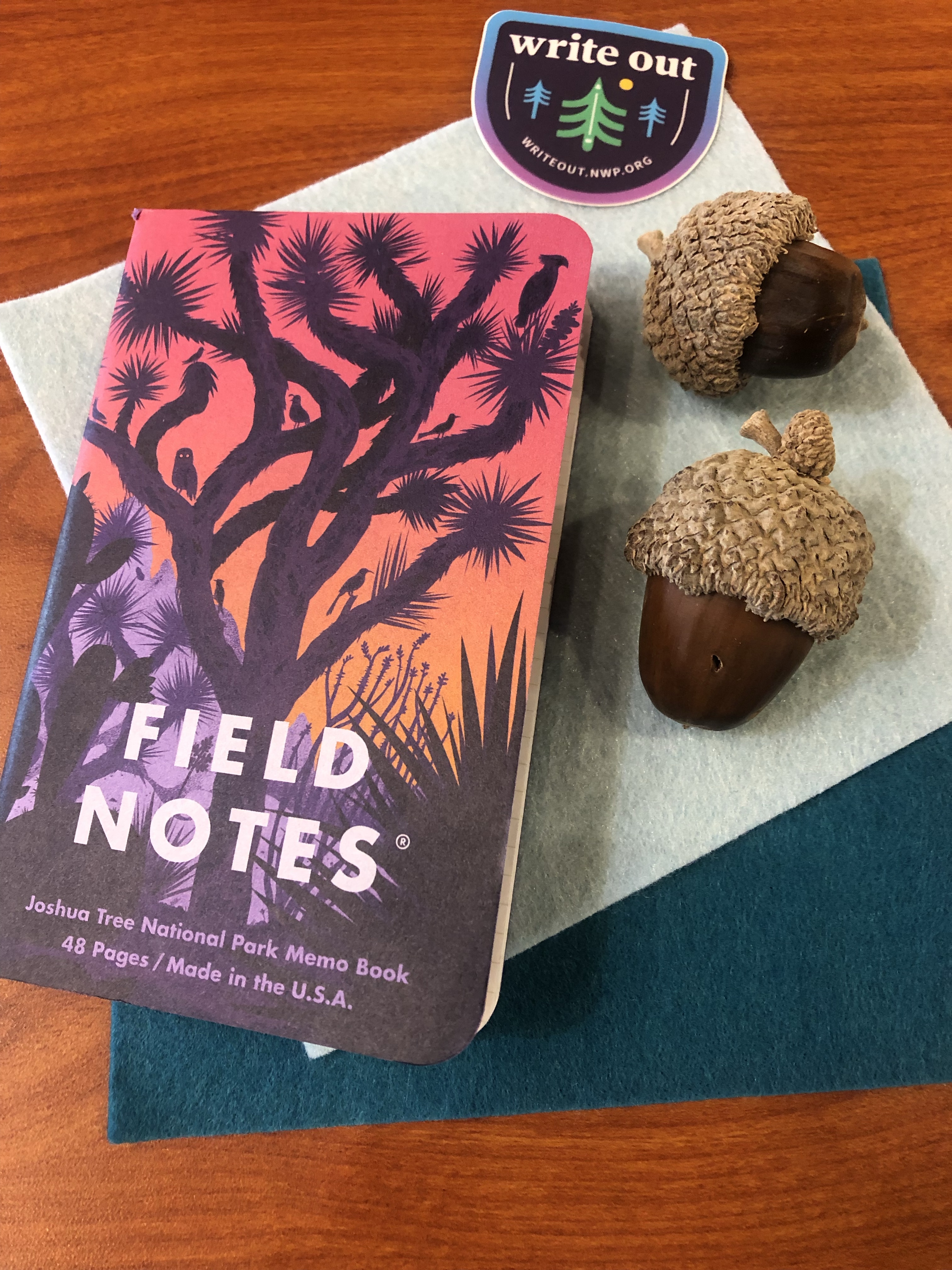
And they were perfect for the book I had already borrowed from the library to read this week–Because of an Acorn by Lola Schaefer. After reading and studying this deceptively simple text, we talked about what they noticed in the book. They were quick to notice that it included aspects of life cycles…and they loved the cutouts on the first and last pages. Serendipitously the NWP Write Out newsletter included a link to a video about acorns by a park ranger at the Sequoia and Kings Canyon National Park. My students loved learning more about acorns–and the ways that trees communicate with each other.

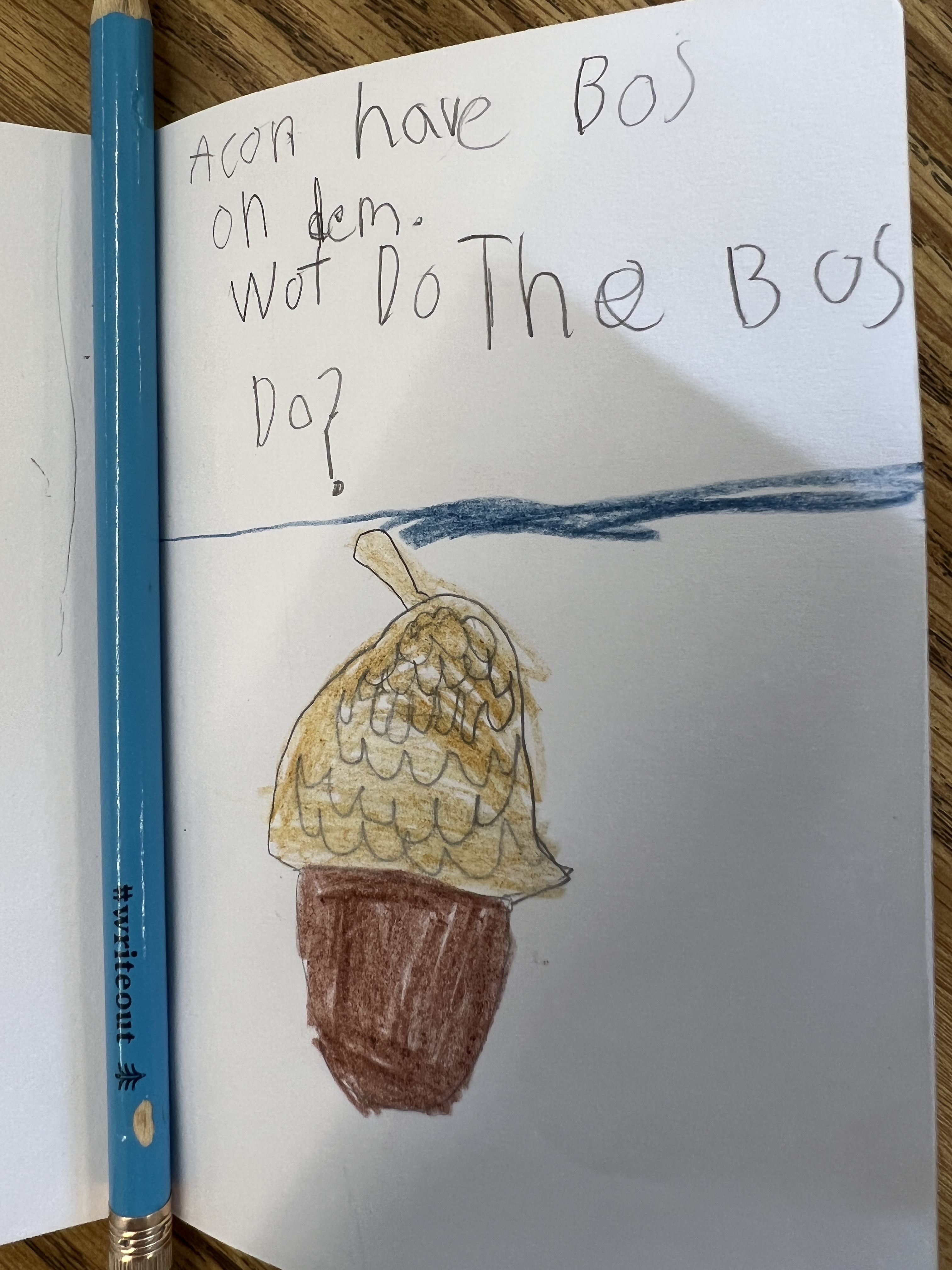
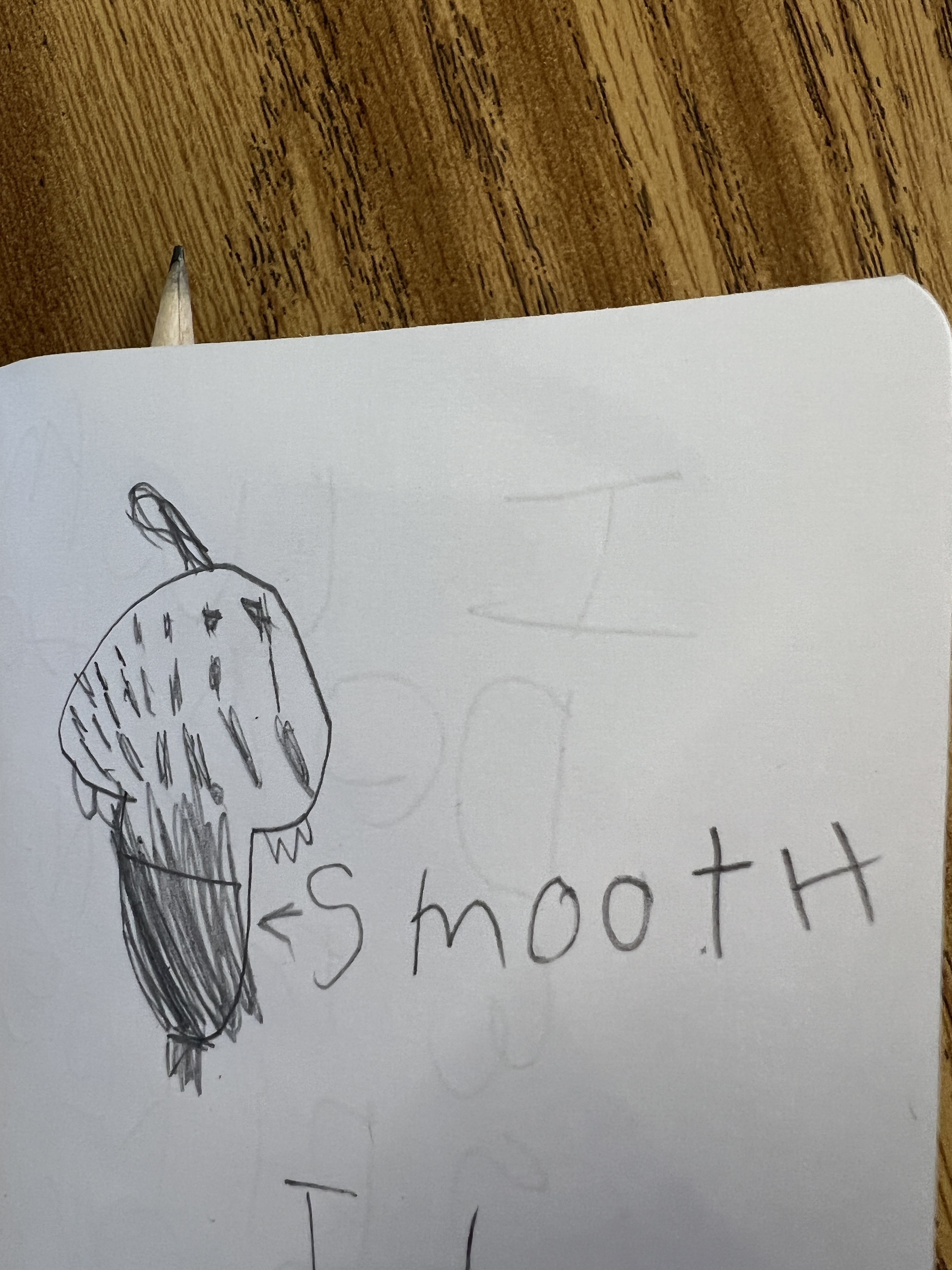
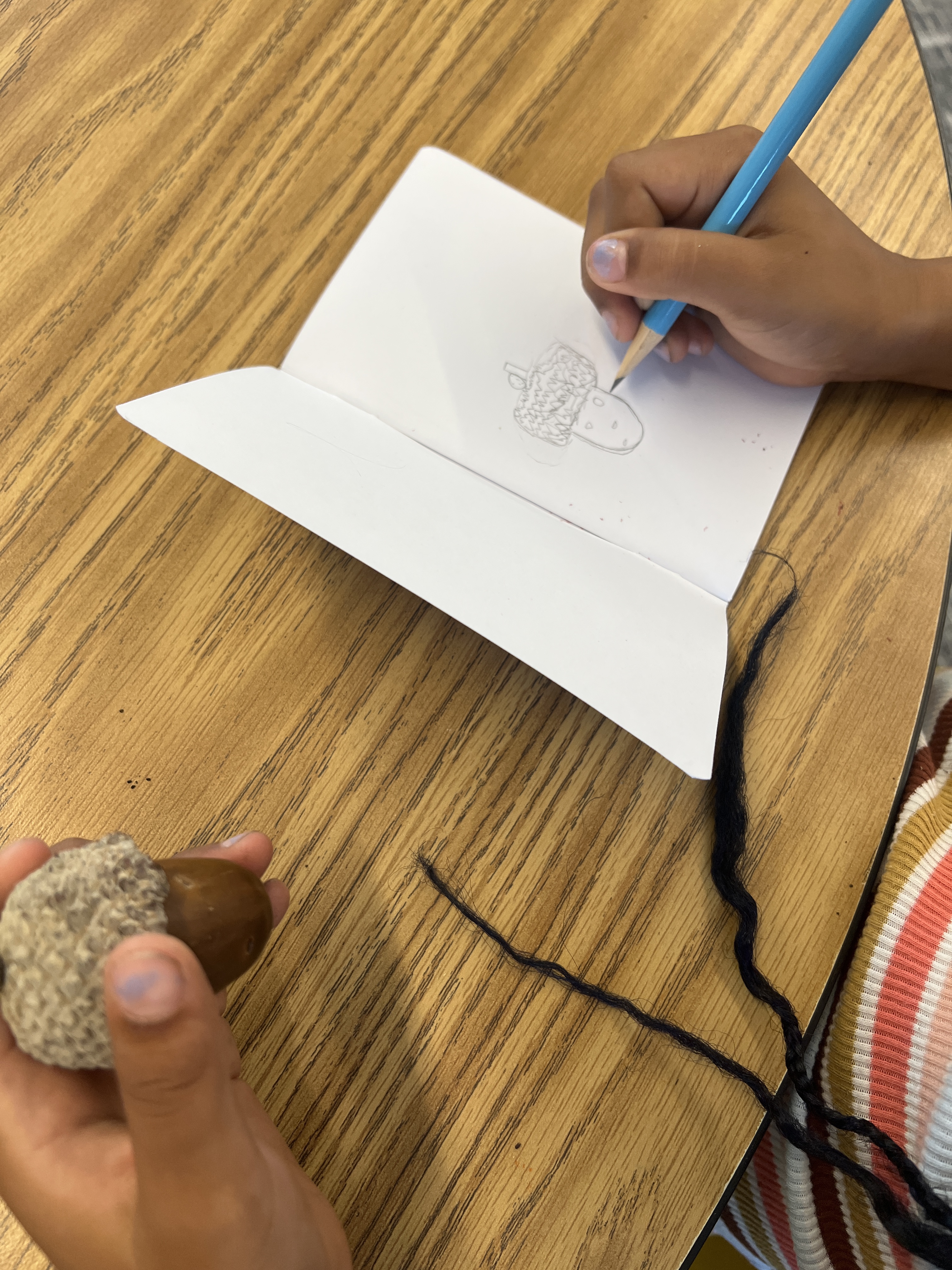
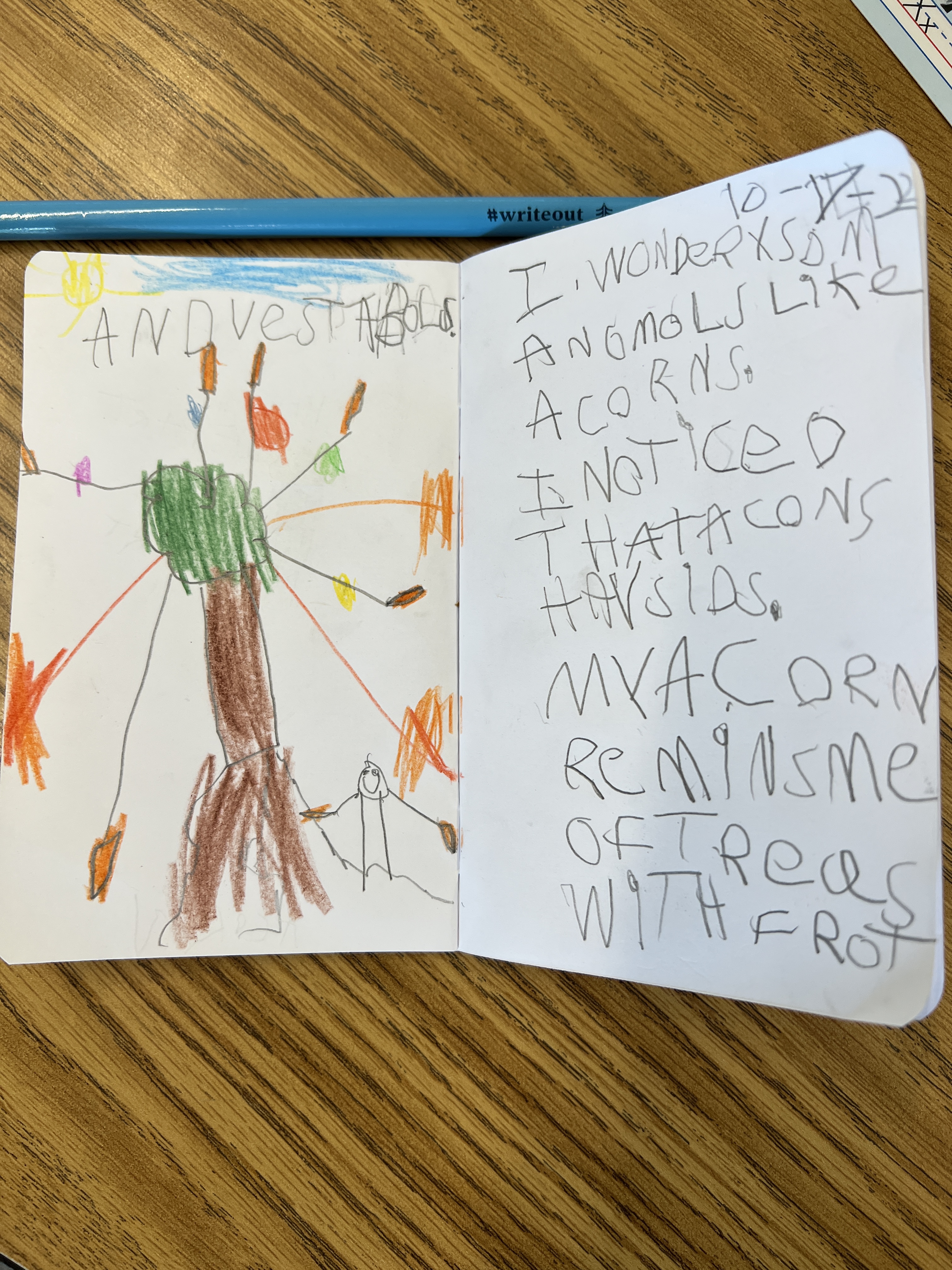
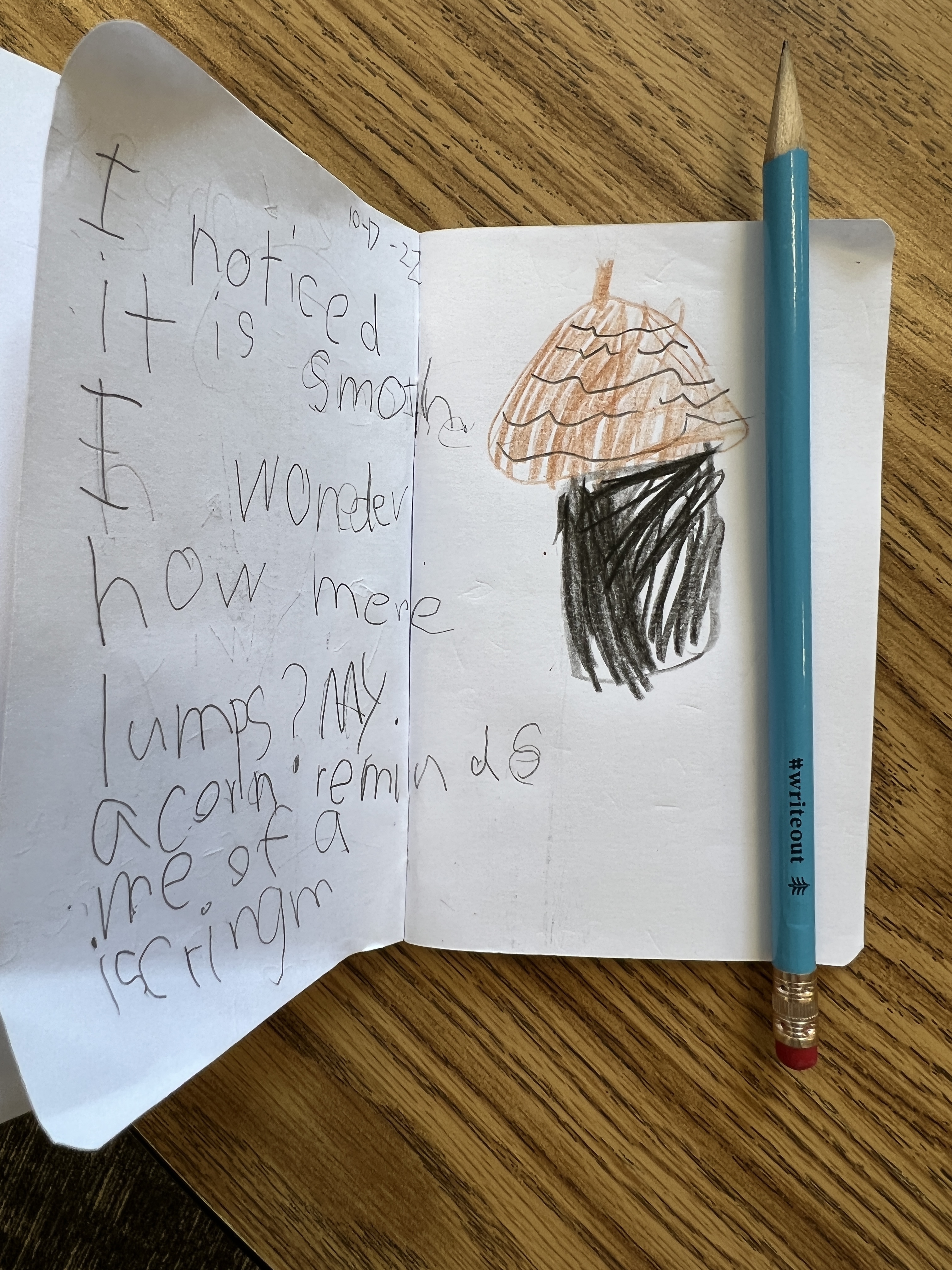
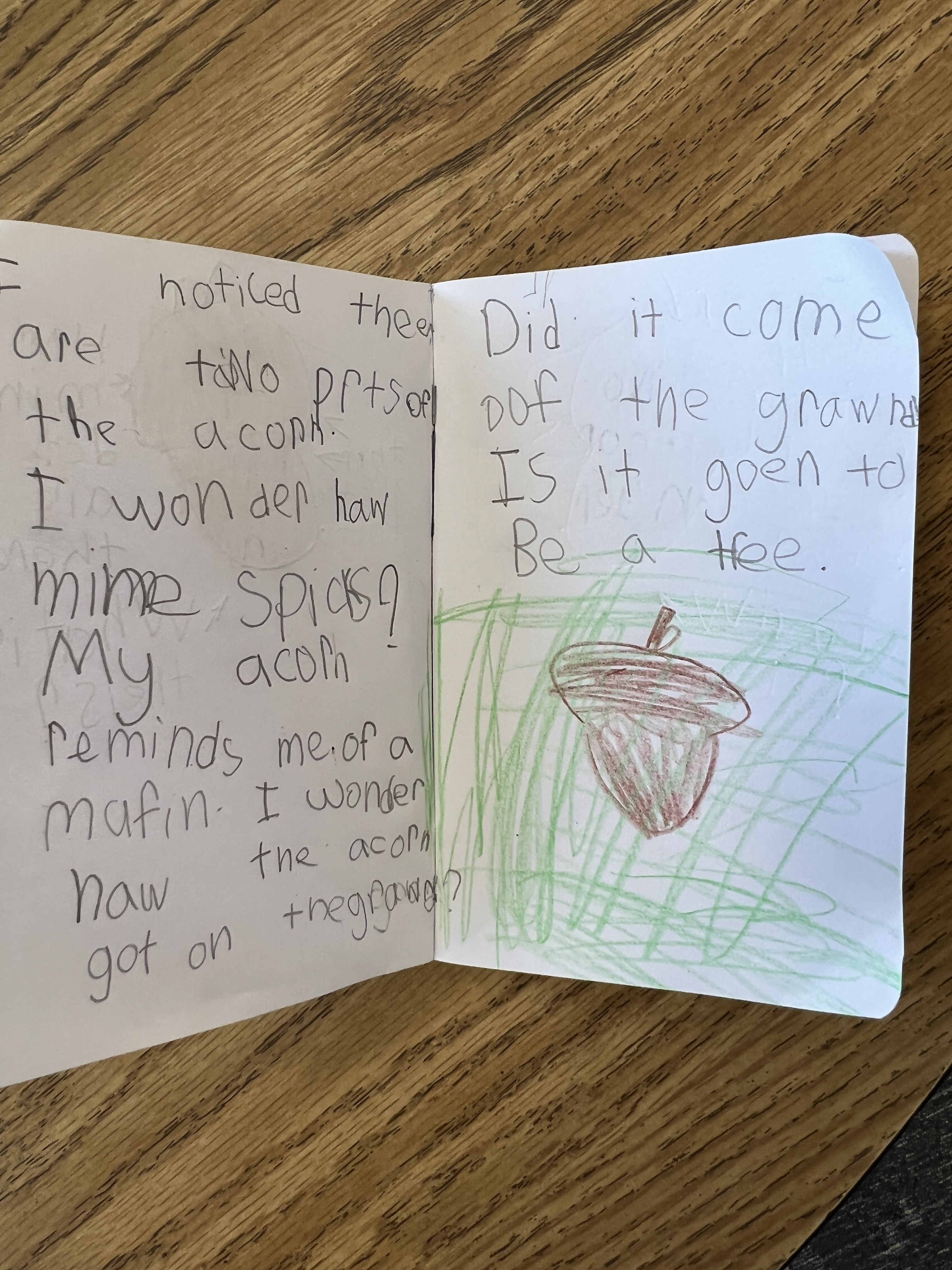
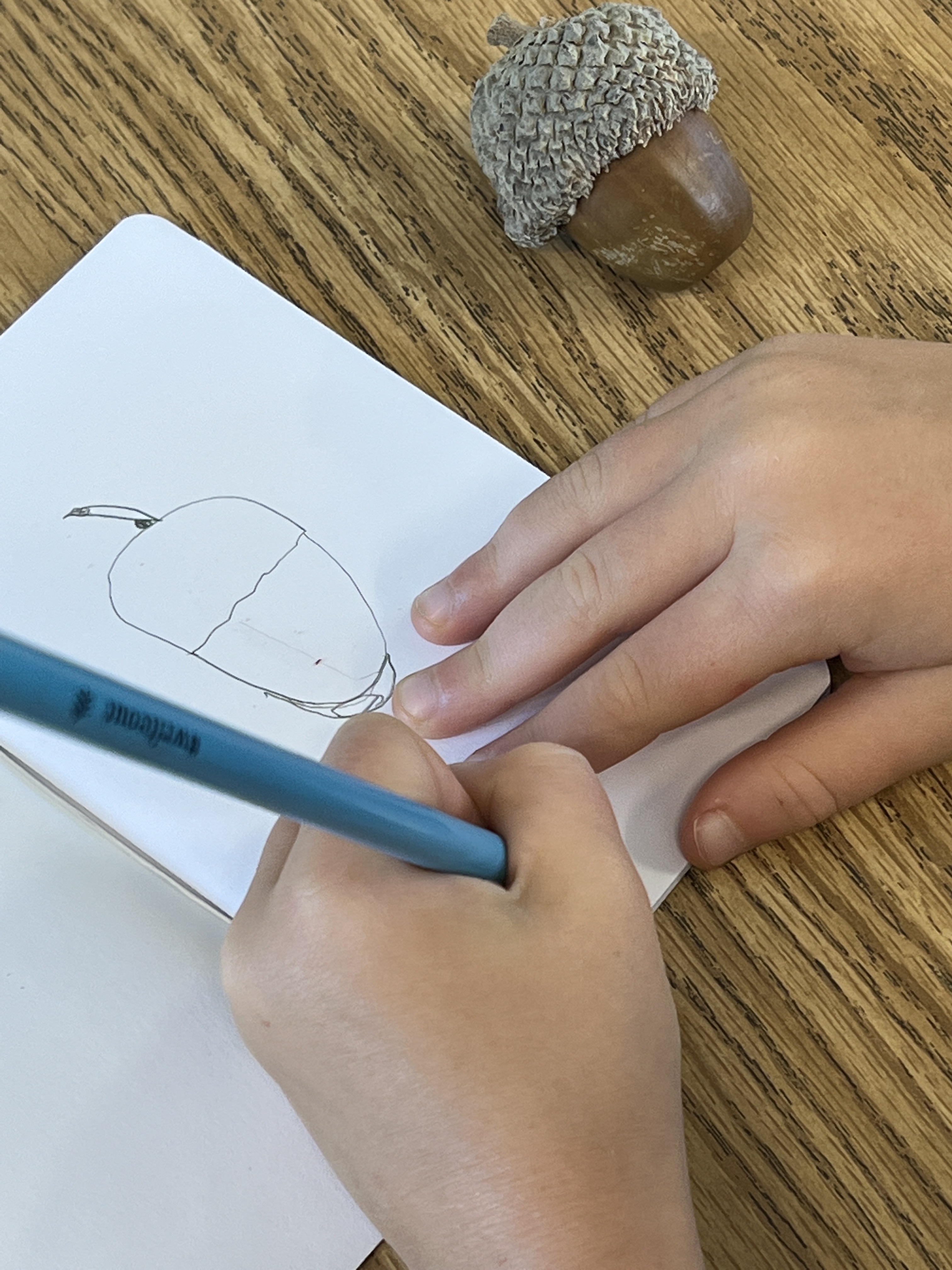
Then it was time to pull out our #writeout pencils and notebooks. We took time to look carefully at the acorns and sketch them in detail. Students were encouraged to use numbers and words in addition to their sketch to capture information about their acorn.
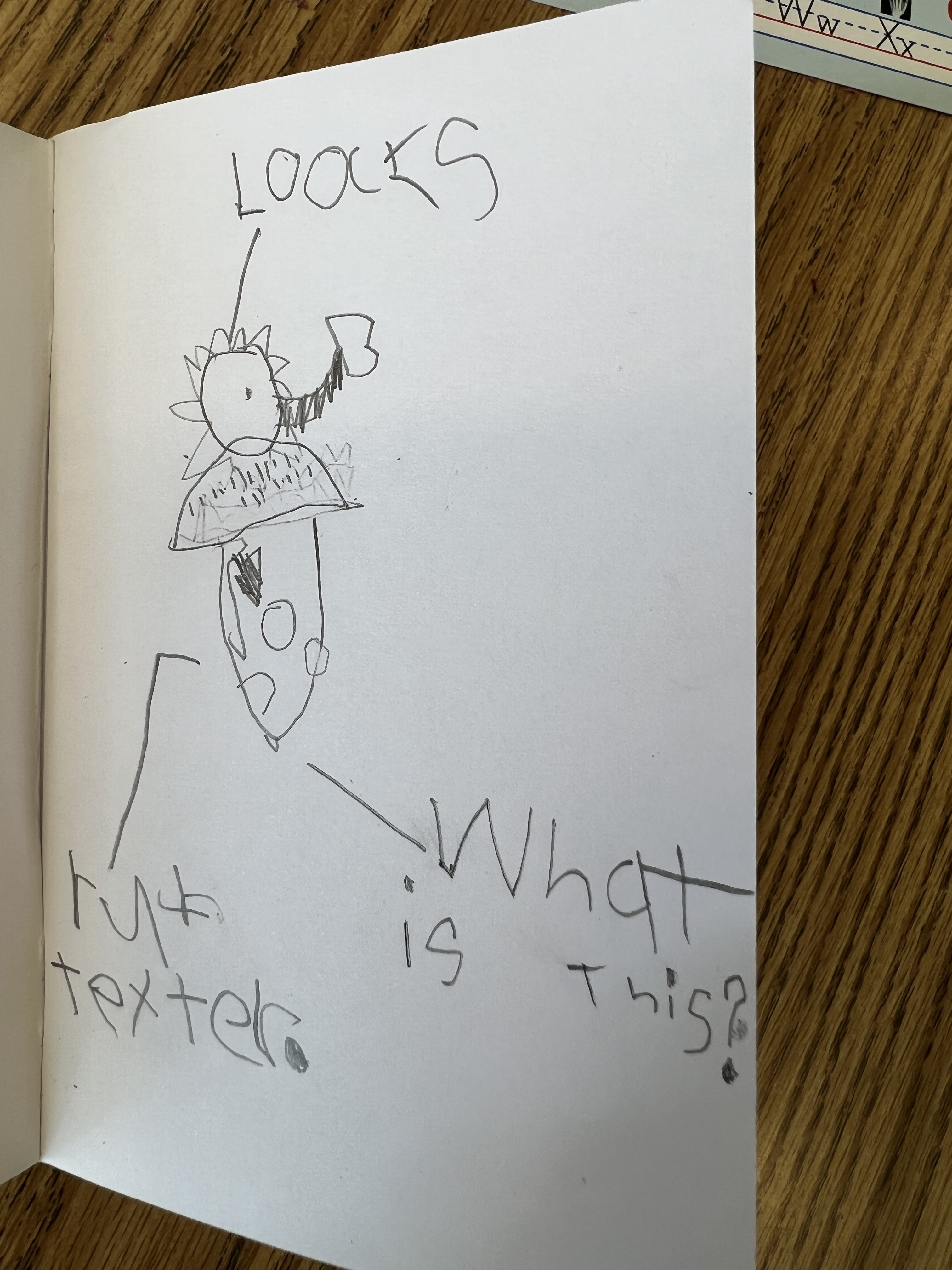
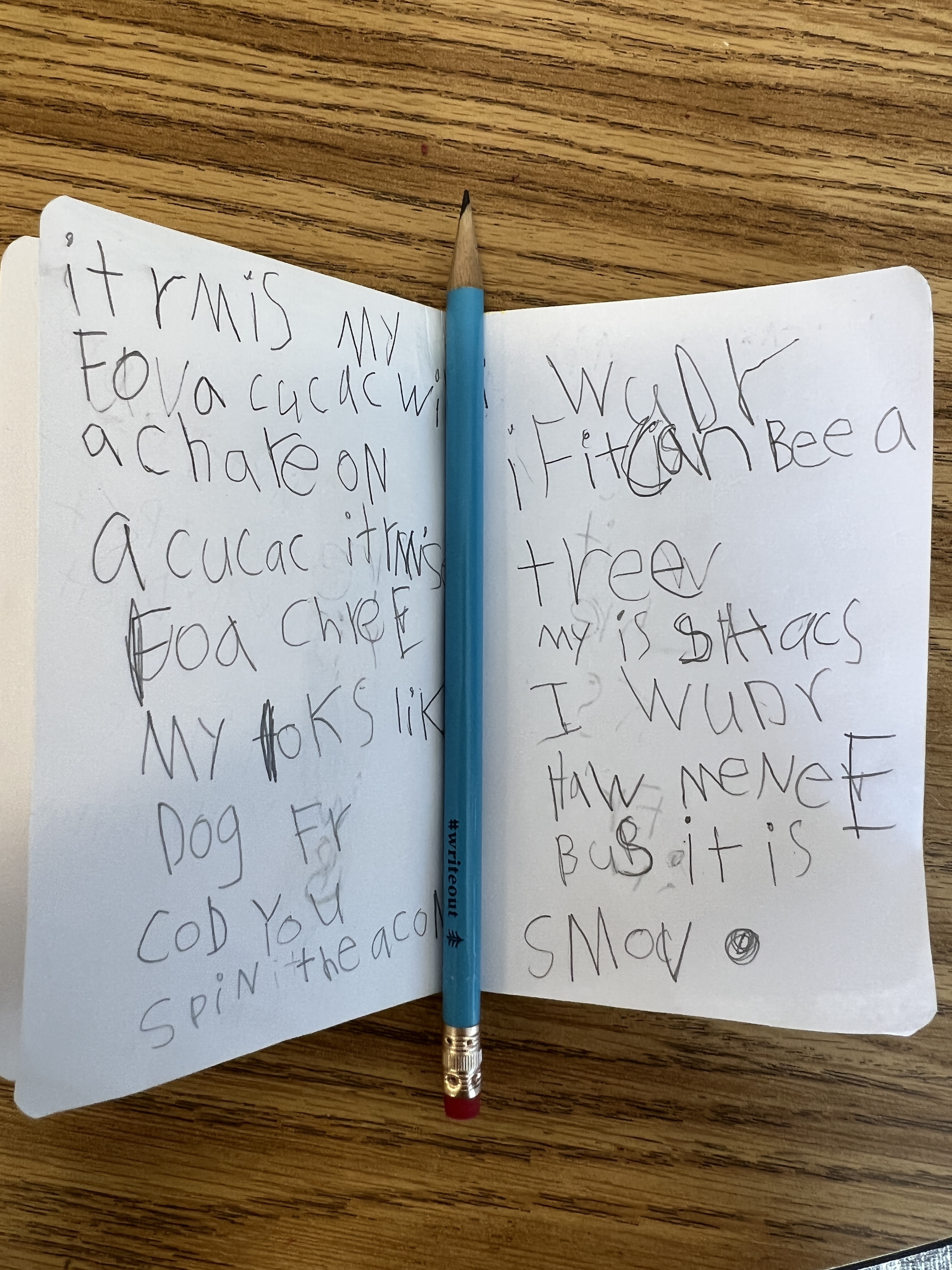
After a break for their music class and recess, we returned to our notebooks for some writing. To push students’ thinking, we used the prompts: I noticed…, I wonder…, and It reminds me of to describe the acorn we had studied and sketched. These first graders had no hesitation. They had plenty to write about and were eager to get started! To keep the words flowing, students were encouraged to use their best “kid writing” (or phonetic spelling), prioritizing ideas over correctness.
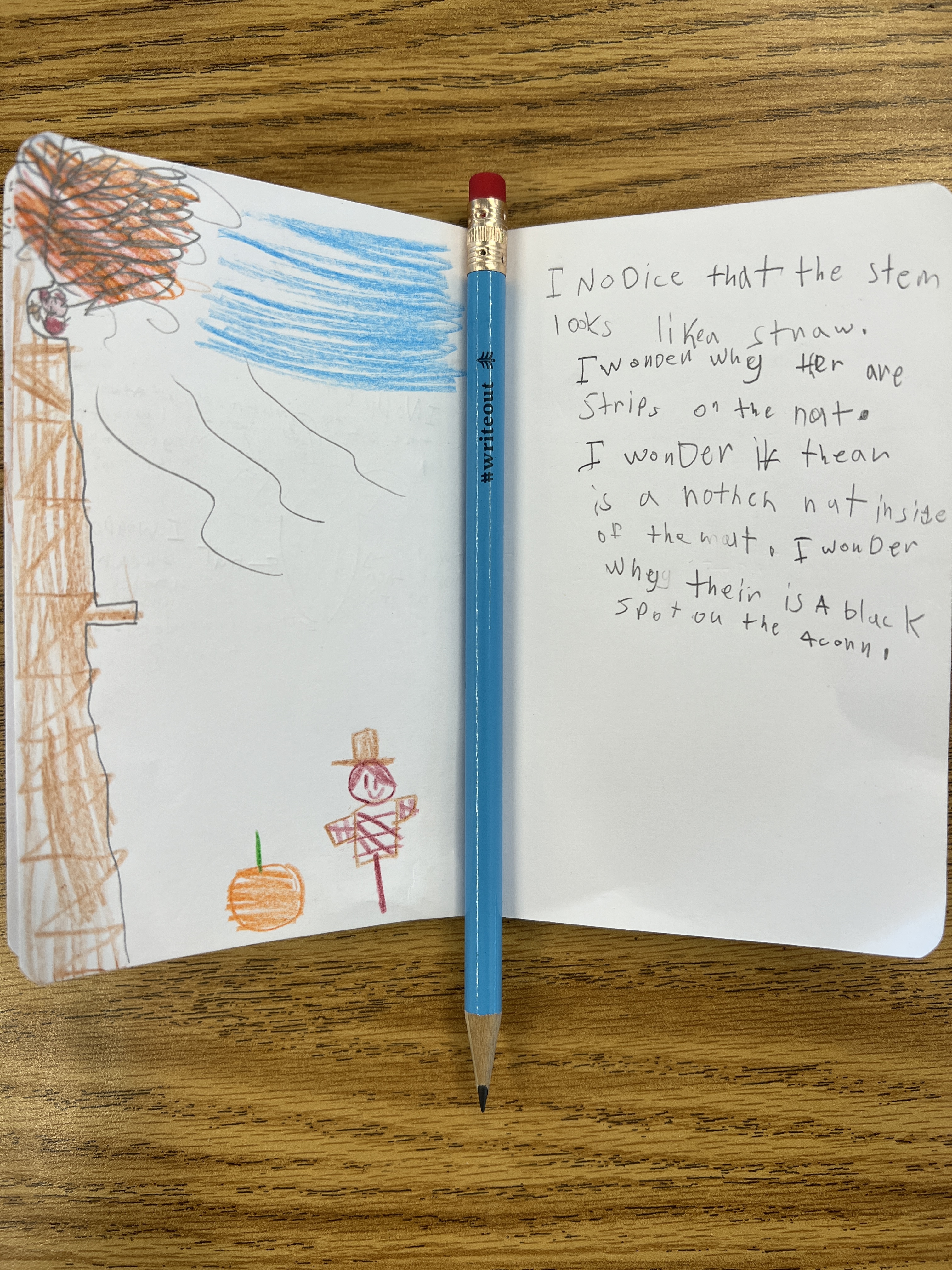
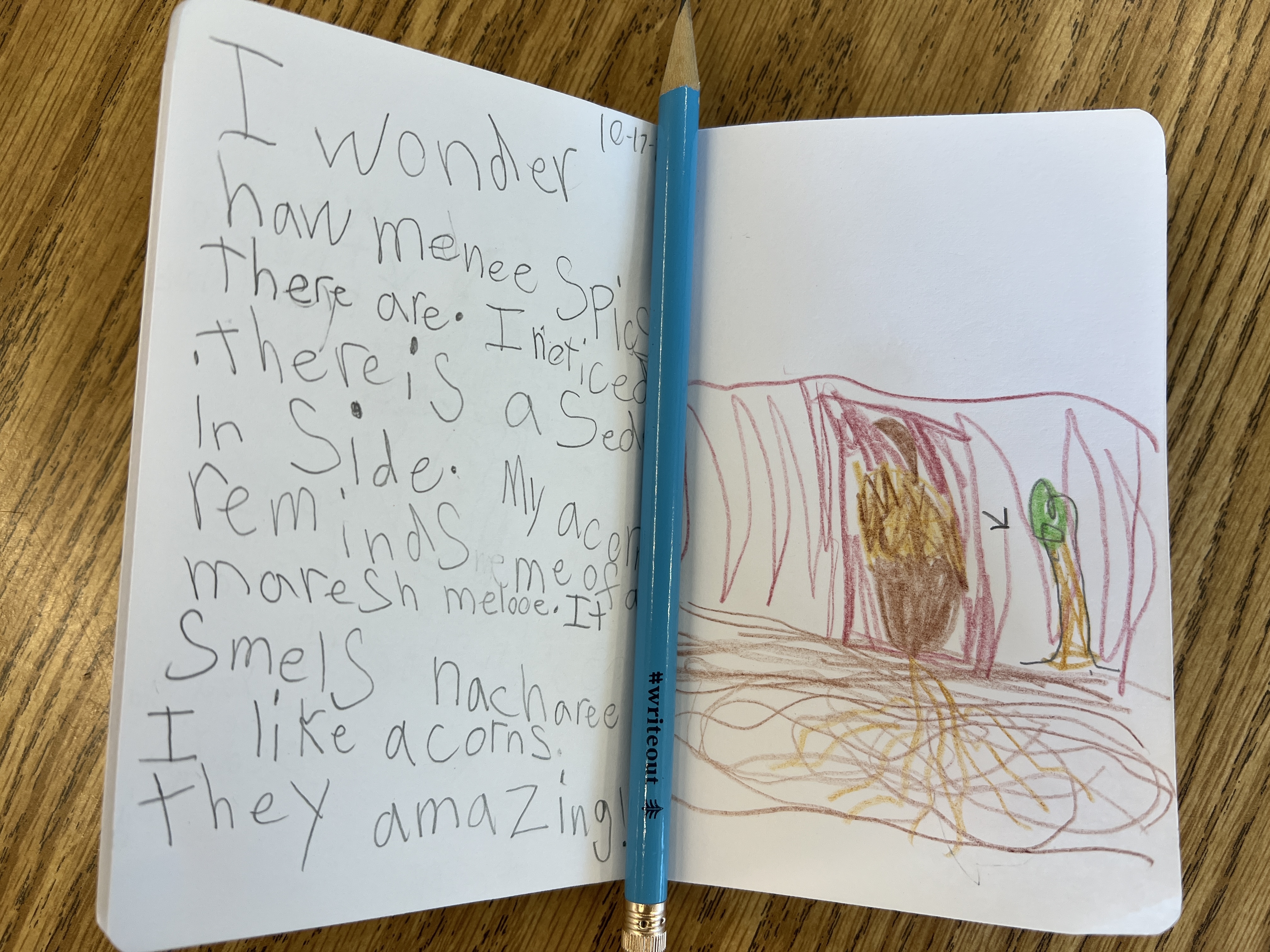
Best of all, my students are paying attention to the environment and appreciating all that it has to offer. It is my goal that this immersion in nature will lead us toward advocacy as we consider the ways all of us, as community members–young and old(er), can be a catalyst for change to make the world a better place.

A Wonder Walk

First graders are naturally filled with wonder. It doesn’t take much to get them to look closely, to pay attention to details that many others miss.

Our school has the most amazing librarian. Last week I asked her about a book–a book I know I own, but cannot find in my classroom. And she not only found me a copy of that book, but she also suggested another that was new to me…and just what I needed today when I found it in my mailbox.

#writeout is a collaboration between the National Writing Project and the National Park Service that urges all of us to get outside and find inspiration in whatever nature is around us. We started #writeout yesterday with time in the school garden. Students learned about weeds, donned child-sized gardening gloves, and dug and pulled and delighted in seeing roots break free of the dry soil.

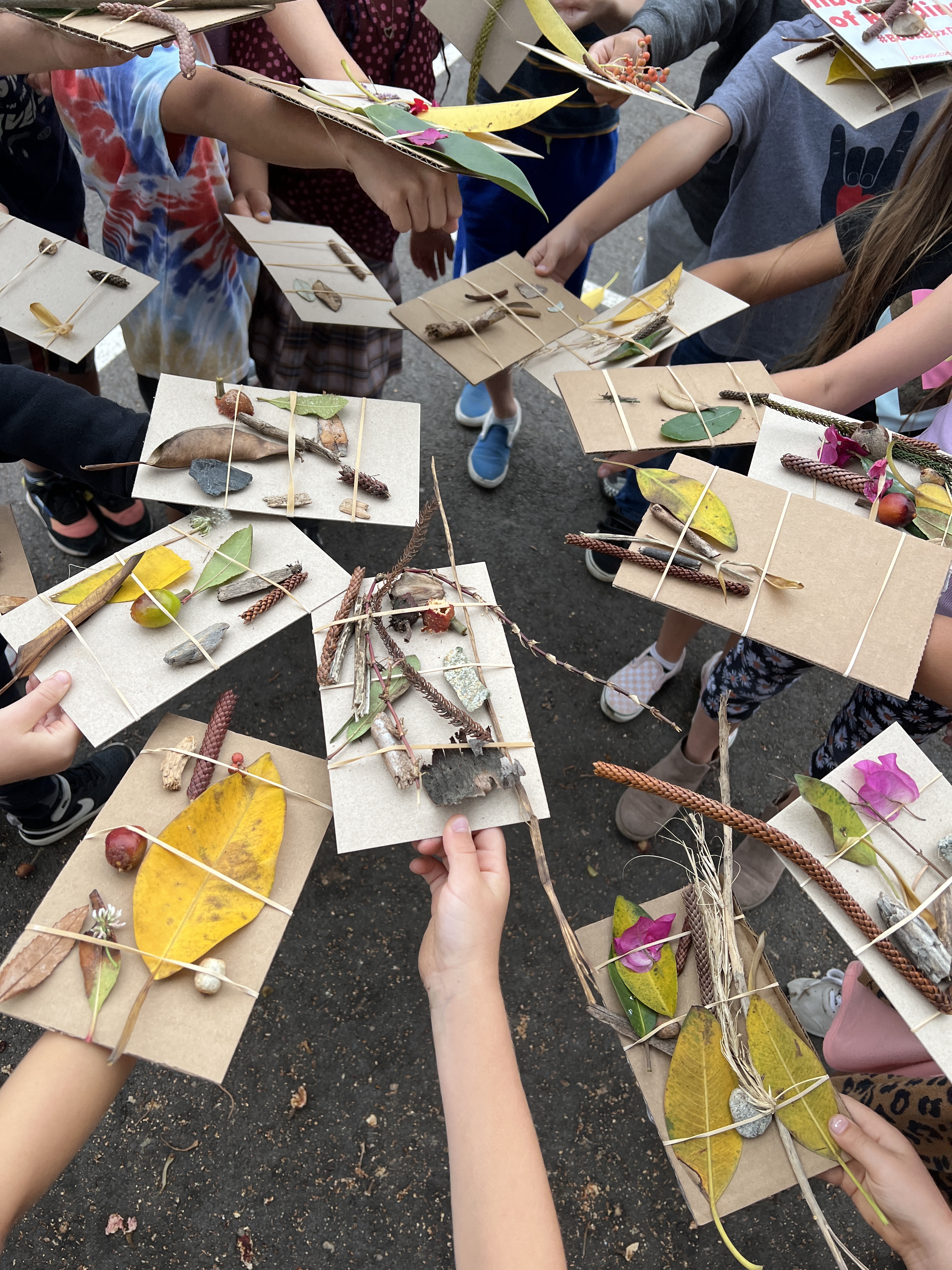
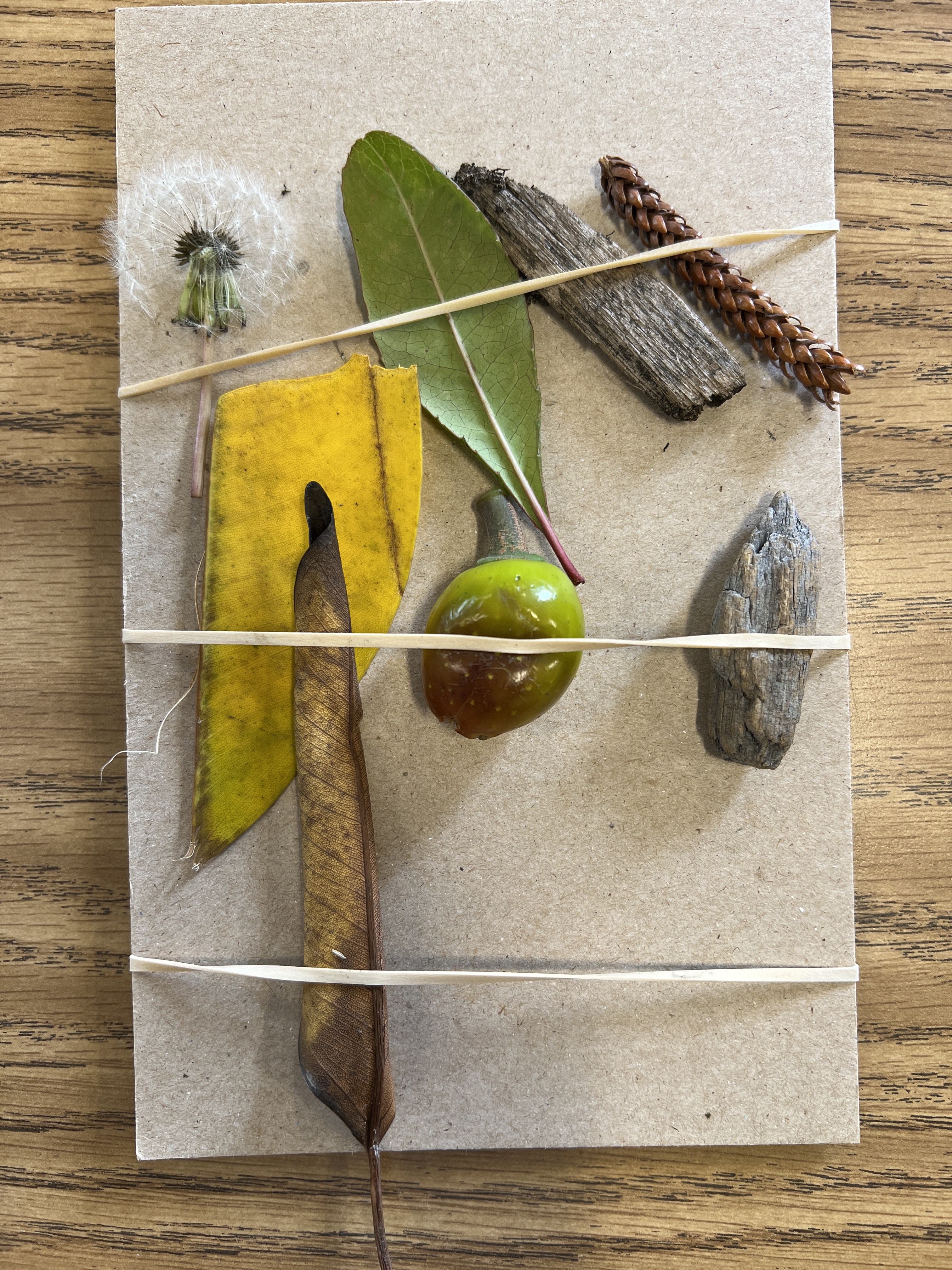
Today we read Wonder Walkers, that book our school librarian left in my mailbox. It was perfect for setting the stage for a wonder walk, time on our school grounds looking for interesting things (think leaves, seed pods, sticks, etc.) from nature that we collected using our collection tool (shout out to Little Pine Learners). Before we headed out we talked about what items we could collect and what we should not (living bugs, picking flowers and plants)–and students were excited to get started.

They looked carefully and their collectors began to fill. Some were exuberant and filled their spaces quickly, crowding dried roots and pine droppings with sticks and crunchy leaves. Others were more selective, leaving more spaces between the items collected. A child with sharp eyes found a dandelion puff that didn’t have to be picked, truly a treasure that her classmates envied!

Before we headed back into the classroom, I gathered students close and encouraged them to hold out the collectors so they could see each other’s collections and also so I could take a few pictures.

Once back in the classroom, students used their iPads to take a photo of their collector for future use. Then we settled to read another book. An old favorite, Weeds Find a Way by Cindy Jenson-Elliott, is a wonderful mentor text for students to use as a structure or frame for their writing. I loved the gasp when students realized that this book was non-fiction, yet so accessible with beautiful illustrations. They also remembered their experience with weeds from yesterday and the conversation with the garden teacher about how weeds are not “bad,” they are just not the plants you want in a particular space.

After comments and observations about the book, we tried on using the Weeds find a way… frame with objects from our collectors. “A red leaf finds a way to swish and swoosh through the air,” was one example that got us started.

We ended the day by starting a Zine to showcase our nature items through writing and drawing. We used a single sheet of copy paper to fold a small booklet (with a single cut and no tape or staples) that will soon become tiny treasures worthy of #writeout. More about that in another post!