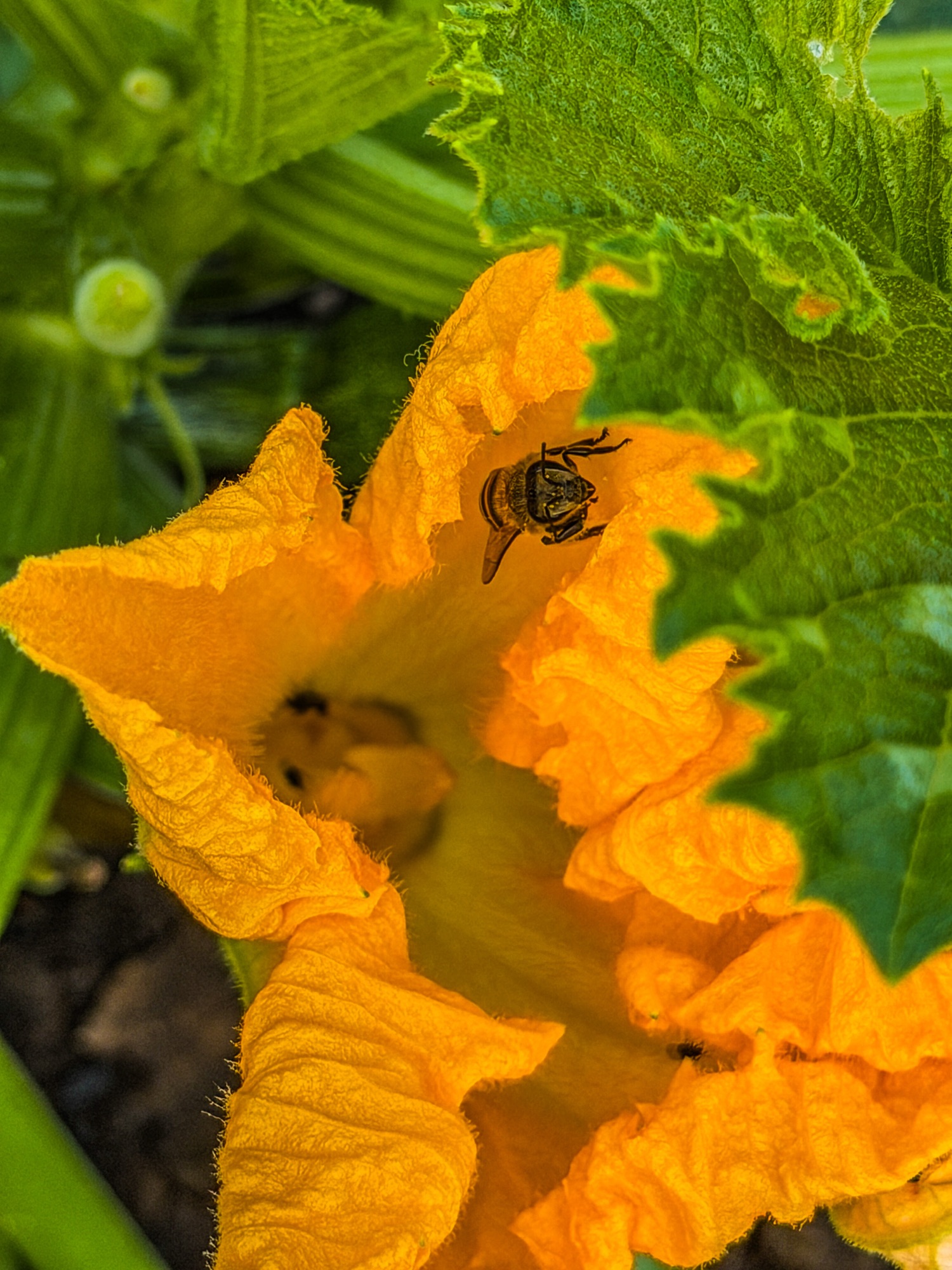
I like meandering through gardens much more than doing the actual work of gardening. I love watching the buds blossom, the bees buzz, smelling the distinct aromas of lavender and tomatoes (maybe not together), I even enjoy a tomato worm sighting (they’re great for a photographic moment!). My backyard is less a garden and more a menagerie of plants. An eclectic mix of succulents (there’s an aloe plant that has gone wild and has at least tripled in size over the years–it started as a gift in a small pot), potted lavender, a few cacti and sago palms, and who knows what else. Plants that overgrow the kitchen window often get banished to the backyard where they, more often than not, go feral. We do have a small raised garden bed with tomatoes and strawberries that have somehow survived two seasons with minimal attention (and too many insects who often enjoy the fruit before we get there) and we have a couple of blueberry plants.
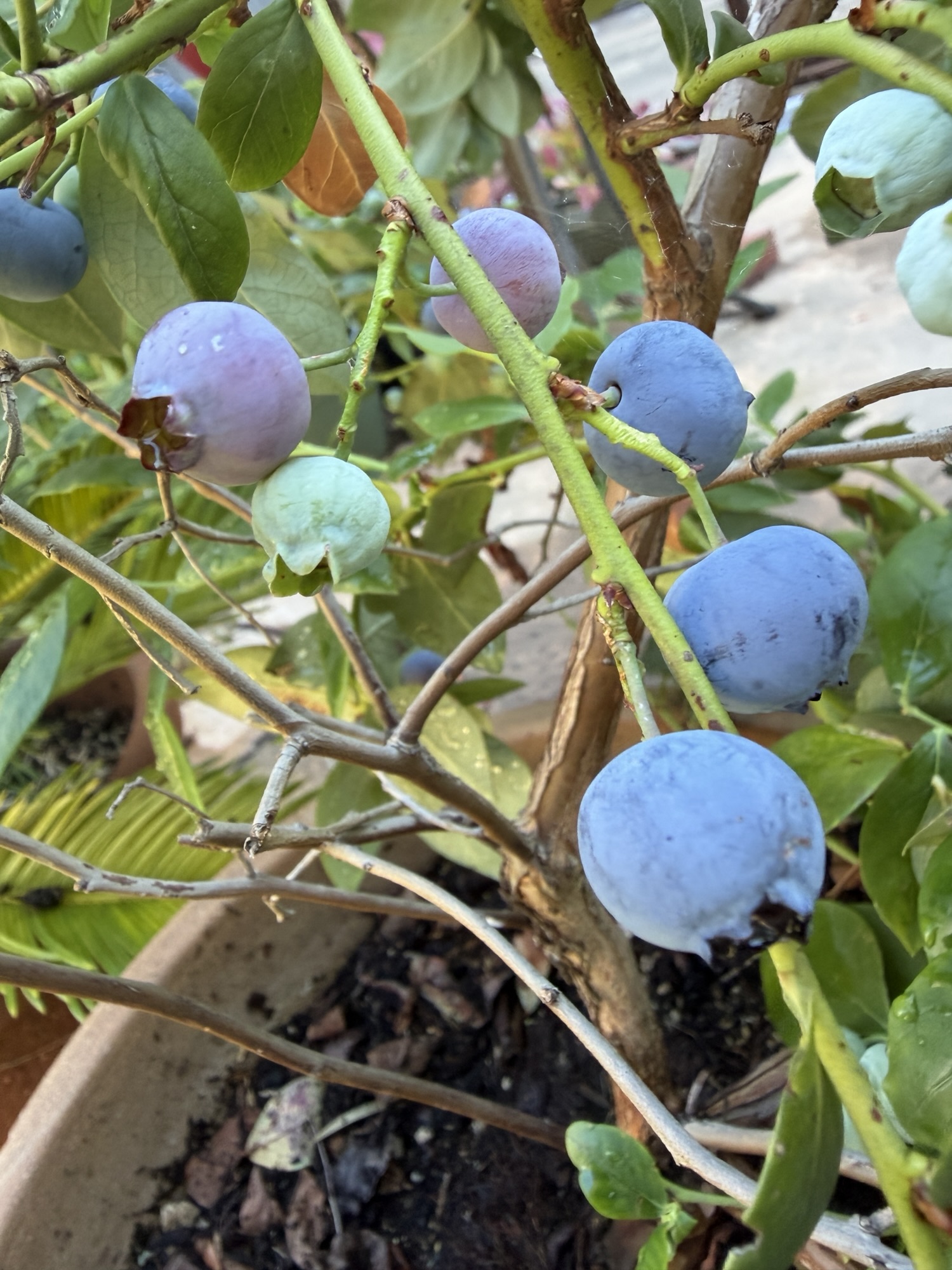
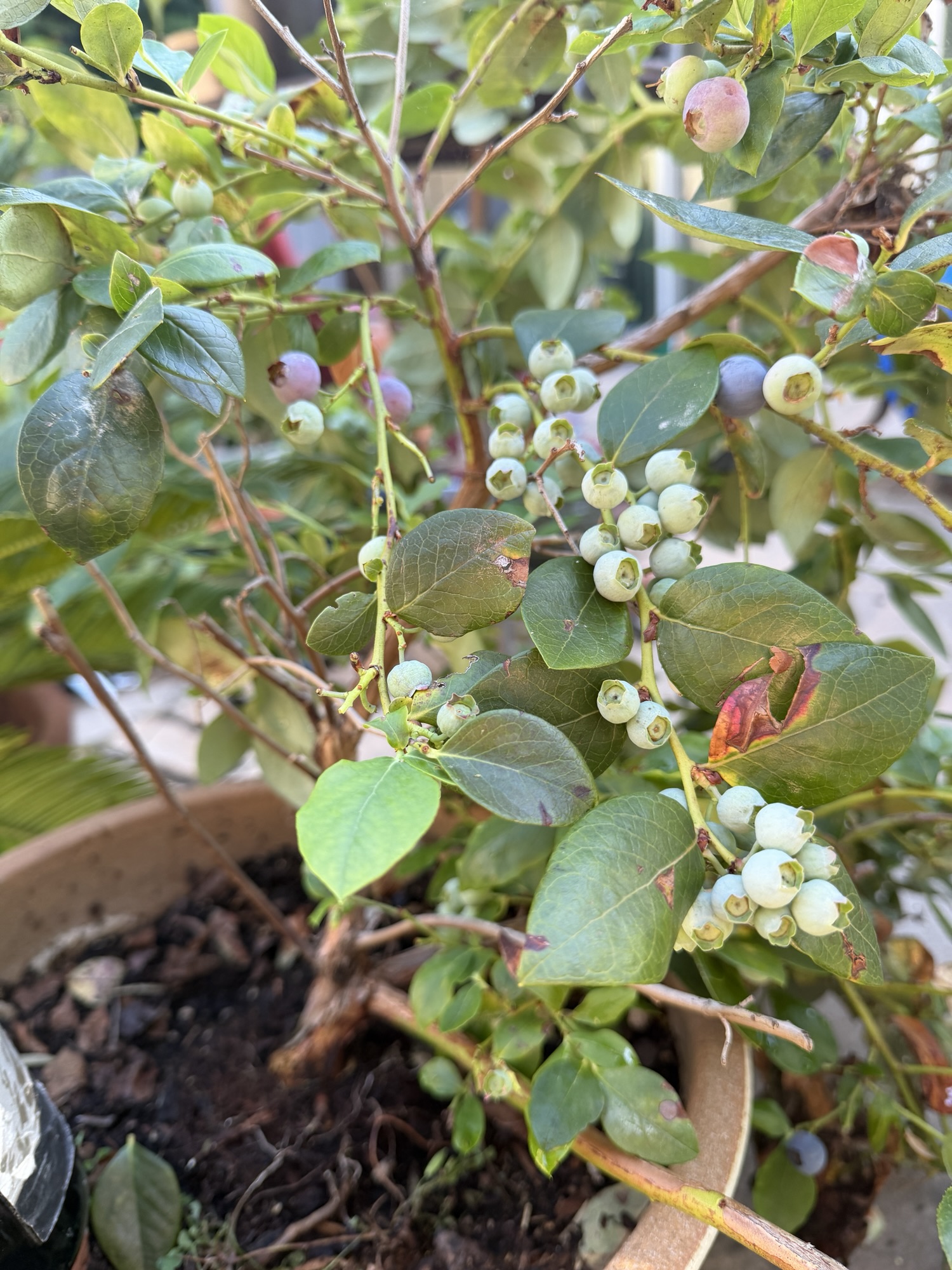
The blueberry plants have been a challenge. We started with one expensive one, and it promptly tried to die. We adopted a cheaper brother for it and now both seem to be doing great. They each have a wine bottle waterer in their pots to keep them from dying of thirst and they are both jam-packed with blueberries right now! (Is it blueberry season? Is there a blueberry season in Southern California?)
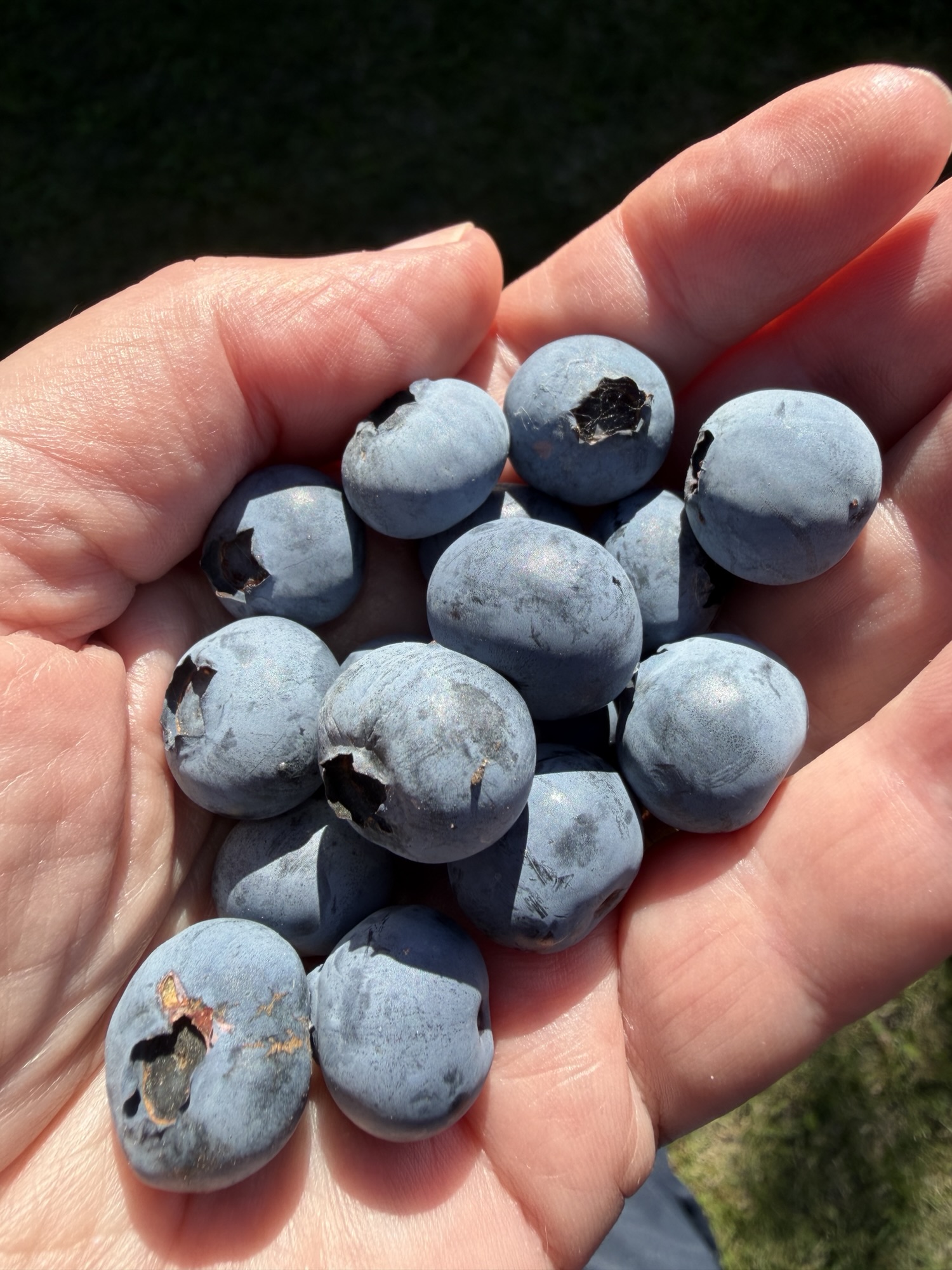
So after taking some photos, I proceeded to harvest some blueberries. I collected quite a haul and after rinsing, my husband and I enjoyed a handful each. There is something so special about blueberries directly from the bush, lightly warmed in the sun.
Thankfully, my husband is a more dedicated gardener than I am. At least they get watered regularly. What treats is your garden offering in these first few days of spring?
For nearly 14 years I have been taking a photo (nearly) every day and posting it to social media, specifically to Instagram (you can find me @kd0602). In many ways it is a part of my writing practice. The camera helps me pay attention and when I pay attention words begin to flow. (I also started my blog at about the same time)
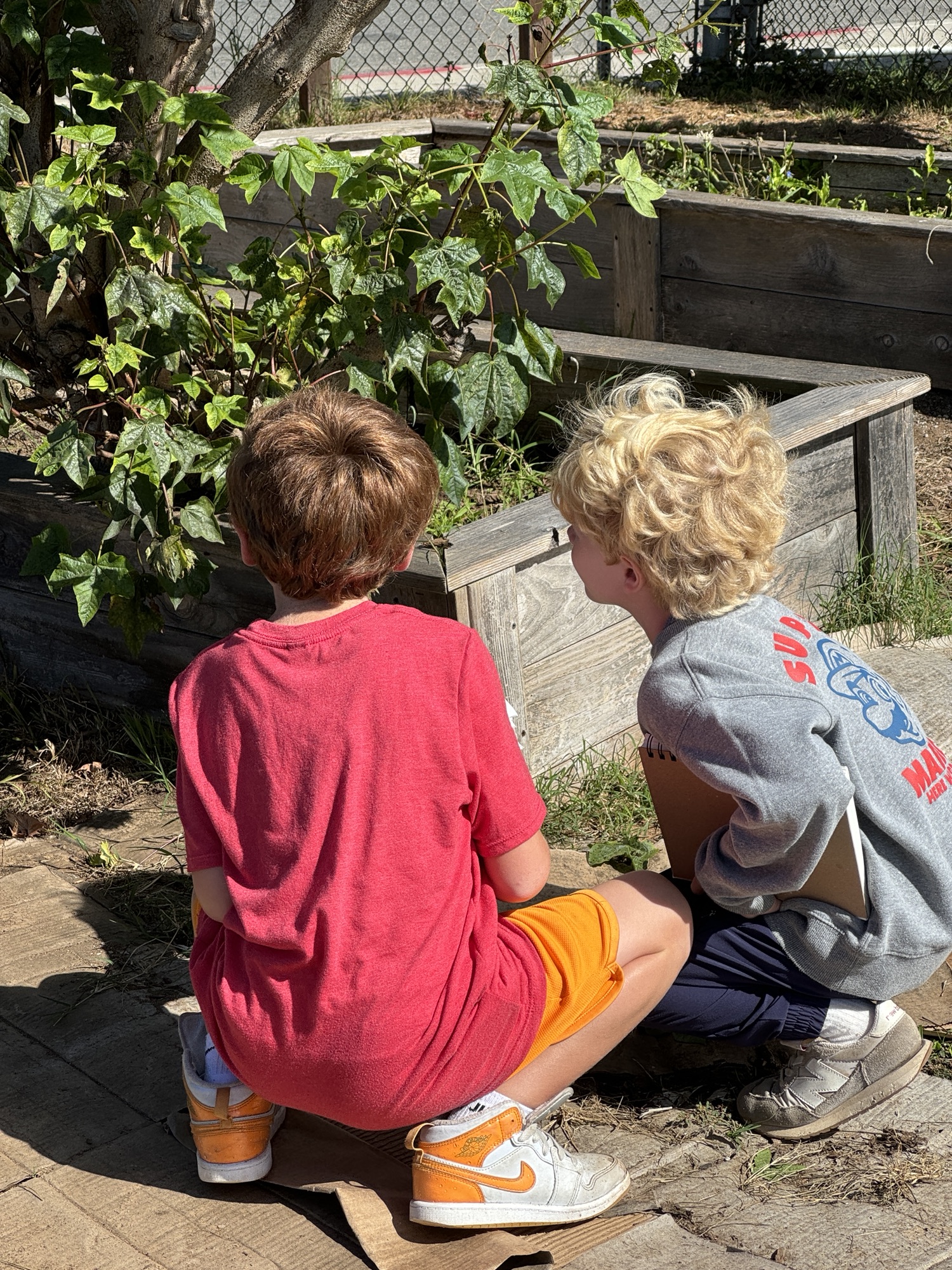
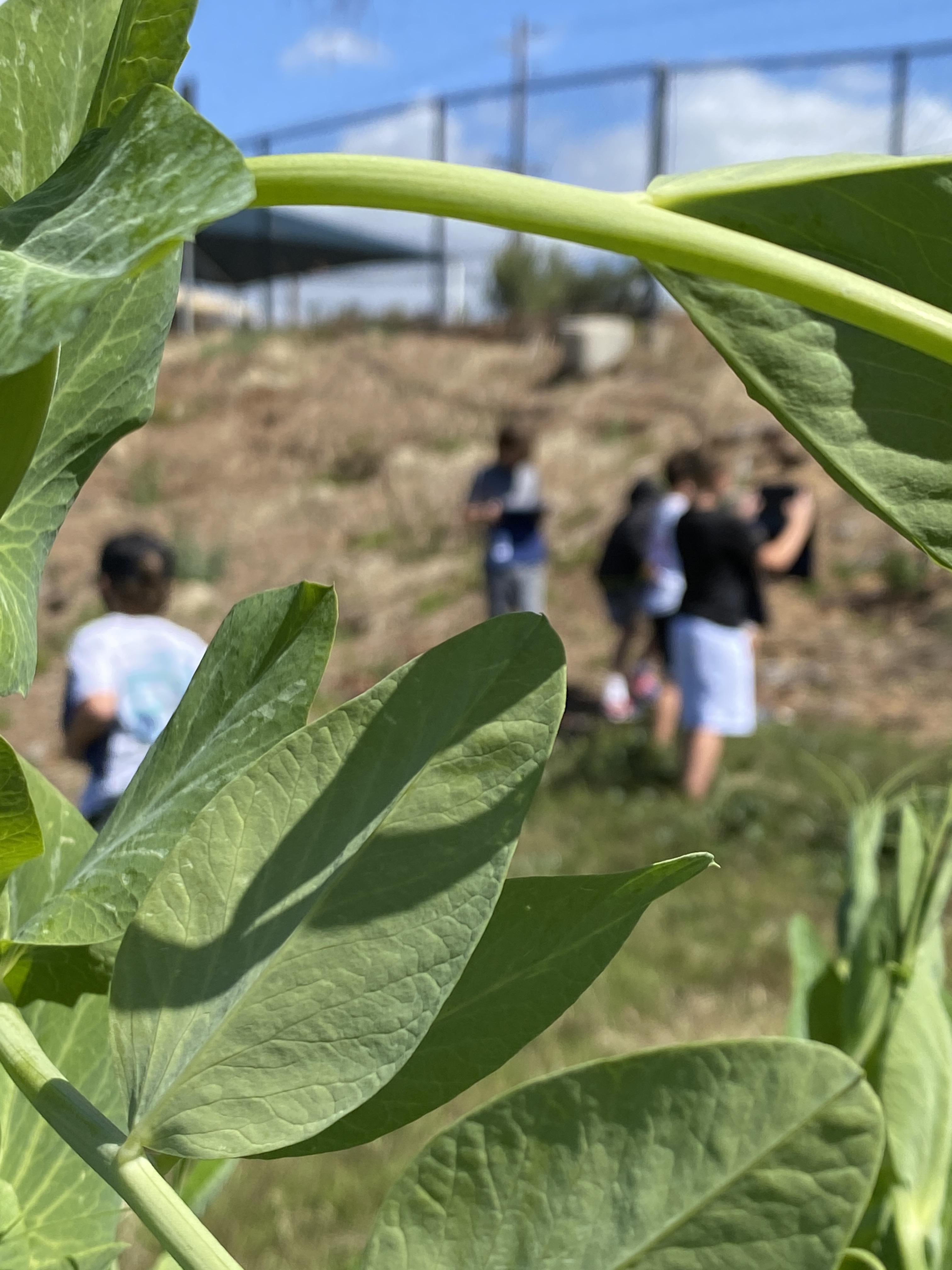
I’ve gotten in the habit of sharing my photography practice with my students, specifically teaching them some techniques to try on in their photography. Last week I showed first graders examples of photos taken from a bug’s eye view, a bird’s a view, and using the rule of thirds. They were excited to try this out! We headed out to our school garden where students were to take three photos using each technique. (And to try not to all take the same photos!). We returned to the classroom to take a close look at the 9 photos and select the one that would then become the basis of the writing we would do.
I was pleased with these photos taken my 6 and 7-year olds. I can see the bug’s eye view, the rule of thirds, and the bird’s eye view (and my students were eager to explain their perspective to me!). We are so fortunate to have such an amazing space to practice our photography.
Before we began writing, I read Kwame Alexander’s How to Sing a Song,a beautiful book filled with figurative language. We’ve been working to add metaphorical thinking to our writing (similes and metaphors). After reading and talking about the book, we began thinking about how to write about the photo we had taken.
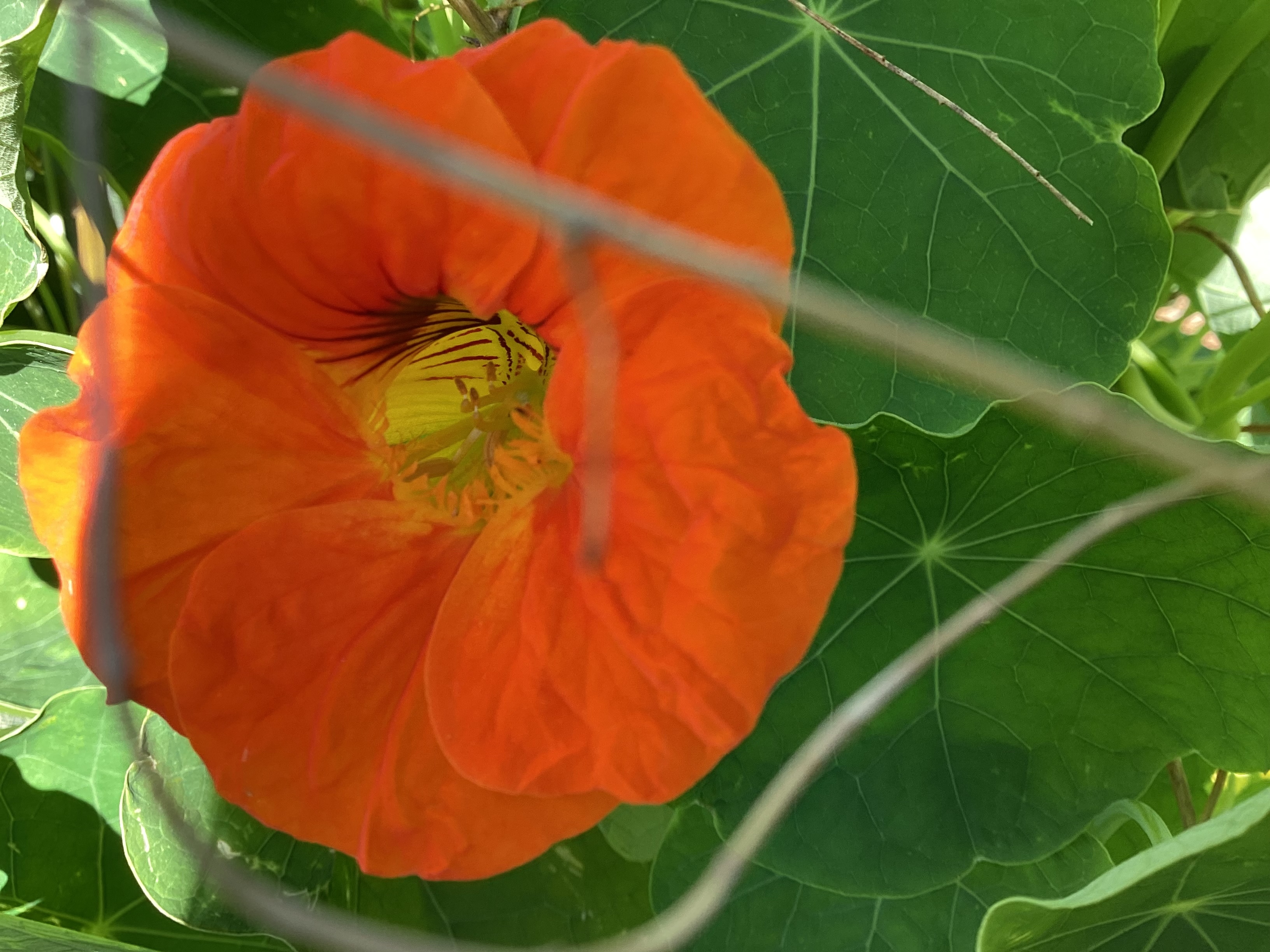
The student who took the photo of the orange nasturtium wrote:
How to Grow a Garden
First you put a seed in a ground like putting a baby in its crib. Then you water it with care and let it grow for a little while. Now you have an orange flower. Inside there is yellow, black, and very light green. The petals are crinkly and bumpy. It has little yellow gold flaky things inside like crumbs from crackers.
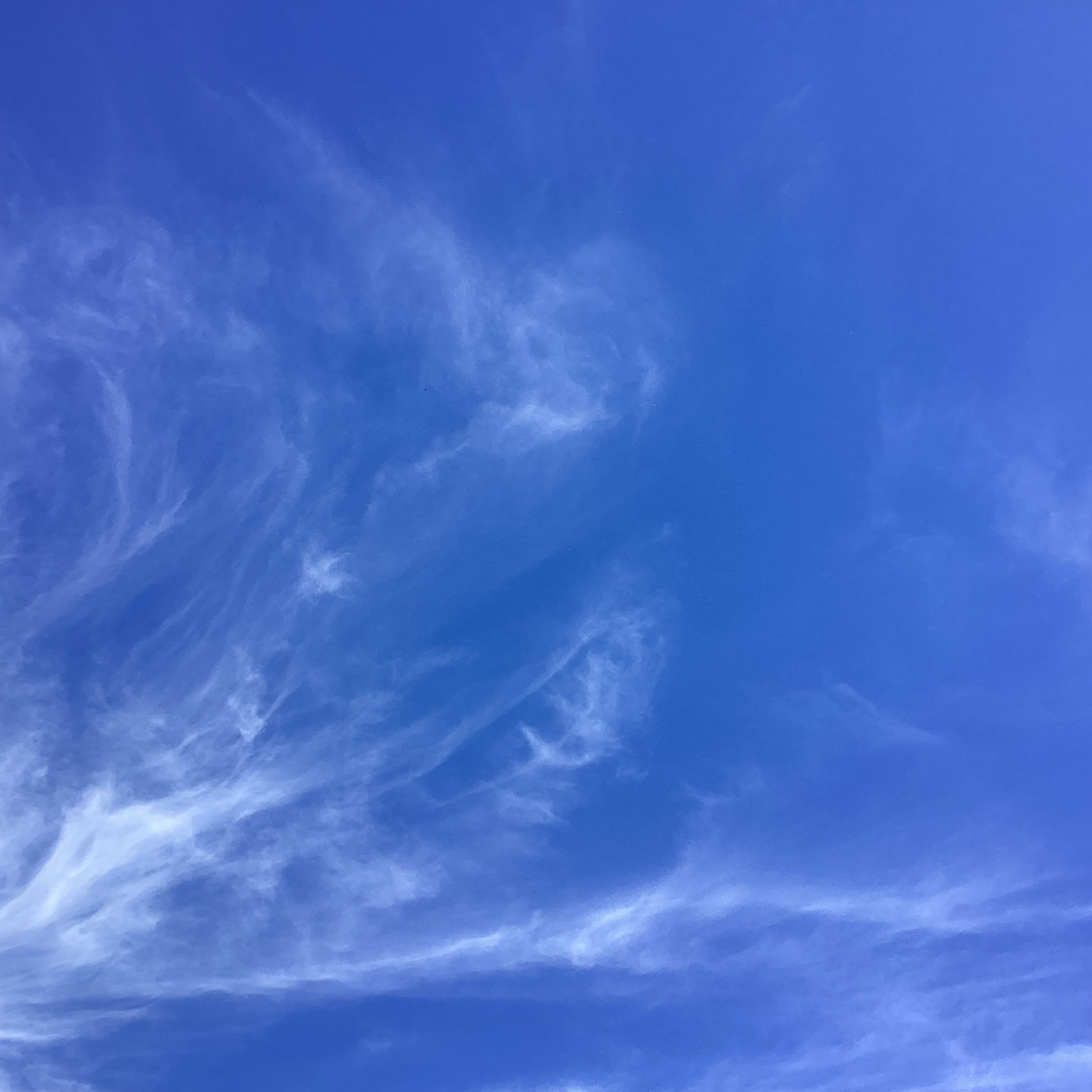
The student who took the photo of the sky wrote:
How to Love the Sky
Look up and listen. Hear the birds, don’t just listen to them, listen to them from your heart. Then hear the sky talking to you. See the blue of the sky and the white of the clouds and love.
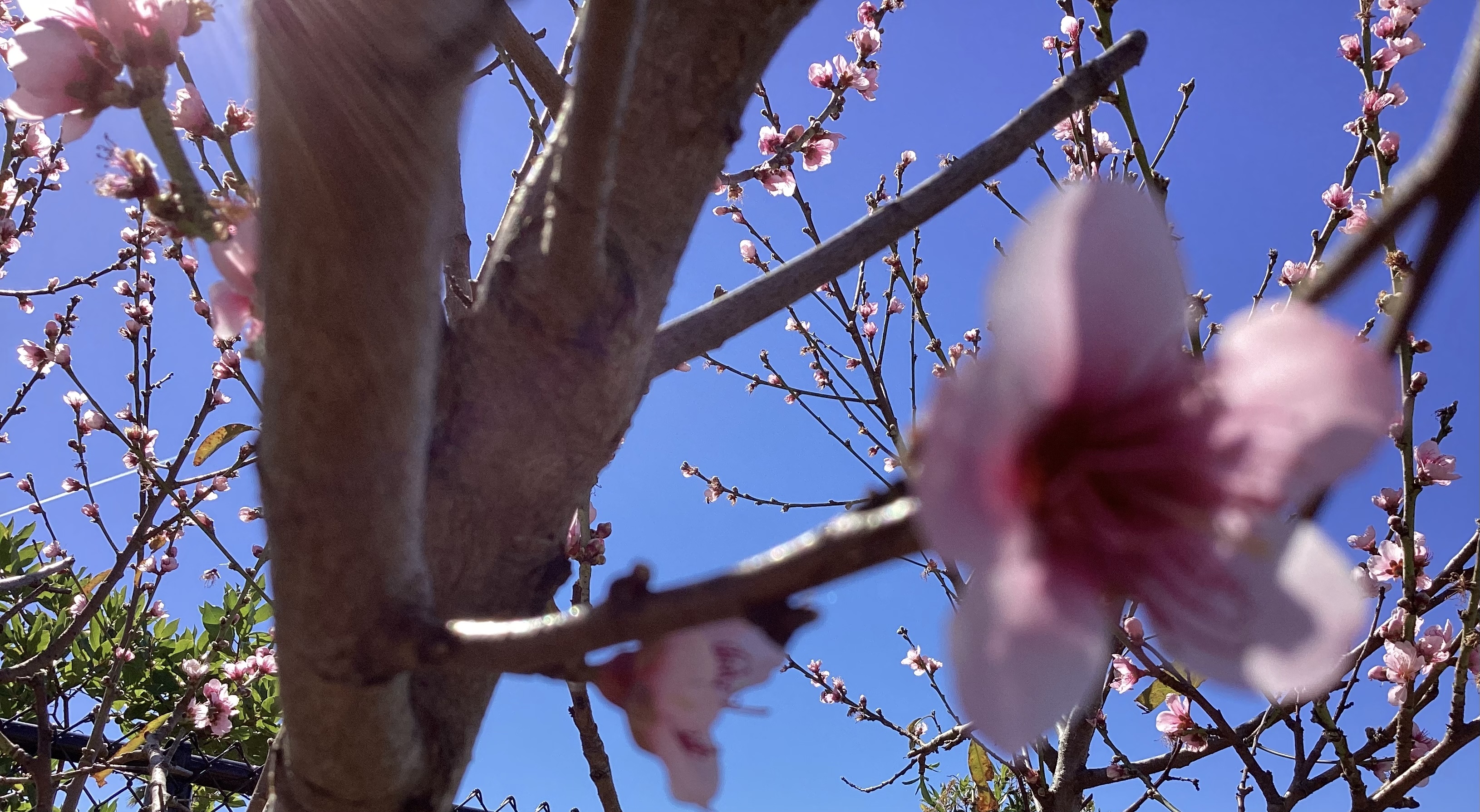
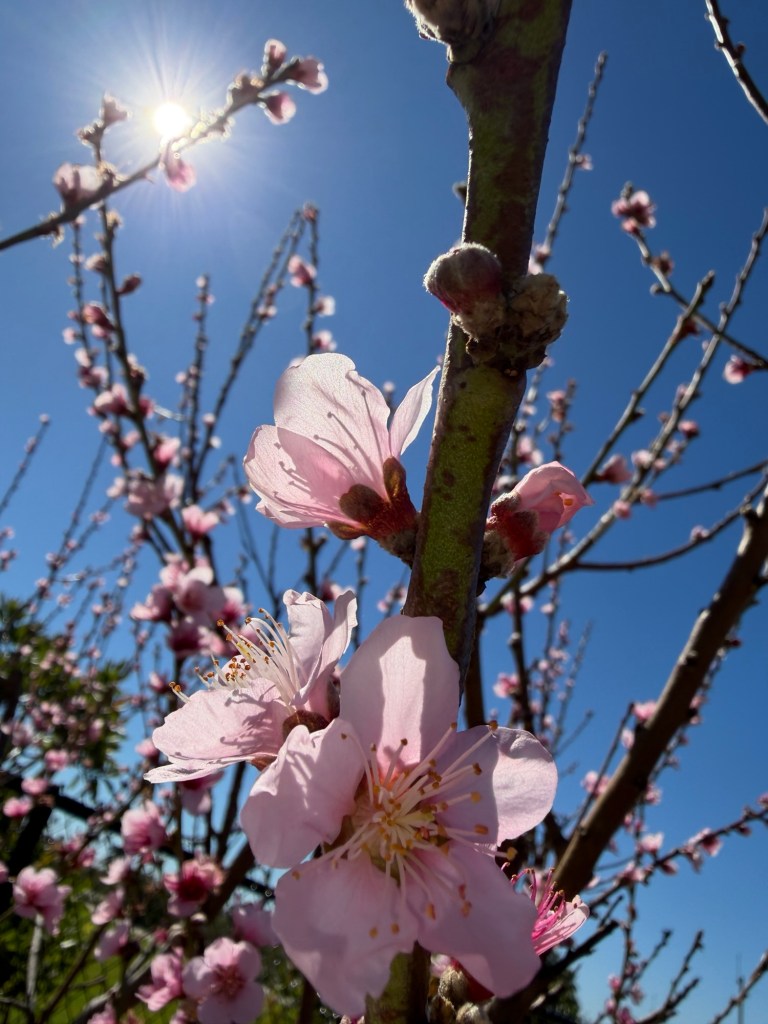
My own photo was of our cherry tree with the sun peeking through.
I only managed a sentence before students were calling me over to read their developing drafts. I borrowed the first word from How to Sing a Song.
How to Grow a Cherry Tree
Hush! Focus your eyes on the softest pink, gently dancing in the light afternoon breeze.
Maybe I’ll continue the piece one of these days, but for now I’m excited to watch my students become confident and accomplished writers…with a metaphorical flair!
I picked today…October 20ish…to celebrate the National Day on Writing (NDOW) with my students. And since we are also into #writeout, we combined the two.
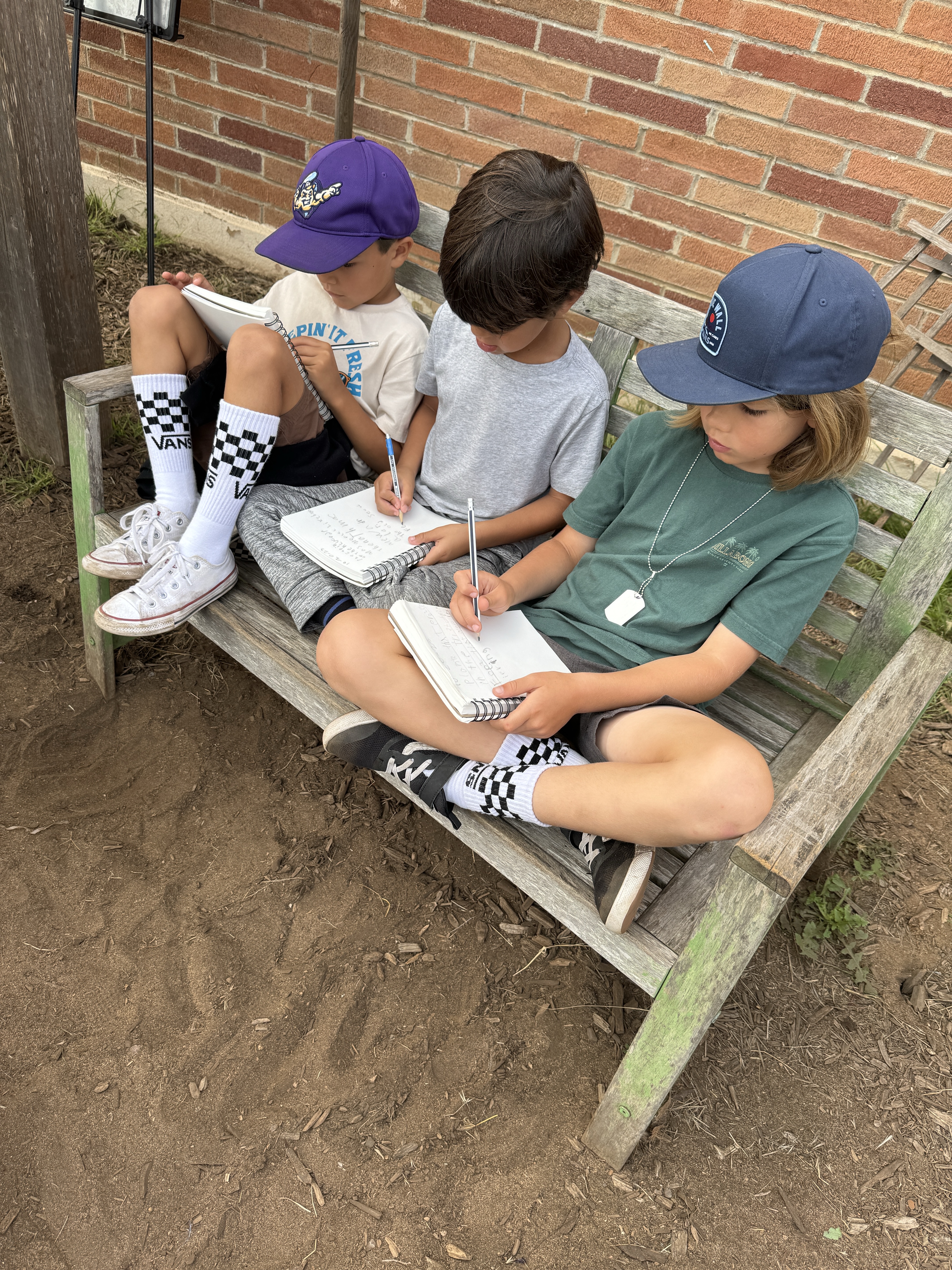
We are lucky to have a school garden and while it is not exactly exploding with plant life (yet), it does have some plants growing, some rustic seating, shade (essential on a sunny fall day like today), and hosts bugs and worms and dirt and all the other things kids love.
So, after recess today when I walked my students back to the classroom, I read them the book Outside In by Deborah Underwood. This gorgeous book talks about the wonders of the natural world–and the ways we often do not pay attention to those wonders. It also includes all five senses in wonderfully descriptive and somewhat subtle ways.
I recently had the opportunity to interview author Kate Messner, who is serving as an author ambassador for the National Writing Project’s #writeout, as part of their Write Time series. In response to one of my questions, she talked about the power of the senses to help students (and writers) extend their writing. So before we headed out with our sketchpads to write, I asked my students to pay attention to not only to what they saw, but to all five senses. As we walked we noticed…and once we arrived at the garden, we began to write.
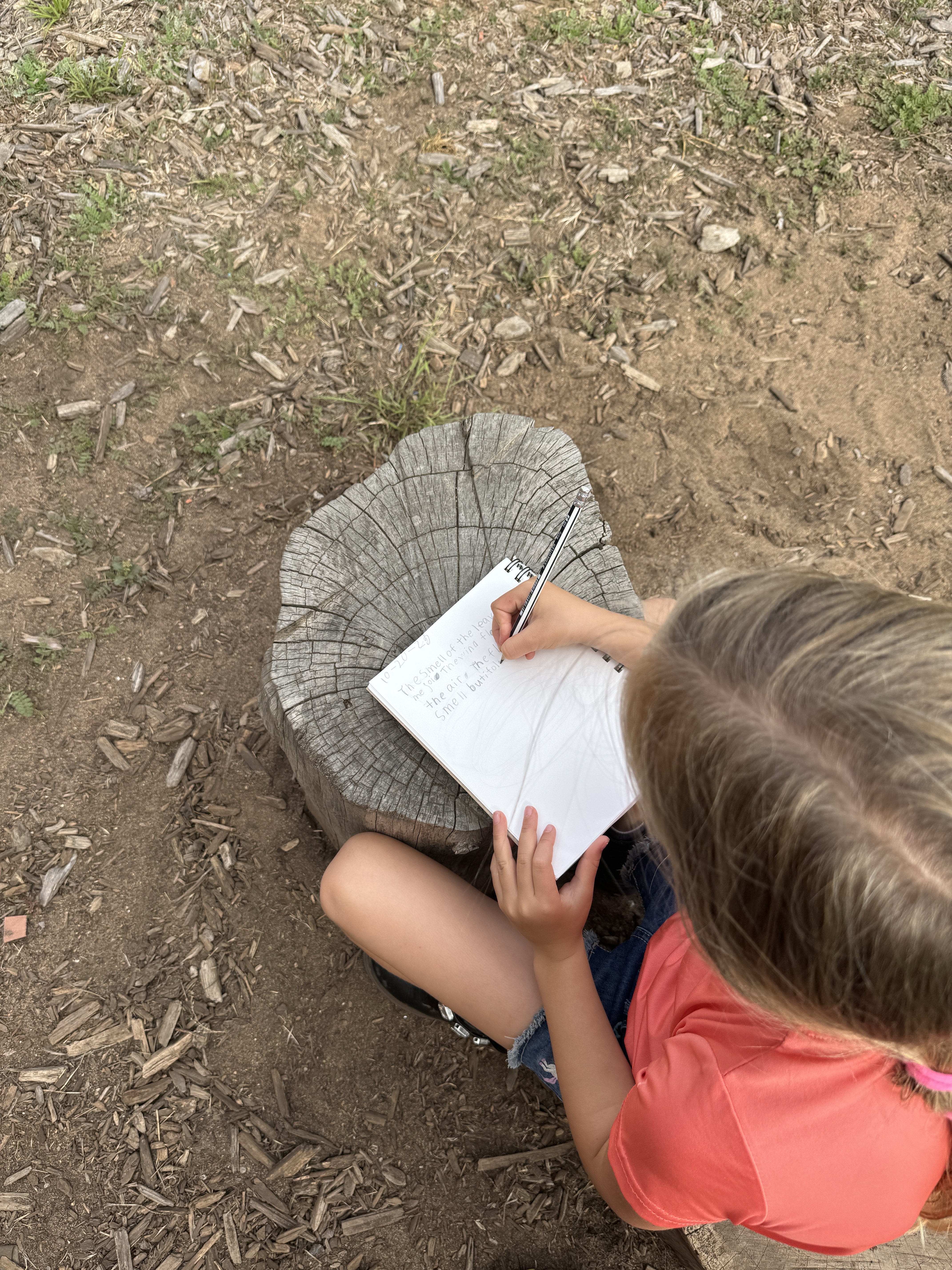
Students listened and sniffed. They rubbed leaves, touched pumpkins, and imagined the taste of fruits and vegetables. And they noticed bugs and birds and spider webs. When they needed inspiration, they moved around the garden and wrote some more.
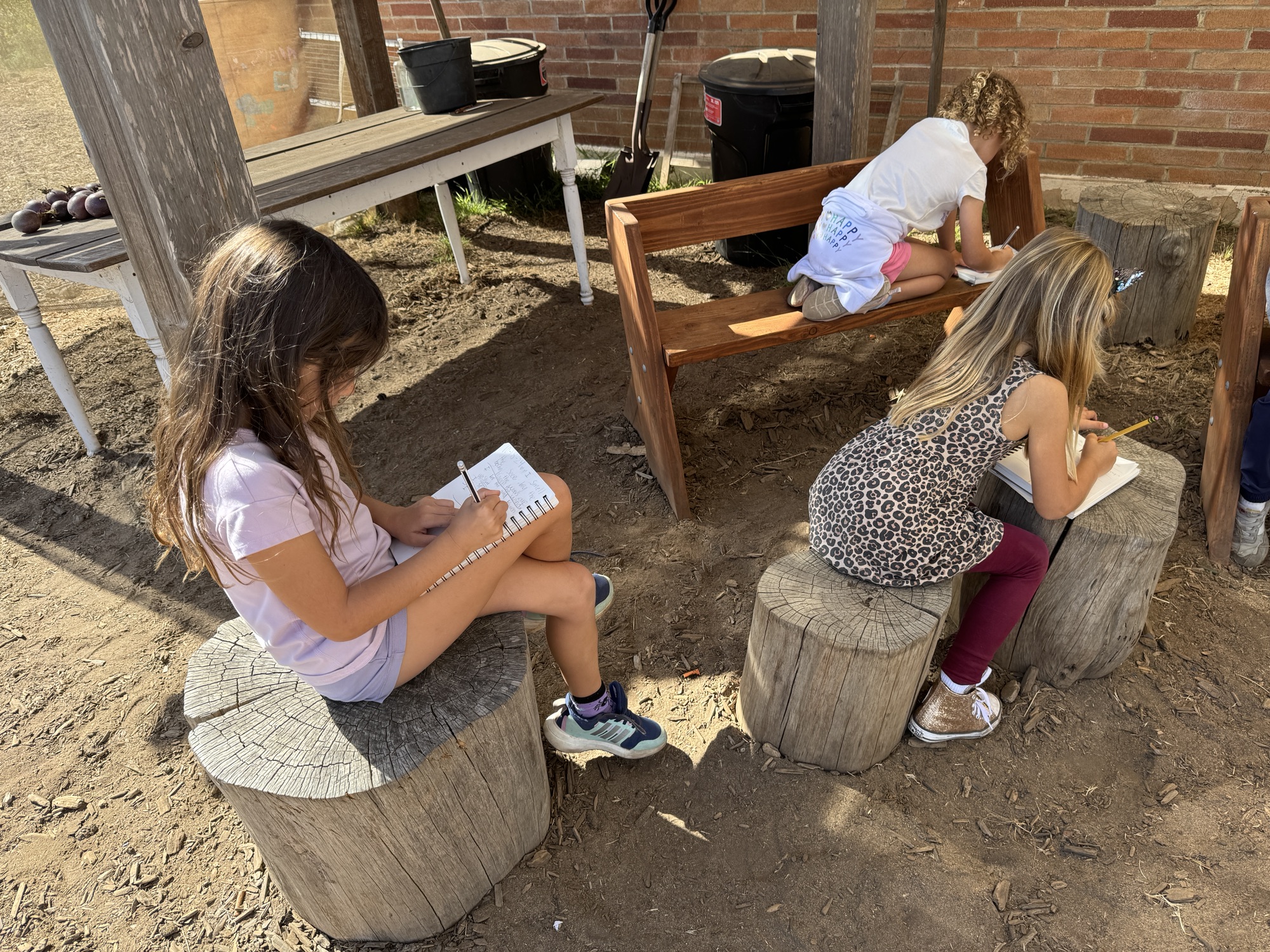
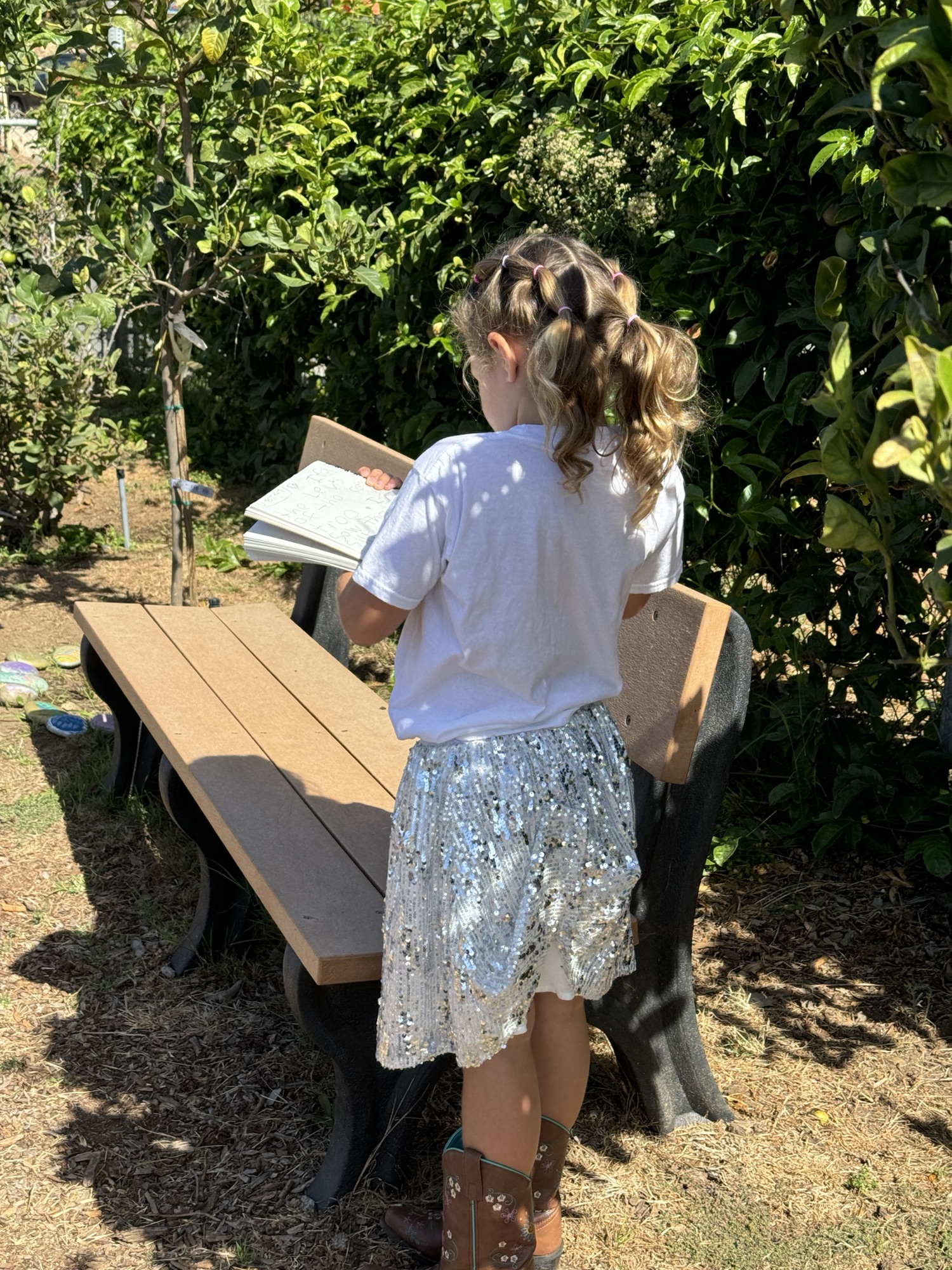
I love watching my students develop stamina and confidence as writers. There is something freeing and motivating about writing outdoors, writing in a sketchbook, sitting on a stump, and even writing standing up. Writing still takes effort when you are six or seven. Putting all that wonderful thinking onto the page is an opportunity to put phonics into action, exercise those developing fine motor skills, and focus attention for a sustained period of time.
I hear a June bug buzzing in the sky.
When we returned to the classroom, I asked student to pick their favorite sensory description to read in a classroom whip around. Student were all willing to pick and read their descriptions, creating a symphony of voices celebrating our garden and our community of writers.
Here is the collaborative poem that includes a line from each student in our first grade class.
Senses in the Garden
A National Day on Writing Celebration
I hear a car. It sounds like a dinosaur roaring. Rooaarr!
I see the leaves swirling in the wind going to land on the ground.
I smell the sea by the beach. The waves are blowing in the wind.
Taste is like tasting popcorn.
I hear a june bug buzzing in the sky.
I hear the tip tap of my shoes. I see the reflection of my sparkle skirt.
I hear the birds chirping in the sky.
I see the spiky squash on a stem.
I can hear a hummingbird humming. It was sucking pollen.
I see a passion fruit on the table.
I touched a pumpkin. It was soft and it had a hole in it.
I hear waves crashing on the shore that the surfers ride on.
I can smell oak sap flowing down the bark of the tree.
I can taste blackberries getting eaten by me.
I smell a passion fruit.
I spy with my little eye someone walking by. A game!
I feel a pencil in my hand.
I see a moth fly like a jet.
I hear birds chirping and flying.
I smell the acorns. They are like the seed and the trees.
I see a big pile of dirt.
I hear leaves getting smashed.
I see and feel and hear the garden.
By Room 3 First Graders
10/18/24
How will you and/or your students celebrate the National Day on Writing (and #writeout) on or around October 20th? My students and I would love to see what you do!
Who decided that parent conference week should follow springing ahead to Daylight Saving Time? I’m feeling the loss of the hour, the compressed teaching day, and hours spent talking…
So today’s slice is a 6 word photo essay…a portion of my teaching day.
Under Goodall’s influence: noticing, wondering, writing
It’s October 20th…and that means it’s the National Day on Writing! We started our day by talking about the reasons we write during our morning meeting. It warms my heart that most of my students mentioned either that writing is fun or one of our recent writing activities (writing letters or making zines) as their reasons for writing. I do feel like we are building a wonderful writing community in our first grade classroom. It’s a place to take risks, a place to express ourselves, and a place to build our knowledge and skills related to writing.
So after recess today, I read my students Kiyoshi’s Walk by Mark Karlin. In this lovely story, Kiyoshi is asking his grandpa where poems come from. On each stop along the walk, Eto (Kiyoshi’s grandpa) writes a short three-line poem about something they see, hear, imagine, or feel…each adding to Kiyoshi’s understanding of where poems come from. At the end, Kiyoshi asks his grandfather if he can write a poem…and writes a beautiful three-line composition for his grandfather. While technically the poems in this book are Haiku, I talked about them as three-line poems rather than engage in syllable counts for my students today.
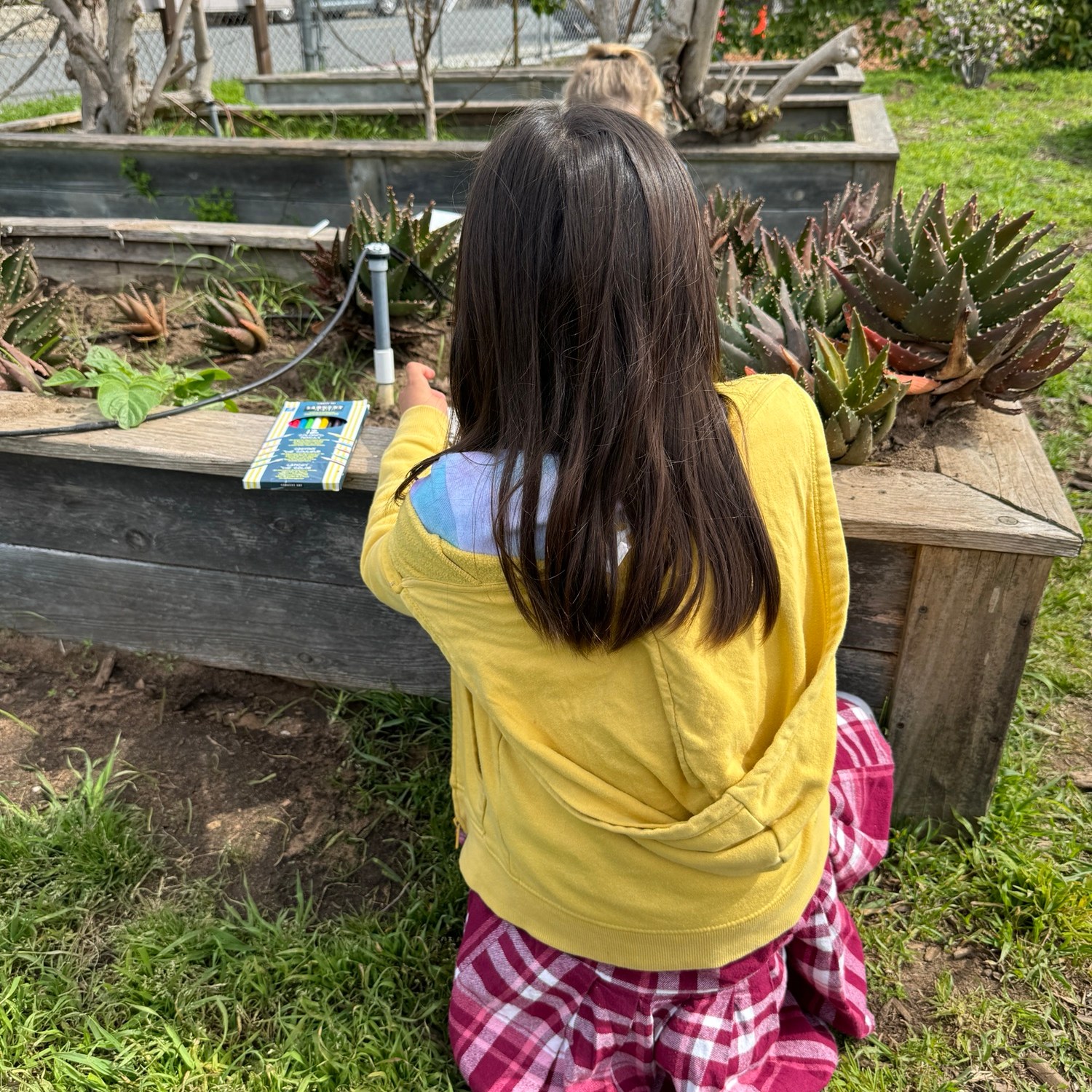
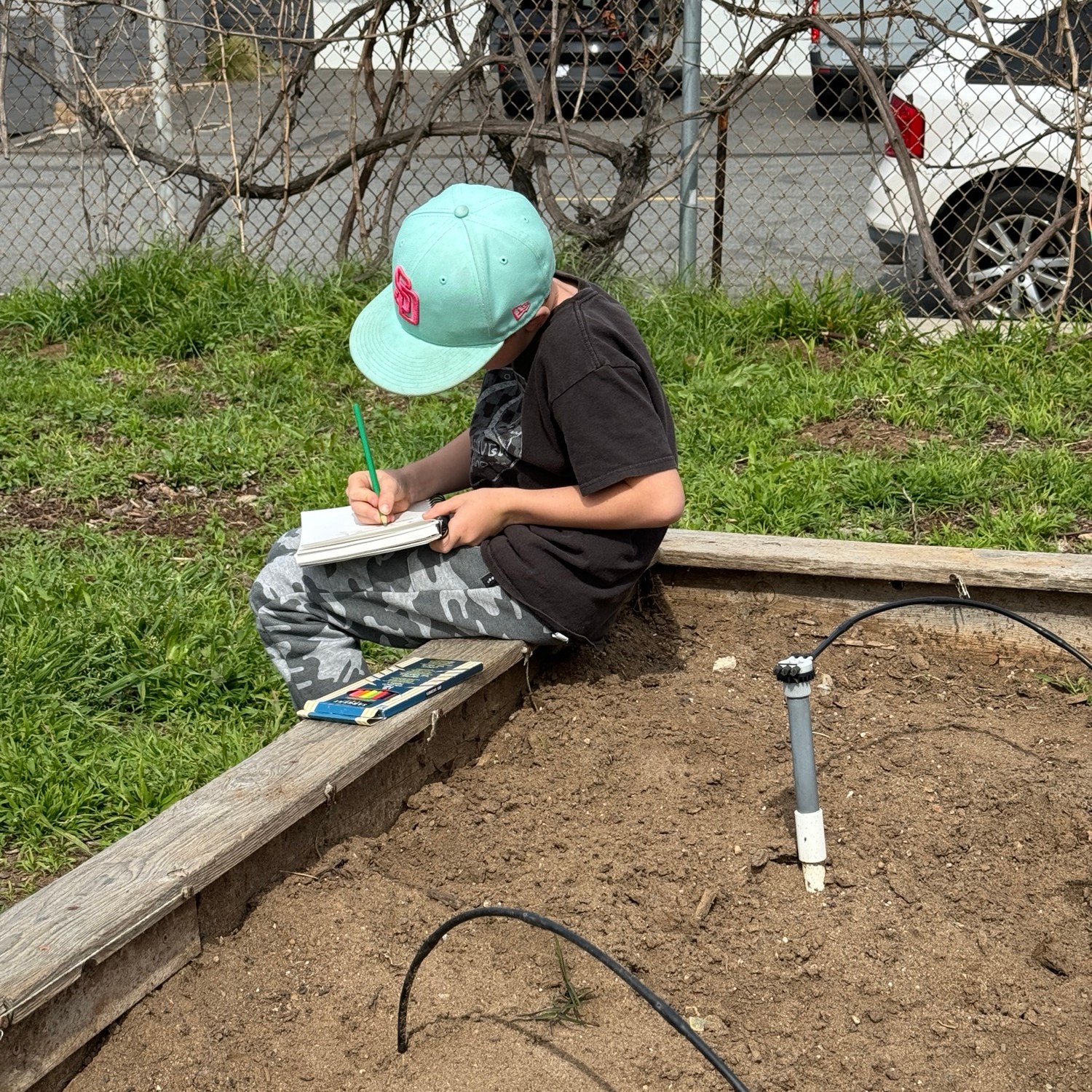
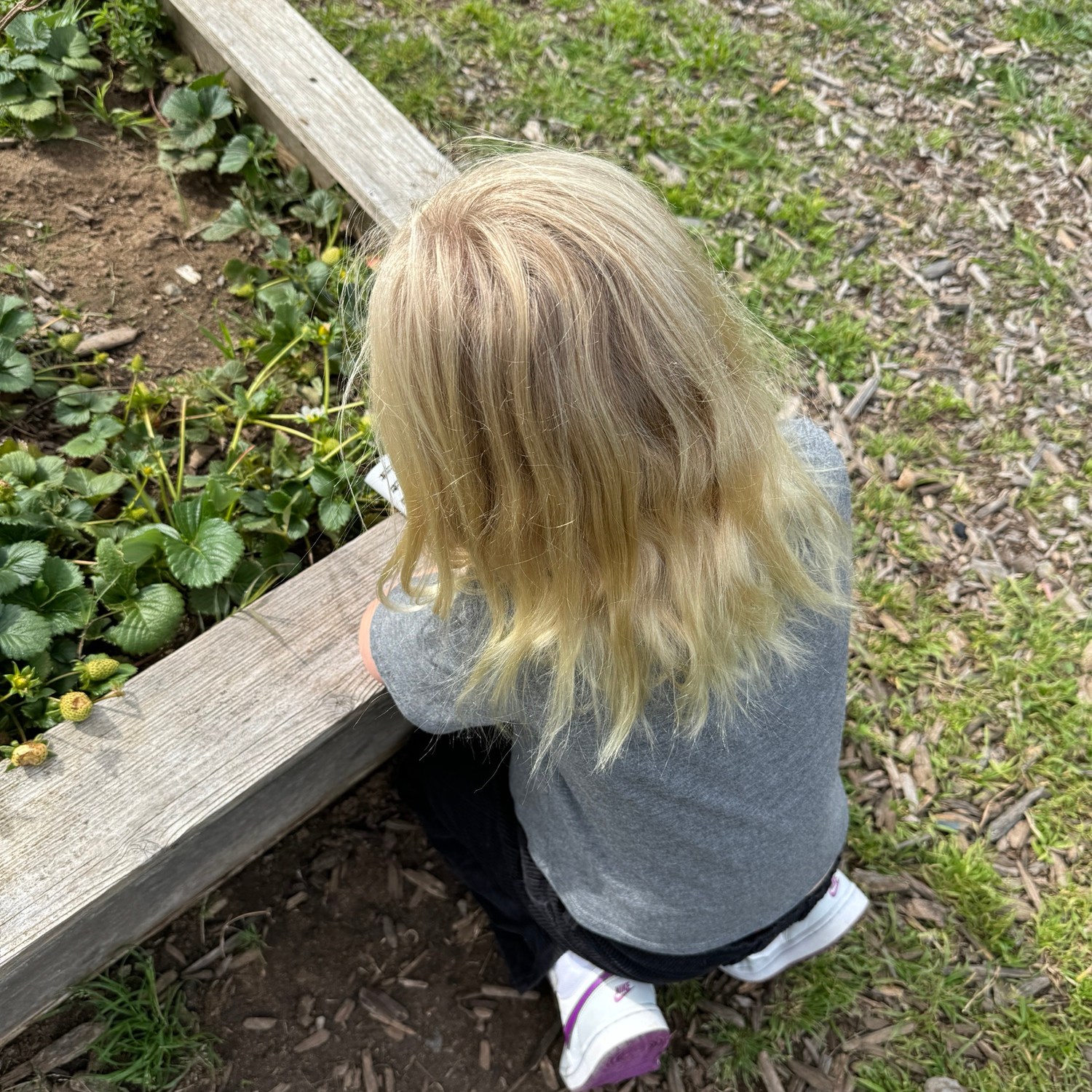
With this as inspiration, we grabbed our sketchbooks and headed out on our own walk, ending up in our school garden where we wrote our own three-line poems inspired by our walk and our time writing in the garden.
These first graders wrote as many three-lines poems as they could during the time we were in the garden. They wrote about the fog that wafted across the playground, the rollie pollies that they love to rescue from the sidewalks, ladybugs, passion fruit, the sky, tomatoes, potatoes, and so much more.
When we returned to the classroom, writers shared a few of their compositions and then picked their favorite to copy onto another sheet of paper and illustrate. While their poems are still developing, they are beginning to get the idea that there are many different reasons and inspirations for writing. Here are a couple:
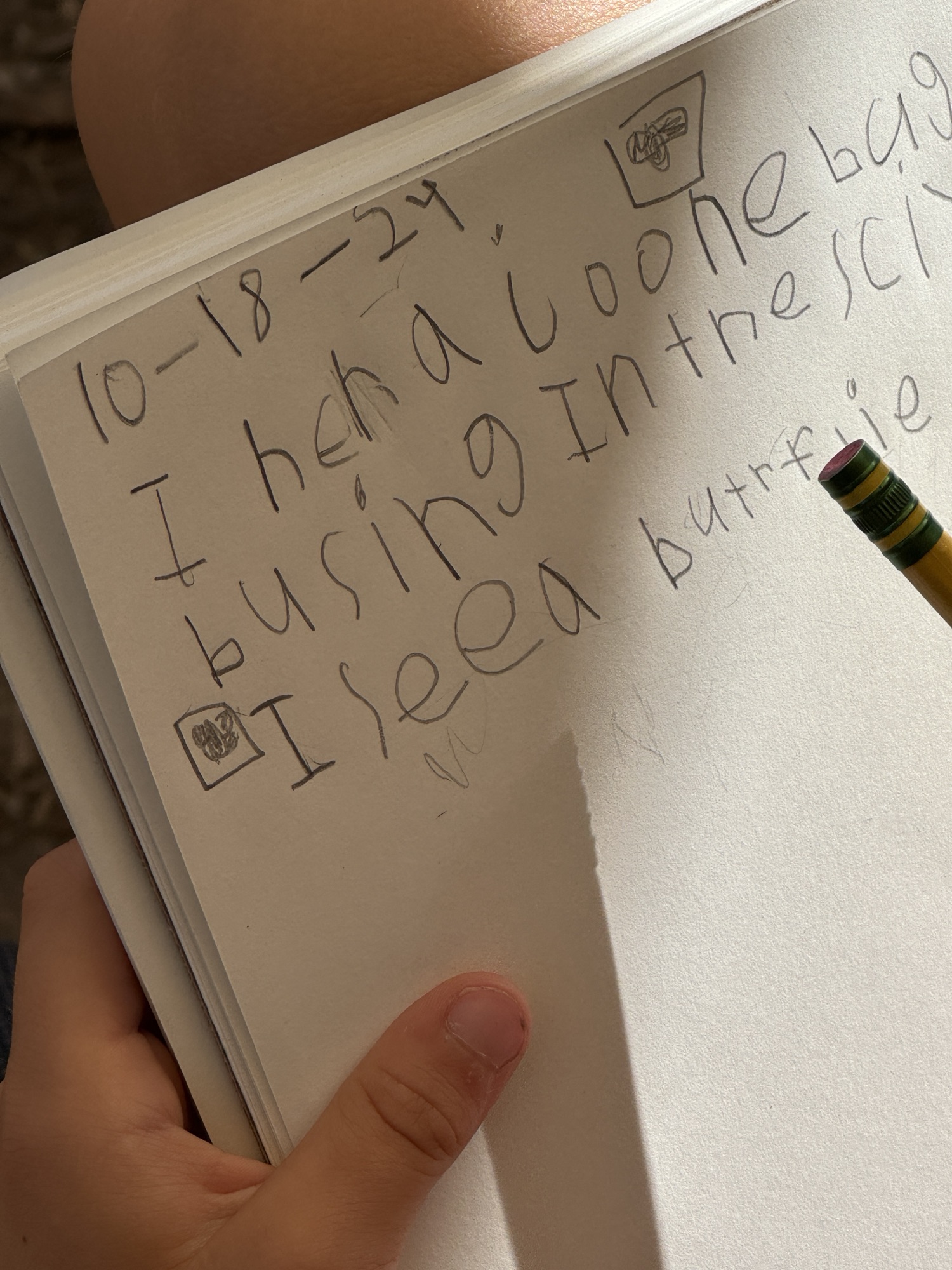
I See a Butterfly by C
A butterfly flying
In the garden with yellow wings
Pollinating the garden flowers.
The Blowing Fog by M
The fog is blowing
The rollie pollies are crawling
The flowers are blooming.
I also know that being outdoors is a powerful motivation for writing for the first graders I teach. Changing our writing venue, writing in a sketchbook rather than a notebook, and writing under the influence of nature all keep writing fresh and novel. And my writing with them also matters. I hope they are learning that writing is not just for school, but that it is a lifetime pursuit that can serve many different purposes.
And I know that I don’t need #writeout or the National Day on Writing to keep writing at the forefront of the classroom–but it’s fun to know that there are educators all over taking their students outdoors, playfully approaching writing tasks, and making writing something students love…for so many different reasons.
So I leave this post with the NDOW question, Why do you write?
This week in my first grade class, we have been learning about Jane Goodall. My students love that, just like they do, she loves animals. I love that they recognize patience is a tool she used in her research, that building relationships takes time and effort–and sometimes that effort means just being present until trust is built. Showing up, paying attention, and caring are key.
Jane Goodall, according to her picture book biography The Watcher by Jeannette Winter, was always curious and a supreme observer from an early age. She watched bugs and chickens, recognizing that careful observation was a rich source of information.
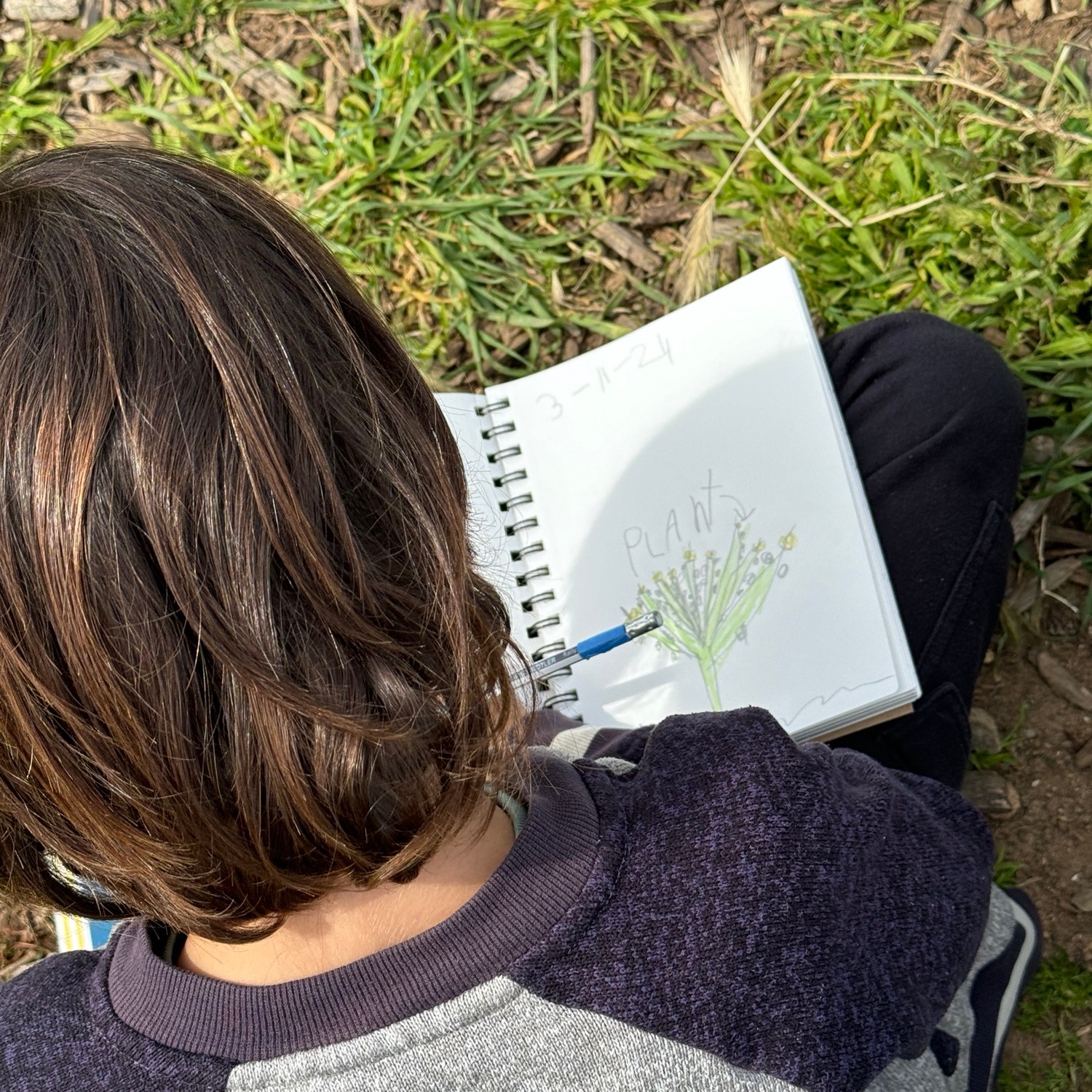
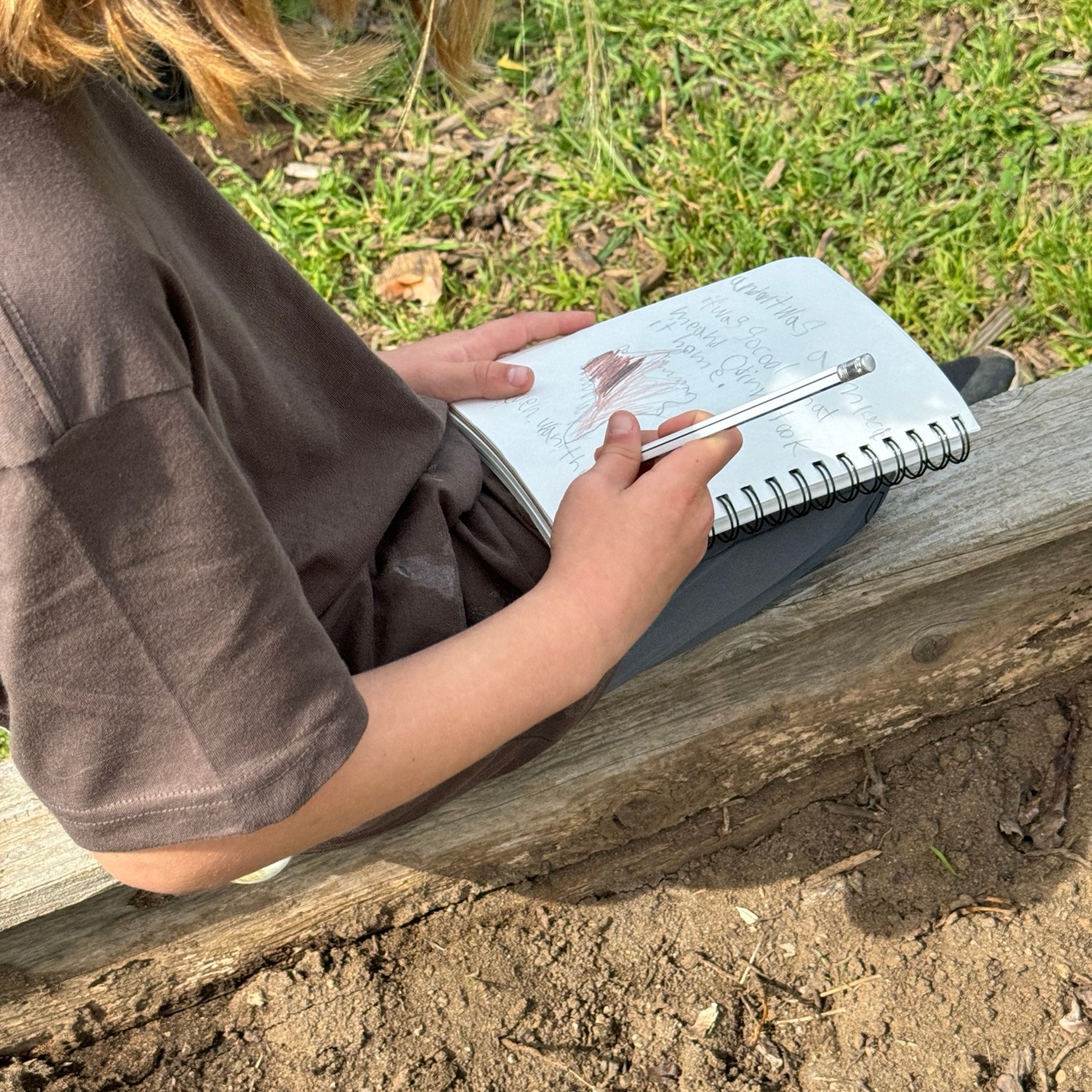
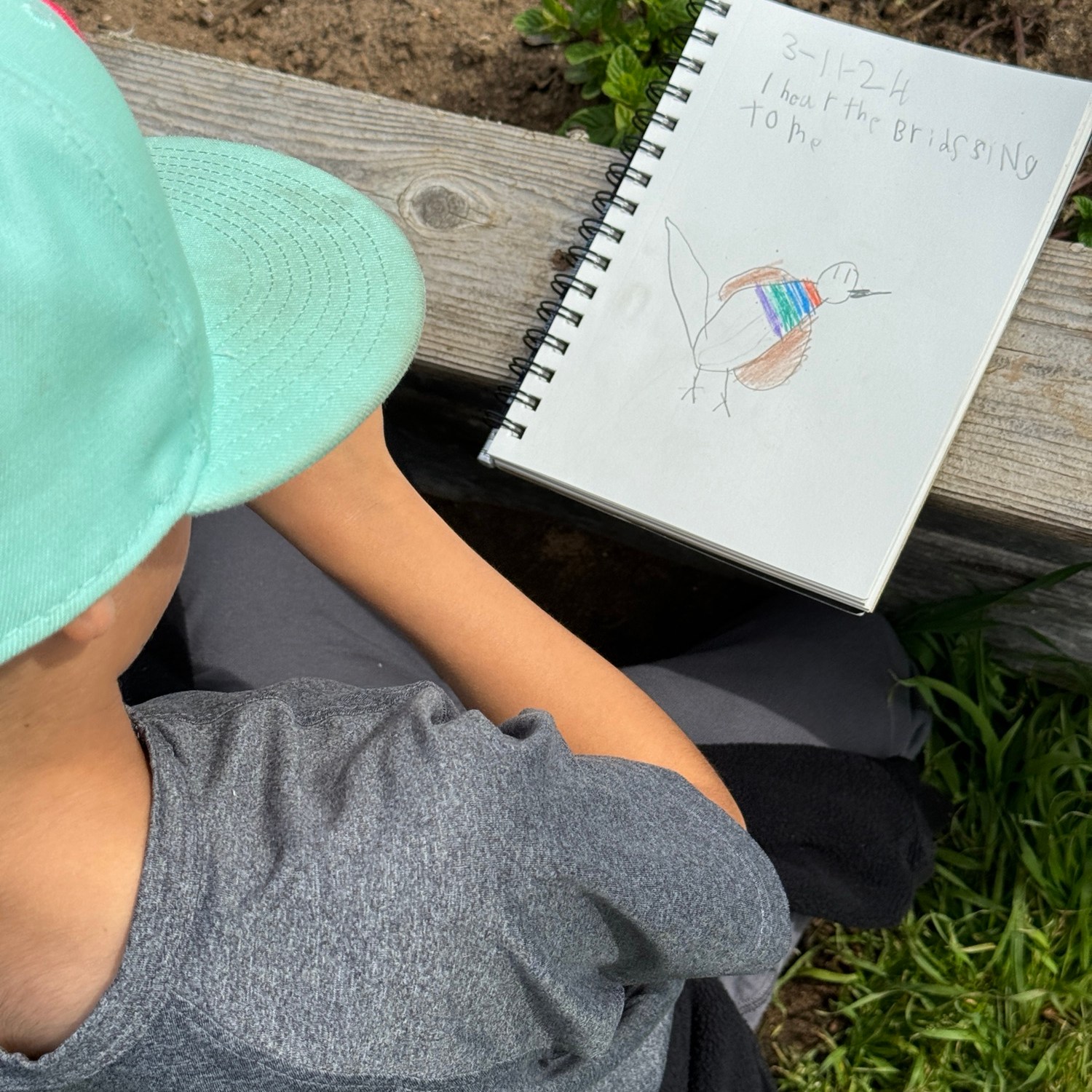
To try on Jane’s observational skills, we headed outside with notebooks and pencils in hand to use our senses in the school pollinator garden (better known by the students as the fairy garden). The directions were simple: find something interesting, watch and notice using all your senses (we acknowledged we wouldn’t be tasting anything before we headed out), make a sketch of whatever you are observing, include writing to add details about what you are noticing.
The synergy of observing under the influence of Jane Goodall and writing outside resulted in a magical writing experience. Students were focused and engaged–there is nothing like watching a formerly struggling writer putting words independently on the page and then asking for more time because he had more to say. And the unexpected, “thank you for teaching me today,” from the high performing student–who had experienced joy writing outdoors. This experience with ordinary nature, the ants, the sticks, the fallen leaves, some lavender, a few bees, the sun on our shoulders and pencils in hand inspired us. We wrote and learned and shared under the influence of Jane Goodall and her indomitable spirit and the magic of being outside, in nature.
Last week we learned about Jane Goodall and her passion for animals. Today we began learning about Ansel Adams and his passion for nature and photography. I want students to see that there are lots of ways to take action to make the world better–and following your passions is a great place to begin.
It’s surprising to me that I haven’t had students use their iPads to take photos before this point in the year. I’ve used iPads sparingly this year–I think partly in response of the intensive use of devices during COVID times. So today was the day I decided that we simply HAD to do some photography.
I started by showing my students a slide show with three photography techniques: bug’s eye view (a view from a low perspective), bird’s eye view (a view from above), and using the rule of thirds (framing the subject using grid lines to help with positioning). We did a quick practice in the classroom where I could give some immediate feedback by walking around the room.
After lunch, we came back to the classroom where I gave a few pointers about taking our iPads outside, and then we headed out into the garden to take photos using the three techniques. I limited them to 10 photos, but encouraged them to explore and experiment, deleting any that weren’t good.
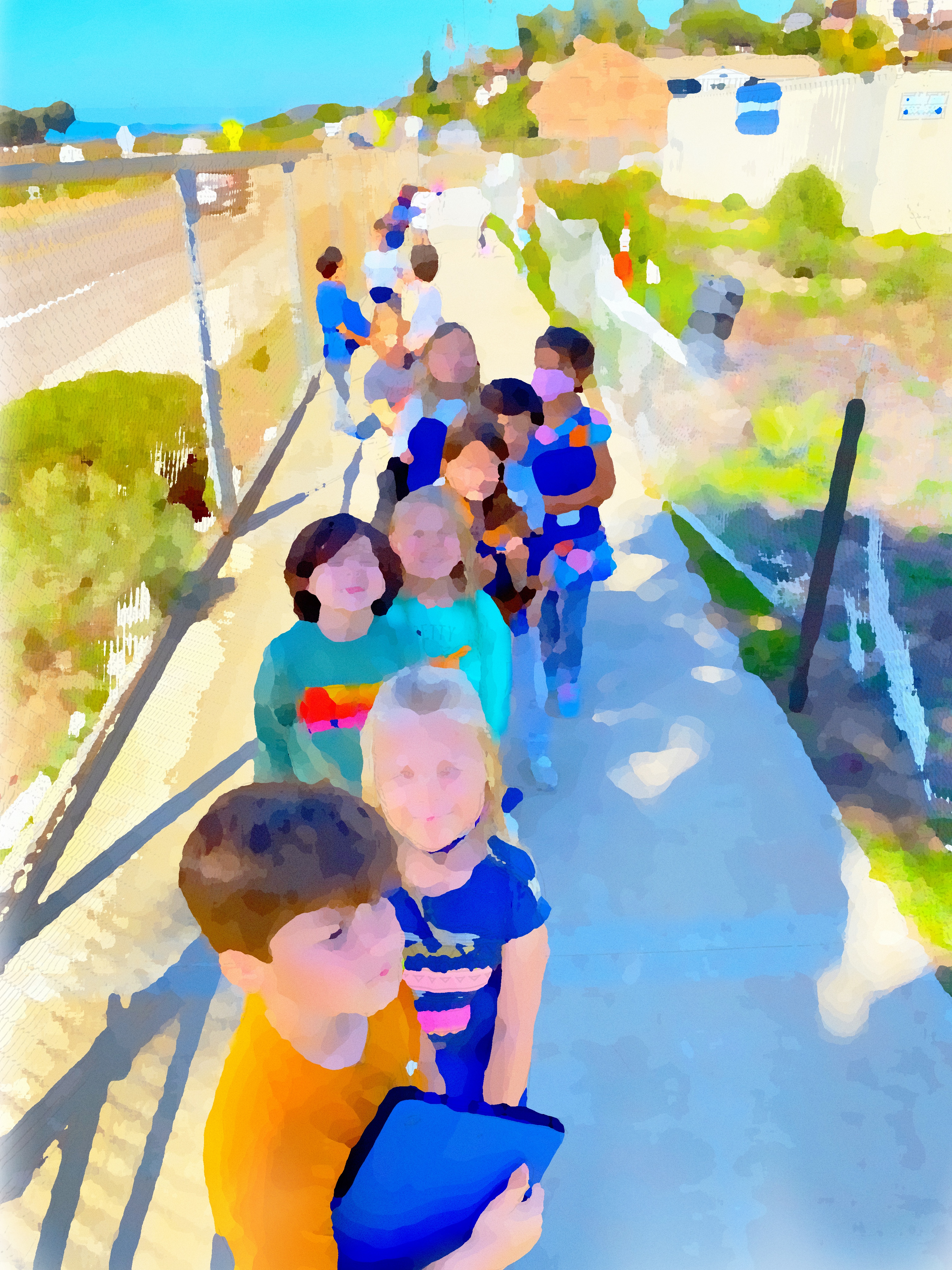
There’s nothing like watching first graders take photos. They have no hesitation about laying on the ground, crawling under a plant, or taking an angle that I would never have imagined. As we walked back from the garden, we made a few stops to snap a couple of extra photos of some California golden poppies growing along the fenceline, some other wildflowers, and a lizard doing some sunbathing. And of course, I couldn’t resist a bird’s eye view shot of the class on our way back.
Back in the classroom we took a few minutes to look through the photos, identifying which technique (or combination of techniques) we had used. Tomorrow we will explore some editing…and select our best three for some caption writing.
We continued our work with color and poetry today using Marilyn Singer’s poem Watercolors as our mentor text. Students loved the way she described black in such detail. I offered paint chips again today–some kids used them, some went in other directions.
My paint chips were the yellow tones of chamomile tea and the green of cabbage patch. Students had just been out in the garden when they came in to write. You can see that influence in my poem for today.
I love the garden as an outdoor learning space for students. As you may have read yesterday, we began the process of experimenting with some photography techniques in preparation for some writing today. The PM group was rained out of the garden yesterday, but today was bright and sunny so they were able to catch up and try their hand at using the photography techniques.
Today students selected a photo from the garden, and in the spirit of Ansel Adams, transformed the photo to black and white using a filter in the iPad. This photo along with Eve Merriam’s poem, Peeling an Orange, became the inspiration and mentor text for their own original small poems. Before starting our own poems, we took the time to study Peeling an Orange carefully. We named what we noticed: the use of comparisons (similes and metaphors), the opposition of the words carelessly and meticulously (serendipitously, meticulous had been a vocabulary word earlier this year), the inclusion of sensory use (smell). Then I set a timer (something that I find focuses these third grade writers) for 7 minutes and off they wrote!
We shared a few, noticing the interesting comparisons, the use of strong verbs and other vocabulary and moved to the next step: creating a shared Google slide deck to display the photos and poems. While not everyone finished today, I did ask if students were okay with me sharing some of their writing on my blog. They were excited by the prospect.
Here’s a couple of student examples:
And one of mine (since I always write with students):
I’ve been intentionally prioritizing time for writing–from start to finish–in the classroom, in spite of the short time we have in our hybrid schedule. It is totally worth the time spent–and I am seeing the writing improve when students write in community. I look forward to more time for writing as my students return to the classroom for full days, in one group, beginning in mid-April.




 Thinking Through My Lens