For today’s poetry inspiration in our first grade classroom, I pulled out Georgia Heard and Rebecca Kai Dotlich’s Welcome to the Wonder House and we read a poem or two from each “room.” Students loved the rooms–and were already thinking about rooms that weren’t represented in the book. And then we all wrote. They were to choose a “room” that they felt connected to (I did say yes to those who wanted to combine rooms) and then pick the kind of poem they wanted to write. I noticed students writing short poems (we’ve written Hay(na)ku, Haiku, and 16 word poems in the last week or so), question poems, and poems of their own design. I had a student telling me she decided not to use any capital letters of punctuation like William Carlos Williams did in The Red Wheelbarrow. I can feel all the ways that poetry has seeped into their bones and their souls this year. It was a hectic day today with too many things pulling my at my attention, so I only really got a glimpse at what got written–we’ll get back to these pieces on Monday.
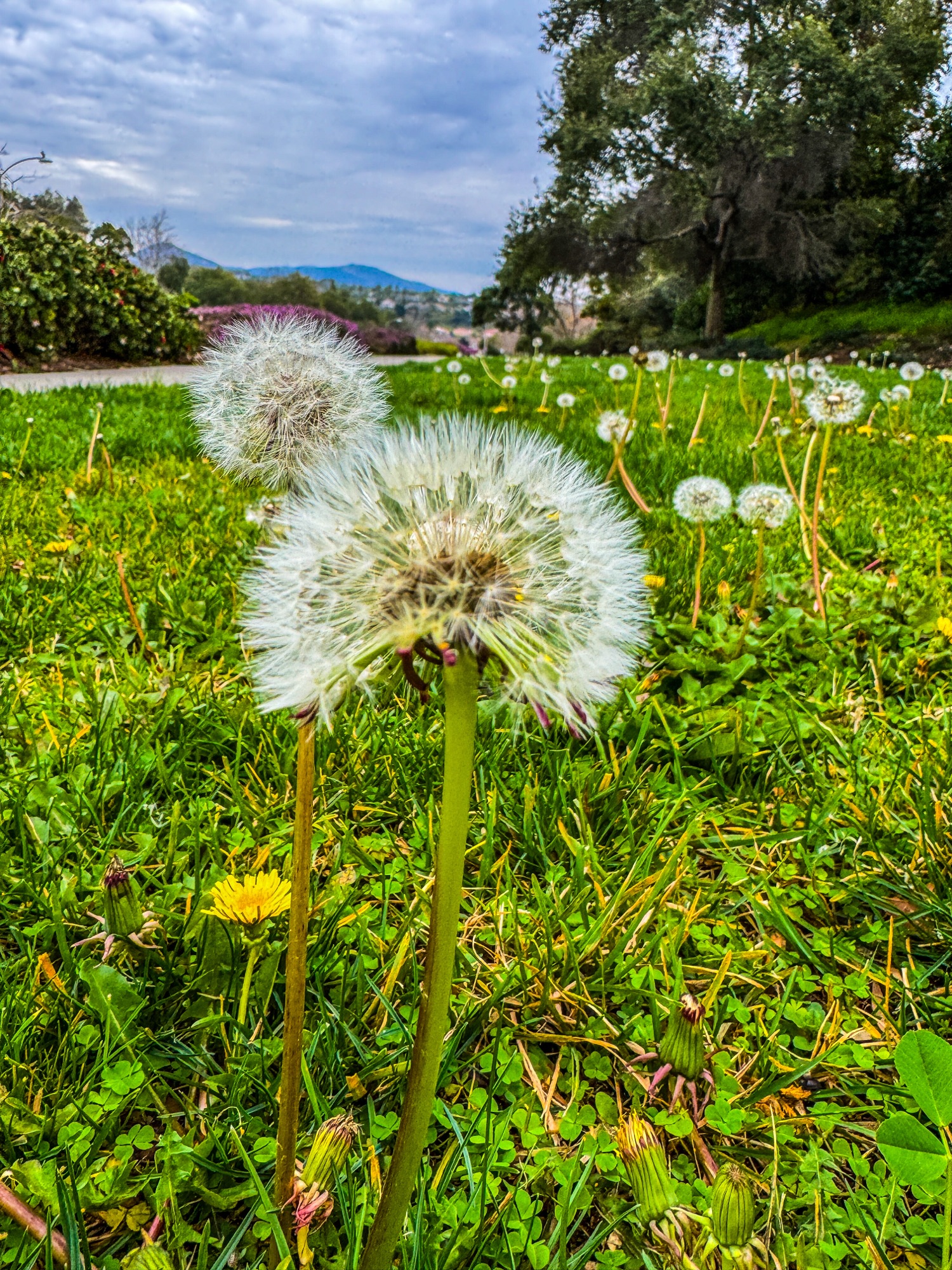
I decided to try a poem from the room of ordinary things–and wrote about dandelions. I guess it could also be located in the room of nature or maybe even the room of gardens. But I like that dandelions are everywhere–even where they are not wanted! I wrote several different kinds of poems, but decided on the Haiku to share today.
Where I’m from poems are tried and true in the writing project circles where I spend my time. So when Stacey at Verselove shared Where I’m From, Again as today’s post, it felt familiar.
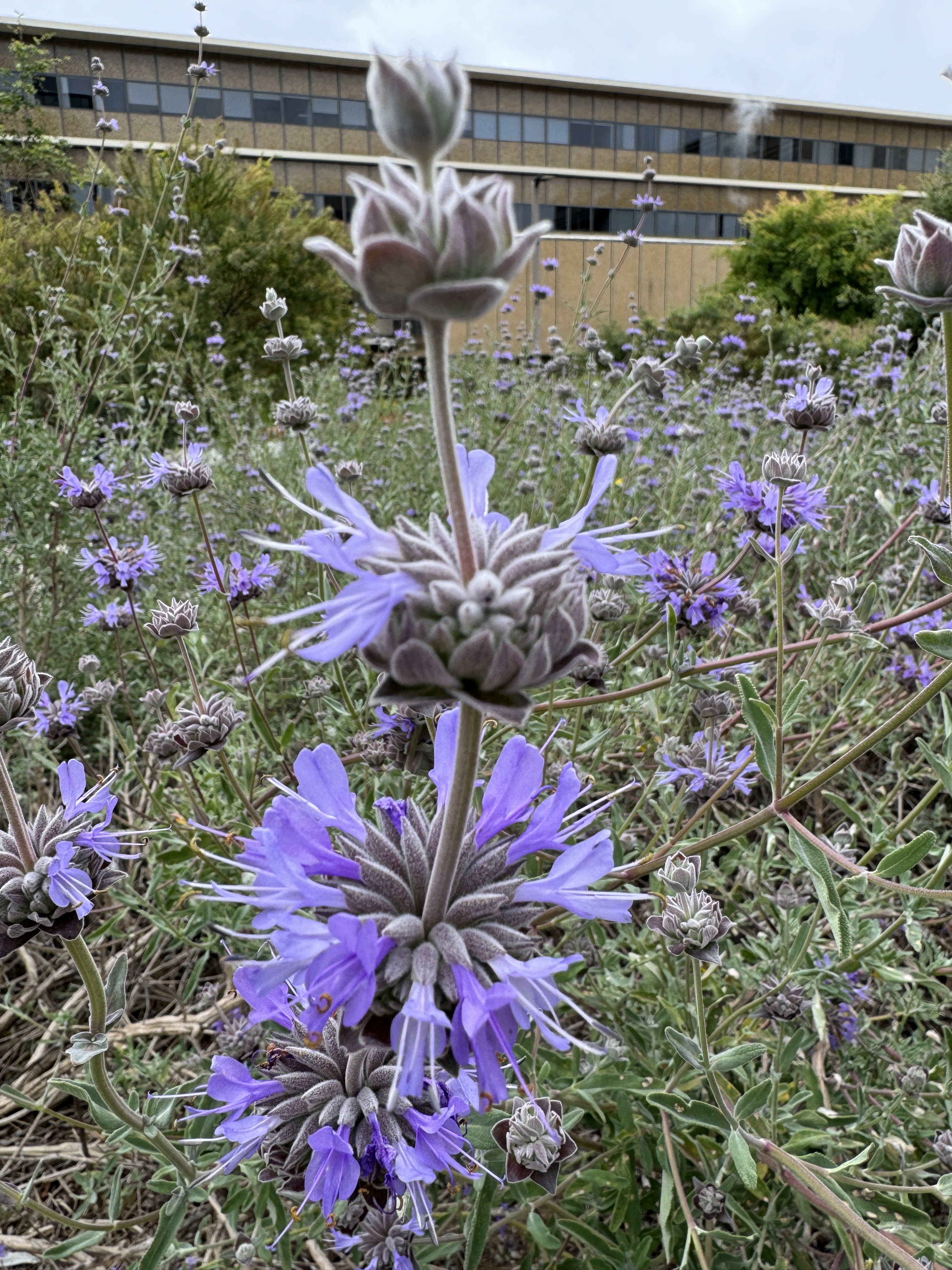
I decided to try a very short form today…a Haiku. Can I express some aspect of where I am from in just 17 syllables? Here goes…
Some days less is more–and this is one of those days for me. #Verselove suggested a where I’m from poem, but at the end of a long day, a where I’m from Haiku is where I found myself. (Inspired by the black sage in full bloom on campus right now)
I’ve been inspired by Grant Snider’s comics for a while now and was super excited when I learned about his book Poetry Comics published at the end of March. (I wrote a mini review here). I knew I would be doing something inspired by his poetry comics with my first grade students this month. When I saw he had done a Haiku comic style, I knew this would be a perfect format for my students.
We’ve written Haiku this year–well, mostly 3-line poems without much attention to the syllable count. So when we took a look at Grant’s Haikomic this morning, students immediately understood (and recognized the metaphorical thinking in his last line).
I’ve learned when teaching first graders that sometimes a novel paper use can propel young writers forward, somehow tricking that treacherous writer’s block into disappearing. So instead of writing in their notebooks or on lined paper, I handed each student a 3″ square post-it note to draft their Haiku. It didn’t take long for students to have their Haiku ready to be transformed by the comic making process.
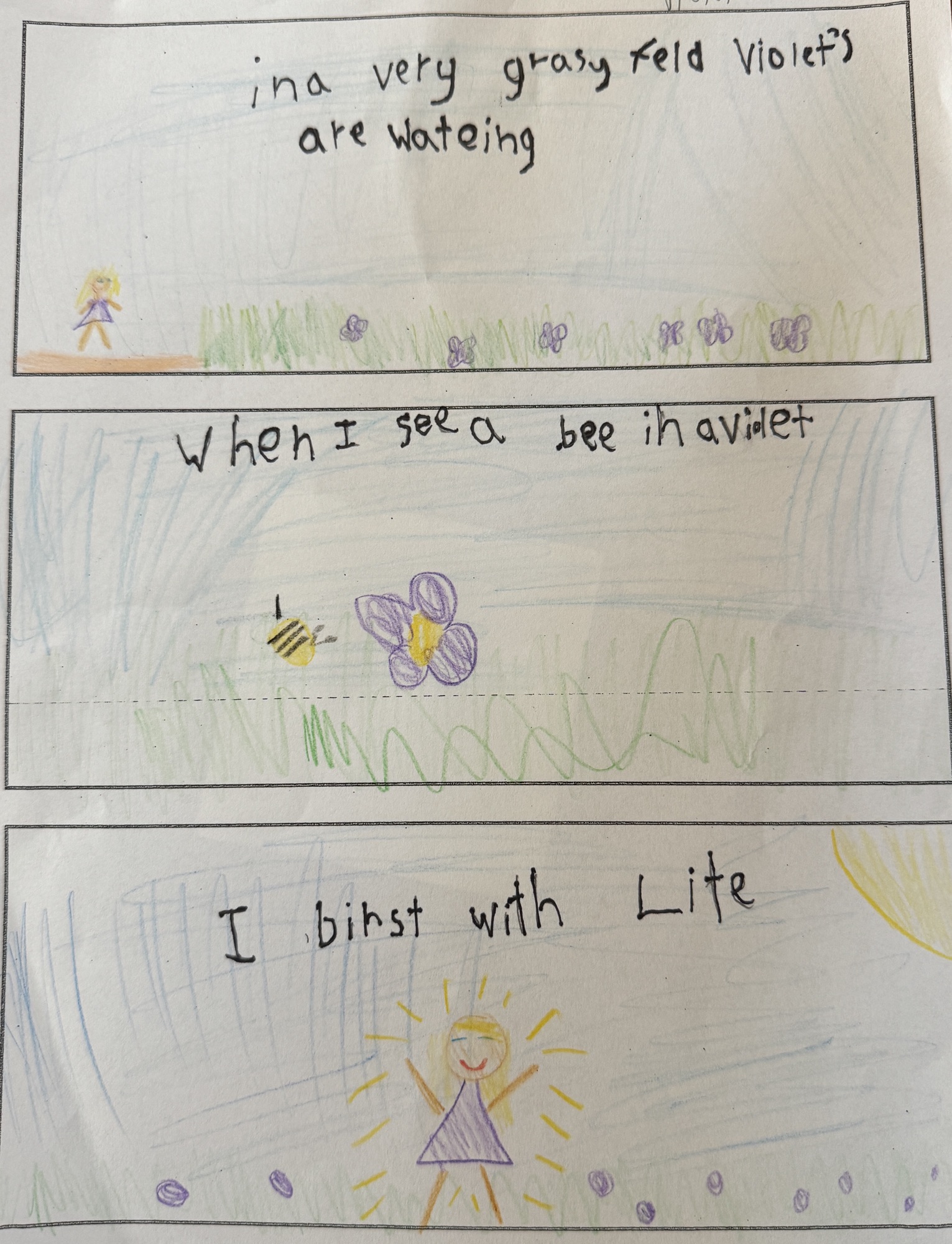
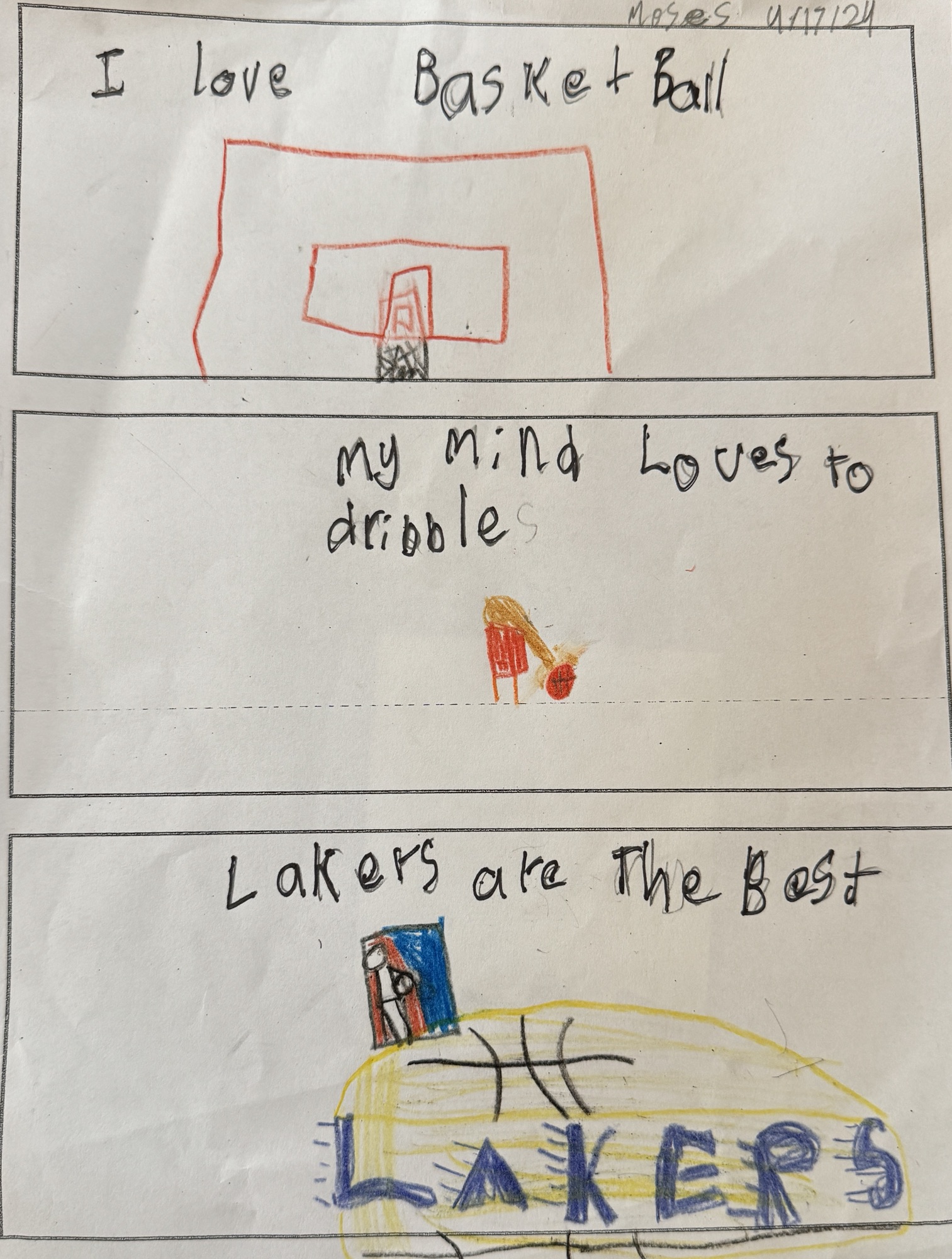
I distributed the comic paper–in this case, a page with three horizontal rectangular panels. Students wrote one line of their Haiku in each panel and added their comic drawing with colored pencil. As a final last step, they traced over the writing with a Sharpie marker.
Here are a few examples:
V can never help writing about violets!
M is obsessed with basketball!
In her piece, “I” decided to add speech bubbles.
And O celebrated flowers and springtime
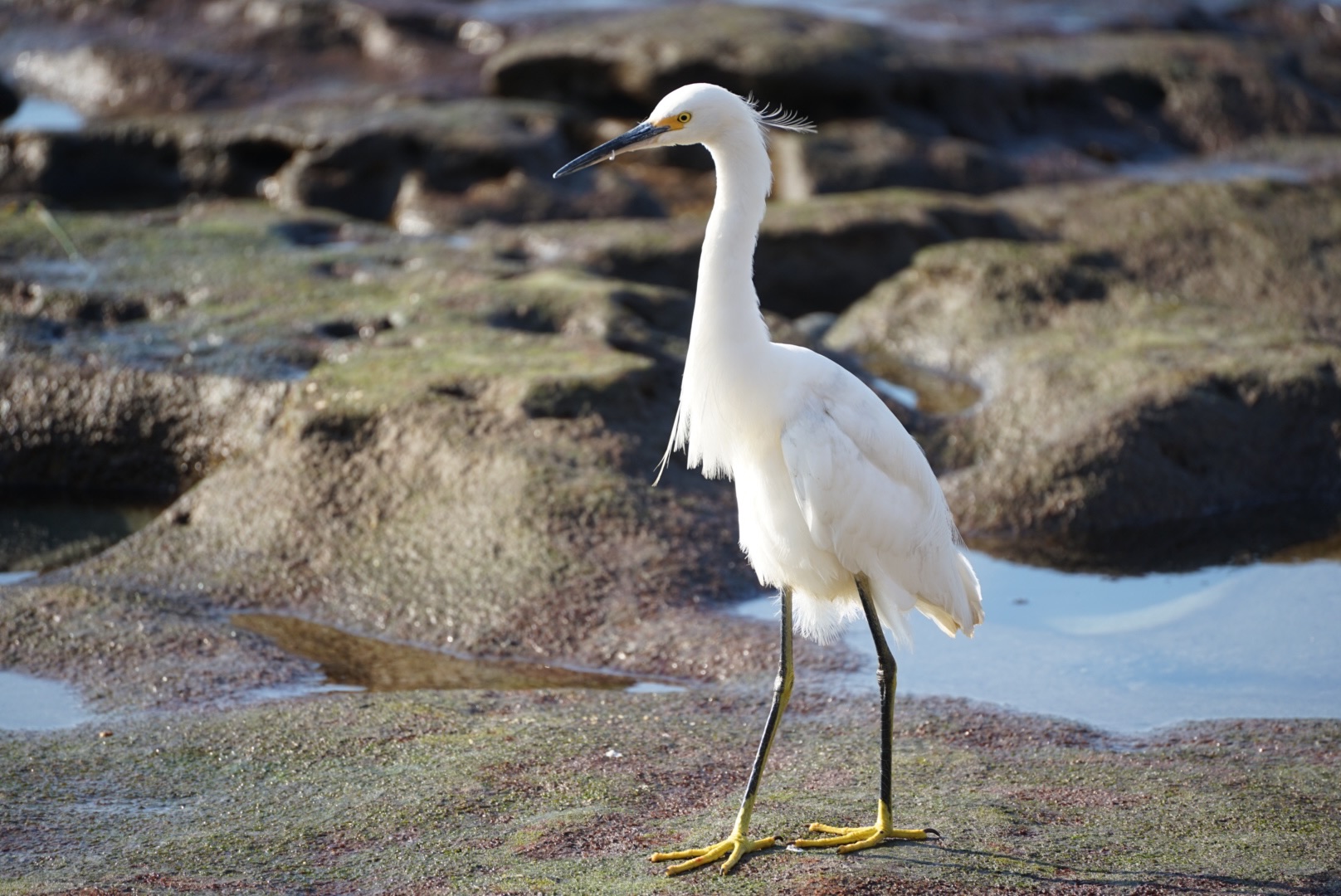
While I wrote my Haiku about egrets with my students and drew along with them, later this afternoon with a group of Writing Project colleagues we crafted our Haikomics using photos instead of drawing (mostly due to severe time constraints). I then used Canva to write my Haiku directly onto my photo.
Maybe you’ll want to try your hand at a Haikomic too. I’d love to see what you come up with!
Back on Saturday at the SDAWP Spring Conference (I wrote a bit about it here. ), I attended a session called Seeing with Wonder: Cultivating a Deep Understanding and Appreciation for Nature Through a Creative Lens. The presenters, Wendy and Alice, encouraged us to slow down and participate in long and leisurely observation. During the session they asked us to adopt a tree–and since it wasn’t reasonable to be outside finding trees in the short time frame of the conference session, they had a collection of photos blown up, framed, and posted around the room.
My own photo from the Hall of Mosses
I selected a moss-covered tree that reminded me of my time in Olympic National Park’s Hall of Mosses. I engaged in that leisurely observation, sketching and writing about the details I noticed. Wendy and Alice then led us through a different definition of Haiku. Instead of focusing on the 5-7-5 syllable structure, they gave us seven rules of Haiku. But most importantly, they encouraged us to compose a three line poem in the spirit of Haiku that was a single breath.
Screenshot
I’m not so sure I achieved all the goals of this one breath Haiku, but here is my Haiku from Saturday.
It’s October 20th…and that means it’s the National Day on Writing! We started our day by talking about the reasons we write during our morning meeting. It warms my heart that most of my students mentioned either that writing is fun or one of our recent writing activities (writing letters or making zines) as their reasons for writing. I do feel like we are building a wonderful writing community in our first grade classroom. It’s a place to take risks, a place to express ourselves, and a place to build our knowledge and skills related to writing.
So after recess today, I read my students Kiyoshi’s Walk by Mark Karlin. In this lovely story, Kiyoshi is asking his grandpa where poems come from. On each stop along the walk, Eto (Kiyoshi’s grandpa) writes a short three-line poem about something they see, hear, imagine, or feel…each adding to Kiyoshi’s understanding of where poems come from. At the end, Kiyoshi asks his grandfather if he can write a poem…and writes a beautiful three-line composition for his grandfather. While technically the poems in this book are Haiku, I talked about them as three-line poems rather than engage in syllable counts for my students today.
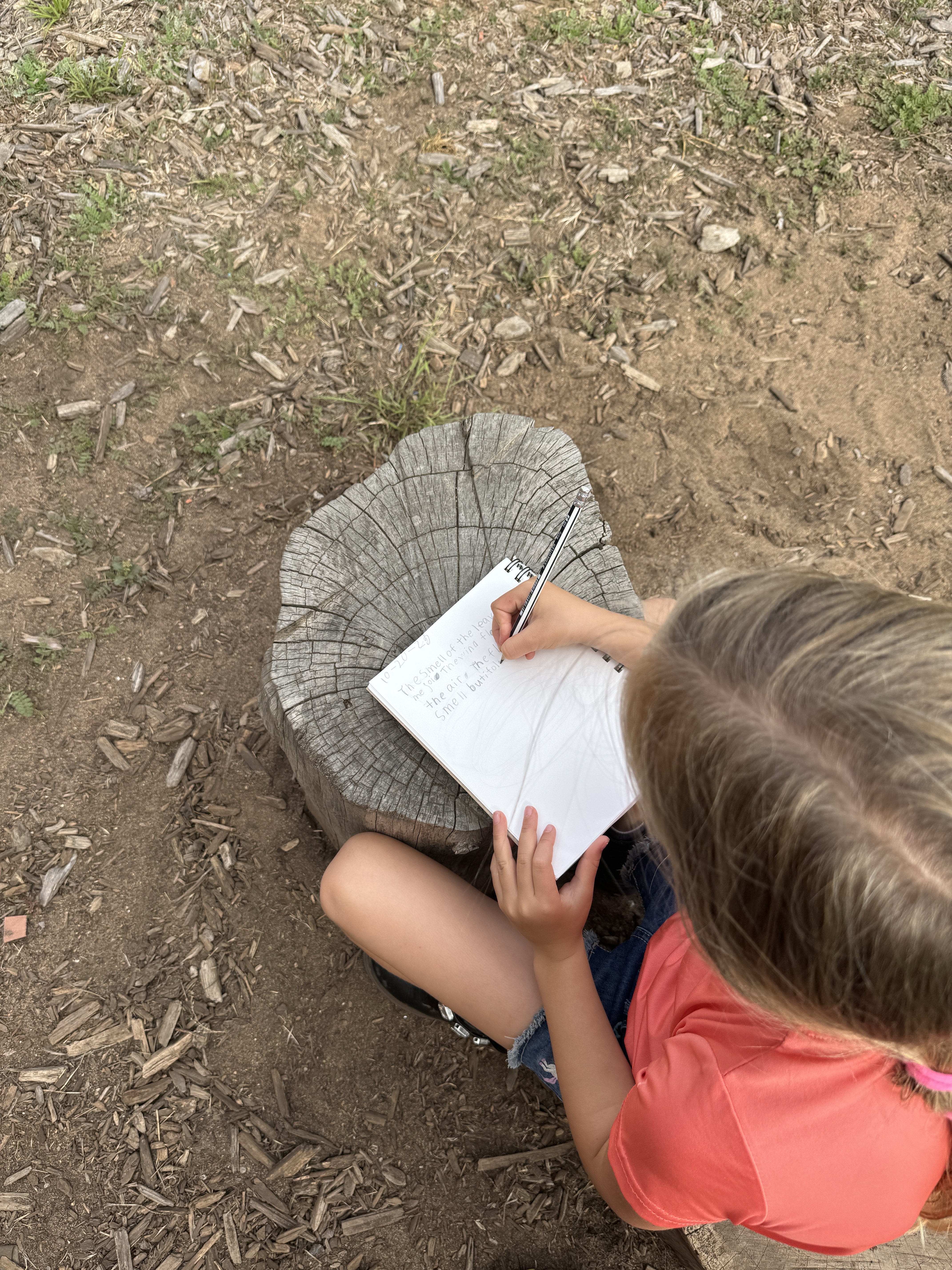
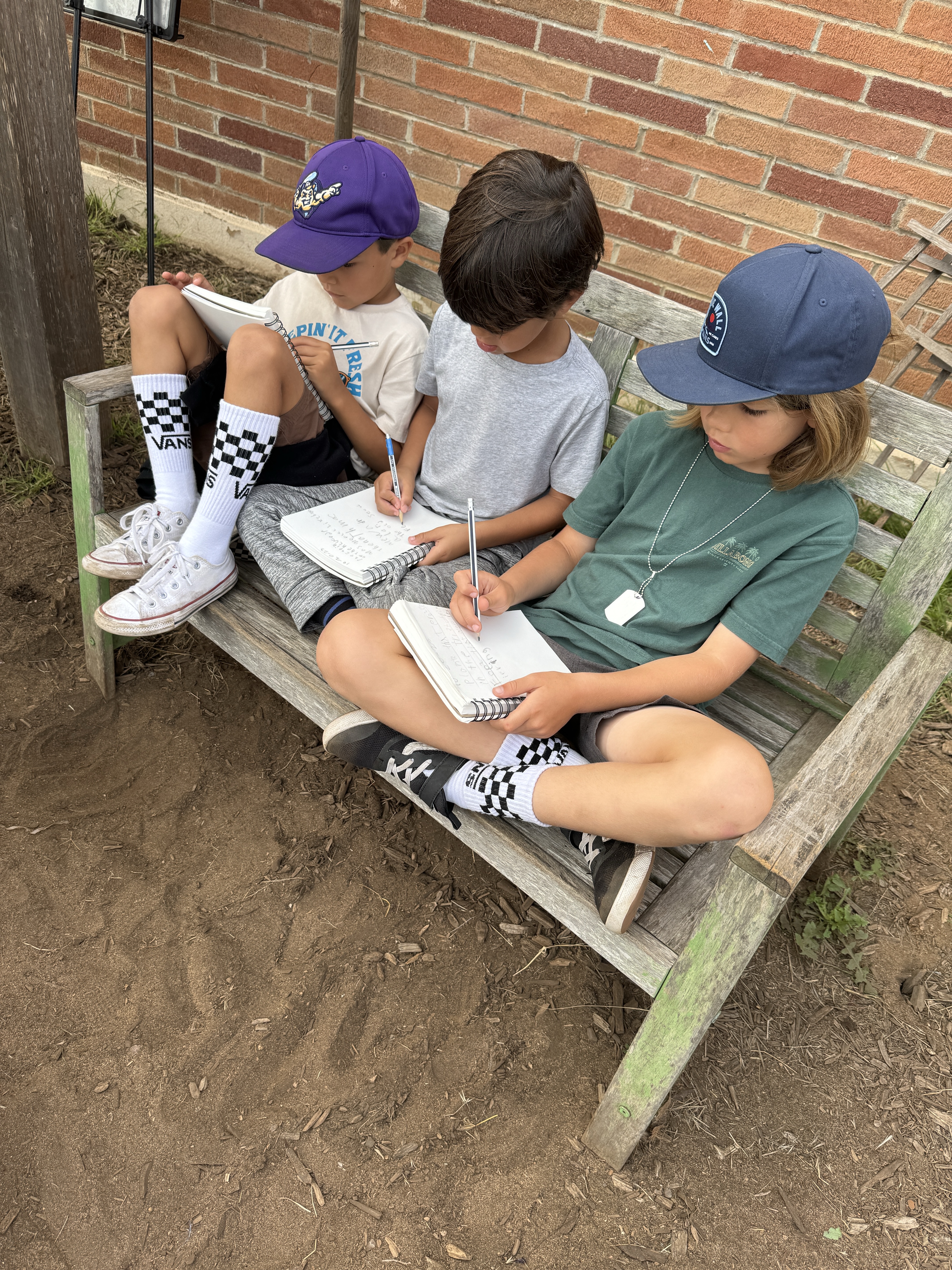
With this as inspiration, we grabbed our sketchbooks and headed out on our own walk, ending up in our school garden where we wrote our own three-line poems inspired by our walk and our time writing in the garden.
These first graders wrote as many three-lines poems as they could during the time we were in the garden. They wrote about the fog that wafted across the playground, the rollie pollies that they love to rescue from the sidewalks, ladybugs, passion fruit, the sky, tomatoes, potatoes, and so much more.
When we returned to the classroom, writers shared a few of their compositions and then picked their favorite to copy onto another sheet of paper and illustrate. While their poems are still developing, they are beginning to get the idea that there are many different reasons and inspirations for writing. Here are a couple:
I See a Butterfly by C
A butterfly flying
In the garden with yellow wings
Pollinating the garden flowers.
The Blowing Fog by M
The fog is blowing
The rollie pollies are crawling
The flowers are blooming.
I also know that being outdoors is a powerful motivation for writing for the first graders I teach. Changing our writing venue, writing in a sketchbook rather than a notebook, and writing under the influence of nature all keep writing fresh and novel. And my writing with them also matters. I hope they are learning that writing is not just for school, but that it is a lifetime pursuit that can serve many different purposes.
And I know that I don’t need #writeout or the National Day on Writing to keep writing at the forefront of the classroom–but it’s fun to know that there are educators all over taking their students outdoors, playfully approaching writing tasks, and making writing something students love…for so many different reasons.
So I leave this post with the NDOW question, Why do you write?
On this last day of National Poetry Month the weather dawned gray and damp–not unusual for May and June, but less usual for April (seems to have been re-named “gray-pril” by local meteorologists lately). But gray doesn’t keep us indoors–and to be honest, it’s not miserably cold–just gives out the “blah” vibes.
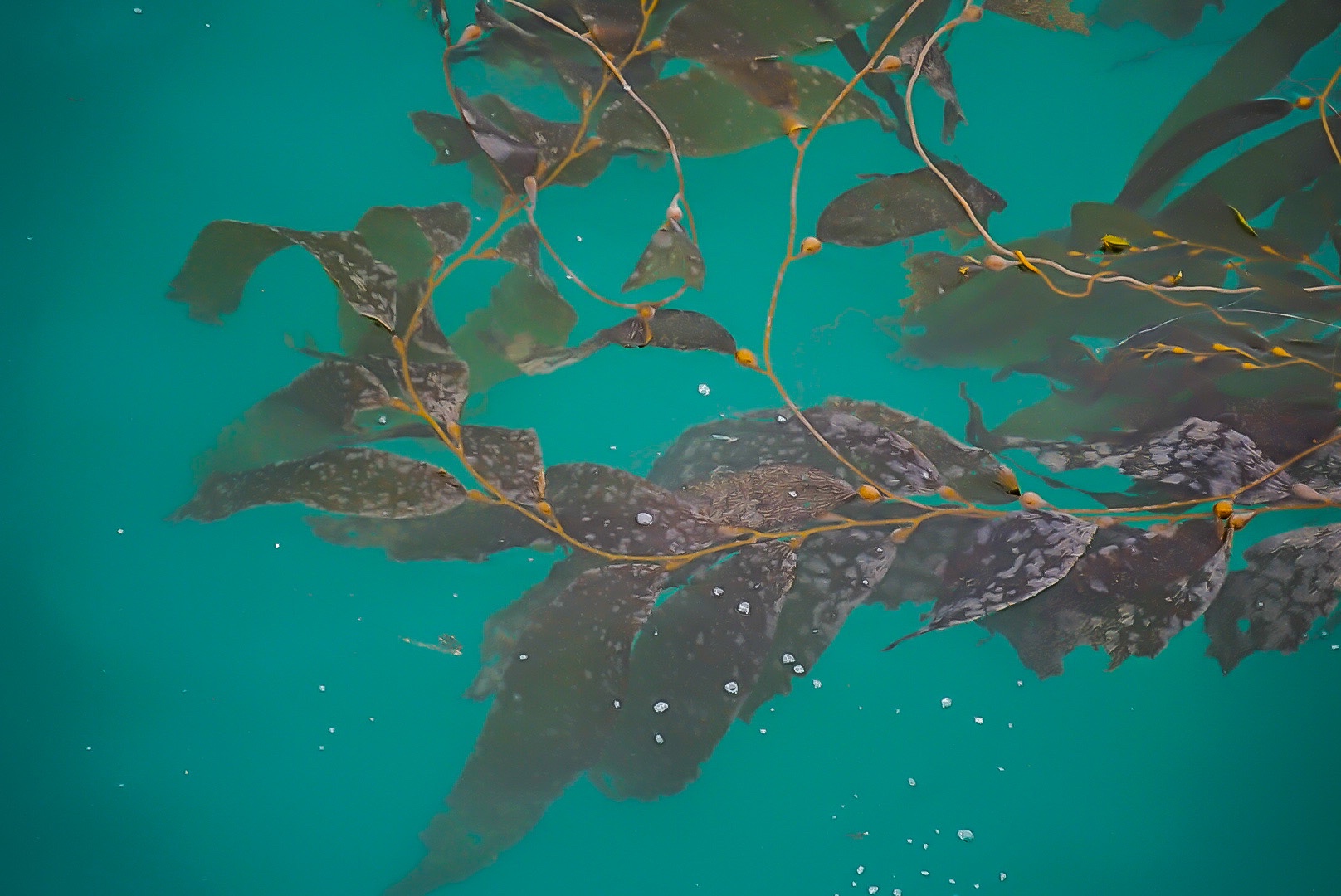
One of the things that I discovered about my own poetry by writing a poem each day this month is that I like to write nature poetry, science-focused poetry, eco-poetry. And on this last day of April that remains true. Kelp beds are a feature of our coast, a forest under the sea. I took this photo of Macrocystis Pyrifera, also known as giant kelp, looking down from a pier into the ocean below and let it inspire my Haiku.






 Thinking Through My Lens