
It’s October 20th…and that means it’s the National Day on Writing! We started our day by talking about the reasons we write during our morning meeting. It warms my heart that most of my students mentioned either that writing is fun or one of our recent writing activities (writing letters or making zines) as their reasons for writing. I do feel like we are building a wonderful writing community in our first grade classroom. It’s a place to take risks, a place to express ourselves, and a place to build our knowledge and skills related to writing.
So after recess today, I read my students Kiyoshi’s Walk by Mark Karlin. In this lovely story, Kiyoshi is asking his grandpa where poems come from. On each stop along the walk, Eto (Kiyoshi’s grandpa) writes a short three-line poem about something they see, hear, imagine, or feel…each adding to Kiyoshi’s understanding of where poems come from. At the end, Kiyoshi asks his grandfather if he can write a poem…and writes a beautiful three-line composition for his grandfather. While technically the poems in this book are Haiku, I talked about them as three-line poems rather than engage in syllable counts for my students today.
With this as inspiration, we grabbed our sketchbooks and headed out on our own walk, ending up in our school garden where we wrote our own three-line poems inspired by our walk and our time writing in the garden.
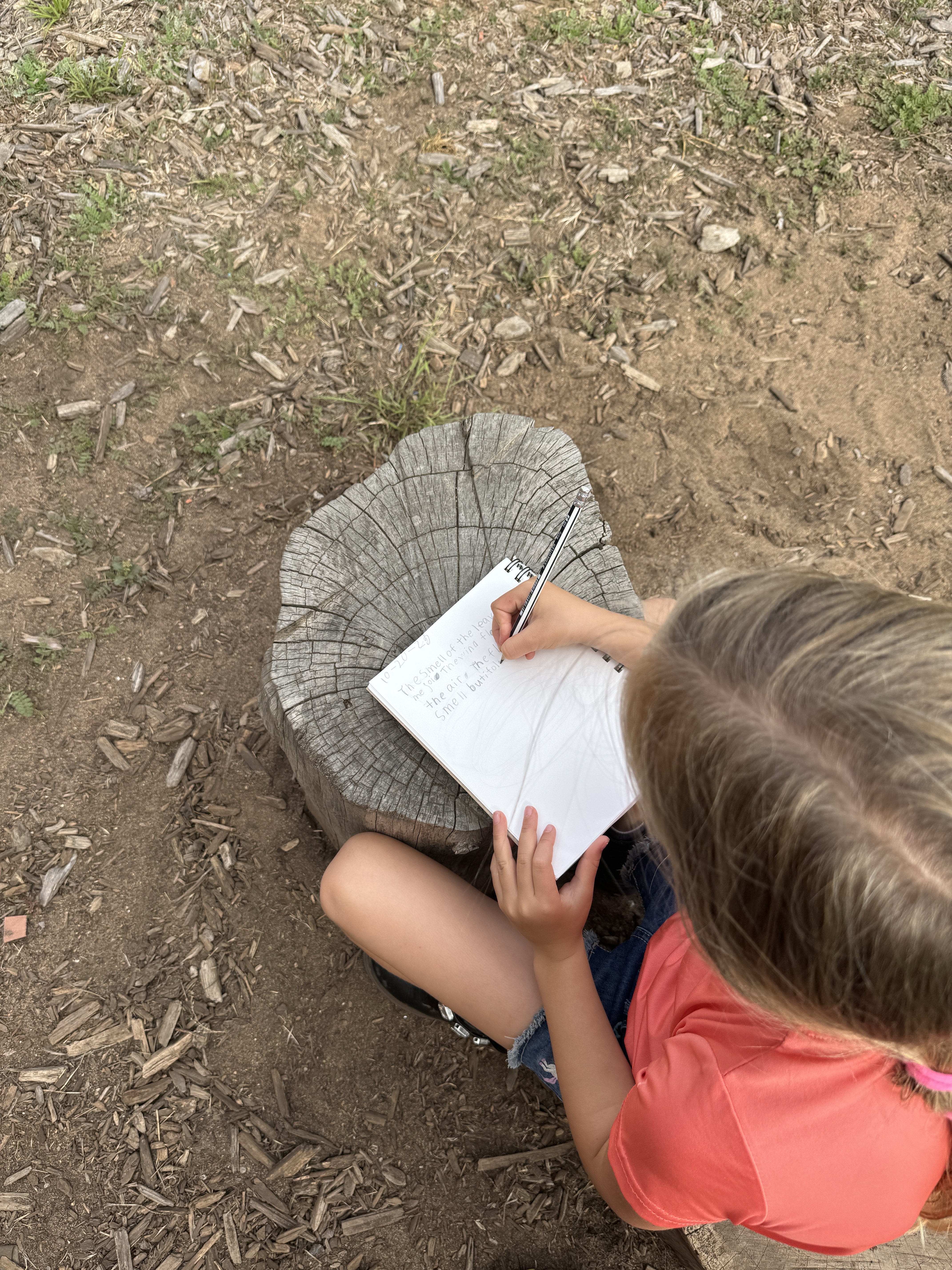
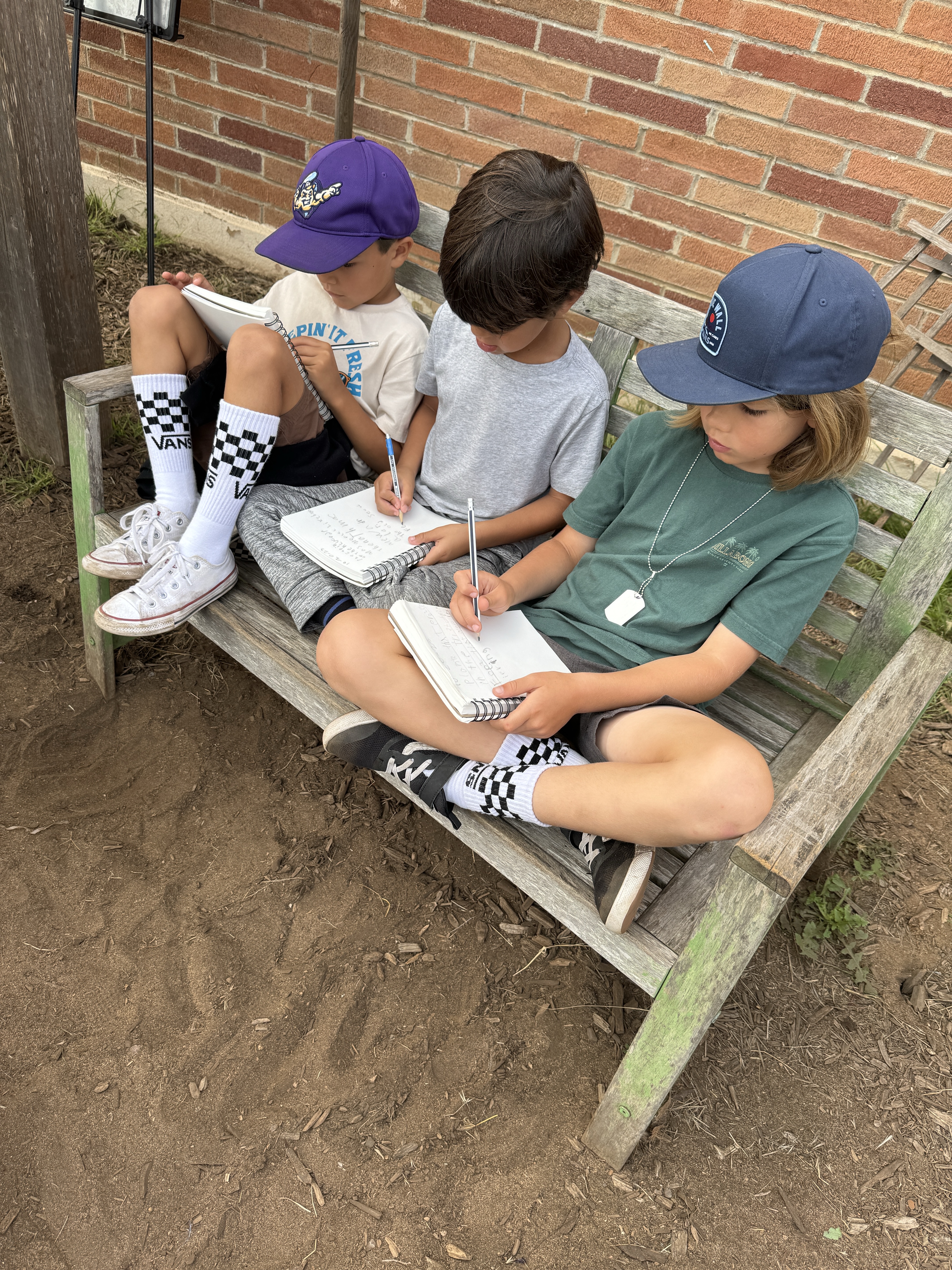
These first graders wrote as many three-lines poems as they could during the time we were in the garden. They wrote about the fog that wafted across the playground, the rollie pollies that they love to rescue from the sidewalks, ladybugs, passion fruit, the sky, tomatoes, potatoes, and so much more.
When we returned to the classroom, writers shared a few of their compositions and then picked their favorite to copy onto another sheet of paper and illustrate. While their poems are still developing, they are beginning to get the idea that there are many different reasons and inspirations for writing. Here are a couple:
I See a Butterfly by C
A butterfly flying
In the garden with yellow wings
Pollinating the garden flowers.
The Blowing Fog by M
The fog is blowing
The rollie pollies are crawling
The flowers are blooming.
I also know that being outdoors is a powerful motivation for writing for the first graders I teach. Changing our writing venue, writing in a sketchbook rather than a notebook, and writing under the influence of nature all keep writing fresh and novel. And my writing with them also matters. I hope they are learning that writing is not just for school, but that it is a lifetime pursuit that can serve many different purposes.
And I know that I don’t need #writeout or the National Day on Writing to keep writing at the forefront of the classroom–but it’s fun to know that there are educators all over taking their students outdoors, playfully approaching writing tasks, and making writing something students love…for so many different reasons.
So I leave this post with the NDOW question, Why do you write?


 Thinking Through My Lens