Tag Archives: poetry

#writeout for NDOW: Exploring Senses in the Garden

I picked today…October 20ish…to celebrate the National Day on Writing (NDOW) with my students. And since we are also into #writeout, we combined the two.

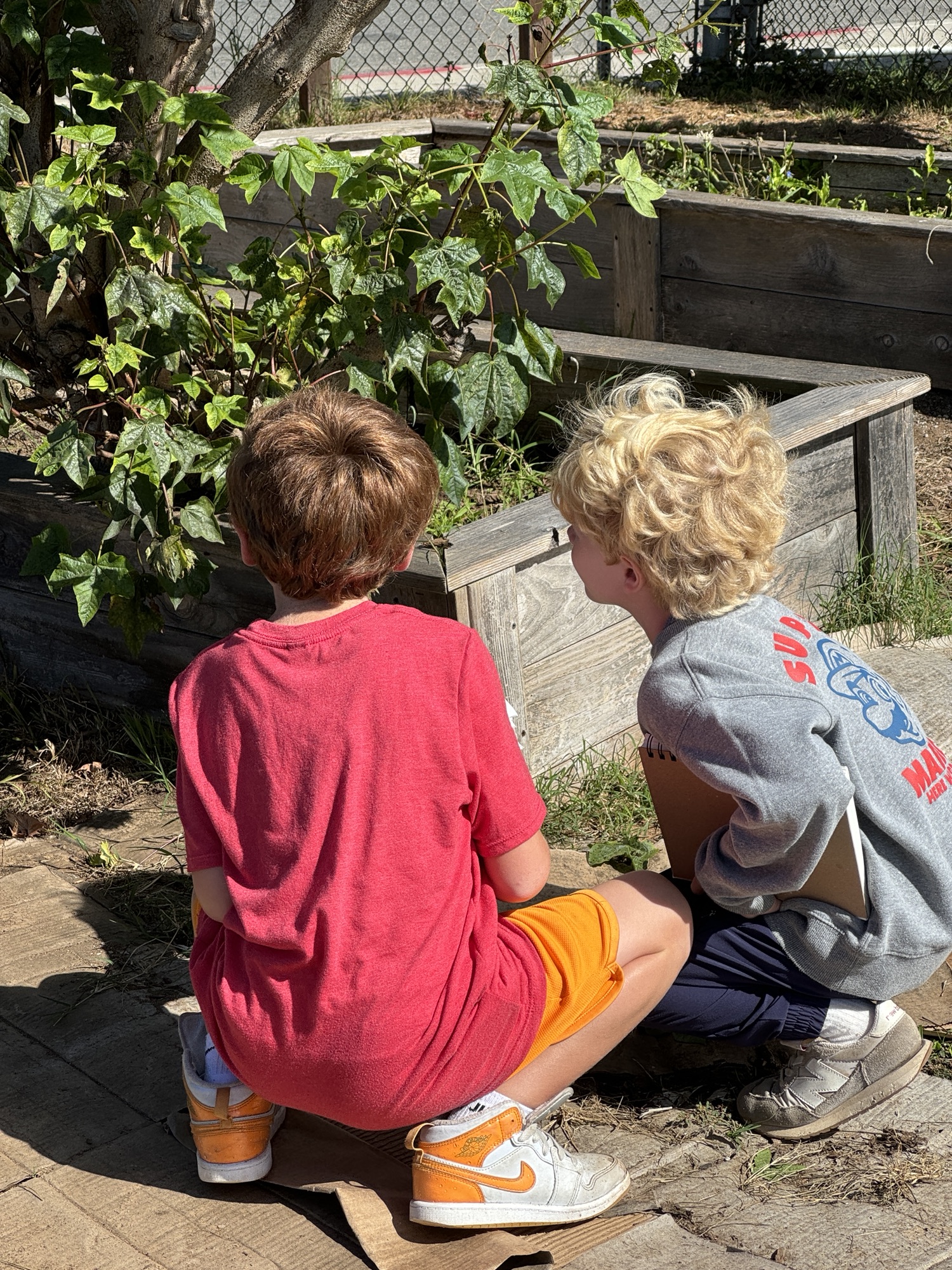
We are lucky to have a school garden and while it is not exactly exploding with plant life (yet), it does have some plants growing, some rustic seating, shade (essential on a sunny fall day like today), and hosts bugs and worms and dirt and all the other things kids love.

So, after recess today when I walked my students back to the classroom, I read them the book Outside In by Deborah Underwood. This gorgeous book talks about the wonders of the natural world–and the ways we often do not pay attention to those wonders. It also includes all five senses in wonderfully descriptive and somewhat subtle ways.

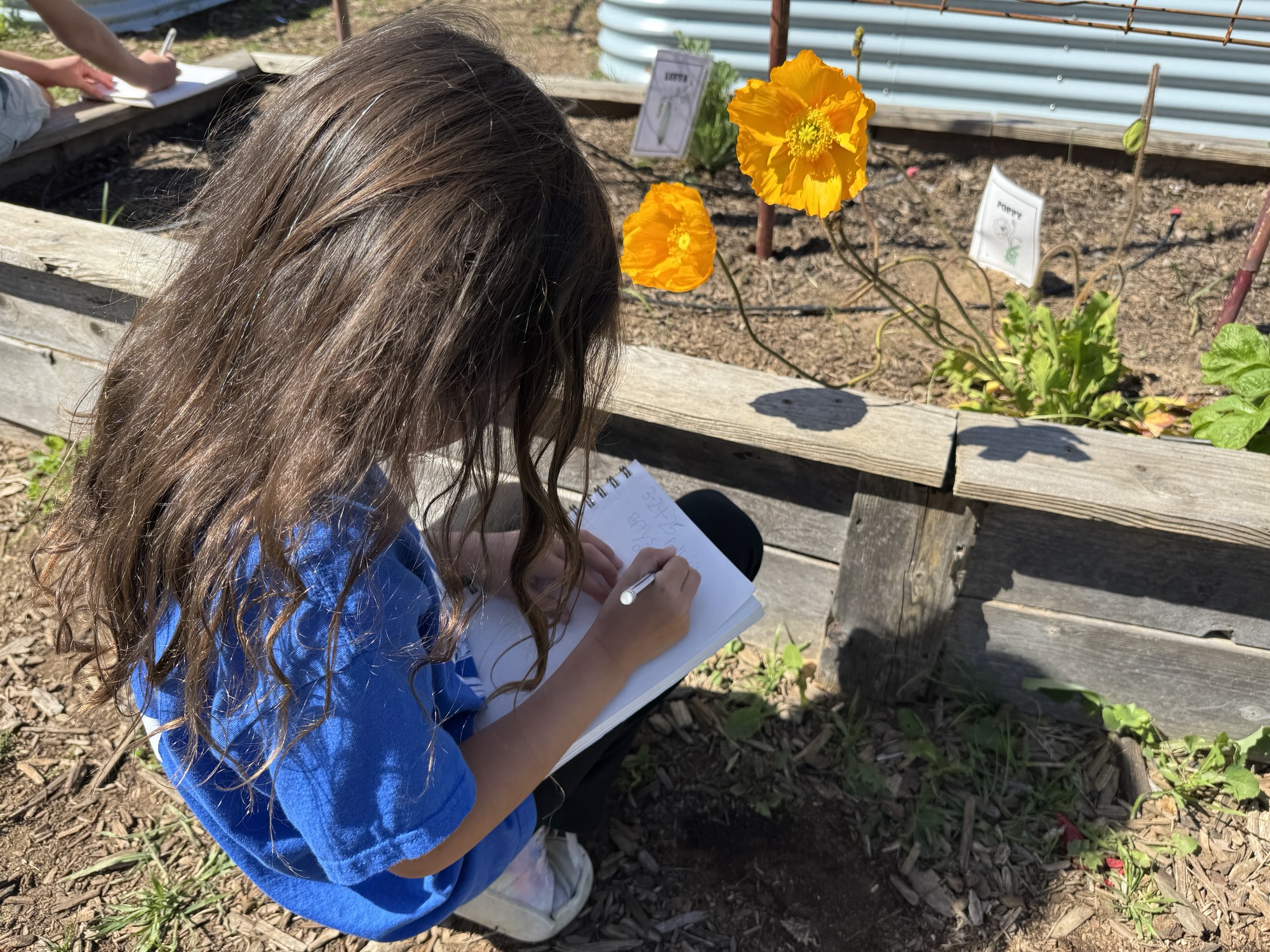
I recently had the opportunity to interview author Kate Messner, who is serving as an author ambassador for the National Writing Project’s #writeout, as part of their Write Time series. In response to one of my questions, she talked about the power of the senses to help students (and writers) extend their writing. So before we headed out with our sketchpads to write, I asked my students to pay attention to not only to what they saw, but to all five senses. As we walked we noticed…and once we arrived at the garden, we began to write.

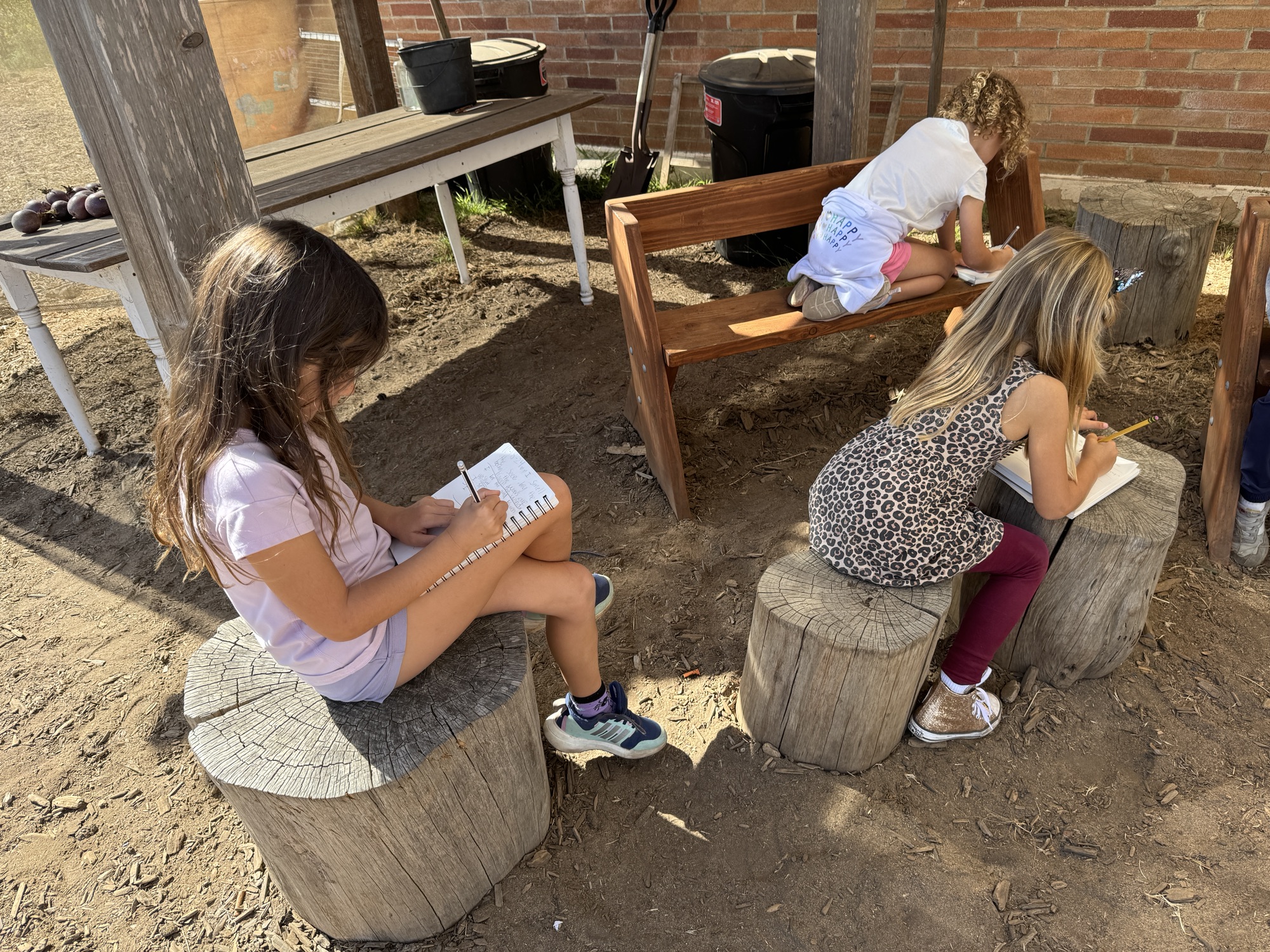
Students listened and sniffed. They rubbed leaves, touched pumpkins, and imagined the taste of fruits and vegetables. And they noticed bugs and birds and spider webs. When they needed inspiration, they moved around the garden and wrote some more.

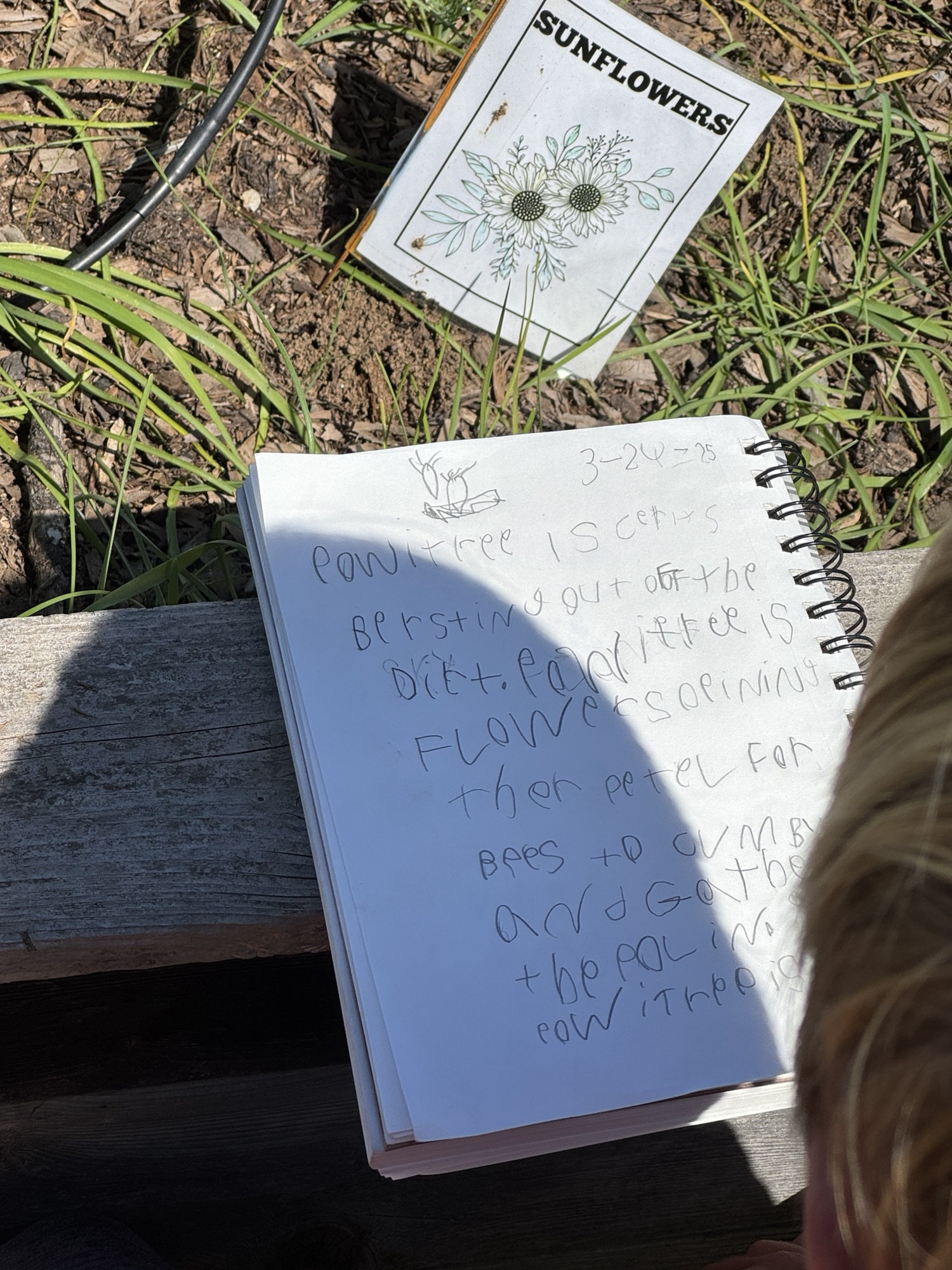
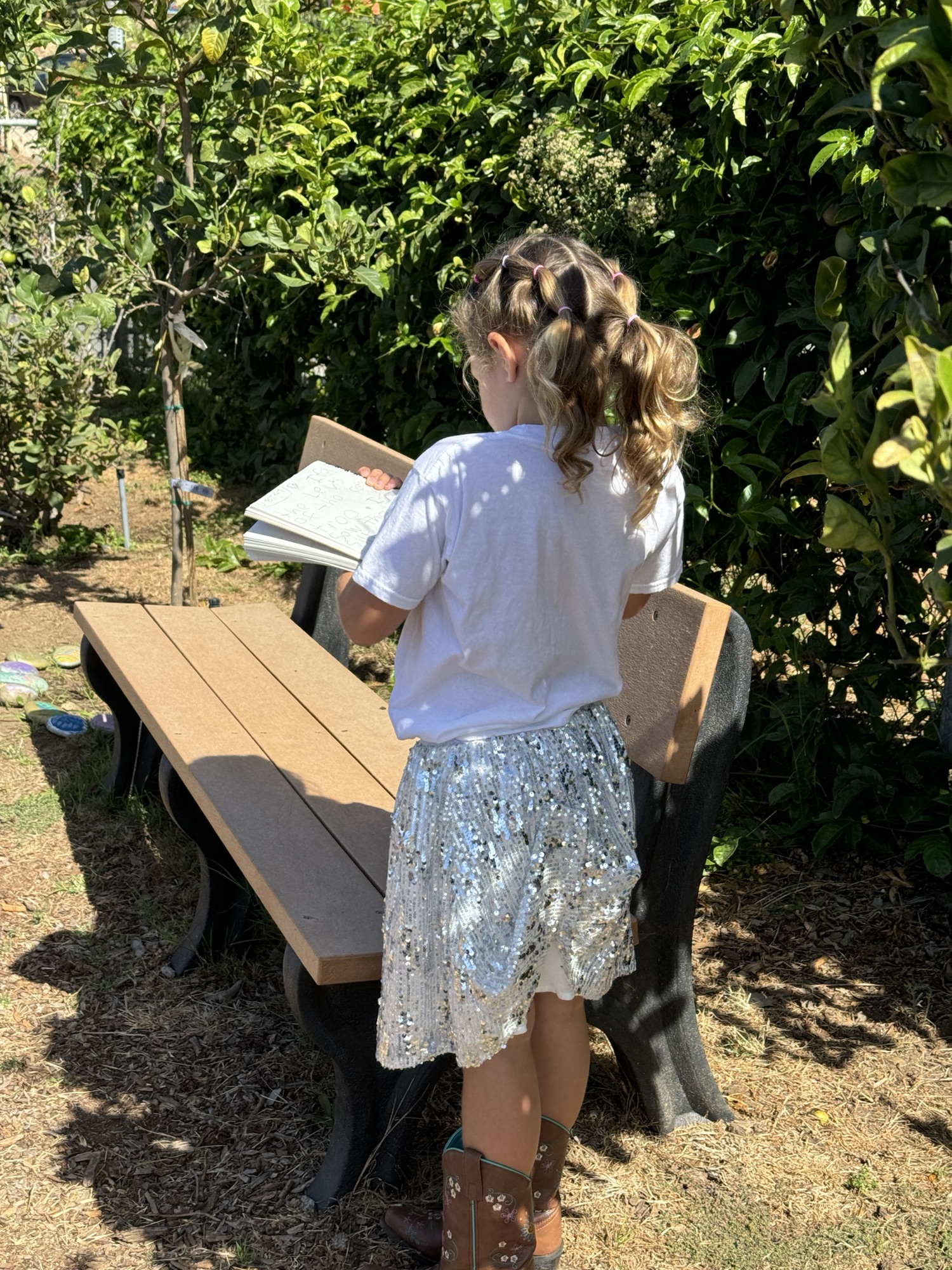
I love watching my students develop stamina and confidence as writers. There is something freeing and motivating about writing outdoors, writing in a sketchbook, sitting on a stump, and even writing standing up. Writing still takes effort when you are six or seven. Putting all that wonderful thinking onto the page is an opportunity to put phonics into action, exercise those developing fine motor skills, and focus attention for a sustained period of time.

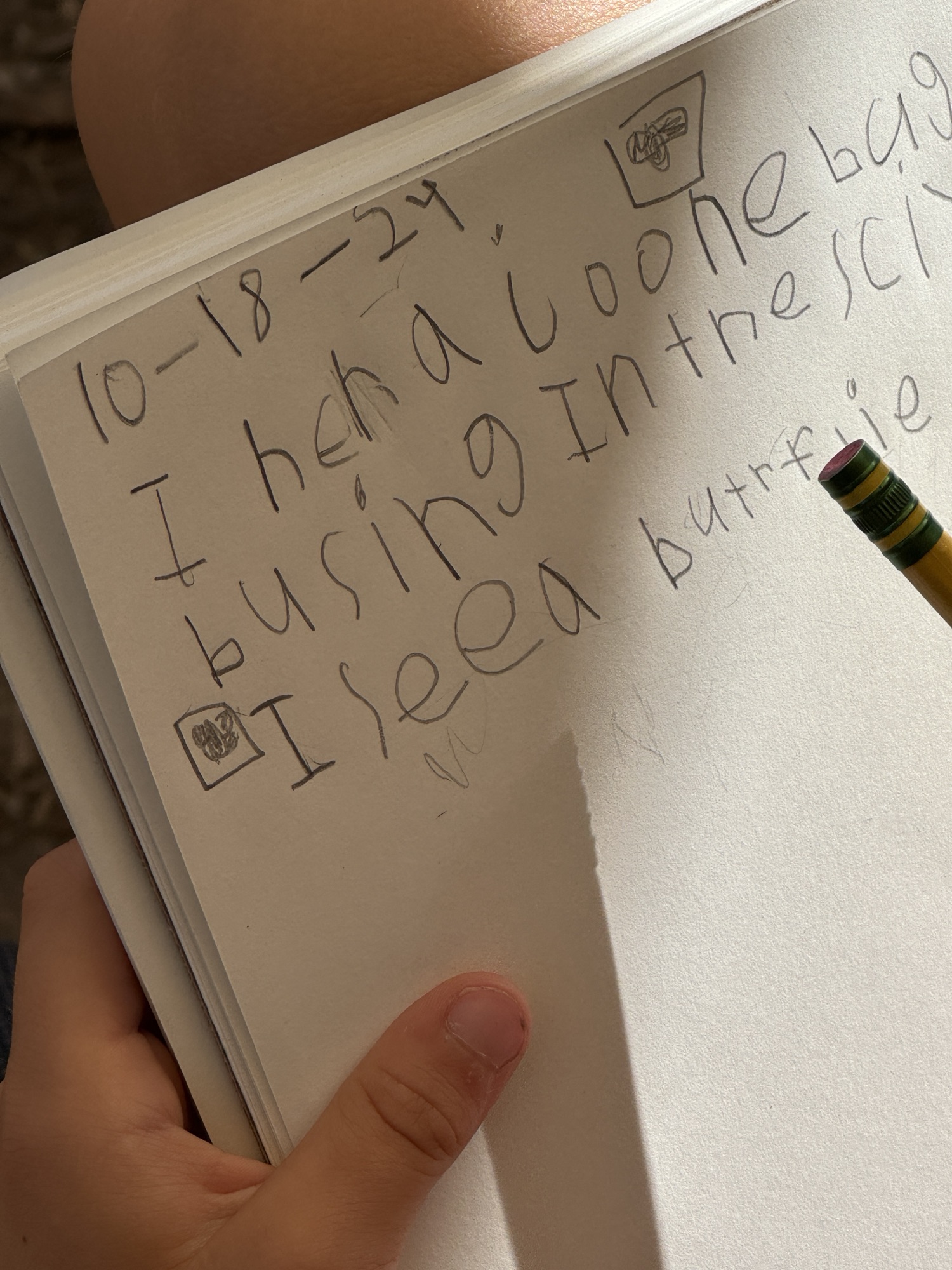
I hear a June bug buzzing in the sky.

When we returned to the classroom, I asked student to pick their favorite sensory description to read in a classroom whip around. Student were all willing to pick and read their descriptions, creating a symphony of voices celebrating our garden and our community of writers.

Here is the collaborative poem that includes a line from each student in our first grade class.

Senses in the Garden

A National Day on Writing Celebration

I hear a car.  It sounds like a dinosaur roaring.  Rooaarr!

I see the leaves swirling in the wind going to land on the ground.

I smell the sea by the beach.  The waves are blowing in the wind.

Taste is like tasting popcorn.

I hear a june bug buzzing in the sky.

I hear the tip tap of my shoes. I see the reflection of my sparkle skirt.

I hear the birds chirping in the sky.

I see the spiky squash on a stem.

I can hear a hummingbird humming.  It was sucking pollen.

I see a passion fruit on the table.

I touched a pumpkin.  It was soft and it had a hole in it.

I hear waves crashing on the shore that the surfers ride on.

I can smell oak sap flowing down the bark of the tree.

I can taste blackberries getting eaten by me.

I smell a passion fruit.

I spy with my little eye someone walking by.  A game!

I feel a pencil in my hand.

I see a moth fly like a jet.

I hear birds chirping and flying.

I smell the acorns.  They are like the seed and the trees.

I see a big pile of dirt.

I hear leaves getting smashed.

I see and feel and hear the garden.

By Room 3 First Graders

10/18/24

How will you and/or your students celebrate the National Day on Writing (and #writeout) on or around October 20th? My students and I would love to see what you do!

#writeout: When Inspiration Strikes

Many of my afternoons are filled with meetings since writing project work is hard to squish into typical work hours. This afternoon on the National Writing Project (NWP) Connecting the Network Call, as is typical, we had a writing prompt to write our way into the meeting. Since #writeout is now in full swing, our prompt was a poetry in the parks invitation of Lucille Clifton’s The Earth is a Living Thing read by poet laureate Ada Limon.

I don’t love to write on demand–I often feel stumped in that compressed moment, pressured to create in what I already know will be too little time. But today felt different. I loved the structure of Clifton’s poem as each stanza began with “is a…” followed by some action.

My mind began near the sea–a place I love and often find inspiration. And then I found myself in my classroom, inspired by the small children I spend so much time with.

Here’s my first draft written in five minutes at the beginning of this afternoon’s meeting. (And is currently untitled so I’m borrowing Lucille Clifton’s title)

The Earth is a Living Thing: Riffing off Lucille Clifton

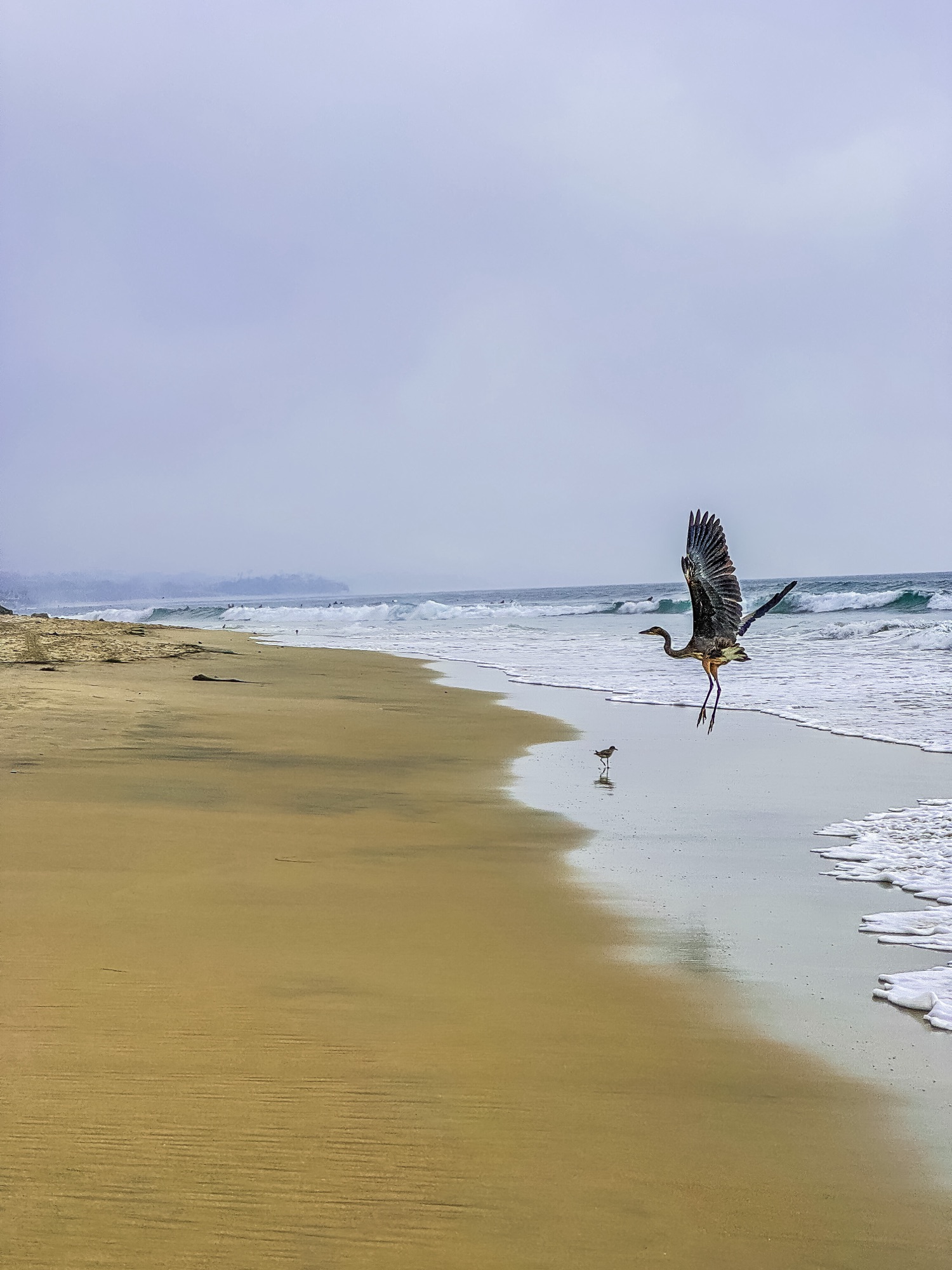
is a great blue heron

wings spread

blotting the gray skies

with the wonder of birds

is a child poet

words tumbled

letters scrambled

ideas piercing your heart

is playground balls

in rainbow colors

bouncing, rolling

here, there, everywhere

in the play that is essential

to learning and growth

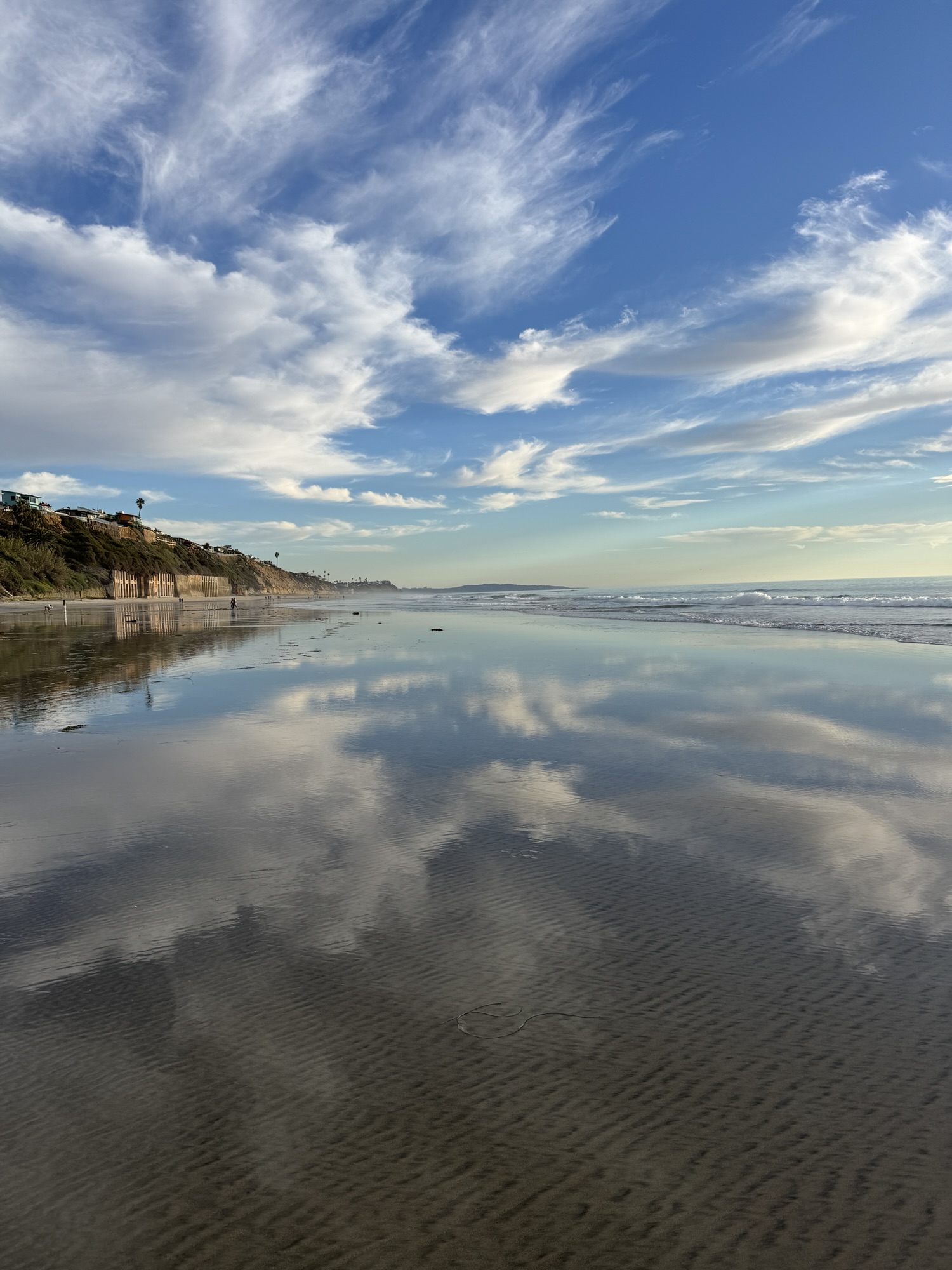
And of course, I have to add a photo that was also a part of my inspiration.

How will you #writeout today?

Exploring Acorns: A #writeout Adventure

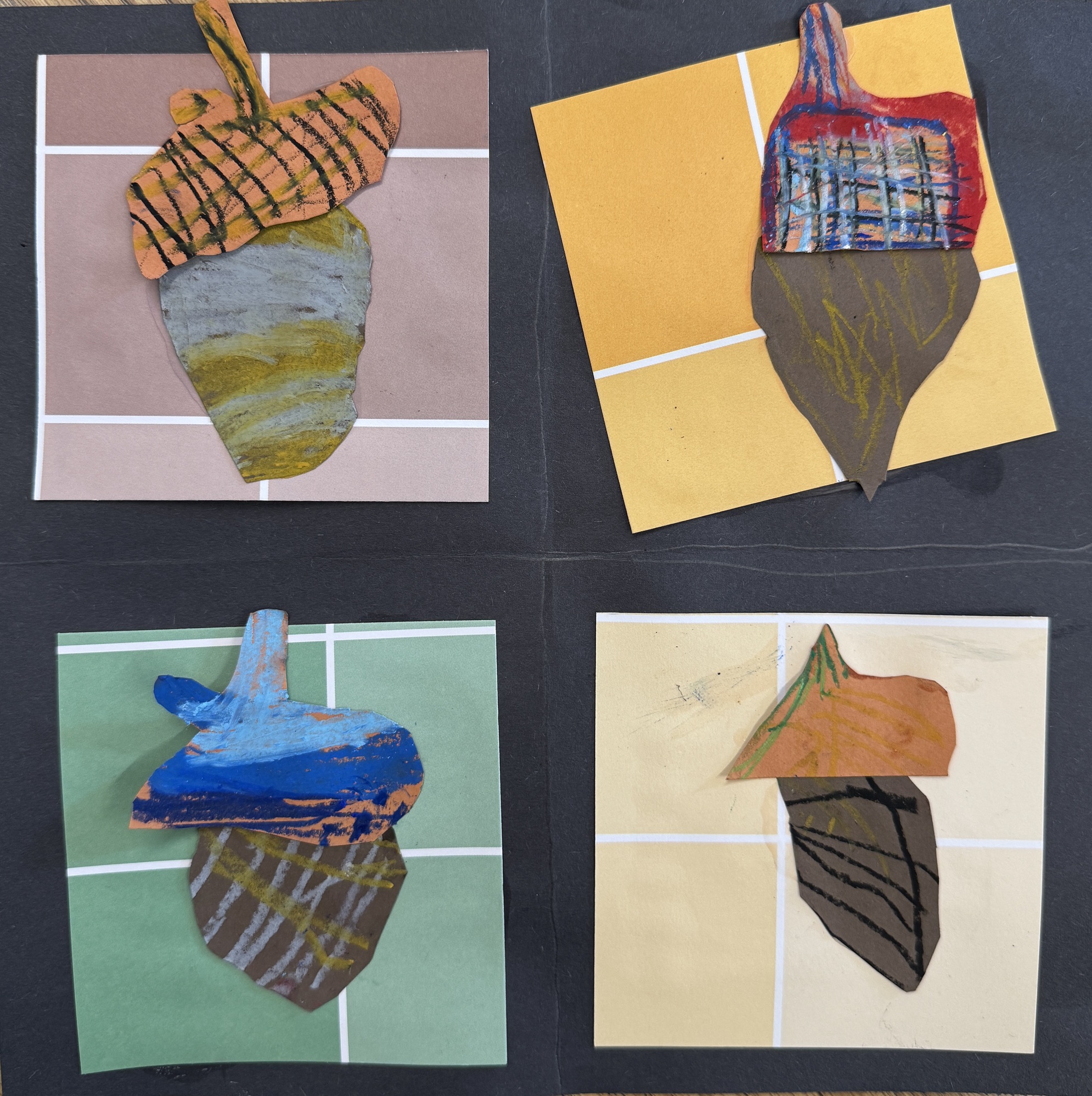
When life gives you acorns…make art and poetry!

Most weeks I work with my friend and colleague Carol over Zoom since we live in different parts of the state. So when we got to meet in person a few weeks ago, I was delighted to be gifted with a bag of acorns to explore with my students. The acorns where Carol lives are huge…and they have the caps that look like knitted beanies.

So, in honor of #writeout, a collaboration between the National Writing Project and the National Park Service, we got out the acorns and the hand lenses AND our sketchbooks to really study them carefully. We also read two wonderful picture books: Because of an Acorn by Lola Schaefer–a book about the interdependence of the ecosystem where acorns thrive–and Acorn Was a Little Wild by Jen Arena–a fanciful book about an adventurous acorn who after an encounter with a hungry squirrel preparing for winter, ended up as an adventurous oak tree.

And…we had to watch the wonderful video with Ranger McKenzie from Sequoia National Park about how oak trees drop tremendous numbers of acorns every few years…all at the same time in a process called masting, and that scientists have figured out that trees “talk” to each other through their root systems.

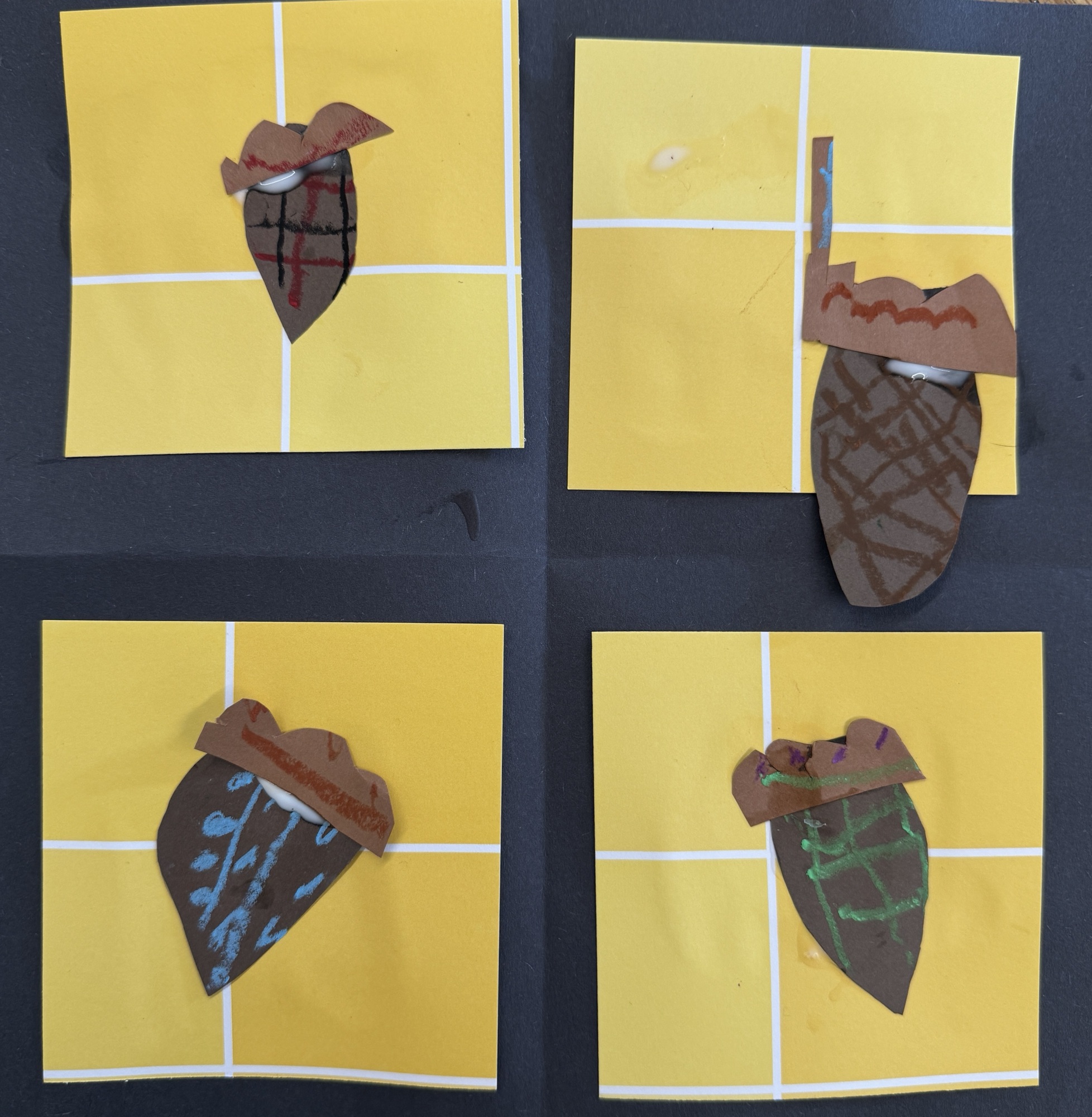
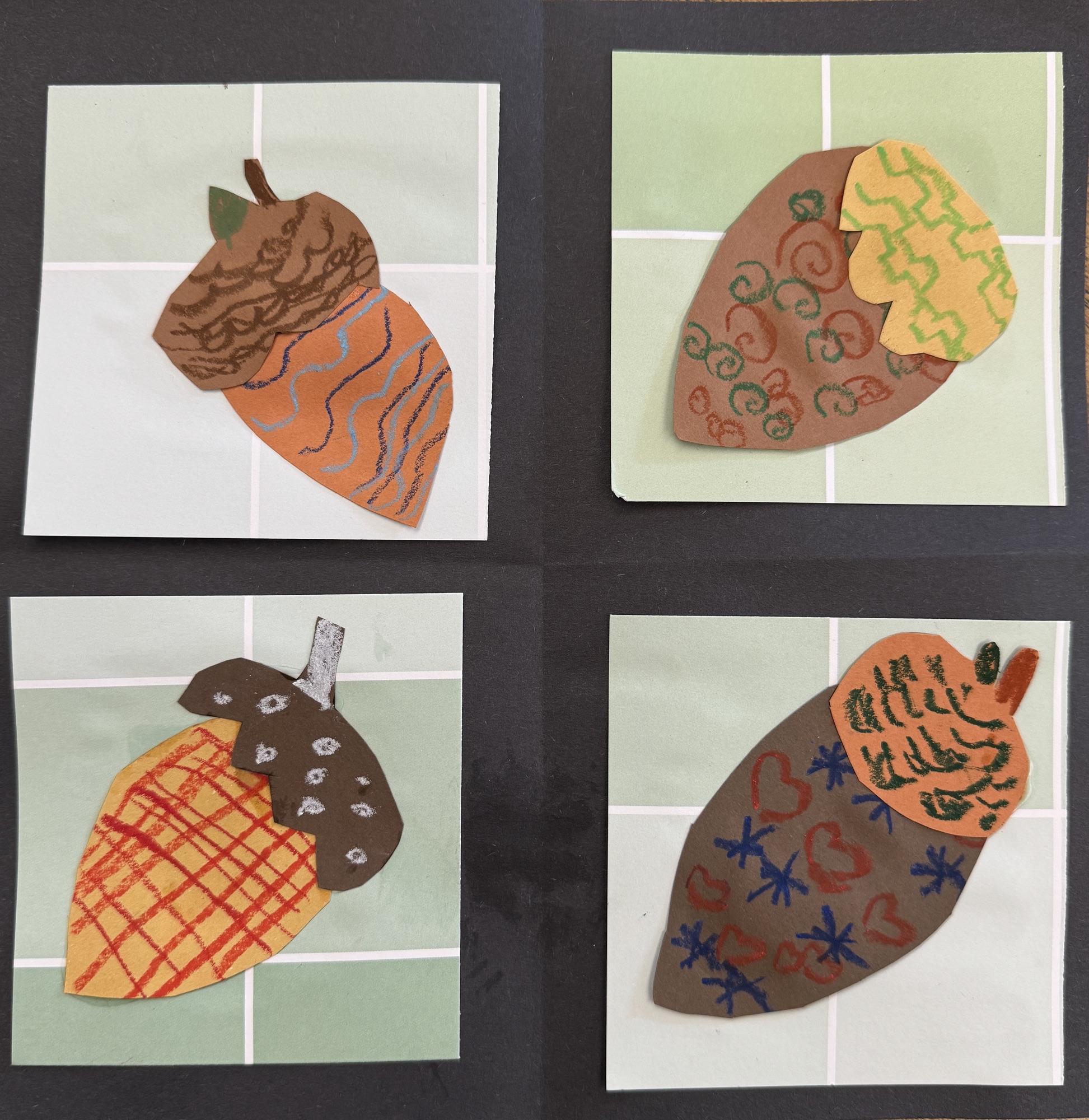
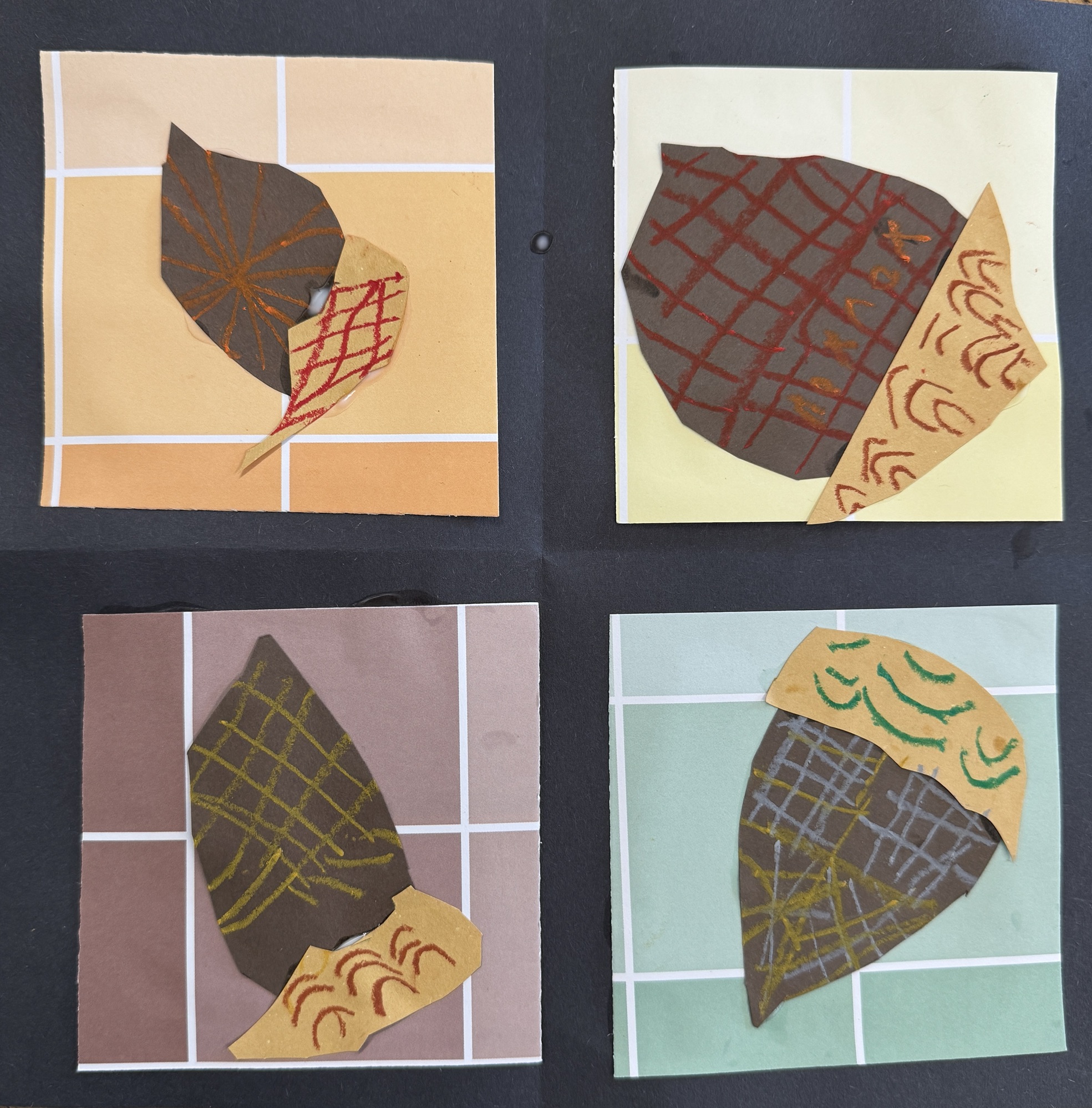
All this science and nature provided the perfect foundation for an art project inspired by Andy Warhol and the Pop Art movement. Today the first graders in my classroom used scissors, construction paper, oil pastels…and wait for it…white glue to create the most adorable acorn art. Scissor work can be challenging for young learners, and to add to the scissor demand I didn’t provide a template. Instead I showed them how to trim the square of paper into the shape of the acorn nut…and another square of paper into the shape of an acorn cap. A few students expressed frustration, but with some encouragement and insistence that they keep trying, all students were able to cut out acorns and their caps independently.

We added some whimsical texture with oil pastels…and then the most challenging part, they had to use white glue to attach their acorn pieces to the background we had assembled. Trust me, white glue can be downright scary in the hands of young artists! But with admonitions to use the glue sparingly, we were successful!

Of course we had to do some writing. Poetry seemed in order–after all this year’s #writeout theme is Poetry for the Planet and I was wanting to keep it short…so we attempted a first grade version of Haiku–a three line poem (without worrying about the syllable count). Here are a few first grade attempts.

J wrote:

Acorns are hard

cozy as fall nears

Spiny as a hedgehog

O wrote:

Don’t fall yet.

Squirrels will get you.

Crunch!

And R wrote:

Acorns look like a balloon that got blown by a man.

Acorns look like a man with a helmet riding a bike to the store.

Acorns look like a top that someone is spinning on the table.

#Writeout we’re off and running! We’d love to know how all of you are celebrating nature and the outdoors in your classrooms and in your lives!

How to Write a Poem: NPM24 Day 30

All this month I have challenged myself to write a poem and post it here…AND I have been working with my young students, creating opportunities for them to write poems in lots of different ways. I’ve been inspired by poets at #verselove who have offered daily prompts and thoughtful feedback to my mostly first draft poems. So on day 30, what would I offer my students…and myself as impetus for composing?

Today we headed back to Grant Snider and his book Poetry Comics. (You can read a mini book review here and a bit about Haikomics here). I read them the four “how to Write a Poem” pieces from the book and we talked about what advice we might give aspiring poets. Grant recently wrote a blog post teaching his readers how to make a poetry comic. When I read his post, working my way all the way down to the end I found my own students’ Haikomics featured there! So after reading Grant’s blog post and showing my students all the ideas he shared about how to create a poetry comic–I also showed them that some of their poems were a part of his post! (That definitely created a lot of excitement!)

With all of that as inspiration, I invited students to write their own poetry comics–maybe even a “how to write a poem” poem. And they are off and running! Unfortunately, creating a poetry comic takes a bit more time…I’m hoping we can get them finished tomorrow.

Of course I wrote with my students…and I, too, need more time to get the comic bit completed. But I did take some time to revise my poem when I got home today…and will share the words that hopefully will become a poetry comic with some work with my students tomorrow.

How to Write a Poem (with first graders)

Dip into lots and lots of poems

swim in the language

play in the wonder of words

Notice the pitter patter of ideas

tap dancing like raindrops on the roof

like dew drops slipping off the leaves

Soaking into childhood’s wild fresh colors

unleashing a sky full of rainbows

Settle in the moment

and wait…

poets will bloom

In Search of a Poem: NPM24 Day 29

On this second to the last day of National Poetry Month my students and I are still writing poems. I woke this morning to a suggestion from Abigail at #writeout in the NWP Teachers Studio to go outside and find a poem.

So I pushed and shoved at my lesson plans for today to make room for getting out of the classroom to collect a poem. We grabbed our sketchbooks and pencils and headed out toward the pollinator garden which sits on the edge of the playground. My directions to my first graders were to collect 5 words or ideas (they could sketch if there was time) and that when we returned to the classroom, they would turn those words or ideas into a poem.

As they reminded me, we do this kind of thing pretty regularly–sometimes by taking photos, sometimes with sketchbooks. So, they knew what to do. There’s plenty for curious kids to pay attention to: the playground ball stuck in the tree, the plant growing in the middle of another plant, bees buzzing, rocks and wood chips and so much more.

And when we got back inside, the writing began. All this happened toward the end of the school day, so there was not much time left for the writing, but we did take the time to share a few of these poems in progress. Here’s a sampling.

M asked me if showering was a real word as he composed.

A rock

near a tree with rosemary around it

plain brown wood

wood chips surround it

far away a red ball

trapped in a

forest of flowers

with the sun

showering it.

J loved her last line too.

Berries sway

palm trees blow

the bees pollinate

the red flower

sways in the

clouds.

C was playing around with rhyme.

A plant inside a plant

how could that be?

A flower sunbathing on a leaf.

It looks like you humans

sunbathing.

A blue flower

that’s a good power.

A red ball in a tree

that’s new for me.

A red ball in a plant

that’s good for an ant.

And for V, just a bit of fantasy.

I walk down the blue staircase

and sit under an umbrella

and in the distance

I see a meadow

with flowers as bright as the sun.

I take a drink of my lemonade

and the glass shattered

to pieces.

And my own writing (done with the kids).

In a space made for play

boulders are tables

and the comfiest of chairs

purple flowers mumble

while bees buzz, sipping week nectar

abandoned sweatshirts slouch

against brightly colored walls

and high in a tree

a red ball watches and waits

to be freed

Prose Poem-100 Word Rant: NPM24 Day 28

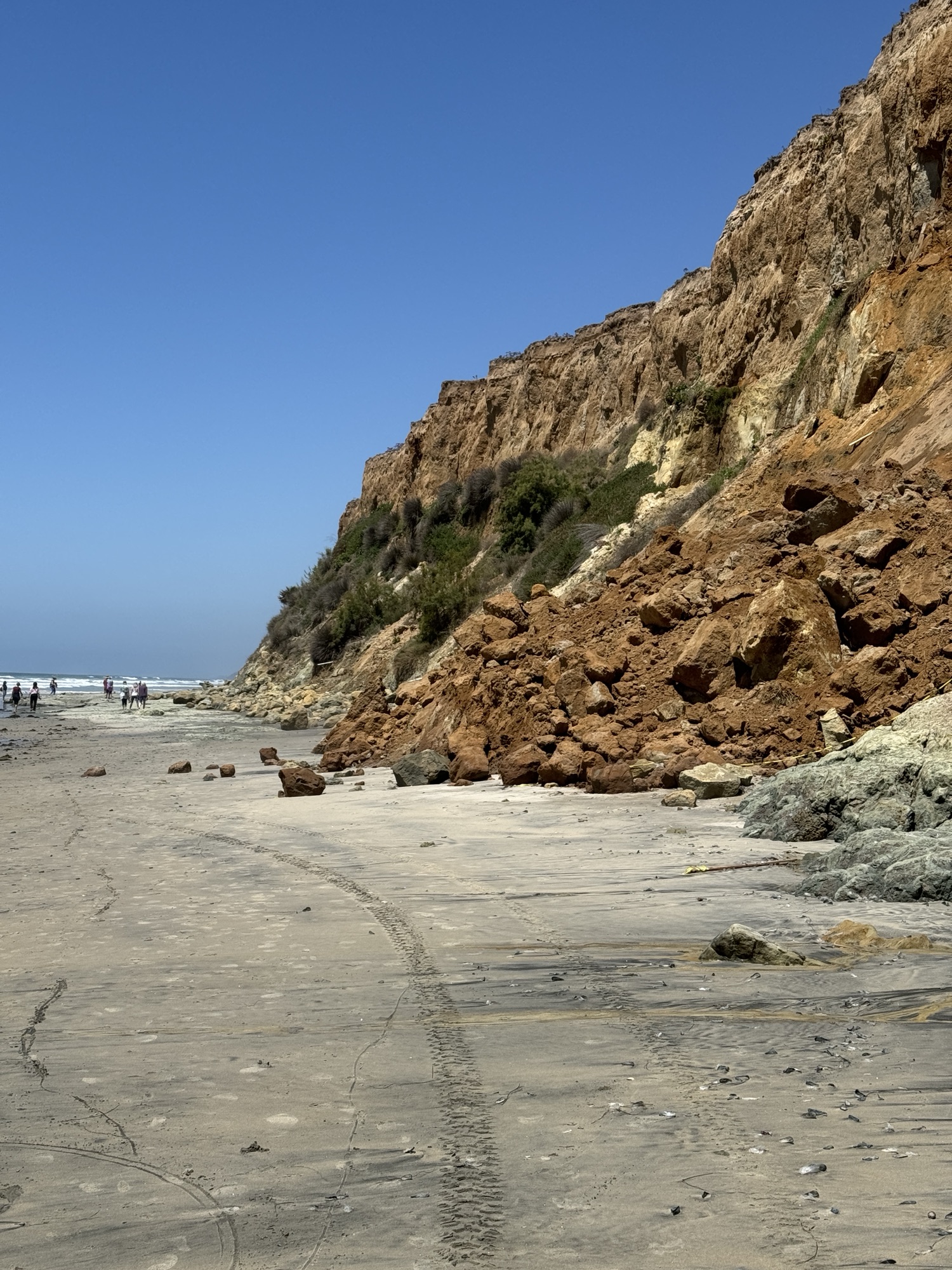
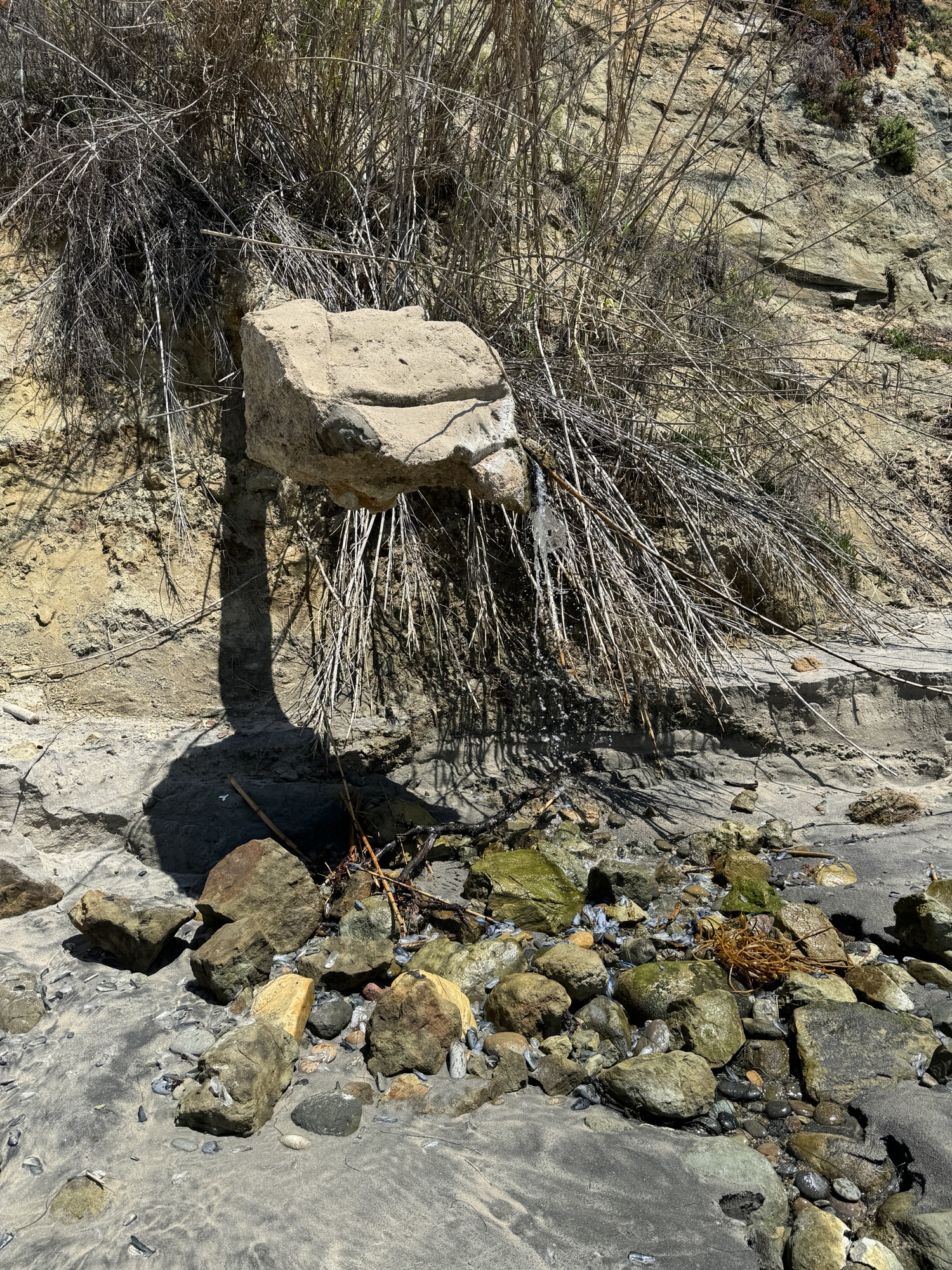
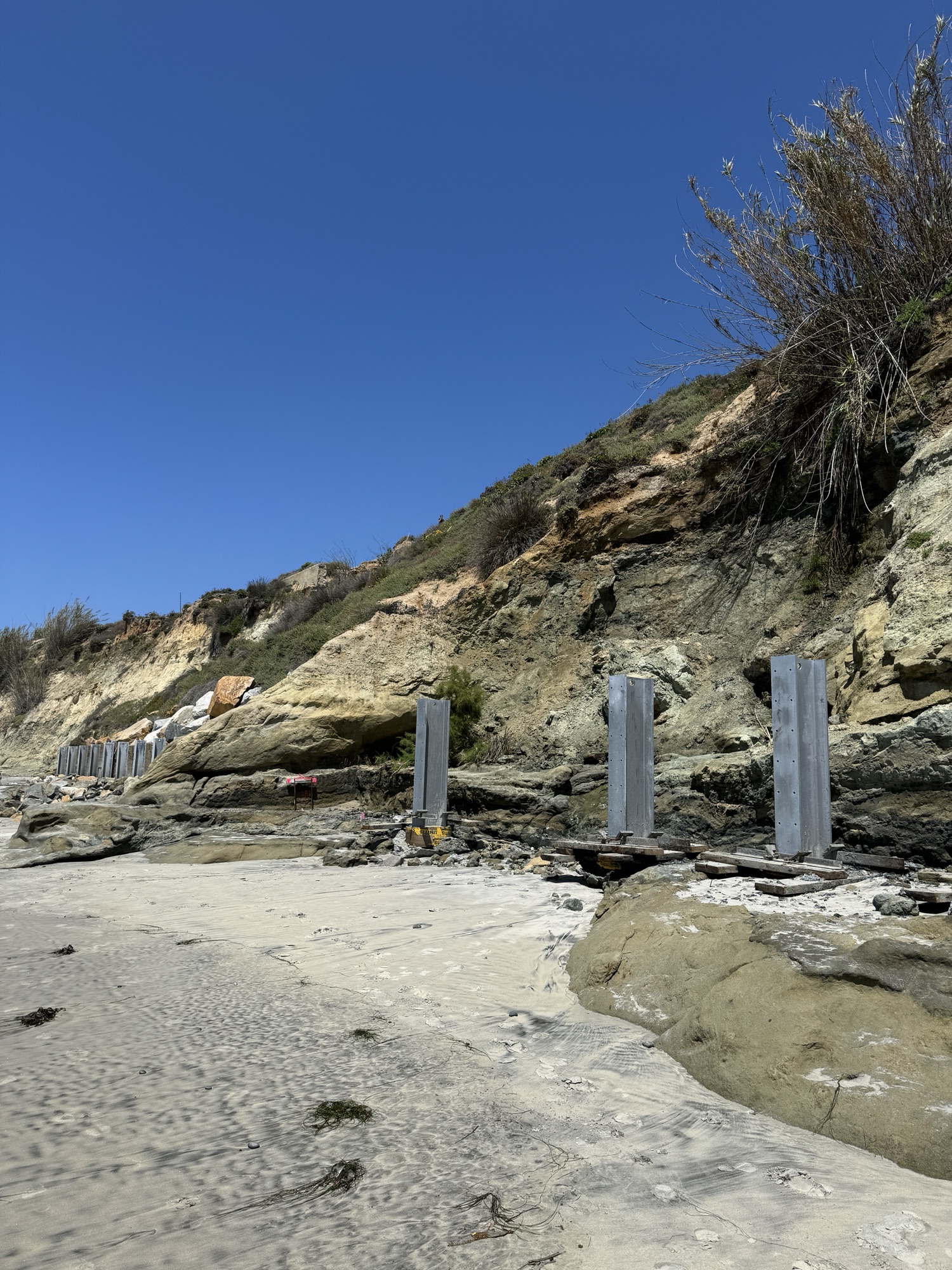
Today as I walked the beach I was struck once again by the fragility of our planet.  I noticed the crumbling cliffs pouring onto the sand below, those same cliffs where the amtrak and coaster trains run daily. The cliffs that support multimillion dollar homes in danger of sliding into the ocean.  The cliffs that have been whittled away by wind and water, by weather, by building, by human life.  Yes, erosion is a natural phenomenon, but there is more to it than that.

My mind wandered from the damage to poetry. The way poetry can offer healing by pushing words into the world, letting us examine our thinking, play with ideas, connect with the earth, the wind, the water, each other.

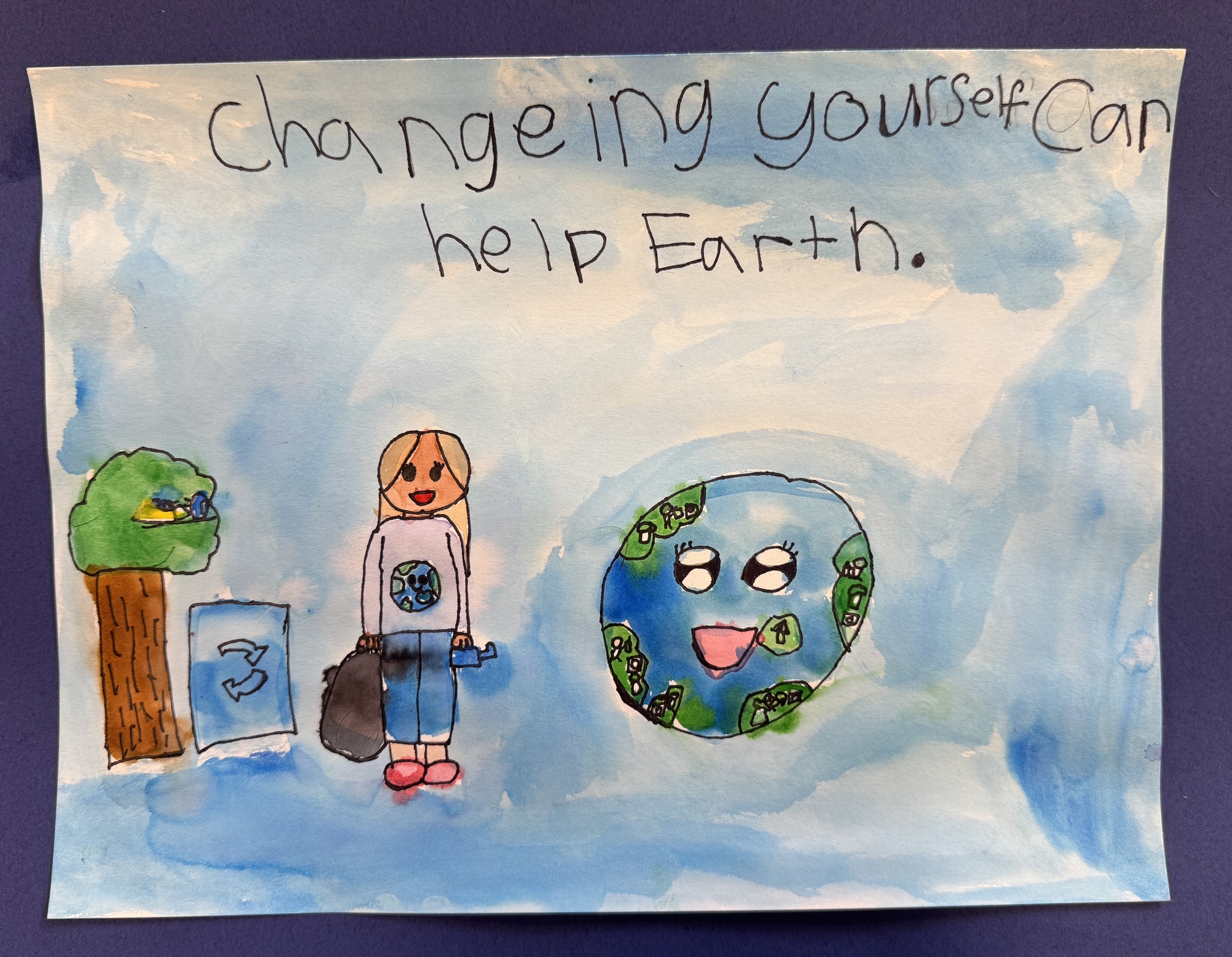
My students wrote their own 6 words for the environment a week ago and then created a poster to share their words and their thinking with others. The words of this first grader continue to resonate with me.

I think she’s right. It’s time to change ourselves so we can help each other and help the earth. Which led me to a 100-word rant for my poetry today.

I don’t think it’s a coincidence that poetry and earth share the month of April as their time of attention. We need poetry to understand our planet, to appreciate our planet, to save the planet from our reckless disregard for its limits. As we spin on this planet we call home, let’s consider the harm that comes from the use and abuse philosophy that has become so prevalent. It’s time for solving.  More leaning in than lashing out. Instead of global clashing and teeth gnashing it’s time for change.  For ourselves, our community, our nation, our world.  It’s our moment.

Sound Off: NPM24 Day 27

Today’s #verselove prompt was to “sound off,” but honestly, on a busy Saturday after a busy week, I simply needed a space with the sound off. So I decided to riff on that idea for today’s poem.

Sound Off

Today I need the sound off

to tiptoe through clouds of silence

listening to echoes

of nothing at all

Sound off

vibrations stilled

hearing only the words inside

my own head

And in that quiet

inspiration speaks

in colors muted and soft

a masterpiece

heard only by one

This is Just to Say: NPM24 Day 26

We learned about William Carlos Williams earlier this week and wrote our own 16 word poems (I wrote about it here). Today we returned to WCW and studied his apology poem: This is Just to Say. I also read a few poems from Joyce Sidman’s collection of the same name. Even though the first graders in my class have been writing poems all month, stretching to write a poem of apology was challenging for many of them. They definitely knew how to say they were sorry–but that “tongue in cheek” sort of “sorry not sorry” approach eluded many of them.

With some coaching, we started to get there. Here are a couple of examples:

B wrote to his mom.

For Mom

This is just to say

I’m sorry I didn’t want to play in the baseball game

I just was as tired as a bear in winter

But it was fun playing baseball

Please forgive me mom

And this student wrote to her sister

I am sorry I came on your bed

and gave it a caterpillar look

I just wanted to give you a hug

like two bears in a cuddle

It might make me feel better

Another wrote to basketball

For Basketball

This is just to say

I’m sorry I haven’t made a shot yet.

Today stuff kept getting in my head

and I couldn’t get it out

It was like a milkshake was getting in my head

My mind said “you can do this” but

my head said I’m a brick

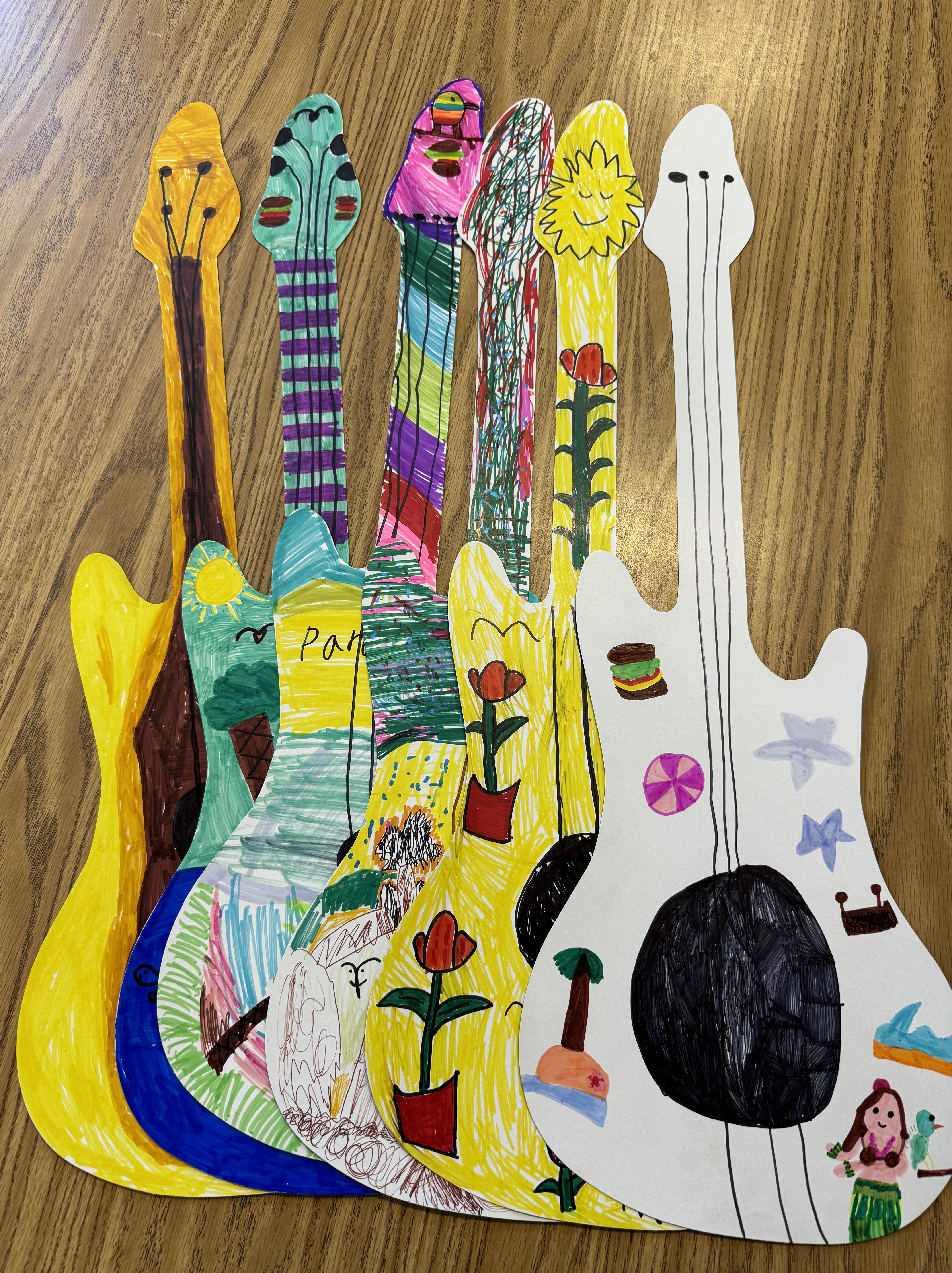
My own attempt was related to our first grade performance at this morning’s assembly where students sang Jimmy Buffett’s Cheeseburger in Paradise.

For Jimmy Buffett

This is just to say

I’m sorry our singing

was a bit off key

We were excited and nervous

twitching like hiccups

dressed in our cheeseburger hats and guitars

Your songs are so catchy

so fun and filled with energy

We just had to dance

and shout out with glee!

From Black Sage: NPM24 Day 25

Some days less is more–and this is one of those days for me. #Verselove suggested a where I’m from poem, but at the end of a long day, a where I’m from Haiku is where I found myself. (Inspired by the black sage in full bloom on campus right now)

Where I’m From

My nose knows black sage

fragrant, earthy purple blooms

marks this place as home

Writing the Night Sky: NPM24 Day 24

The night sky was the inspiration that Kevin offered the writers at #verselove today. He shared Ada Limon’s poem, In Praise of Mystery: A Poem for Europa and it was the line, “still, there are mysteries below our sky” that caught my attention and sent me to my beloved ocean. I found myself remembering wandering the night beach and oohing and aahing as the waves crashed with the florescent light of bioluminescence, creating a private fireworks show right in the sea.

Rewrite the Ocean

Oceans conjure

sunny skies, umbrella drinks, coconut body oils

and a hint of salt as you lick your upper lip

When the sky drops

and orange and red dances across the horizon

darkness descends

In the black of night

the magic of living chemistry

millions of microscopic creatures

light up the sea

Each crashing wave

a sliver of bioluminescent day

in brilliant greens and turquoises

Night sky rewrites the ocean

slows time with dramatic pauses

as it paints the inky seas

with light

Day is for sunbathers

vacationers

swimmers and beachcombers

Night is for dreamers

igniting wonder

deeper than earth’s vast

waters