Tag Archives: reading

Poetry Ecosystem: NPM25 Day 8

Some days it’s the unplanned lessons that have the best results. A few weeks back I came across a picture book that looked interesting. I ordered it, it arrived, and I set it aside. Then yesterday, our first day back after spring break, I found myself with some unclaimed time and reading a book seemed like the perfect solution.

I walked over to the shelf where I stash the books I haven’t gotten to yet…and Together, a Forest: Drawing Connections Between Nature’s Diversity and Our Own called out to me. I started reading the book and those wiggling post-lunch students settled. We learned about different students in the book and their affinity to plants and animals in the forest. There was the student who was interested in everything–and forgetful–just like the squirrel who buried acorns and the ones it forgot later grew into trees.
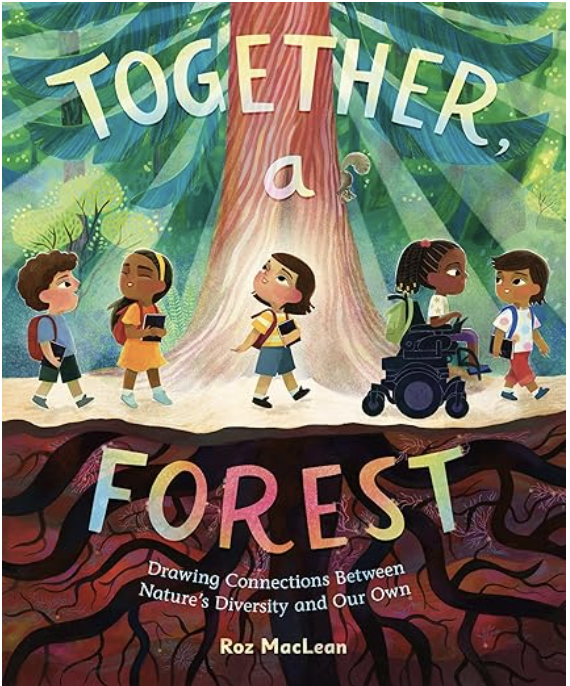
We started to think about the plants and animals who were like us…and while we didn’t have enough time to finish the book, the seed was planted in the poetry ecosystem that is our classroom.

Today our planned ceramics project went well and we finished successfully before recess. That meant the time I had allowed for the completion of the project after recess was now open and free. So, we went back to Together, a Forest and completed the reading and discussion. And then we started thinking about that question from yesterday…what plant or animal are you like?

The first graders grabbed their notebooks and started to write. They asked the usual questions, “Does it have to be a plant?” (No) “Does it have to be a part of a forest?” (No) “Can I use metaphorical thinking?” (Yes). I wrote–and I made the rounds around the classroom peeking over shoulders, listening to ideas, watching these comparisons turn into small poems, taking root in this poetry ecosystem.

J wrote:

I am an army ant. My super power is strength and I work with people. I eat fruit and I get it at the store then bring it home. My strength is teamwork.

H wrote:

I am an octopus. I am smart. I act like I have eight hands and I am super fast and tricky and change colors.

B wrote:

I am moss. I am like moss because I soak up everything I hear. I remember everything and if it is something bad I can squeeze it out.

And I wrote:

I am an egret. I am quiet and still. Patience is my super power. Most of the time I am good at waiting and thinking. Other times I startle and fly off in a flurry of feathers. I am good at being alone without being lonely. I love to reconnect with my family at the end of the day.

These first drafts will be fodder for the writing we will continue to do, this month and into the future. Right now, my students are writing easily, adding details and elaboration, beginning to play around with language and ideas…and willing and eager to read their writing aloud to their classmates. We have truly built an ecosystem of poetry and writing in our classroom.

James—A Recommendation: SOL25 Day 19

I’m a reader. I pretty much always have a novel going to read before going to bed.

I just finished reading James by Percival Everett. Knowing it was a Huck Finn story, I wasn’t sure I wanted to read it when it first came out. I remember Tom Sawyer at some point in my life, but I’m not sure I’ve ever read The Adventures of Huckleberry Finn. I feel like I know about the story—through cultural references and other indirect avenues.

Then people started talking about James—exclaiming about the book. It started to win awards and was getting lots of critical acclaim. But it took a recommendation from my son before I committed to reading it. (He said he read it in one sitting!). I started by putting a hold on it on my library app. Because of its popularity it was going to be a several month wait.

Then after Christmas I had a gift card AND Barnes and Noble had their big hardback book sale. So I picked it up along with a couple of other titles and it spent some time teetering in my TBR pile.

I started it last week and the story immediately sucked me in. I could feel the connections to the Huck Finn story—but there was so much more.

Perspective matters. Assumptions don’t tell anyone’s truth. People are complex and multifaceted. I loved the dialogue and dialect and that surprised me.

If you’re looking for a thought-provoking read, pick this one up. I found it to be a pretty quick and compelling read. And I’m still thinking about it.

What are you reading that you would recommend?

The Women: SOL24 Day 24

I’m a reader. Well…maybe not a refined reader. Like many readers, I read to escape, to learn, to experience time and history from others’ points to view. I read lots of junk–often intense mysteries and crime novels–maybe as a counter balance to all of the professional reading I do.

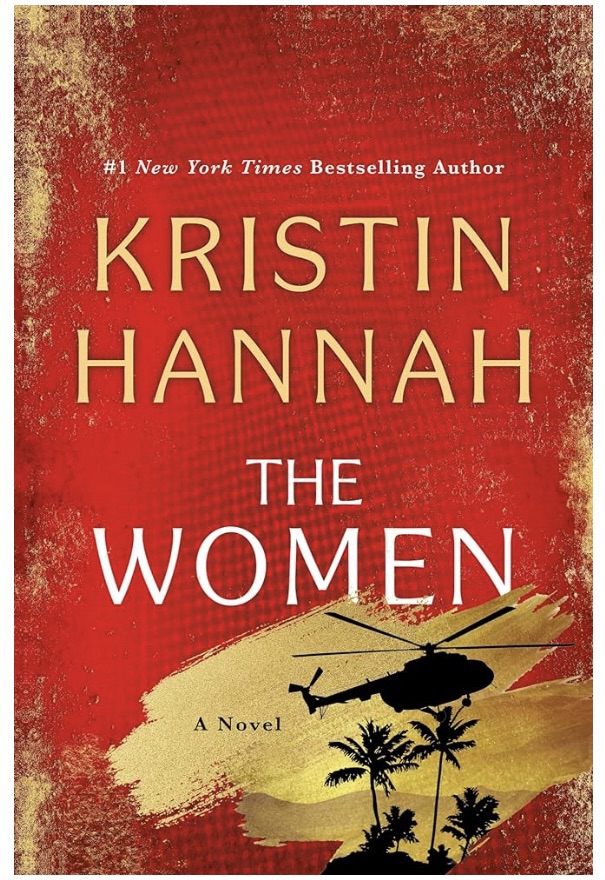
I’ve also read my share of war novels, many set in World War II, and to be honest, lately I’ve been avoiding that particular genre. But when I saw that Kristin Hannah had written a new novel set in the Vietnam war with a focus on women who had served, I was interested. I’m trying not to buy every new book that piques my interest, more out of space consideration than monetary expenditure. So I went onto Libby (the online library reserve system for checking out e-books) and put a hold on The Women. In the meantime I continued reading a variety of novels, finishing one last weekend.

Screenshot

And then earlier this week, my hold came up. I downloaded The Women onto my kindle and started reading it midweek. It felt a little stilted at the beginning–stiff, maybe even cliche, but it was set in San Diego (Coronado to be specific) and who doesn’t love a book that refers to places you know well?

It was when the book took a deep dive into the Vietnam experience of nurses “in country” (meaning in Vietnam) that the book turned for me. The characters became multi-dimensional and I became invested. I enjoyed the focus on a women’s experience and the struggles returning home to a time and place that was rejecting the war and those who served…and also finding, even within veterans’ groups and services, that women’s service was barely acknowledged if it was acknowledged at all.

If you have read Hannah’s other novels, you’ll recognize her style and likely enjoy this one too. I appreciated the research and attention to detail in this book and was clearly invested enough that I spent too much of my day reading today, finishing the book this afternoon.

If you’re looking for a sometime’s emotional read in a historical fiction novel about the Vietnam war, pick up The Women. I was engrossed–makes me think about my dad and all the other Vietnam war vets who returned from service, whether or not they were in actual combat on the ground in Vietnam, to mixed feelings about their worth as soldiers in a war that seemed never-ending. I feel like I’ve still got some thinking to do on this one.

Something, Someday: SOL24 Day 13

I got a text from a colleague last night with a photo of Amanda Gorman’s new book, Something, Someday. In the text she said it reminded her of the project I had done with my students creating iMovie PSAs about something that needed attention at our school. (You can read more about it here and here.)

So this morning as I headed back to the classroom with my students like ducklings behind me, she saw me, darted into her classroom and came out with the book in her hand.

After taking attendance, I did a quick read of the book while my students were doing some math practice. Yes! This is definitely a perfect book for the project we had done. It is all about making change, finding solutions, working together, and the power of small actions to add up to big change. And in the moment, I rearranged my teaching day in a way that allowed me to read it to my students.

Earlier in the week we read The Watcher: Jane Goodall’s Life with the Chimps by Jeanette Winter, learning about her lifelong work to protect wildlife and our planet. We talked about how both Jane Goodall and Amanda Gorman are living activists working to care for our planet.

Today we also studied the poem, Things to do if you are RAIN by Elaine Magliaro, noticing all the ways she described what rain does…”Polka dot sidewalks. Freckle Windowpanes. … Tap dance on the roof. …” Little did my students know that this would soon become a mentor text for a collaborative poem inspired by the books we’ve read and this poem!

As we got ready to write I asked students for a topic for a Things to do poem. (I had an idea in my back pocket, but hands shot up right away.). O suggested, Things to do if the World is Filled with Problems. Okay–a much heavier topic than I had in mind, but not surprising given our recent project and the books we’ve been reading.

So we did some brainstorming, focusing on the list like qualities of Magliaro’s poem. It took some work getting to some ideas to start and end the poem. And who doesn’t love the student who says, I have some metaphorical thinking to add, and says, “Treat the world like a rainbow.” Okay. So here’s what we came up with:

Things to do if the World is filled with Problems

by Room 3 First Graders

Don’t Give up!

Solve it! Fix it!

We can do this together.

Clean up trash. Don’t pollute.

Put the balls away. Sit up straight.

Water plants. Don’t waste water.

Be kind to your old grandfather

AND everyone else.

Eat your snack. Share with others. Include everyone.

Only take what you need.

Have fun. Smile at a stranger.

Treat the world like a rainbow.

Together we can brighten and color the world.

A Mini Book Review: SOL23 Day 21

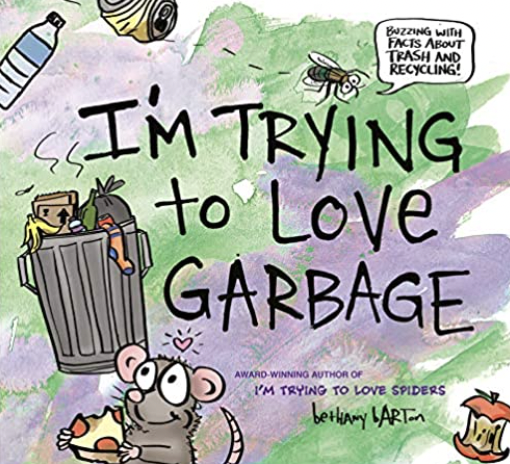
Today I read the book, I’m Trying to Love Garbage by Bethany Barton to my class of first graders. We’ve read other books in the series, including I’m Trying to Love Spiders and I’m Trying to Love Math. My students LOVE these books. Somehow the author manages to hit the perfect balance of funny, gross, and information.

I’m trying to infuse a steady dose of “let’s take care of our earth” throughout the school year, striking a balance of the urgent need to pay attention to the environment with a sense of joy and possibility– that little things DO matter.

This book does a nice job of teaching about nature’s clean up crew–the scavengers, detritivores, and decomposers who break down organic matter and contrasts that with human trash that can take centuries to break down (if at all). They learned about landfills–and were appalled that we, as human, are making huge stacks of trash that will take a long time to break down.

Luckily, at our school we have students engage in trash reduction every day. They compost remains of fruits and vegetables, recycle their paper trays and other recyclable packaging, and limit trash to those things that do not fit into the other categories. We also live in a place that has banned single use plastics, making reuse ordinary.

After reading, they wrote to their parents asking how their families reduce trash–and already, many students were aware of many efforts going on at home. I know that composting and recycling is not enough to change the climate trajectory, but I know that the more we and future generations know and do, the better our chances are to improve the situation.

I love a great book. Especially one that gets kids (and adults) thinking and acting in ways that have a positive impact on the world. What wonderful book have you read to kids lately?

A Collection: SOL23 Day 12

I love books and I certainly have more than my share–in bookcases, stacked in piles, loaded on my Kindle, and in my classroom. Over the last decade or so, I have been making an intentional effort to diversify the books that I read in the classroom.

I’m always on the lookout for great new books–and there are so many to choose from. While I understand the value of a fine classic, I don’t think that today’s learners should have a steady diet of the same books we read as children. As a teacher, I have the opportunity to introduce students to books they might not pick up on their own–titles that might not be on the shelves of the local Barnes and Noble or might not show up as the most popular books…yet.

I’m learning to be discerning. To check out the authors. To be aware when a book written from a native perspective is actually written by a native person, and to prioritize #ownvoices when possible. I want to read books that offer students windows and mirrors, representing the widest possible array of backgrounds, cultures, abilities, and perspectives. I want the books I read to open conversations, to allow students to see themselves and to see those different from them. I want them to provoke questions, to spur action, and to offer possibility.

Some of the many books I have read to my class this year include (I limited myself to only 10 here):

All are Welcome by Alexandra Penfold

Your Name is a Song by Jamilah Thompkins-Bigelow

A Normal Pig by K-Fai Steele

Listen by Gabi Snyder

The Little Ghost Who Was a Quilt by Riel Nelson

Where Are You From? by Yamile Saied Mendez

Fry Bread by Kevin Noble Maillard

Keepunumuk by Danielle Greendeer, Anthony Perry, and Alexis Bunten

Fitting In by Haruka Aoki and John Olson

Carmela Full of Wishes by Matt de la Pena

I love to talk books with teachers and others. What are some of your favorite books to read in the classroom? How do you make decisions about what to include?

Keeper of Wild Words: SOL23 Day 6

Today we read The Keeper of Wild Words by Brooke Smith. My students were immediately drawn into this story about a grandma (Mimi) and her granddaughter (Brook). Mimi is worried that important “wild” words will disappear if we don’t use them, know them, write them, and care about them. Mimi and Brook have a list of wild words and set off into the outdoors near Mimi’s house to find the words (natural things) on the list. From wrens to dandelions, minnows to drakes, Mimi and Brook identify and appreciate all of the words on the list. In the author’s note at the end, Brooke Smith tells about her inspiration–an article about removing over 100 natural words from a children’s dictionary to make room for words like vandalism and MP3 player.

After we read and talked, we started our own lists of wild words. We had talked about how some people were already being keepers of wild words, noticing one of our students with the name River is keeping a wild word from disappearing. Of course, we had to add River to our list. You might not be surprised to learn that these southern California first graders were quick to add ocean and sunset to their lists of wild words. I had to add egret to my list–my students know I am obsessed with this quirky shore birds with the bright yellow feet.

These young naturalists were inclined to add general words–trees, sky, and clouds, so I encouraged them to be more specific. One student started writing phrases to capture her ideas more fully (she definitely wanted constellations on her list after some sky gazing over the weekend with her family).

Words matter and paying attention to wild words is another way of focusing attention on our natural world. Appreciate for and knowledge of nature and our environment is essential. I’m hopeful that the next generation will reclaim wild knowledge as they work to regenerate the resources that are on the verge of disappearing, just like the wild words Brooke Smith brought to our attention.

Mini Book Review: SOL22 Day 8

I’ve been reading quite a bit lately…so this must be the perfect time for a mini book review!

I recently finished Daniel Pink’s new book, The Power of Regret: How Looking Backward Moves Us Forward. As someone who is a huge proponent of reflection–for students, for teachers, and humans of any kind, Pink’s conclusions didn’t surprise me.

Without giving away anything, here’s a few highlights:

There are benefits of regret–improving decisions, boosting performance, and deepening meaning. If feeling is for thinking, and thinking is for doing, then feeling can help us think…and then take action.

There are 4 general categories of regret: Foundation regrets (decisions that have to do with stability), Boldness regrets (chances you didn’t take in life), Moral regrets (choices that compromise our beliefs or when we behave poorly), and Connection regrets (relationships with people). These categories can blur and overlap, but Pink argues that regrets fall into these 4 general categories.

I loved the opening to chapter 11 where there is a comparison between regret and photography. (The old-fashioned version of photography where film and negatives are in play.) Pink talks about how on a film negative, the light spots appear dark and the dark spots light. He then goes on to say, “The four core regrets operate as a photographic negative of a good life. If we know what people regret the most, we can reverse that image to reveal what they value the most. (p.149)

There are strategies for using regret to move forward positively. One metaphor I enjoyed was the description of self-distancing which, “…changes your role from scuba diver to oceanographer, from swimming in the murky depths of regret to piloting above the water to examine its shape and shoreline.” (p.178)

And Pink connects regret to storytelling. He says, “Open the hood of regret, and you’ll see that the engine powering it is storytelling. Our very ability to experience regret depends on our imagination’s capacity to travel backward in time, rewrite events, and fashion a happier ending than in the original draft. Our capacity to respond to regret, to mobilize it for good, depends on our narrative skills–disclosing the tale, analyzing its components, and crafting and recrafting the next chapter.” (p.208)

While the book is not earth shattering in its revelations, it is interesting and reads in a pretty typical Daniel Pink way. I personally like the connections to the power of reflection–and the way it refutes the idea of a “no regrets” approach to life.

What are you reading? I’d love to hear your recommendations!

Thinking about Data: SOLC #18

Have you ever had the experience where you read a post on social media and it sends you down a rabbit hole of further exploration, thinking, and wanting to tell everyone you come across about what you found?

Laurie over at the San Marcos Writing Project Facebook page does an amazing job of posting current blog posts and articles related to education, writing, and connections among and beyond. It’s like an article-at-a-glance from so many different sources. I’m not really sure how she does it, but I totally appreciate her curation of relevant information. Every once in a while, one of the articles shared catches my attention and I find myself going into a deep, satisfying swan dive.

The title, The Trouble with Data, immediately got my attention today. In the piece, the blogger talks about data related to the COVID pandemic–the lack of it, the problems with it–based on a science article in the Atlantic–and then extrapolates it to education.

The three points, in both the Atlantic article and in the blog post, resonated with me and my own experiences with folks who value data (meaning numbers) over all other ways of knowing. The argument these data people always want to make is that data is objective, other ways of knowing are subjective. (Meaning, objective=good, subjective=bad)

Now, please be assured, I am not anti-data or anti-science. I simply always want to know where the numbers came from, how they are gathered, who made the decisions, and about decisions made about how they are displayed and explained. I’ve spent plenty of time in conversations with colleagues explaining that in these seemingly objective testing scenarios, the subjectivity can be found in the decisions made prior to giving the test–in the development of content, format, who is tested, etc.

The three points that I keep thinking about are:

1. All data are created; data never simply exist


2. Data are a photograph, not a window.


3. Data are just another type of information.

When I think about the ways testing data is used to describe our students, the ways it constrains teaching and learning with a huge emphasis on test prep and tremendous time spent away from teaching and learning that is instead spent on the testing process, and the ways what teachers and families know about students is diminished as irrelevant compared to those “snapshots,” I keep going back to my questions about where the data comes from. I encourage you to read and think about data and the ways it is presented–often without context, background, and transparency.

And one more tidbit–this one about some “learning loss” numbers being thrown out into our educational mix. Check out this article from Forbes about where the number–57 days of learning lost during the pandemic–came from.

A quote shared in the Atlantic article to chew on:

Data-driven thinking isn’t necessarily more accurate than other forms of reasoning, and if you do not understand how data are made, their seams and scars, they might even be more likely to mislead you.

My mind is swirling with so many thoughts. I might need a conversation group to talk through some of this!

About Writing: SOLC #13

One of the things I like best about the Slice of Life Challenge is the way that the expectation of daily writing gets me thinking about what I will write each day. Something will catch my eye and I will find myself writing in my head, thinking about how to frame what I have to say.

Some days the writing comes fairly easily and I know generally where I am going with the writing. That is especially true when I’ve taken a photo that I know will guide my writing direction. Other days the writing is a struggle and I flounder around, flipping and flopping, grabbing onto this topic and that, finding it hard to land on what I want to say.

I’ve bounced from topic to topic today. I could write about interviewing an amazing group of teachers this morning for our upcoming Invitational Summer Institute. I love the way that this “work” is so energizing. There is nothing like teachers talking about what drives their instructional choices and clearly seeing their passion for students and their well-being to fill me with hope and possibility.

I thought about writing about two separate essays I read this week that serendipitously landed in my feed on consecutive days. One is an essay by Ann Patchett called How to Practice about downsizing belongings so that someone else will not have to do it after your death. This is an amazing piece weaving stories of belongings, why she has them and why she no longer needs them and the guilt that comes with getting rid of something that is still useful. The other called Marie Kondo and the Privilege of Clutter is about groups of people, particularly refugees and those immigrating because of war and danger, who do not have the luxury of having items passed down for generations, of accumulation from childhood and how that shapes their view of belongings. My mind has swirled since reading these earlier this week–thinking about the different roles that belongings play in different phases of my life and why it is so hard to let go of some things, even when they have outlived their usefulness for me.

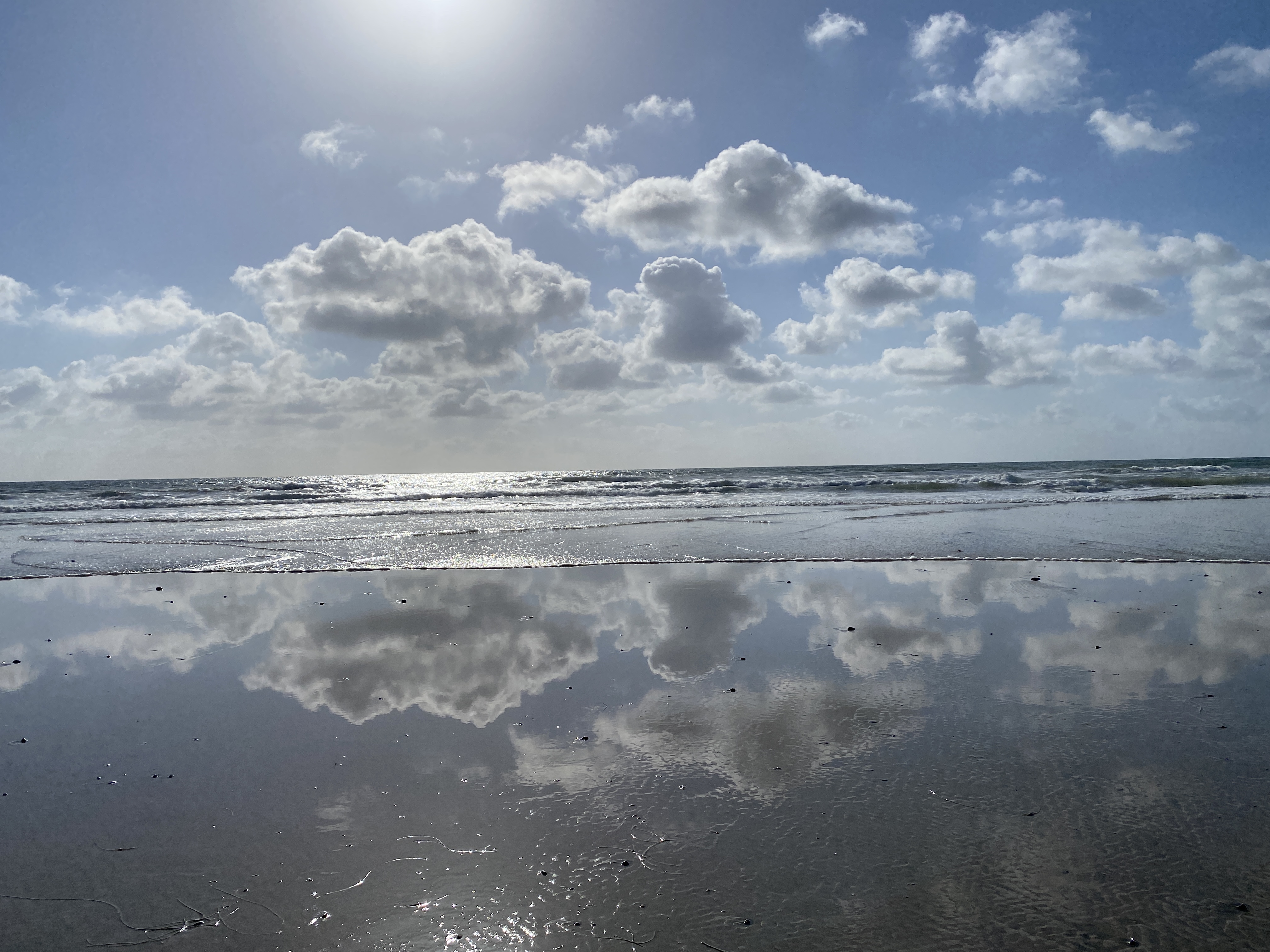
And now I am thinking about which of these articles is a mirror for me, reflecting my experiences and which may be a window into another way of thinking. Or maybe I’m just stretching for an excuse to include this photo from today’s walk of the clouds reflected on the shiny surface of the sand.