I introduce my students to poetry beginning in the first week of school. We study a poem each week, noticing what poets do and the wide variety of approaches that make a poem a poem.
Our school schedule consistently fits the beginning of National Poetry Month (April) into our spring break. In order to not miss one minute of this month that celebrates the wonder, fluidity, and flexibility of words, I have learned to launch full-force into poetry the week before our spring break starts.
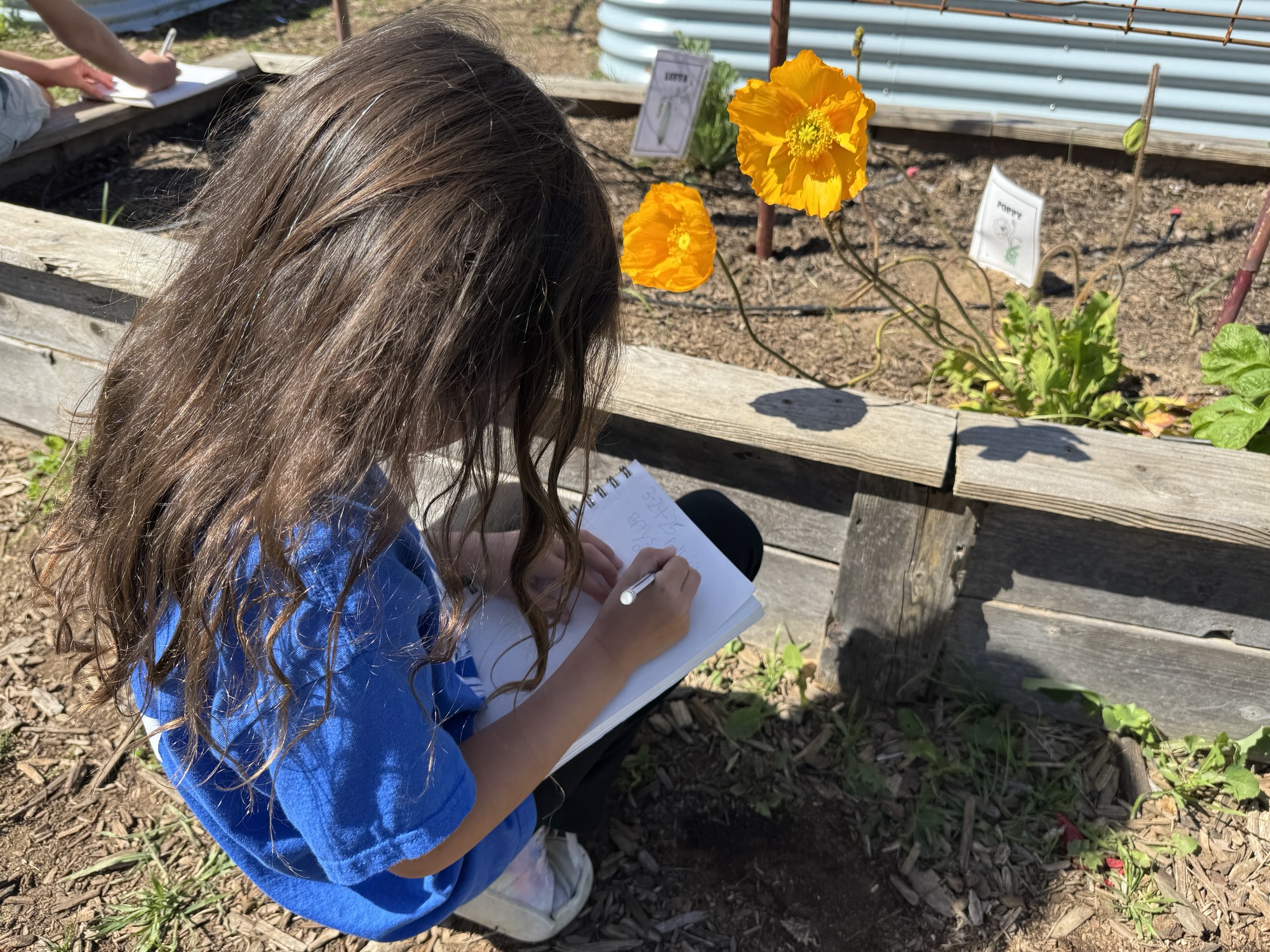
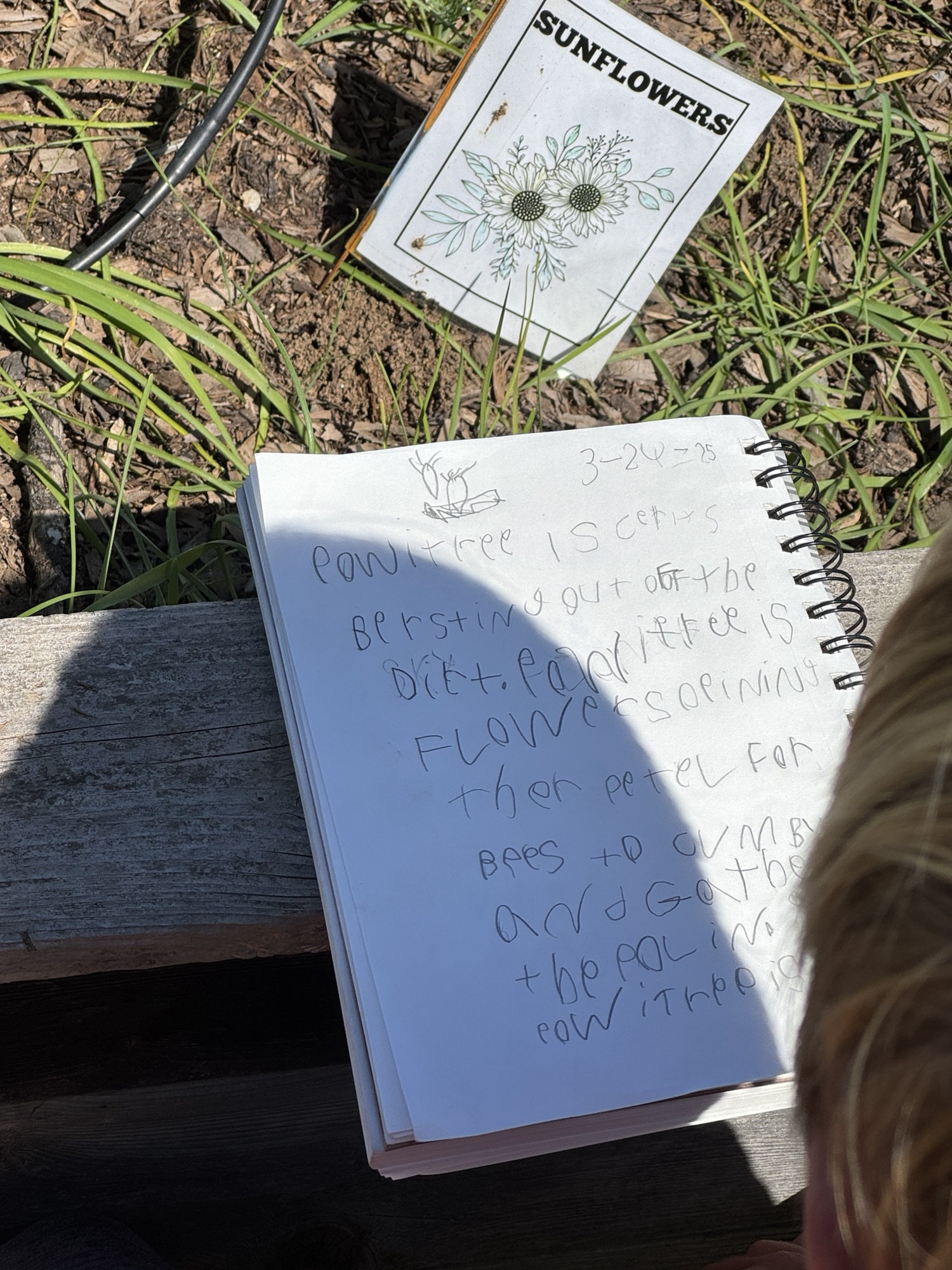
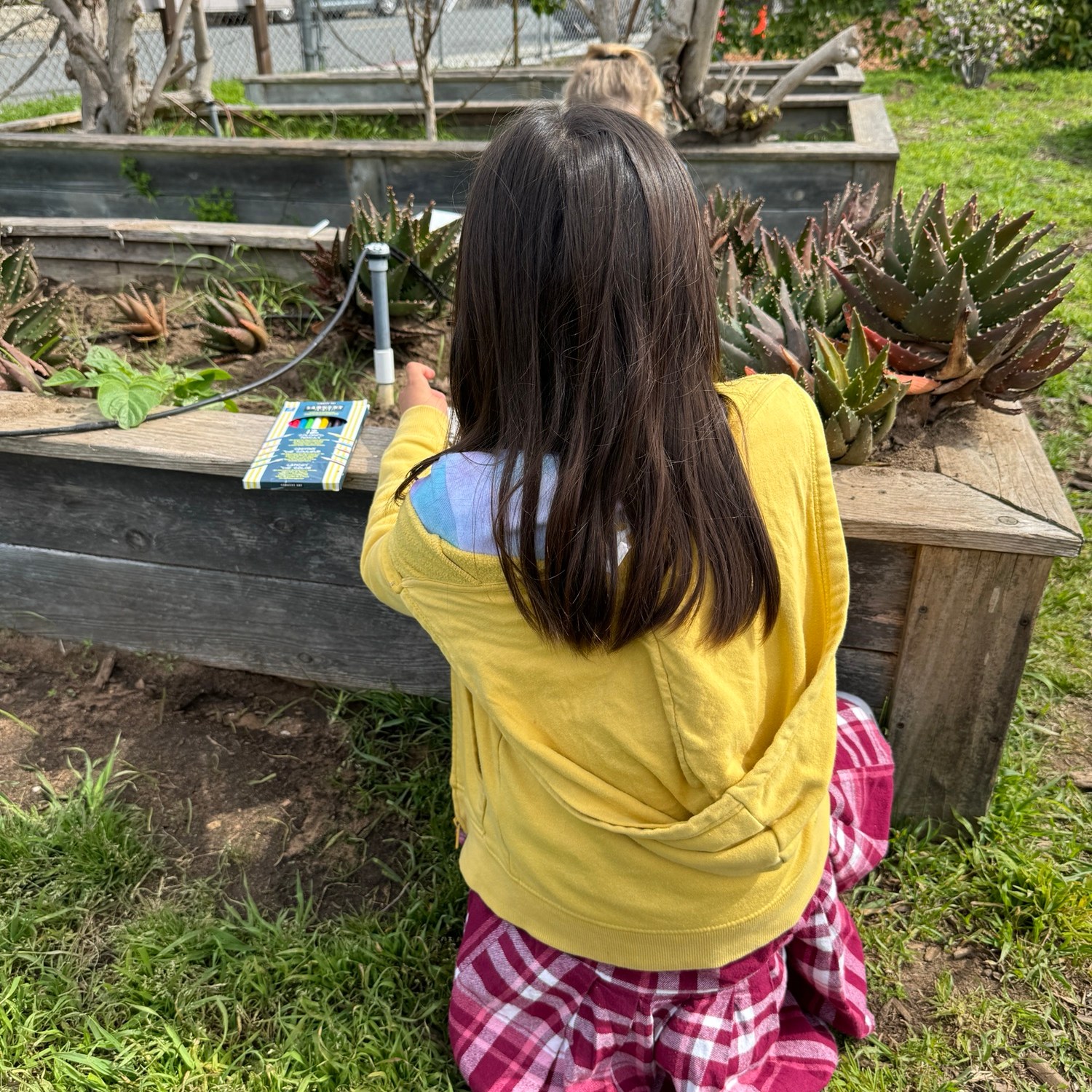
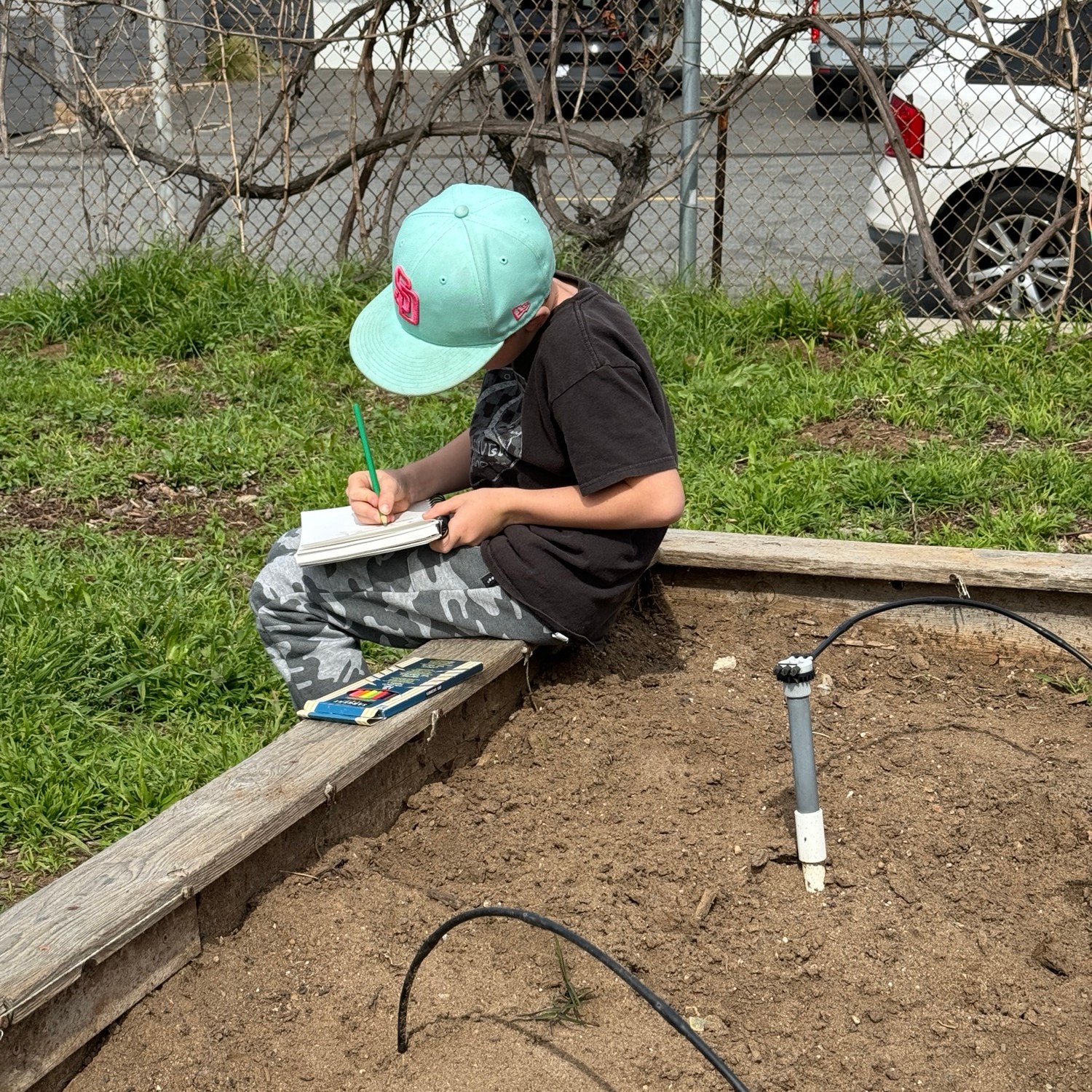
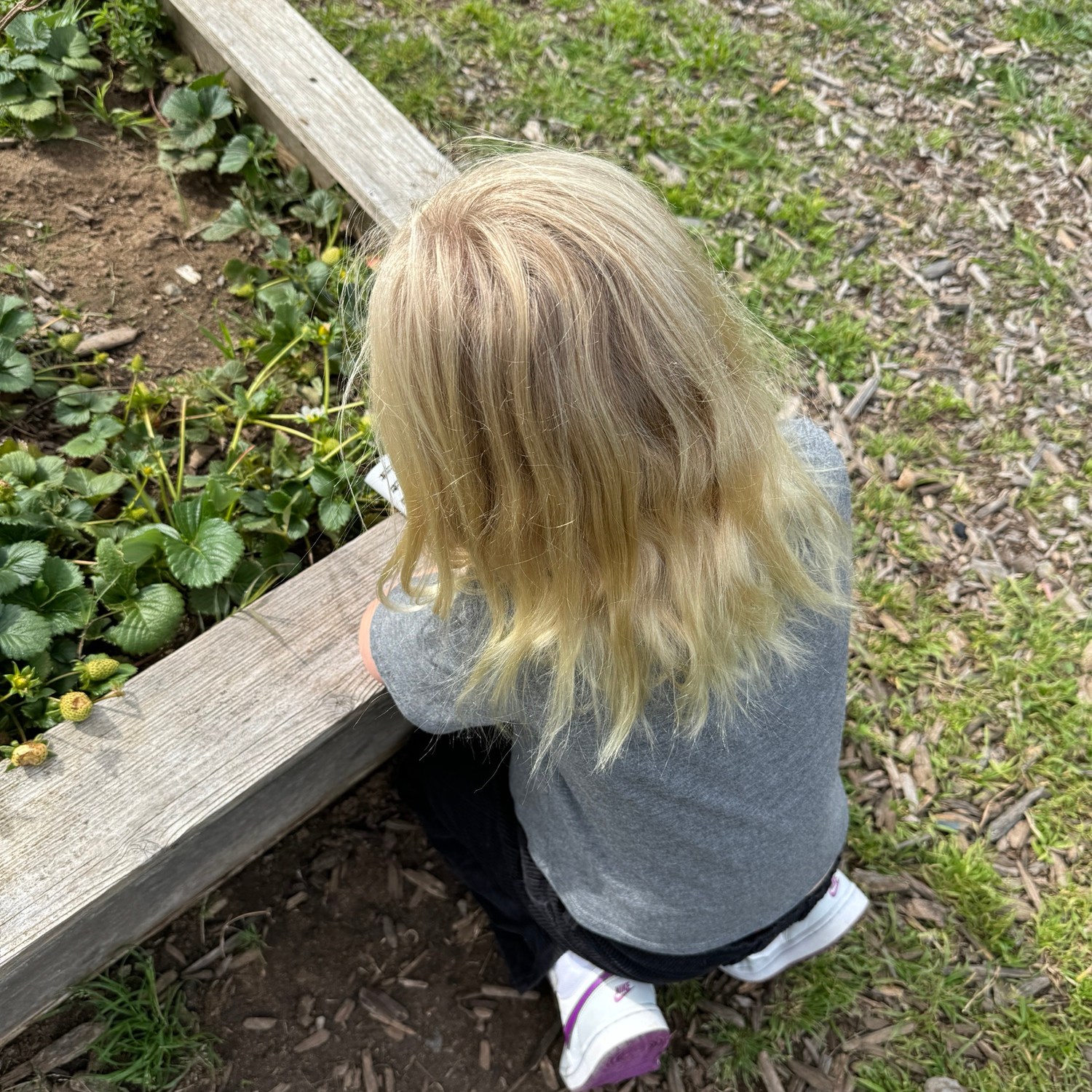
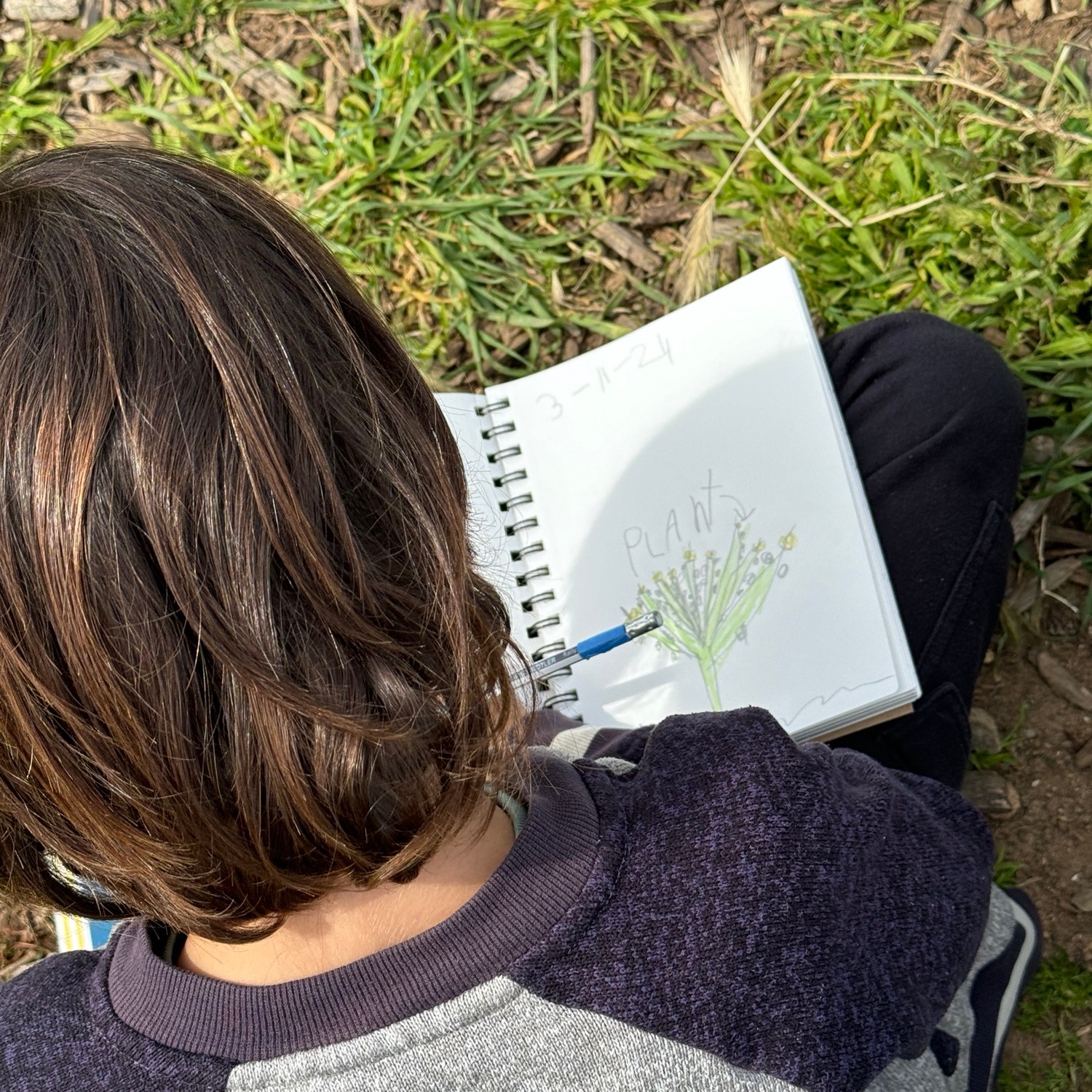
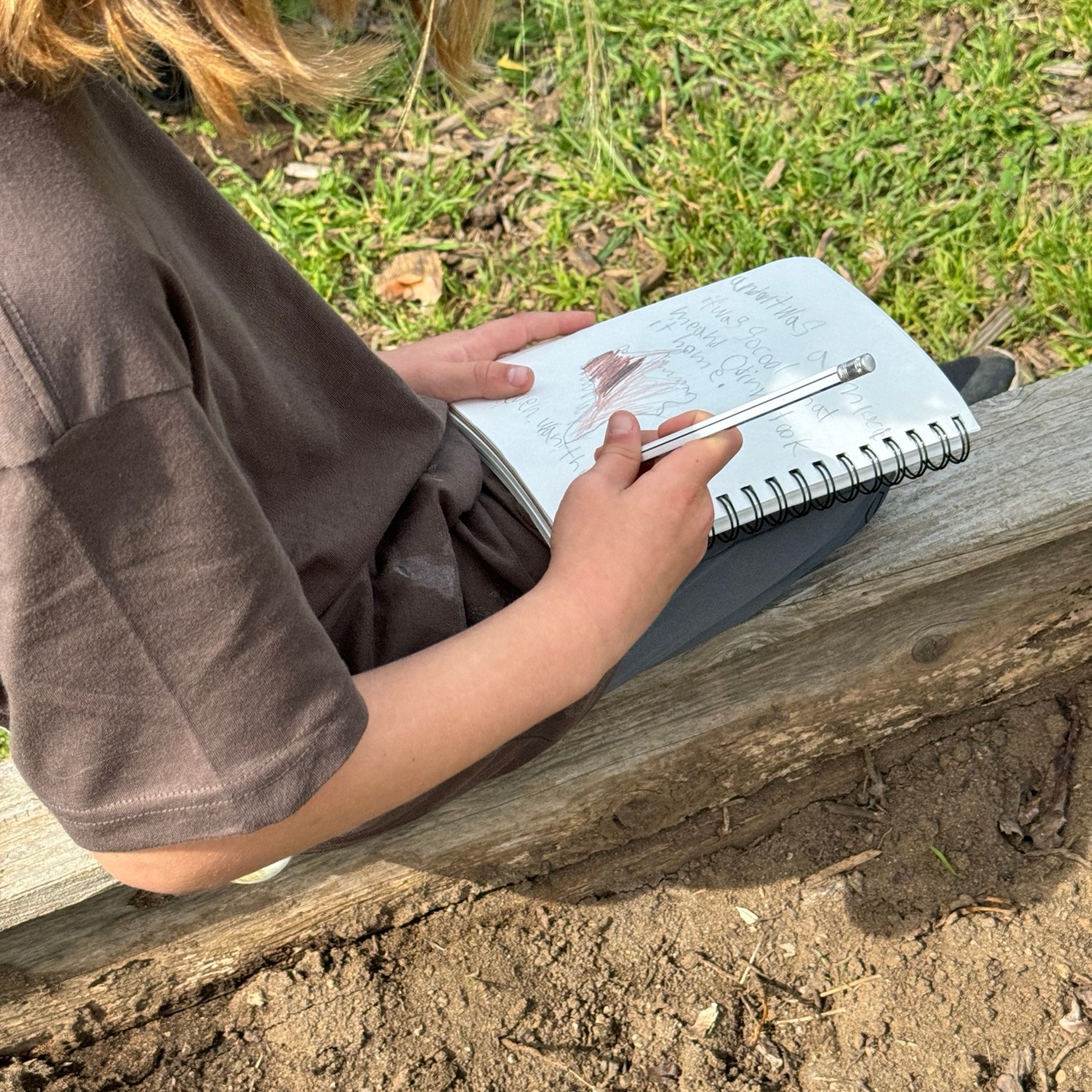
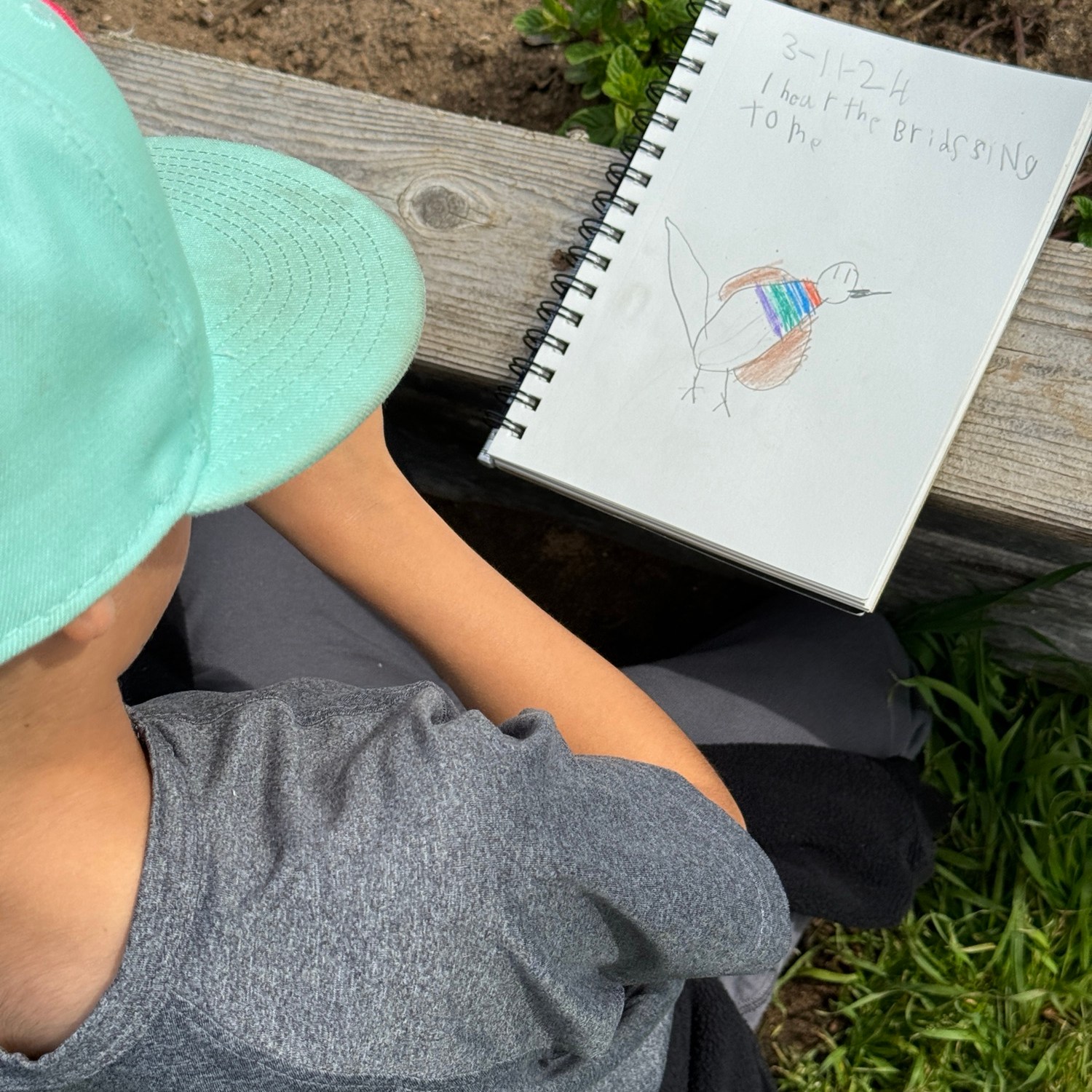
Yesterday we read Daniel Finds a Poemby Mischa Archer, a lovely and accessible book for young children where the title character asks all the creatures in his neighborhood to define poetry and then ends up with a poem compiling their answers at the end. With Daniel’s story as inspiration, we grabbed our sketchbooks and headed out to our school garden in search of poetry.
We are so lucky to have a wonderful school garden, and at this point in the year it is bursting with life and growth. It was a perfect place to enjoy the outdoors, some sunshine, and collect ideas for poetry for the zines students would write today.
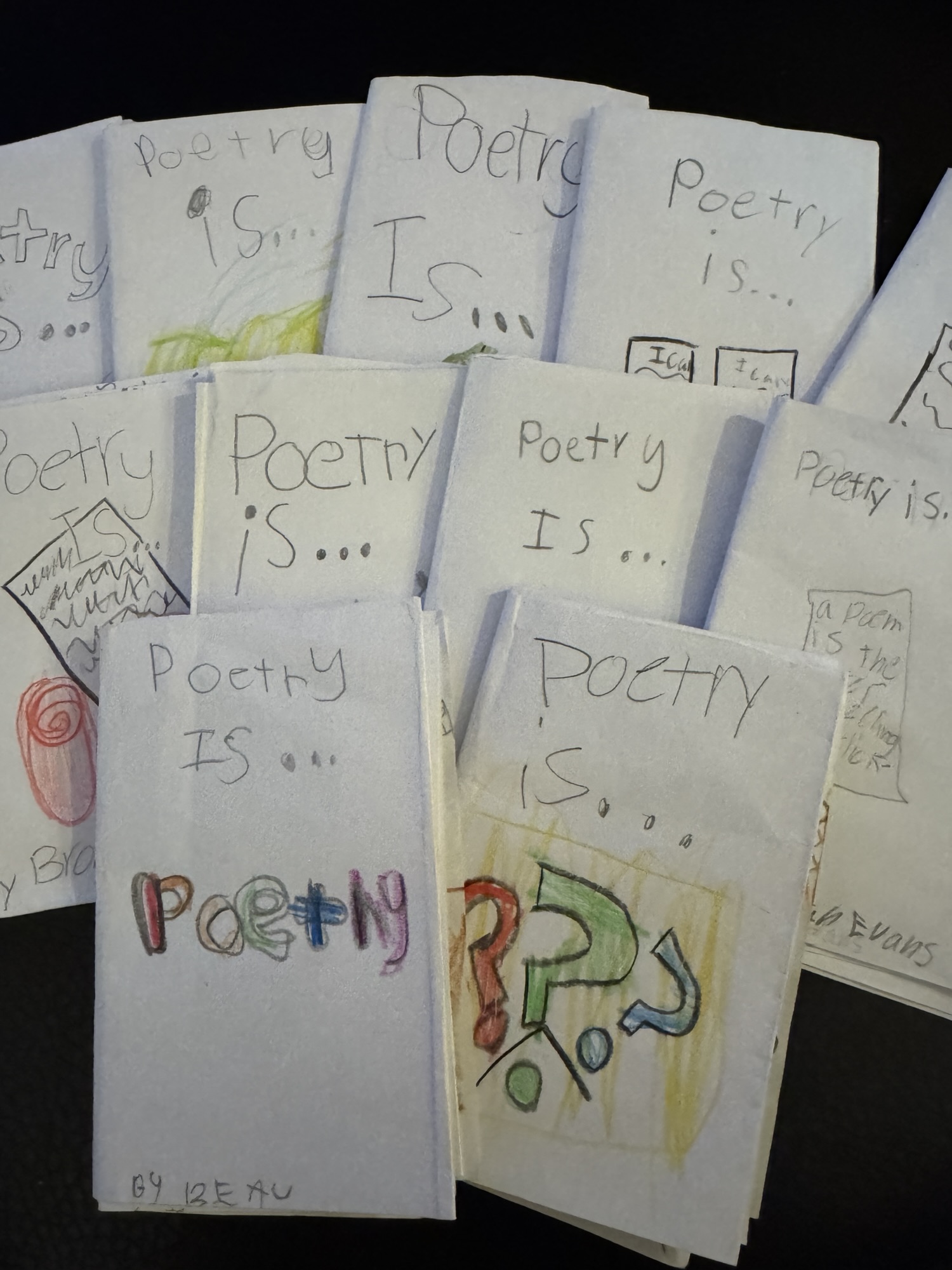
Today to reinforce the idea of seeking and finding poetry in the world around us, I read This is a Poem that Heals Fishby Jean-Pierre Simeon and Olivier Tallec. My students were immediately engaged by the endpapers–fish in the shape of the alphabet with the P, O, E, and M in a different color! “It says poem,” C pointed out. They were all in at that point. This book was more abstract and metaphorical than the one we read yesterday–a perfect “push” as my students took their ideas from their sketchbooks and turned them into Poetry Is… zines (tiny paper books folded from a single sheet of paper).
These first graders did not disappoint! Here’s the tiniest taste:
Poppies are balls of agreement inviting bees over for fun. Corn is popping up to the sun, sunbathing, letting sun beam against their back! Potatoes are as brown as chocolate in Halloween. Carrot are as snappy as twigs. Cabbage is as bumpy as dinosaur skin. Poetry is yellow sun listening to leaves’ hearts beating. (By B)
Poetry is an onion plant waiting to grow. Poetry is a grasshopper jumping with excitement. Poetry is a tree enjoying the rain. Poetry is the worms playing in the soil. Poetry is a sunflower in the rain of a watering can. Poetry is a song that has metaphors and similes and sometimes rhyming words. Poetry is love urging you to write and compare. (By S)
All those amazing words and poetic ideas written in a compact tiny zine. It is truly a delight to watch these young poets blossom…just like the plants in our garden. National Poetry Month, here we come!
If you want to know when it’s spring, don’t bother with a calendar, just walk into my first grade classroom. The energy is palpable. Those babies that entered the classroom at the end of last summer are growing into knowledgeable and sassy almost second graders. They are readers and writers and fact collectors extraordinaire (although fact-checking is not yet in their realm of expertise). So what do you do at the end of conference week when it feels like the classroom is fitting like last year’s t-shirt–way too tight? Head out to the garden…with iPads in hand!
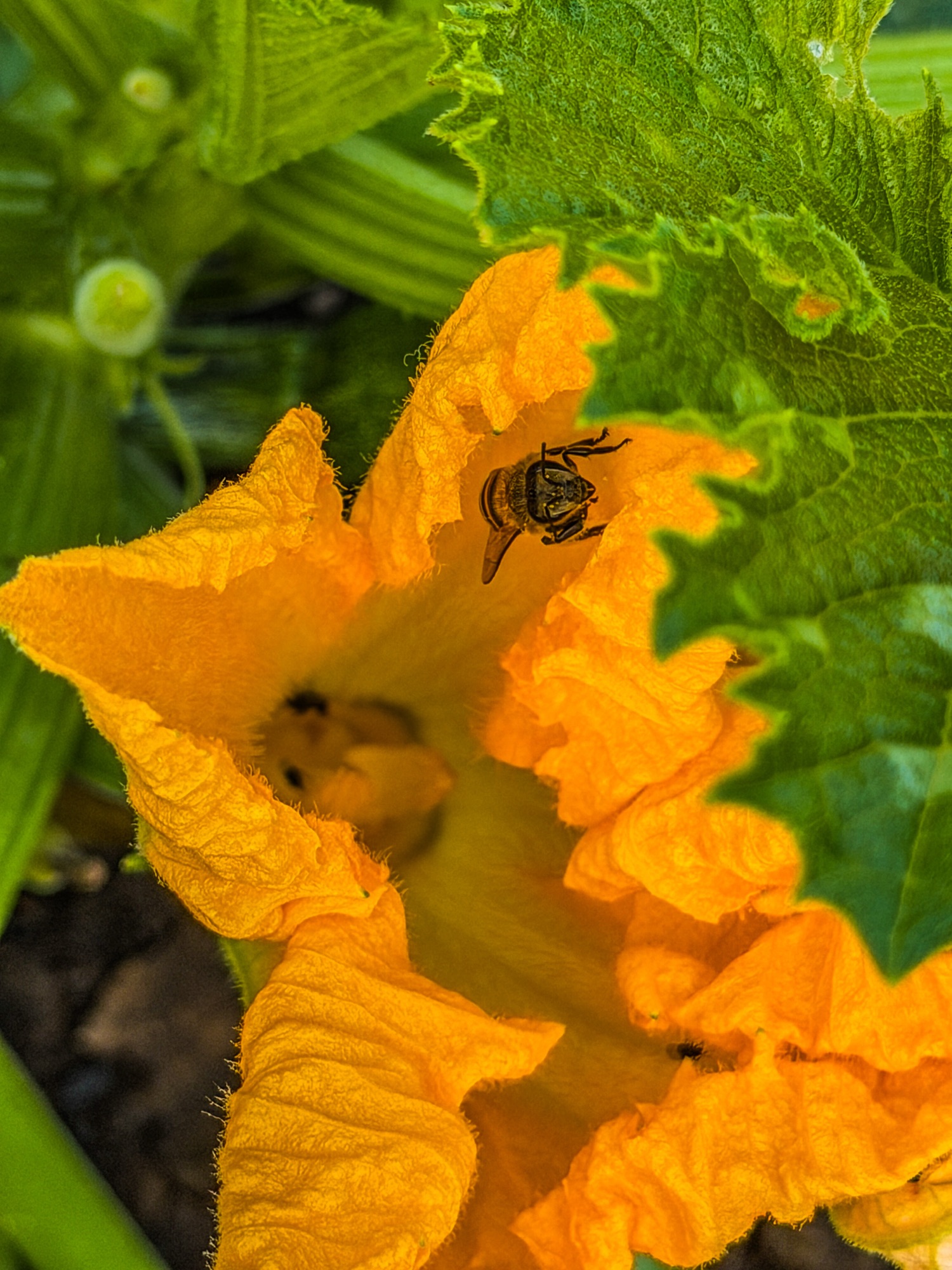
We’d been out in the garden with our notebooks earlier in the week–observing carefully in the spirit of Jane Goodall. So on Friday I asked students to go back to the place where they observed earlier in the week and find three photos to take. I reminded them of the photography techniques we had learned and set them loose to explore. There was the insect on the screen that first caught students’ attention. The lizard almost created a need for crowd control as these little paparazzi swarmed the cold-blooded sunbathers against the brick wall. They photographed strawberries, broccoli, fruit tree flowers, aloe, and who knows what else.
Yesterday, we studied the poem, Things to do if you are Rain by Elaine Magliaro. We noticed her action words (polka-dot sidewalks, freckle windowpanes…) and did not miss the metaphor of the rain tap dancing on the rooftop. After choosing one of their photos as the subject, they set off to write their own Things to do… poems. And since it’s mid March, I asked them to include three things in their poems: action, a comparison, and some metaphorical thinking.
We ran out of time…which I should say was intentional planning on my part. It wasn’t, but I am reminded of the value of time away from a draft if you want the young writer to really take another look and make the piece better. Using my poem as an example, we read it carefully, looking for the action, the comparison, and the metaphorical thinking. Then they went back to their drafts to finish them and to make them better. And they did.
O took one of those infamous lizard photos and wrote a short but sweet piece.
Things to do if you are a Lizard
Climb up walls like a snake.
Climb up on a sun on a bright green stem.
Run fast, fast, fast, fast!
Grow back your tail.
G found a flower in one of the garden beds, stretching a bit further with her words.
Things to do if you are a Flower
Reach for the sun
get picked into a bouquet
Blossom in spring
Be in a wedding and shine like the sun
Enjoy your life
Share life and health and happiness
Shine like the bright yellow sun
Tap dance in the breeze like a bird’s chirp is music
Send invitations to animals far and wide
to pollinate and see you bloom into
the prettiest flower
F is one of those quick-to-get-done students and thought he had finished yesterday. Today’s mini lesson was the perfect nudge to get him to push himself a bit further–although there’s still some room for growth.
Things to do if you are a Strawberry
Be red and shiny.
Let yourself grow!
Don’t let bugs eat you!
Have a big family that lives on a big bush.
Your petals help you grow and get washed by the rain.
The strawberries are like red poinsettia flowers.
Red strawberries shine like rubies.
Red roses are like ripe strawberries.
And of course, I had to get in on the fun!
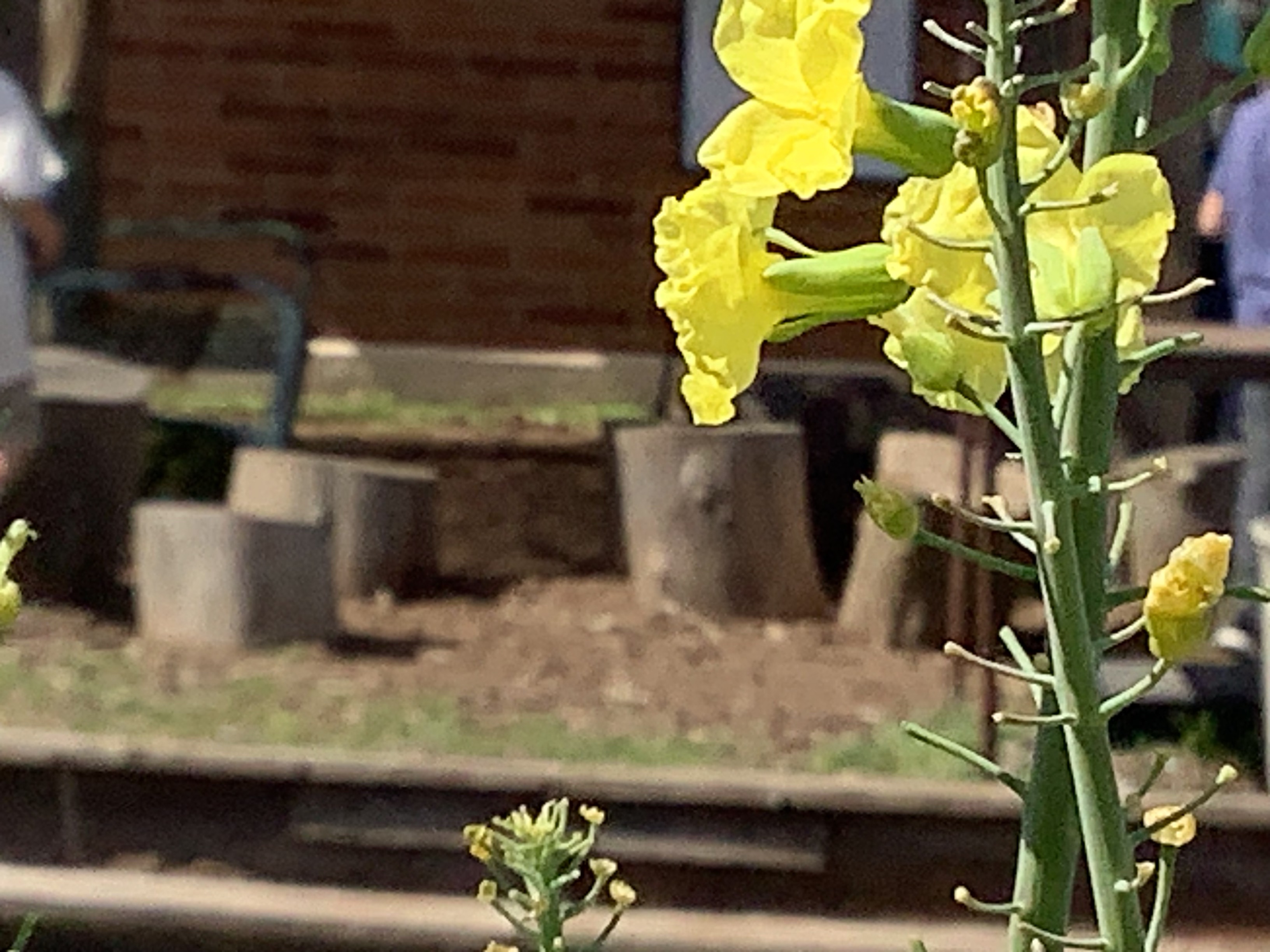
Things to do if you are a Yellow Broccoli Flower
Shoot towards the bright blue sky
Soak up the sun in your bright yellow flowers
Sway in the breeze like you’re dancing the tango
Send invitations to the pollinators: Party at Broccoli’s house–all are welcome
Shed your petals and become part of a child’s healthy dinner
As I finish this post, the spring equinox announces that spring has sprung. Welcome Spring! (Although the first graders have been feeling your presence all month!)
Who decided that parent conference week should follow springing ahead to Daylight Saving Time? I’m feeling the loss of the hour, the compressed teaching day, and hours spent talking…
So today’s slice is a 6 word photo essay…a portion of my teaching day.
Under Goodall’s influence: noticing, wondering, writing
I love to take photos of things. Collections of things. Seemingly random things. Sometimes I notice people looking, trying to figure out what it is that I am photographing.
Still life. Where does that label come from? Is a bowl of fruit really a “still life?” But when I take a photo of a collection of inanimate things, I call it a still life. Does it freeze a moment when you might imagine life paused? Or maybe the “things” actually have a life of their own?
The school garden is one of my favorite places. Not because I am a gardener. I am an avid photographer of gardens, but kind of a “fair-weather” gardener. But I love the idea of gardens and I love the outdoor learning space of school gardens. I love spaces where kids can uncover bugs, dig in the dirt, write in the shade of trees, hang out for a while under the influence of nature.
The garden was pure respite for my students and me this year with all the COVID restrictions. We pulled weeds, found the world’s largest carrot–forgotten when school closed the previous spring–sowed seeds, and wrote. My hit-and-miss gardening style meant the weeds were always back with a vengeance when we returned to the garden weeks after our previous visit. I was honestly relieved when our garden teacher was able to return to campus and spend weekly time with the kids doing some actual gardening.
And the beauty of it all was that I could spend time with the kids in the garden doing the things I love best: noticing nature, writing under the influence with the breeze in our faces and dirt under our feet, and photographing life…both active and still.
With rain in the forecast (again!), I was thankful to be able to get my morning group of students out into the garden with their iPads. (No such luck with my PM group–but that is another blog post.)
In the fall, we had spent time in the garden clearing out overgrown beds, pulling weeds and enormous carrots that hadn’t been harvested because of our pandemic shutdown. We groomed the soil, sowed some seeds, made sure the irrigation was working–and then my attention turned to other instructional priorities, neglecting the garden.
This is the time of the year when I like to use photography as a tool to teach my students about perspective, about “seeing” the world in different ways, and about the role photos have played as advocacy. We’ve learned a bit about Dorothea Lange and her photographs during the depression and World War II and also about Ansel Adams and his photos of National Parks and Japanese internment camps.
So we headed into the garden to try on a few photography techniques: a bug’s eye view, leading lines, natural frames, and the rule of thirds. A lot had changed since our last visit to the garden before the winter holidays! We were greeted by 4 foot tall dandelions, beets bigger than a your head, and plenty of other surprises.
My students happily explored with their iPads in search of photographs. They laid on the ground seeking that bug’s eye view, looking up and under the masses of plants. They sought frames and lines, hopefully holding their devices still enough to prevent the inevitable blur that so many experience. They used those helpful grid lines to define the focus of their subject and carefully place it for their rule of thirds photos.
And they pointed out all the wonders they found. There was the little girl who worked diligently to photograph the roly poly that was trying to make a quick get away and the one who dug around in the garden bed and discovered that giant beet (above). They photographed flowers and beans, pinecones and weeds…and who knows what all else.
I found myself captivated by the purple beans. Lots and lots of purple beans and the mass of curlicues reaching up and around.
Tomorrow we will examine our photos, evaluating how well the photography techniques work in helping us look carefully. We’ll also do some writing, using the photos as inspiration and subject matter. And maybe we’ll also get back to some gardening. Weed those beds again, harvest our overgrown bounty, and start again with seeds. Seeds that will also help us grow–as photographers, writers, and advocates too!






 Thinking Through My Lens