Tag Archives: trees

Exploring Blue: SOL25 Day 14

I’m reaching that point in this month-long blogging challenge where it feels like I have already written about the things that are interesting in my day. No one wants to read more about the rainy days we’ve been experiencing, the state of the streets in my neighborhood, or the outdoor public art at UCSD. So what to do? Weirdly, one of my posts is today’s inspiration for others…so maybe, just maybe, it can inspire me too.

I love to take photos and have an unimaginable number of photos on my phone (some taken with the phone, others taken with my Sony mirrorless camera and transferred to the phone). So today I decided to give myself a prompt and explore my camera roll.

I decided to search for blue, and with that single word as a prompt, so many photos came up for me to examine and think about.

Instead of going down a blue rabbit hole, I picked just a few for a short photo essay…an exploration of some of the blues that caught my eye.

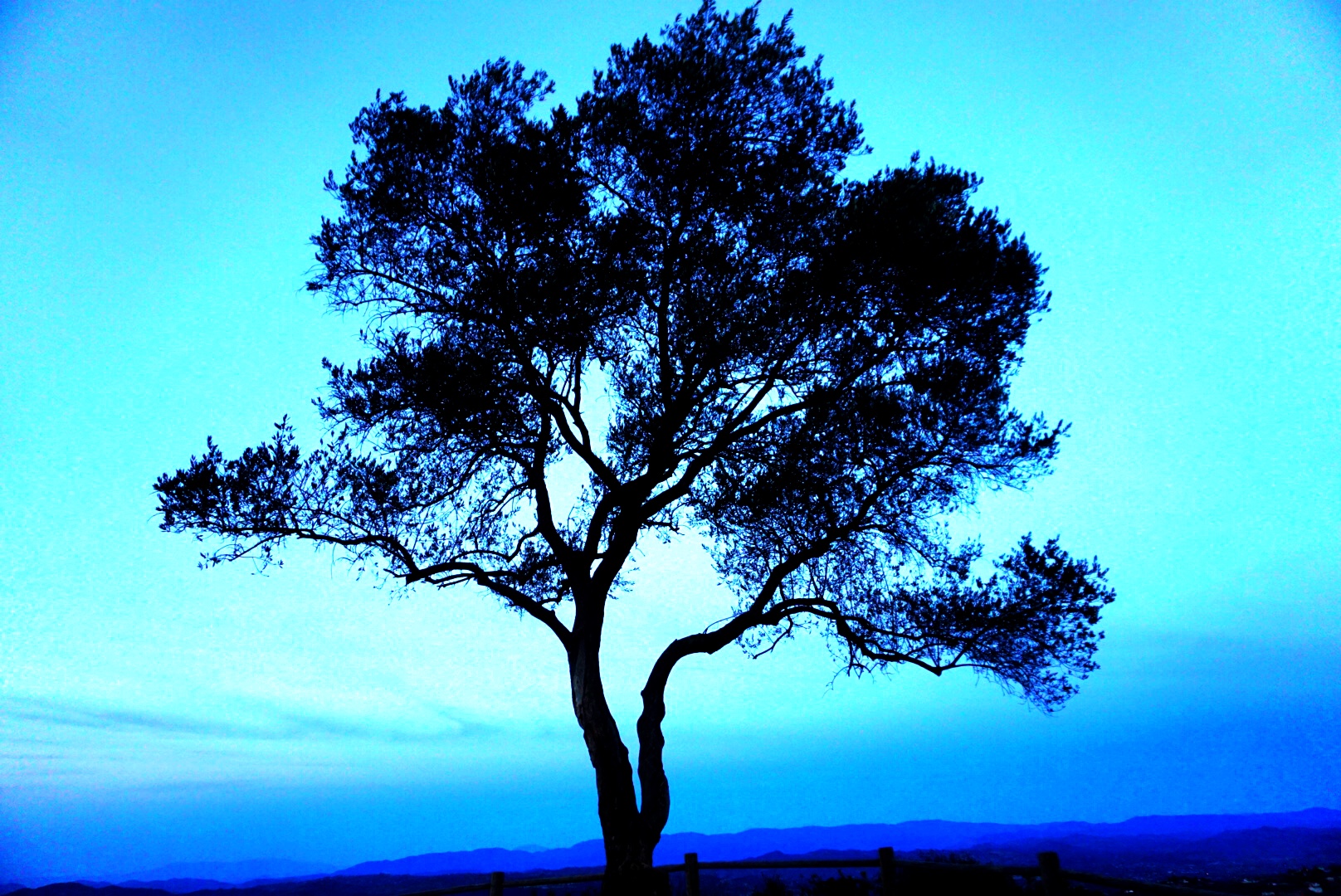
I love to take photos of trees. Sometimes when the light and the background is just right, the photo offers a sense of the majesty and wonder of a tree. I love the blue of the mountains in the distance and the varied blues of the skies in the distance. There’s a moodiness that feels reflective, quiet…like a deep breath.

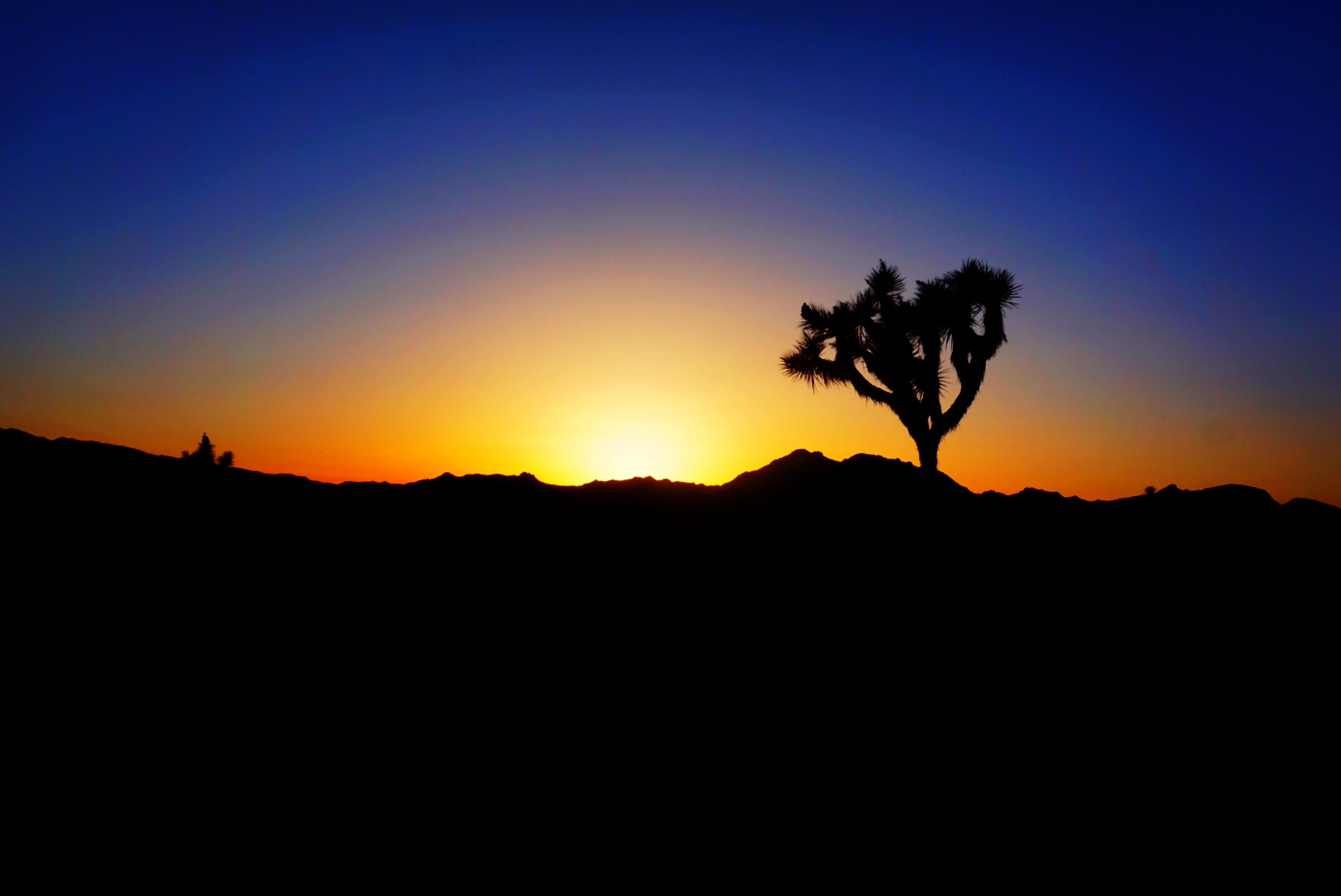
This Joshua Tree National Park sunset offers the deeper, more intense blues of the desert as dark chases the light across the sky. Once the sun dips, the stars will make their entrance crafting vivid pictures in the indigo as nighttime creeps across the desert.

But as much as I love trees, I am more likely to find myself walking along the shoreline. While it’s common to think about the ocean as blue, in this case it is the blue plastic bucket that stands out in the transparency of the water. I love the way the light and shadow also captures the subtle movement of the water.

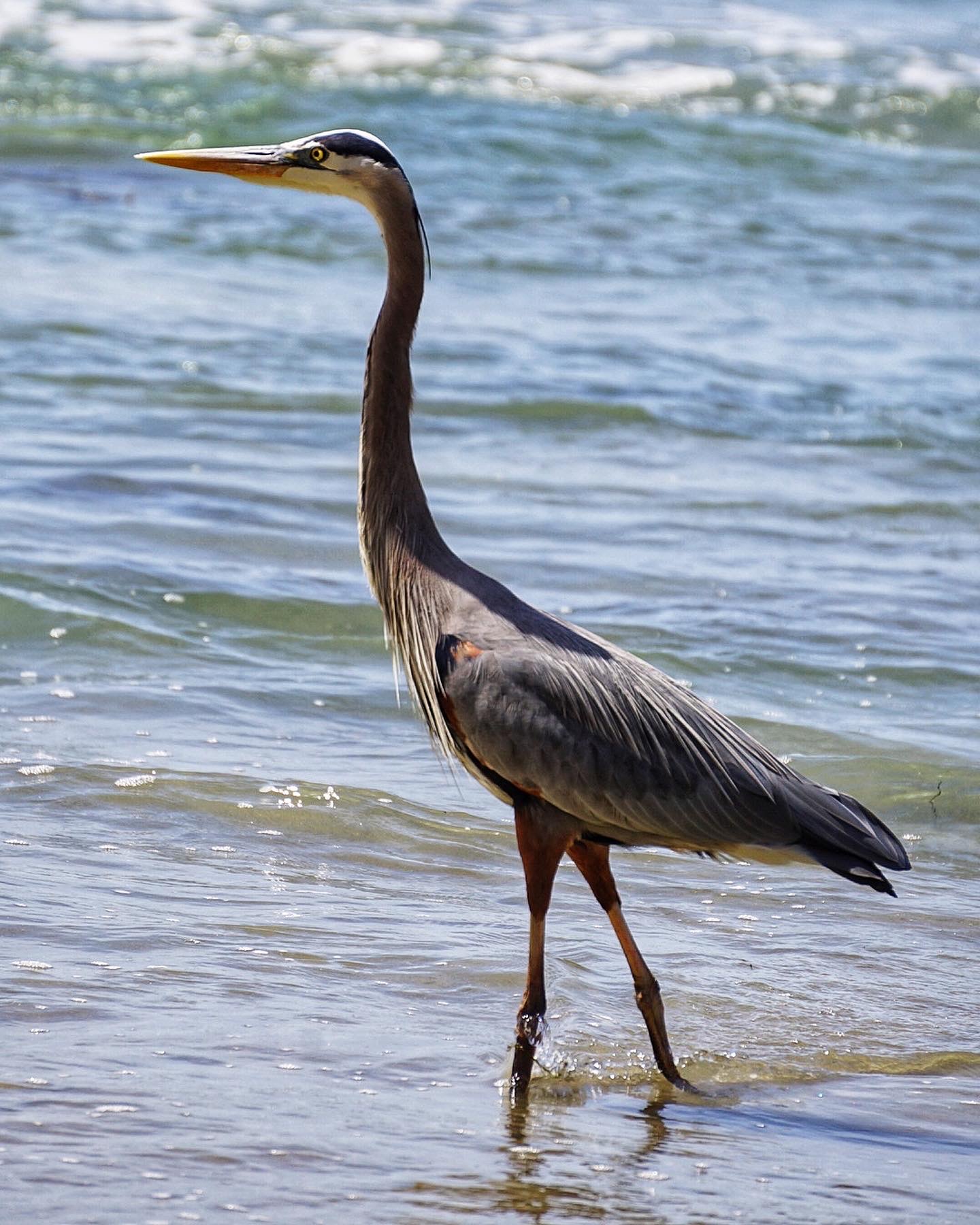
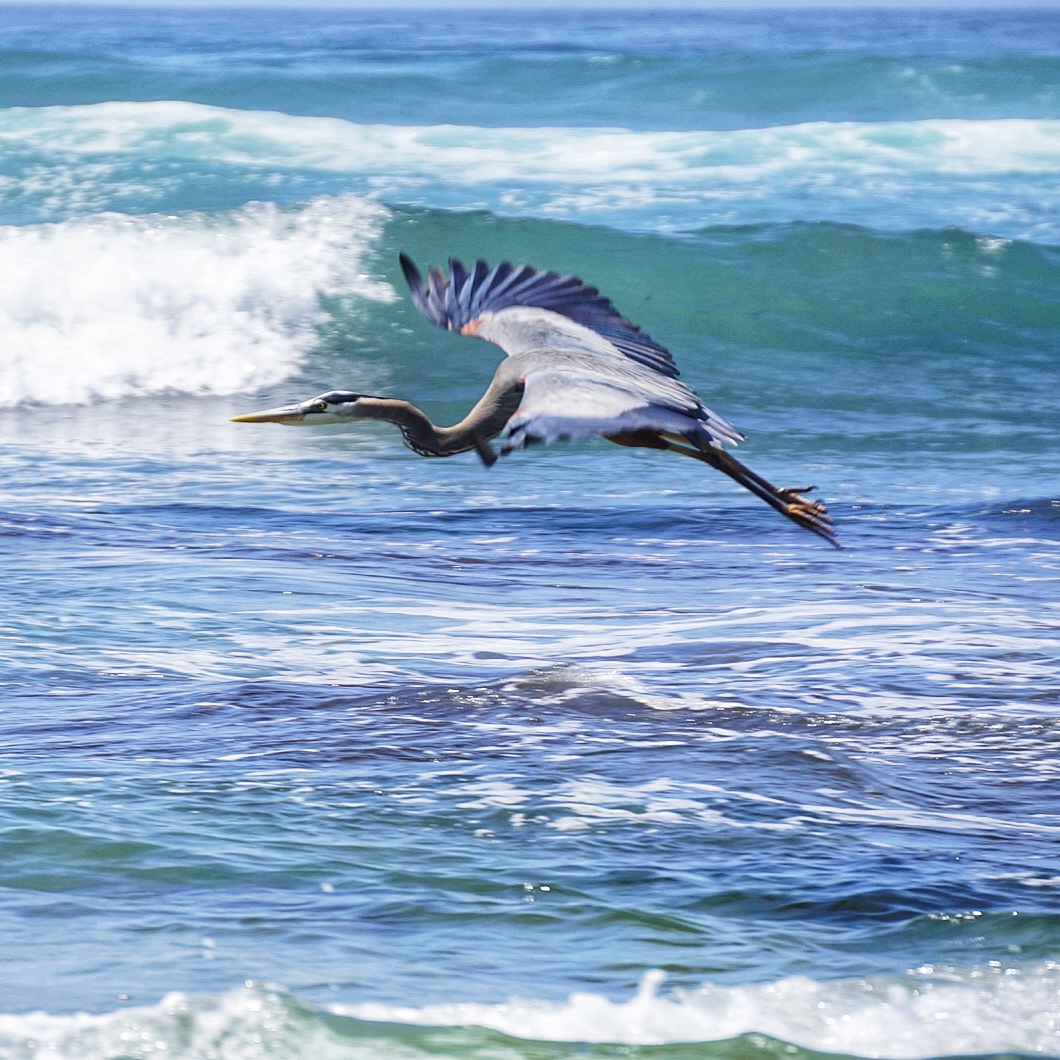
I’m always a sucker for a shore bird, and this great blue heron was a wonderful surprise. Blue when it comes to herons is of the blue-gray variety and these tall, stately birds are a study in patience. They embody stillness–unless they are startled and then they spread and flap their enormous wings and somehow those large bodies take flight.

The ocean is never a single color–and that’s true of the sky too. Light and shadow shift the spectrum of blues and greens, purples and grays, pinks and oranges, offering a magnificent palette of colorful waves for surfers to explore (rightside up and upside down).

What will you find if you take time to explore your camera roll?

In the Trees: SOL25 Day 6

Phew! It has been quite the day. This blustery, rainy day began with an early morning mammogram (just routine). I love the mammographer at our local Kaiser–that woman is efficient! I was in and out before my official appointment time and arrived at the university at my usual time. Thursday is my work with adults day–and there was much to accomplish today. But right in the middle of a meeting this morning the fire alarm went off in our building. Ugh! For someone who is only there one day a week, I have had more than my share of fire alarm evacuations in the last couple of months! So after milling around in the chilly windiness around our building (no rain at this time), we got the all clear from the firemen and were able to head back in to resume our work.

I struggle a bit with an office day. My usual work is wrangling first graders–which means that I seldom sit. Instead I am constantly moving, crouching, leaning in, keeping life in the classroom on an even keel. On my office days with too much sitting, I feel called to head outside and walk the campus just to keep my head clear and my body in motion. I think so much better on my feet! So after some work, I bundled up and headed down the stairs for that much-needed walk!

UCSD is a beautiful campus with a very special feature: The Stuart Collection. The Stuart Collection is public outdoor art installations located throughout the campus. I often walk by Nikki de Saint Phall’s Sun God, the Snake Path that leads up to the iconic Geisel Library, and stop to photograph Fallen Star, a house perched atop the engineering building. But today I felt pulled to go in search of the Red Shoe. I headed in the direction I thought I would find it, enjoying the smell and color of the purple black sage in bloom along the way. As I got closer, I pulled out the navigation on my phone and found myself wandering through the Theatre District and into a stand of eucalyptus trees. The trees called me closer until I glimpsed the bright red of the sculpture of an enormous red, high-heeled shoe.

As I headed back to the office I remembered that the Sound Garden was nearby so I made a short detour and soon heard the music of the wind through the trees. Here’s how it was described in an article about the installation.

Thirty-two eucalyptus trees have been fitted with motion and light sensors that translate varying forces of wind and changing light patterns into sound instantaneously using sophisticated software. Speakers high in the canopy above project the sound, louder during strong gusts and sunny, summer weather; while subwoofers at ground level emanate more subtle, deep tones as darkness descends and winter prevails.

I stood and listened, feeling the wind on my cheeks and my ears filled with the symphony of a eucalyptus grove in full and beautiful voice. Calmness settled over me, I took a few photos and then made my way back to the office feeling refreshed and ready for work.

I wish I could say that the rest of the day proceeded without a glitch and that I was productive and settled. Unfortunately, in the midst of a working session on Zoom, the UCSD wifi failed, cutting off my video conference, dropping my connection on the Google slide deck we were working on and I was forced to use my phone to complete the meeting as a phone call…and to head home afterward to have internet access to get my work done!

In spite of the fire alarm and the wifi failure, my walk was uplifting and energizing. It is probably why I ended my day feeling productive in spite of losing so much work time! Note to self: take more time to listen to trees!

Exploring Acorns: A #writeout Adventure

When life gives you acorns…make art and poetry!

Most weeks I work with my friend and colleague Carol over Zoom since we live in different parts of the state. So when we got to meet in person a few weeks ago, I was delighted to be gifted with a bag of acorns to explore with my students. The acorns where Carol lives are huge…and they have the caps that look like knitted beanies.

So, in honor of #writeout, a collaboration between the National Writing Project and the National Park Service, we got out the acorns and the hand lenses AND our sketchbooks to really study them carefully. We also read two wonderful picture books: Because of an Acorn by Lola Schaefer–a book about the interdependence of the ecosystem where acorns thrive–and Acorn Was a Little Wild by Jen Arena–a fanciful book about an adventurous acorn who after an encounter with a hungry squirrel preparing for winter, ended up as an adventurous oak tree.

And…we had to watch the wonderful video with Ranger McKenzie from Sequoia National Park about how oak trees drop tremendous numbers of acorns every few years…all at the same time in a process called masting, and that scientists have figured out that trees “talk” to each other through their root systems.

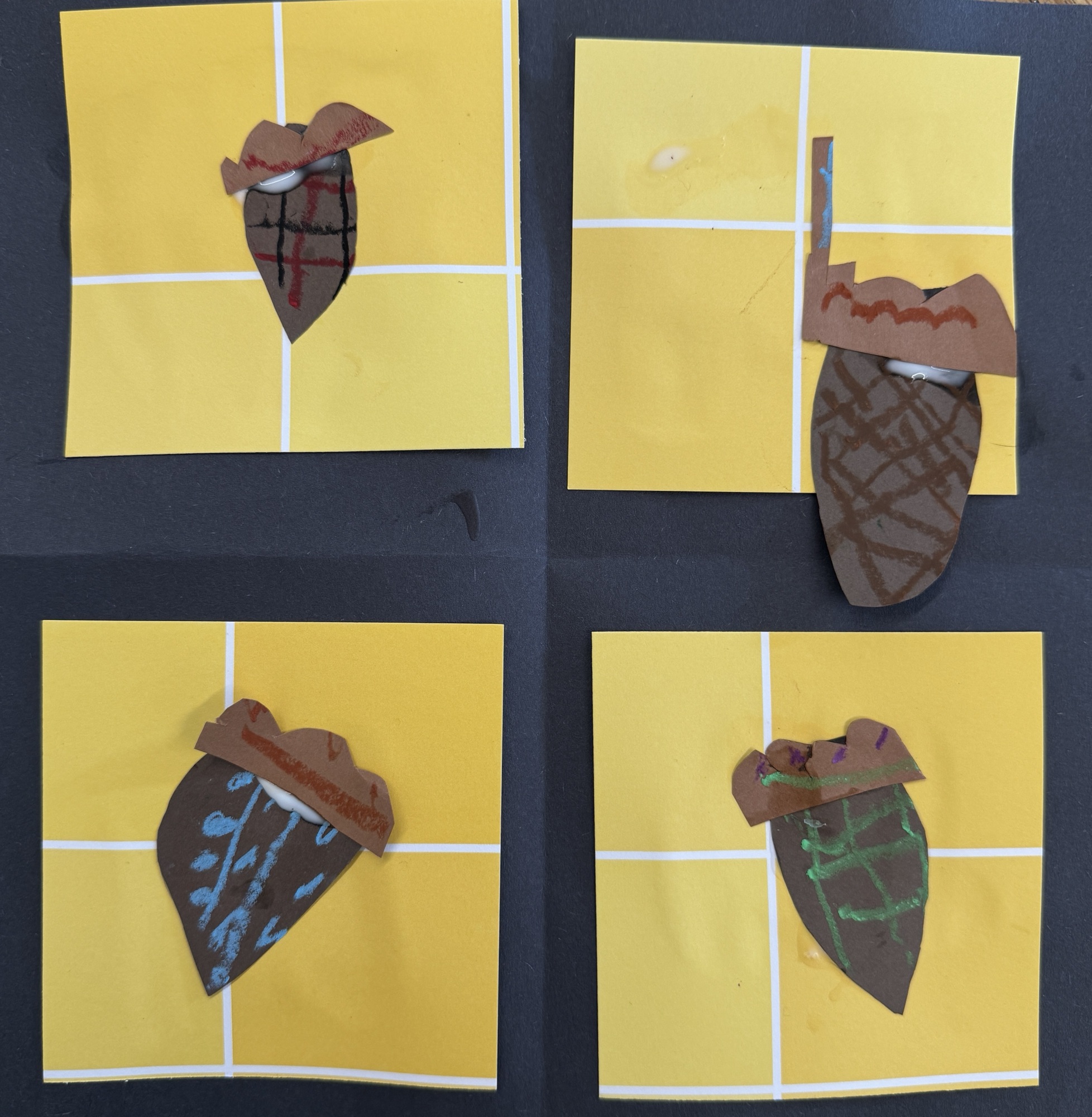
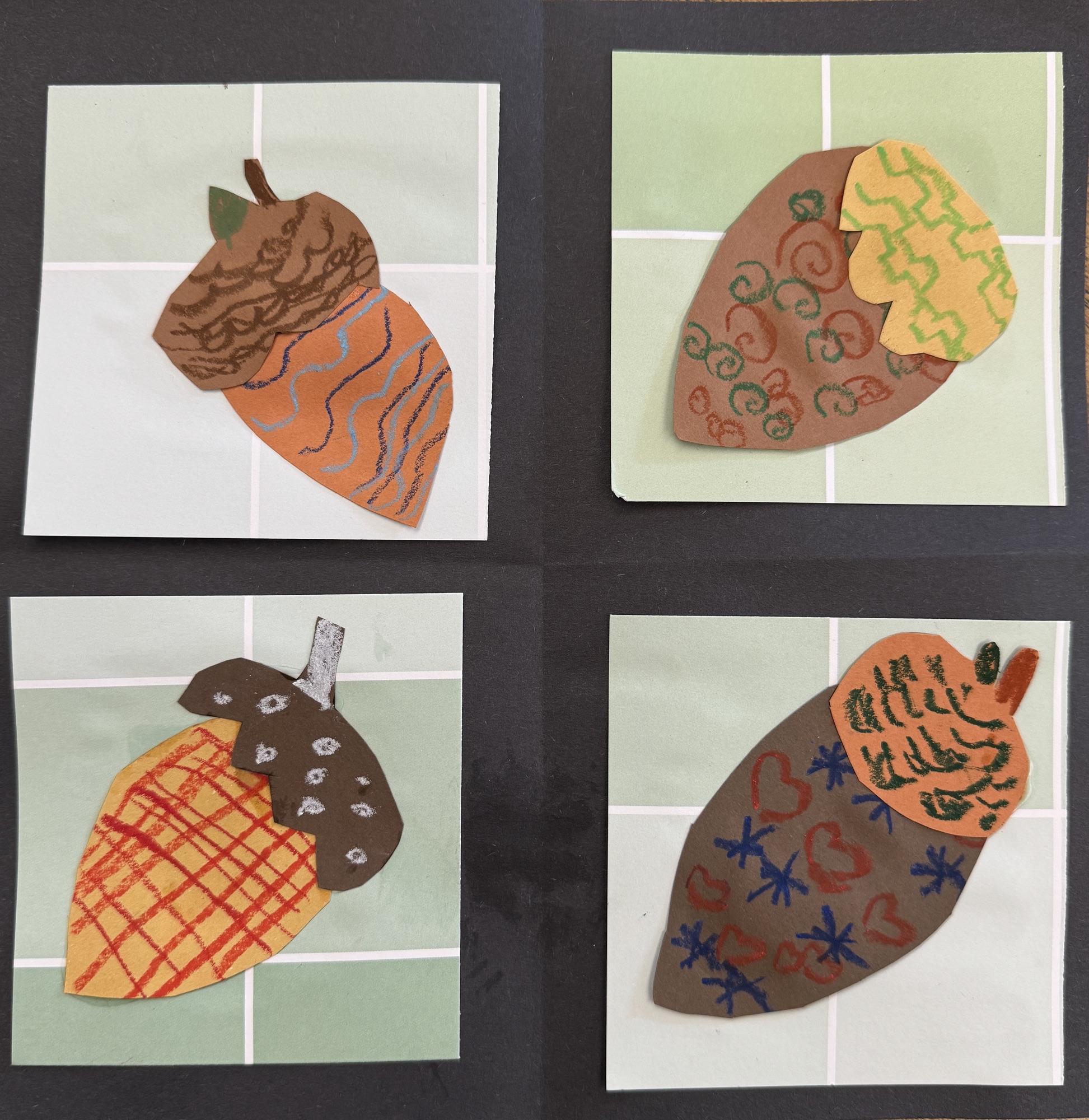
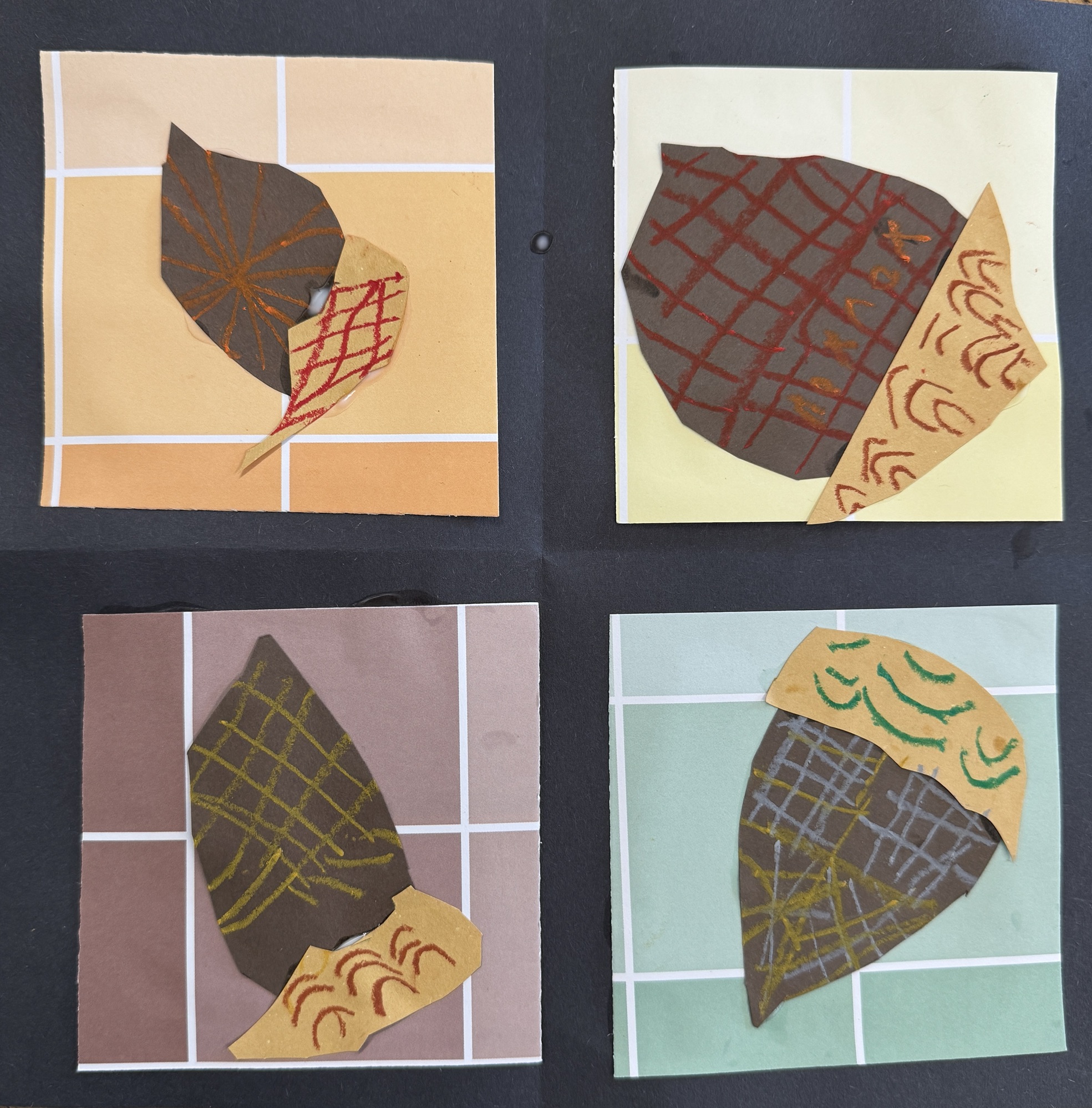
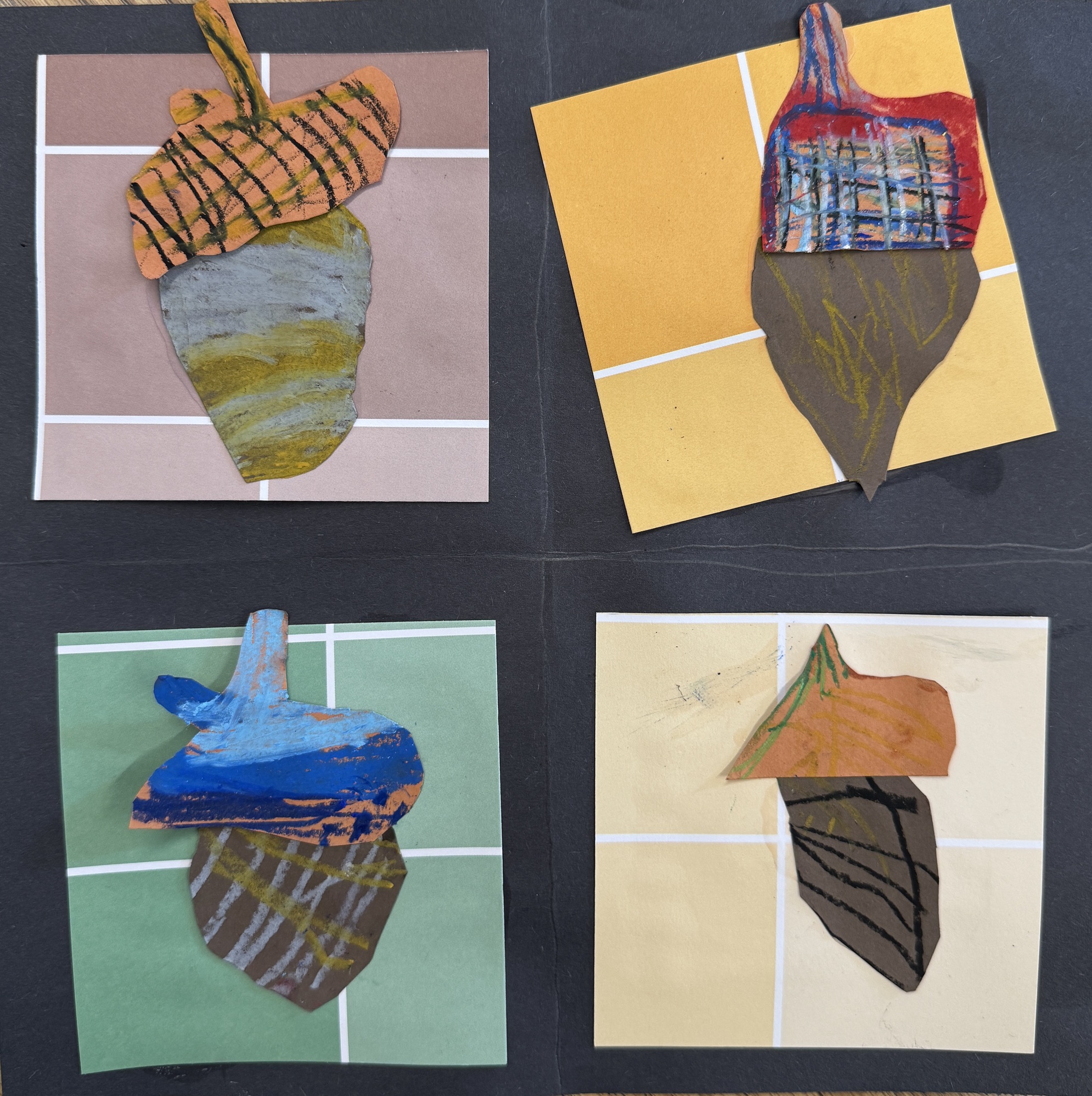
All this science and nature provided the perfect foundation for an art project inspired by Andy Warhol and the Pop Art movement. Today the first graders in my classroom used scissors, construction paper, oil pastels…and wait for it…white glue to create the most adorable acorn art. Scissor work can be challenging for young learners, and to add to the scissor demand I didn’t provide a template. Instead I showed them how to trim the square of paper into the shape of the acorn nut…and another square of paper into the shape of an acorn cap. A few students expressed frustration, but with some encouragement and insistence that they keep trying, all students were able to cut out acorns and their caps independently.

We added some whimsical texture with oil pastels…and then the most challenging part, they had to use white glue to attach their acorn pieces to the background we had assembled. Trust me, white glue can be downright scary in the hands of young artists! But with admonitions to use the glue sparingly, we were successful!

Of course we had to do some writing. Poetry seemed in order–after all this year’s #writeout theme is Poetry for the Planet and I was wanting to keep it short…so we attempted a first grade version of Haiku–a three line poem (without worrying about the syllable count). Here are a few first grade attempts.

J wrote:

Acorns are hard

cozy as fall nears

Spiny as a hedgehog

O wrote:

Don’t fall yet.

Squirrels will get you.

Crunch!

And R wrote:

Acorns look like a balloon that got blown by a man.

Acorns look like a man with a helmet riding a bike to the store.

Acorns look like a top that someone is spinning on the table.

#Writeout we’re off and running! We’d love to know how all of you are celebrating nature and the outdoors in your classrooms and in your lives!

Significance of the Seemingly Ordinary: SOL24 Day 12

In a couple of spare moments between parent-teacher conferences today this email heading caught my eye: Significance of the Seemingly Ordinary. It was a Daily Good article, which always begin with a quote. Here was the one from today:

As I read through the teaser paragraph I became even more intrigued. It describes a movie where the character takes a photograph of the store across the street every morning at 8 o”clock. He has 4000 photos meticulously labeled and mounted in albums. Photos that are the same…and not the same. When he shows them to a blocked writer, the writer flips through the photos quickly, not knowing what to say, says, “They’re all the same.” The photographer replies to him, “You’ll never get it if you don’t slow down, my friend.” You can read more of the story here.

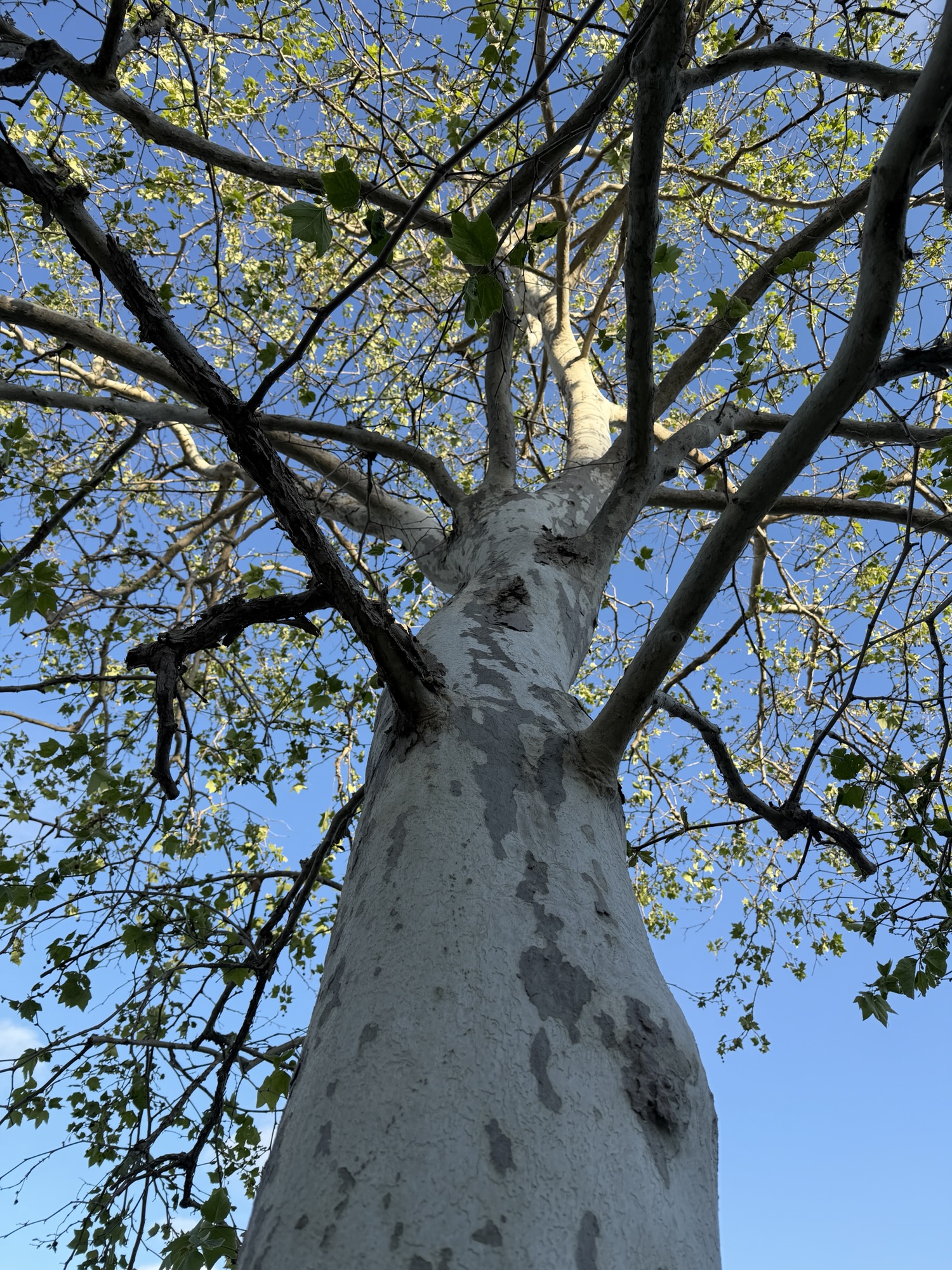
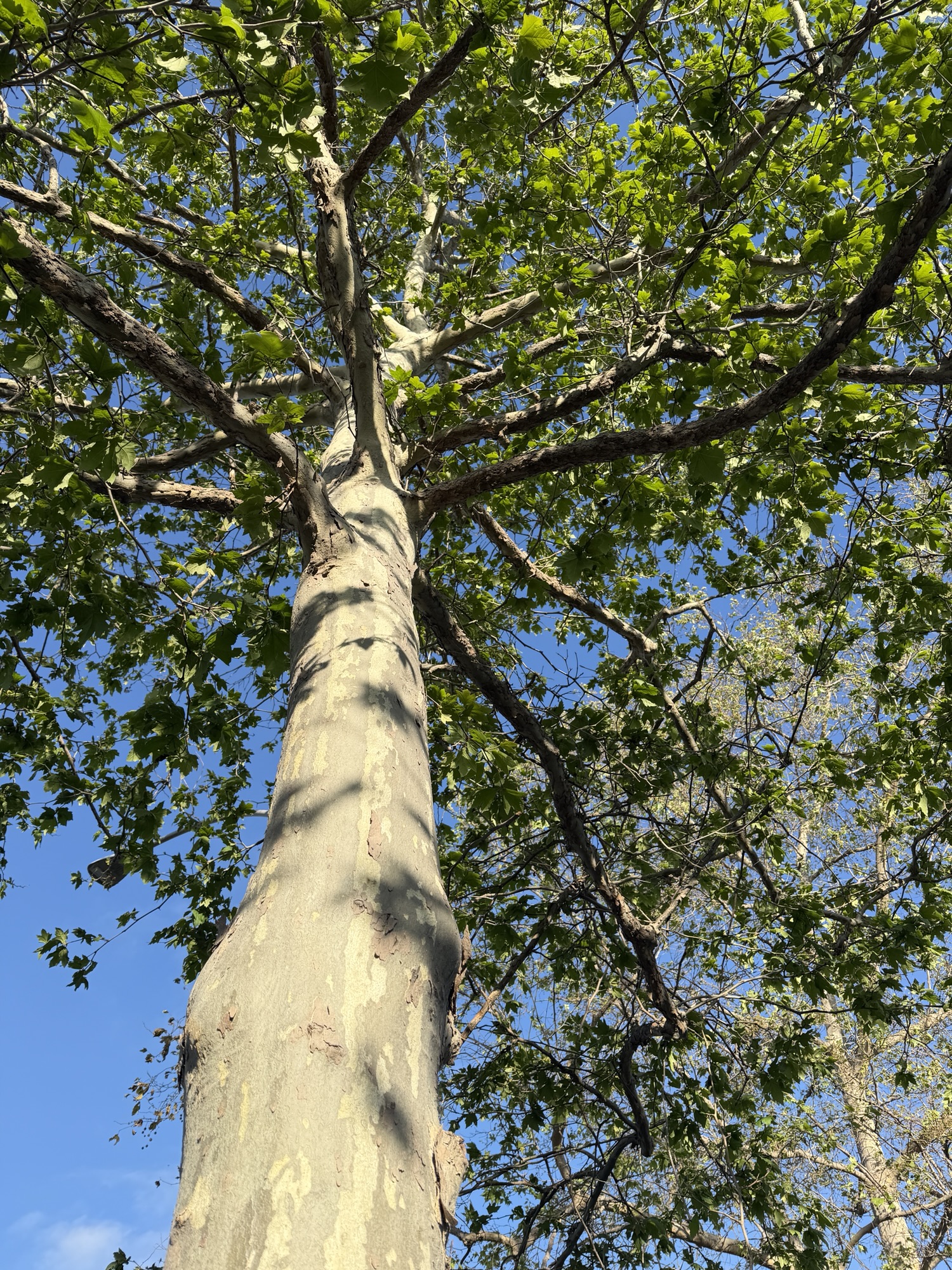
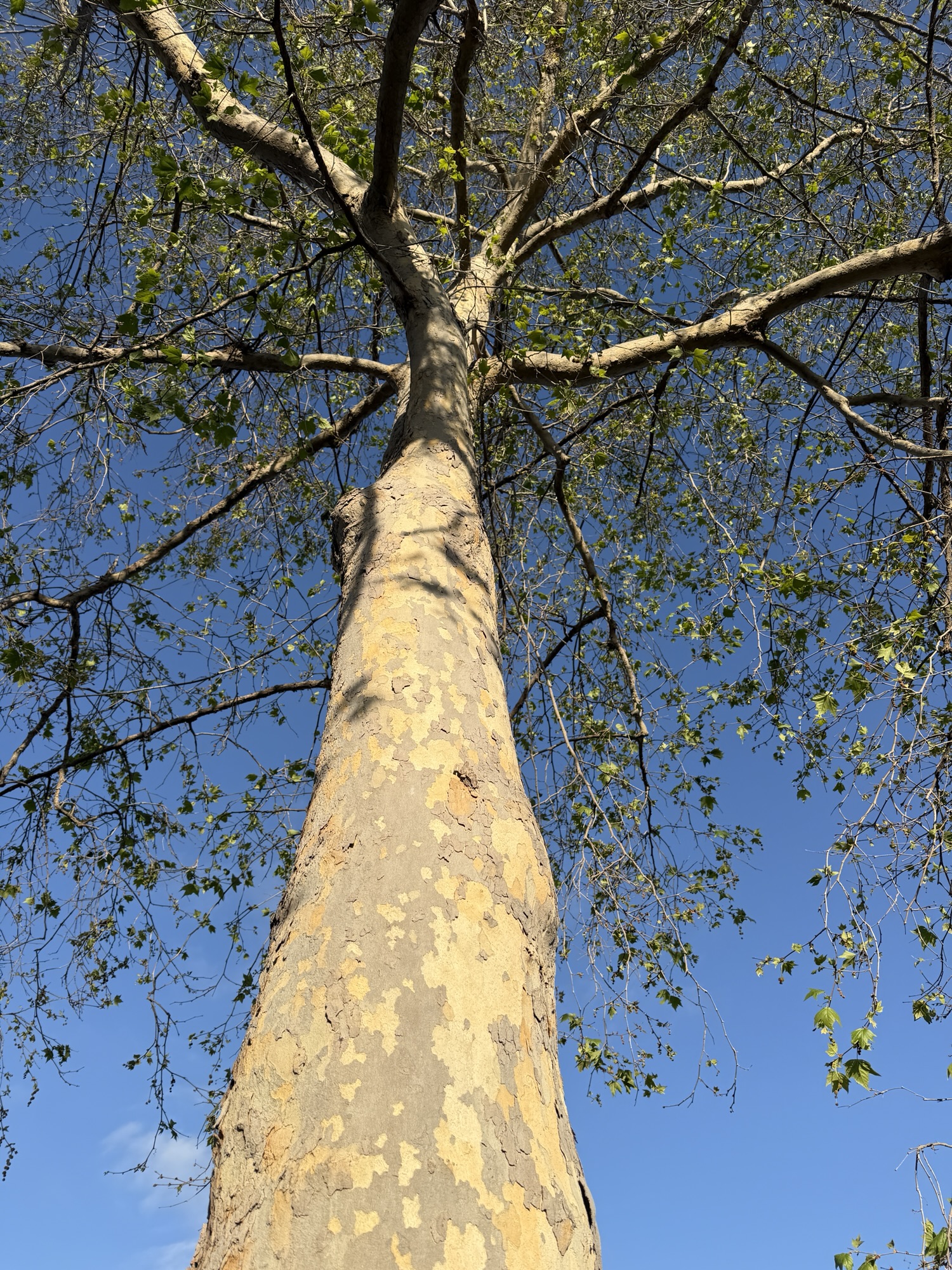
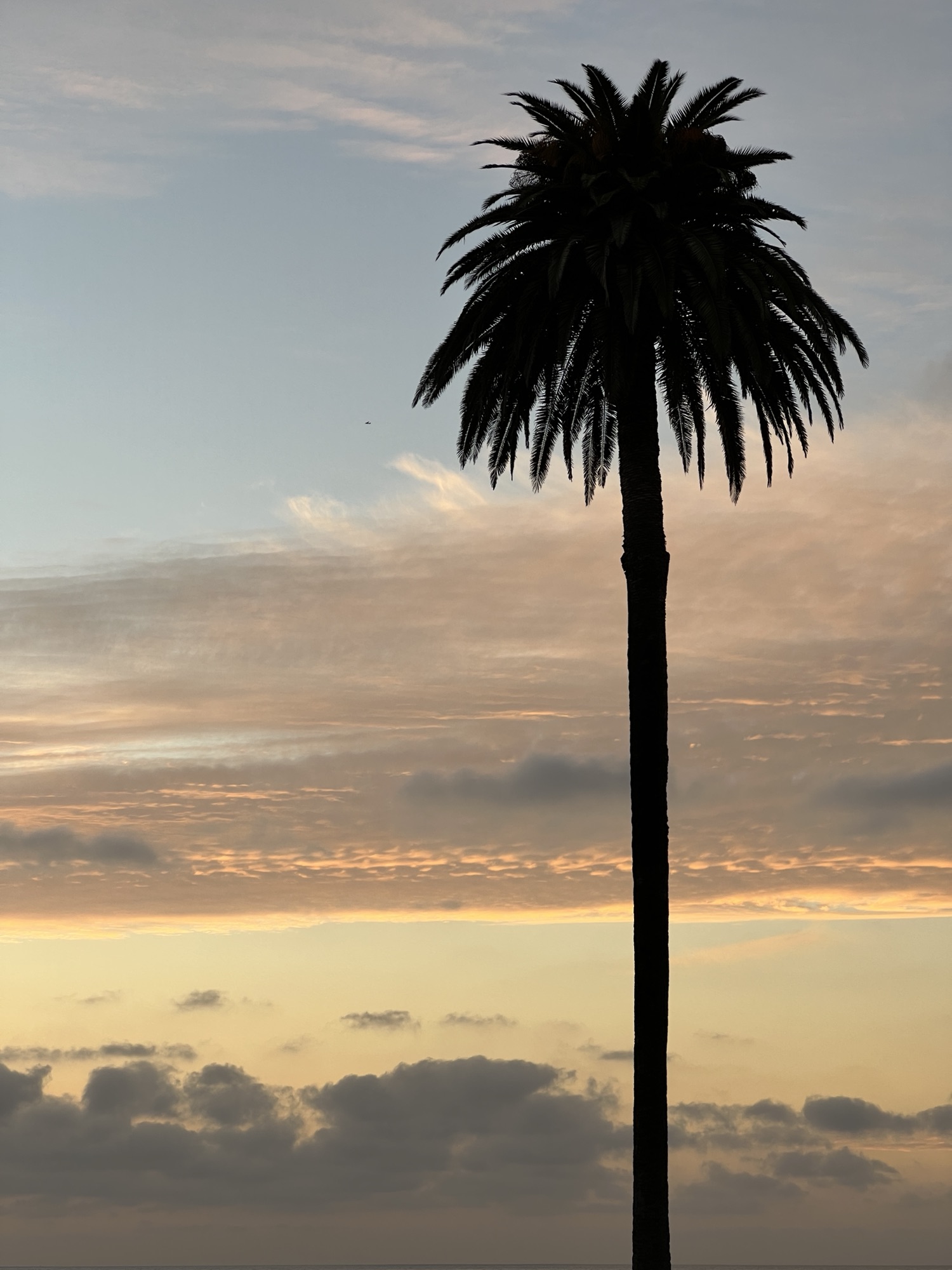
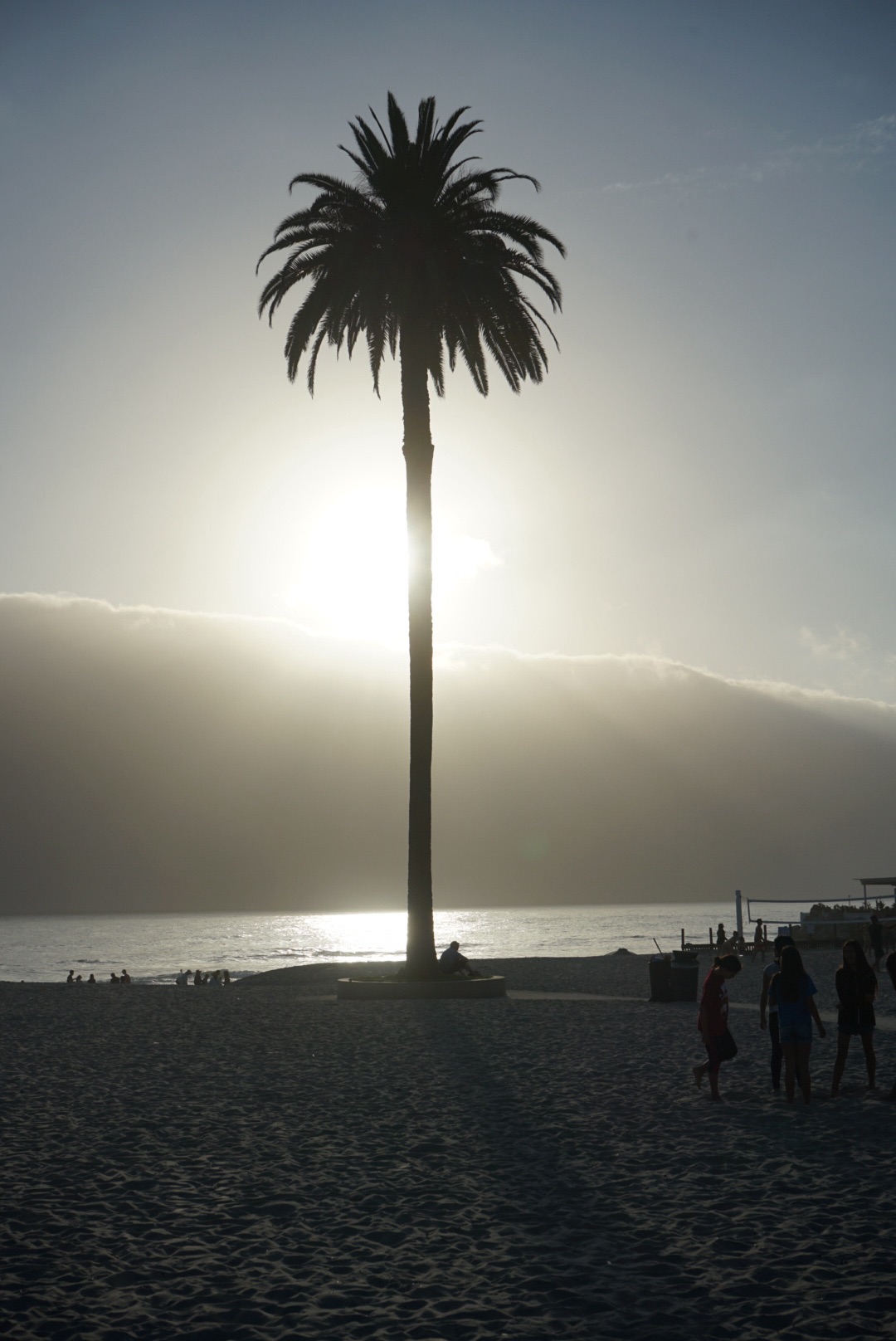
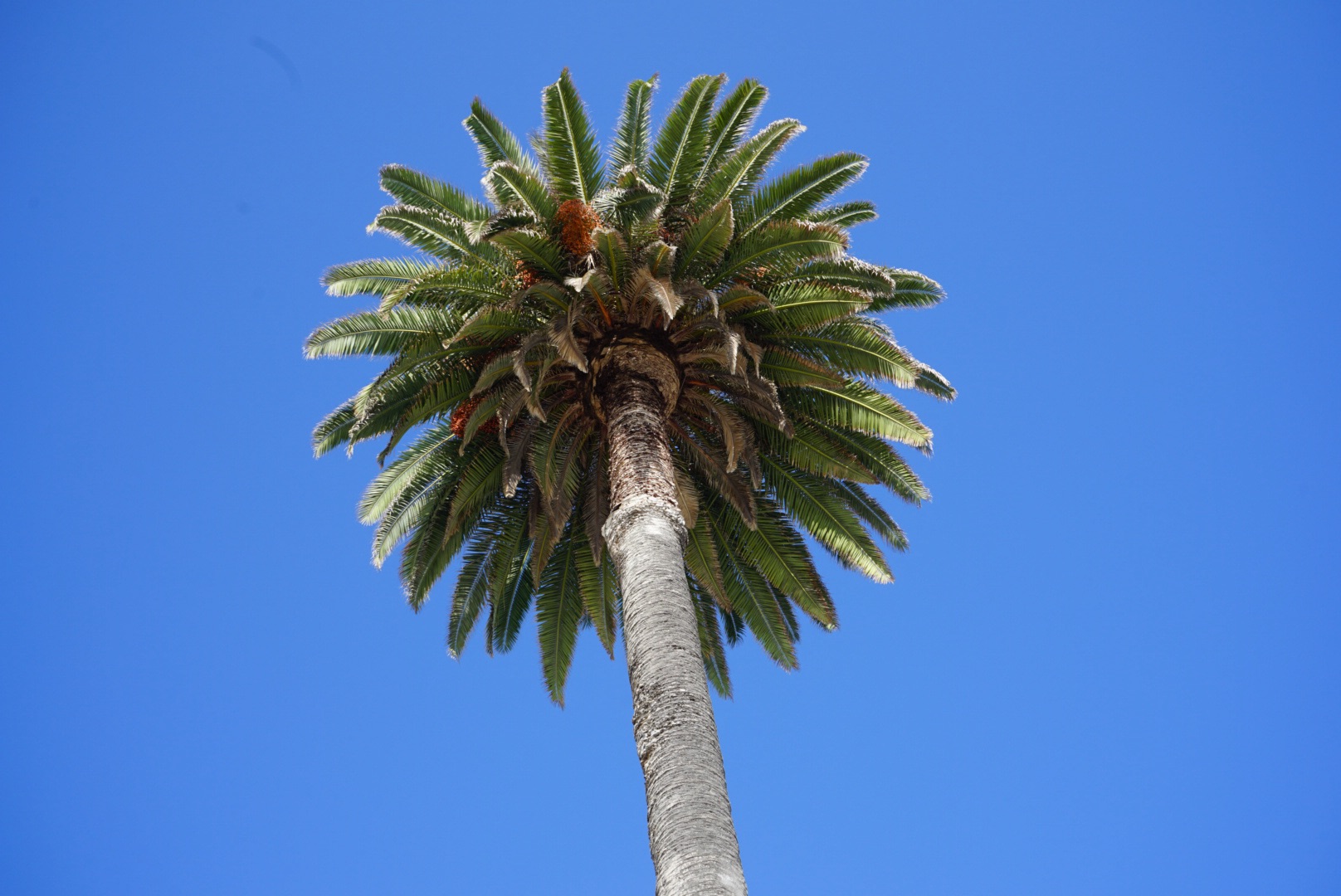
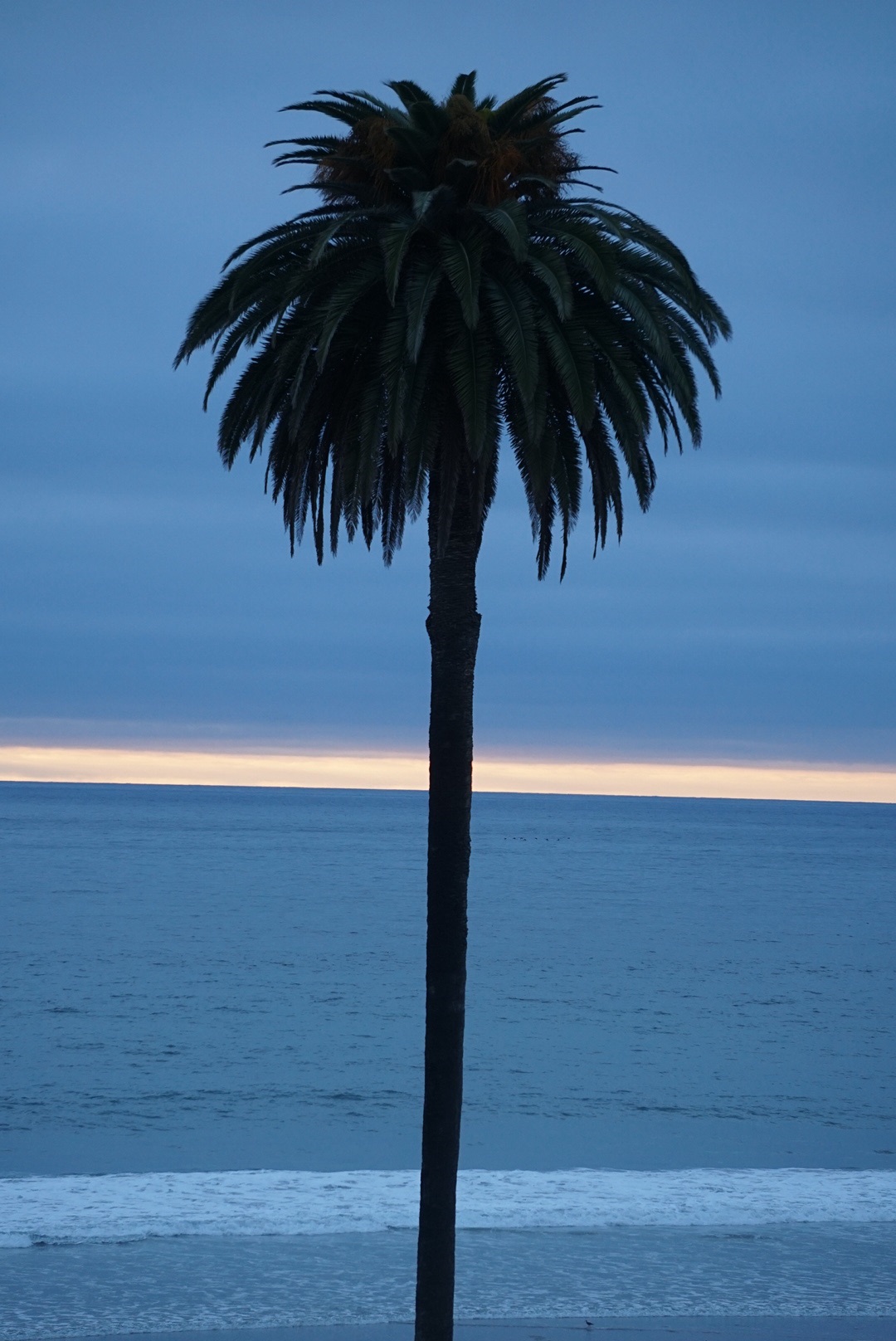
I found myself connecting on two different levels. The photographer in me is intrigued. Why take the same photo every day? But then again, I do find myself taking the same photos over and over again. Maybe the light is different, or the angles…or even my mood. I frequently take photos of this iconic palm tree–here’s a small sampling of my many photos of this one tree.

“One has to be in the same place every day, watch the dawn from the same house, hear the same birds awake each morning, to realize how inexhaustibly rich and different is sameness.” 

The experience of taking the same photo over and over echoes what it means to be a teacher. Each day is filled with sameness. I greet the same faces, the same small humans for nearly a year. And yet, no two days are the same. At my best, I take hundreds of mental photos of my students every day as I strive to pay attention to the nuances of their individual learning processes. I need to know them–when the sun is shining, when the fog hides their features, in a tight close up, as the sun sets.

To be a teacher is to learn to appreciate the richness and difference of sameness. And as I navigate the sometimes groundhog’s day-ness of parent-teacher conferences I find myself thinking about sameness in a different way. During each conference I am taking stock of those thousands of mental images, knowing that supporting learners (and their parents) is in the small moments. It’s in the slowing down even when the world keeps urging us to speed up. When I got behind in my conference schedule today I was tempted to cut things short, to “catch up.” But the conversations were meaningful, adding new images to my store of mental photos of my students, their families, and their learning and I know I’ll be perusing them in the weeks to come.

And now I think I’ll be looking back over my photographs to see what else I can learn–from them and about myself.

Rainforest Serenity

Where I live it seldom rains…and when it does, it creates all kinds of havoc because we are not equipped to deal with it.  And our environment reflects the lack of water, with plants that take the least water–cacti, succulents, sages and other brushes–thriving, while others only survive because we take the time (and expense) to water them.

Today we snuck away for the long weekend to a place known for rain–and specifically headed off to explore the temperate rain forests of the Olympic Peninsula in the Olympic National Park. We knew that rain was likely for the entire weekend, and still headed off to spend time outside in this environment so different from the one we are used to.

Somehow, we managed to avoid rain today, but had plenty of evidence of its presence.  As we walked among the giant evergreen trees (spruce, cedar, and firs) I could feel the calm settle over me.  Out in the cool, damp air among the towering trees, the sun had to work to reach the ground.  The serenity was tangible, but seems difficult to put into words.

light in the center

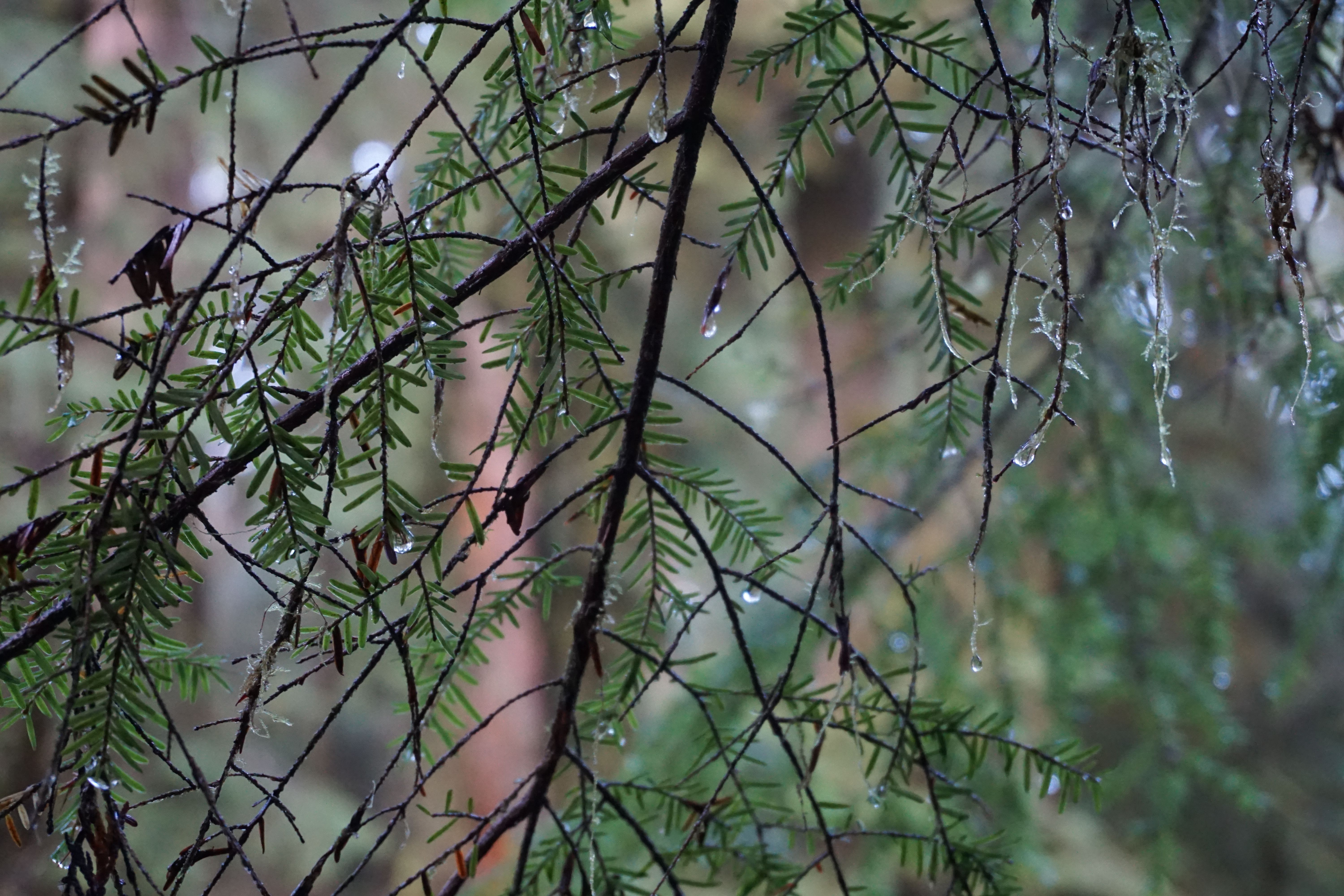
I started to notice the water droplets hanging from tree branches as I brushed against them and caused my own little rain storm.  And then I became fascinated with the jewel-like quality of the water, trying to capture it with my camera.

drops from the branches

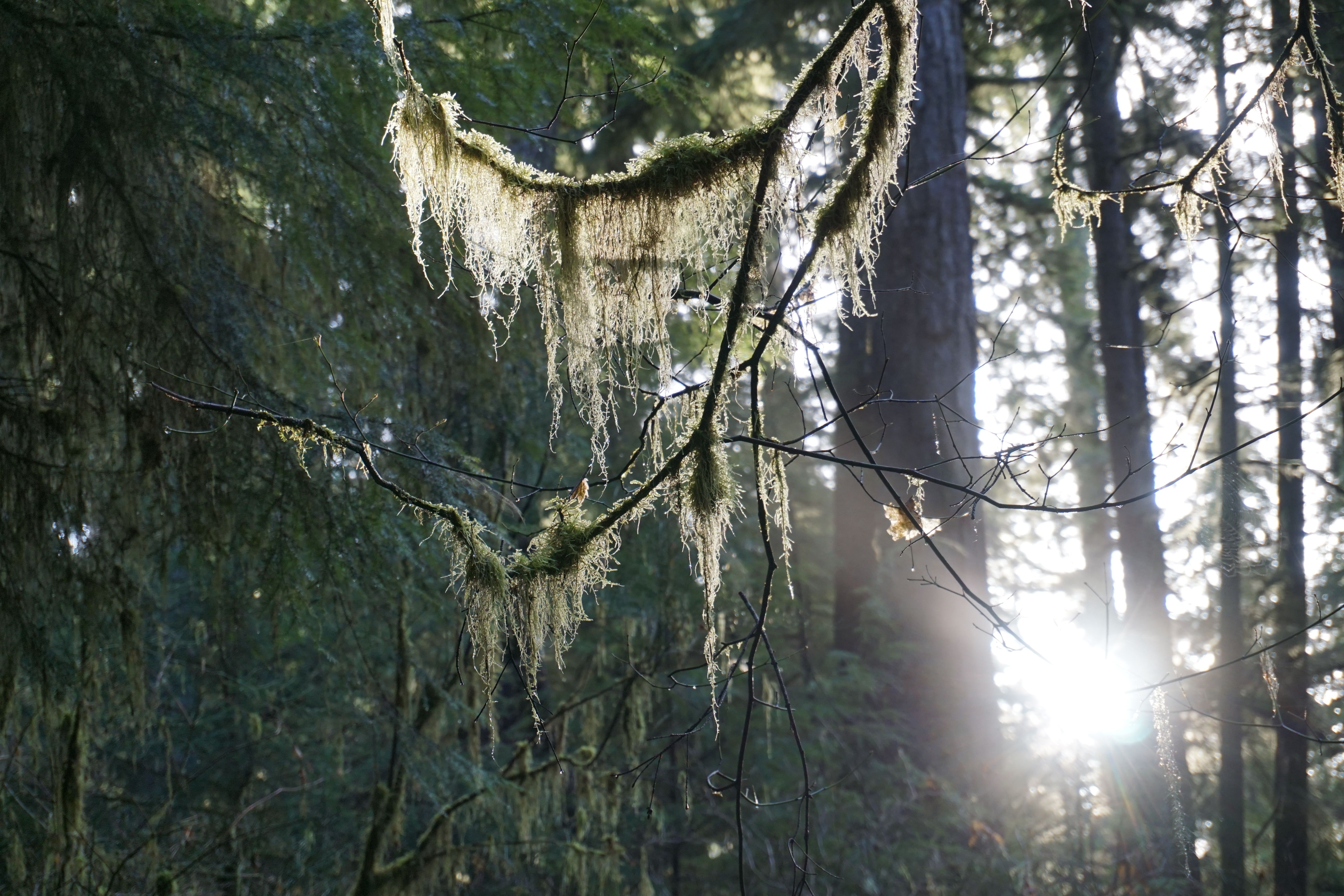
I noticed ferns and mosses and lichens all around me and I started to play with my camera, trying to capture the light as it danced and played hide and seek in the forest.

moss in the light

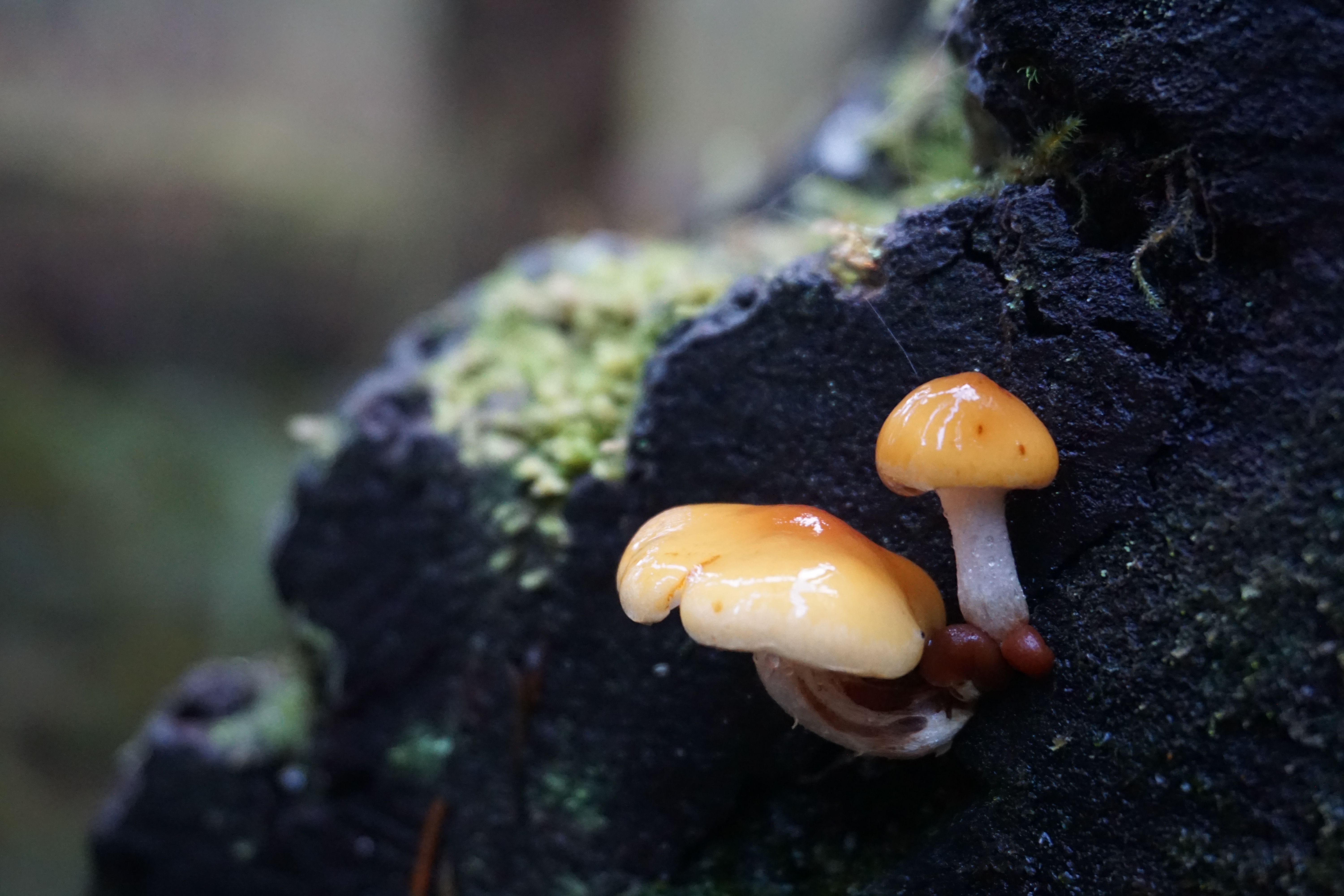
And I started wondering about mushrooms…why hadn’t I seen any?  At about that moment, I came around the corner and noticed this beauty growing on a fallen log.

mushroom close up

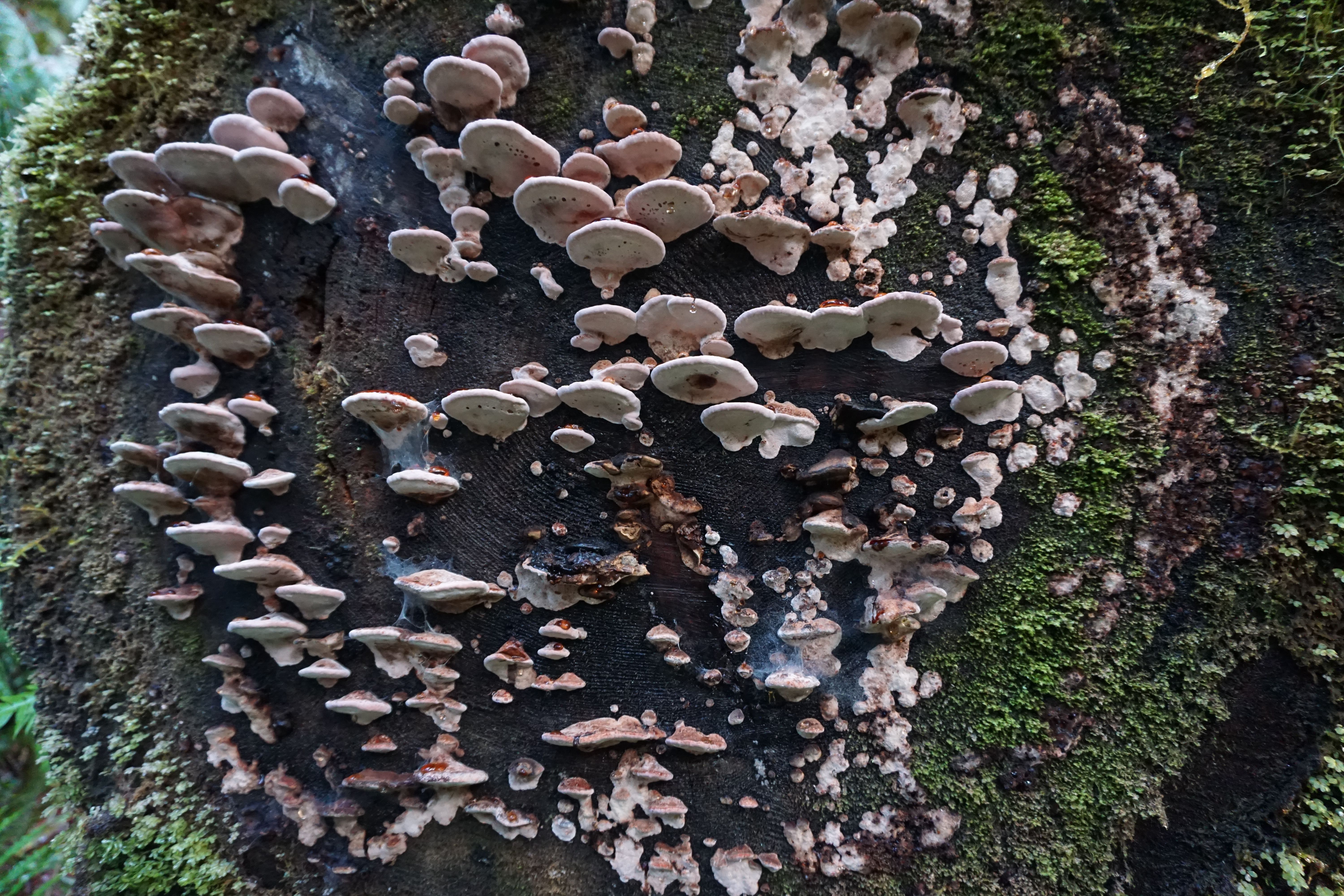
There were more…and more as I began looking closely.  I love this entire colony we found growing on the flat face of this stump.

mushrooms on a log

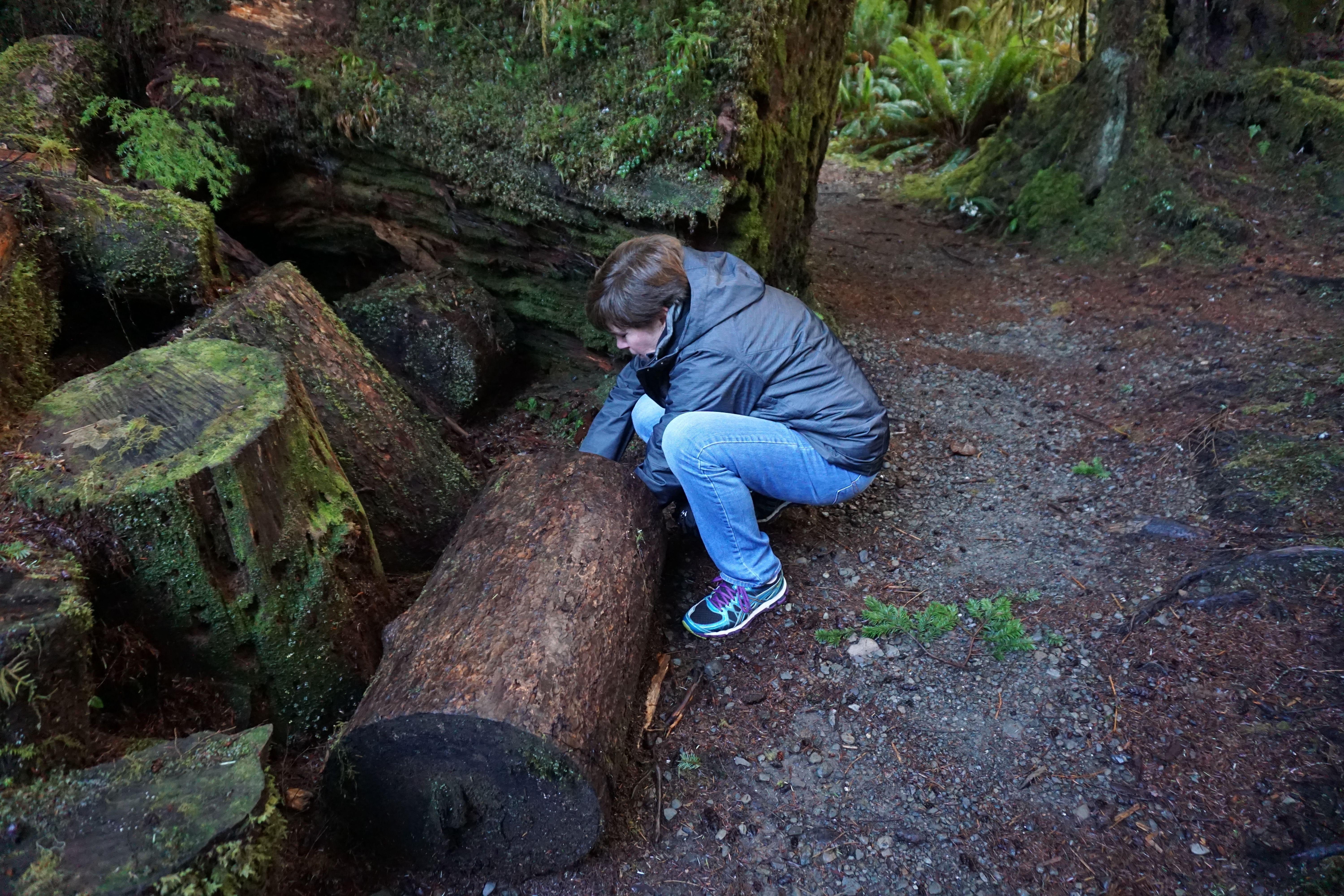
Geoff caught a picture of me leaning in closely with my camera trying to capture the unique beauty of fungi!

leaning in close

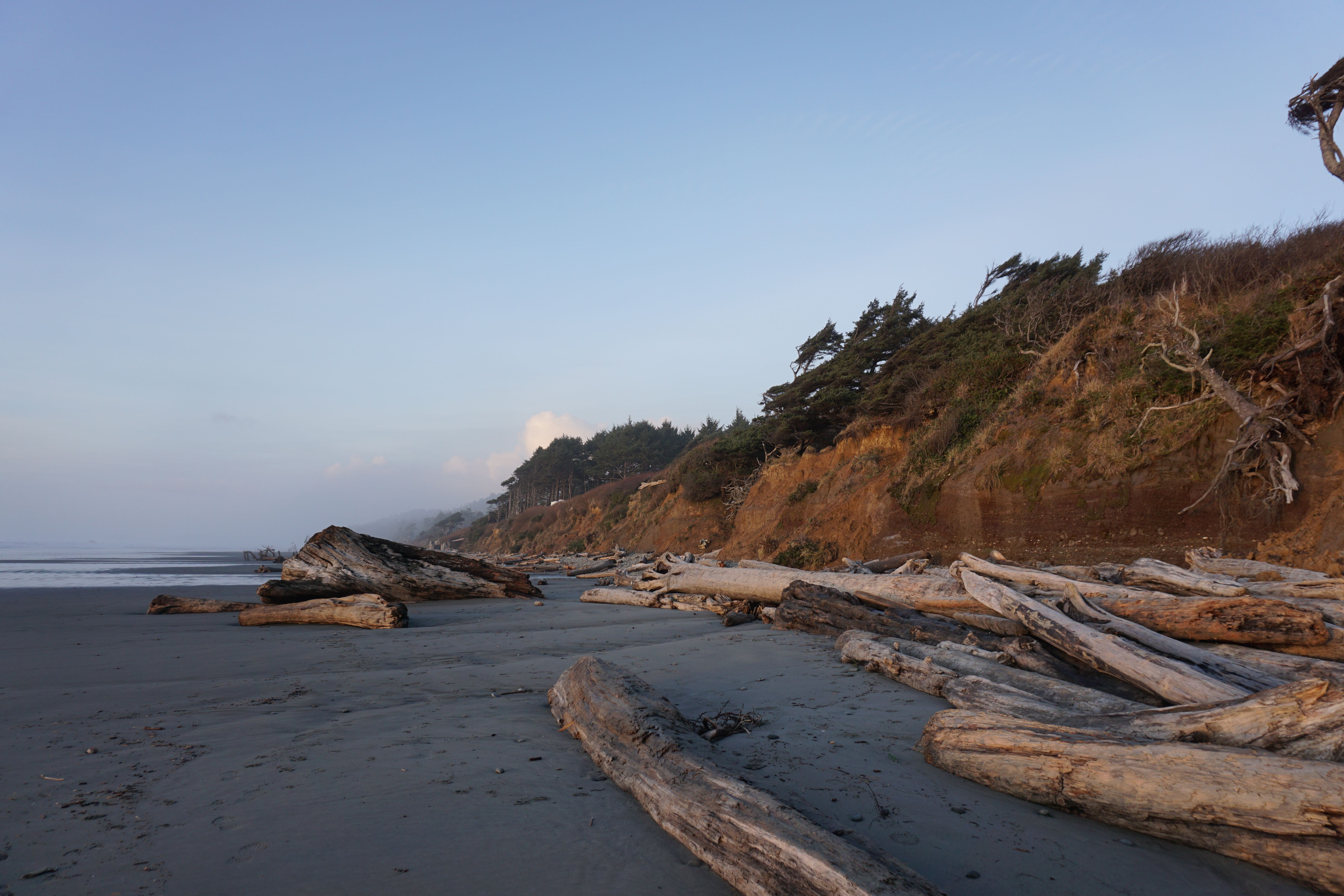
We left the rainforest and headed toward the beach…hoping to catch both the low tide and sunset before darkness pushed us indoors for the night.  And you know that I spend plenty of time on the beach…but these wide, wild, untamed beaches are very different from the beaches I frequent.  The tide was low and sand seemed endless.  Instead of driftwood, drift logs were in evidence!  We spent only a short time walking the beach as we took in the sunset.

logs on the beach

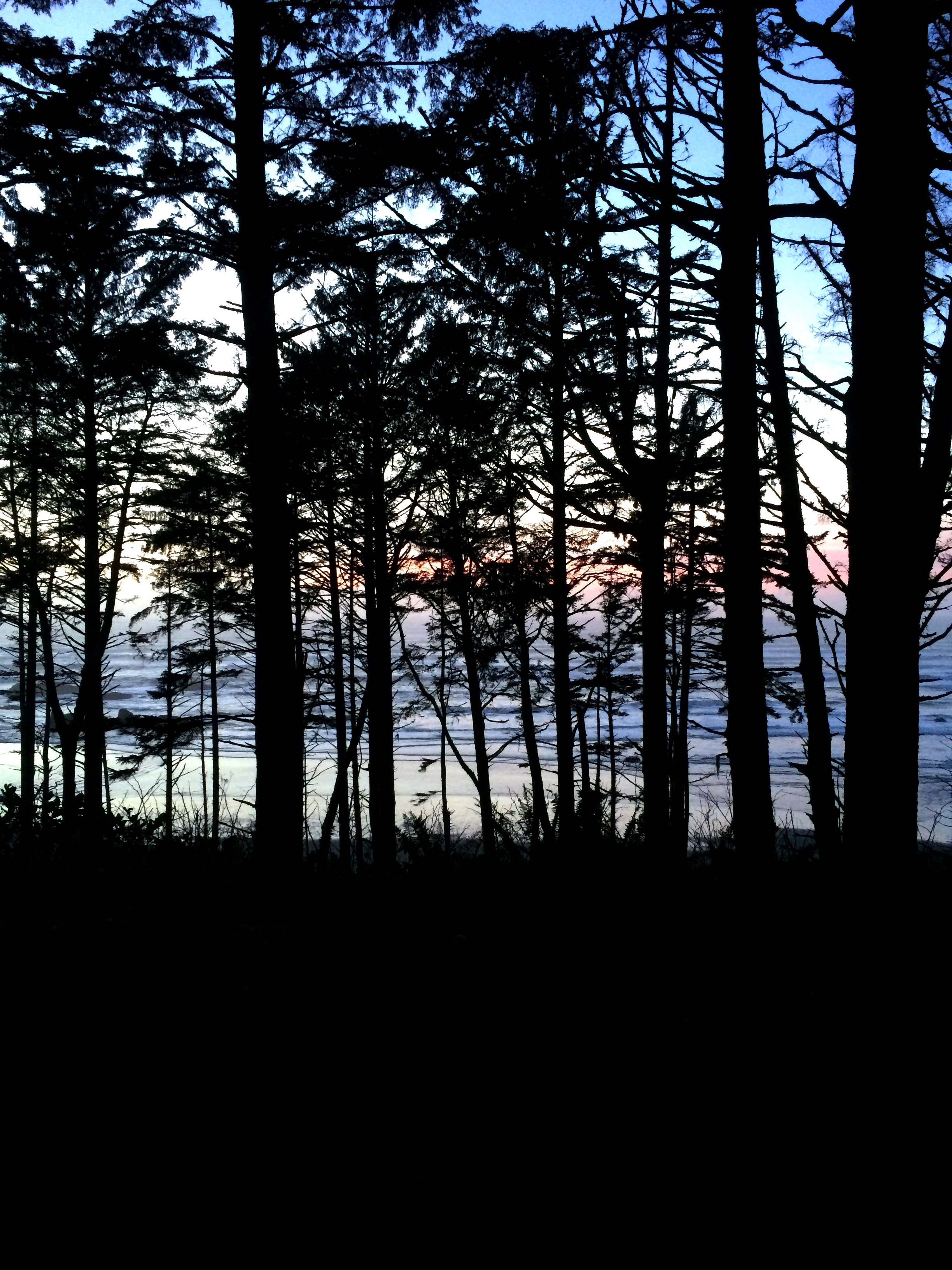
And as we headed off to a tiny town that would be home for the evening, we made one last stop after sunset, but before darkness had settled.  I love this post-sunset glow that shines pink through the silhouettes of trees that frame the ocean beyond.

post sunset at ruby beach

I didn’t know I was looking for serenity today, but it found me as I explored the beauty of the Pacific Northwest.  I can’t wait to see what tomorrow will bring!