Where I’m from poems are tried and true in the writing project circles where I spend my time. So when Stacey at Verselove shared Where I’m From, Again as today’s post, it felt familiar.
I decided to try a very short form today…a Haiku. Can I express some aspect of where I am from in just 17 syllables? Here goes…
I’ve written scar stories, I’ve had my students write their own scar stories, but when Bryan’s scar prompt came up this morning at Verselove, I just kept thinking about my good fortune in this life.
Instead of my own scars, my mind immediately went to a student that I didn’t get to help this year. Time with me was too brief, attendance too sporadic, and eventually fear won and my student was gone. I can only imagine the resulting scars for this child and this family.
Both Molly at Nix the Comfort Zone and Margaret at Reflections on the Teche posted poems using a form they called a shadorma: a six-line poem that follows a 3/5/3/3/7/5 syllable count. To keep myself focused and constrained, I used this structure for today’s poem.
Dave’s prompt over at Verselove about travel is actual lived experience at the moment. And as often does when travel is involved, the day got away from me. Here is my small offering…a piece that may (or may not) develop during the course of the month.
Today’s Verselove prompt comes from Denise. She encouraged us to borrow some rhyming words to craft a poem of our choice.
Rhyme is one of those techniques I mostly stay far away from. Rhythm, yes. Word play? I’m in. But rhyme challenges me–it feels too forced or too trite or just too obvious.
But in the spirit of trying and working to craft something meaningful, I turned to Emily Dickinson and her very well known poem, “Hope” is the Thing with Feathers and borrowed some rhyming words–as well as using her title as inspiration on the slant for my title.
An afternoon at the Monterey Bay Aquarium under the influence of the sea–both inside the aquarium and outside in the wilds of the magnificent Monterey Bay provided the content: jellies, the giant Pacific octopus, the grumpy looking moray eel to name just a few.
It’s National Poetry Month (no joke!). My intention was to use the Verselove prompt to launch my daily poem post…but today’s prompt didn’t quite work for me.
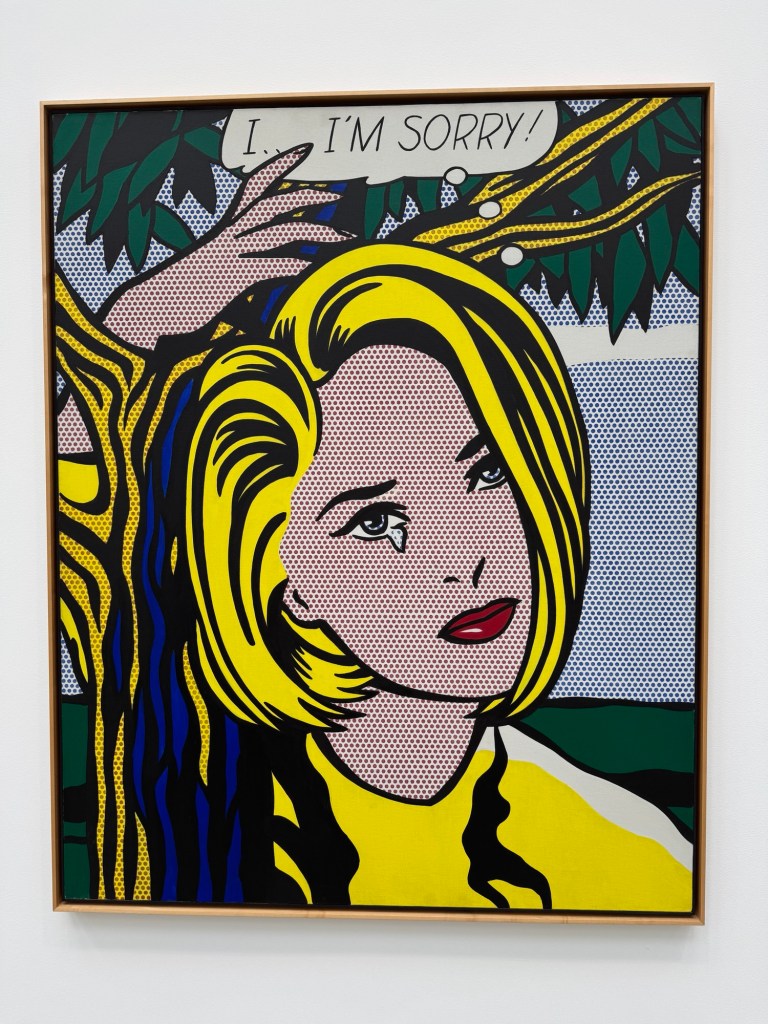
A morning in traffic (typical) followed by art museum exploration–a perfect stage for a first day of daily poetry.
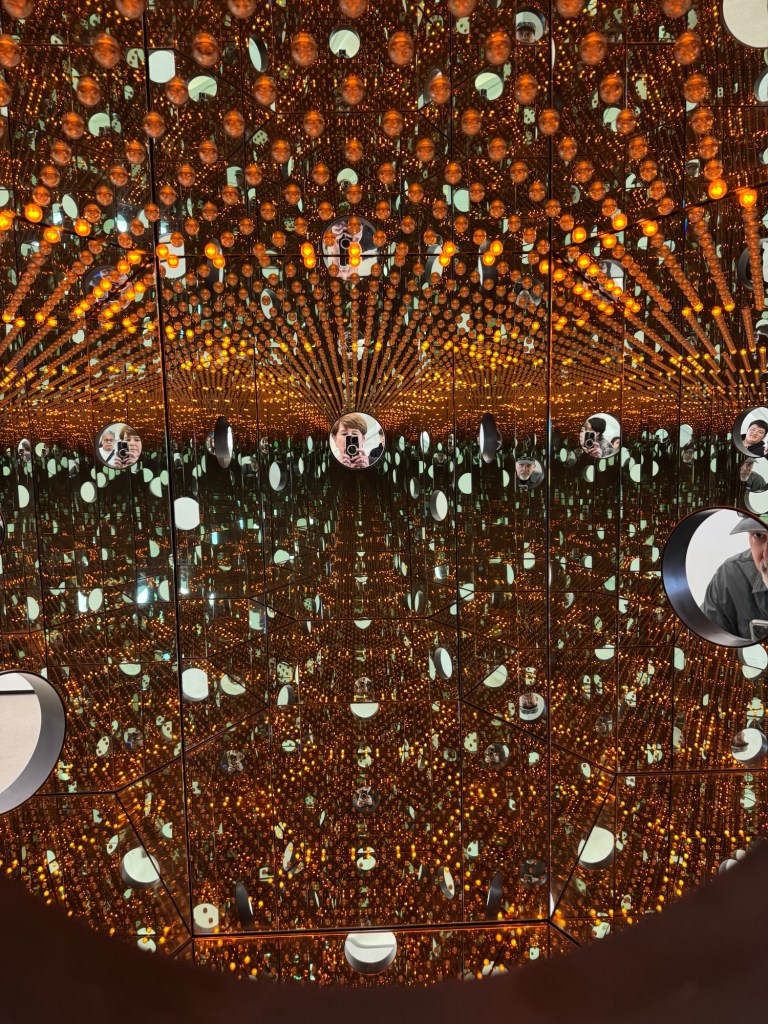
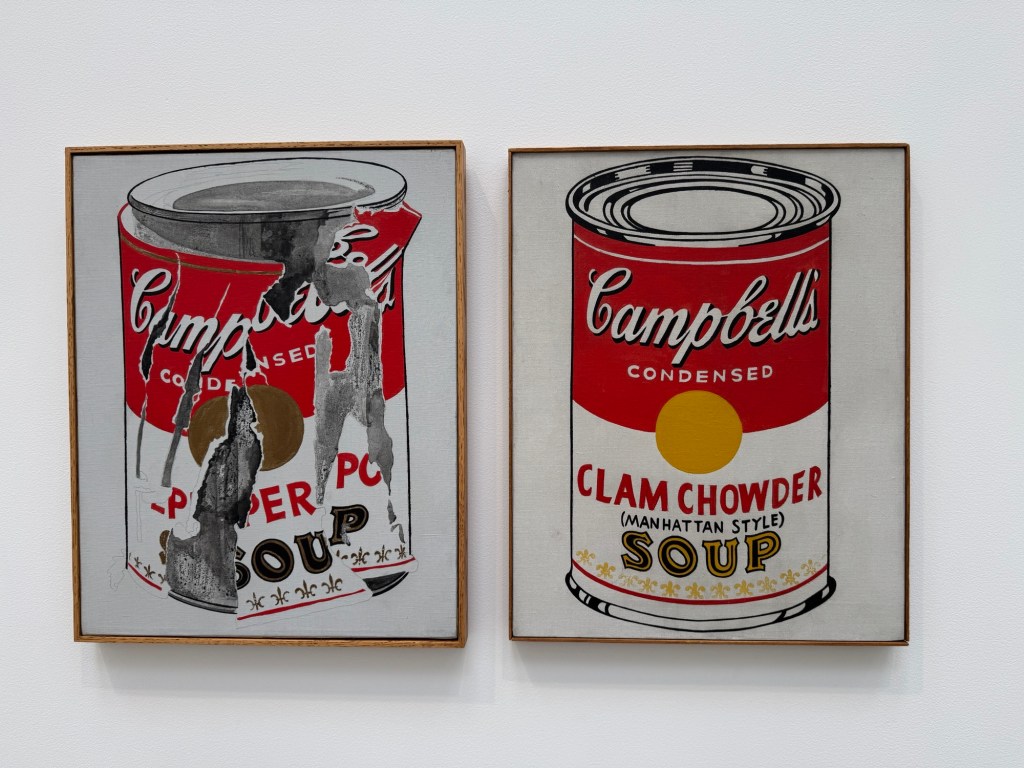
So instead of exploring a collection of verses for today, my post is a poem that explores repeating dots, colors, and patterns inspired by Yayoi Kusama, Andy Warhol, and Roy Lichtenstein and a visit to The Broad in LA.
Part I
Each car a dot, nestled against another
dot to dot to dot until the entire freeway is miles of dots
On this 31st day of writing and posting, I’ve found a rhythm. Somehow, even when it seems that an idea for writing will elude me, something shows up. There is something about writing every day that brings forth writing every day.
On my most stuck days I do a couple of things.
Take a walk through my camera roll to find an image that sparks something: a memory, a metaphor, a story, a connection…
Read other people’s blog posts–either from fellow slicers at Two Writing Teachers or those I follow from other sources. Reading the writing of others might offer a structure I can adapt (13 ways, things worth sharing). I might remember a way to offer myself a lifeline when feeling overwhelmed and under-timed (6-word stories). Or I might more generally find a topic I relate to and allows at least a trickle of ideas to flow.
But what I love best about writing every day during the month of March is writing in community. The Two Writing Teachers Slice of Life Challenge brings together writers who are challenging themselves to write, even when writing feels hard. And, they are taking the time to read and respond to the writing of others. There is a spirit of generosity in this space that pushes writing forward–at least for me. These generous writers, most of whom I do not know, take the time to read and comment on the posts I publish. In a short period of time, they feel like friends. And these friends keep me accountable to myself, helping me trace a path through my brain in search of ideas that will set my writing loose.
Last night when I went to bed, I told myself I would get up and walk in the morning while my husband was at the gym. I wanted to get my daily walk done and out of my way on this first “real” day of spring break so the rest of the day could unfold without attention to a need for exercise. When I awoke this morning, everything was wet.
What? Rain in a place where it seldom rains? I consulted my weather app (as though the wet ground were not evidence enough), sure enough, precipitation expected for the next couple of hours. Hmmm–should I walk or not? I checked outside–drizzle seemed a good word to describe this event.
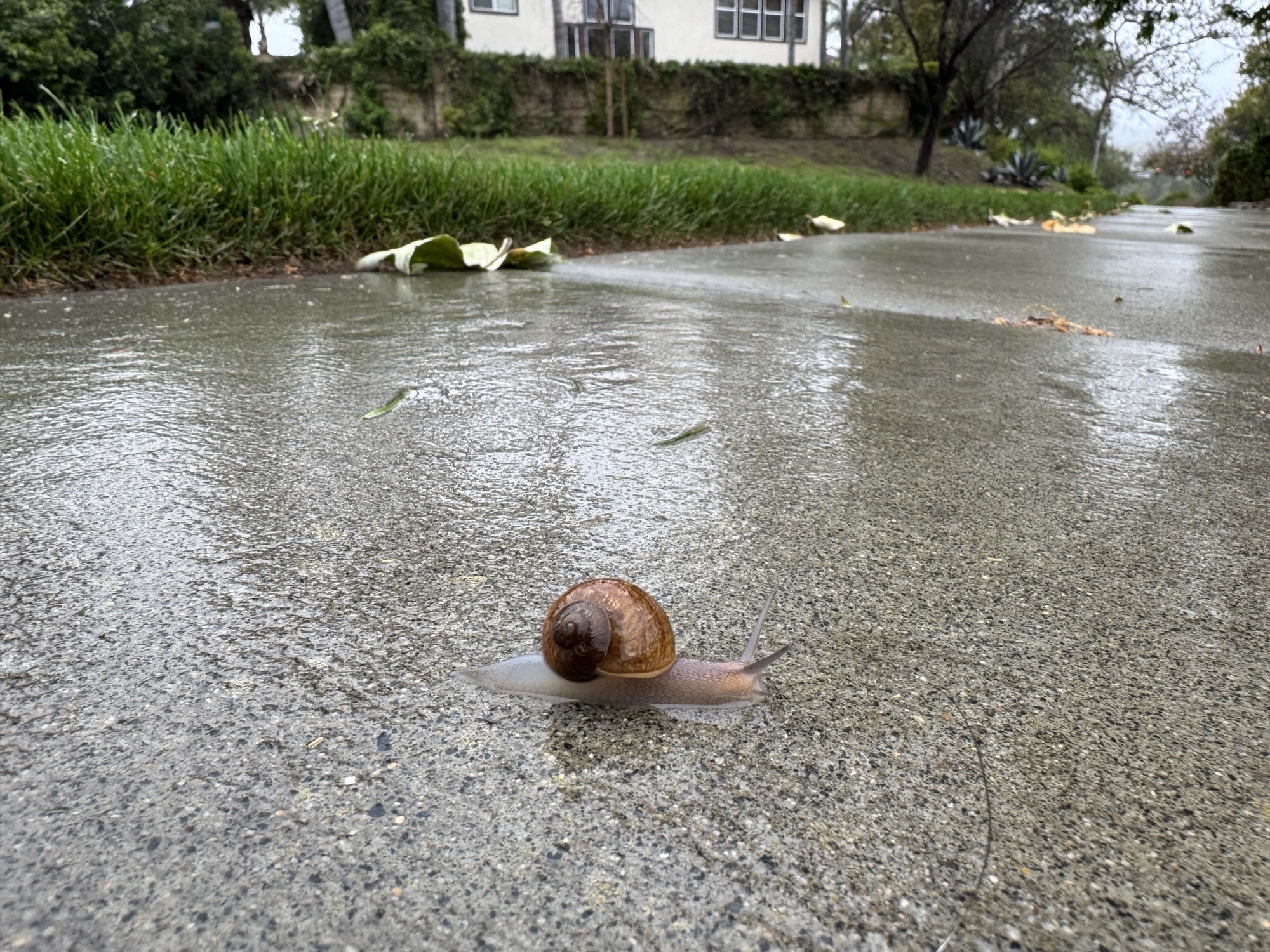
The raincoat with the hood up was a good idea. The damp began to layer and droplets started to trace a path off the edge of my hood, making its way onto the toes of my shoes, and into the recesses of my brain. Everywhere I looked pathways opened. I could see sap rising and feeding the greening trees. Closed flower buds waited, ready for the sun’s light to highlight a path for the bees to follow. But it was the snails that spoke to me.
I knelt low, camera in hand, noticing the paths traced on the wet sidewalk. Tiny snails smaller than the nail on my pinkie finger, others the size of my thumb slimed their way across the walking path. Where are they going? Where did they come from? If I didn’t know better, I would think they drop from the sky in the raindrops! Their zigzagging paths unloosed a path in my writing brain, as I traced the wonder, struggle, and yes, delight in the act of writing and posting every day. Will my ideas go back into some kind of hibernation (wherever snails go when the weather is dry) if I don’t keep up my writing practice?
Lucky for me, tomorrow marks the beginning of National Poetry Month and I have gotten in the habit over the last few years of writing and posting a poem each day in April. Many in the Two Writing Teachers community also find themselves posting to Verselove at Ethical ELA. Maybe I will see you there.
Most people see the beach as a playground, a gym, an opportunity to commune with nature, a place to get away from stresses and routines of the work week. Sometimes, though, I notice artists at work.
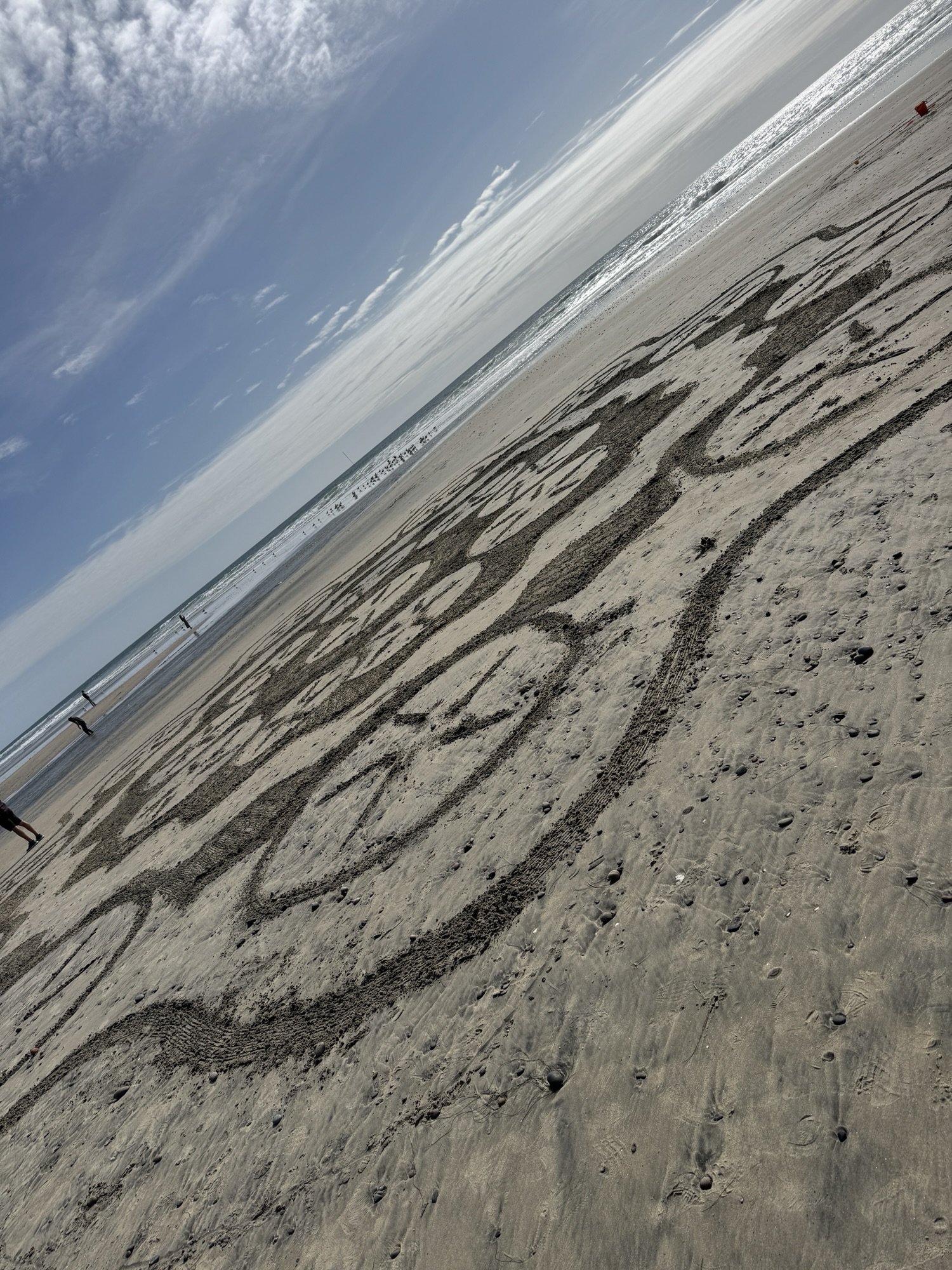
There are artists who are inspired by the natural beauty of the beach and drag their easels, paints, and canvases to the shore and set up to work en plein air trying to capture what they see in front of them. Today’s artist used the sand as both canvas and paint and a rake as his brush.
When my walk began, he was just getting started and had traced some circles on a large flat spot near where I walked onto the beach. I paused long enough to watch his technique for creating even circles–although I doubt I could replicate his motions. I walked some miles, stopping to watch egrets and other shore birds. I noticed some places where the cliffs have crumbled since my last visit to this beach. I took photos of sand dollars, sea birds, and the piling remnants of a structure that existed on this beach about a hundred years ago.
As I returned back to where I began, I noticed the completed art raked into the sand. As the mom of an artist, I’m fascinated by artists’ processes. I see the compulsion to create, the need to express, and how artists find their own tools of choice. When I see the scale of a piece like this in the sand, I have so many questions!
Is the work pre-planned? Does the size relate to the size of the rake? The size of the artist? Are the measurements a felt sense that the artist intuitively knows as the pole end of the rake traces circles and then the rake is turned to brush in the texture?
What is it about temporary art that is so question-invoking? I’ve seen other sand artists who place their art strategically where they can stand above it and photograph their work. Did the artist take a photo before he left his art for beachgoers to admire?
I did notice others like me taking the time to photograph this piece of temporary art, admiring its scale and shape. And there is something spectacular about art with the Pacific Ocean as its backdrop.
What found art have you come across? What surprised you? What wonderings did you have?
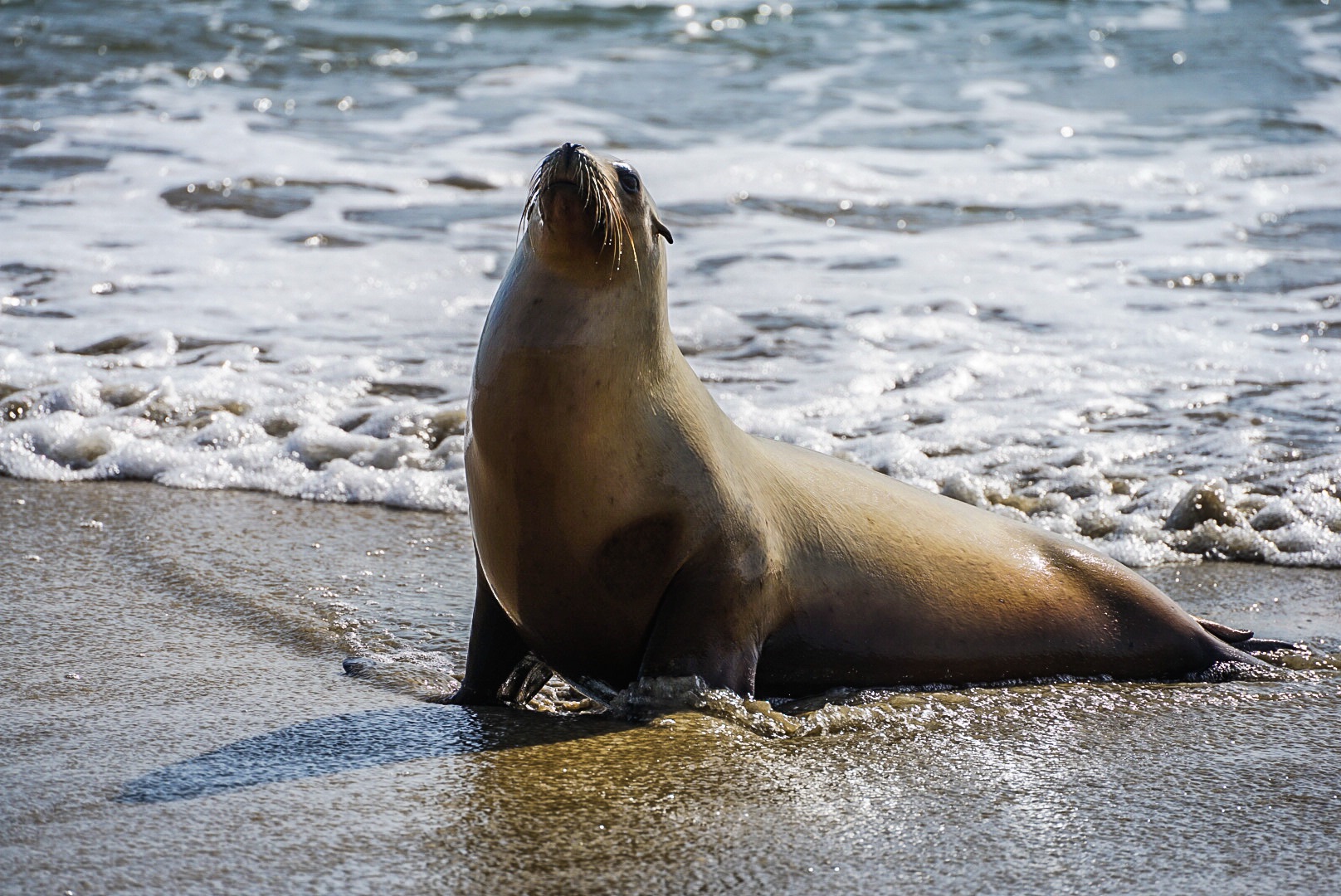
“Ort, ort” That’s the sound of sea lions. In my family, we’ve taken to calling them orts (which also means if we’re not sure from a distance whether it’s a sea lion or a seal, ort works for either).
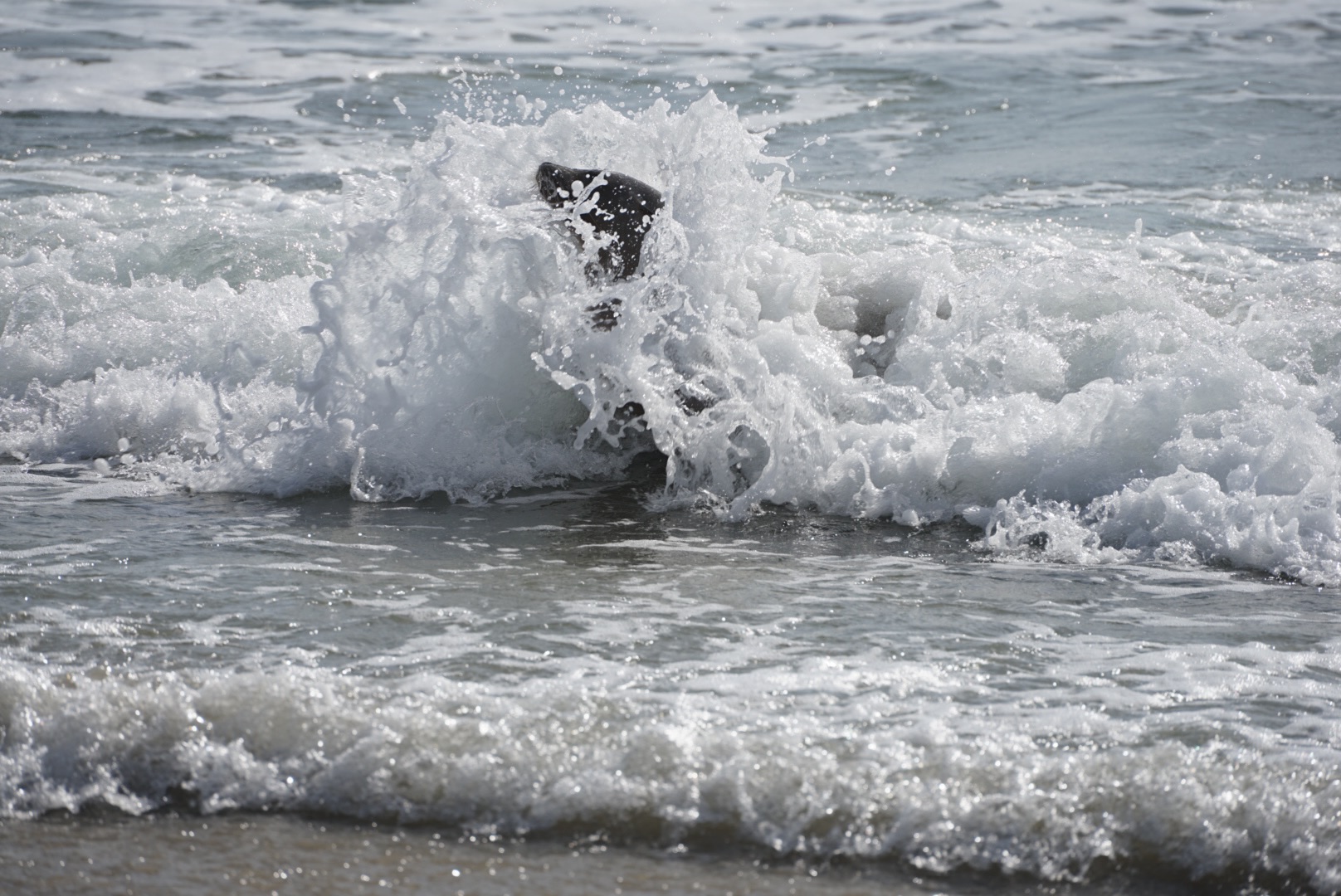
Today while walking on our usual beach, we encountered this sea lion…who almost seemed to pose as I worked to capture this photo.
Unfortunately, this beautiful animal was probably this close to shore because it is experiencing negative effects from the algae bloom along the coast. I just heard a news report on our local NPR station explaining that the algae bloom produces a neurotoxin that harms sea life. Sea World has been rescuing sea lions and trying to save them.
I loved getting to watch this sea lion up close and was happy that it didn’t seem to be beached. When I stopped to photograph, it was swimming in the waves and walking along the shore–which also let me try my hand at some action photography. On my way back, I noticed it out a bit further in the water–I hope that is a good sign!
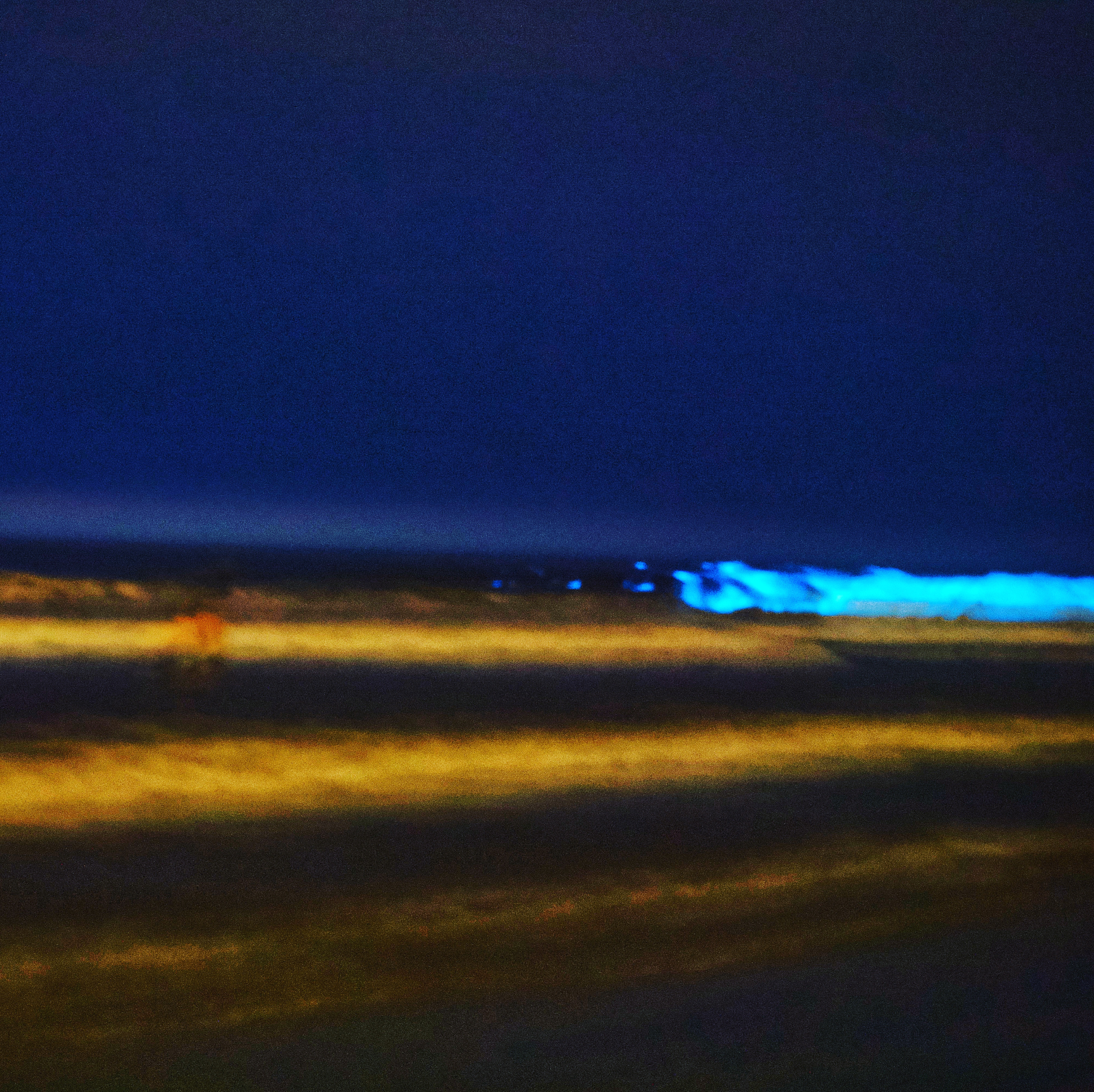
Algae blooms have become a regular occurrence on our beaches. At worst, we experience lots of sea life deaths. At best, we get spectacular bioluminescence displays where the beach lights up at night as the waves crash.
Photo of bioluminescence from 2020
I’m grateful to live where I get to experience nature’s wonder and beauty…and understand that there will be some bad things that come with the spectacular sightings. I also know that it is important to protect our natural resources–and foster a love for nature and help children learn to take care of these spaces.
Yesterday a sea star, today an ort…what will tomorrow bring?
I’m not particularly lucky. When I insert coins in a slot machine, the bells don’t ring and money doesn’t come out. When I play lotto (definitely not regularly), my numbers do not come up. When I find a scratcher in my Christmas stocking, there’s no prize that appears to cash in. My name doesn’t get pulled for raffle prizes and I can’t even imagine how badly I would fare on a TV reality game like Deal of No Deal Island!
In life, I count my lucky stars (where did I pull that phrase from?). My family is mostly healthy–as am I. I am in a happy long-term relationship. My children are independent and making their way in the world. I love my work and my life.
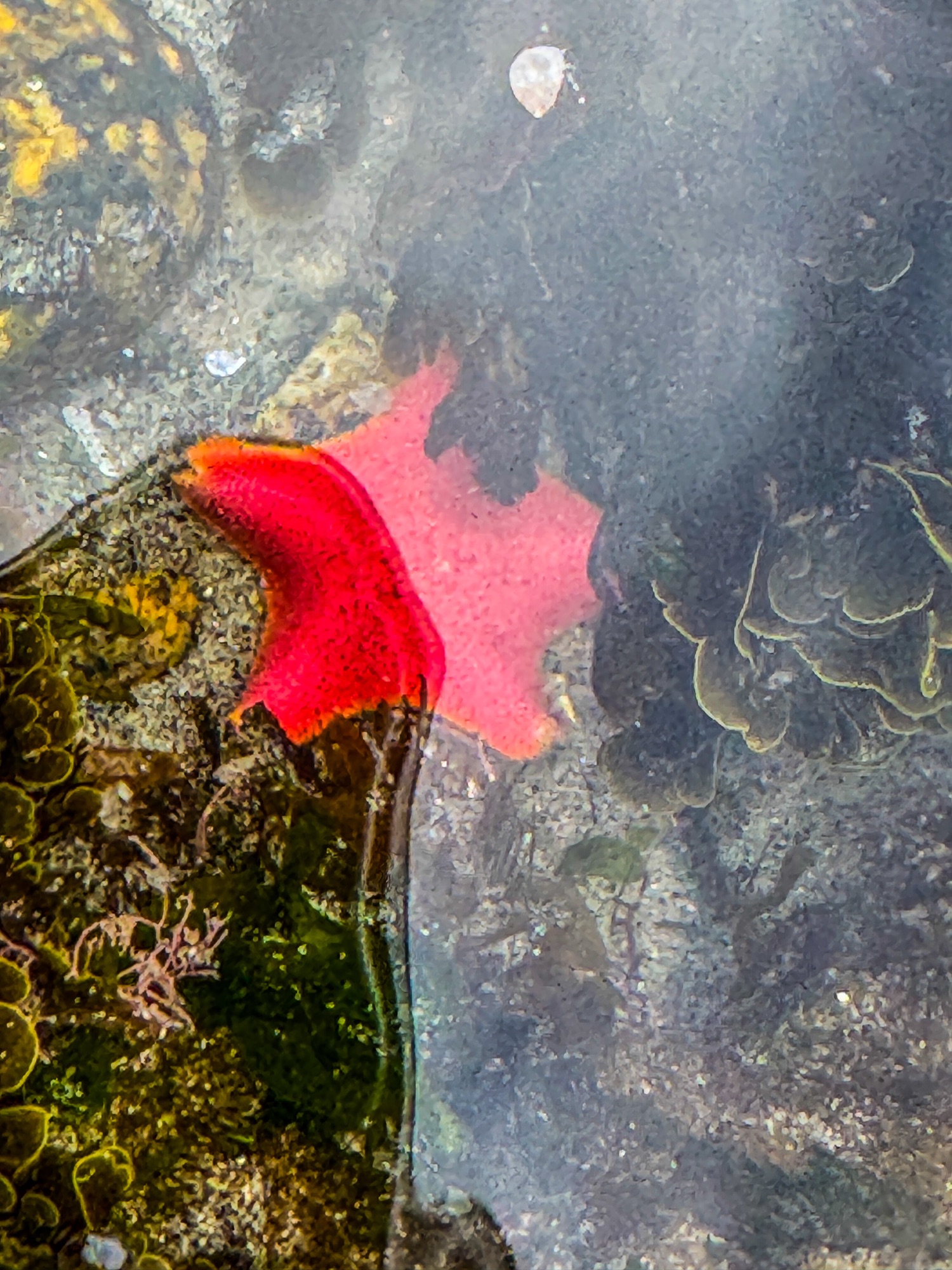
2025 has been a sea star year for me. I count myself lucky every time I see one. I started the year by coming across a beautiful specimen in the tide pool on New Year’s Day–and wrote about how lucky that felt–a hopeful talisman for the year! Rather than choosing one little word to guide the year, sea stars are giving me direction, hope, and energy. I’ve had a number of other sea star sightings this year. Each one brings that same surge of euphoria and feeling of luck.
As I walked the beach this afternoon (a perfect way to end the work week), my husband and I were commenting that we hadn’t seen any tide pool critters lately. We aren’t the people who wade in and turn over rocks, stirring up the tide pool in search of aquatic life. We look, as patiently as possible, to see creatures in their undisturbed place.
And then, a bright pop of orange caught my eye! It was a sea star. Just a small one, about the size of a quarter. Just when I moved in closer to take a photo, the water surged, covering my shoes and soaking my socks. Oh well, I thought. I still felt so lucky to start the weekend with the dopamine spike of seeing and enjoying the sea star in its natural habitat!
Today I am counting my lucky sea stars!
What makes you feel lucky? Or are you one of those naturally lucky people?
“What is it that you feel you have the need to have 13 ways of looking at?” That was the question posed by Poetry Unbound’s Padraig O’Tuama in a recent post. A question that got me thinking this morning…and also had me rereading Wallace Stevens’ Thirteen Ways of Looking at a Blackbird. My mind went to the beach–a place I spend lots of time for lots of different reasons.
Thirteen Ways of Knowing the Beach
I
I match my breath with the ins and outs of the waves. Salty water molecules swirl around me, seasoning my skin. I fall into perfect sinus rhythm.
II
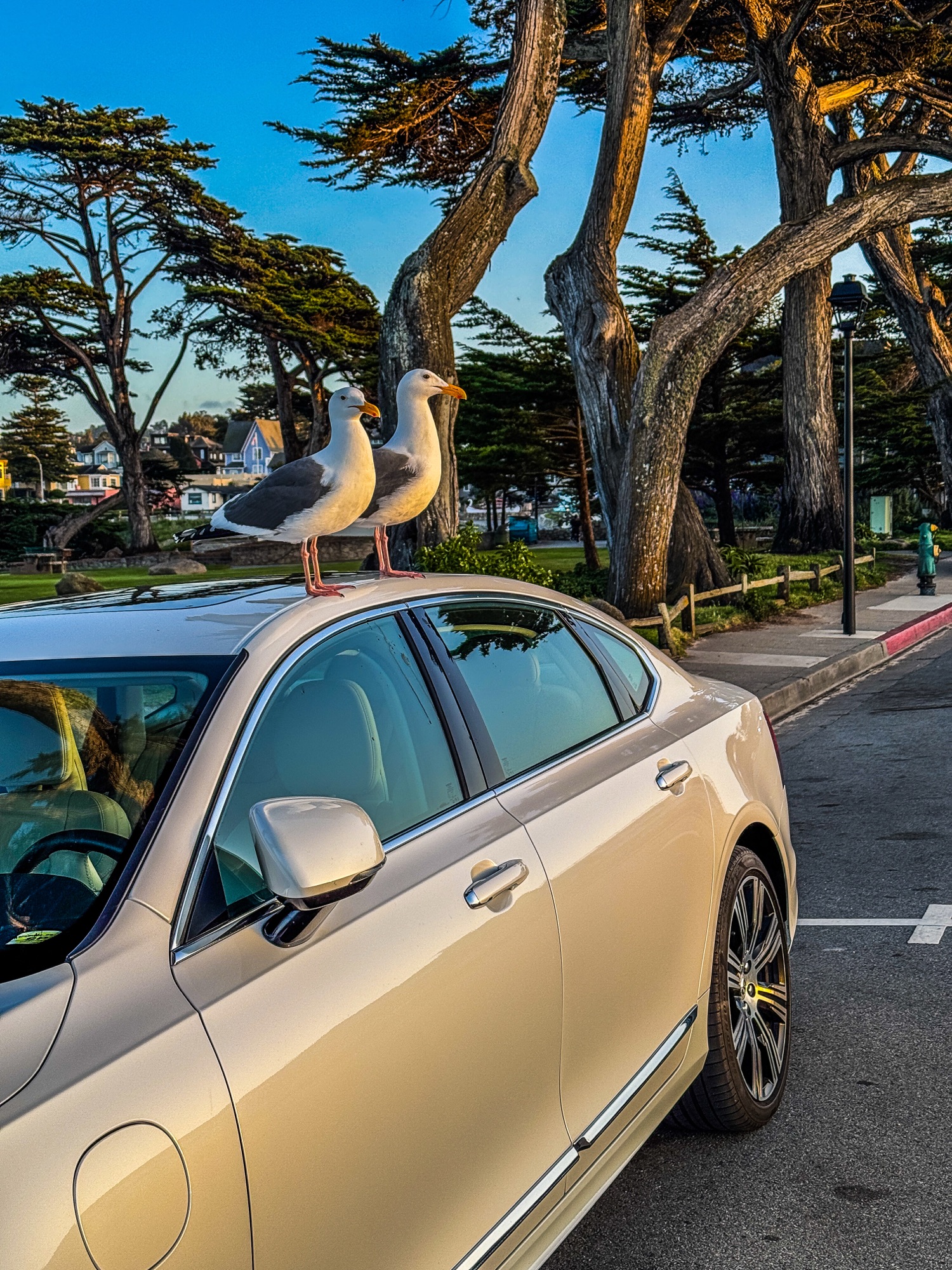
Seagulls shout. Bossy voices command attention as they probe the shore for handouts and scout out their next heist. Don’t turn your back on the sea or the seagull.
III
Curled toes, deep in the wet and squishy sand. Ankle deep, knee deep, splash! Cool or downright cold. Goosebumps form and squeals of childhood echo. A time machine.
IV
Sun’s out, skin’s out. Memories of baby oil and sunburn mix with realities of skin damage, SPF, and UV index. Trickster sun makes its mark even when hiding behind the clouds.
V
Wind whips and whirls sending sand in sinuous swirls. Waves in white caps wash, breaking barriers, reclaiming all within reach.
VI
Cliffs crumble uncovering geologic stories in layer upon layer, shells on mountain tops where lands rose and sea retreated. History in sediment, conglomerate, sandstone until time, pressure, and heat works its metamorphic magic. Change is constant.
VII
Ospreys hunt, eagle of the sea. Fishing claws grabbing dinner from the deep, no poles or lines. Transported by talons for treetop dining. A creature of sea and sky.
VIII
Squadrons of pelicans in perfect Vs oversee hoards of beachgoers. Gliding on gusts, flapping in formation, surfing the swells, their bellies nearly touching the waves when they rise. Pause and dive. Pouch first approach to prey retrieval. Dramatic drops for seaside lunch.
IX
Artists with rakes trace circles, designs larger than life with perfect symmetry, perfect Pi. Fleeting beauty etched in the sand, hangs in the gallery of your mind’s eye.
X
Tide pools hold secret worlds that live in the in-between. Sometimes completely covered, other times exposed. Life teems under the kelp, sea grass, algae. Sea stars creep on tube-feet, nudibranchs with psychedelic seventies colors strike a pose, pudgy squirting sea cucumbers move only at the sea’s whim. Hermit crabs seek new homes, dwellings abandoned by their former residents.
XI
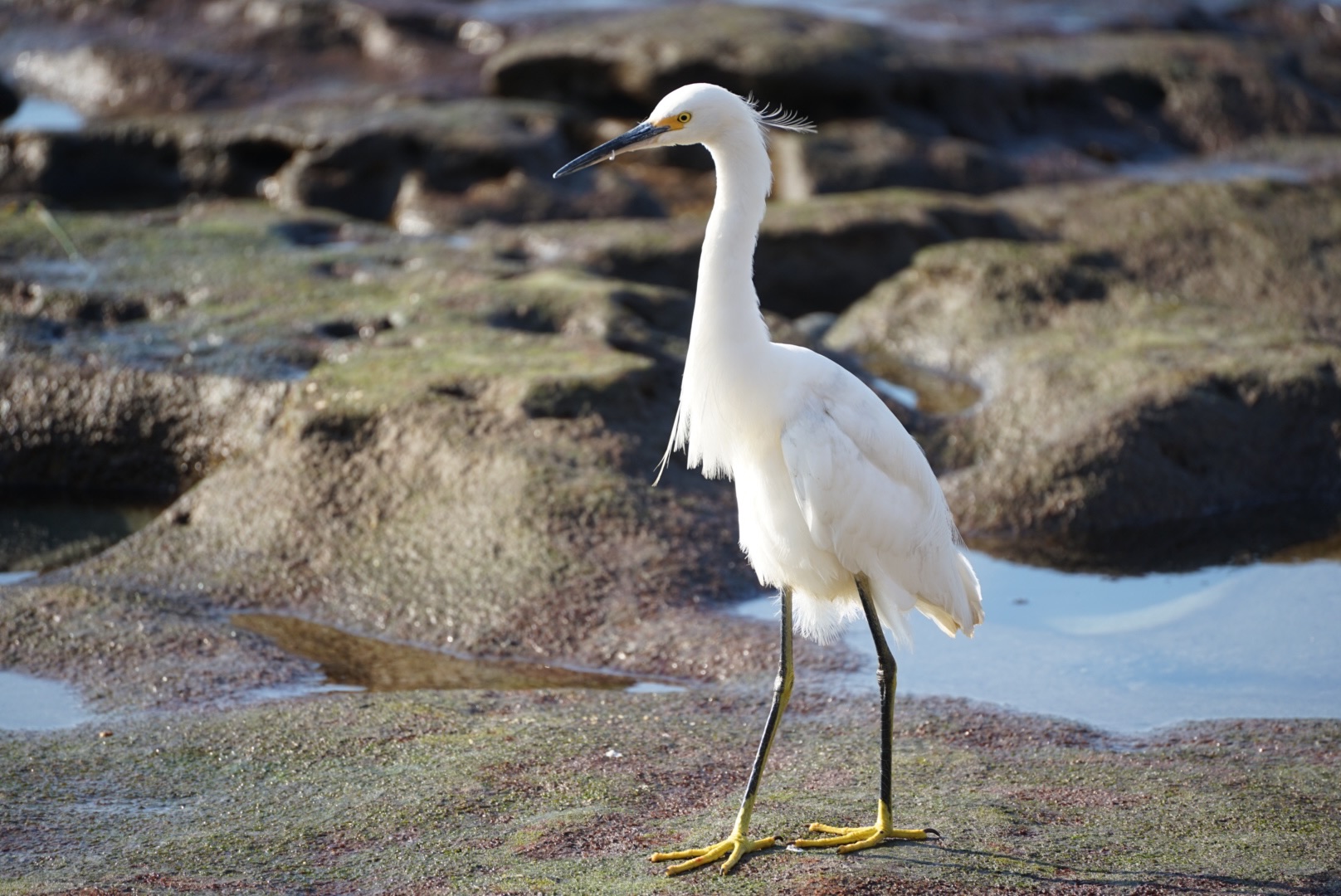
Snowy egrets with their bright yellow socks stomp the pools at low tide. Lunch counter is open. Neck with an S-curve, stretched out or curled in, dancers in fluid motion.
XII
Beach combing, treasure hunting, shore sweeping. Colored glass roughed and smoothed by the sea, bits and pieces of green, white, amber, sometimes even blue. Sea diamonds. Picking up plastics, multiplying by mitosis, never ending source of damage, destruction. Pollution of our precious life source.
XIII
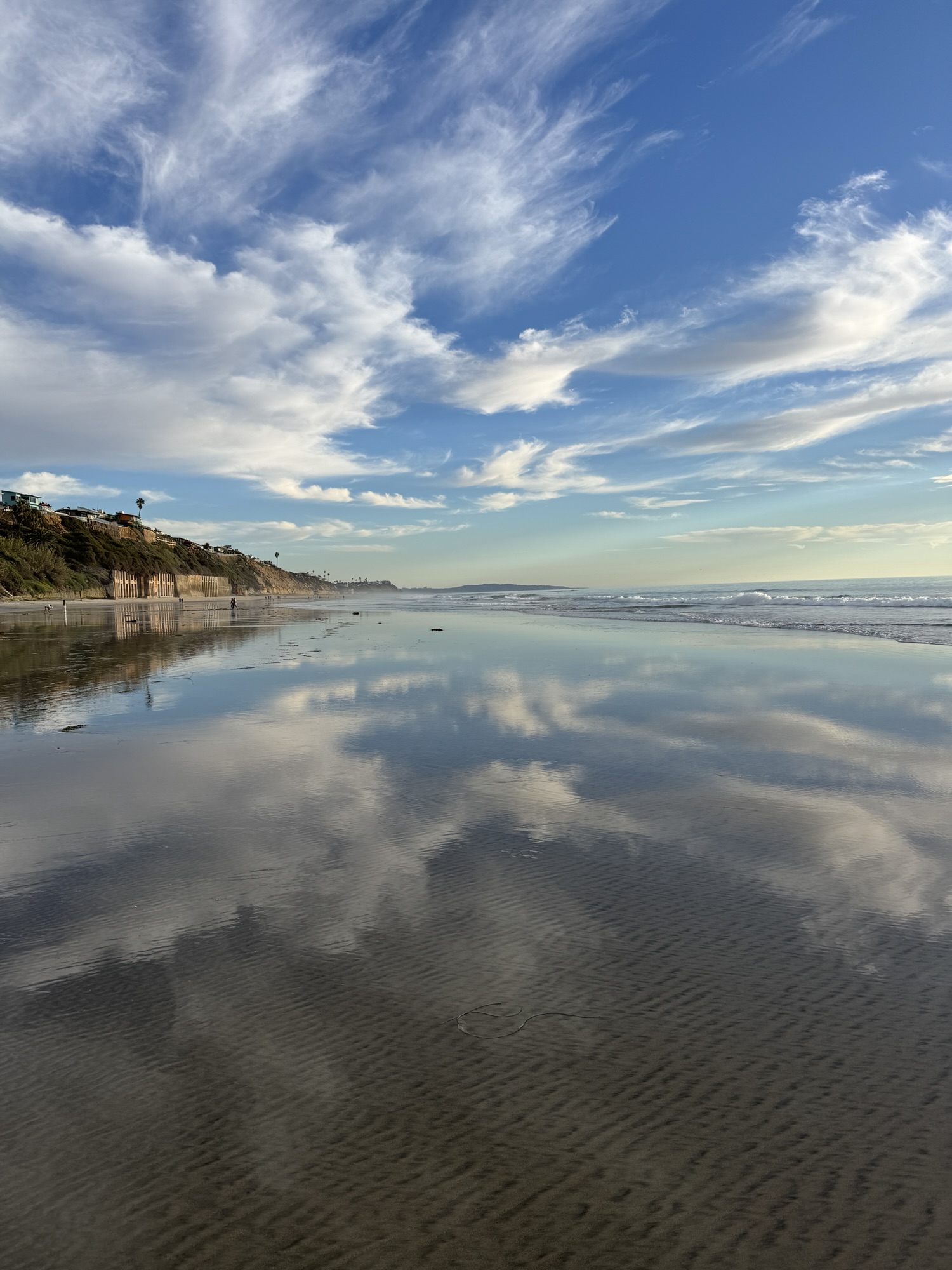
My playground, location of endless possibility. I walk on water, I walk on clouds. My ears fill with the soothing sounds of whispering waves. I can taste the salt on my lips and feel the release as stress runs down my shoulders and swims out to sea. My heart matches the rhythm of my breath, the rhythm of the sea.



 Thinking Through My Lens