Tag Archives: writing

Why I Write: SOL24 Day 31

I did a bit of an archeological dig today. I found out that I started this blog a little less than eleven years ago (in July of 2013). When i started, I gave myself a 30-day challenge to try to establish a writing and posting habit. But I ended up writing and posting everyday for over a year (I missed one day that year when I was sick). I was afraid to stop, thinking I might never start again.

I’ve been writing and posting for 60 consecutive days each March and April since 2018 as I participate in both the Slice of Life Challenge (thanks Two Writing Teachers) and then National Poetry Month where I have written and posted a poem everyday, most recently with the help of #verselove over at Ethical ELA.

And I write and post periodically at other times throughout the year, frequently about teaching and learning activities in my classroom.

But does any of this provide insight into why I write?

I consider myself to be a teacher-writer. Someone who writes what I ask my students to write, who composes in front of them to demonstrate both the challenges and the successes. And for similar reasons I blog and post to make my teaching processes visible, again sharing both challenges and successes. I could just write in a journal, writing for myself. But for me, it is the process of going “public”–even if no one reads my posts–that nudges me to clarify, for myself and others, why I do what I do. It also keeps me from complaining (which I am want to do in private writing) and forces me to find some kind of conclusion or resolution to each writing piece I do.

I love that writing gives me opportunity for reflection. When I am writing I find myself considering how I might do something in its next iteration. What should be done differently, what should remain essentially the same? I think about how I feel as a teacher–what is working, what makes my work hard, what makes my students’ learning easier and more fun. And I consider what brings joy…to me, to my students, to my family, maybe even my readers. (I actually wrote my teaching goal this year about joy–which my principal agreed was a great goal!)

I also write because I have community in these online spaces. I learn from the writing choices my online colleagues make, mentors in ways they likely don’t know. I appreciate each tap of the like button and every comment of encouragement that keeps me accountable and on track, even on those days that coming up with a topic feels impossible. The Two Writing Teachers/Slice of Life community is incredible–offering inspiration and support, encouragement and comfort, always seeming to know what I need and when I need it.

I write to understand myself and to understand the inner workings experienced as a writer. I’ve learned that writing is never easy and always worth it.

Hope to see you all in these online spaces even without a monthly challenge and maybe on some Tuesdays for the weekly SOL challenges. Until next year…

Poetry Comics: SOL24 Day 26

Another book review? Is it even allowable to write three slices that double as book reviews?

But I simply couldn’t resist. I’ve been following Grant Snider for a while on Instagram/X and I am constantly inspired by his comic writing (for lack of a better term). Somehow he has a knack for simplifying complex ideas into 4 panels or 9 panels where the combination of images and words slices through and hits me right in the heart.

I preordered Poetry Comics, knowing that I needed to have this book not on my Kindle, not from the library, but right in my hands. Ironically, my school librarian got a copy last week and put it in my box a week before my preorder arrived today. I’ve been savoring each page, connecting both as an adult and as a teacher.

I know I will be having my students study a few of these poems and try their own hand at crafting their own poetry comic. There are so many great choices it’s making it hard for me to choose. Here’s one I am considering.

I can’t wait to see what my students will create as they explore poetry comics! How about you? Will you try to craft a poetry comic as we head into National Poetry Month?

Even if you don’t, I highly recommend Grant Snider’s Poetry Comics. There’s plenty to love in this deceptively simple volume.

Welcome Spring! SOL24 Day 19

If you want to know when it’s spring, don’t bother with a calendar, just walk into my first grade classroom. The energy is palpable. Those babies that entered the classroom at the end of last summer are growing into knowledgeable and sassy almost second graders. They are readers and writers and fact collectors extraordinaire (although fact-checking is not yet in their realm of expertise). So what do you do at the end of conference week when it feels like the classroom is fitting like last year’s t-shirt–way too tight? Head out to the garden…with iPads in hand!

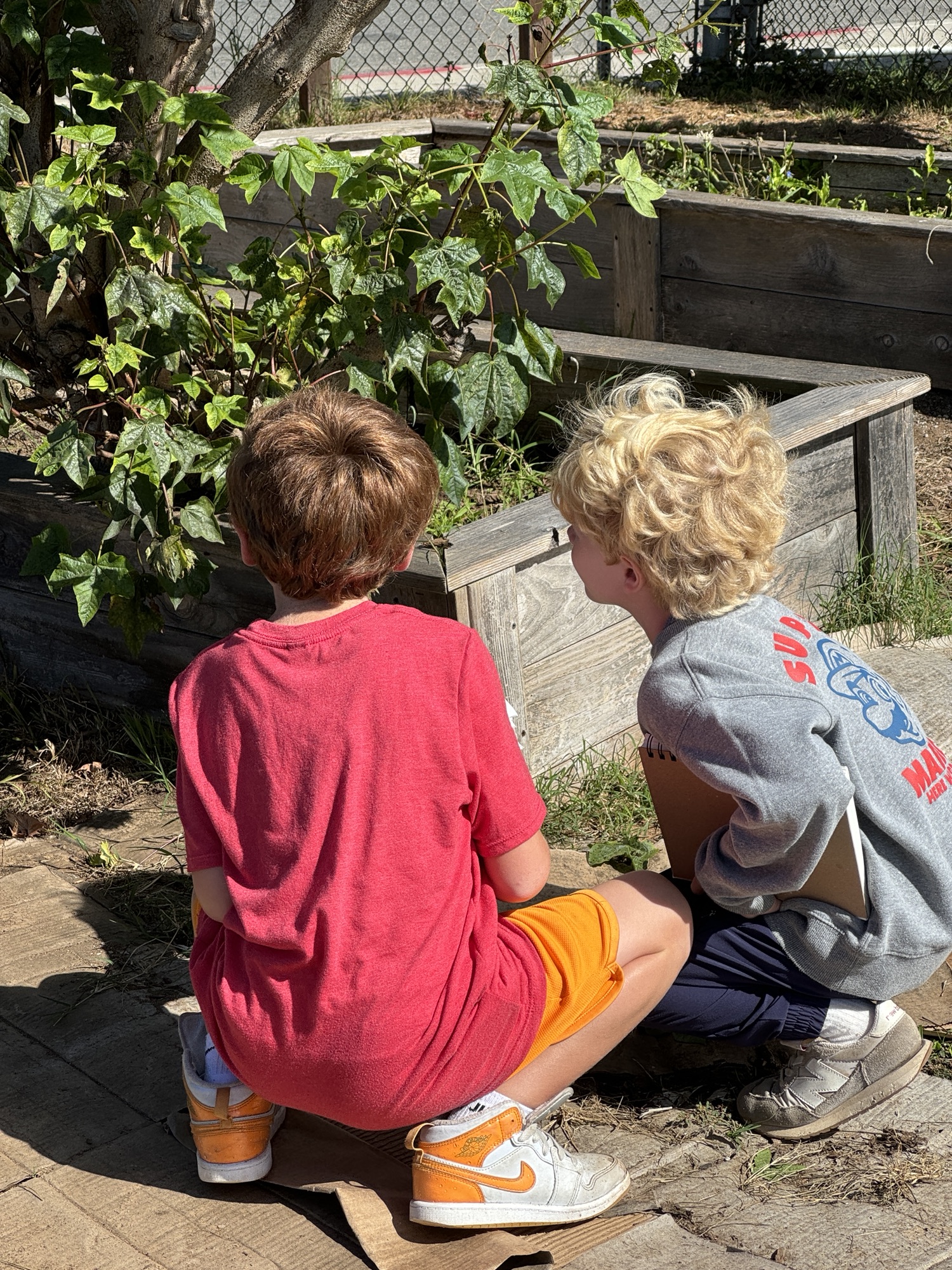
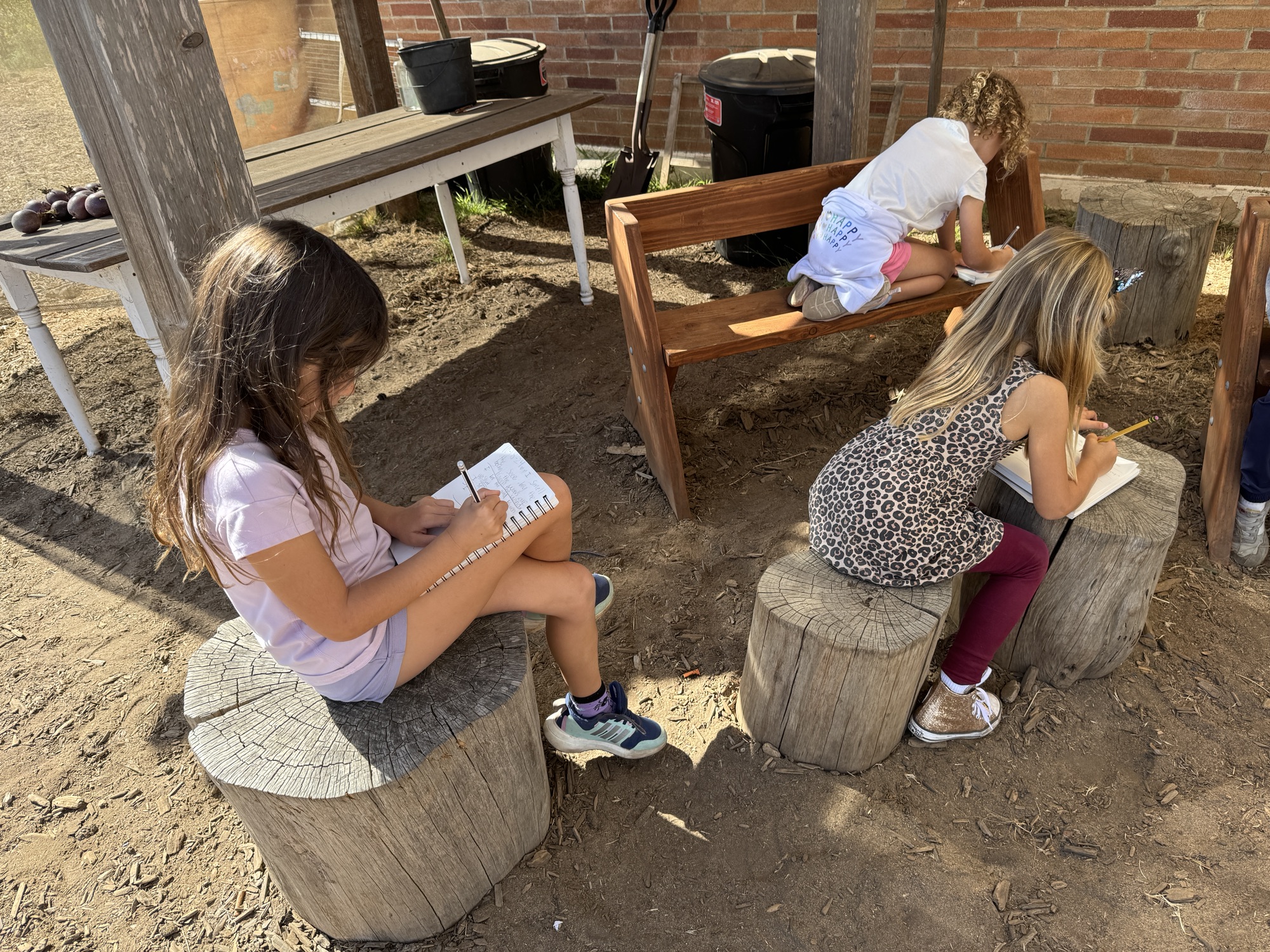
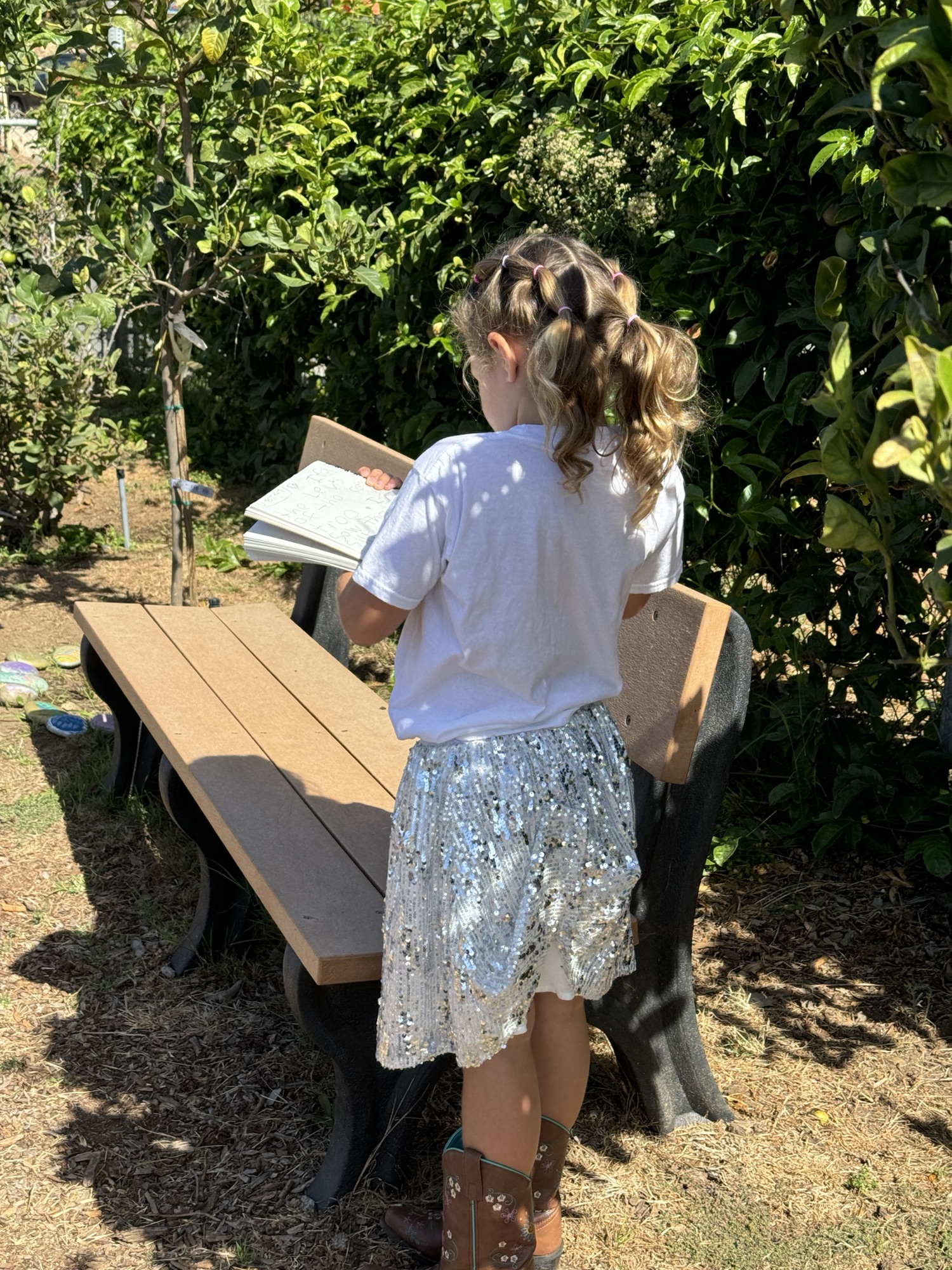
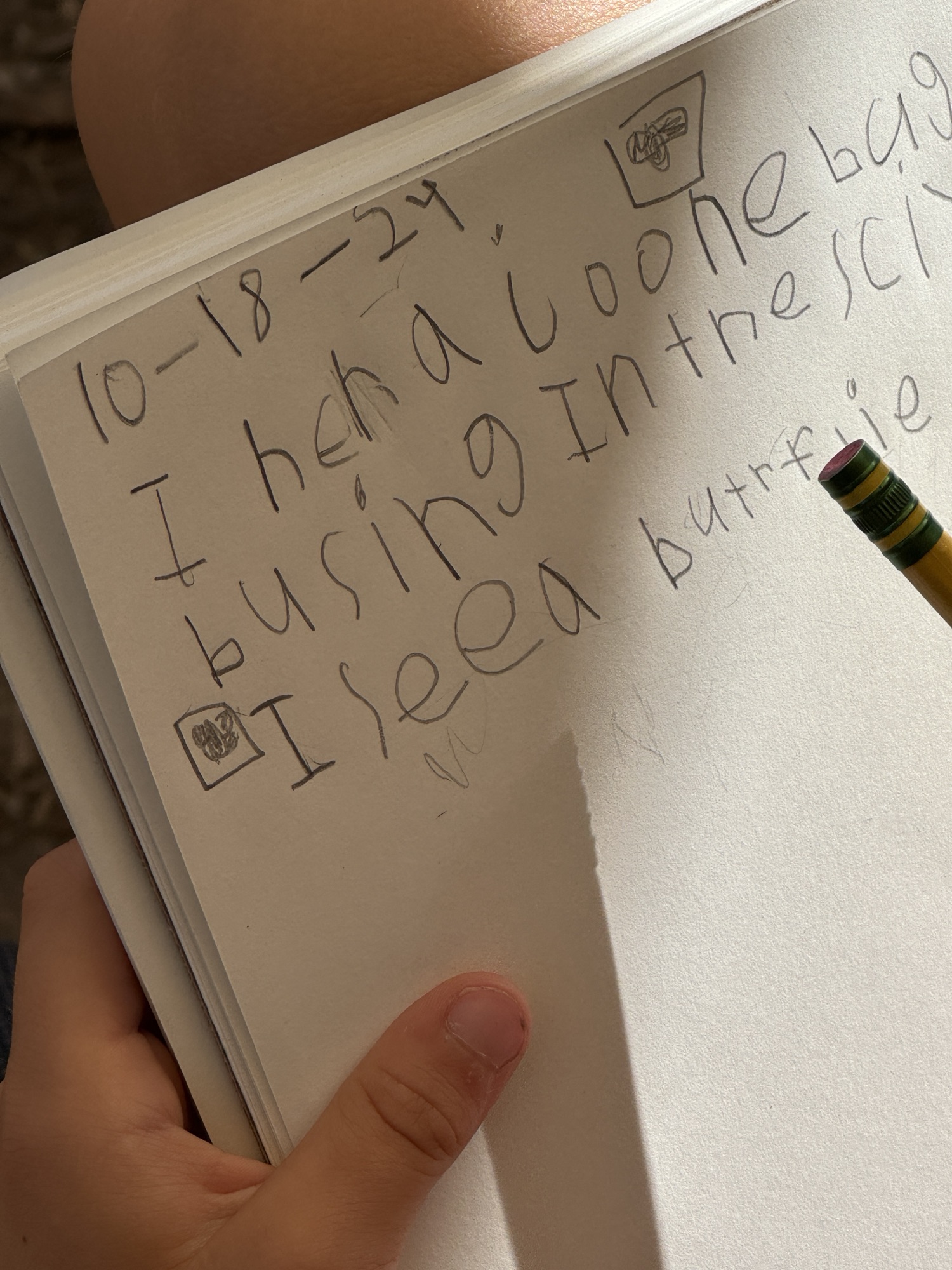
We’d been out in the garden with our notebooks earlier in the week–observing carefully in the spirit of Jane Goodall. So on Friday I asked students to go back to the place where they observed earlier in the week and find three photos to take. I reminded them of the photography techniques we had learned and set them loose to explore. There was the insect on the screen that first caught students’ attention. The lizard almost created a need for crowd control as these little paparazzi swarmed the cold-blooded sunbathers against the brick wall. They photographed strawberries, broccoli, fruit tree flowers, aloe, and who knows what else.

Yesterday, we studied the poem, Things to do if you are Rain by Elaine Magliaro. We noticed her action words (polka-dot sidewalks, freckle windowpanes…) and did not miss the metaphor of the rain tap dancing on the rooftop. After choosing one of their photos as the subject, they set off to write their own Things to do… poems. And since it’s mid March, I asked them to include three things in their poems: action, a comparison, and some metaphorical thinking.

We ran out of time…which I should say was intentional planning on my part. It wasn’t, but I am reminded of the value of time away from a draft if you want the young writer to really take another look and make the piece better. Using my poem as an example, we read it carefully, looking for the action, the comparison, and the metaphorical thinking. Then they went back to their drafts to finish them and to make them better. And they did.

O took one of those infamous lizard photos and wrote a short but sweet piece.

Things to do if you are a Lizard

Climb up walls like a snake.

Climb up on a sun on a bright green stem.

Run fast, fast, fast, fast!

Grow back your tail.

G found a flower in one of the garden beds, stretching a bit further with her words.

Things to do if you are a Flower

Reach for the sun

get picked into a bouquet

Blossom in spring

Be in a wedding and shine like the sun

Enjoy your life

Share life and health and happiness

Shine like the bright yellow sun

Tap dance in the breeze like a bird’s chirp is music

Send invitations to animals far and wide

to pollinate and see you bloom into

the prettiest flower

F is one of those quick-to-get-done students and thought he had finished yesterday. Today’s mini lesson was the perfect nudge to get him to push himself a bit further–although there’s still some room for growth.

Things to do if you are a Strawberry

Be red and shiny.

Let yourself grow!

Don’t let bugs eat you!

Have a big family that lives on a big bush.

Your petals help you grow and get washed by the rain.

The strawberries are like red poinsettia flowers.

Red strawberries shine like rubies.

Red roses are like ripe strawberries.

And of course, I had to get in on the fun!

Things to do if you are a Yellow Broccoli Flower

Shoot towards the bright blue sky

Soak up the sun in your bright yellow flowers

Sway in the breeze like you’re dancing the tango

Send invitations to the pollinators: Party at Broccoli’s house–all are welcome

Shed your petals and become part of a child’s healthy dinner

As I finish this post, the spring equinox announces that spring has sprung. Welcome Spring! (Although the first graders have been feeling your presence all month!)

Something, Someday: SOL24 Day 13

I got a text from a colleague last night with a photo of Amanda Gorman’s new book, Something, Someday. In the text she said it reminded her of the project I had done with my students creating iMovie PSAs about something that needed attention at our school. (You can read more about it here and here.)

So this morning as I headed back to the classroom with my students like ducklings behind me, she saw me, darted into her classroom and came out with the book in her hand.

After taking attendance, I did a quick read of the book while my students were doing some math practice. Yes! This is definitely a perfect book for the project we had done. It is all about making change, finding solutions, working together, and the power of small actions to add up to big change. And in the moment, I rearranged my teaching day in a way that allowed me to read it to my students.

Earlier in the week we read The Watcher: Jane Goodall’s Life with the Chimps by Jeanette Winter, learning about her lifelong work to protect wildlife and our planet. We talked about how both Jane Goodall and Amanda Gorman are living activists working to care for our planet.

Today we also studied the poem, Things to do if you are RAIN by Elaine Magliaro, noticing all the ways she described what rain does…”Polka dot sidewalks. Freckle Windowpanes. … Tap dance on the roof. …” Little did my students know that this would soon become a mentor text for a collaborative poem inspired by the books we’ve read and this poem!

As we got ready to write I asked students for a topic for a Things to do poem. (I had an idea in my back pocket, but hands shot up right away.). O suggested, Things to do if the World is Filled with Problems. Okay–a much heavier topic than I had in mind, but not surprising given our recent project and the books we’ve been reading.

So we did some brainstorming, focusing on the list like qualities of Magliaro’s poem. It took some work getting to some ideas to start and end the poem. And who doesn’t love the student who says, I have some metaphorical thinking to add, and says, “Treat the world like a rainbow.” Okay. So here’s what we came up with:

Things to do if the World is filled with Problems

by Room 3 First Graders

Don’t Give up!

Solve it! Fix it!

We can do this together.

Clean up trash. Don’t pollute.

Put the balls away. Sit up straight.

Water plants. Don’t waste water.

Be kind to your old grandfather

AND everyone else.

Eat your snack. Share with others. Include everyone.

Only take what you need.

Have fun. Smile at a stranger.

Treat the world like a rainbow.

Together we can brighten and color the world.

In 6 Words: SOL24 Day 11

Who decided that parent conference week should follow springing ahead to Daylight Saving Time? I’m feeling the loss of the hour, the compressed teaching day, and hours spent talking…

So today’s slice is a 6 word photo essay…a portion of my teaching day.

Under Goodall’s influence: noticing, wondering, writing

We Did It! SOL24 Day 9

About a week ago I wrote about the work we were doing in my first grade classroom to prepare to create PSAs about things that needed more attention at our school. (You can read those details here.)

I thought long and hard about how to best teach my students to learn iMovie. The first thing I did was to create my own PSA using the same process I had taken my students through. I was definitely a bit rusty knowing the ins and outs of the iMovie app. I had to experiment and fiddle around—giving me valuable experience to share with my students. Finally I decided that I would start by showing my students in real time how to make an iMovie by making another right in front of them — and in fact having kids come up and do some of the processes for me.

We did the easy part first, and students got their photos into iMovie and created a title slide. Then we headed out to recess. I’ve learned over the years that doing complicated things around both sides of a recess is magical. You can get started…take a much needed break before things get too hairy and then return refreshed, but before things are forgotten.

After recess I showed students how to write a script and then record a voice over for their movie and then set them off to work. The classroom transformed before my eyes, becoming a workshop where students were focused on their movies. They helped each other, giving advice and support to their classmates as needed. I was on my feet, moving and listening, reminding how to edit, how to delete. I spent a lot of my time borrowing student headphones as I listened to their works in progress. My biggest challenge was our less-than-stellar headphones. Some crackled when they recorded. Some refused to play back. Over the next couple of work periods I learned to have those with the most problematic headphones go outside and record without using headphones.

It was so exciting to see the finished products–especially knowing that these first graders were able to create these iMovie PSAs on their own. Here is a student PSA created by a first grader last week and the plan he worked from.

First grade PSA video

But the best part of this whole process is when students started telling me that they were going home and making iMovies. They followed the same procedure we did in class: they took photos, planned something to say, and recorded their voices. I loved when a parent emailed me one of these creations! Students are now not only consuming digital content, they are also creating digital content!

Now to think about the next project… Any suggestions?

In a Breath: SOL24 Day 5

Back on Saturday at the SDAWP Spring Conference (I wrote a bit about it here. ), I attended a session called Seeing with Wonder: Cultivating a Deep Understanding and Appreciation for Nature Through a Creative Lens. The presenters, Wendy and Alice, encouraged us to slow down and participate in long and leisurely observation. During the session they asked us to adopt a tree–and since it wasn’t reasonable to be outside finding trees in the short time frame of the conference session, they had a collection of photos blown up, framed, and posted around the room.

My own photo from the Hall of Mosses

I selected a moss-covered tree that reminded me of my time in Olympic National Park’s Hall of Mosses. I engaged in that leisurely observation, sketching and writing about the details I noticed. Wendy and Alice then led us through a different definition of Haiku. Instead of focusing on the 5-7-5 syllable structure, they gave us seven rules of Haiku. But most importantly, they encouraged us to compose a three line poem in the spirit of Haiku that was a single breath.

Screenshot

I’m not so sure I achieved all the goals of this one breath Haiku, but here is my Haiku from Saturday.

How many greens can you count

on this tree tapestry woven through the ages

a portal to dinosaur time

@kd0602

A Magical Start: SOL24 Day 4

Mondays can be hard, but I have a colleague who calls out an alliterative daily mantra to everyone she sees. “Magical Monday,” she calls as she passes my classroom before school started this morning. “Magical Monday,” I call back.

Mondays don’t always feel magical, but today felt different. I headed out for recess duty with the sun shining on my shoulders. As I walked out onto the playground one of my first grade students ran up with an envelope in her hand. “Mrs. Douillard,” she said, “I wrote a poem for you!”

In our class we study a poem every week, write poetry with some regularity, and delight in metaphorical thinking. Words matter. They help us express ourselves, understand our world, and communicate with others. I love it when students take our learning outside the classroom walls and write for their own purposes.

My student pulled her poem out of the envelope to show me. “Will you read it to me?” I asked. And she proceeded to read:

Sea Sound

A sea sound is a heart broken.

A sea sound is birth from your heart.

Sea sound is you hearing waves dancing.

This is my poem

When I asked what inspired her to write, she responded, “It was the waves dancing.” She told me I could keep the poem and off she went to play with her friends before the school bell rang.

That is a magical Monday for sure!

Sunshine on a Rainy Day: SOL24 Day 2

My alarm rang early on a Saturday. Today was our San Diego Area Writing Project Spring Conference! Before I got out of my cozy, warm bed I checked the weather app on my phone. Drizzle. Drizzle is not really rain, right? I decided against dressing for rain and opted for my Vans tennies and some black almost dressy pants to go with my cute sweater top. (I would have to open the conference, but I also had to walk a good bit to get from the parking structure to the conference venue on the UCSD campus.

About 5 minutes before I was planning to head out, I looked out the door and changed my mind. That was NOT drizzle–even by Southern CA standards, that is called rain! I rushed back to my bedroom, kicked off the Vans, changed into jeans with skinny legs so that I could pull on my cowboy boots–the dressier footwear option for rainy conditions–and then headed out the door wearing my raincoat with my umbrella in my bag.

With windshield wipers on high, I braved the slick freeway and low visibility, and as I approached the university, the weather began to clear. The ground was wet and puddly as I walked from the parking garage, but the sky had cleared a bit and it wasn’t even drizzling.

It’s hard to get up on a rainy Saturday morning to attend professional development–even when it is self-selected. But I knew once I arrived that the energy of the participants and presenters would carry me through. And I was right. Our morning keynote by our own Christine Kane focused on the value of conversation, how the best conversations reveal things about ourselves both to those we are conversing with and to ourselves as well. She referenced David Brook’s newest book, How to Know a Person, and shared some of his advice about being a “loud listener.” She also reminded us of the Chinese symbol for listening which includes the eyes (to see), the ears (to hear), the mind (to think), undivided attention (to focus), and the heart (to feel).

Screenshot

What a perfect set up for being conference participants! The three sessions I attended were excellent! Even with 35 years of teaching under my belt, I felt inspired and motivated by gems of wisdom and practice shared by the presenters. I enjoyed my interactions with fellow participants and left the conferences knowing it was a morning well spent.

My drive back home included one surprise rain shower along the way, but as I headed off the freeway toward my house, the sky was bluing and the sun was shining. As I stepped out of my car into the driveway I was greeted by tiny yellow suns sprouting right out of the driveway cracks. Dandelions! I couldn’t resist kneeling down to capture their light and glow. Nothing like a bit of sunshine on a rainy day!

More Poetry Please

Last week we returned to school after our two-week winter break. The first graders in my class were eager to talk, telling each other about all the things that had happened while they were apart. Knowing that students would be chatty, I planned lessons that would allow interaction and conversation on our first day back in class. 

I’d been thinking about having students craft a collaborative poem for a while now. We’ve been studying poems and writing some of our own all school year, but still, it seemed that the time was ripe for something more. I began our lesson with Kwame Alexander’s delightful picture book, How to Write a Poem, illustrated brilliantly by Melissa Sweet. We read and noticed first, with students intrigued by the use of collage, the lyrical language, and colorful images. Before I began reading, I had asked my students what they knew about metaphorical thinking. What? That was their response. So after reading and talking about the book, we went back through the book so I could point out examples of metaphor…and just about then, my principal walked in. She comes in from time to time, pulls up a chair and sits and listens. She doesn’t interact and her poker face is nearly unreadable. I just went on with the lesson, feeling students pulled in as we talked about words falling from the sky like rain. We imagined ourselves outside, heads tipped, tongues out, ready to catch those words. As we became the metaphors we were studying, we talked about how metaphor lets us use ideas from our imaginations to make our writing become more clear…and more fun! When my principal left, I still had my students full attention as they grappled with this abstract idea of metaphorical thinking. 

Now, we needed to try it on for ourselves. I decided on having students create a collaborative poem by having each student contribute one line to a “winter is…” poem. So I asked them, how might you use metaphorical thinking to describe what winter is? The first responses had them leaning back on what they already knew. Winter is cold, winter is when trees lose their leaves. In some ways, this was the perfect next step. We talked about how those are facts about winter…now we needed to think about how to make comparisons that were surprising. When one of my students got to snow was white cotton candy, I knew we were heading in the right direction! I had them try a few “winter is…” lines, and just when they were running out of steam, I pulled out the colorful sticky note sentence strips for each student to write their favorite “winter is…” line on. I could feel the motivation lift and even my most reluctant student eagerly chose a color and started writing his line (although there were none written in the notebook at this point). Once they had written, they stuck their post it on the white board.

I wasn’t quite sure where we were at this point. I let the post its sit over night and pulled them off the next morning with the intention of typing up their lines to form a poem. As I typed I divided the ideas into 3-line stanzas, that seemed to help give the poem shape. I was pleasantly surprised when the ideas seemed to come together into a poem that I felt we could all appreciate. 

Winter Is…

Winter is white puffy cotton candy

A time for snowflakes that look like crystals

When snow foxes dig holes to keep their cubs warm

Winter is a cold hug in your heart

The wind at the beach

Time for hot chocolate

Winter is snowflakes blowing

Clouds melting

A freezing tree giving words to my pencil to write down

Winter is a snowflake full of thoughts

A snowflake falling down as fast a rocket

Pine trees covered with snow

Winter is a cold place to relax and slide your pencil to write down your mind

Snow soft and crunchy like people walking on the snow

Full of puffy snow like white cotton candy

Winter is a frozen lake waiting for spring

Holidays in your mind

A snow of thoughts flying through the air

Winter is a chilly place where it snows

Winter is so fun because you can play

Winter is a time for joy!

By Room 3 First Graders

1-8-24

I can see where students were inspired by their classmates and where some students are still not quite there when it comes to moving away from facts as they craft a line about winter, but I am pleased with this as a starting point. And even better, my principal saw me eating lunch on Wednesday and commented on the book and lesson–in a very positive way. She loved that I was introducing metaphorical thinking to first graders.

But honestly, the real payoff started to emerge in small moments as the week went on. My students started to point out metaphorical thinking throughout the school day, and in their own speech. On Tuesday, we returned to the book, Kiyoshi’s Walk by Mark Karlins as we embarked on writing 3-line poems about the cardinals we had created in the style of Charley Harper the day before. 

As I read the Haiku in Kiyoshi’s Walk, they pointed out the metaphors…a pile of oranges described as a “hill of orange suns.” Again, not every student is yet ready to employ metaphor effectively…yet, but the seeds are planted. So we wrote 3-line poems on Tuesday (I try not to have these poems be about syllable counts–trying instead to focus on ideas and word choice) and then on Wednesday, I asked students to go back to their poems and improve them by changing a word or two or adding another detail (revision!). Here’s a student who was clearly influenced by Eto’s poem in Kiyoshi’s Walk.

Cardinals

Champ 1964 St. Louis Wins

Cardinals fly to win

Trophy of suns

By J

When J read the poem to me, he pointed out that since trophies are golden, they are shiny like golden suns–something he changed from his first draft the day before. And I know, clearly his mind was on the St. Louis Cardinals (a favorite team) rather than on the bird we crafted the day before. But the win is in the poem–three lines, metaphor, revision…and pride in writing! I’ll take it! Another student wrote this to describe his cardinal.

The Red Cardinal

The red poinsettia feathers

keep me warm

and they fill the forest with love

By F

And there were also more subtle attempts like this.

Flying in the Wind

I see that cardinal

flying in the tree

just like the wind

By O

What I see is students experimenting, playing with ideas, playing with words…and growing as writers and poets (as well as readers and thinkers). I love that something as deceptively simple as reading How to Write a Poem resulted in our writing community learning together, composing together, and risking trying on some new techniques together. I am reminded once again of the power of poetry…so yes, I will continue to say, “More poetry please.”