Monthly Archives: June 2014

How to: Inspiring Writing

“…smell the sea, and feel the sky

let your soul and spirit fly…”

Jim Morrison

With the end of the school year and the beginning of the SDAWP Invitational Summer Institute beginning next week, I find myself with a small window of unstructured time. Don’t get me wrong, I have plenty of “work” to do…but I am determined to play this week and the CLMOOC is helping me.

This week’s “make” is to make a how-to.  You might notice that I tend not to follow directions in a literal way, but as I headed off to join the SDAWP Young Writers’ in Nature campers on a field trip to the Scripp’s Coastal Reserve today, I was thinking about how to write under the influence of nature…and science…and children.

As we headed off on our walking field trip, I already felt inspired.  There is something about kids with notebooks and their innate curiosity that sparks my own learning.  The kids had been learning about native plants–a favorite topic of mine (see this blog post) and Janis (their teacher) encouraged them to explain what they had learned to me as we walked.  I loved listening to them describe coyote brush and its adaptations and watching their keen eyes on the lookout for lemonade berry.

I love the earnestness of young writers at work.  This little guy caught my eye…and I love that he is framed with the gorgeous blue of the Pacific Ocean behind him.

Young Writer

And I decided to push out of my comfort zone and make a video of today’s experience.  I suppose you can loosely define it as a how to write under the influence of nature (and science and children) video.

Here’s a few lines from my own writing under the influence today:

Sitting on the cliff looking out into the vast endless ocean I see clouds crouch on the horizon, retreating from the blaze of the mid-morning sun.  Relentless breezes dance with my hair and with the natives on the cliffs.  Children hunch over the words that pour from their pencil tips, inspired by the sights, sounds, smells, and touch of this visit to Mother Nature’s living room.

And here is my video capturing the experience of writing under the influence of nature and writing and kids.


A Closer Look at the Ordinary

Sometimes we take things for granted.  Especially those ordinary things that we are so accustomed to that we almost don’t even notice their usefulness or necessity.  I’ve been reminded to pay attention to the ordinary in a couple of ways lately.

A blogger I follow (who takes some spectacular photos!) mentioned in a post recently that she was participating in a macro photo challenge…and was reminded that macro is not all about flowers and bugs. That prompted me to put the macro lens on my phone/camera this morning and to snap some macro shots of ordinary things around my house.

The zipper on my sweatshirt immediately attracted my attention, I like seeing how the teeth interconnect.

Zipper

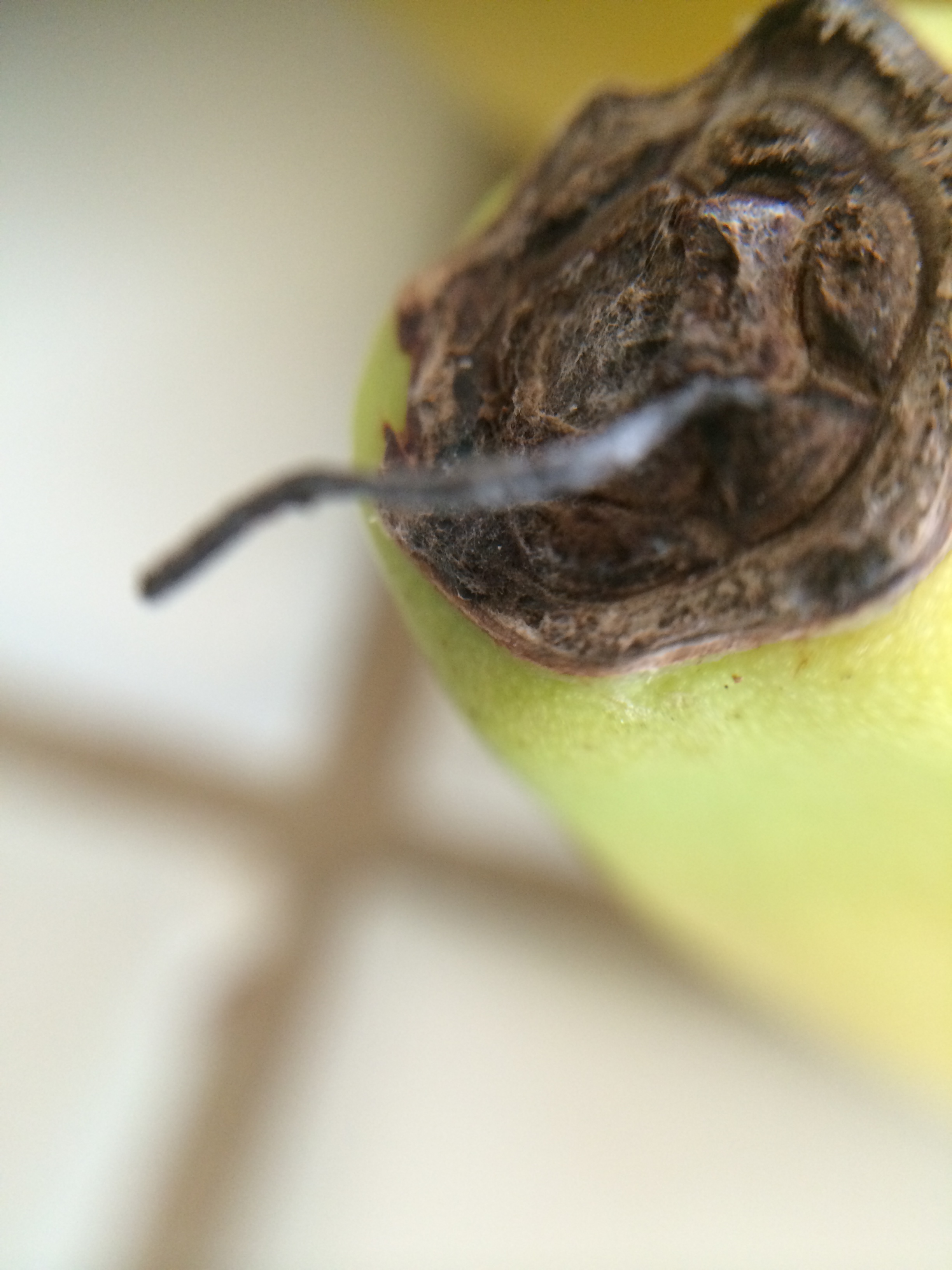
I noticed the banana…and focused my lens on the dark end.  It is definitely more interesting than I originally thought!

banana tip

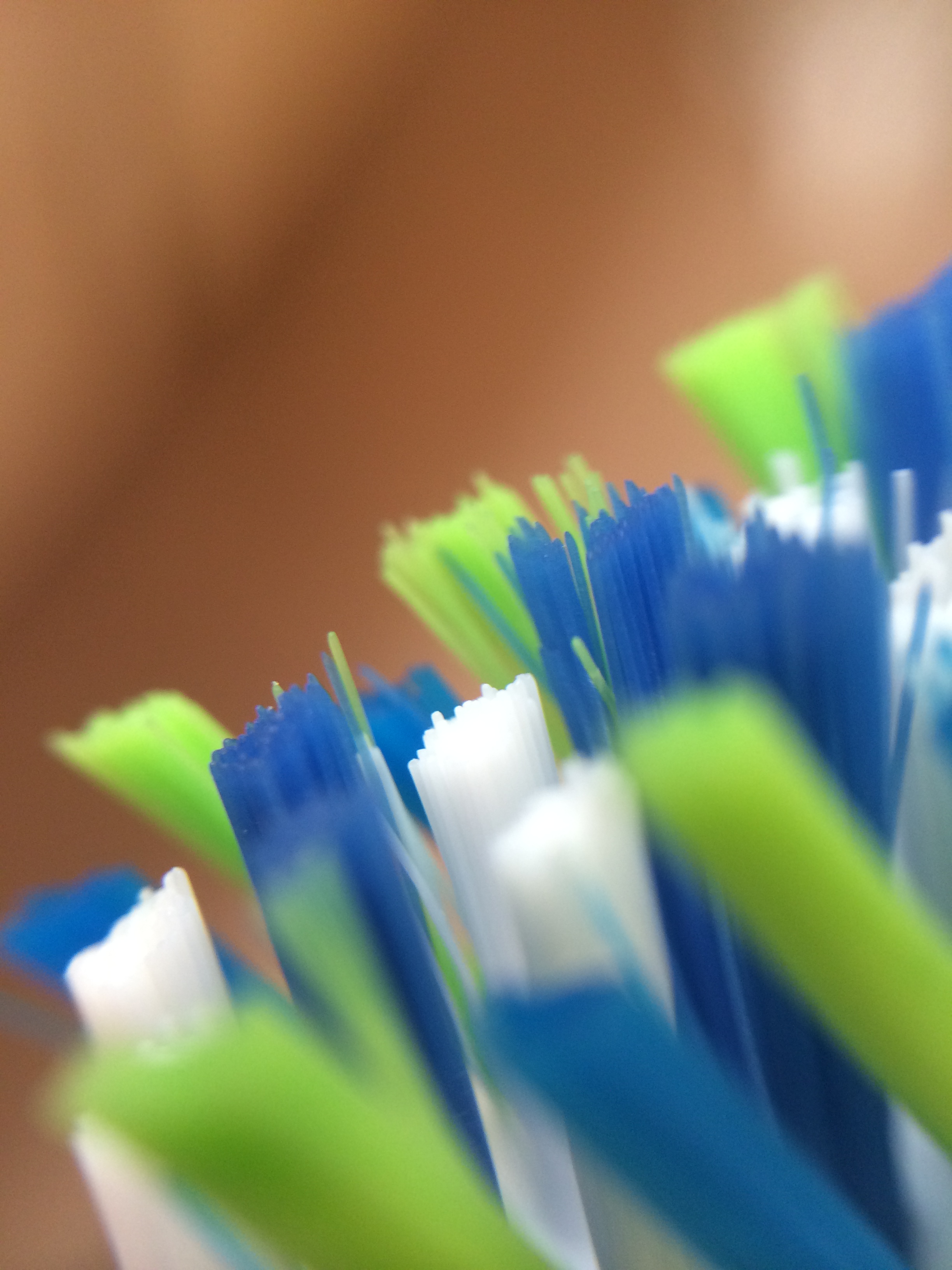
And then since I wrote about being more playful about ordinary things like brushing my teeth in my Summer Manifesto yesterday, I couldn’t resist a quick shot of the bristles…and the toothpaste tube!

toothbrush bristles

toothpaste

Later today while I was outside on a long walk–of the exercise persuasion–I found myself thinking about the NWP radio show I taped today.  The show focused on formative assessment and a resource, an e-book, that NWP colleagues, Beth Rimer from Ohio and Terri McAvoy from Missouri, have put together to help their writing project colleagues and other educators understand and use formative assessment effectively…in classrooms and in professional development.  (The e-book will be available on the NWP website on June 26th…and you can hear the radio show that same evening!)

I realized in my work with Terri and Beth (I acted as their coach and editor…and cheerleader!) that formative assessment is one of the taken for granted, ordinary practices that becomes nearly invisible–even to those who use it well–and totally unacknowledged and often dismissed by those who aren’t familiar with its powerful outcomes.  What I love most about the new e-book, Formative Assessment as a Compass: Looking at Student Work as an Intentional Part of Ongoing Professional Development, is that it shines a light on all the reasons this is an essential practice for educators–in classrooms and in professional development.  Like my zipper and my toothbrush, it’s easy to overlook formative assessment.  It’s not flashy and doesn’t get much press, but effective educators understand that paying attention to learners–what they “get” and what they don’t–is essential to planning for effective teaching and requires a willingness to abandon the carefully created lesson plans and attend to the learners in the moment.

Since working with Beth and Terri, I have been more aware of the use of formative assessment in my classroom and I can’t wait to use this resource in my work with my SDAWP colleagues. Like a macro lens, this e-book will help people look more closely, examining the details that are often overlooked and considering intentional and systematic practices that support learners (and teachers too!).

What of the ordinary are you overlooking or taking for granted?  How will you take a closer look and consider the consequences of doing without this thing?  I’m glad for reminders to pay attention in different ways…to make the familiar new, allowing me to appreciate what I might otherwise dismiss as ordinary.

Summer Manifesto

There’s nothing like the CLMOOC to get the creative juices flowing…and the inspiration turned up high.  Ideas are arriving–pouring in fact–in flash flood proportions.  So I’m working hard to use the inspiration and not let the flood of ideas overwhelm and distract me.

This Summer Manifesto was posted this weekend…and I knew I would take it up and create one of my own–early in the summer, before my work pushes the good intentions from my priority list.  I hope this manifesto will be something I can return to throughout the summer to help remind me of my intentions.

So here goes:

Summer Manifesto

Spend time outdoors every day: exploring with my camera, walking/hiking for exercise, enjoying the sun and sea breezes…

Explore with my camera: try new strategies and techniques, go places in my community I haven’t yet visited, and see familiar places in new ways

Celebrate moments: take the time to breathe and laugh in the moment, even when they are squeezed between obligations and obstacles

Play: find the playful moments in everything I do…I even want to make brushing my teeth more like play!

Make stuff: digitally and physically, and keep trying even if it isn’t beautiful…and even share those “makes” that don’t quite turn out

Try something new: even if it’s scary!

And most of all, enjoy my family, quiet time, and a bit of adventure!

Welcome summer!

(I originally composed this manifesto in Noteography in my attempt to tty something new and make it more beautiful.  It offered Twitter as a way to publish it…and here’s my first try at embedding a Tweet on my blog post.  If you know a better way to use Noteography or some other application for similar purposes…I’d love to learn from you!)


Exploring Natives…and Some Extras!

If you’ve been reading my blog, you may have noticed my obsession with weeds (here, here, and here are some examples). So when I heard that the Lux Art Institute was hosting an artist whose work features weeds, I couldn’t wait to visit.  And I wasn’t disappointed.  Beverly Penn makes exquisite sculptures by casting what others might classify as ordinary or weed-like flora in bronze and then creating beautiful art that seems to breathe, move, and reflect light.  I wish I could have taken photos of the art–but the museum requested no photos in the studio.

And as an added extra, when I had a minute to chat with the artist, she talked about how her current work (that she is working on as she is in residency at the Lux) uses the native plants that grow prolifically on the Lux grounds.  As we left the studio, we headed out into the grounds to see the sculptures installed in the native plant trail…also surrounded by even more native chaparral.
I took this photo of the native buckwheat.  And if you look closely you will see a little extra in the background–one of the fanciful birdhouses that is a part of the sculpture collection at the Lux.

native and extra

As I walked the natives, I couldn’t resist stopping to put my macro lens on to get closer to these often unappreciated beauties.  Seeing Beverly Penn’s sculptures inspired my curiosity and had me wanting to look even more closely at these plants that seem to grow like weeds…and many consider weeds.  Lately, they have been celebrated for their resilience in drought conditions, requiring considerably less water than the decorative plants that many like to cultivate around homes and businesses.
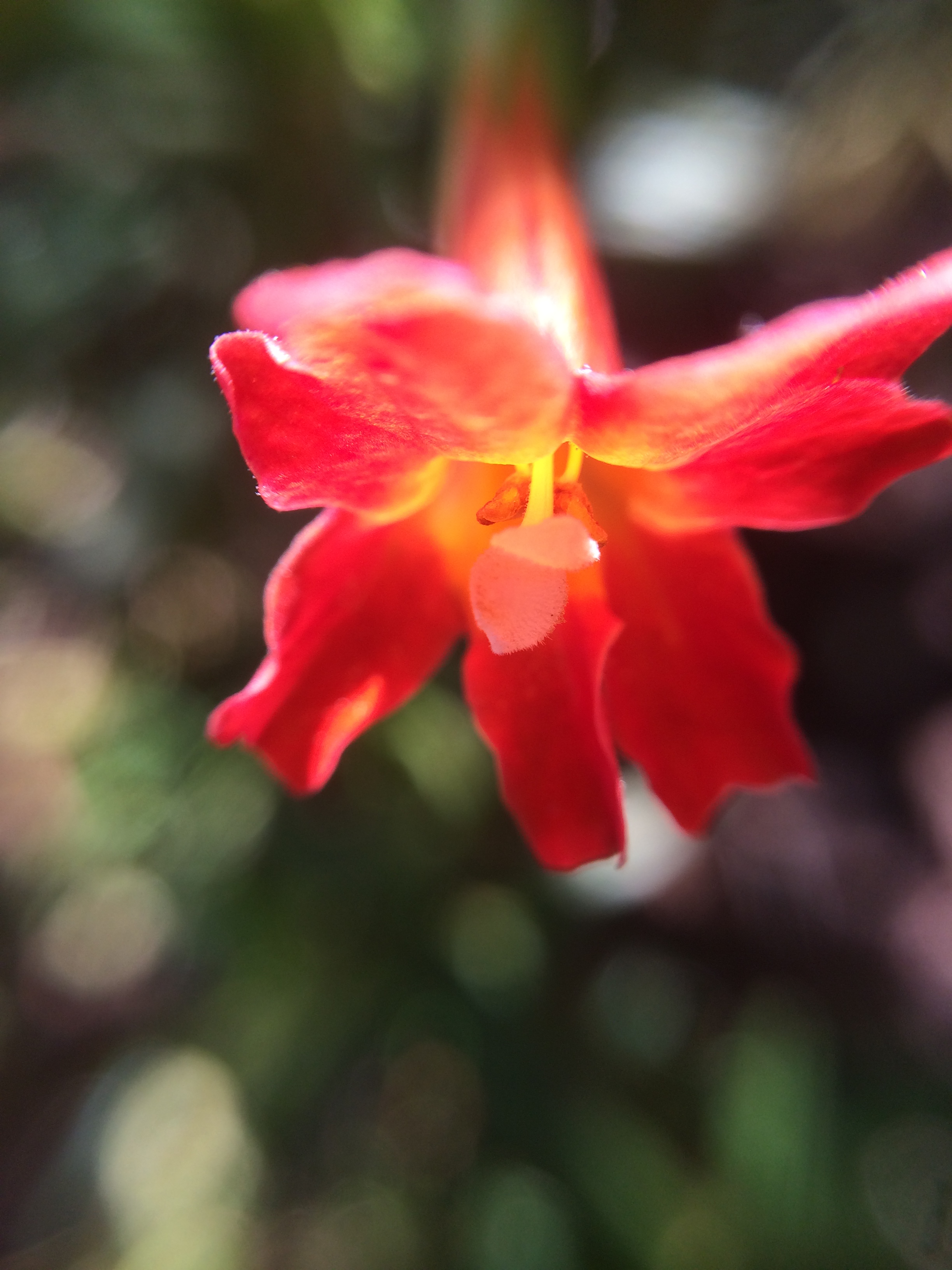
This Hummingbird’s Trumpet uses its brilliant scarlet to attract pollinators…and my eye.

monkey flower

I was surprised to learn that this vibrant yellow bloom is called the California Brittlebush.  I love the bumpiness of the centers when when you get close.

brittle yellow

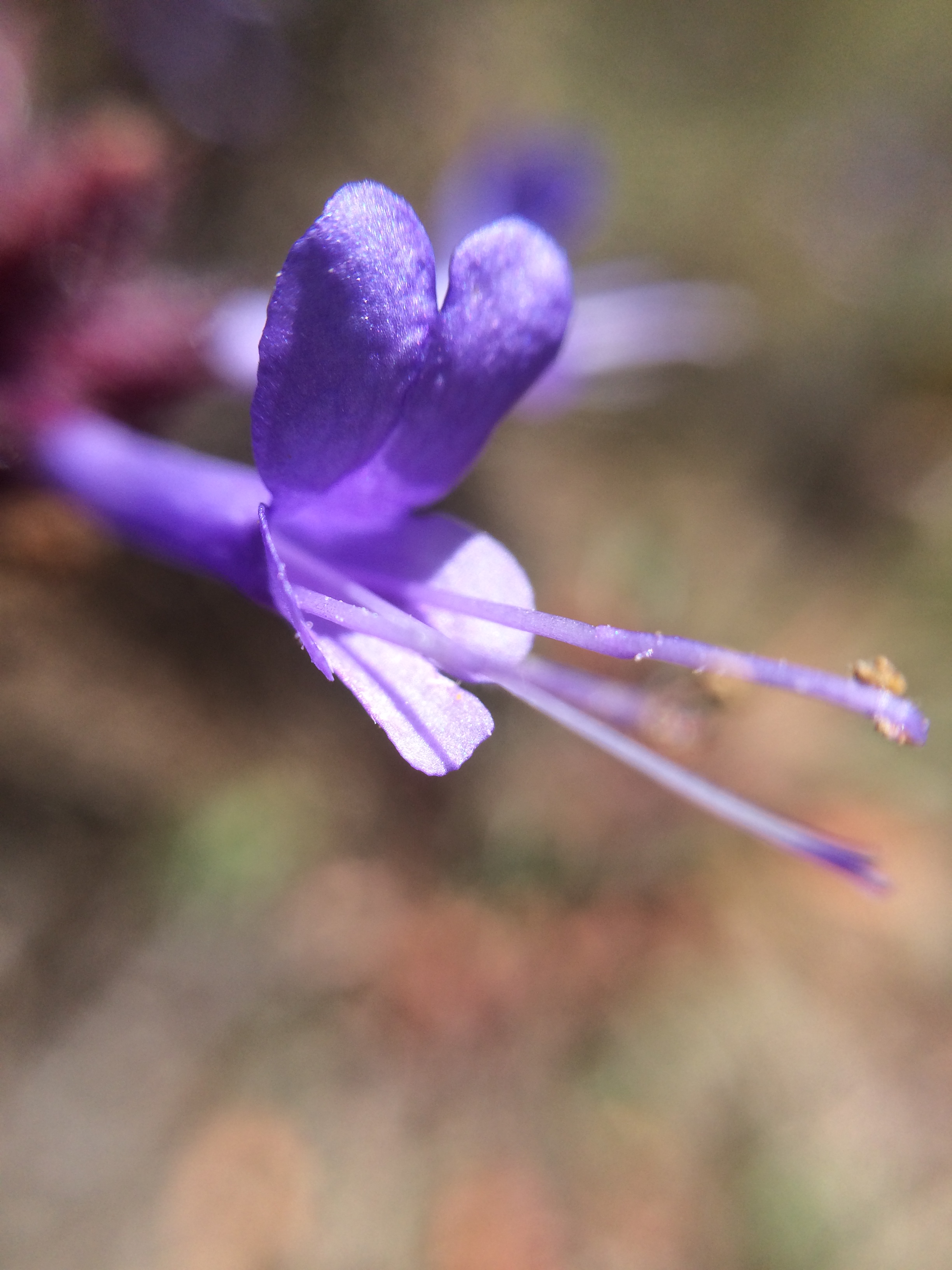
I’m really not sure of the name of this purple flowering plant.  The bloom is interesting because it includes a spiky ball and then a delicate flower.

purple native

purple native 2

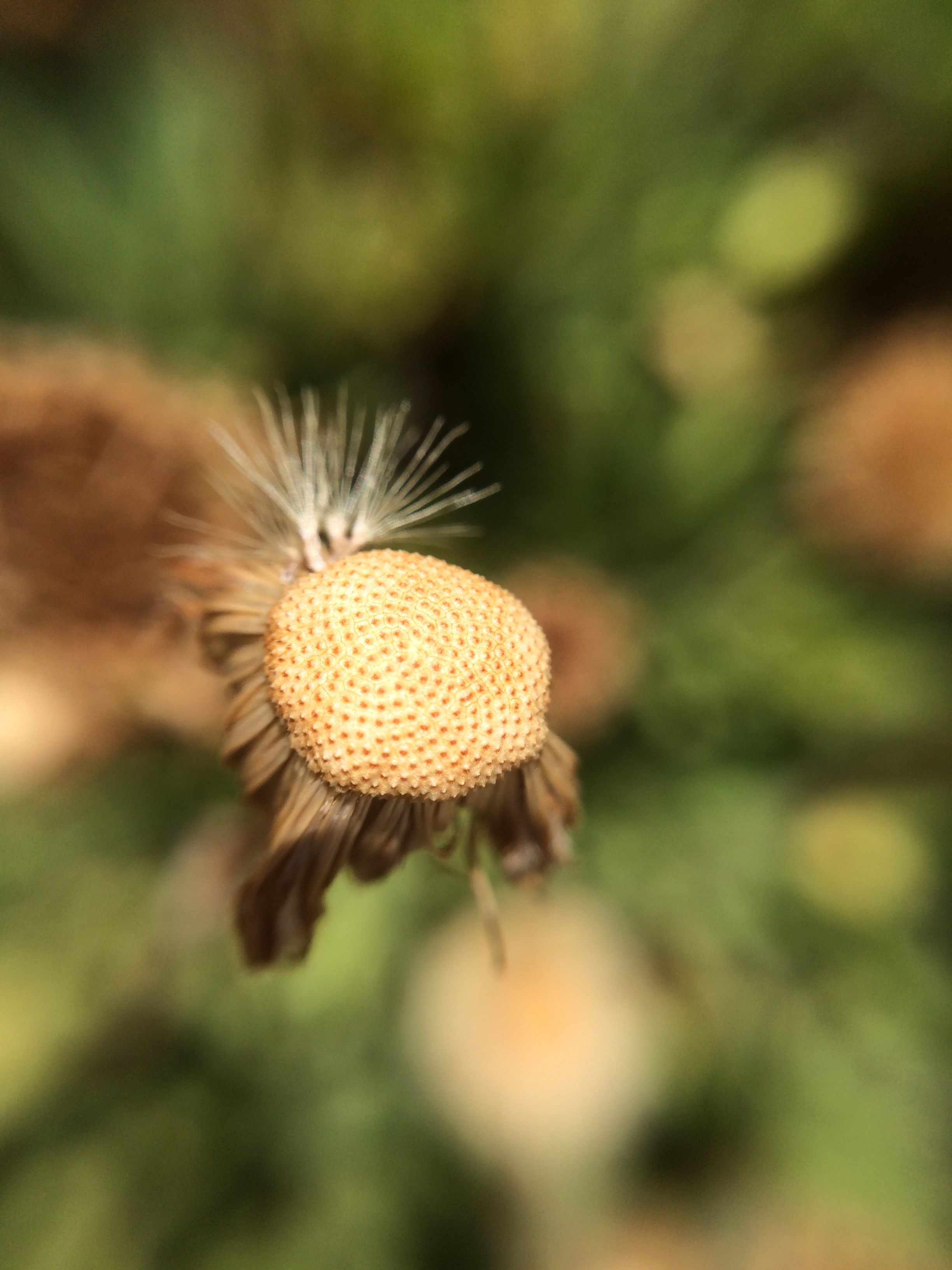
My interest in weeds has also allowed me to find the beauty in the stages of blooming that some might dismiss as ugly or uninteresting.  This plant, the Seaside Daisy, had a few blossoms in full bloom with white petals and a bright yellow center.  But I found myself interested in the blossoms that were past their prime, “gone to seed”–reminding me of dandelions and their tenacious seed dispersement and the beauty of the husks as the seeds blow away.

seaside daisy husk

seaside daisy seed

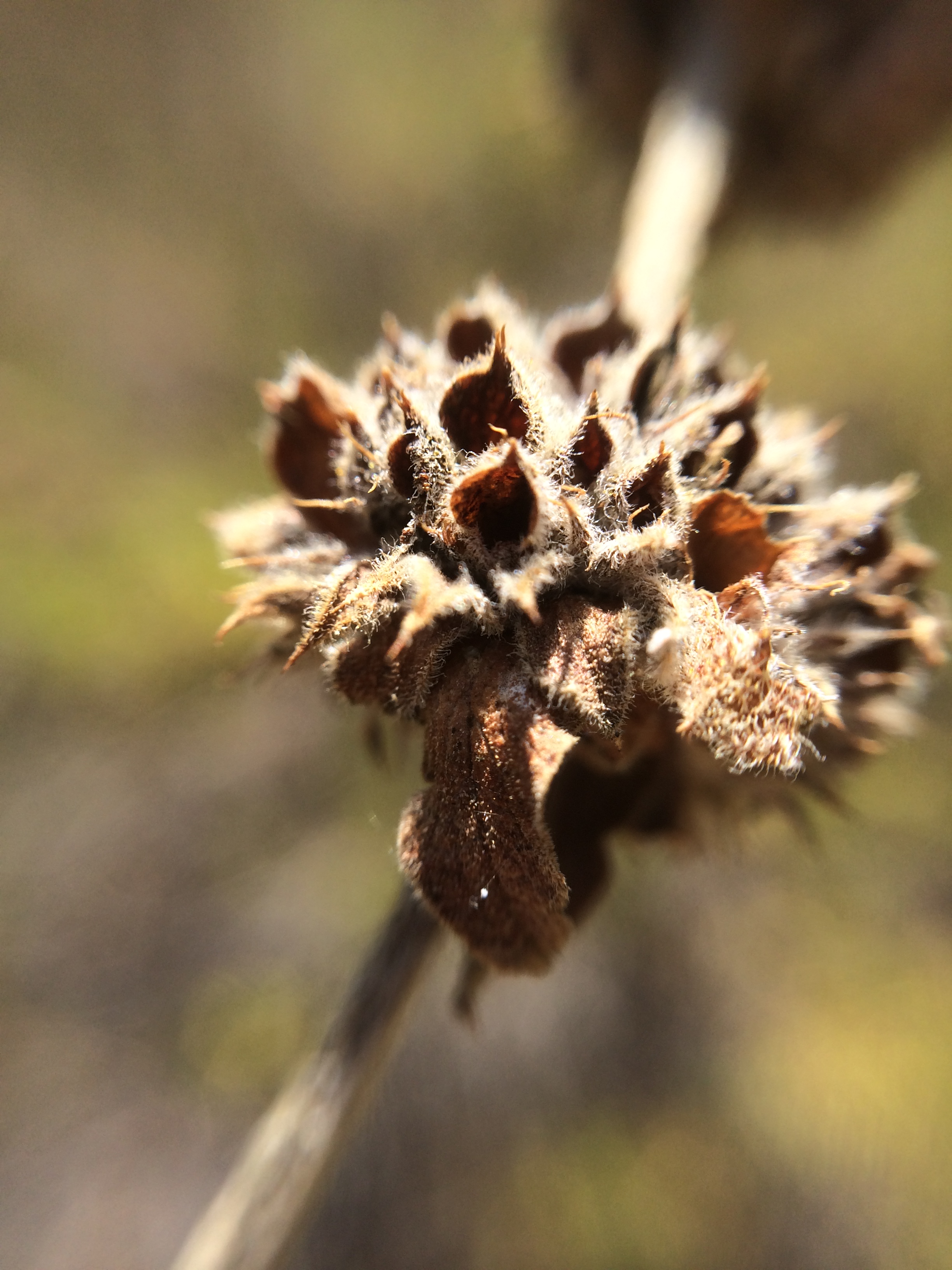
I was also drawn to the black sage…a common plant in these parts.  The blossoms are now skeletons, and yet somehow their intricate beauty draws me in and the fragrance evokes San Diego summer.

black sage

I loved the extras that presented themselves as I headed off to the Lux today.  I was reminded to appreciate the natives…and look closely to find their beauty and intricacy.  And one more extra: I ran into one of my students (and her little sister who will be my student when school begins in the fall) as they came out of the art studio and I was about to enter.  Their mom mentioned that they were there because we had studied weeds…they just couldn’t wait to see what the artist was doing with weeds as her subject!  What a great beginning to summer!

Weekly Photo Challenge: Doing

Do you speak in images? Enjoy taking photos to document your experiences or just to express what you notice in the world? Love to share them with others? Welcome to the weekly photo challenge! I post a new challenge each week…check in regularly and join the fun!

Tomorrow is my last day of school with my students, so they’ve been thinking a lot about summer and what they will be doing.  And we’ve been doing a lot in the classroom this last week, taking advantage of our mild sunny weather and the incredible independence the students have developed over the course of the school year.  Monday was a field trip to the NAT–the San Diego Natural History Museum–where students were busy doing a lot of inquiring and thinking about all the science learning they have done this year.

creating energy at the NAT

Here’s one of my students using his hands to pedal to create the energy to cause water to run in a sink.  And then I couldn’t resist snapping this picture of a group of students busily writing in the pirate ship at the NAT.

pirate ship writing

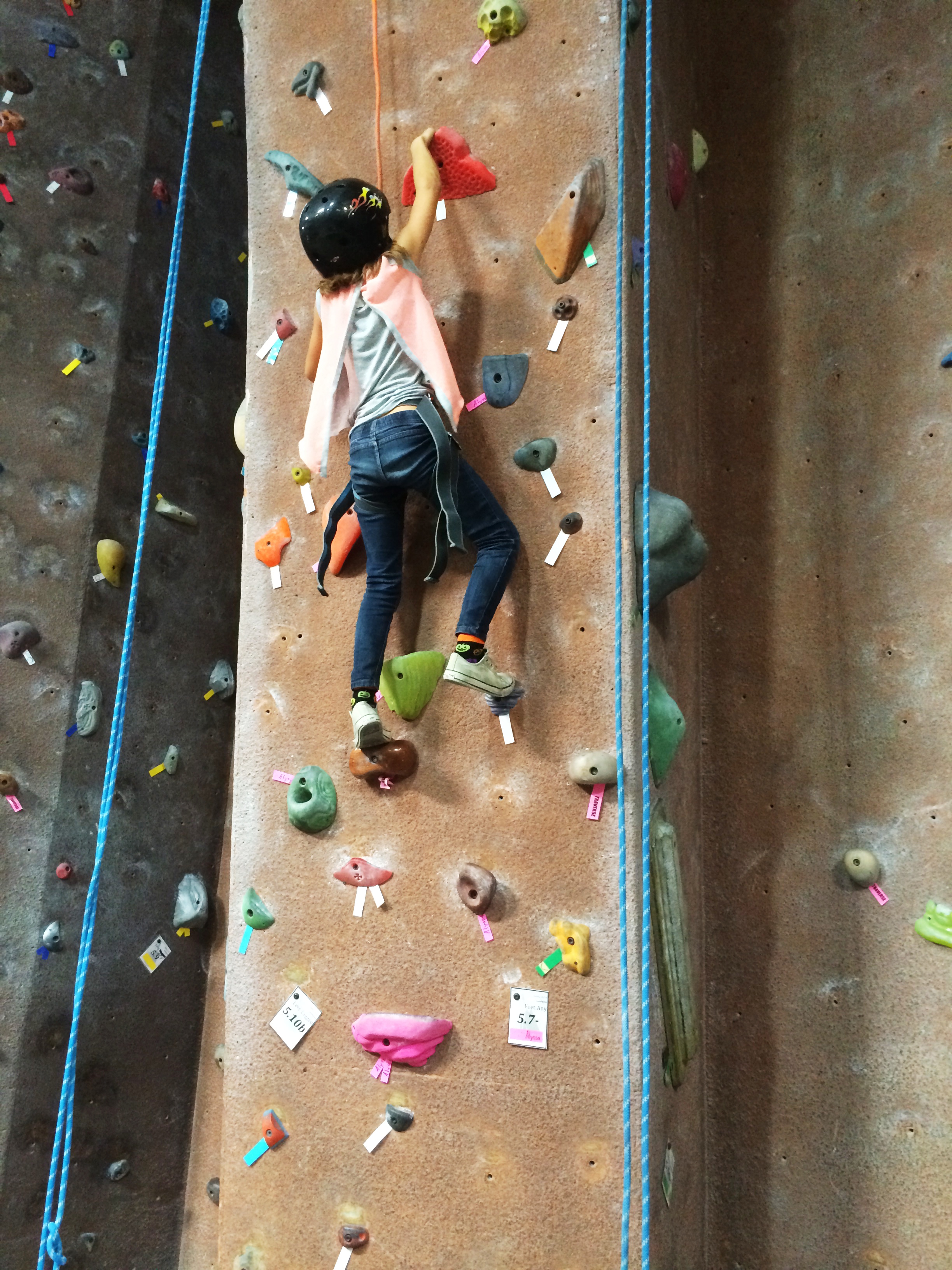
Yesterday we had our second annual rock climbing event with third graders.  It’s bittersweet to get to June when you’ve taught students for three years and know that they will be leaving and moving on to 4th grade and a new school too.  So we spent yesterday afternoon rock climbing at a climbing gym.  I got many shots of kids doing climbing.  I love watching them gain confidence as they try again and again.  This little girl had no fear…she climbed to the very top again and again!

rock climbing

This one isn’t my student, but I love when students take the initiative to make a difference in the world.  I found these informational signs around our school, attached to fences with pipe cleaners.  I did manage to track down the authors so I could congratulate them for their earnest efforts to improve the world.

bug psa

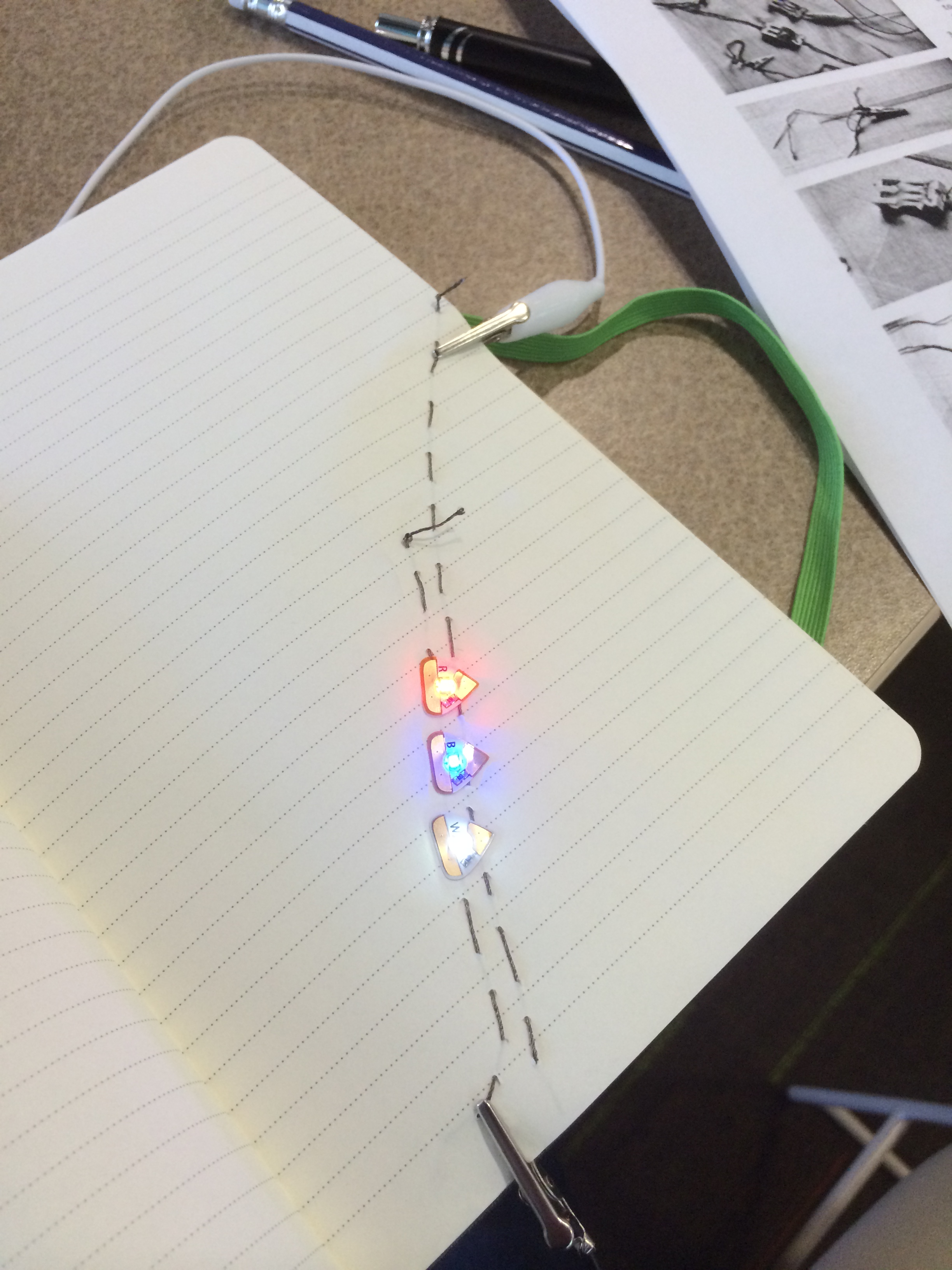
And I’ve been doing some doing too.  Just recently we put on an Advanced Institute at our writing project (SDAWP) focused on paper circuitry.  It’s such fun to play around with writing and science and all the connections between the two.  Here’s a fairly rudimentary parallel circuit I made playing with conductive thread instead of the copper tape I’ve used before.

notebook lights

And over the weekend I was exploring our local botanical gardens when I came face to face with this little guy.  A lot of my doing is related to photography…and it takes me to interesting places and seeing (and photographing( interesting things.

frog

And all this thinking about doing has me thinking about the CLMOOC (which begins tomorrow) and the making and doing I will be involved in there.  I hope all of you will join in the fun as well!

So this week’s challenge is to focus on doing…your own or the doing you see around you. You can be watching doing in action, capture things you are doing, or any combination that works for you. As always, you are the one who gets to decide what counts as doing…so have fun, and start doing, especially if you are having fun!

You can post your photo alone or along with some words: commentary, a story, a poem…maybe even a song! I love to study the photographs that others’ take and think about how I can use a technique, an angle, or their inspiration to try something new in my own photography. (I love a great mentor text…or mentor photo, in this case!)

I share my photography and writing on social media. You can find me on Instagram and Twitter using @kd0602. If you share your photos and writing on social media too, please let me know so I can follow and see what you are doing. To help our Weekly Photo community find each other, use the hashtag #doing for this week and include @nwpianthology in your post.

So get going and get doing!  Can’t wait to see what you are doing this week.


Appreciating Difference

I love my macro lens!  What I like best about it is that it makes me slow down, breathe deeply, and pay attention to the smallest of details…things that I didn’t even realize I couldn’t see.

Over the weekend I had the opportunity to spend some time at our local botanic gardens, offering a wide variety of plants in different ecosystems from deserts to rain forests to native plants of our area.  They also had a section of the gardens that was all fruit trees…a variety of citrus, figs, persimmons, guava, and more.

When I saw this delicate guava blossom, I had to stop and take out my macro.  I just knew that it would take a close look to really see and appreciate the beauty of this ethereal bloom.

guava blossom

And once I got started, I couldn’t stop myself.  Each variety offered its own unique beauty. Here’s one variety of fig.

fig blossom green

This is a different variety of fig…and perhaps at a different stage of development.

fig blossom red

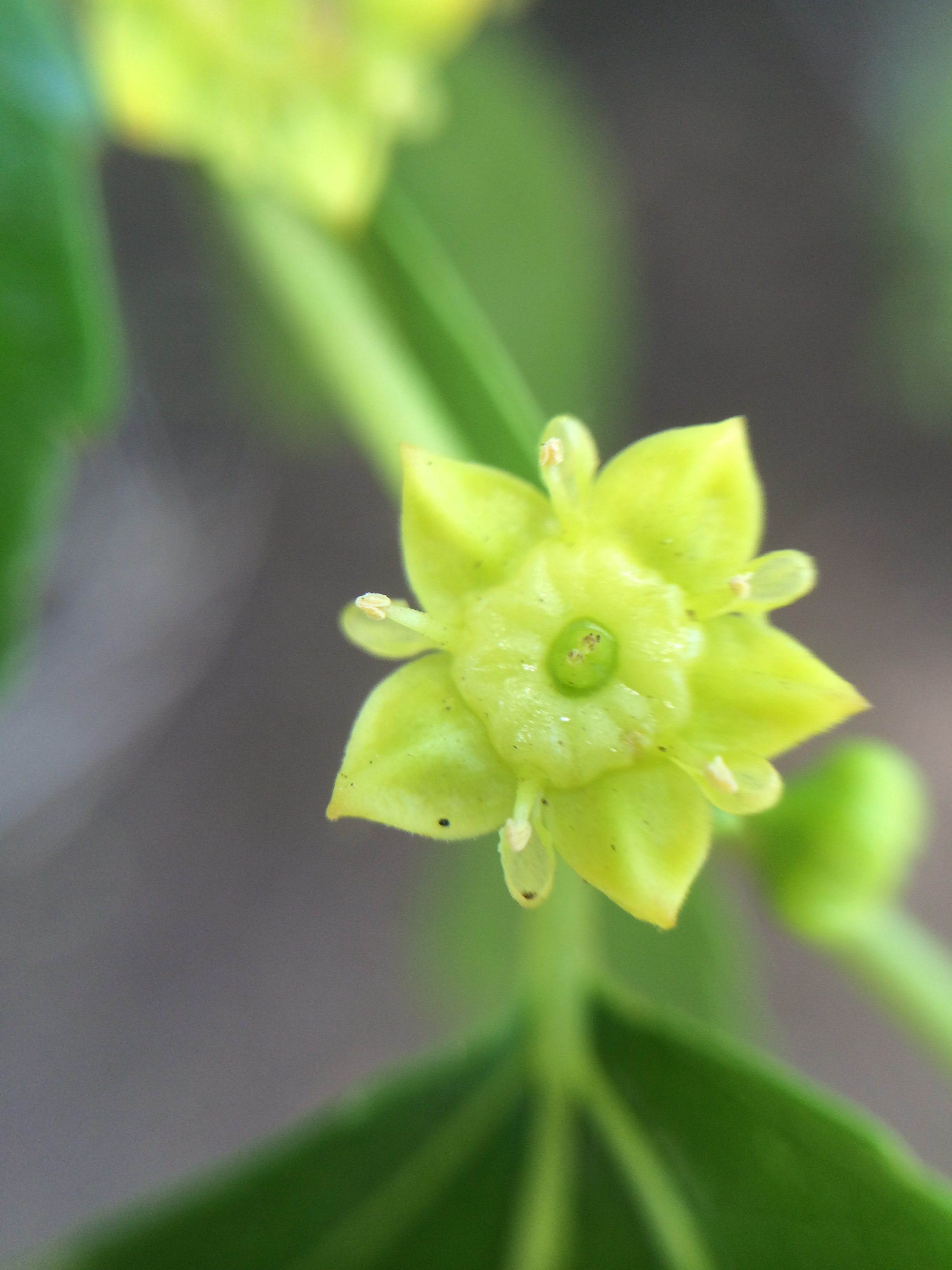
I was surprised by the center of this lime blossom.  I knew it was a white flower, but I hadn’t noticed the center before taking this photo.

lime blossom

And this lemonade lemon tree had the prettiest pink blossoms getting ready to open.

lemon blossoms

I’m not sure which fruit tree this blossom came from, but I love its crazy red fringe!

fruit blossom

As I looked closely at these fruit blossoms I found myself thinking about how much diversity there is among them.  Even varieties that are closely related are different from one another. Which got me thinking about my students…and students in general.  As teachers (and parents too), we need to slow down, look and listen closely, and pay attention to the diversity among our students.  Even when students are all the same age, they have vastly different personalities, learning strengths, and interests.  I often have the privilege of teaching siblings…sometimes even twins and triplets…and what I know is, despite having the same parents and living in the same environment, each child in the family is different from the other(s), highlighting the complexities of DNA, personality, behavior, and more.

And in spite of these differences, we all have so much in common:  the need to be loved and valued, to be nurtured and supported, to have others assume the best and help us learn from the inevitable mistakes we will make.

That macro lens offers insight as I look closely at the world of plants, noticing features and details I might have missed without it.  I don’t have a macro lens to use with my students, instead I have to use the lens of mindfulness to keep myself attuned to the individuality of my students and take the time to notice and learn from them and about them.  I don’t just teach a group of children, I teach a classroom full of diverse individuals and to teach them well it’s important for me to know that and take their differences into account.  And for me, that’s the beauty of the classroom, it’s a room full of teaching and learning opportunities as we all bring who we are into the mix.  Our differences are the best part of our learning community as we help each other slow down and see the world in new and different ways.

Playing with Cyanotype

Early this year I decided on play for my one little word.  And I have been making time for play on a pretty regular basis.  A lot of my play is related to photography and making time to take photos has me seeking out opportunities to explore that I might not have done otherwise.  I’ve explored places in my community that I have never been before…and I am definitely spending lots of time outdoors, especially on the weekend, rather than doing housework or even reading!

For Mother’s Day this year a manilla envelope arrived in the mail from my son and daughter-in-law.  As I opened it I found a typewritten note and a smaller manilla envelope.  I love the note, knowing that it was typed on a typewriter that my son found left next to the dumpster near his home…and that he typed it.  The note explained that I would find specially treated cyanotype paper that he had prepared for me.  It gave me step by step instructions for using the paper…and included a few “negatives” that I could try if I wanted.

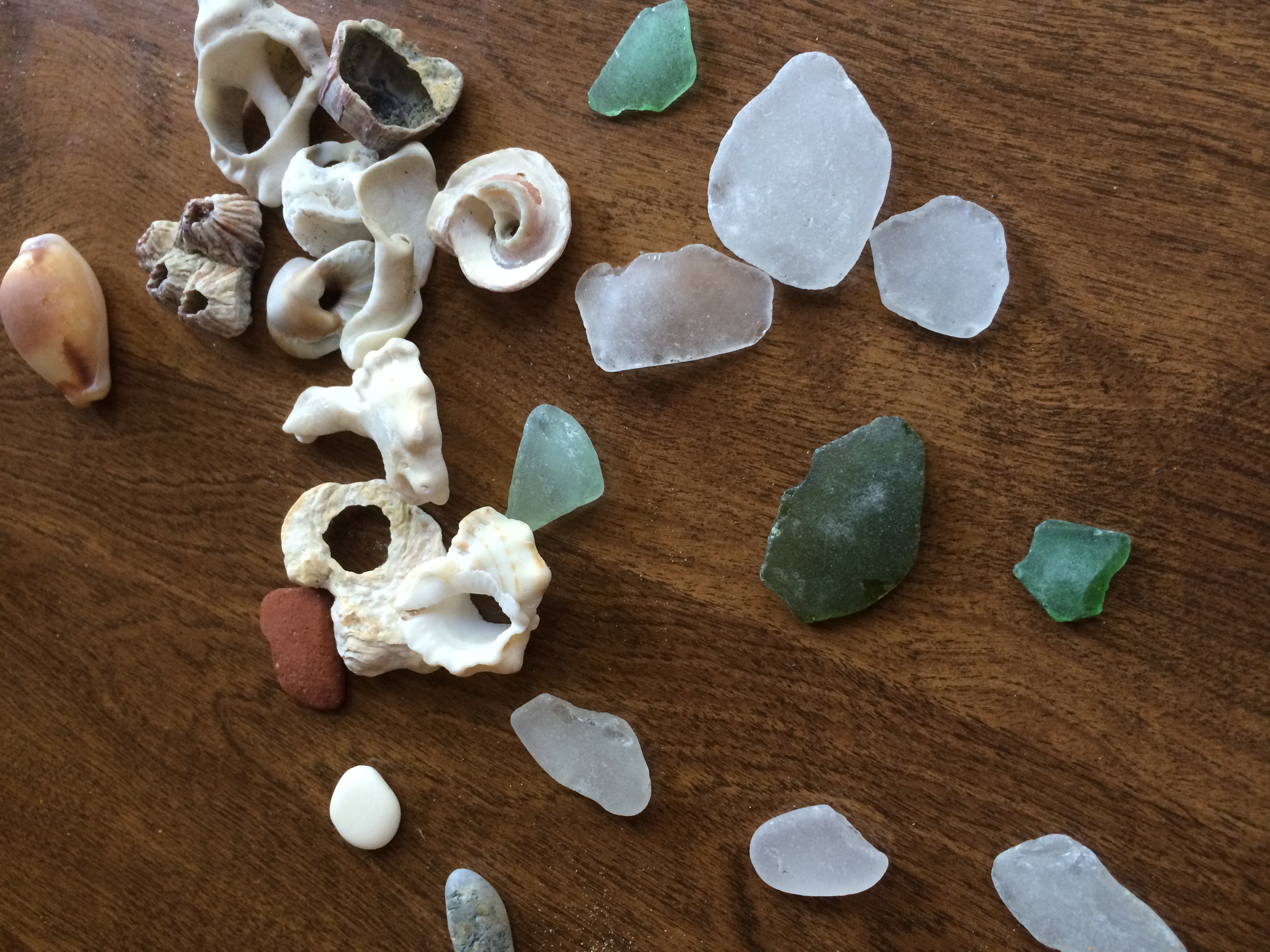
I played around a bit…and then got busy so it has stayed in the envelope until last weekend.  I started thinking about that cyanotype paper and what I wanted to play around with.  As I headed out for my beach walk on Saturday, I purposely looked for shell pieces that would work with this positive/negative kind of exposure (a rudimentary kind of photography).  As we walked I noticed so many different kinds of shells and rocks…and sea glass!  I seldom find sea glass on our beaches, but for some reason pieces of sea glass kept presenting themselves.  We also found quite a few shell structures with holes and openings.

beach finds

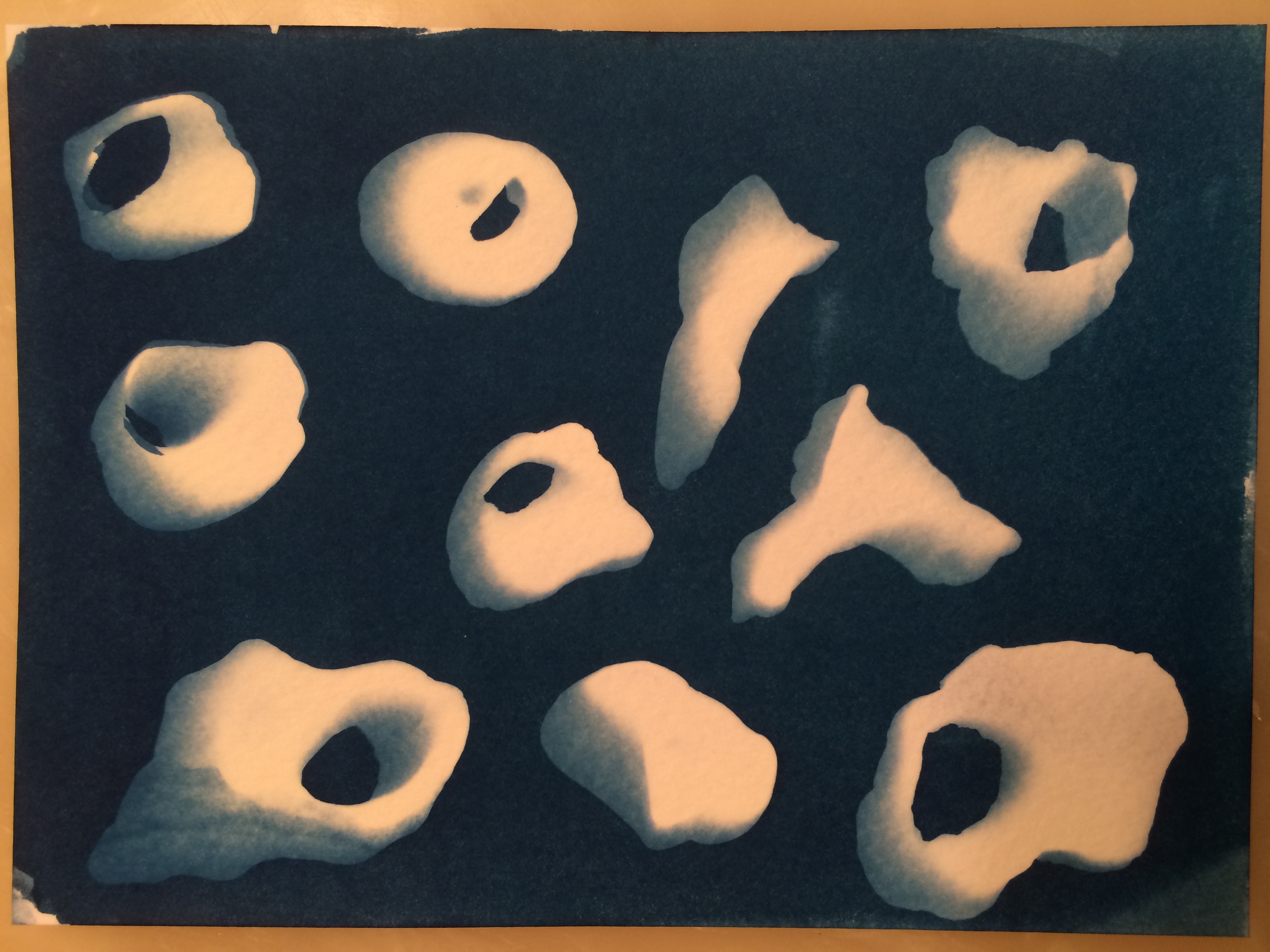
When I got home, I pulled out the paper treated with the cyanotype chemicals and laid the shells out.  I took them out for about five minutes of sun exposure, brought the paper back in to rinse to stop the exposure…and here is the resulting cyanotype shell study.

shell cyanotype

I love the dimension of this print.  The way the shadows create an almost three dimensional effect.

This attempt excited me, so I gathered some plant pieces and created an arrangement on another piece of treated paper.

This created an interesting result, but I found that the lightweight plants blow when I put them outside…there were pieces of lavender on the lower left…and they left a faint impression when they blew away.

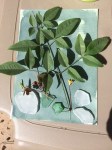
Then I grabbed a leaf branch from a tree in my backyard and created an arrangement with the beach glass as the grounding.

I like the way the beach glass produced an interesting effect when placed in the sun.  I tried another one today…and won’t subject you to the results.  Playing around with this printing technique is tricky.  Objects that are too dense or too thick create big light splotches that are less interesting and pleasing than those that have opacity or cast interesting shadows that create dimension.

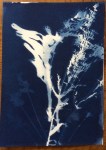
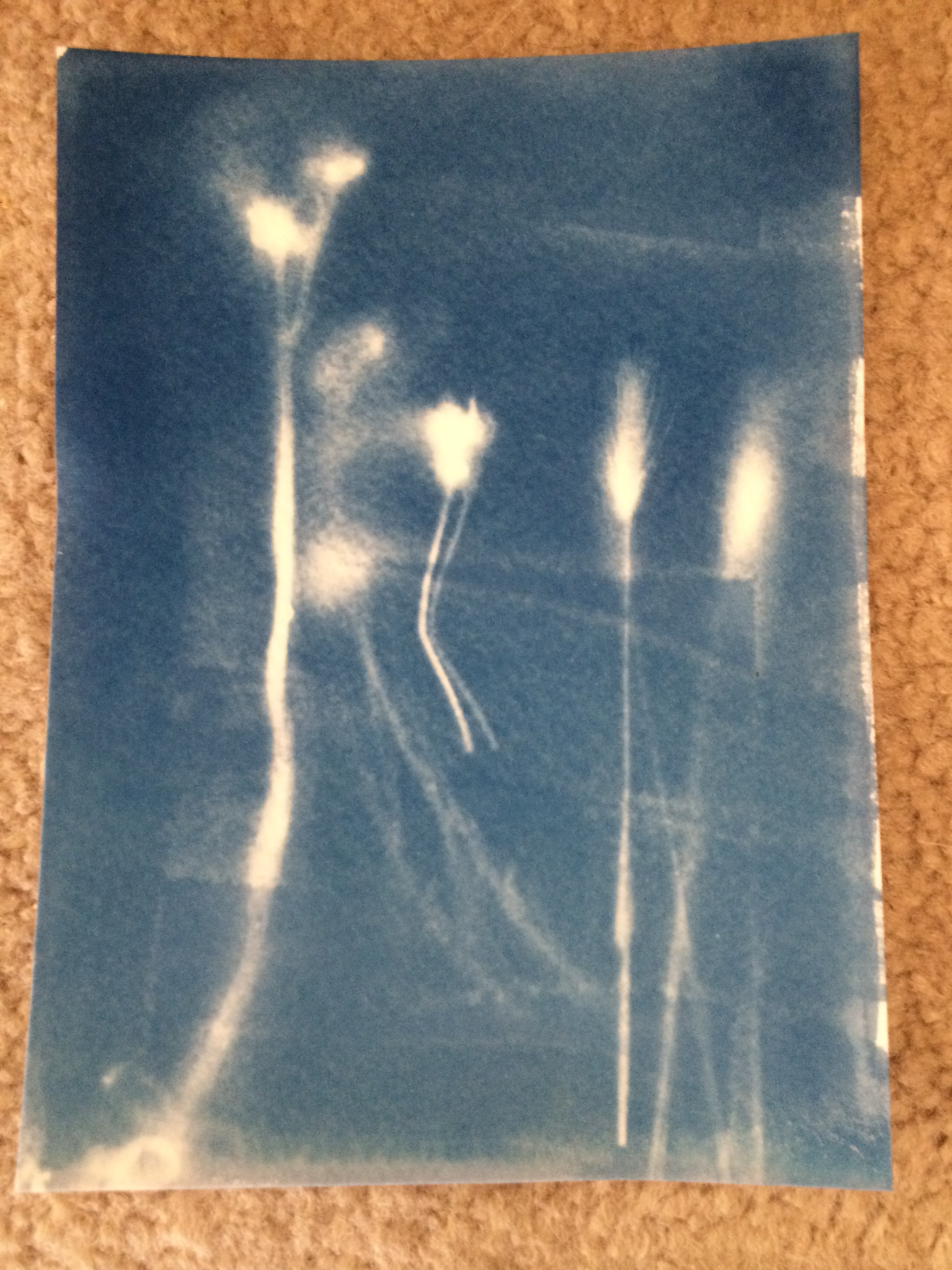
I have only a few pieces of treated paper left…but my son tells me it is easy and relatively cheap to create my own.  I’ve had fun playing with this technique and created some interesting pieces. I think the shell study is my current favorite…although I do like this early piece I did with some dandelions and other weeds from the yard.

dandelion cyanotype

I like that I have been playing enough that others are giving me encouragement and opportunity to play more.  And I know that taking time to play is good for me, good for my family, and good for my students.  I’ve noticed that lots of my play is about making…making photos, circuits, art, movies.  And I’m looking forward to some more play and making when the CLMOOC begins again on Friday.  So maybe this post is a preview of another summer of making…and playing with others through social media and connected learning.  Will you join us and do some of your own connecting, making and playing?

Beach Rooms

As I’m sure you have noticed, I take lots of beach walks.  And since I take lots of photos on those walks, in order to keep from taking the same pictures over and over again, I have to be ready to find a new focus each time I go.

I saw the new Daily Post weekly photo challenge last night…room.  And as I headed for the beach, I started to think about what room would mean on the beach.  My first thought was that the beach offers lots of room to breathe.  While that is true, once I arrived, I saw a variety of rooms on the beach.

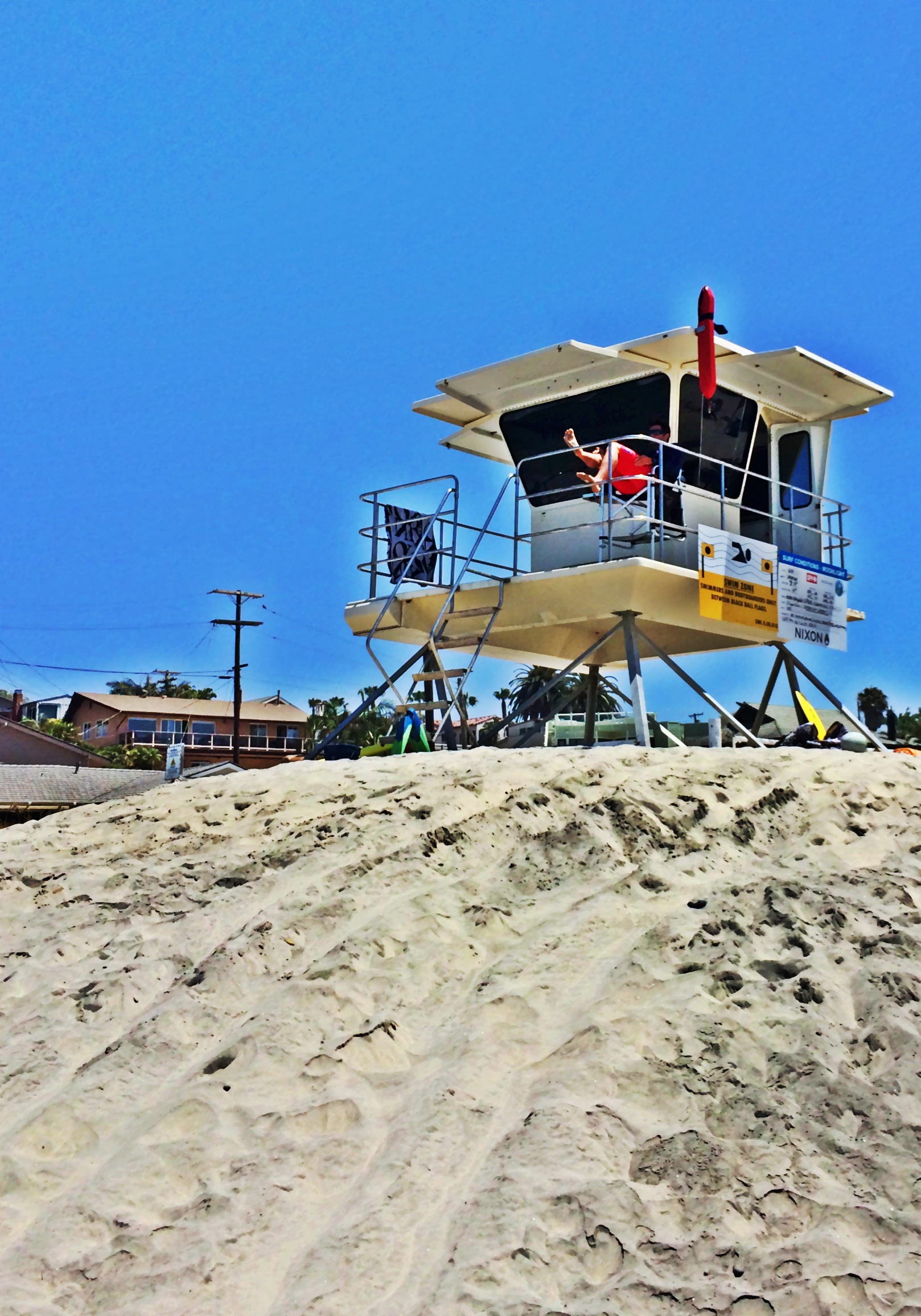
As I headed down toward the shore, I noticed the lifeguard stand.  This particular one had been put away during the winter, but is back out now…complete with a lifeguard.  This is definitely a room for the lifeguard and he was making himself comfortable as he watched all the people on the beach.

lifeguard stand

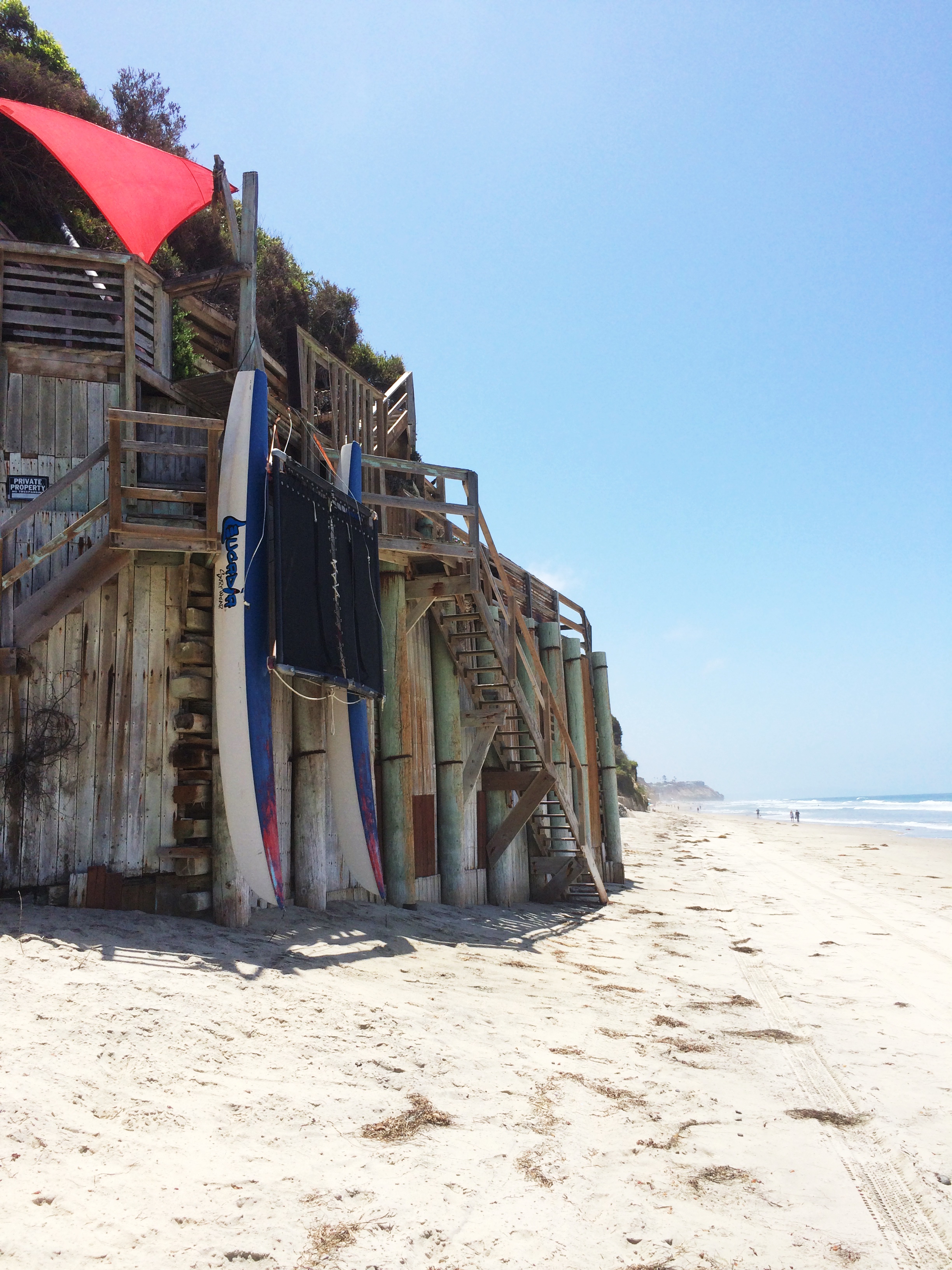
Heading down the beach, I started to notice the spaces that people who live on the bluffs above have built right above sand level.  It is clear that they see the beach as an extension of their home and have gone to elaborate lengths to create some comfortable rooms and spaces to keep their beach gear.

beach room too

Notice the beach stones used to build the lower wall on this one!

beach room

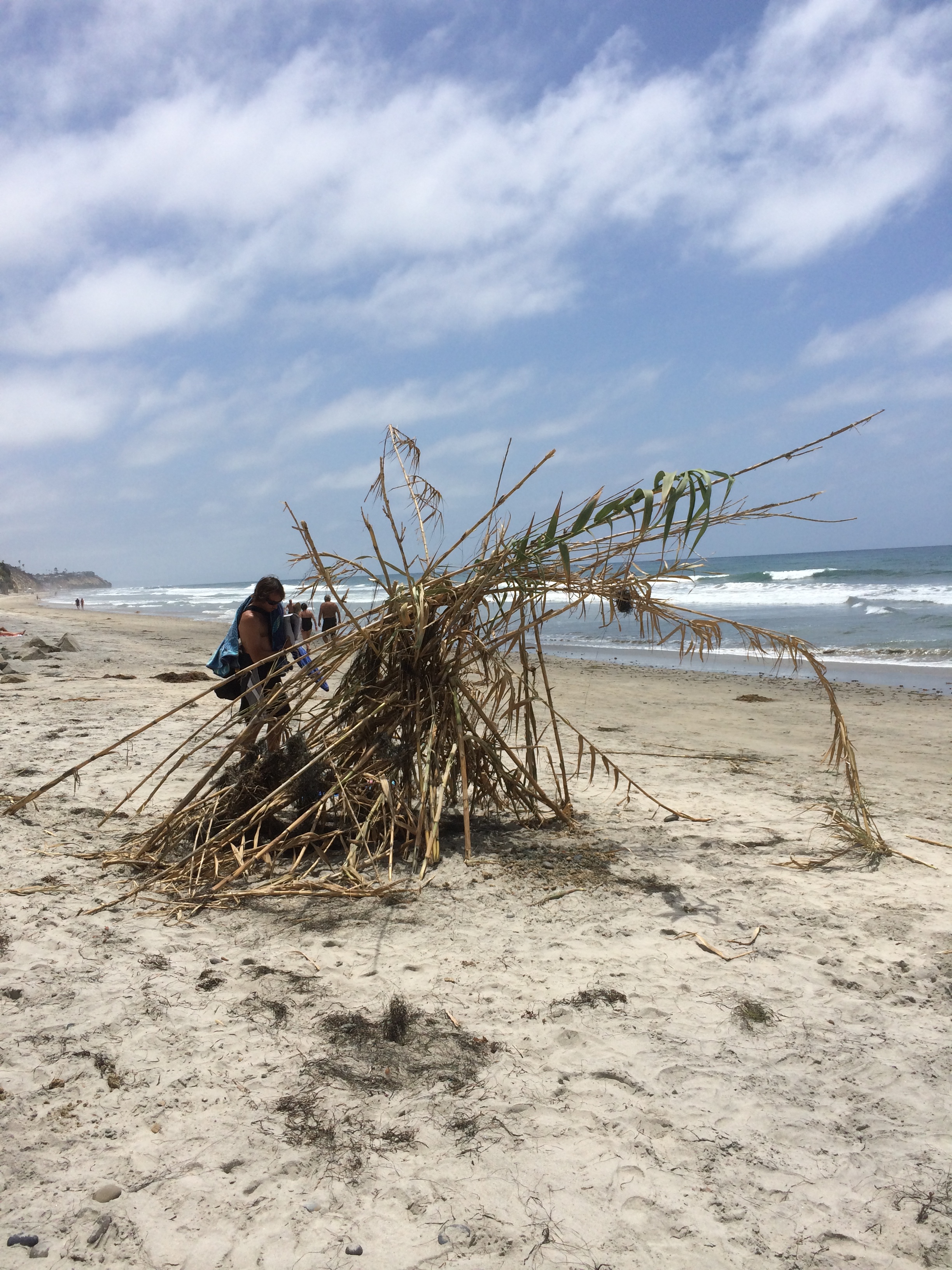
Not long after, we came across a group of people with surfboards who had built this teepee-like structure from reeds that grow nearby.  They seemed to be gathered to honor one of their own. The women gathered in beach chairs and the men with their surfboards, clutched flowers as they readied themselves to enter the waves.  It is a common ritual to gather on surfboards in the ocean to pay tribute to a fellow surfer…a memorial at sea, choreographed by the friends of the one who has died.

reed teepee

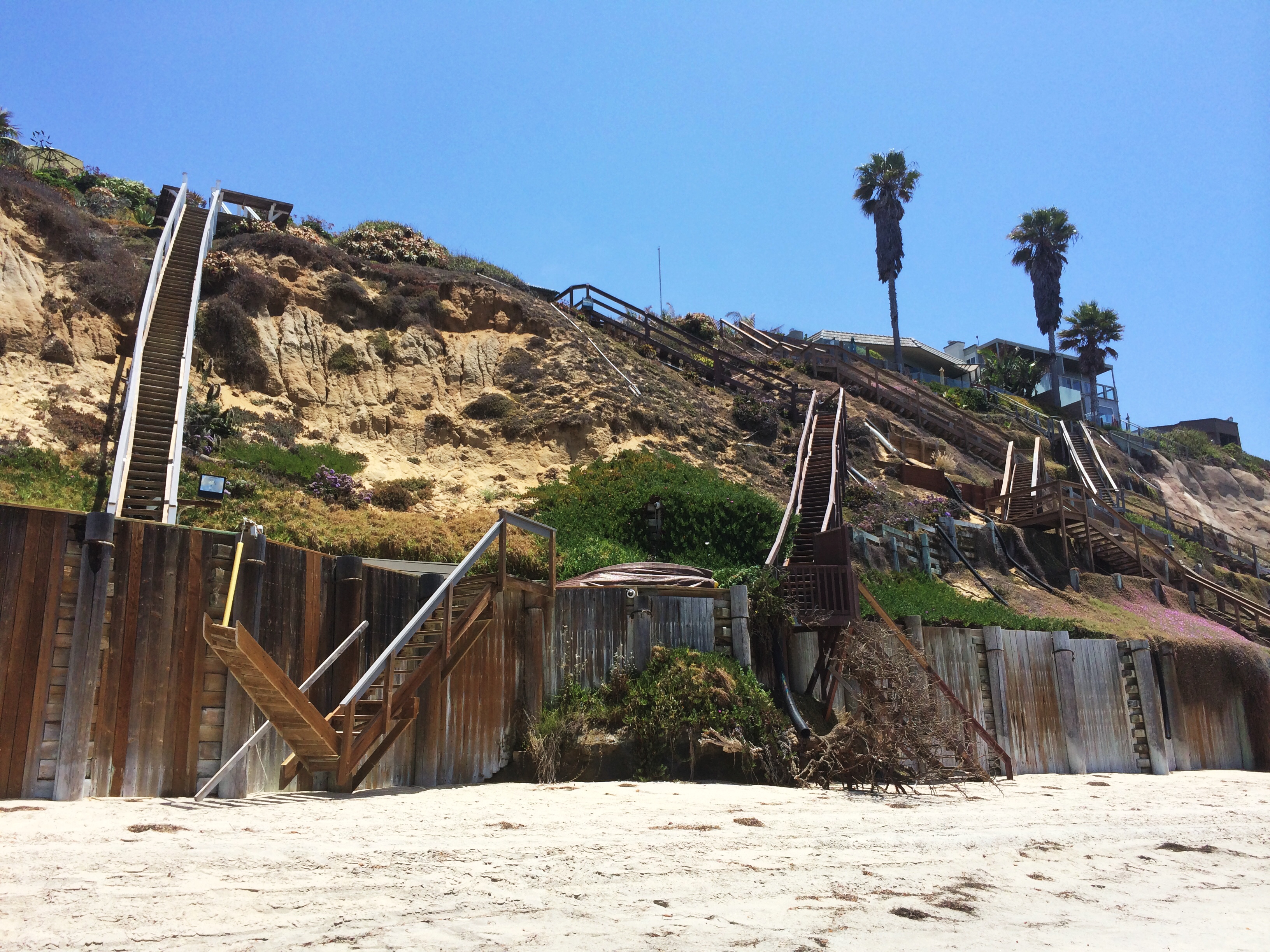
As we continued our walk this maze of stairways caught my eye.  Unlike the ones I saw earlier, these seemed to emerge from rooms far above on the bluffs rather than near the shore.

stairs

And some rooms are more temporary in nature.  I love this room…a fort made from a boogie board and beach towels.  A perfect place to hide away from the sun and easy to pick up and go…either into the waves or to head back home.

beach fort

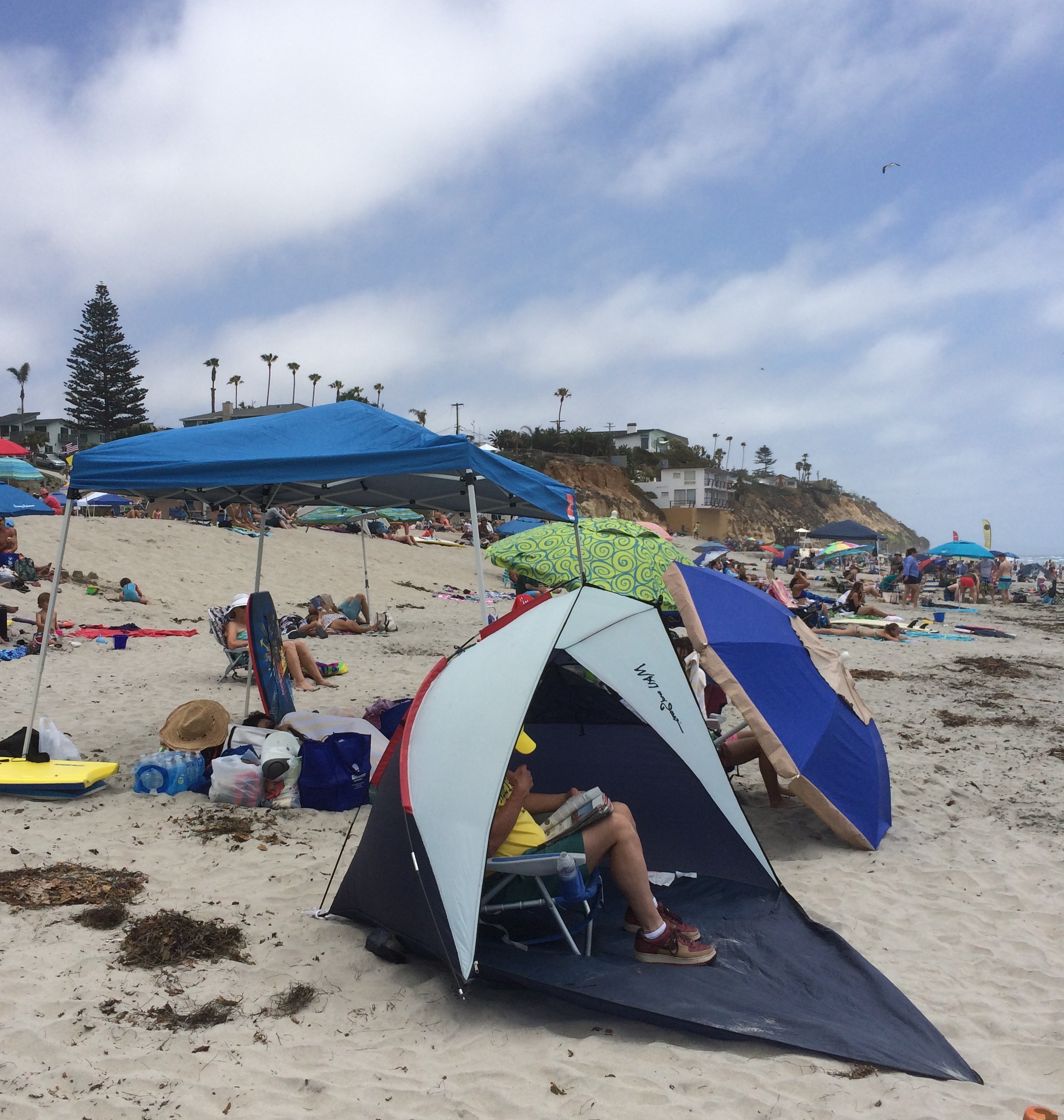
The beach is filled with rooms.  Some have roofs and no walls, providing shade without privacy, while others are almost tents, blocking wind and offering shade–and a great place to read!

beach shelter

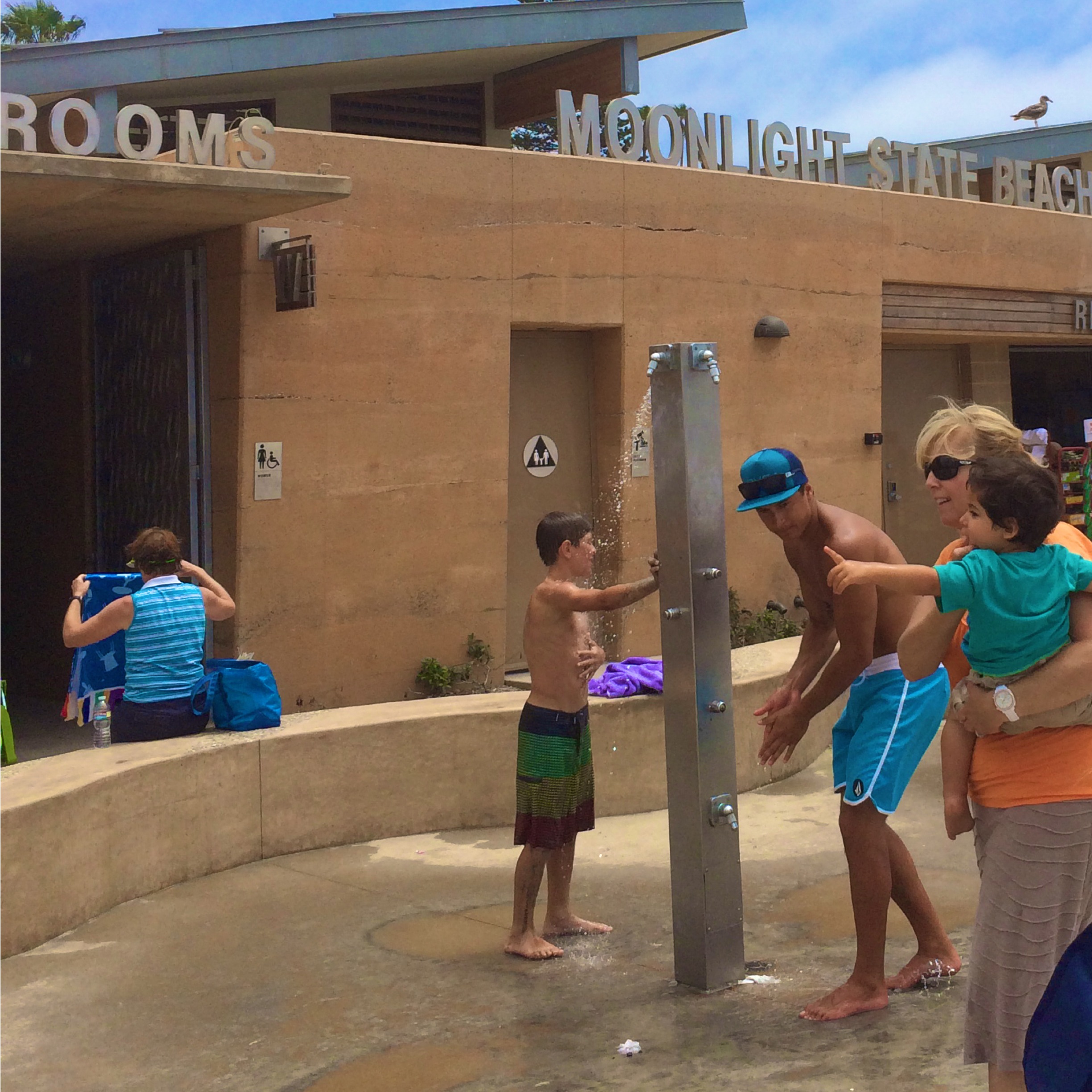
As we got ready to leave, I couldn’t help noticing the sign behind the room-less showers…of course the full sign read bathrooms, but I couldn’t resist taking this photo!

rooms

I love the beach for the room it offers to breathe and to think, the cool frothy waves and briny sea air seem to soothe worries and offer space in an otherwise full life.  But today, I also noticed all the other rooms at the beach…for shelter, privacy, ritual, storage, and service.  I’m reminded that rooms serve many purposes and come in endless varieties.  And now I’m wondering…what unexpected places have you found room(s)?