Category Archives: photography

Make it Write: October’s Photo-a-Day Experimentation

Maintaining an extended photo-a-day practice (mine has gone on for over a year now!) means figuring out how to keep it interesting and creative.  I depend on my friends to help me think through new ideas and consider whether my ideas are feasible or not.

So Abby suggested making this month about writing since it is the month of the National Day on Writing.  And I was thinking about what that would look like.  I know I don’t want to have to take pictures of hands and pencils all month!  But I love the idea of exploring all the ways we “write” our world.  What inspires our writing?  What impedes our writing?  Where do we find people writing?  Where do we find writing in the spaces we inhabit?  Where is writing absent? What is the writing on the wall?  (How will I incorporate macro photography with this prompt?  Hmmm….)

So all month in our photos I invite you to consider writing in the broadest sense.  Where will this open-ended experiment take you?  Will you find it restrictive or inspiring?  And as always, take some time each week to reflect on your photos, write a blog post or comment sharing those thoughts, select a favorite photo, or create a collage and share it on this post.

And here’s a photo to get you started:

photo

This is Jack, one of my two cats.  He’s wanting my undivided attention and definitely interfering with my writing as he snoozes on my computer!  (He even managed to type a few letters with his body in the process of being in the way!)

Can’t wait to see all the ways that writing can be interpreted in a photo…

Be sure to post your photo each day to Instagram, Twitter, Facebook, or Flickr using the hashtag #sdawpphotovoices.  (You can post anywhere—if you want others to be able to follow your photos, Instagram and Twitter are best!) For more information about posting click here.  At the end of each week you’re also invited to curate your pictures from the week and select one to highlight.  You might post it on your blog along with some musings about why you selected it.  If you don’t have a blog of your own, you have a couple of choices—you can create a blog (be sure to share it with us by including your blog address in the comments here—or better yet, tweet it using the hashtag #sdawpphotovoices) or you can post to the SDAWP Voices blog.

As the month goes on, come back to this post to link up your curated photos!  Click on the link up button below and add your favorites.  Or post a comment with an image on this post!

Saturated

In our classroom we like to give students lots of ways to process information.  They listen, they speak, they sketch, they observe, they write, they read, they move, they sing, they paint…

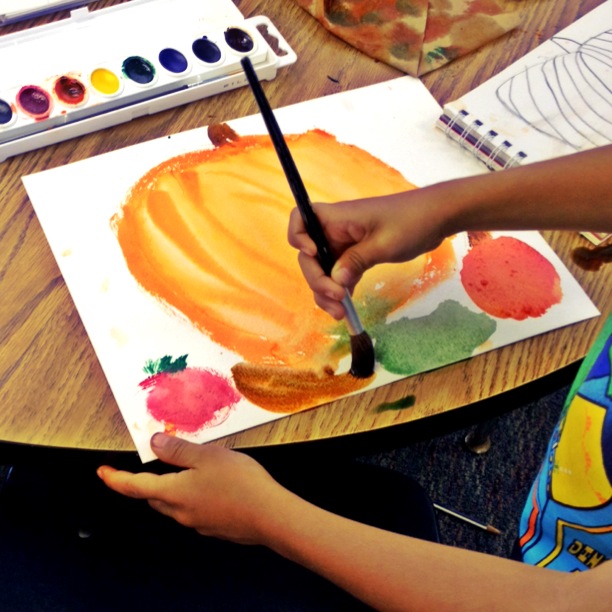
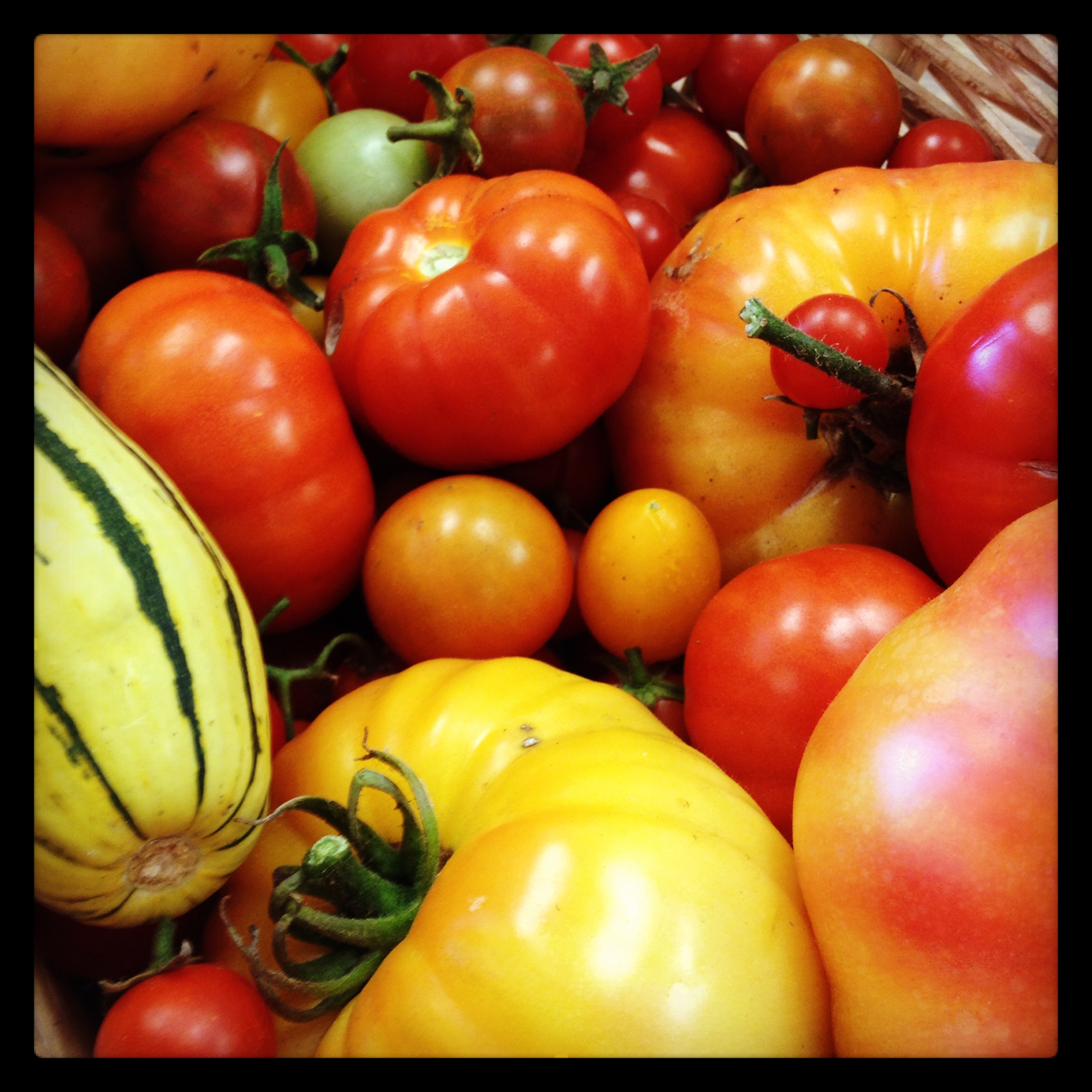
They are saturated with learning experiences.  Today we painted.  But it was just a part of a series of experiences to help students look closely, notice details, and then learn to sketch roundness by using curved lines and shading with their sketch pencils.  They started with pumpkins harvested from our school garden.  They moved to tomatoes, also harvested in the garden. They studied Vincent Van Gogh and learned about the concept of still life.  They arranged their own still life composition and photographed it using their iPads.  They used the photo as a guide for sketching their unique composition–and also learned some techniques for showing the overlapping of the fruits and vegetables.  And then today they tried the same techniques using watercolor paints.

photo_1-1

These six, seven, and eight year olds saturated their compositions with the brilliant colors of fall based on their experiences with the actual objects.

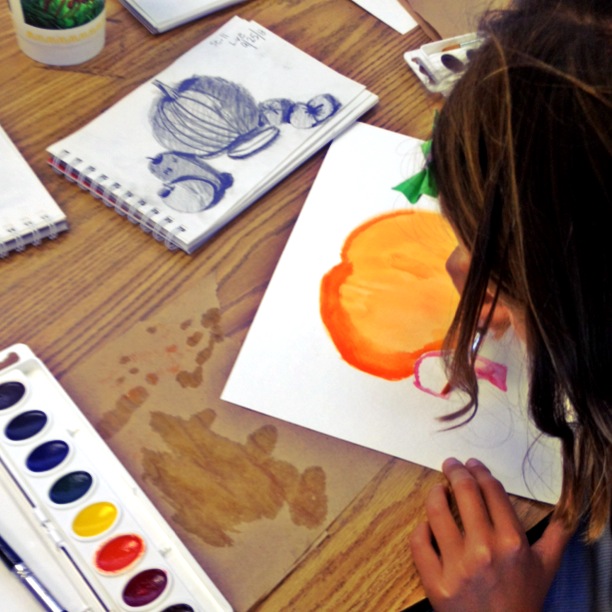
photo-3

In this photo you can see the gorgeous sketch (that the student made earlier this week) that guided this careful painting.  Saturating students in a variety of experiences related to a topic allows for deeper and more meaningful learning.  This learning is not just about art–although the art is beautiful–it’s also science and history and math and reading and writing…and so much more.

And conveniently, this week’s Weekly Photo Challenge is saturated.  It talks about color…but there is so much more to saturation than color, in my opinion!

How do you saturate yourself and your students in learning experiences?

A Jury Duty Learning Walk

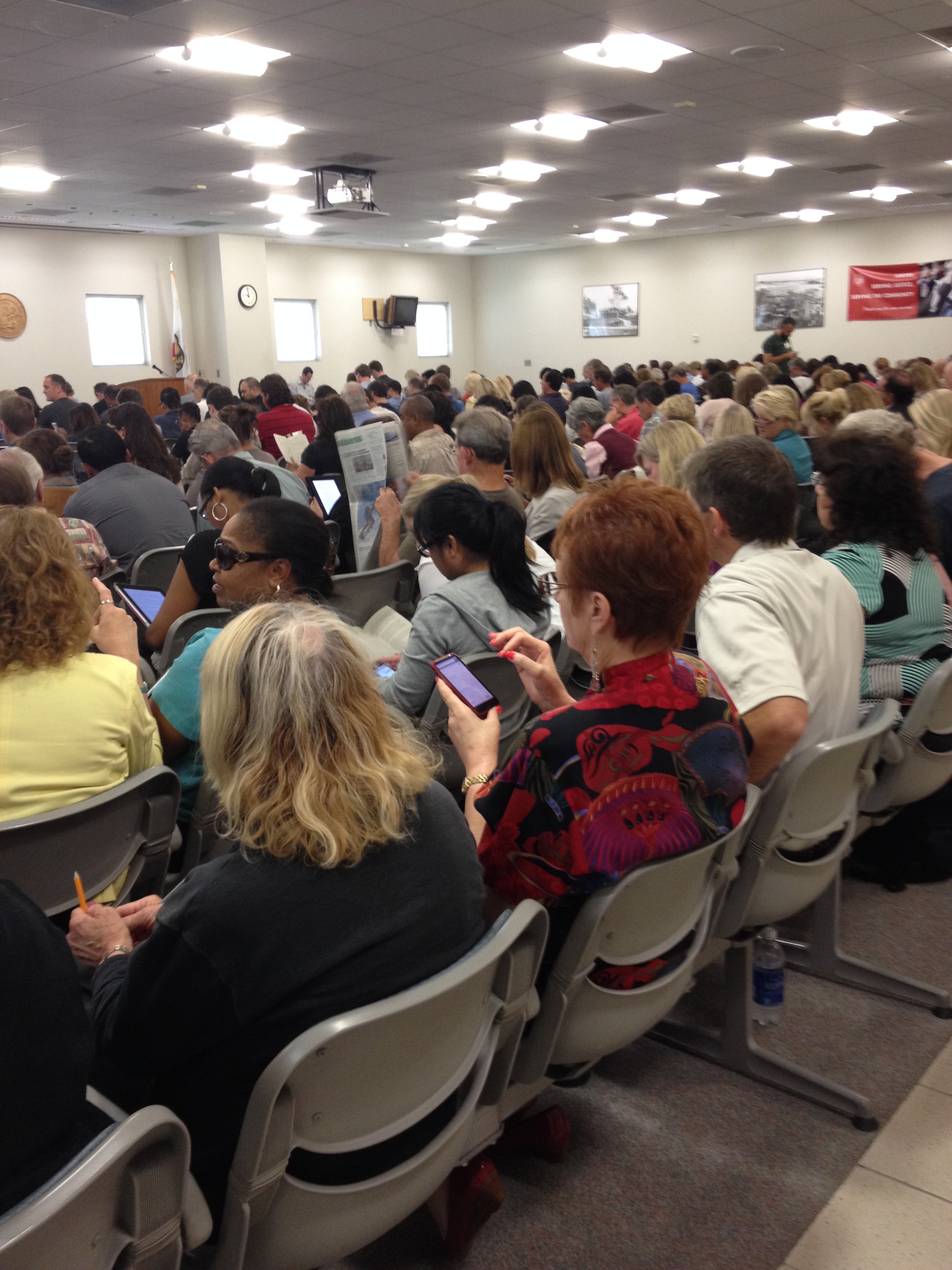
I did my civic duty this morning–I showed up for at the county courthouse at 8am for jury duty. And after a full fifteen minute pep talk from a judge trying to convince us all about the importance of our presence and the value of the jury system…and even quoting (from memory, as he pointed out) from the Declaration of Independence (not the preamble–the “stuff” in the middle), the mood in the room still seemed that of obligation, anxious waiting, and whiling away time.

The next fifteen minutes were spent on a video that reiterated the importance and value of serving as a juror and explained a bit about how the courtroom operates.  (Don’t take it personally if the lawyer excuses you, it’s all part of how the law works!)  And then we spent the next ten minutes or so filling in the back of our summons assuring that we were legally qualified to be jurors, signing our names and including a contact phone number.  As we passed the paperwork in, the approximately 300 potential jurors were entitled to our first ten minute break (we’d been there less than an hour).

photo_2

photo_1

As you can see, the jury lounge is not a particularly comfortable or visually stimulating place. There are a few tables around the edges of the room for those who want to work on their laptops (although not nearly enough electrical outlets) and some free, although spotty, internet access.  People read, chatted, knitted, played with their devices, slept, and some did work (I can raise my hand for that one!).  After about another hour we were granted another break–the difference between a break and not being on a break is that you can wander out of the jury room although the coffee cart in the hallway wasn’t much different than the vending machines inside.

After three hours in the jury lounge, we were summoned for an announcement.  There would be no need of jurors today and all 300 + of us were excused.  Be sure to clock out on your timesheet and leave your badge holder and pencil for others to use.

Whew!  I was relieved to be dismissed.  Not because I don’t want to serve on a jury, but because the uncertainty of the when and how long make my life complicated.  As a teacher, it’s hard to be at the courthouse wondering if I will be asked to return tomorrow–and then needing to arrange for a sub, make plans for someone else to carry out and miss all the intangible evidence of learning that can only be understood by being there.  So I’m happy to have finished my duty for at least a year.  But I do worry about how this system works…and who is actually willing and available to serve on juries.

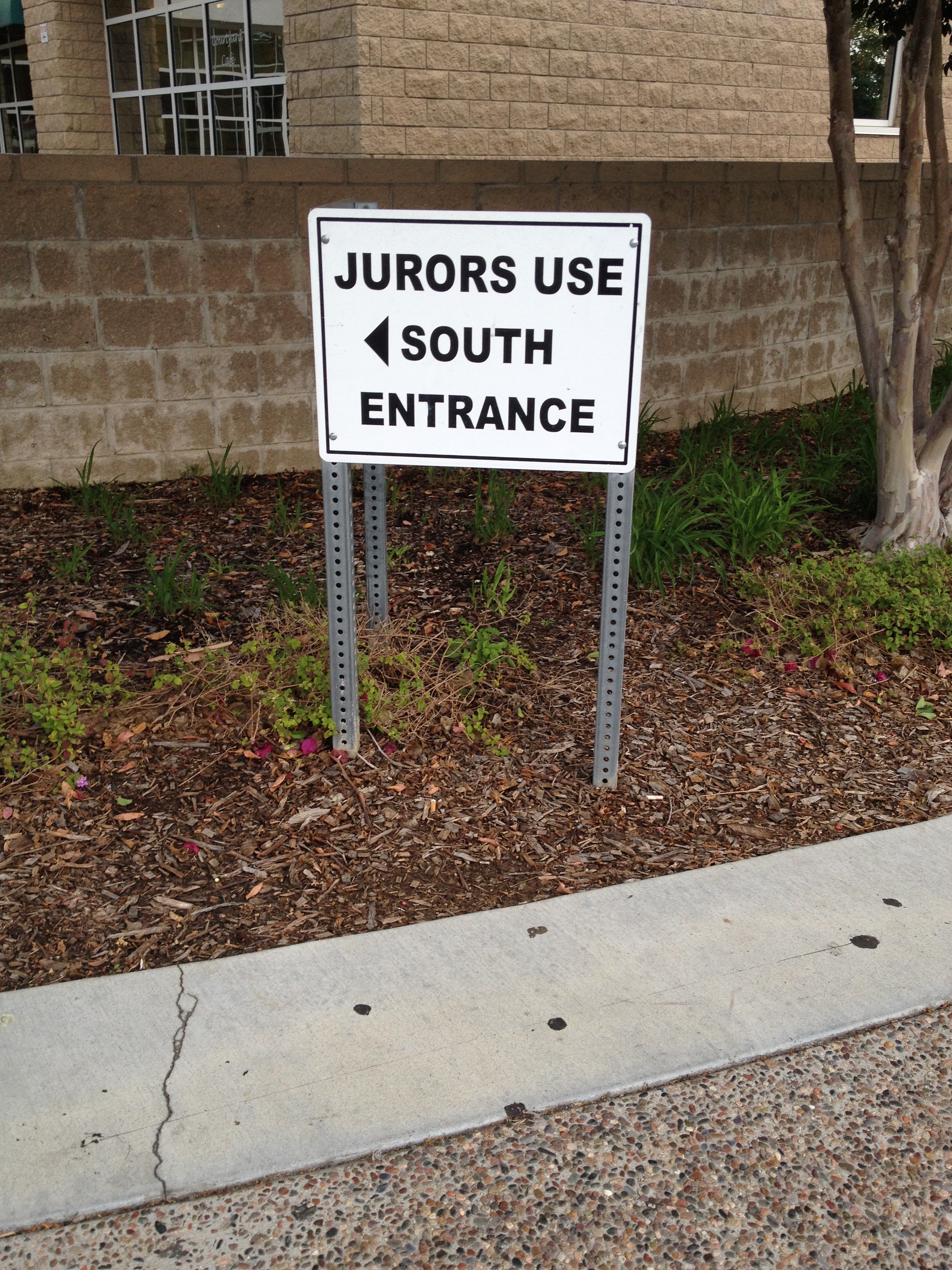
After being dismissed I took a little time to walk through the buildings and take a closer look at this public place.  To be honest, the place is bleak.  Long hallways with institutional white walls. No decoration, harsh lighting, guards at the doors, and lots of worried looking people waiting, and waiting, and waiting.

photo-1

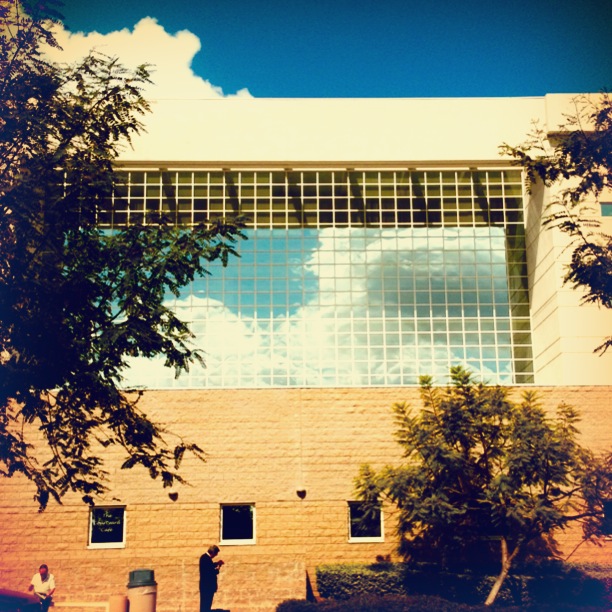
As I left the building I took a few minutes to appreciate the beautiful fall day.  Warm with a little breeze…and some silky, billowy clouds in the sky.  As I looked back at the courthouse I noticed that the clouds were reflected in the high windows above the entrance.  This bit of beauty remains imprinted on today’s experience.

photo

Taking time for a learning walk always changes my experience…for the better.  Slowing down, looking closely, and taking time to reflect creates opportunities for learning and new perspectives.  I hope you make time for a learning walk soon.

The Action of Stillness: Still Life

Today’s daily prompt at The Daily Post is stillness.  In our classroom we’ve begun to work on sketching techniques that help artists capture roundness.  All this in preparation for sketching a still life of the fall bounty from the school garden.  Last week we sketched pumpkins.  Today…tomatoes!

photo-1

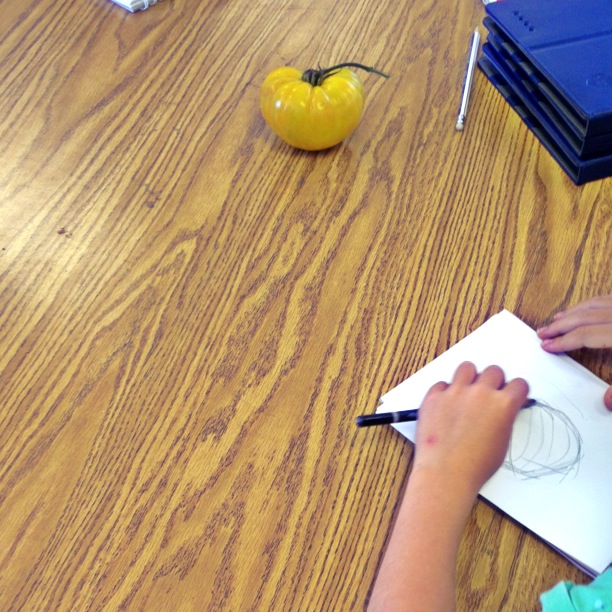
So here is the action of a child working to capture the stillness and roundness of a tomato just picked from the school garden.

photo

How do you capture stillness?

Lines and Patterns

This week’s Weekly Photo Challenge at the Daily Post focuses on lines and patterns…something I have been exploring through my own #sdawpphotovoices photo-a-day challenges.  In August we captured design elements such as curves, angles, symmetry, repetition, and patterns in our daily photographs.

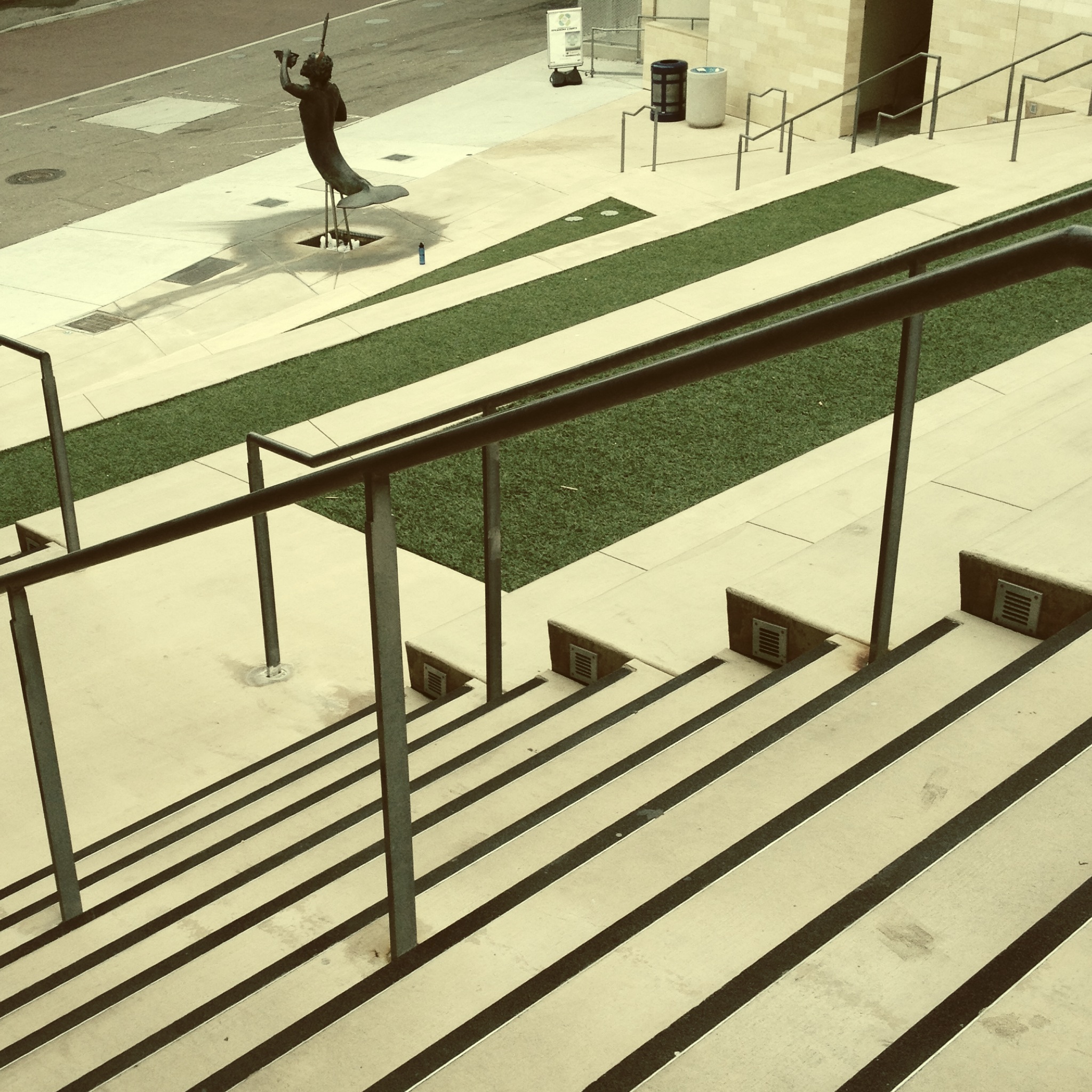
Lines and patterns seem to be everywhere!  Here’s a picture I took today on my way to a meeting at UCSD.

photo-2

I like the way you can see the statue of the triton at the bottom through the lines and angles of the stairs.  A few weeks ago I took this picture of a bike rack…and the shadow it casts that continues the pattern.  It almost creates an image of giant paperclips!

photo

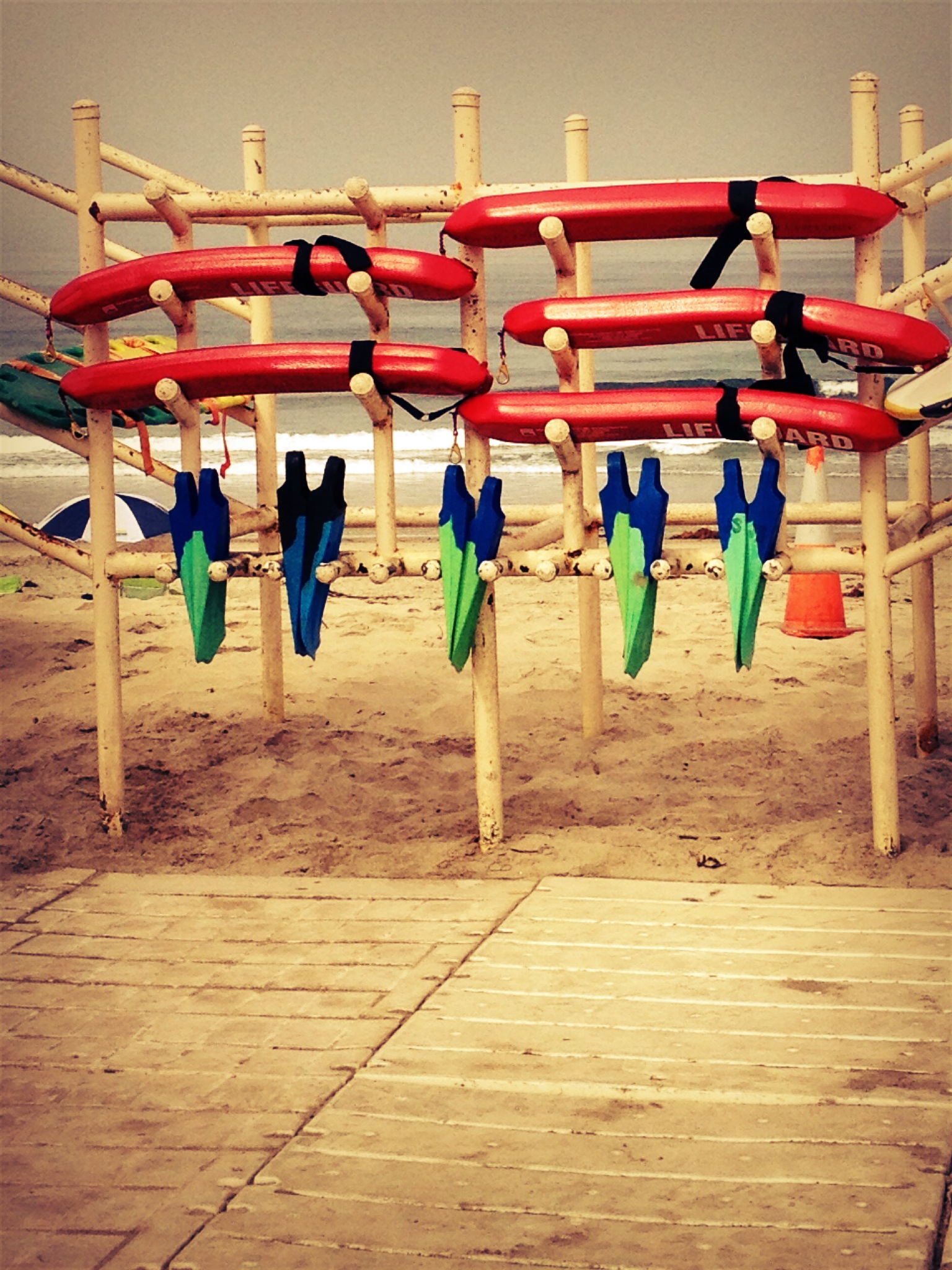
I love to take pictures at the beach.  I noticed the way the lifeguards had organized their equipment on this rack…I love the lines and patterns…and colors with the ocean in the background.

photo-1

Lines and patterns are everywhere!  What lines and patterns have you captured lately?

A Question? A Story?

I took the long way home from work today.  It is also a scenic route with beautiful vistas of the ocean bathed in the early evening sun, signature Torrey Pines gracing the center planters, and stop signs at regular intervals instead of evening freeway rush hour traffic.

My photography this week, scaly is the prompt, has not been terribly inspired.  I’ve been busy–too many meetings and not enough time to immerse myself in the projects that need attention, and require thoughtful time to get them done.

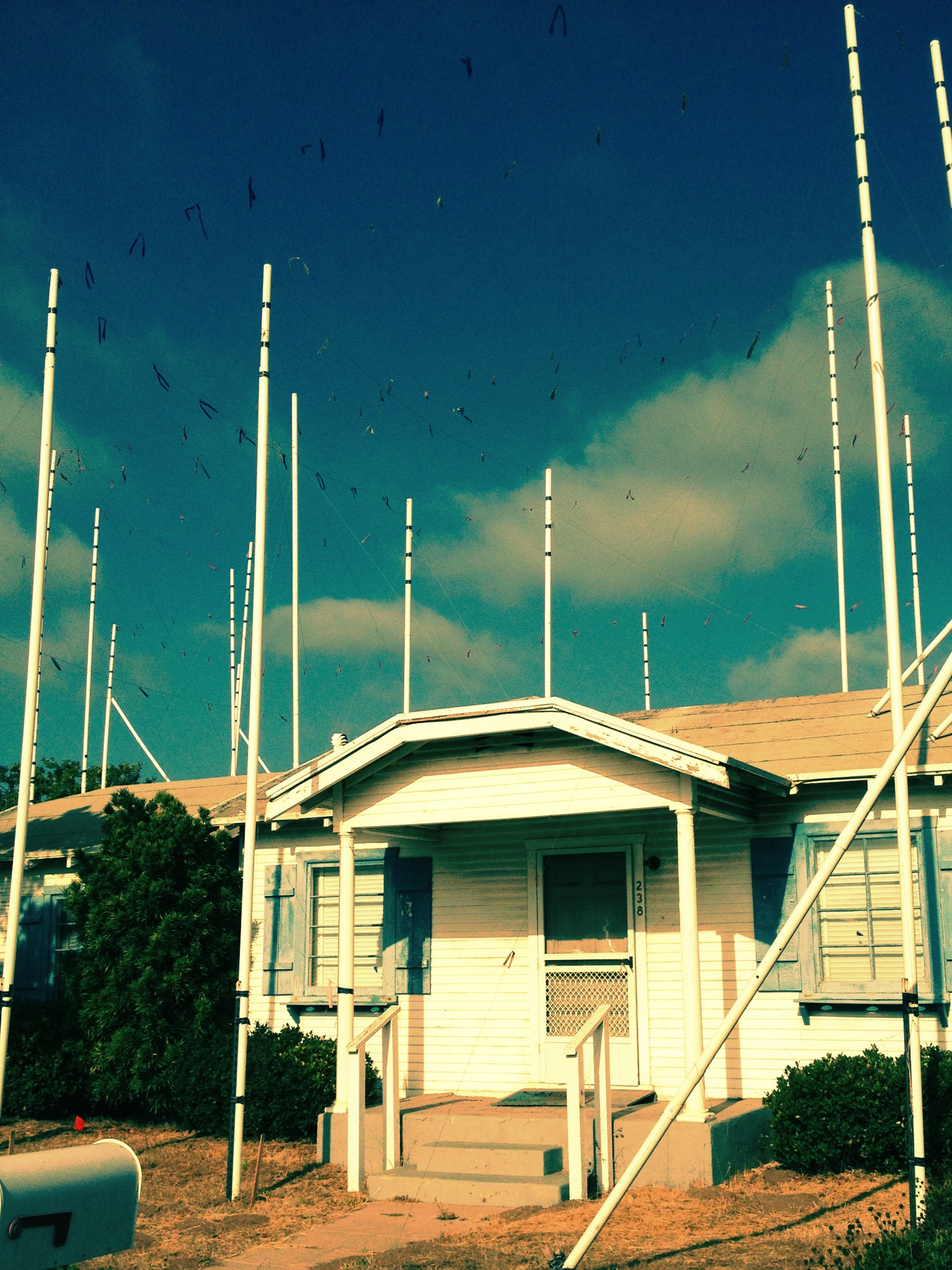
So on my way home, on this scenic route, I made a short detour thinking I remembered a piece of public art that just might fit my scaly search.  But the statue I remembered wasn’t there…so I drove a bit further and saw this house.

photo-2

What?  What are all these poles for?  If you look closely you’ll see they have little flags on them. Is this construction of some sort?  Installation art?  A way to keep the birds away?

I think this photo would make a great writing prompt!  What story do you see?

Too Much of an Interesting Thing…

When I first spied the mushroom in my front yard I saw it as a photo opportunity.  I watched it grow, seeming to magnify right before my eyes.  I watched it for days until I found it kicked across the yard one morning–and then, once it was turn upside down, I captured what I had missed by looking at only the outside surface with my camera.

The following week I noticed a few more mushrooms growing in my lawn.  Again, I watched them grow…this time with some “portholes” to look inside and see what was beneath the surface.  I got out my macro lens and worked to capture my secret view of the underside of the mushroom.

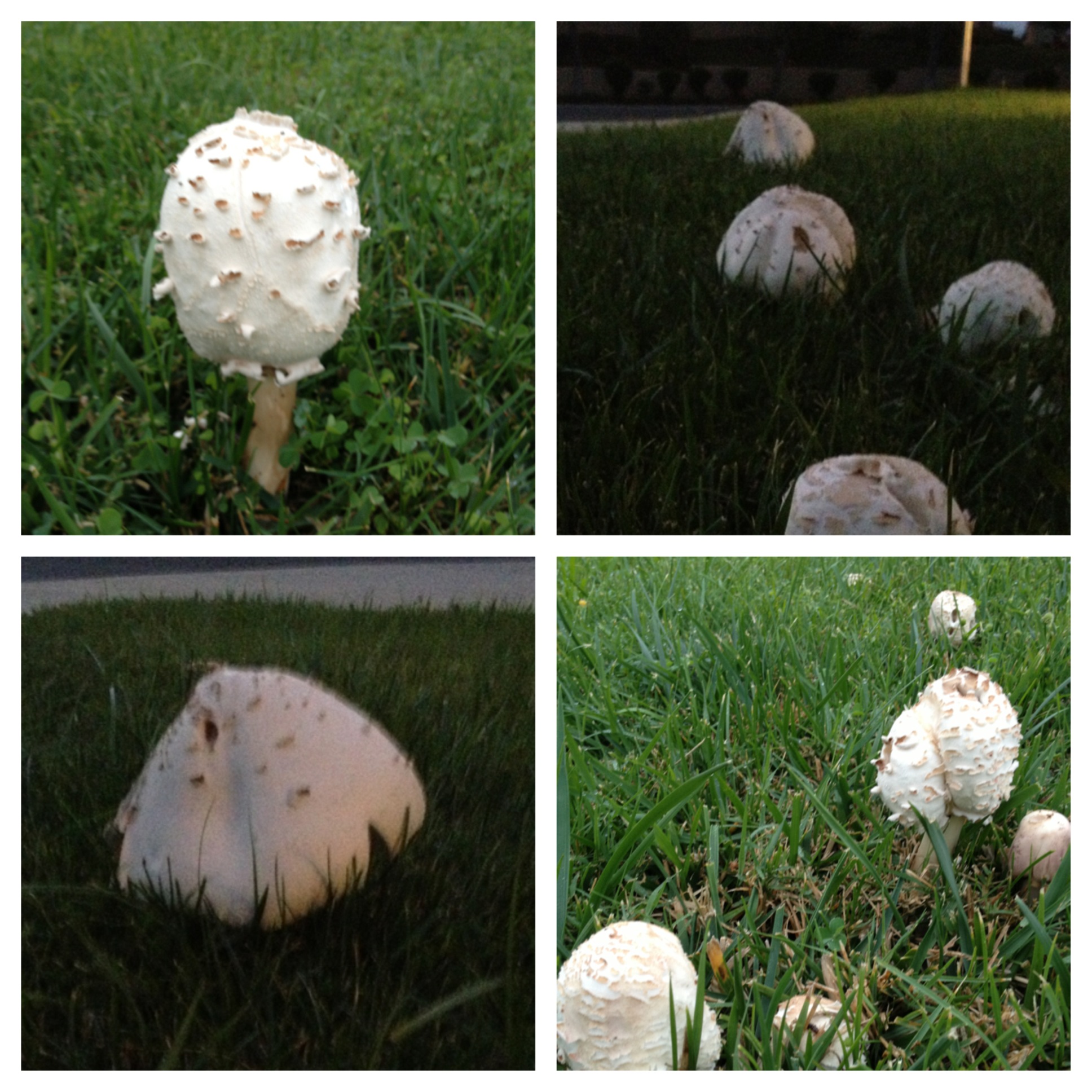
And then this morning it seemed that an entire forest of mushrooms has exploded on my lawn!  One was so round and on a tall stem…looking almost like a lollipop.  When I got home–late (meeting and then traffic)–that forest had ballooned, each mushroom doubling in size from this morning.  And while my photos don’t really capture the drama of the growth, my eyes registered it.

photo

And now I’m thinking that these fascinating mushrooms are becoming a problem.  What started as an interesting novelty has become a bit of an eyesore.  Just where do these mushrooms come from?  What effect do they have on my lawn?  How do they multiply?  What is making them thrive in my lawn?  And now…how do I get rid of them?

Early morning update:  As my husband was leaving for work, he came back into the house saying, “The fairies are having a field day at our house!”  I looked out the door…the mushrooms are enormous this morning!  They ballooned overnight–and the biggest among them are between 6 and 8 inches across.  Here’s a picture trying to capture the magnitude.  (The photos don’t really capture the size adequately!)

photo-1

A #Scratchy Week

Taking photos of textures is tricky.  It’s easy to find smooth and rough…and even scratchy. But it’s much more challenging to compose an interesting photo that also highlights the texture intended.  For the last several months I have been working to push out of my comfort zone and NOT photograph the most obvious  thing associated with any given prompt.  This week was no different.

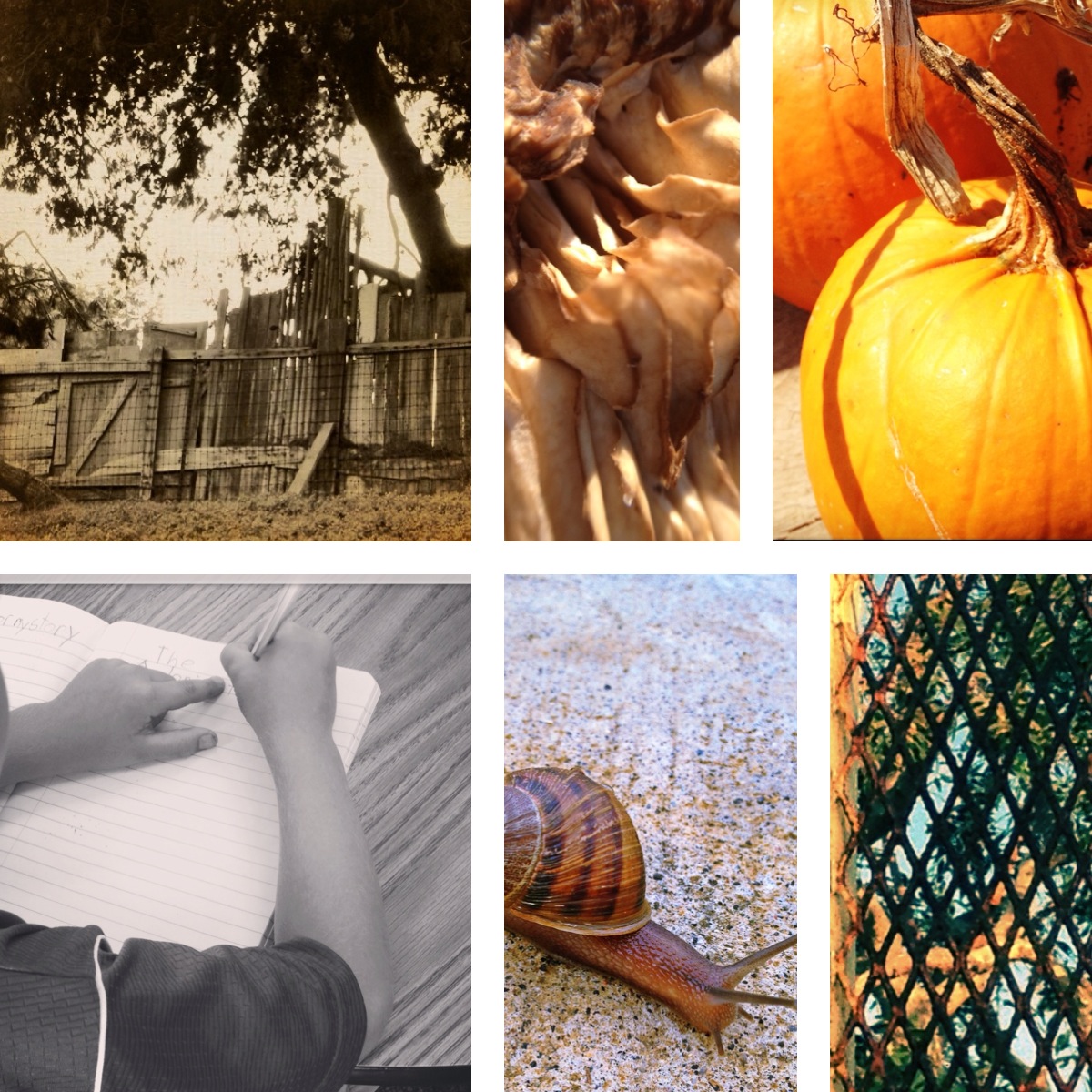
Here is a collage of my first 6 days (in random order thanks to the app collageit) of scratchy.

photo

Monday’s photo was a scratchy old fence that I see on my way to work.  I’ve been eyeing this ramshackle construction for a while, waiting for the perfect time to capture its dilapidated beauty.  Tuesday I was in the school garden and couldn’t resist the scratchy pumpkin stems. Wednesday was probably technically cheating since I used scratching rather than scratchy to describe a student hard at work with writing…and scratching out ideas!  Thursday I was back to my mushrooms…and using my macro lens to capture the scratchy texture on the underside. Friday I played with shooting a tree through a screen to create the scratchy texture.  Saturday I used this snail–whose slow pace allowed me to capture it as it crept across the scratchy sidewalk in front of my house.  And I love my Sunday photo…the scratchy spine of an aloe plant with a spiderweb attached, highlighted by the use of the vintique app.

aloe w:web

It’s always a little bittersweet to move from one prompt to the next as I start to see the world anew.  It always seems to take a week to really see and notice the prompt in interesting ways.

How was your scratchy week?  Today I began to look at my world through the scaly lens, who knows what the week will bring…

Birds on a Wire: Connections and Interconnections

I often ask my students to make connections.  Connections between books we read.  Connections between things that happen at school and at home.  Connections between our math lessons and our social studies lessons.  And I find myself constantly making connections.

A couple of weeks ago our garden teacher introduced the word interconnected along with the word ecosystem.  His emphasis was that the garden is an ecosystem where the plants and animals…all the living things are interconnected.  When something happens to one, there is an impact on the others.

This morning in the New York Times Magazine I read an article about emotional intelligence and its impact on student learning and success.  While the article debated methods of providing instruction in emotional intelligence, it had me thinking about the microcosm of the classroom and other communities of practice in my life.  Our actions and attitudes impact those around us–whether we intend it or not.

When I arrived at the beach this afternoon for a short walk, I noticed a whole line of birds on a power wire.  I felt compelled to capture this image with my camera–even knowing that my iPhone is not the best tool for capturing images at a distance.  I walked as close as I could get and snapped the birds from a few different angles.

birds on a wire

In some ways these birds remind me of the idea of interconnections. Some fly into an open space on the wire, others fly off.  They are all sharing the same space, with the movement of one impacting all the birds in some way.

Like the birds on the wire, each student in the classroom has an impact on the others.  We are both interconnected and interdependent.  As a result, as teachers it is important to consider students’ emotional well-being and help them learn to handle conflict, stress, frustration, and disappointment.  These skills are not in our Common Core Standards and are not tested on annual standardized testing measures.  But they matter…to all of us.

I don’t have convincing data-based evidence that attention to students’ emotional needs will result in successful, well-adjusted adults–but I know it can’t hurt.  Students who learn to build consensus in group work can carry that skill beyond the classroom.  When conflicts can be resolved with words and compromise rather than fists and tears, we all benefit.  Students who have strategies and tools to manage difficult situations will be better equipped to deal with the obstacles that life deals them.

In the garden, in my classroom…and on the wire, interconnectedness means our actions and decisions impact those around us.  And in our increasingly connected global society, we are all birds on a wire.

What do you do to support your own emotional well-being?  How do you help build the interpersonal skills of the young people in your life?

Some Macro Play

I love using my macro lens on my iPhone…but it’s not easy.  I have to take my case off and attach the lens to the magnetic ring…so I don’t take macro shots spontaneously, I have to think about using this lens and make the necessary preparations.

I definitely have days when I feel at a loss for what to photograph.  Things feel ordinary…or I feel like I have already taken those same shots some other day.  Today I headed out to my backyard with plans to sit in the shade and read for a while.  But when I headed out there, I noticed the aloe plant that has gone crazy!  It started as a small house plant…and now is obviously loving the growing conditions in the back yard!  This week on #sdawpphotovoices our photo-a-day focus is #scratchy…and what could be scratchier than aloe spines?  I took a photo with my regular lens…and then headed inside to attach my macro lens.

I love the way the sun behind the plant makes the spine tips glow!

In the same big pot with the aloe there is also a cactus that outgrew its tiny indoor pot and ended up in the backyard.  The long, thin, needle-like spines create interesting flower-like patterns.  I love that the top spines are a brilliant yellow, creating a beautiful sunburst!

These ordinary cactus almost look like exotic sea creatures when you get close!  My attention turned to the lavender plant–the one I wrote about here–that was almost killed due to neglect! The plant continues to improve, although it is not in full bloom right now. There are a couple of beautiful blossoms…and some buds developing.

And I wasn’t quite done…I noticed a “volunteer” plant–one that planted itself in a pot of dirt on the edge of the patio.  It was green, but in the last week it has turned to a rusty red-orange color.  I’m not sure if it is dying…or if it is a natural cycle of growth for this plant.

All of these photos are unedited…and I love the colors and the way the sun creates glow.

I decided to take one last photo…of a spiderweb down in a hole where my husband is fixing the sprinkler.  As I moved my lens in close, the web began to glow, catching the sun.

photo

Playing with my macro lens today helped me see the ordinary things in my backyard in a new way.  The colors popped, the patterns emerged, and the light created beauty that’s hard to see without looking closely.  And, as I always notice, opportunities to play and make help me find my creativity and the fun that is so often right in front of me.  And best of all, all this noticing piques my curiosity and wonder at the world around me.

Have you taken time to play today?