In spite of the weather app’s optimism, intermittent rain has continued today. As we headed out for our daily walk with me wearing my comfy puffer jacket, I grabbed my raincoat–just in case. I love to walk on the beach, but this weekend the tides are not feeling like cooperating and in these parts if the tide is not low enough, there is not enough beach to walk on. So for today, after a bit of negotiating, we decided to walk at the local lagoon.
On our drive over the windshield was spritzed a couple of times, making me think I would be exchanging my puffer for the rain jacket. The clouds were gathering gray as we parked so I decided to play it safe and slipped into the raincoat, strapped my camera around my neck, set my watch for workout mode, and headed off.
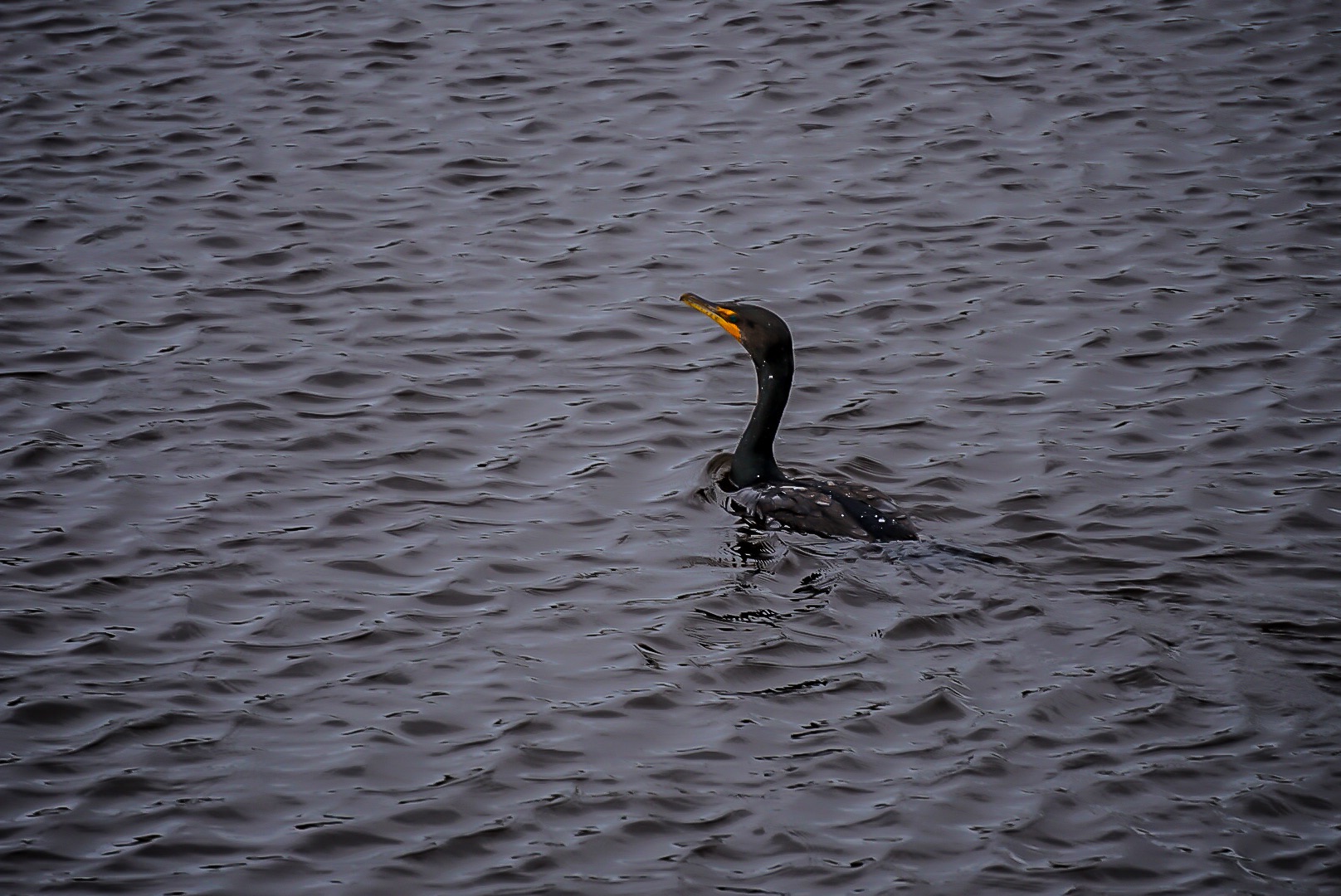
It was the cormorants who caught my attention first. While they are residents of our coast, we don’t often see them congregate. I stood for a minute watching one with wings spread wide, drying (or maybe trying to dry) before the raindrops fell. Just then a head popped out of the water–a cormorant had been feeding and popped up just in time for me to watch!
Mist turned to raindrops. I tucked my camera into my jacket and pulled up my hood. Water droplets speckled my sunglasses, but the birds seemed unbothered. In the distance we watched terns gather and then lift off, almost as one, loudly announcing their travel. Buffleheads floated, egrets stood elegantly in the shallows, but it was the great gray heron that caught my attention.
Geoff noticed it in the distance first, noticing its size and wondering if it was a pelican before we were close enough to determine. It seemed unlikely since pelicans seldom hang out solo in the lagoon. A closer look revealed the distinctive characteristics of the heron.
From some angles they remind me of little old men…and then they stretch their long graceful necks and their classic profile is revealed. We got to watch this one take flight and admire the large wingspan as it crossed the river mouth. What a treat! It was definitely worth braving the raindrops to enjoy the birds today!
My alarm rang early on a Saturday. Today was our San Diego Area Writing Project Spring Conference! Before I got out of my cozy, warm bed I checked the weather app on my phone. Drizzle. Drizzle is not really rain, right? I decided against dressing for rain and opted for my Vans tennies and some black almost dressy pants to go with my cute sweater top. (I would have to open the conference, but I also had to walk a good bit to get from the parking structure to the conference venue on the UCSD campus.
About 5 minutes before I was planning to head out, I looked out the door and changed my mind. That was NOT drizzle–even by Southern CA standards, that is called rain! I rushed back to my bedroom, kicked off the Vans, changed into jeans with skinny legs so that I could pull on my cowboy boots–the dressier footwear option for rainy conditions–and then headed out the door wearing my raincoat with my umbrella in my bag.
With windshield wipers on high, I braved the slick freeway and low visibility, and as I approached the university, the weather began to clear. The ground was wet and puddly as I walked from the parking garage, but the sky had cleared a bit and it wasn’t even drizzling.
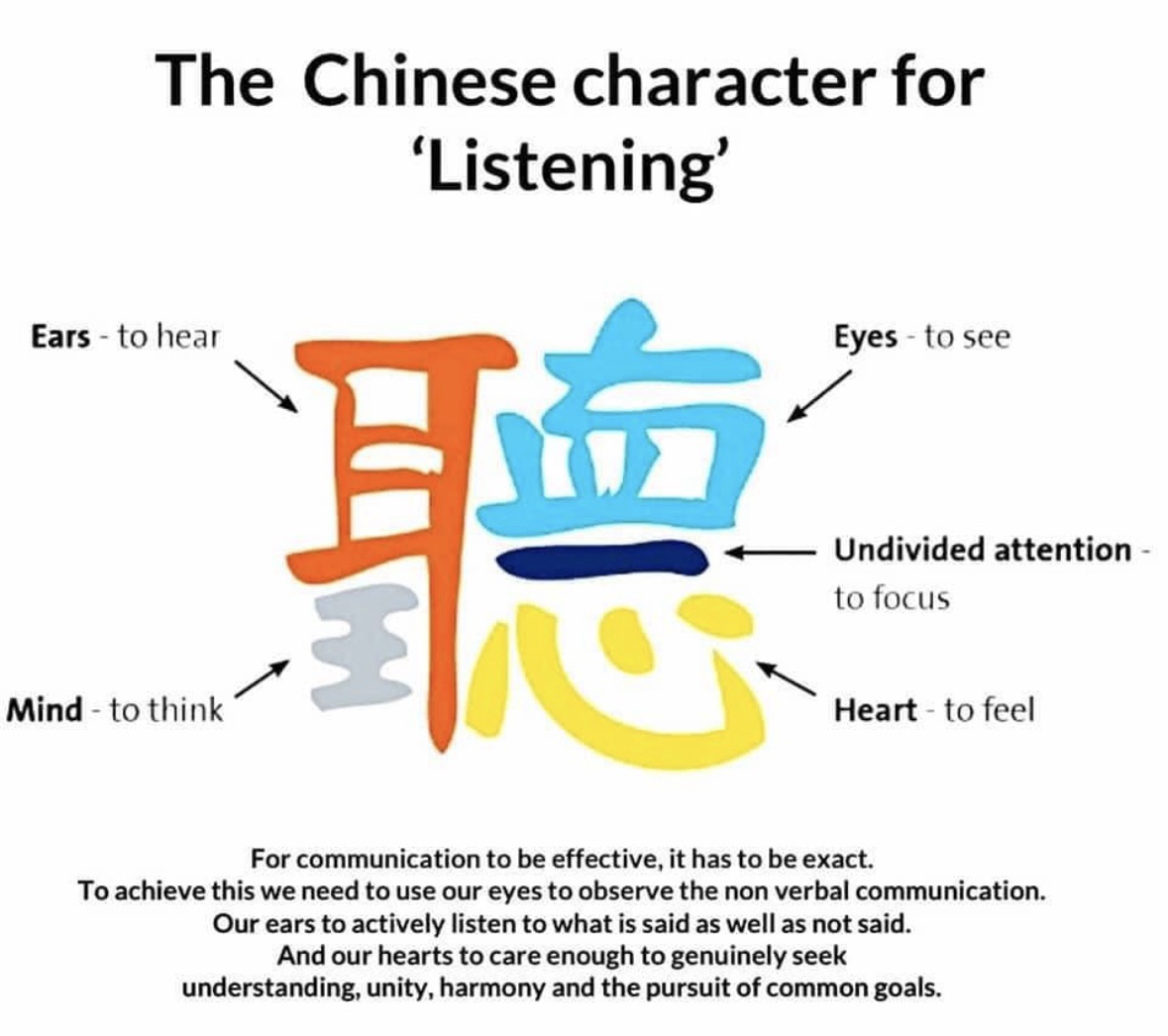
It’s hard to get up on a rainy Saturday morning to attend professional development–even when it is self-selected. But I knew once I arrived that the energy of the participants and presenters would carry me through. And I was right. Our morning keynote by our own Christine Kane focused on the value of conversation, how the best conversations reveal things about ourselves both to those we are conversing with and to ourselves as well. She referenced David Brook’s newest book, How to Know a Person, and shared some of his advice about being a “loud listener.” She also reminded us of the Chinese symbol for listening which includes the eyes (to see), the ears (to hear), the mind (to think), undivided attention (to focus), and the heart (to feel).
Screenshot
What a perfect set up for being conference participants! The three sessions I attended were excellent! Even with 35 years of teaching under my belt, I felt inspired and motivated by gems of wisdom and practice shared by the presenters. I enjoyed my interactions with fellow participants and left the conferences knowing it was a morning well spent.
My drive back home included one surprise rain shower along the way, but as I headed off the freeway toward my house, the sky was bluing and the sun was shining. As I stepped out of my car into the driveway I was greeted by tiny yellow suns sprouting right out of the driveway cracks. Dandelions! I couldn’t resist kneeling down to capture their light and glow. Nothing like a bit of sunshine on a rainy day!
I have a love/hate relationship with technology in my teaching life. I love the possibilities that technology offers and hate dealing with the glitches, the learning curve, and the challenges of keeping my students on task with more creative tasks. When I moved to first grade after the pandemic, I left the creative use of technology mostly behind and instead depended on those practice apps as my primary use of technology in the classroom.
I’ve been starting to feel like my students need opportunities to be creators using technology instead of consumers of content that others have made. So with a bit of a nudge from my sister, I started thinking about a digital storytelling project where my students would create Public Service Announcements (PSAs) for things around our campus that were either going well or need more attention.
We spent time earlier this month studying stories and breaking them down to three main parts: the beginning where the context is set, the problem (or the danger as one student described it), and the solution. They took a wonderful wordless story, Flashlight by Lizi Boyd, condensing it to three drawings that told the major story elements. They wrote their own stories based on a character drawing from our fifth grade penpals including those same three story parts. At this point, I was ready to embark on the digital storytelling project.
So…this week we learned about three photography techniques: bird’s eye view (a perspective from above), bug’s eye view (getting low and looking up), and the rule of thirds (where the focal part of the photograph is positioned in a particular third of the frame). We studied some examples and then headed outside to try on these techniques by going on a photography scavenger hunt. The first graders in my class loved this activity and clearly began to understand the three different techniques. While not all the photos are stunning examples of photography, they are gaining experience with the camera on their iPads and making intentional choices about the photographs they take. Here’s a few first grade examples.
The next day we brainstormed things that our school does well and things that need more attention. We know that our school is quite good at composting and that students need reminders to eat their snack and lunch before running onto the playground to play. We ultimately came up with eight different topics. After students listed their top three topics to work on, I put them into teams so they could help each other to tackle the topic selected. Student then drew the three photographs they would take on campus to create a story of change…a public service announcement.
I was nervous this morning. Would they be able to take photos that would work in their PSA stories? Could they use each other as actors in the photos they envisioned? How would they handle the openness of this task? Would they be distracted and tempted to mess around instead of focusing on the photos?
After a little bit of in-class modeling, we all headed out with iPads in hand. I love it when students surprise me with their creativity and focus…and that was definitely what happened today. Students supported each other, posing and directing. They checked their photos to make sure faces were not visible (one of my requirements), and they all got their 3 photos taken. I loved watching the cooperation and teamwork and was thrilled that I didn’t have to referee any problems. I saw students who are often followers in the classroom take the lead in this creative pursuit and shy students step up to let others know exactly what they needed for their photos. When we returned to the classroom, we spent a few minutes back in teams giving each student a chance to show their photos to each other and tell their story based on the photos.
On Monday we will be learning iMovie and transforming these three still photos into a short video PSA, complete with voiceovers. Wish me luck! My fingers are crossed that our photos will turn into wonderful video PSAs!
Last week we returned to school after our two-week winter break. The first graders in my class were eager to talk, telling each other about all the things that had happened while they were apart. Knowing that students would be chatty, I planned lessons that would allow interaction and conversation on our first day back in class.
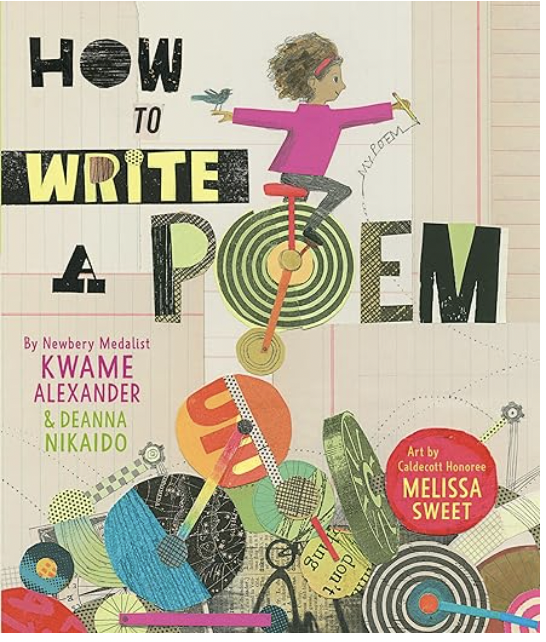
I’d been thinking about having students craft a collaborative poem for a while now. We’ve been studying poems and writing some of our own all school year, but still, it seemed that the time was ripe for something more. I began our lesson with Kwame Alexander’s delightful picture book, How to Write a Poem, illustrated brilliantly by Melissa Sweet. We read and noticed first, with students intrigued by the use of collage, the lyrical language, and colorful images. Before I began reading, I had asked my students what they knew about metaphorical thinking. What? That was their response. So after reading and talking about the book, we went back through the book so I could point out examples of metaphor…and just about then, my principal walked in. She comes in from time to time, pulls up a chair and sits and listens. She doesn’t interact and her poker face is nearly unreadable. I just went on with the lesson, feeling students pulled in as we talked about words falling from the sky like rain. We imagined ourselves outside, heads tipped, tongues out, ready to catch those words. As we became the metaphors we were studying, we talked about how metaphor lets us use ideas from our imaginations to make our writing become more clear…and more fun! When my principal left, I still had my students full attention as they grappled with this abstract idea of metaphorical thinking.
Now, we needed to try it on for ourselves. I decided on having students create a collaborative poem by having each student contribute one line to a “winter is…” poem. So I asked them, how might you use metaphorical thinking to describe what winter is? The first responses had them leaning back on what they already knew. Winter is cold, winter is when trees lose their leaves. In some ways, this was the perfect next step. We talked about how those are facts about winter…now we needed to think about how to make comparisons that were surprising. When one of my students got to snow was white cotton candy, I knew we were heading in the right direction! I had them try a few “winter is…” lines, and just when they were running out of steam, I pulled out the colorful sticky note sentence strips for each student to write their favorite “winter is…” line on. I could feel the motivation lift and even my most reluctant student eagerly chose a color and started writing his line (although there were none written in the notebook at this point). Once they had written, they stuck their post it on the white board.
I wasn’t quite sure where we were at this point. I let the post its sit over night and pulled them off the next morning with the intention of typing up their lines to form a poem. As I typed I divided the ideas into 3-line stanzas, that seemed to help give the poem shape. I was pleasantly surprised when the ideas seemed to come together into a poem that I felt we could all appreciate.
Winter Is…
Winter is white puffy cotton candy
A time for snowflakes that look like crystals
When snow foxes dig holes to keep their cubs warm
Winter is a cold hug in your heart
The wind at the beach
Time for hot chocolate
Winter is snowflakes blowing
Clouds melting
A freezing tree giving words to my pencil to write down
Winter is a snowflake full of thoughts
A snowflake falling down as fast a rocket
Pine trees covered with snow
Winter is a cold place to relax and slide your pencil to write down your mind
Snow soft and crunchy like people walking on the snow
Full of puffy snow like white cotton candy
Winter is a frozen lake waiting for spring
Holidays in your mind
A snow of thoughts flying through the air
Winter is a chilly place where it snows
Winter is so fun because you can play
Winter is a time for joy!
By Room 3 First Graders
1-8-24
I can see where students were inspired by their classmates and where some students are still not quite there when it comes to moving away from facts as they craft a line about winter, but I am pleased with this as a starting point. And even better, my principal saw me eating lunch on Wednesday and commented on the book and lesson–in a very positive way. She loved that I was introducing metaphorical thinking to first graders.
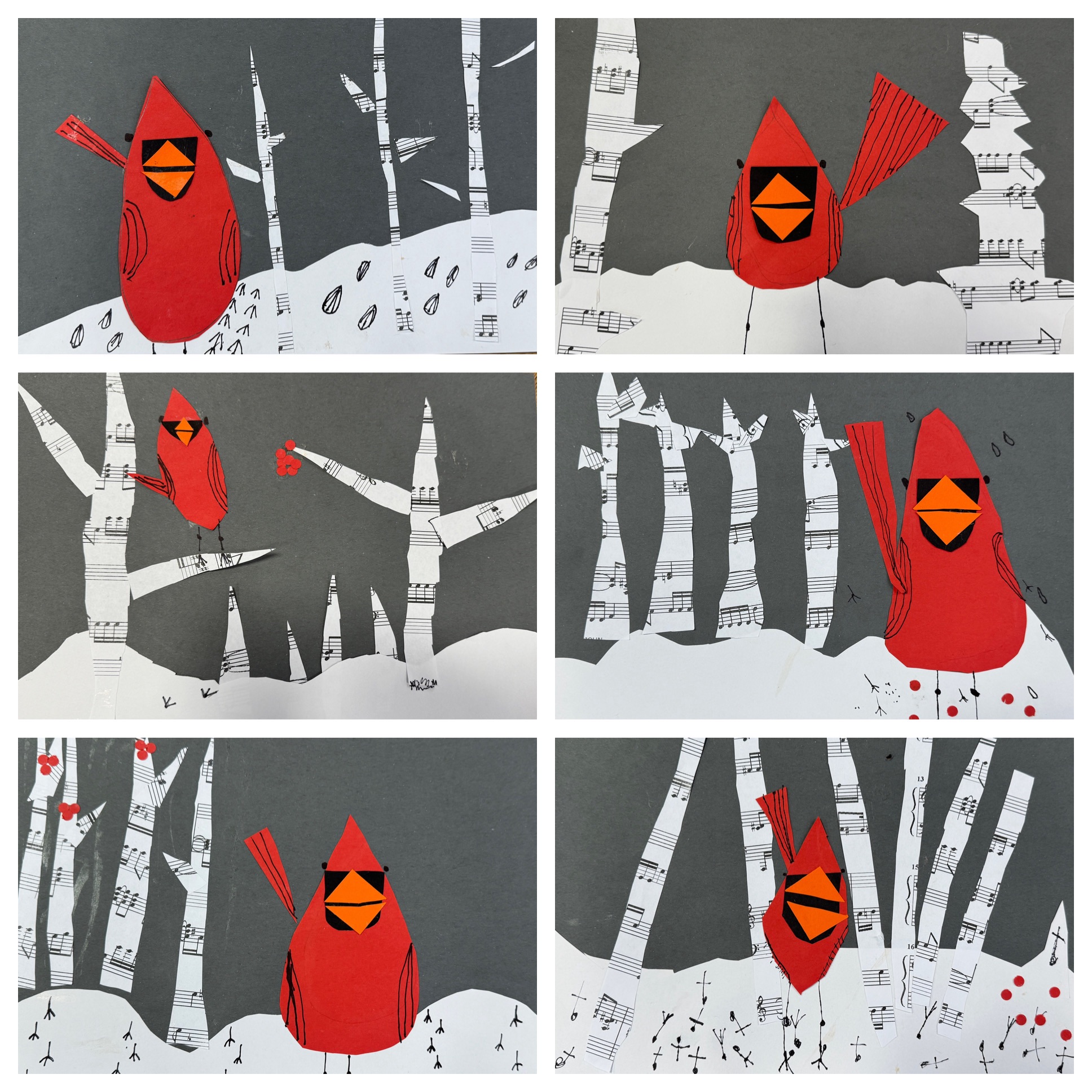
But honestly, the real payoff started to emerge in small moments as the week went on. My students started to point out metaphorical thinking throughout the school day, and in their own speech. On Tuesday, we returned to the book, Kiyoshi’s Walk by Mark Karlins as we embarked on writing 3-line poems about the cardinals we had created in the style of Charley Harper the day before.
As I read the Haiku in Kiyoshi’s Walk, they pointed out the metaphors…a pile of oranges described as a “hill of orange suns.” Again, not every student is yet ready to employ metaphor effectively…yet, but the seeds are planted. So we wrote 3-line poems on Tuesday (I try not to have these poems be about syllable counts–trying instead to focus on ideas and word choice) and then on Wednesday, I asked students to go back to their poems and improve them by changing a word or two or adding another detail (revision!). Here’s a student who was clearly influenced by Eto’s poem in Kiyoshi’s Walk.
Cardinals
Champ 1964 St. Louis Wins
Cardinals fly to win
Trophy of suns
By J
When J read the poem to me, he pointed out that since trophies are golden, they are shiny like golden suns–something he changed from his first draft the day before. And I know, clearly his mind was on the St. Louis Cardinals (a favorite team) rather than on the bird we crafted the day before. But the win is in the poem–three lines, metaphor, revision…and pride in writing! I’ll take it! Another student wrote this to describe his cardinal.
The Red Cardinal
The red poinsettia feathers
keep me warm
and they fill the forest with love
By F
And there were also more subtle attempts like this.
Flying in the Wind
I see that cardinal
flying in the tree
just like the wind
By O
What I see is students experimenting, playing with ideas, playing with words…and growing as writers and poets (as well as readers and thinkers). I love that something as deceptively simple as reading How to Write a Poem resulted in our writing community learning together, composing together, and risking trying on some new techniques together. I am reminded once again of the power of poetry…so yes, I will continue to say, “More poetry please.”
Yeah, I’m that person. The one who is quick to point out that purpose and audience matters in writing. I also know that the realities of the classroom often means that purpose and audience can both end up being contrived as we strive to provide real world writing opportunities AND work in all the other demands of teaching writing.
So this year when a colleague asked if I wanted to have my students be penpals with her fifth graders, I was quick to say yes. I like the idea of starting out early in the school year so we can ensure that our students can participate in several exchanges. We’re hopeful that as we progress in this penpal process that we can arrange to have our students meet in person as well.
I’ve had students participate in penpal projects in years past. And I have positive memories from the experiences. The challenge is always finding the “just right” partner to make sure that the exchange of letters happens with some regularity. And of course, you have to keep up the energy and excitement for yourself to make sure you make space in the school day to get those letters written.
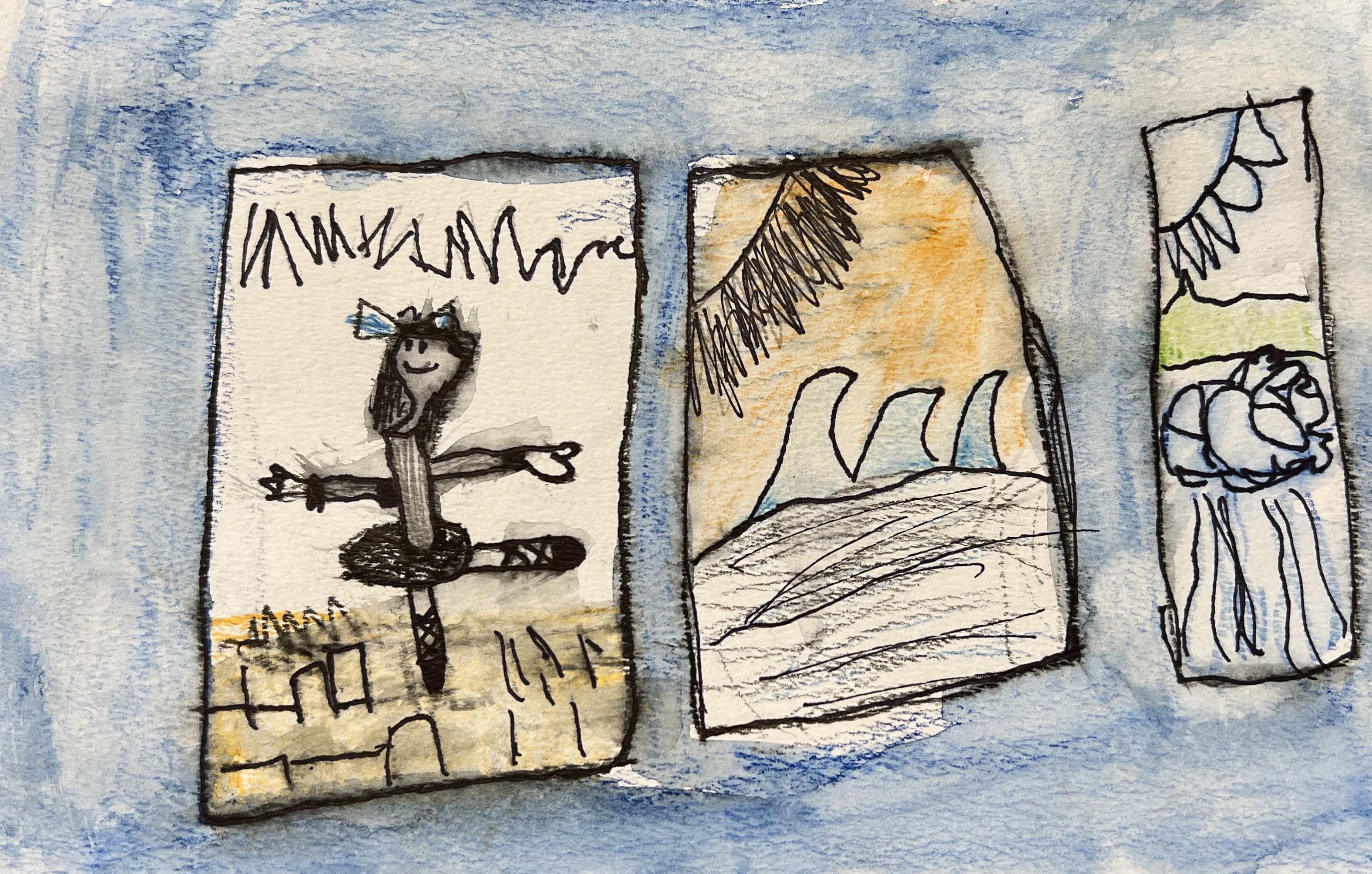
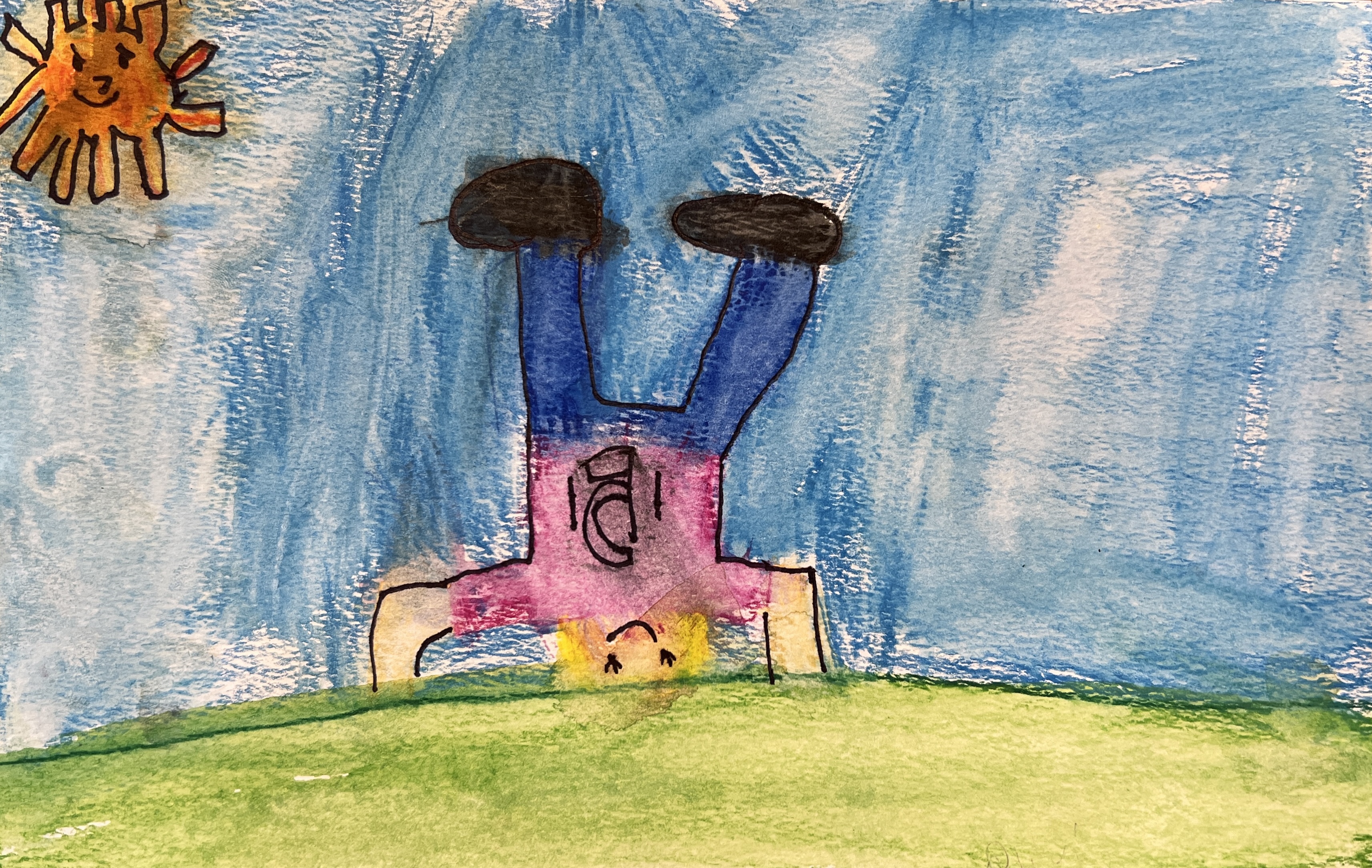
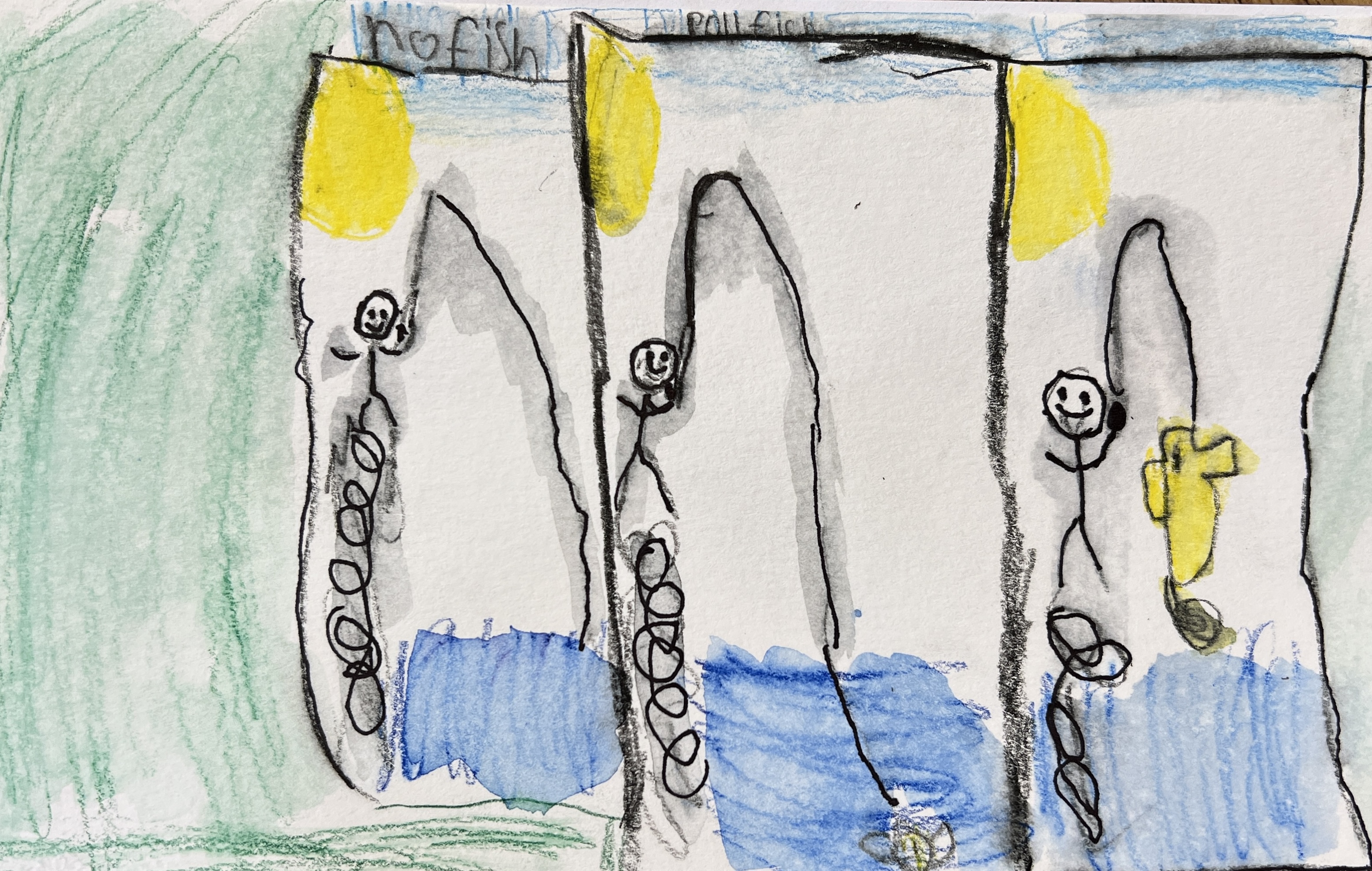
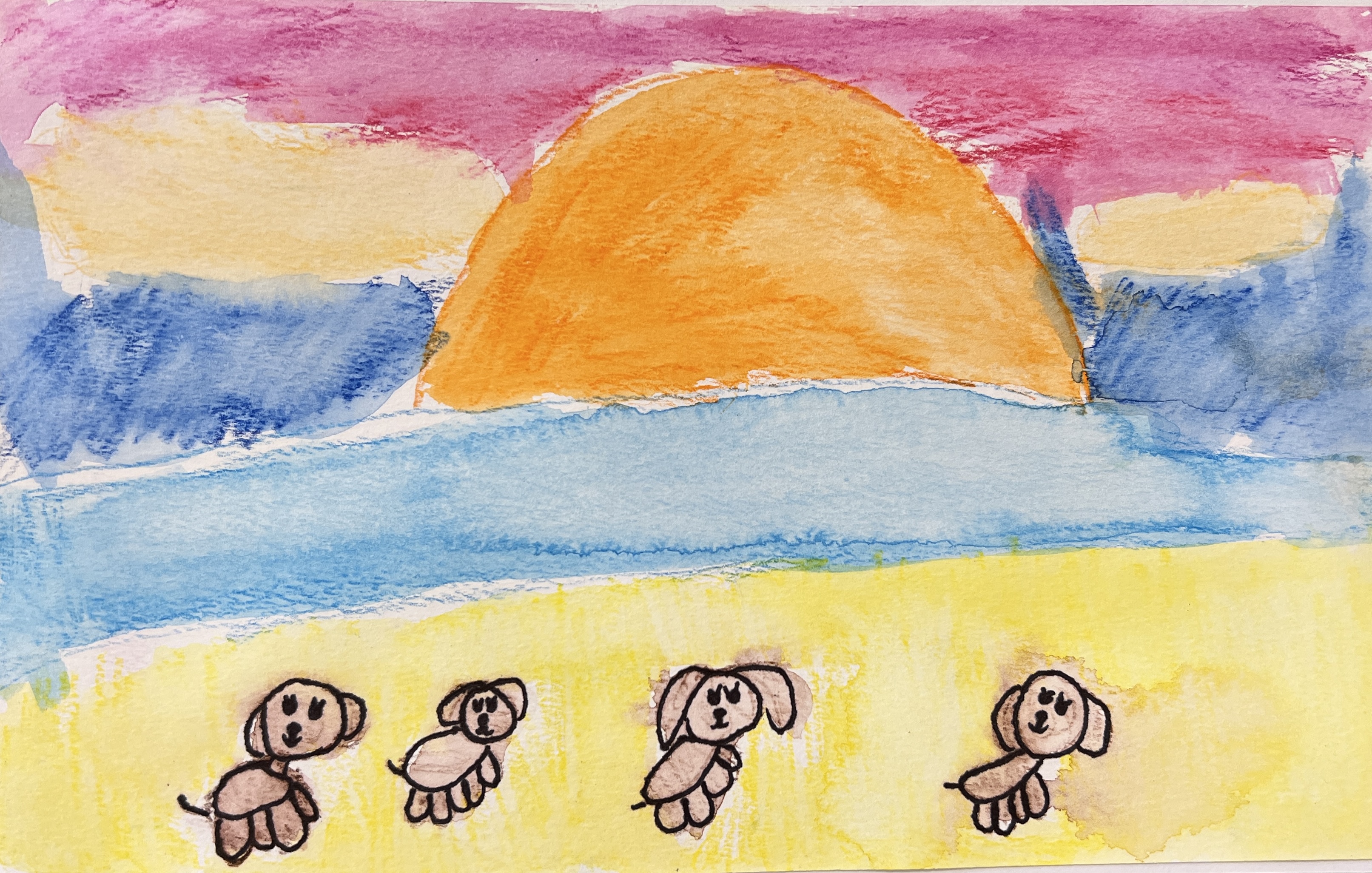
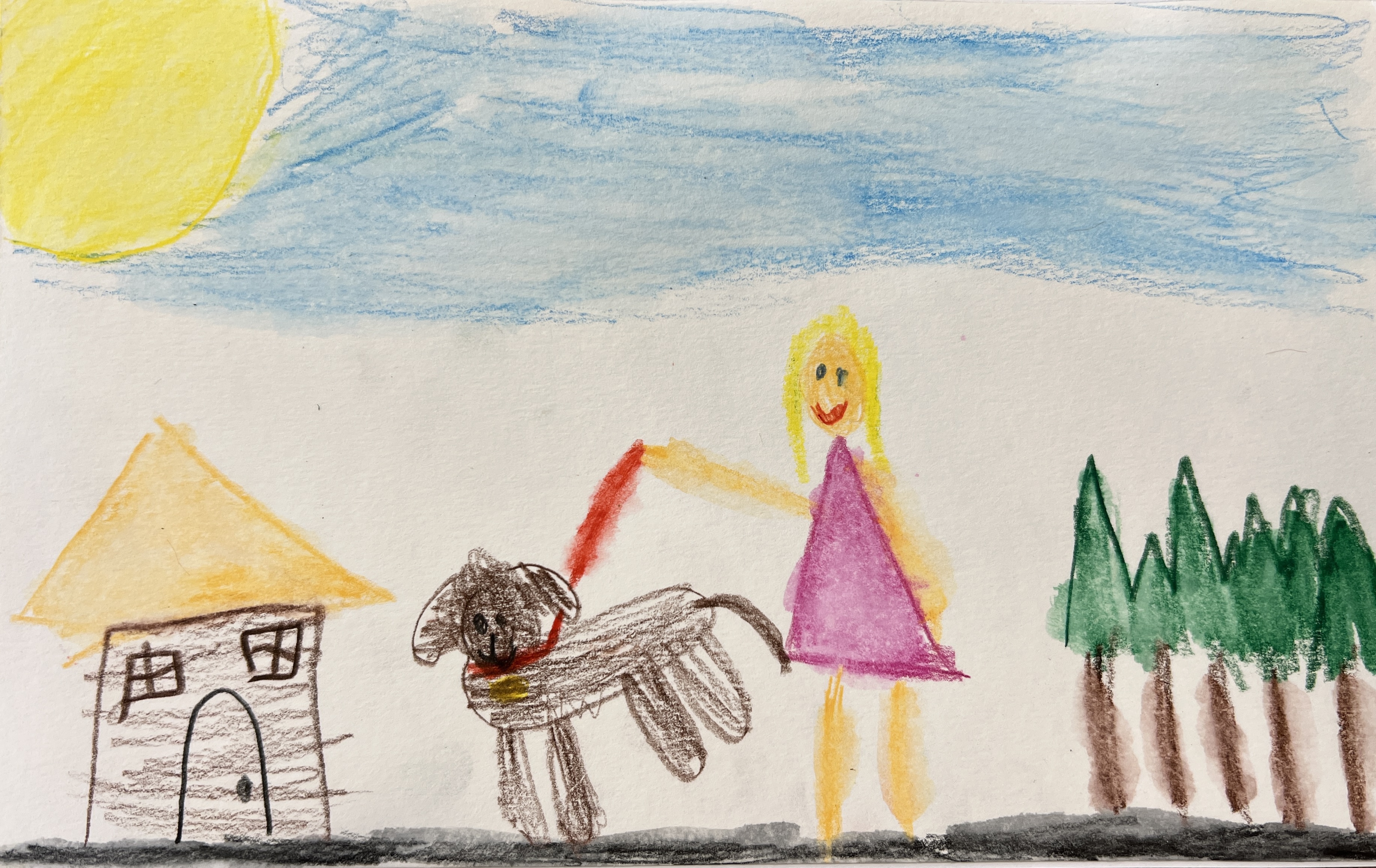
This year I offered to have my students write first. With first graders early in the school year, I wanted to make sure they started off from a place of abundance. Even before knowing who our penpals were, we created postcards illustrating things we loved. As they crafted their artwork, they were also thinking about their favorite activities giving them something to say in their postcards.
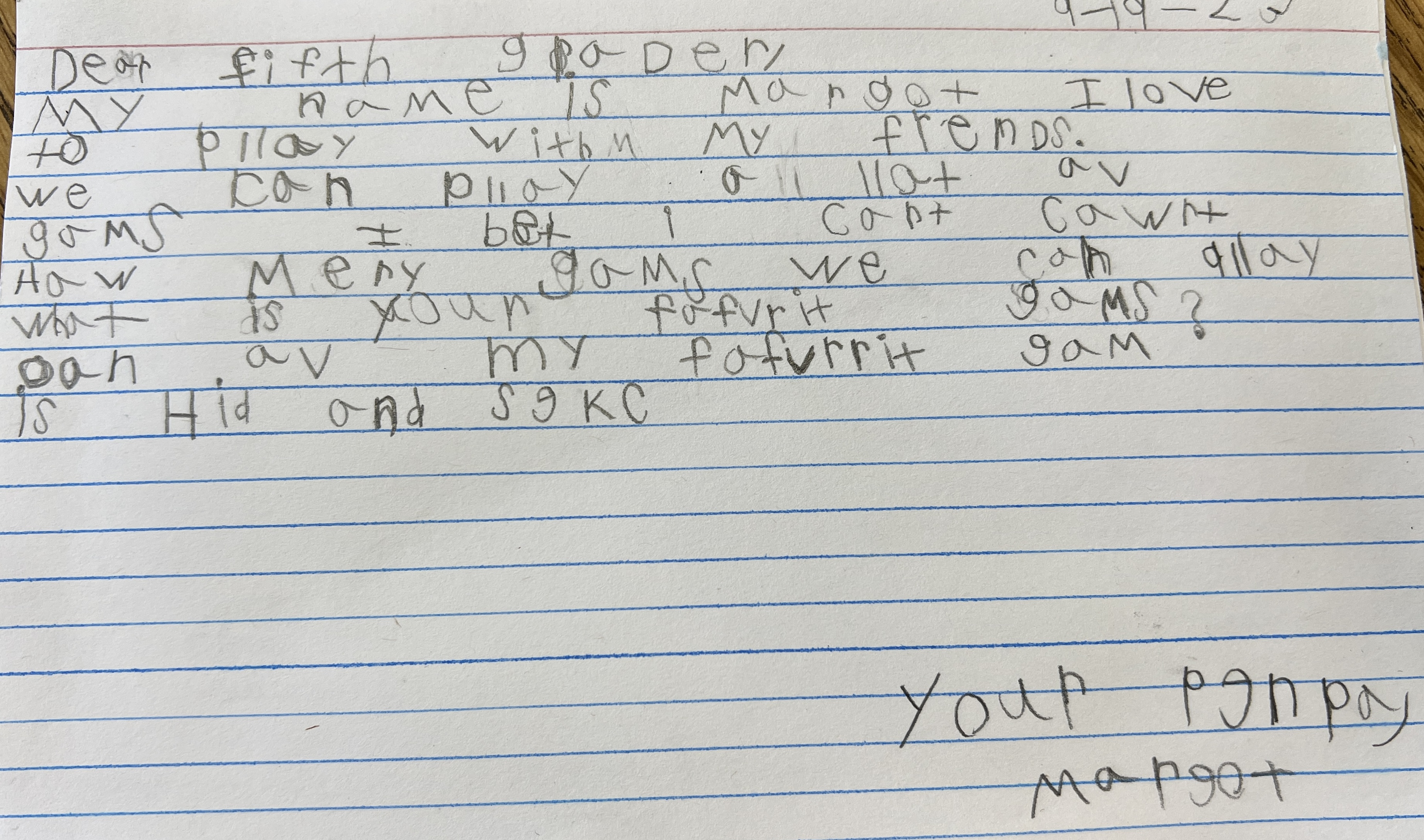
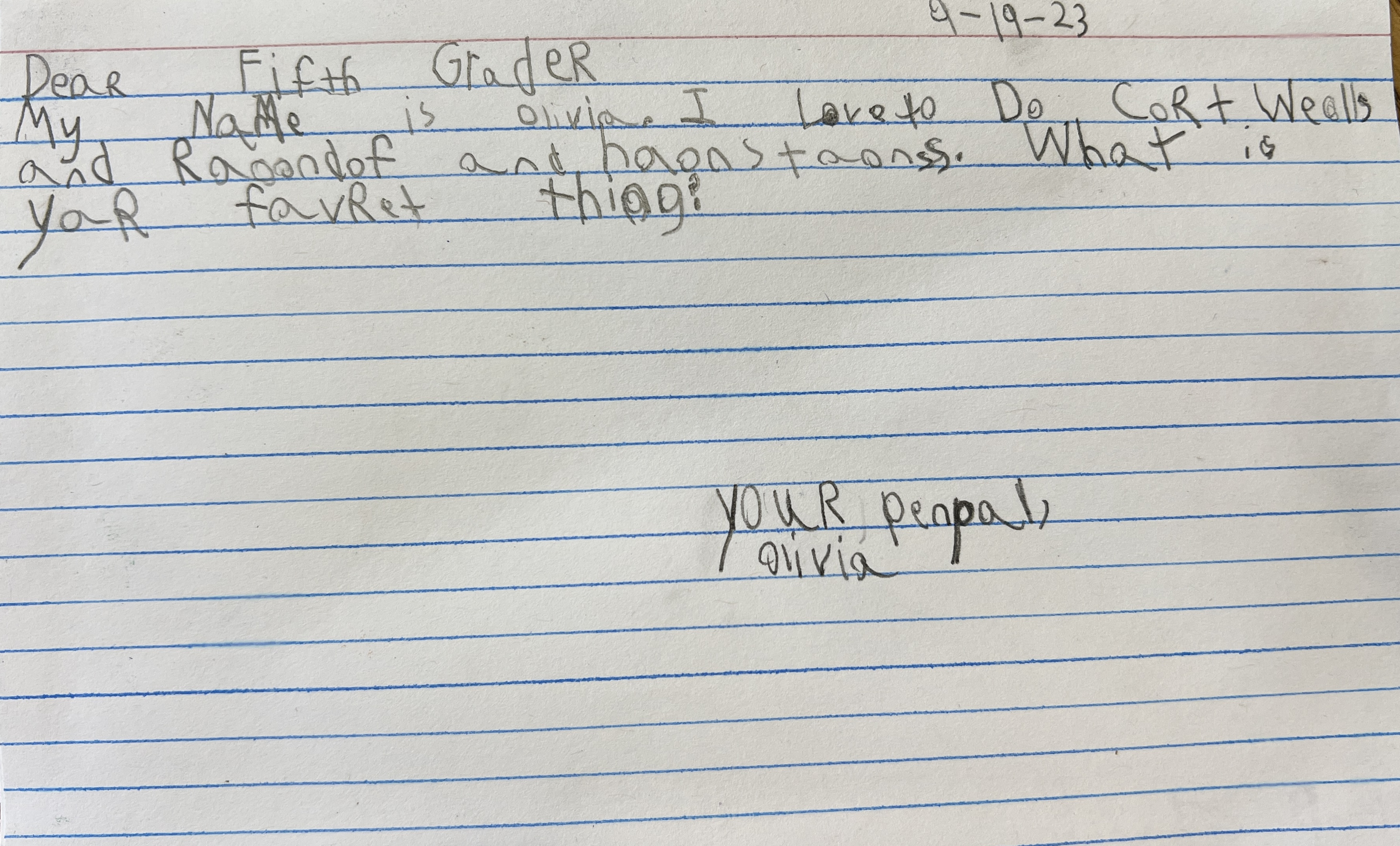
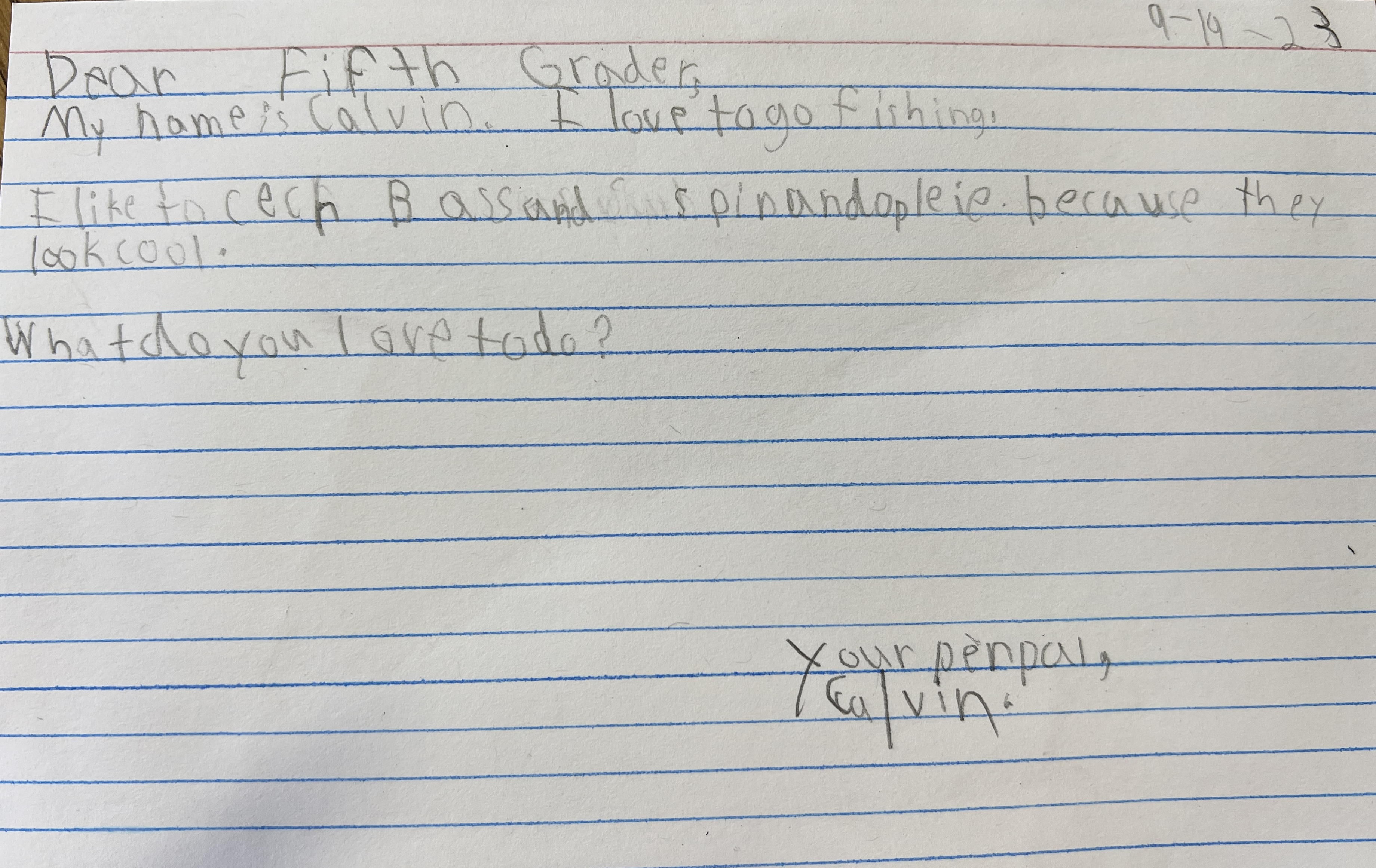
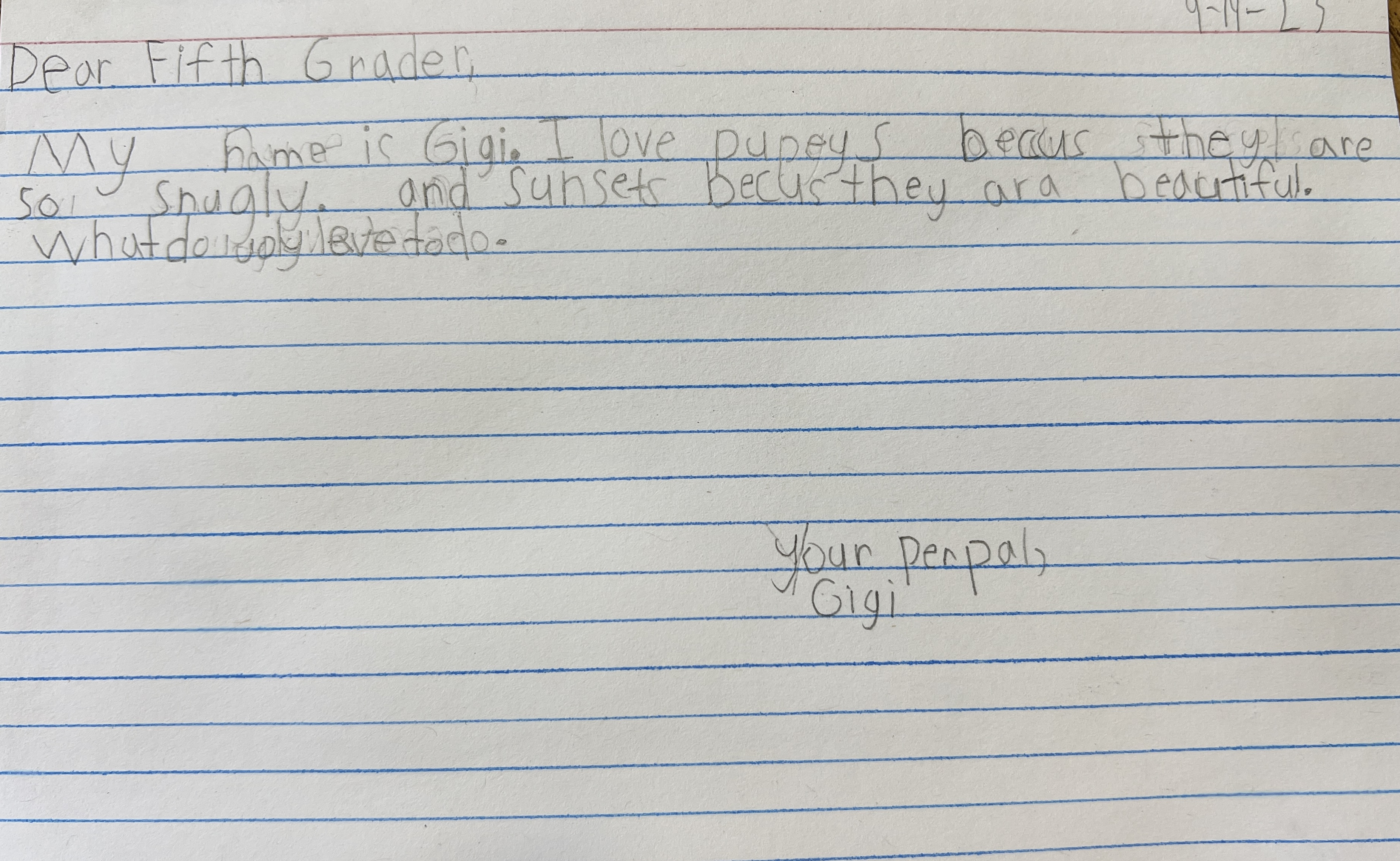
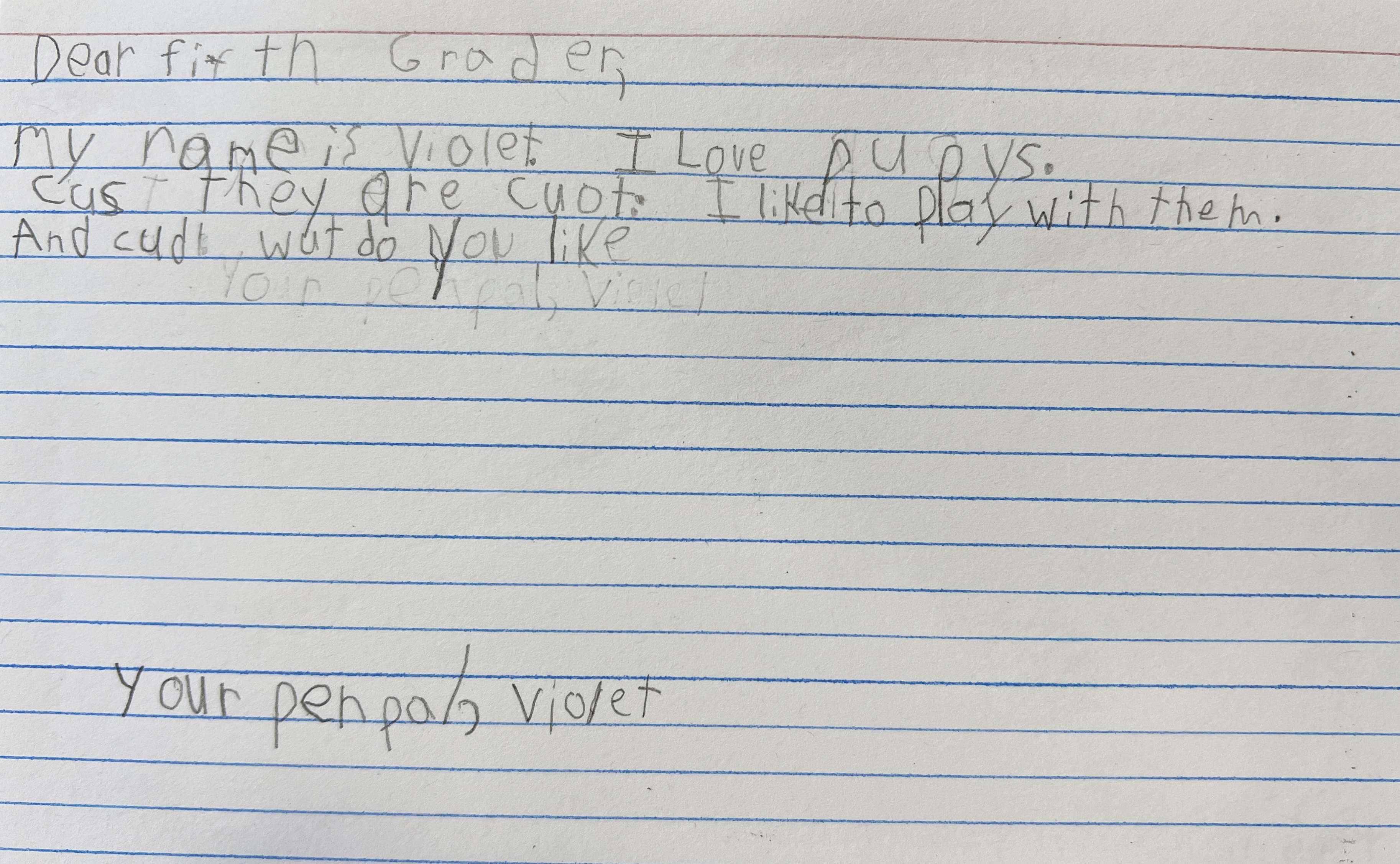
To make things a bit easier for my young writers, we used lined 5×8 cards to write our messages.
My students easily and eagerly completed their postcards, wondering just who their penpal would be. I realize that fewer and fewer people exchange non-electronic communication…I love that students are getting this opportunity!
I sent the postcards through district mail to our other school where they were delivered to the fifth graders. My colleague shared a cute video with me featuring her students and their excitement at receiving the postcards. It was hard to wait for them to write back.
But last Friday, it seemed that it was worth the wait! I distributed the letters written by the fifth graders. They had typed their letters, integrating a letter format lesson, and included a selfie inserted in the document. The letters were warm and welcoming. The fifth graders commented on the first graders interests, shared their memories from first grade, told the first graders something about themselves, and asked a question or two.
Our classroom hummed with energy. Students helped each other read their letters, compared photos, wondered about games they weren’t familiar with, and generally reveled in receiving a letter. We then took a few minutes to talk about how to respond to a letter and then they set off to write.
My students wrote and wrote. They chatted as they worked, encouraging each other, sharing spellings of more challenging words, asking for help from me from time to time…”How do you spell Seattle Seahawks?” “Does eclipse have a c or a k?” It was the first time this school year where we truly felt the phenomenon of flow when writing. Every one of my students was engaged, stretching themselves as writers, sharing their interests and inquiring about the interests of their penpals. They kept on writing…for more than half an hour on a Friday before lunch.
We finished the letters today, adding a drawing just for fun. I read through them all, marveling at students’ efforts and the high level of readability of these handwritten notes. I plan to send the letters off to the fifth graders by the end of the week.
There is power in the penpal. I can’t wait to see how this written exchange grows during the course of the school year! (Below are a few more of the postcards we sent to the fifth graders)
I admit it, I’m kind of obsessed with dandelions. There is something about the resilience and grit of this pervasive and well known weed that enchants me. I love that dandelions spring up in our lawn, in the cracks of rocks, right in the middle of an asphalt road, along the sandy edge of the beach… Last week I read my students the book Dandelion Seeds the World by Julia Richardson which follows dandelions across all seven continents. celebrating the multiple ways their seeds spread from floating on air to hitching a ride in the fur of animals…and even in their digestive systems! After reading and talking about dandelions…and the ways we make a wish and blow the seeds (which also helping them spread), we wrote about our wish for the world. Not surprisingly, at the end of the school year, they didn’t even need an example to get their pencils moving and write some important wishes. Interestingly, many were environmental wishes–about taking care of the ocean, protecting animals, preserving trees along with a couple of wishes about treating others with kindness and respect.
I always like to pair writing with some kind of art project. In the past I’ve done a variety of different kinds of dandelion creations…but for some reason was feeling uninspired by these projects. A colleague suggested the idea of black and white photography, a la Ansel Adams. Ah…a great reminder! And strangely enough, I hadn’t gotten to Ansel Adams yet this year. So, to get students started I read a favorite book of mine, Antsy Ansel, a picture book biography by friend and writing project colleague Cindy Jenson Elliott. I knew I wanted students to go outside to take photos of dandelions–we had just spent time talking about the dandelion life cycle and the different versions of dandelions they might find (puffball, yellow flower, tight bud…). I was a bit worried though. The gardeners at our school do a wonderful job of keeping the grounds well groomed–would we be able to find any dandelions?
But when I asked the students, they knew just where to locate some dandelions. Of course, the first place they mentions is the “out of bounds” area of the school grounds where they aren’t allowed to play! (And yes, I took them there.). So we set off with iPads as cameras, taking photos of dandelions in all of their stages. Our time was short, so we didn’t have time for any editing before we needed to head out for lunch. Luckily, I took a peek at some of the photos…and was greatly disappointed. They were blurry and ill composed. Hmmm… So after lunch, I showed students some of my own photos of dandelions. I showed them the ones I would discard–the ones that were out of focus, the ones that were too far away–as well as my better photos that were crisp and really showed off the dandelion. Then we tried again. Phew! They were much better.
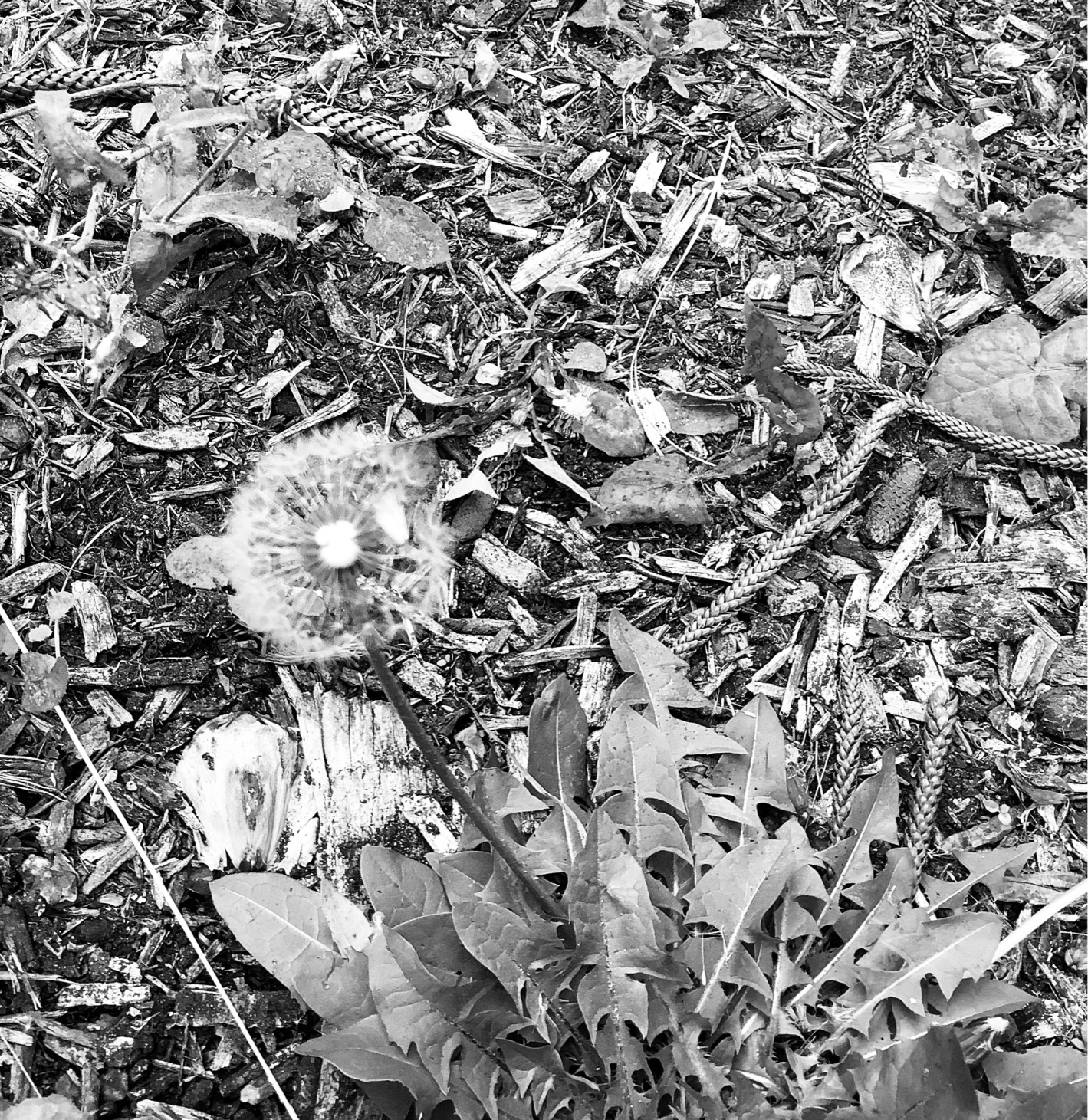
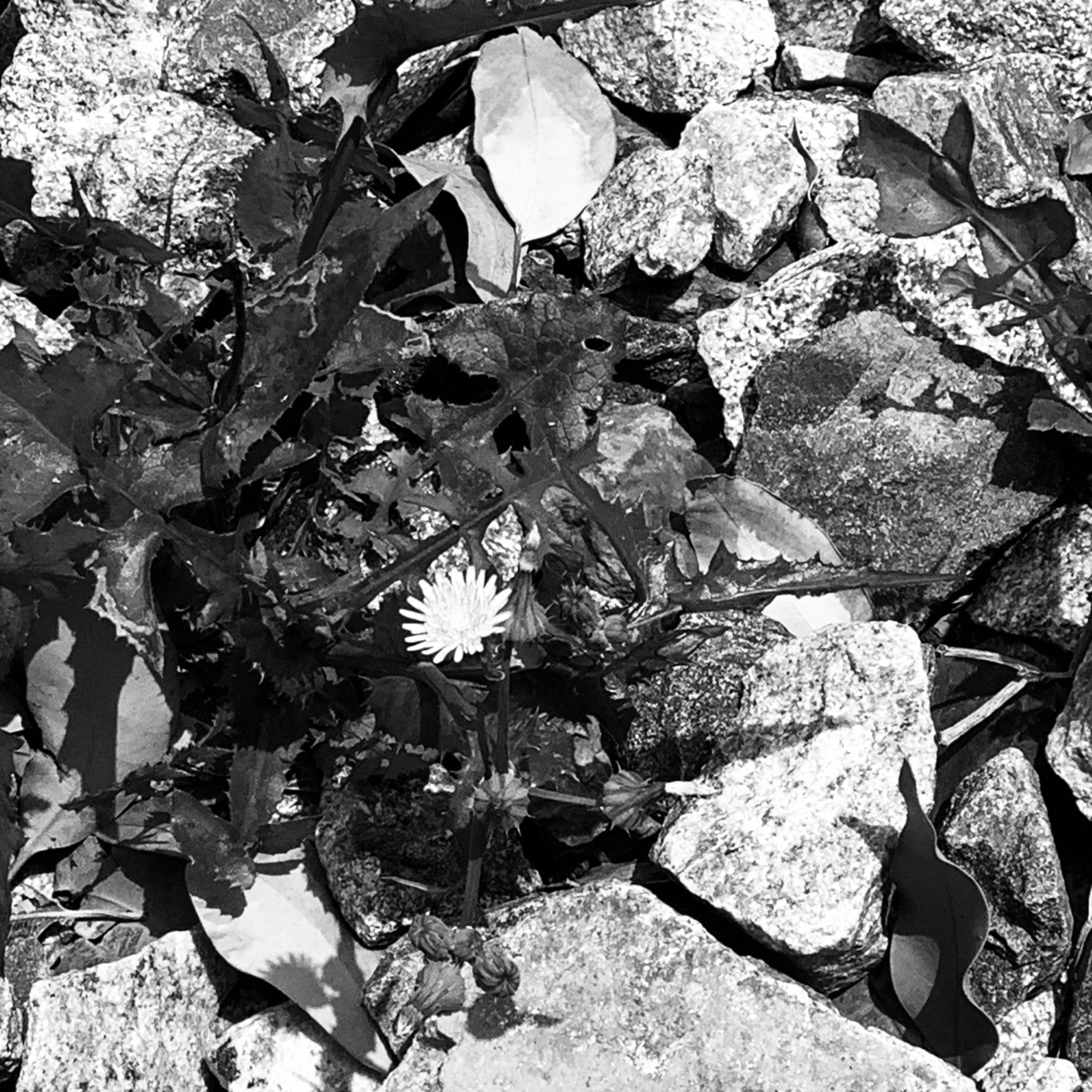
Students picked their best image and inspired by Ansel Adams, transformed it into a black and white photo. They also cropped it to make it a square image (for the sake of my display).
Here’s a couple of examples:
My wish for the world is for people to use electric cars because gas cars invade the air with gas which is not good for us to breathe in.People are throwing trash in the water, it is not only making our world dirty it is also killing animals.My wish for the world is to stop cutting down trees because it is killing wildlife.
My own wish for the world is that this group of first graders continue to influence and inform the adults around them about the importance of taking care of our planet…and each other. What is your dandelion dream?
Have you ever had a day where a routine errand turned into a mini vacation? After working all day, I knew I needed to fill my gas tank. Knowing that my husband prefers this little out of the way gas station, I headed home to pick him up before getting gas. Since the sun decided to make an appearance today after days of a pervasive, gray marine layer, I had an idea percolating in my head. So I proposed, what if instead of taking our usual neighborhood walk after we get back from the gas station, we stop by the beach near the gas station and walk there? Tides are always a deciding factor at our local beaches. If the tides are not low enough, there isn’t enough beach to actually take a walk–and you never, ever, ever want to find yourself walking too close to cliffs that are known to crumble, showering rocks–some of them quite large–and who knows what else onto the beach below.
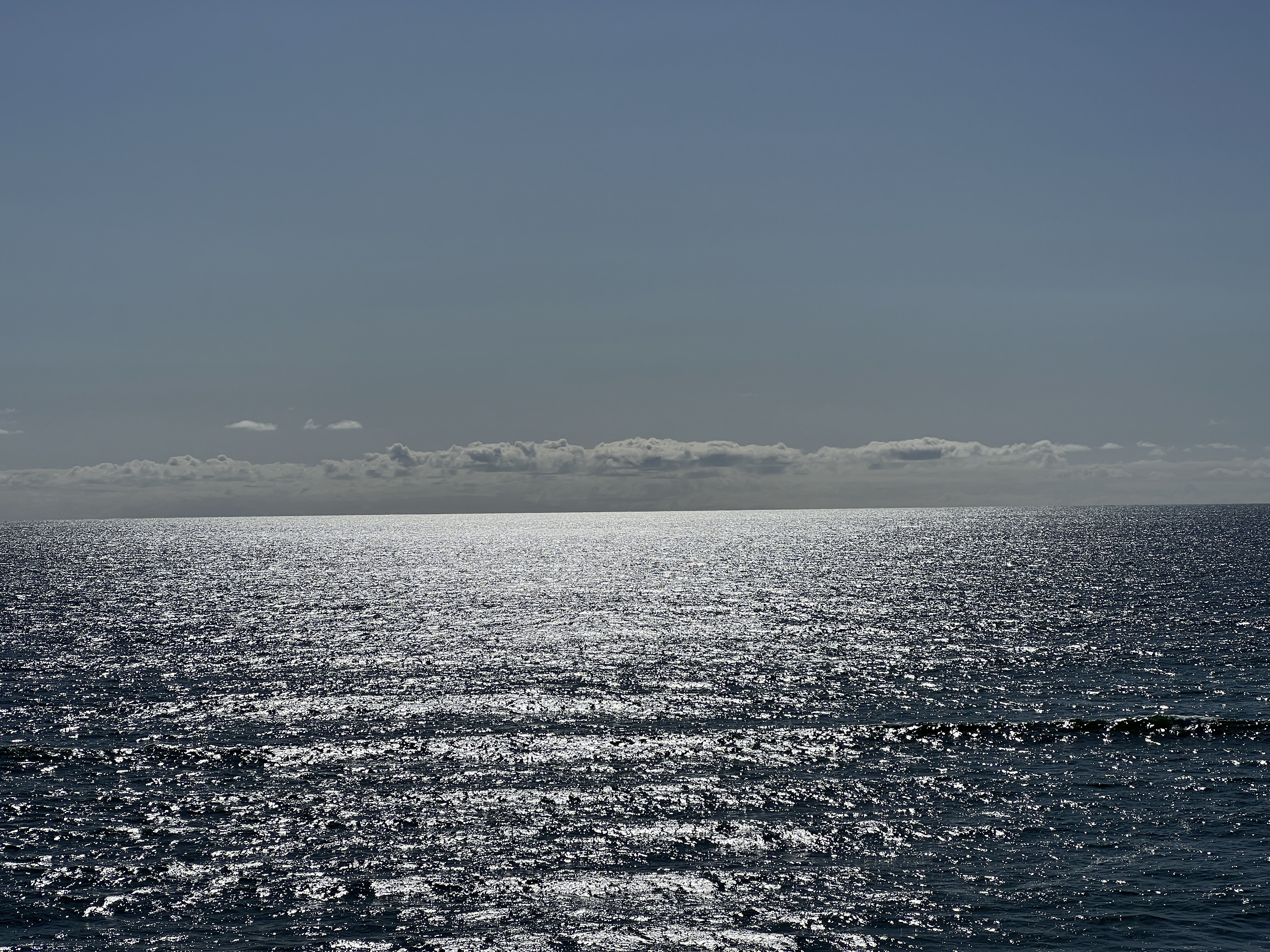
I lucked out. The beach just a couple of blocks away from the gas station had a modest amount of beach available. We parked, walked down about a million stairs only to be greeted by a dazzling view of the ocean.
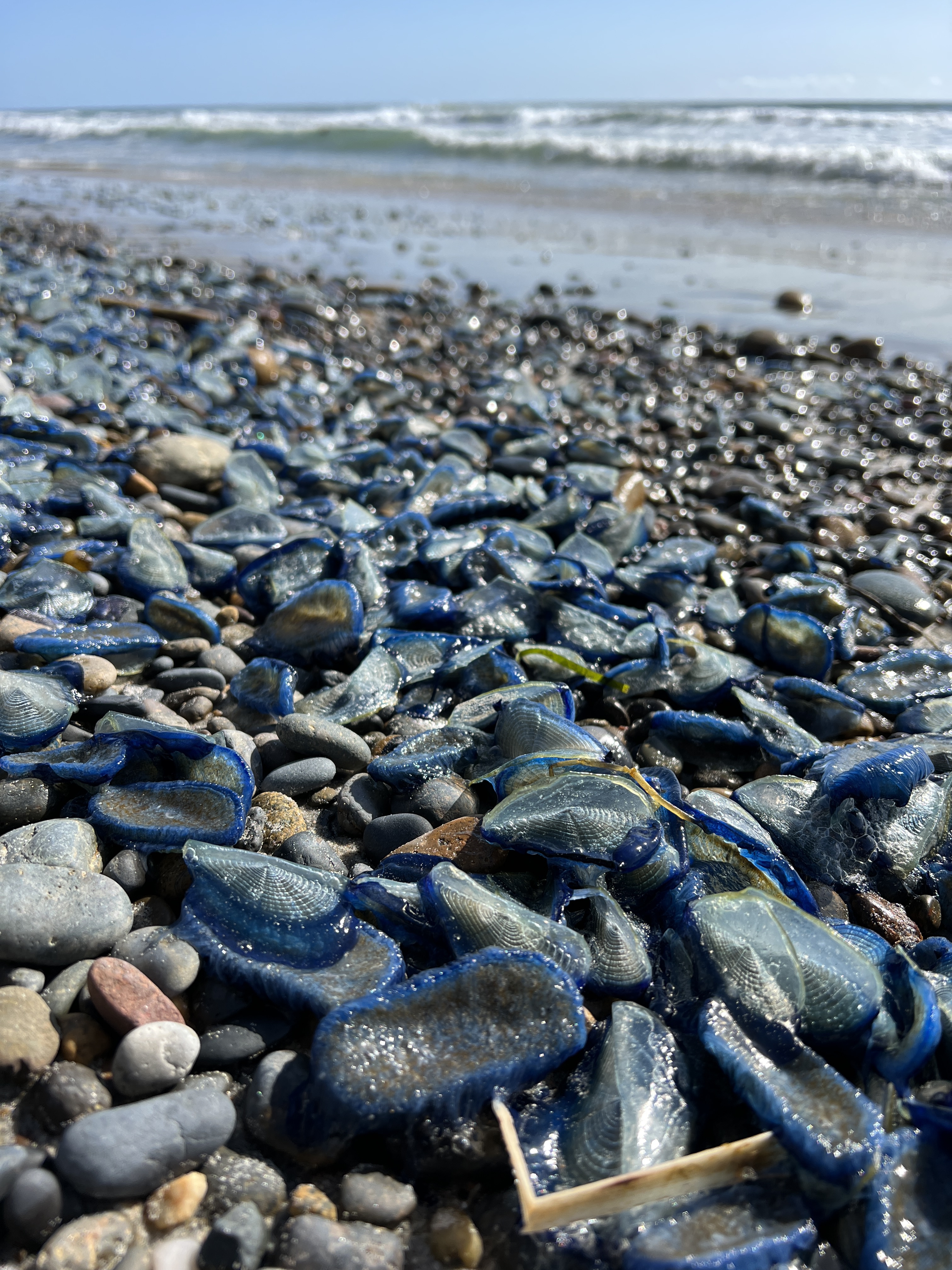
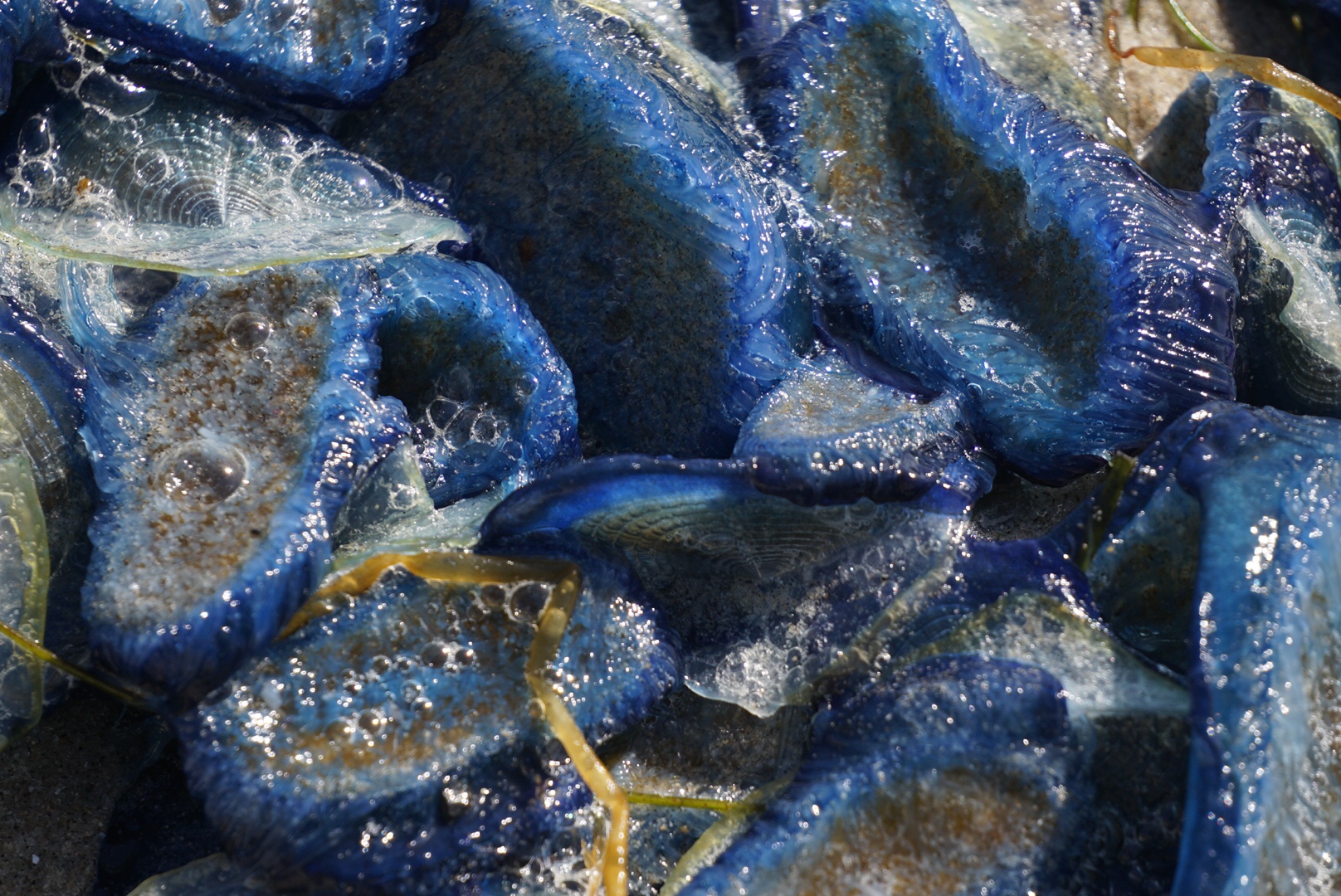
Next we noticed hundreds and hundreds of Velella velella (also known as By-the-wind sailor) washed up on the shore. These brilliant blue relatives of the Portuguese Man of War have been washing up on our shore for the last month or so, although I’ve only seen them a few at a time before today.
As we continued our walk, the sun warmed my back and the sea breeze tickled my nose. The whoosh-whisper of the surf provided a perfect back beat for my breath, letting the work day slip away with each step I took.
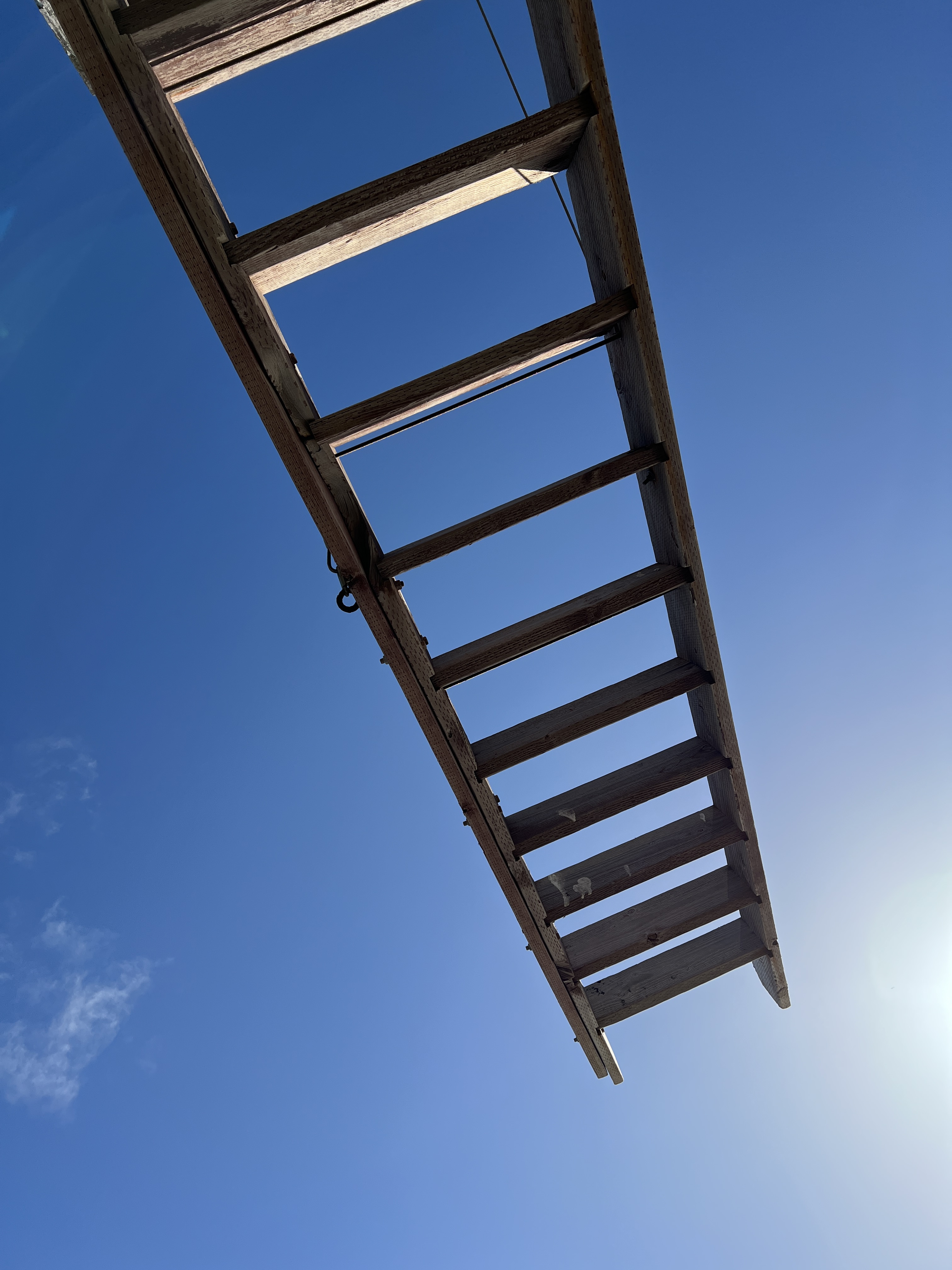
There is so much character along this stretch of the beach. The residents of the houses along the shore have created whimsical ladder contraptions to give them access to the beach from their homes perched on the cliffs. And since they want access to the beach, but really don’t want visitors from the beach a ladder sticking straight out over your head doesn’t even make you bat an eye! I decided to play around with my camera. What would it look like to stand under the ladder and look up?
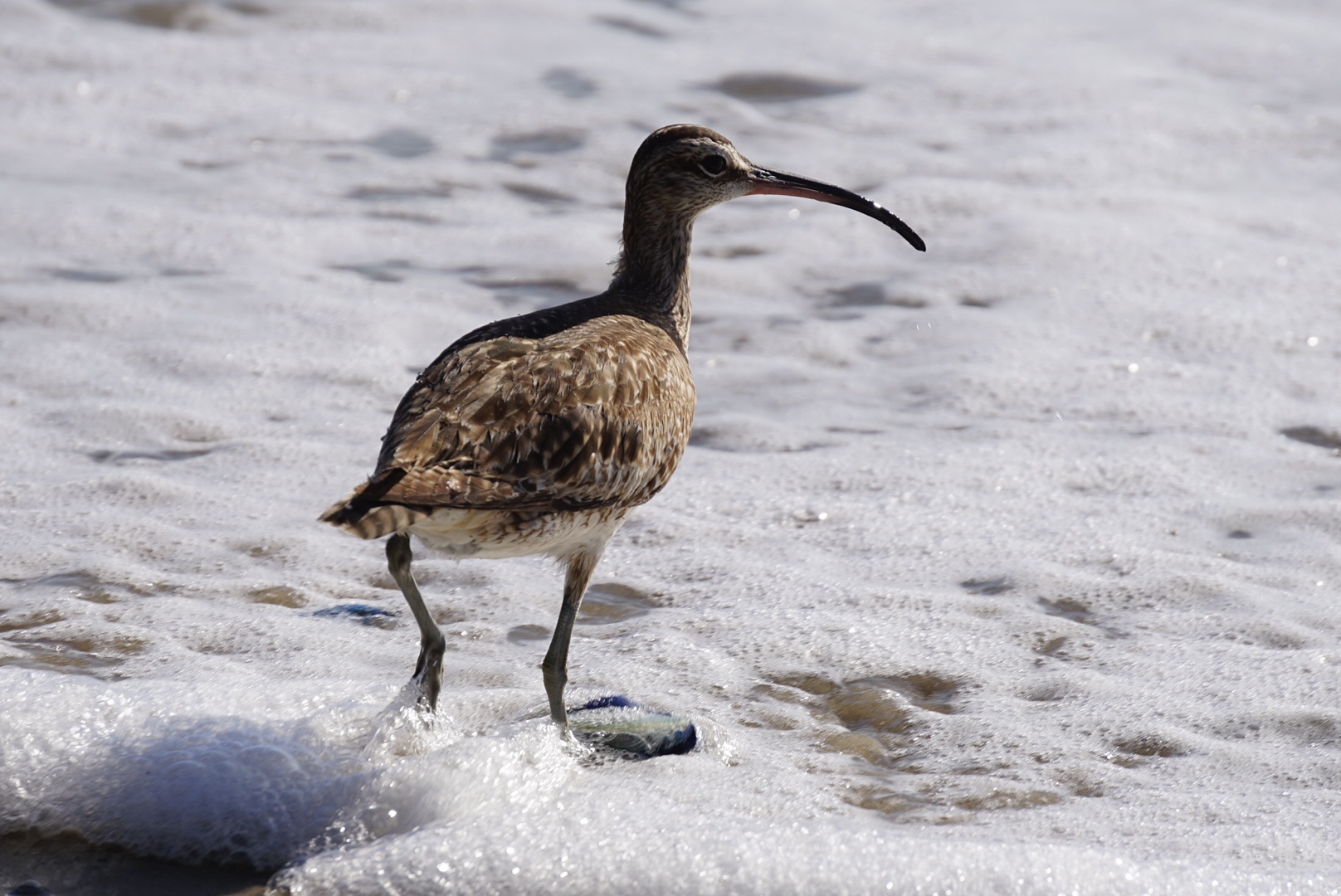
While the beach itself was mostly empty, I did come across a solitary shore bird out for an early dinner. It was pretty unconcerned by me and my camera, at times looking straight into my lens.
So, the trip to the gas station turned into a lovely break from the work week routine, a mini-vacation where I was immersed in sun, sea life, sounds, and a fresh ocean breeze. What a way to spend Tuesday afternoon!
There’s something satisfying about accomplishing a goal you know will be a challenge. And even though I have taken this challenge for a few years now, it really doesn’t get easier. Two Writing Teachers and their annual slice of life challenge is an amazing community of welcoming writers. There is something about writing in community that makes this daily writing and posting of writing not only something I can do, but something I want to do…with some level of competence! Many thanks to all who have read, liked, and/or commented on my slices this month. And also thanks to those of you who have written and offered your writing for comment and reading. It’s such fun to see all the different approaches writers take to accomplishing this 31 day challenge. You are appreciated!
Writing every day is humbling. Some days coming up with something worthy of posting seems impossible. I envy those early morning writers who seem to wake with ideas galore. I feel like I search all day long, and luckily when I open my computer to write, a slice somehow finds me. I love the way writing takes twists and turns. Some days I KNOW what I am going to write…and then I open my computer and the words take a new direction.
I look forward each day to reading other slicers’ offerings. I love the glimpse into lives across the country and world, across different stages of life, and seeing life from a variety of perspectives. It’s interesting to see some people dig deep with their writing, sharing grief, health concerns, and parenting dilemmas. It’s fun to read poetry, ramblings, 6-word memoirs, lists and listicles, photo essays, and everything in between. I’m reminded that there are lots of way to write and lots of approaches to developing a topic and idea.
I like that a focus on my own writing also helps me focus on teaching writing. I find myself thinking about how to help my students prime the writing pump, getting ideas flowing so they can’t wait to pick up their pencils and start getting those ideas on the page. I’m reminded to offer variety and choice, letting them follow their thoughts and ideas. Community for writers is essential. My students want to share their writing with their classmates and me and benefit from hearing each other’s writing.
And each year I remember that March is not only a month for daily writing, but also the month for writing report cards, preparing for and conducting parent conferences, and thinking about that upcoming spring break. Then it is followed by April, National Poetry Month, and I find myself tempted to keep on writing, challenging myself to another thirty days of writing–this time all in poetry (yikes!). As my spring break begins, will I also be writing and posting a poem a day? Probably.
Maybe I need to figure out what the May and June writing challenges should be. Why do I write every day for 61 days and then stop? Apparently I need the accountability of a community of writers and a daily challenge to keep my writing flowing. Guess that’s my next puzzle to figure out!
It’s been raining again. I know, I should be appreciating this liquid abundance that is replenishing local water supplies, nourishing drought-starved plants, and creating conditions that will ease the water restrictions we have learned to live with. But enough already!
So…when it has rained all day–again–it’s a perfect day for comfort food. And in this household, that often means breakfast for dinner. Somedays breakfast for dinner means breakfast burritos filled with eggs and avocado and bacon. Other days it is french toast dunked into an egg mixture and cooked until it is golden brown. Tonight it is pancakes.
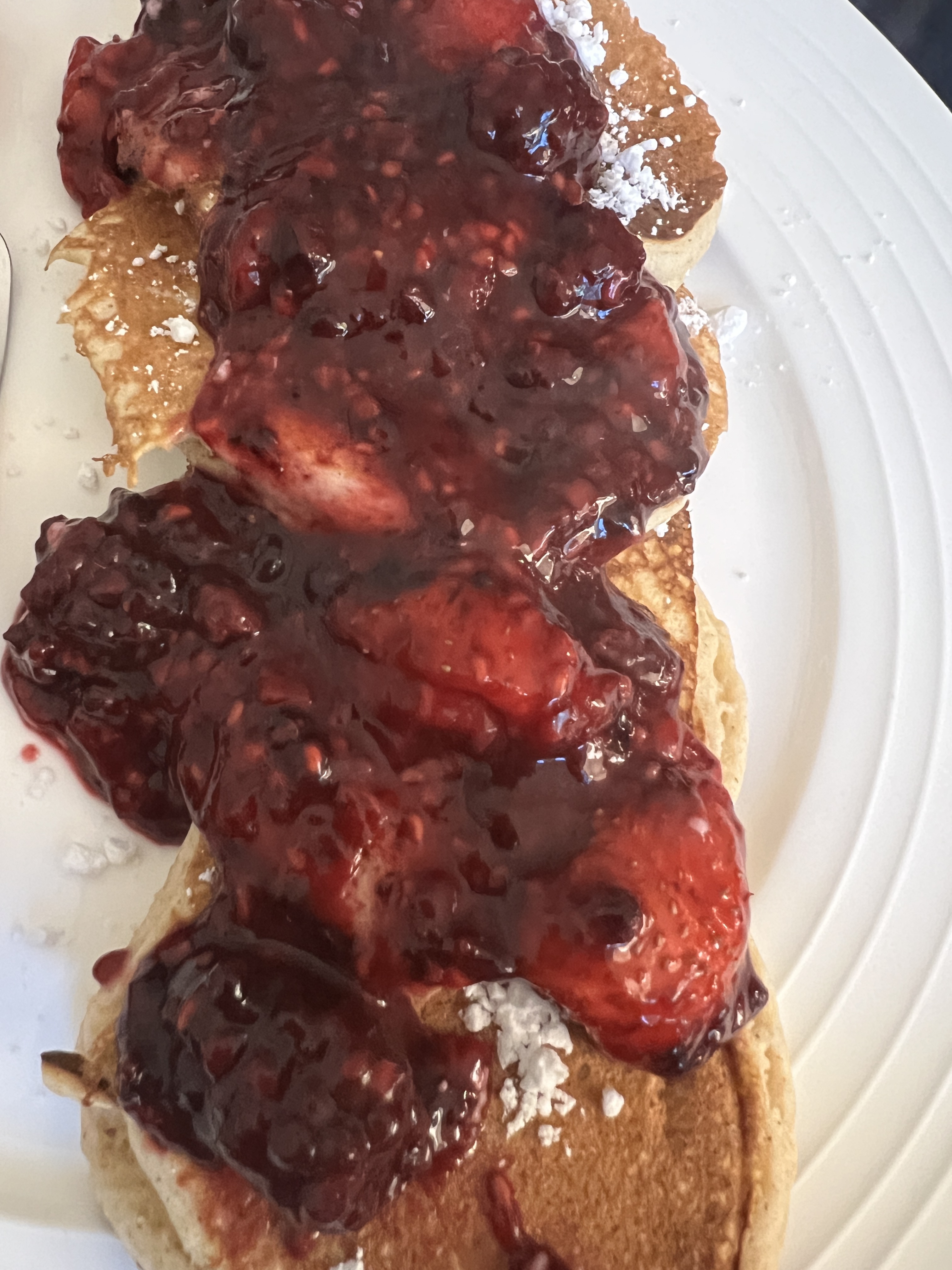
If you know me, you know I don’t cook. Somehow all those years ago when I met my husband-to-be over green beer (you can read our tiny green love story here), I lucked into marrying a man who cooks–every single day! So as dinner time approaches each evening, he serves up love in the form of a meal. He makes it look easy as delicious aromas begin to waft through the house. “I’m whipping up a compote for the pancakes,” he says as I peek into the kitchen. He knows that maple syrup is not my go-to pancake topping, so he gathers this and that from the fridge to make something he knows I will love.
The (decaf) coffee is gurgling, there’s bacon in the microwave, and pancakes are almost ready. There’s something warm and cozy and comforting about pancakes for dinner on a rainy day. Almost makes another rainy day worth it!
It’s hard to believe that National Poetry Month is right around the corner! The way our school calendar works, we typically miss the first week or so of April as we are on spring break. So…I’ve learned to get an early start!
The book, Daniel Finds a Poem by Misha Archer is a perfect way to get first graders thinking poetically. They love the way that Daniel learns about poetry from all the animals around the park–and crafts his poem from their remarks.
Then it was time for the students to start thinking about what poetry is. We started with the stem, Poetry is… As we began brainstorming ideas, we also considered how our senses might help us think beyond just things we can see. Students wrote, beginning their list of what poetry is. Today we returned to our writing, taking a look at where we started, considering the senses we hadn’t yet tapped into, and wrote for another ten minutes. Then we took out the highlighters. I asked students to pick their best (or favorite) three poetry is phrases and highlight them. Wow–there were some gems! Here is a small sampling…
Poetry is
the hugs that my mom gives me
moonlight skies with stars shimmering
the feel of hot water from the bathtub
the smell of salt in the sea when the waves hit the shore in the morning
the rustle of newborn blossoms coming out for spring
the bird tap dancing at the break of dawn
and…poetry is when you look at the sky to find your own dreams.
Oh…out of the minds and pencils of 6 and 7 year olds!
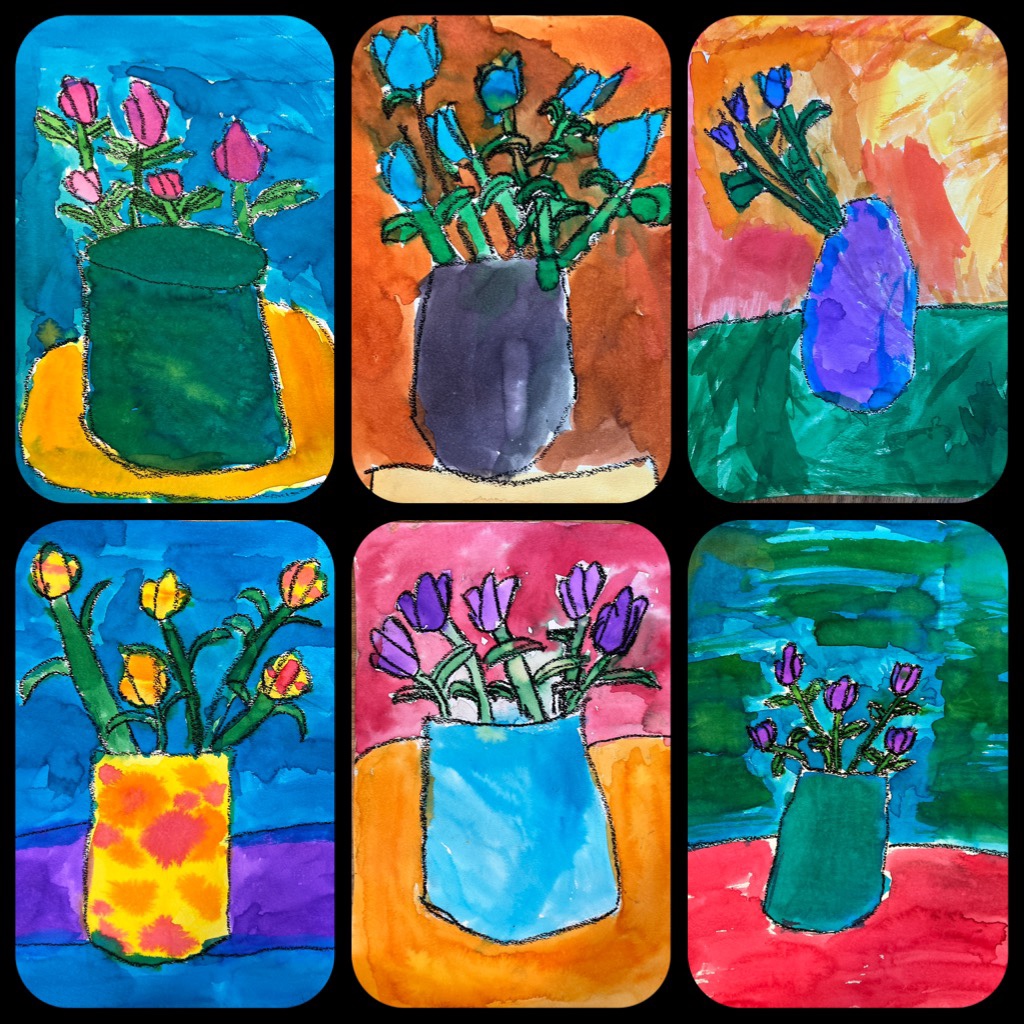
And of course, we had to do some art to create a display for our poetry. Tulips were our inspiration (see yesterday’s post). Using black oil pastel and liquid watercolor, we created vibrant tulip still life paintings.
So poetry month has been launched! How will you launch poetry month in your classroom? In your writing life?






 Thinking Through My Lens