Category Archives: Slice of Life

Count My Lucky (Sea) Stars: SOL25 Day 28

I’m not particularly lucky. When I insert coins in a slot machine, the bells don’t ring and money doesn’t come out. When I play lotto (definitely not regularly), my numbers do not come up. When I find a scratcher in my Christmas stocking, there’s no prize that appears to cash in. My name doesn’t get pulled for raffle prizes and I can’t even imagine how badly I would fare on a TV reality game like Deal of No Deal Island!

In life, I count my lucky stars (where did I pull that phrase from?). My family is mostly healthy–as am I. I am in a happy long-term relationship. My children are independent and making their way in the world. I love my work and my life.

2025 has been a sea star year for me. I count myself lucky every time I see one. I started the year by coming across a beautiful specimen in the tide pool on New Year’s Day–and wrote about how lucky that felt–a hopeful talisman for the year! Rather than choosing one little word to guide the year, sea stars are giving me direction, hope, and energy. I’ve had a number of other sea star sightings this year. Each one brings that same surge of euphoria and feeling of luck.

As I walked the beach this afternoon (a perfect way to end the work week), my husband and I were commenting that we hadn’t seen any tide pool critters lately. We aren’t the people who wade in and turn over rocks, stirring up the tide pool in search of aquatic life. We look, as patiently as possible, to see creatures in their undisturbed place.

And then, a bright pop of orange caught my eye! It was a sea star. Just a small one, about the size of a quarter. Just when I moved in closer to take a photo, the water surged, covering my shoes and soaking my socks. Oh well, I thought. I still felt so lucky to start the weekend with the dopamine spike of seeing and enjoying the sea star in its natural habitat!

Today I am counting my lucky sea stars!

What makes you feel lucky? Or are you one of those naturally lucky people?

13 Ways: SOL25 Day 27

“What is it that you feel you have the need to have 13 ways of looking at?” That was the question posed by Poetry Unbound’s Padraig O’Tuama in a recent post. A question that got me thinking this morning…and also had me rereading Wallace Stevens’ Thirteen Ways of Looking at a Blackbird. My mind went to the beach–a place I spend lots of time for lots of different reasons.

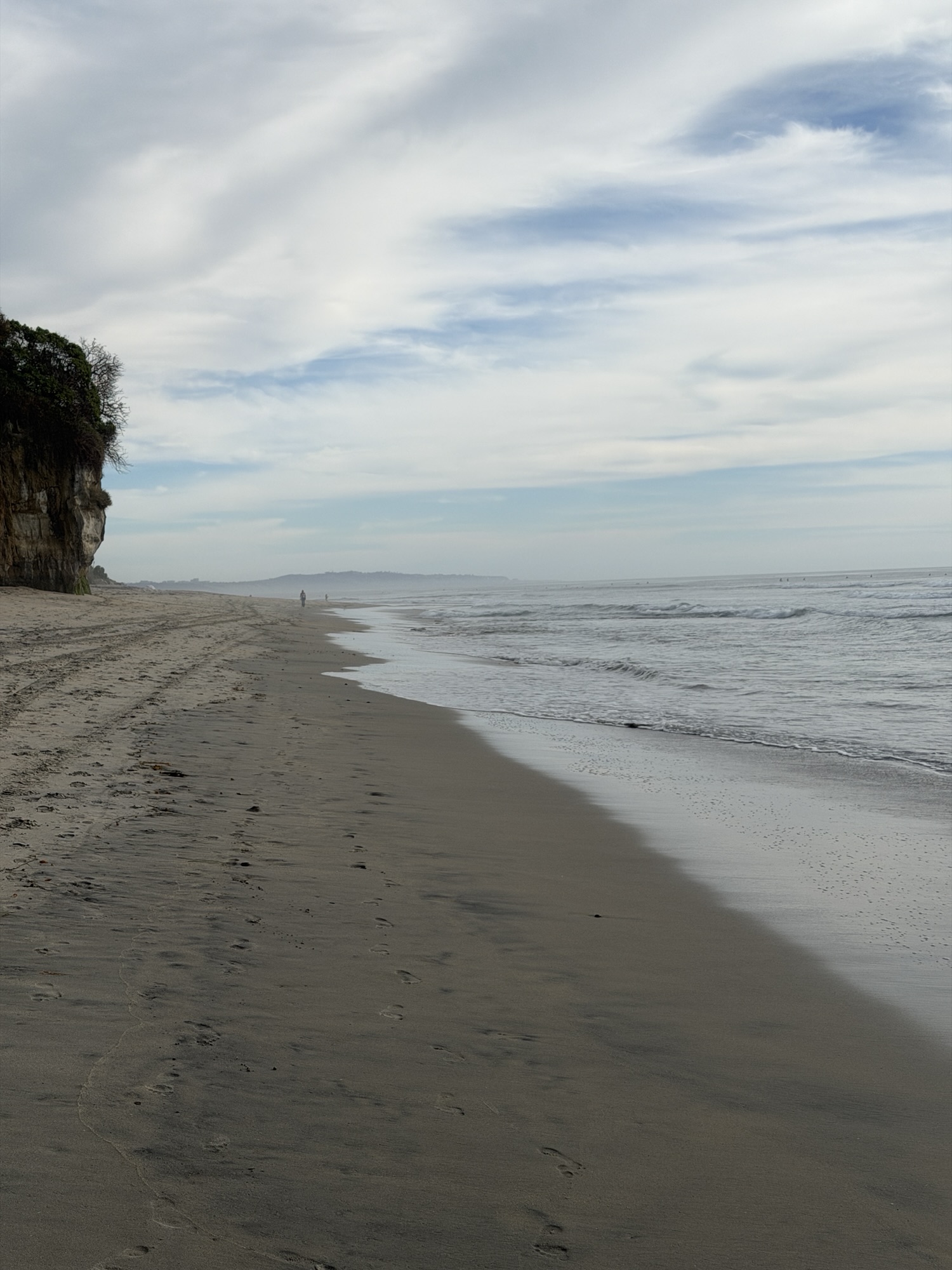
Thirteen Ways of Knowing the Beach

I

I match my breath with the ins and outs of the waves. Salty water molecules swirl around me, seasoning my skin. I fall into perfect sinus rhythm.

II

Seagulls shout. Bossy voices command attention as they probe the shore for handouts and scout out their next heist. Don’t turn your back on the sea or the seagull.

III

Curled toes, deep in the wet and squishy sand. Ankle deep, knee deep, splash! Cool or downright cold. Goosebumps form and squeals of childhood echo. A time machine.

IV

Sun’s out, skin’s out. Memories of baby oil and sunburn mix with realities of skin damage, SPF, and UV index. Trickster sun makes its mark even when hiding behind the clouds.

V

Wind whips and whirls sending sand in sinuous swirls. Waves in white caps wash, breaking barriers, reclaiming all within reach.

VI

Cliffs crumble uncovering geologic stories in layer upon layer, shells on mountain tops where lands rose and sea retreated. History in sediment, conglomerate, sandstone until time, pressure, and heat works its metamorphic magic. Change is constant.

VII

Ospreys hunt, eagle of the sea. Fishing claws grabbing dinner from the deep, no poles or lines. Transported by talons for treetop dining. A creature of sea and sky.

VIII

Squadrons of pelicans in perfect Vs oversee hoards of beachgoers. Gliding on gusts, flapping in formation, surfing the swells, their bellies nearly touching the waves when they rise. Pause and dive. Pouch first approach to prey retrieval. Dramatic drops for seaside lunch.

IX

Artists with rakes trace circles, designs larger than life with perfect symmetry, perfect Pi. Fleeting beauty etched in the sand, hangs in the gallery of your mind’s eye.

X

Tide pools hold secret worlds that live in the in-between. Sometimes completely covered, other times exposed. Life teems under the kelp, sea grass, algae. Sea stars creep on tube-feet, nudibranchs with psychedelic seventies colors strike a pose, pudgy squirting sea cucumbers move only at the sea’s whim. Hermit crabs seek new homes, dwellings abandoned by their former residents.

XI

Snowy egrets with their bright yellow socks stomp the pools at low tide. Lunch counter is open. Neck with an S-curve, stretched out or curled in, dancers in fluid motion.

XII

Beach combing, treasure hunting, shore sweeping. Colored glass roughed and smoothed by the sea, bits and pieces of green, white, amber, sometimes even blue. Sea diamonds. Picking up plastics, multiplying by mitosis, never ending source of damage, destruction. Pollution of our precious life source.

XIII

My playground, location of endless possibility. I walk on water, I walk on clouds. My ears fill with the soothing sounds of whispering waves. I can taste the salt on my lips and feel the release as stress runs down my shoulders and swims out to sea. My heart matches the rhythm of my breath, the rhythm of the sea.

Math Walking: SOL25 Day 26

There’s nothing I like better than extending the walls of the classroom and taking learning out into the world…or at least outdoors around our campus.

And you might know, I love to take photos. I like to share my passions with my students, so I also teach my students to take photos. What could be better than combining going outside with math and photography?

We headed outside yesterday morning in search of odd. My students have learned about odd and even numbers and are getting pretty good at feeling confident that they know which is which (even as numbers get quite large). I set a few parameters for them:

  • They had to take 5 photos–and only 5 photos (using their iPads)
  • They had to find examples of different odd numbers
  • They were to use a photography technique they had learned
  • There could be no humans in their photos
  • They were not allowed to move things to get to “odd”
  • They could not take a photo of 1
  • They could only venture as far as where they could see me and I could see them

At that point, the fun began. At our first stop on the playground, most students were immediately drawn to our wall ball courts and saw 3 right away. Many of them aimed their lens and took photo number one.

But then they started to notice other numbers. Some students found large numbers (by counting windows), some found interesting images. There was quite a variety.

I listened as they negotiated with each other about the number they saw. Some realized they had miscounted, others clarified their understanding of odd and even through conversation with a classmate. They looked up, knelt low, got close, and angled out from afar.

We returned to the classroom and examined our work. Each student picked a favorite photo to share–we are in the process of putting together a display of odd for our classroom wall.

I’m already thinking about our next math walk. Maybe we’ll focus on triangle

Poetry Is… SOL25 Day 25

I introduce my students to poetry beginning in the first week of school. We study a poem each week, noticing what poets do and the wide variety of approaches that make a poem a poem.

Our school schedule consistently fits the beginning of National Poetry Month (April) into our spring break. In order to not miss one minute of this month that celebrates the wonder, fluidity, and flexibility of words, I have learned to launch full-force into poetry the week before our spring break starts.

Yesterday we read Daniel Finds a Poem by Mischa Archer, a lovely and accessible book for young children where the title character asks all the creatures in his neighborhood to define poetry and then ends up with a poem compiling their answers at the end. With Daniel’s story as inspiration, we grabbed our sketchbooks and headed out to our school garden in search of poetry.

We are so lucky to have a wonderful school garden, and at this point in the year it is bursting with life and growth. It was a perfect place to enjoy the outdoors, some sunshine, and collect ideas for poetry for the zines students would write today.

Today to reinforce the idea of seeking and finding poetry in the world around us, I read This is a Poem that Heals Fish by Jean-Pierre Simeon and Olivier Tallec. My students were immediately engaged by the endpapers–fish in the shape of the alphabet with the P, O, E, and M in a different color! “It says poem,” C pointed out. They were all in at that point. This book was more abstract and metaphorical than the one we read yesterday–a perfect “push” as my students took their ideas from their sketchbooks and turned them into Poetry Is… zines (tiny paper books folded from a single sheet of paper).

These first graders did not disappoint! Here’s the tiniest taste:

Poppies are balls of agreement inviting bees over for fun. Corn is popping up to the sun, sunbathing, letting sun beam against their back! Potatoes are as brown as chocolate in Halloween. Carrot are as snappy as twigs. Cabbage is as bumpy as dinosaur skin. Poetry is yellow sun listening to leaves’ hearts beating. (By B)

Poetry is an onion plant waiting to grow. Poetry is a grasshopper jumping with excitement. Poetry is a tree enjoying the rain. Poetry is the worms playing in the soil. Poetry is a sunflower in the rain of a watering can. Poetry is a song that has metaphors and similes and sometimes rhyming words. Poetry is love urging you to write and compare. (By S)

All those amazing words and poetic ideas written in a compact tiny zine. It is truly a delight to watch these young poets blossom…just like the plants in our garden. National Poetry Month, here we come!

Into the Light: SOL25 Day 24

I sneak a peek at the news and the darkness spreads over me. It feels like a shadow, blocking out the sunlight and warmth I crave. Just when I think it can’t possibly get any worse, it does. How do I both stay informed and sane at the same time?

The sun was shining when I got to school this morning. I headed into my classroom and immediately got to work organizing materials for teaching. I looked up and saw my colleague pass by…and ran out after her to give her something.

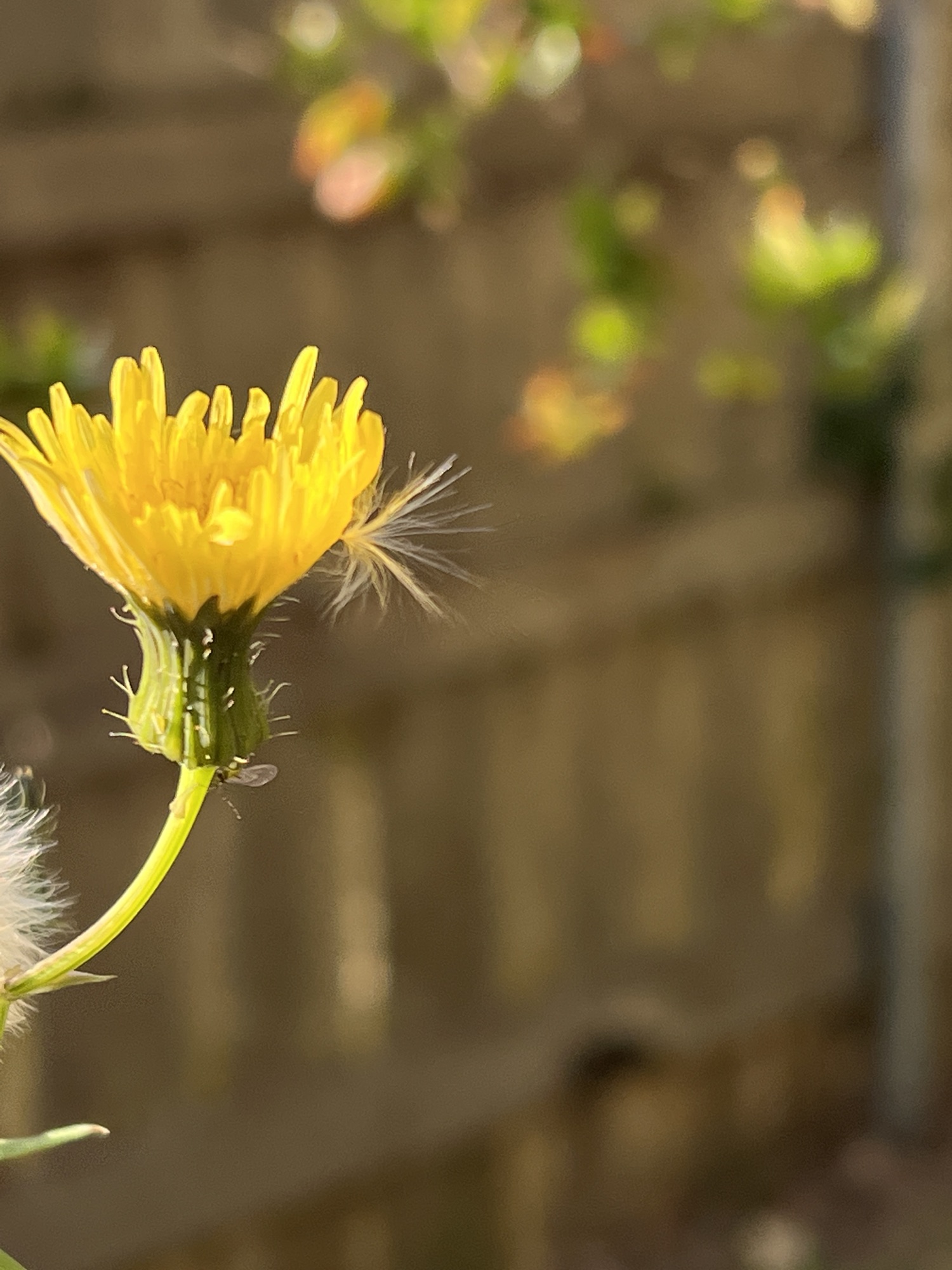
That’s when the light caught my eye. The soft warmth of morning light caressed the yellow wildflowers that are a part of our landscaping. I couldn’t resist leaning in for a photo to try to capture that moment to carry with me throughout the day.

The light, my friend and her bright morning optimism, golden flowers aglow, and the warmth of the sun on my shoulders came together to create the perfect conditions to start my week.

Here’s to keeping the glow…or at least returning to the photo to remind myself not to dwell in the shadows.

What keeps your spirits up when things start to feel heavy?

Small Pleasures: SOL25 Day 23

It’s been an over-the-top week. Parent conference week plus a trip to UCLA (not a fun drive) for a Tuesday all day meeting to showcase work within the California Subject Matter Project (CSMP), back for more of those conferences and teaching, preparation for an all-day in-person meeting in San Jose for two statewide initiatives that I help facilitate for the California Writing Project (CWP), a flight on Friday after school, the wonderful and thought-provoking meeting yesterday followed by the flight home…I arrived home late, feeling exhausted and ready for bed!

I awoke this morning–briefly–at my regular 5:30am, long enough to peek at the clock and then turn over and go back to sleep for a couple more hours. And when I did wake up, what was on the breakfast menu? Homemade cinnamon rolls: sweet, cinnamon-y goodness, hot from the oven, with oh-so-yummy frosting pooling around the base. The perfect decadent small pleasure baked with love by my amazing husband. A Sunday morning delight! An exclamation point to end my busy, but satisfying week.

Glue Guns and Buttons: SOL25 Day 22

There is something transformative about making. Today’s assortment of making materials included some fabric, felt squares, scissors, embroidery floss, glitter glue, rickrack (that word felt like a blast from my childhood!), an assortment of buttons, and a glue gun. 

As Carol pulled items from her bag, it felt like Mary Poppins’ magical bottomless satchel. Interesting items just kept coming. (And really, who brings a glue gun to a writing project meeting?)

We’d read The Housewife’s Lament by Dawn Landes, a piece about the invisible daily labor (mostly done by women)…labor that can also become a joyful practice. Teachers also experience the phenomenon of invisible work—labor that goes mostly unnoticed and certainly under-appreciated. 

A discussion with colleagues led to an opportunity to abstract those ideas into something made from the bits and bobs available. Soon the room was humming with cutting, glueing, stitching, arranging, even some researching and, of course, the chatting that accompanies the creating. 

Pieces of felt and a stir stick became a broom sweeping debris—along with a study of the word sweep and all its connotations. Lace, a heart-shaped piece of fabric, and an overheard conversation became ” the aesthetics of framing a moment of human evolution with a new love.” A smiley face made with felt, button eyes, and lots of hot glue highlighted the value of laughter and joy in the learning process. 

We made and wrote and shared both with the group, deepening connections to each other and our shared work. The commitment and passion of the educators in the room was palpable—offering hope in these times when our profession feels under attack. 

Glue guns and buttons–making things is so much more than arts and crafts, just like so many kinds of mundane, repetitive, and taken-for-granted actions are necessary and sometimes even joy inducing, even when others don’t understand all that they entail or their significance.

Chasing Sunset: SOL25 Day 21

I boarded a plane at 6:30pm…shortly before sunset in my place. A not-quite-full plane meant I sat near the window with my sister in the aisle and space between.

As we traveled north (not too far north), I watched the sun hanging out along the horizon…and about an hour later, I was still watching it as the sky began show off bands of red and orange.

And knowing that time was slipping away, I revised my idea for today’s post and settled on a 6-word story instead.

Chasing northern sunsets as we fly.

Wild Words: SOL25 Day 20

In my experience, kids love nature and natural things. I also think it’s important for the adults around them to expand their exposure to the natural world and also to help them to embrace the role of caretaker and advocate for our earth and its resources.

Last week we learned a bit about Jane Goodall and her lifelong skill as a watcher. Then we did some watching ourselves. Since it was pouring down rain outside (not good weather checking on my part when I planned), I had to adjust my plan and instead of watching outdoors on our campus, I used a couple of animal cams for watching.

With our minds on nature and the natural world, I read students the book, The Keeper of Wild Words by Brooke Smith. The story is about the need for all of us to keep wild words alive (words like wren, dandelion, brook, blackberry…you get the idea) by paying attention to wild things and using these words in our lives or they will continue to be replaced by words like internet, chat room, and other non-natural words.

Recently I harvested an activity called the longest list from a colleague where students collaboratively work to create a list of words…in this case the longest list of wild words. Large sticky note posters worked their magic–students loved working together using markers to make a long poster list of words. Then I gave each student an index card-sized post it note and had them move from poster to poster with the goal of collecting the ten wild words they liked the best. I love the focused engagement during this stage of the work. First graders helped each other spell the words they came up with, helped each other read the words written by their classmates, and sparked ideas for new words all along the way.

Finally, I asked students to write a 7-up sentence (another something borrowed from a colleague). This sentence as I defined for the students (based on things I wanted them to demonstrate) must feature one wild word, have 7 or more words in it, begin with a capital letter, include ending punctuation (., !, ?), have no backwards letters, have very neat handwriting, and must make sense. I handed them each a 5×7 lined card and they set to work.

“Can I include metaphorical thinking?” I was asked. You know my answer! “This is so easy,” another student exclaimed. Everyone set to work, selecting a word from their list and composing a sentence to meet the criteria.

Here’s a few of their sentences:

J wrote: A fox scattering in the forest with the sun glistering in through the rivers.

T wrote: Friend look there is a redwood as red as my hair.

D wrote: The red roses are scattered around the forest because there is a panther coming.

C wrote: Roar I hear the panther scattering in the bushes trying to find food.

B wrote: Roses rising up in the air high up to the clouds.

While they haven’t yet perfected punctuating the complex sentences they are composing, the sentences are interesting. They are using active words and working to be descriptive.

Were all seven criteria perfectly executed by all students? No. But there was great effort and every student was able to compose a sentence that was pretty close. They were engaged and wanted to craft a sentence unlike other’s. And this was an ideal formative assessment–short and sweet, showing me where to concentrate next instructional efforts.

Best of all, we are working to keep wild words alive: in our minds, in our words, in our writing. And I hope this is another stepping stone leading to students becoming the stewards that our earth and all its resources and creatures need.

James—A Recommendation: SOL25 Day 19

I’m a reader. I pretty much always have a novel going to read before going to bed.

I just finished reading James by Percival Everett. Knowing it was a Huck Finn story, I wasn’t sure I wanted to read it when it first came out. I remember Tom Sawyer at some point in my life, but I’m not sure I’ve ever read The Adventures of Huckleberry Finn. I feel like I know about the story—through cultural references and other indirect avenues.

Then people started talking about James—exclaiming about the book. It started to win awards and was getting lots of critical acclaim. But it took a recommendation from my son before I committed to reading it. (He said he read it in one sitting!). I started by putting a hold on it on my library app. Because of its popularity it was going to be a several month wait.

Then after Christmas I had a gift card AND Barnes and Noble had their big hardback book sale. So I picked it up along with a couple of other titles and it spent some time teetering in my TBR pile.

I started it last week and the story immediately sucked me in. I could feel the connections to the Huck Finn story—but there was so much more.

Perspective matters. Assumptions don’t tell anyone’s truth. People are complex and multifaceted. I loved the dialogue and dialect and that surprised me.

If you’re looking for a thought-provoking read, pick this one up. I found it to be a pretty quick and compelling read. And I’m still thinking about it.

What are you reading that you would recommend?