Category Archives: Slice of Life

Looking Beyond Ugly

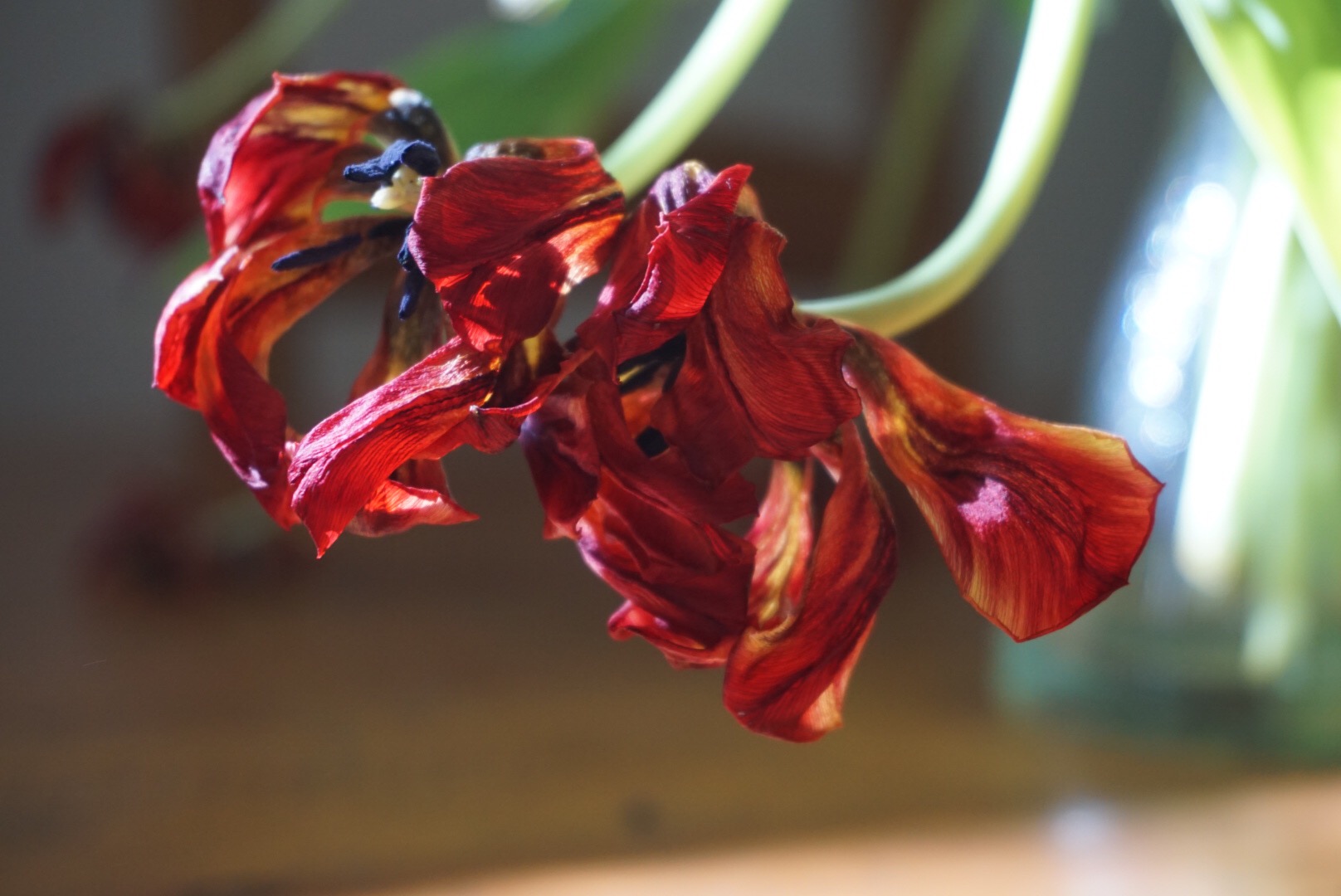
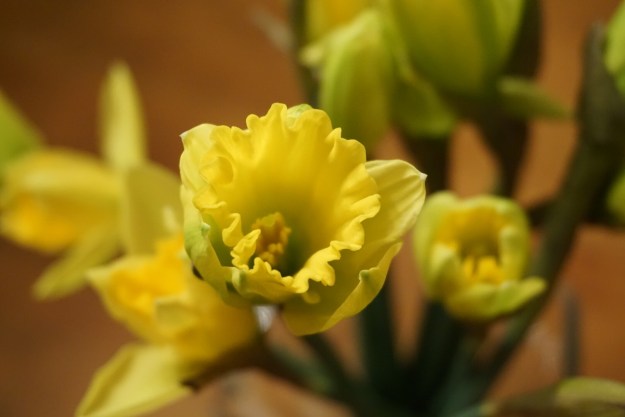
When I walked into the house today after work I noticed that the tulips in the vase on my dining room table were ready to throw out.  They were leaning over, their dried blossoms hanging upside down nearly touching the table.  I started to move them to the trash can…and then the afternoon light through the window shining on the near-dead plant caught my eye.  And suddenly I could see the beauty in the crumbling blossoms that had seemed so ugly only moments before.

IMG_5543

A  photography tip aside: It was just last week that Joy from Joyfully Green had posted an article where she described the place–her dining room–that served as a photo studio because of the light it offers.  (Joy has many tips to share…about photography and about living green.)

As a teacher, it’s my job to look beyond the ugly–the spaces where learning isn’t happening in the ways we want or expect–and figure out how to find the light that transforms.  And it isn’t always easy.  Sometimes it just seems easier to place blame, give in to frustration, or pass the buck.  But then the light shines through my dining room window and I can look beyond the ugly and find the beauty.

IMG_5542

(Five Stories…not sure if I followed the rules, but thanks for encouraging me to tell a story today!)

Staying Afloat

I love my job. And yet, I still need time off to refresh and recharge…to stay afloat amid the demands of the work I love. Sometimes I am tempted to use my time off to catch up on the work details that build up in the course of my daily work life or to tackle those cleaning and organizing projects that take so much time. But this week, I mostly spent time exploring, enjoying…and not too much else.

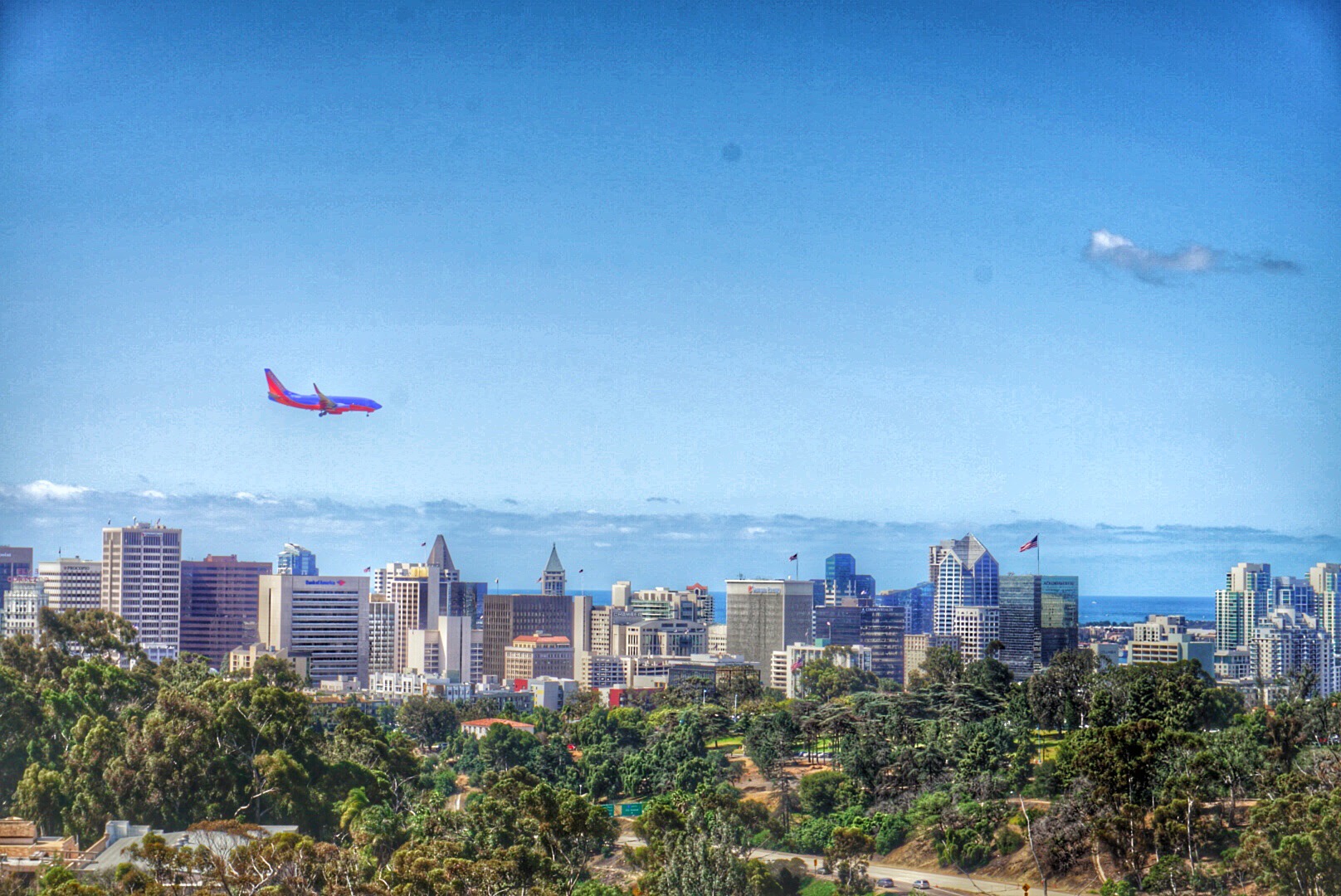
And for this week staying afloat meant climbing the California Tower with my sister and looking out over the beautiful city where I live. The tower, that has been closed to the public for most of my life, offers 360 degrees views…to the ocean, to the mountains, and more. And because of the unique flight path in San Diego, I was watching planes descend right over the city skyline.

IMG_5074

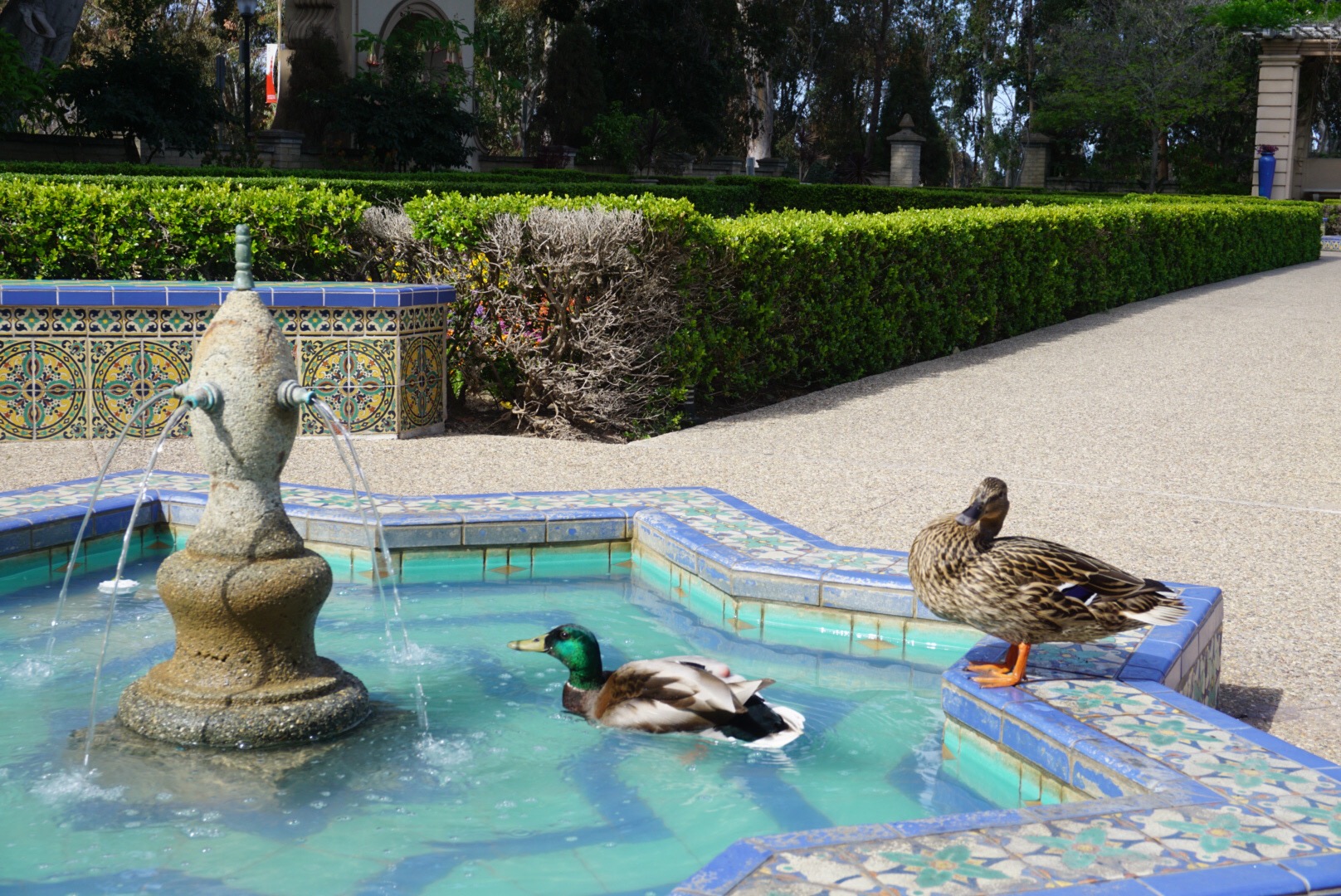
We also met up with this mallard duck couple enjoying a private swim in the small garden fountain. The morning light in this unedited photo seems to emphasize the beauty of the ducks and the surrounding fountain and gardens.

IMG_5122

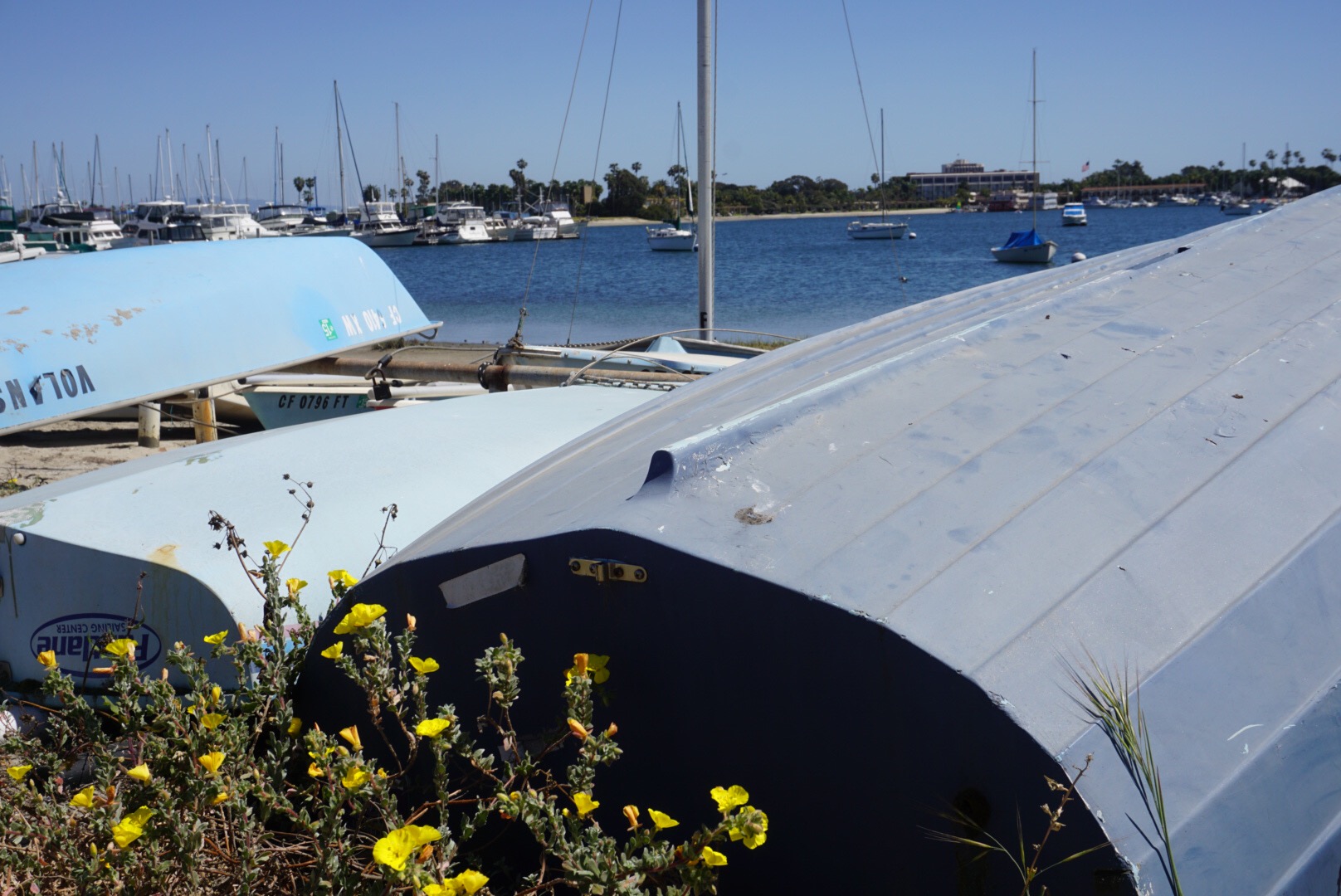
We found these overturned boats and flowers near the place where Geoff and I lived many years ago, right after we first got married. In the background you can see the boats that are afloat and the brilliant blue of Mission Bay.

IMG_5124

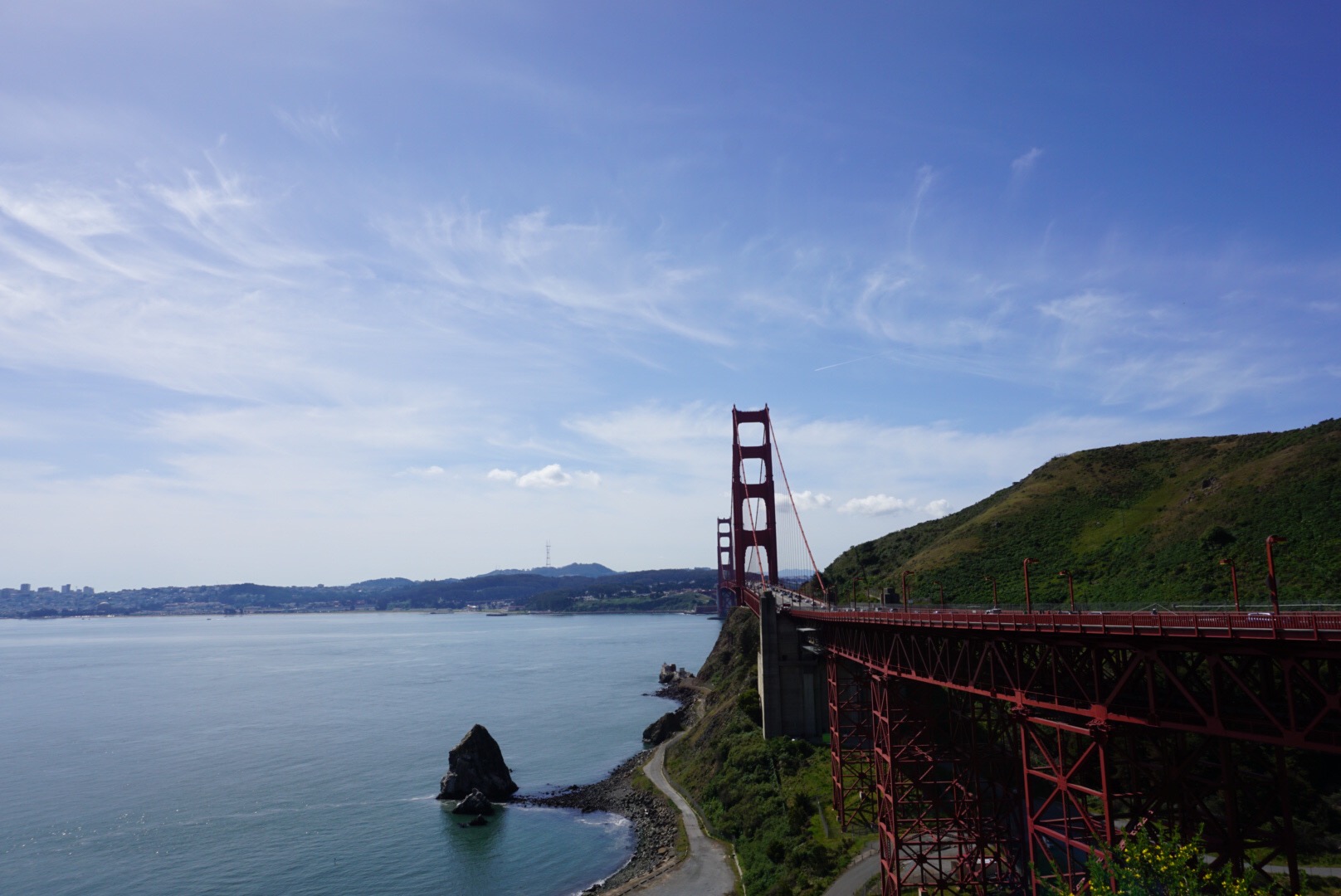
And as much as I love this place I live, getting away helps me to unwind and push work into the background. So afloat, high in the air (is that a stretch of the word afloat?), we journeyed up the coast to San Francisco. This is one of those places I have been to many times, but sometimes forget to “see” it. As we headed out of the city to a destination further north, we took the time to stop and appreciate the towering icon that is known as the Golden Gate Bridge.

IMG_5088

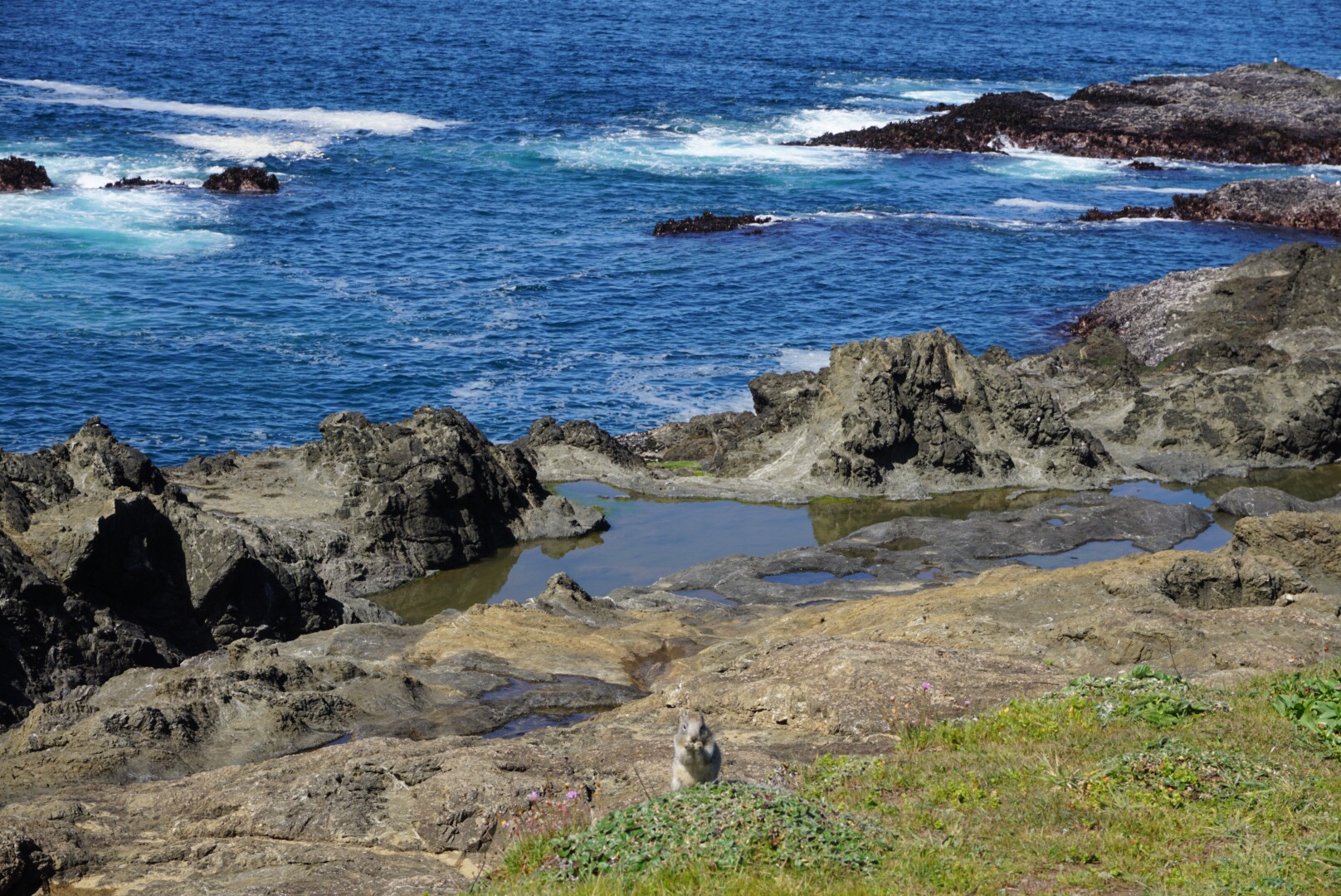
I love San Diego beaches…but northern California beaches are a different breed. These are rough and wild…and in the springtime, adorned with beautiful wildflowers. As we stood looking off the cliff near the Point Cabrillo lighthouse, we watched an osprey soar toward us with a fish gripped in his talons. We heard about the migrating whales another couple had just seen, and watched this squirrel nibble near the edge of the cliff.

IMG_5181

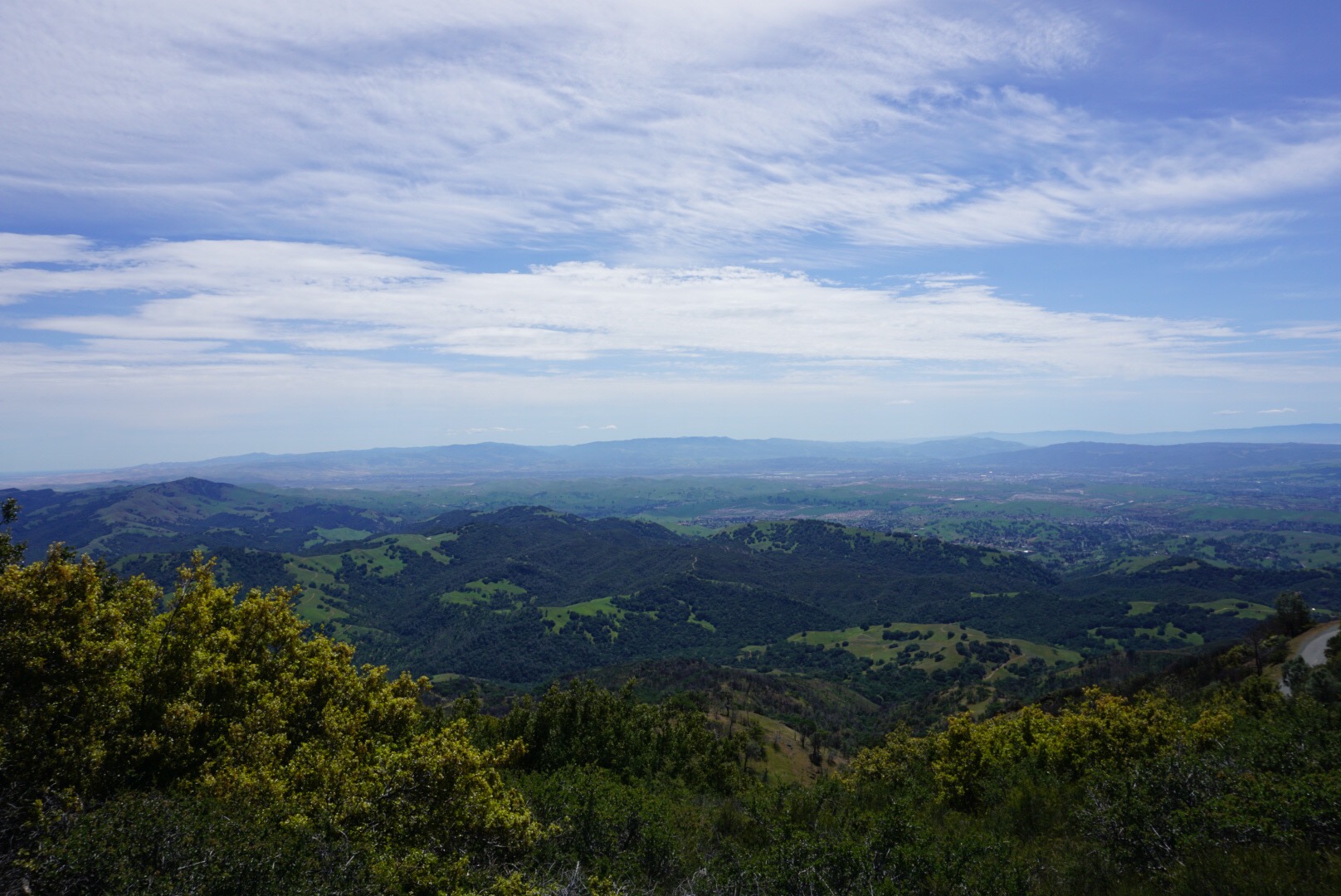
A highlight of our trip was a visit with my son and daughter-in-law. They treated us to a hike up a local mountain…Mt. Diablo. As we drove the curving mountain roads, dodging intrepid bicyclists, my son told us about this peak’s unique qualities—including unobstructed views for miles around. Our day wasn’t crystal clear, but the views were breathtaking!

IMG_5176

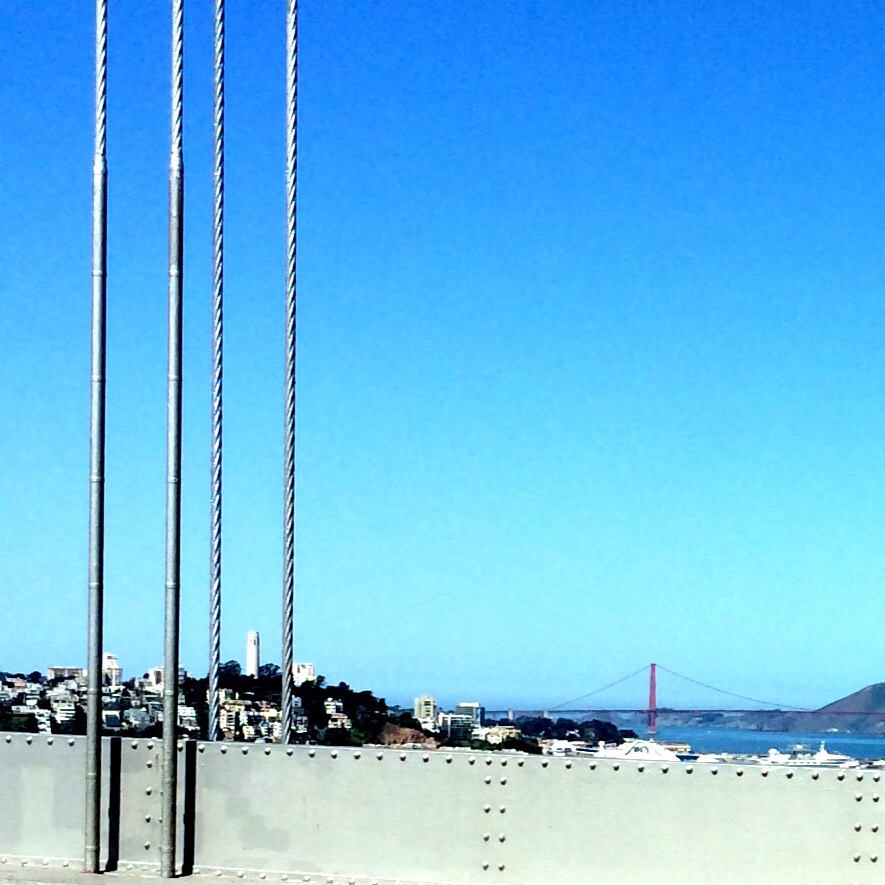
And all too quickly, our trip must end. As we drove back to the airport for our trip home, I caught another glimpse of beautiful San Francisco and its golden gate…from the Bay Bridge. And with a bit of editing on my iphone photo, you can see what my eyes noticed as we said goodbye.

IMG_5170

I’m wishing for one more day…to wash clothes, pick up some groceries, and maybe catch a nap. But alas, I will be back at work tomorrow…loving every minute and squeezing those essential chores into the creases of my day, and I think that’s where they belong anyway.

Finding Focus

Sometimes life is so busy, it seems to go by in a blur.  Images are out of focus and it’s hard to see with any clarity.  But mostly, when things get busy, I forget to take care of what matters most–my relationships with the people I love.

My one little word this year is explore.  And as the year has progressed, I have discovered that explore means more than journeying outside and exploring the world around me.  It also means exploring my interactions with others, the limits of my physical strength, and how I use my time outside of my work responsibilities.

Hiking in the mountains Saturday with my hubby offered me time and space to breathe deeply (even at 8000 feet of elevation!), spend time together away from chores and other work, and to appreciate the beauty of the natural world.

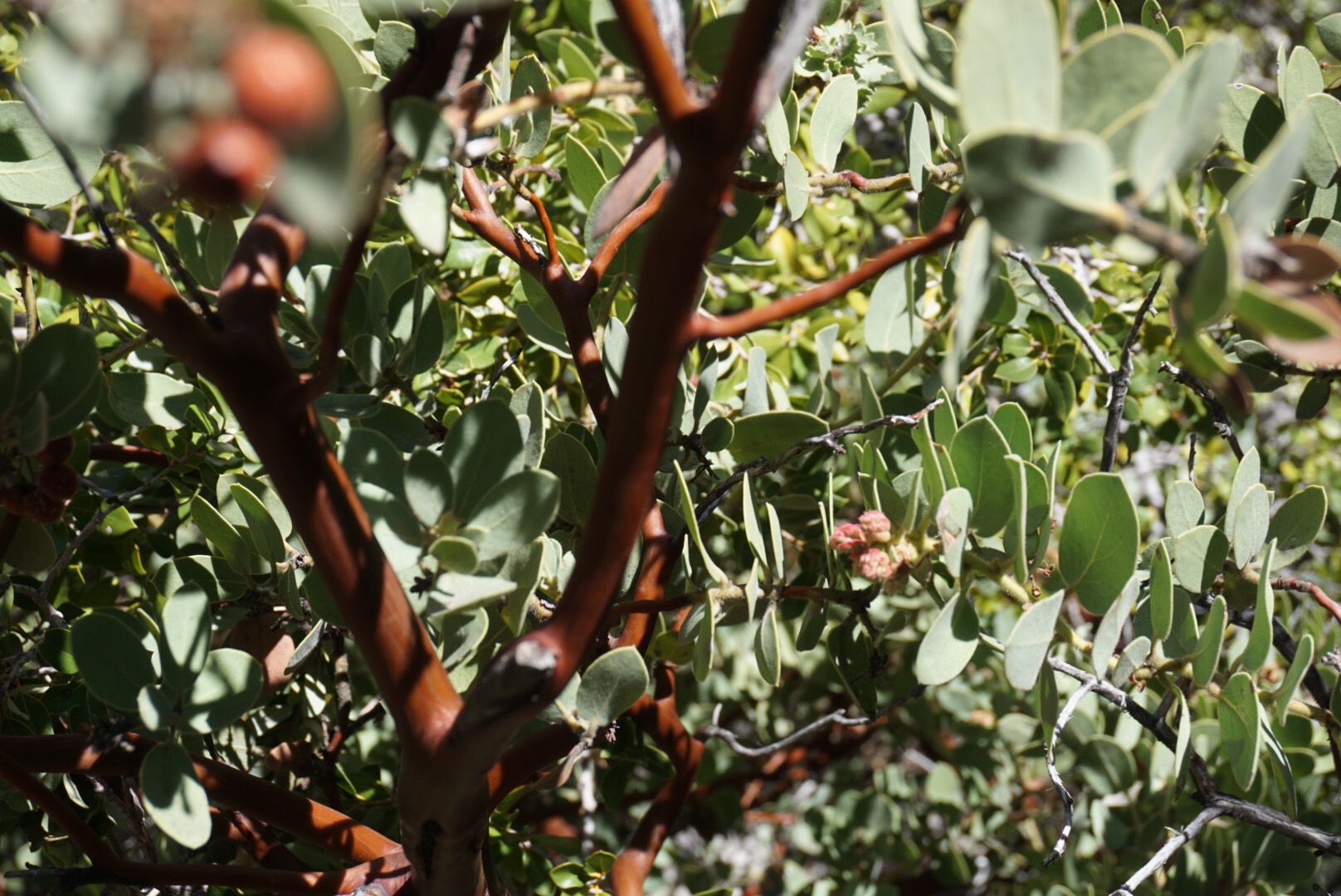
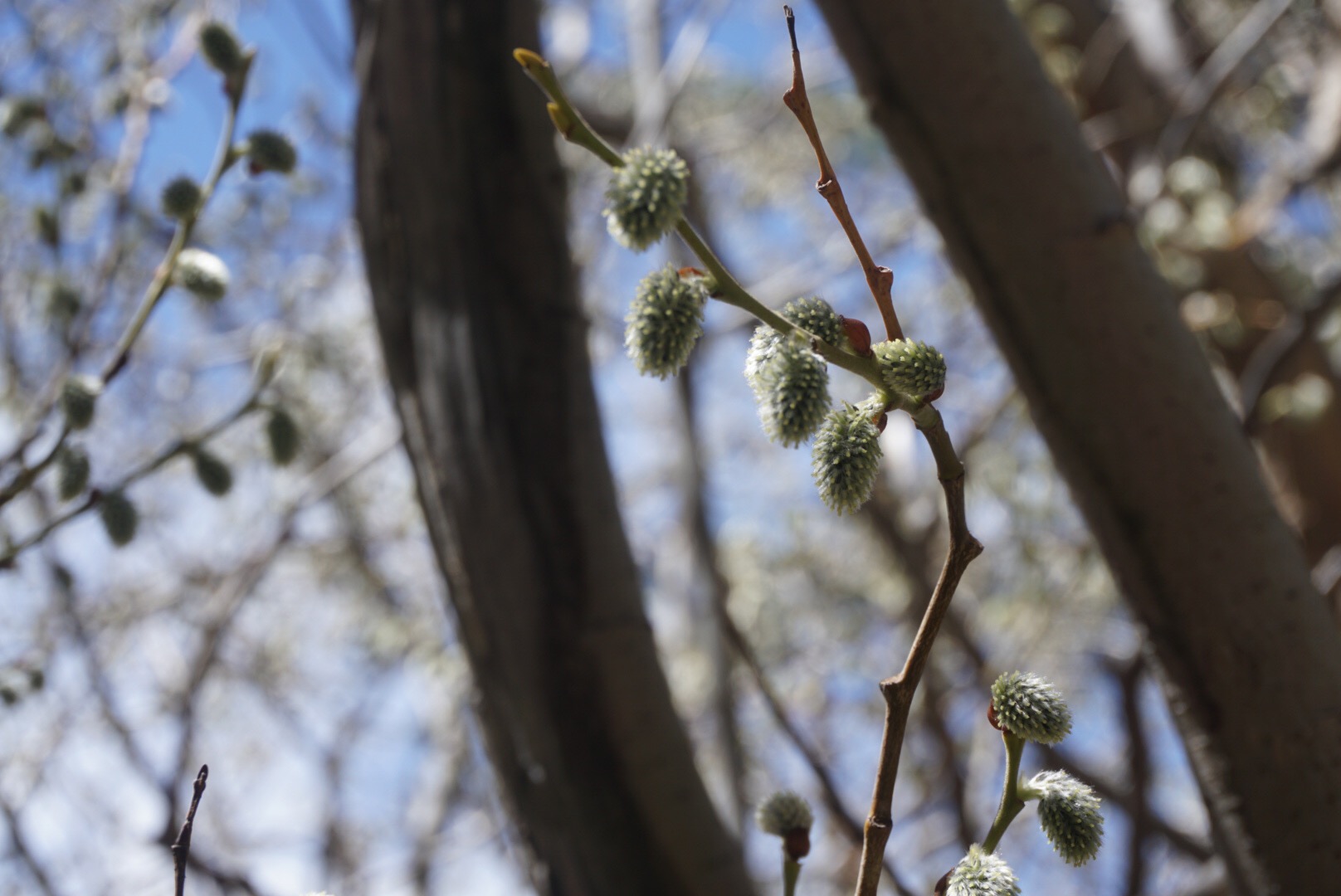
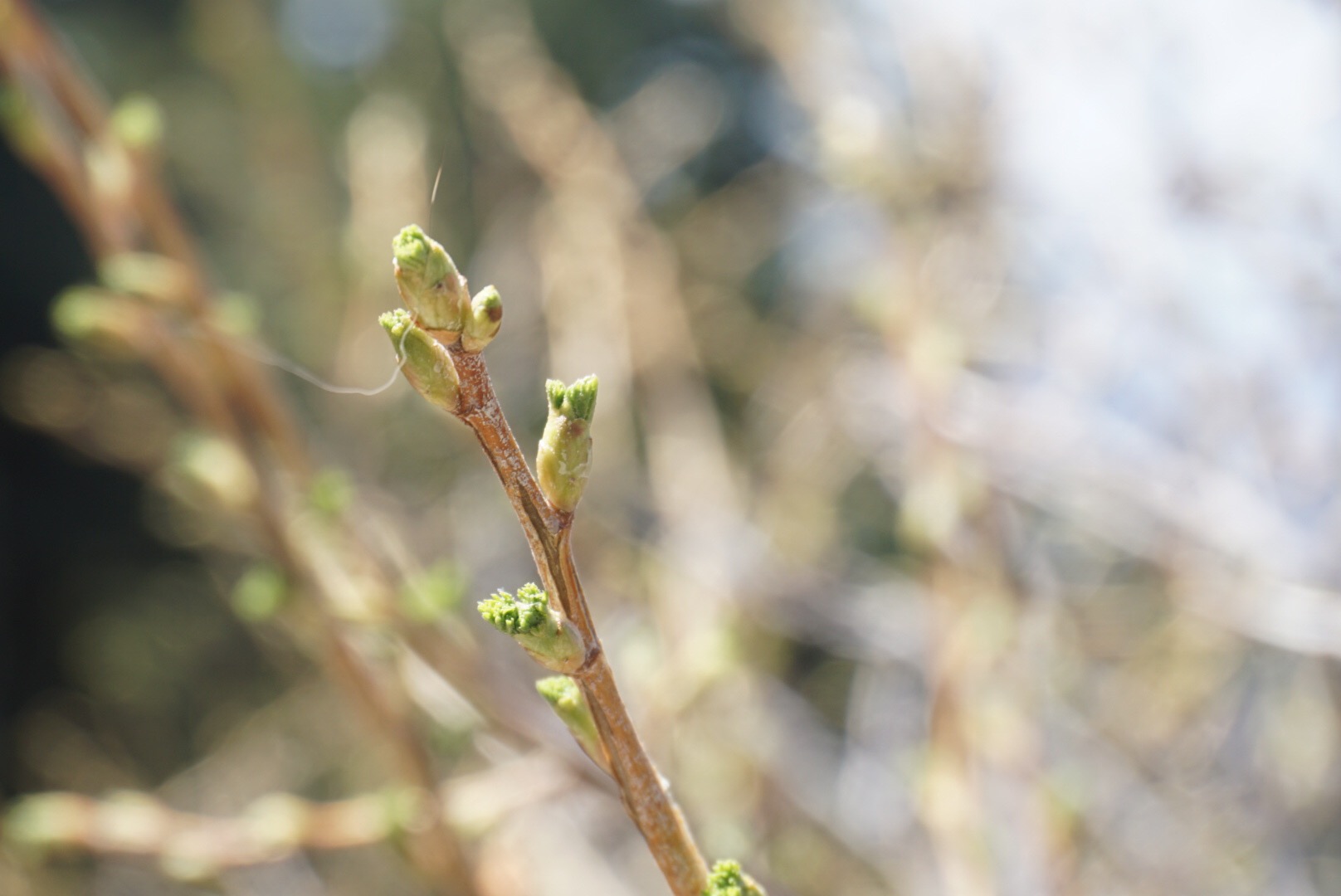
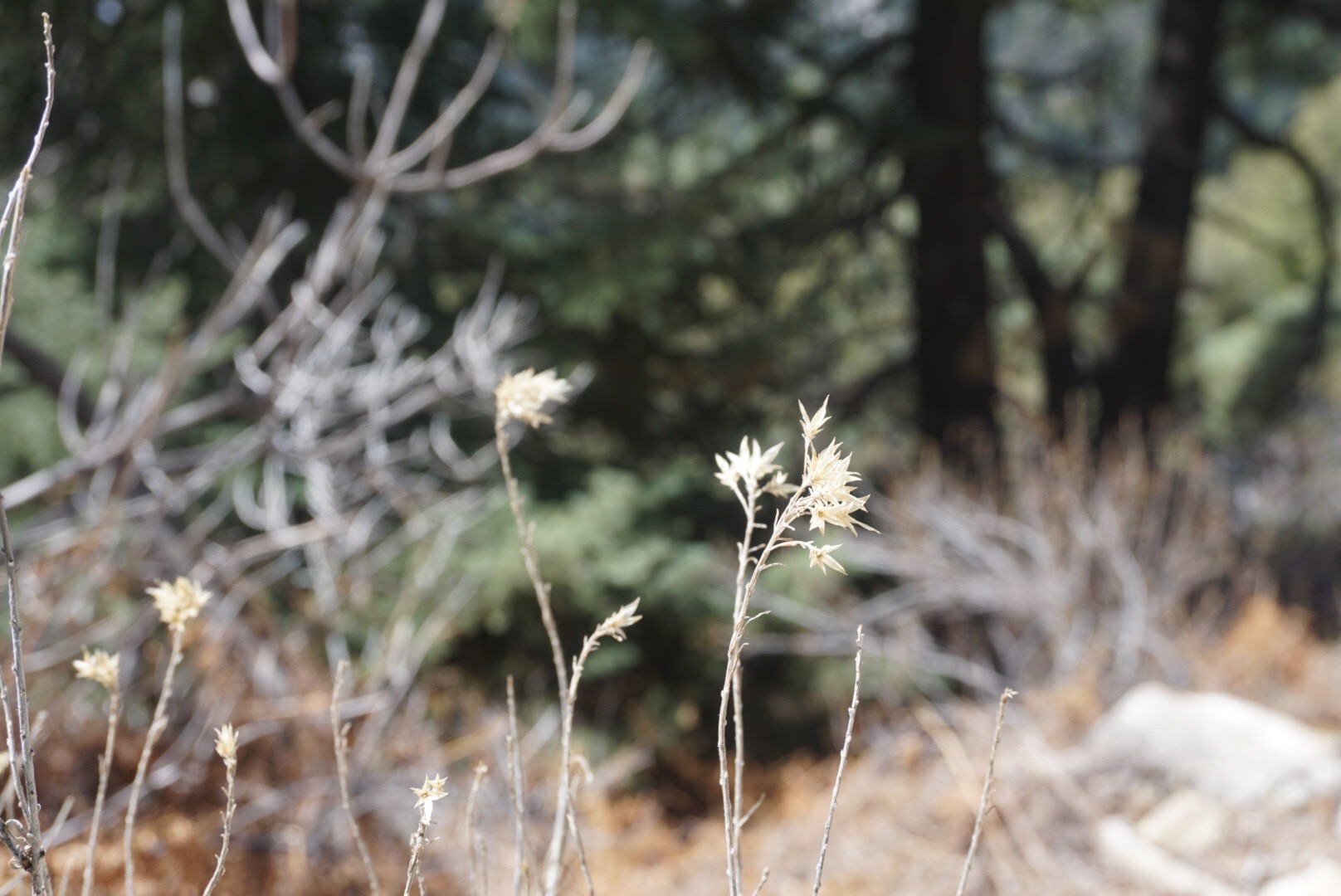
I took many pictures, but the ones I will highlight here are those that include both a sharp image and a blur–thanks to my macro lens.

The drought means that things are dry, even high in the mountains.  And while we saw a few lingering patches of snow, it’s clear that water is scarce.  But the manzanita was in bloom with its beautiful red wood and pinkish-purple blossoms.

IMG_4998

I’m not sure what these little pods are that caught my eye hanging from the tree I passed.  Small and green and fuzzy looking.

IMG_5004

This plant seemed to have found a water source…with some green buds visible.  If you look closely, you’ll notice a hair caught on the bud while the background is a blur.

IMG_5003

These dry little thistly plants look like weeds…and I love that you can see the blur of the forest behind the crispness of the dry looking plant.

IMG_5005

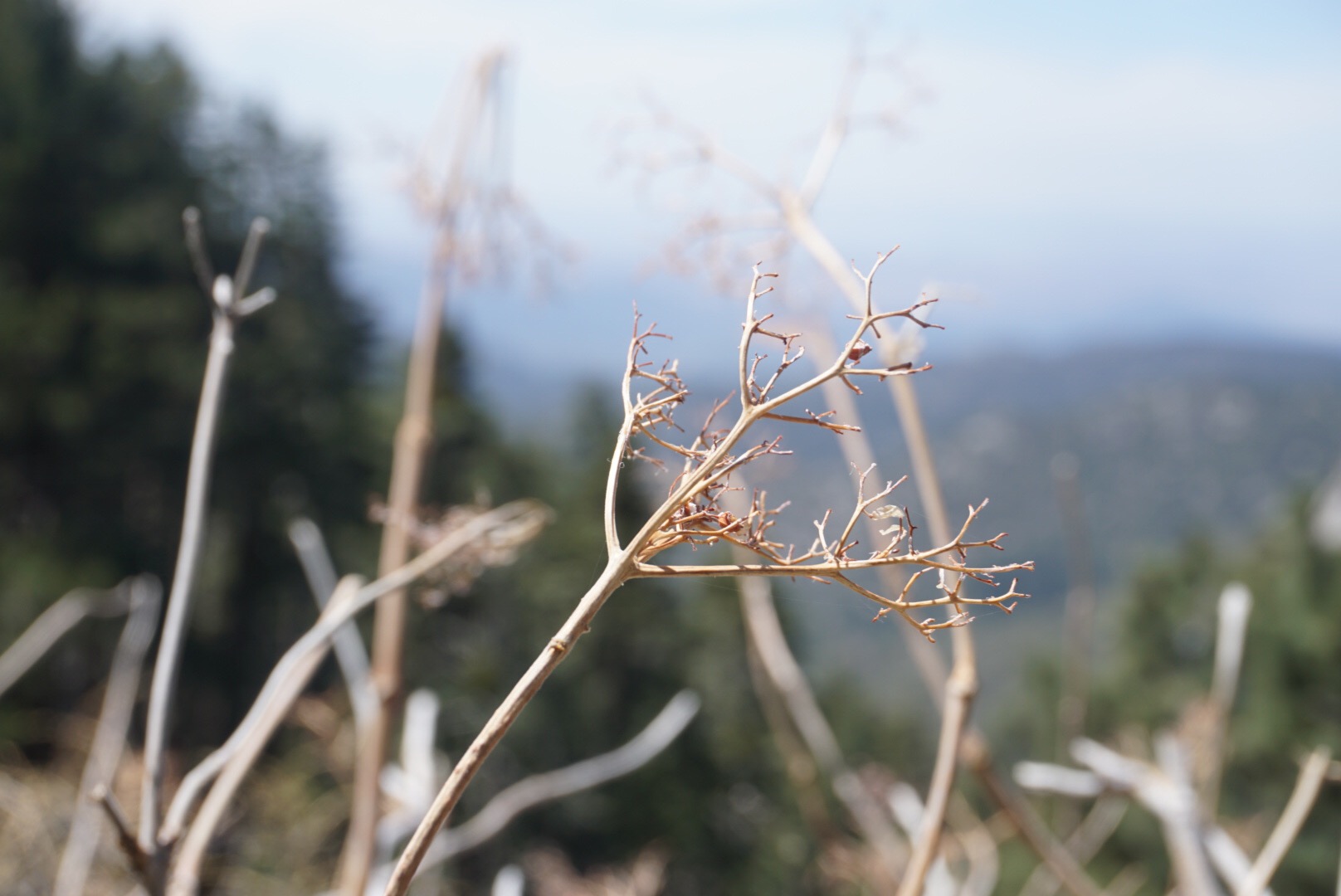
And here, the mountains are in evidence behind these dry branches.

IMG_5002

It’s easy to get lost in the blur of the hectic pace of everyday life, yet these images remind me that we can decide where to place the focus if we choose.  Life’s too short not to take time to explore…and figure out what is important.  Sometimes the blur is the perfect backdrop, the broad overview, the hustle and the bustle.  And other times we need to focus on what matters most and appreciate what is right in front of us!

Words Have Power

Words have power.  They can hurt…and they can heal.

Our students have been learning about our local history.  They’ve studied the lives of the first settlers, learned about the homestead act, and are fascinated by the stories of those who lived here before us.  And they’ve taken these stories and invented their own playground game.  They call it history.  Essentially, they role-play the lives of these early settlers–some playing the adults, others the children.  (Our school is a part of that history–one of the early schools of the area)

But at lunch recess today, it all went wrong.  Things got rough, and mean words and hurtful actions happened.  We got a heads-up from one of the playground monitors, and expected to see tears as we headed out to our students.  But things were surprisingly calm…until we started to walk back to the classroom.  As the story unfolded, we got a glimpse at both our students’ creativity and imagination…and the escalation of energy, excitement, with some poor choices sprinkled on top of it all.  It became clear that this was not a scuffle between two students, it was a result of good intention, poor choices, swelling anger, and overreaction.

So instead of the plan we had in mind for the afternoon, we decided to address this incident with the entire class…to help our classroom community grow and hopefully give students more tools to use to resolve their own problems.

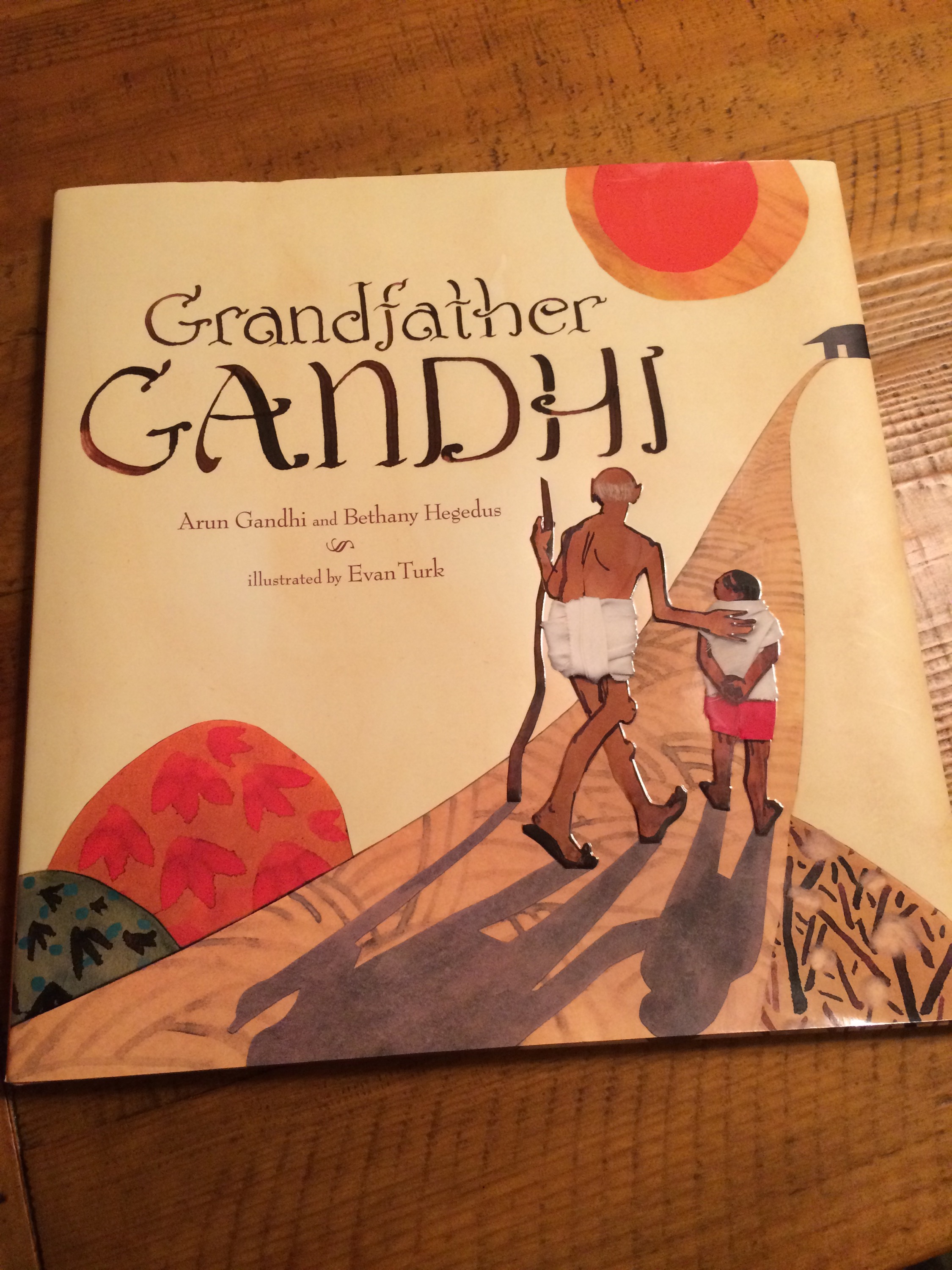
After talking through the pain and frustration and hearing a variety of perspectives, my teaching partner Margit pulled out a book she had bought a few weeks ago…one we were saving for a time when it seemed useful…and she began to read.  Grandfather Gandhi by Arun Gandhi and Bethany Hegedus tells the story of Gandhi’s grandson and his feelings of anger…and of not living up to his grandfather’s reputation and expectations.  The ultimate message is that anger is a normal emotion that we all experience–it’s how we deal with it that matters.  Gandhi explains to his grandson that anger is like electricity.  It can split a living tree in two.  Or, he explains, it can be channeled and transformed.  A switch can be flipped and it can shed light like a lamp.  We can all work to use our anger instead of letting anger use us.

IMG_4977

We talked about the difference between being a bystander–one who stands by and sees things escalating and chooses to do nothing.  Or we can be upstanders, people who make a positive difference and think about how they can help.  People who notice when things are escalating and make an effort to change the dynamic.  For our young students, that might mean summoning an adult or using kind, calm language to help their classmates remember to pay attention to the choices they are making.

Our students took some time to breathe out the pain of the negative lunch interaction and breathe in some warm light…and turned to a partner to talk about what they learned from Arun Gandhi’s story of his grandfather.  One student asked me, before heading out for afternoon recess, if they could still play the history game or if it was now off limits.  I responded by reminding that the game itself wasn’t bad…and that I believed they could play the game as long as they remembered what had gone wrong before, and made different choices.

Our students are wonderful.  They are inquisitive, imaginative, and caring.  And they are kids. They get excited, wound up…and sometimes they make choices that get them into trouble. The words we use as adults are powerful too.  We can use them to punish or we can use them teach.

As we sent our students off for spring break today, I could feel the caring and the healing in our community.  We all learned today.  Words hurt…and words healed…and we all learned.

A Day on the Hill

Representative government, a staple of our democracy, is something we often learn about in school…and yet seldom engage in beyond voting.  But for the last several years, through my interactions with the National Writing Project, I have had the opportunity to push myself to delve more deeply into the governing process as I visit the congressional representatives of our region to advocate for our organization by heading to Capitol Hill in Washington DC.  This means making appointments with our congress people, meeting with them to talk about the work we do locally, and often making a request that they sign onto a Dear Colleague letter or support a particular piece of legislation coming up for a vote.

And for the last few years, my friend and San Diego Area Writing Project colleague, Abby Robles, has been coming with me, setting up appointments, and helping to build relationships with the representatives and their staffs.

There’s something larger than life about this city.  Monuments loom large, bringing the history of our country into focus.  The streets teem with people…and when you are on Capitol Hill, most are in dark suits rushing here and there.  Armed sentries stand at attention and the entryway to all governmental buildings require passage through metal detectors.

Like hives, the houses of representatives buzz with groups of people in conversation.  Tiny elevators carry people from floor to floor of massive marble hallways, old fashioned clocks beep and wink indicating voting in progress.  Impossibly young interns man the phones, handle queries, and usher people in and out for appointments.  Each office is decorated with artifacts of “home,” the place the congressperson represents.

Last year Abby decided to make a movie about her trip to DC to show her students.  So we talked through her plan, scoped out potential shots, and considered how we could use our time in at the Capitol to tell a story.  With Abby as the star, I was pressed into service as cinematographer, filming pieces of our visit that she would stitch together into the movie.  It was great fun…and the movie was quite a hit!

And so this morning, Abby was eager to make a new movie for her students and we began talking as we walked to the Capitol for our meeting.  A conversation we have had before is about the word capitol with an “o” and how it is different from the word capital with an “a.”  This led us to the discussion of the multiple meanings of words…and what ultimately became the inspiration for the story Abby would create for her students.

I was studying carefully today, taking in Abby’s process as we thought about the different movie scenes and planned the shots.  I have tiptoed into some movie making…but have only used photos…no video at this point.  (Here is a movie I made a year ago) We had lots of fun with word play as we considered the many possibilities for words that had meaning in this place where our government lives. And as we shot each scene, we were thinking about what would come next…knowing that we would ask our representative, Scott Peters, to play a role in the video.  And what a great sport he was, not only agreeing to play along, but also adding his own twist to the plot, creating complexity and authenticity.

Making the movie kept our day lively, as each place we went became fodder for our thinking about multiple meaning words.  And by including the congressman in the movie, our conversation with him became more genuine.  We laughed, shared stories about our work and his, and engaged his staff in our video vision.  The making made us curious…about words, about this place, about angles and light and sound.  And it felt good to find a suitable end piece…and a crazy coda with Abby dancing on the steps of the Supreme Court.

Abby pieced the movie together…some during our lunch in the House of Representatives cafeteria…and the rest in the hotel bar as people came together to share the results of their day on the hill.  And here it is!  A lovely movie that reflects Abby’s thinking and her hard work…and I can’t wait to share it with my students too!

I think I’m ready to try a movie of my own.  I don’t think I will be starring in it…I don’t see myself as quite the actress that Abby is.  But I’m ready to try my hand at thinking through scenes, planning shots, and creating a story through the process.  Wish me luck!

Fresh Eyes

I live in a place where there are plenty of beautiful and interesting things to see…and I work to see my place anew each day.  But it’s hard sometimes.  And sometimes I end up seeing the same things I always see.

And I think that happens for students too.  The classroom becomes familiar and learning looks like the same old thing.  That’s where field trips come in…they offer opportunities for students to see learning through fresh eyes, in a different context, in a different place.

I was definitely feeling the need for some fresh eyes today.  After working for eight straight Saturdays, today was rare free one and we made plans for a “field trip” to the desert.  We’re lucky here in San Diego, we have coast–beautiful beaches–near where I live and not even two hours to the east, we have the desert.  So today, we headed to the desert to see what spring had to offer.

We were hoping for a riotous spring bloom knowing that we’ve had a bit of rain since the new year.  But once we arrived, we learned that spring had sprung…in February!  Luckily, there were still beautiful desert flowers in evidence–maybe not a riotous display, but definitely worth the trip.

IMG_4828

Our first glimpse of the desert this morning came from above.  As we looked over the valley below, we noticed the quiet.  I caught this moment of my husband drinking in the silence.

IMG_4826

The desert is already warm this time of year, so we set out early for a hike, knowing it would likely be near 90 degrees by the time we got back to our car.  We watched for desert flowers, for snakes (especially rattlesnakes), for big horned sheep, and birds and bugs too.  And we weren’t disappointed.

IMG_4838

The cholla cactus (the first photo), was pretty plentiful and many were blooming.  The prickly pear was less obvious, and many were not blooming.  I felt lucky to catch this one right near the end of our hike!

Lizards skittered across our path, sunned themselves on rocks, and raced into cracks in the rocks.  Butterflies, moths, and bees were drawn to the plentiful yellow flowers.  I noticed this caterpillar hanging from a slender stalk.  (Love that caterpillars will pose!)

IMG_4835

The snake we saw was slithering in the spaces between rocks…and luckily we only caught a glimpse…and it didn’t appear to be a rattler.  We didn’t linger–no sense tempting fate when it comes to snakes!  But we did catch sight of some big horn sheep.  There was quite a group–12, I think–coming down to a stream near the oasis we hiked to.  Here are a few we watched from some rocks above.

IMG_4842

Their coloring is amazing–making them nearly invisible in the rocky locale.  We saw babies as well as adults…you can see them stopping to check out whether to bolt back up the hillside!

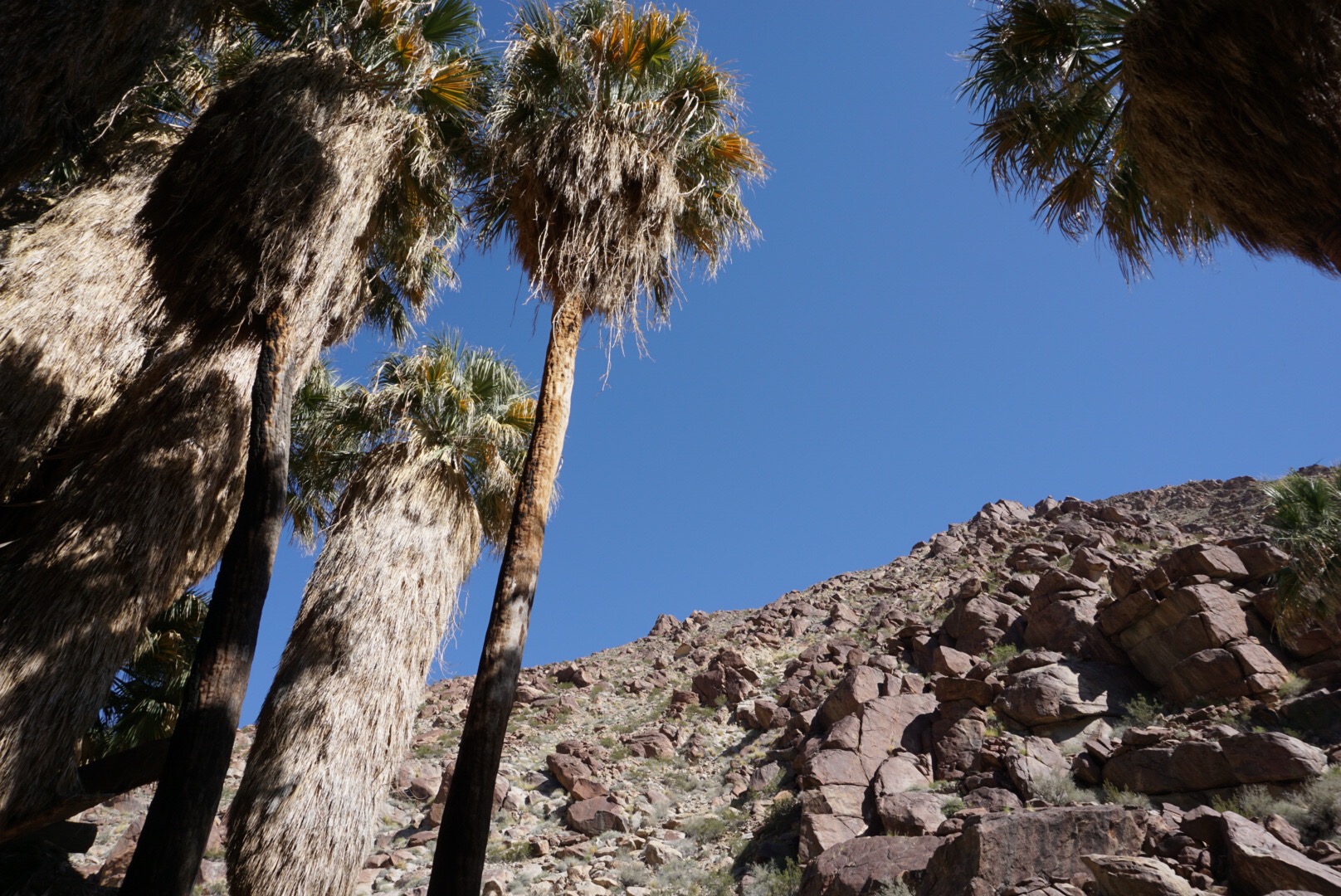
It was surprising to see a waterfall deep in the desert.  We could hear the running water before we saw it.  And the California fan palm, the only palm tree native to California, completed that iconic image of oasis.  Shade, water…and a nice place to rest before heading back into the hot sun to finish our hike.

IMG_4831

IMG_4840

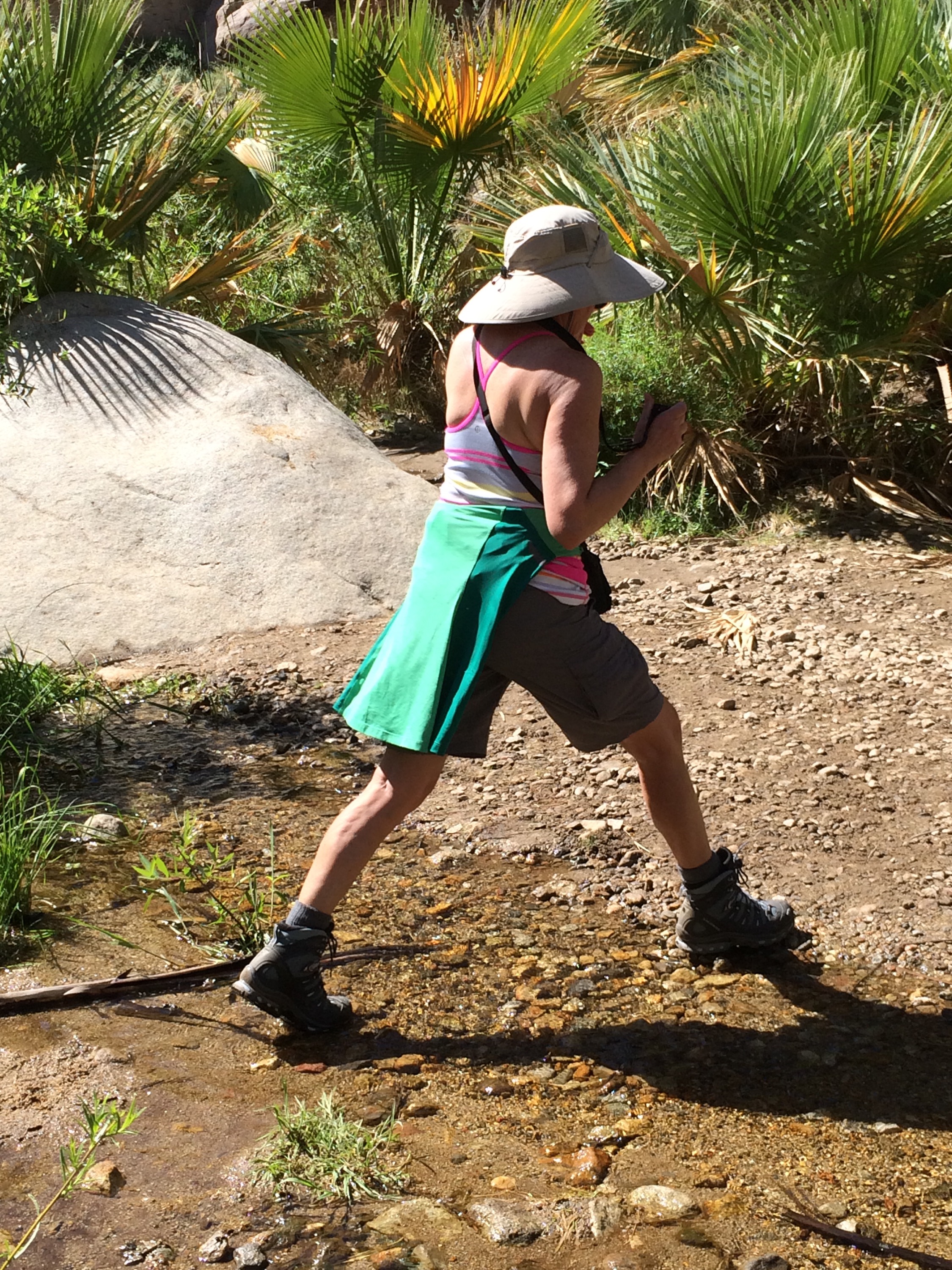
My husband snapped this shot of me traversing a shallow portion of the small stream!

I feel like I got to view spring through fresh eyes today.  I was looking closely and responding to novelty.  I snapped photos and then when I returned home, looked up information about some of what I saw.  I had to try and retry framing my shots, not sure how to capture the tall ocotillo reaching up toward the hot desert sun with the desert cliffs as backdrop.

IMG_4834Today’s field trip was just what I needed…a chance to see the world with fresh eyes, to go beyond the familiar and rekindle my interest in learning about this place I call home.


Architecture: The Structure of Learning

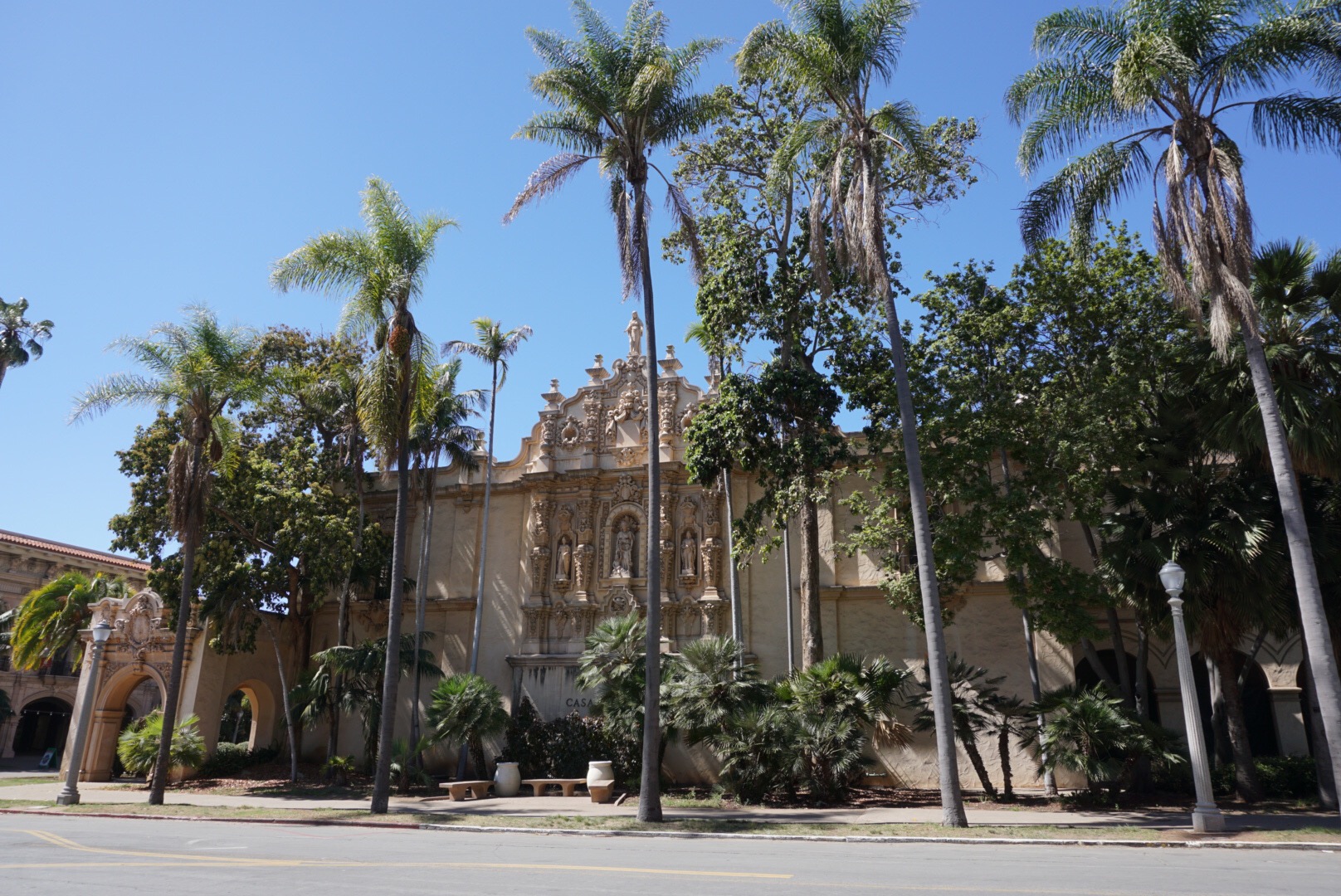
We have a beautiful urban park here in San Diego.  Open space, trees, a lily pond, fountains, trails, museums and restaurants…including some ornate and historic architecture that dates back to the Panama-California exhibition in 1915.  In these storied surroundings, I’ve been spending time with a group of formal and informal educators investigating ways to improve school field trips through a project we call Intersections.  (I’ve written before about it here and here.)

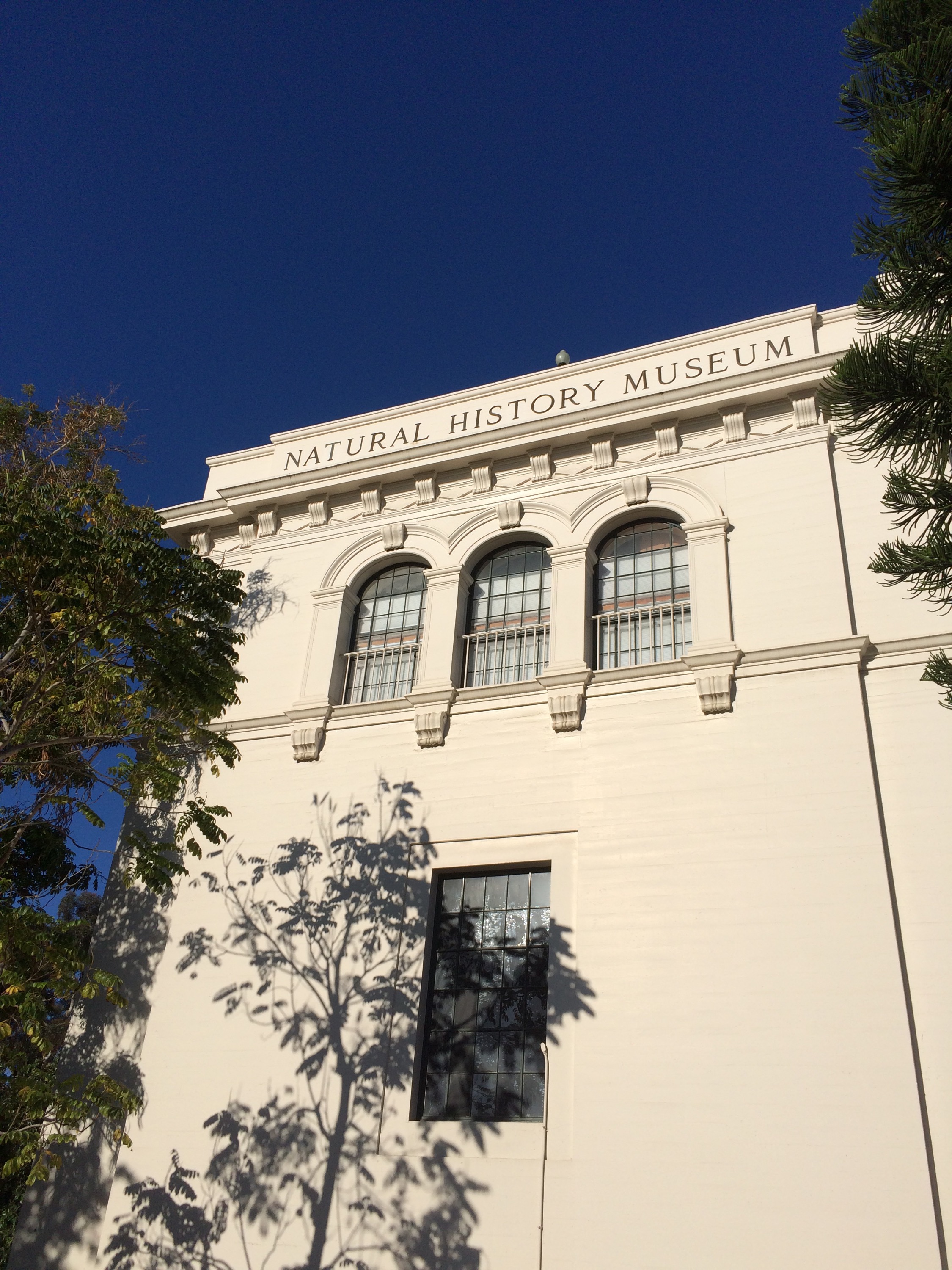
As I spent the day at the San Diego Natural History Museum today, observing a group of high school students on a field trip, I found myself thinking about architecture.

IMG_4641

As the educator-researchers in our group discussed what we observed watching students during their field trip today, our conversation moved to the carefully planned structures that support students’ independence and dispositions toward learning.  Field trips have traditionally depended on adult-centered structures that keep students “on-task,” ensuring that the trip has documented educational value in the form of completed packets of answered questions rather than trusting students to be interested in what they find in front of them.

Over lunch, our Intersections leadership team chatted with an external evaluator–a part of our larger National Science Foundation grant– about our observations and tentative conclusions. And we found ourselves thinking about and talking about all the learning that happens that we are not able to document.  When we take students outside the classroom, what are we hoping for?  What can they learn that the classroom environment doesn’t offer?  And why then, do we keep trying to make field trips more like school?

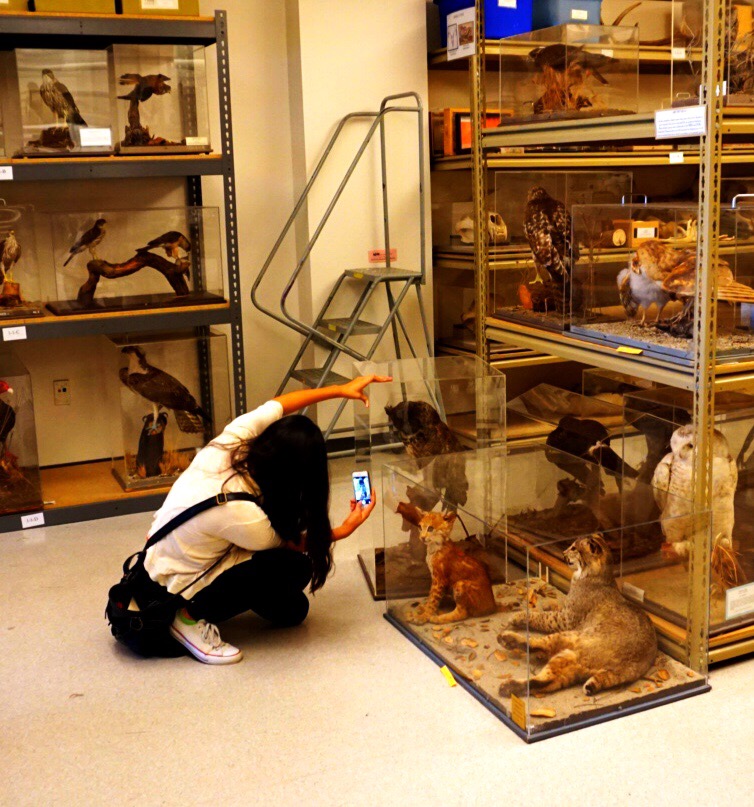
As I look at this photo of a young woman using her cell phone to photograph an owl, I wonder how we encourage students to use tools and processes they use outside of school to support their own learning.  How will this student use this photograph?  What was she aiming for as she composed the image?  How can students’ digital lives interact in positive ways with their school lives?

IMG_4653

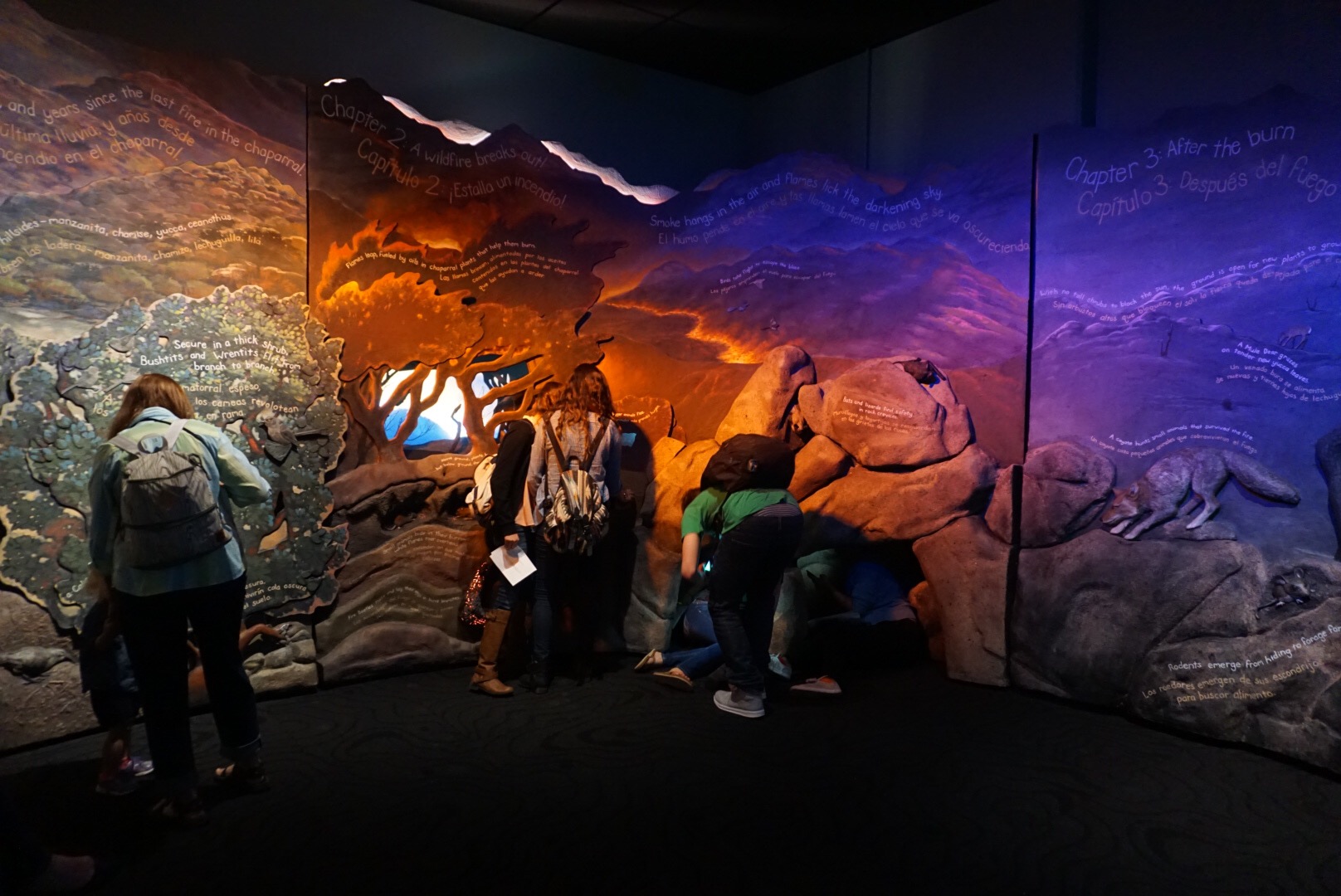
And as my colleague described her understanding of the development of social capacity, a concept important in her binational work, my understanding of the learning that happens on field trips continued to evolve.  A field trip is not a classroom lesson, it is a social event, a shared learning experience outside the school environment.  And while students certainly learn some content, they are also developing social capacity–as representatives of their school and class in a public arena.  They are navigating unfamiliar spaces, coming in contact with people they don’t usually see, interacting with adults–docents, volunteers, vendors, scientists, researchers–and exploring materials not present in their classrooms and schools.

IMG_4648

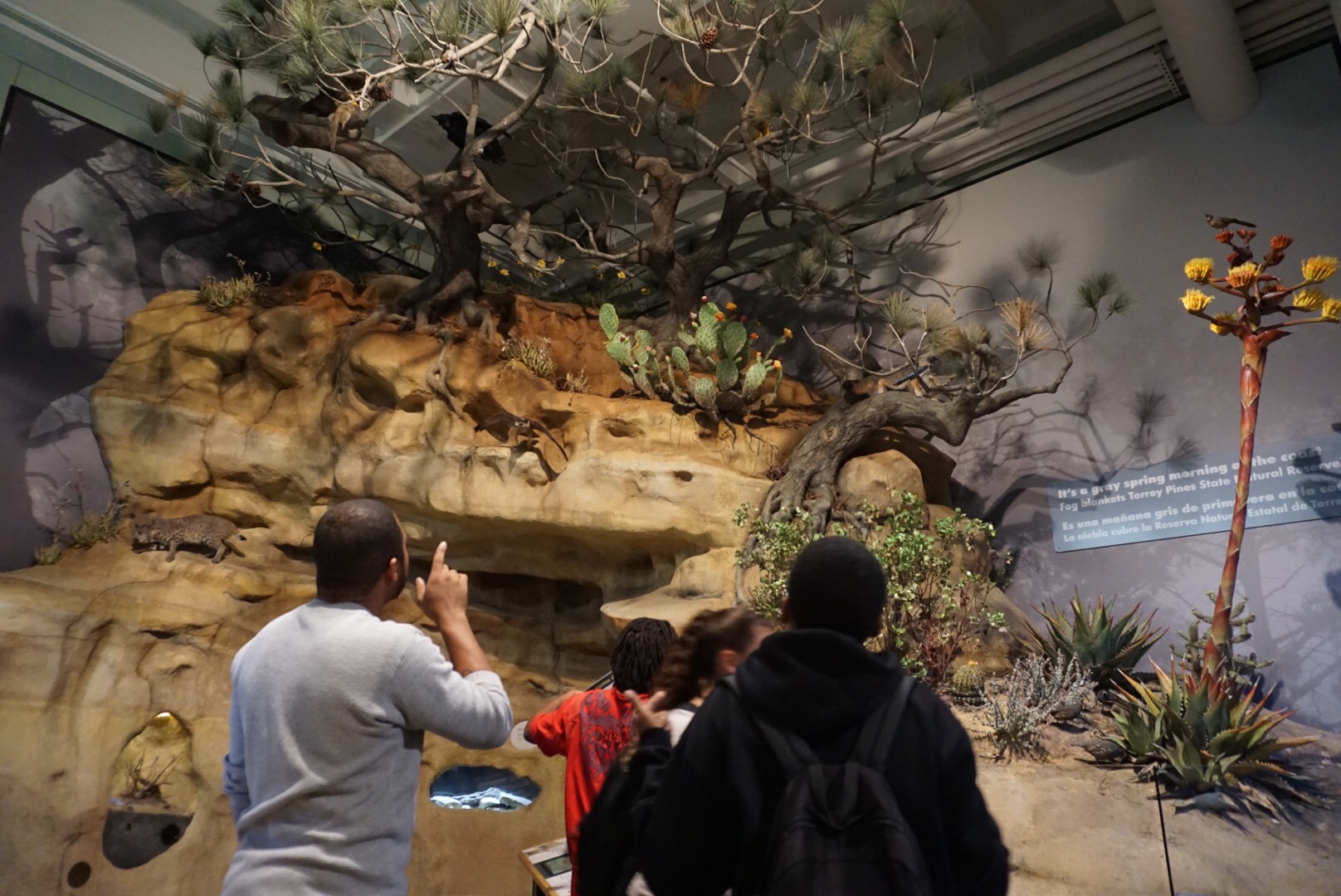
And in the best of situations they are figuring out how to interact with the space, people, and information in meaningful ways.  I loved this informal game I observed today…a chaperone and his group spontaneously started counting the animals they spied in this coastal sage environment.  Someone saw 9…and another saw 12, someone else saw 15.  They started pointing them out to each other, looking closely, naming what they saw.

IMG_4647

And another researcher watched a pair of students challenge each other on the native/nonnative quiz in the patio area.  The goal was to win…and the game was calling on prior knowledge and combining it with what they were observing in the exhibit.  And they were having fun…being social, laughing, enjoying themselves…and learning.

So what is the underlying architecture of a successful field trip…that structure that enables students to engage in learning on their own terms?  That takes advantage of the place and the richness of expertise and artifacts that aren’t present in the classroom?  And that honors the beauty and elegance of learning…not for a grade or a test, but because we are inspired and motivated to learn because we are learners–driven to make sense of our world, on our own terms.

IMG_4652


March Madness

It’s that time of the year…

No, I’m not talking college basketball, brackets, and the sweet sixteen.

It’s report card time, and I can feel the March madness starting to seep in.  That insidious doubt that narrows my vision and makes me doubt what I know to be true.

If I weren’t writing report cards right now and you asked me to describe student learning in my classroom in one word, I would say blossoming.

Our students are blossoming.  They are reading and writing eagerly.  There’s a sense of confidence and fluency among this group of 6, 7, 8, and 9 year olds that defies grade level benchmarks.  Last week when students learned about how reasoning could make their evidence more compelling in a piece they were writing about this special place where they live, they were undaunted and dug in to add reasoning to their evidence, carefully explaining just why the beach makes this place special and why having a family owned donut shop matters to them.  A line like this one makes my heart sing… A second grader describing an iconic statue in our community that makes the community a special place to live wrote:  We also have a Cardiff Kook that loves to get dressed up.  I think everyday is Halloween for him.  And I want to shout from the rooftops when I read an ending like this one a third grader used to close the essay: So where were we again in the beginning? Oh yes, the beach.  Now the sunset kisses the dusk with oranges, yellows, reds, pinks, purples, and blues too beautiful to explain, and as you see the last foamy white whale spout on the horizon, there’s no doubt Encinitas is a very special place.  

Of course they weren’t written on demand in an decontextualized setting.  They are the result of rich discussion and leveraging of background knowledge, a writing community where revision is ongoing and expected, instruction that encouraged students to go back and add reasoning to their claims and evidence, and a space filled with mentor texts that highlight and celebrate beautiful language.  These complex sentences mean that the punctuation isn’t perfect…and the vocabulary students use push them to depend on phonics to express the words they don’t yet know how to spell, but honestly, I wouldn’t have it any other way.

But I know the first thing people see when they look at student writing is the mechanics…and that sometimes it can stop them from even noticing the beauty of the language and composition.

And then there’s math.  All year we have worked to develop a strong sense of number and the ability to solve real life (or as close as you can get in a classroom) mathematical problems.  So why did we hand our students traditional equations to solve?  March madness is my best excuse.  Luckily I took the time to look closely and notice that every one of our third graders competently solved a problem that featured Alexander Calder and his wire circus–and required both multiplication and division to solve.  And the majority of them solved three different versions of the problem that varied the level of difficulty!  (Thank goodness we decided to add that problem to our assessment to represent the kind of problem solving we have worked on all year!)

And most people don’t even ask about students’ programming skills, design abilities, persistence and resilience, empathy…or even their dispositions as budding scientists.  (You can read a bit about that here and here)

So, as I write report cards I’m trying to remind myself to breathe…and focus on the blossoming, pushing against the March madness.  Are all our students right where we want them to be?  No. Is there still room for growth?  Of course!  Can I improve my instruction to better support student learning?  Yes–and I’m working on that every day.

But, our students are blossoming.  And I want to make sure that the way I communicate progress helps their families and other educators see all that they can do, all the ways they have grown as learners…and help our students recognize that growth can be measured and documented in lots of ways.  And also know where they need to continue to work and grow…because learning continues for a lifetime.

I understand the importance of accountability and communication in our educational system.  I want to make sure that students are making progress and not slipping through the cracks.  But I also want to honor hard-earned growth and pay attention to the attitudes and processes that aren’t measured by standardized tests or traditionally reported on through report cards and assessments.

I’ll keep pushing against the March madness…and once the report cards are done, maybe I’ll watch a bit of basketball…


Learning in the Intersections

You all probably remember them, those iconic experiences of heading out on a school day with your classmates and teacher to a local museum or art gallery to extend and enhance what was going on the in classroom…a field trip!  And in the best of times, those field trips are memorable, often motivating learning beyond the school curriculum.  Maybe one of those experiences even fueled your passion for a particular field of study.

But often, field trips are fraught with conflict.  Are you heading out of the classroom to “do school” somewhere else?  Is it a free day of fun with friends where the learning is incidental and accidental…if it happens at all?  What role do teachers and museum personnel play in the field trip experience? What about chaperones?  And what about students and their interests and passions?

Through Intersectionsa project funded by the National Science Foundation through the National Writing Project and the Association of Science and Technology Centersthe San Diego Area Writing Project, in partnership with the San Diego Natural History Museum and the Reuben H. Fleet Science Center,has been exploring the conflicts and tensions surrounding field trips.

In our second year of investigating how to support student learning in the context of a field trip, we have learned a lot.  Most significantly, we’ve learned the power of the interaction and co-learning of formal educators (those who work in school settings) and informal educators (those who work in out-of-school spaces like museums).  We discovered that our goals for student learning are mostly the same, and through our interactions, we have reconsidered how we might achieve those goals.  But first we had to let go of all that we have no control over–including exhibit layout and signage, field trip costs and transportation, and the uneven qualifications of chaperones, especially when it comes to facilitating student learning.

We’ve decided this year to focus on ways to support students as agents of their own learning, depending less on the adults who accompany them and trusting that a rich museum experience will result in meaningful learning–even when students do not complete worksheets that ensure they have learned specific facts or answered a series of questions delineated by grade level standards.

So we have asked teachers to prepare students for their trip by asking them to explore the exhibit, noting what interests them, and taking back interesting tidbits and lingering questions for further investigation through the creation of some kind of project back in the classroom following the trip.  And to better understand how this works in action–with a variety of grade levels and school contexts–we are observing students in action through a series of field trip pilots.

Today we observed sixth graders in action.  They came with a charge–to notice adaptations of plants and animals evident in the Coast to Cactus exhibit so they could create a project displaying their learning back at school next week.
IMG_4435

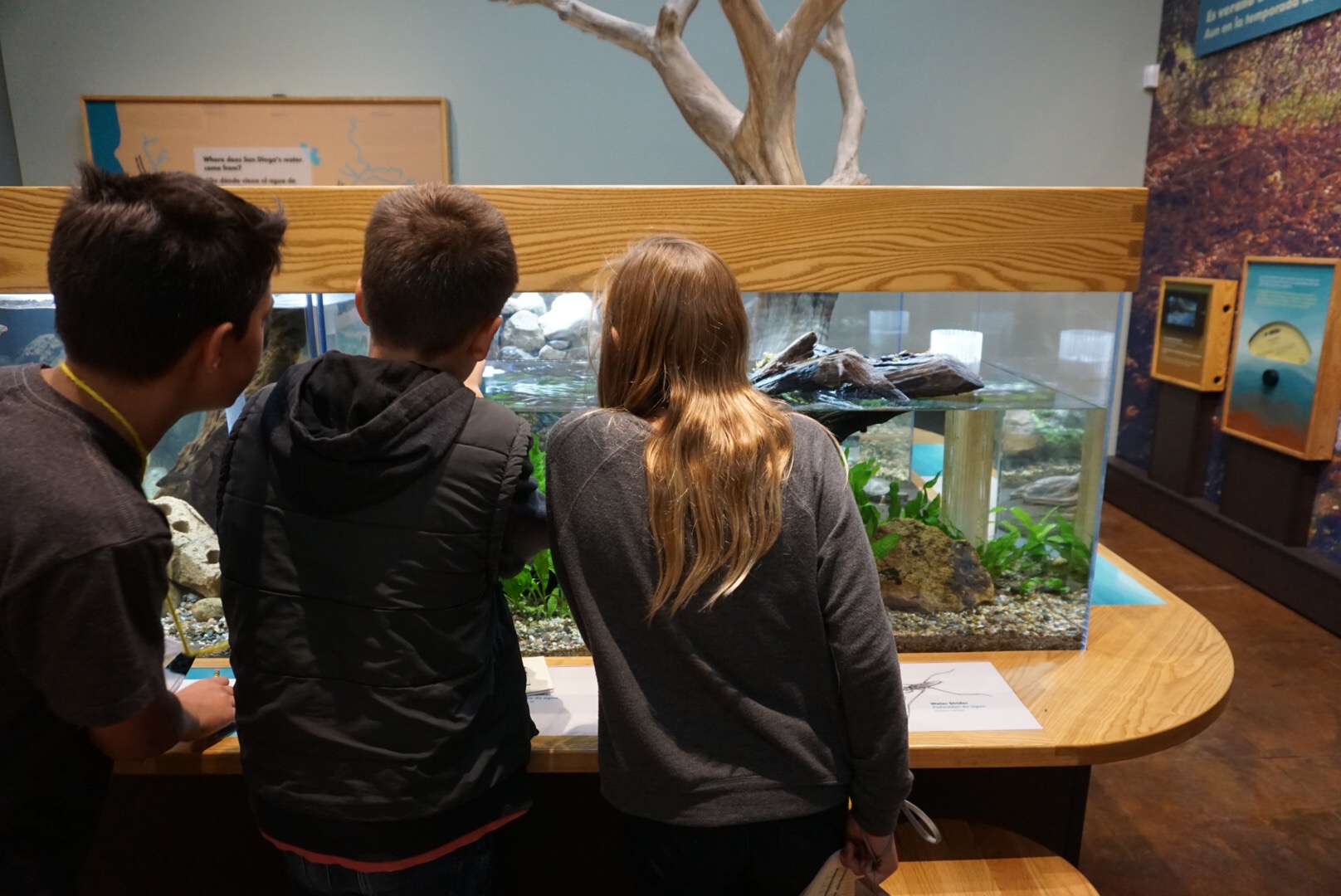
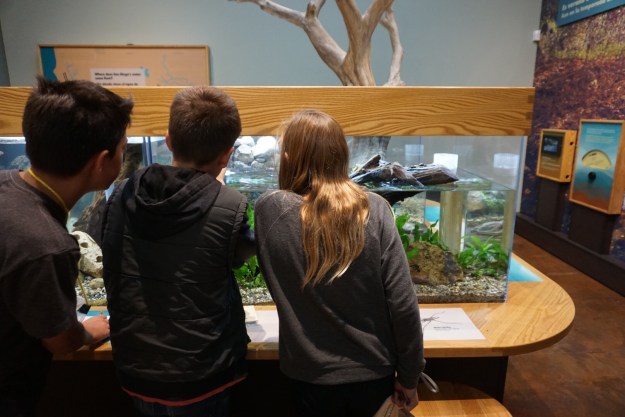
We watched students looking closely, in conversation with each other as they observed live animals in the exhibit.
IMG_4433

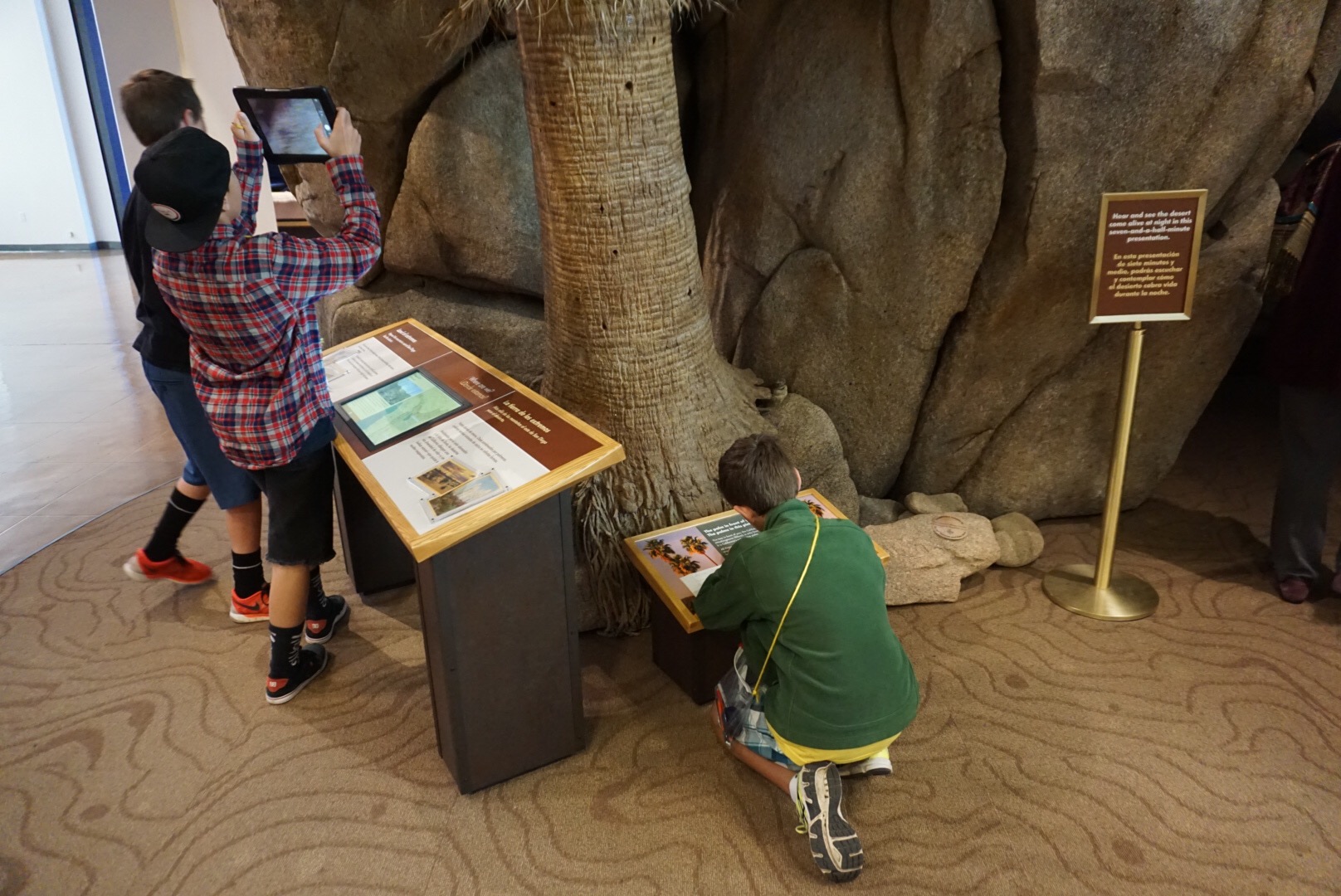
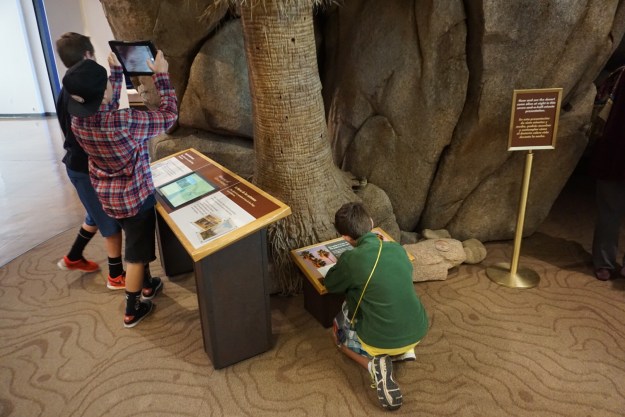
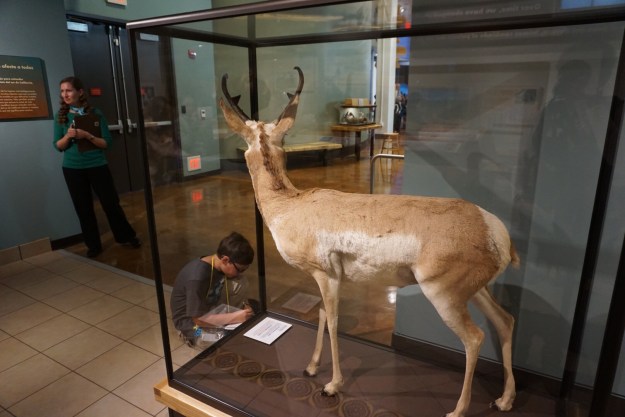
Students working alone, taking notes from the exhibit signage.  And others in pairs and triads, some taking photos, others sketching, and some simply flipping buttons and spinning dials.
IMG_4434

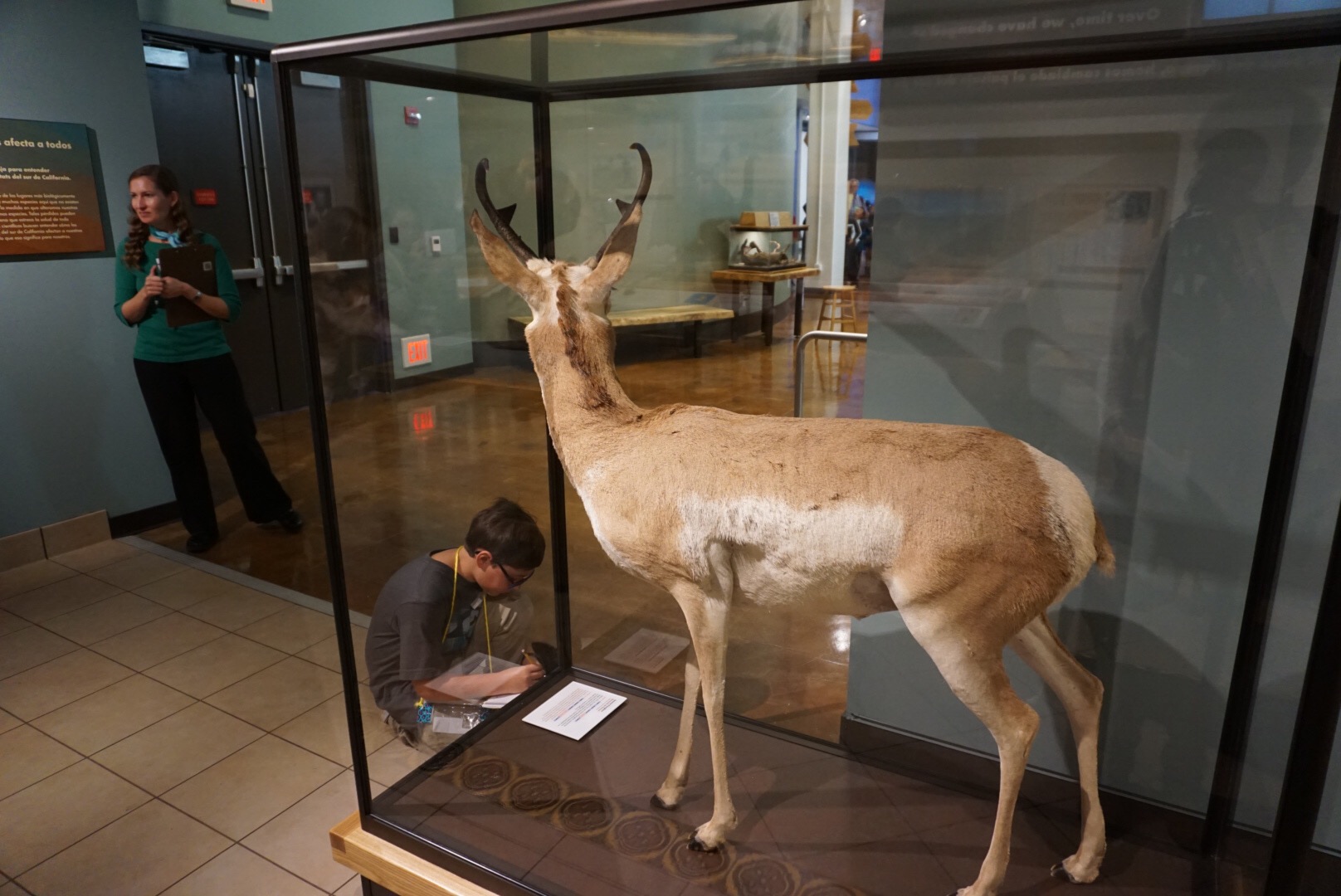
This student seems to be under surveillance by both the researcher and the stuffed deer as he takes notes from the informational placard.
IMG_4436

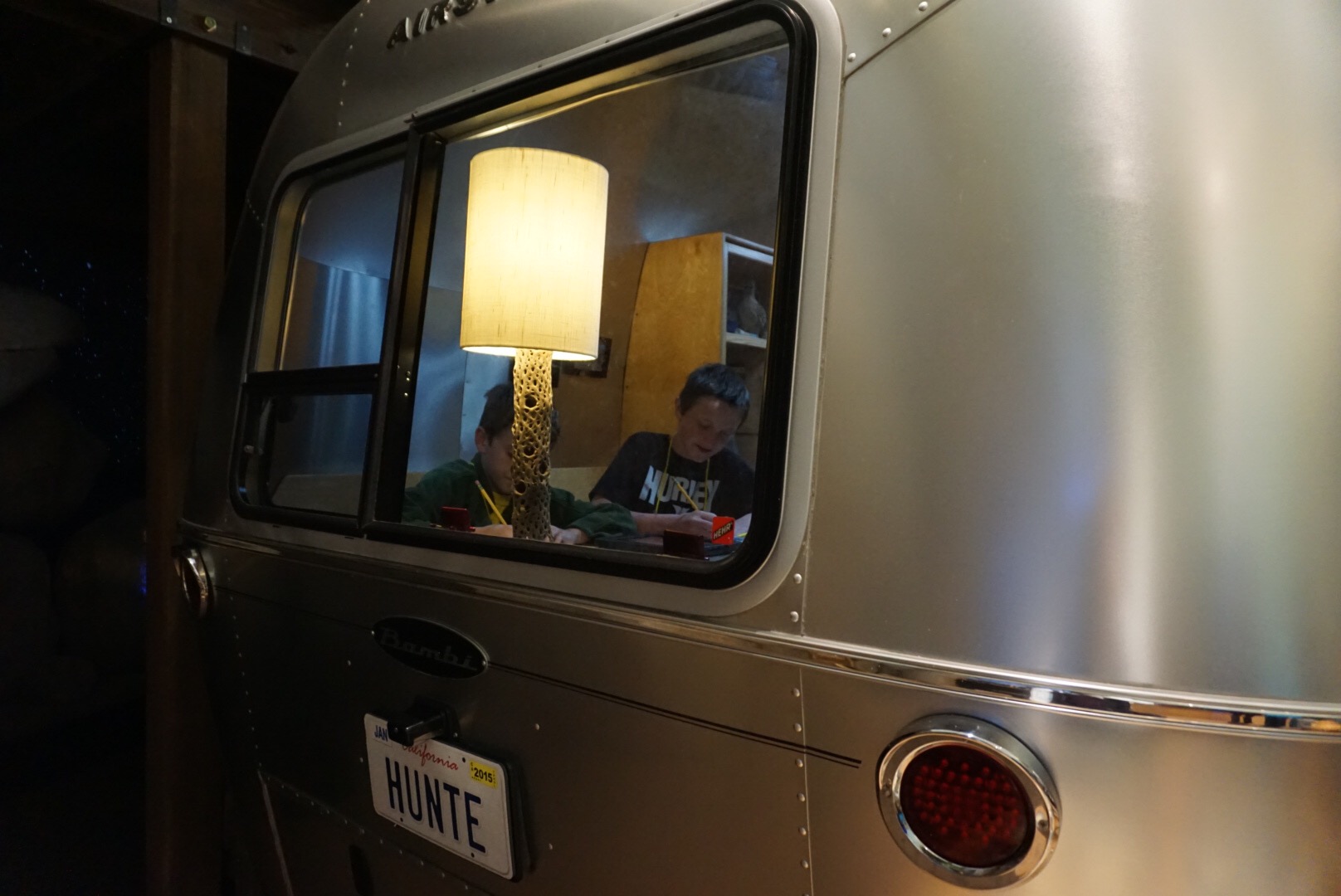
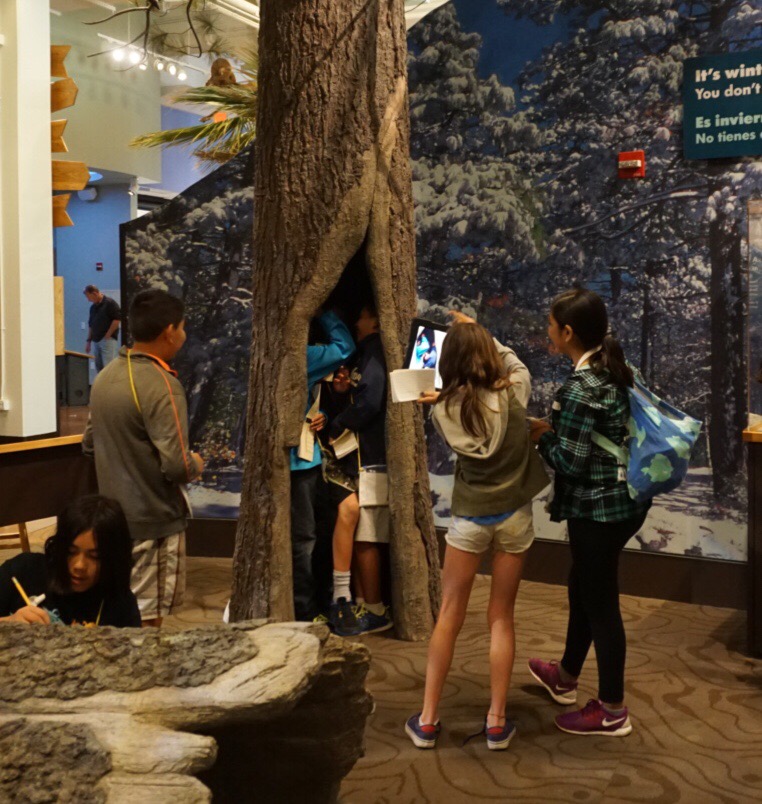
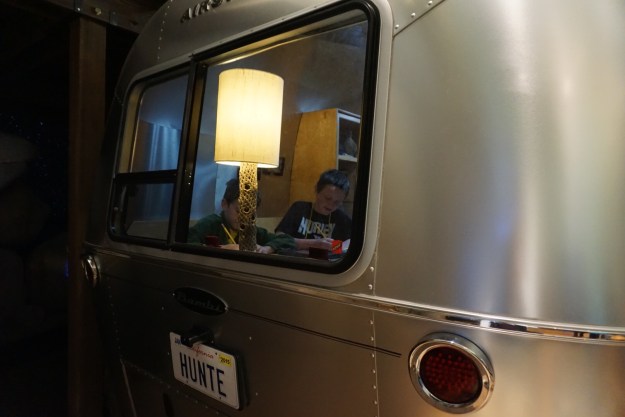
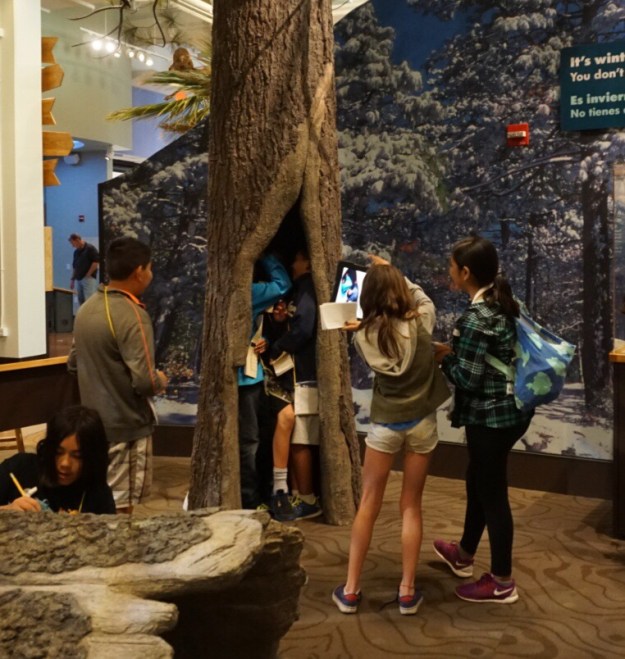
Some students found cozy nooks to meet and write–like inside this Bambi airstream that is a part of the exhibit.  While others took a bit of time away to see how many boys would fit inside the hollow tree trunk while a classmate looked on and snapped their photo!
IMG_4438

And the questions linger.  How much like school should a field trip be?  Do students need to “on task” by completing forms, taking notes, answering questions…  Or can they be talking to each other, turning dials, inventing their own competitions and games related to the exhibits, crawling through tunnels and squeezing into tree trunks…and still be learning?  Do they need to “do” the museum, reading each sign, looking at each artifact from start to finish?  Or is it okay to  focus their time and attention on the areas that most pique their interests?

I’m interested in what these students will create when they head back to school.  How will the visit to the museum influence their project?  What will they remember most about this trip?  Will they come back on their own, with their families?  How would they use the museum if left to their own devices?

We are paying attention to the intersections of formal and informal learning, of writing and science…and of student interest driven inquiry and teacher/adult directed learning.  And with each pilot field trip, I have more questions about supporting student learning as we work to help students initiate and shape their own learning using field trips as a tool.

How do you view the iconic field trip?  How do you prepare your students/your own children for out-of-school learning experiences?  What outcomes do you hope for when you think field trip?  We’d love to hear about your thoughts and experiences!

Exploring Symmetry…LA Style

I know that symmetry is a mathematical concept…one of precision, perfectly matched halves. But mostly, in the world, symmetry is not so perfect.  But there are echoes of symmetry all around us.  My eyes were hearing the echoes of symmetry the other day as I explored downtown Los Angeles with my son.

There is something so special about spending the day with my son and our cameras.  We walk and talk and take photos, noticing details, trying new shots, seeing the world through each other’s eyes.  And there’s a certain symmetry in that too.

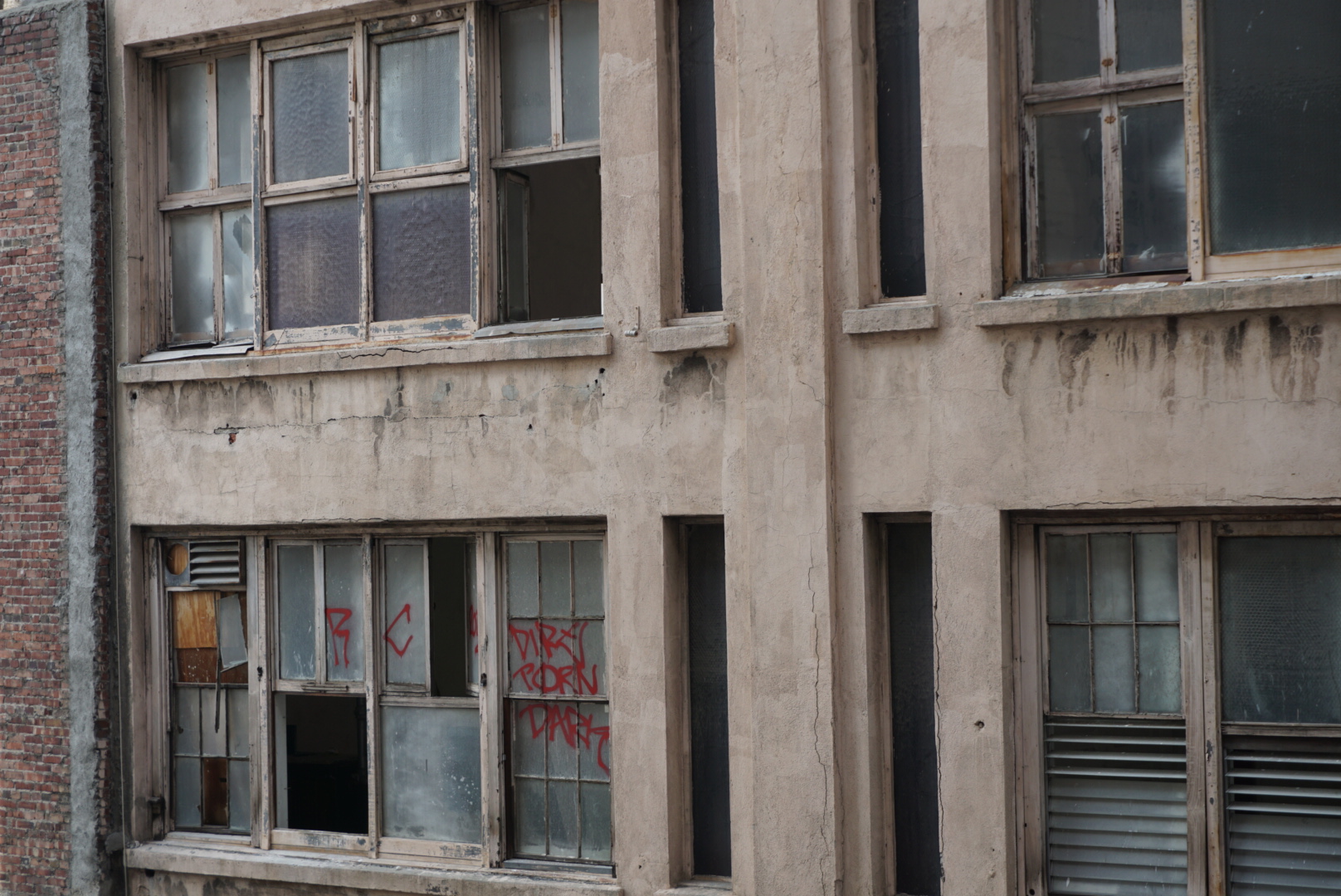
My eyes were drawn to this old building visible from the parking garage.  The symmetry has been spoiled by graffiti, age and disrepair.  But there is still something beautiful about it.

old building

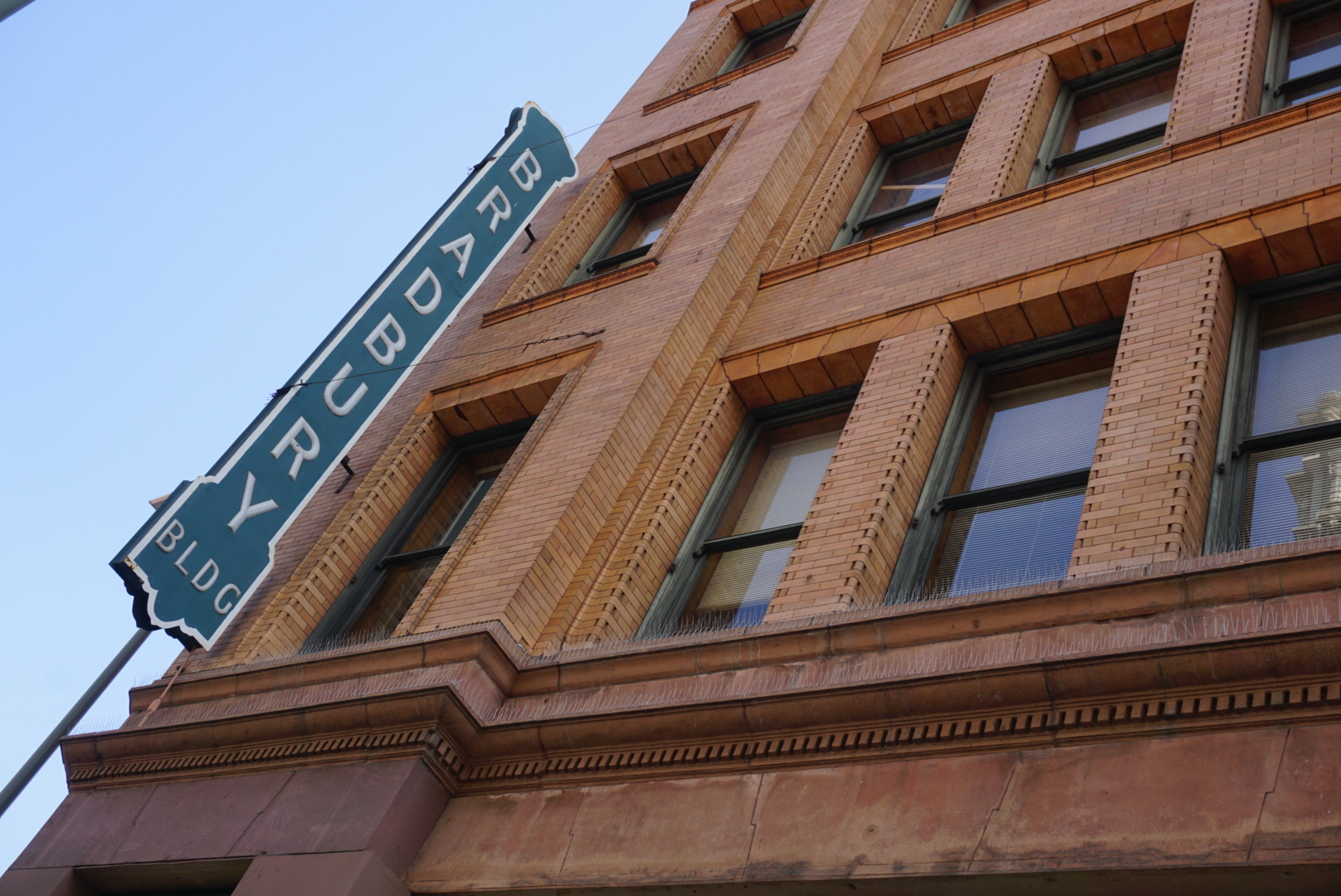
In contrast, this old historic building has been preserved, both inside and out.  Inside, the exquisite marble floors and intricate wrought iron frame the antique mechanical elevators.  And outside, I had to angle my shot to exclude the modern Subway sandwich sign and stoplights to capture the beauty of this elegant old building.

Bradbury Building

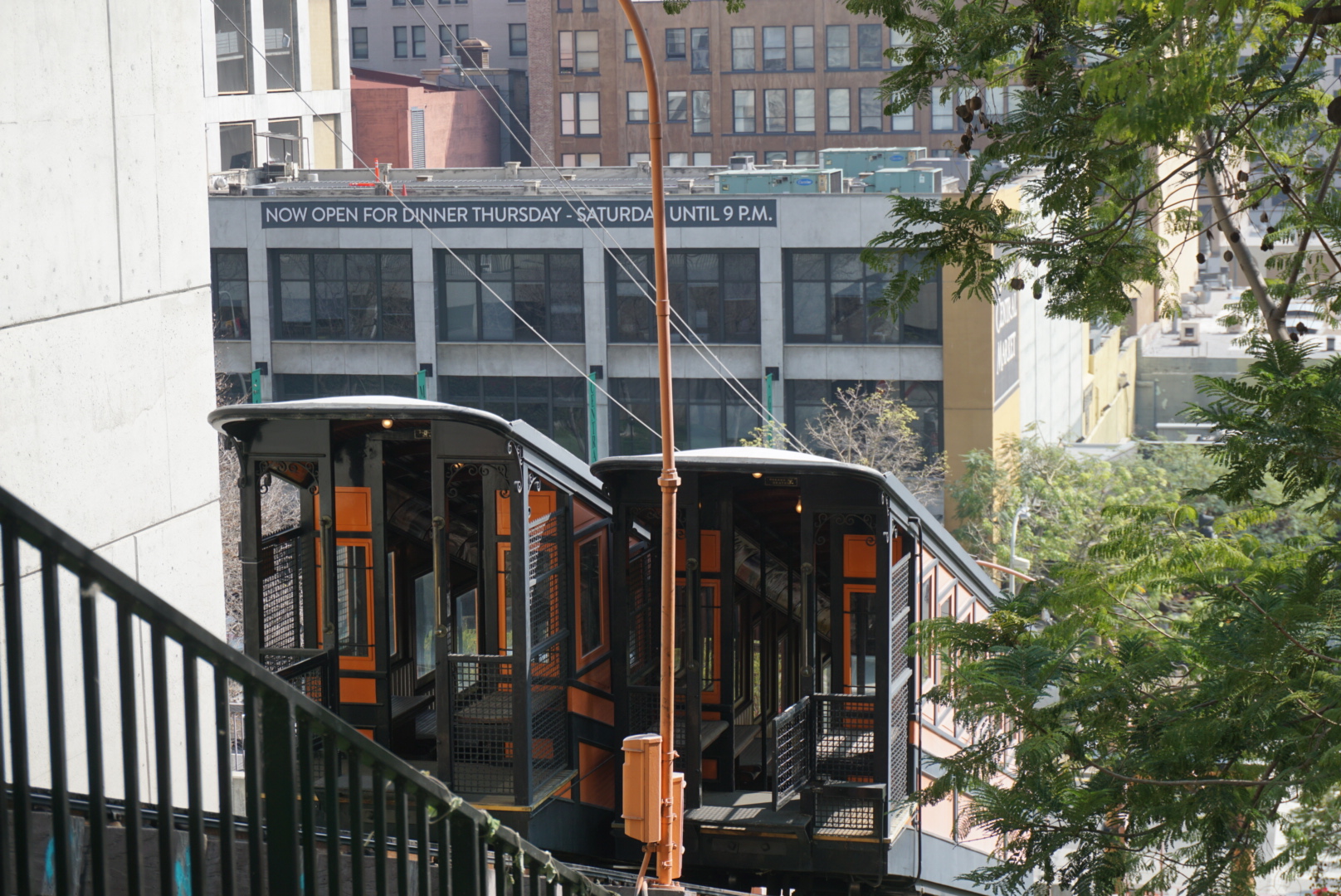
We also ended up climbing flight upon flight of stairs as we explore the is old rail system called Angel’s Flight.  Built in 1901 it traveled up and down a block…and after scaling the stairs…I see why they wanted a railway!
angel's flight

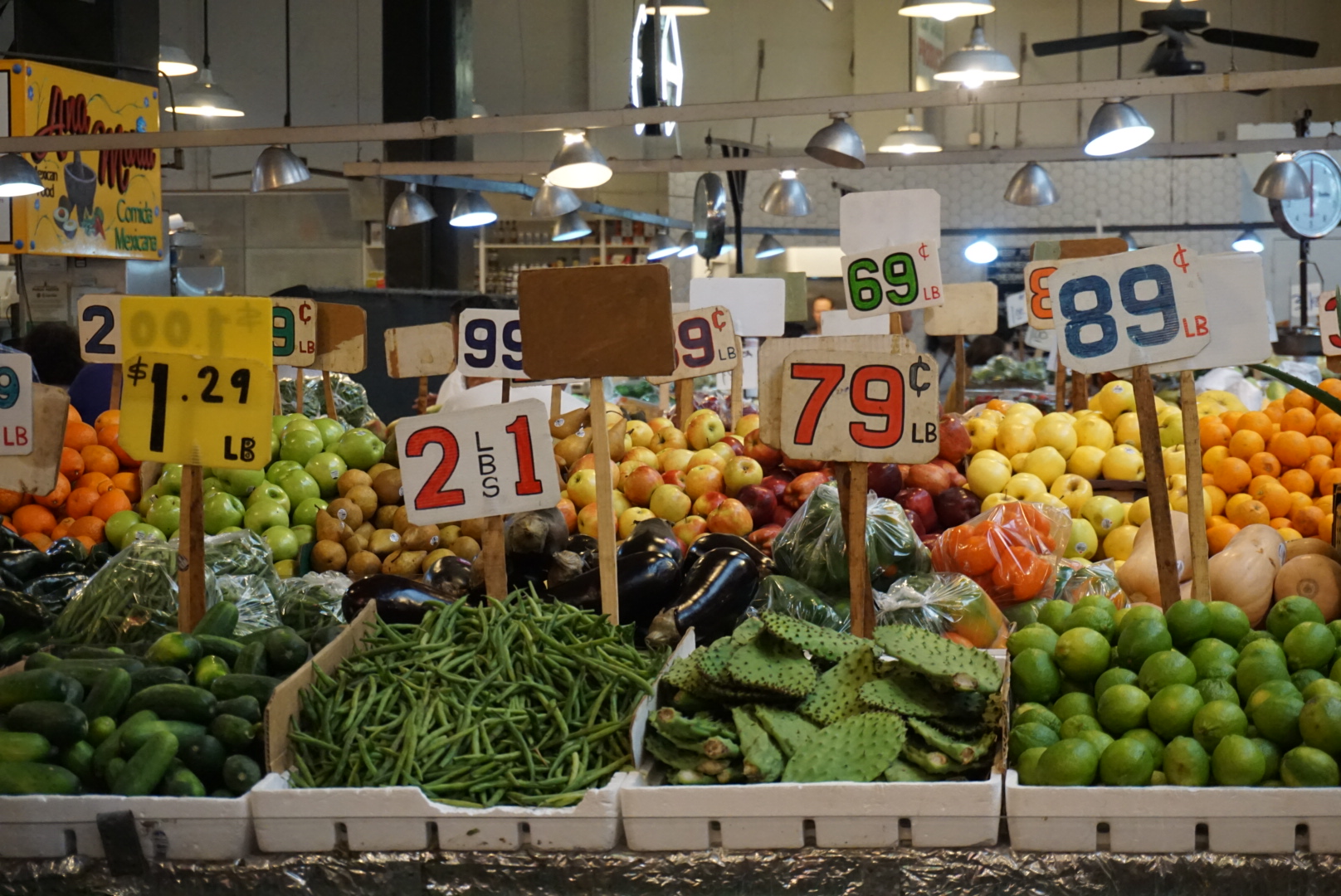
Grand Central Market was an explosion of colors and smells…and quite a tasty place for lunch! I was drawn to these cactus pads…there is a certain symmetry in these bins of produce and the jumble of price signs rising out of them.

veggies

I’m not sure that any of my photos fit the mathematical definition of symmetry…but for me they communicate the idea of symmetry, the creation of purposeful balance and arrangement. Just like my day with Nick…the perfect balance and arrangement of time, exploration, and connection.  And the cherry on top…dinner with my daughter-in-law!  Symmetry!