Category Archives: #writeout

#writeout for NDOW: Exploring Senses in the Garden

I picked today…October 20ish…to celebrate the National Day on Writing (NDOW) with my students. And since we are also into #writeout, we combined the two.

We are lucky to have a school garden and while it is not exactly exploding with plant life (yet), it does have some plants growing, some rustic seating, shade (essential on a sunny fall day like today), and hosts bugs and worms and dirt and all the other things kids love.
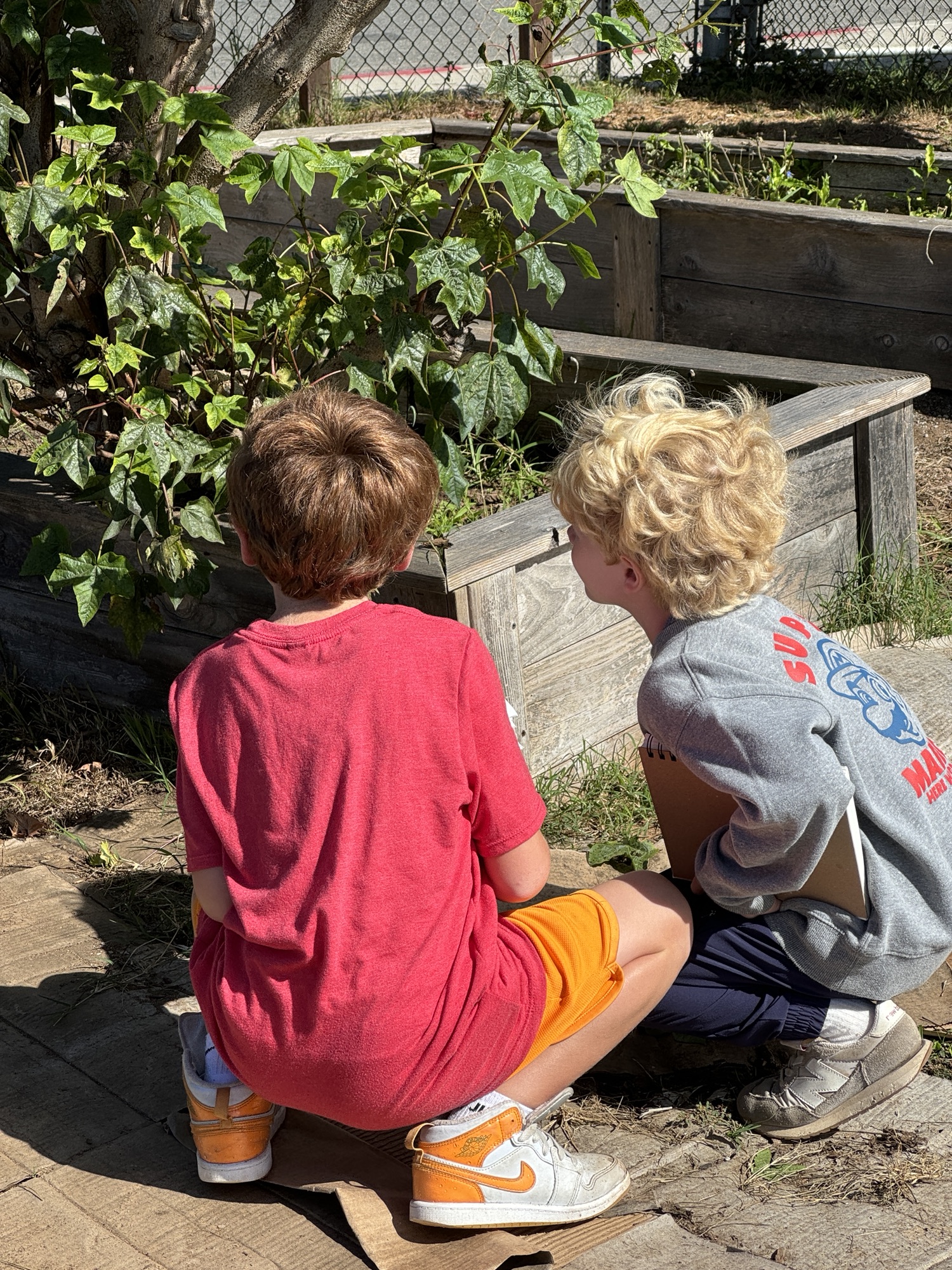
So, after recess today when I walked my students back to the classroom, I read them the book Outside In by Deborah Underwood. This gorgeous book talks about the wonders of the natural world–and the ways we often do not pay attention to those wonders. It also includes all five senses in wonderfully descriptive and somewhat subtle ways.

I recently had the opportunity to interview author Kate Messner, who is serving as an author ambassador for the National Writing Project’s #writeout, as part of their Write Time series. In response to one of my questions, she talked about the power of the senses to help students (and writers) extend their writing. So before we headed out with our sketchpads to write, I asked my students to pay attention to not only to what they saw, but to all five senses. As we walked we noticed…and once we arrived at the garden, we began to write.
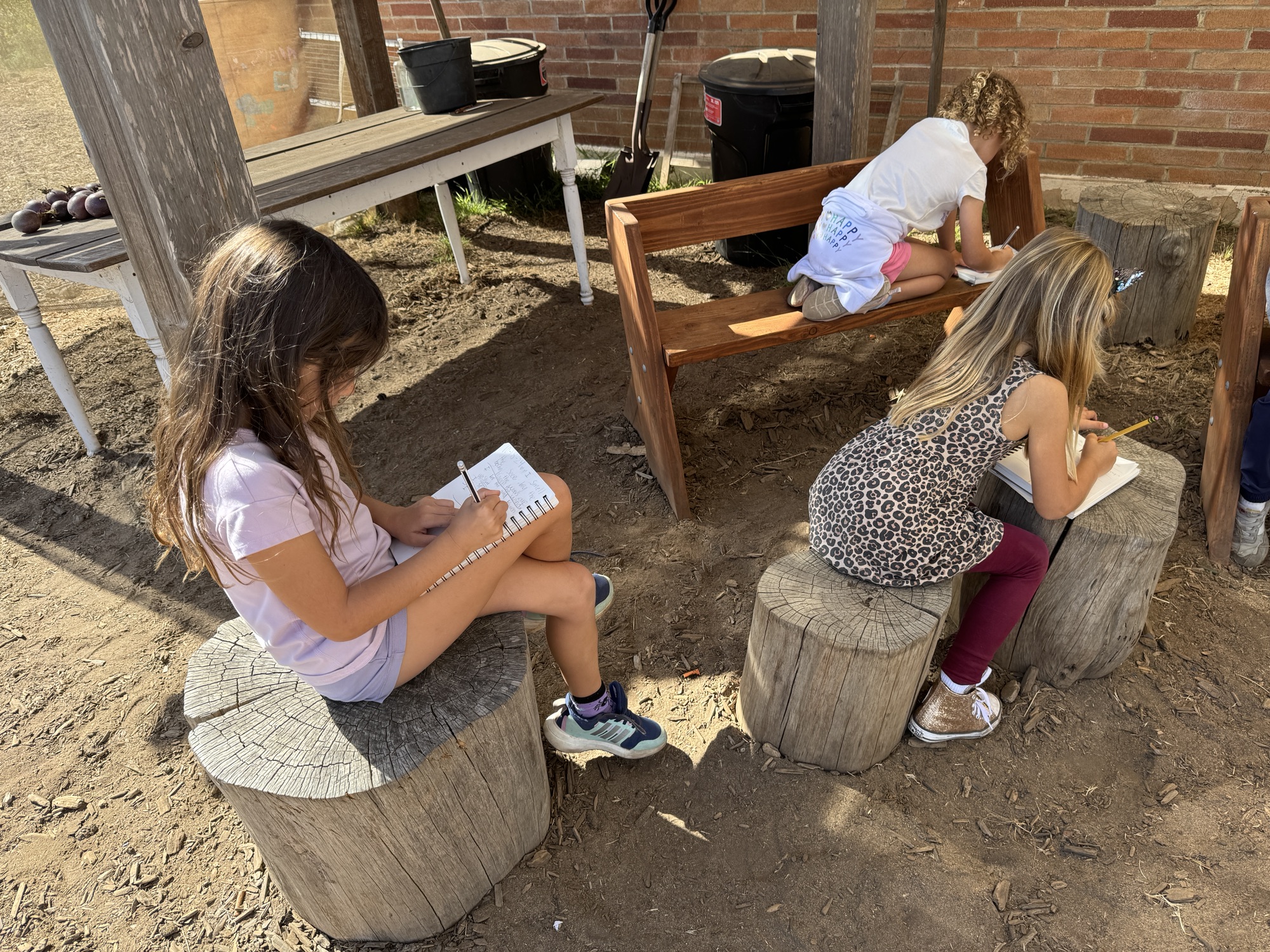
Students listened and sniffed. They rubbed leaves, touched pumpkins, and imagined the taste of fruits and vegetables. And they noticed bugs and birds and spider webs. When they needed inspiration, they moved around the garden and wrote some more.
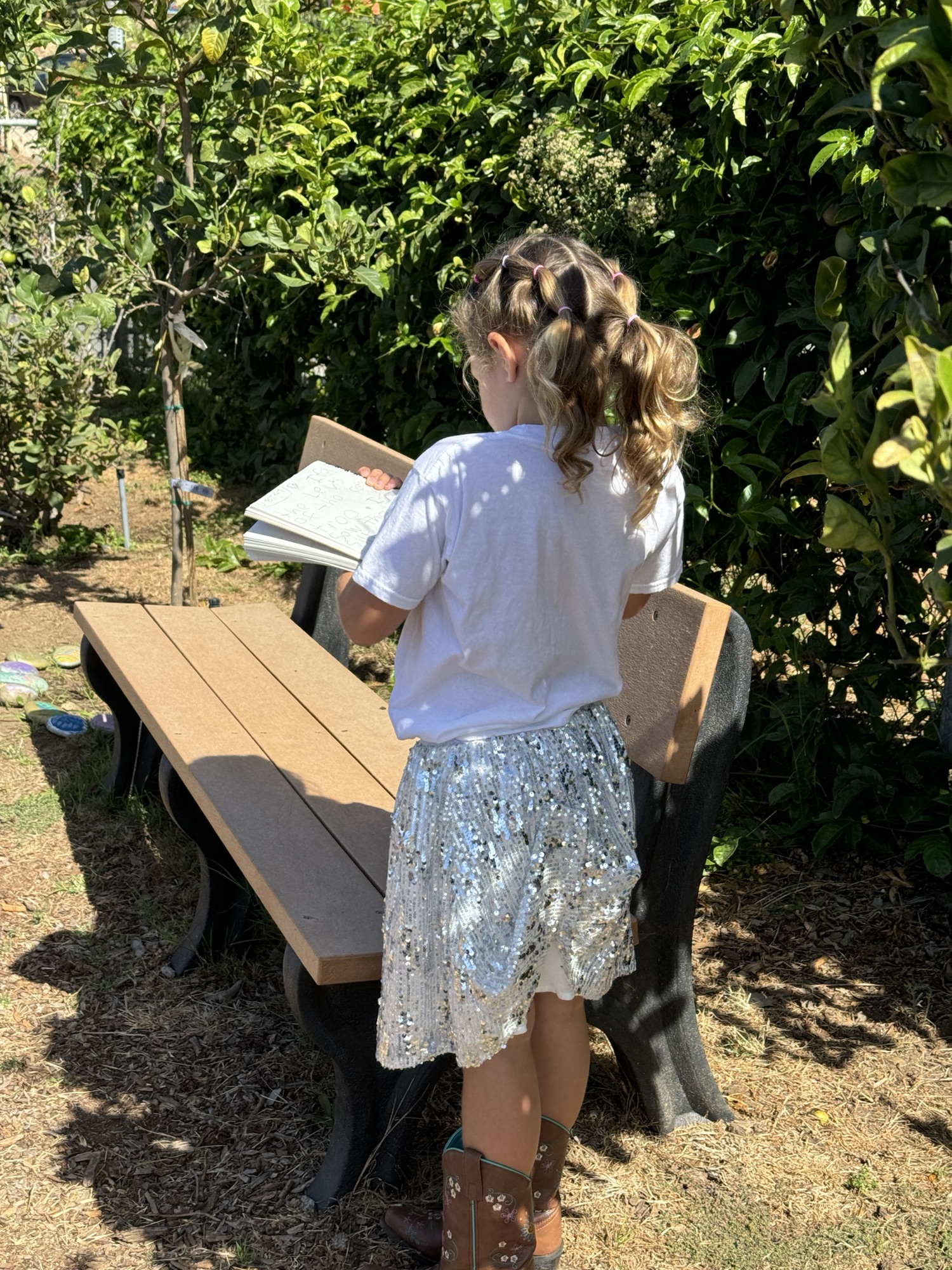
I love watching my students develop stamina and confidence as writers. There is something freeing and motivating about writing outdoors, writing in a sketchbook, sitting on a stump, and even writing standing up. Writing still takes effort when you are six or seven. Putting all that wonderful thinking onto the page is an opportunity to put phonics into action, exercise those developing fine motor skills, and focus attention for a sustained period of time.
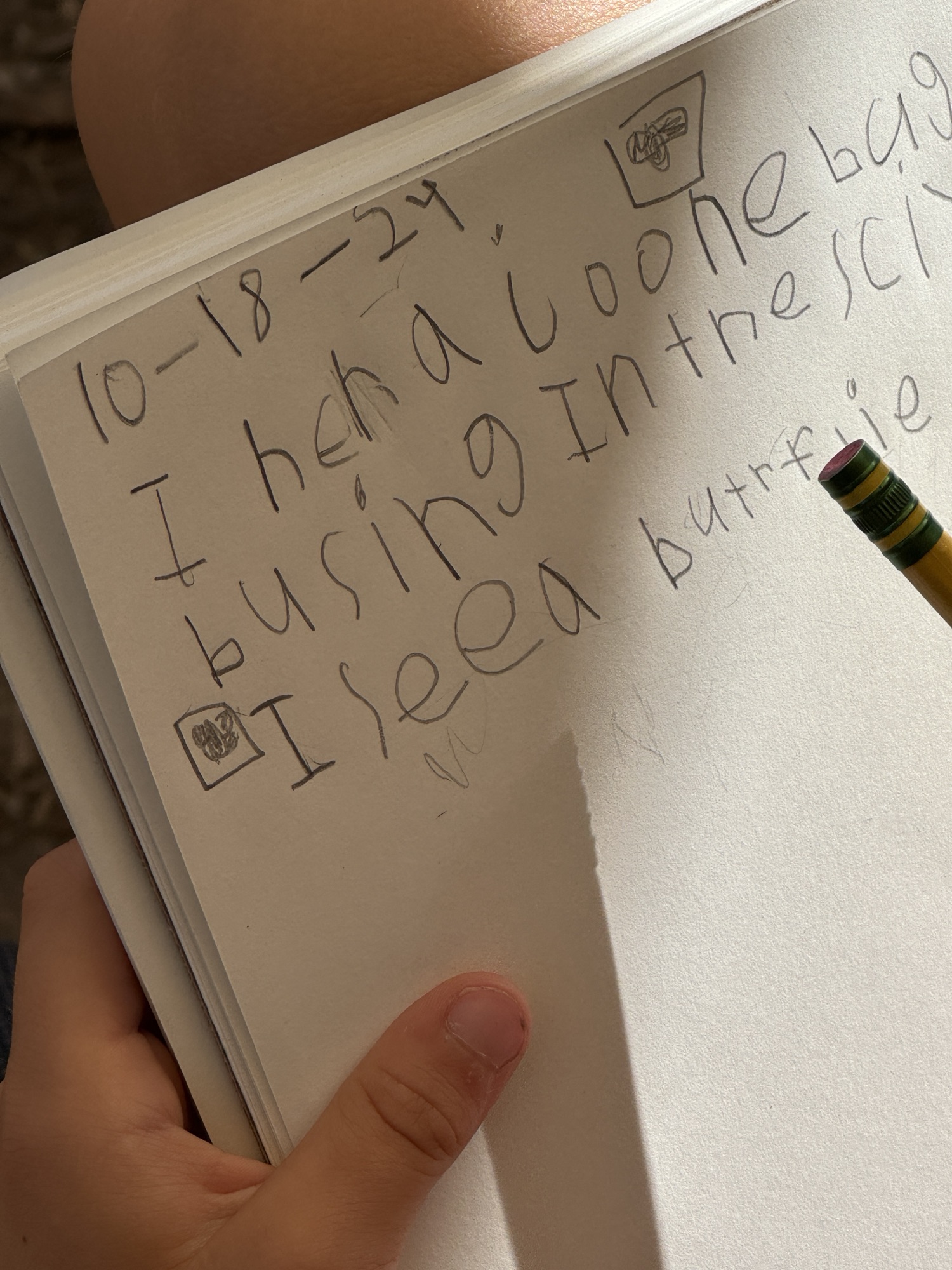
I hear a June bug buzzing in the sky.

When we returned to the classroom, I asked student to pick their favorite sensory description to read in a classroom whip around. Student were all willing to pick and read their descriptions, creating a symphony of voices celebrating our garden and our community of writers.

Here is the collaborative poem that includes a line from each student in our first grade class.

Senses in the Garden

A National Day on Writing Celebration

I hear a car.  It sounds like a dinosaur roaring.  Rooaarr!

I see the leaves swirling in the wind going to land on the ground.

I smell the sea by the beach.  The waves are blowing in the wind.

Taste is like tasting popcorn.

I hear a june bug buzzing in the sky.

I hear the tip tap of my shoes. I see the reflection of my sparkle skirt.

I hear the birds chirping in the sky.

I see the spiky squash on a stem.

I can hear a hummingbird humming.  It was sucking pollen.

I see a passion fruit on the table.

I touched a pumpkin.  It was soft and it had a hole in it.

I hear waves crashing on the shore that the surfers ride on.

I can smell oak sap flowing down the bark of the tree.

I can taste blackberries getting eaten by me.

I smell a passion fruit.

I spy with my little eye someone walking by.  A game!

I feel a pencil in my hand.

I see a moth fly like a jet.

I hear birds chirping and flying.

I smell the acorns.  They are like the seed and the trees.

I see a big pile of dirt.

I hear leaves getting smashed.

I see and feel and hear the garden.

By Room 3 First Graders

10/18/24

How will you and/or your students celebrate the National Day on Writing (and #writeout) on or around October 20th? My students and I would love to see what you do!
#writeout: When Inspiration Strikes

Many of my afternoons are filled with meetings since writing project work is hard to squish into typical work hours. This afternoon on the National Writing Project (NWP) Connecting the Network Call, as is typical, we had a writing prompt to write our way into the meeting. Since #writeout is now in full swing, our prompt was a poetry in the parks invitation of Lucille Clifton’s The Earth is a Living Thing read by poet laureate Ada Limon.

I don’t love to write on demand–I often feel stumped in that compressed moment, pressured to create in what I already know will be too little time. But today felt different. I loved the structure of Clifton’s poem as each stanza began with “is a…” followed by some action.

My mind began near the sea–a place I love and often find inspiration. And then I found myself in my classroom, inspired by the small children I spend so much time with.

Here’s my first draft written in five minutes at the beginning of this afternoon’s meeting. (And is currently untitled so I’m borrowing Lucille Clifton’s title)

The Earth is a Living Thing: Riffing off Lucille Clifton

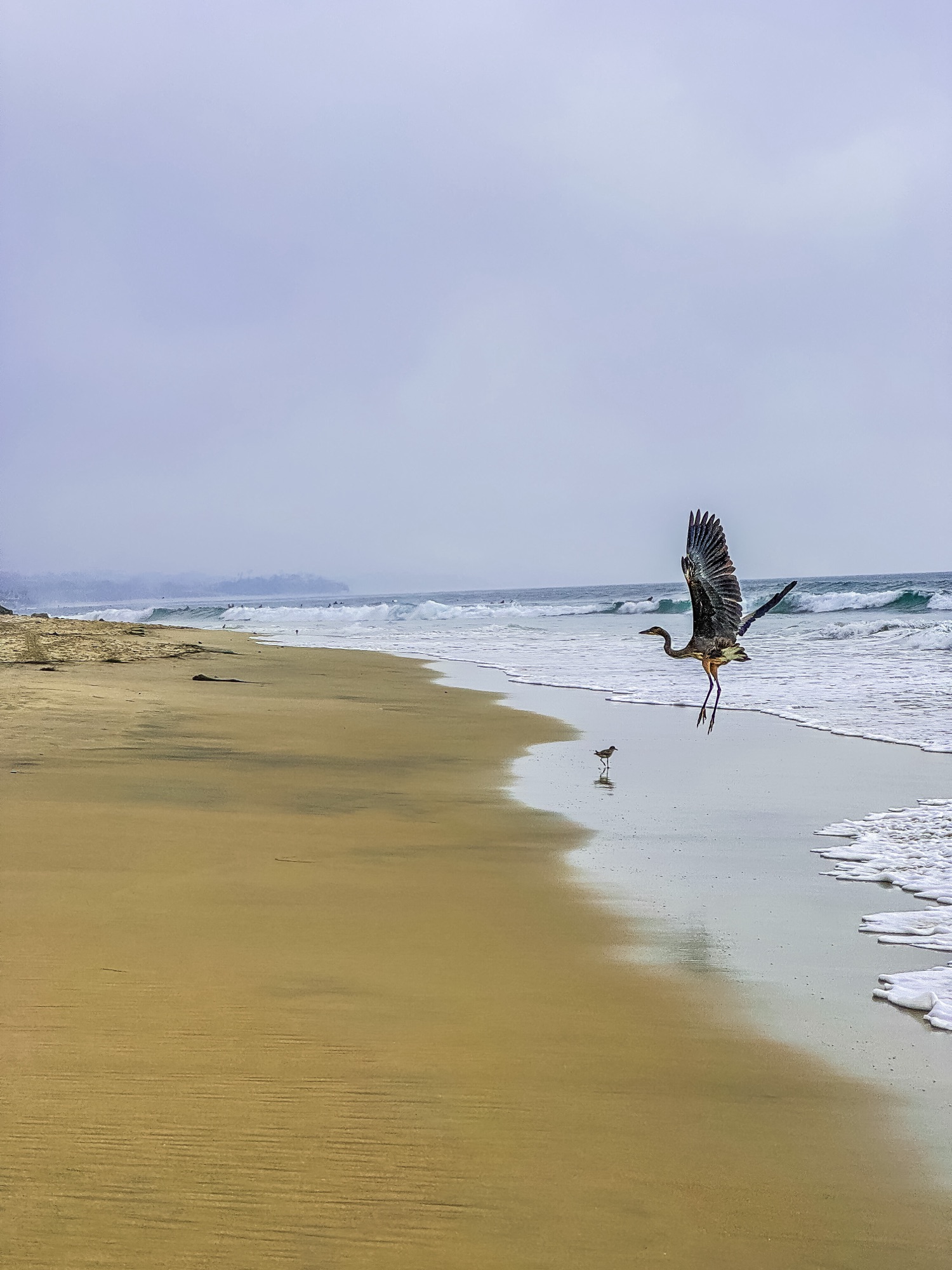
is a great blue heron

wings spread

blotting the gray skies

with the wonder of birds

is a child poet

words tumbled

letters scrambled

ideas piercing your heart

is playground balls

in rainbow colors

bouncing, rolling

here, there, everywhere

in the play that is essential

to learning and growth

And of course, I have to add a photo that was also a part of my inspiration.

How will you #writeout today?

Exploring Acorns: A #writeout Adventure

When life gives you acorns…make art and poetry!
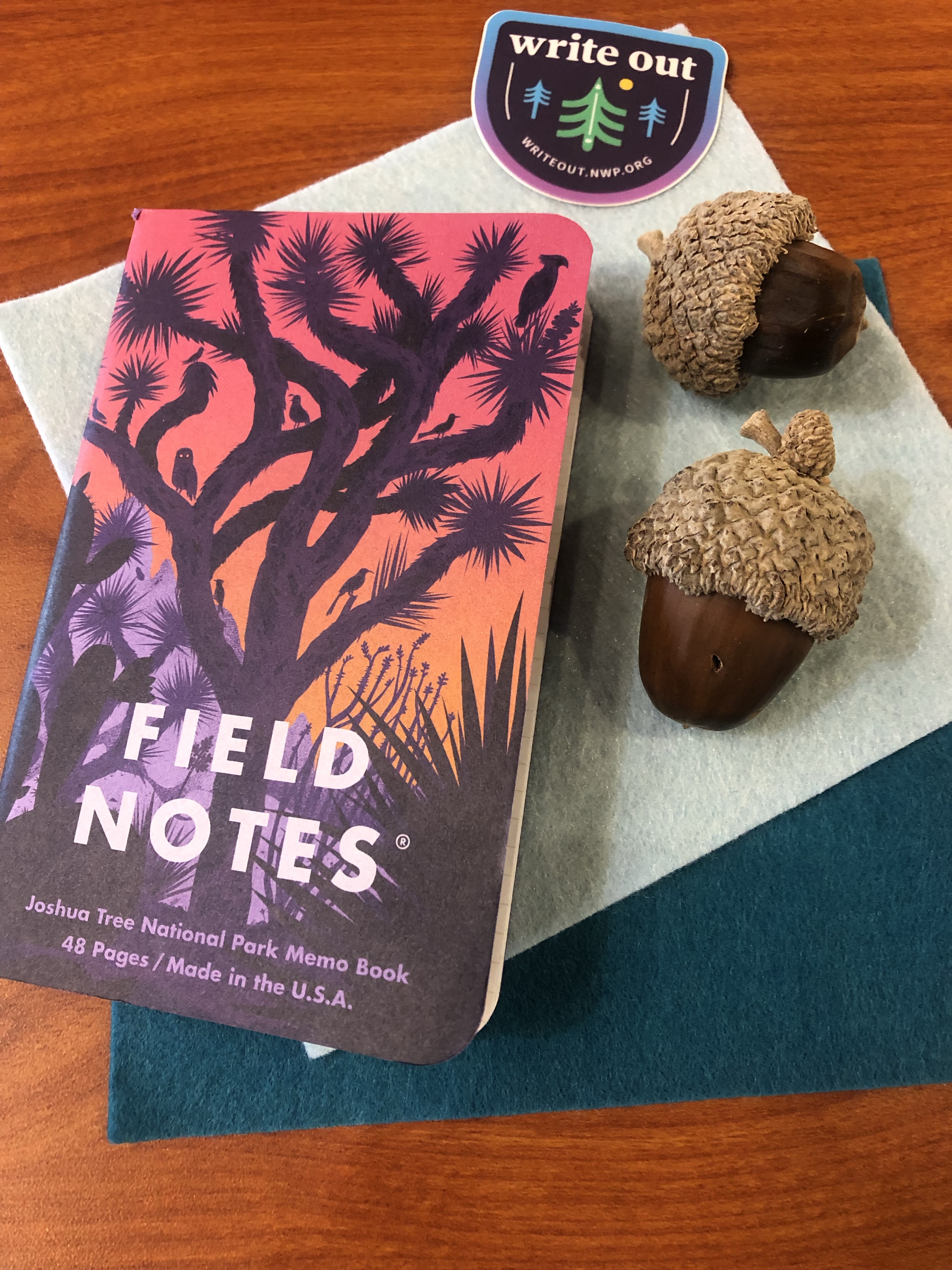
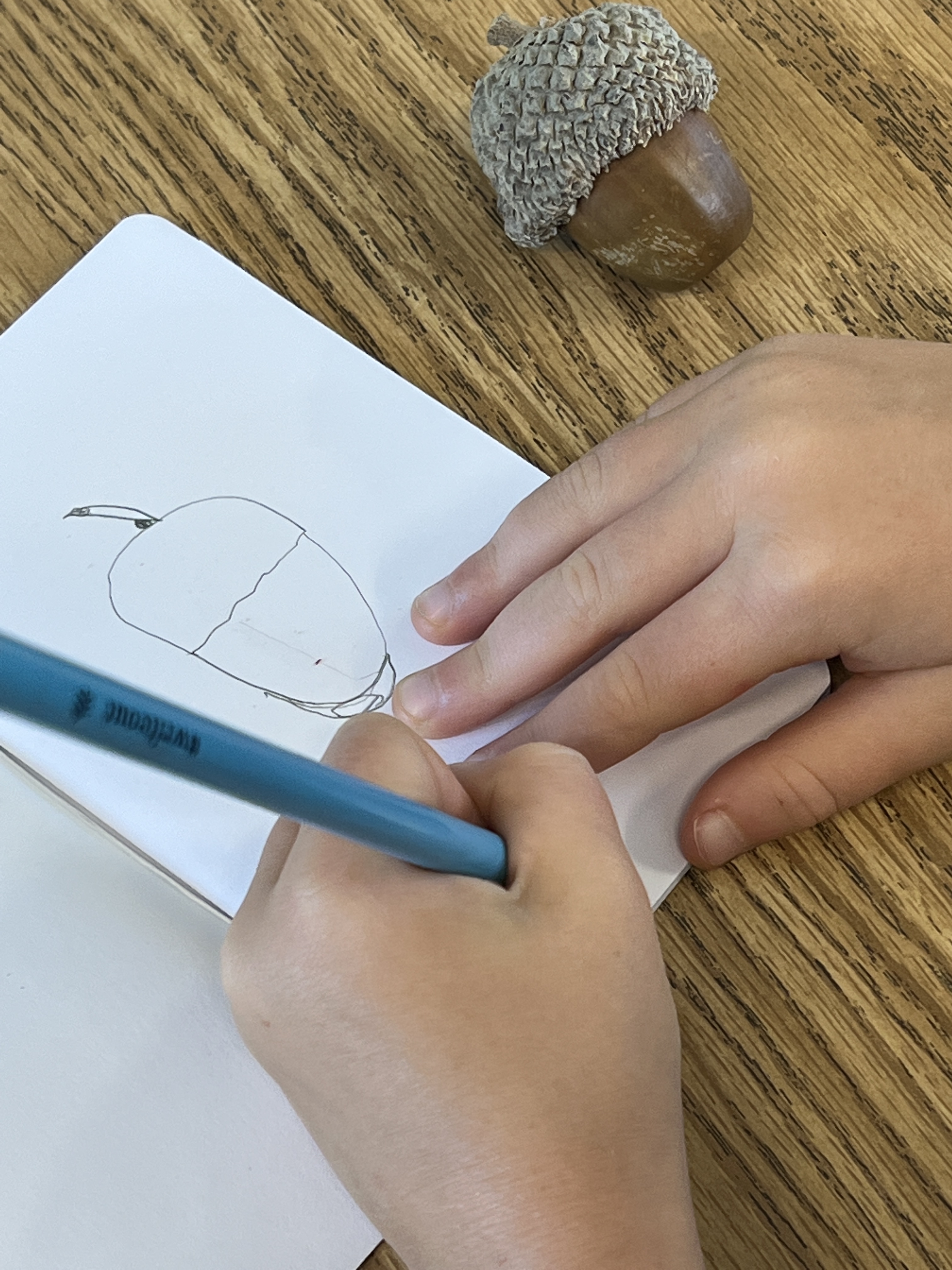
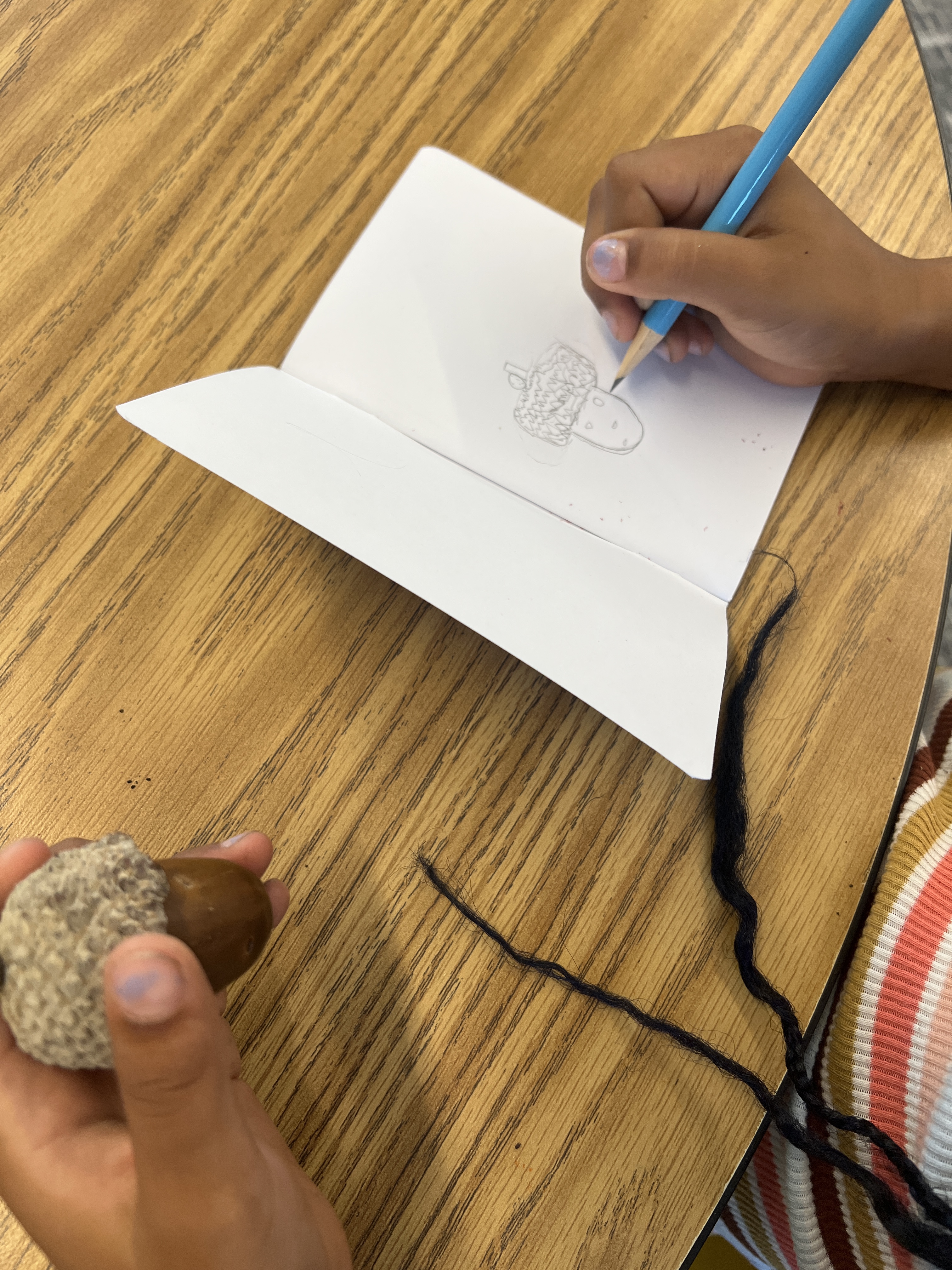
Most weeks I work with my friend and colleague Carol over Zoom since we live in different parts of the state. So when we got to meet in person a few weeks ago, I was delighted to be gifted with a bag of acorns to explore with my students. The acorns where Carol lives are huge…and they have the caps that look like knitted beanies.

So, in honor of #writeout, a collaboration between the National Writing Project and the National Park Service, we got out the acorns and the hand lenses AND our sketchbooks to really study them carefully. We also read two wonderful picture books: Because of an Acorn by Lola Schaefer–a book about the interdependence of the ecosystem where acorns thrive–and Acorn Was a Little Wild by Jen Arena–a fanciful book about an adventurous acorn who after an encounter with a hungry squirrel preparing for winter, ended up as an adventurous oak tree.

And…we had to watch the wonderful video with Ranger McKenzie from Sequoia National Park about how oak trees drop tremendous numbers of acorns every few years…all at the same time in a process called masting, and that scientists have figured out that trees “talk” to each other through their root systems.

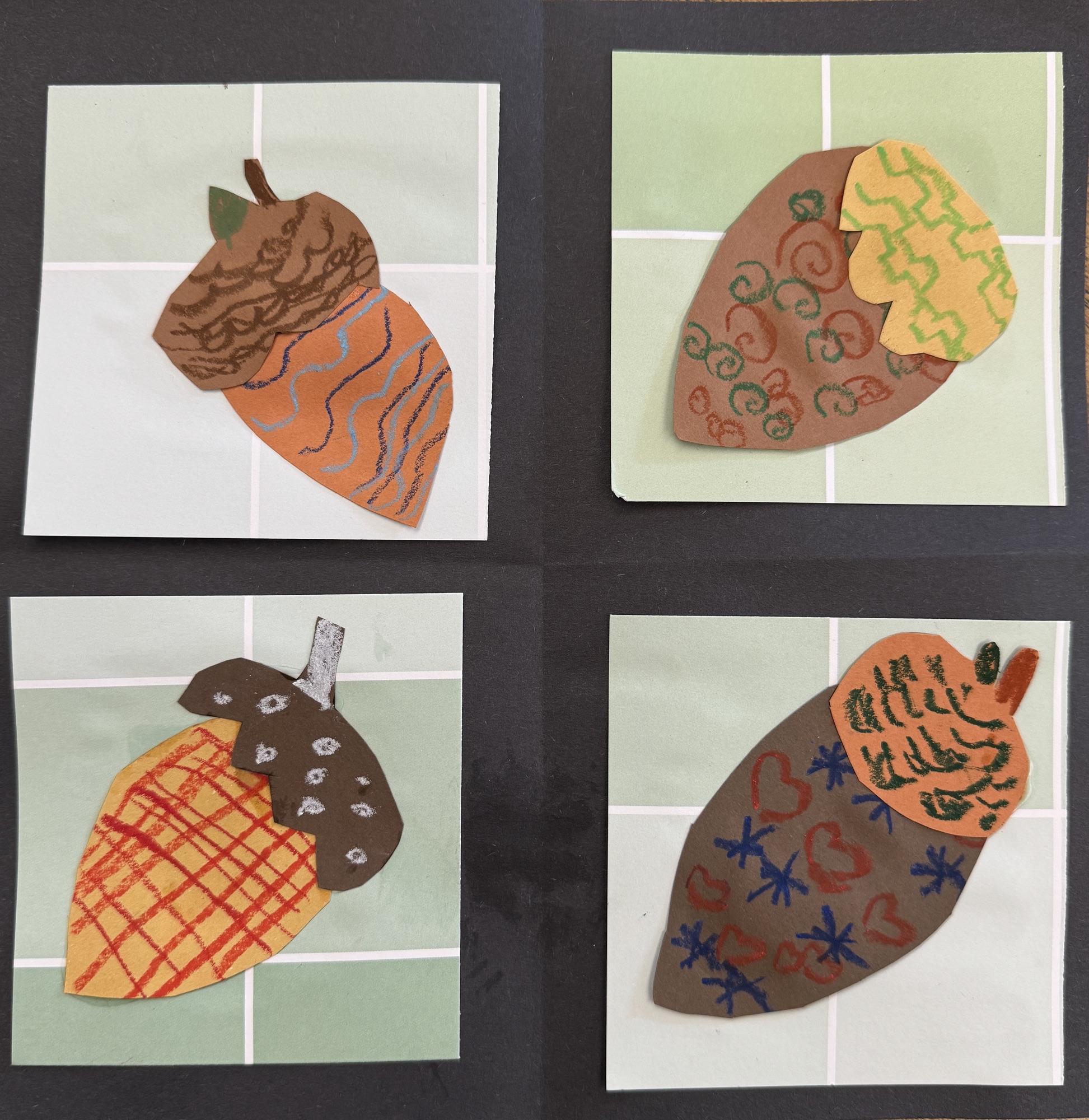
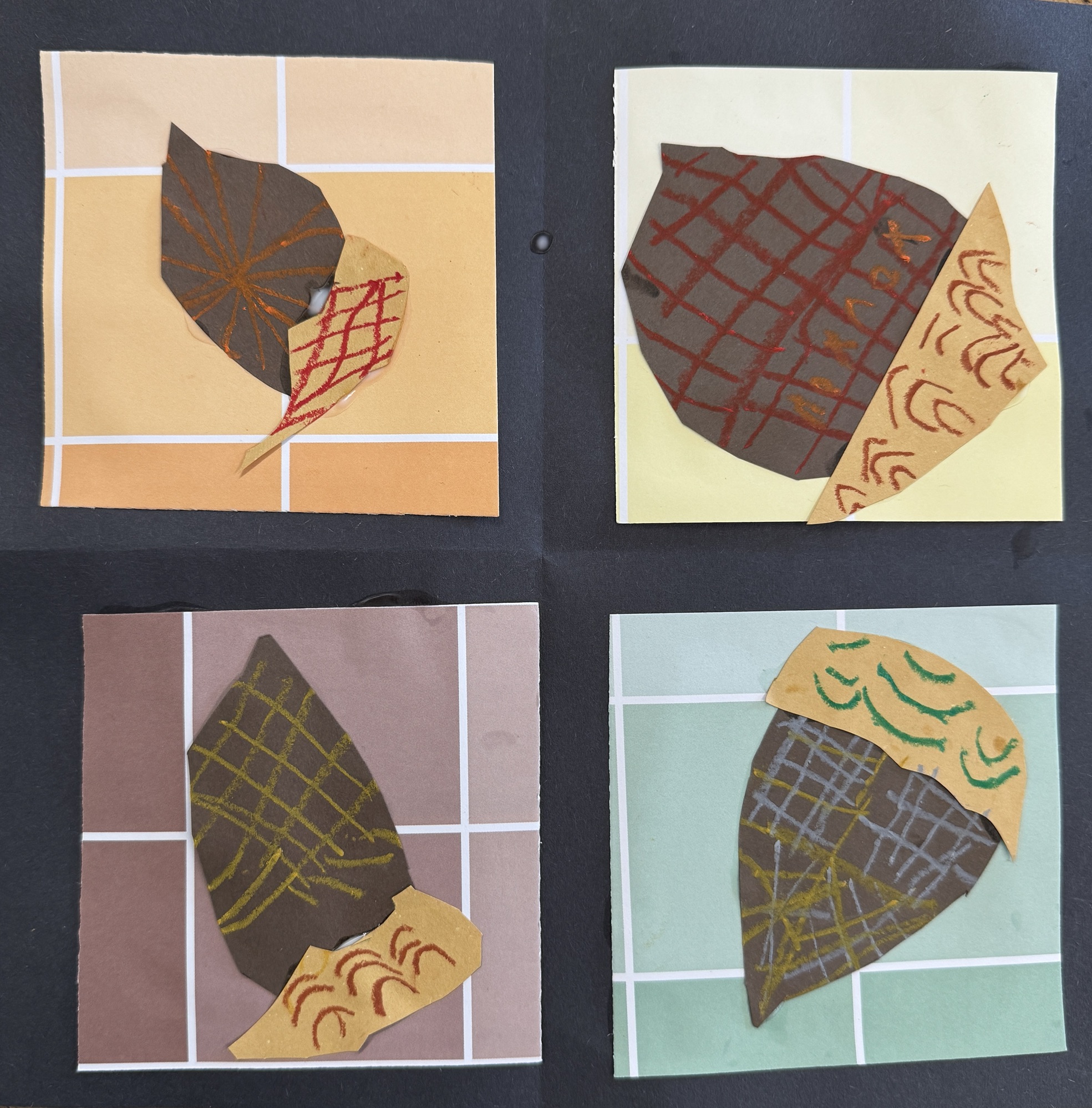
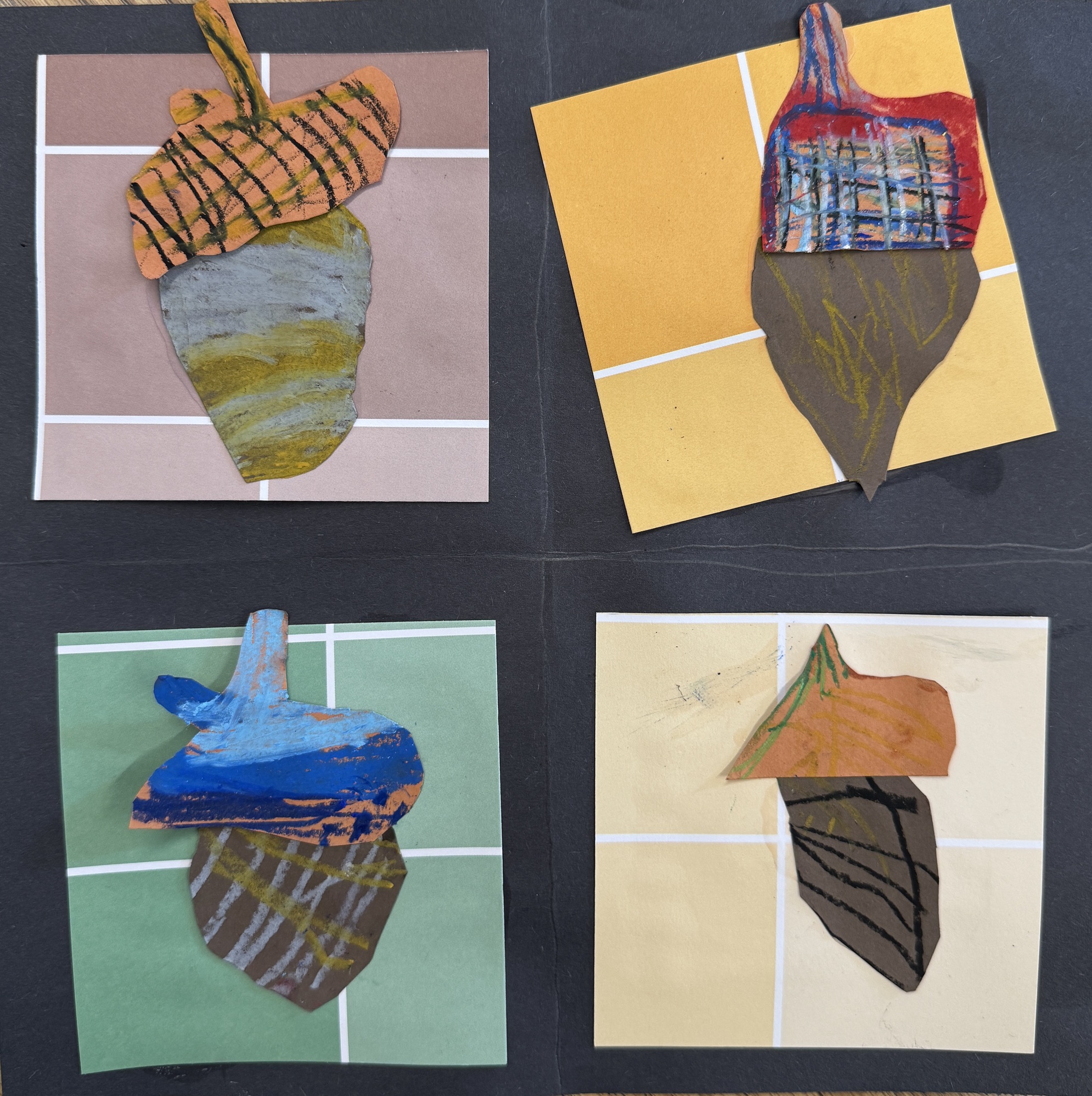
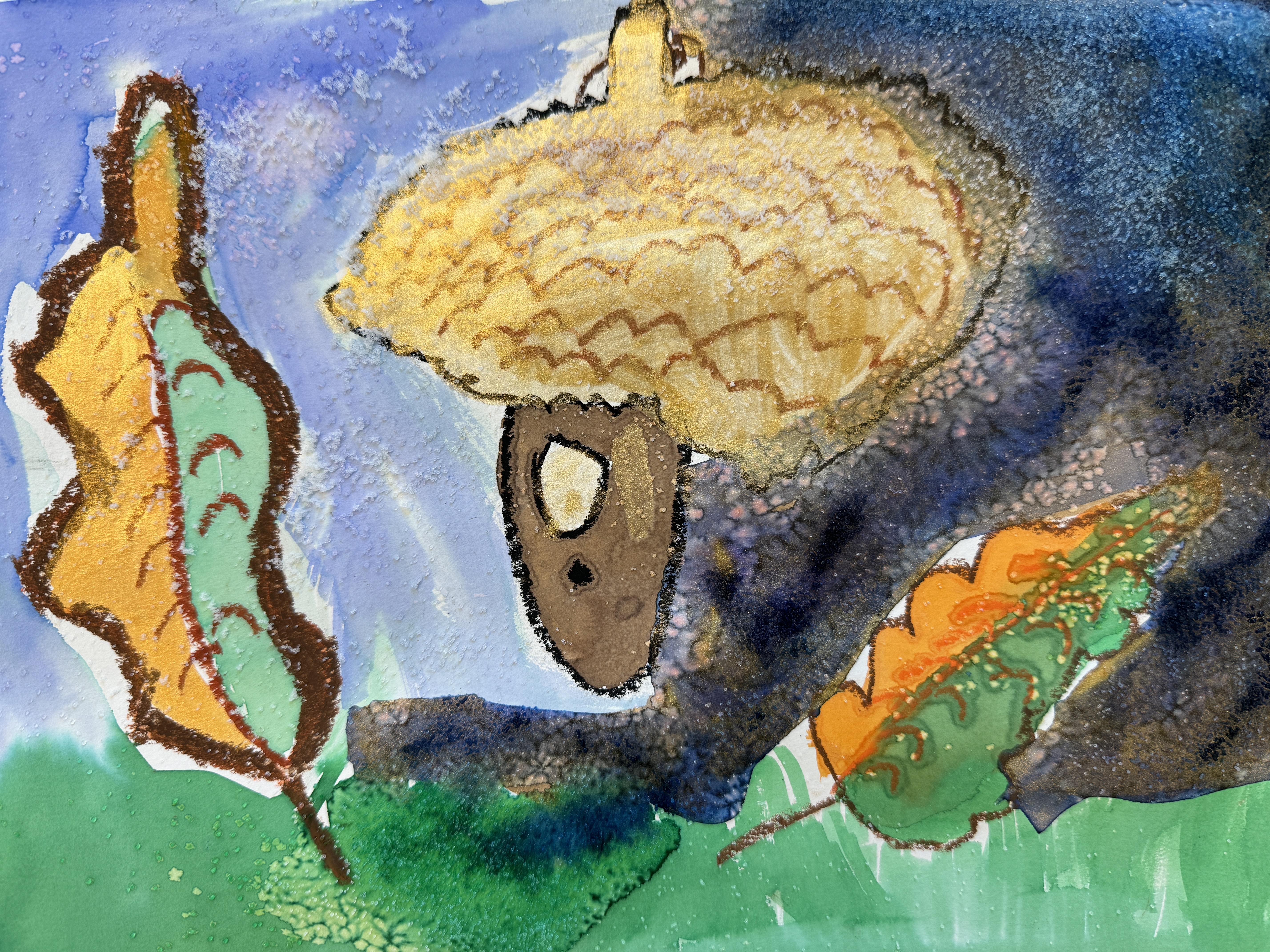
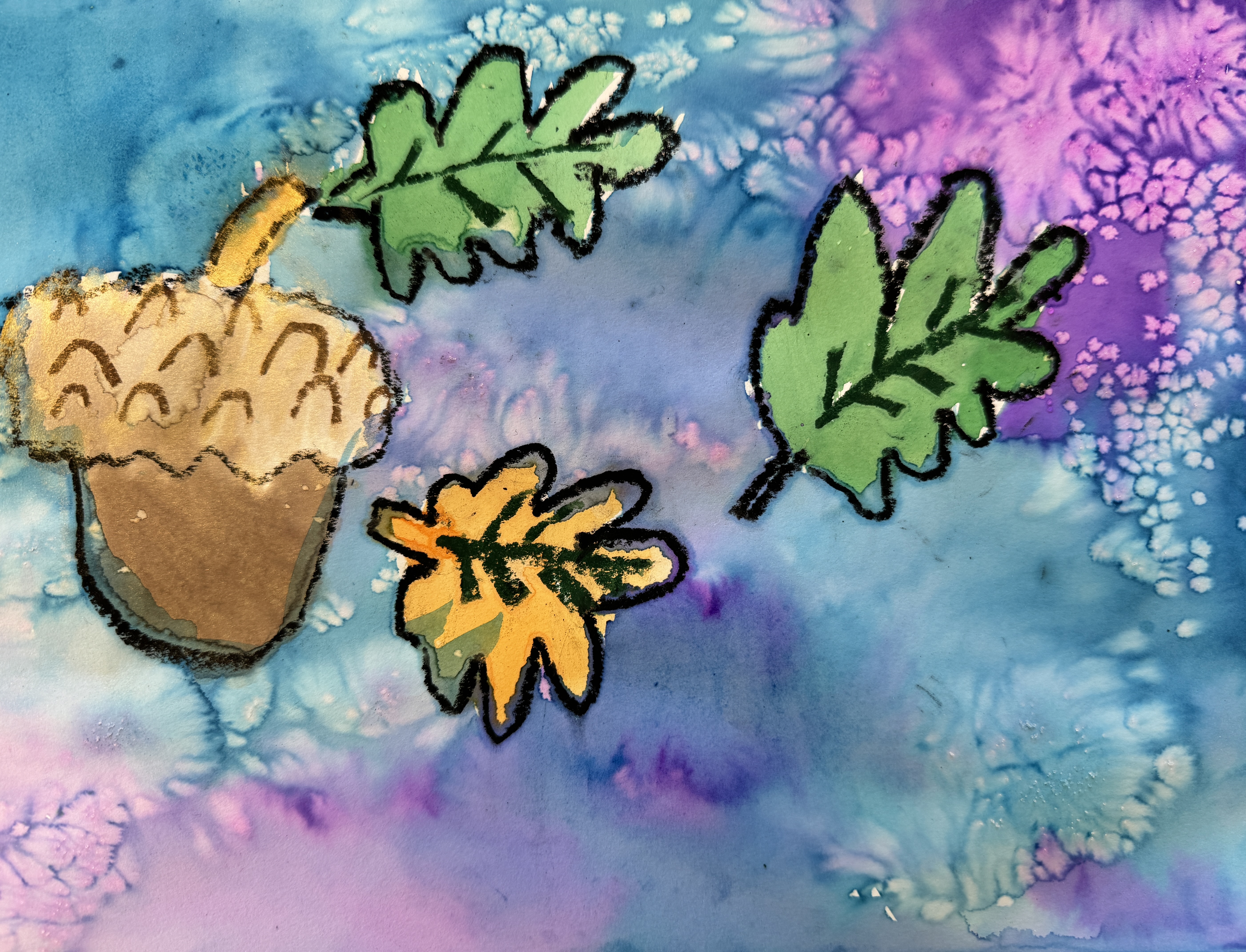
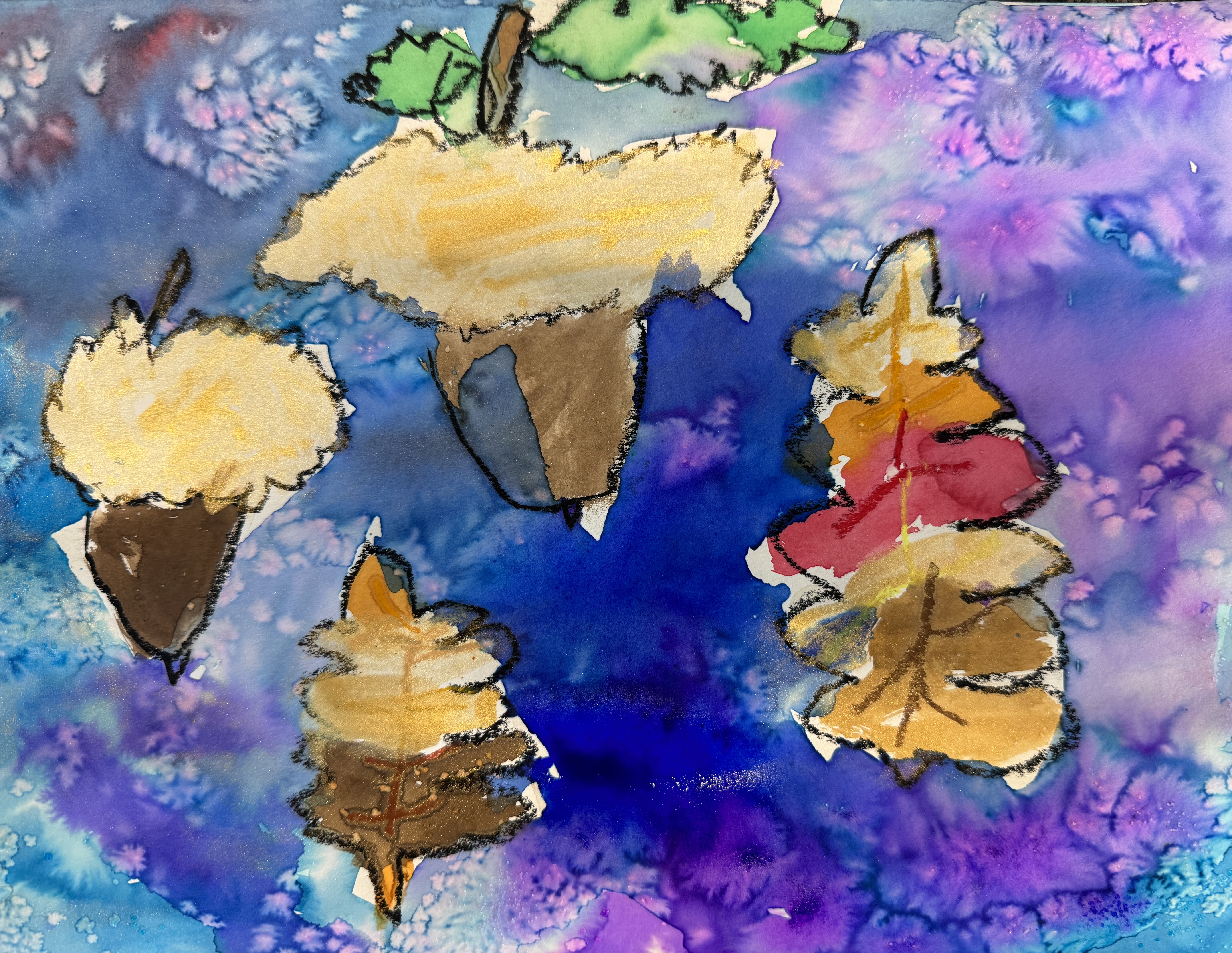
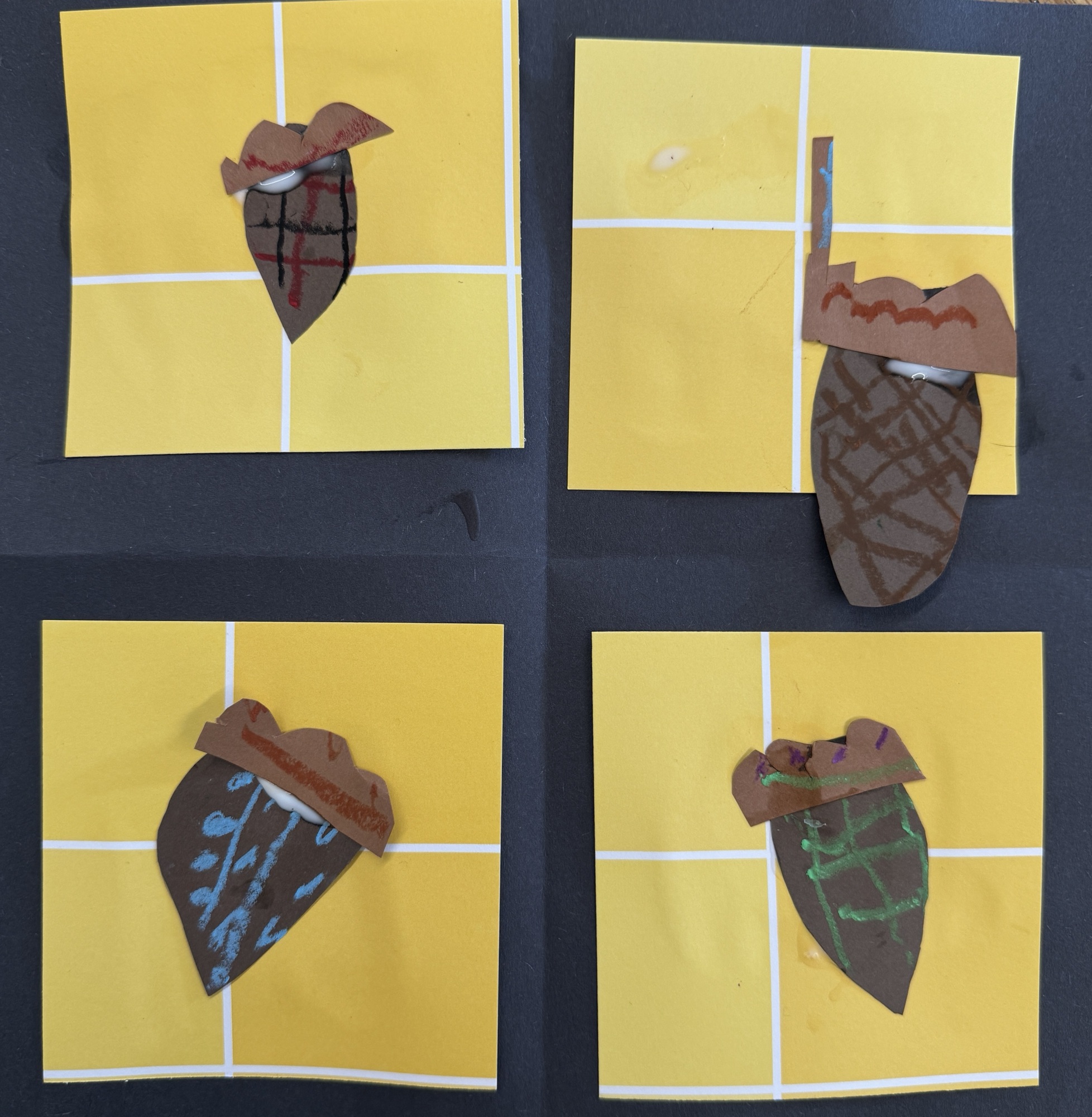
All this science and nature provided the perfect foundation for an art project inspired by Andy Warhol and the Pop Art movement. Today the first graders in my classroom used scissors, construction paper, oil pastels…and wait for it…white glue to create the most adorable acorn art. Scissor work can be challenging for young learners, and to add to the scissor demand I didn’t provide a template. Instead I showed them how to trim the square of paper into the shape of the acorn nut…and another square of paper into the shape of an acorn cap. A few students expressed frustration, but with some encouragement and insistence that they keep trying, all students were able to cut out acorns and their caps independently.

We added some whimsical texture with oil pastels…and then the most challenging part, they had to use white glue to attach their acorn pieces to the background we had assembled. Trust me, white glue can be downright scary in the hands of young artists! But with admonitions to use the glue sparingly, we were successful!

Of course we had to do some writing. Poetry seemed in order–after all this year’s #writeout theme is Poetry for the Planet and I was wanting to keep it short…so we attempted a first grade version of Haiku–a three line poem (without worrying about the syllable count). Here are a few first grade attempts.

J wrote:

Acorns are hard

cozy as fall nears

Spiny as a hedgehog

O wrote:

Don’t fall yet.

Squirrels will get you.

Crunch!

And R wrote:

Acorns look like a balloon that got blown by a man.

Acorns look like a man with a helmet riding a bike to the store.

Acorns look like a top that someone is spinning on the table.

#Writeout we’re off and running! We’d love to know how all of you are celebrating nature and the outdoors in your classrooms and in your lives!

Inspired by Nature’s Colors and a Poem

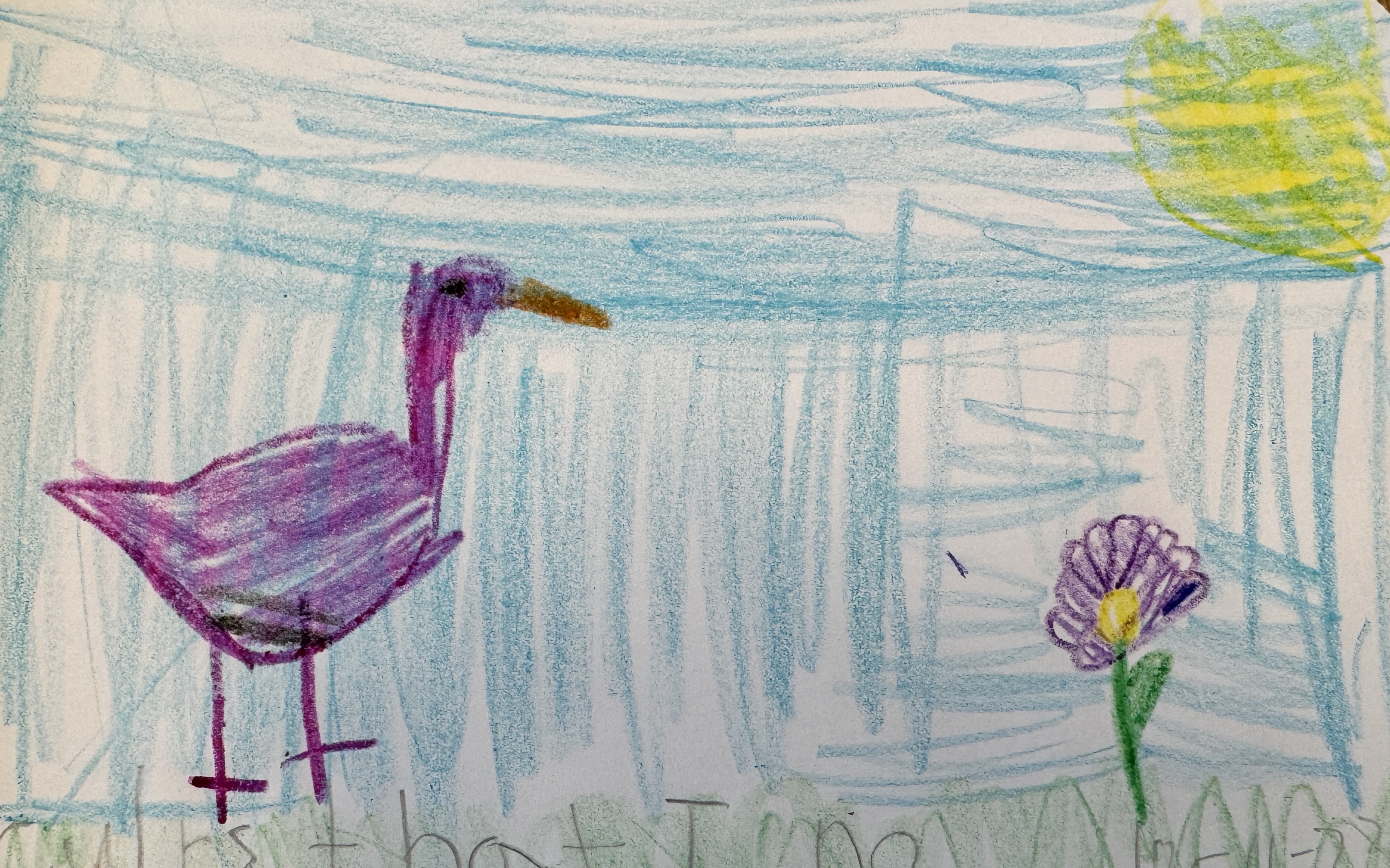
We study a poem each week in my first grade class and this week’s poem was Choose a Color by Jacqueline Sweeney. The first lines are… If I were brown I’d be cattail or turtle deep burrowed in mud… In our study we notice, we discuss, and we illustrate the poem. Today, we went a step further and. used the poem as a mentor text for our own writing.

Although my students didn’t know it at the time, I primed the pump earlier this week by posing the question, if you were orange, what thing in nature would you be? And then as they picked the thing (garibaldi–our state saltwater fish, a tiger, a fox…) I encouraged them to stretch out their idea…what is the thing (animal, plant, form) doing? And then today as part of our morning meeting I posed the question again, this time asking about yellow. So by the time we were ready to write after our snack recess, students had ideas galore! I asked them to include at least 3-5 colors in their own nature-inspired color poem.

Today is our minimum day, so time was limited. Students wrote and then used their crayons to illustrate. While we didn’t have time to go outside for our #writeout effort, we let our love of nature and color inspire our writing.

Here’s a few examples (typed by me for reading ease):

Choose a Color by M

If I were turquoise I’d be the cool ocean rising onto the shore. If red fire blazing in a forest. If yellow the sun blazing down to earth.

Colors that I Know by V

If I was blue I would be rivers floating by.

If I was purple, violets in spring.

If pink I would be a flamingo.

If green I would be grass swaying in the wind.

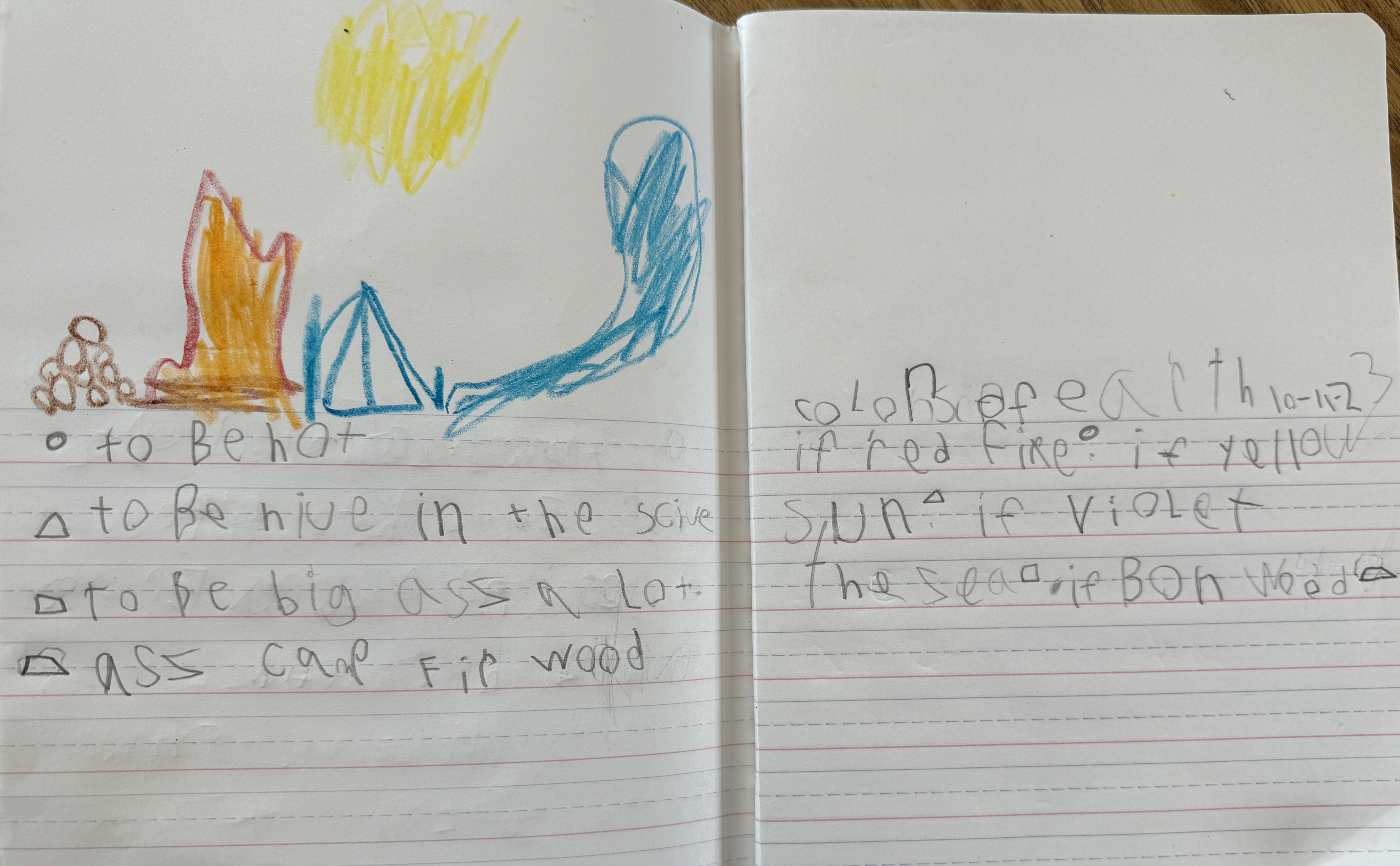
One of my more reluctant writers is now picking up the pencil and getting started. I noticed he was writing short–just picking a color and saying the thing. I quickly went over to get him to stretch past…but I could see him starting to shut down. I leaned in close and learned that he couldn’t do it because there wasn’t room…and he didn’t wait to erase. It was the perfect time to teach him a tool. I showed him how he could use a symbol to show that he needed to continue on another page. Lucky for him, he had written on the right hand page, leaving the left side open for those additions. This felt like a bit of a breakthrough teaching moment!

Colors of Earth by J

If red fire to be hot.

If yellow sun to be high in the sky.

If violet the sea to be big as a lot.

If brown wood as campfire wood.

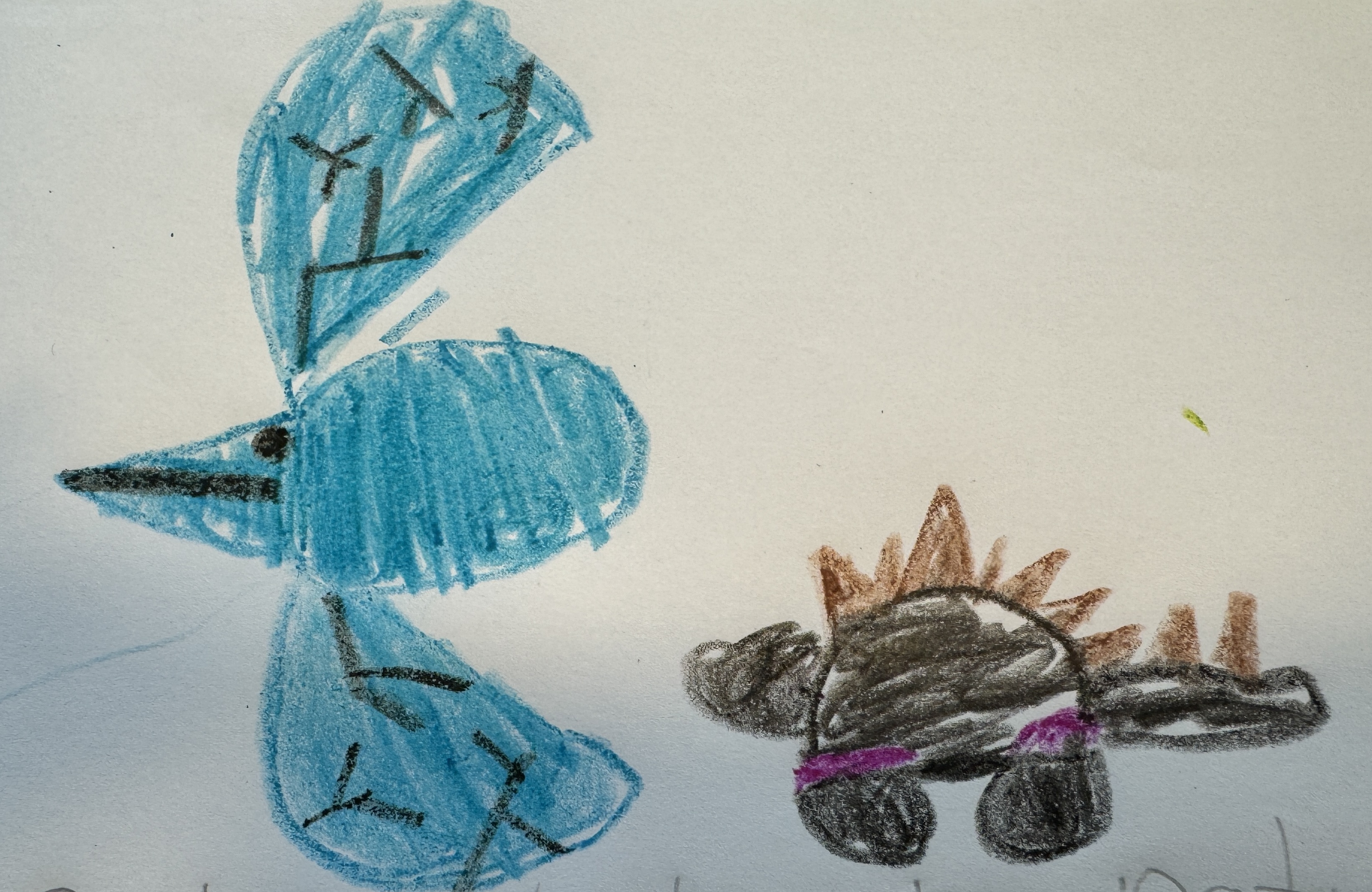
And then there is my Star Wars aficionado who can turn any writing invitation into a themed piece that is Star Wars from start to finish. He checked in with me…does it have to be nature? I reminded him that we were in the midst of #writeout and so were sticking to a nature theme. Here’s how he made it his own!

Colors that are not Primary by O

If light blue I would be a pterodactyl hunting. for food.

If I’d be black I would be stegosaurus drinking water.

If I’d be green I would be sabertooth tiger running from a volcano.

It’s such fun to watch my first graders grow as writers, learning to add details and stretch out their compositions, and to find their own writing voices. And what better writing invitation than #writeout?

Under the Influence of Acorns

On some days, my students and I head outside for inspiration for our writing and learning and on other days, we bring nature right inside the classroom. Fall is known for leaves changing colors, animals preparing for winter, acorns dropping… But in southern California that isn’t what we see outdoors. Our trees are mostly green, the weather is warm, and no one really hibernates. But in first grade students don’t seem to notice that our fall is different…and so, we often import the icons of fall.

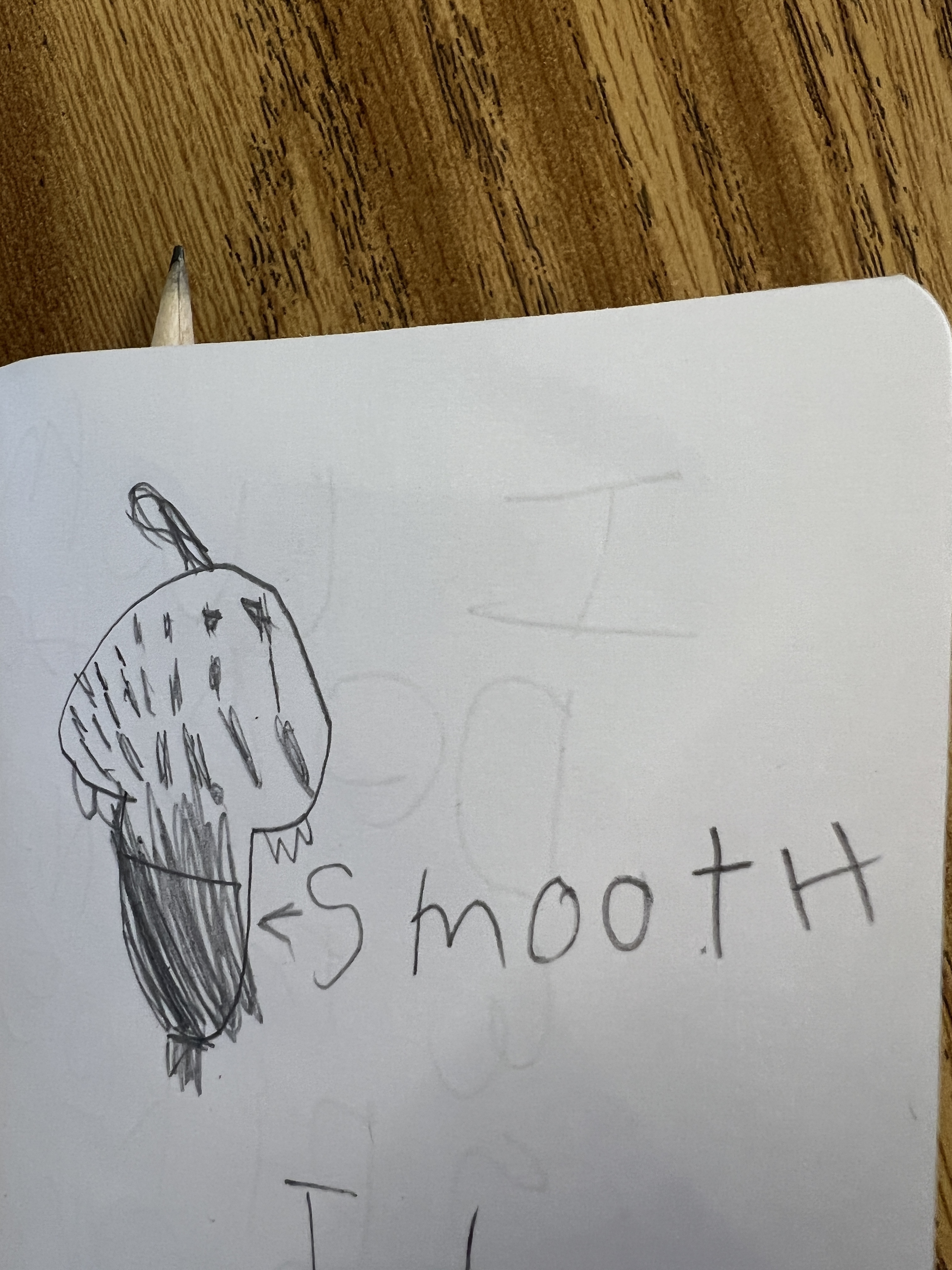
Yesterday after reading, Because of an Acorn and talking about the interconnectedness of plants and animals, we watched a video from a park ranger at Sequoia National Park where we learned more about oaks, acorns, and the communications between trees. And then I pulled out my stash of acorns, saved from a year ago when a friend from the central part of our state shared some from her neighborhood. My students examined these extra large acorns carefully, delighting in the texture of their caps, the smoothness of the acorn itself, and the way it rattled when they shook it (they have dried out somewhat after being in my classroom for a year). Then then carefully sketched the acorns and some oak leaves (using our book as reference). Many spontaneously began adding notes, noticing the point at the bottom, the variations in color, and more. Obviously the note taking carried over from our nature notebooking described in my previous post.

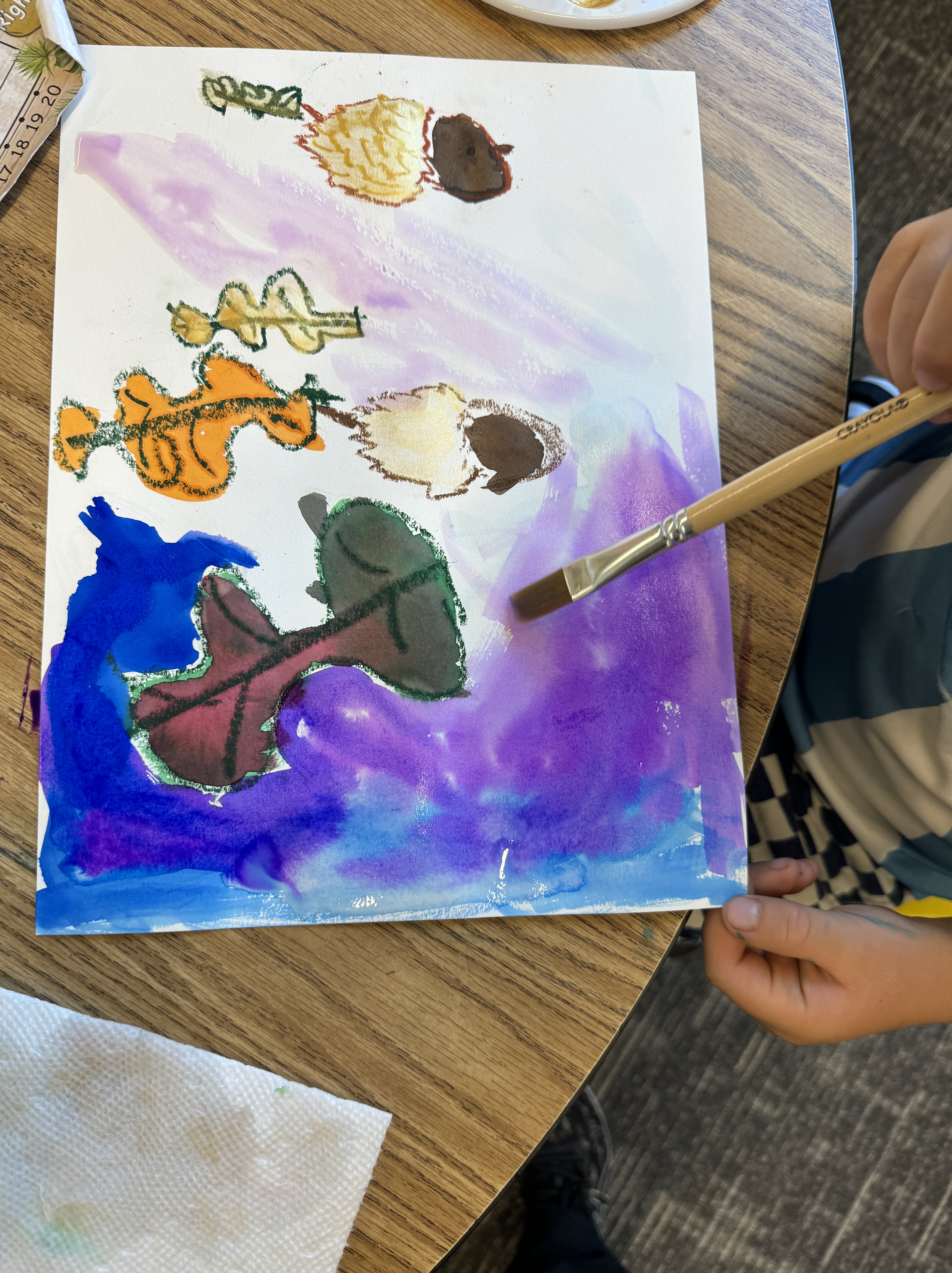
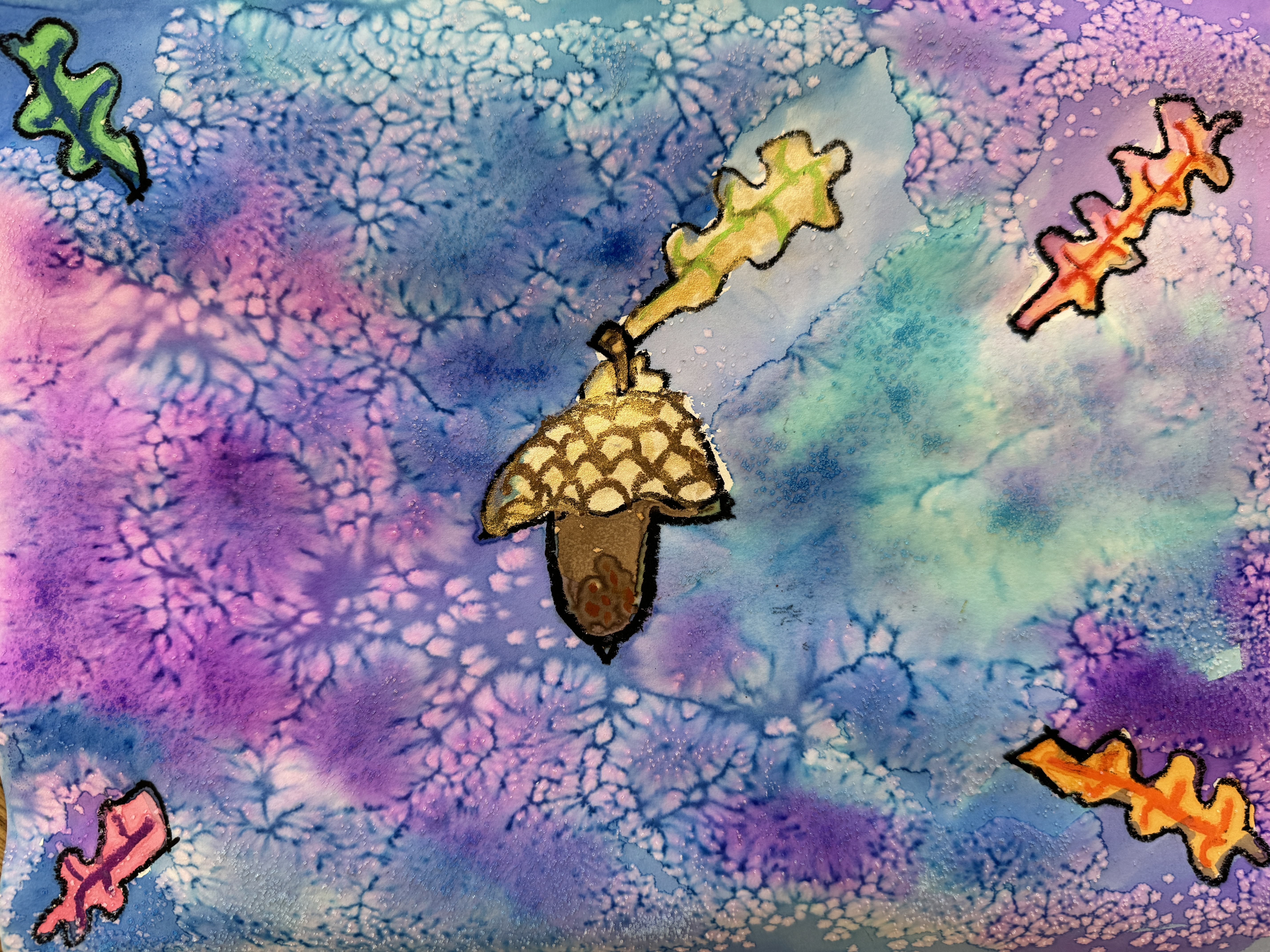
In this case, the goal of the sketching was practice for a watercolor project. Our subject was the acorn, and then we experimented with three different watercolor techniques: oil pastel resist (using oil pastel to create a border to keep paint from running), wet on wet (painting the background with water before applying the paint), and then adding some pinches of salt to create a starburst effect. First graders have so much freedom as artists, they grab the oil pastel with confidence, seemingly not worrying that they will not be able to erase a mistake. They drew and painted…with stunning outcomes.

And since the ranger in the video offered as a prompt, imagine a dialogue between trees…which we expanded to include a conversation between acorns and oaks, students experimented with writing about that interaction. They are new to the writing of dialogues, but their first drafts show some promise. Here’s a couple (typed by me for ease of reading).

An acorn falls off an oak tree. Am acorn hangs from a branch. An acorn drops and a chipmunk will eat it. Hi oak. Are you going to drop the acorns? Oh. I will when it is fall. Hey oak trees, you want to drop acorns! Now it is fall. The oak trees wait. Let me tell the other oak trees so they know. Now it is winter. The animals are hibernating. The bunnies are gathering food for winter.

And…

A squirrel asks an oak tree, can I have one acorn? The oak tree said no you can not have an acorn. Acorn said please! Okay said oak tree but I’m keeping an eye on you! And if you grow into a tree then I will talk to a scientist, so don’t forget squirrel. But wait! I have to tell the other oak trees so we can do a masting said oak tree. Hey oak trees, let’s do a masting yelled oak tree. The oak trees did.

My students were most impressed with their own volume of writing, most filling more than a page with their words. I love that they picked up on some of the science from the video–the idea of a masting, the phenomenon where oaks drop an extreme number of acorns every 3-5 years was information directly from the park ranger.

How are you letting #writeout influence your writing and the writing of your students?

The Magic of Mini-Zines

There’s something so special about making things. You use your own hands and something that was once a flat blank piece of paper is suddenly something else, something you created.

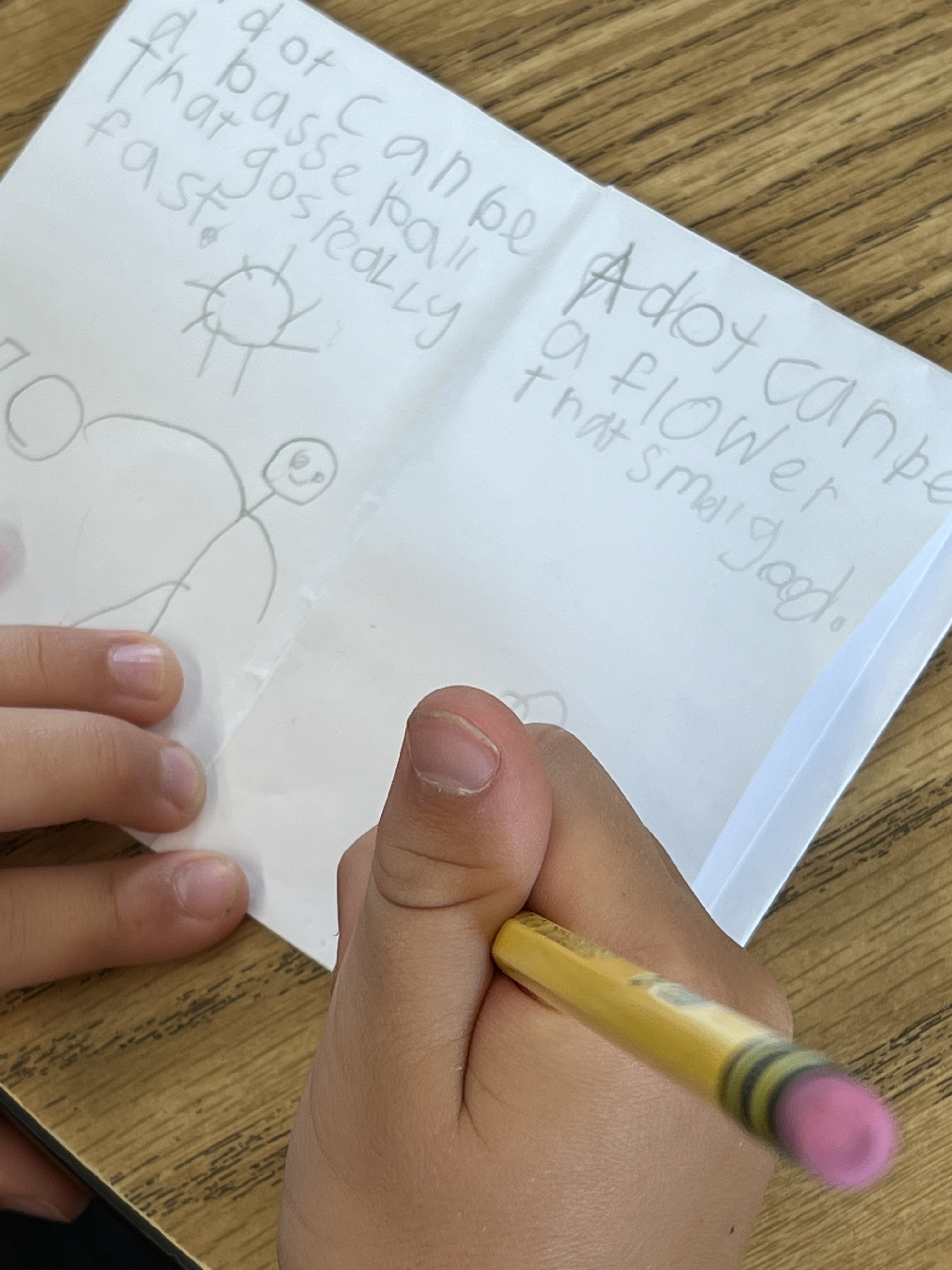
We’ve been making Zines in my first grade classroom. Our first attempt happened during our Dot Day celebration. We took a piece of printer paper, folded until we had 8 even rectangles, made a single cut…and voila! The paper became a small, multi-paged book. Those first books became our “A Dot Can Be…” zines.

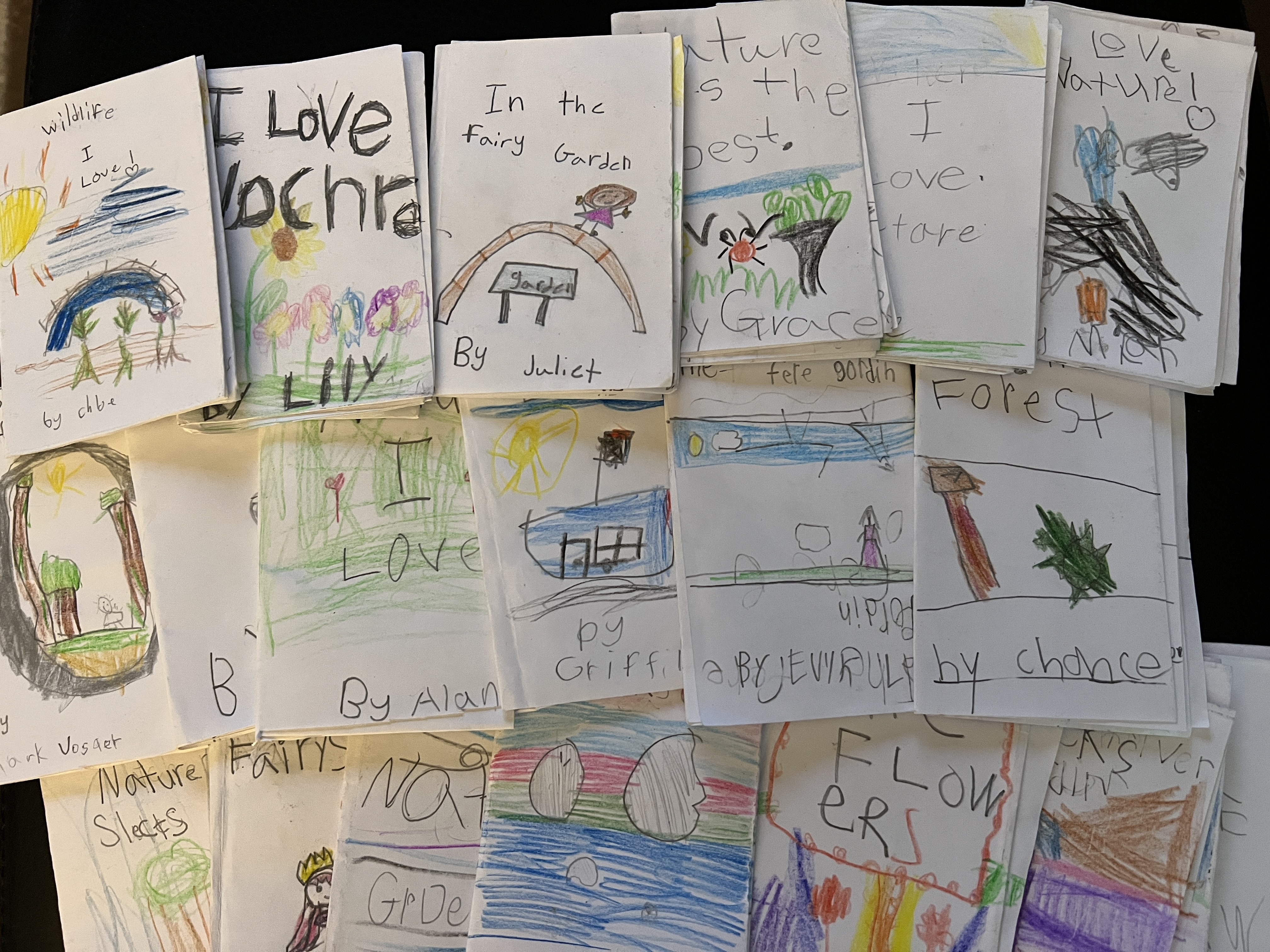
Last week in honor of #writeout, we spent some time in our pollinator garden and basin area of the playground exploring nature’s artifacts. I wrote about our experience with our nature collectors and our wonder walk here. When I left off with that post students were in the process of creating zines about the nature items they collected. What I love most about these mini zines is the agency students feel about creating them. I also like that it allows students to both “write small” and to be literary in their approach. Students who are emerging as writers might create a page that reads, “Spiders Find a Way” with a beautiful drawing of a spider on a web, while more advanced writers can write, “A rock finds a way to scrub against the tree with happiness.” The writing and creating is accessible to everyone in our first grade class. And the zines are truly tiny jewels!

And after a conversation with some colleagues on the Connecting the Network Call with the National Writing Project last week, I took their suggestion and sent blank zines (made by my students) home with students with an invitation to explore on their own at home and to make a zine on their own. (We forgot to take them home on Friday, so they went home on Monday).

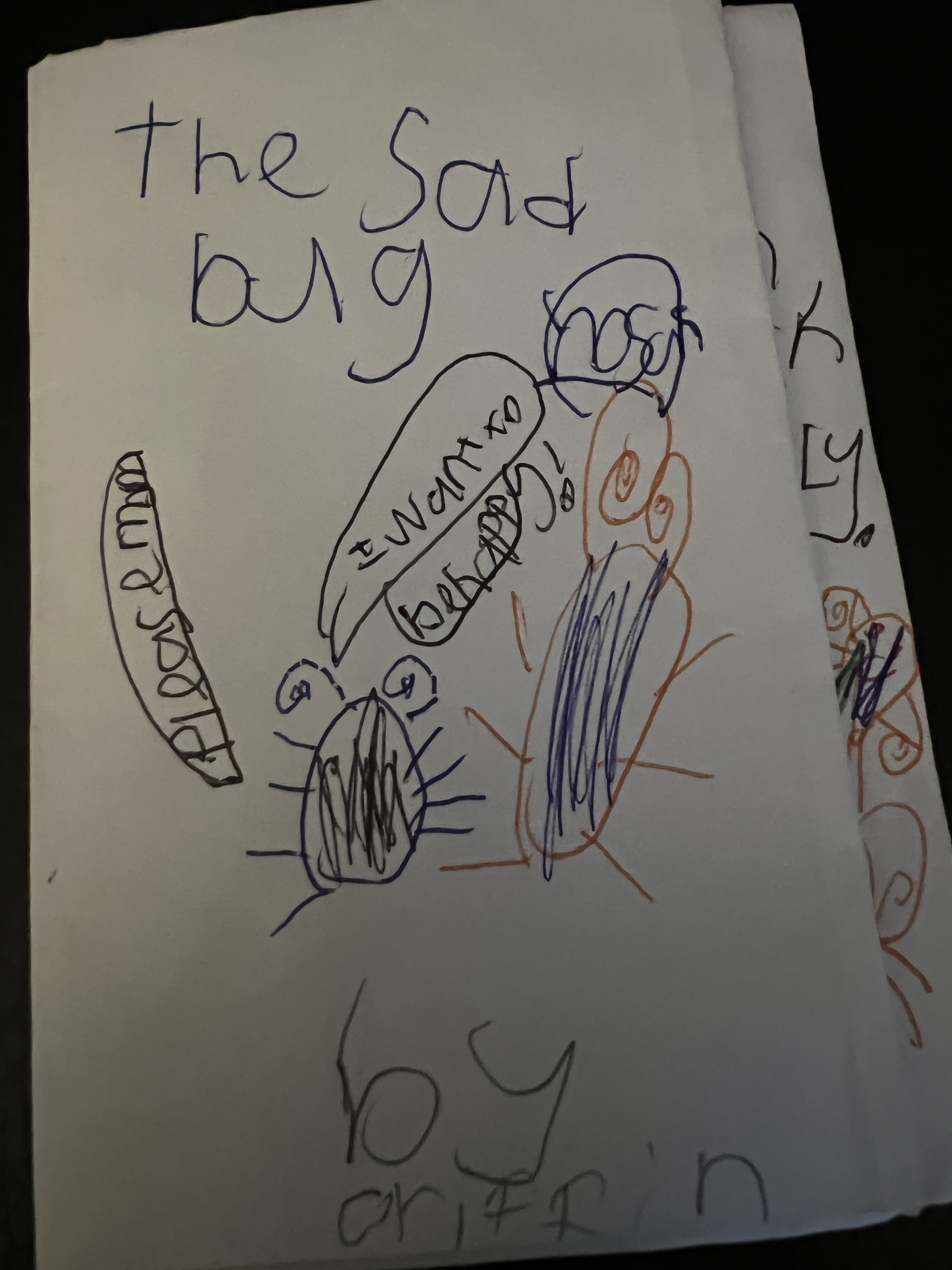
And…just like my colleagues suspected, my students were motivated to write at home. Today this lovely book came in:

My student was excited to read it to me…and for me to read it to the class! It was a delightful nature-based fictional story that involved a bug and a centipede. I’m guessing some more student-created zines may show up in the classroom later this week!

I know we’ll keep on making and writing…and making writing, both inside and outside the classroom. I’m excited about the writing community that my classroom is becoming.

#writeout: Because of an Acorn

When life gives you acorns…turn it into a #writeout inspiration!

On Saturday I found myself at UC Davis meeting with an incredible group of writing project teachers from all over the state as we launched year 2 of our CWP Environmental Literacy and Justice Collaborative. In that space we imagined all the ways to support our students as they learn about the earth and its systems, grow their appreciation of the natural world and resources we share, and use writing to think, to reflect, to question, and to advocate for the world we need and want for ourselves and for our future.

My colleague Carol brought some wonderful acorns she found in her neighborhood as inspiration for a making project…and lucky me, I ended up taking the extras home with me to use in my classroom. These acorns are bigger than the ones I am familiar with…and so beautiful!

And they were perfect for the book I had already borrowed from the library to read this week–Because of an Acorn by Lola Schaefer. After reading and studying this deceptively simple text, we talked about what they noticed in the book. They were quick to notice that it included aspects of life cycles…and they loved the cutouts on the first and last pages. Serendipitously the NWP Write Out newsletter included a link to a video about acorns by a park ranger at the Sequoia and Kings Canyon National Park. My students loved learning more about acorns–and the ways that trees communicate with each other.

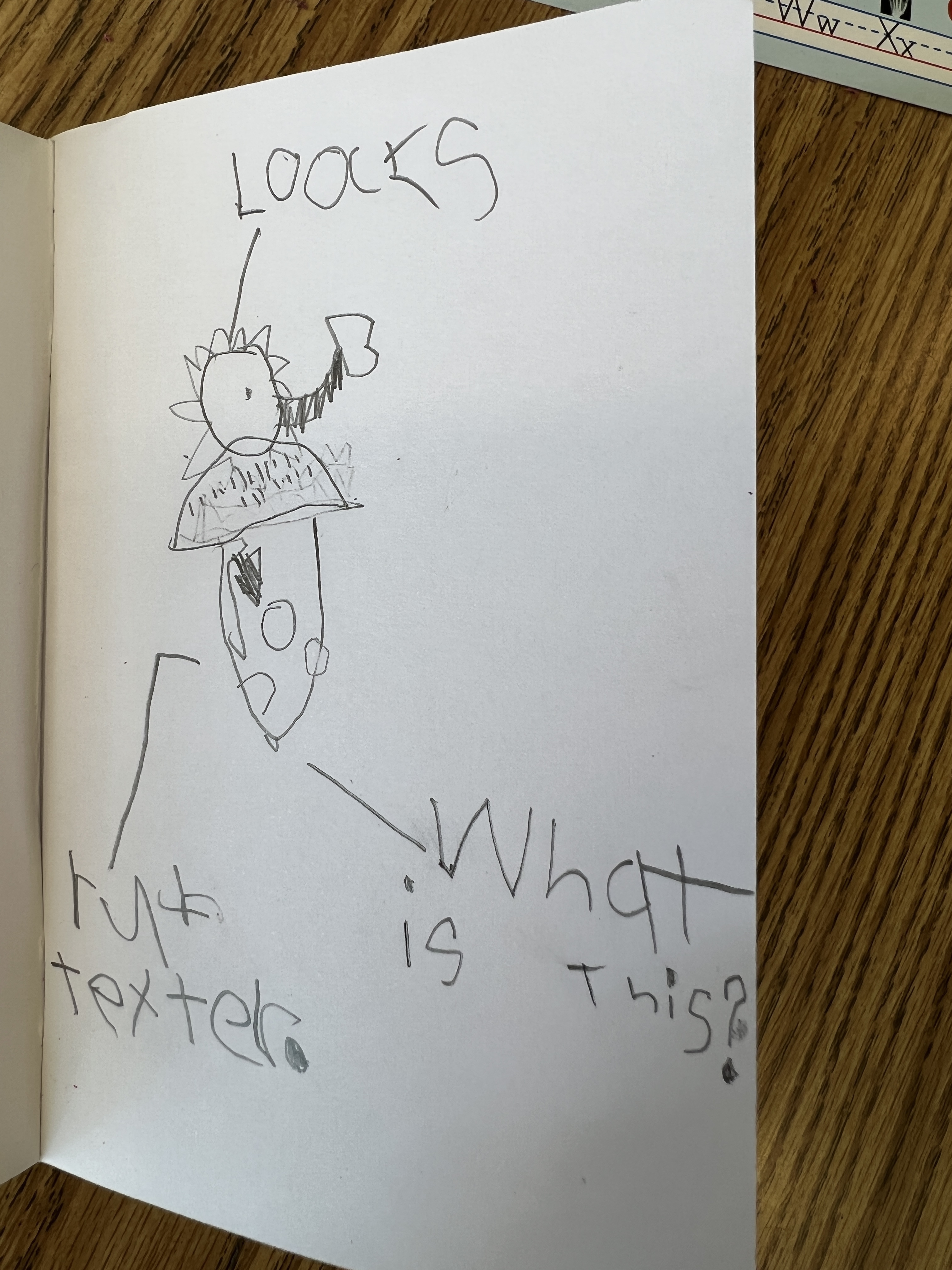
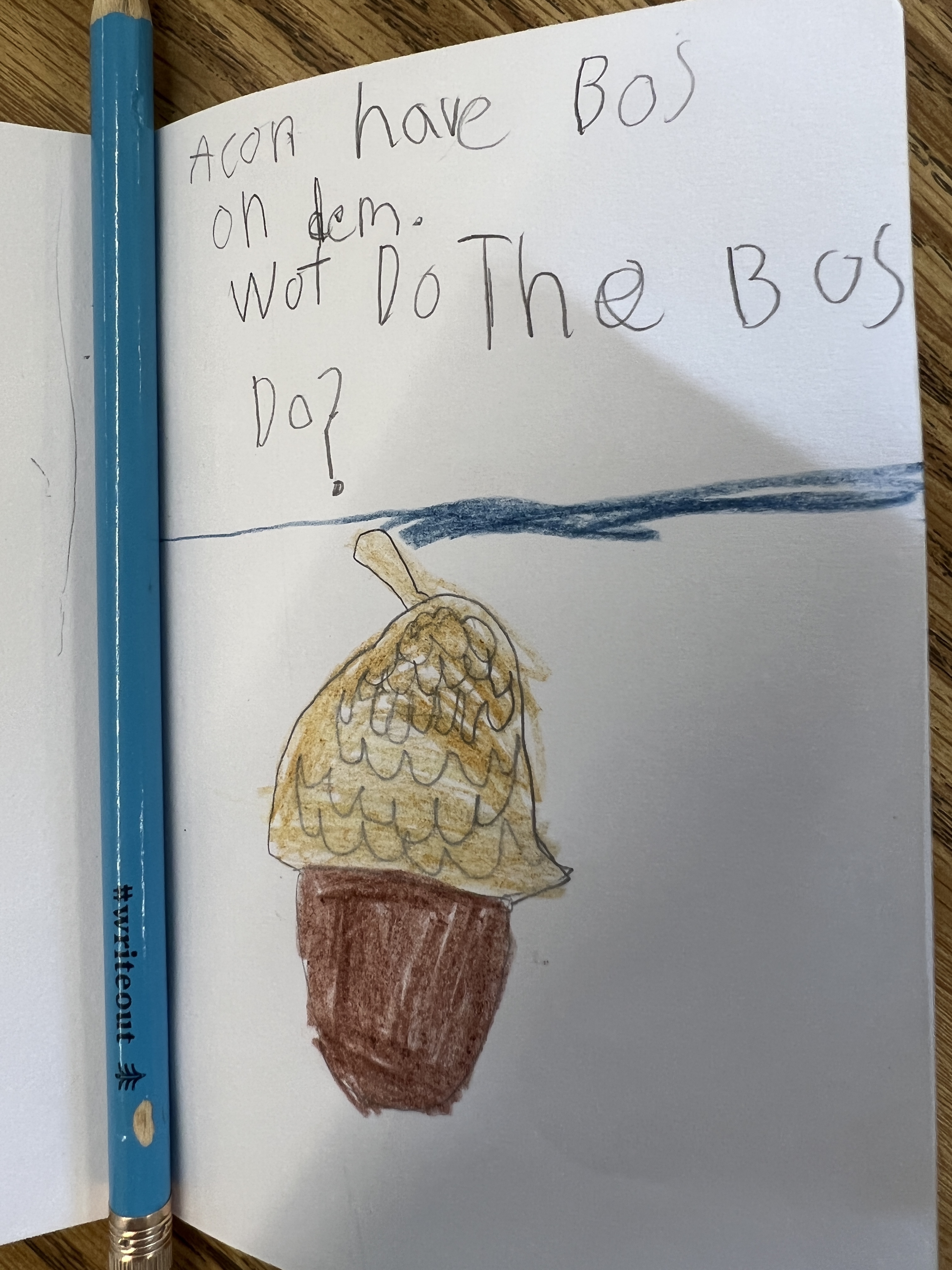
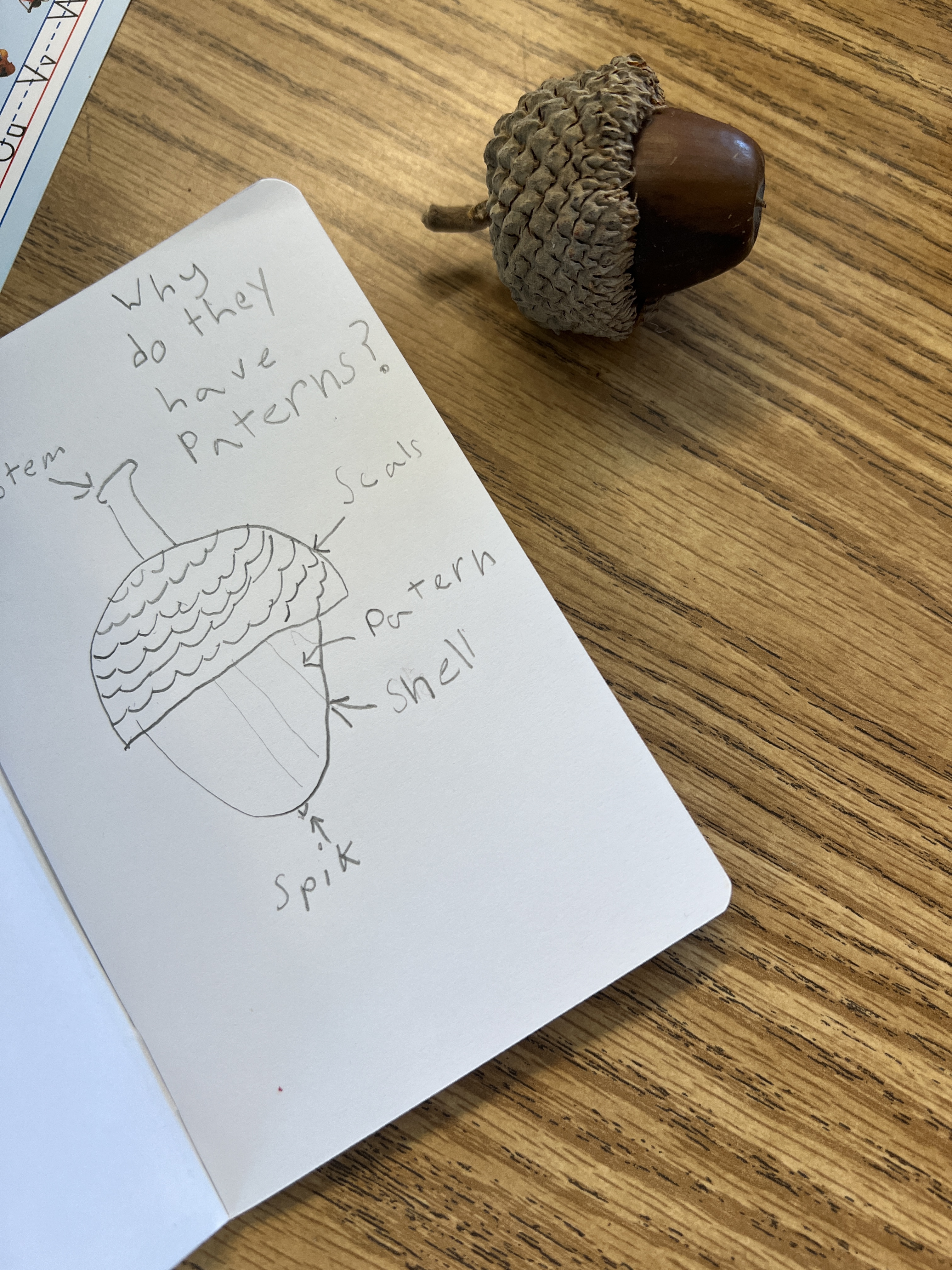
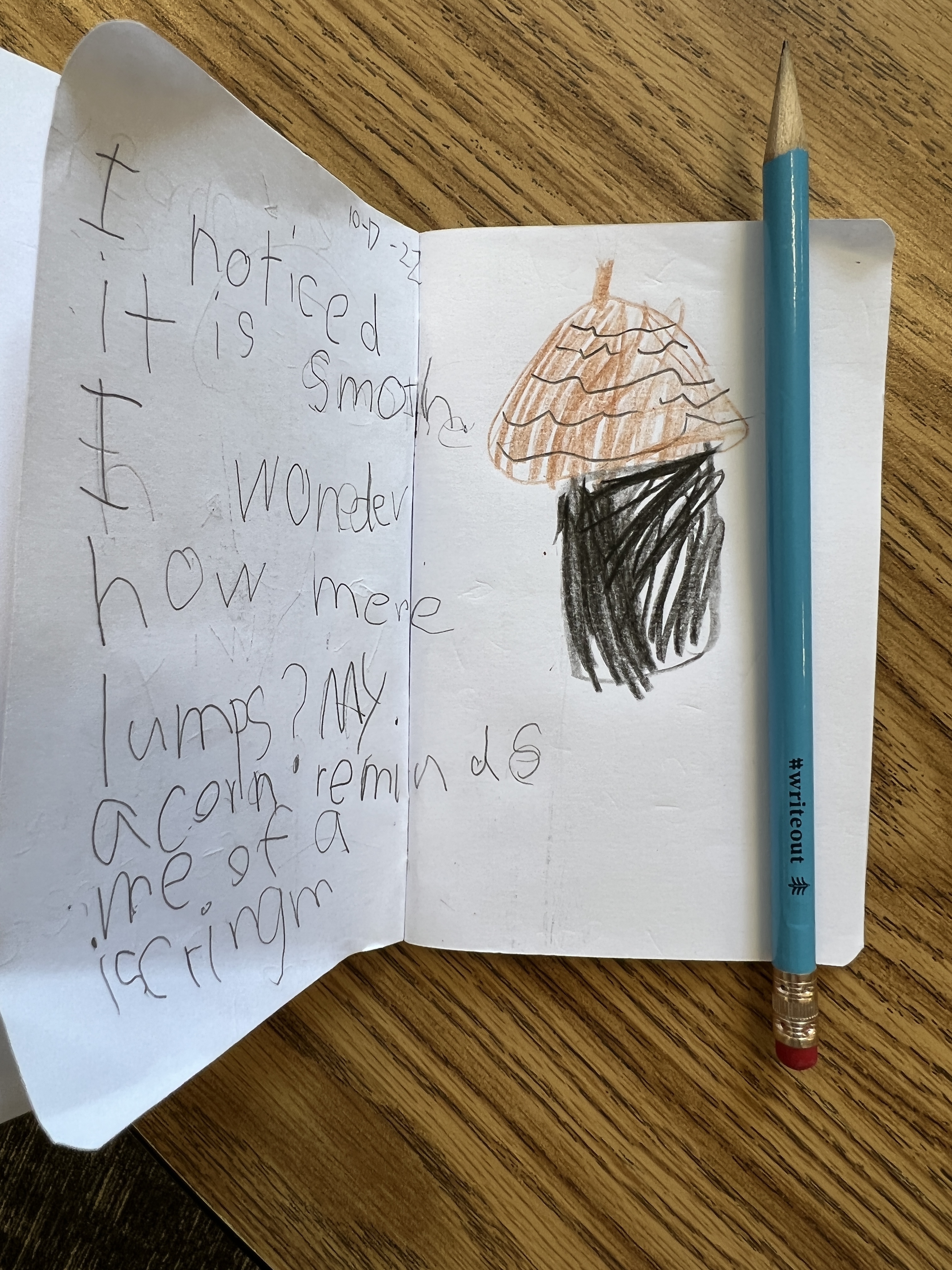
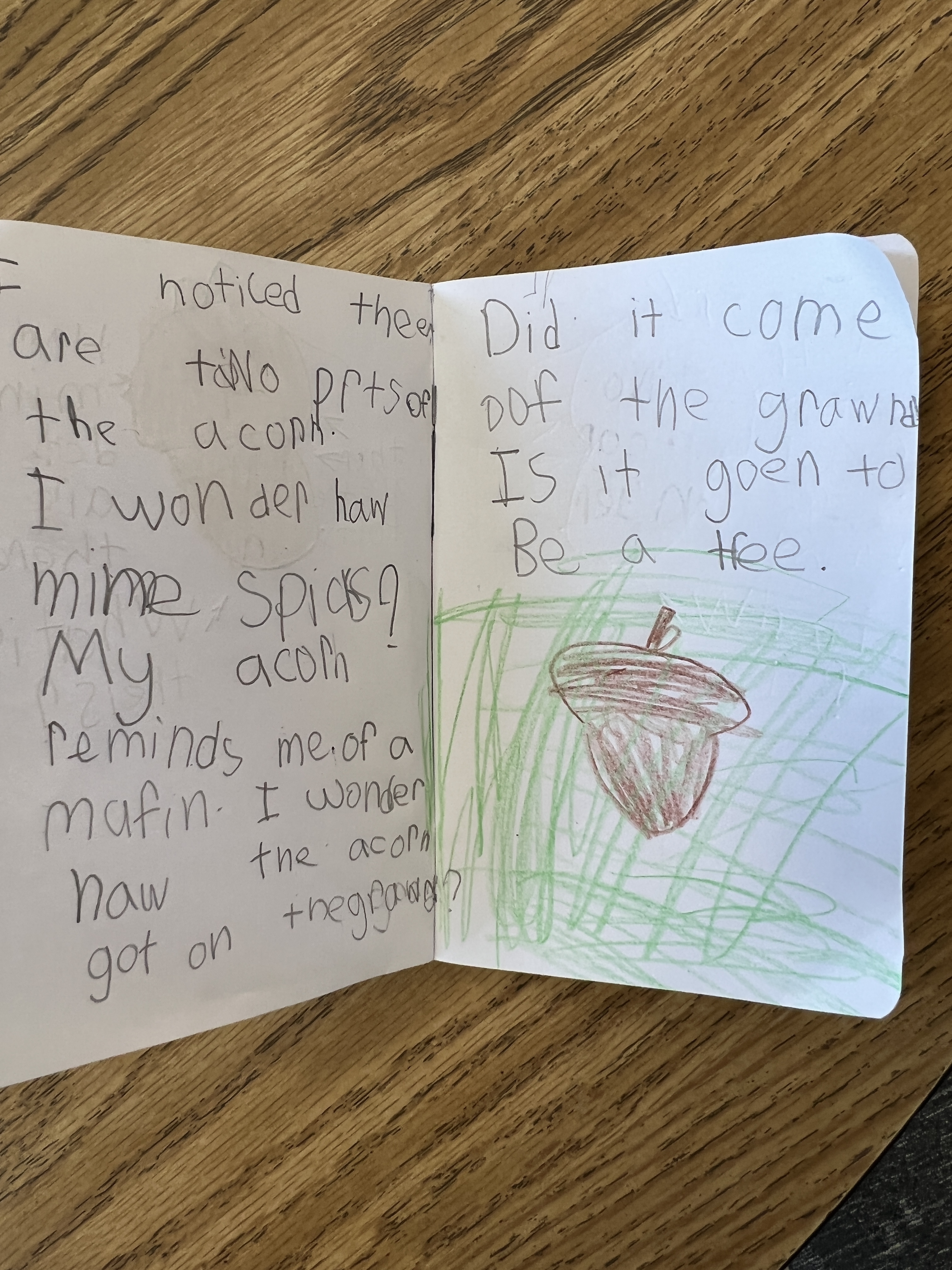
Then it was time to pull out our #writeout pencils and notebooks. We took time to look carefully at the acorns and sketch them in detail. Students were encouraged to use numbers and words in addition to their sketch to capture information about their acorn.

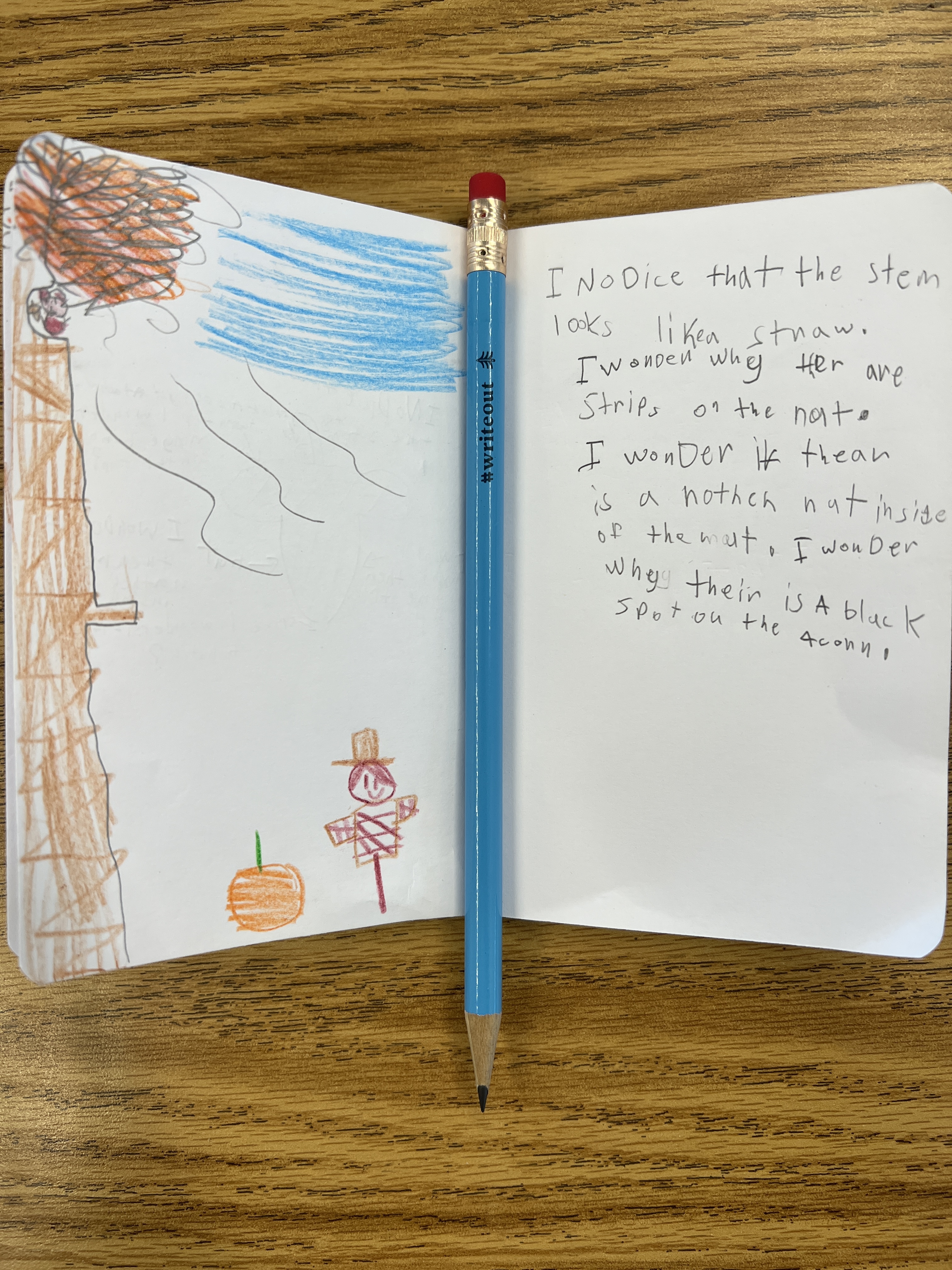
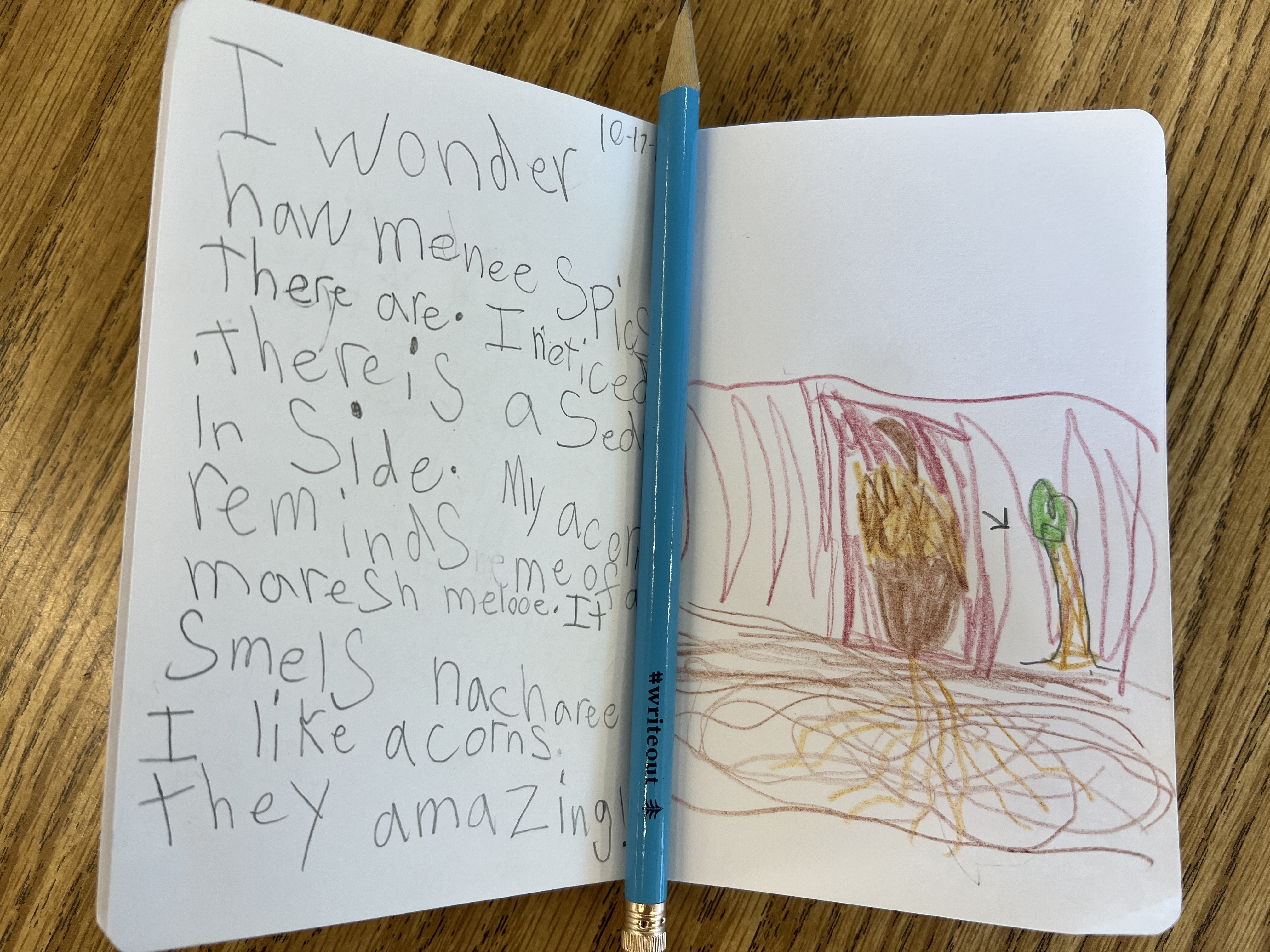
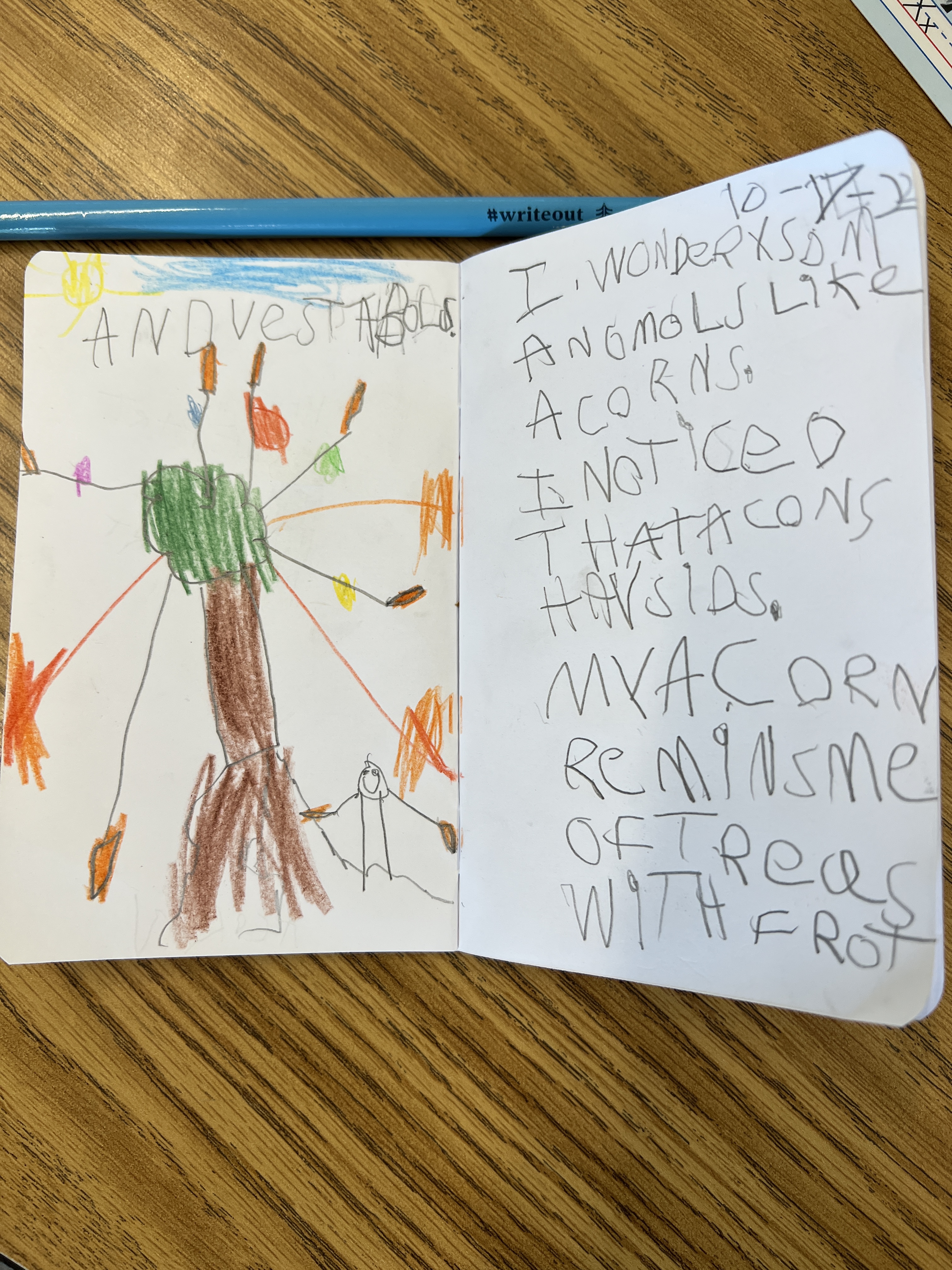
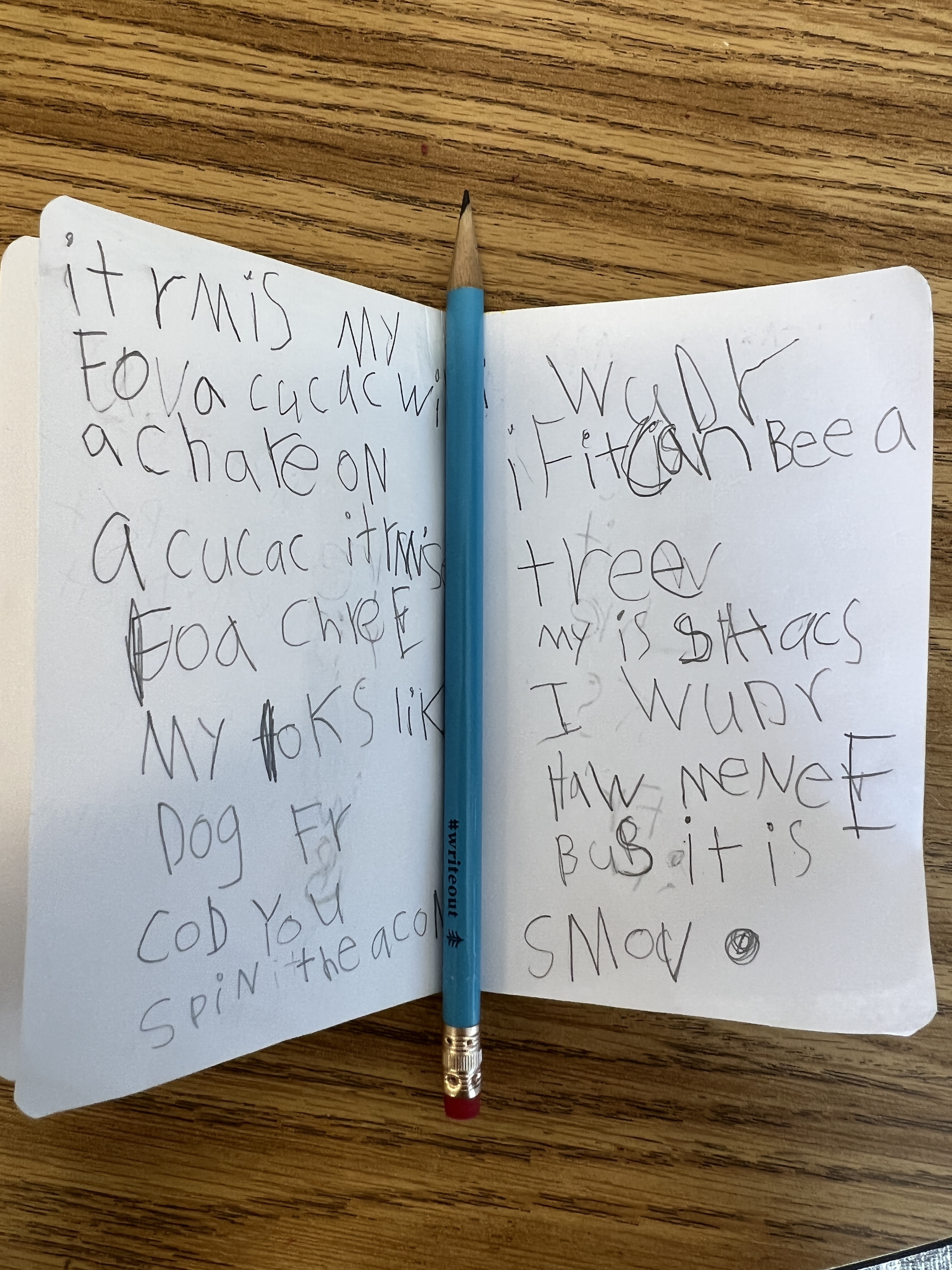
After a break for their music class and recess, we returned to our notebooks for some writing. To push students’ thinking, we used the prompts: I noticed…, I wonder…, and It reminds me of to describe the acorn we had studied and sketched. These first graders had no hesitation. They had plenty to write about and were eager to get started! To keep the words flowing, students were encouraged to use their best “kid writing” (or phonetic spelling), prioritizing ideas over correctness.

Best of all, my students are paying attention to the environment and appreciating all that it has to offer. It is my goal that this immersion in nature will lead us toward advocacy as we consider the ways all of us, as community members–young and old(er), can be a catalyst for change to make the world a better place.

Change in View: #writeout

I walked out of school with the sun shining brightly on my shoulders.  I peeled my lightweight jacket off before getting into the car to head down the hill toward the beach for my after school walk.

In the less than two miles from school to the beach, the sun dimmed, shuttered by a thick veil of fog.  Palm trees became shadowy pillars as I steered toward the beach parking lot. As I walked down the long steep ramp to the sandy beach, it was like walking into another world. Colors were swallowed by the damp blanket, the view disappeared,  I could see only 20 or 30 yards in front of me.

dsc06999

My mind filled with stories, the stuff of Halloween and horror movies.  What was around the corner? What evil might that shadowy figure in front of me bring? What about the sea itself, was the tide actually as low as I expected?

dsc07000

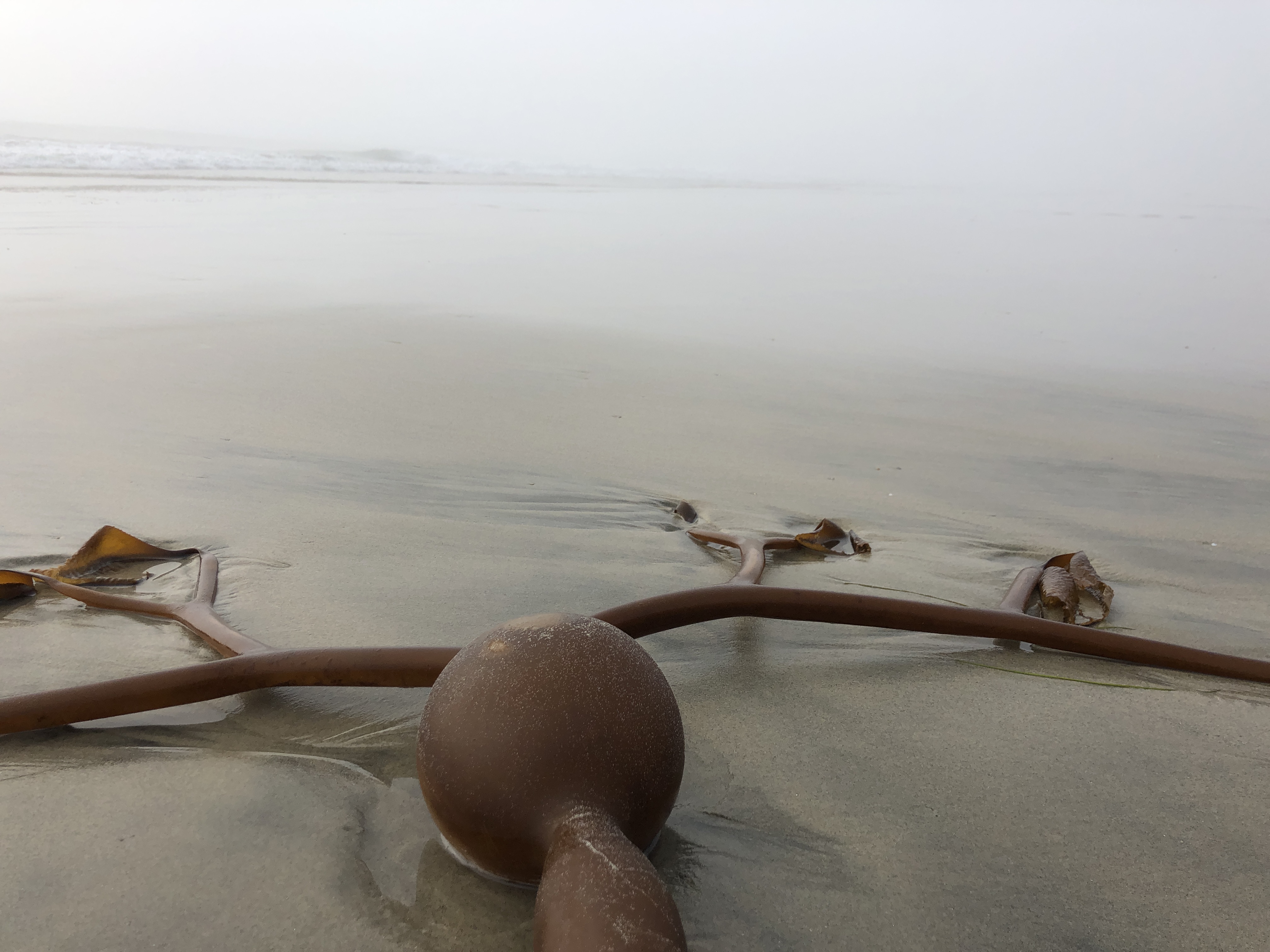
Luckily, my feet know this beach.  They followed the path worn by my frequent walks, recognizing the curve of the beach, the squish of the sand under my soles.  Familiar birds whistled hello, giant kelp caressed my toes and a huge piece of bull kelp appeared from the shadows.

img_3581

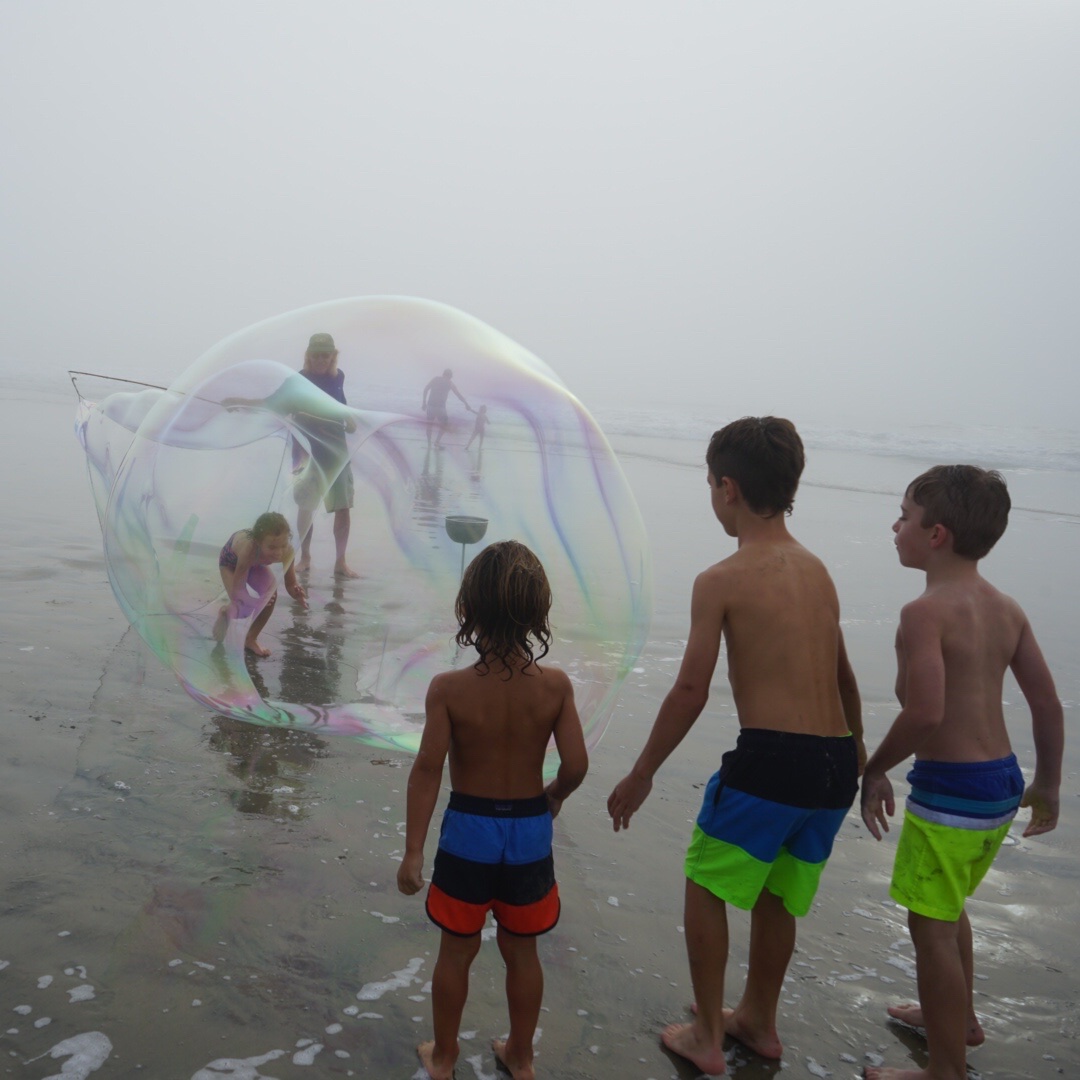
As I neared the end of my walk, a crowd of children appeared from the mist.  And with them, the bubble man, the pied piper of the beach, casting a spell with his magic wand.  The thick mist didn’t dampen their spirits, instead the dampness of the air helped them catch bubbles–holding them in their hands and allowing them to slip into the bubble tunnels the bubble man created.

dsc07049

Stories continue to swirl, wrapping me in their damp, shadowy chapters.  My imagination is already hard at work, making connections, creating movies in my mind.  I can only hope they don’t become the stuff of nightmares as I drift off to sleep.


Inanimate Objects: Students #writeout

Some days in the classroom are just right.  Students are productive, interesting learning is visible, and it seems that we all grow closer as a result.  Today was one of those days.

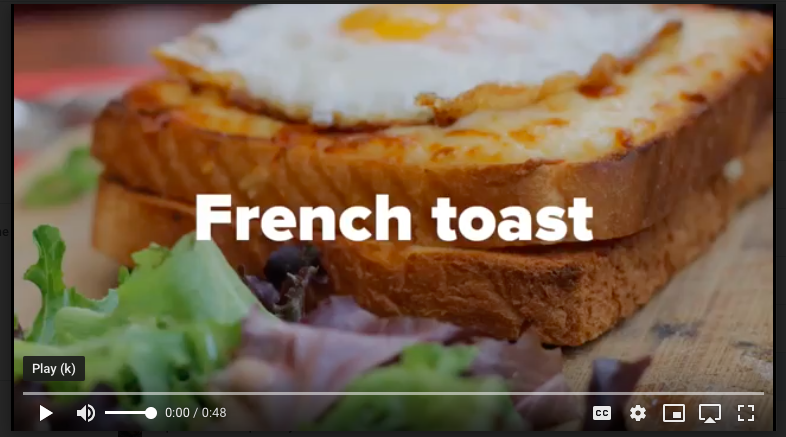
As promised in a previous post, my students used the poem Pencils by Barbara Esbensen to inspire their writing about an inanimate object.  They picked topics as varied as ropes/knots, french toast and pancakes.  (There are also poems about gravestones, oil pastels, basketballs, and erasers…they are just not quite all the way finished yet!)  And then, to take the writing just another step further, we explored the Adobe Spark Video app to make a video to amplify their voices and extend their ideas.  Spark video is friendly for my students, offering a number of high quality photos for them to use in their videos.

So…here’s a few of the videos.  (I’ve included a screen shot of the video with a link to view/listen to the poem.)

Khloe’s pancake poem

Screen Shot 2019-10-15 at 6.13.05 PM

Shea’s french toast poem

Screen Shot 2019-10-15 at 6.16.37 PM

and Bodhi’s rope/knots poem

Screen Shot 2019-10-15 at 6.18.54 PM.png

As always, my students would love comments.  And I’d love to know what you are doing to celebrate writing this month with your students!  #writeout


What Students Love: #writeout

As promised, here are some of my students’ poetry inspired by Lee Bennett Hopkins’ City I Love.  (For more details, check out this previous post.)

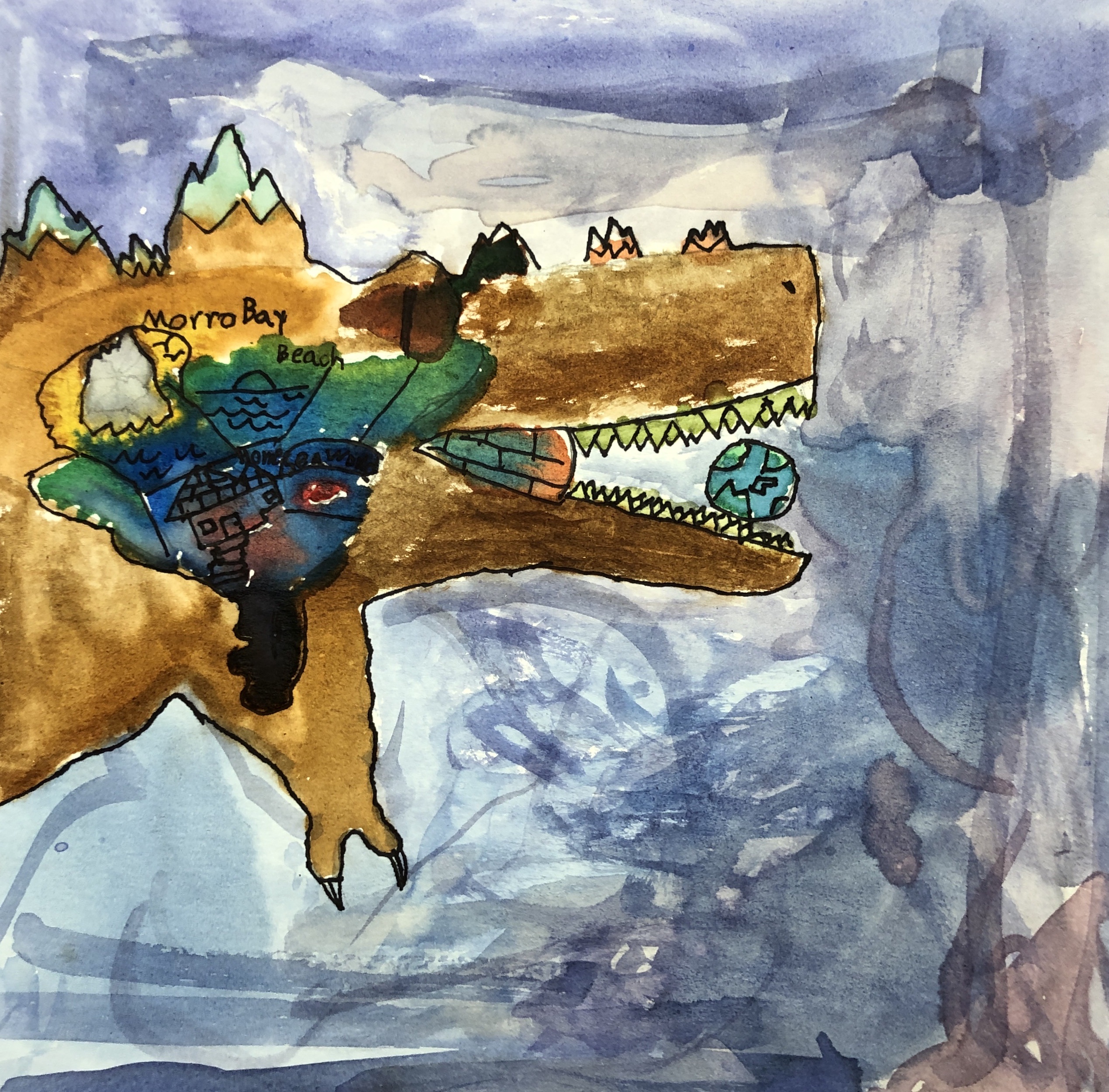
Even before pulling out City I Love, I launched the idea of writing about place by reading All the Places to Love by Patricia MacLachlan and Where Am I From by Yamile Saied Mendez.  Students then created heart maps of the places they love (ala Georgia Heard).  By this time students were excited about the places they love, eager to tell each other and me all about them.  But instead of diving right into the writing, I asked students to “map” themselves.  I tried to keep this direction pretty broad, letting students take it in any direction they wanted.  These watercolor and black sharpie marker masterpieces are the result!

This map is a wonderful map creature by H.

img_3344

And his poem:

Morro Rock I love

Looking at the dormant volcano 

The fish swarm in the water 

The sound of the sea gulls

The smell of the salty sea.

Casting a line

Getting the bait 

catching the fish.

It’s just sitting in place

Day after day

Year after year

For hundred of years.

Walking on the beach

looking at the fish and crabs

and looking at the ocean scenery

Sitting on a dock waiting for a fish

like waiting for a train.


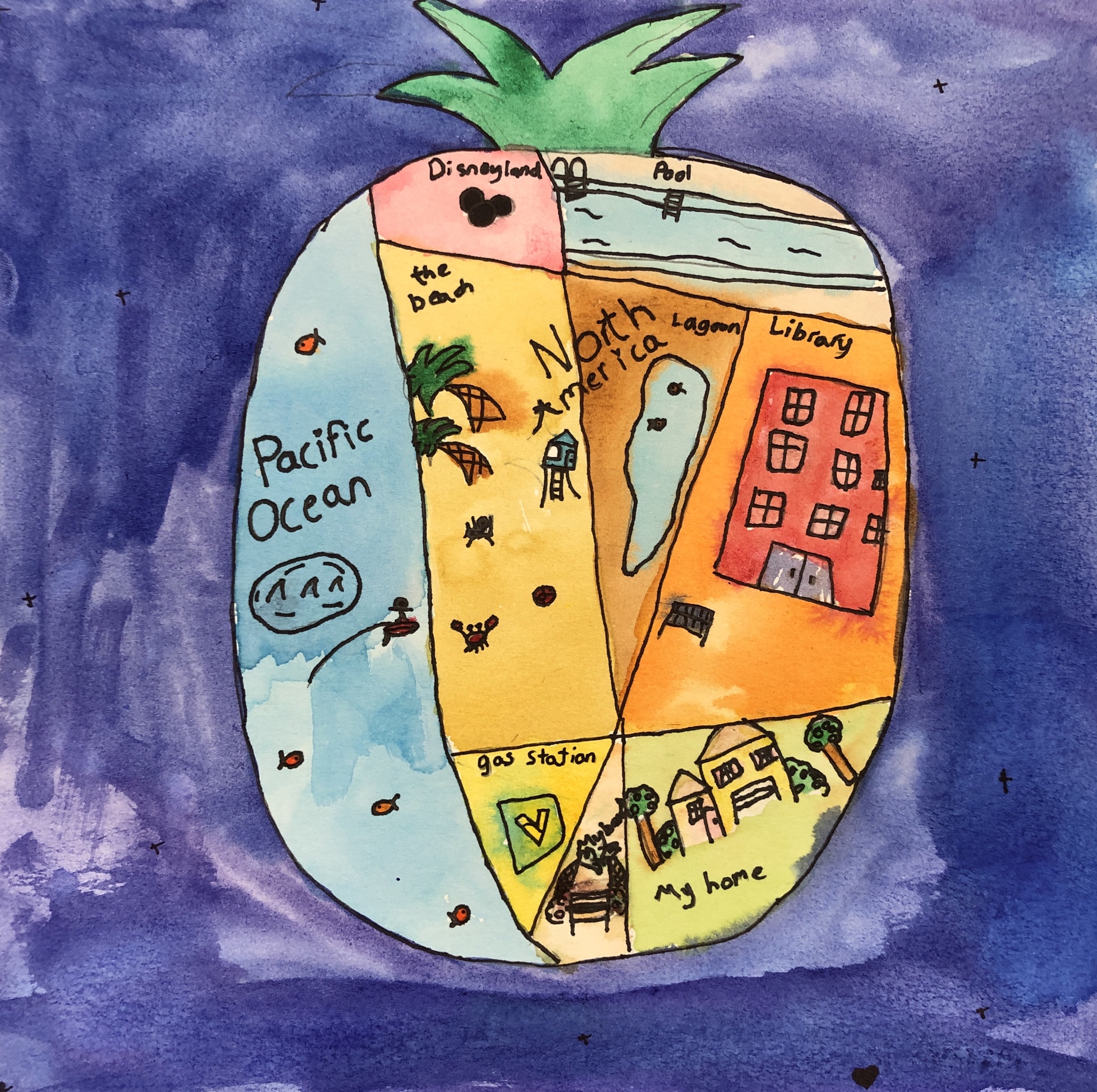
And a pineapple map by I.

img_3341

And her poem about a very special bench that honors her grandmother:

The Bench I Love

 On the bench I sit at

      Bench I love 

I watch the flowers flowers flow 

As the birds glide slow as they pass by their home

Through the palm tree garden I go 

Past the great sun’s glow

On the bench I sit at

Bench I love 

I sit down and watch the tide curl 

Up & down it will go 

On the bench I sit at 

bench I love

The breeze flies past my hair 

And chases the ocean’s salty waves

On the bench I sit at

 bench I love

I sit down and inhale

Look up and exhale

And a horse map by S.

img_3567

Accompanied by a barn poem:

Barn I Love

Barn I go to

barn I love.

Horse smelling wonder beyond city.

Gallops of emotion. Races of hearts.

Barn I go to 

barn I love.

Each morning a sweet smell of hay .

Each night a thankful nay.

Barn I go to 

barn I love.

Morning wet covers the arena.

Full of playful horses running.

Barn I go to 

barn I love.

Stardust black mares galloping in the cold moon.

 Sunset colored  butterflies leave at the end of the day.

I told my students that I would use my blog to amplify their voices (our vocabulary word from last week!).  I know they will appreciate your comments.  And know that these are just a glimpse of what my students created as they thought about the places and activities that matter to them.

How are you celebrating writing in your classroom, in your home, in your life?  #writeout