Tag Archives: connected learning

Teaching to See: The Value of Iteration

Yesterday began our August photo-a-day challenge at #sdawpphotovoices with a focus on design elements…beginning with symmetry.  Anna over at #clmooc posted this video about Inge Druckrey, a graphic designer and teacher, saying she thought I would appreciate it.  And she’s right.  It is about 40 minutes long (a pretty long video for me to watch!), but interesting on many levels.

<p><a href=”http://vimeo.com/45232468″>Inge Druckrey: Teaching to See</a> from <a href=”http://vimeo.com/et”>Edward Tufte</a> on <a href=”https://vimeo.com”>Vimeo</a&gt;.</p>

The idea of teaching to see seems to be a theme of mine since I began this blog almost a month ago.  Photography has proven to be a tool that has helped me see and look at my world in some more intentional ways.

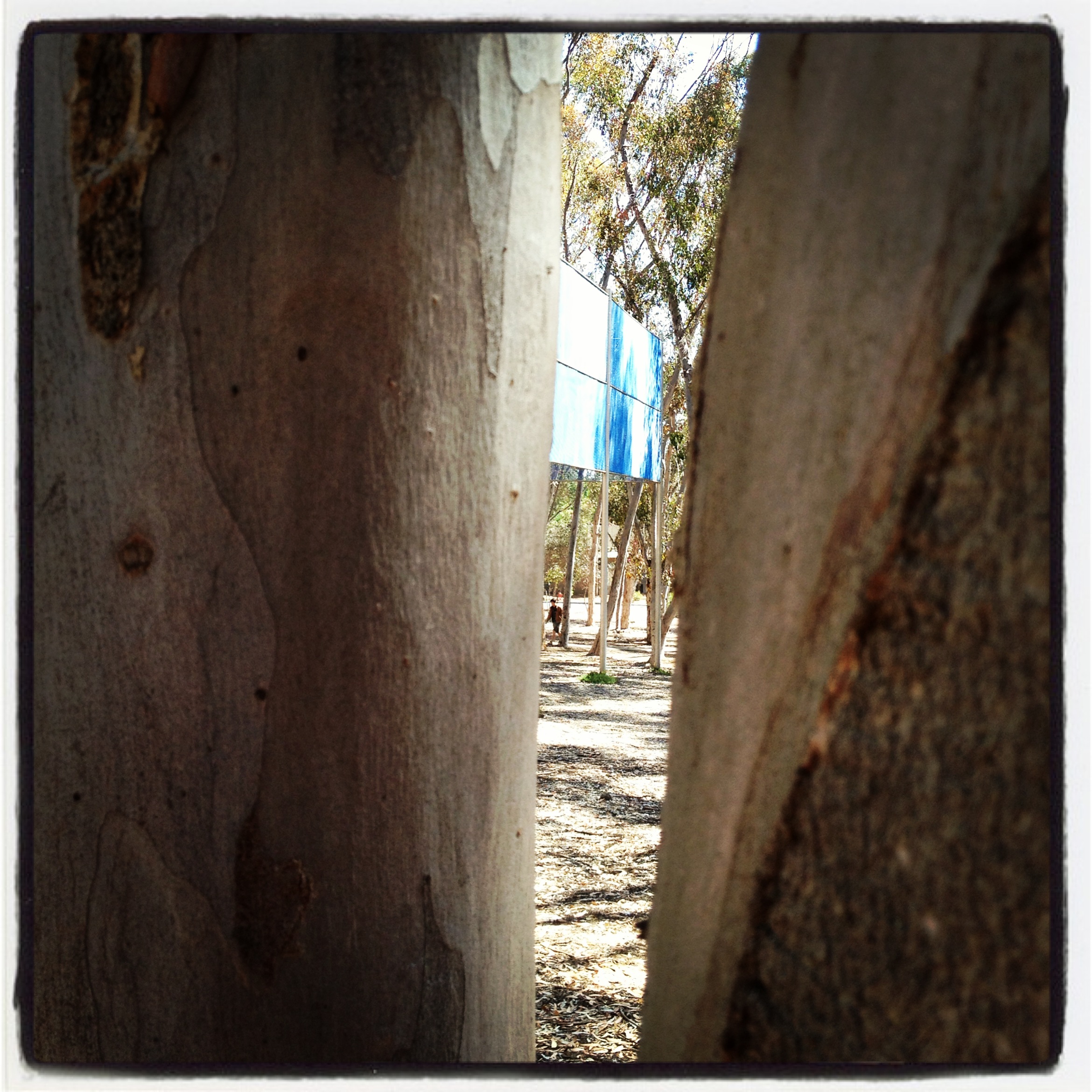
A focus on symmetry has been challenging for the past two days.  Neither of my pictures

photo-3

photo-2

quite captures symmetry to my liking…although I’m not sure I know what that picture will be. The beauty of exploring a concept over a week is that I begin to see it differently as I continue to look for opportunities to capture that idea in my photos.

While Inge didn’t use these precise words, the focus on iteration (which we call revision in the writing world) as a way to improve your craft continues to leave me thinking about my classroom and my own learning.  It also takes me back to Malcolm Gladwell’s 10,000 hours as the time needed to gain mastery of something.  And whether that number is right or not, I do believe that we get better at things as we practice them.  But don’t get me wrong…I don’t think we need to drudge through rote and boring practice to achieve our learning goals.  For me, passion is key–finding ways to get excited about learning something new, and to make the practice interesting and motivating–iteration for authentic and meaningful reasons.  One of Inge’s students (now a professional artist) described his weekly practice of figural drawing for three hours every Friday.  He talked about it still being hard, but worthwhile–said he didn’t go to church, but he continues to keep up his practice of weekly drawing practice.

Both my photography and blogging are like that.  They are practices that require effort and time…and I enjoy the practice and the effort because I can feel myself learning and growing.  I want this for my students too–for them to develop practices that support their own learning goals.  I’ll be thinking about this as the new school year begins.  What learning practices are you considering for yourself and your students as the new school year begins?
Connected Wondering

A friend of mine gave me two books the other day.  One I have read all the way through and the other I have browsed through.  They are alike…and they are 100% polar opposites.  The first, more of a coffee table/picture heavy book is called A Lifetime of Secrets by Frank Warren. Warren invited people to send a secret to him on a postcard or in a letter that he curated as an art installation.  They range from unthinkably horrible to silly, yet their arrangement and juxtaposition creates a powerful message.  This idea of sending anonymous secrets on the back of postcards is an interesting one–and one, and one that people seem to get relief from the sending…and maybe relief in reading the anonymous secrets of others.  Here’s a related website.

The other book is The Book of Awesome by Neil Pasricha.  This is a collection of little things that make people happy…like when you find cash in your coat pocket or the grocery store opens up a new line just when you think the wait is endless.  Each is written as short vignette–as short as a sentence or two to as long as a couple of pages.  This book also has a related website where people can submit their own awesome moments (in 1000 words or less).

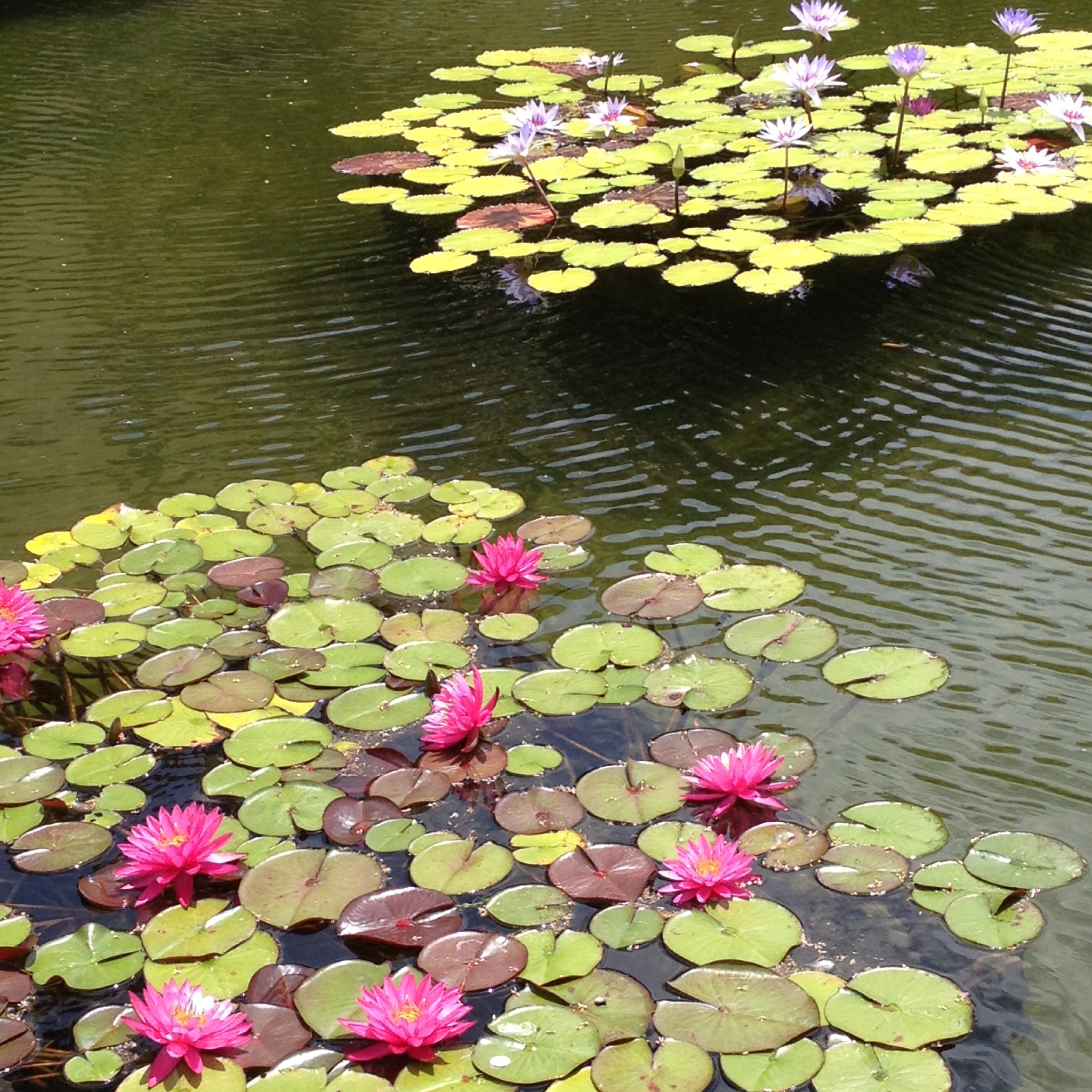
What strikes me about both of these pieces is the way people want to connect–even if it is anonymously.  People seem to have an urge to know that those things that burden or delight them also resonate with others, that they are not alone.  Like these water lilies I photographed today, tangled connections seem to help us as we live and grow.

photo-1

So as my thinking often does, I came back to the classroom with my thoughts about these books.  So how does the sharing of secrets and the sharing of awesome moments connect to the classroom?  I’m thinking about all those little things we do in the classroom to establish a trusting, cooperative, and collaborative community.  The ways we work to support each other in spite of our differences.  And a lot of that happens through writing–just like it did in these books.  Our writing uncovers our lives and lets others in.  It exposes our interests and our fears, our hopes and our dreams.

In response to my thinking about establishing a genius hour in the classroom in yesterday’s post, another friend commented about her experience seeing “wondering walls” in classrooms where students wrote down their questions–those things they are wondering about.  I’m already thinking about how a wondering wall might serve as an entry place for developing student-generated projects…and for encouraging students to use their classmates wonderings as springboards for their own.  Would that be like Postsecrets and The Book of Awesome — a place to connect and learn from each other?  A way to develop community and create collective interest as we pursue our individual wonderings?  What do you think?

Spaces for Learning

I’m seriously thinking about how to incorporate 20% time or a genius hour into my classroom this year.  I want to create spaces for student-initiated learning.

The idea of passion-based learning–learning that students are motivated to do for their own reasons–appeals to me because of my experiences following my interests and passions as I learn.  I’ve been known to tell people that I’m not a good students (in spite of my advanced degrees).  That’s because I’m not particularly interested in doing other people’s assignments unless they are meaningful to me.  And yet when I’m interested in something I pursue the topic relentlessly–uncovering information and testing and trying my own approximations as I learn. My photography is an example of passion-based learning.

photo

And then I’m a teacher by profession.  That means I give assignments to others to do.  And a lot of the time my students do those assignments willingly and really do learn.  But at other times they are resistant–for a variety of reasons–like me.  And yet, I know that learning is deeper and lasting when it is personally meaningful.  I have always worked to create meaningful learning opportunities for my students–and yet, I feel like I can still do better.

So how do I create time for self-initiated learning in a classroom full of kids?  What structures will make this opportunity doable?  What impact will this passion-based learning have on other learning in the classroom?

And how does being connected increase students’ learning?  Can using their blogs amplify their learning experiences?  What about opportunities to collaborate with other students in the classroom?  Can we bring outside experts in using digital media?

I have a lot to think about and plan for before now and the beginning of the school year in less than a month.  If you have ideas or have made this work in your context…please share!

Find Five Friday! Digital Tools

Today’s post comes from Anna’s invitation at #clmooc to participate in Find Five Friday! (or maybe find five futures).  I’ve had a week filled with digital tools…and thinking and conversation related to them.  Here’s my curation of five (in no particular order):

photo

iBooks Author

This tool came to light as I worked with a group to find an appropriate platform to serve the resource being developed at the NWP Resource Development Retreat.  We wanted something skimmable, flexible enough to hold a variety of digital artifacts (video, pdf files, images, links,…), shareable, editable, and something that looks good.  My colleague Beth was able to experiment with iBooks Author and create an early draft of the resource envisioned.  Previewing it on the iPad showed it to have many of the features we were looking for.  Were there glitches?  Of course…and there is a learning curve (which I have not yet mastered!).  My biggest disappointment is that you have to use a MAC computer to create with iBooks Author–it isn’t available for creation on the iPad–you can only read (be a consumer) there!  I wanted to have my students use this tool.  Anyone have other suggestions for a similar tool for use on an iPad?

Thinglink

If you’ve been on my blog before you know that I love iphoneography and love to use photos to convey information.  Thinglink is a tool where photos can be tagged with other media including text, video, links…  It includes an embed code so thinglinks can be included in other platforms…think Google Earth or your own blog!  I learned about this at a CUE Rockstar training this week and then found this great resource from Richard Byrnes at Free Technology 4 Teachers.  I’d love to know what you’ve done with this or similar tools!

iPhoneography editing tools guide by Nicole

This is another resource that I learned about at CUE Rockstar.  (The presenters developed wonderful pages of linked resources associated with their sessions.)  Nicole (who was not the presenter) has put together this amazing pinterest slideshow that highlights not only the tool she uses for editing her photos, but some of her thinking about why she wants to use the tool…and includes samples of her amazing photos.  Thanks Vicky for pointing me to this!

Tagging and custom searches for student bloggers by Kevin and Bart

My work with Connected Learning and the clmooc this summer has pushed my thinking about my students’ blogs and how to help them connect with other students for meaningful comments not just from the adults in their lives, but from students all over the world.  Bart had some ideas about tagging and embedding the classroom lessons that inspire the blog posts to help students from other places have some context for their responses and interactions.  Kevin then suggested the idea of a custom search for student bloggers to connect with other student bloggers with similar interests.  Brilliant!  (Now to put this into action!)

Bee Bot and Tynker

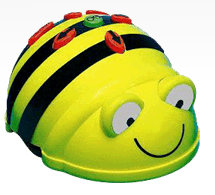
I’ve been thinking about coding and how I might help my students think about the work behind the digital tools they use.  I’d heard about lots of tools/games out there for students–Scratch from MIT and Gamestar Mechanic, for example.  And I’d messed around a little…  My students have iPads as their classroom device, so I really want to have something they can do with coding on the iPad.  Today I learned about a few possibilities to try out.  The first one surprised me–it is a little robot-like toy called Bee Bot (not for the iPad–just a little battery powered toy).  This little bug can be programmed with up to 40 moves (like the arrow keys on the computer) and can make 90 degree turns.  I can think of so many ways this little robot can introduce my students to the fundamentals of coding (and they can create their own games to review other concepts too!).

Screen Shot 2013-07-26 at 4.16.13 PM

I also learned about Tynker.  It’s not an iPad app–but since it doesn’t rely on flash it will play on the iPad.  Tynker is very similar to Scratch with the linking blocks that students arrange to make their actors move on the screen.  It’s set up for teachers–you create an account and can follow up on what students accomplish.  I’ve only begun to experiment–but I’m excited about the possibilities.  I love the way you can see sample projects–and look at the code (in interlocking blocks) behind it!  I’d love to know if you have tried any of these tools–how did they work for you and/or your students?

I think that is already 6 (or 7) and I really want to include one more–Touchcast–an iPad app for making video with embedded real time apps (check out the little video link above).  More on that to come!

What are your favorite digital tools?  What are you currently exploring?  How will you use them in the classroom?  Teach with them?

Does Design Matter? A Terminal Walk

A week or so ago Bart over at the #clmooc shared this blog post about classroom design and it’s impact on teaching and learning.  Yesterday I spent the day traveling from New York back home to San Diego and in the process spent time in three airport terminals.

Since I had a layover at Chicago’s O’Hare airport, I took the opportunity to take a short learning walk to give myself the opportunity to think about my experience through the photographs I took.

Airports are funny places.  Institutional, highly regulated, and not terribly comfortable.  The food is pricy—and not usually all that good, the restrooms are not as strategic as we would wish, and there are never enough plugs to recharge those electronics that are so necessary these days.  And yet, as travelers we spend significant time in these places.

As I walked through the terminal I noticed the usual features—the Starbucks, the strategically placed trashcans, and the lettered and numbered gates.

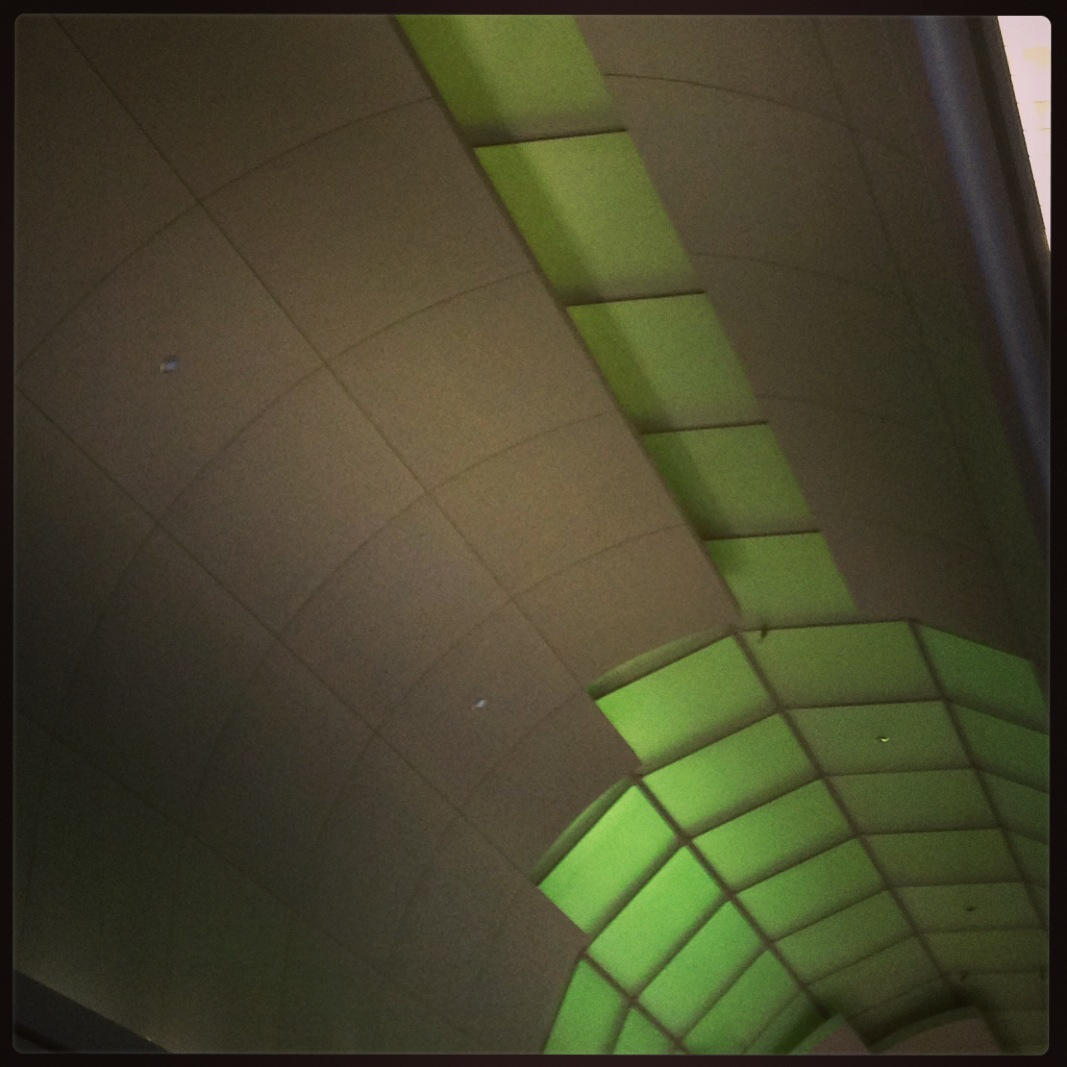
And then I looked up.  I noticed the green glass (or plastic or Plexiglas) on the ceiling.  In some places the same design was yellow and others more of a tan color.

photo

Down the main corridor looking up meant seeing flags from countries all over the work—and a world sculpture all under the latticed ceiling that lets natural light into the terminal.

flags

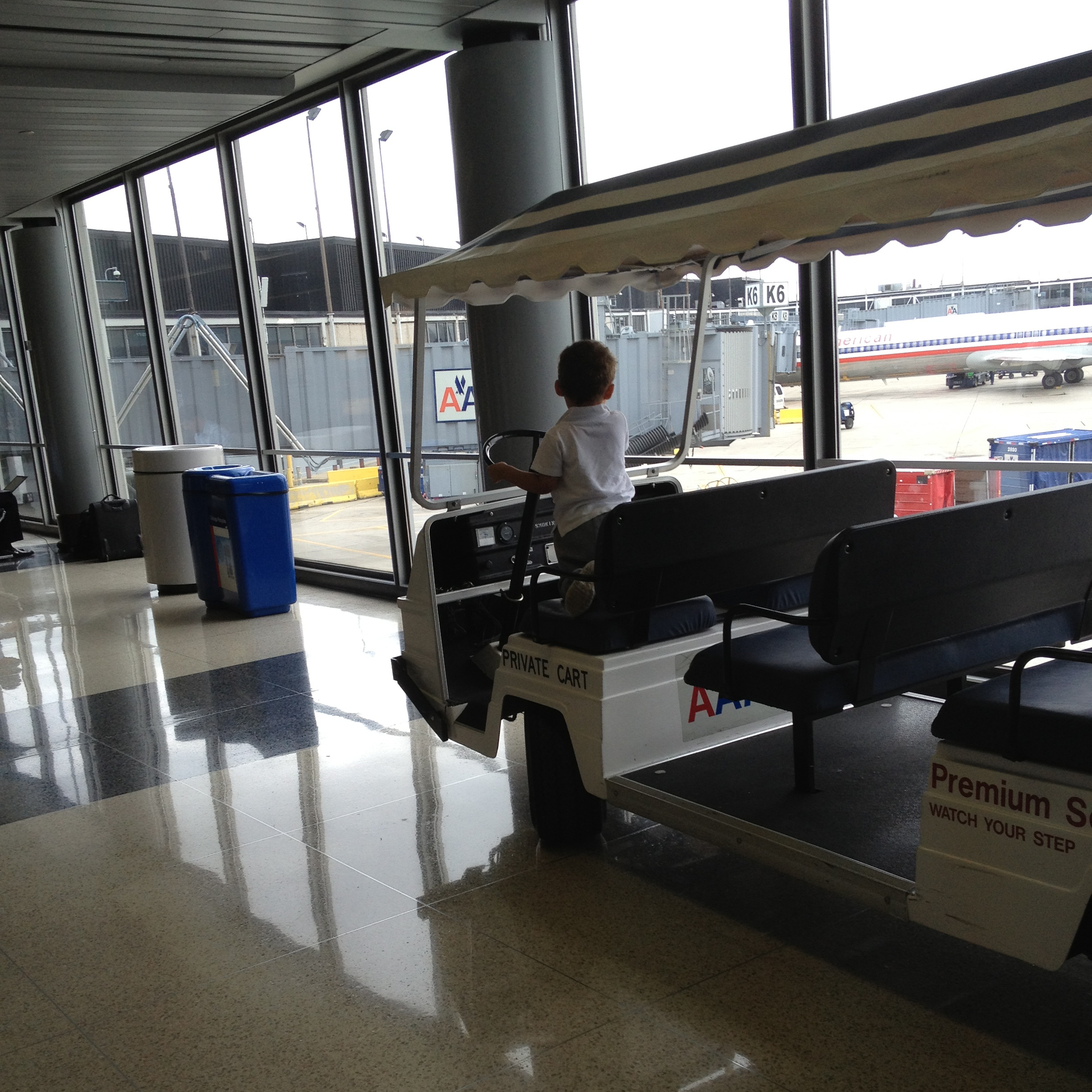
I saw plenty of vehicles of the golf cart variety.  Some were moving with flashing lights and beeping noises as they transported travelers who needed some extra help getting from gate to gate.  I also found a place where three vehicles were parked…and loved watching the little boy “driving” the one with the awning.

cart

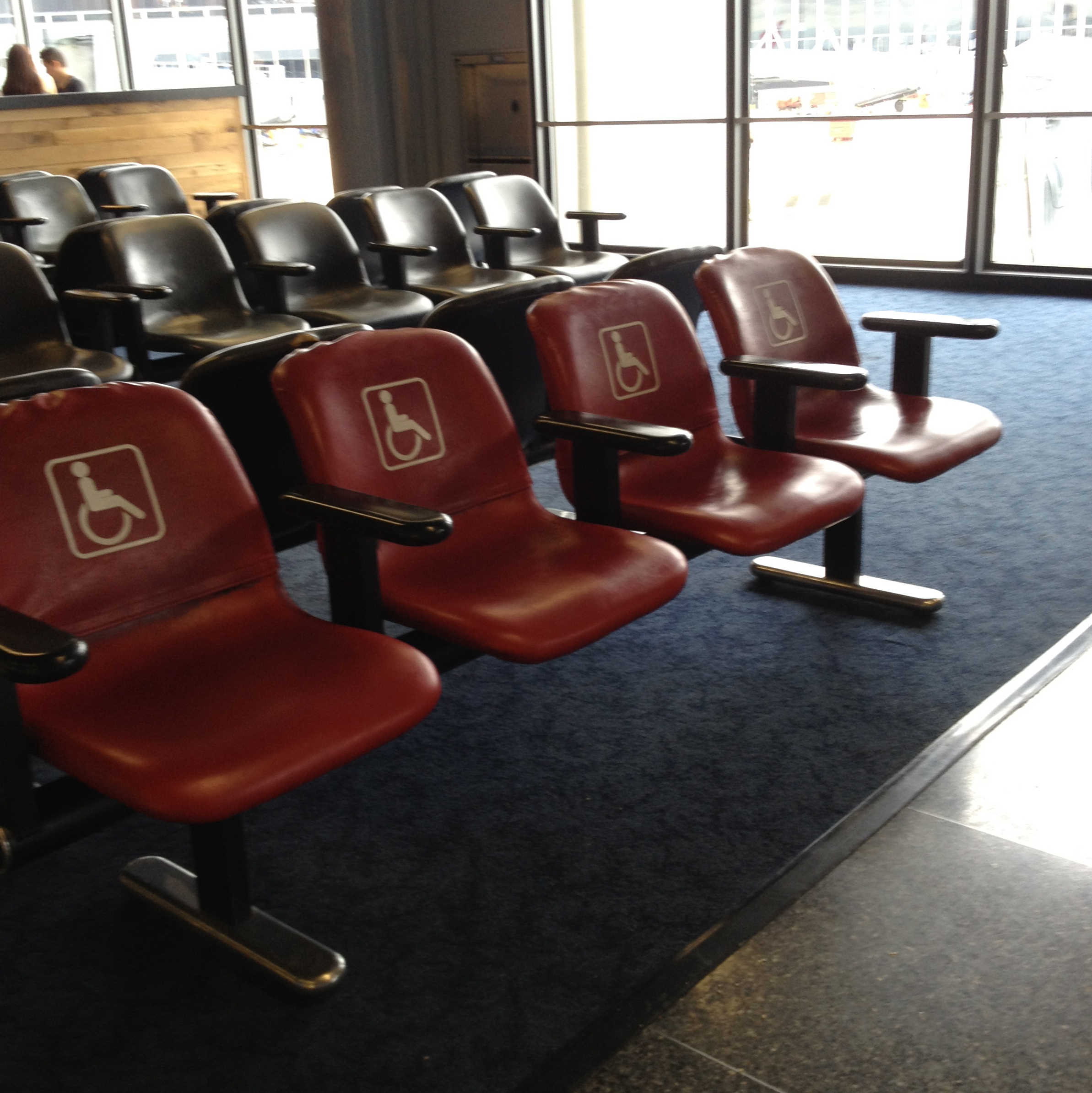
The chairs designated for those with physical handicaps were red in this terminal.  I did notice right away that they were different from the other chairs.

chairs

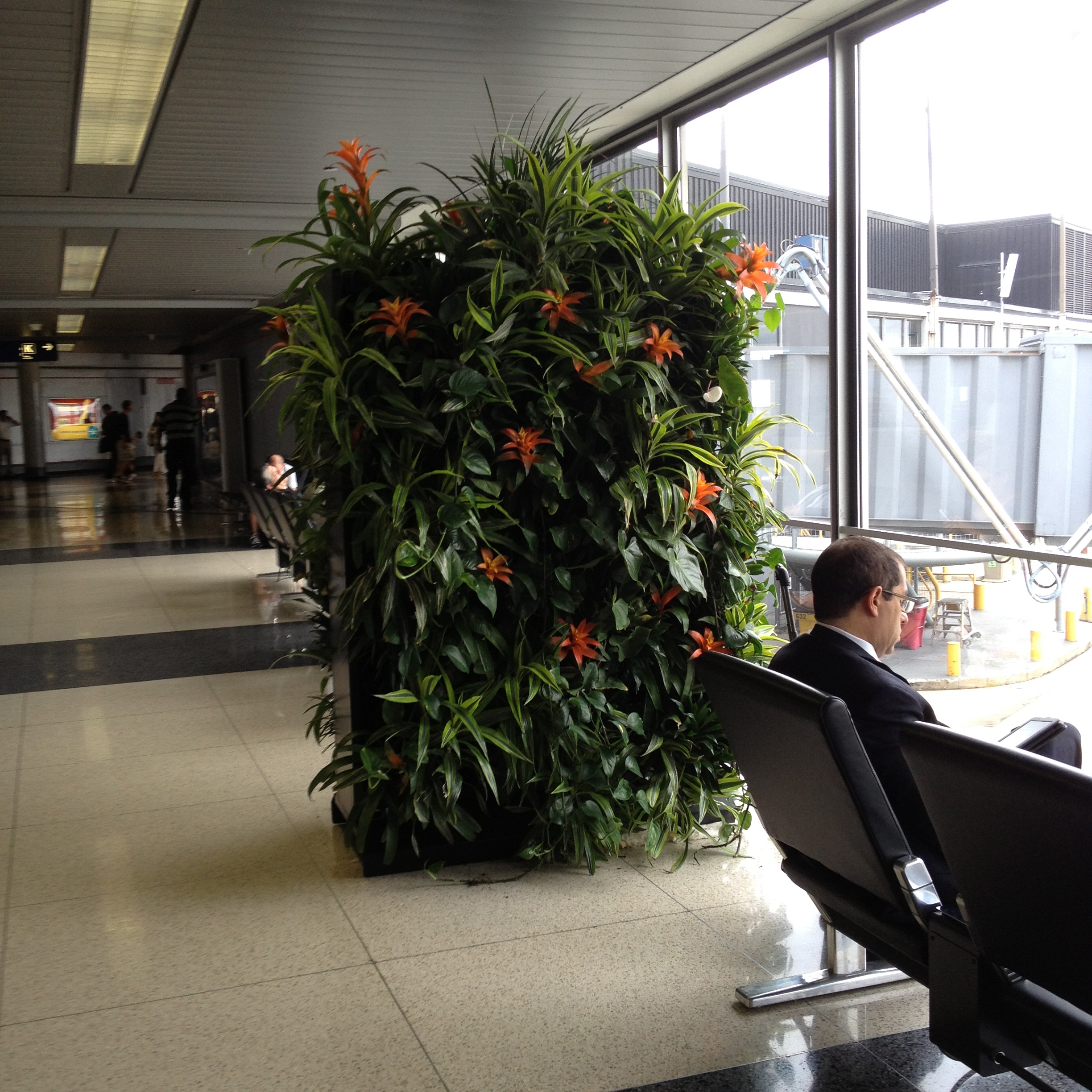
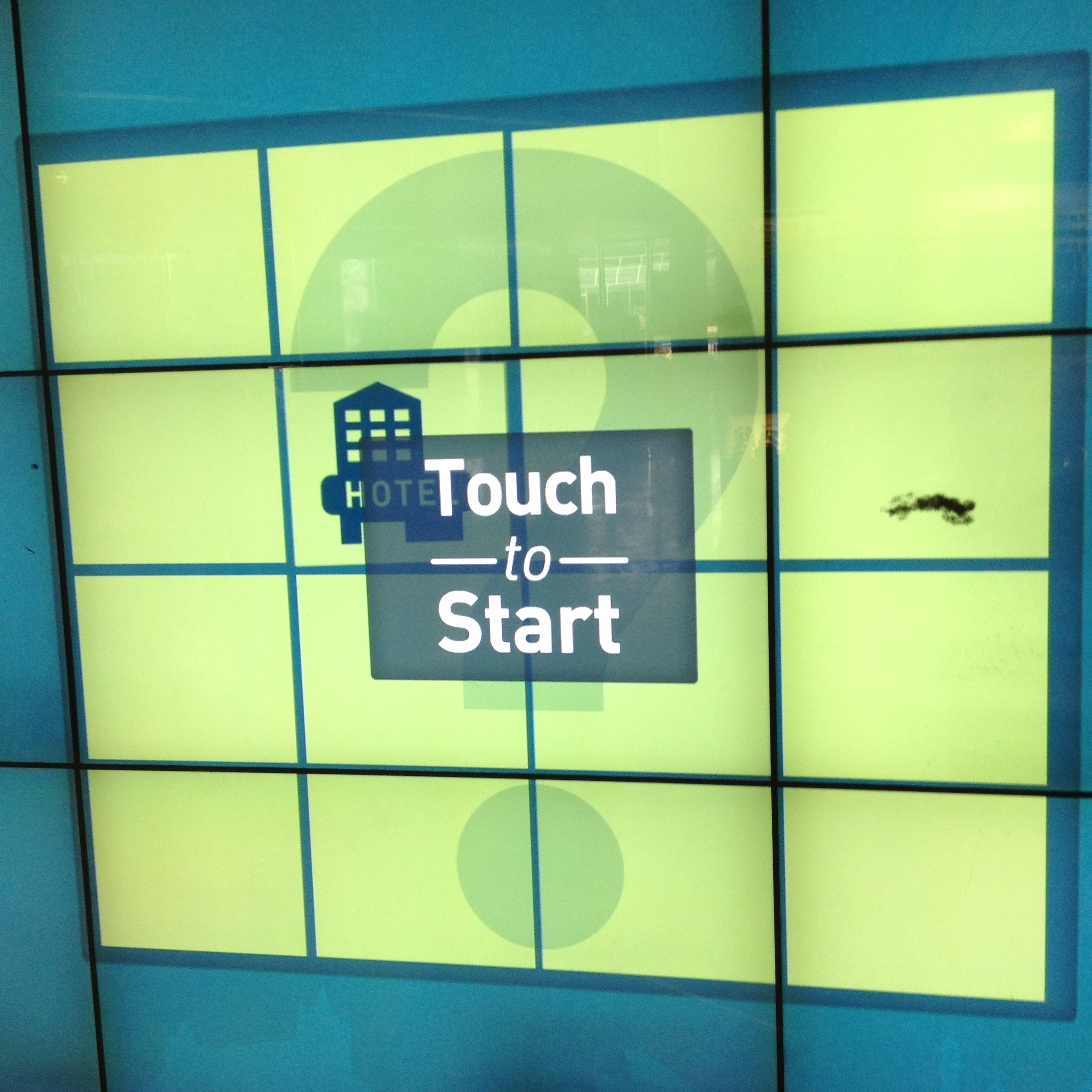
I also noticed some new, more unusual design features.  There were the walls of plants on either side of a bank of chairs facing the windows.  A closer look revealed that they hold potted plants arranged to fill both sides and the top so it looked much like a shrub.  I also saw the interactive big screen game…challenging those who pass by to try to beat the latest fastest time.

plant wall

game

These last two features remind me a bit of a hamster cage with the wheel for exercise or a fish bowl with the castle to make the glass bowl seem like an undersea world.  They are still containers meant to keep the pets both healthy and restricted, but probably serve the pet owner more than the animal they hold.  The plant wall and the interactive game don’t change the terminal experience, people are still contained inside the terminal building–and often experience boredom associated with waiting and waiting…

These props seem almost like bean bags in the classroom for reading.  They make things a bit more comfortable, but don’t fundamentally change the experience of the space.  Bart talked about the workbenches he wanted for his classroom–to shift the experience for learners from recipients of knowledge to makers as learners.

I’m thinking about the ways the design of spaces impact our actions, our feelings, our experiences.  What are the implications for classrooms?  For airport terminals?  For living and learning?

Fireflies

Like tiny fireworks, sparks of light danced along the pathway as I took an evening walk the other day.  Fireflies!

If you’re from the Midwest, you’re probably thinking, “What’s the big deal?  We have fireflies every summer.”  But for a southern California native—a place where we don’t have fireflies, the opportunity to enjoy this natural spectacle is magical.

I’ve heard all the stories of childhood firefly wonders.  And the affection that those who know fireflies have for these gentle, easy to catch insects.  I was surprised when I first saw them up-close, they aren’t so magical or elegant when they aren’t glowing.  They are more of the sturdy, ordinary bug variety.  But when they do their thing…I am mesmerized!

http://news.discovery.com/animals/videos/why-tell-me-why-fireflies.htm

I love the way something so seemingly ordinary can also be magical.  I think of my students that way too.  It’s easy to clump students together in categories.  There are the ones who are slow to start, there’s the ones who race through every task without much thought or care, there are those who spend their time in their own daydreams, and those that never stop moving.

But watch carefully, create spaces for inquiry and imagination and play, and we all might just see those sparks of light…that magical natural spectacle…learning!

Breaking Through #Orange

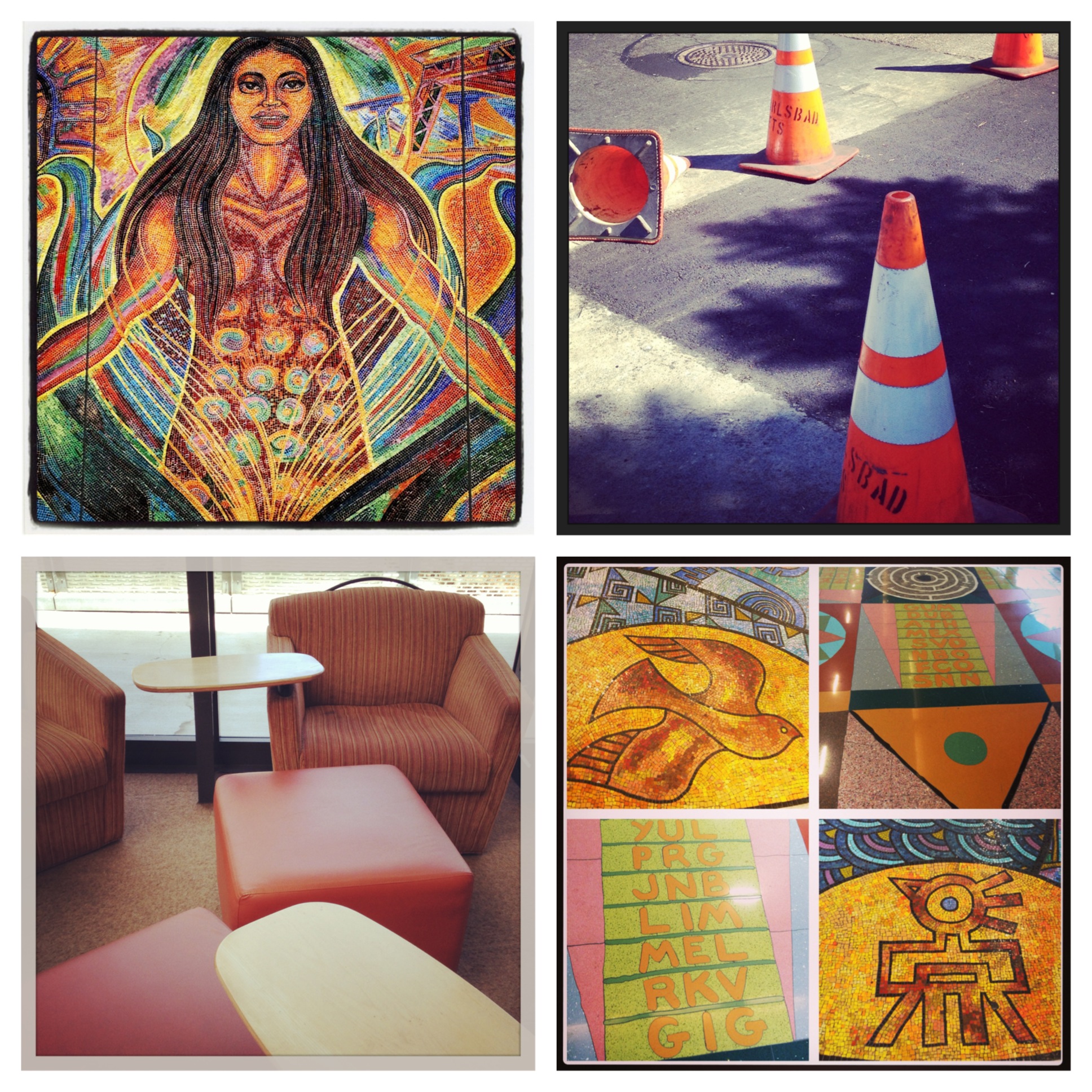
I love the challenge of taking and posting a photo every day.  I could just take a picture, but the daily/weekly prompts push me to reframe and rethink what I choose to photograph.  This month’s challenge–a different color every week–has posed some new considerations for my photography.  Red and yellow pushed at my choices and had me thinking about and looking for ways to highlight those colors photographically.  I was still finding interesting scenes and objects…at least one each day that “fit” in the color frame for me.  This past week was orange and I began to feel that the task was hard.  I could find orange–but it seemed so ordinary and overdone–caution cones, warning signs, and flowers.  So I photographed a mural, those ever-present cones, some orange furniture, and made a mural collage.

orange

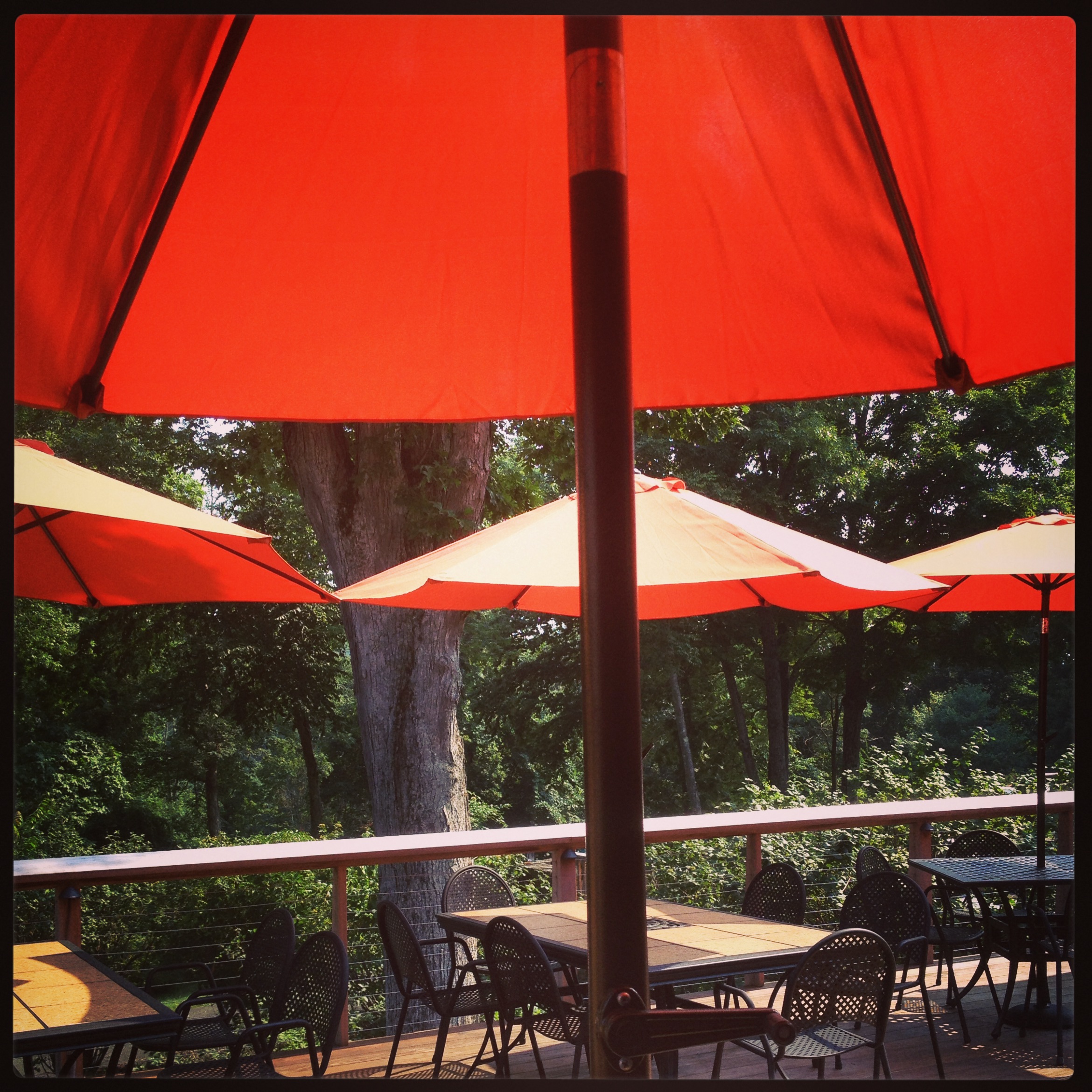
But my photos were feeling boring–I wasn’t inspired.  Apparently, somewhere in the process of spending a week focused on a color I had raised the photography bar for myself.  I wanted interesting, provocative, artistic shots–and they still needed an orange focus.  The orange umbrellas from Friday were a bit better–I like the framing of the shot.

umbrella

On Saturday serendipity struck and I was given a small orange bead that became the focus for both my photo and a blog post.

photo

And then on Sunday (the last day of orange) I had a breakthrough of sorts.  My learning walk gave me the time, space, and focus to tune into the orange around me in interesting ways.  I ended up posting these three:

photo

berry with orange

photo-1

And there were a few others that I haven’t posted yet.

So today begins green.  I like taking the opportunity to reflect on the week of photos and think about my growth as a photographer and my thinking about how the constraints of the photo-a-day challenge (self-imposed) support and/or interfere with my creativity.  What am I missing when I focus on a theme or prompt?  What do I gain when I force myself to “see” through a constrained lens?

I’d love to know what you think!

Learning Walk: a Photo Essay

I made time for a learning walk this morning, just a 30 minute or so ramble up the paths around this conference center in the woods.  For me a learning walk is a quiet introspective time for noticing the world around me.  I find that in addition to looking for interesting images to capture with my iPhone, I am more attuned to sounds during a learning walk.  This morning’s walk in the warm, but not too warm sun of Westchester, New York was accompanied by a symphony of birds as they called to one another and flitted through the leaves and branches of the plentiful trees.  The backbeat percussion was provided by the hum of cicadas.  Occasional scurrying sounds suggested that I was not alone on my walk.

chimney

As I headed up the hill I noticed this rustic chimney on a building along side the path.  I went around the other side hoping to find a beautiful old building, but really, the chimney was the outstanding feature.  I noticed a sign pointing the direction of the tree house.  A tree house?  I was intrigued and continued my walk.

tree house

This isn’t my definition of a tree house.  Looks more like a conference building near trees–not stunning or particularly interesting.  But…I took a few minutes to sit on a picnic bench and attach my macro lens to my phone and then set off to explore some of the plant life.

thistle

thistle2

I love the texture of this thistly plant…and its spiky stem and leaves.  But this week is orange in my photo-a-day challenge, so while I was drawn to this beautiful purplish-pink I continued to look for examples of orange.

orange berries

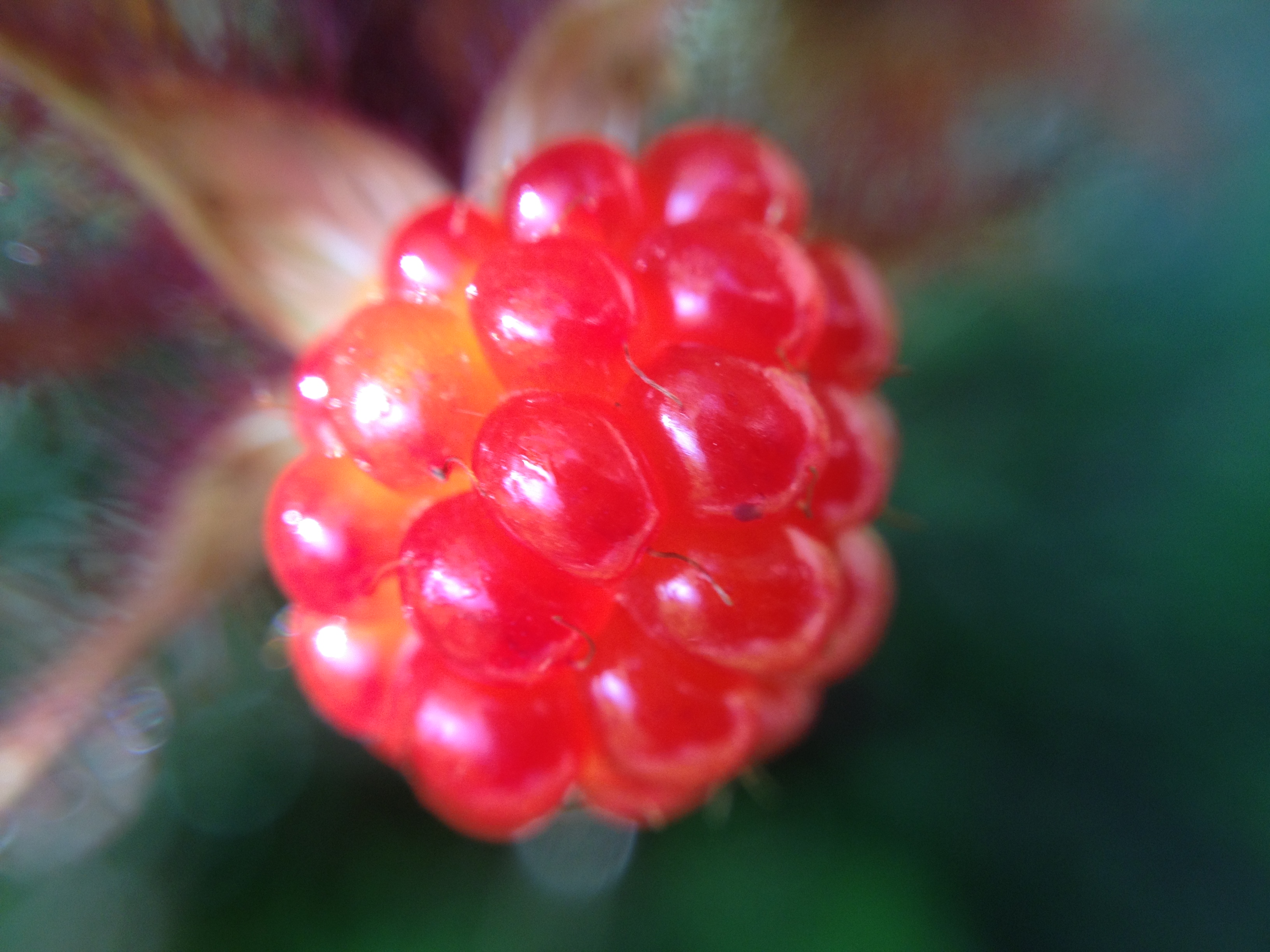
berry with orange

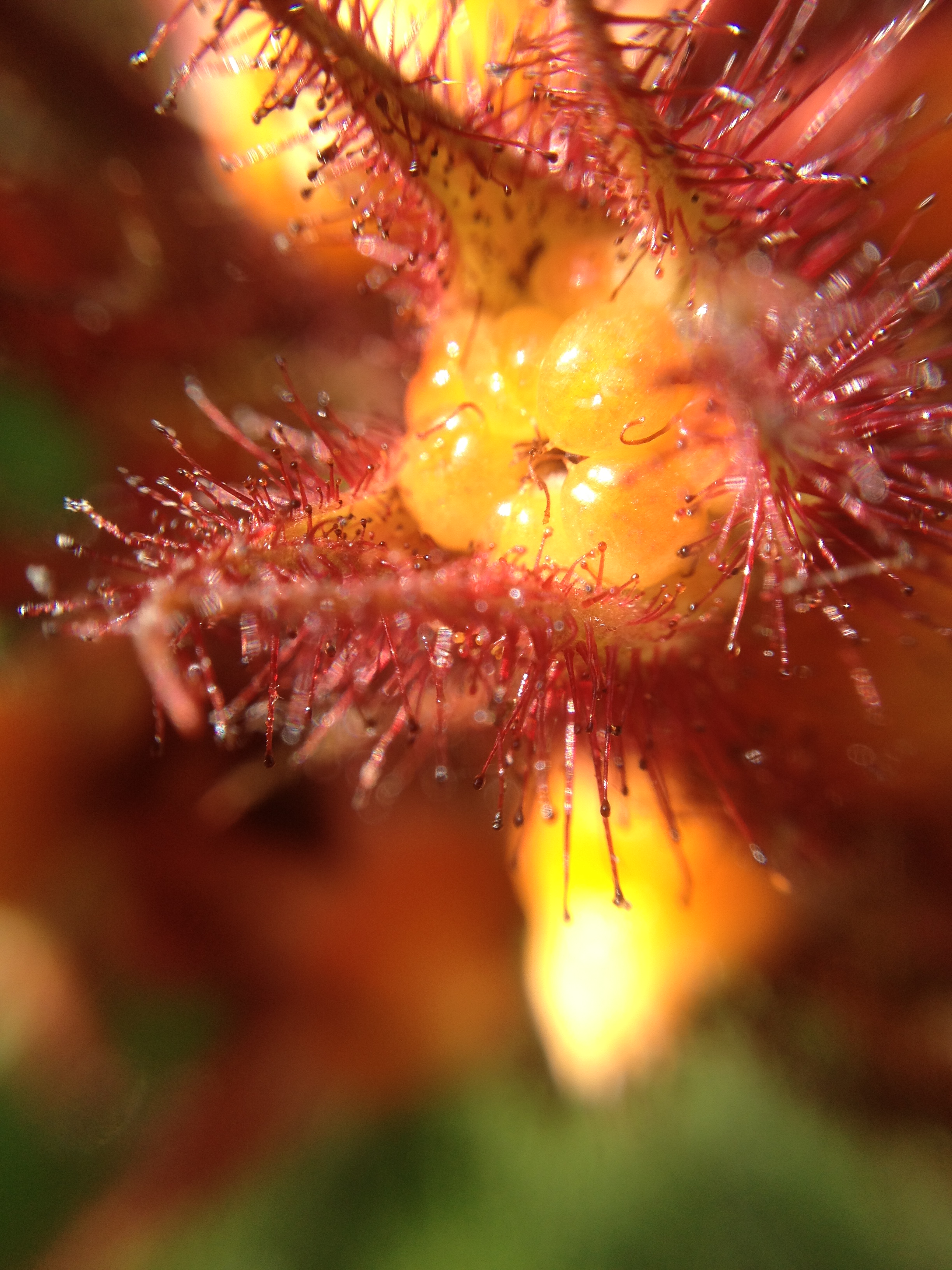
I discovered that these berries that I had seen as red, had a stage where orange was prominent.  And I love the hint of orange highlights on this berry!

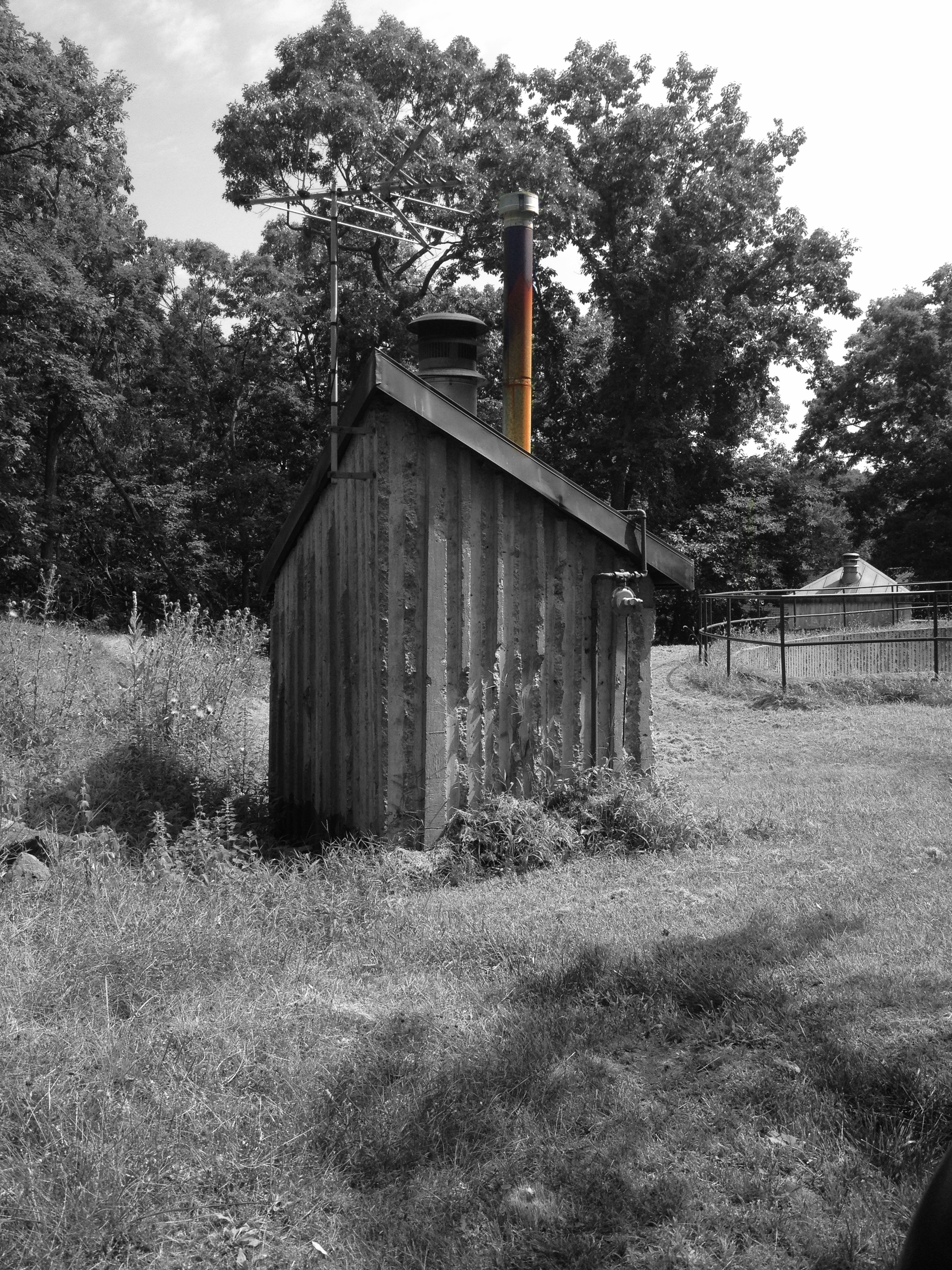
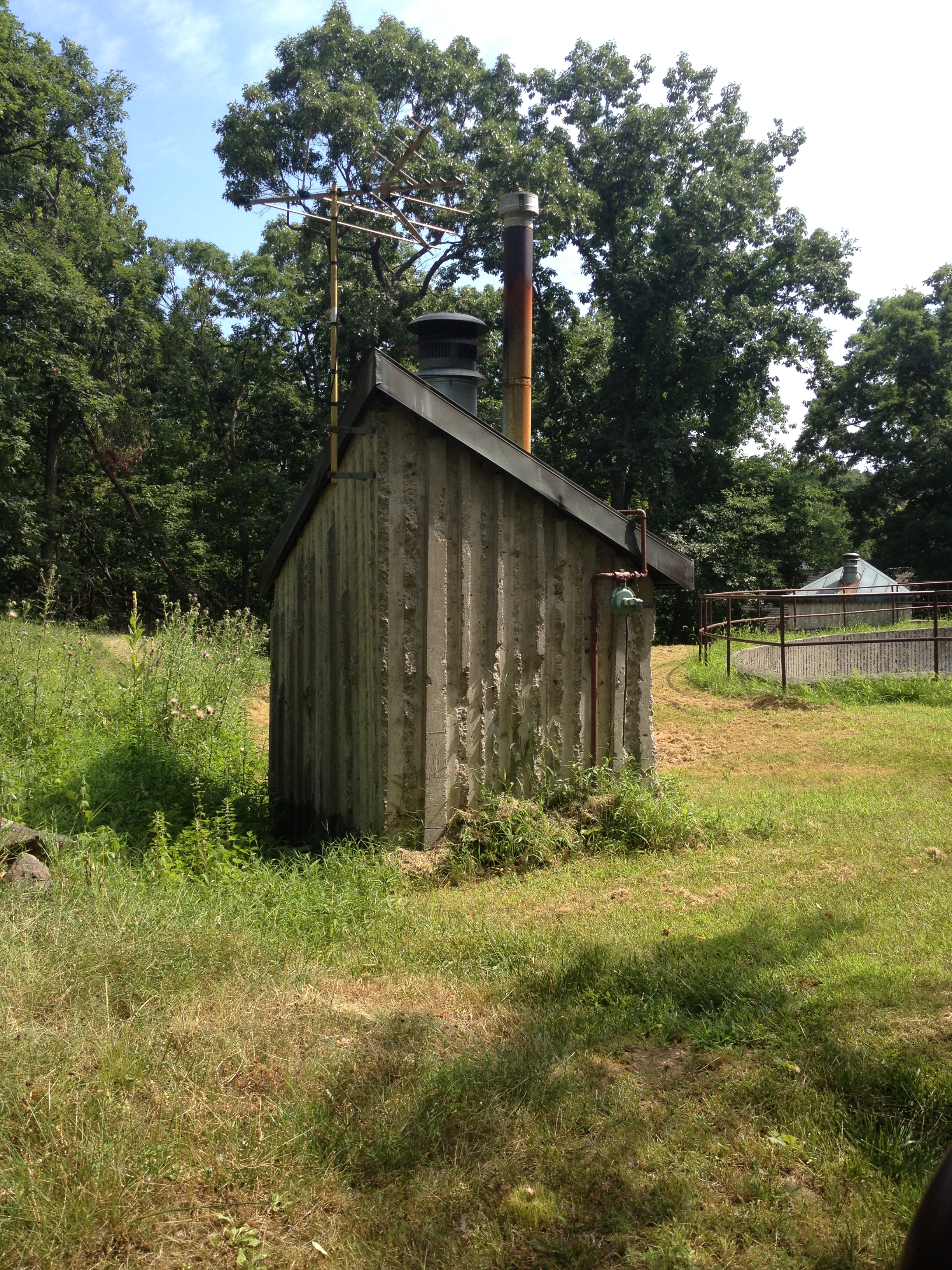
As I looped around the tree house to head back I noticed some other buildings and happened on this interesting little building…with a rusty orange stovepipe!

rusty pipe

I backtracked the way I had come, noticing things I had missed on my way up.  A tree stump with a hole.  I wonder what might live in there?

tree hole

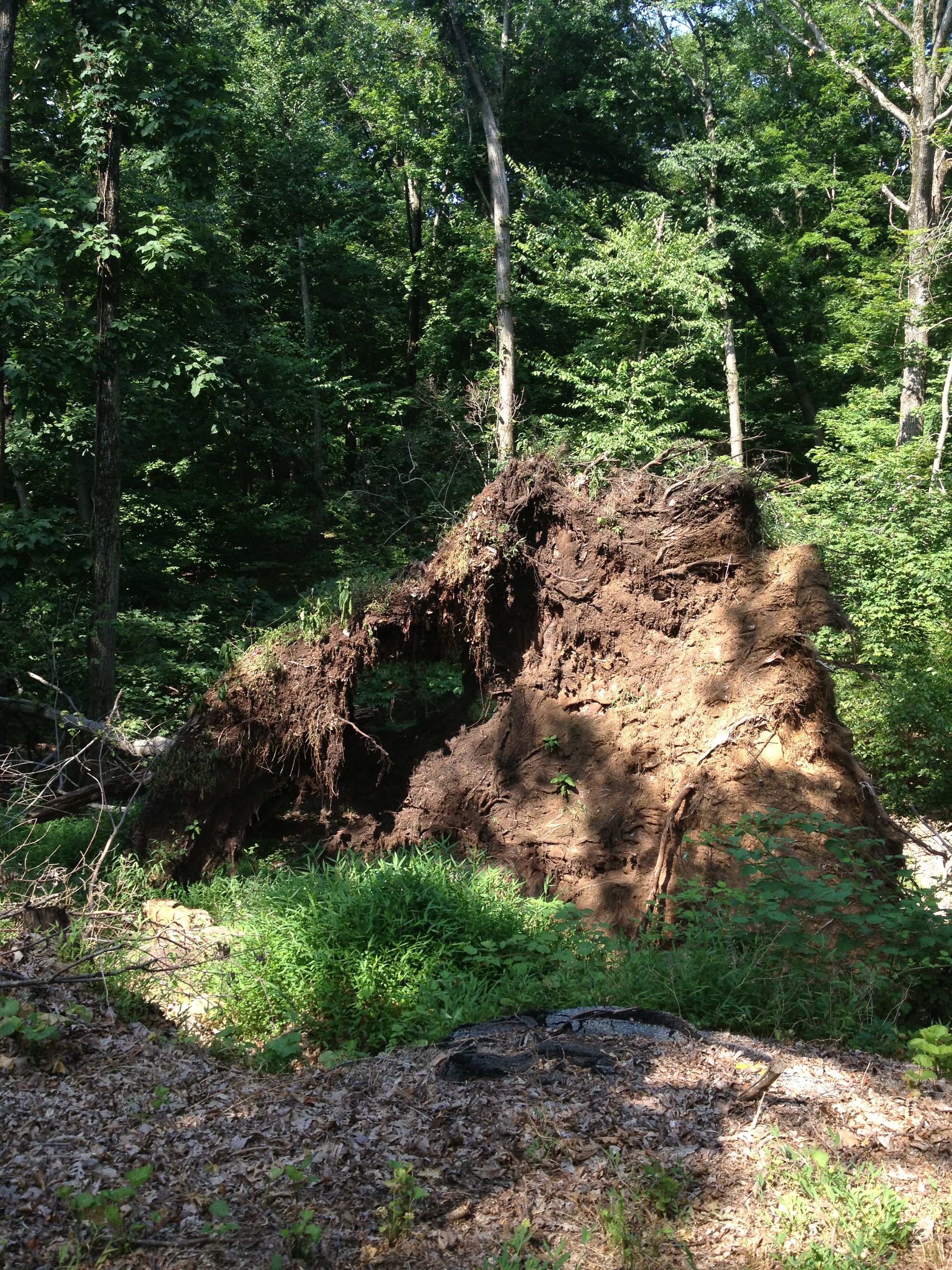
I also wondered if there were storms here in the winter.  These roots from a very large tree are facing up instead of anchoring the tree in the ground.

roots

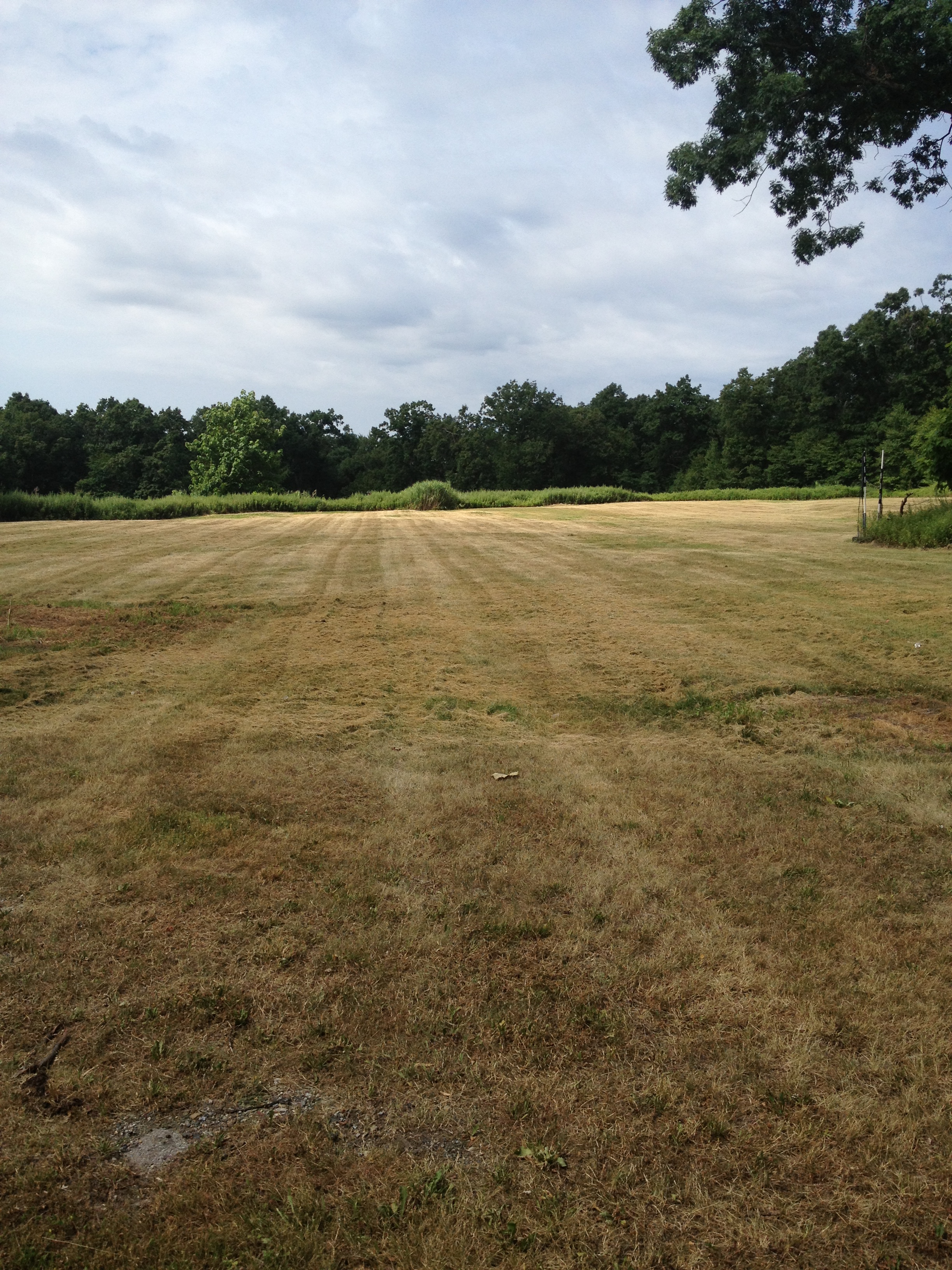
I came across this clearing…a surprise opening in the otherwise moderately dense woods.  I wonder why this space is open?  Does it have a use?  Is it a pasture of some sort?  It looks freshly mowed.

open field

I returned to the conference center with lots of interesting things to think about.  I love taking the time to notice and wonder.  It’s a great way to explore a new place and also to allow for re-seeing someplace you already know.  For me, the photography aspect keeps me from turning my learning walk into a work-out, speeding by without taking the time to stop and notice something that catches my eye…or ear.  I saw so much more than I captured with my camera…the elegant white moths that fluttered around the plants, the way the sky looked through the trees, the tiny white flowers that were enough off the path that I didn’t venture through the brush in my flip flops.

I want to provide time for my students to take some learning walks this year.  We might take our ipads and do some photography.  Or we might take our sketch pads and stop to capture our noticings that way.  We might even head out with our writer’s notebooks.  Whichever tool we choose, the important part of the process is taking the time to notice…and then taking the time to think and reflect to make sense of the experience once we return.  I hope to share some of our class learning walks when school starts in the fall.

I invite you to try a learning walk.  I’d love to know what you notice and learn along the way.

A Small Orange Bead

I’m in New York doing some National Writing Project work at a conference center owned by the Girl Scouts of America.  Girl Scout memorabilia and history are prominently displayed and there will even be a s’mores reception tomorrow evening!  Girl Scouts and scouting generally brings to mind merit badges and good deeds–organizations that encourage appreciation of the outdoors as well as effective stewardship of the home and community.  Many women I meet remember their days as Brownies or Girl Scouts with fondness…and who doesn’t anxiously await the annual Girl Scout cookie sale?  Ummm…thin mints!

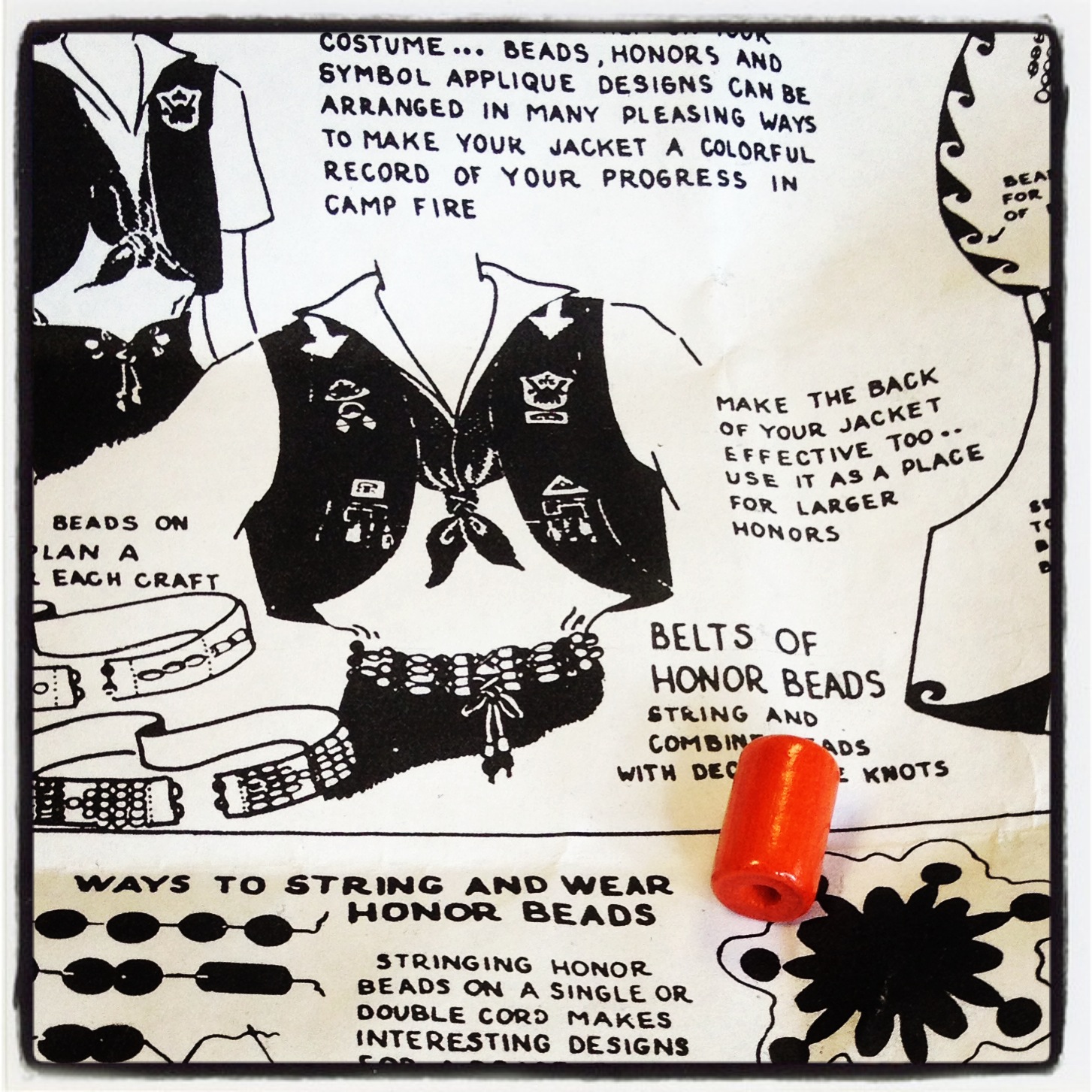
I wasn’t a Girl Scout.  I was a Camp Fire Girl.  And other than those in my community and my mother who was also a Camp Fire Girl, I seldom run across others who participated in Camp Fire Girls.  It doesn’t have the iconic imagery of scouting or the name recognition, although it still exists today as Camp Fire USA, a co-ed organization.  But somehow, in my group of NWP colleagues we discovered a common bond–several of us were Camp Fire Girls!  This led to reminiscences of our WoHeLo days and the inevitable progression to our collection of beads and how they were sewn (or not) on our ceremonial vests.

So this morning Judy gave me a gift.  She pulls a piece of paper and a small baggie out of her purse and hand me the paper and a small orange bead–a Camp Fire Girl honor bead.

photo

Judy and I also spent some time this morning, in the course of our work, talking about play and its value in the learning process–and all the ways it has been pushed out of schools and classrooms.  So what does this have to do with Camp Fire Girls, you might ask?  Isn’t it an out-of-school organization?  It is–and there is still a connection in my way of thinking!  My memories of Camp Fire Girls were of sewing, craft projects, field trips, camping trips, cooking out of tin cans, and selling those butter toffee peanuts–we helped each other when we got stuck, when we needed a next bit of information, or someone to show us how.  I remember talking and laughing with my friends as we did these things, and I still remember how to do things that I learned in this context.

In my classroom I want this same kind of playfulness and collaboration among my students as they learn.  I want them to make meaning from their activity, from useful approximations that are revised and reshaped through iteration after interation–not required “drafts” from teachers, but student-generated improvements that clarify thinking and move closer to the intended end point determined by the students themselves based on their audience and purpose.  I want this in classrooms because organizations like the Girl Scouts and Camp Fire USA are not accessible to everyone–and all our kids go to school (or nearly all).  I want playfulness and collaboration to be educational values that are practiced in our public schools as a means of becoming literate, thoughtful, problem posing, and problem solving learners.

I think I’ll find a special place for this small orange bead to remind me that we all need places to play and explore as we learn.

Can We Crowdsource Equity?

I’ve been thinking about photography and the power of images to influence perceptions…and to change actions.  Litterati came to my attention earlier this month–a movement that encourages people to photograph litter they find, clean the litter up, and post the photo on social media with the hashtag #litterati.  I love the idea!  And I also love the way that so many of the photographs that people post are so beautiful!  My friend Janis took this amazing photo of an abandoned yellow bucket…and some others including one of a Starbucks cup today on the ground nestled in some orange tulip tree blossoms.  As I admire the beauty of her photography, I also think about the impact of the trash and I become more aware of the trash around me.

And then Mia over at the  #clmooc posted this video about the Landfill Harmonic where a music teacher, a garbage picker, and children from a Paraguayan slum make musical instruments from trash in the landfill, and then work to create a better life for the children who  play beautiful music on these instruments.

This morning a tweet about a TED talk caught my eye.  The Silent Drama of Photography.

I listened to Sebastiao Salgado to tell his story about his obsession with photography as he captured the devastation of war and death and destruction–to the point where doctors told him that his photography was killing him.  He turned away from photography and returned to Brazil, his homeland, and decided to work to restore the rainforest that was lost to human encroachment by planting native trees and plants–and giving his family’s ranch to the country as a nature preserve.  Through this work he found his love of photography again and changed his focus from photographing humans to photographing nature, capturing the beauty of the land reclaimed.

I find myself considering the question Janis asks in her post about the abandoned yellow bucket…how can we, as educators and those who care about the education of our young people, use photos to bring attention to the “litter” in education–all those practices that stamp out the passion for learning and treat students as cogs in a learning machine–to allow spaces for creativity, critical thinking, and pure joy of learning?  To allow all students this access, regardless of socioeconomic status, skin color, language background, and test scores.  Can we use photography as a way to crowdsource awareness towards equity in education?