Tag Archives: connected learning

Spaces for Learning

Over at the Connected Learning MOOC on Google+, Terry posted this article by Valerie Strauss from the Washington Post about the struggles dedicated teachers face in our current climate.  He also invited us to respond…in a crowdsourced way.  Here’s my contribution:

I’ve just spent the past month with twenty educators passionate about improving their teaching and the learning experience of their students.  During this time they’ve read extensively, discussed and debated ideas and practices, demonstrated a practice from their own teaching setting in front of these peers, written and responded to writing—personal and professional pieces, all creative—and laughed and cried, dealt with worry and nerves, and invested countless hours because THEY want to be the best educators they can be.  Their districts and schools didn’t send them or pay for them—they came because they chose this experience.

Many #si13 discussions take place on these #orange chairs and cubes.

Many #si13 discussions take place on these #orange chairs and cubes.

These “third spaces” like writing projects, the CLMOOC, and Twitter have become more and more necessary for educators to thrive in our challenging profession.  These are the spaces where teachers experiment, innovate, and most importantly, find support when they feel that our educational system isn’t working for them or for their students.  In the face of daunting constraints, teachers like the ones participating in the SDAWP Summer Institute and those making like crazy in the CLMOOC continue to seek out practices that support learners and celebrate the joy and purposes of learning.  In these spaces we make sense of our world, we build relationships, we blaze trails for learning for those that feel pinched by constant test prep and narrowing curricula and in doing so we stay the course.  Because like Valerie said,

But some teachers are fighting these trends. Teachers believe that education is not just teaching students to pass tests. They believe that education is not just about how to make a living, but also about how to make a life. They believe that school should be a place of joy in learning, not learning in fear. They believe that play, imagination, and creativity have a place in school, just as much as mastering difficult material. In fact, play and mastery go hand in hand. And these teachers are fighting to work harder than ever so they can continue to find ways to be creative in the classroom despite the pressure not to be. These teachers have classrooms you’d love to have your child in.

What kind of classroom or learning spaces do you want for your child, for your students, for yourself?  I’d love to hear about your “third spaces” or alternative ways of dealing with the constraints that are strangling the love of learning and passion for teaching.
Connected Learning…a Challenge

At the San Diego Area Writing Project (SDAWP) we are always looking for ways to learn from each and ways to support each others’ learning in our mission to improve writing instruction for the young people in our area.  For a while now we’ve been wanting to create a shared resource of mentor texts that teachers love and have used successfully to teach writing in their classrooms.  We’ve thrown a bunch of ideas around about how to do that–and nothing has really stuck.

Enter Barb–SDAWP Teacher Consultant and one of the administrators of our SDAWP Voices blog, the collaborative blog we’ve been experimenting with over the last year.  In another part of her life she is an artist with fabric–creating beautiful quilt projects–and maintains a sewing focused blog where she also participates in challenges and contests and blog link-ups.  Sharing her experience with textile artists and their social media world is helping us at the SDAWP experiment with new ways to build connections…and learning experiences.

So starting today we’re asking people–everyone is invited–to commit to the 113 Mentor Texts by the End of 2013 challenge.  Committing means agreeing to add at least one mentor text that you’ve used to teach writing or used to support your own writing that you would recommend to others.  There are lots more details on the SDAWP Voices blog here.

So join us…and please share with your friends and colleagues so we can reach our goal of 113 mentor texts by the end of 2013!

Reflections on Yellow

I love focusing on a single theme all week long with my photography.  Instead of feeling limited, I find myself not only looking for ways to capture my “word,” I also find myself searching for new ways to frame my shots to create interesting and different photos.

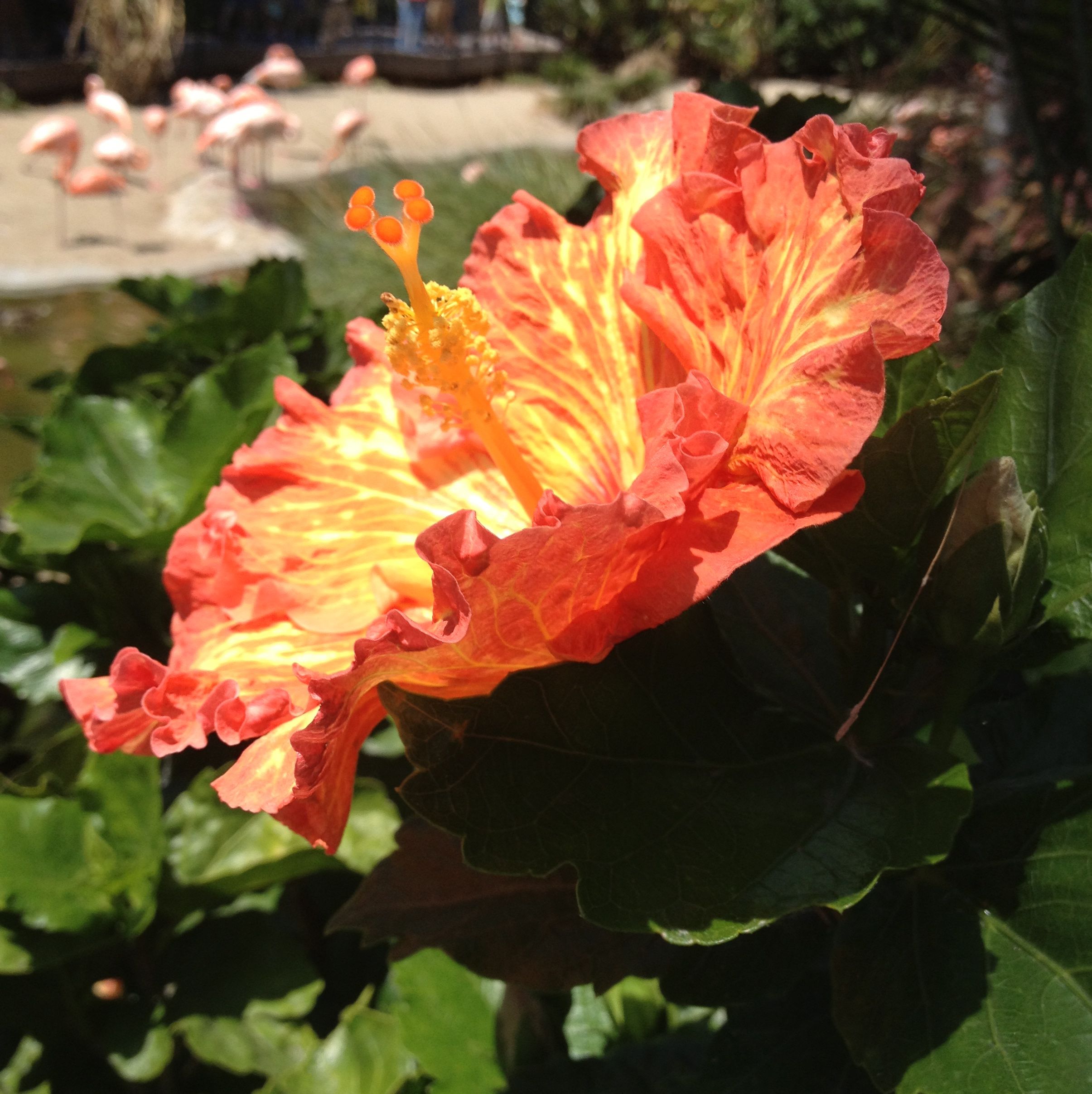
One of my favorites this week is this picture of the variegated hibiscus (orange with yellow at the center) with the flamingos slightly out of focus in the background.  I was intentional at including the flamingos and was working for a crisp focus on the flower.  I’m pretty happy about the result.

hibiscus with flamingos

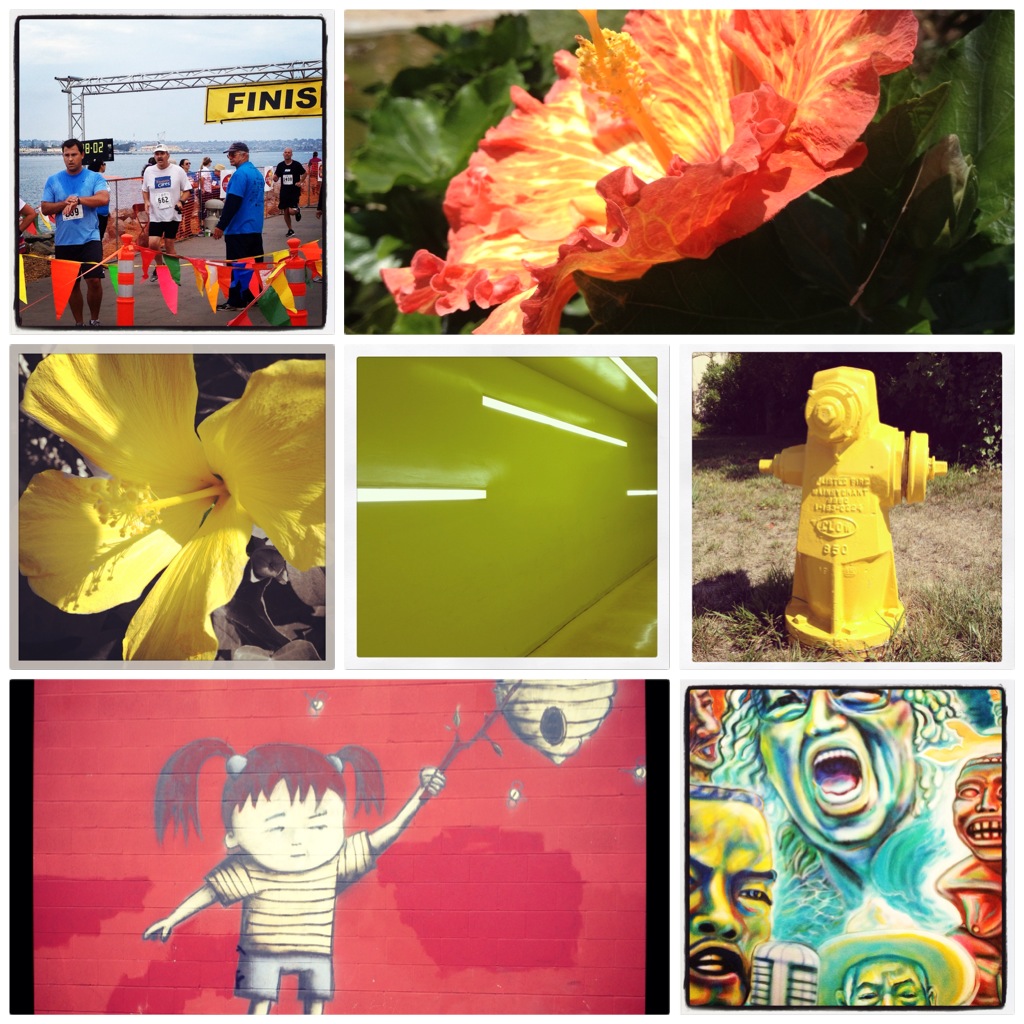
I worked hard to avoid yellow as road signs and street markings (once I got past the fire hydrant) this week.  Yellow was more challenging as a photographic topic than red.  Here’s a snippet of the entire week:

yellow collage

It is so much fun to see what other people participating in this photo-a-day challenge come up with!  There are some gorgeous yellow pictures out there this week.  I love that Janis’s (@janisselbyjones) yellow “abandoned bucket” was featured on the Litterati Facebook page this week!

Looking forward to orange!  We’d love you to join us, check out the challenge here.

Boys and Bears

Today was a perfect July day at the zoo, sunny and warm with gently ocean breezes to keep things tolerable.  The animals were active and playful.  We watched the polar bears frolic in the cool water of their enclosure—so close you could almost touch them through the clear Plexiglas barrier.

photo

I watched the animals, thinking about how the zoo personnel was careful to point out the ways they put the animals’ well being and health ahead of the visitors’ desires to take the perfect picture and get that close-up look.  I heard a similar message from the tour bus driver, the panda keeper, and the sea lion show trainer: these are wild animals, they are in this zoo so we can learn to take better care of them to ensure their continued existence.  The zoo is a place for learning.

I also did a lot of kid watching today.  And while there were usual instances of whining and demanding, there were also many kids fascinated and engaged watching the animals.  I observed some little boys near the polar bears for quite a while.  They stayed right up next to the glass where a polar bear was enjoying chewing on a bone right on the other side.  As the bear dunked under the water against the glass, the boys would run their hands against their side of the glass as though they were petting the bear.  As the bear emerged from the water, the boys reached their faces up alongside the bear’s.  A crowd formed with many adults attempting to get a close-up portrait of that bear—or line their own child alongside the bear for that illusion photo of their child with the bear.  You could feel and hear the frustration of those adults, wanting the kids to move out of the way.  After ten minutes or so, the parents of the boys seemed to catch on to the frustration of the crowd and urged the boys away from the glass so others could have a turn.

I understand the frustration of the adults waiting for the boys to move away.  And I understand the boys’ fascination with the bears.  I find myself thinking about how their physical interaction supported their appreciation of the bears…and how that may impact their future actions in the world.  If they had to stand back and watch quietly from afar, would they still find polar bears interesting and want to know more about them?  I’m also fascinated by the physical structure of the zoo and how that structure creates intimacy and relationships with the animals.

How can I think more carefully about the structures in my classroom to invite engagement and interaction rather than passive compliance?  Zoos and classrooms—I have a lot to think about!

Eat…and Lead Locally

Local Love.  That was the phrase that caught my eye while enjoying some yummy gelato for my mom’s birthday on Sunday.  EscoGelato makes a point of highlighting all the ways their products are local—using local bakeries for their breads, local farms for their avocados, eggs, strawberries…

photo

Yesterday I ate locally again.  At Urban Plate with my friend and San Diego Area Writing Project (SDAWP) colleague Abby, I also noticed signs in the restaurant pointing to the sources of the local produce and other food products.  It feels good to eat locally—in both places the food was delicious and the feel in each place was friendly and welcoming…accessible.

As we ate, Abby and I caught up on the progress of our summer and moved to the topic of professional development for teachers.  We talked about how teachers need to not just hear about some new approach or instructional technique, but to try it out and think about how and why it is useful for themselves as learners and for their students before they can truly implement effectively in their own classrooms.  And that, as professional developers, our hearts drop when participants say, “Can’t you just come to my classroom and teach it for me?”

Abby and I talked about the power of connectedness and collaboration for professional growth.  How opportunities to talk about our ideas caused those ideas to grow and develop and transform into something more than where they began.  And how that collaboration makes us a bit braver and more willing to take risks with our teaching practice…and in the process we grow as educators.  We also talked about how important it is for someone in your local place—your school site, your district, your writing project or other organization—to see you as a leader.  We grow leadership when we nurture leaders.

At the SDAWP, we’re right in the middle of the Invitational Summer Institute…a place for nurturing local leaders.  And I’m not so sure that all of the participants see themselves as leaders—yet.  But we’re ready to help them and to ease them into some accessible spaces where their leadership can emerge and continue to grow whether that is in their own classrooms, at their school sites, or beyond.  Maybe that, too, is local love.

On Noticing

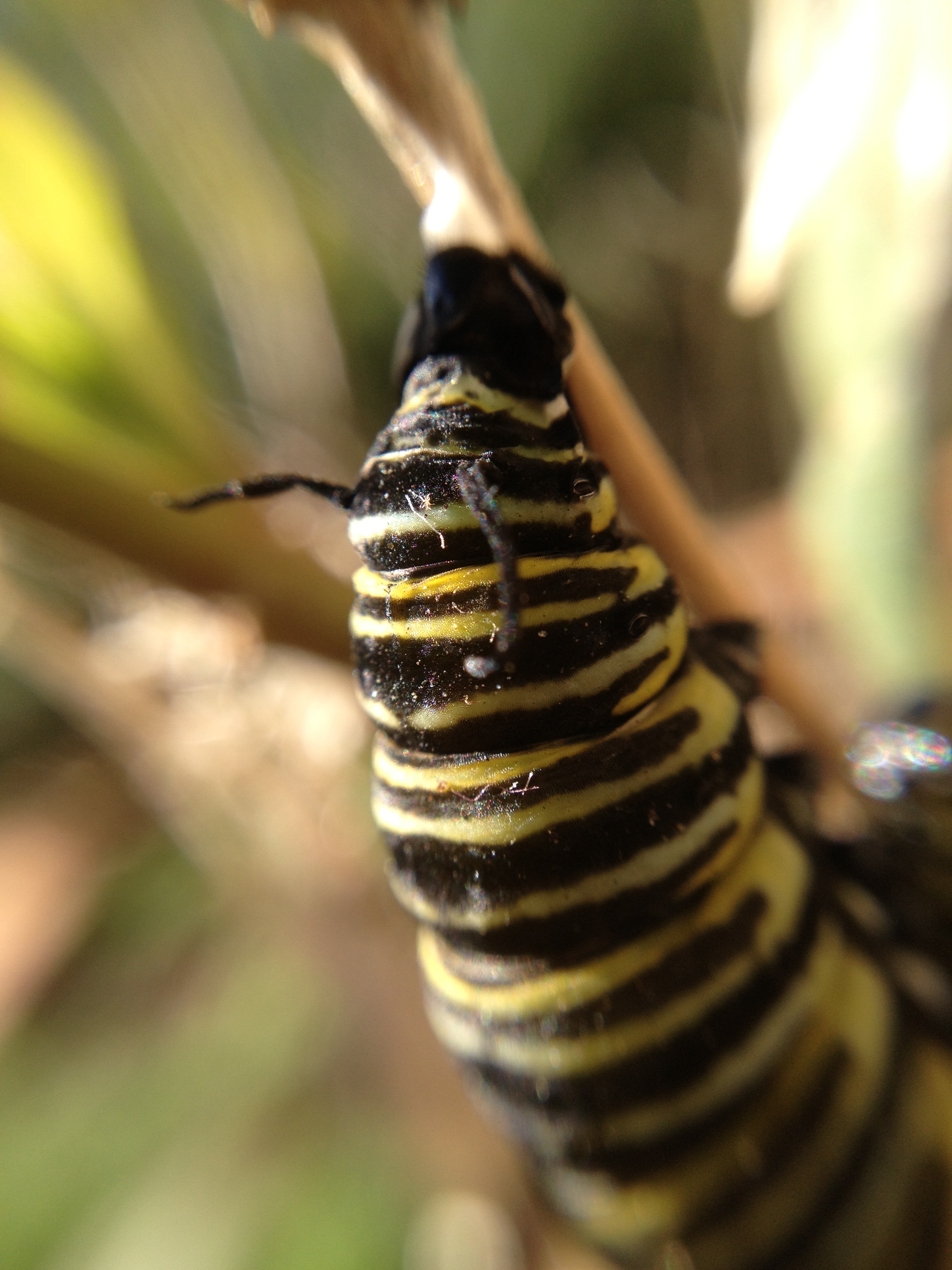
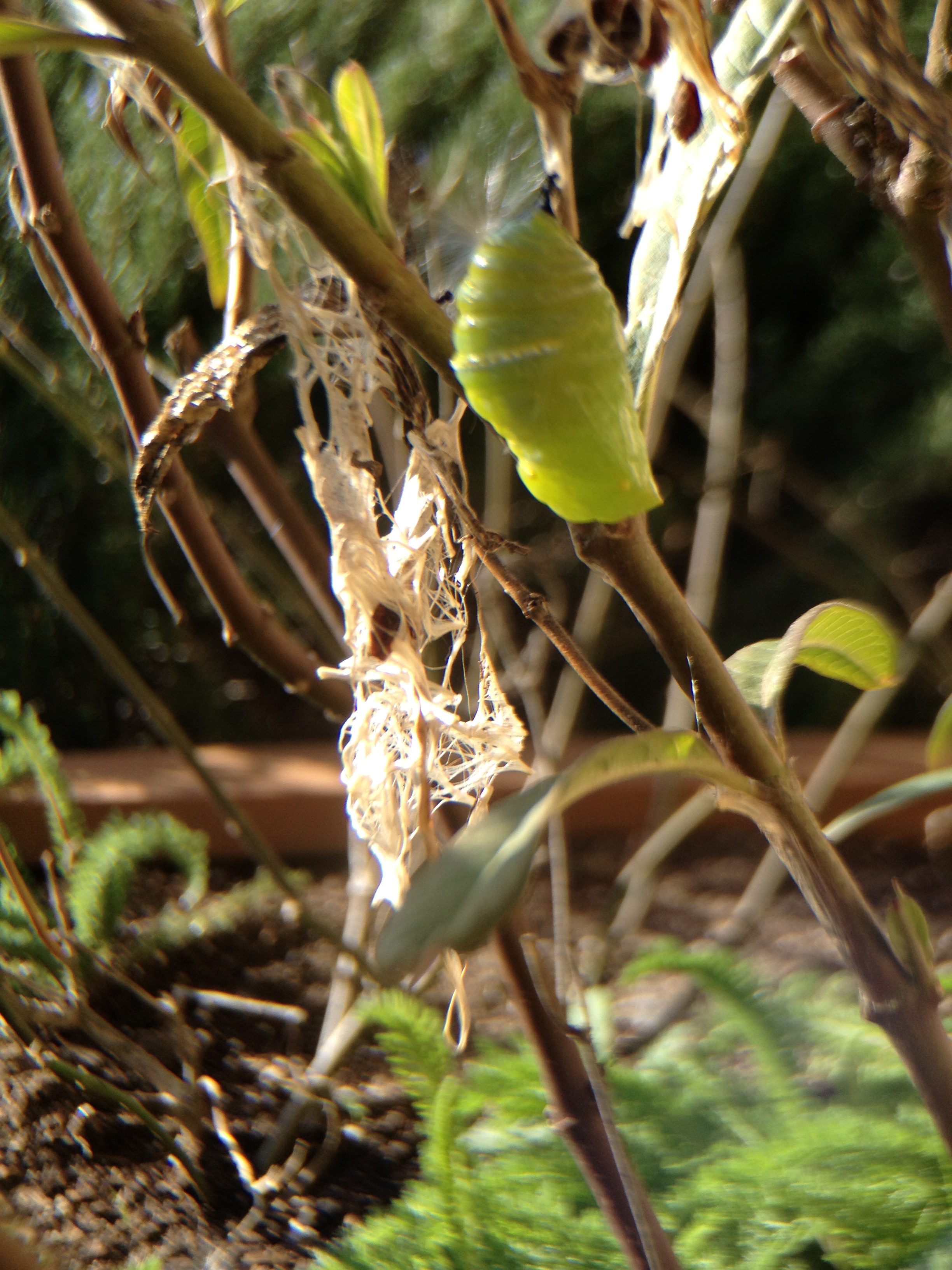
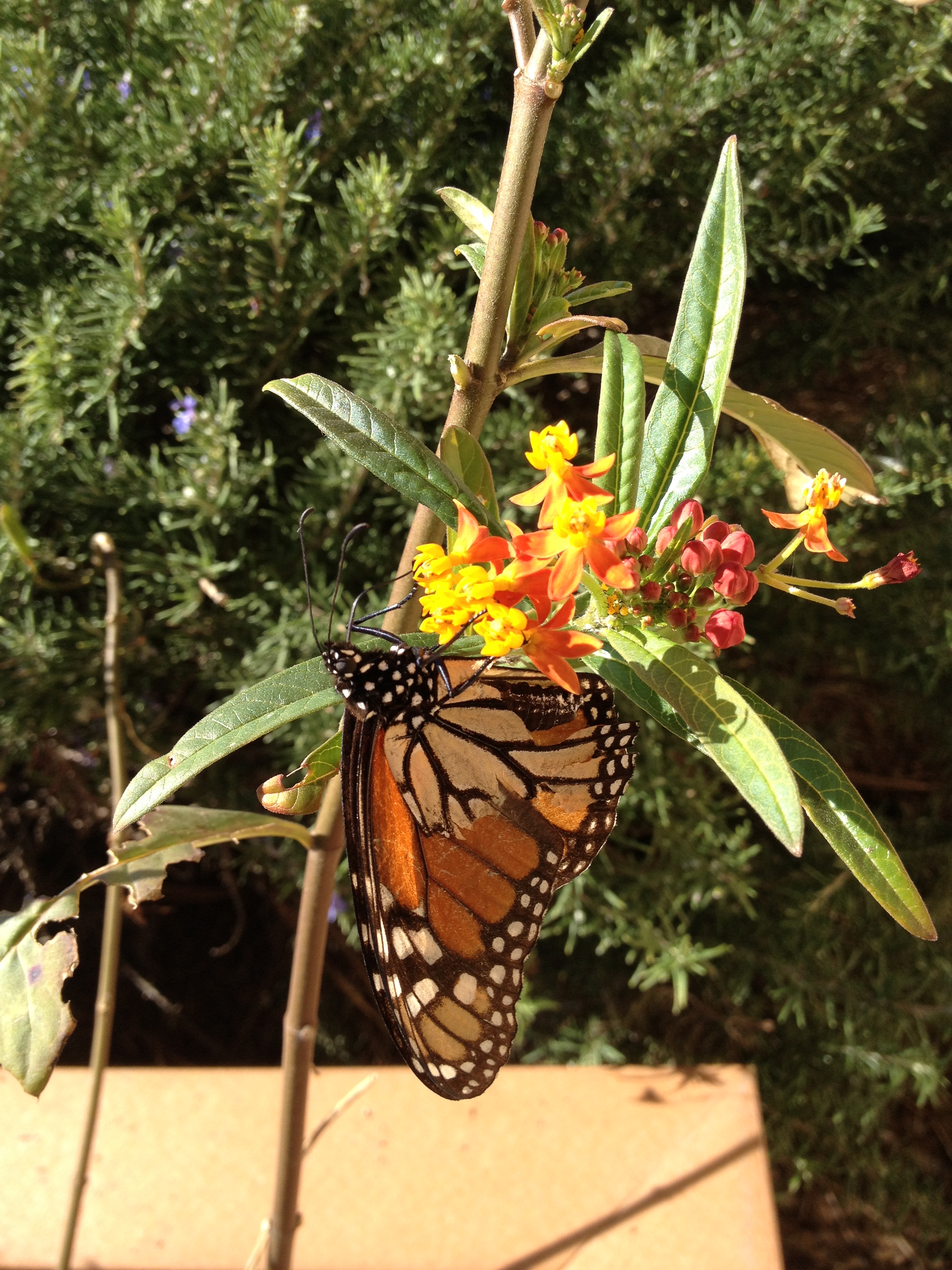
One of the reasons I love taking pictures is that it helps me notice.  Instead of going full-speed-ahead about my life–checking this thing or the other off my ever growing to-do list and worrying about whether I will ever get caught up–noticing helps me slow down, appreciate interesting things around me, and then I find myself asking questions.  When I watched this caterpillar wiggle its way into a chrysalis, my curiosity about everything related to monarch butterflies became insatiable.  (This incredible process happened in the planter box right outside my classroom.  I was also experimenting with using a macro lens on my phone–as seen in the top two photos–helping me to really look closely and focus carefully.  More on focus to come!)

photo-4 photo-3 photo-5 photo-6

As a result of what I had noticed and photographed, I wanted to know more.  I researched on the web, found and read non-fiction books, watched some incredible videos, talked to people around me, and enjoyed reading some fiction as well (Flight Behavior by Barbara Kingsolver came out at the just the right time for me!).  I think that everyone around me also learned–whether they were interested or not–about monarchs and their life cycle!  But most importantly, this event heightened my noticing behavior.  Everywhere I went, indoors and out of doors, I was noticing: paying attention to patterns, colors, numbers, textures…subtleties in the world around me.

This article a friend of mine who works at the San Diego Natural History Museum referred me to reminded me of the importance of noticing–not just for me, but also for my students.  My favorite question to my students is always, “What do you notice?”  I ask that about text, about songs, about pictures, about math and science and social studies…about just about everything!

And even though we do a lot of noticing, I wonder if there is enough time in schools for noticing, for curiosity, for inquiring into things that are interesting.  As I photograph and write my way through the summer, I will also be thinking about that question–and the actions that I will take to make sure my students have ample opportunity to notice as part of their learning experience.  What do you do to help yourself (and the young people around you) notice?

SDAWP Photo Voices: Red

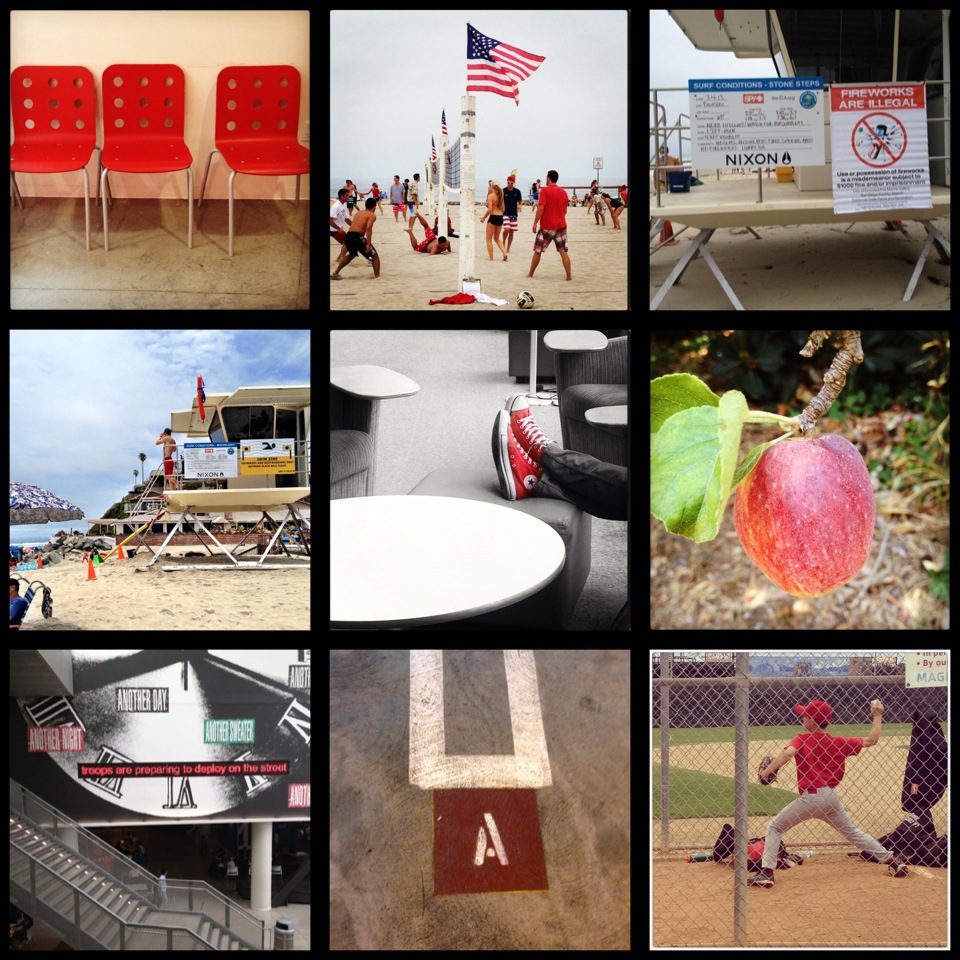
At SDAWP Photo Voices this month we are doing something different: a single prompt (they happen to be colors) for an entire week.  This week was red.  Rather than picking a single picture to highlight (although there is one that is the header for this blog!), I decided to create a collage (using collageit) or map of my week (a nod to my experience with the Connected Learning MOOC).  I did throw in a couple of extra red photos that I didn’t post as part of our photo-a-day challenge.

Red

I was surprised just how easy it was to find red…everywhere.  Because of the 4th of the July holiday, I was at the beach several days this week–and I found red without a challenge!  My favorite is the red shoes picture (edited with the app colorsplash), but I also love the unexpected red apple in my own backyard and the odd assortment of three red chairs.  I’m looking forward to seeing others’ red favorites today and tomorrow as they get them posted on our SDAWP Voices “red” page!

Up next…yellow.  Hmmm…

frames

With each photo I take with my cell phone, I spend more and more time thinking about how to frame the picture I see. I’ve learned that using the zoom feature on my phone helps me see the object clearly in the moment, but degrades the quality of the photograph when I go to edit. I can reframe in the editing process, pulling the image in closer, eliminating some of the background noise. If I shoot too “big” I often find myself with a nondescript landscape. Finding some kind of focal point makes the photo more interesting–and often evokes the curiosity of viewers.

This article in the New York Times on July 2, 2013 also has me thinking about frames and framing.  The author plans an outing for his 6 year old nephew based on both his budget and his nephew’s interests and personality.  A focus on Grady’s interest in art and low-key, meandering pace in life creates a day filled with drawing and art museums punctuated with opportunities for Grady to interact with working artists, study a variety of art forms, and enjoy a leisurely day with his uncle.  Framed in another way, Grady could have been disenfranchised, alienated by having to hurry here and there without the time to study and try out what he found interesting along the way.  Uncle Seth’s focus created spaces for Grady’s curiosity to blossom.

This has me thinking about ways I can use this idea of framing in my classroom and in my work with teachers, foregrounding student interests while keeping the skills and processes needed for learning success in mind.  I’m wanting each of my students to feel like Grady did on his outing with his uncle: like learning is what you do when you’re enjoying what interests you.  That’s what happening with my photography.  I’m learning as I play around–and through connections with others with a wide variety of interests and skills that relate to what I am doing.  My photography (and the photos themselves) are not framed in a permanent shape with a single focus, I am continually exploring frames and how they work with the images and ideas for each shot.

School curriculum often feels like it exists in the noun “frame” rather than used flexibly with the verb “frame”–ignoring students’ strengths, challenges, and existing interests and knowledge.  Does the frame/framing metaphor work for teaching and learning?  I’d love to know what you think!