Tag Archives: environmental literacy

Seashells and Seeing: #WriteOut in the Classroom

In my first grade classroom, we started #writeout way back in August. Our school garden is a perfect place for observation and writing. By the second week of school we were out in the garden with our clipboards looking closely, sketching carefully, and adding captions as well as considering what the object they were examining (a passion fruit, a ladybug, a yellow cherry tomato) reminded them of. (I start planting that seed of figurative language very early in the school year!). We continue to venture outside, at least monthly, with our sketchbooks in hand, sometimes on a color walk, sometimes in search of questions… You can check out a variety of past explorations through this year’s #WriteOut choice board. Let’s Take a Wonder Walk is my offering.

While sharing information about #WriteOut at a recent San Diego Area Writing Project conference, I overheard someone mention the book, Through Georgia’s Eyes, which reminded me of the powerful connection of Georgia O’Keeffe’s art and close observation in nature. I returned to my classroom, pulled that old favorite picture book out along with another Georgia O’Keeffe picture book, Georgia’s Bones and created a plan for introducing my students to this incredible artist, encouraging close observation, carefully enlarged sketching, and descriptive writing.

We’d been on a Wonder Walk the previous week, using nature collectors to pay attention to small natural items around our schoolyard. Students picked one and sketched it. They were small drawings, nicely done, and the perfect prelude to this introduction to Georgia O’Keeffe and her attention to detail. Knowing I had a bin of seashells stashed in a cabinet in my classroom, I pulled them out and picked out a selection of some of the most interesting–enough that every student would have variety to choose from and varied enough that the shells were mostly different from one another.

After reading Through Georgia’s Eyes, we talked about the way that O’Keeffe loved to make her paintings large, bringing attention to things others might otherwise miss. Students each picked a shell from my collection and studied it carefully. We took out our sketchpads. Students were encouraged to sketch the shell, filling the page with every detail they could. Drawing big is hard for young students, so practicing this technique is important. Then I gave them a larger piece of watercolor paper and a sharpie marker and asked them to draw their shell again, even larger!

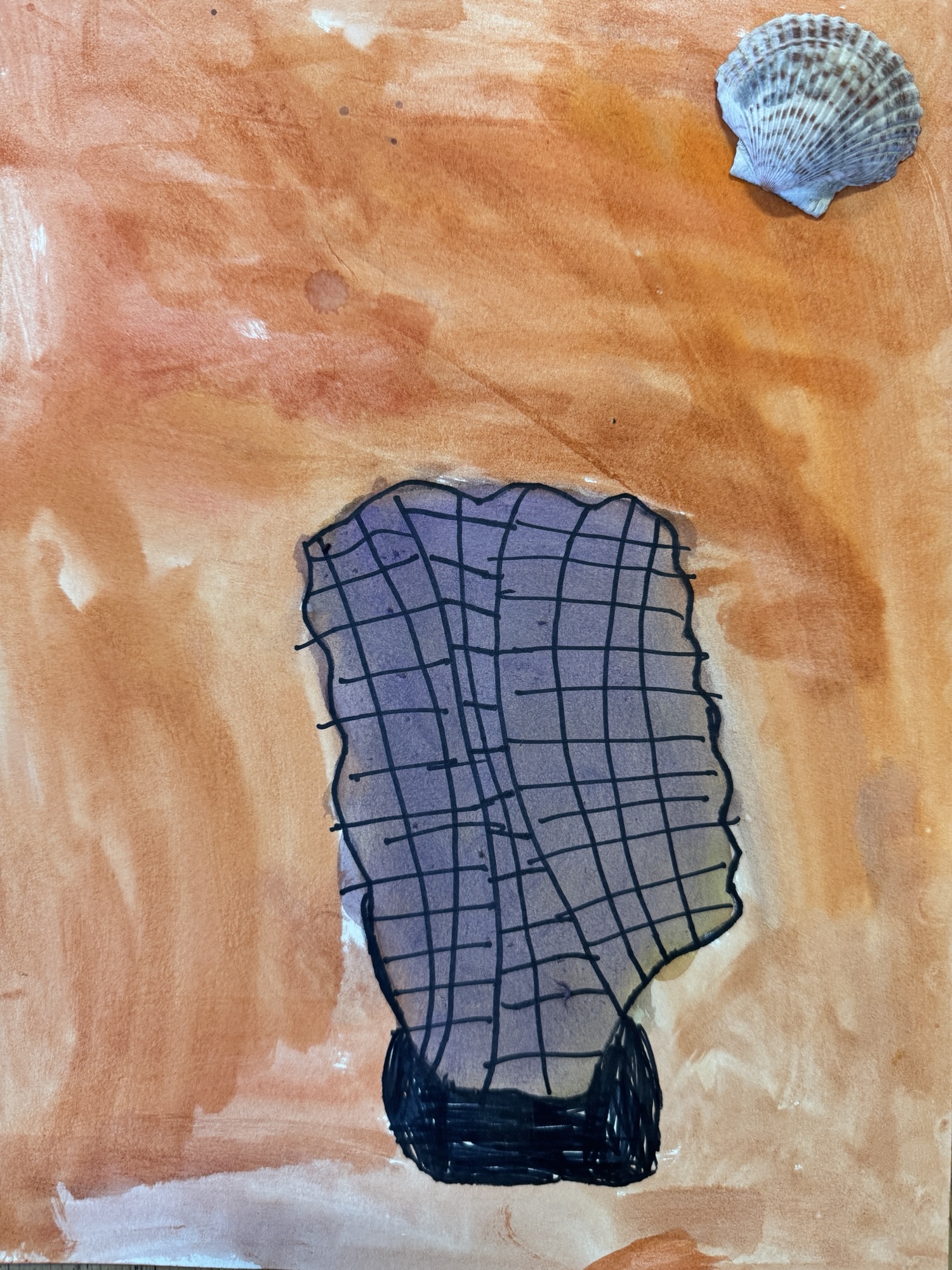
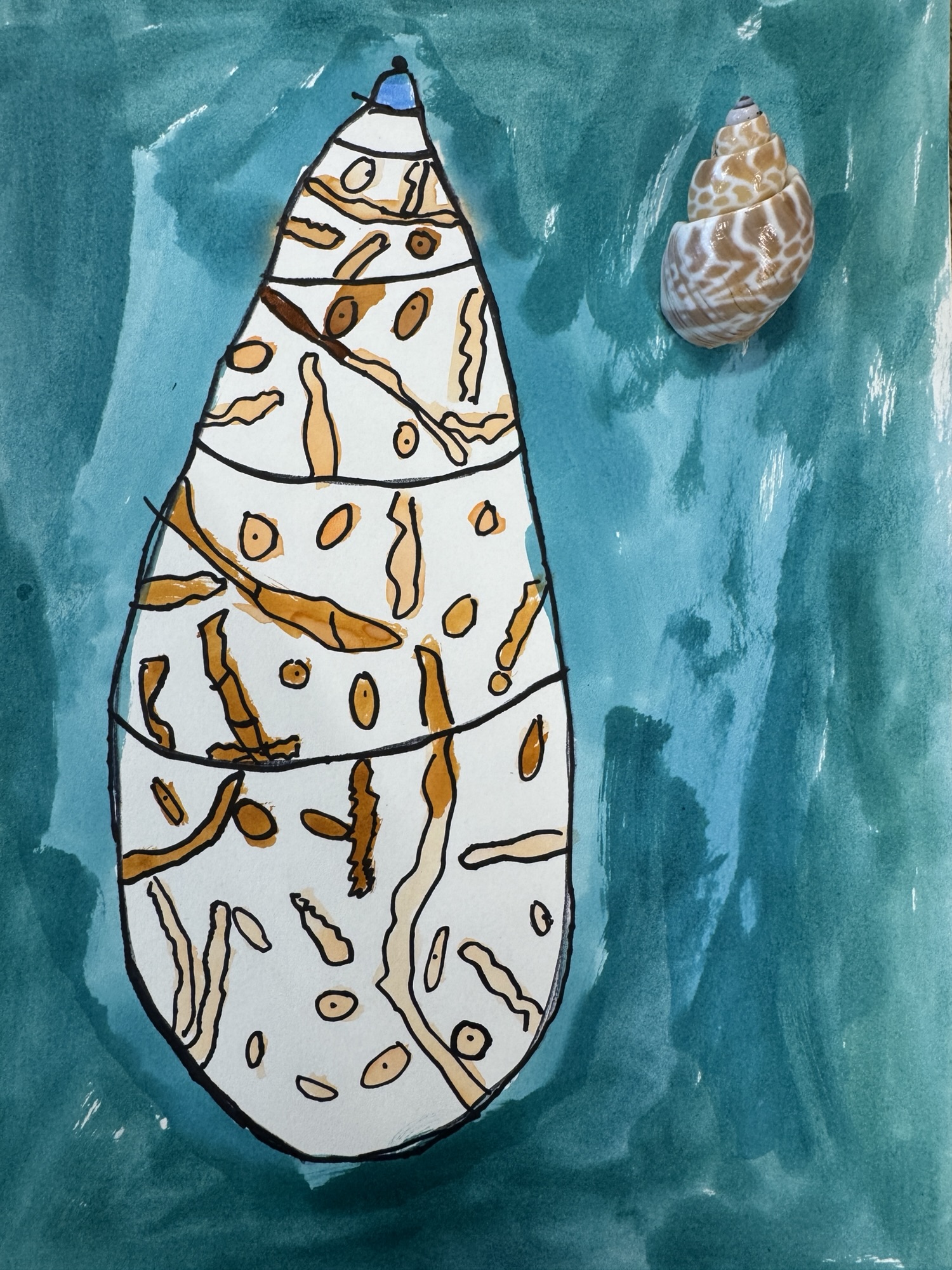
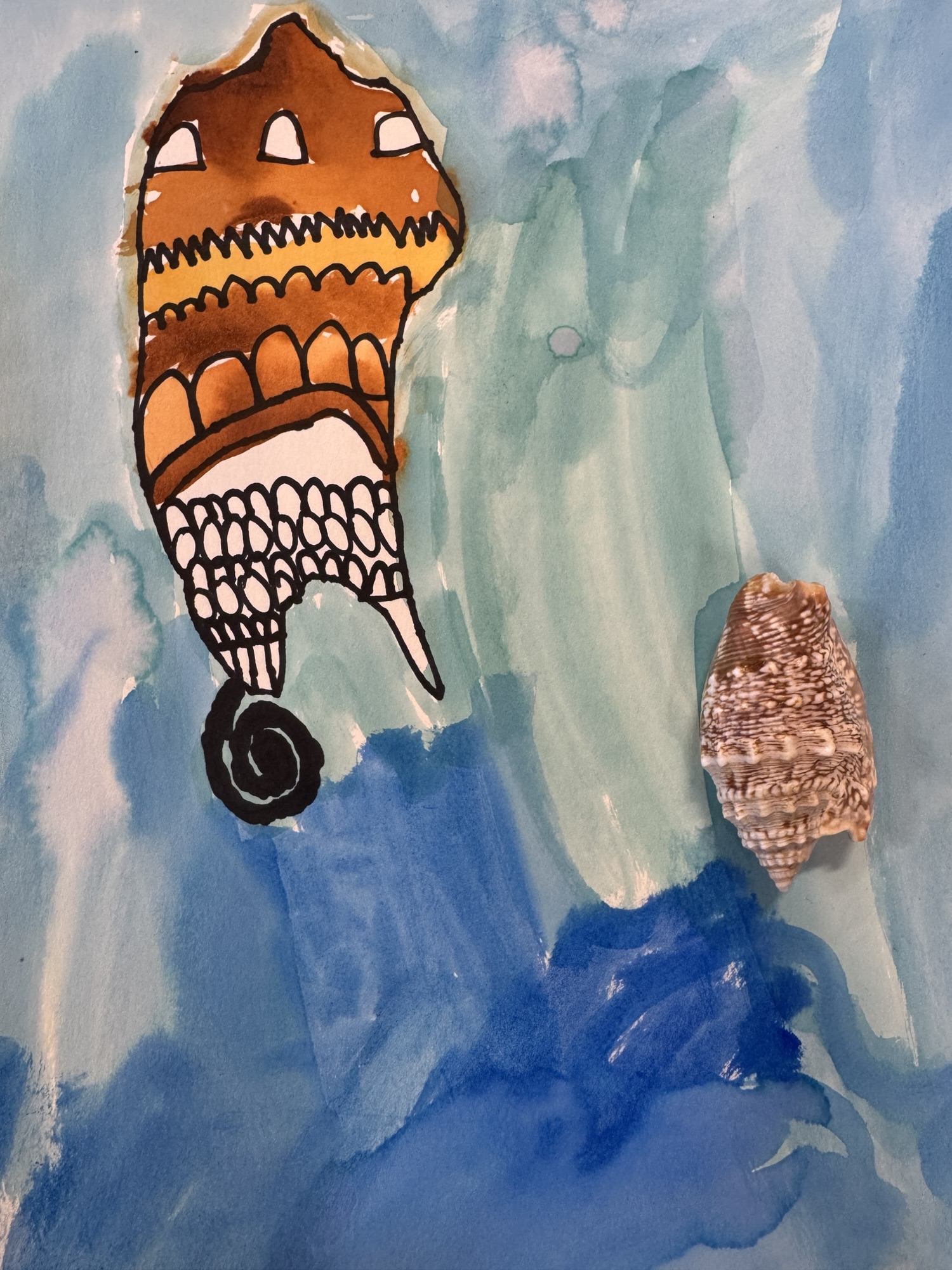
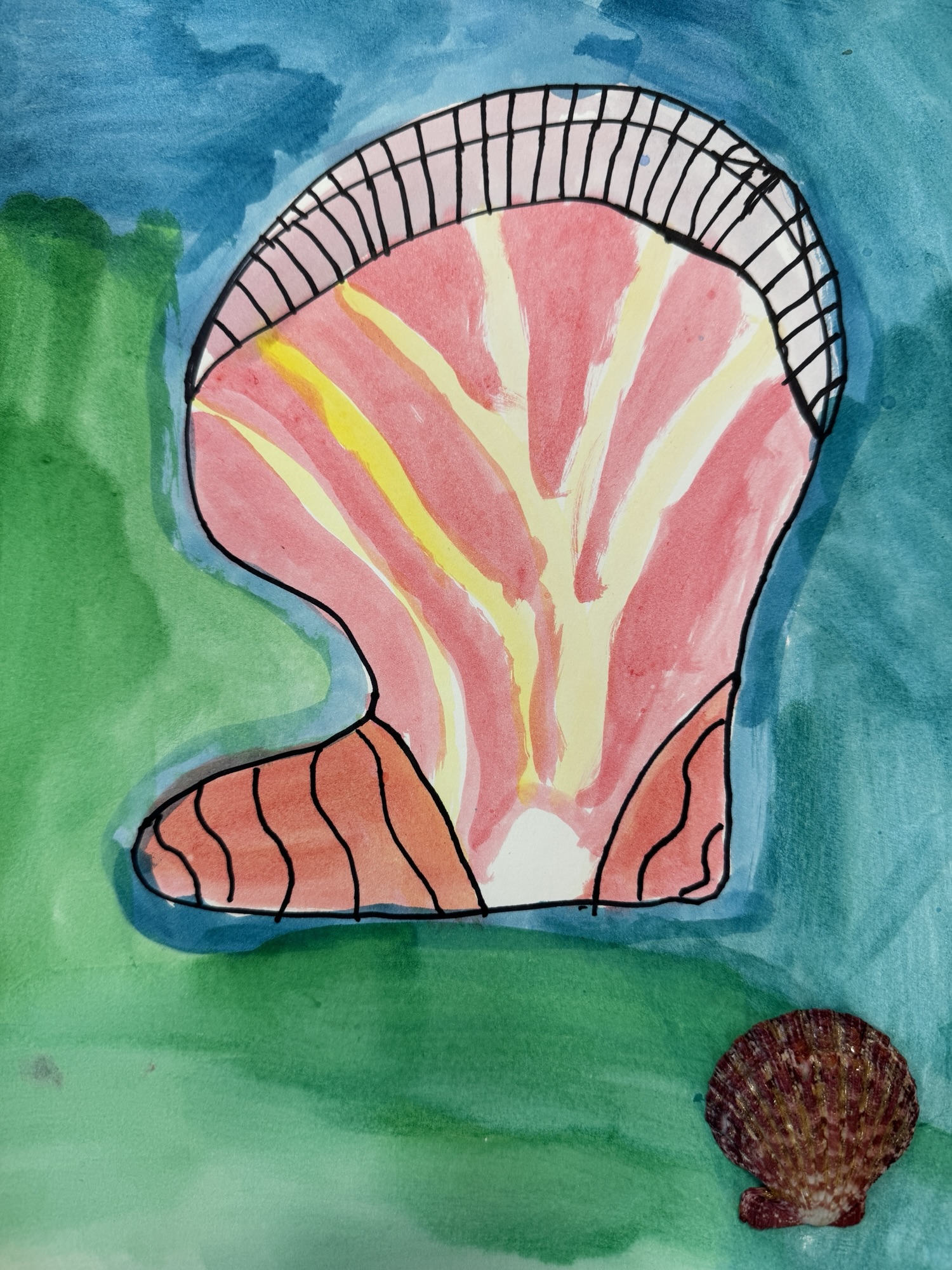
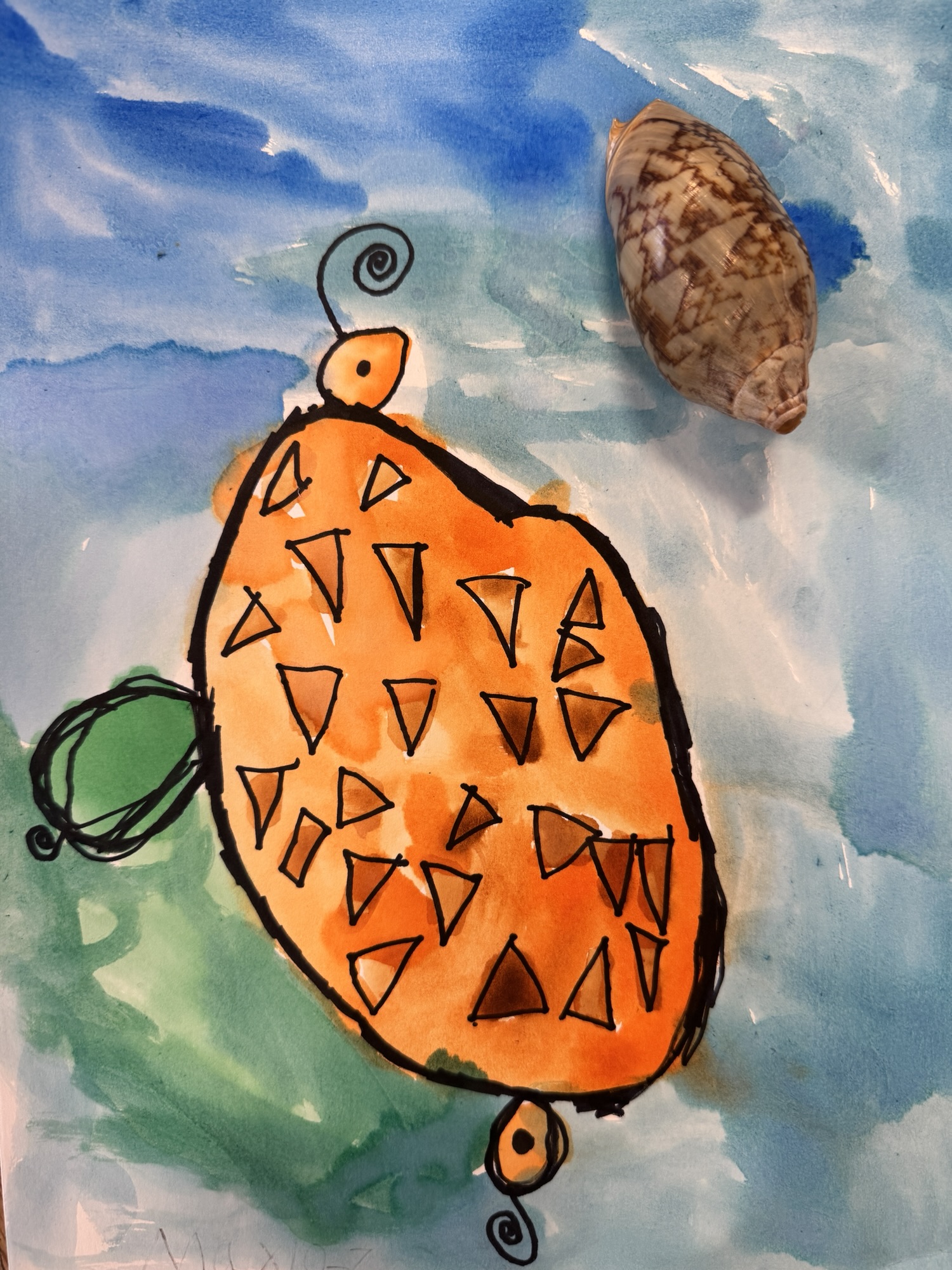
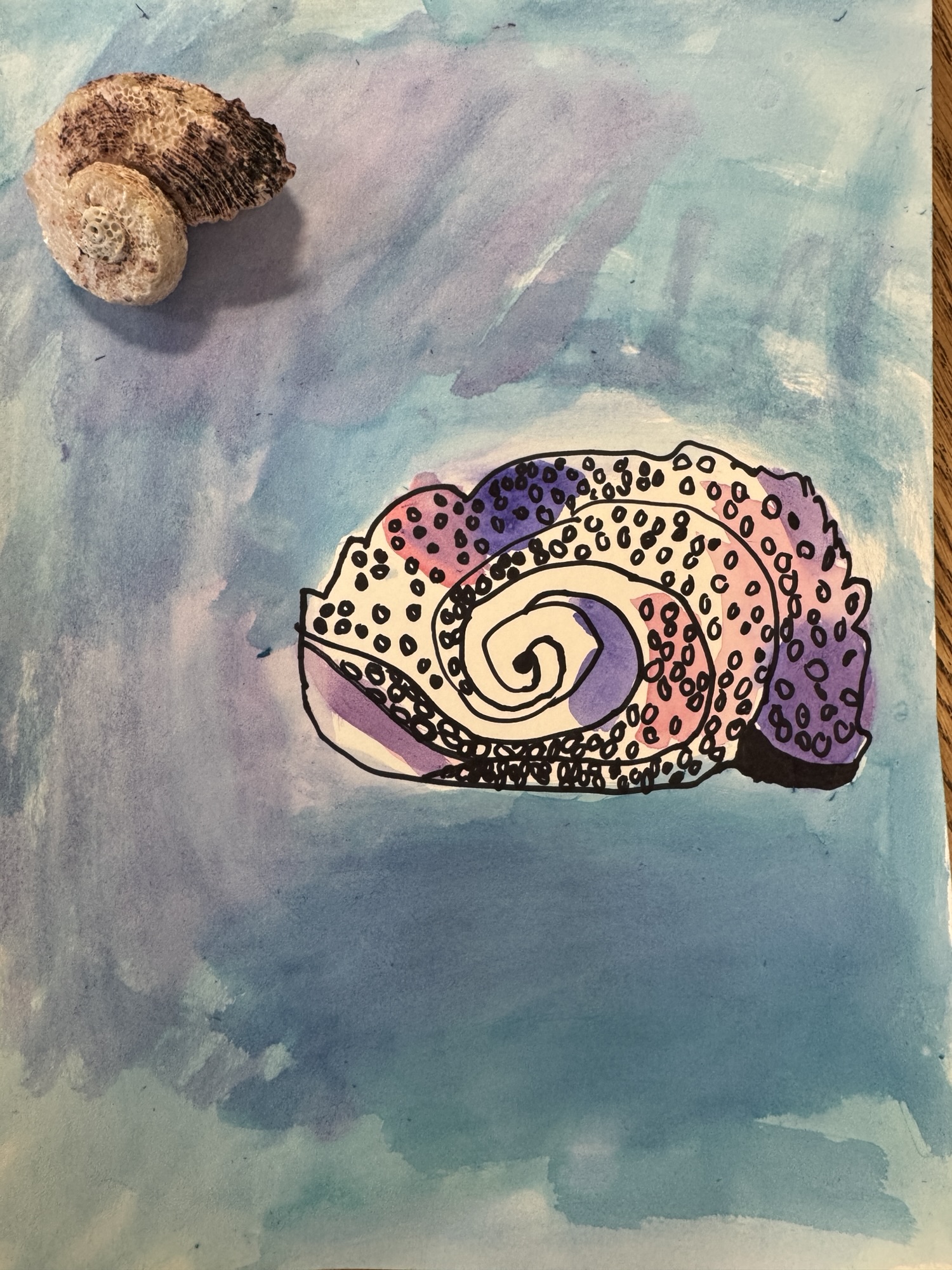
The following day, after reading the second picture book about Georgia O’Keeffe, we pulled out the trusty trays of crayola watercolor paints, mixing colors in the lids to capture the details of the shells. They looked carefully again, noticing nuance in coloring and shading, figuring out how to best capture the beauty of their shell. They also painted a background color to help their shell stand out. The results were stunning! (I decided to photograph them with the shell to show how much their study of the shell influenced the paintings.)
I was already excited about the work students were doing. These 6-year-olds were impressive with their attention to detail and care using watercolor paint–which can be unforgiving! My next request of them was something they initially found perplexing. I told them now we were going to paint our shells with words. What?!? I explained that our words were going to be the paint that helped others “see” the shell through our eyes. As is typical, I pulled my writer’s notebook out, took a close look at my teeny tiny shell, and started to think aloud about my shell. I wrote a few sentences, continuing to talk through my decisions. And then it was their turn.

You know that magic is happening when that hush falls over the room. First graders are not quiet writers so I get glimpses of their thinking as they work through words, help each other with spelling, ask questions about sounds, and speak the words they are putting on the page. I also knew something special was happening when no one was “done,” even when we had to stop for our reading groups and lunch. While my students were out of the classroom I walked around the room reading their words. Every single student was truly painting with words!

After lunch I gave students a few minutes to read through their writing and finish what they were working on. Then I pulled out the highlighters (first time this year!). I explained how I wanted them to use the highlighter–but first they had to pick a “golden line,” their favorite idea they had written about their shell. After highlighting we had a whip around where every student read their golden line out loud. My heart was full.

T wrote seriously, using all the time available to describe the shell.

My shell has a swirl in its window.  Beige is the color that is the starting color but then white takes over.  It has a pattern it goes purple to white.  My shell has lines that curve to the end.  My shell is very flat.  In the inside there is white.  If you touch its tip you would get poked on the finger. My shell has some green.  It reminds me of a whale tail flaming in the ocean.  My shell’s window is by the tip.  It reminds me of a bucket of water filled.  It’s my favorite shell.

M is an emergent reader and writer, working hard to capture sounds in words. This took effort and great perseverence to produce independently.

My shell has a triangle. My shell has a spiral inside. My shell has a window.  My shell has pink.
Wild Words: SOL25 Day 20

In my experience, kids love nature and natural things. I also think it’s important for the adults around them to expand their exposure to the natural world and also to help them to embrace the role of caretaker and advocate for our earth and its resources.

Last week we learned a bit about Jane Goodall and her lifelong skill as a watcher. Then we did some watching ourselves. Since it was pouring down rain outside (not good weather checking on my part when I planned), I had to adjust my plan and instead of watching outdoors on our campus, I used a couple of animal cams for watching.

With our minds on nature and the natural world, I read students the book, The Keeper of Wild Words by Brooke Smith. The story is about the need for all of us to keep wild words alive (words like wren, dandelion, brook, blackberry…you get the idea) by paying attention to wild things and using these words in our lives or they will continue to be replaced by words like internet, chat room, and other non-natural words.

Recently I harvested an activity called the longest list from a colleague where students collaboratively work to create a list of words…in this case the longest list of wild words. Large sticky note posters worked their magic–students loved working together using markers to make a long poster list of words. Then I gave each student an index card-sized post it note and had them move from poster to poster with the goal of collecting the ten wild words they liked the best. I love the focused engagement during this stage of the work. First graders helped each other spell the words they came up with, helped each other read the words written by their classmates, and sparked ideas for new words all along the way.

Finally, I asked students to write a 7-up sentence (another something borrowed from a colleague). This sentence as I defined for the students (based on things I wanted them to demonstrate) must feature one wild word, have 7 or more words in it, begin with a capital letter, include ending punctuation (., !, ?), have no backwards letters, have very neat handwriting, and must make sense. I handed them each a 5×7 lined card and they set to work.

“Can I include metaphorical thinking?” I was asked. You know my answer! “This is so easy,” another student exclaimed. Everyone set to work, selecting a word from their list and composing a sentence to meet the criteria.

Here’s a few of their sentences:

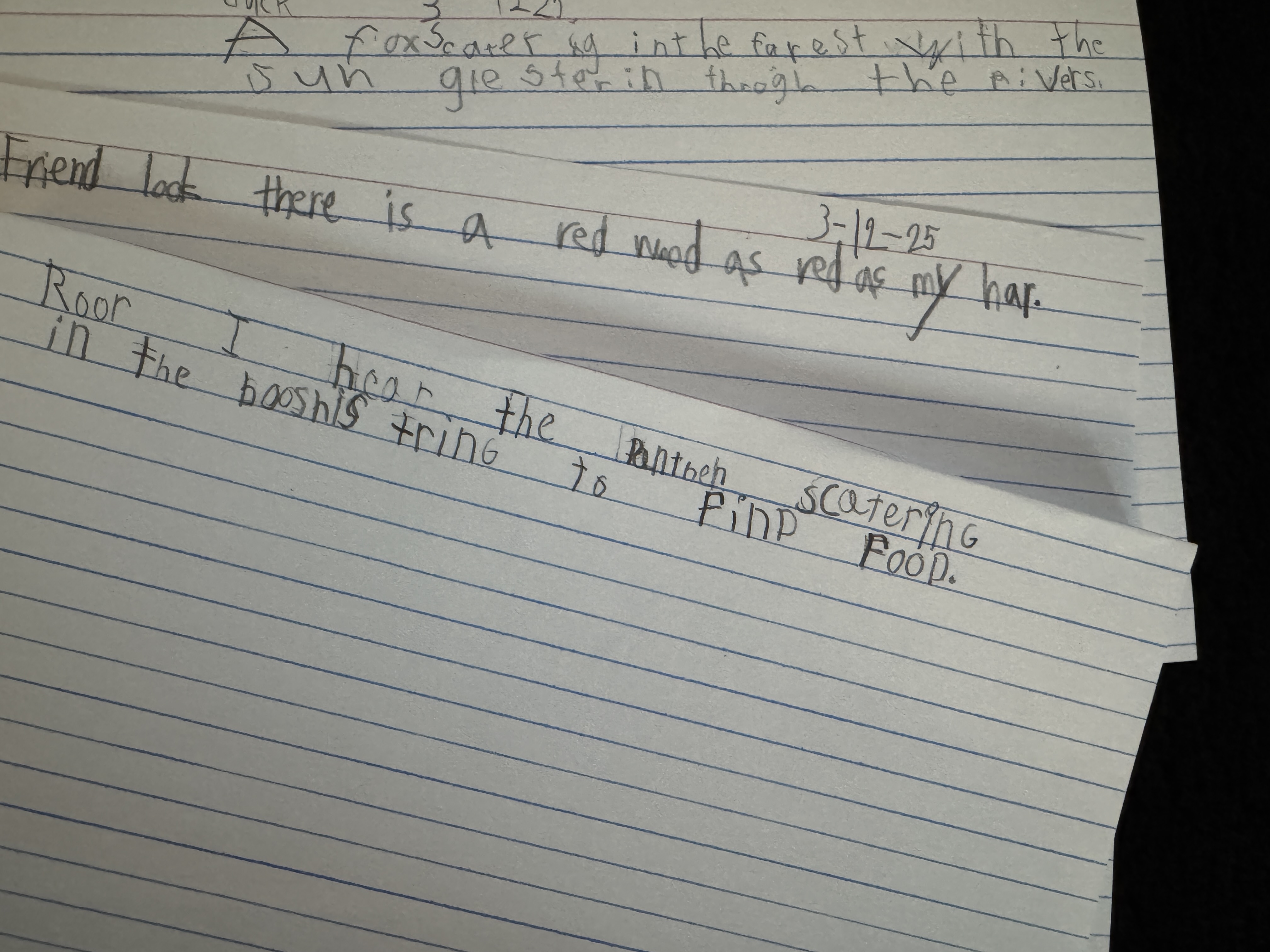
J wrote: A fox scattering in the forest with the sun glistering in through the rivers.

T wrote: Friend look there is a redwood as red as my hair.

D wrote: The red roses are scattered around the forest because there is a panther coming.

C wrote: Roar I hear the panther scattering in the bushes trying to find food.

B wrote: Roses rising up in the air high up to the clouds.

While they haven’t yet perfected punctuating the complex sentences they are composing, the sentences are interesting. They are using active words and working to be descriptive.

Were all seven criteria perfectly executed by all students? No. But there was great effort and every student was able to compose a sentence that was pretty close. They were engaged and wanted to craft a sentence unlike other’s. And this was an ideal formative assessment–short and sweet, showing me where to concentrate next instructional efforts.

Best of all, we are working to keep wild words alive: in our minds, in our words, in our writing. And I hope this is another stepping stone leading to students becoming the stewards that our earth and all its resources and creatures need.

Dandelion Dreams: May 16, 2023

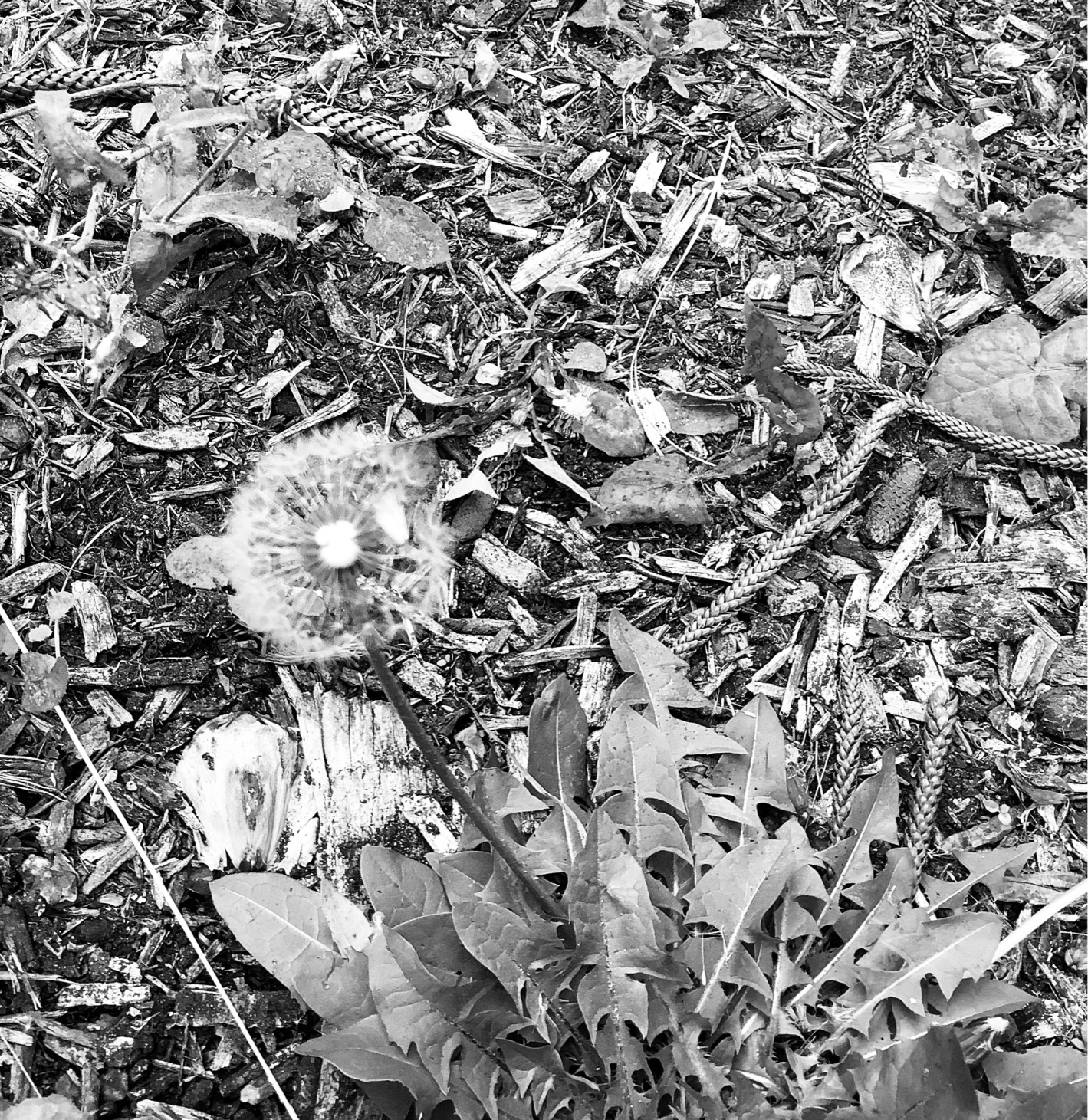
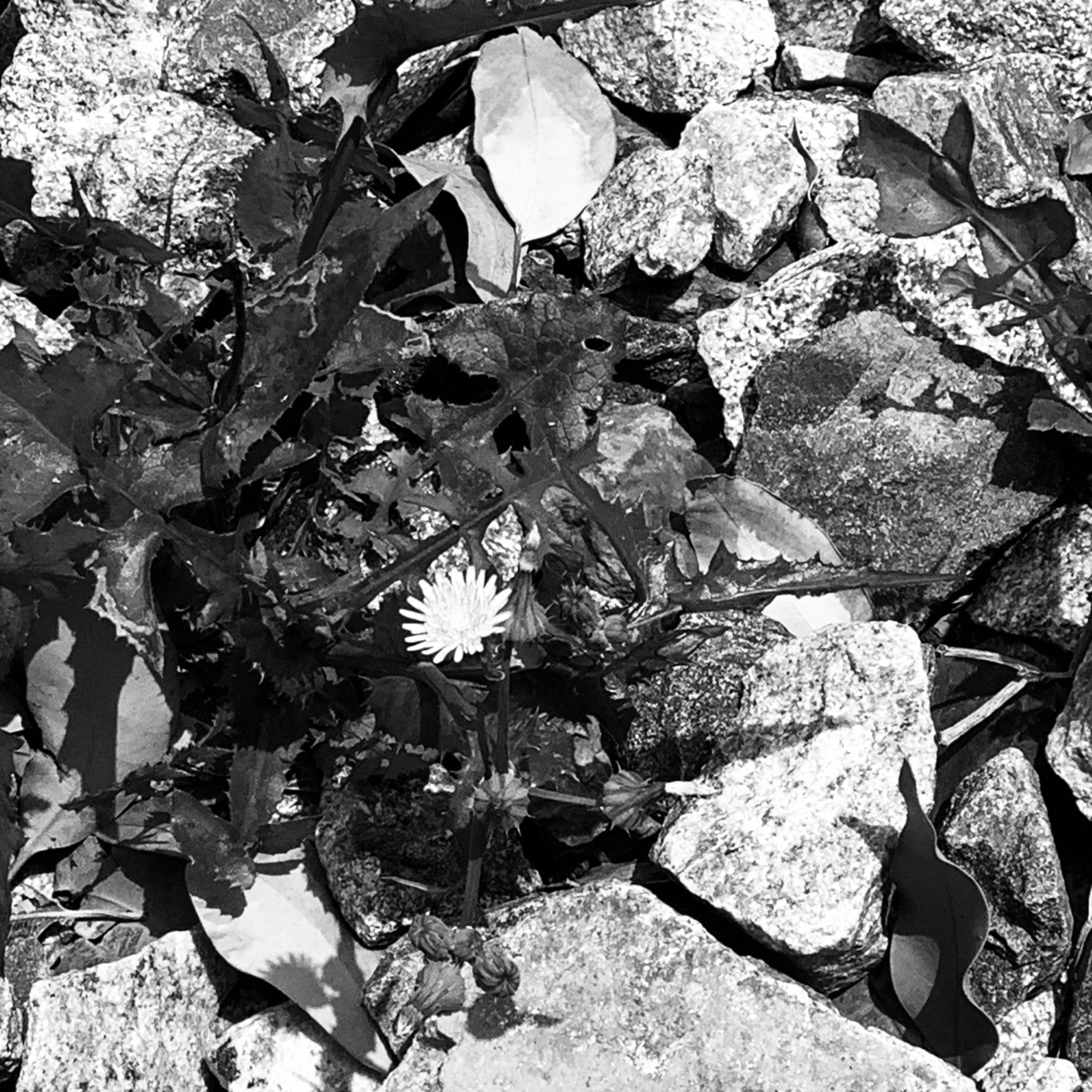
I admit it, I’m kind of obsessed with dandelions. There is something about the resilience and grit of this pervasive and well known weed that enchants me. I love that dandelions spring up in our lawn, in the cracks of rocks, right in the middle of an asphalt road, along the sandy edge of the beach… Last week I read my students the book Dandelion Seeds the World by Julia Richardson which follows dandelions across all seven continents. celebrating the multiple ways their seeds spread from floating on air to hitching a ride in the fur of animals…and even in their digestive systems! After reading and talking about dandelions…and the ways we make a wish and blow the seeds (which also helping them spread), we wrote about our wish for the world. Not surprisingly, at the end of the school year, they didn’t even need an example to get their pencils moving and write some important wishes. Interestingly, many were environmental wishes–about taking care of the ocean, protecting animals, preserving trees along with a couple of wishes about treating others with kindness and respect.

I always like to pair writing with some kind of art project. In the past I’ve done a variety of different kinds of dandelion creations…but for some reason was feeling uninspired by these projects. A colleague suggested the idea of black and white photography, a la Ansel Adams. Ah…a great reminder! And strangely enough, I hadn’t gotten to Ansel Adams yet this year. So, to get students started I read a favorite book of mine, Antsy Ansel, a picture book biography by friend and writing project colleague Cindy Jenson Elliott. I knew I wanted students to go outside to take photos of dandelions–we had just spent time talking about the dandelion life cycle and the different versions of dandelions they might find (puffball, yellow flower, tight bud…). I was a bit worried though. The gardeners at our school do a wonderful job of keeping the grounds well groomed–would we be able to find any dandelions?

But when I asked the students, they knew just where to locate some dandelions. Of course, the first place they mentions is the “out of bounds” area of the school grounds where they aren’t allowed to play! (And yes, I took them there.). So we set off with iPads as cameras, taking photos of dandelions in all of their stages. Our time was short, so we didn’t have time for any editing before we needed to head out for lunch. Luckily, I took a peek at some of the photos…and was greatly disappointed. They were blurry and ill composed. Hmmm… So after lunch, I showed students some of my own photos of dandelions. I showed them the ones I would discard–the ones that were out of focus, the ones that were too far away–as well as my better photos that were crisp and really showed off the dandelion. Then we tried again. Phew! They were much better.

Students picked their best image and inspired by Ansel Adams, transformed it into a black and white photo. They also cropped it to make it a square image (for the sake of my display).

Here’s a couple of examples:

My wish for the world is for people to use electric cars because gas cars invade the air with gas which is not good for us to breathe in.
People are throwing trash in the water, it is not only making our world dirty it is also killing animals.
My wish for the world is to stop cutting down trees because it is killing wildlife.

My own wish for the world is that this group of first graders continue to influence and inform the adults around them about the importance of taking care of our planet…and each other. What is your dandelion dream?

6 Words for the Environment: SOL23 Day 24

I wrote earlier this week about reading the book, I’m Trying to Love Garbage by Bethany Barton. In response to the book we discussed ways to reduce human trash. I followed that book by reading the gorgeous To Change a Planet by Christina Soontornvat. This beautiful book talks about how collectively we have created problems for our planet….and how collectively, we can also make change. Both words and illustrations are beautiful!

I find that students want to do things to help our planet. They are already aware of the importance of keeping the earth clean, about the value of caring for plants and animals, and are knowledgeable about composting food waste. And we’ve also been exploring the power of words and images to inform others about things that need doing.

So after reading and talking about To Change a Planet, I introduced them to the idea of writing 6 words for the environment. This is a version of the 6-word memoir that many of you may be familiar with. In 6 words for the environment, students come up with 6 words about our planet–to express its beauty, to help others understand how to help, to explain a crisis. We started by brainstorming words related to earth–and they had plenty to contribute.

I showed them how I would compose 6 words for the environment–including showing my first attempt that only had 5 words! I rearranged and revised in front of them so they would know that they should play around with the words. And then they opened their notebooks and started writing their own 6 words for the environment.

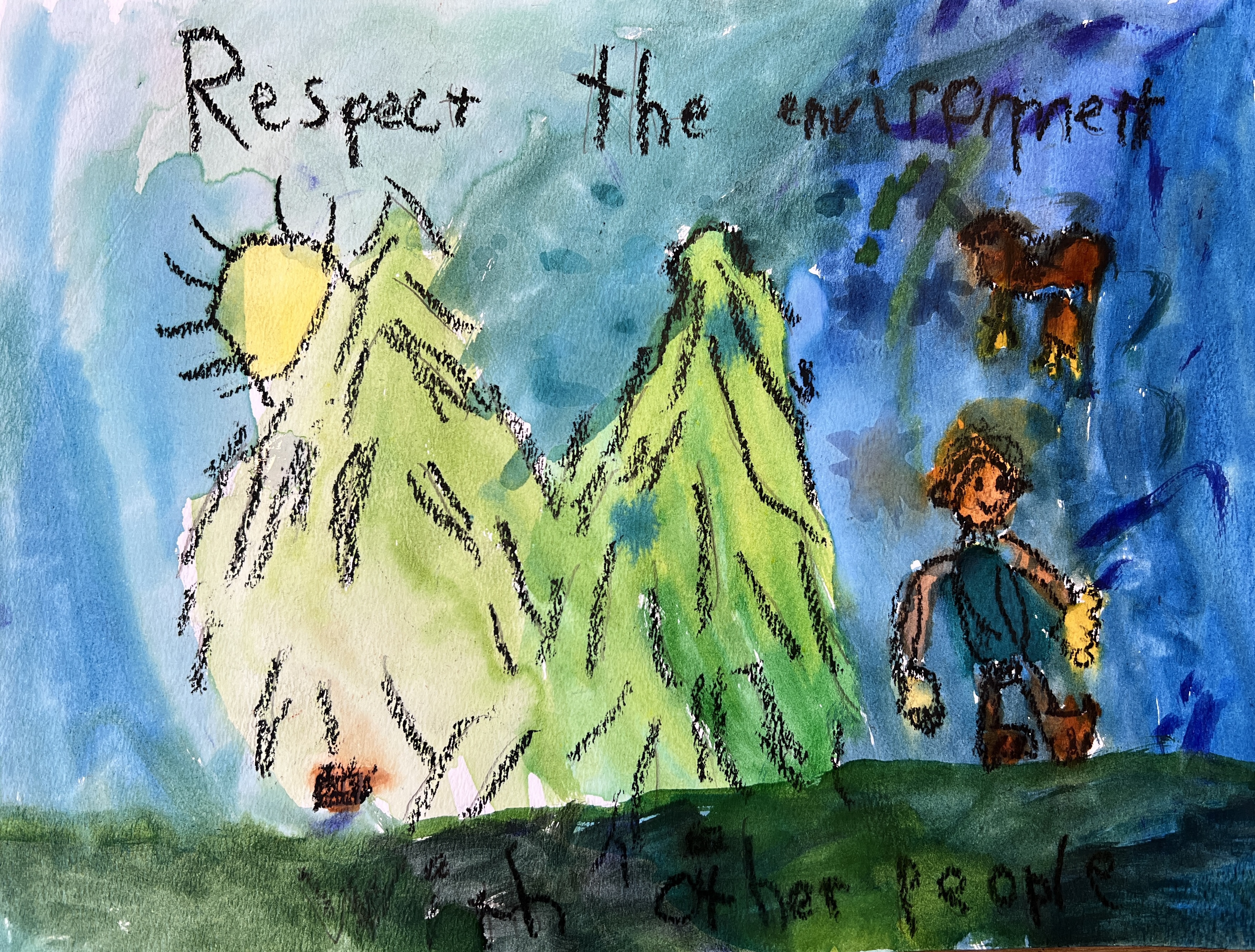
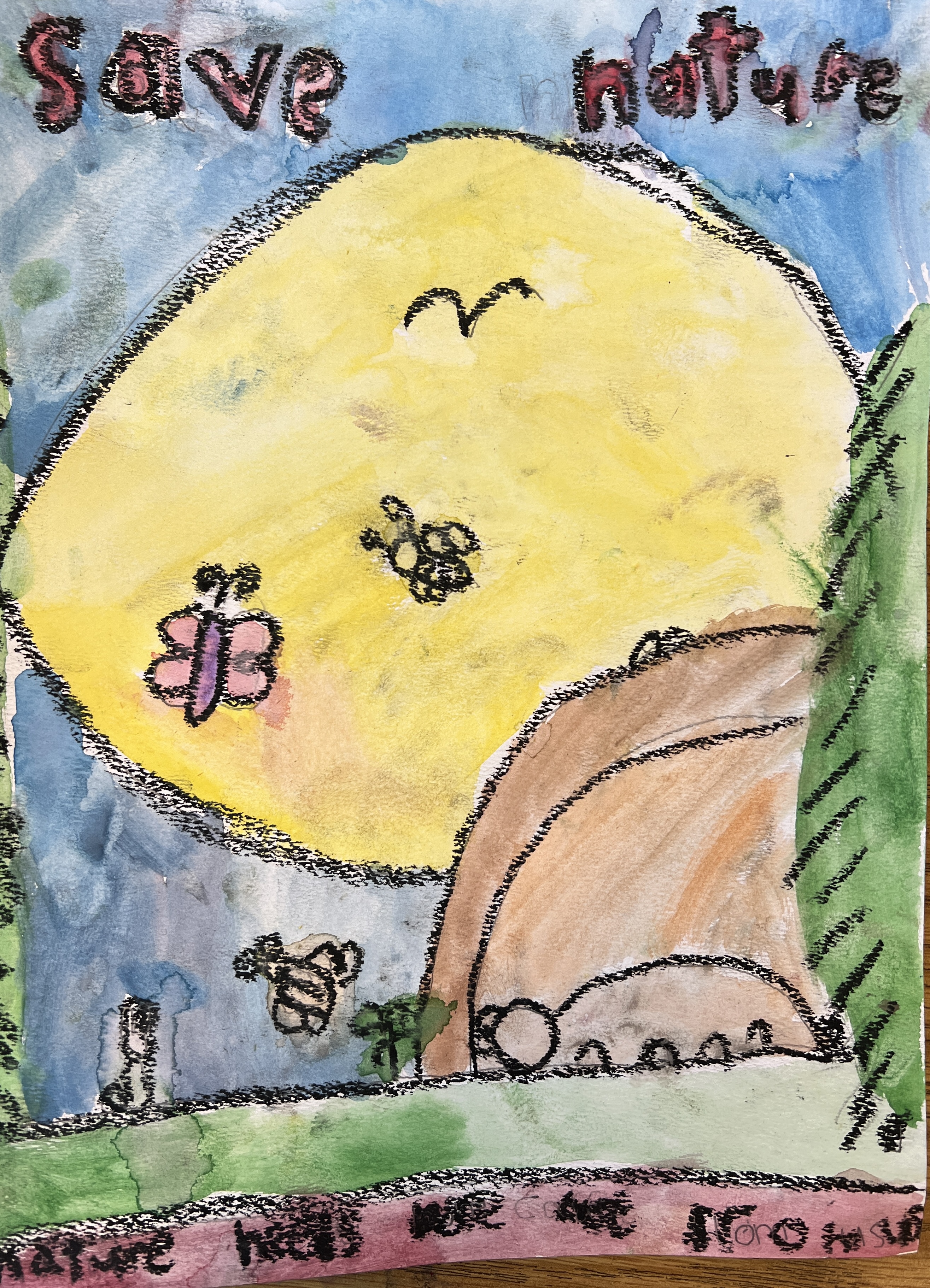
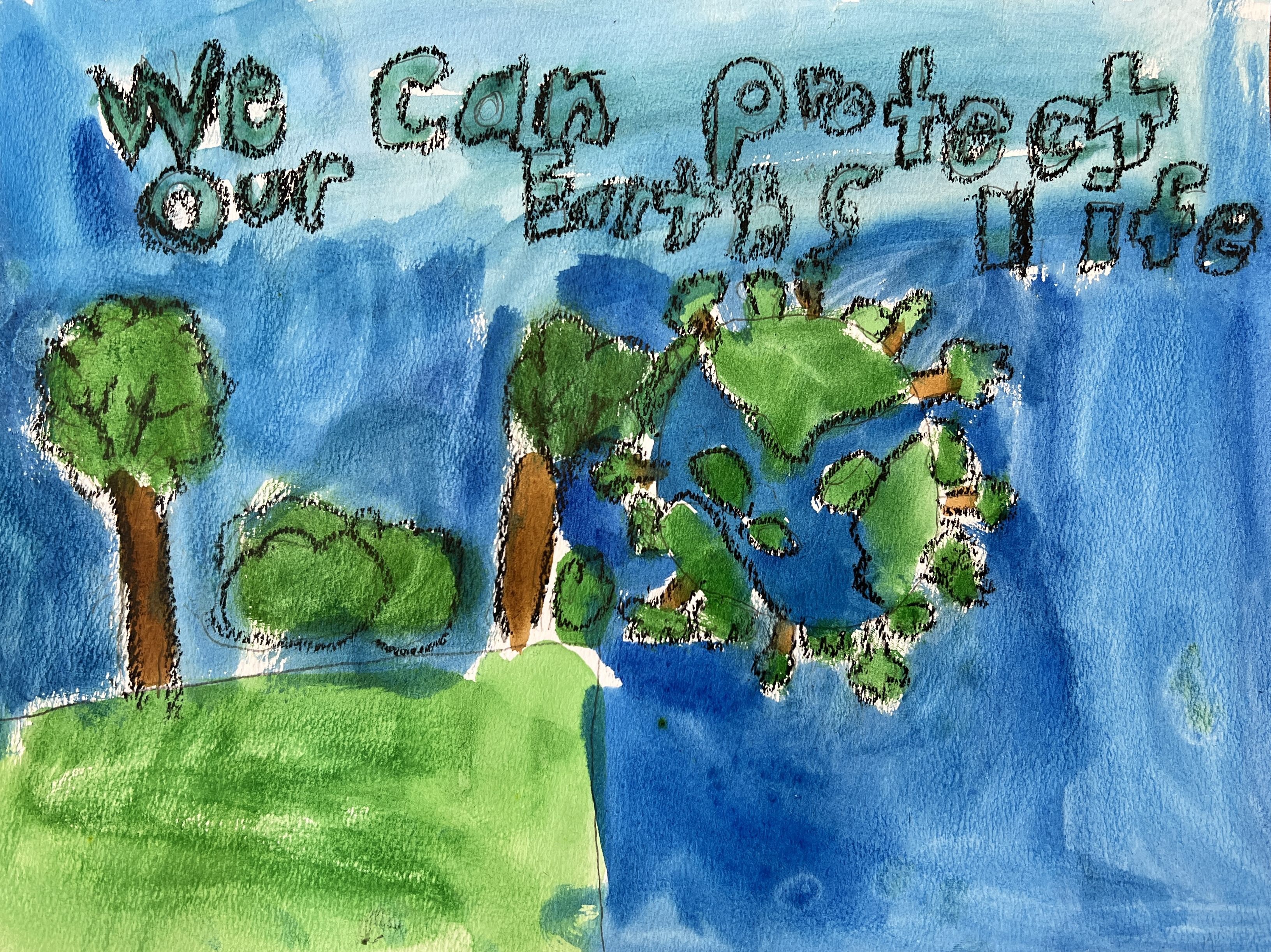
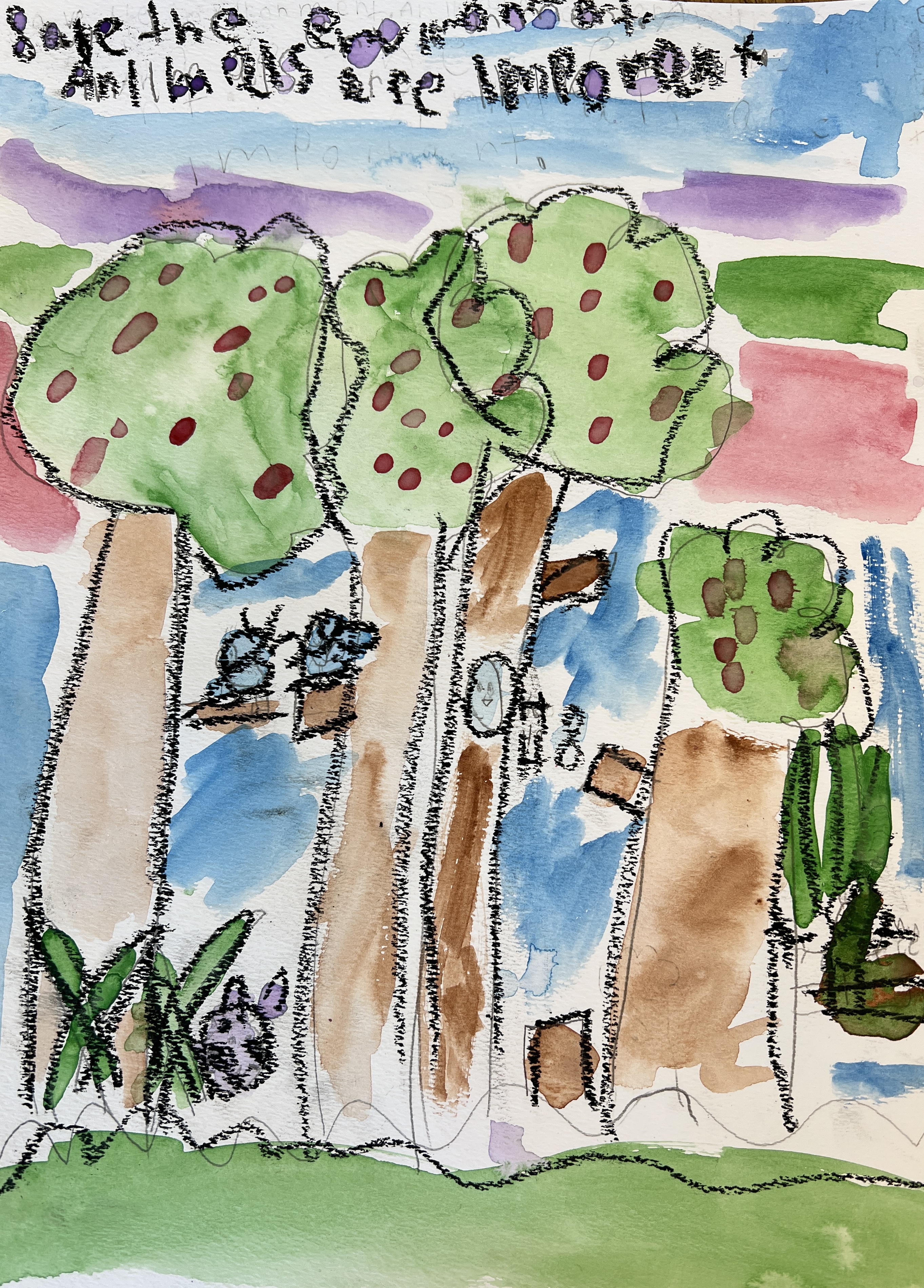
We then took those words and used black oil pastel and watercolor to create posters with their messages. Honestly, next time I will use a different medium. The oil pastel did not allow the words to be easily read, but the images themselves are quite striking. Here’s a few examples:

Respect the environment with other people.
Nature needs more care from us.
We can protect our Earth’s life.
Save the environment. Animals are important.

Integrating environmental literacy into the curriculum is essential. My students (and yours) are our hope for the future. They will be the stewards of our precious planet. I think it’s in good hands.

A Wonder Walk

First graders are naturally filled with wonder. It doesn’t take much to get them to look closely, to pay attention to details that many others miss.

Our school has the most amazing librarian. Last week I asked her about a book–a book I know I own, but cannot find in my classroom. And she not only found me a copy of that book, but she also suggested another that was new to me…and just what I needed today when I found it in my mailbox.

#writeout is a collaboration between the National Writing Project and the National Park Service that urges all of us to get outside and find inspiration in whatever nature is around us. We started #writeout yesterday with time in the school garden. Students learned about weeds, donned child-sized gardening gloves, and dug and pulled and delighted in seeing roots break free of the dry soil.

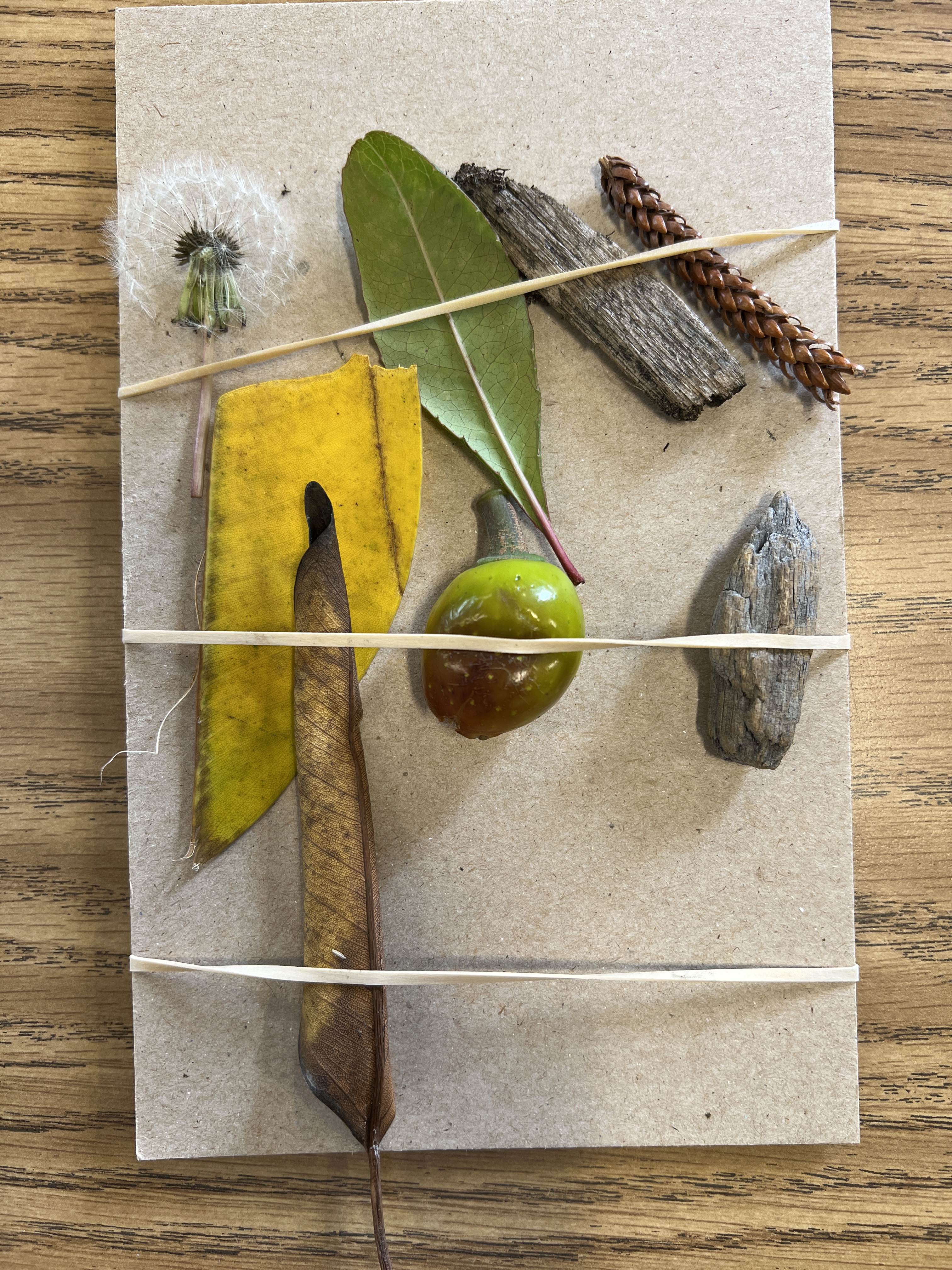
Today we read Wonder Walkers, that book our school librarian left in my mailbox. It was perfect for setting the stage for a wonder walk, time on our school grounds looking for interesting things (think leaves, seed pods, sticks, etc.) from nature that we collected using our collection tool (shout out to Little Pine Learners). Before we headed out we talked about what items we could collect and what we should not (living bugs, picking flowers and plants)–and students were excited to get started.

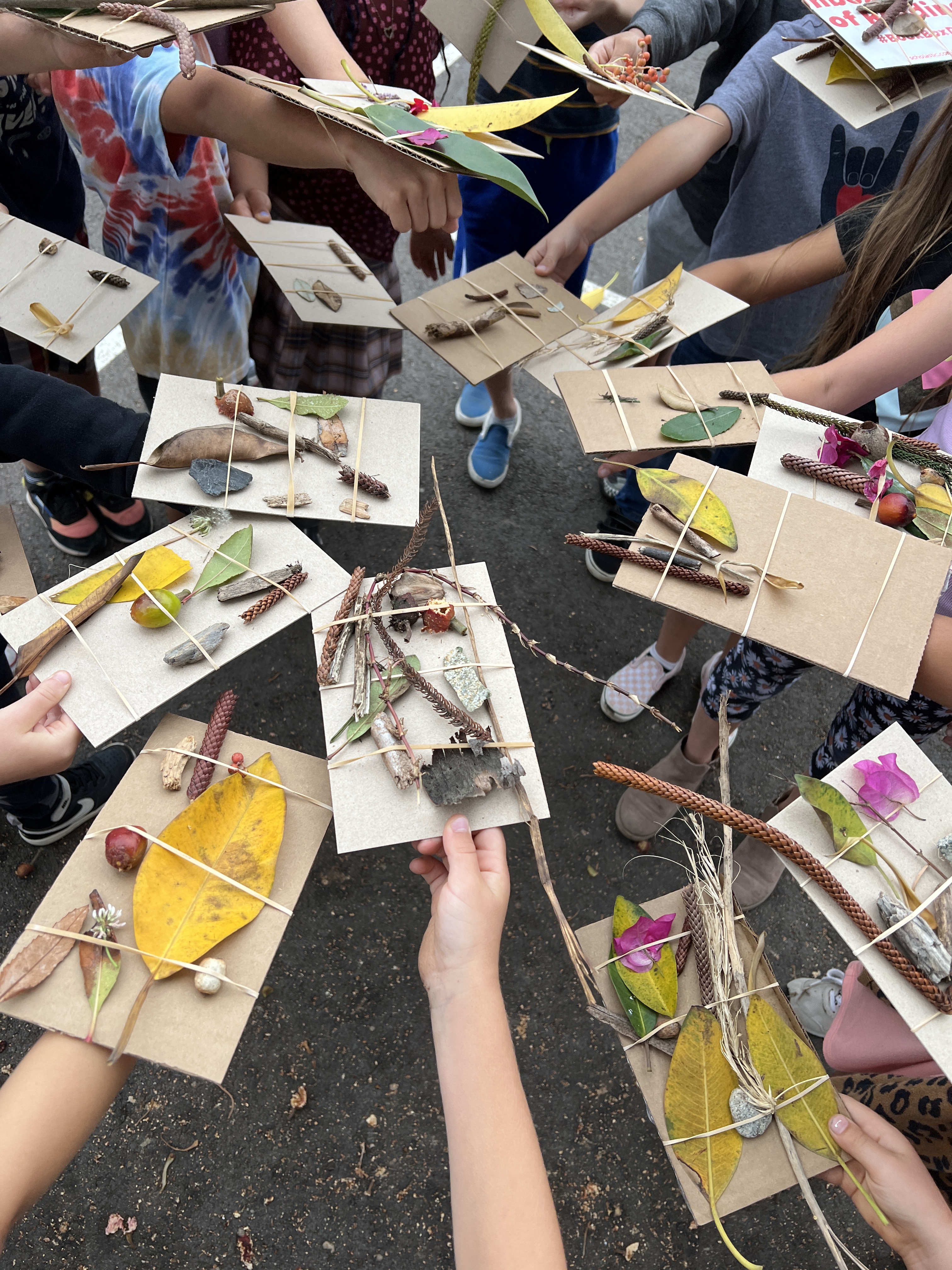
They looked carefully and their collectors began to fill. Some were exuberant and filled their spaces quickly, crowding dried roots and pine droppings with sticks and crunchy leaves. Others were more selective, leaving more spaces between the items collected. A child with sharp eyes found a dandelion puff that didn’t have to be picked, truly a treasure that her classmates envied!

Before we headed back into the classroom, I gathered students close and encouraged them to hold out the collectors so they could see each other’s collections and also so I could take a few pictures.

Once back in the classroom, students used their iPads to take a photo of their collector for future use. Then we settled to read another book. An old favorite, Weeds Find a Way by Cindy Jenson-Elliott, is a wonderful mentor text for students to use as a structure or frame for their writing. I loved the gasp when students realized that this book was non-fiction, yet so accessible with beautiful illustrations. They also remembered their experience with weeds from yesterday and the conversation with the garden teacher about how weeds are not “bad,” they are just not the plants you want in a particular space.

After comments and observations about the book, we tried on using the Weeds find a way… frame with objects from our collectors. “A red leaf finds a way to swish and swoosh through the air,” was one example that got us started.

We ended the day by starting a Zine to showcase our nature items through writing and drawing. We used a single sheet of copy paper to fold a small booklet (with a single cut and no tape or staples) that will soon become tiny treasures worthy of #writeout. More about that in another post!

Growing Advocates and Activists: SOL22 Day 12

I love writing project work and the ways that teachers are the driving force behind proactive change. A conversation with a colleague a few years ago–about the need for climate/environmental education to become “ordinary,” something that students experience regularly, in all their classes, throughout their education career–has stuck with me. And as a result, this year in our local writing project, we convened a group of SDAWP educators to explore that very idea with an added twist: how can we make environmental literacy and justice both ordinary and also have writing at its center?

Today was our celebration and the opportunity to hear details about the work that teachers in this group accomplished. Each put together a 5 minute overview of the work, highlighting student engagement and involvement through writing.

Wow! I felt like I could see these young people growing into advocates and activists right before my eyes. They wrote and spoke with passion about our world, recognizing its beauty AND our need to take better care of it for their future. There were letters, informational pieces, persuasive essays, narratives, poems, artwork, speeches and more. I felt my heart grow three sizes just witnessing this incredible work facilitated by my writing project colleagues.

Our next step is to figure out ways to take this work beyond our group, to and beyond our larger writing project community, and to establish this as something students can expect throughout their schooling. The beauty is that these teachers did not take away anything they were required to teach, instead they worked this content into the learning the students were expected to experience anyway.

There will be more to come…

Surfing Pelican; @kd0602