In my experience, kids love nature and natural things. I also think it’s important for the adults around them to expand their exposure to the natural world and also to help them to embrace the role of caretaker and advocate for our earth and its resources.
Last week we learned a bit about Jane Goodall and her lifelong skill as a watcher. Then we did some watching ourselves. Since it was pouring down rain outside (not good weather checking on my part when I planned), I had to adjust my plan and instead of watching outdoors on our campus, I used a couple of animal cams for watching.
With our minds on nature and the natural world, I read students the book, The Keeper of Wild Words by Brooke Smith. The story is about the need for all of us to keep wild words alive (words like wren, dandelion, brook, blackberry…you get the idea) by paying attention to wild things and using these words in our lives or they will continue to be replaced by words like internet, chat room, and other non-natural words.
Recently I harvested an activity called the longest list from a colleague where students collaboratively work to create a list of words…in this case the longest list of wild words. Large sticky note posters worked their magic–students loved working together using markers to make a long poster list of words. Then I gave each student an index card-sized post it note and had them move from poster to poster with the goal of collecting the ten wild words they liked the best. I love the focused engagement during this stage of the work. First graders helped each other spell the words they came up with, helped each other read the words written by their classmates, and sparked ideas for new words all along the way.
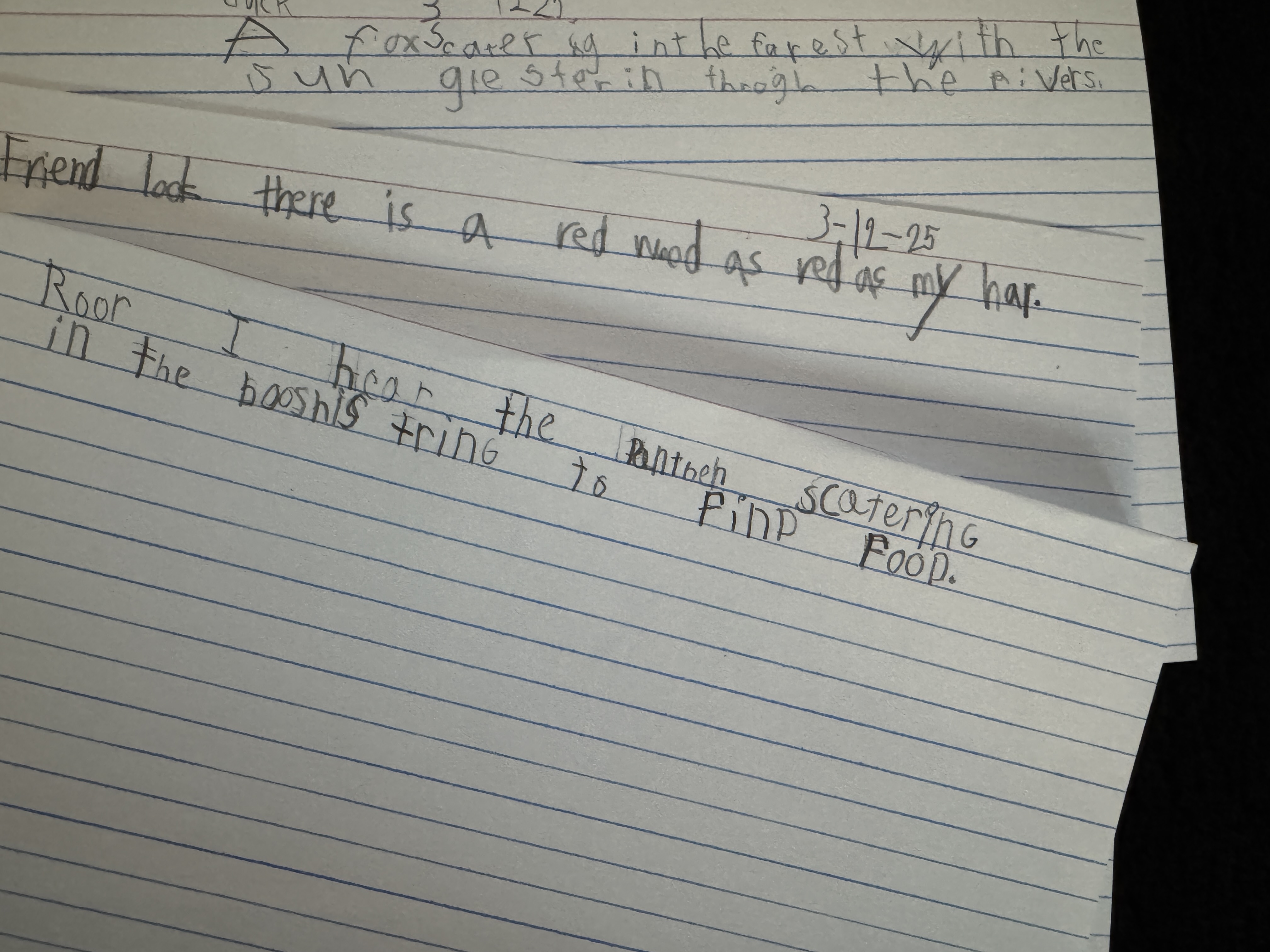
Finally, I asked students to write a 7-up sentence (another something borrowed from a colleague). This sentence as I defined for the students (based on things I wanted them to demonstrate) must feature one wild word, have 7 or more words in it, begin with a capital letter, include ending punctuation (., !, ?), have no backwards letters, have very neat handwriting, and must make sense. I handed them each a 5×7 lined card and they set to work.
“Can I include metaphorical thinking?” I was asked. You know my answer! “This is so easy,” another student exclaimed. Everyone set to work, selecting a word from their list and composing a sentence to meet the criteria.
Here’s a few of their sentences:
J wrote: A fox scattering in the forest with the sun glistering in through the rivers.
T wrote: Friend look there is a redwood as red as my hair.
D wrote: The red roses are scattered around the forest because there is a panther coming.
C wrote: Roar I hear the panther scattering in the bushes trying to find food.
B wrote: Roses rising up in the air high up to the clouds.
While they haven’t yet perfected punctuating the complex sentences they are composing, the sentences are interesting. They are using active words and working to be descriptive.
Were all seven criteria perfectly executed by all students? No. But there was great effort and every student was able to compose a sentence that was pretty close. They were engaged and wanted to craft a sentence unlike other’s. And this was an ideal formative assessment–short and sweet, showing me where to concentrate next instructional efforts.
Best of all, we are working to keep wild words alive: in our minds, in our words, in our writing. And I hope this is another stepping stone leading to students becoming the stewards that our earth and all its resources and creatures need.
Phew! It has been quite the day. This blustery, rainy day began with an early morning mammogram (just routine). I love the mammographer at our local Kaiser–that woman is efficient! I was in and out before my official appointment time and arrived at the university at my usual time. Thursday is my work with adults day–and there was much to accomplish today. But right in the middle of a meeting this morning the fire alarm went off in our building. Ugh! For someone who is only there one day a week, I have had more than my share of fire alarm evacuations in the last couple of months! So after milling around in the chilly windiness around our building (no rain at this time), we got the all clear from the firemen and were able to head back in to resume our work.
I struggle a bit with an office day. My usual work is wrangling first graders–which means that I seldom sit. Instead I am constantly moving, crouching, leaning in, keeping life in the classroom on an even keel. On my office days with too much sitting, I feel called to head outside and walk the campus just to keep my head clear and my body in motion. I think so much better on my feet! So after some work, I bundled up and headed down the stairs for that much-needed walk!
UCSD is a beautiful campus with a very special feature: The Stuart Collection. The Stuart Collection is public outdoor art installations located throughout the campus. I often walk by Nikki de Saint Phall’s Sun God, the Snake Path that leads up to the iconic Geisel Library, and stop to photograph Fallen Star, a house perched atop the engineering building. But today I felt pulled to go in search of the Red Shoe. I headed in the direction I thought I would find it, enjoying the smell and color of the purple black sage in bloom along the way. As I got closer, I pulled out the navigation on my phone and found myself wandering through the Theatre District and into a stand of eucalyptus trees. The trees called me closer until I glimpsed the bright red of the sculpture of an enormous red, high-heeled shoe.
As I headed back to the office I remembered that the Sound Garden was nearby so I made a short detour and soon heard the music of the wind through the trees. Here’s how it was described in an article about the installation.
Thirty-two eucalyptus trees have been fitted with motion and light sensors that translate varying forces of wind and changing light patterns into sound instantaneously using sophisticated software. Speakers high in the canopy above project the sound, louder during strong gusts and sunny, summer weather; while subwoofers at ground level emanate more subtle, deep tones as darkness descends and winter prevails.
I stood and listened, feeling the wind on my cheeks and my ears filled with the symphony of a eucalyptus grove in full and beautiful voice. Calmness settled over me, I took a few photos and then made my way back to the office feeling refreshed and ready for work.
I wish I could say that the rest of the day proceeded without a glitch and that I was productive and settled. Unfortunately, in the midst of a working session on Zoom, the UCSD wifi failed, cutting off my video conference, dropping my connection on the Google slide deck we were working on and I was forced to use my phone to complete the meeting as a phone call…and to head home afterward to have internet access to get my work done!
In spite of the fire alarm and the wifi failure, my walk was uplifting and energizing. It is probably why I ended my day feeling productive in spite of losing so much work time! Note to self: take more time to listen to trees!
I woke up on this first day of 2025 to a blog post written by my friend Molly. She talked about the ways she invokes luck and good fortune at the beginning of a new month–and a new year. She woke this morning saying, “rabbit, rabbit, rabbit,” a sure sign of good things to come (and heard her husband muttering it even before she was fully conscious). And then she talked about paying attention to the first bird, and essentially “reading” it to determine what qualities it might portend for the new year.
I didn’t wake up with the word rabbit on my mind, and the idea of birds flew out of my brain well before rising from my cozy bed this morning. Our plans for the day were to meet family at the beach around noon–when things began to warm up a bit. Only it really didn’t. Our short drive from home to the beach took us from the sunshine into a thick coating of coastal overcast–and it was downright cold! (At least by SoCal standards)
After a couple of vigorous games of beach paddleball, 8 year olds chasing waves in puffer jackets, swim trunks, and bare feet (typical winter beach attire), a tidepool mishap that resulted in a painful scrape and tears…and an early exit from the beach, we were left to our own devices. So we headed out to lunch where we discussed our need to still fit a walk into our day. We had resigned ourselves to walking our neighborhood until Geoff suggested heading back to the beach–one a couple of miles north of where we were earlier–to do our walking.
The tide was heading toward low–and a good negative tide that would leave tidepools uncovered–my favorite condition for walking. The sun began to peek out as it headed down closer to the horizon. The best tidepools are about a mile from the parking lot where we parked (you can get there from a closer lot–but we needed the walk). Loads of people were out at the beach today–maybe for their own New Year’s traditions.
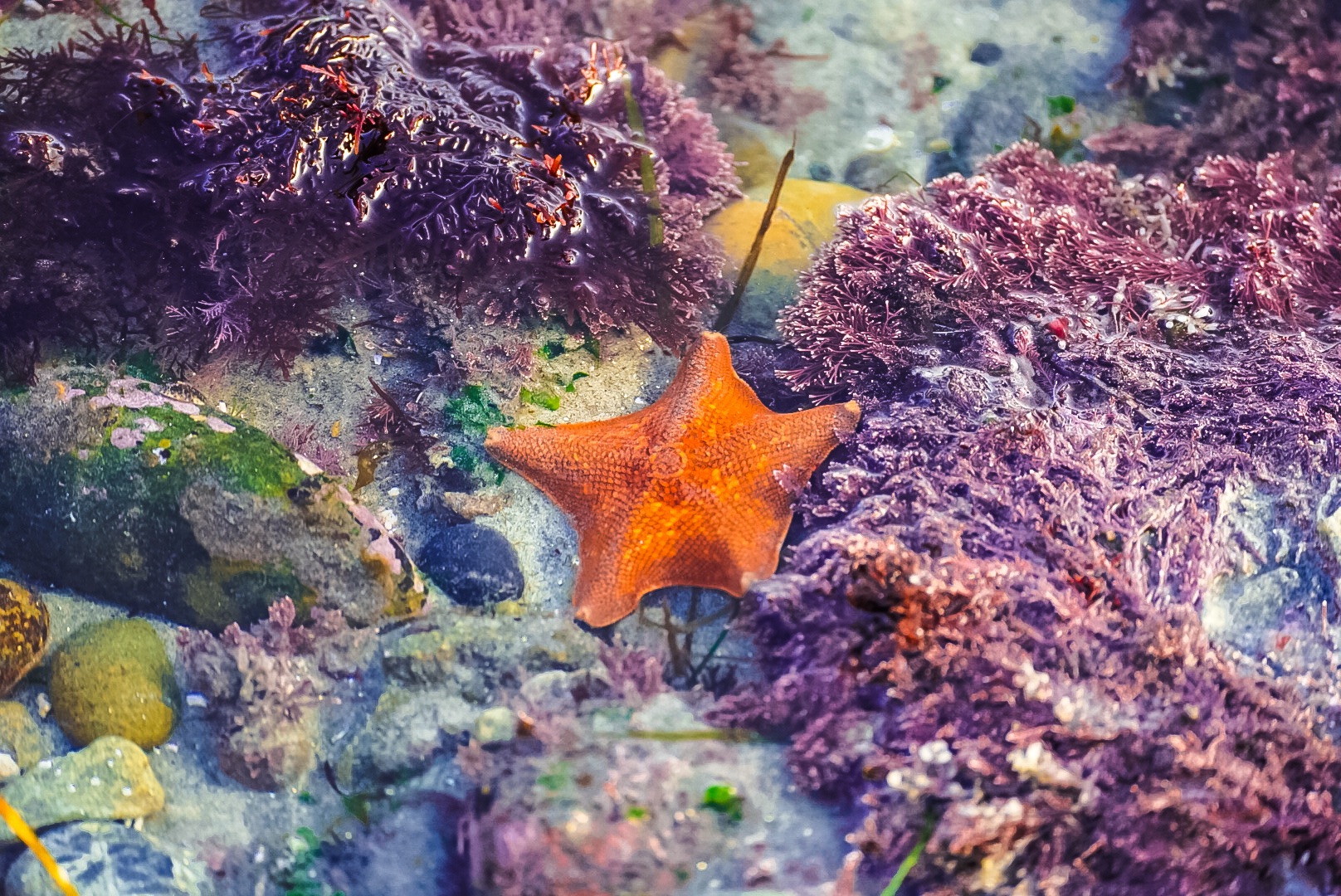
I walked out onto the reef, noticing the usual sea anemones and tiny crabs. My attention was drawn by a conversation overheard about an octopus, and I headed in that direction. I noticed a tween girl with a large seastar in her hand–and also noticed several other smaller seastars in the pool where she was standing. I frequently look for seastars in the tidepools and seldom find any, so this felt special. The young girl was quite enthusiastic and encouraged me to take a photo of the seastar in her hand. Of course I obliged and took a number of photos of those gorgeous orange echinoderms.
As I observed the seastars and took my photos, I couldn’t help thinking about the good fortune of seeing this elusive creature on the first day of the year. Google offers that seastars represent a striving for peace and harmony and the ability to accomplish great things when you set your mind to it. For me, seastars embody flexibility and the superpower that allows them to regenerate when faced with hardship–a certain kind of resilience. All of these seem like qualities our world needs right now.
And to add frosting to the cake, as I walked away from the seastars (the the young girl carefully settled them back into their tidepool habitat), I noticed a couple peering closely under the ledge nearby. He was shining a flashlight, pointing out where a small octopus was hunkered down. I moved closer and he shined the light again so I could see–and to be honest, I wasn’t seeing anything. So I asked, “What am I looking for to see the octopus?” He then pointed out the eye and the way the octopus was wrapped around the ledge. Then I could see that expertly camouflaged creature–even if it wasn’t in a position to be photographed! Sometimes you just have to look with your eyes and snap that memory into your mind–and maybe blog about it to remember it again later!
I’m holding that seastar in my mind and heart as a symbol of good luck on this first day of 2025 and reminding myself of the power of wonder and curiosity…and playfulness. Let’s push back against darkness and strive for peace, empathy, and care as we continue to move through this new year.
Many of my afternoons are filled with meetings since writing project work is hard to squish into typical work hours. This afternoon on the National Writing Project (NWP) Connecting the Network Call, as is typical, we had a writing prompt to write our way into the meeting. Since #writeout is now in full swing, our prompt was a poetry in the parks invitation of Lucille Clifton’s The Earth is a Living Thing read by poet laureate Ada Limon.
I don’t love to write on demand–I often feel stumped in that compressed moment, pressured to create in what I already know will be too little time. But today felt different. I loved the structure of Clifton’s poem as each stanza began with “is a…” followed by some action.
My mind began near the sea–a place I love and often find inspiration. And then I found myself in my classroom, inspired by the small children I spend so much time with.
Here’s my first draft written in five minutes at the beginning of this afternoon’s meeting. (And is currently untitled so I’m borrowing Lucille Clifton’s title)
The Earth is a Living Thing: Riffing off Lucille Clifton
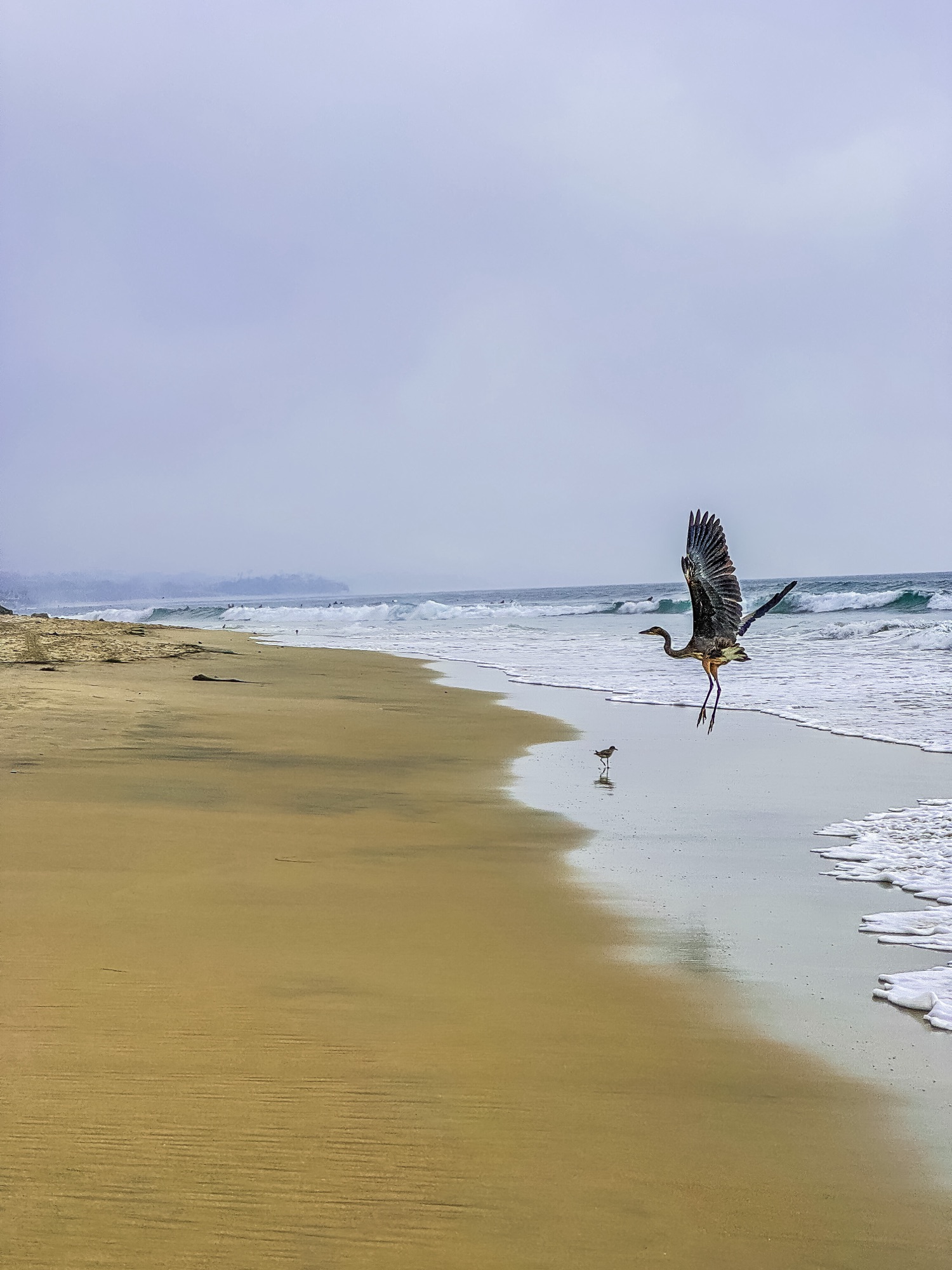
is a great blue heron
wings spread
blotting the gray skies
with the wonder of birds
is a child poet
words tumbled
letters scrambled
ideas piercing your heart
is playground balls
in rainbow colors
bouncing, rolling
here, there, everywhere
in the play that is essential
to learning and growth
And of course, I have to add a photo that was also a part of my inspiration.
Most weeks I work with my friend and colleague Carol over Zoom since we live in different parts of the state. So when we got to meet in person a few weeks ago, I was delighted to be gifted with a bag of acorns to explore with my students. The acorns where Carol lives are huge…and they have the caps that look like knitted beanies.
So, in honor of #writeout, a collaboration between the National Writing Project and the National Park Service, we got out the acorns and the hand lenses AND our sketchbooks to really study them carefully. We also read two wonderful picture books: Because of an Acorn by Lola Schaefer–a book about the interdependence of the ecosystem where acorns thrive–and Acorn Was a Little Wild by Jen Arena–a fanciful book about an adventurous acorn who after an encounter with a hungry squirrel preparing for winter, ended up as an adventurous oak tree.
And…we had to watch the wonderful video with Ranger McKenzie from Sequoia National Park about how oak trees drop tremendous numbers of acorns every few years…all at the same time in a process called masting, and that scientists have figured out that trees “talk” to each other through their root systems.
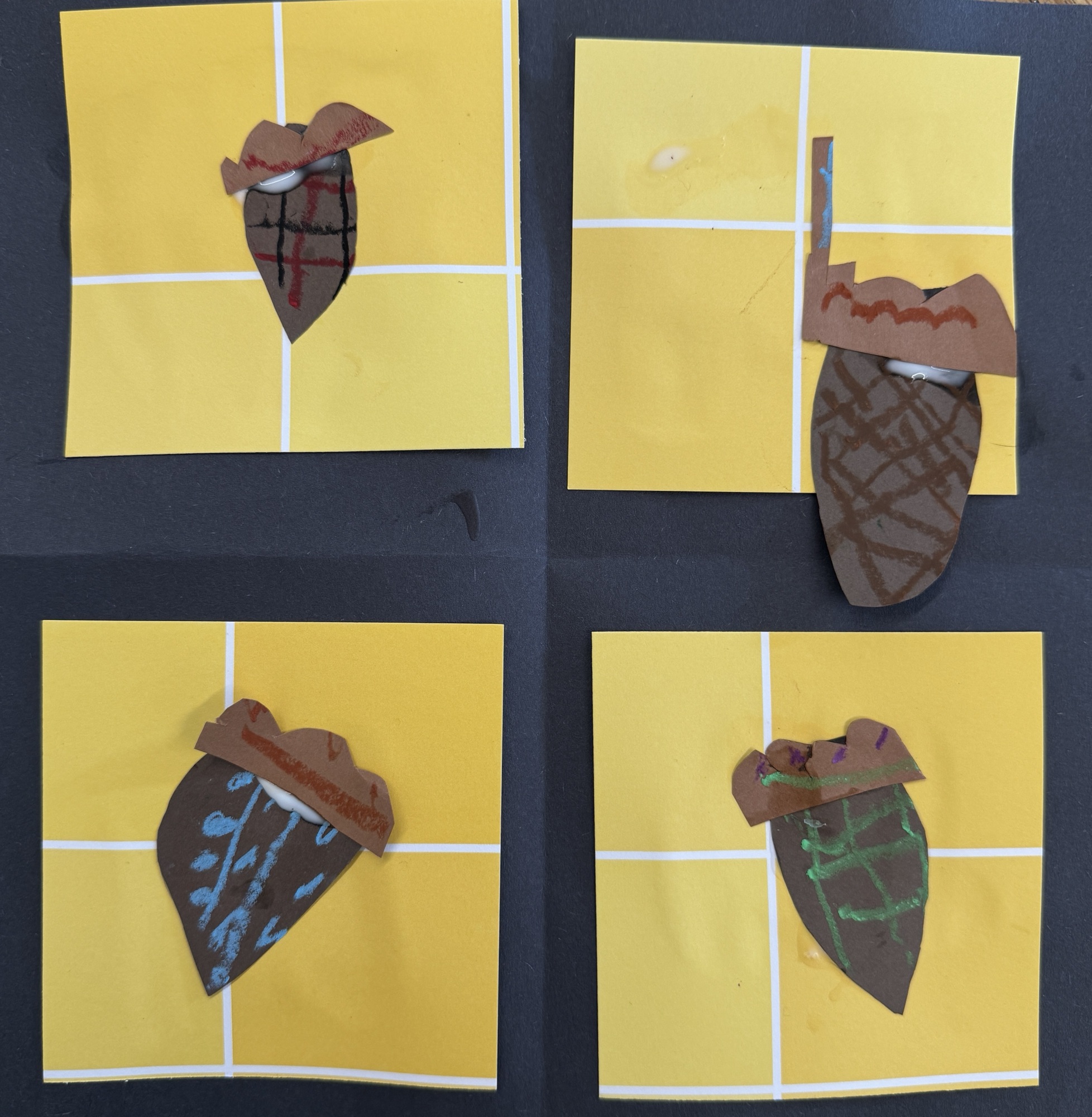
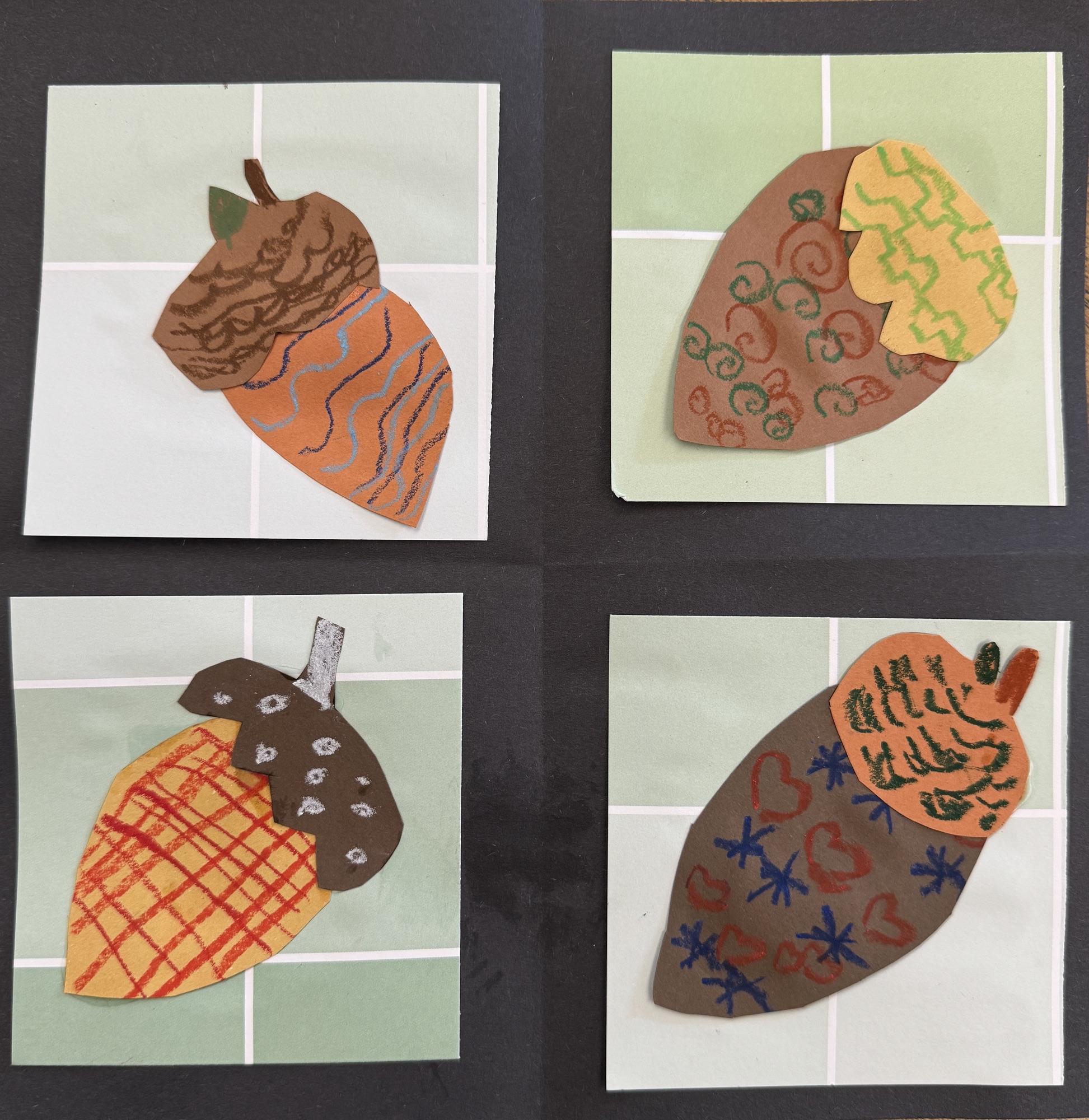
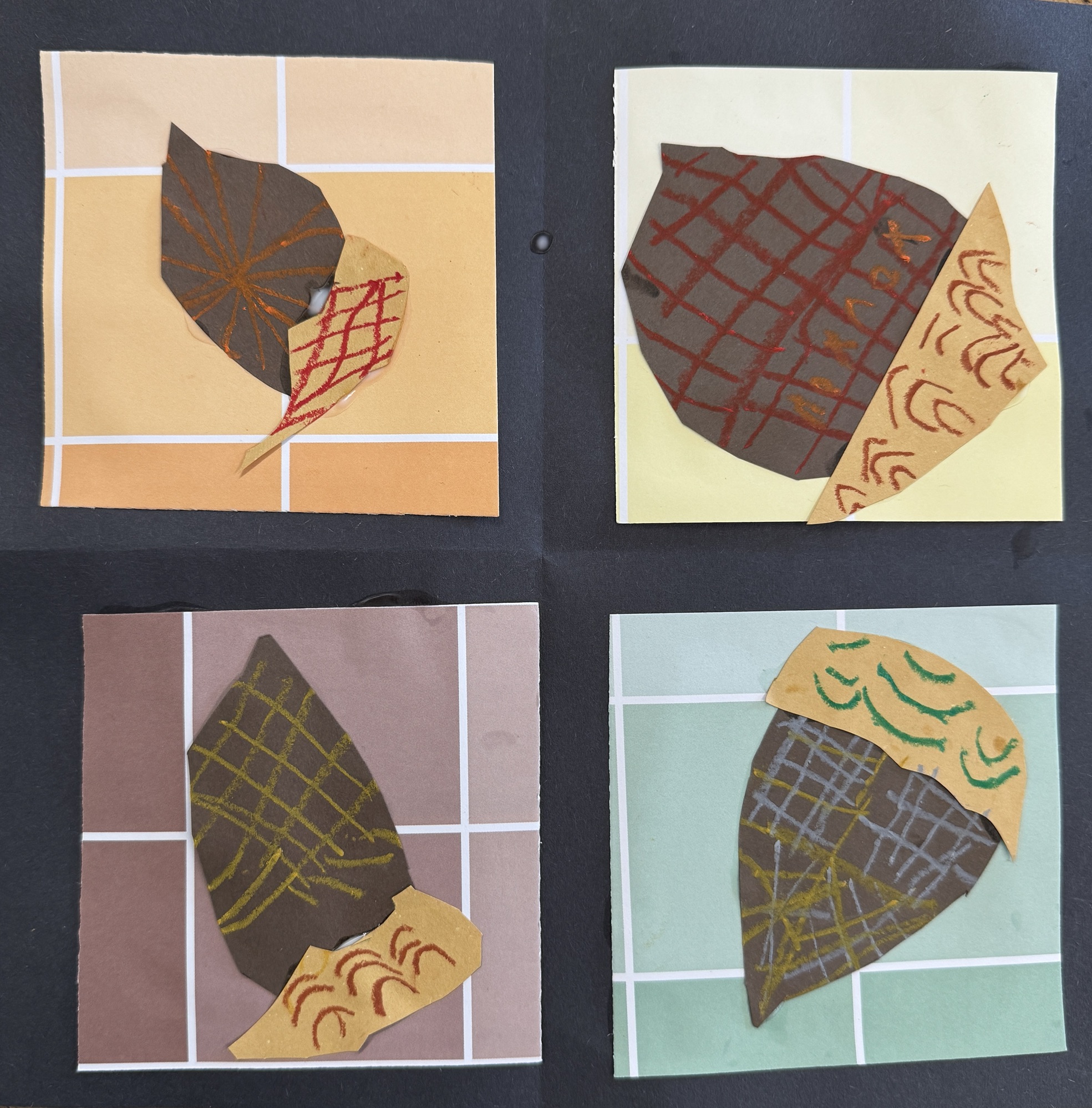
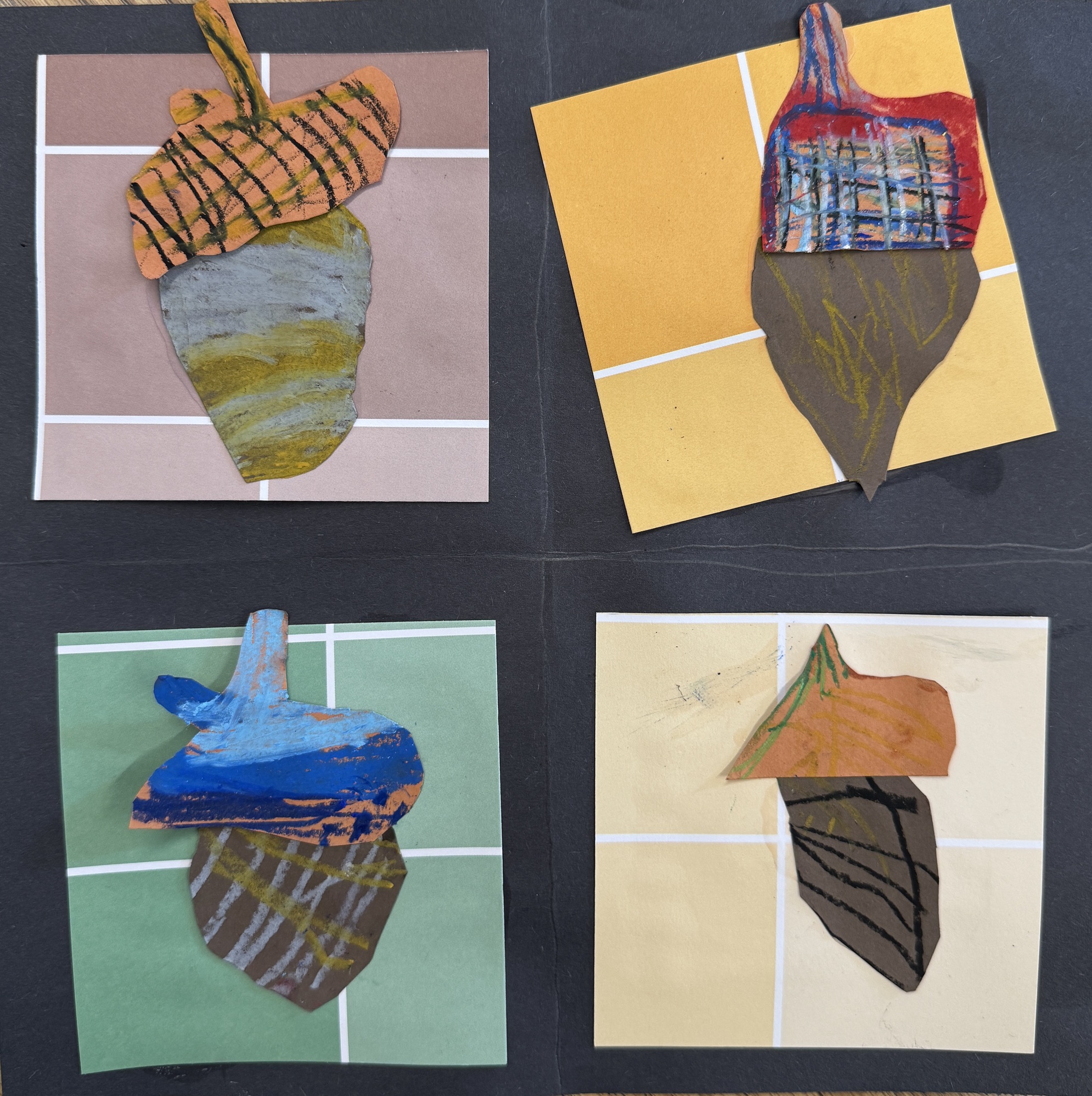
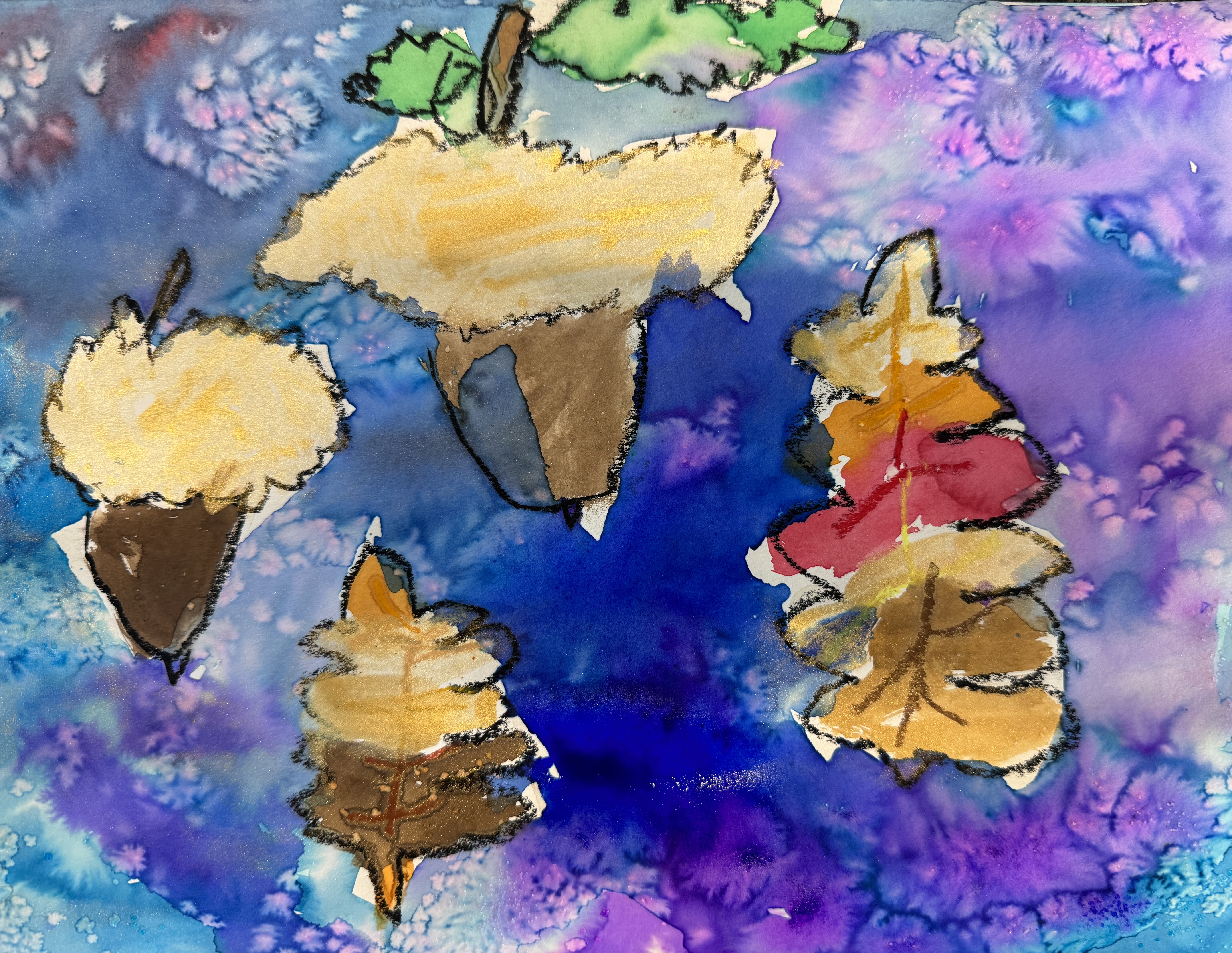
All this science and nature provided the perfect foundation for an art project inspired by Andy Warhol and the Pop Art movement. Today the first graders in my classroom used scissors, construction paper, oil pastels…and wait for it…white glue to create the most adorable acorn art. Scissor work can be challenging for young learners, and to add to the scissor demand I didn’t provide a template. Instead I showed them how to trim the square of paper into the shape of the acorn nut…and another square of paper into the shape of an acorn cap. A few students expressed frustration, but with some encouragement and insistence that they keep trying, all students were able to cut out acorns and their caps independently.
We added some whimsical texture with oil pastels…and then the most challenging part, they had to use white glue to attach their acorn pieces to the background we had assembled. Trust me, white glue can be downright scary in the hands of young artists! But with admonitions to use the glue sparingly, we were successful!
Of course we had to do some writing. Poetry seemed in order–after all this year’s #writeout theme is Poetry for the Planet and I was wanting to keep it short…so we attempted a first grade version of Haiku–a three line poem (without worrying about the syllable count). Here are a few first grade attempts.
J wrote:
Acorns are hard
cozy as fall nears
Spiny as a hedgehog
O wrote:
Don’t fall yet.
Squirrels will get you.
Crunch!
And R wrote:
Acorns look like a balloon that got blown by a man.
Acorns look like a man with a helmet riding a bike to the store.
Acorns look like a top that someone is spinning on the table.
#Writeout we’re off and running! We’d love to know how all of you are celebrating nature and the outdoors in your classrooms and in your lives!
Today’s #verselove prompt from Susan was about communications. She focused on notes from the past. But with Earth Day on Monday, I am thinking about communications with our planet, with nature–how we can build a symbiosis between humans and our planet.
Prewriting and walking–they go together for me. As I walked the beach today in the cool spring sunshine, poetry began to form. What I haven’t learned yet is how to capture those fleeting thoughts while I am in motion. By the time i get home with my notebook, specifics have flown…I have to reach back in my mind to reconstruct, rethink, revive, and revise the nascent poetics.
A few years back I got annoyed at the way that Instagram selected my “best 9” photos of the year and created a practice for myself of selecting my own “best” photos of the year. This year I have continued this tradition of taking time to look through my daily photos (it’s a rare day when I don’t take a photo) in order to find a subset that I will call the “Best of 2023.” The forced choice of picking a best for each month pushes me to think about what makes a photo best. Is it the subject matter? The experience that accompanied the photo? The actual photo itself? Other’s reactions to the photo? I think the answer may be a combination of all of the above!
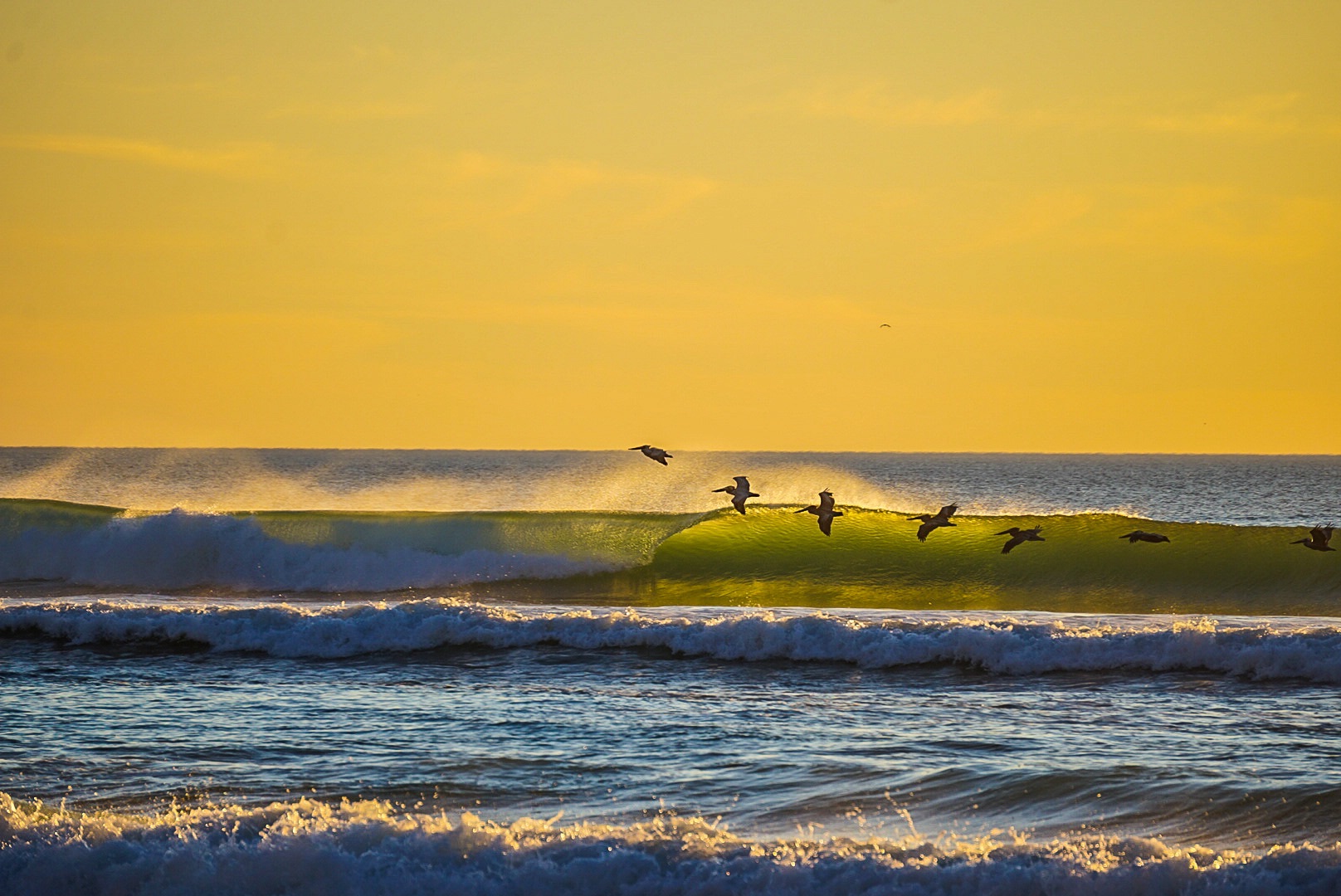
My January 2023 photo captures my wonder when watching pelicans. I marvel at how they get low and skim the waves, seemingly almost running their wings along the edge of the swell. In this photo I love the way the squadron of pelicans in formation demonstrates this “surfing” behavior while also capturing the energy and movement of the waves and the range of colors of the water as the sun does its magical work. If I could change anything about this photo I would want to get closer (that would require a stronger zoom lens)…and I think a sunset version would be magnificent.
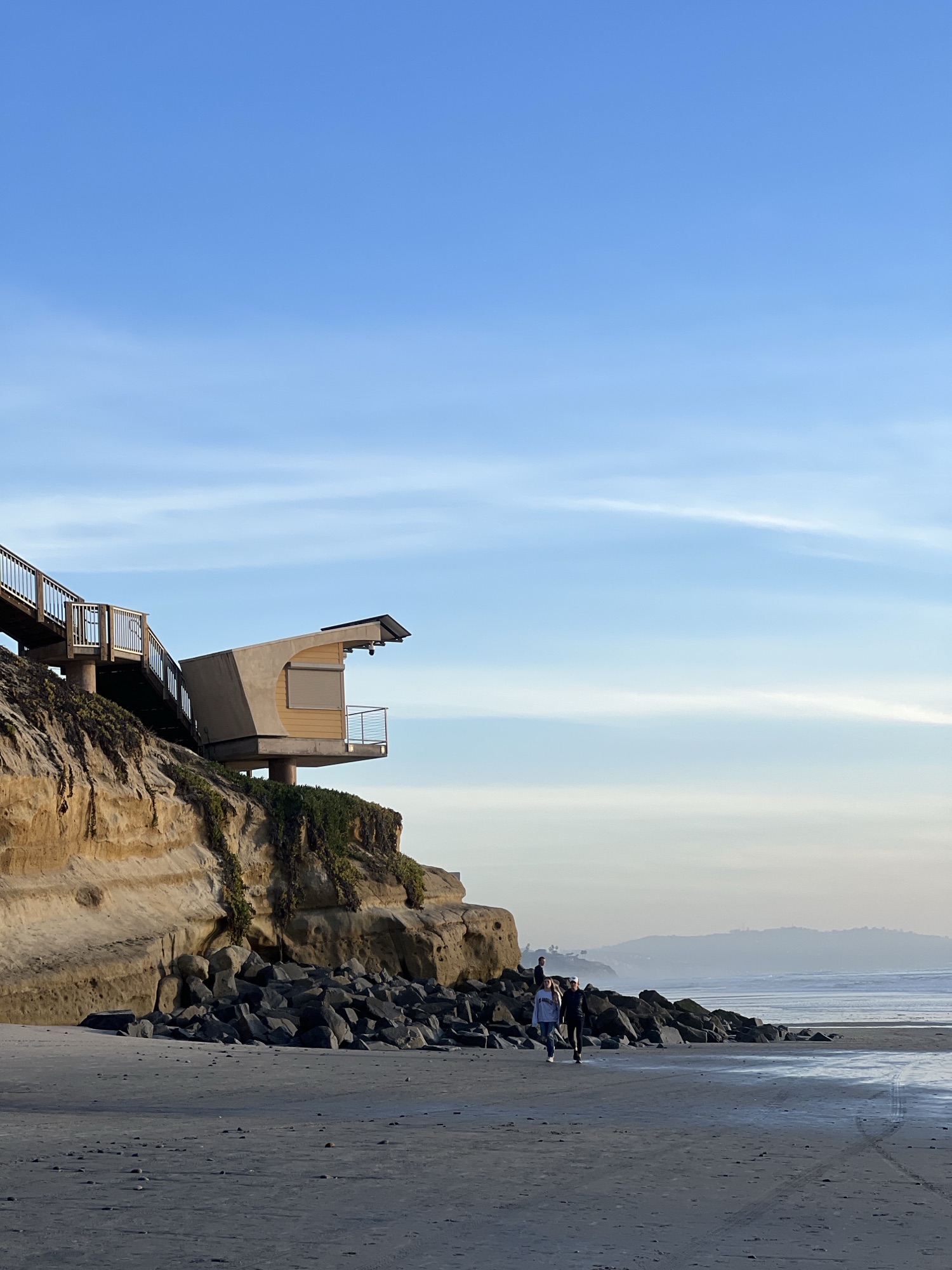
There is something so compelling about this tiny lifeguard tower in Solana Beach that perches on the cliff, jutting out into the sea. I’ve taken many version of this photo–and this is my favorite direction to shoot from. I love the low tide exposure, showing the rocks that are oftentimes covered with the sea. This unfiltered photo shows the February light on an afterwork walk, capturing the ordinary beauty of this less-than-ordinary, but functional building. I’d love to know more about the history of the building, who decided it needed to be here, why this design…and even when the decision was made to make lifeguard towers less permanent and more portable.
March shows off the playful aspects of daily photos. I’m constantly trying to capture movement in still photos. This was a windy day and the palms were showing their flexibility. To make the photo more dramatic and interesting, I did some filter play, enhancing the colors and showing the interplay of sun, sky, clouds, and wind (through the movement of the trees). I go with the adage that the best camera is the one that you have with you…and you’ll notice that many of my photos are taken with my phone.
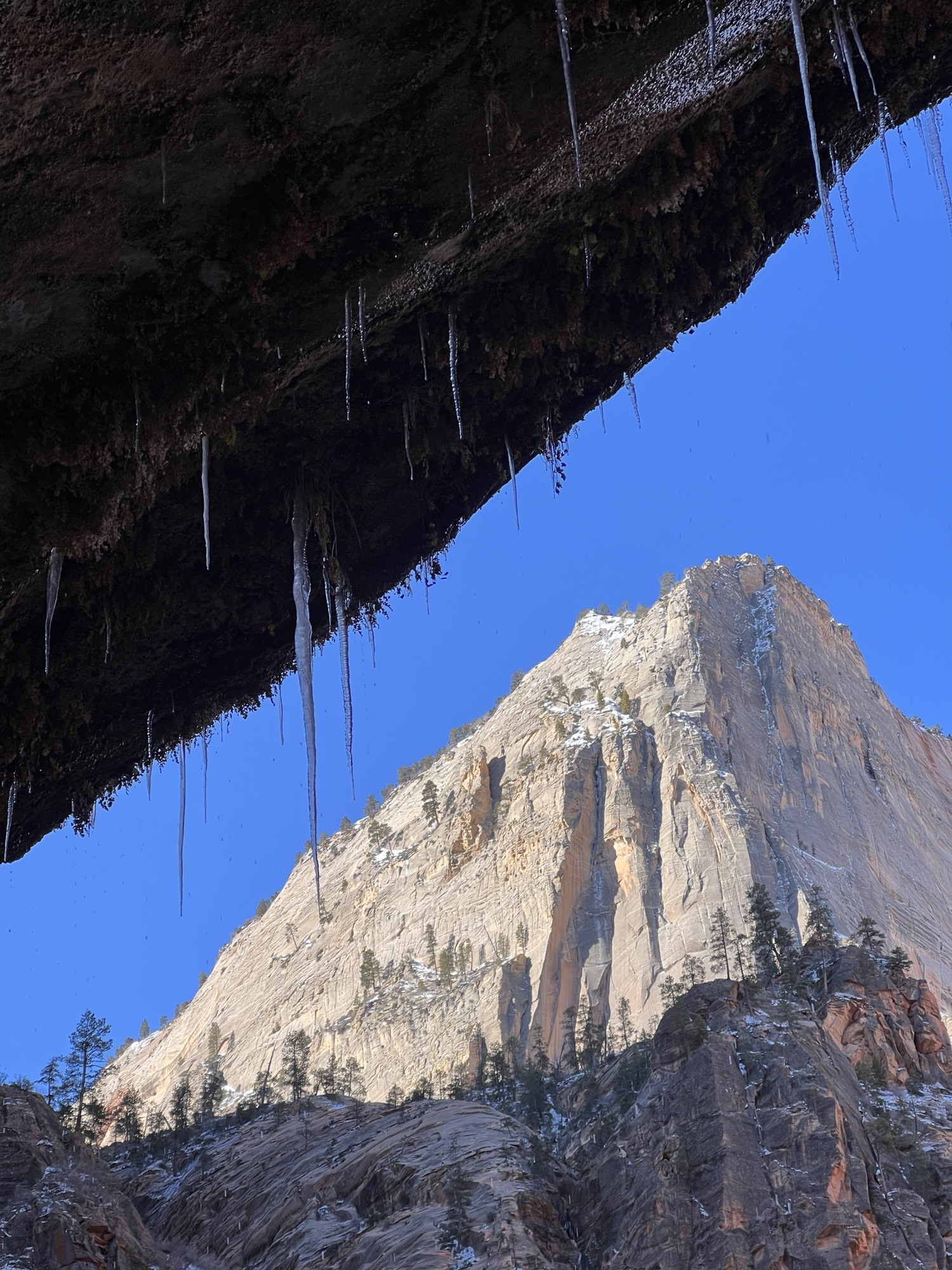
April meant Spring Break, and in 2023 our break included a road trip to Zion National Park in Utah. In spite of that fact that it was “Spring” break, the weather was unseasonably cold…and while you’ll notice bright sun in this photo, we experienced snow, ice, wind, and rain on this trip. None of that kept us from hiking and taking photos. I love the contrast in this image of the white of the cliffs and the blue of the sky along with the long, sharp icicles hanging down. Angles and light and shadow keep drawing me back to this image…along with the brilliant blue of the April sky.
Lucky for me, I don’t have to go far from home to find interesting subjects to photograph. In May, a trip to the local lagoon brought me up close to this teeny tiny hummingbird. A colder than usual spring meant that the trees were still relatively bare, allowing a good view of this tiny gem against the steel gray sky.
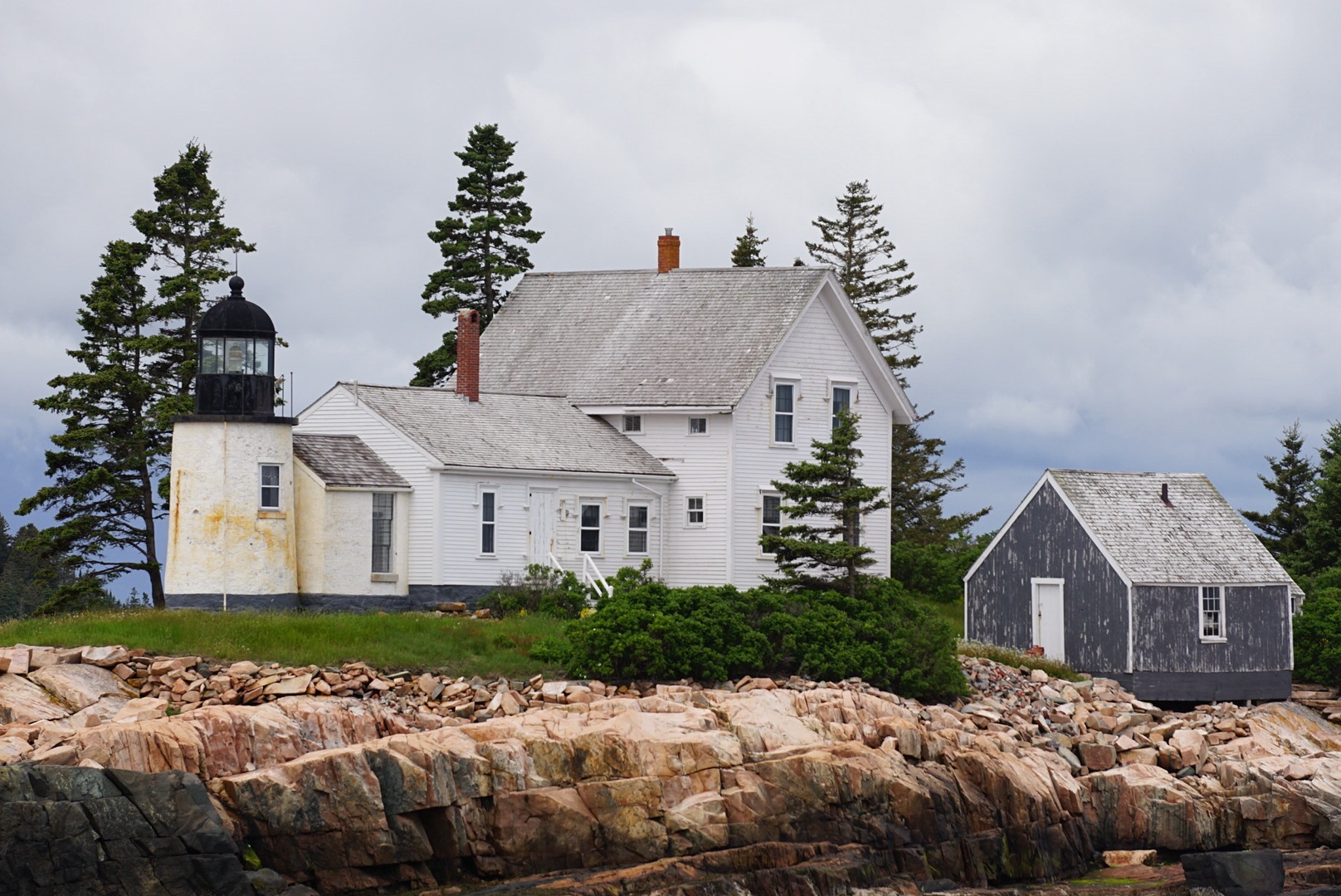
But in June, I did travel a long way to find some different, interesting subjects to photograph. And inclement weather was a theme all year. With our school year ending earlier than usual (on June 2nd!), we hopped on a plane and headed to Maine to explore Acadia National Park. While it rained almost every day we were there, we didn’t let it dampen our adventurous spirits. We were lucky to get a short reprieve from stormy seas to head off on a boat to see puffins (which we did) and also get some spectacular views of lighthouses like this one. This composition reminds me of a postcard, filling the space both side to side and up and down. If only the light were illuminated! (Unfortunately, this was not a working lighthouse.)
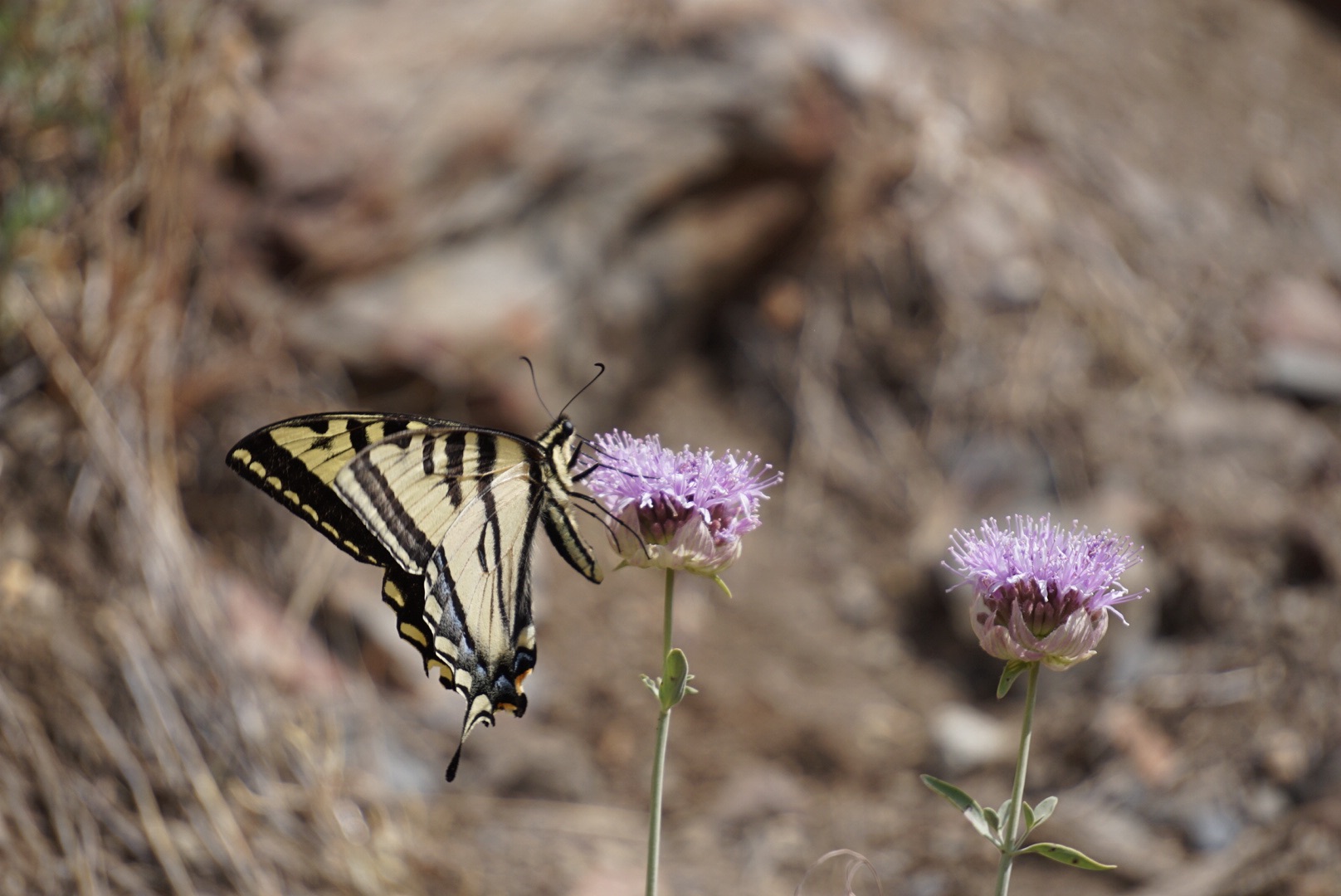
Back in California, in July we took another roadtrip to explore the mountains in the middle of the state. Mammoth Mountain includes snowy peaks, gorgeous lakes and geologic phenomenon as well as interesting flora and fauna. While exploring Convict Lake I found myself mesmerized by the swallowtail butterflies fluttering, flitting, and feeding on the local flowers. They were everywhere and in constant motion. This time I was trying to capture the stillness of these pollinators rather than action!
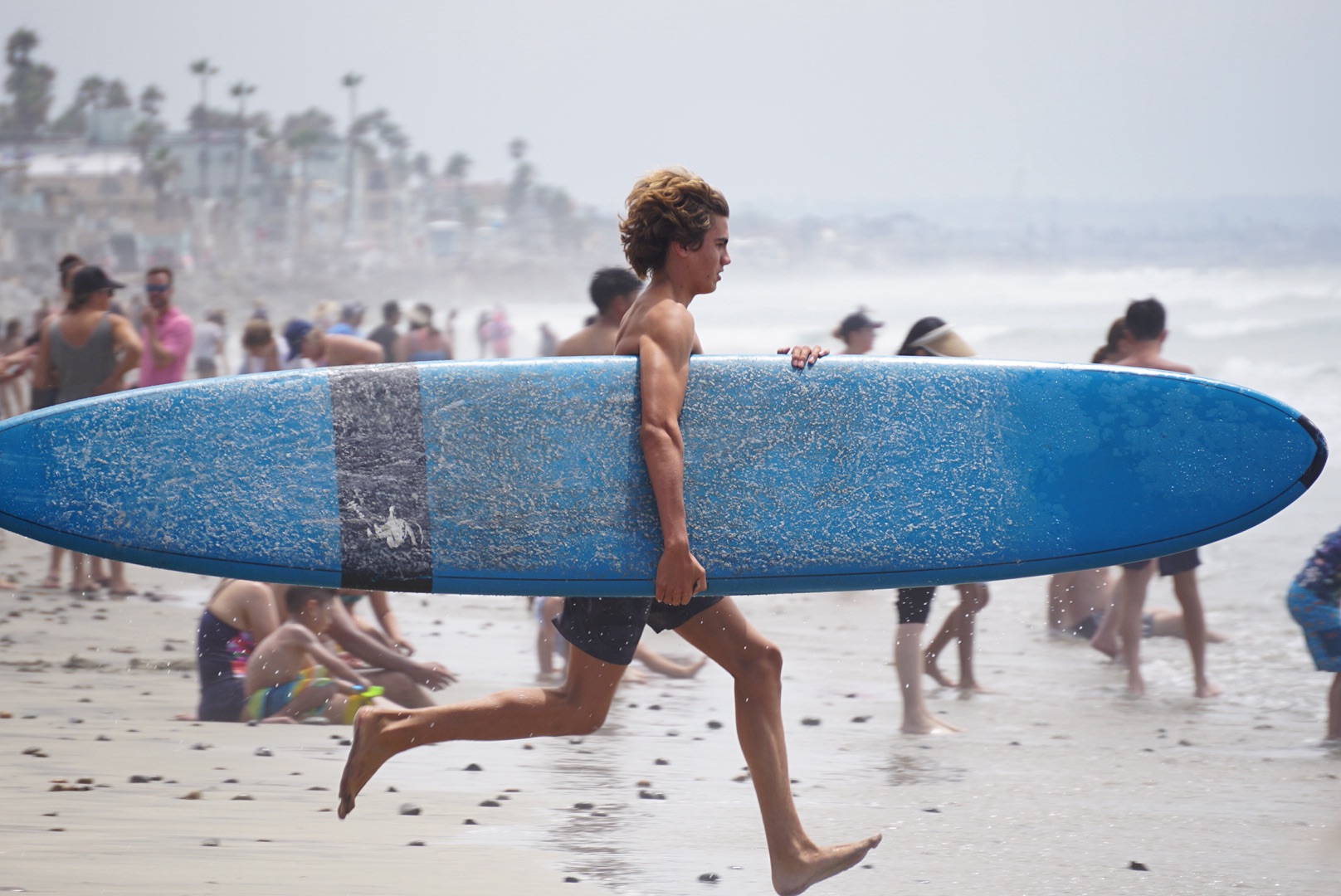
In spite of the fact that school now begins in early August, this is truly the heart of the summer. I love to watch surfing competitions and lucky for me, there are often quite a few to choose from at our local beaches. This longboard contest also included something they called a paddle out relay where surfers organized themselves into teams that raced (with long surfboards under their arms) to the water, paddled out and around a designated buoy and then returned to shore to tag a teammate and continue the race. I love the way this photo captures the action, the length of the board, and even the muscle definition of the surfer.
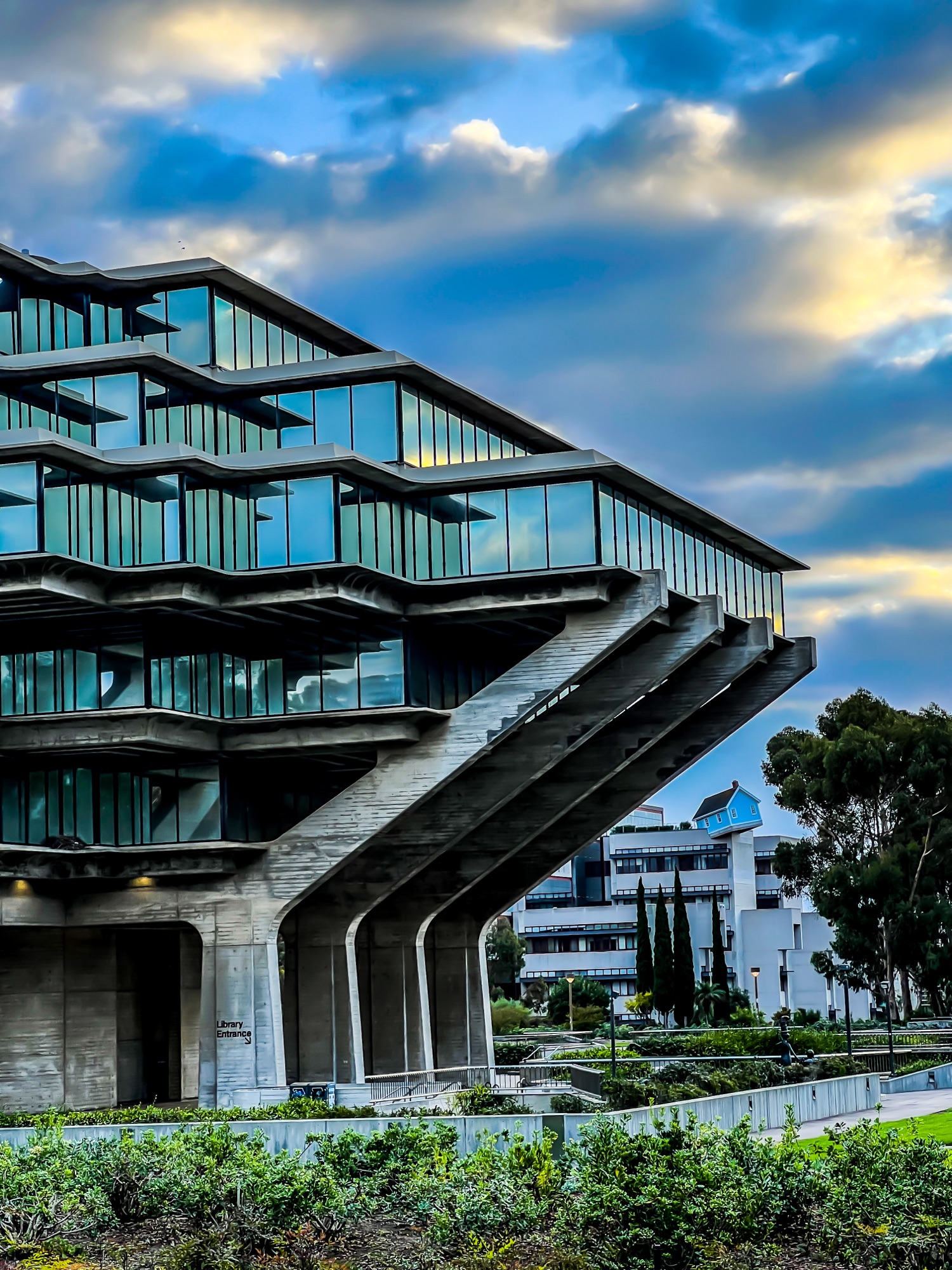
UCSD is the home of the San Diego Area Writing Project and the end of September was the date of our annual Fall Conference. Early Saturday mornings on a college campus are quiet, offering opportunities for photos that do not feature students. I love to take photos of the iconic Geisel library…and in this shot you can see Fallen Star (a Stuart Collection art installation) perched on the engineering building in the distance. I love the light and clouds reflected in the many windows of the library. I definitely have fonder memories of photographing this library than studying in it!
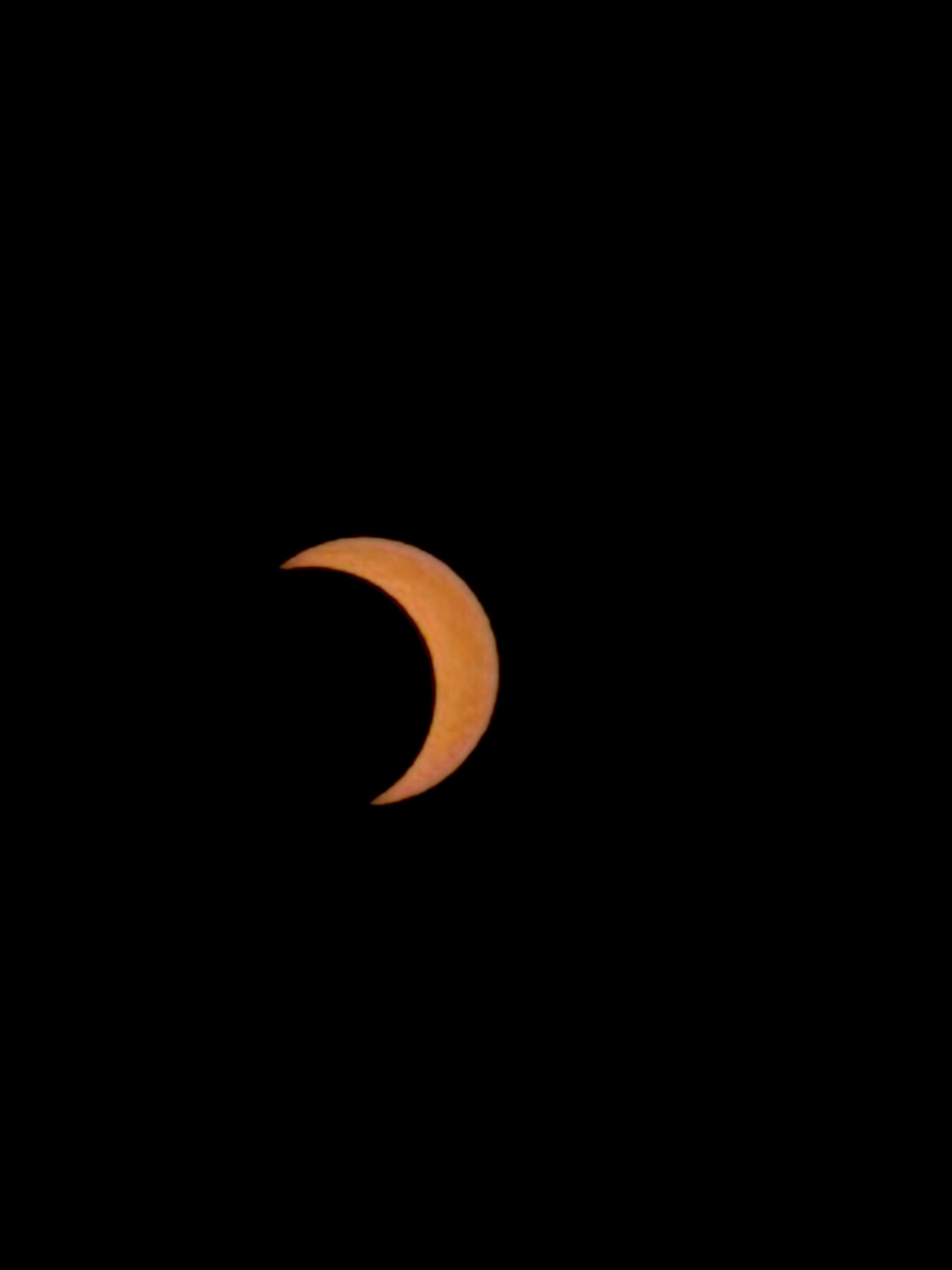
No, this isn’t night photography. This is a photo of the partial solar eclipse we experienced in October. Using an app called Solar Snap and a special sun filter to protect my eyes, I was able to enjoy this not-too-common event and capture this image of the moon passing in front of the sun giving the illusion of a crescent moon when what you are actually seeing is the sun with the moon in front of it. This is one of those images where the experience was an interesting part of the photography process.
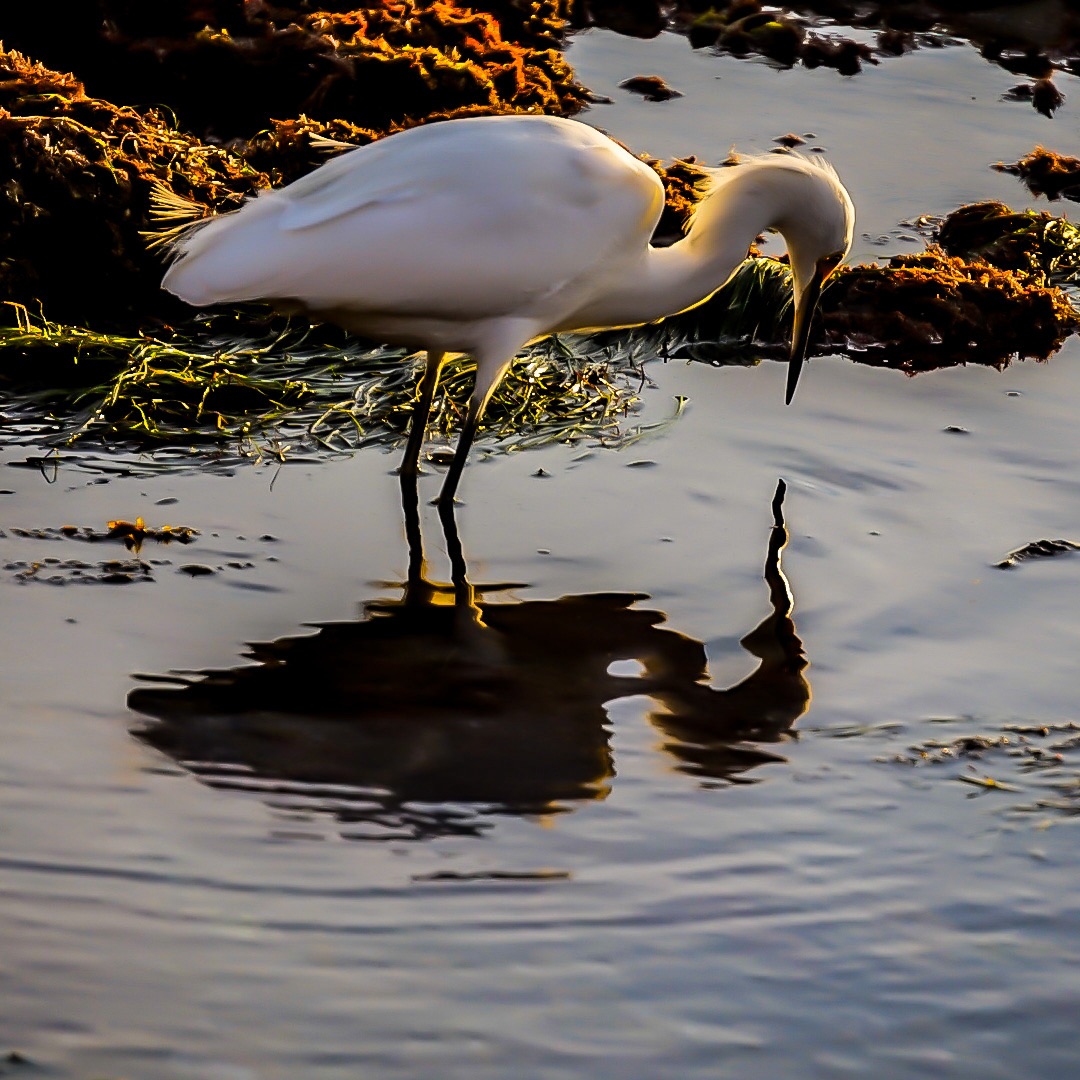
I don’t think I could do a “best of” set of photos without at least one of my favorite bird to photograph! I take many photos of snowy egrets, some better than others. I love this one from November where the reflection is so mirror-like. One of the benefits of the early dark after daylight saving time ends is that sunsets and my daily walk often coincide. My photos show the magic of the “golden hour,” where the light is perfect and photos have that magical quality that is otherwise so hard to obtain.
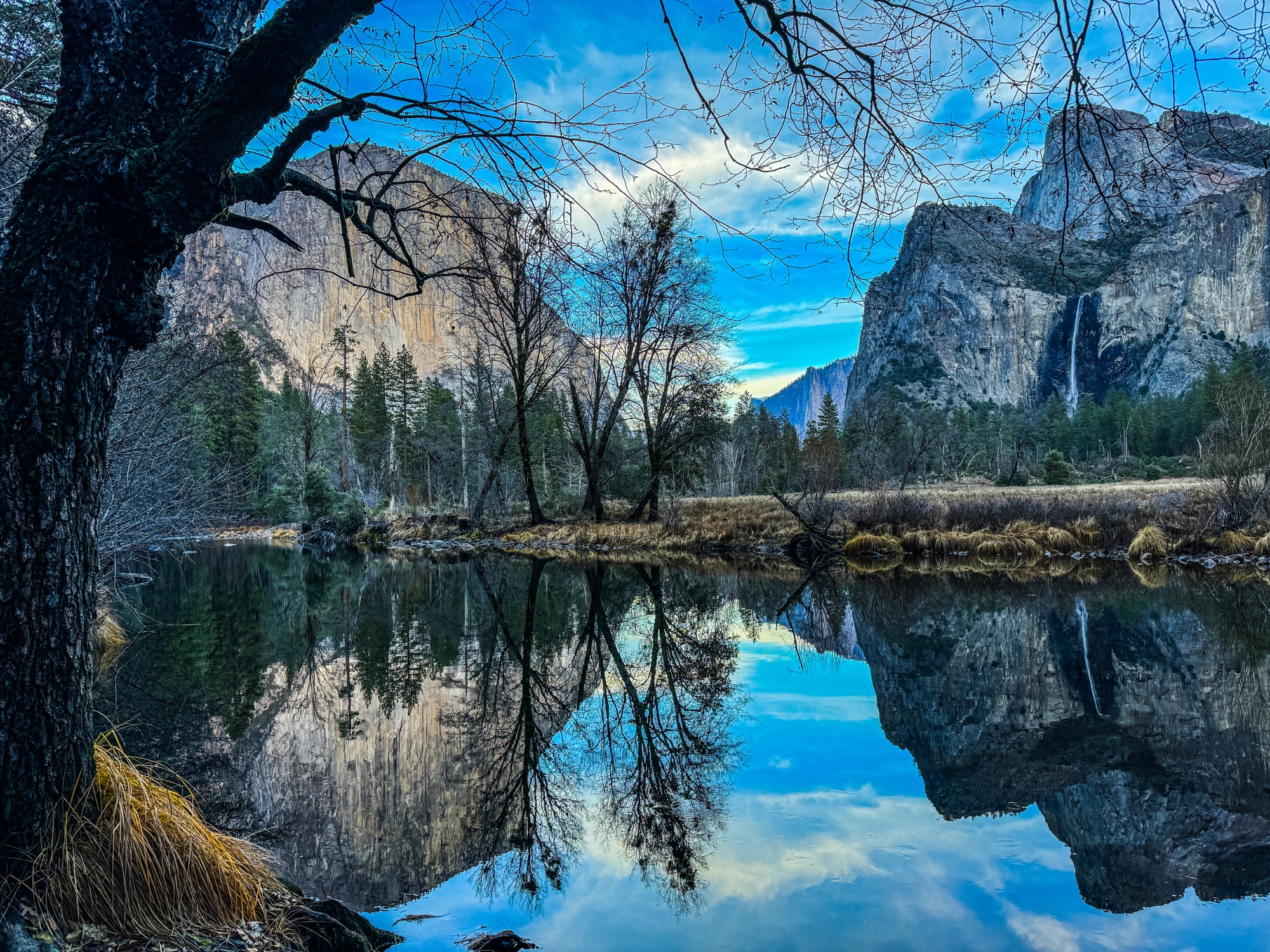
Somehow in December, between holiday celebrations and visits to and from family, we managed to squeeze in a trip to Yosemite. I’m not sure there is a bad day in this very special place. This late afternoon light was perfect for capturing the reflection of El Capitan and Bridalveil Falls in the Merced river.
Even as I write about these twelve photos as my “best of,” I find myself questioning my choices. There isn’t a single sunset photo featured although I have taken many. I didn’t include any of the many selfies we use to document adventures (for good reason!). I tried to pick photos that represented a range of subjects and maybe even some photography techniques. I notice how I often use rule of thirds to my advantage and how I am drawn to natural frames and reflection. I’ve been working hard to capture action and I think that shows in some of these selection too.
Do you have a favorite of these twelve? How do you select your own “best of” photos? What makes one photo better than another?
On some days, my students and I head outside for inspiration for our writing and learning and on other days, we bring nature right inside the classroom. Fall is known for leaves changing colors, animals preparing for winter, acorns dropping… But in southern California that isn’t what we see outdoors. Our trees are mostly green, the weather is warm, and no one really hibernates. But in first grade students don’t seem to notice that our fall is different…and so, we often import the icons of fall.
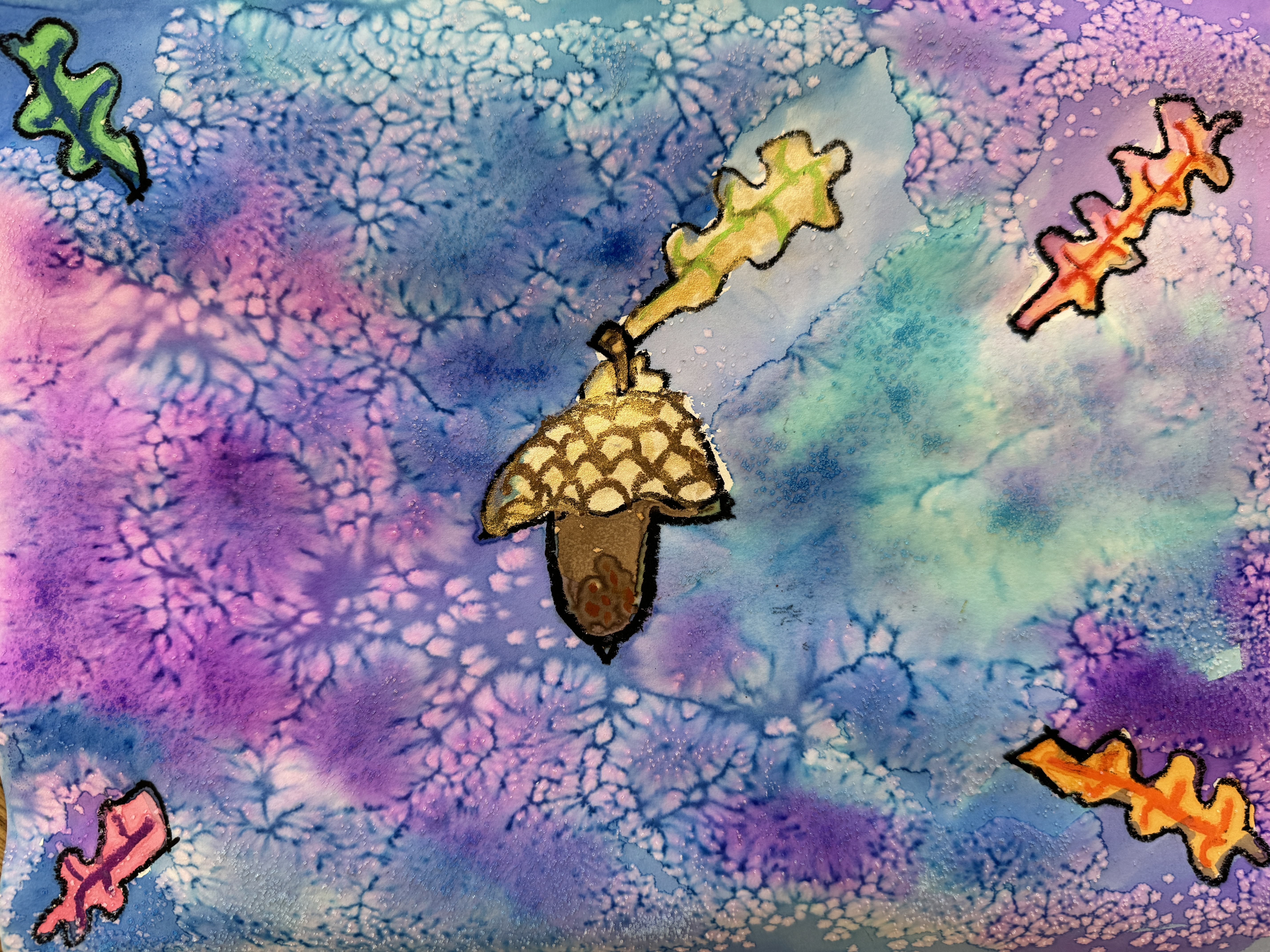
Yesterday after reading, Because of an Acorn and talking about the interconnectedness of plants and animals, we watched a video from a park ranger at Sequoia National Park where we learned more about oaks, acorns, and the communications between trees. And then I pulled out my stash of acorns, saved from a year ago when a friend from the central part of our state shared some from her neighborhood. My students examined these extra large acorns carefully, delighting in the texture of their caps, the smoothness of the acorn itself, and the way it rattled when they shook it (they have dried out somewhat after being in my classroom for a year). Then then carefully sketched the acorns and some oak leaves (using our book as reference). Many spontaneously began adding notes, noticing the point at the bottom, the variations in color, and more. Obviously the note taking carried over from our nature notebooking described in my previous post.
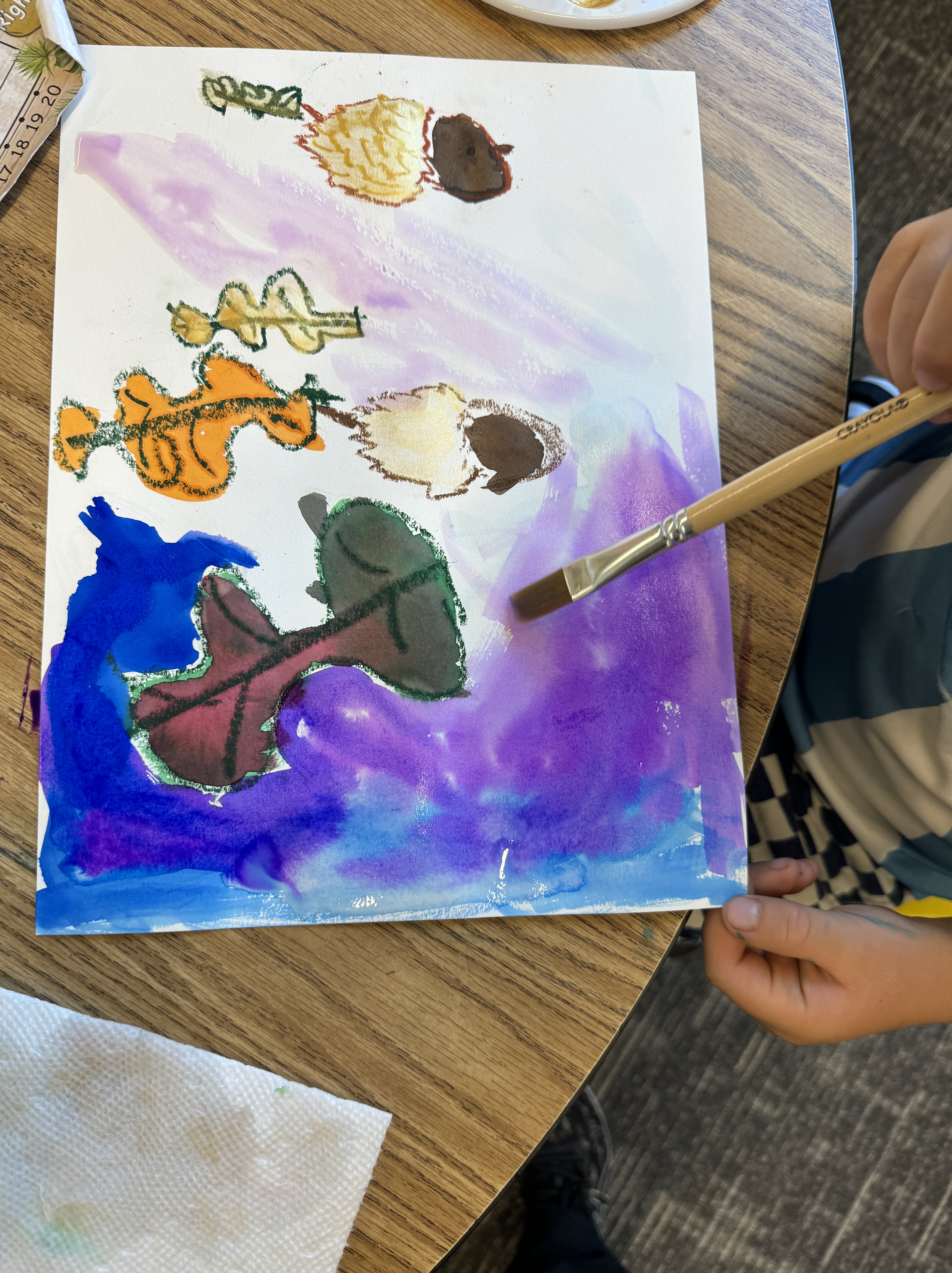
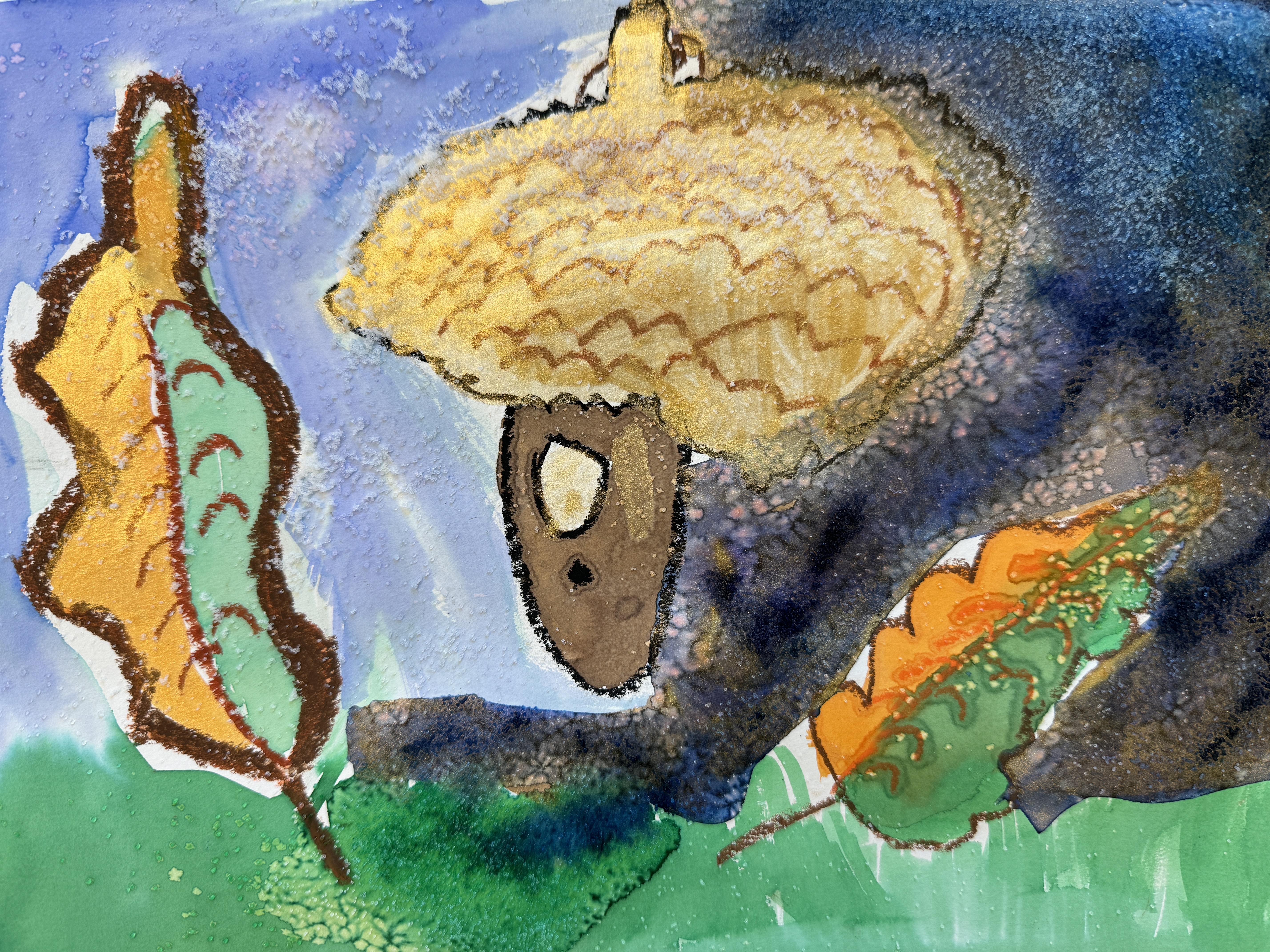
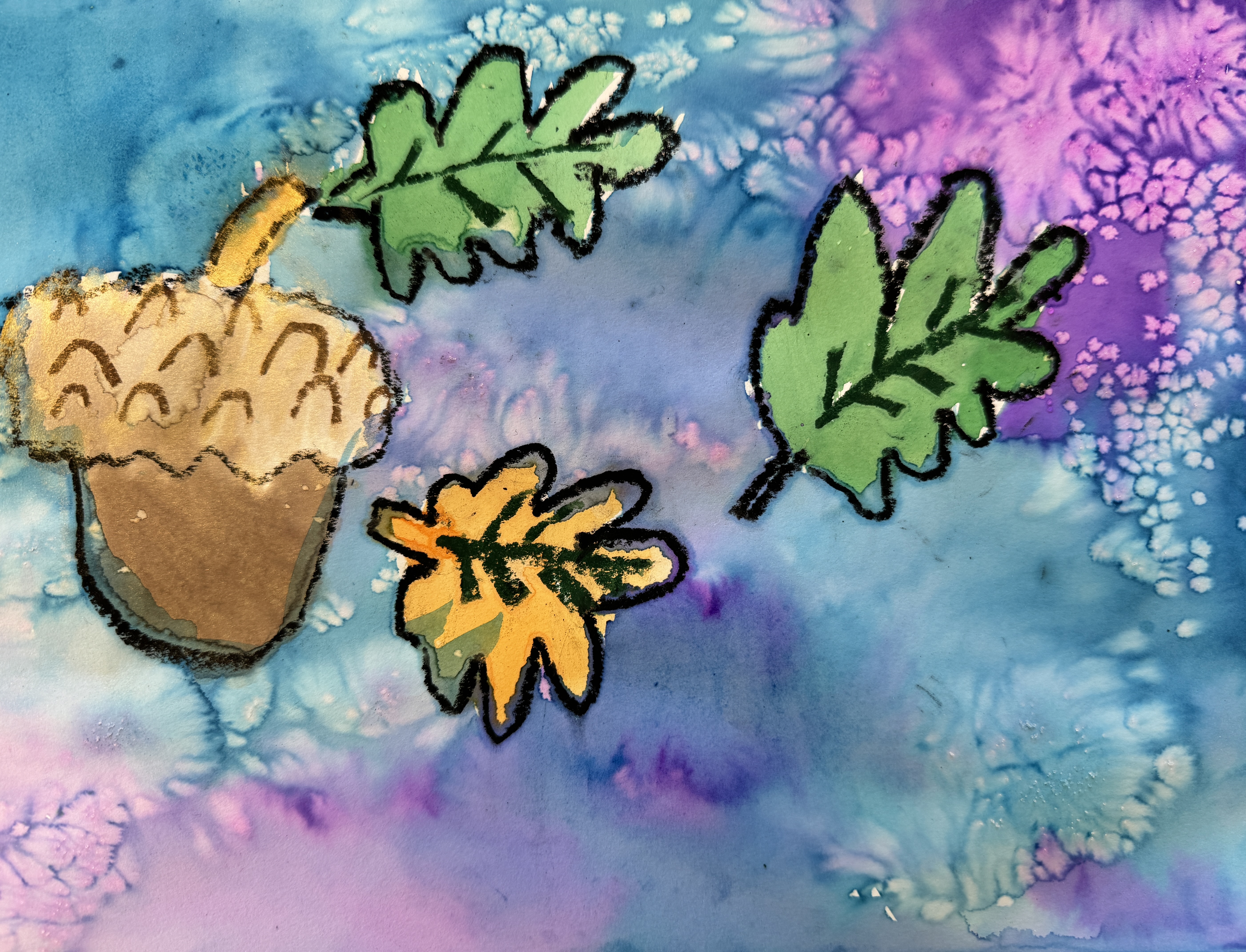
In this case, the goal of the sketching was practice for a watercolor project. Our subject was the acorn, and then we experimented with three different watercolor techniques: oil pastel resist (using oil pastel to create a border to keep paint from running), wet on wet (painting the background with water before applying the paint), and then adding some pinches of salt to create a starburst effect. First graders have so much freedom as artists, they grab the oil pastel with confidence, seemingly not worrying that they will not be able to erase a mistake. They drew and painted…with stunning outcomes.
And since the ranger in the video offered as a prompt, imagine a dialogue between trees…which we expanded to include a conversation between acorns and oaks, students experimented with writing about that interaction. They are new to the writing of dialogues, but their first drafts show some promise. Here’s a couple (typed by me for ease of reading).
An acorn falls off an oak tree. Am acorn hangs from a branch. An acorn drops and a chipmunk will eat it. Hi oak. Are you going to drop the acorns? Oh. I will when it is fall. Hey oak trees, you want to drop acorns! Now it is fall. The oak trees wait. Let me tell the other oak trees so they know. Now it is winter. The animals are hibernating. The bunnies are gathering food for winter.
And…
A squirrel asks an oak tree, can I have one acorn? The oak tree said no you can not have an acorn. Acorn said please! Okay said oak tree but I’m keeping an eye on you! And if you grow into a tree then I will talk to a scientist, so don’t forget squirrel. But wait! I have to tell the other oak trees so we can do a masting said oak tree. Hey oak trees, let’s do a masting yelled oak tree. The oak trees did.
My students were most impressed with their own volume of writing, most filling more than a page with their words. I love that they picked up on some of the science from the video–the idea of a masting, the phenomenon where oaks drop an extreme number of acorns every 3-5 years was information directly from the park ranger.
How are you letting #writeout influence your writing and the writing of your students?
I love October. The weather is warm–it’s still shorts weather. Many of the tourists have gone home, leaving the beaches and the freeways to the locals. My first graders are starting to believe they are writers–and it’s time for #WriteOut! #WriteOut is a partnership between the National Writing Project and the National Park service–a two week effort to encourage everyone to get outside, explore the nature around you, and write.
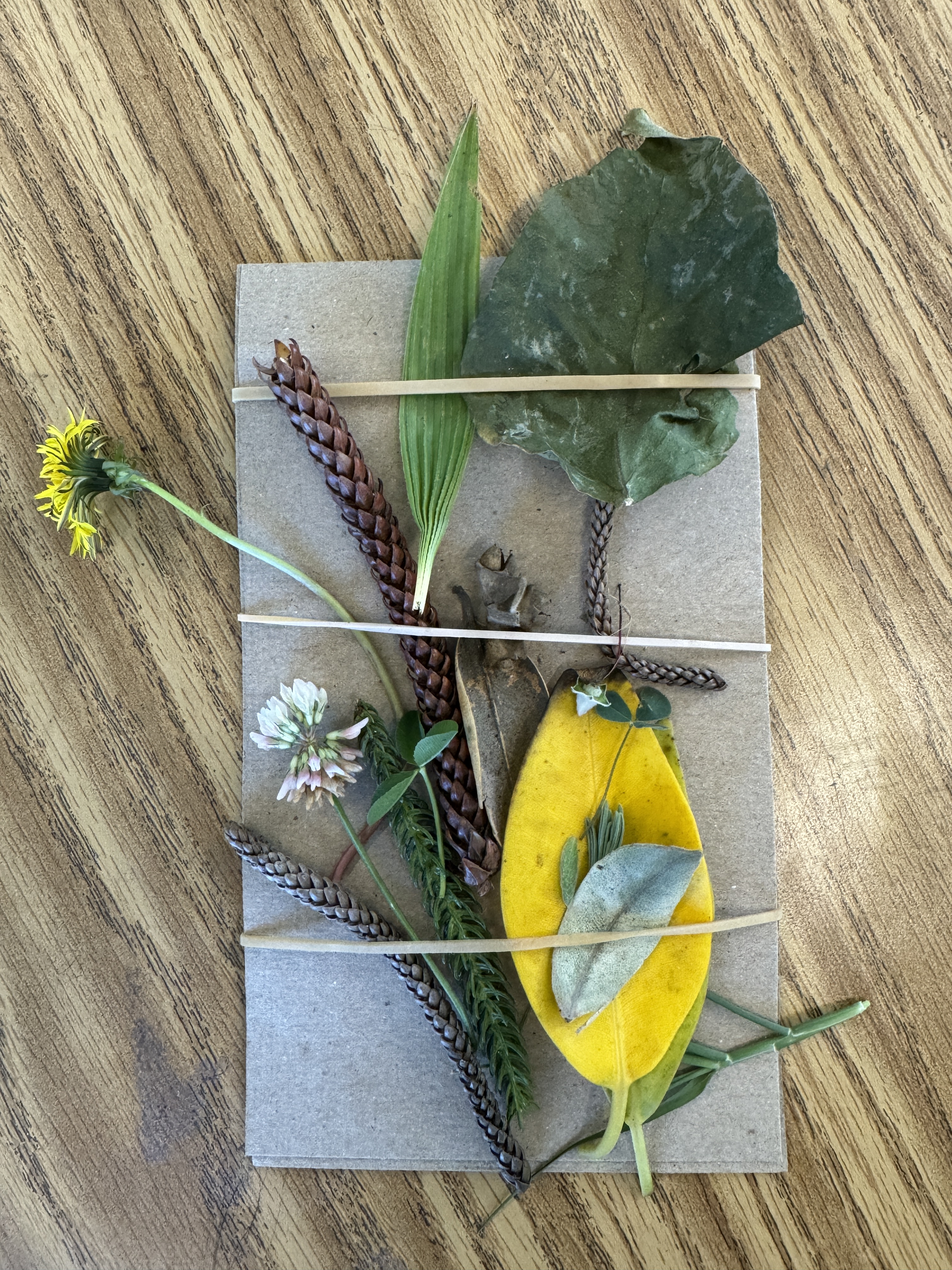
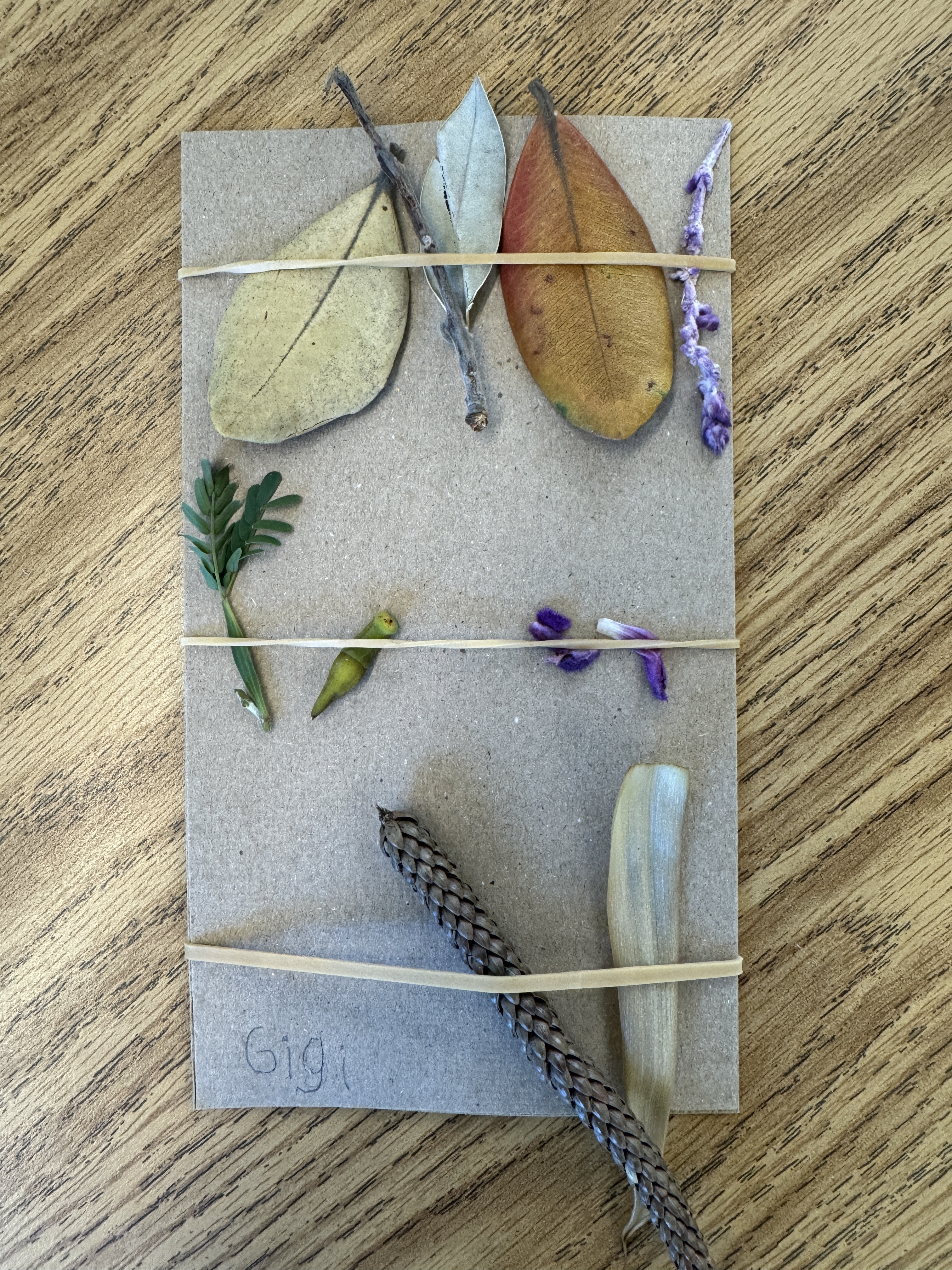
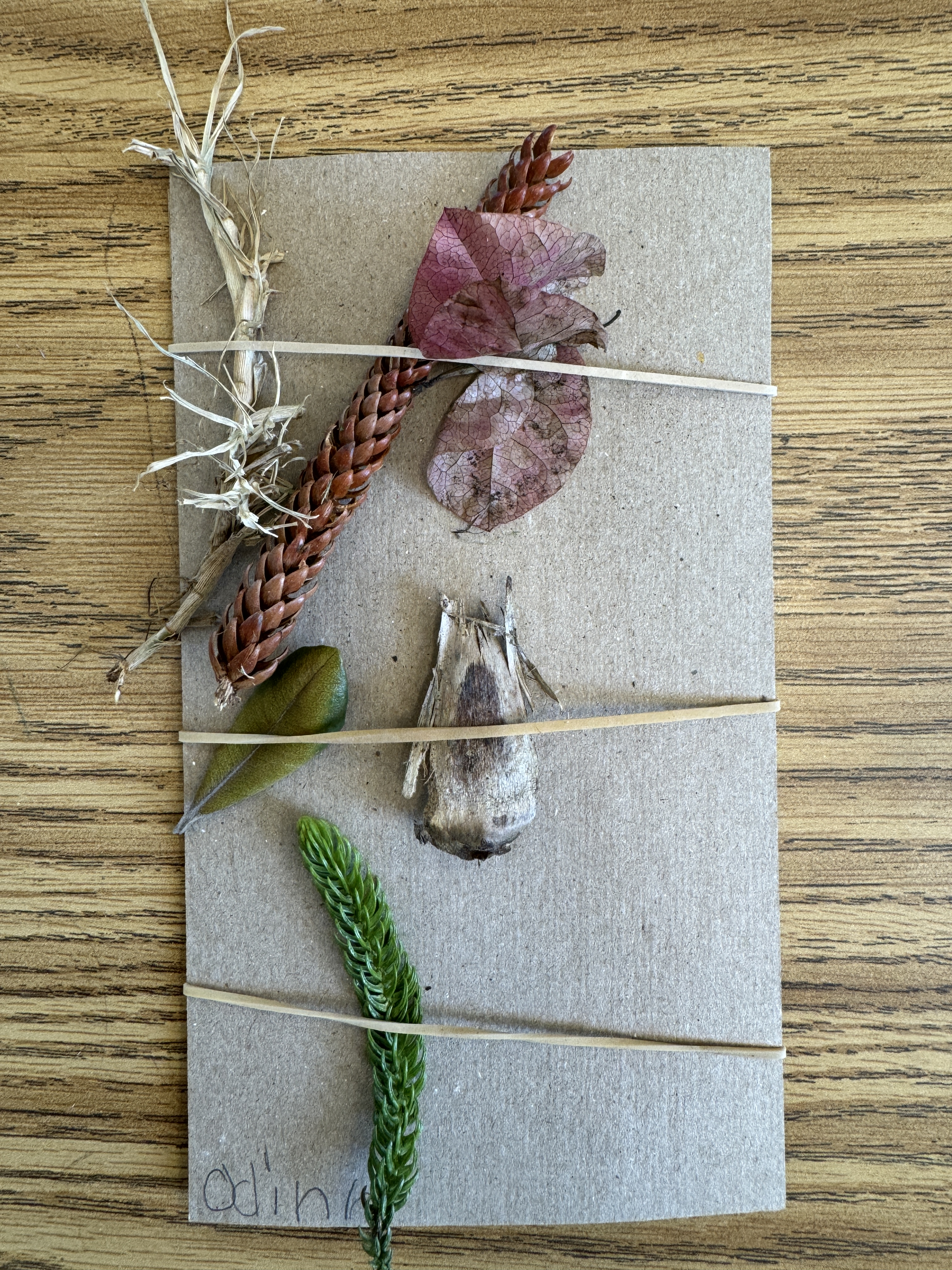
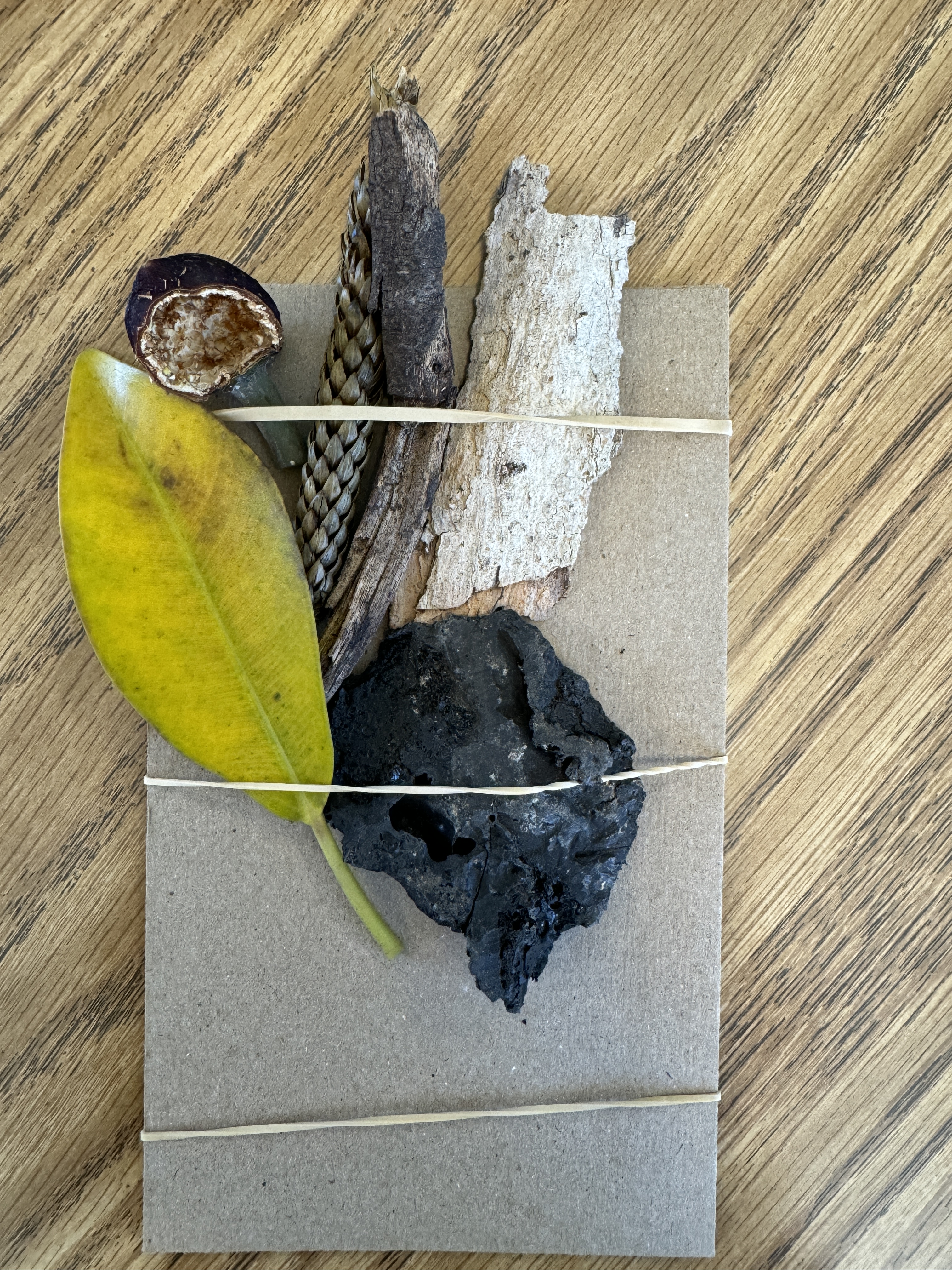
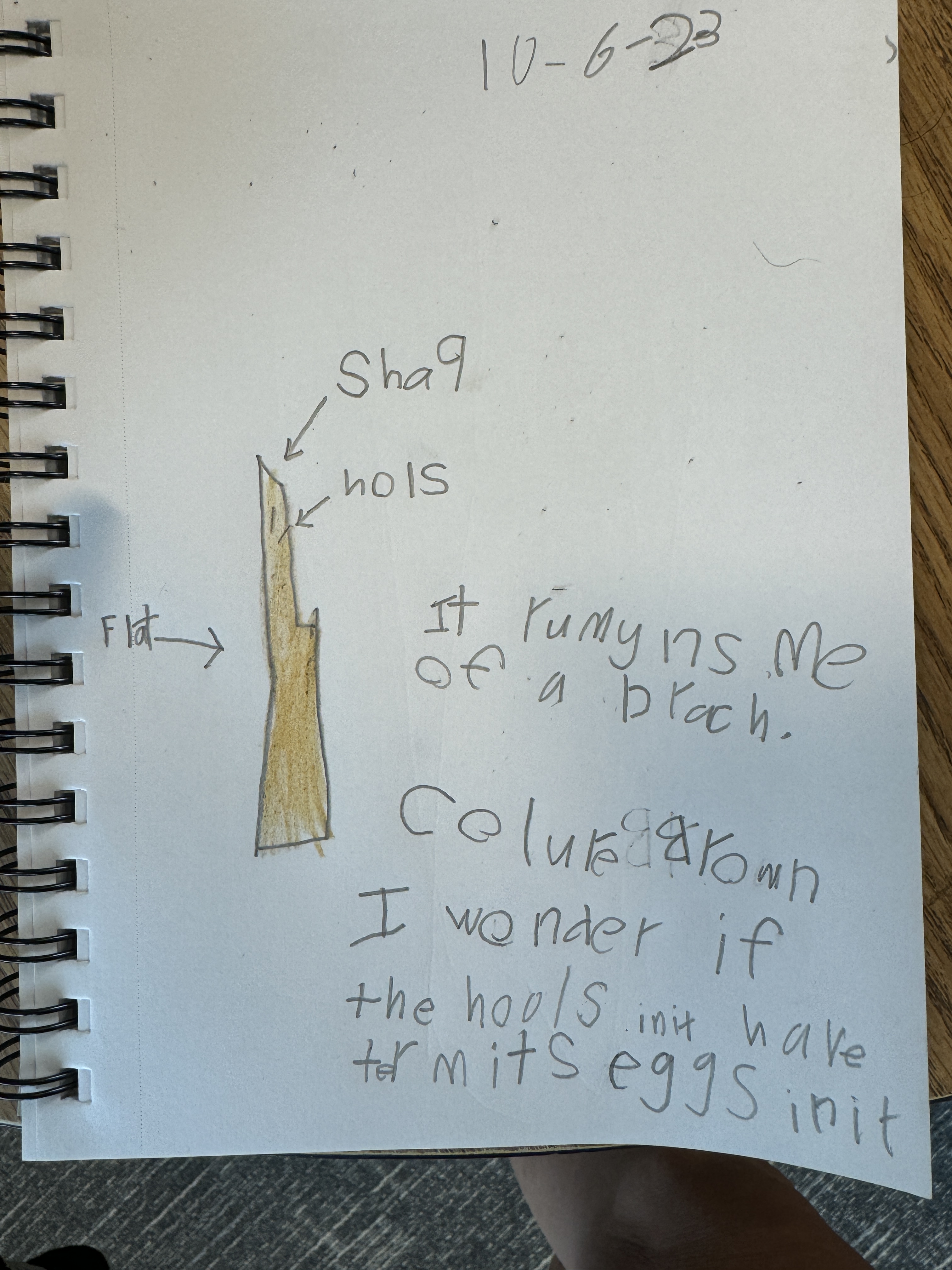
Last week we warmed up for #WriteOut by going for a Wonder Walk on our school campus. We started by reading the book Wonder Walkers by Micha Archer. This is a wonderful book full of questions like, “Is the wind the world breathing?” that also pushed my students to think beyond the literal, framing their observations through the lens of wonder. After reading and talking, students took their nature collectors (a piece of cardboard with rubber bands around it) and headed out to our pollinator garden to look and wonder and pick up some bits of nature to bring back into the classroom with us.
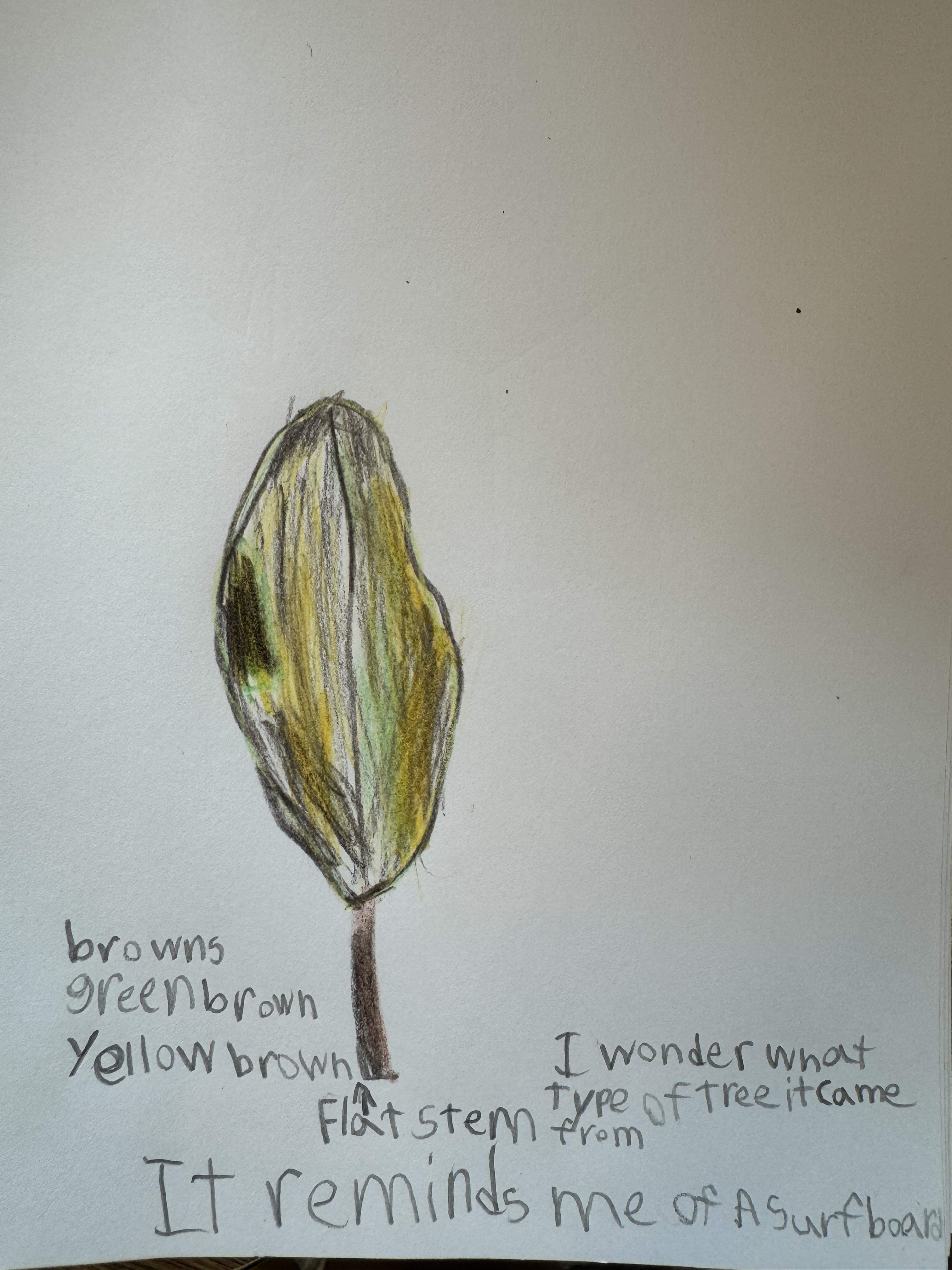
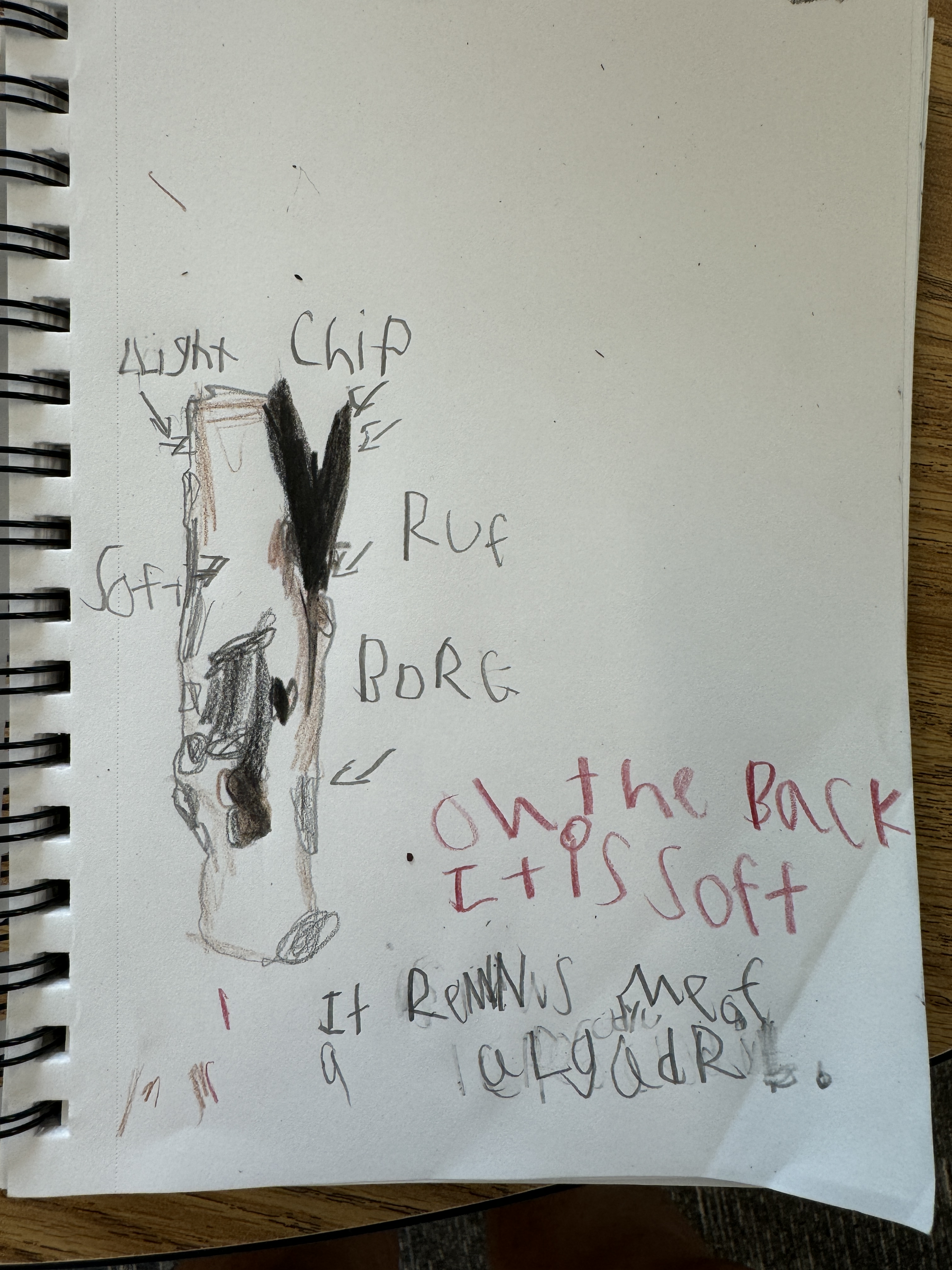
Later students had to pick just one item from their collection to examine much more closely. To facilitate that close observation, we pulled out our sketchbooks and started drawing, trying hard to capture all the details they could see in front of them. Using colored pencils to hone in on subtleties, they added dimension to their sketches. Then using nature notebooking prompts adapted from the work of John Muir Laws including labeling their sketch, adding what does it remind you of and what do you wonder about it, students completed their entry.
The results were stunning. And a perfect beginning to #WriteOut!
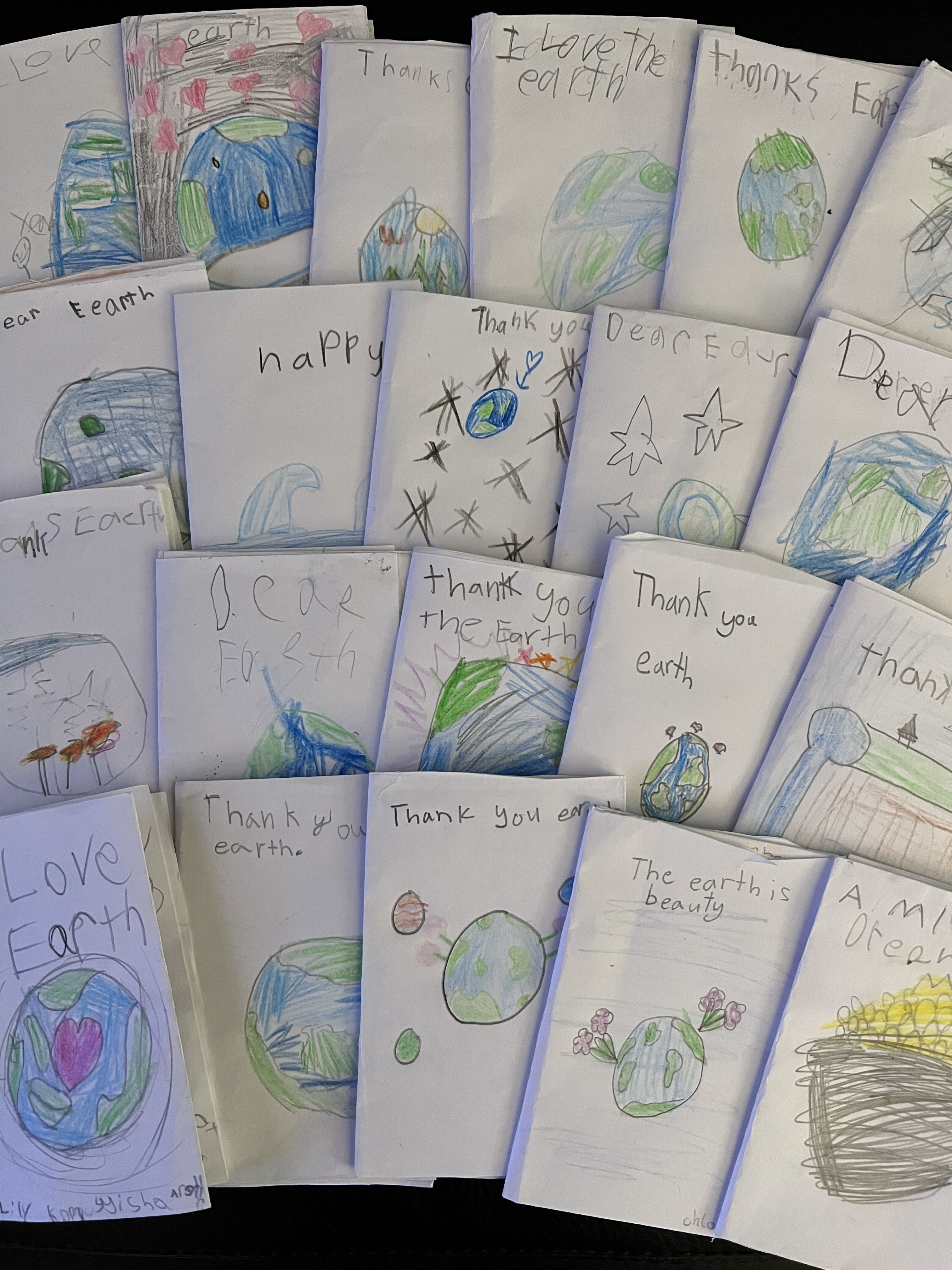
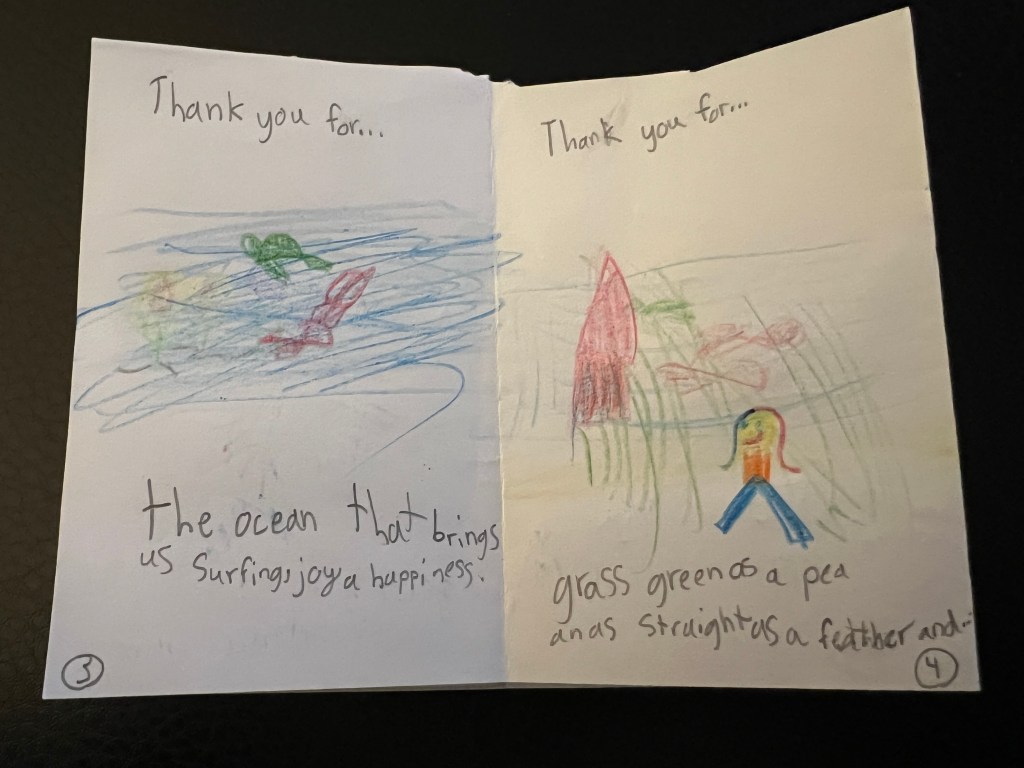
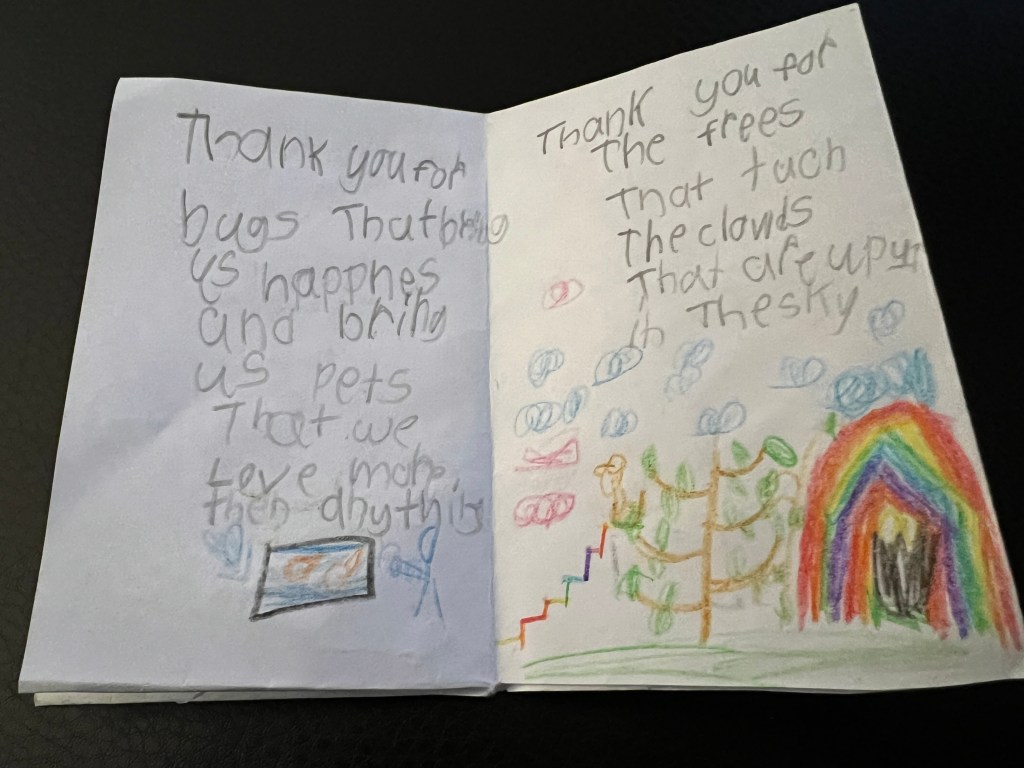
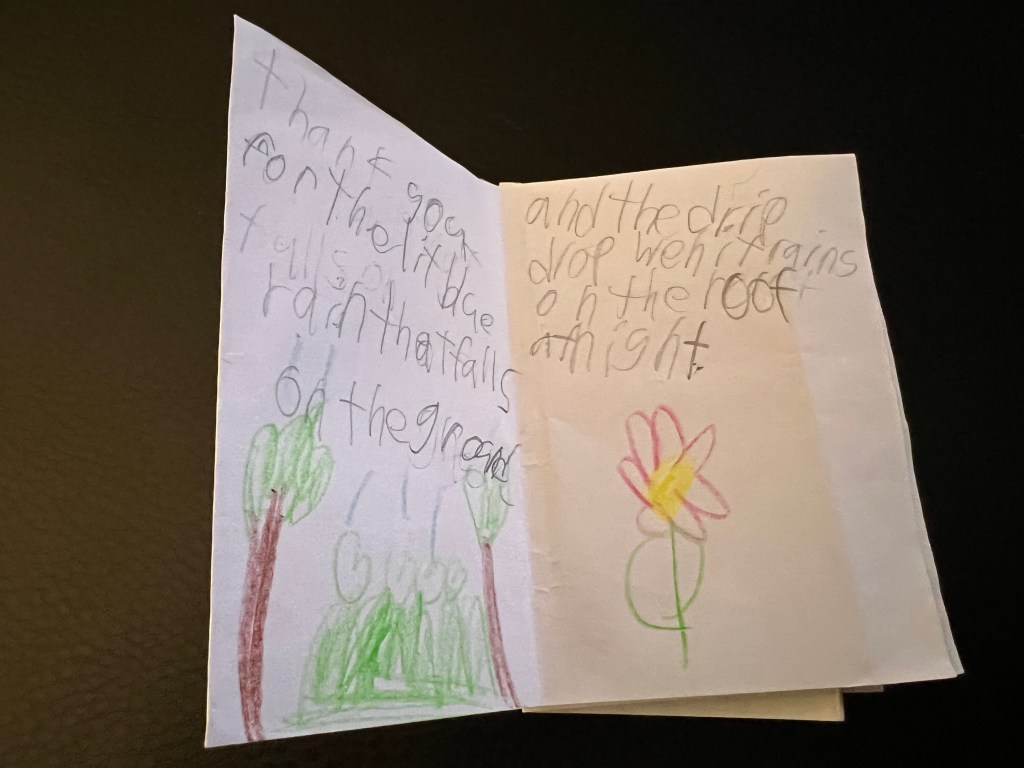
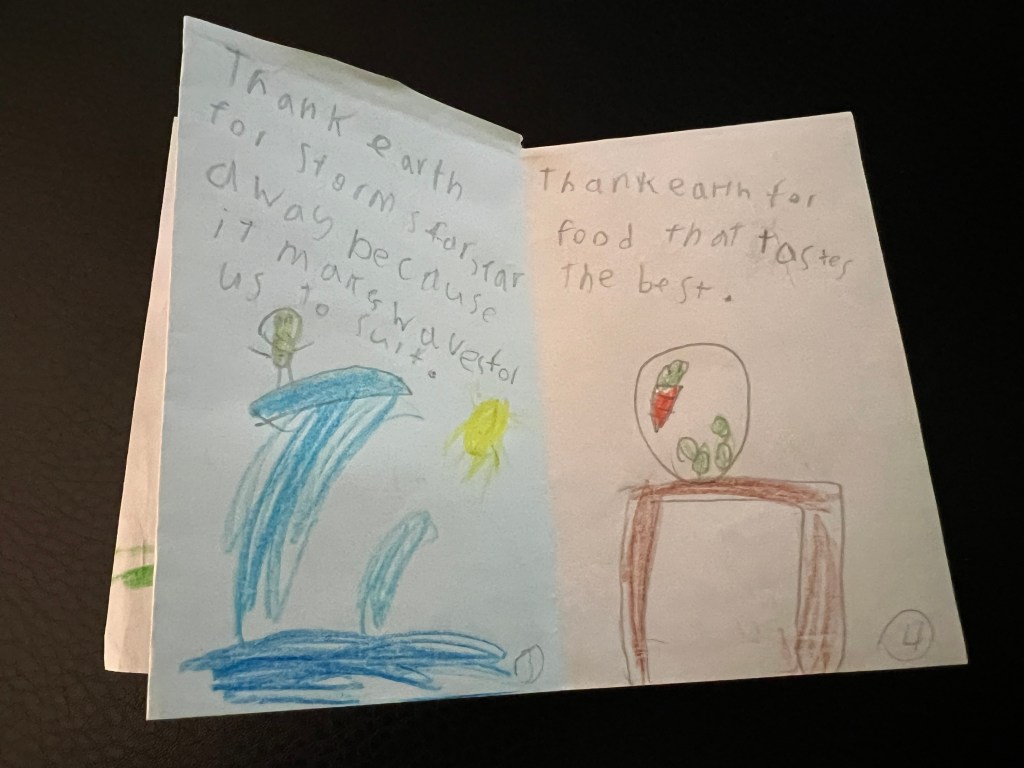
Gratitude and appreciation are essential elements in raising children to be naturalists and environmental stewards. We take care of what we love. Throughout the school year I have made an effort to integrate environmental literature and learning wherever I could across the curriculum. We participated in #writeout with the National Writing Project in October, doing wonder walks and exploring acorns. We made posters and wrote 6 words for the environment, advocating for the Earth. We learned about Ansel Adams and dandelions and made wishes that we hope will disperse like seeds–resilient and gritty–growing where they land, like dandelions themselves, making the Earth a better place. Last week we read Thank You, Earth by April Pulley Sayre, a beautiful book that combines photographs and descriptive language to express appreciation for all that nature has to offer. This became the inspiration for our own letters of gratitude to the Earth in the form of zines.
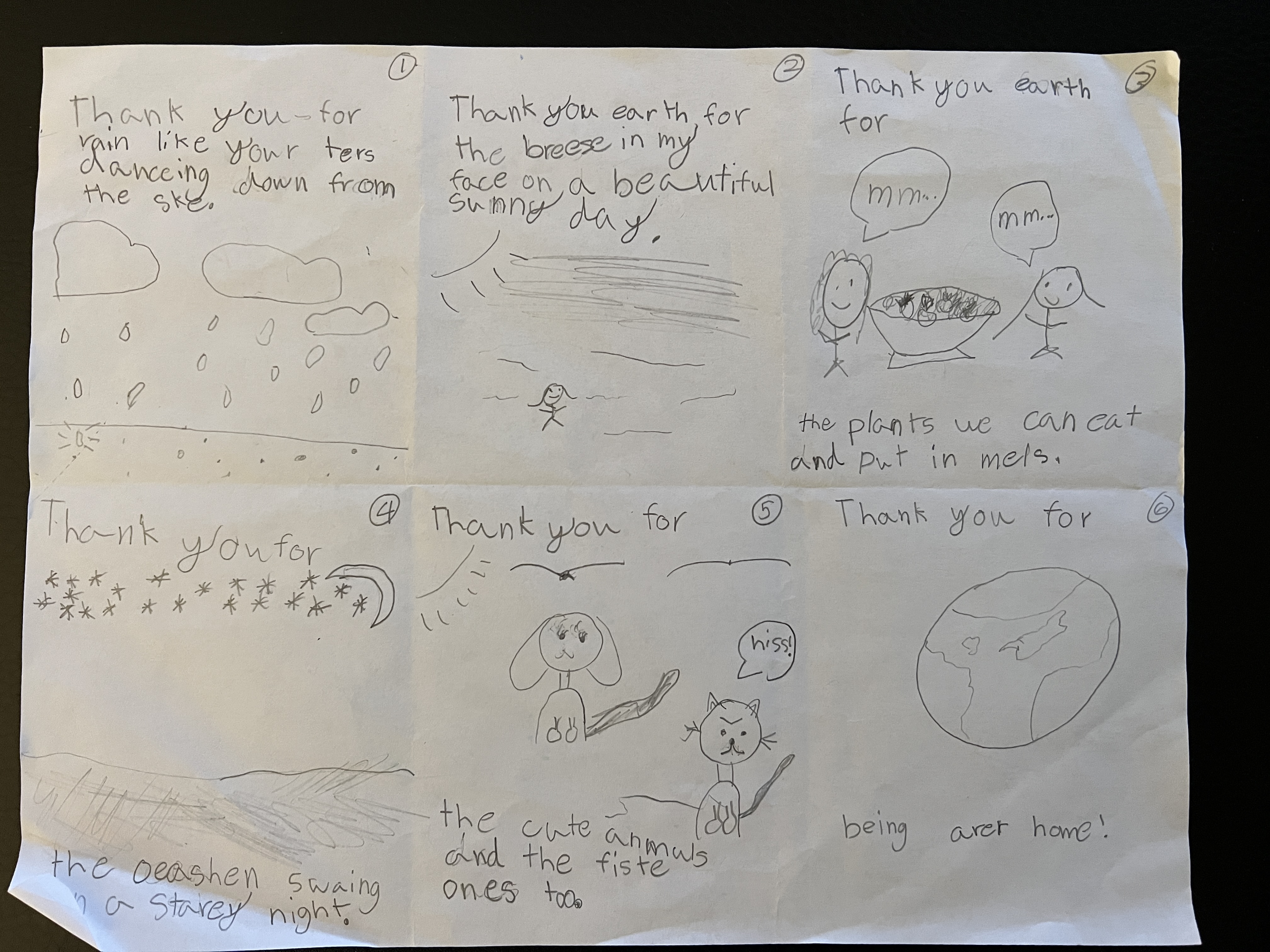
We made zines earlier in the school year, so it seems like perfect timing to come back full circle especially since students have made so much progress as writers and readers. To push their composition and zine making skills, this time we created a plan before launching into the zine itself. Students planned their front and back covers and the six interior pages before creating the actual zine. They were encouraged to stretch their ideas, adding detail and description for each page.
What I love the most is that students had so many ideas about what they are grateful for in nature. They love trees and clouds and rainbows. Animals (both cute and feisty according to one student), the ocean, and flowers were prevalent topics. Pollinators and water, and of course, constellations also were featured. In each of their zines, I can see traces of my teaching…about writing and art and the environment. Here’s a student reading her zine.
I am hopeful that these young students will grow up to be advocates for our planet, for healthy environments for everyone, for sustainable practices and clean energy. Finding spaces for students to learn about the challenges we face on our planet, about the importance of conservation, and about ways to stand up and voice both their appreciation and their concerns for the future are important and easily combined with the reading, writing, science, and art that are already the typical parts of school curriculum when you plan carefully.
Students’ notes of gratitude to the Earth will be on display for Open House next week, spreading their appreciation and awe of the natural world to their families and others who peek into our classroom. How might you construct and spread your message of gratitude to the Earth? I am looking forward to hearing your ideas.






 Thinking Through My Lens