Tag Archives: photography

Blue #19: SOLC 2019 Day 29

I often find myself taking the same photo over and over again.  Obviously my eye is drawn to the subject.  I do try different angles, shifting every so slightly to capture the best light, something different in the background, or looking from another direction.

Sometimes I’m not even aware that I’m taking the same photo until I’m reminded–by a scroll through my images or a reminder of a memory from Facebook or my photo album.

But today I knew.

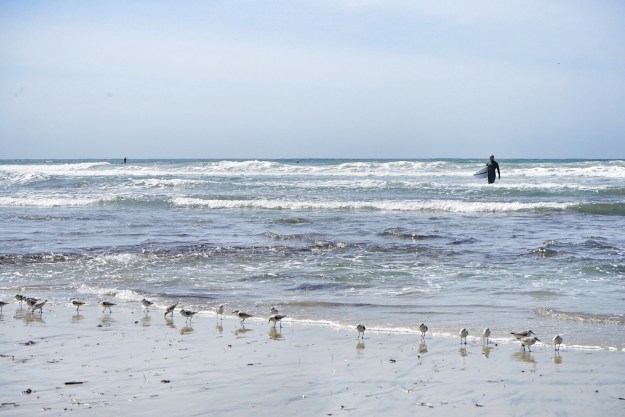
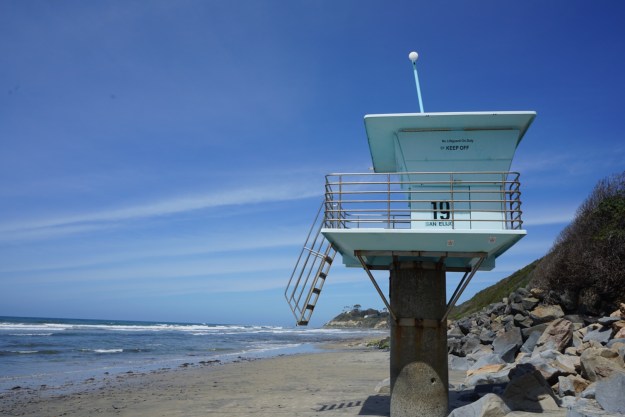
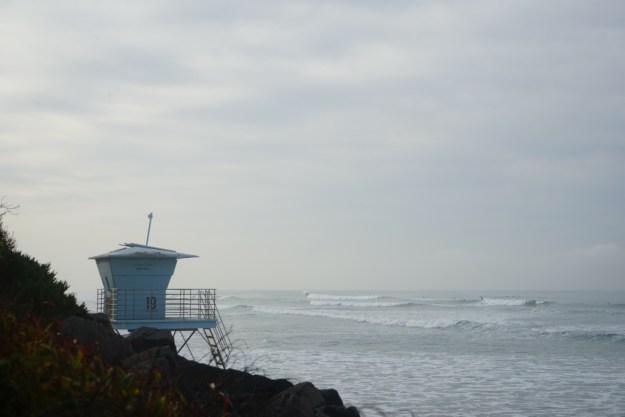
My Friday schedule let me take advantage of a nice low tide at midday.  I could feel the sun’s warmth as my bare feet traveled over the wet sand and was glad for my light sweatshirt in the low 60s early spring sea breeze.  When the tide is low and I don’t feel rushed for time, my turnaround point is lifeguard tower #19.  #19 is also a favorite local surfing spot and a popular dining spot for sandpipers.

lrg_dsc02365

If you look north from #19, you can see Swamis–another popular (and famous) surfing spot with its iconic palm tree topped hillside.  I often take a photo or two with that view…like I did today.

lrg_dsc02370

And as I looked through my photos, also back in November and December!

Occasionally, I find myself taking another perspective, giving yet another view of #19. (The tide was too high on this day for my usual perspective, I was forced up the hillside to avoid getting wet!)

lrg_dsc00060

I’m not sure what all this says about either the lifeguard tower or me as a photographer. But I did find myself thinking about William Carlos Williams and The Red Wheelbarrow. (April is National Poetry Month and I’m planning ways to motivate my students to write a poem a day for the 30 days of April!)  So, using The Red Wheelbarrow as my mentor text, I played around with thoughts of the blue lifeguard tower.  Here’s my attempt:

Blue #19


I keep photographing

a blue lifeguard tower

sprayed with sea mist

watching the sandpipers and surfers dance

©Douillard


Something Fishy: SOLC 2019 Day 27

Just when we thought the week couldn’t get any fishier, it did!  You already know about the angle fish and the wire fish…today was all about real fish.

Wednesdays are our science lab day and our science teacher always goes to great lengths to make things relevant and hands-on for the kids.  I knew that she’d gone to a grunion run last weekend…and the grunion were running.  If you’re not from coastal southern California, you may not know about grunion.  They are small silver fish, about the length of a dollar bill…and they’re pretty special.  They are the only fish who come onshore to lay their eggs in the sand and they are found only along our coast from northern Baja to southern Santa Barbara.  They spawn from March to June, riding high tides onto the shore to lay their eggs.  A couple weeks later, at the next high tide, the eggs are washed back into the ocean, requiring the wave motion to hatch.

I remember grunion runs from my own teenaged days.  Since grunion only surf onto the beach late at night, it was the perfect opportunity for groups of preteens to head to the beach, hanging out in the moonlight, trying not to scare off the grunion.  (I don’t know who talked the adult drivers into that duty!)  If you’re under 16 you don’t need a fishing license to pick up the fish…not that I can ever remember wanting to pick them up!  Lucky for us, our science teacher was able to collect some grunion (and eggs) on her grunion run last weekend for our students to study.

img_0032

Students were able to touch the fish (yeah, they were dead), measure them to determine their age, and gently squeeze them to determine whether they were female (if reddish eggs came out) or male (if a milky liquid came out).

As you can see, they were eager to handle them, some with gloves and some with their bare hands.

We also took the opportunity to present our science teacher with a gift of fish from us. Each student contributed one of their wire fish (Calder inspired) to our collective fish mobile.  The best part was that each student figured out their own fish’s balancing point, tied a piece of fishing line to that point, and then small groups hung their fish together.  We tied each string of fish from a piece of drift wood that I found on one of my beach walks. The result was stunning!  I’m including a photo–although it doesn’t begin to do it justice!

img_0020

Next week students will string their own individual fish mobiles…and continue their study of grunion.  If we’re lucky, we will be able to get some of those grunion eggs to hatch…right in front of our eyes!

Dad’s Camera-a mini book review: SOLC 2019 Day 26

Tonight I asked my students to write about a book they have read recently for their entry in their Learning at Home (LAH) notebooks.  I asked them to tell a bit about what the book is about, include big ideas and concepts the book brings up, and make a recommendation about whether or not their classmates (or me) should read the book.

So…I think I’ll take that same writing invitation.  I’ve been carrying a book around in my teaching bag that I plan to use with my students one of these days.  Dad’s Camera by Ross Watkins grabbed my attention a year or so ago, before it was available here in the United States.  I’m always interested in books about photography, so when this one became available, I was quick to purchase it.

While this book is a children’s picture book, it is not really a book for children.  This book tackles the heavy topic of Alzheimer’s disease and the confusion and devastation that families face as they deal with it.  The author describes this book as a tool for opening up conversations with children…and with adults to talk about Alzheimer’s.

I love the idea of photography as activism.  In this case, the book uses photographs as a way to talk about memories and memory loss.  The dad photographs ordinary things, things most people don’t photograph.  “Dad took photos of the things he didn’t want to forget.”  What he didn’t take photos of were his family, much to the frustration of the mom in the story.

Disease, memory loss, confusion, and frustration are all strong themes in this book. Communication breaks down and the dad does things the mom and kid don’t understand. The dad’s deteriorating memory makes it hard for him to explain the whys behind his actions.  And while the book does not tie up in a neat package, the ending is satisfying.  (No spoilers here!)

Although this is not a typical children’s book, it is one I plan to use in my classroom.  I want to use it along with some other books about photographers, including Ansel Adams and Dorothea Lange who both used photography as a ways to shed light on issues they were passionate about.  How can we use our own passions and art, like photography, to make the world a better place…in ways big and small?  I think I’ll have more to say about this book and what happens in my classroom once I take this ideas from seed to implementation!

dad's camera

Sky View: SOLC 2019 Day 23

I couldn’t take my eyes off the sky.  Our usual monochromatic blue or gray skies were replaced by deep blue textured with white.  My first view this morning was as we headed off to run errands.  We have this quirky spiky tree near the driveway that I am obsessed with photographing.  It always makes an interesting backdrop to photos of the sky.  This morning I noticed the tree was beginning to get leaves (again–this tree gets terribly confused with year-round spurts of spring and summer weather) as I looked up into sun infused clouds, with the neighbor’s palm tree in the background.

img_9973

Later, after the errands and some shopping at the outlet mall, my husband offered to stop along the coast in San Clemente so I could get out and take some photos.  My eyes were drawn to the contrails playing with the clouds against the brilliant blue of the springtime sky.

lrg_dsc02288

The coastline is always beautiful, and today was no different.  It was high tide when we stopped and I picked my way down close enough for photos–but trying to avoid another oops like I experienced yesterday!  The sky appeared to have stripes…and you can’t really see it in this photo, but the sea had dozens of sailboats in the distance.  I like the way the white of crashing waves echo the white of the contrails and clouds in the sky.

lrg_dsc02290

Even the traffic couldn’t ruin the day.  Accidents and heavy weekend traffic made a 30 mile trip take more than 90 minutes, something that is unfortunately all too typical. (I suppose it is a price we pay for living near the coast.)  Our too-often-brown hillsides were wearing their springtime best and bursting with lush and vibrant green and so many yellow flowers…you can almost feel the softness with your eyes!

img_9981

Although I missed the photo opportunity as we left Costco and headed back home, my eyes took in yet another playful interweaving of contrails and clouds.  I looked up and noticed an enormous hashtag in the sky.  #skyview

Oops! SOLC 2019 Day 22

Ah!  The briny air filled my lungs as the gentle spring sunshine warmed my back.  There is nothing better than a walk on the beach at the end of the work day.

I wondered at the beach goers in bathing suits more than waist deep in the still cold Pacific ocean.  (Even in summer, 72 degrees is warm water–refreshing when temps are in the 80s.  Today’s water temperature of 60 degrees is hardly balmy.)  Low 60s do not constitute bathing suit weather in my opinion.  I was thinking about how San Diego is really not a spring break destination.  We’re often mistaken for a tropical location, with warm weather year round.  In reality, we are a temperate climate.  It’s seldom too hot here, and we don’t even know snow unless you drive high into the local mountains.  But March is predictably sweatshirt weather–and I almost always wear shoes on the beach at this time of year because of all the rocks.

I digress.  I walked quickly, trying to have this clear-my-head walk count as some kind of exercise in a week that left too little time to move my body.  I found myself on the uncomfortable slope of rocks thrown high by the surf as I climbed to avoid the waterline, slipping and sliding on the uneven piles.

I’m never bored along the coast, there is always something to see.  Today I watched surfers, dressed in their black wetsuits, as they headed out into the glistening sea.  There is seldom a day without surfers around here, even when the weather and waves are less than ideal.

lrg_dsc02282

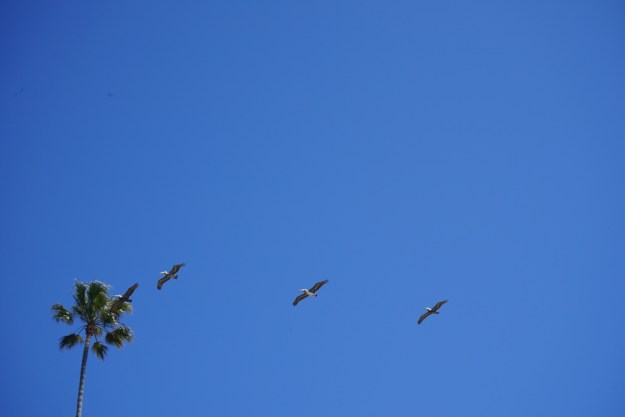
Looking up I noticed a modern day pterodactyl, our native pelican, gliding on the currents.

lrg_dsc02280

At my turn around point, I got bold, walking further out away from the rocks.  Walking on the sand just felt so much better than slip sliding on the rocks.  I knew I was taking a calculated risk–walking in my jeans and relatively new tennies so close to the water.  I know all about rogue waves and watched as I was walking.  About halfway back to my car, I could see it coming.  Just as I reached the point of no return, I saw the wave rushing toward me.  I spied a rock jutting up higher than the sand and jumped on it.  Seconds later I felt the cool salty water rush over my feet, my ankles, wicking up my pant legs.  With nowhere to go, I stood, waiting for the water to recede.

My walk the rest of the way was of the squelchy variety as my wet socks and wet shoes squished with each step.  I was less careful at that point.  I was already wet, so I took the easier, if wetter, pathways on my way back to the car.  I had to laugh at myself, maybe I should have just taken my shoes off and walked barefoot for the entire walk.  If I were more like those bathing suit wearing beach goers, I wouldn’t be squelching my way back to my car!

lrg_dsc02285

But neither wet pant legs or squishy shoes could take away my pleasure and delight in my beach walk.  There is something healing and rejuvenating about a walk on the beach!

lrg_dsc02279

Now back home, my shoes have been rinsed, the insoles removed and are sitting on the spare bathroom counter drying.  I wonder how long til they’re dry enough to wear on my next beach walk?


Team Bird: SOLC 2019 Day 15

Today’s walk had me watching pelicans.  And as I observed their precision maneuvers, I started to think about how birds compare to sports and their athletes.  Pelicans are like synchronized swimmers, matching their moves and depending on the precise movements of each to create the desired formations as a group.  I sometimes see one peel off, slowing down or heading off in a different direction, but most of the time they are working the V, adjusting position and speed to ensure that the entire group gets where it is going with speed and efficiency.

lrg_dsc02232

Seagulls are more like that pick up game of basketball or soccer.  They have shared interests, but there is always plenty of squabbling and trash talk.  There are definitely leaders and followers and lots of jockeying for position (and food).  Seagulls seem to laugh a lot (at least in my mind), they love to play in the wind currents and hang out together on the beach.

lrg_dsc00735

Osprey are those elite individual athletes–the Mikaela Shiffrins or Serena Williams of the bird world.  They are strong and independent and ferociously focused on their goals.  Osprey are beauty in motion, each muscle toned, each movement made with grace that makes the nearly impossible seem easy.

img_9729

Egrets are steady, patient and observant.  They wait for the perfect opportunity, a lot like the utility players in football or basketball.  They have that grace of movement, but they don’t draw your attention until you look away from the shining stars of the game.  But when you do look…oh la la, they are poetry in motion!

lrg_dsc09977

Sandpipers are team players all the way.  They move together, eat together, and watch out for each other.  Like a finely honed World Cup soccer team, they seem to read each others’ minds, moving separately almost like one.

lrg_dsc03164

I’m always encouraging my students to be a team, reminding them that we need to support each other and create a space where we all can learn.  But after watching the birds, I’m wondering if I need to refine my language.  What kind of team do I want them to be?

What Does it Take to Thrive? SOLC 2019 Day 14

I walk below these cliffs all the time, noticing the canyons and wrinkles wind and water carve along their faces.  I see evidence of human interference, the places where lawns and ice plant hasten the natural erosion of sandstone along the beach.  I’m mindful of walking too close to the cliffs, remembering days when huge chunks let loose and fall to the shore.  I wonder about the multimillion dollar homes perched on the edge–the ones with the incredible views of the Pacific Ocean–that are in danger of dropping into the sea during the next big storm.  Are those homeowners insured for cliff erosion?

Today’s blue was intense, blues that need words like cerulean, azure, and cyan to begin to describe the richness of the color.  And the blue was punctuated with thousands of small orange butterflies…on a mission headed north.  It was almost as they were emerging from the sea, flying straight for the cliffs, then up, up , up.

lrg_dsc02210

Oddly, though, my eyes were drawn to a small bunch of yellow flowers high on the wind-blown cliff, a tiny patch of blossoms flourishing in hardscrabble sandstone.  I’m reminded that some of us make the best of where we are planted and take advantage of whatever resources are available…not dependent on soil amendments, special fertilizers, and protection from wind and other elements.  What does it take to thrive in sandy soil and harsh conditions?  Sometimes the blue skies, mild temperatures, and more plentiful than average rainfall is enough.

lrg_dsc02218


Reflection as Archeology: SOLC 2019 Day 13

Sometimes I feel like an archeologist as I sift through artifacts, looking for the story that history has missed.  Okay, so that history is pretty recent…and I better admit that it’s almost report card time in my classroom.

I’m trying to get my students to think about their own learning.  I want them to know themselves as learners, recognizing what it feels like when they “get it,” and also when things are not making sense at all.  Over the years I have tried lots of different ways to have students reflect…in fact, I wrote my master’s thesis about reflection in my multiage (first, second, and third grade) classroom.  For the last couple of years, I’ve been playing around with the idea of “artifacts” as the provocation for reflection on learning.

I know what artifacts do for me.  They jog my memory and get me thinking.  (If you are an actual archeologist, please excuse my broad and inaccurate use of the word artifact.)  My camera is my tool of choice for documenting my experiences and seeing the world. Through my lens I find myself searching for meaning as I look closely.  A couple of days ago on a rainy beach walk, I noticed these shells up near the cliff.  I know they didn’t get their on their own, so I started wondering about the story behind them.  Who picked them up, why did they leave them behind? I recognized the familiar bits of shells native to this beach, and found myself reflecting on how much I have learned about these creatures from my frequent walks.  After taking a photo or noticing something new or unusual through my lens, I often find myself researching, adding to what I know, thinking about what I want to know, and then looking more closely.

img_9828

I want my students to experience some of that with their learning in the classroom. Sometimes I give students a broad topic–find an artifact of a success or struggle with math and then send them to sort through projects and papers, books we’ve read and tools we’ve used.  Photograph the artifact and load it into a slide show, then reflect on that success or struggle.

Today I decided was the perfect day to have all my students reflect on what they have learned about geometry.  I thought Flipgrid would be the perfect tool–they could videotape their reflection while showing the artifact(s) of their learning.  Flipgrid lets you download your video to your device…and limits your video to 90 seconds!  (Plenty of time for this purpose!)  I gave directions and showed kids the ins and outs of the app on their iPads and set them off on their reflection.  Energy was high, students were interested (novelty through a new app helps with that) and they eagerly gathered their materials, ready to get started.

But wait…I heard the murmuring, “We don’t have Flipgrid on our iPads.”  What?  How can that be?  Ugh…now what is plan B?  How do I take advantage of the momentum and not waste this precious time?  I grabbed a student iPad and saw Clips on there.  I did a quick scan of how it worked, decided it was close enough and quickly got them going again.  I also emailed our tech support, could they get Flipgrid loaded?  As students were videotaping themselves and reflecting, they also reported that Flipgrid was loading on their iPads.

After much thought, I decided that I would have students go back to their artifacts and recreate their reflections in Flipgrid.  Their Clips experience would serve as a practice round, maybe even improving their reflection.  I had less than 30 minutes for students to get this accomplished and we wouldn’t get to the second part–actually getting the reflection video into the slide with some written goal setting attached to it.  But all my students did get the video reflection completed.

img_9855

I’ve listened to most of them, and they do convince me that the artifacts help with reflection.  I like that many of my students included artifacts of their learning that I didn’t suggest and all at least summarized the basics.  I like that the individual videotaping lets me hear my quieter students and those who are reticent to risk speaking up in front of more confident peers.

My goal is to have students create a reflective slide each week…in under 30 minutes. I’m already way over time for this week…but I’m hopeful that it will get more efficient as we become more familiar with the tools and process.  But I also want to remember to keep it fresh, offer lots of choices, and allow for creativity.  Can my students become archaeologists and uncover the artifacts that will help them understand how and when they are learning?  Will their reflections help me and others hear their stories, appreciate their individual learning paths, and be better able to support their learning?


Tiny Snails and Butterflies: SOLC 2019 Day 12

Kids have a way of seeing the smallest of details in the world.  While they often miss some big picture items, they never miss the puncture mark in the shared eraser, the cloud shaped like a volcano erupting, or the perfect rock that most of us would never give a second look.

We had another unexpected rainy morning today, pushing me back upstairs to change from my suede booties to my cowboy boots before heading out the door for work.  By the time I was out on the blacktop for before school recess duty, the rain had stopped, but the ground was still wet and shiny.  The time change has kids straggling in later than usual, giving me plenty of time for mental meanderings as I watched the few early kids play on the blacktop.

img_9841

After recess duty, I spent a few minutes back in the classroom chatting with a few of my third graders, listening to their stories of the previous evening.  When the bell rang, we headed out together to pick up the other students where we line up on the blacktop.  We barely made it out the door when one my students noticed an incredibly tiny snail on the sidewalk in front of our classroom.  Smaller than the fingernail on my pinkie, this snail was a perfect miniature model of those pesky snails often found in the garden. We all knelt low, noticing its perfect features, spiral shell, and gooey slime on the wet sidewalk. After taking a few photos, one of the students offered to carefully “save” it and move it from the sidewalk where it risked getting stepped on by the many students who would walk that hallway to a safer location on the nearby dirt.  Carefully picking it up by holding the shell, the snail was relocated without incident.

img_9845

Later in the day, the sun shone brightly and most students had shed their jackets to bask in the warmth of the almost spring sun.  During lunch the kids had noticed that our school seemed to be in the flight path of a butterfly migration.  Monarchs are familiar friends to our schoolyard where milkweed grows tall, so the kids thought the smaller butterflies they were seeing were baby monarchs.  We walked out to the pollinator garden to see if we could get a closer look, but butterflies flittered by in twos or threes, staying above our heads rather than alighting on any plants.  I’m pretty sure these were actually painted ladies…the same butterflies I had just seen in profusion in the desert over the weekend.

lrg_dsc02067

It always surprises me that these same students who never miss a tiny snail or the beauty of butterflies migrating overhead don’t seem to notice that they are standing on a classmate’s jacket with muddy shoes or that they just jumped in front of ten other children patiently waiting for supplies for a project.

They are perfectly self-centered and exquisitely altruistic, obnoxious and incredibly kind, thoughtful and infuriatingly rude…all rolled into one.  Tiny snails and butterflies remind me to look closely and find those sometimes hidden endearing qualities rather than focusing on what so often is the most obvious to notice in the classroom.  And I’m lucky, those same confounding small humans are also the reason I find myself paying attention to the smallest of details, appreciating the world through the eyes of children.

California Poppies: SOLC 2019 Day 11

The golden poppy is California’s state flower.  We often see this cheery orange flower growing along the side of the freeway, in roadside medians, and in the landscaping of public buildings.  It’s both delicate and hearty.

lrg_dsc02193

As a California native, I’ve seen these poppies my whole life, but I’ve never seen them like I did over the weekend.  Drought has become a way of life in southern California where I live.  Our average rainfall is only 10 inches per year, so those years when the rainfall falls well below (I know we’ve had recent years with only 5 inches–for the entire year!) are devastating for plants and animals (and humans too)!  This year we are already well above average for rainfall, and the season doesn’t end for a few more months.  That means our landscape is greener than usual…and flowers are everywhere!

On our way home from Saturday’s adventures (you can read more about those here and here), we decided we would stop by to get a glimpse of some poppy fields at the peak of their blossom.  As we headed back from the desert, we swung through a part of Riverside county called Lake Elsinore.  Even before we got to our destination, we could see hillsides in full bloom!

lrg_dsc02162

We weren’t the only people who wanted to see these beauties, traffic snarled as we got close.  We saw the highway patrol ticketing cars that folks had parked on the shoulder of the freeway to try to circumvent the traffic to photograph poppies!

Our patience paid off with the opportunity for some close up views of these massive fields of poppies.  Unfortunately, we were late in the day as the sun was dipping below the clouds and the temperatures were dropping, so many blossoms were beginning to wrap up tight for the night.

lrg_dsc02180

img_2388

In spite of the challenges, I enjoyed my poppy experience.  I’ve been noticing more poppies in my own community as well.  I passed several small patched of poppies along the roadside on my way home from work today.  And I’ve seen many people I know posting pictures of poppies…from Lake Elsinore and many other hillsides around the state!  They are beautiful…and a cheery indicator of a wet winter and spring’s arrival.