Tag Archives: science

Weekly Photo Challenge: Wonder

Do you speak in images? Enjoy taking photos to document your experiences or just to express what you notice in the world? Love to share them with others? Welcome to the weekly photo challenge! I post a new challenge each week…check in regularly and join the fun!

As I headed out my front door this morning a dew covered dandelion puff caught my eye.  I was filled with wonder as I noticed the heaviness of the strands of fluff and I couldn’t wait to put my work things in my car so I could head back over to take a photo. Seeing the dew all over my car and windows, I decided to start my car, squeegee the windows and then set up my macro lens to capture that image.  At that moment, as I sat in the driver’s seat and pushed the button to start my ignition, my car let out a short groan and then nothing. I tried to pull the key out to try again…but it wouldn’t release and when I tried the ignition button again…nothing.

Lucky for me, my husband was working from home this morning so I was able to head back in to see if he could help.  And while he was checking out my car, I got the opportunity to attach my macro lens and snap a few shots.  I love the way you can see the dandelion fluff encased in a dew drop in this shot.
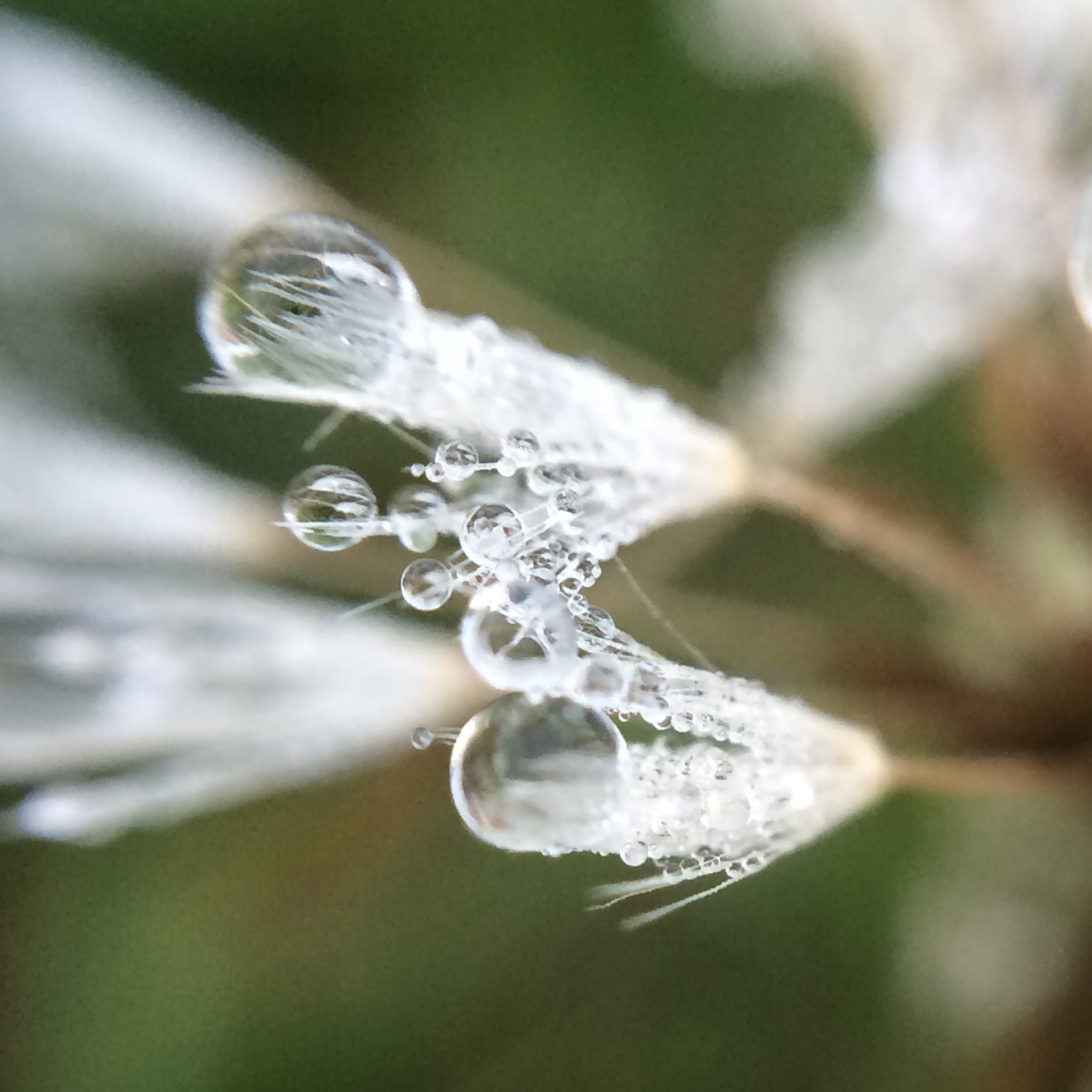
dandelion in dew drop

(As I write this, my car is in the shop.  My husband was able to take me to work and hopefully we’ll be picking my car up later today.)

Yesterday, I reveled in the wonder of my students as they took a close look at some fall leaves my teaching partner brought back from her trip to Colorado.  My students had the opportunity to observe, sketch and photograph the leaves…and these will also serve as information and inspiration for some poetry and art.  I found myself taking photos of students taking photos of leaves (and you can see some sketches in progress in the background).
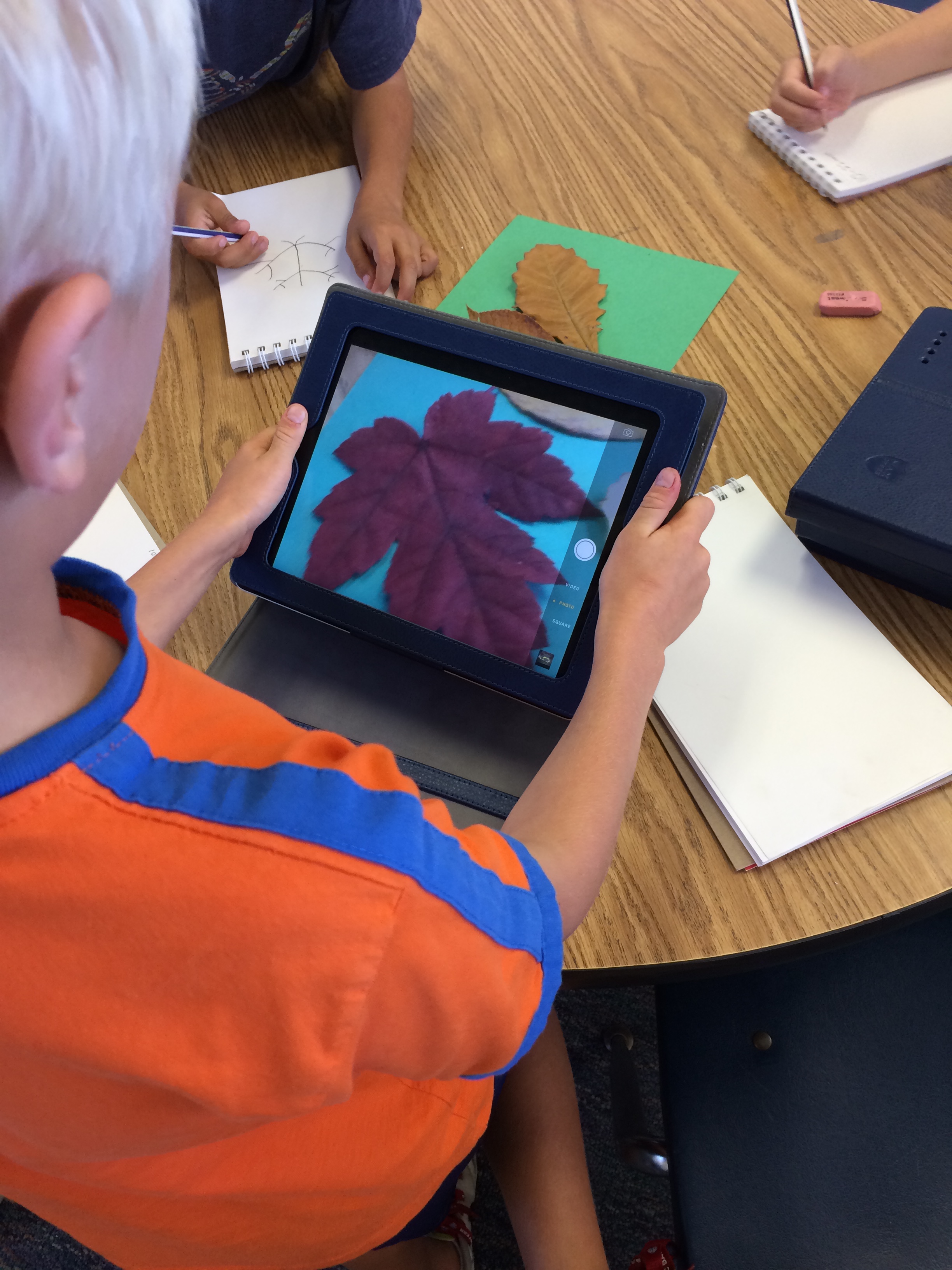
photo of leaf photoOn Monday, we celebrated the National Day on Writing (for details you can see this post) by writing collaborative poetry with the older multiage class at our other school.  My students continually amaze and delight me as they embrace the wonder of words…and of collaboration. It was such fun to watch kids, from six to eleven years old, figure out how to bring their ideas together in a collaborative poem.
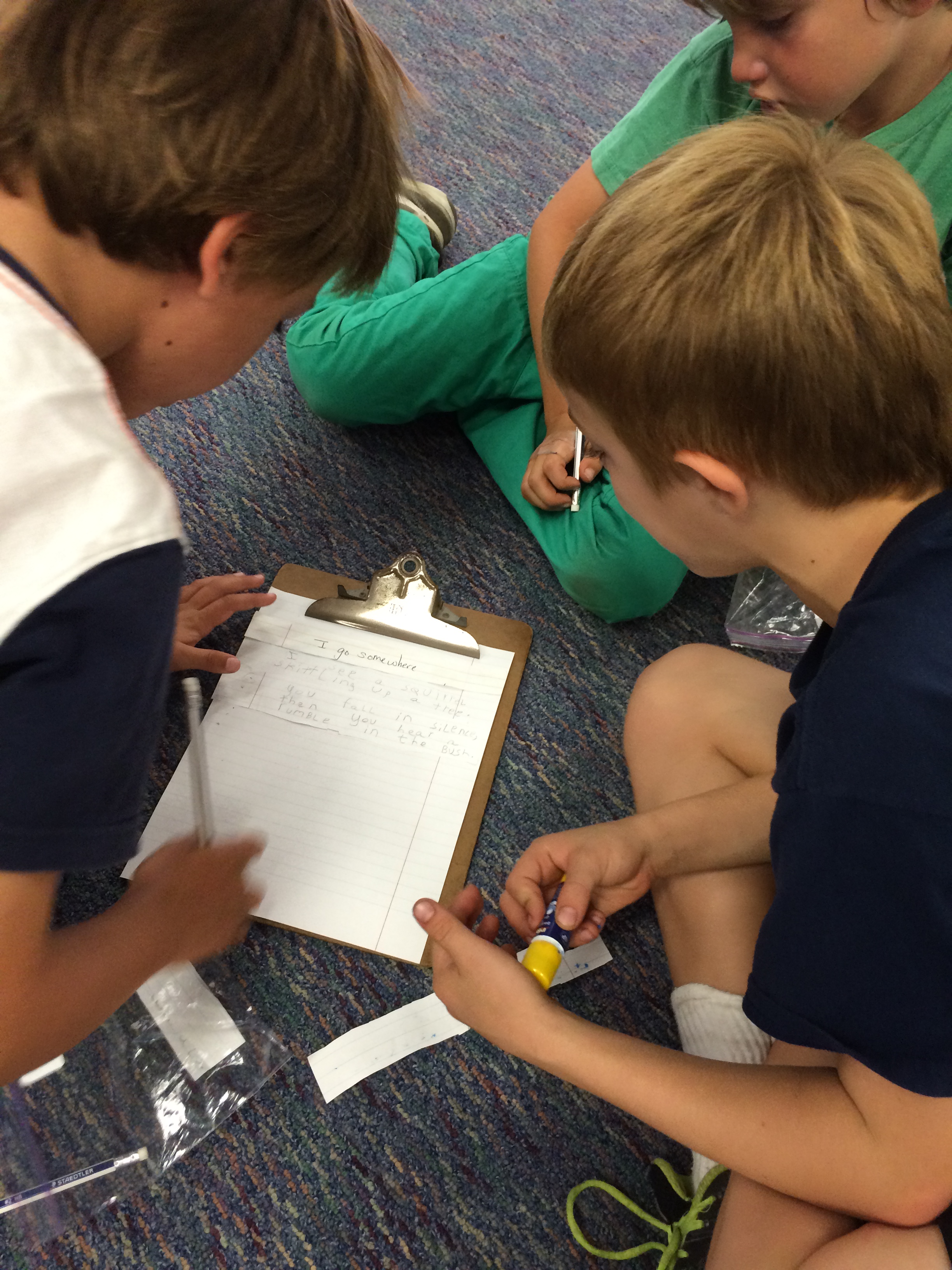
poetry collaboration

I spent the weekend in Raleigh, North Carolina at the Association for Science and Technology Centers conference.  Unlike a usual educational conference, this conference is mostly attended by museum professionals.  My colleague from the Reuben H. Fleet Science Center and I presented as part of our participation in a partnership between writing projects and science centers.  Since we have been exploring ways to transform field trip experiences for students, we included a mini field trip “exhibit” as part of our presentation.  It was such fun to catch the wonder and delight on the face of adults as they explored with a science “toy.”
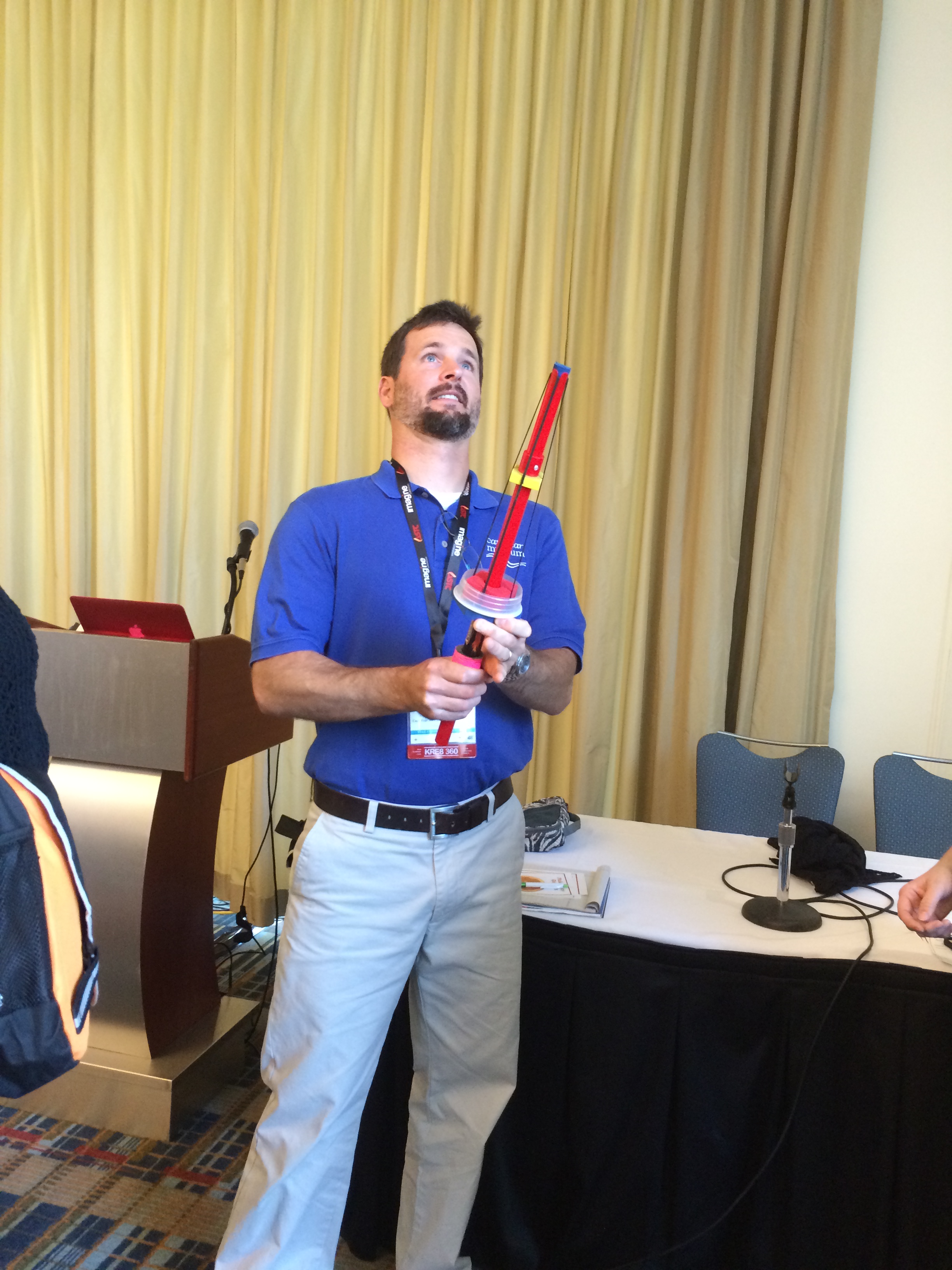
mini field trip joy

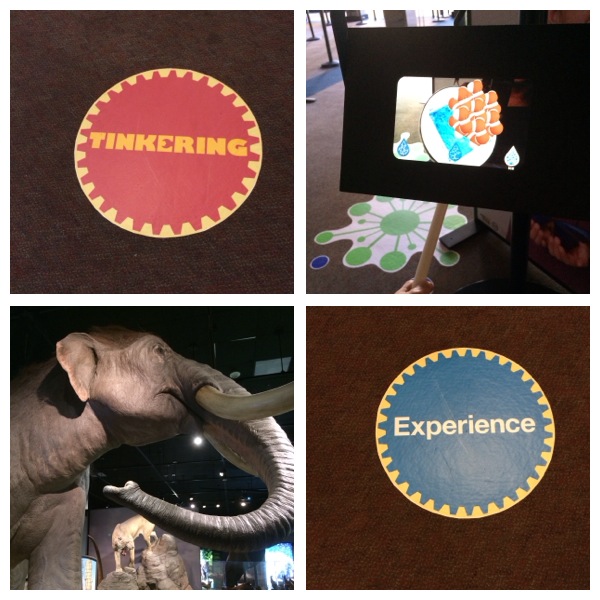
I also had the opportunity to explore the North Caroline Museum of Natural Sciences (I wrote more about it here).  This museum is quite unusual and includes many unique features.  I got to watch these veterinarians work with this snake, including using a “trach” tube.  We got to listen to the snake’s respirations and ask the vets questions about the procedure.  You’ll notice that they are also projected onto the screen on the right hand side of the photo.  I can only imagine the wonder children will experience as they watch these animal doctors at work!
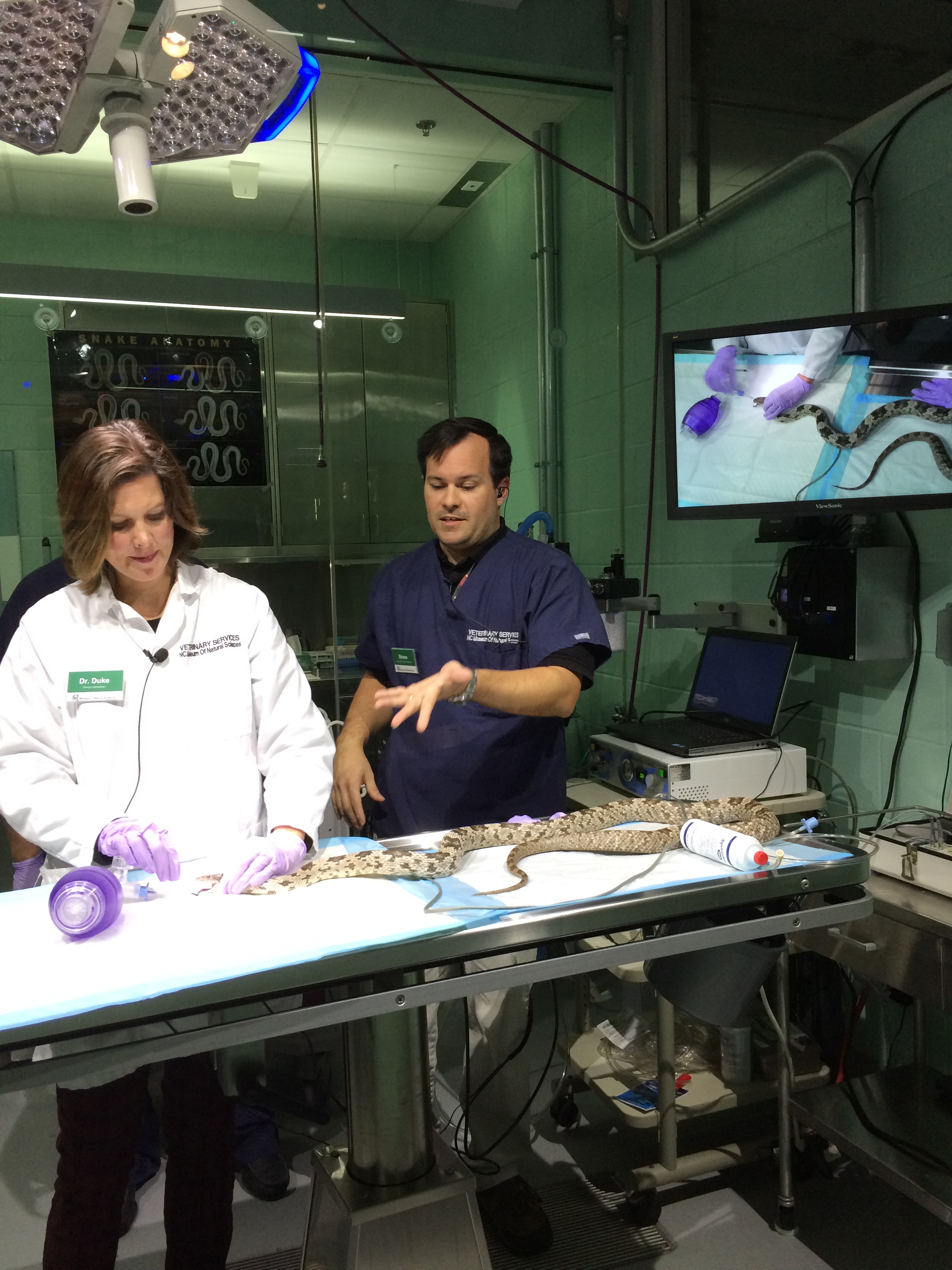
vets with a snakeAnd in the more traditional part of the museum I happened to look up with a bit of surprise and wonder as I noticed these pterodactyls above my head.  You can also see the lights of the city through this windowed dome where the pterodactyls flew.
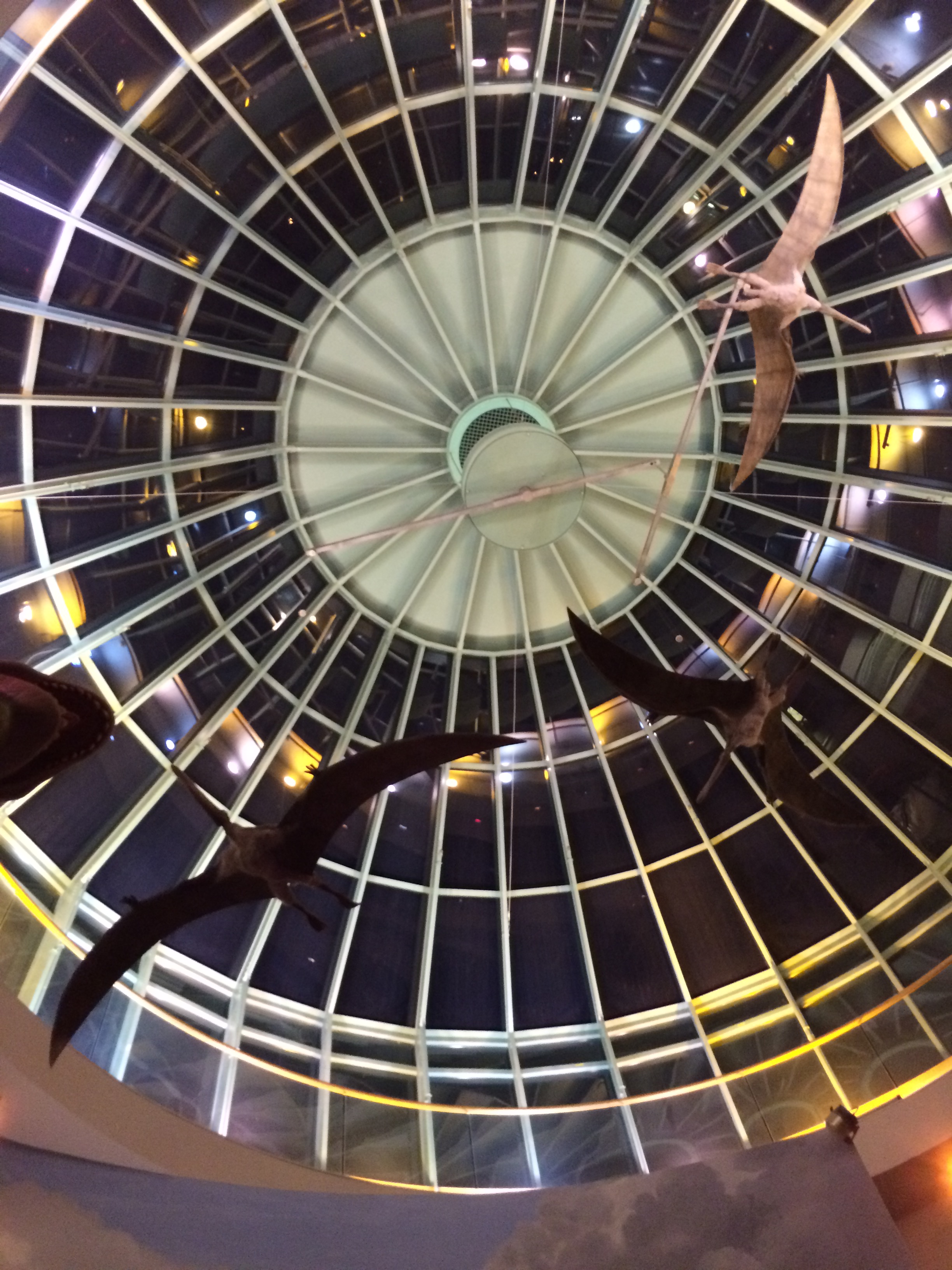
pteradactyls

And sometimes it is the simple things that fill me with wonder.  Raleigh is known for its oak trees.  While they were not experiencing full blown colorful fall leaves, there were leaves and acorns falling here and there.  I love the simplicity of this leaf on the brick walkway.
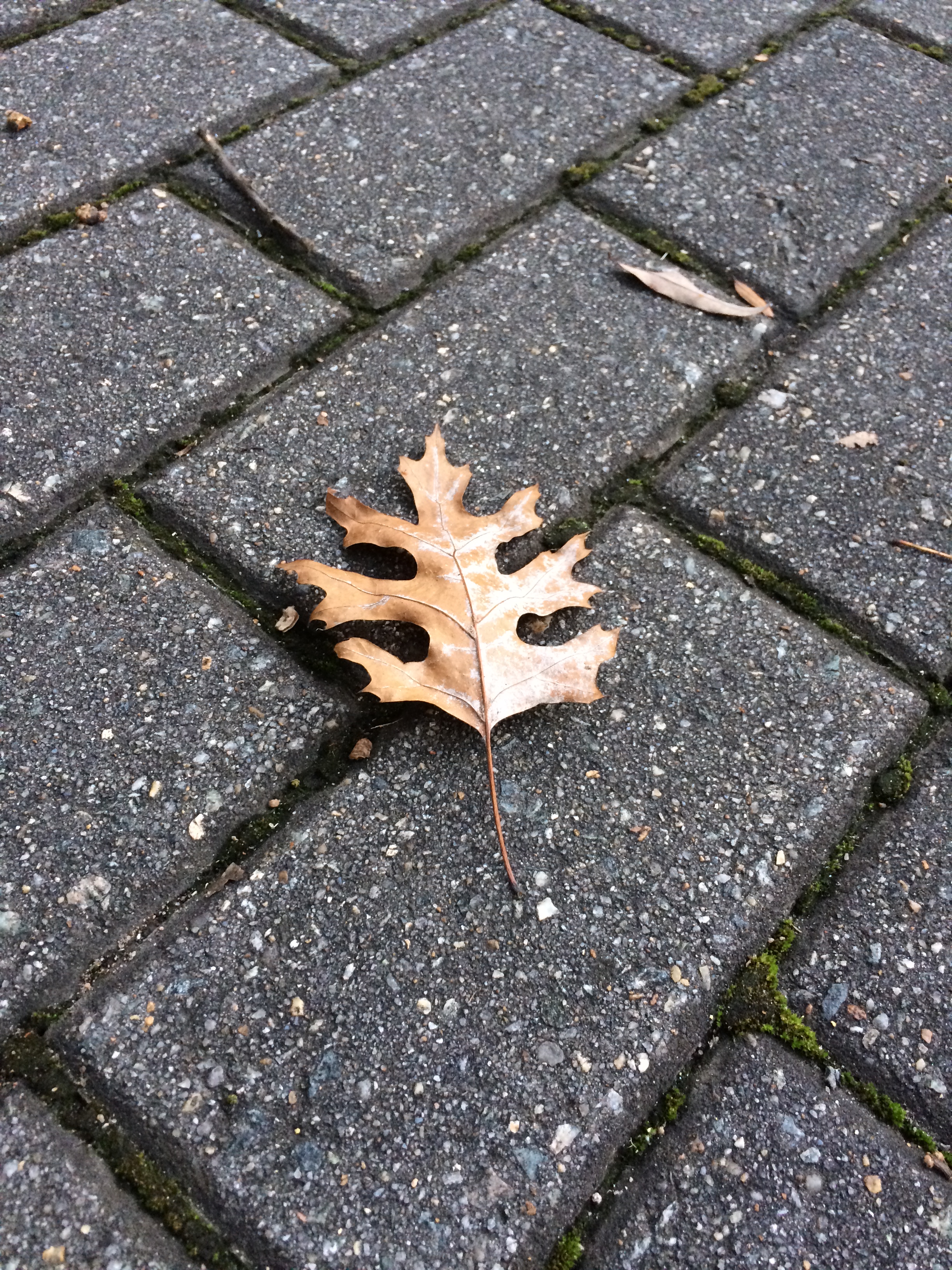
oak leaf

What fills you with wonder?  Is it the simplicity and beauty of nature or watching students at work?  Did you catch a scientific wonder (like today’s partial solar eclipse) or revel in the intricacies of man-made structures?

You can post your photo alone or along with some words: commentary, a story, a poem…maybe even a song! I love to study the photographs that others’ take and think about how I can use a technique, an angle, or their inspiration to try something new in my own photography. (I love a great mentor text…or mentor photo, in this case!)

I share my photography and writing on social media. You can find me on Instagram and Twitter using @kd0602. If you share your photos and writing on social media too, please let me know so I can follow and see what you are doing. To help our Weekly Photo community find each other, use the hashtag #wonder for this week and include @nwpianthology in your post.

Open your eyes and heart and pay attention to what fills you with wonder.  Breathe in and take that photo, not so much to make art, but to capture the moment for further reflection.  I can’t wait to see those wonder-full moments through your lens!


Citizen Scientists: Researchers in the Wild

This morning someone shared an article about kids as citizen scientist researchers–observing and documenting ladybugs in their place, and learning about research and data in the process. I love engaging students in real work as part of the learning process…and teaching them that all of us, as part of our daily lives, can and should continue to learn every day.

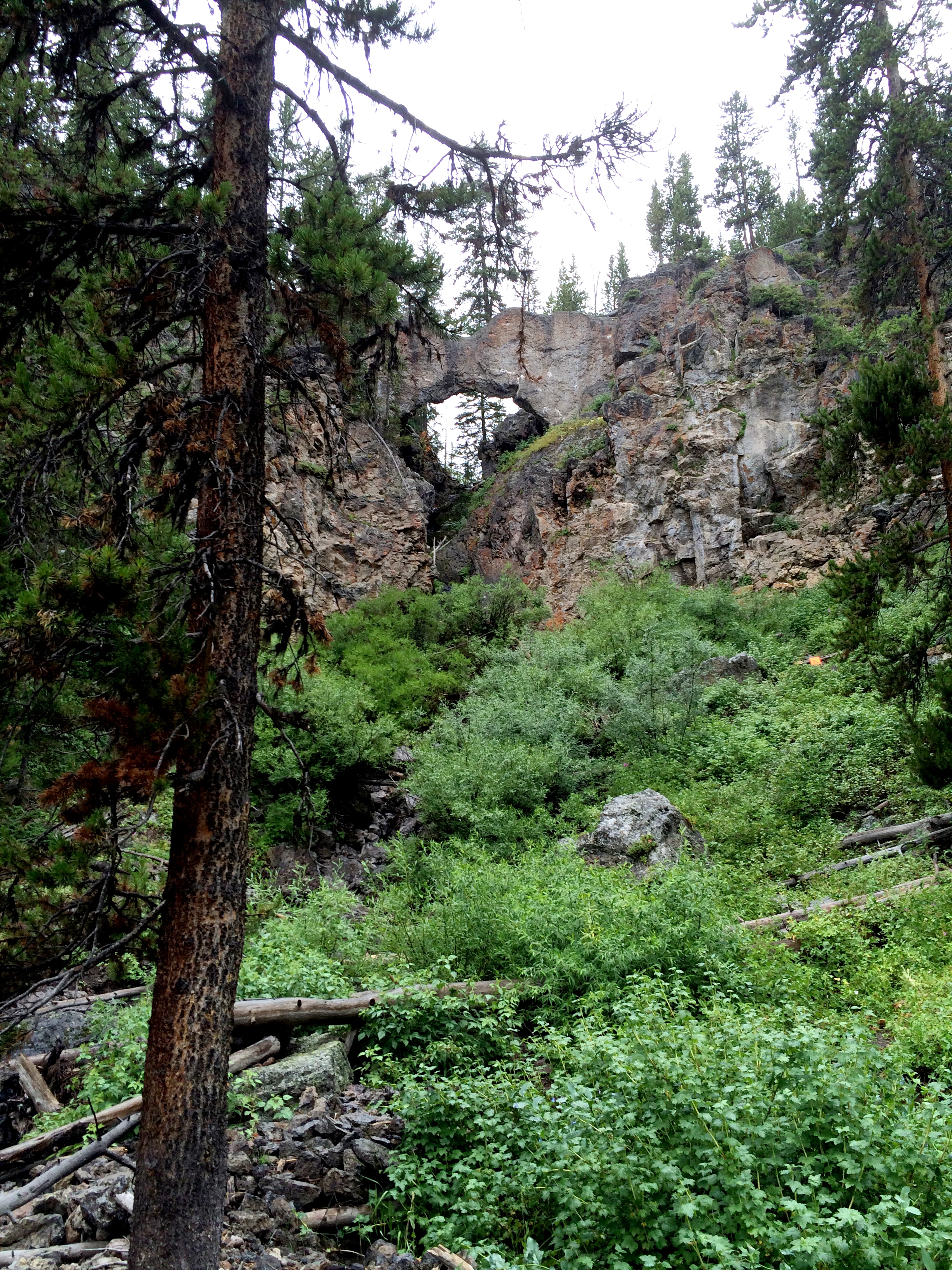
On our rain hike in Yellowstone the other day I got to look closely at the environment around me, noticing details and appreciating the beauty.  Our destination was this natural bridge, a work of nature that I’m sure informed the first people who saw it.

natural bridge

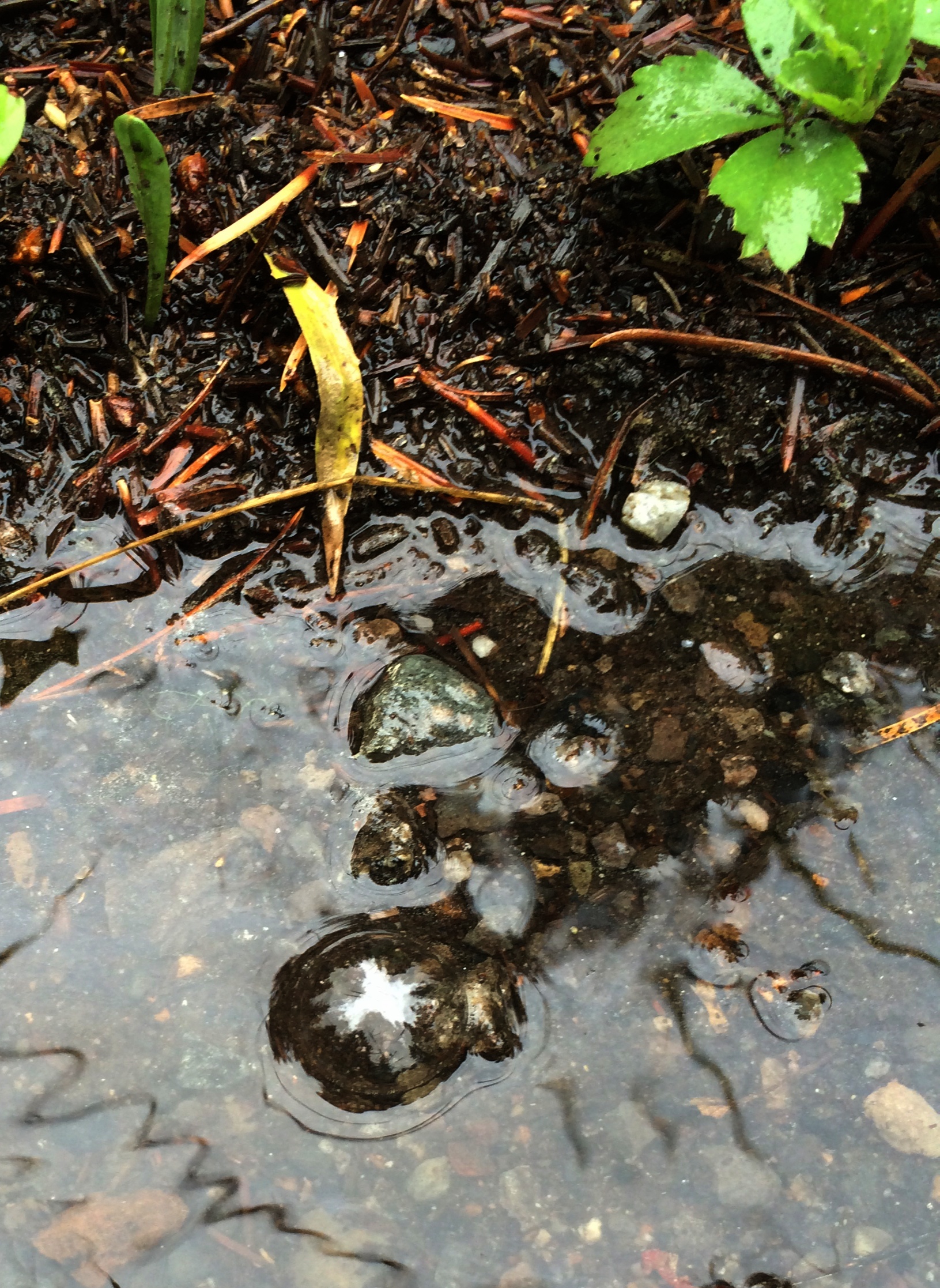
And as we walked away from the bridge back toward the car, I noticed bubbles in the puddles as we passed.  I was sure I was noticing something in the bubbles…and stopped to watch.  It seemed that with the rain drops, a bubble would form with a white insect in it–magnifying the image of the bug–and then pop after it floated a ways.

insect drops

I had to look closer…what were these creatures?  And why do they form these bubbles?  Do they only come out in the rain?  Are they native to this forested area in Yellowstone?

insect bubble

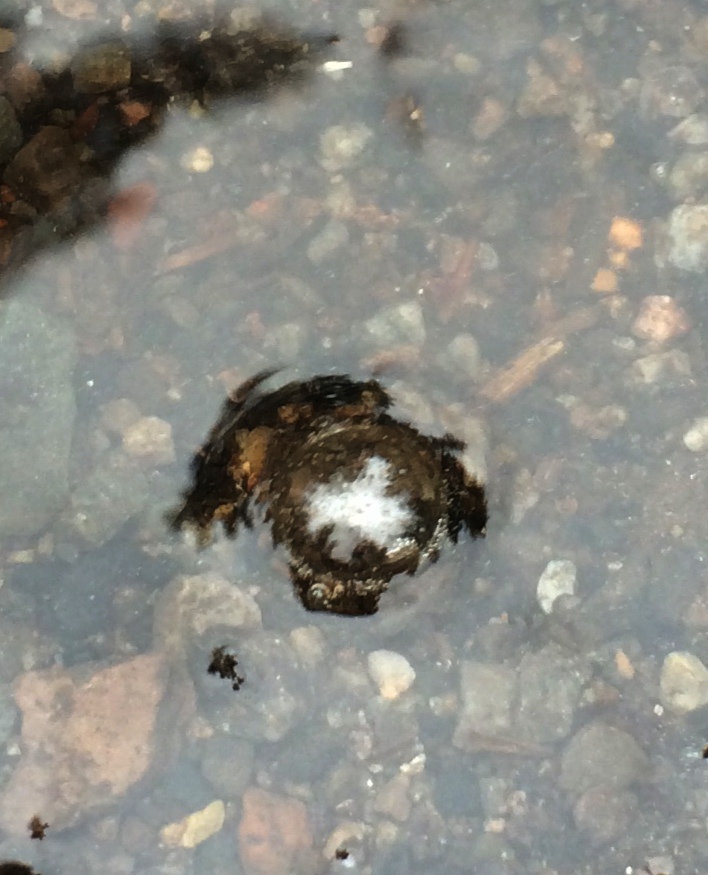
I haven’t yet found out what these insects (I think they are insects) are…but I am curious to know more about them.  I’m hoping that someone will know something more and lead me to some research to answer my questions.  Here is a close up view…

insect bubble close up

There are so many interesting things to learn about when you take the time to notice.  As I start to prepare for the beginning of school, I’m thinking about ways to support and encourage my students to pay attention the world around them and then to document and further research the questions that interest them.  I’ll also be on the lookout for citizen scientist projects in my area (and would love any information you might have)…what a great way to engage students as researchers!

And if you happen to know anything about these bugs in the bubbles…I’d love some leads!


Water on the Brain

Water: beautiful, powerful, moving, treacherous, life-giving, flowing through our veins, through earth’s veins, taken for granted, precious, tenuous, unpredictable, limited, overflowing…

I feel like I have water on the brain.  I woke this morning to images of water flowing–a water main break in Los Angeles had me gasping at the waste of a precious resource.  Our drought in Southern California–in CA as a whole (and other western states)–is so severe that I feel the constant of thirst, in my throat, in my heart, for our plants and animals, for our people. Reservoirs and lakes have shrunken to show thick exposed shorelines, creeks are but a distant memory of a trickle.  And the flooding in Colorado has me wishing we could share in this bounty rather than experience the extremes of water.

Floods, like their cousins wildfires, remind us that there is much we do not and cannot control.

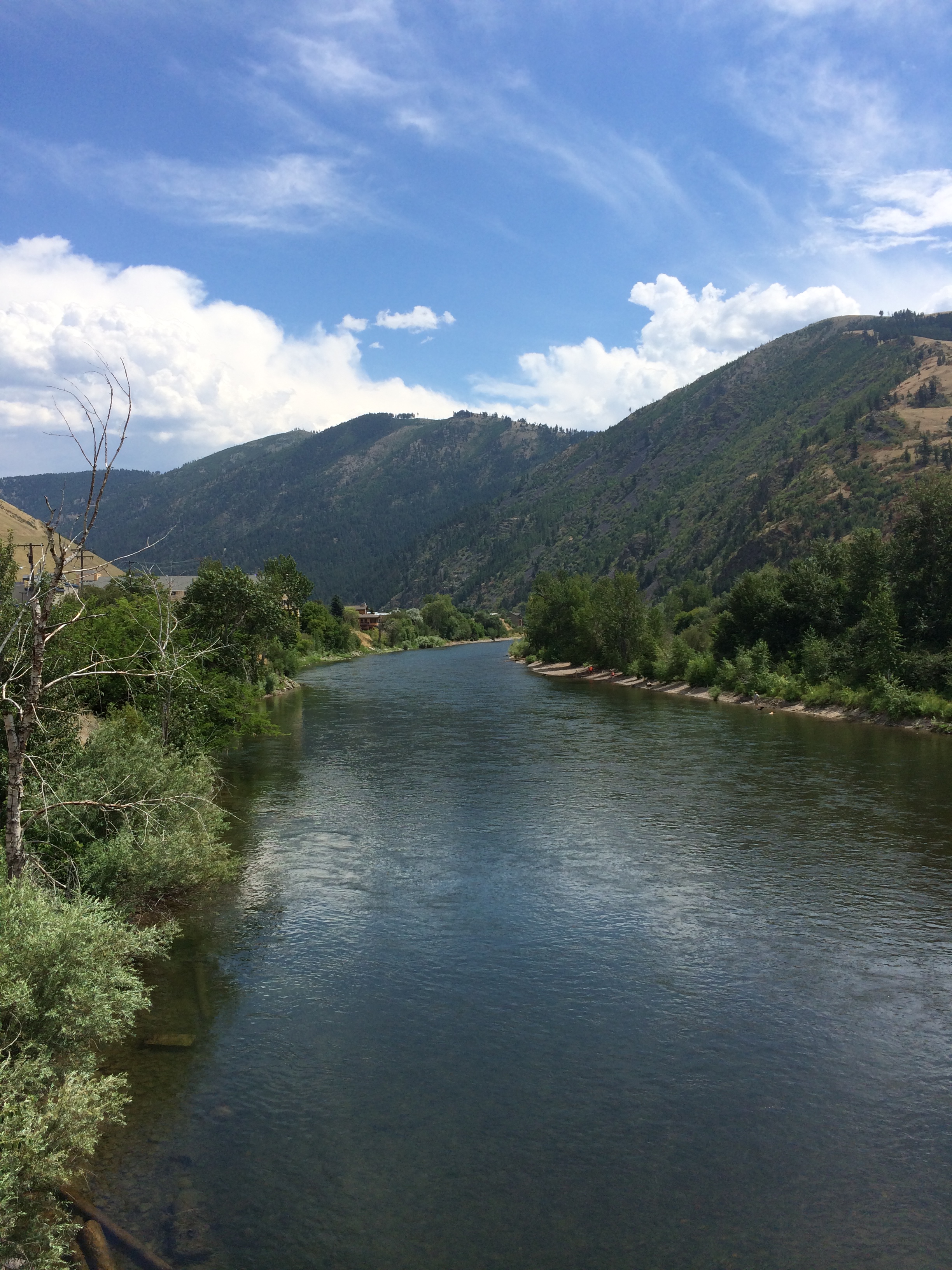
I spent time today on the banks of the Clark Fork River in Missoula, MT learning and thinking about the indigenous stories of this place.  The beauty of the river masks its troubled history and ancient lineage.  Indigenous and scientific knowledge swim in these waters that tourists may see as a playground, a place for floating on inner tubes and cooling off in the 90 degree temperatures.

clarkforkriver

Inspired by the water, I wrote with others as part of a mini writing marathon at our Intersections meeting today.  The writing was rich and layered with stories of experiences with water…or no water.  And changing the lens…through the indigenous stories and science…prompted our memories and connections, letting the stories pour like the water itself.

Like water, there is power in writing.  Power to connect, to heal, to think and reflect.  We sometimes forget that writing in unexpected places, creates new urgency and agency for our writing.  So go outside, find a place by a river, on the curb, under a tree, or even sit on the car bumper and see what writing comes when you change your lens.

Lighting Up Writing and Art: a Design Challenge

My students love a project!  Project communicates to them that they will be doing some making, some designing, some problem solving, and probably a good bit of collaborating.  They also know that projects are about sustained time to create something they will value…and likely, others will too.

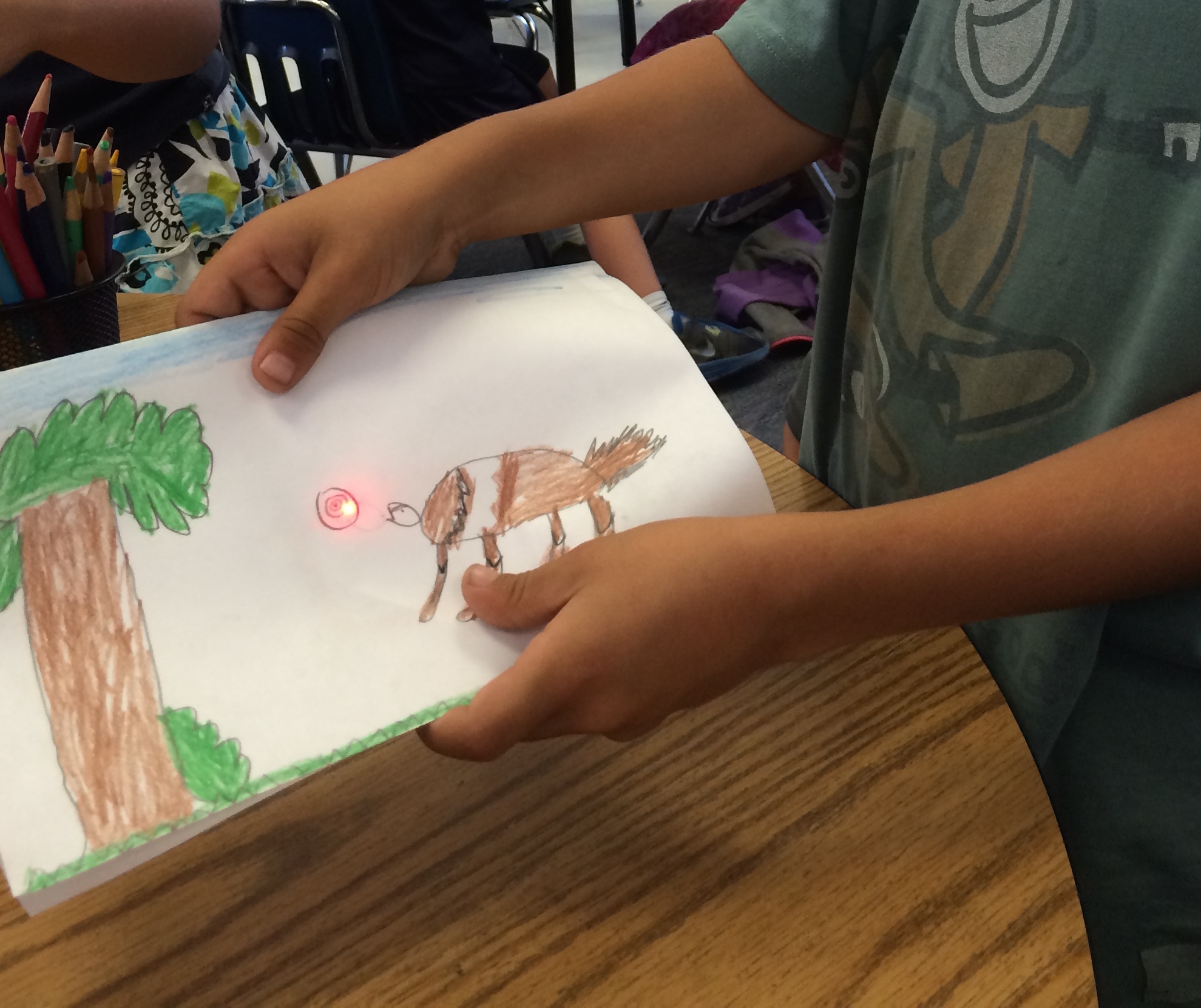
The project they did last week comes from 21st Century Notebooking: work I have done in collaboration with Paul Oh of the National Writing Project, Jennifer Dick of Nexmap, and David Cole of CV2.   I’ve had a few opportunities to explore the possibilities of “lighting up” my writing and art–and knew right away that my students would both love the opportunity and learn a lot from working with circuits and writing and art.  I feel fortunate to have the chance to pilot the use of LED stickers with my students and explore the ways a project like this works with young students (grades 1, 2, and 3).

On Monday we started with a pre-assessment to document what my students already knew about circuits and electricity (not much) and then to read a picture book to give them a bit of background knowledge about how electricity and circuits work.  We read Switch On, Switch Off by Melvin Berger to give students an overview of electricity and circuits.  And while the book is a bit dated, it did pique students’ interest and generated lots and lots of questions.  “Breaks” in circuits in conjunction with switches created lots of confusion!

On Tuesday we began talking about how light might impact a piece of writing and art.  I showed students examples that I had created and then they began to brainstorm other possibilities…focusing on topics and things they cared about.  They were invited to come up with at least four possibilities and began sketching them in their writer’s notebooks.

Just this small selection shows the variety of ideas…and students were eagerly discussing not only what they would draw, but also what they would write.  And in typical fashion they were already questioning whether they had to write in the format I had written (I had written a Haiku as my example) or if they could write in some other way.  For me, this was a demonstration of the ownership they were already feeling as the creative juices flowed.

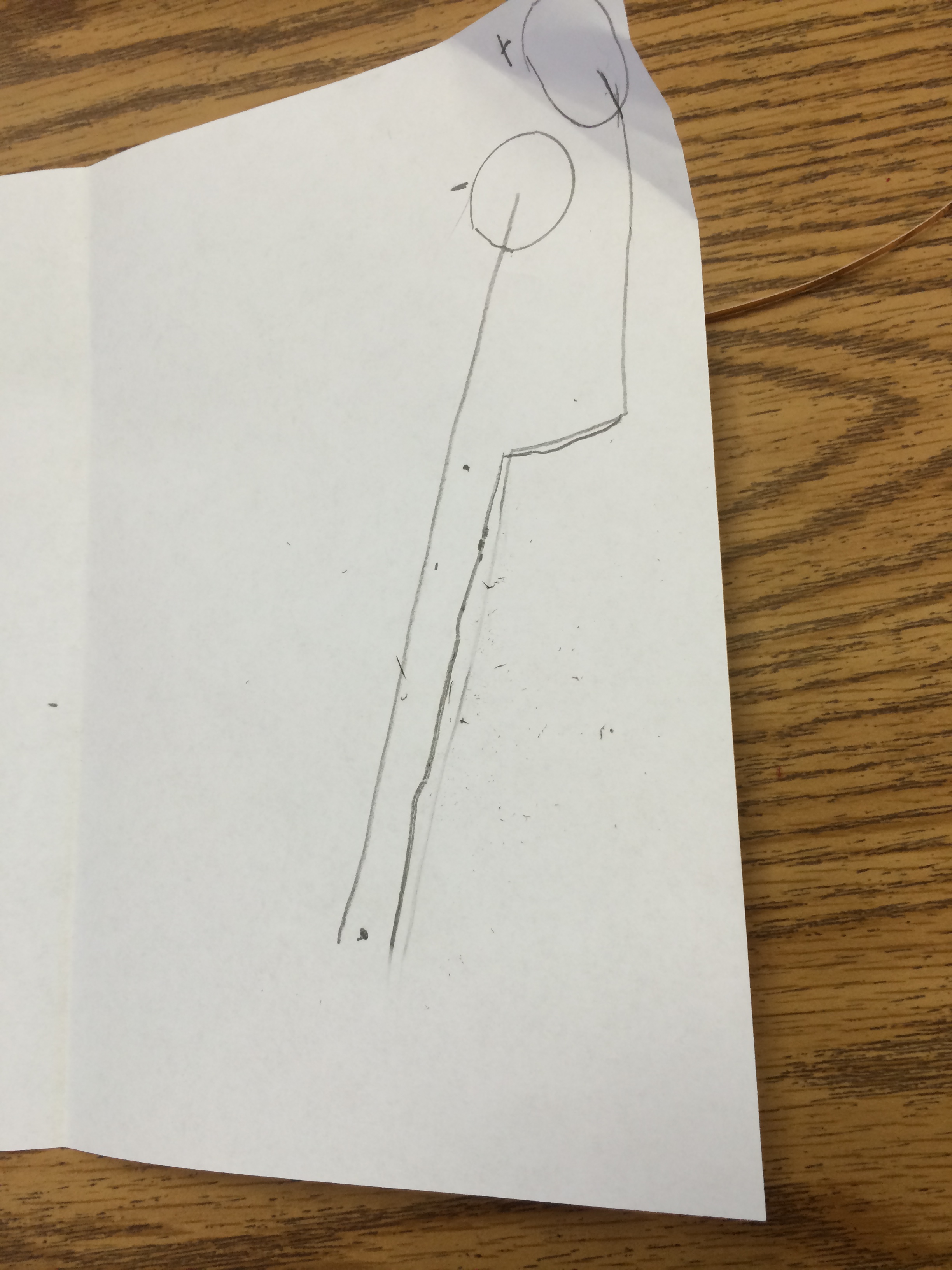
On Wednesday, students were asked to commit to a design and draw it on their folded booklet. Then I showed them how to draw a circuit diagram on the inside of their booklet that would allow them to put the light(s) where they wanted them to shine through.

circuit diagram

series diagram

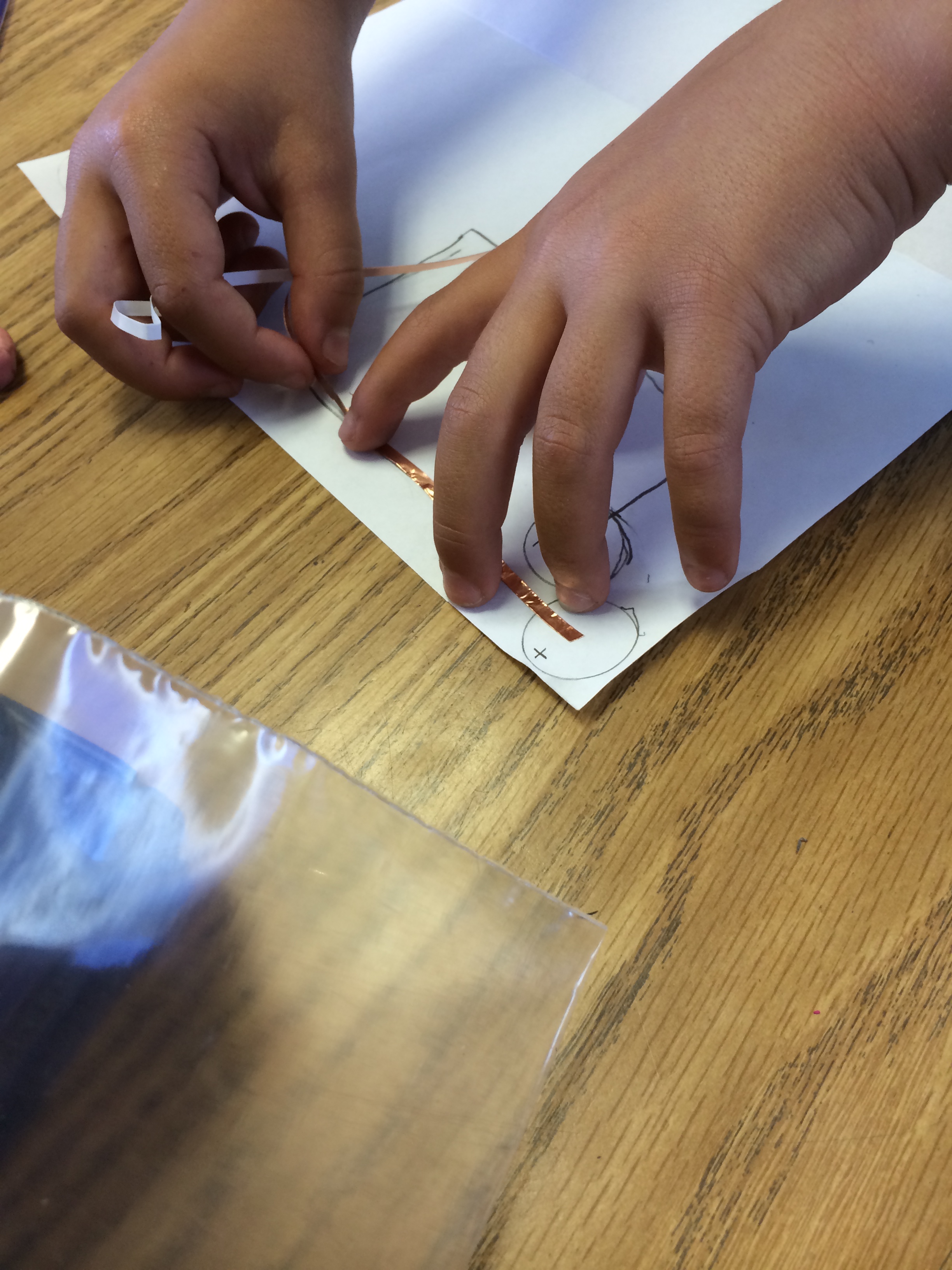
Thursday was the day that the kids got their hands on the copper tape and LED light stickers. Before they tackled creating their own circuits, I showed them how to work with the materials, how to make turns with the tape, how to use the stickers to measure how far to run their tape…and then they set off to work.

working with led stickers

guiding copper tape

The room hummed with the 43 six through nine-year-olds all focused on getting their circuits constructed with the tape and lights.  Many worked with a basic one-light circuit and a few brave students tackled a parallel circuit that included two lights.  When the first circuit worked, the entire room lit up with the students’ excited energy.

circuit success

But as you might imagine, every student was not successful on their first attempt.  We suspected we might have to deal with a few tears of frustration during the course of the project…but, although there was frustration, everyone kept at it, and the spirit of collaboration and encouragement could be felt across the room.  Some students became expert debuggers–and helped their classmates figure out why their circuit wasn’t working.  And my teaching partner and I also became experts, giving recommendations and helping those little hands that had trouble keeping their copper tape smooth and getting their battery lined up and clipped on.  Even before everyone finished, it was time to clean up…and we reassured them that we would return to the project the next day.

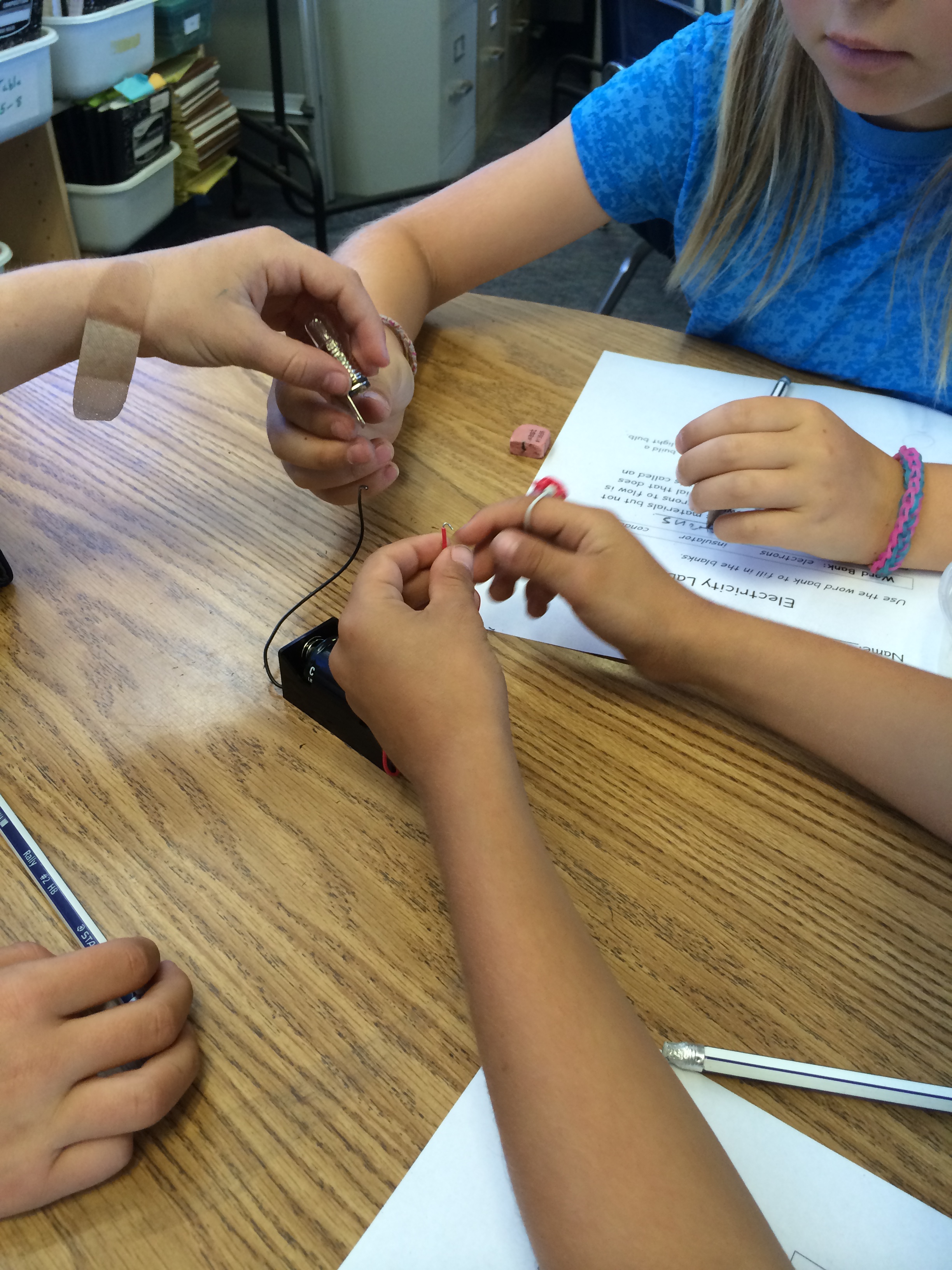
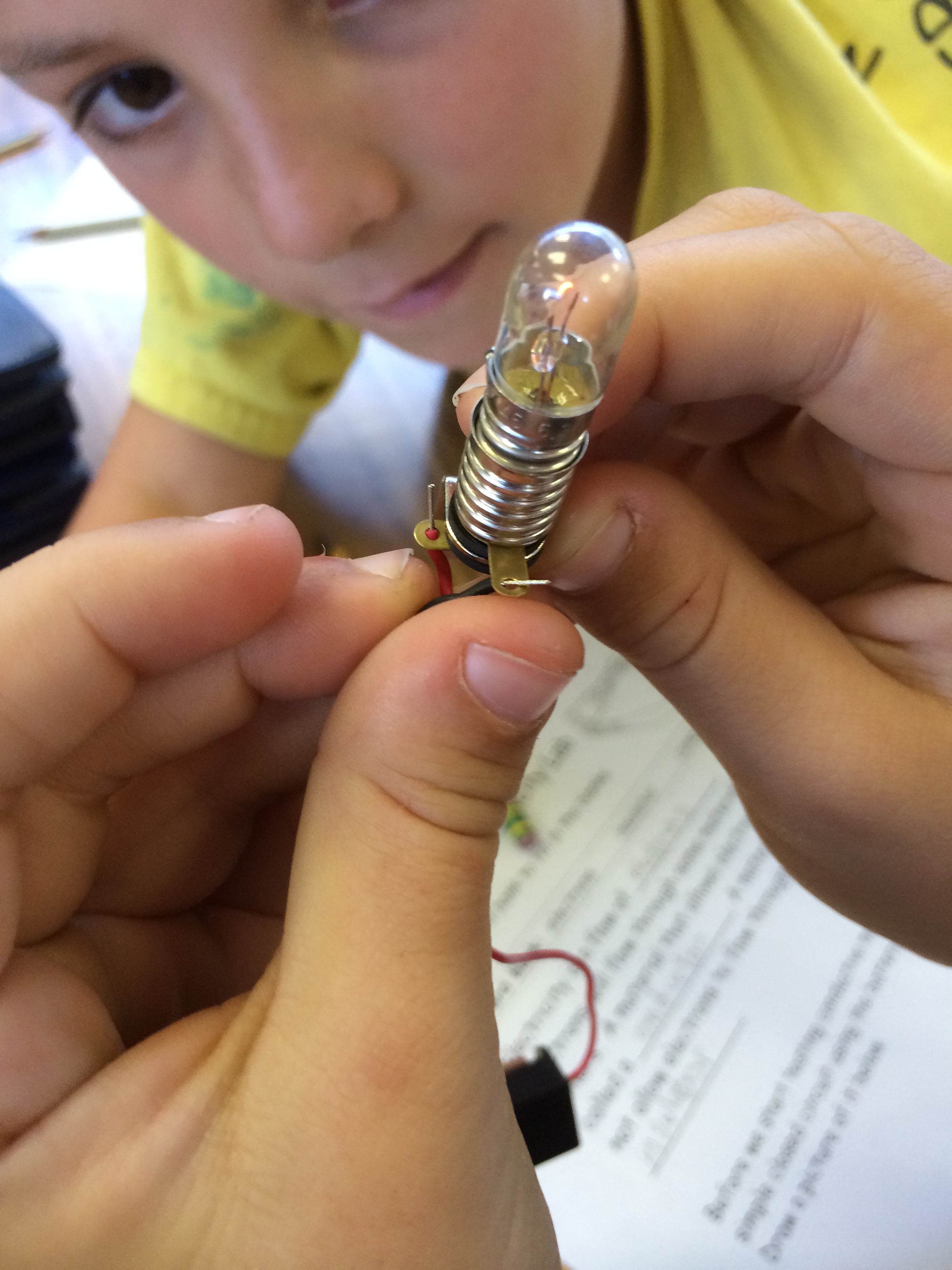
On Friday we were fortunate to have our school’s science teacher design a lab to complement our project.  She had students work in groups of four to attach components to make a circuit with an AA battery and battery holder, a light holder and a small incandescent light.  Because of their experience with the circuits in their project, this was a fun review for them…and they loved that they were able to get their circuits to work!

science lab with circuits

light

light with Joe

As part of the lab, they also explored conductors and insulators and noticed which materials allowed the light to light up and which interfered.  All of this was useful information as they returned to their circuit/notebooking project to problem solve circuit issues and continue with their art and writing.  By the end of the work period on Friday every student had successfully gotten their circuit constructed and their light(s) to work.  And we learned some important lessons along the way.  The stickers are pretty easy to work with, but grubby little hands can cause interference with the conductivity of the adhesive.  We had a few instances where we needed to pull the adhesive off and use tape to secure the sticker.  And sometimes our best approach was to peel the copper off and begin again.

Here are few examples of student projects:

circuit project-CJ

circuit project sophie

circuit project-elke

circuit project_Eva

We still have some final details to complete…including some writing about the science learning that took place during the project. And students are anxious to get a closer look at everyone else’s projects too!  So this week we will take some time to concentrate on the finishing details and already have a gallery walk planned for students to get a close look at all the projects.  The kids can’t wait to take these projects home…but they will have to wait until after Open House later this month.  We just have to have them on display on that night to allow families to experience the “wow” factor in the classroom.

With all the work we have done with the power of iteration this year, I am wishing for some more LED stickers to allow my students a second chance to use these materials.  I am wondering what they can do and would do now that they understand the possibilities.  Maybe I can talk Jen and David into scrounging up a few more just to see what my students would come up with…

Sometimes Process is the Product

It was quiet when I arrived, the coffee maker was percolating, the snake stretching up to explore its glassed-in space, and the empty exhibits waiting to be filled with the curiosity of children. There’s something magical about an empty museum…an experience I have come to love through our Intersections work, a partnership between the San Diego Area Writing Project, the Reuben H. Fleet Science Center, and the San Diego Natural History Museum (the NAT).  We, classroom teachers and museums educators, have been learning and working together throughout this school year to improve the field trip experience for students, and to explore the relationships between science and writing. And yesterday was our second field trip pilot, an opportunity to observe students, their teacher, and chaperones in action as they implemented the tools we developed to support the experience.  These tools: a chaperone orientation video, exhibit guides, and questions to invite student inquiry; a hands-free field kit, question card, and exhibit booklet for students; and all the experiences the teacher–one of our participants–had through our year together, were meant to support student inquiry and encourage exploration.  They were meant to support the parent volunteers/chaperones, helping them to facilitate student-driven conversations about their observations.  And in many ways, these tools did help to support these goals.

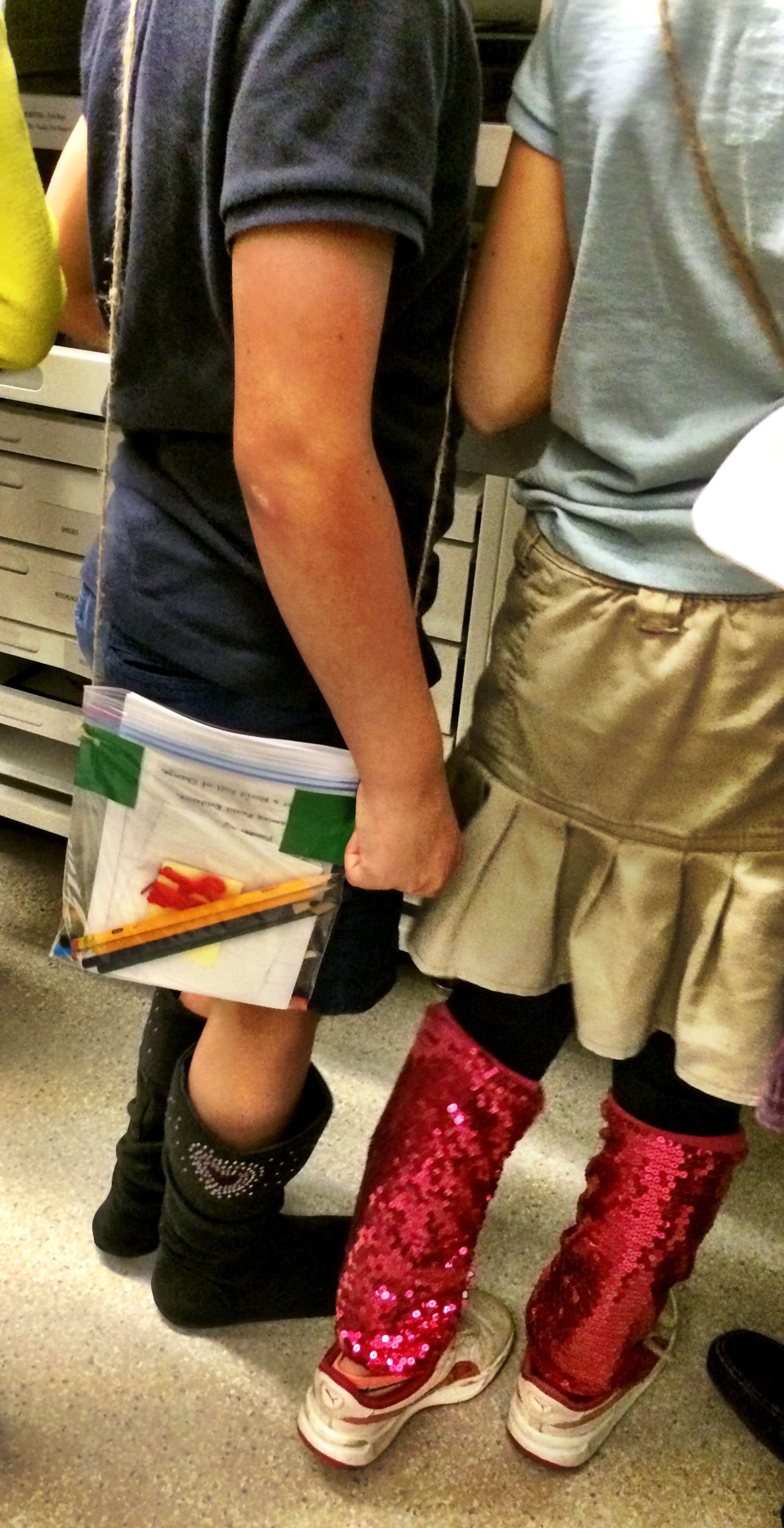
Student Field Bag...(Don't you love the sparkly pink leggings?)

Student Field Bag…(Don’t you love the sparkly pink leggings?)

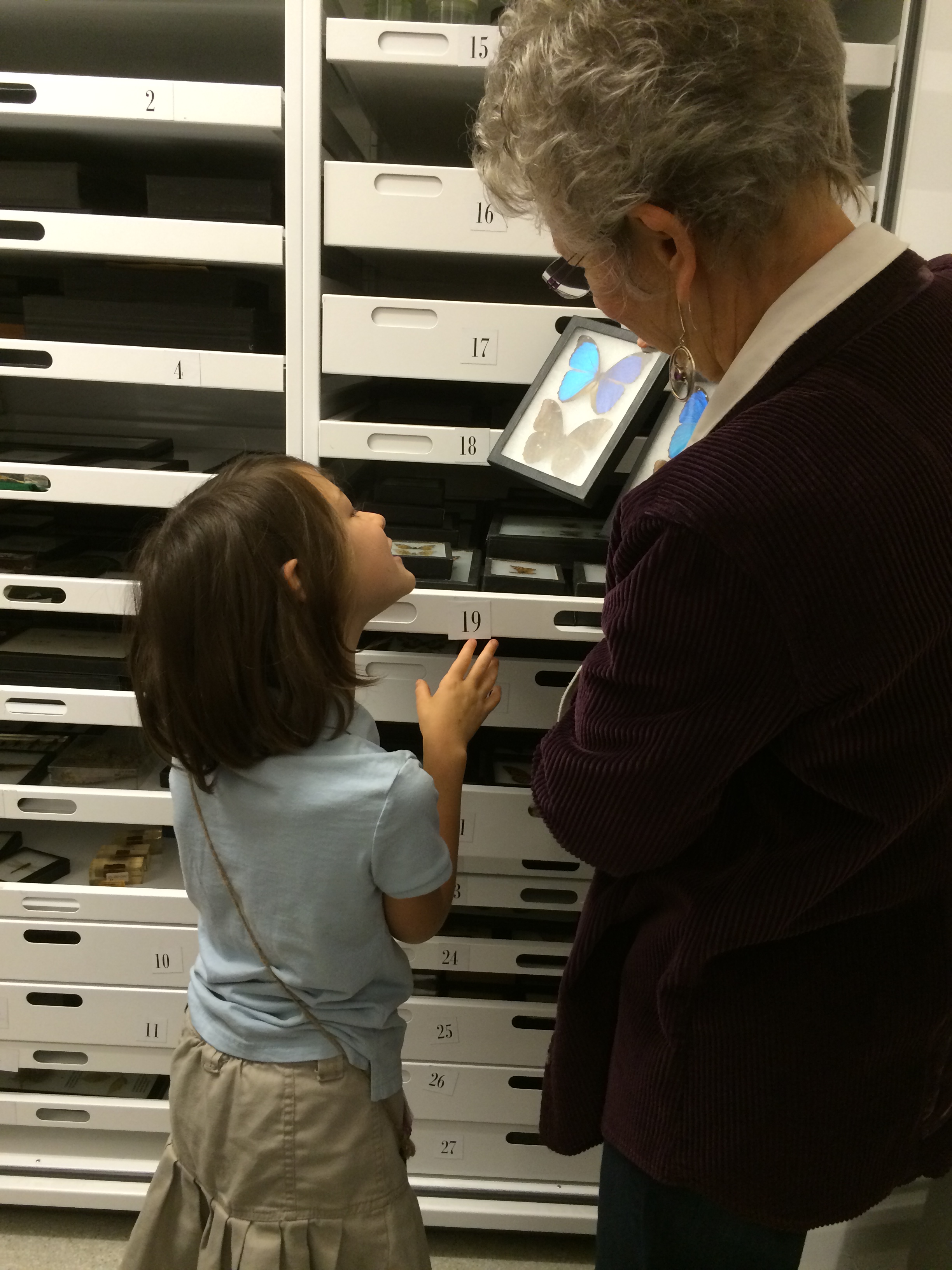
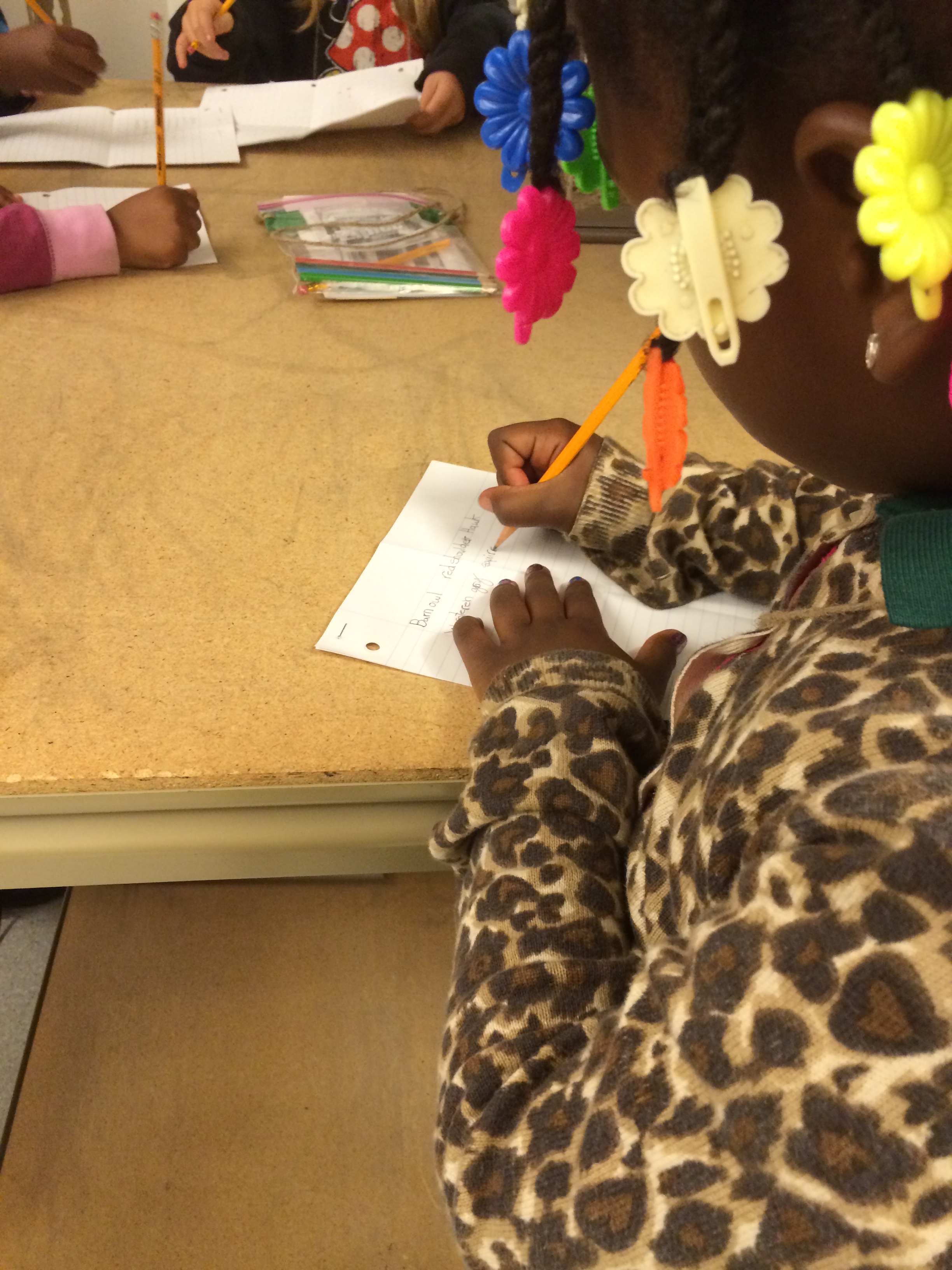
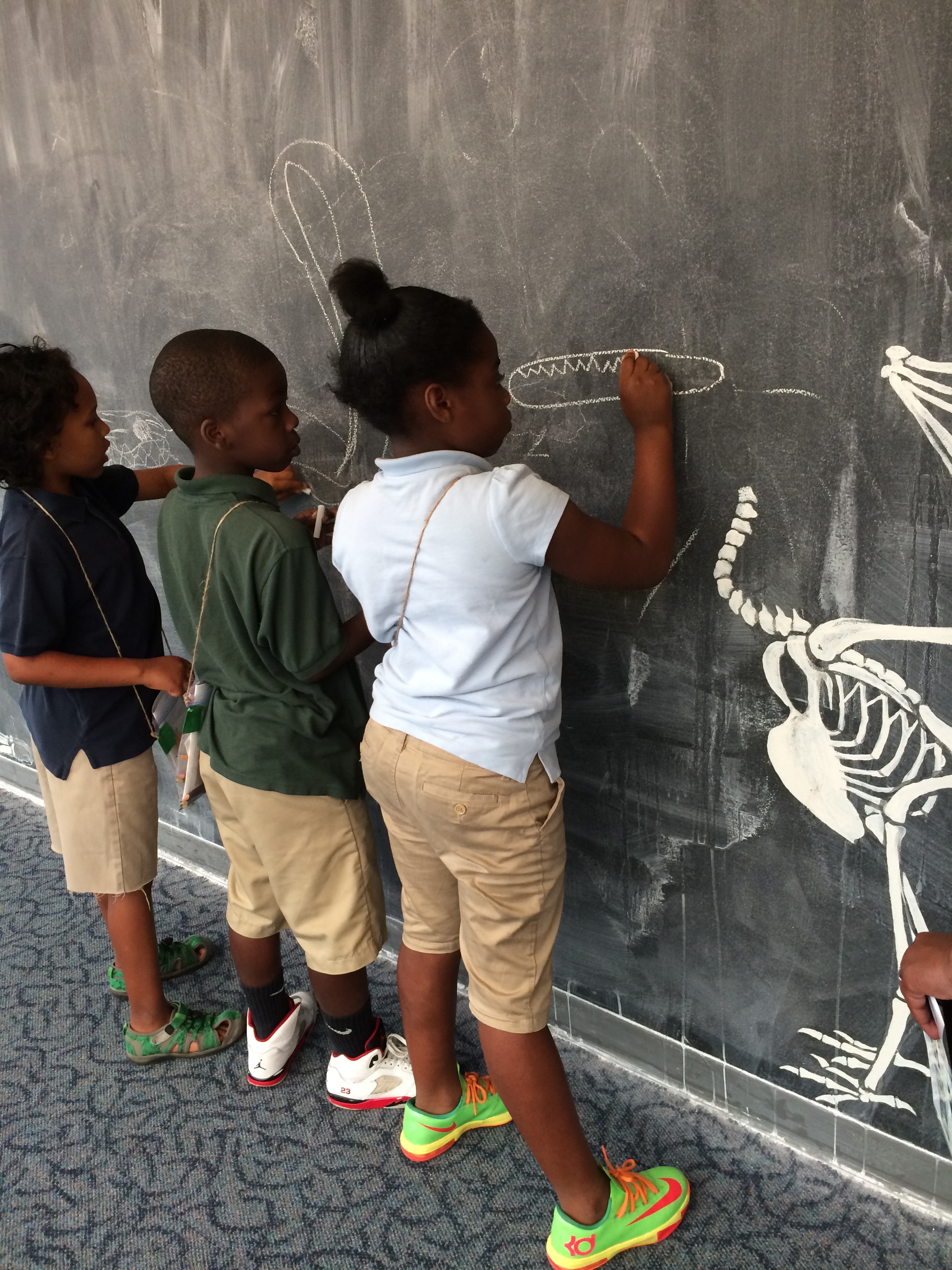
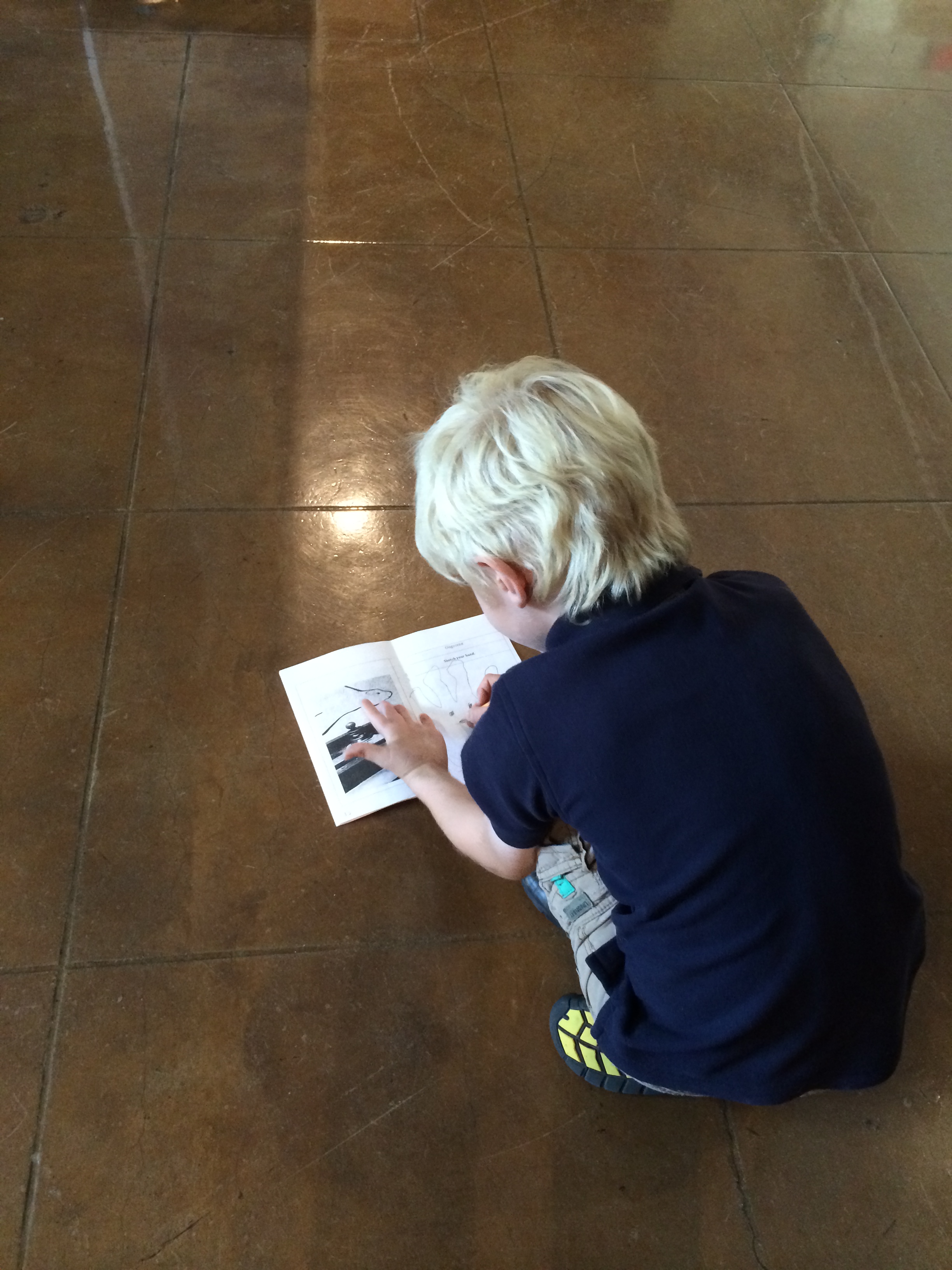
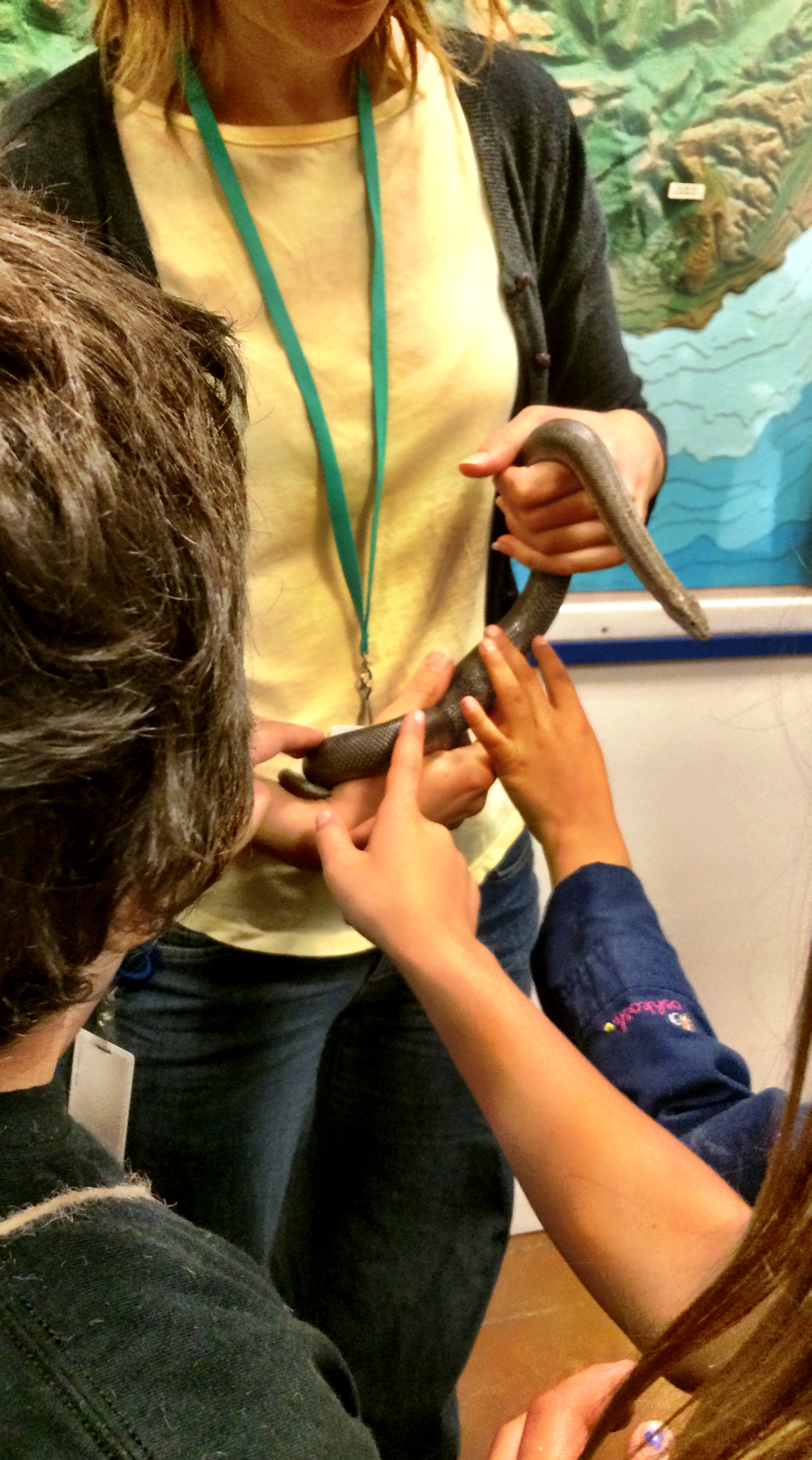
My favorite part of the field trip happened at the very beginning when students were treated to a behind-the-scenes tour of the Nature to You loan library at the NAT, a room filled with taxidermy animals, insect specimens, and a geologic collection that are available for teachers to check out and take to their classrooms.  As we piled into the small space lined with glass cases of bobcats, birds, bats, possums, insects, and more, you could feel the energy.  Students spontaneously began asking questions, “Are they real?” “Are they alive?” “How did they die?” After a brief explanation that in fact, all these animals are real, but no longer alive…and that they either died of natural causes or were found dead and then preserved through taxidermy, students were invited to explore the collection and to consider which animals they might like to have visit their classroom.  The children and their chaperones spread throughout the room, eager to uncover the treasures within. looking closely interesections Student knelt down and bent in close to the glass, carefully observing the animals of interest. They told stories of animals they recognized…and their adult chaperones also told stories and pointed out animals of interest.  Everyone seemed to find favorites and called their friends over to see their finds. With Doretta Intersections This little girl was fascinated by the butterflies and desperately wanted this specimen to come to her classroom.  She asked if she could make a list of animals she wanted to bring back to school…and of course, she was encouraged to do so.  Students spontaneously took paper out of the field bags and used all available surfaces: shelfs, carts, the floor… to write lists and other information they wanted to remember about these animals. writing to remember intersections As they exited from the loan library, students gathered into their small groups and headed off to the museum exhibits.  They were free to explore in whatever order they decided, and our team of educator-researchers followed along, taking notes, listening in on conversations, documenting the museum experience. We noted the places where students lingered, where they seemed eager to spend more time and explore, and captured their questions and conversations where we could.  I found myself interested in the structures and spaces of the museum, thinking about the strategic placement of benches and stools and the height of information boards.  I loved watching students at this chalkboard that invited students to draw skulls that they had observed throughout the exhibit. skulls on a chalkboard intersections And I noticed students sketching and writing in their booklets–a space intended to invite student observations and deepen their thinking.  Unfortunately, in many cases students and chaperones seemed to view the booklet as a duty, often filling in spaces as quickly as possible with little thought and attention.  I did notice a student or two take some time…this little guy made himself quite comfortable in the middle of the floor, as he sketched and completed a page in his booklet. drawing my hand intersectionsBefore lunch, students had the opportunity to get close to a couple of snakes…and even touch them.  They moved in close, asking questions of the the docent as they reached toward the snakes. snake petting intersections After lunch, students headed off to the Fleet with the researchers in tow.  We continued our documentation and observations.  As the field trip wound to an end, the educator-researchers gathered in a conference room to debrief the process.  Reviewing our notes, we thought about the positives of the field trip experience and the places we still felt a need for change and improvement.  And then we gathered in groups and discussed our observations.  The conversations were rich and dynamic, noting the places where we observed students engaged and inspired and still finding missed opportunities for students to be self-directed and to delve more deeply into the questions the exhibits provoked. This process of designing field trip tools, testing them in an authentic field trip experience, and then reflecting on the implications of our observations in order to iterate and innovate has been a powerful one.  And while there has been frustration in our group that we haven’t yet produced a product that captures the depth and intensity of our work together, we have learned a tremendous amount and come to some startling ahas about the intersections of informal and formal learning opportunities.  As much as we’ve tried to support chaperones to facilitate inquiry, the reality is many of our well-intended parent volunteers are not prepared for that role…and our “crash course” in juicy and probing questions isn’t enough to make them feel comfortable and confident in that capacity.  Mostly, they do just what we asked them to do, they keep track of students, redirect them when needed, and deal with the safety and personal well-being needs that come with groups of children.  So, we are rethinking our tools…again.  And maybe we will never have the perfect product we wish for…and then again, maybe this process is the product we are searching for, an occasion to really see students in action and consider the roles we might play in supporting their curiosity, deepening their learning opportunities, and opening up time and place for playful exploration and inspiration both inside the classroom and in those wonderful spaces beyond the classroom walls.

Field Trippin’ Through the Intersections

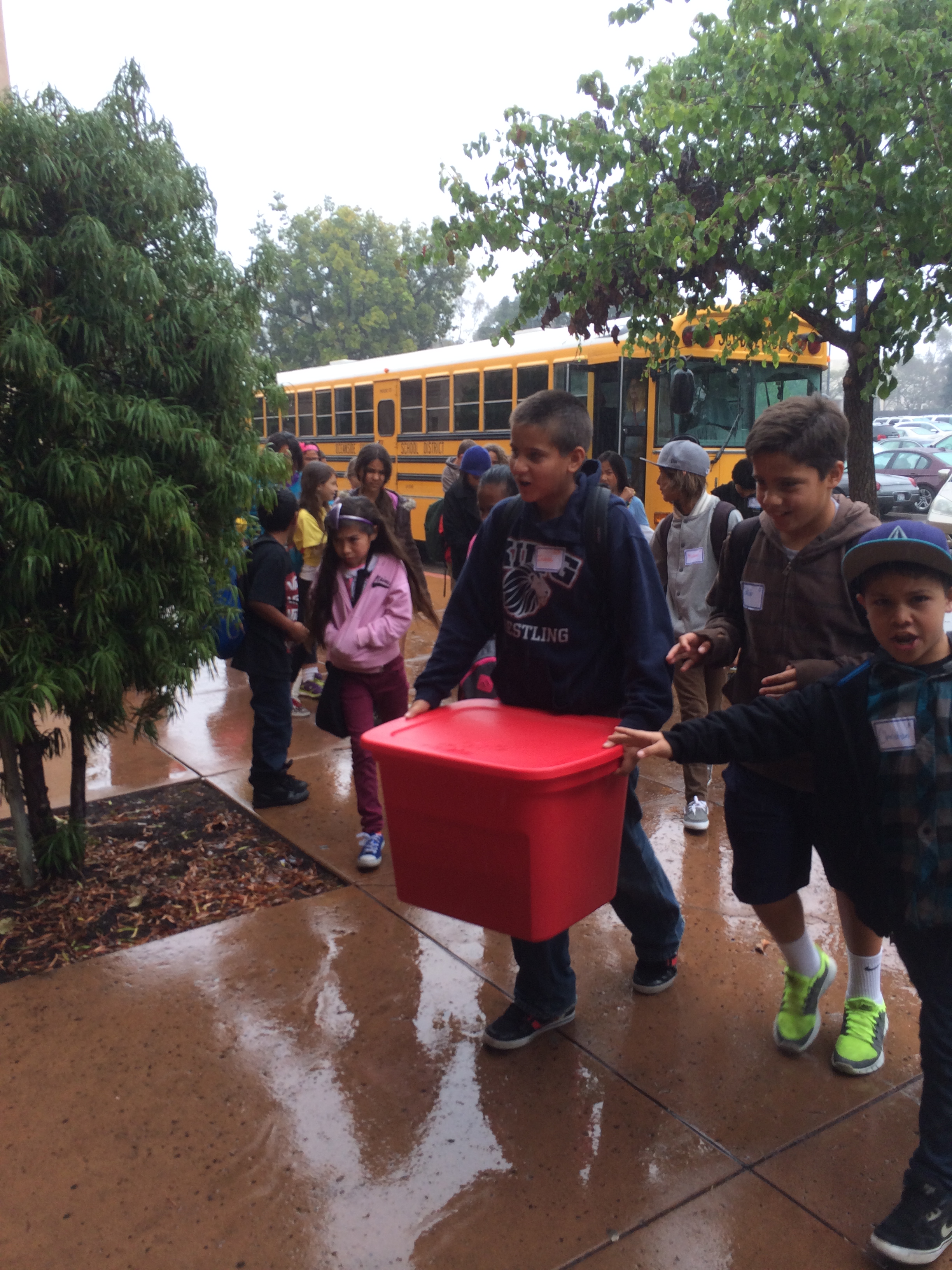
The bus pulled up in front of the Reuben H. Fleet Science Center as the much-needed rain pelted down.  Excited fifth graders poured from the bus into the rain, ready to explore.

photo-97

And waiting just inside were a group of classroom teachers and museum educators ready to watch closely and think carefully about how these students’ teachers and chaperones support student learning and promote student inquiry during the field trip.

This was the pilot of the materials developed by the participants of the Intersections project–a collaboration between the San Diego Area Writing Project (SDAWP), the Reuben H. Fleet Science Center, and the San Diego Natural History Museum funded by a National Science Foundation Grant to the National Writing Project and the Association of Science and Technology Centers.  This group of educators has been meeting and learning together–with a focus on inquiry, science, writing, and field trips since the fall.  And just a week ago they designed “tools” for use to prepare for and facilitate the field trip to the two museums.

And the field trip was an opportunity to examine the tools in use, with the aim of improving them in a next iteration.  We watched the kids in action, noting their conversation, their body language, their interaction with the exhibits…taking pictures, detailed field notes, video and audiotape…all with the goal of understanding their experience in order to improve students’ opportunities for learning and engagement.  And…we were under strict orders to only observe–something very difficult for this group of hands-on educators dedicated to facilitating engaging learning experiences for students!

photo-98

After lunch, students moved across the park plaza to the NAT and we repeated the process.

photo-99

Students sketched and wrote, questioned and connected what they were seeing and learning to things they already knew.

And one of my favorite moments was at the end of the trip, just before the students headed back to board their bus for the ride back home.  They had discovered the pendulum at the NAT and were curious about the little blocks set up inside the circle where the pendulum swung.  Would the ball of the pendulum knock the blocks over?  They started watching by learning on the rail…and then got lower…until they were laying on their bellies on the floor, feet bent up behind them, noses pushed up against the railing.  And they watched, almost holding their breath as the ball closely avoided the tiny blocks.  And then it happened.  The block fell…and the cheer broke the quiet!

photo-103

After the students left we took some time to reflect on our experience…and also hear the experience of the teachers in our group who brought these students to the museums.  There were lots of things that went well…and plenty that we still want to improve.  And plans are already being made for improved tools and new tools for our next field trip pilot…sometime in April.

There is something amazing about the opportunity for educators to collaborate, to design and then to test, to take time for careful, considered observation and data collection, and then time to reflect on their learning.  If only there were more opportunities like this one, for educators to come together to make sure that students have optimal learning experiences…how would that change our world?

At the Intersection

What do you find at the intersection of science and writing?  In my experience that’s a place filled with energy, inquiry, and amazingly devoted educators!

This morning, early on a Saturday, I had the pleasure of working with a group of educators (half who are public school teachers, half who are museum educators) creating tools to improve the field trip experience for students.  (Here’s an earlier post.)

What’s wrong with field trips…you might ask.  You may have fond memories of setting out in a bus as a student and exploring some museum, enjoying a day off from school in the name of learning. And for some students, I am confident that is the case.  It could be that the field trip even stimulated a life-long passion for natural history or science or art…

But all too often, field trips become either a day where the teacher doesn’t have to teach and students are “enriched” but not necessarily learning, or a day of frustration for teachers, chaperones, and museum staff–spent managing student behavior rather than stimulating curiosity and interest in natural history, science, or art.

So…on Saturday mornings this school year, we’ve been learning together.  Thinking about science and writing and inquiry and motivation.  Asking and answering open-ended questions and considering all the different ways we and our students learn.

photo-97

We’ve spent time in the science and natural history museums exploring the exhibits, observing, writing, and thinking.  We’ve read articles and searched for resources.  We’ve examined what other museums have done and looked at our own local resources.  All that in preparation for creating a “toolbox” of sorts for use with field trips.  This toolbox has tools for teachers, tools for students, tools for chaperones.  This morning was spent developing these tools in preparation for our first opportunity to test them.  Later this week we will be seeing how these resources work with students, teachers, and chaperones on a field trip to two museums.

And what I know for sure is that the process of thinking about and creating these tools will improve field trips for students touched by the educators in the room this morning.

The bigger and much harder to answer question is, how do we take our experiences and learning and share them with those who have not been part of our process?  Can we translate our passion, interests and expertise into a “toolbox” that will help others?  And how do we make sure that the tools we create are user-friendly and help to shape inquiry-based learning for students?

I feel confident that our learning will happen in the intersections.  The intersections of our tools and the students, of schools and museums, and of writing and science.  It’s in the intersections of powerful ideas and perspectives that the energy and inquiry lives.

Weekly Photo Challenge: STEM

Here’s the week 7 Weekly Photo Challenge prompt for the NWP iAnthology!  (Here are weeks 12345, and 6 if you want to look back.)

Probably because I have been busily writing a grant this week for state funding for our writing project site, all the current educational buzz words are bouncing around my brain.  One that has been getting lots of play lately is the acronym, STEM (Science, Technology, Engineering, and Math).

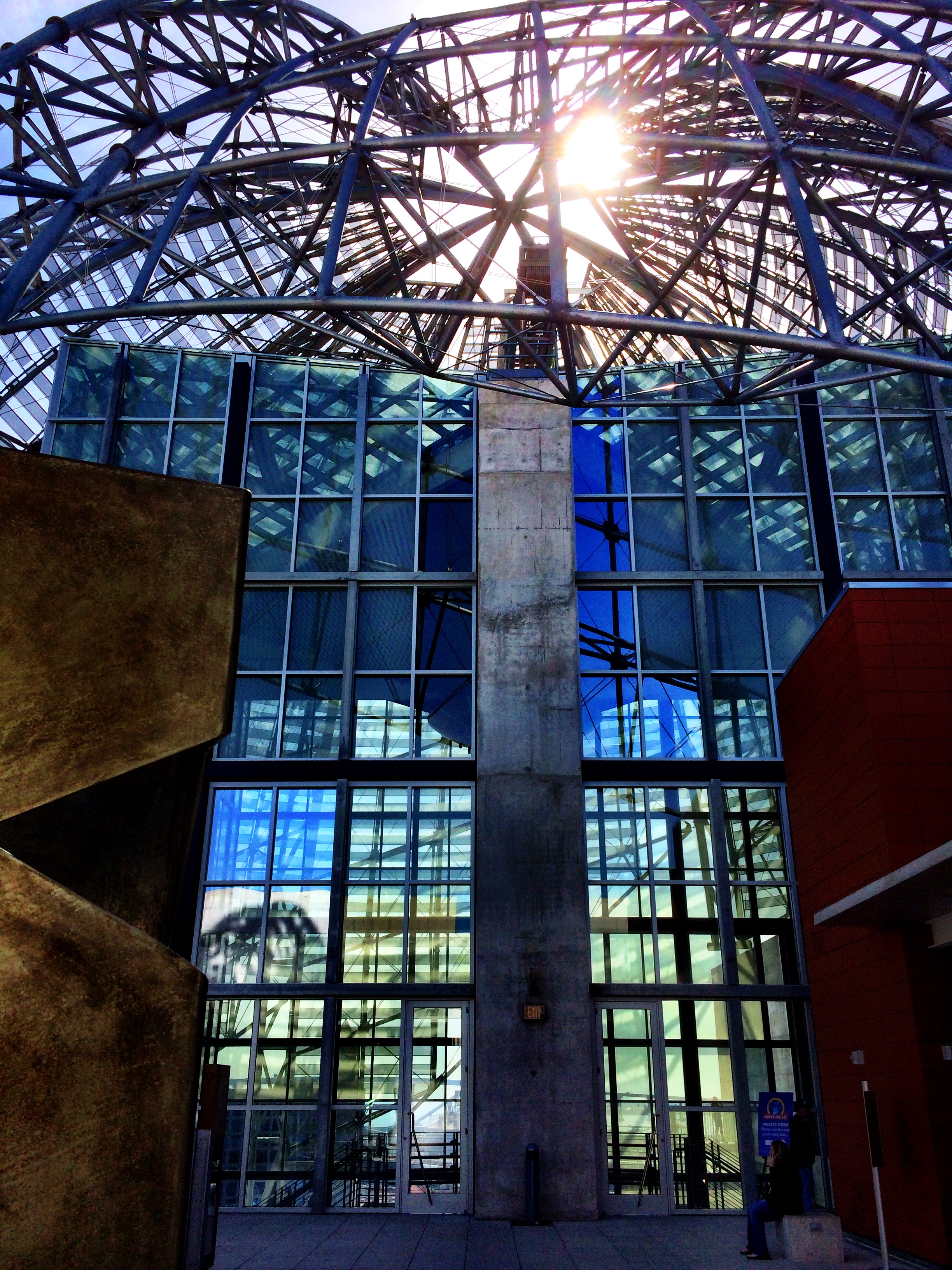
So that has me thinking, what does STEM look like in my photographs?  Today I happened to attend a technology event at the new public library in downtown San Diego called Innovation Day.  The goal was to bring technology leaders of all sorts (from superintendents to ed tech and IT folks to classroom teachers) together to examine some products from vendors and to hear some short presentations about the use of a variety of technological tools.  Walking around the beautiful new library building was a treat in itself, featuring breathtaking views of the city and the bay and some unique architectural features.  This fits the “E” in STEM for me (could probably include some “M” too!)

SD library dome

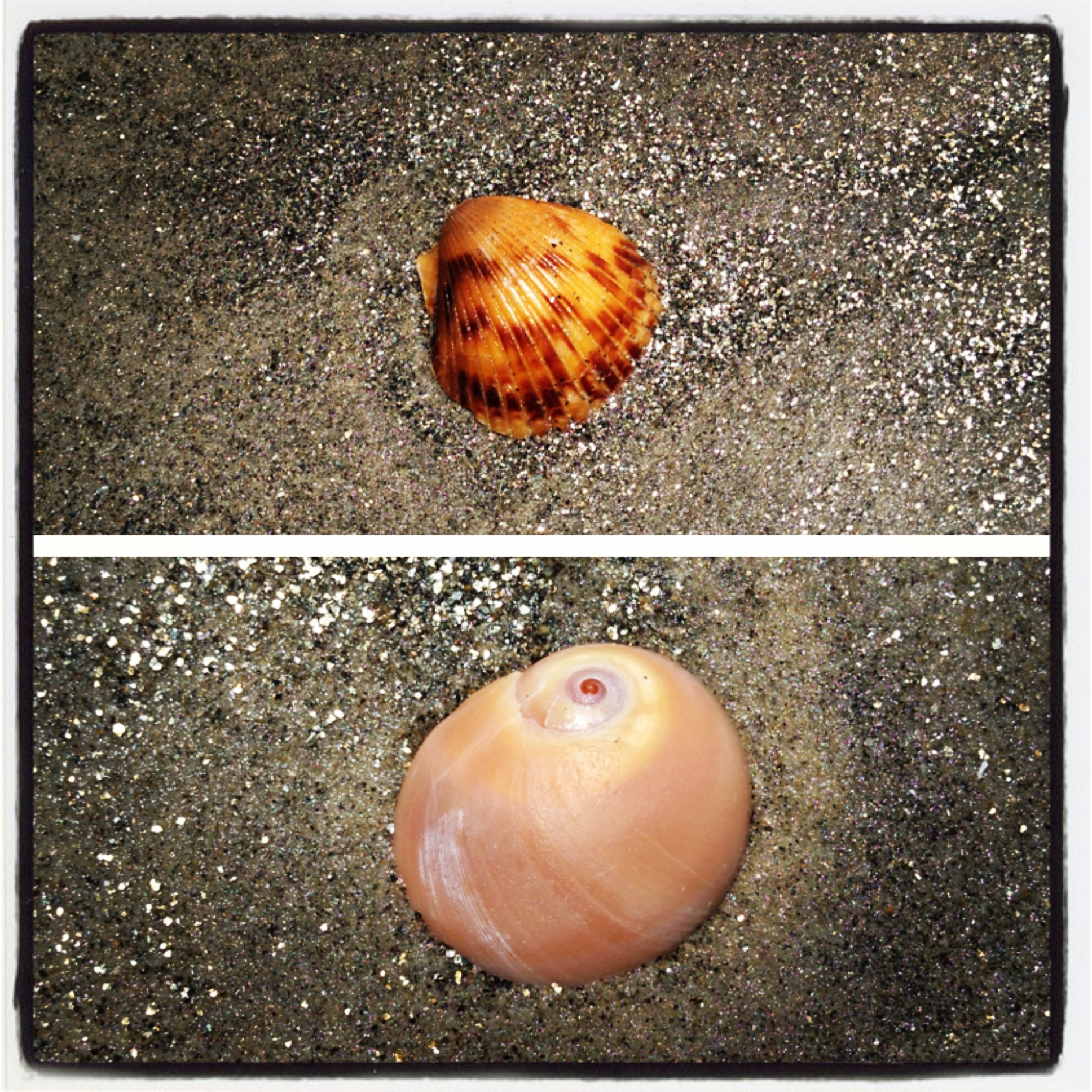
The beach seems to fit every photo category for me.  This pairing of seashells shows symmetry and the fibonacci sequence.  We don’t always think about math when we look at seashells…but they are perfect examples of those mathematical concepts I just mentioned. Do you know which is which?

photo-97

And then there are the intricacies of science.  The biology of grasses that grow on the sea cliffs, the slow and constant wearing of erosion on the geologic features, the physics of waves…

photo-98

So this week’s photo challenge is to represent STEM in photos. Where do you find science, technology, engineering and math?  How does looking through your camera lens through the lens of STEM impact what you see and what you share?  Share a photo (or several) that pictures STEM in some way.  Post either the photo alone or along with writing inspired by the photo.  I also invite you to use others’ photos as inspiration for your own writing and photography.  I often use another photographer’s image as “mentor text” for my own photography, trying to capture some element in my own way.

I like to share my images and writing on social media…and I invite you to share yours widely too. (You might consider Twitter, Instagram, Facebook, Google+) Use the hashtag #STEM and include @nwpianthology to make it easy for us to find and enjoy.  You can find me on Twitter and Instagram @kd0602.  I’d love to follow you if you share your handle.

You can also share your photos and writing by linking to this blog post or sharing in the comment section below.  I am excited to see how you represent STEM through your lens!

Lighting a Spark

In my last blog post (here) I touched on that idea of work and play and the way that they are often interconnected in the way I experience my life and work.  And as I am thinking through some of my conference experiences, I see the blurriness…and maybe even more than that, the overlap of work and play.

When one of my colleagues asked me about what sessions I intended to attend at the conference, I told her that I was planning to make my selections based on what sounded interesting and fun rather than what I “should” do for the good of my writing project site or someone else’s expectations.  I was already pre-registered on Friday for a session about Scratch, the platform designed for teaching computer programming to kids, and a session on e-textiles involving puppet making and circuitry.

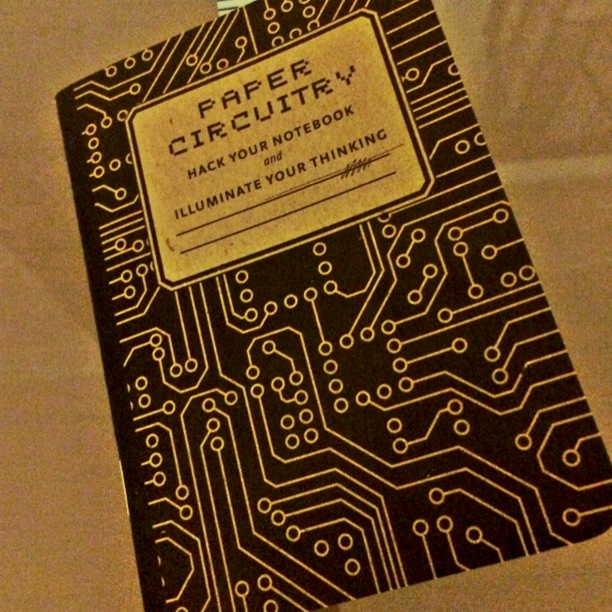
When I arrived at the welcome event for the National Writing Project Annual Meeting on Wednesday, I was drawn to a table near the door loaded with little notebooks…that upon closer examination had copper foil, watch batteries and LED lights.  Chatting with David, I learned about Jie’s graduate work and interest in the intersections between art, writing, and engineering.  Right away I knew that Jie’s session was one that I would prioritize!

photo_1

After two other sessions where I presented, a stimulating and thought-provoking plenary panel (more on that later), and a networking lunch, I headed off to the session with Jen, David, and Jie called Hacking the Notebook.

You could feel the energy surging in the room as we were handed notebooks, copper tape, a battery, and LED lights.  We listened to Jie share some of her work and thinking behind the idea of “lighting up” notebooks and stories and doodles…of combining science, technology, engineering and math with literacy and art (that STEM to STEAM connection).  She showed us an amazing work of art she created of dandelions that you could blow on to light up the puffs of white fluff.  (I encourage you to take the time to view this vimeo)

And then she walked us through the template she had created to teach about circuitry in these little notebooks that are a combination of background theory, documentation of Common Core and Next Generation Science Standards, instructional diagrams, sandbox for experimentation, engineering notebook…and more!

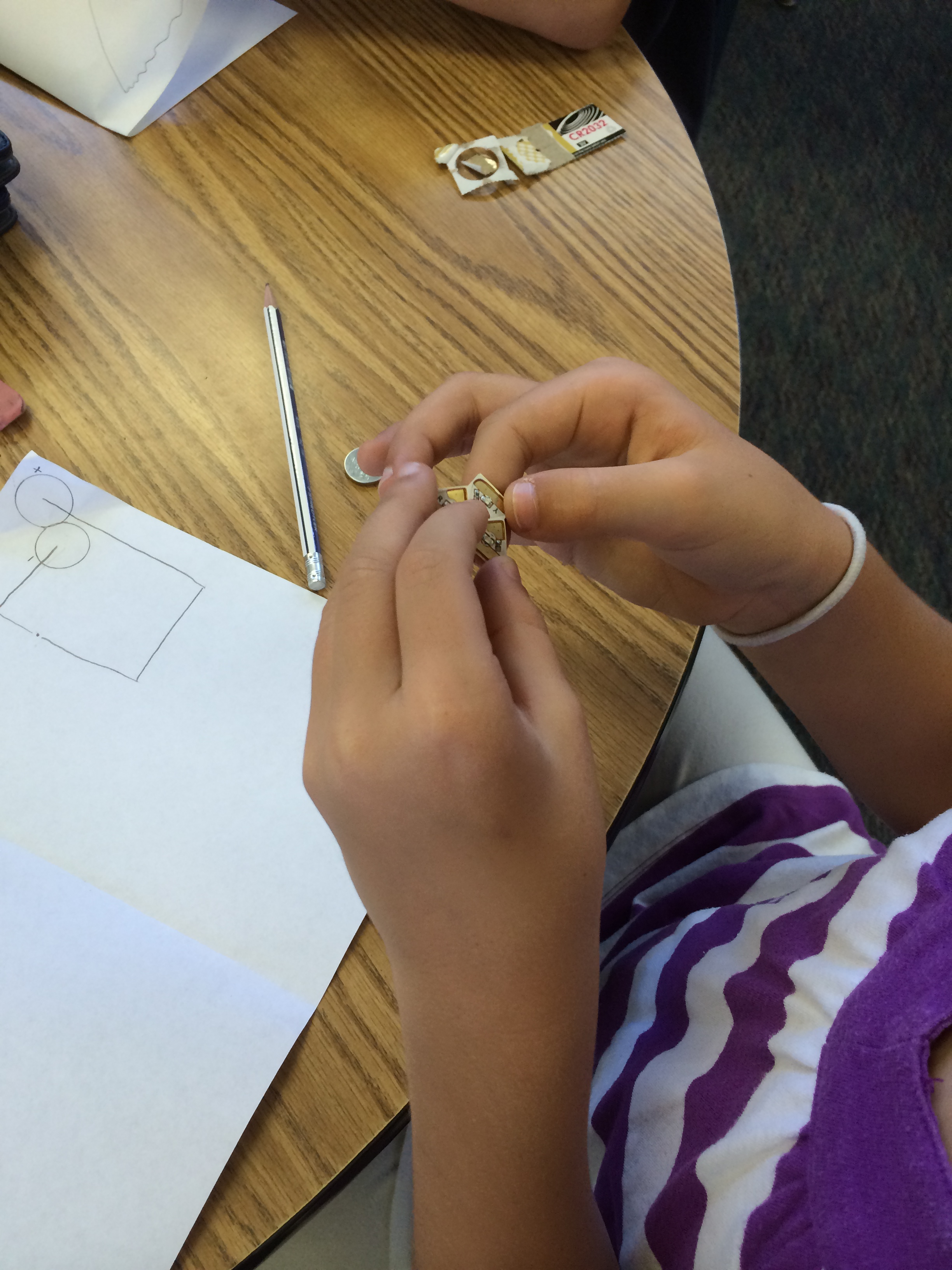
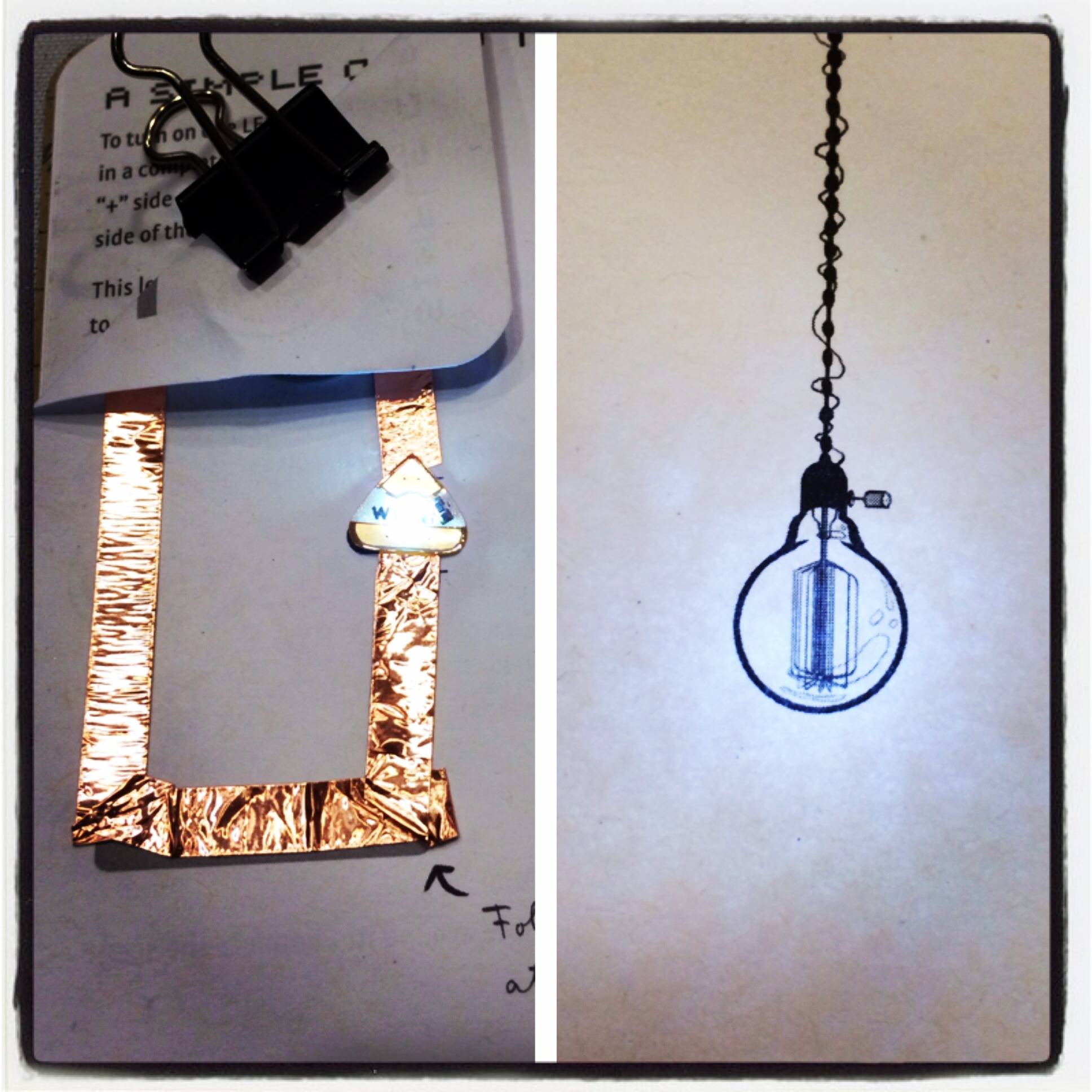
Our first task was to follow specific instructions and a diagram to lay down the copper tape, attach the LEDs, and then attach the battery to make the lights light up.  We followed a very specific diagram while learning (or being reminded) about the basics of circuitry.  That part was pretty easy…we just had to make sure that the pluses and minuses were facing in the right direction, that foil touched the electronics and didn’t touch places that would make a short.  And when we were successful, turning the page resulting in the light shining through the page and illuminating a lightbulb that we were then invited to draw and write around.

photo-2

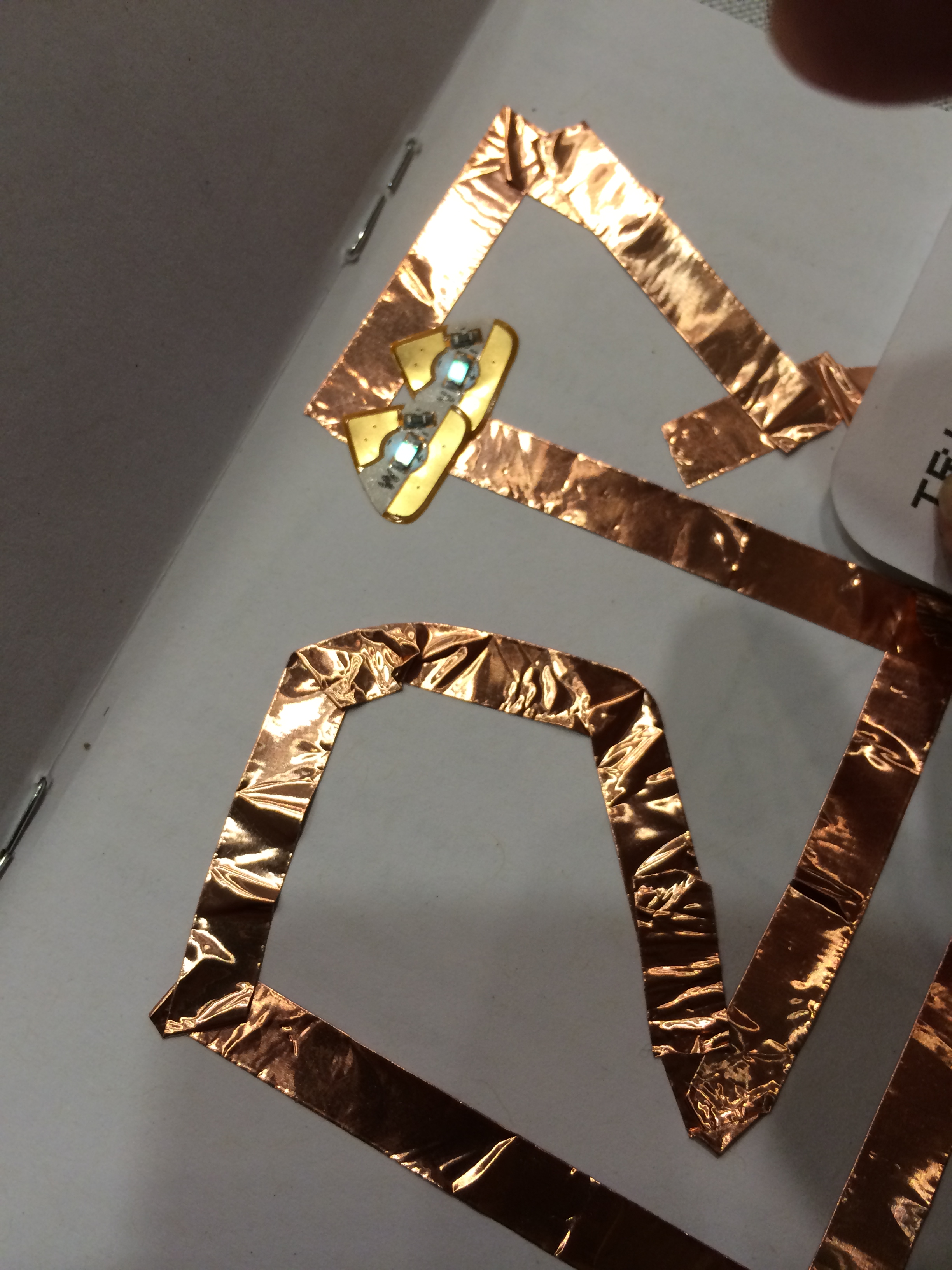
And that’s when the task took us to the next level of thinking.  Taking what we had just learned about circuitry, we turned the page and were to create our own light up design with copper and bulbs.  We had a number of lights…so were encouraged to move beyond our simple experimentation of the previous page.  Jie encouraged us to notice how the copper tape could curve and how pieces could combine to create whatever we could imagine.  And…we had to remember how to make the lights go on.  I tried to get a bit tricky, adding two lights in a series…carefully lining up the poles to ensure it would work.  And it didn’t!  What was wrong?  Was it a connection (or lack of connection), an overlap that redirected the current, too much demand by the lights to allow a single battery to power them?

Problem solving and iteration became essential as I traced and retraced my circuits.  I consulted with my tablemates and observed their works-in-progress.  And I enlisted the help of Eunice, a graduate student helping out in the session.  With Eunice’s help I figured out that the serial circuit was likely requiring more power that my battery had to offer (my first light in the series would light, but the second stubbornly refused to light, even after making adaptations).  She suggested I try a parallel circuit design instead, explaining how if the lights were side by side they would require less energy to light.

And after more iteration and problem solving, I got both lights to light up!

photo

But what I wasn’t able to accomplish in that short, 90-minute session was both the science and a creative story-driven project.  I knew that for me, I wanted to focus on figuring out how to make my lights work and consider the possibilities before working on the story.  I struggle with the “creativity on demand” mode…but do have some more copper tape and lights…and my battery, so I plan to go home and do some more exploration on the creative, art and language-based, side of my project to combine with my knowledge of circuitry.

But my experience was not everyone’s experience.  Some people knew exactly where their stories and drawings would begin…and followed them as they experimented with their copper and lights.  And some people were so flummoxed by the science that progress was slow and frustrating.

In talking with Jie later that evening at the social event she said that she had learned a lot by working with us.  Writing project teacher leaders do a lot of meta-narrative thinking and talking, examining their own processes and experiences in service of the work they do with students and teachers.

And I did ask her how that dandelion art works since I couldn’t figure out how blowing would make lights go on!  She said the lights were connected to sound sensors and the blowing caused the sensors to hear the breath, like wind, and cause the lights to illuminate!

I can’t wait to get home and lay out my supplies and think and work through a piece of writing and art that will light up.  And I can’t wait to share this work with others as I consider how I might do this with students…my own and/or others that we might work with through the writing project.  I’ll let you know how it goes!
If you’re interested, here is page that lists the supplies and where you can get them.  I’d love to know what you create and discover when you play with circuits and lights in your notebook!
Working from the Why

Everyone loves a field trip…right?  Or maybe not…  As a teacher I like the way that field trips give my students a shared experience and helps to make abstract science or social studies concepts more concrete.  I also like to give my students access to experts in the field and help them imagine professions where this content learning is applied.  But…to get these outcomes, teachers have to plan carefully and connect classroom learning to the resources of the field trip destination.

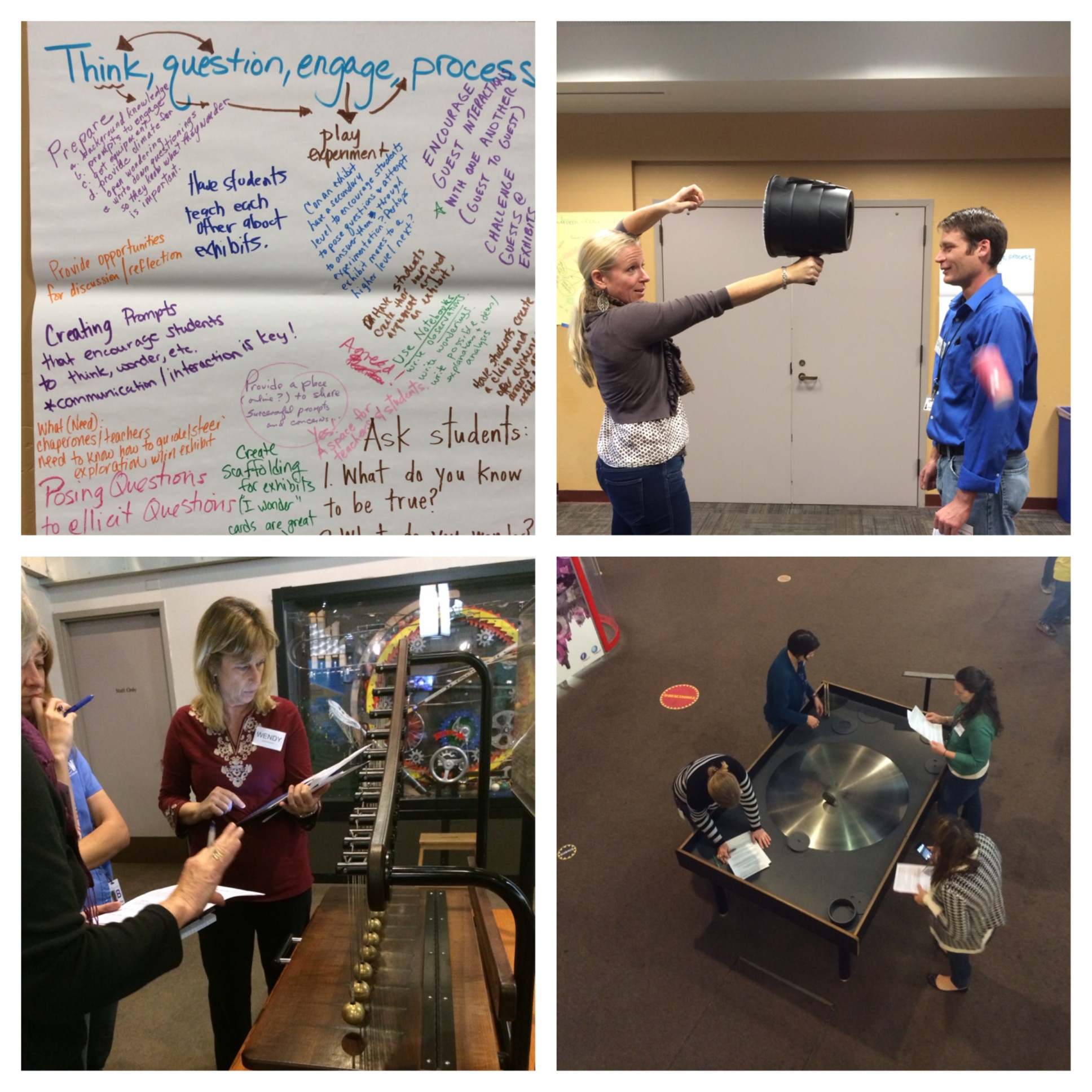
The San Diego Area Writing Project (SDAWP), along with the San Diego Natural History Museum (SDNHM) and the Reuben H. Fleet Science Center (Fleet) are partnering in a National Writing Project (NWP) and Association of Science and Technology Centers (ASTC) initiative investigating the intersections of science (or STEM) and literacy (with an emphasis on writing).  Yesterday we launched our work  with ten formal educators (who work in public schools) and ten informal educators (who work in the museums mentioned above), with a particular focus on field trips.

photo-7

The facilitation team (of which I am a part) decided to launch our work by focusing on the why of the work.  Why is it important to re-examine field trips and consider ways to improve the experience for students and to create supportive structures for teachers and other adults who accompany young people to museums and other field trip sites?

Inspired by a TED Talk by Simon Sinek entitled How Great Leaders Inspire Actionwe spent our first (of 5) sessions focused not on the what or how of our project.  We sent teams of educators out into the museums to observe and experience an exhibit through a set of prompts that invited them to look and try through a variety of different lenses, and write about their experiences.  They critiqued the exhibit–not to find fault with it–but as a way to consider what structures might support learners’ interest, inquiry, and pique curiosity.

photo-6

Our short, but intense day left us with a desire to take action…to figure out how to make field trips amazing learning experiences, with students at the center.  One comment from the end of the day reflections is still bouncing in my head,

…the “why”has the power to transform educational practices.  From field trips to worksheets to projects, I wonder how many educators push past the “what.”

Our goal with this project is to do just that–to push past the what and consider the why. The why is where the action sits…and we want to take action toward improving field trip experiences for students by supporting the adults who facilitate them: teachers, museums educators, chaperones, and parents.

I can’t wait to see where this project takes us…  If only I had a window into the future to get a hint at just what the possibilities might be!

photo-8

What do you love about field trips?  What does your ideal experience look like, feel like, leave you thinking about?