Tag Archives: teaching

Garden Poetry

My students are lucky.  They spend a half an hour in our school garden every week, growing vegetables, learning about bugs, noticing what grows well and what struggles, and tasting!  I often don’t get to go out with them, but today because of a shift in my schedule due to conferences, I joined them…and turned it into an opportunity for poetry writing!

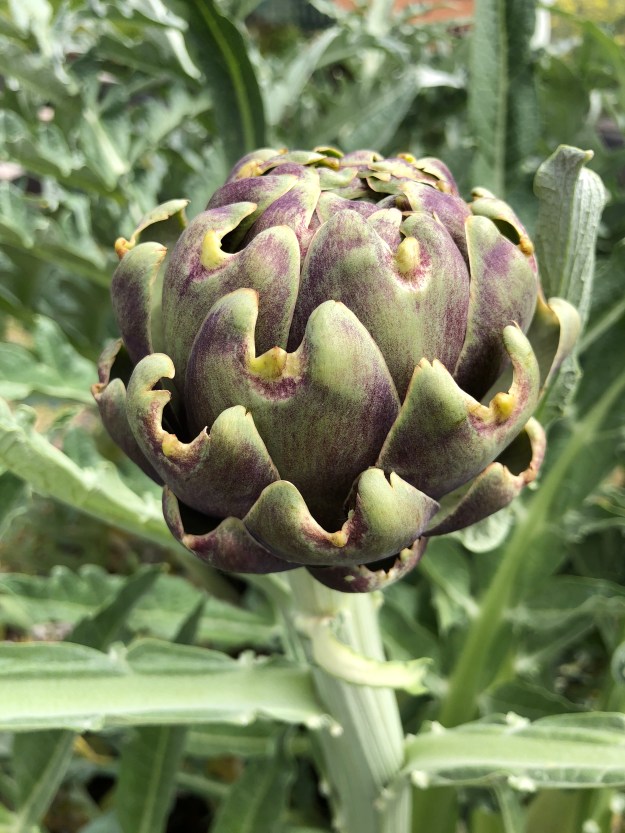
I was drawn to the artichokes, purple and green knots growing strong and tall.  When my students sat down to write, so did I.

artichoke

Artichokes

Globes

like dinosaur paws

clenched

holding a tender heart inside

tiny swords

protect that meaty center

purplish green

beckons…attracting me

and spotted ladybugs

When will they be ripe?

Douillard 2018

I know that photographs and visual images inspire my writing.  It’s true for many of my students as well.  During yesterday’s search for the ordinary, I noticed one of my students arranging jumpropes on the ground and photographing them.  And then this sometimes reluctant writer sat down to write.

Color Brain

Color strings sewing

my brain into thoughts,

ones about madness,

ones about fear,

ones about happiness,

ones about sickness,

ones about coldness,

and ones about love.

On the string of fear

the purple hides

with red,

next to blue and turquoise.

Leah

Leah's photo

How’s your poetry writing coming along?  What inspires your words and thoughts?

Ordinary Inspiration

The weather was gray and gloomy today, but that didn’t stop us from venturing out with our iPads and poetry notebooks in search of inspiration for continuing our poem-a-day challenge. Students were excited about the prospect of exploring the playground as a source of inspiration.  They had 5 minutes to explore and take one photo.  The next 7 minutes were spent drafting a poem.  After some sharing back in the classroom, they had 7 more minutes to revise.

Our school yard is filled with trees, palm trees and pine trees, and the kids love to play under them and around them.  And some were inspired to write a poem featuring a tree, like this one:

Tree

A tree that I’m looking up to

I see it in the distance

I call it my wishtree

It’s as high as the bright blue sky with big bushy leaves

Shining down to me

Calling me

Brayden

My poem for today also features a tree–the iconic palm that stands in the center of the playground.

cardiff palm

The Cardiff Palm

Tall against the thick gray blanket of clouds

that blocks the sun.

Your crown of green fans out:

a home for birds

shade on sunny summer days.

An ever-present sentinel, standing watch

over generations of school children

listening to their playful shrieks

a backrest for tired athletes

a symbol of our coastal community.

Tireless palm

standing tall.

Douillard 2018

Some kids are still refining their poems inspired by William Carlos Williams.  Here’s one inspired by the Red Wheelbarrow:

The Rocky River

So much depends

upon the river.

The fish slither through

the river.

Tadpoles turn into

frogs.

And birds fly over all!

Stone

And this one by This is Just to Say:

Easter Candy


I have stolen the Easter candy

that you hid in the cabinet


that you were probably saving

for after dinner


Forgive me

They tasted so good


The chocolate wafers

gave it away


Kalani


This is Just to Say…

Today’s poetry inspiration came from Williams’ poem of apology, This is Just to Say.  In addition to studying the original, we also read some of the poems written by 6th graders in the book also titled This is Just to Say: Poems of Apology and Forgiveness by Joyce Sidman.

Students had fun playing around with their own poems of apology.  Here’s a couple composed by the third graders in my class to give you a taste:

Dear Romeo,

I’m sorry I have to whip you sometimes

Also, I might tire you out sometimes,

but you’re always a handsome horse

lovable, huggable, gentle, and soft

Oh how I love your long mane

drifting in the sky

when we canter across the field

Love,

Tyler

I gave them a whole 7 minutes of writing time!  It’s conference week, so students are on a minimum day schedule…and time is short!

I’m sorry Kai for poking you.

Sorry, I really didn’t think it through.

Although we had fun doing it, I’m sorry Kai for poking you.

Cody

And one more student poem, this one inspired by yesterday’s Red Wheelbarrow.

The Thread


So much depends on

a brand new jacket

and a loose thread


Pulling

into bits and pieces


until it is

one loose

and wiggly line


Lauryn

I found myself returning to the topic I explore in my first two poems.  Today’s was written to that same egret I featured before–but from a slightly different angle.

This is Just to Say, My Friend


I have stalked you

my lens focused close

waiting for your head to turn

your neck to arch.


You seem so peaceful

and focused as you

stare out at the blue horizon

scanning for danger

or maybe appreciating the view.


I’m sorry for any disturbance

I cause with my close looking

and the click of the shutter.


I just can’t resist your elegant neck

and charming yellow feet!


Douillard 2018

LRG_DSC08563

Maybe, dear reader, you’ll try your own poem of apology today!

Let the Poetry Begin!

My students and I decided to take a 30-day challenge to celebrate National Poetry Month. We have committed to writing a poem each day of the month–in spite of the fact that our spring break begins when school is out on Friday!  Hopefully, a poetry-filled launch this week will keep the poetry spirit alive and well during our time off.

To add to the motivation–for myself and my students–I plan to blog my poem-a-day…and feature poems written by my students on my blog as well.

To get started, I will include my poems one and two here today.  Look for some student poems starting tomorrow–they needed time to refine their early efforts.

Yesterday’s poem was inspired by the snowy egret I watched and photographed on the beach on Friday.

snowy egret

Snowy Egret

Tuned to channel nature

where the constant whoosh and roar of waves

matches the rhythm of my heart


I scan the distant horizon

for the alabaster of my low-tide friend

As I come close

I notice the porcelain statue

with yellow feet

that unexpectedly

stomp and stir the shallows.


He’s rewarded for patience and persistence

with a briny treat.


My reward is the glimpse

of those charming yellow feet.

Today we learned about William Carlos Williams through the book, A River of Words.  After reading a bit about his life and interests, we studied The Red Wheelbarrow to pay attention to how Williams put this iconic poem together.  We then did some writing of our own under the influence of The Red Wheelbarrow.  

Here’s my version, again related to the egret I am so drawn to.

The Tidepools

So much depends

upon

a low tide

on the beach

uncovering shallow pools

filled with fish and crustaceans

nearby the snowy egret

wades and waits.

How are you celebrating National Poetry Month?

On the National Day on Writing

Today is the National Day on Writing–a day to celebrate all that writing offers.  My students were excited this morning at the thought that they would get to write today.  In fact, they were already excited about the writing they had done last night in their Learning at Home notebooks. We started the day listening to a short story by a student about a leaf, a leaf personified, who travels from a tree branch to a construction site and eventually back to a leaf pile with the help of the leaf blower.  We could have spent the entire morning listening to stories written by students…but we had writing to do!

Inspired by Red Sings from the Treetops by Joyce Sidman, we began writing our own color-inspired poetry earlier this week.  Today we took those bits and starts and worked to craft them into a whole piece.  Some students were spectacularly successful, some had moments of brilliance, and others veered away from color and still wrote some interesting accounts of things they are interested in.  They wrote, read to a partner, and eventually created a short video of themselves reading their poem on Flipgrid.  And while their first attempts are not ready for “prime time,” I am proud of all they accomplished today and their enthusiastic and creative approach to our day.

Here are a few glimpses:

In winter, yellow sighs, I’m done.  None of my sunlight can peek through clouds as dark as the oceans’ most shadowy blue places.  It’s time white takes his place..

(Third grade boy)

In summer yellow shines from the sky while blue splashes .  Colorful plants explode with power and beauty.  In summer blue wraps around my ankles.  Red rises from green…

(Third grade girl)

In the morning gold wakes me up with his paws and barking, “I’m hungry.” And with his pink tongue, gold wets my face…

(Third grade boy)

At the beach, green is sly.  It slithers by surfboards, sneaks by me and ties a slippery knot around my legs…

(Third grade girl)

Students left today wanting more…begging for more opportunities to write and share.  My students remind me that writing can be playful and creative, an opportunity for social interaction and experimentation.  They remind me that there are lots of reasons #whyiwrite!


Paying Attention: #whyiwrite 2017

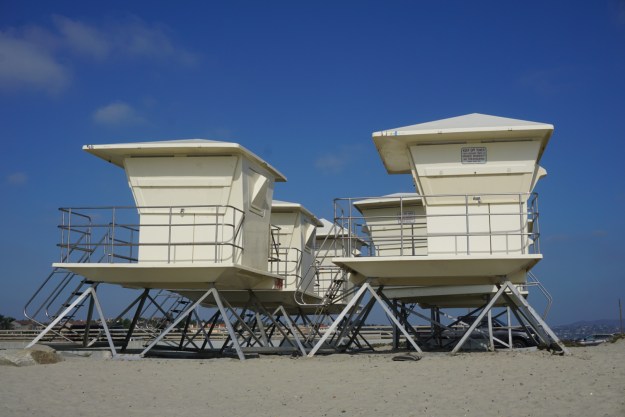
Fall is subtle in San Diego. Instead of a riotous celebration of trees dressed in their best fall colors I notice that the lifeguard towers have been moved from their strategic summer shoreline positions to a collection near the road. Instead of grabbing a sweater and drinking warm apple cider, we scan the horizon for evidence of wildfires as hot winds gust and whip the dry grasses and dust into a frenzy.

lifeguard towers

But in spite of these easy to miss markers of fall, there are seasons in San Diego. Not the two (spring and summer) that so many use to describe our temperate climate, but four distinct seasons that you might only recognize if you take the time to notice, document, and reflect.

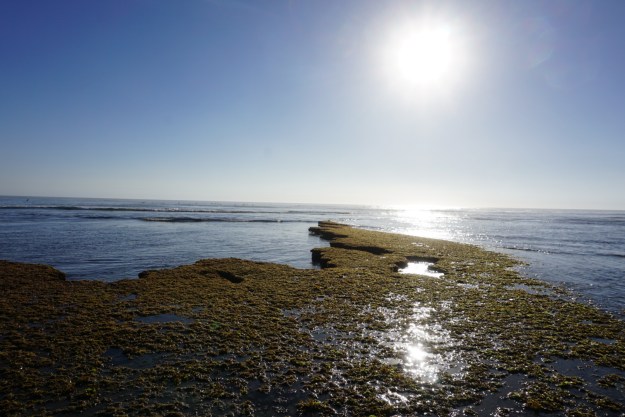
fall colors on the ocean

It’s like that in my classroom too. As teachers (and maybe as parents and learners too) we all wish that learning came with recognizable markers of growth. That we could watch the leaves of learning change from green to yellow to brilliant crimson, celebrating new knowledge, expertise and confidence. We’d love for snowplows to mark the new pathways that allow for connections between new concepts and older understandings. But learning is often subtle. It is incremental, sneaking its way into our synapses and those of our students without fanfare.

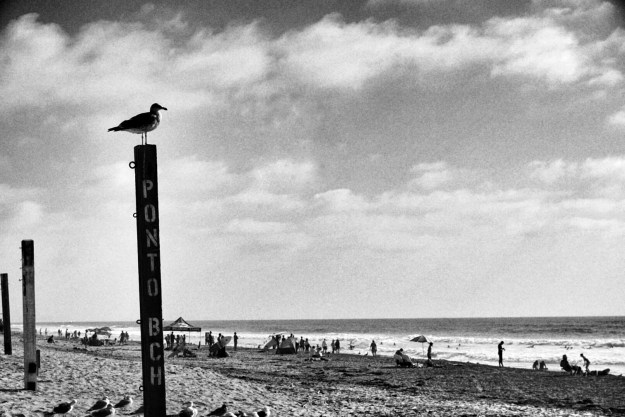
To pay attention to these subtleties, I turn to my camera.  My camera has become my go-to tool for focusing my attention, allowing me to notice and document changes in my environment.  Through its lens, I pay attention to changes in light and shadow, notice moods and action, and see what might otherwise be overlooked.  Combined with writing, reflection becomes a daily habit with camera in hand.

black and white seagull

Writing helps me pay attention. It helps me record the small details that don’t seem to amount to much and notice how those details change, accumulate, and grow over time. And when paired with photography, writing helps me leap from concrete to abstract, considering why a photo of lifeguard towers stored for the fall and winter draws my attention to my students and their learning. Writing pushes me from the tediums of day to day, to examine the reasons I keep returning to those same topics. And even more importantly, when I write, I am reminded of the power of writing not just for myself but also for my students and that helps me search for ways to support them as they find their own reasons to write.

I write to support my students as writers, knowing that the power of the pen will open possibilities for thinking, learning, and problem solving. And when I pay close attention, I will not only learn about them but also from them. That’s why I write.

The Power of Community

Our students are writers, but even a few short weeks ago many didn’t see themselves that way.  They were worried that they didn’t know how to spell, that their writing wasn’t “right,” that others knew something that they didn’t about this mysterious practice called writing.

Like we do every year, we’ve been working to build a community of learners and writers in our multiage class of first, second and third graders. And like Margaret Simon reminds us all in her #digilit post this week, that requires practice, patience, and persistence. Margaret was talking about the use of digital tools–but I would argue, it is the same with or without the digital tools.  But I want to remind us (and myself) that practice doesn’t mean drudgery.  Instead it means establishing a practice, regular opportunities to write in meaningful ways.  It means low stakes opportunities to explore the possibilities of writing, to play with words, to share your attempts with others who are also trying on and experimenting.  And it means knowing that your first attempt is not your only attempt, that writing takes time and multiple iterations that come from layering inspiration, mentor texts, and supportive instruction.

A week ago, we were inspired by the life and poetry of e.e.cummings.  (If you have not yet read the picture book biography of cummings by Matthew Burgess, Enormous Smallness–you should.  It’s quite a treat!) Burgess’s description of cummings exploring the world with “his eyes on tiptoes” made an impression on our young writers.  After studying love is a place by cummings along with a few other poems by various authors as mentors, our students set out to compose a poem about something they love.

They wrote these poems in layers–a little each day over the course of a week–and in a community of other poets (including their teachers) working to express their thinking and visions about something they care about. We read our works-in-progress, noting language we loved, noticing techniques we could borrow, and learning how to “fit” something into a page already full.  (A major impediment to revision for young students…we continually work to show our writers how to make changes without erasing or starting over!)

The resulting poems are magical…and incredibly varied.  From the one that begins, “Shall I compare winter with a magical place…” (inspired by her own knowledge of Shakespeare and her love of snow and ice) to the one that ends, “Time doesn’t exist on a boat on the ocean when fishing,” my heart swells knowing that the power of our writing community has taken hold.

And sometimes you get the piece that feels momentous, a powerful expression from a student who previously didn’t claim writing as something he even wanted to own.  But he is feeling the magic of his words and wants to share them, giving me permission to share them with other writers and learners.  Surrounded by a community of writers and learners and inspired by the mentor text, Trouble, Fly by Susan Marie Swanson and the story, The Waterfall by Jonathan London, B knew he had something to say about writing that is worth sharing with others.

screen-shot-2016-10-23-at-1-19-28-pm

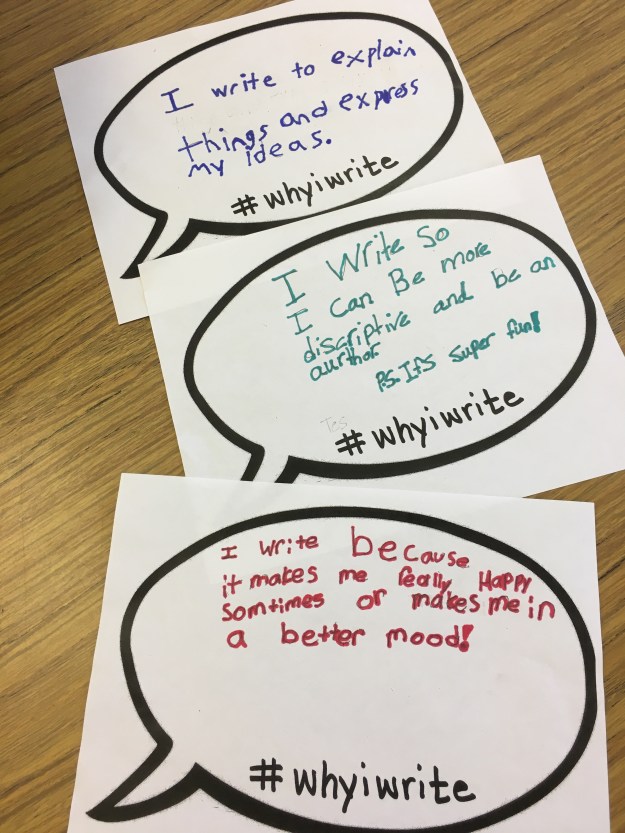
B’s effort shows the results of practice, patience, and persistence.  But this didn’t come from a single lesson.  Instead, it is the result of cumulative effort now in its third year for this student.  B expects to write for many reasons and in many ways on a regular basis. That’s what we do in our learning community.  On Thursday, the National Day on Writing, students put some of those reasons for writing in print to express #whyiwrite to the larger community of writers on Twitter.

img_3788

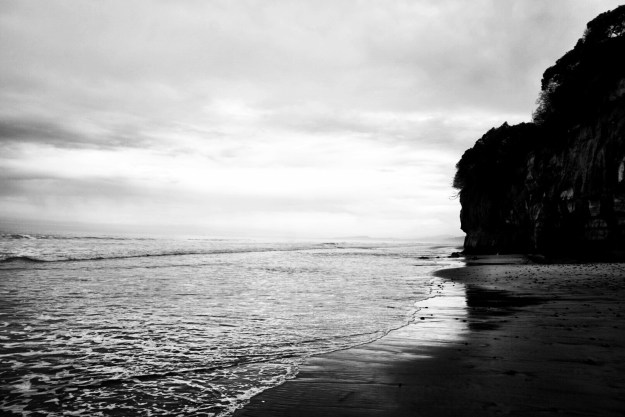
As I think about myself as a writer and as a photographer, I know that practice, patience and persistence also apply to me and my own learning. I wrote last week about writing with light through my photography.  This morning as I walked the beach in a light rain, I wanted to capture the quality of light and feeling of expanse I experienced.  As I poured over and thought about the photos I took, my mind wandered back to one of my photographic mentors, Ansel Adams.  And I found myself inspired by his words…and by his use of black and white to express nature’s powerful beauty.  I took my photo and used a filter to transform it from color to black and white, capturing the mood and expansiveness…and the quiet I was looking for.

When words become unclear, I shall focus with photographs.  When images become inadequate, I shall be content with silence.   Ansel Adams

img_3827


Stories in Glass: Reflections on Making and Learning

Intense heat and human breath give shape to these vessels. Twirling, pinching, another breath, back into the fire, working and reworking until art emerges from what was once sand and rock. Is this what makes us human? The ability, the desire, the necessity to make…to create from the materials around us?

Evidence abounds, from cave paintings to stained glass creations, super-sized cloth installations that line valleys and islands and spray-painted graphics on the sides of railroad trestles and freeway overpasses. They all suggest a need to make and mark our world.

A visit to the Chihuly glass museum in Seattle served to pique my interest in this question of making and art. I love an art museum and had heard from others that this was a museum worth visiting. I had seen photos of glass art and had already visited a glass studio, just down the street from our favorite donut shop in Seattle. Yet, I was prepared to be underwhelmed, to see beautiful bowls and other vessels, delicate blown glass creations too pricey for my budget.

Instead, I walked into the first display and was mesmerized. My eyes were drawn to the white: shiny glass lighting up a dark room. Long stalks of lighted glass protruding like shoots from irregularly shaped bulbs. As in nature, the irregularities were an essential part of the beauty as this stalk curved, that bulb leaned. It was impossible to see where one piece ended and the reflection from the shiny black floor began, creating a sense of infinity that stretched the exhibit well beyond its actual size. This wasn’t a piece of blown glass that I was enticed to purchase, this was an installation of many glass pieces arranged and lit to create an effect. I was drawn to the description “…created by simultaneously blowing and pouring molten glass from a stepladder to the floor below…electrically charged by argon and mercury…” I stopped to take a picture or two, knowing that I would want to look at it and think about it again and again.
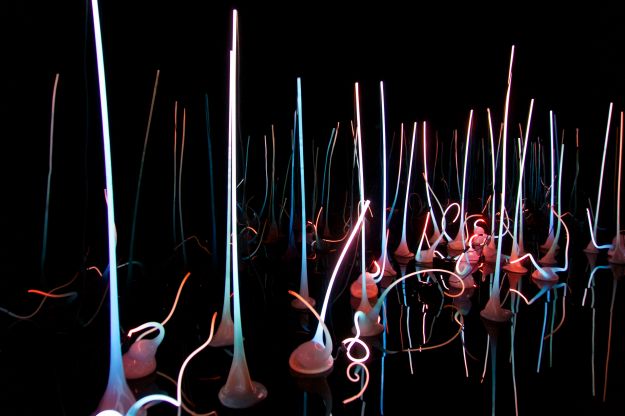
glass_white

I moved from space to space, now intensely curious about what each turn would offer. In one room an enormous sculpture twisted and curled to the ceiling; fish, octopi, and other sea creatures nestled within it. In another, the room was bare…until I looked up and found a glass ceiling filled with individual pieces that together created a stained-glass effect of intense color and variation. When did glass bowls and balls morph into something more: stories in glass, sweat, heat and breath?

I find myself thinking not just about the exhibits and sculptures, but about the maker and making behind the art. I’m a maker too. As a writer and blogger I use words to pull ideas closer so that I can think about them, poke and prod at them, turn them over and look under them, and invite others to look along with me. As a photographer, light becomes my medium to inscribe meaning through my camera lens. And I know that ideas in my head often don’t come out through my words or my lens in the ways I intend. But that, for me, is part of the allure…the seduction of making. I surprise myself with new understandings born from moving my fingers on the keyboard or ducking under the bench to get closer to the weed growing along the crack in the sidewalk.

I’m reminded of Seymore Papert and his theory of constructionism. In this theory, different from constructivism, learning happens when the learner is engaged in a personally meaningful activity outside of their head that makes the learning real and shareable. The activity could be making something tangible like a robot, a puppet, or a model bridge—or it can be something less concrete like a poem, a conversation, or a new hypothesis. What’s important is that the making come from the learner rather than being strictly imposed and directed from the outside (from a teacher or an employer). This element of choice and ownership often propels the maker to tinker and improve their make to meet their own criteria for better, allowing for reflection and reworking based on that reflection. This self-directed making can be a challenge in the classroom.

Traditionally it is teachers who direct and make decisions about student learning. So it’s important to create spaces that allow students to see possibilities beyond their own experiences, yet still offer choice and opportunity for experimentation and iteration. Chihuly’s first experience with glass blowing came from a college classroom assignment that required him to incorporate a nontraditional, non fabric material into a weaving. He wasn’t directed to use glass, but may not have experimented with glass without the constraints and possibilities of the assignment.

Making is about transformation. Transformation of materials, like glass or words, or images through a lens. It is also about transformation of thinking and ideas. And it begins in playfulness. Mitch Resnick of the MIT media lab describes a cycle of learning (and making) based on his observation of young children. Beginning with imagination and spiraling out to creating, children make and learn based on their ideas. As they play with their creations and share the ideas and creations with others, they have opportunities for iteration and reflection on their experiences, which leads them back again to imagine new ideas and new projects to work on or ways to improve their original idea.

I could see this in Chihuly’s glass creations. Elements of one sculpture showed up in new ways in another, chandeliers hanging from ceilings in one display turned into bigger and more elaborate free standing sculptural elements in another. And yet, each also showed new thinking—about color, about translucence and light, about placement and size, about cultural references and interactions with the larger world. I watched a few videos that included Chihuly’s reflection on his work where he talked about how his experience with a particular exhibit gives him vision for the next. I was particularly interested in the garden beneath the Space Needle in Seattle and its origins. I learned that this space, formerly a parking lot, was a blank canvas for Chihuly, something he—in collaboration with the landscape architect—could transform to allow others to see the beauty of his hometown in new ways, to expand their experience beyond the glass into the fairyland where light and glass and flowers and bees play with the backdrop of Mount Ranier and the Space Needle. Chihuly’s reflective videos helped me see and understand the spiral of experience and design and how it propeled him to new ideas and new thinking about his chosen media.

Photography is like that for me. I find myself looking at my world through the lens of my camera, and instead of limiting my view, the lens draws my attention to details of light and shadow. I see the variation of blues in the ocean waves and the foamy white of the lacey breakwaters. The white head of the bald eagle catches my attention and I watch, rapt, as it dives and swoops and then soars into the trees. I have many photos that are not taken, where I’ve missed the moment because I moved too slowly, had the wrong lens in place, or simply had to stop and wait and watch. But those missed photos become inspiration and information for tomorrow’s attempts. As I imagine, make, share and reflect, new thinking emerges and my understandings transform.

I want this for my students too. Opportunities to make and create new understandings, to transform the world as we know it. Learning, like blowing glass, needs to nestle close to the flame—the flame of needing and wanting to know and understand—and then the learner takes a breath and blows out and maybe even includes the breath of another to add dimension, depth, and diversity. Learning needs to be shaped by the learner, to expand beyond basic facts and figures and matter in the world, and in the world of the learner. Learning needs space for reflection and nudging from co-learners and outsiders—and teachers and employers—to expand the realm of the possible. Maybe we need a museum for visitors so they can walk through the breathtaking beauty of learning at the hands of those who learn best: children.

Rather than pushing children to think more like adults, we might do better to remember that they are great learners and to try harder to be more like them. –Seymore Papert

One Little Word: Expand

It’s that time of year…time to choose a word to guide my year.  I’ve already selected and rejected several, testing them only to find out they were too literal or too confining, not the inspiration or guide I am looking for.

Last year I chose explore…and indeed I did explore.  I looked under rocks, climbed up mountainsides, and discovered landscapes beyond my usual experiences.

mushroom fairyland

A mushroom fairyland found in Olympic National Park near Seattle, WA

The year before that I chose play for my one little word.  Play reminded me to find the fun around me, to push against my seriousness and to make time for myself.

Hiking Merry Christmas

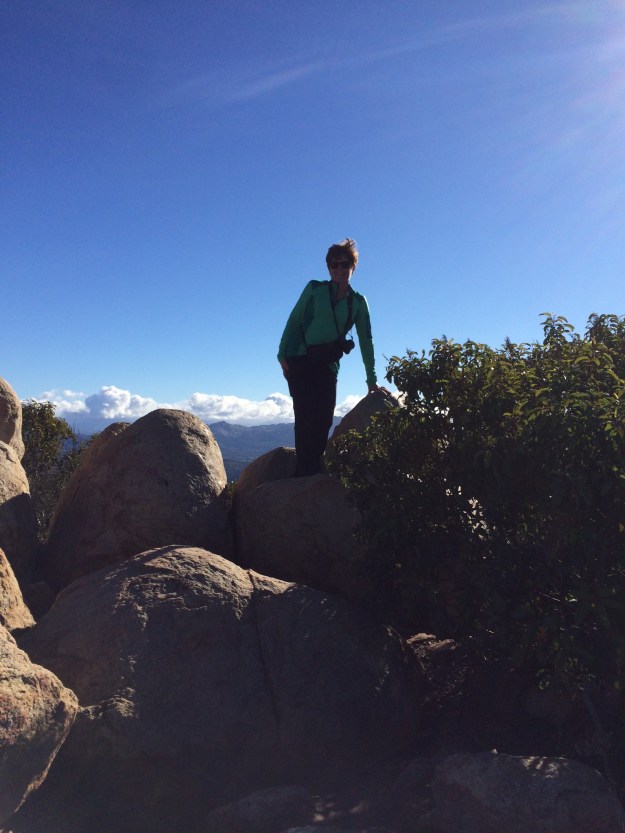
On top of Iron Mountain

This year I am anticipating change.  I will take on an important new role in my life.  Very soon I will be grandma to not one, not two, but three baby boys!  And I can already feel my heart expanding as our family grows.  Over the last several years, I’ve been watching my sons walk the path toward fatherhood, becoming loving and attentive husbands and dog dads…and now nurturing, caring dads-to-be.  My amazing daughters-in-law are big in belly and heart, one carrying identical twins, both women already imagining how they will balance motherhood and work, family and friends.  I had such fun spending time with them over the holidays–talking about their dreams and fears, and watching the babies push and bump, making their presence known from the inside out.  I am lucky that even when I am not with my sons and daughters-in-law, I am the recipient of updates and what were at first mysterious sonogram portraits, becoming more familiar and now revealing hints of the features of the babies that will soon enter the world outside their mothers’ bodies. As grandma, I anticipate building new relationships with my sons and daughter-in-laws…and with these little boys who are my grandsons.  (I can’t wait!!!  The time has passed both excruciatingly slowly and in a blink of an eye, it won’t be long now!)

And I want to continue my growth in other areas of my life as well.  I am continually looking for ways to expand my understanding of teaching and learning.  How do I create conditions where learning can happen–both for my students and for myself and other adults in the room?  How do I facilitate learning within our writing project community–for myself and the others who comprise this inspiring group?  How do I ensure there are pathways that welcome new voices and new perspectives, enriching our educational community by increasing the diversity within our community?

I also want to continue to play and explore the world on my own terms. My photography continues to be a tool that encourages me to try new things and expand my visions of what is possible.  We already have some places to explore on our wish list…as nearby as Yosemite and some international destinations as well.

And so, my one little word this year is expand.  I hope to expand my heart and mind, my understanding and empathy.  I am striving for an expansive year of growth, of love, of adventure, of relationships (and not of my waistline!).

fields on I5

Space to expand…both in front and behind!


Taking the Long View

There’s a temptation to view learning as quick and direct.  I teach it, you learn it…as simple as that.  You don’t learn it, you must not have listened, you must not have tried…or I didn’t teach it right or well enough.

But over the years I have learned that it is not as simple as that.

Learning is complex…and complicated.  And much of what is going on in terms of learning isn’t visible on the surface.  Like an iceberg, most of the structure lies below the the waters edge–we can only see the tip.

Some days I can see evidence of my students’ learning.  And with some students learning is easy to spot.  With others, it’s not so easy to see.  You have to dig, watch closely and listen carefully, and sometimes sneak a peek when they don’t know you are paying attention.

And most of all, you have to take the long view.

IMG_7591

Step back and wait.  Keep teaching and providing opportunities for active learning even when it doesn’t seem to be having the desired impact.  And I have to remind myself to think about my own learning processes too.  Like an onion, learning keeps layering on, building connections, drawing on what came before.  It takes time–sometimes longer than I want to learn new skills, to understand new concepts, to think in new ways.

But, I’m taking the long view.  I’m learning every day and so are my students, even if it isn’t noticeable to others.