
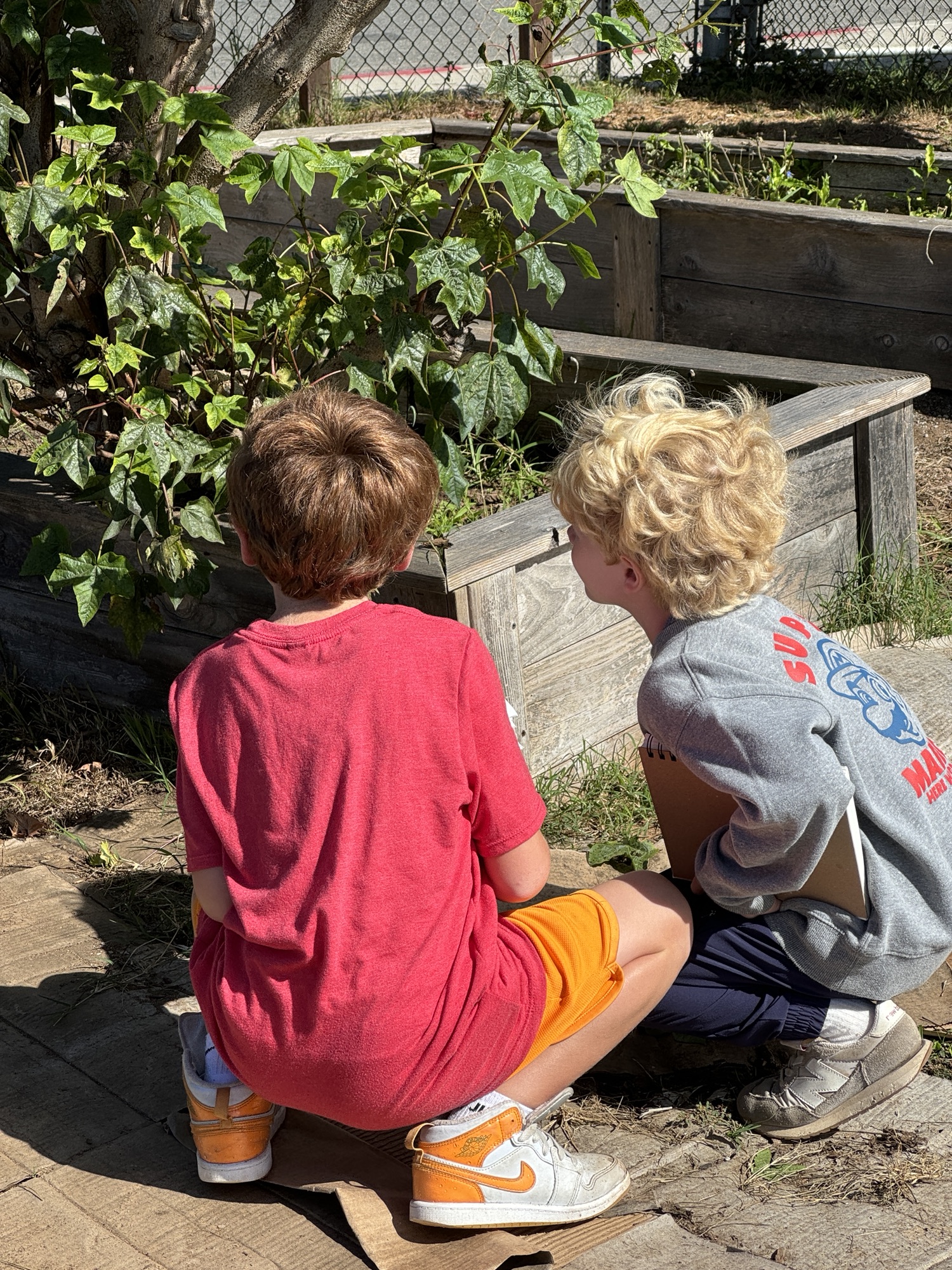
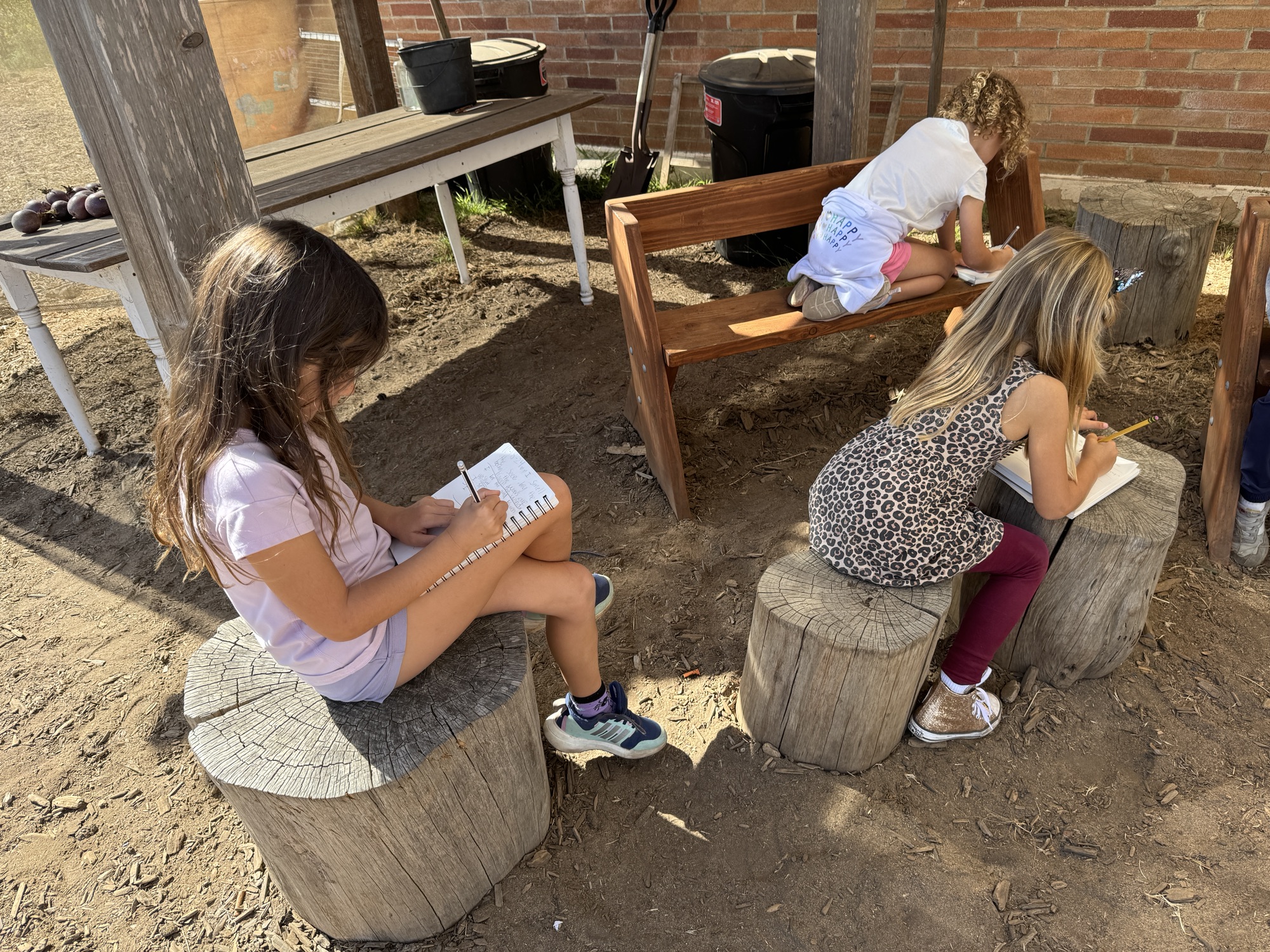
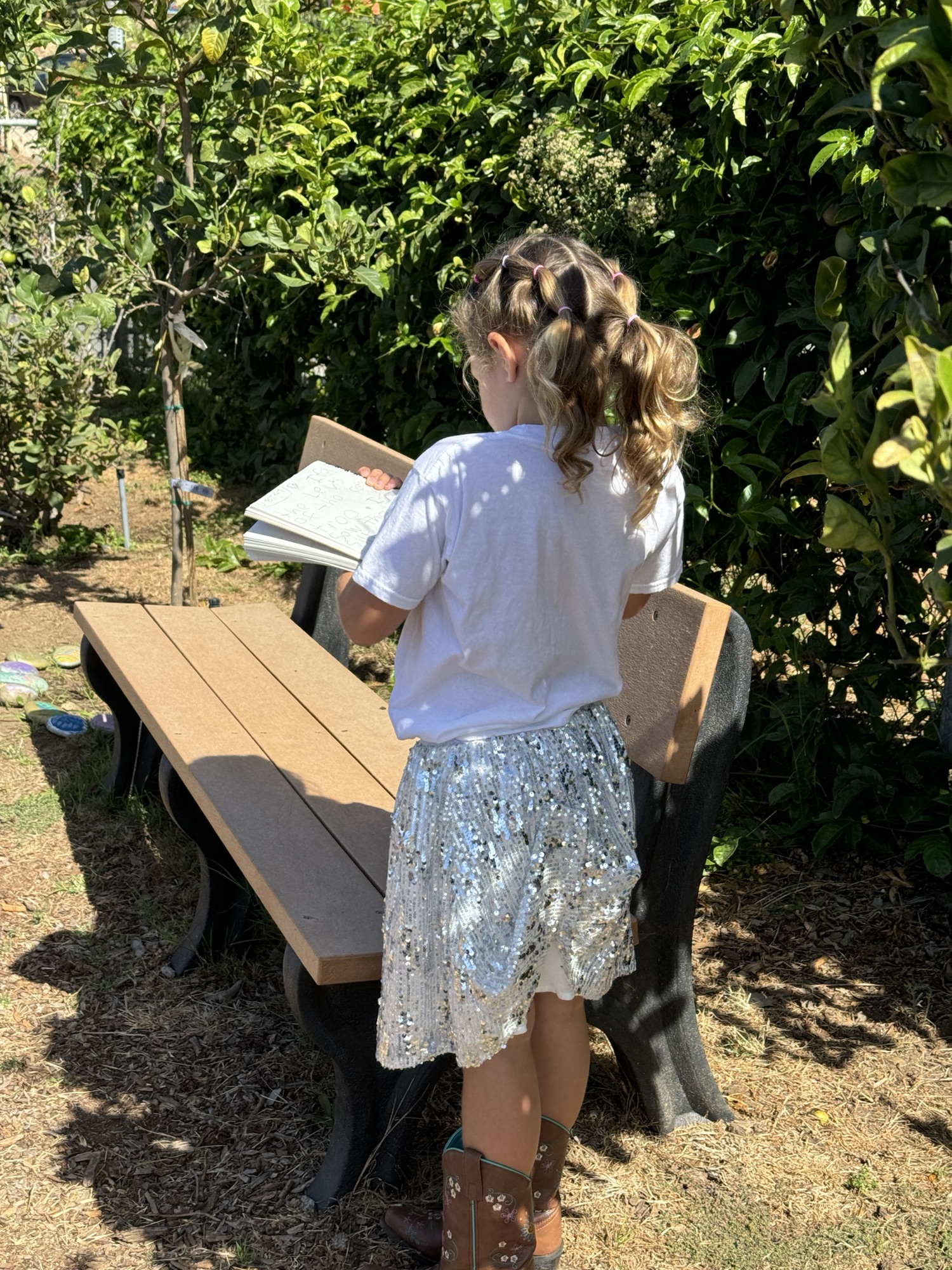
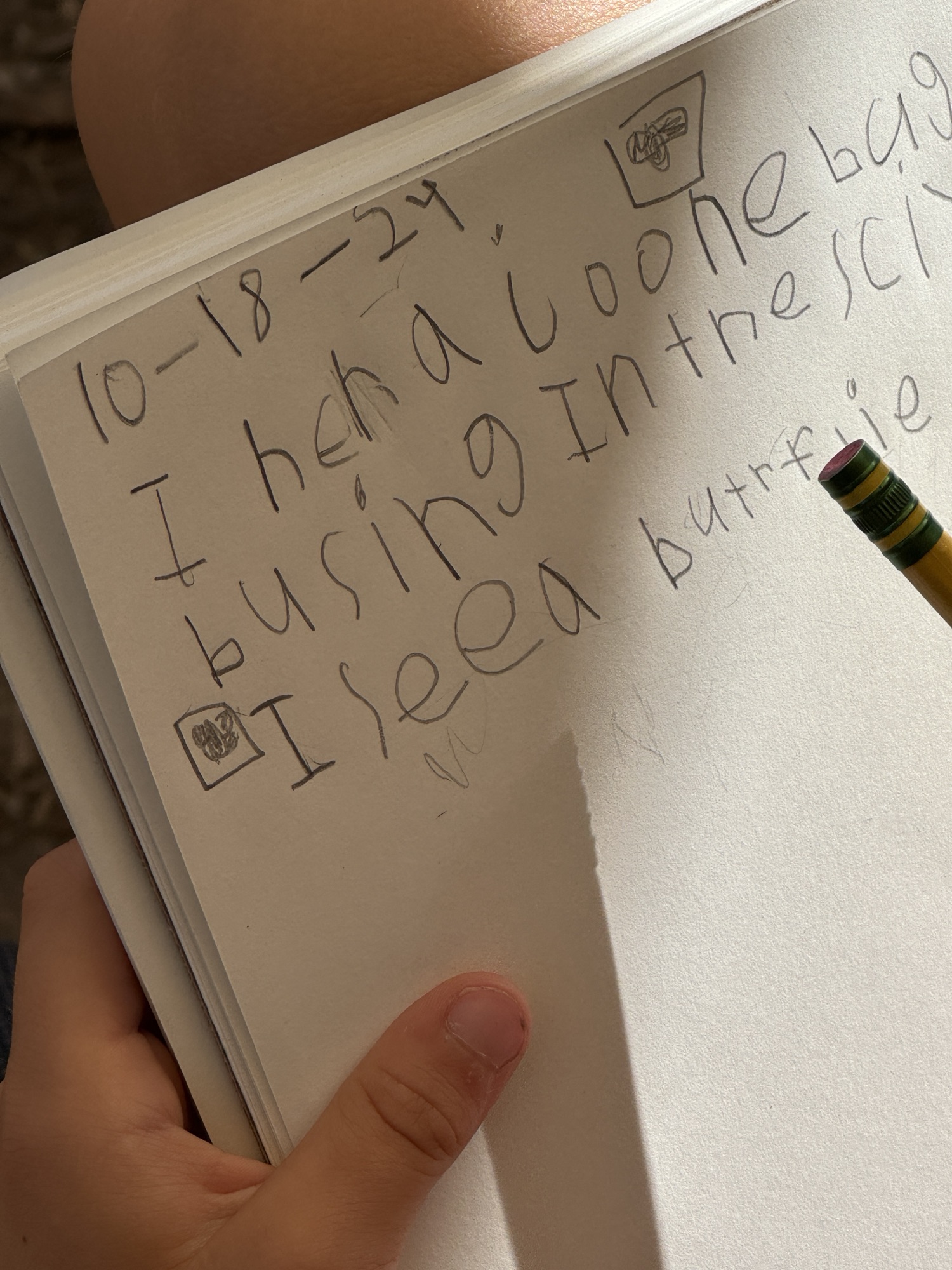
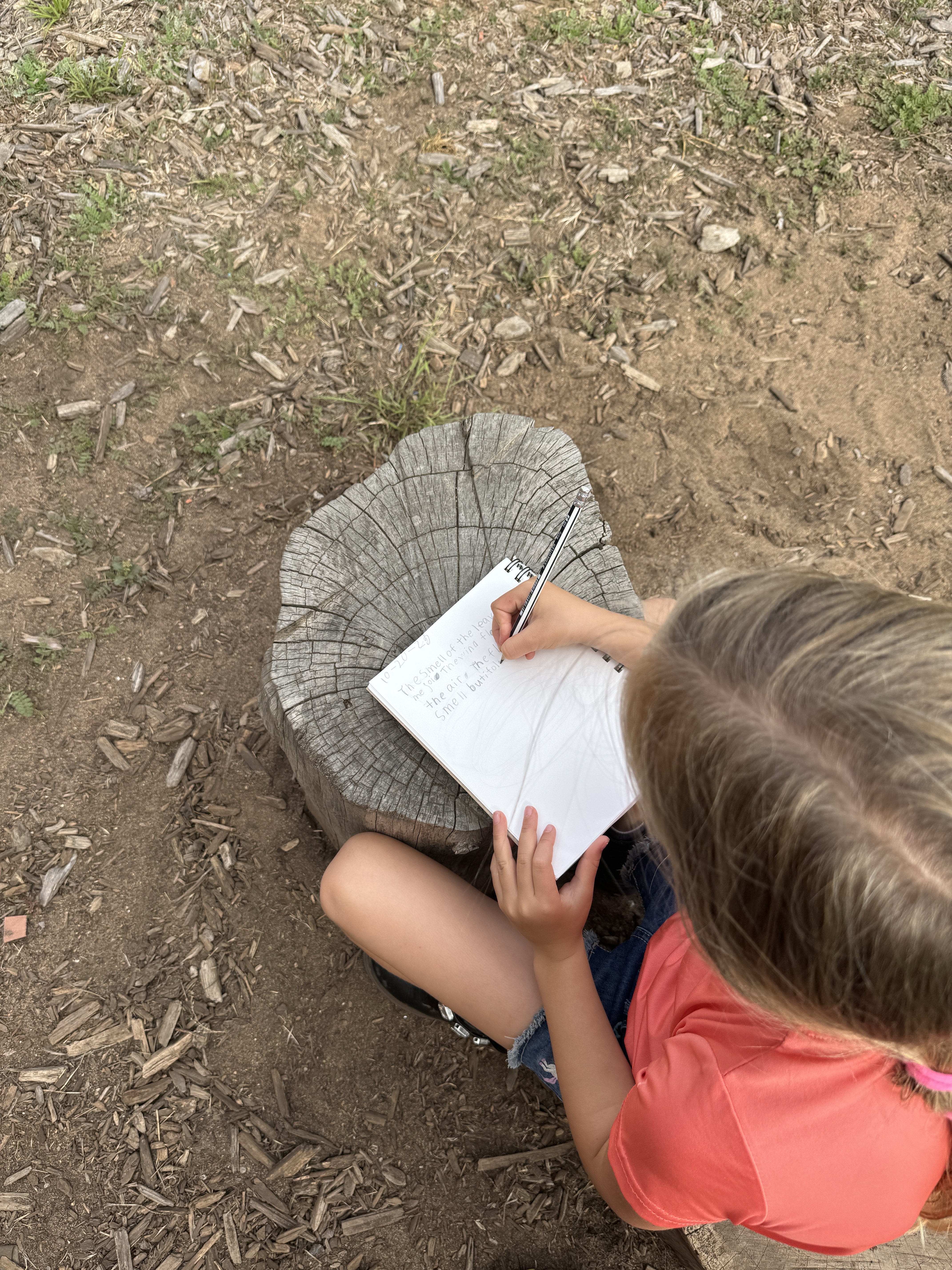
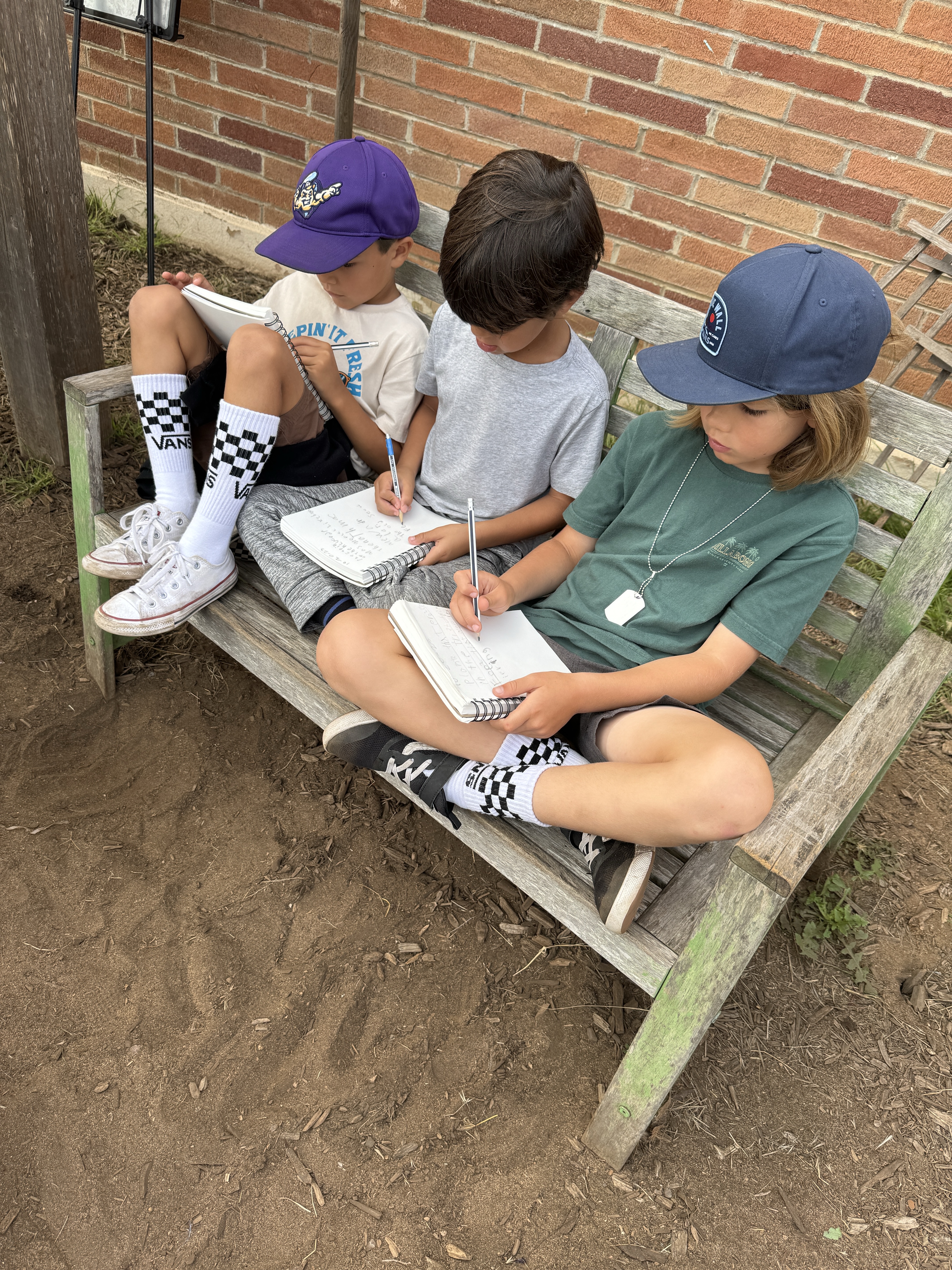
In my first grade classroom, we started #writeout way back in August. Our school garden is a perfect place for observation and writing. By the second week of school we were out in the garden with our clipboards looking closely, sketching carefully, and adding captions as well as considering what the object they were examining (a passion fruit, a ladybug, a yellow cherry tomato) reminded them of. (I start planting that seed of figurative language very early in the school year!). We continue to venture outside, at least monthly, with our sketchbooks in hand, sometimes on a color walk, sometimes in search of questions… You can check out a variety of past explorations through this year’s #WriteOut choice board. Let’s Take a Wonder Walk is my offering.
While sharing information about #WriteOut at a recent San Diego Area Writing Project conference, I overheard someone mention the book, Through Georgia’s Eyes, which reminded me of the powerful connection of Georgia O’Keeffe’s art and close observation in nature. I returned to my classroom, pulled that old favorite picture book out along with another Georgia O’Keeffe picture book, Georgia’s Bones and created a plan for introducing my students to this incredible artist, encouraging close observation, carefully enlarged sketching, and descriptive writing.
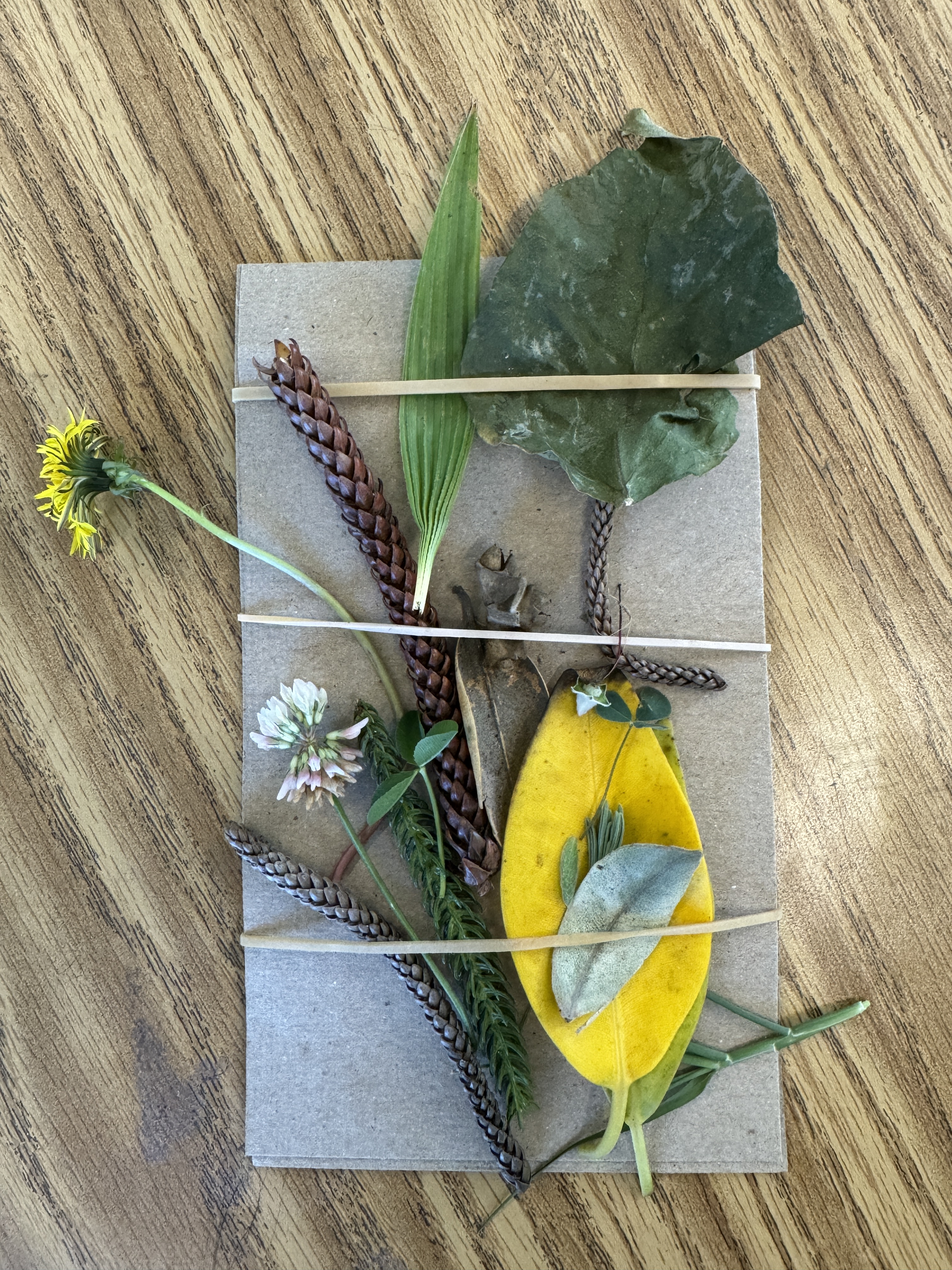
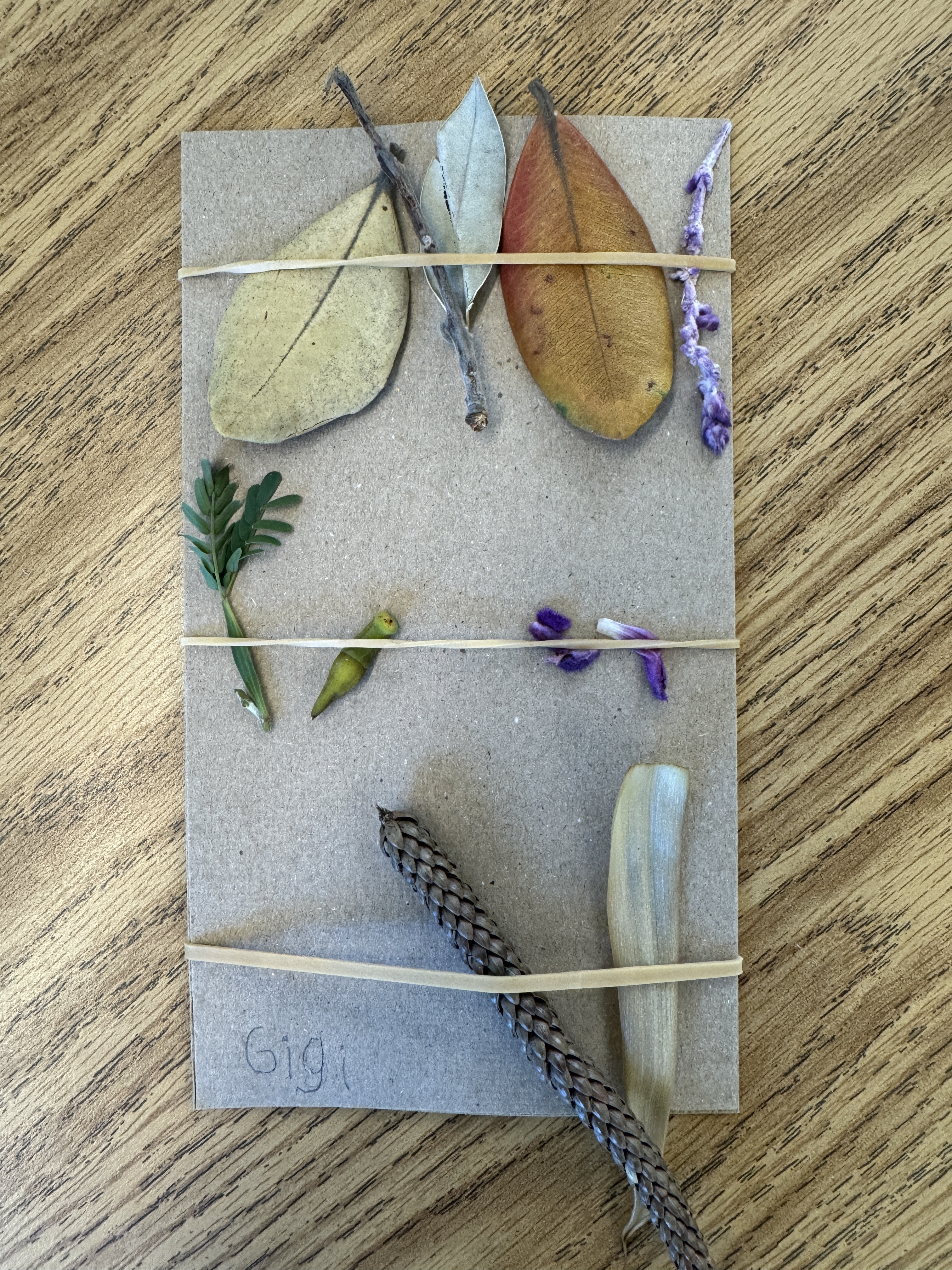
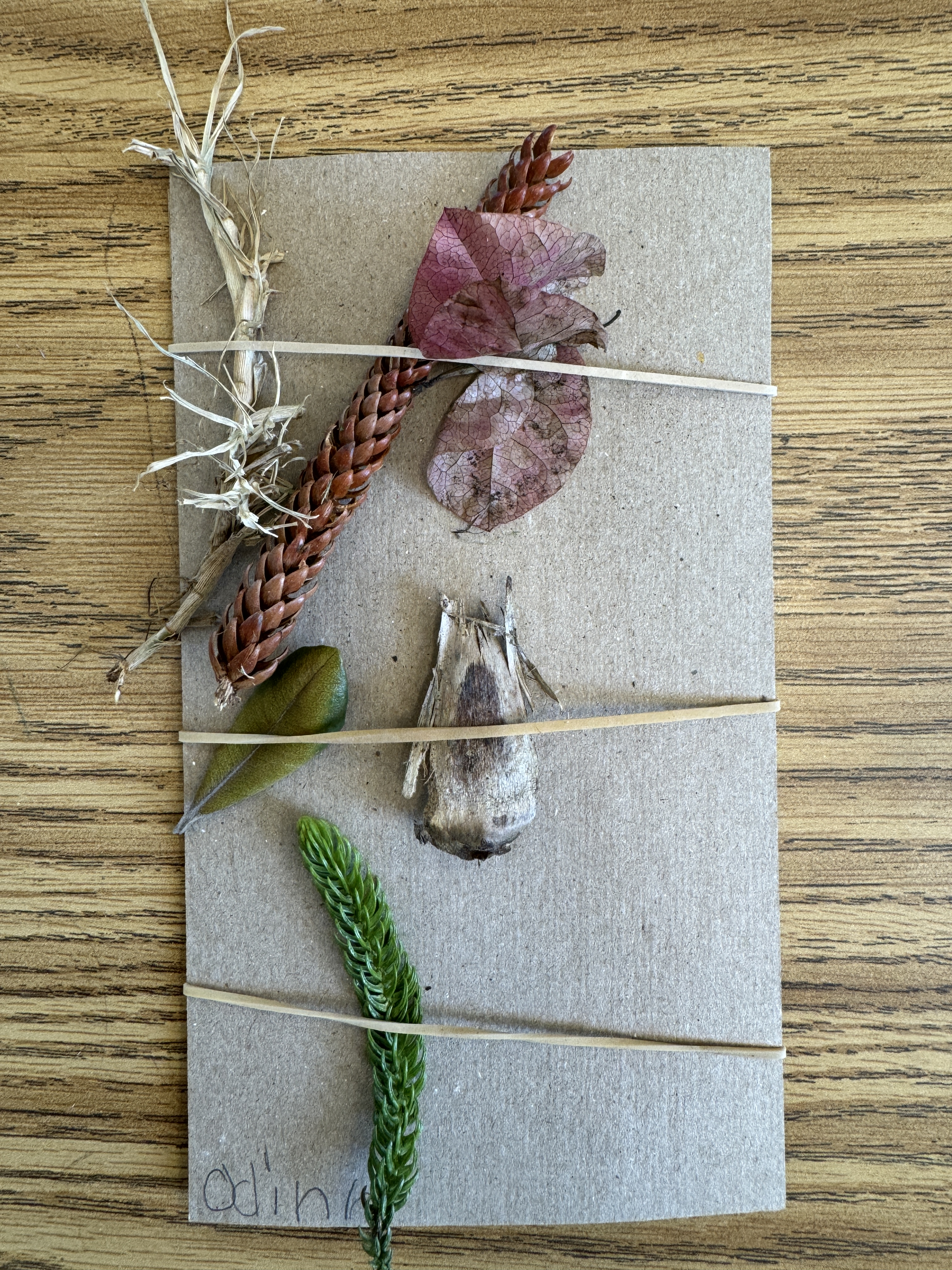
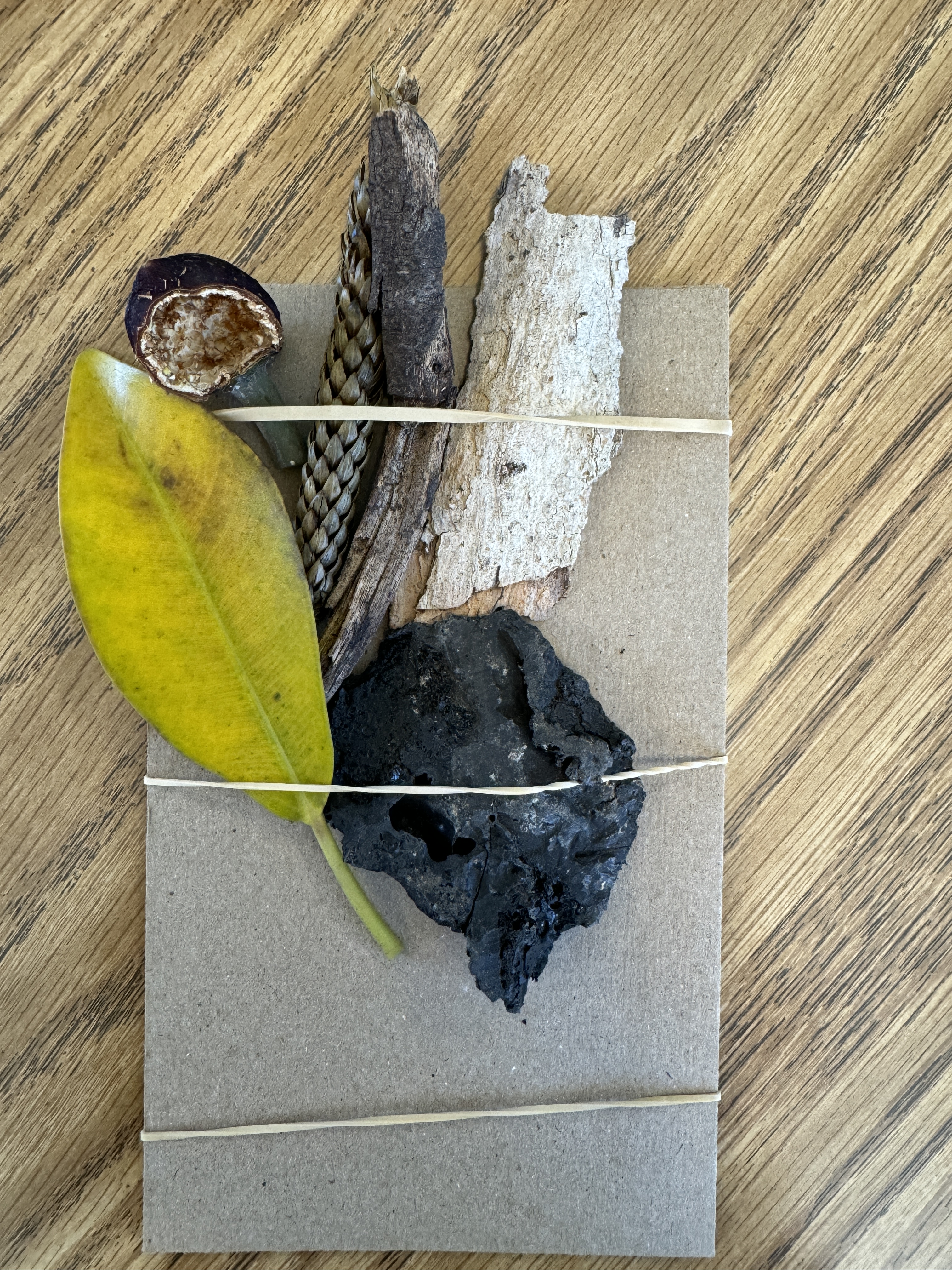
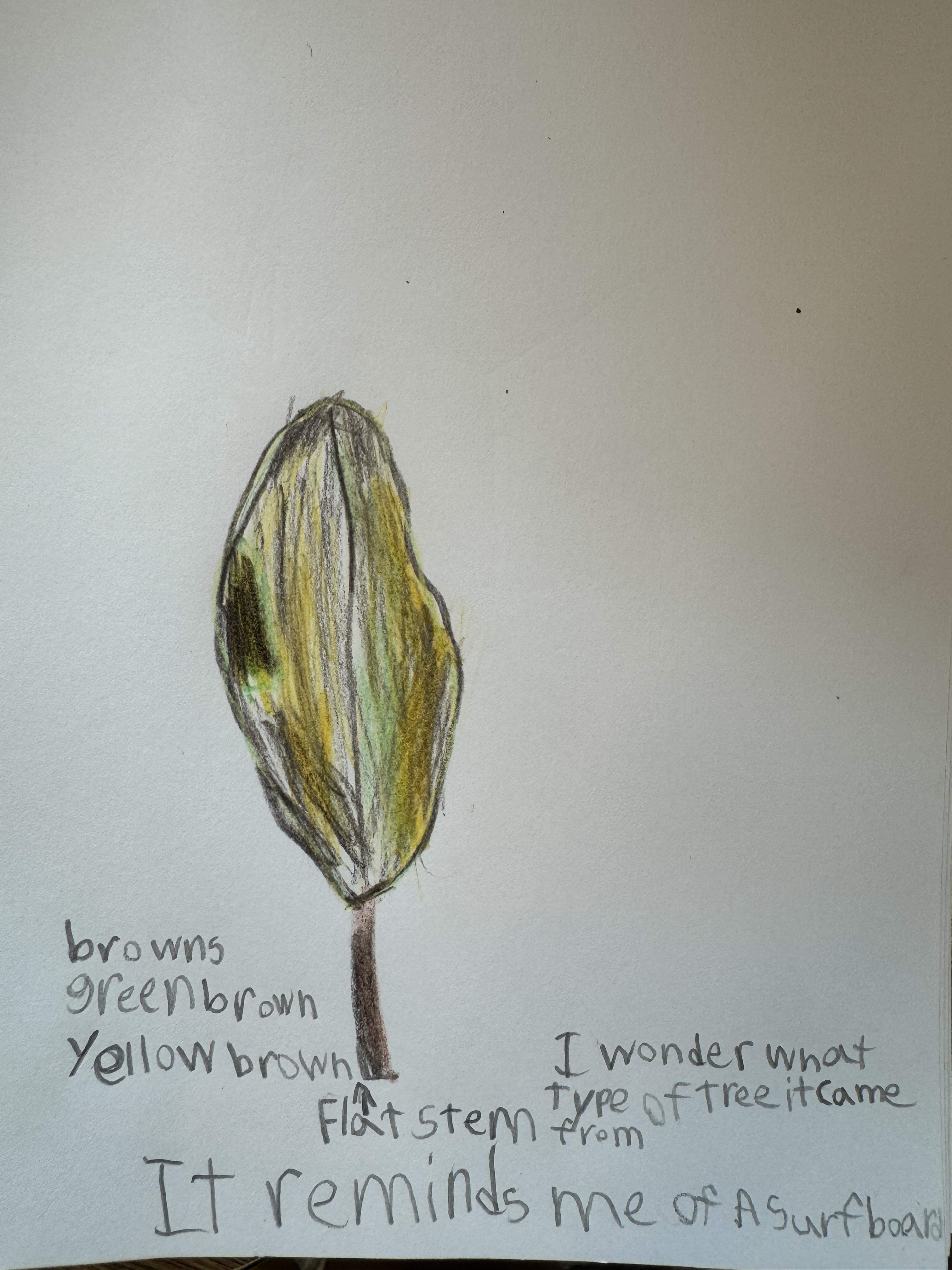
We’d been on a Wonder Walk the previous week, using nature collectors to pay attention to small natural items around our schoolyard. Students picked one and sketched it. They were small drawings, nicely done, and the perfect prelude to this introduction to Georgia O’Keeffe and her attention to detail. Knowing I had a bin of seashells stashed in a cabinet in my classroom, I pulled them out and picked out a selection of some of the most interesting–enough that every student would have variety to choose from and varied enough that the shells were mostly different from one another.
After reading Through Georgia’s Eyes, we talked about the way that O’Keeffe loved to make her paintings large, bringing attention to things others might otherwise miss. Students each picked a shell from my collection and studied it carefully. We took out our sketchpads. Students were encouraged to sketch the shell, filling the page with every detail they could. Drawing big is hard for young students, so practicing this technique is important. Then I gave them a larger piece of watercolor paper and a sharpie marker and asked them to draw their shell again, even larger!
The following day, after reading the second picture book about Georgia O’Keeffe, we pulled out the trusty trays of crayola watercolor paints, mixing colors in the lids to capture the details of the shells. They looked carefully again, noticing nuance in coloring and shading, figuring out how to best capture the beauty of their shell. They also painted a background color to help their shell stand out. The results were stunning! (I decided to photograph them with the shell to show how much their study of the shell influenced the paintings.)
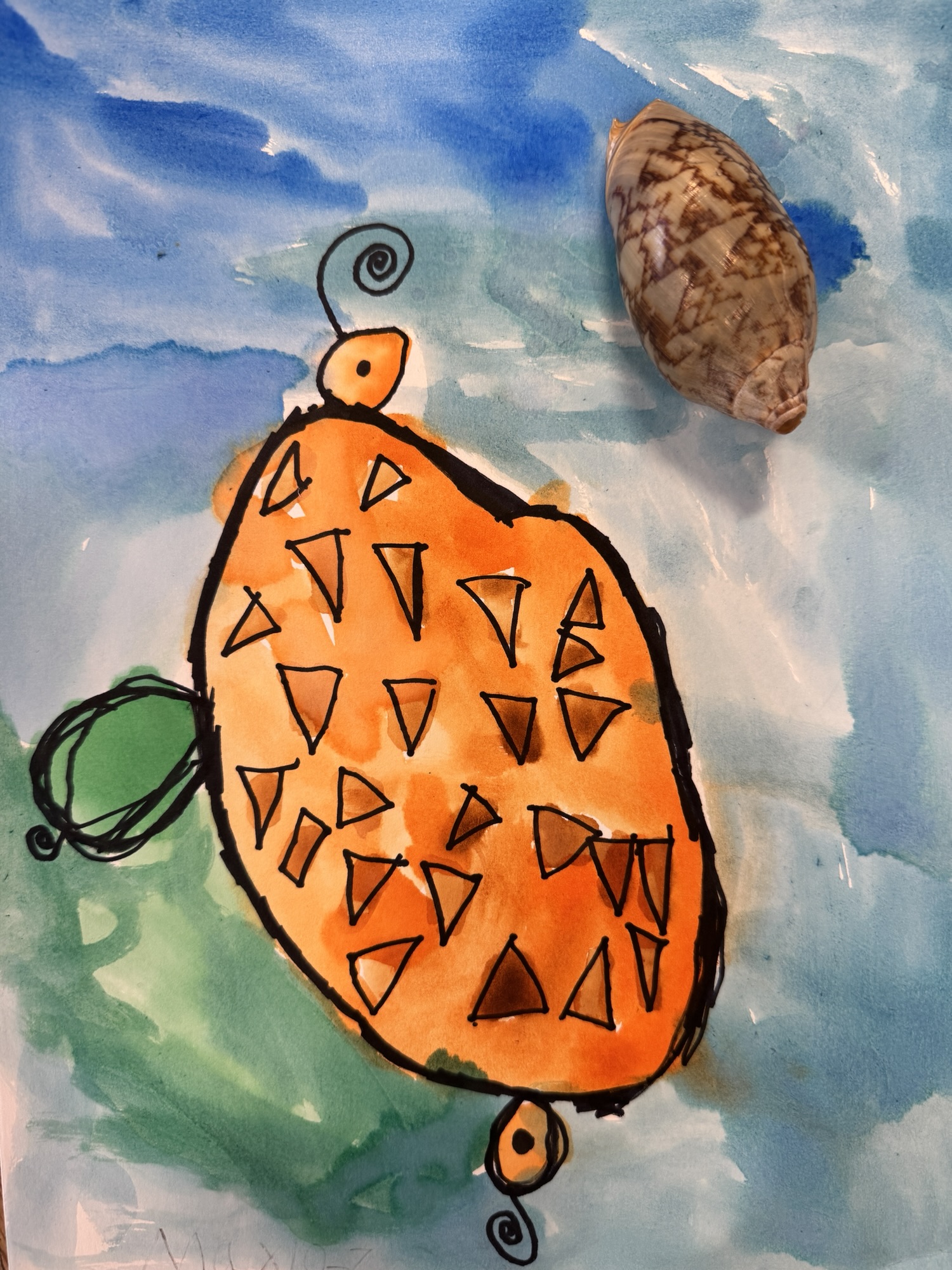
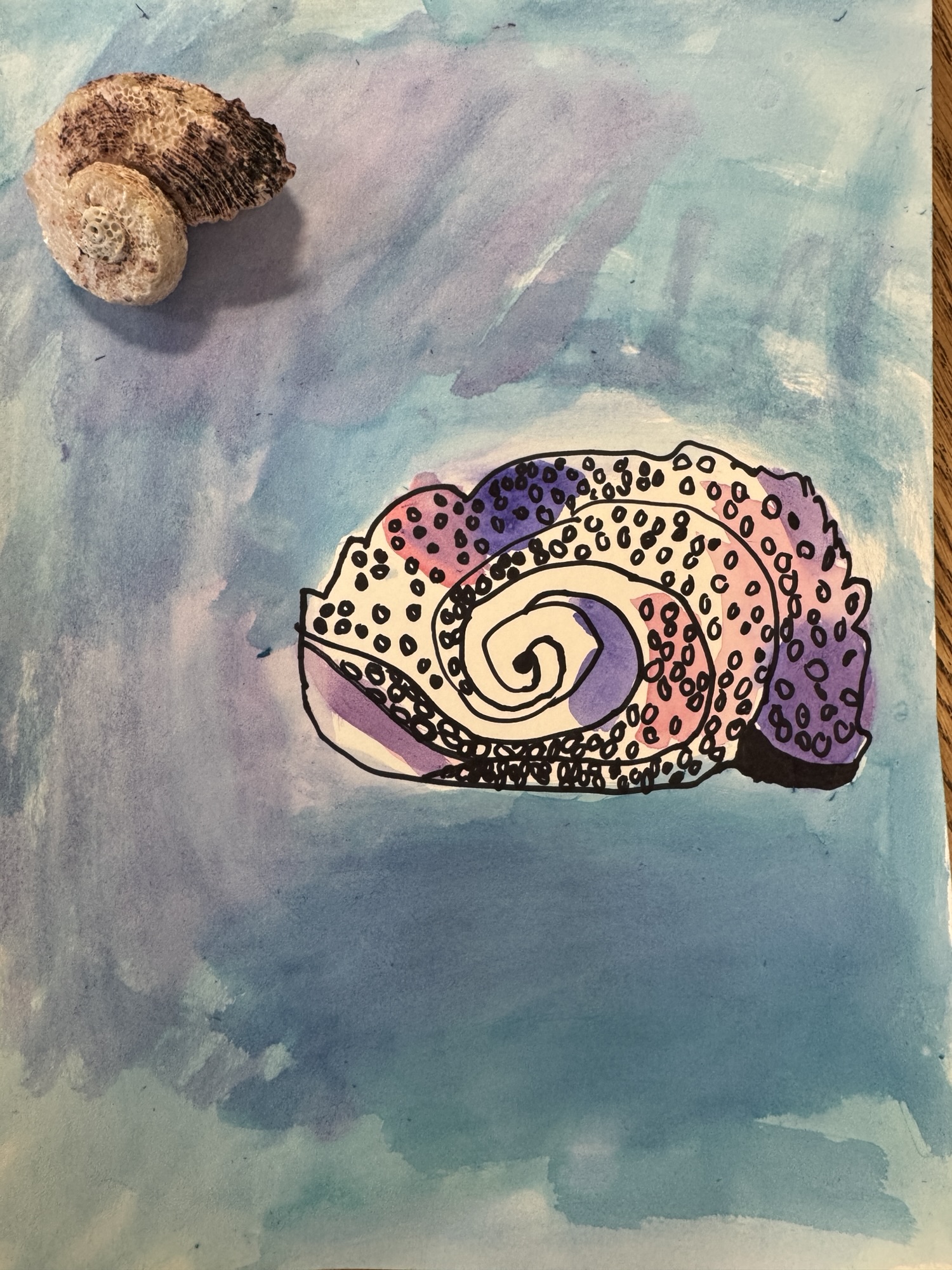
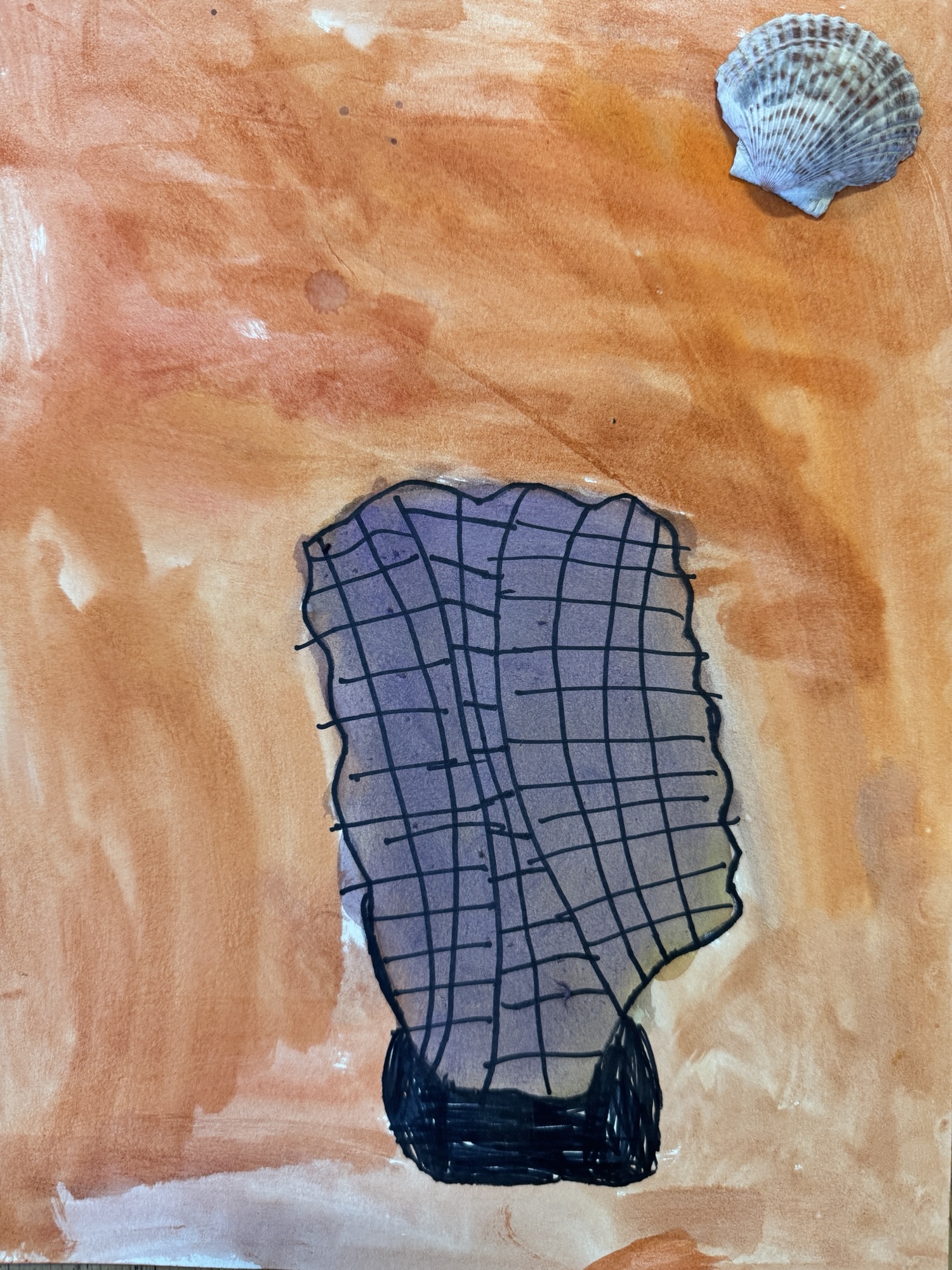
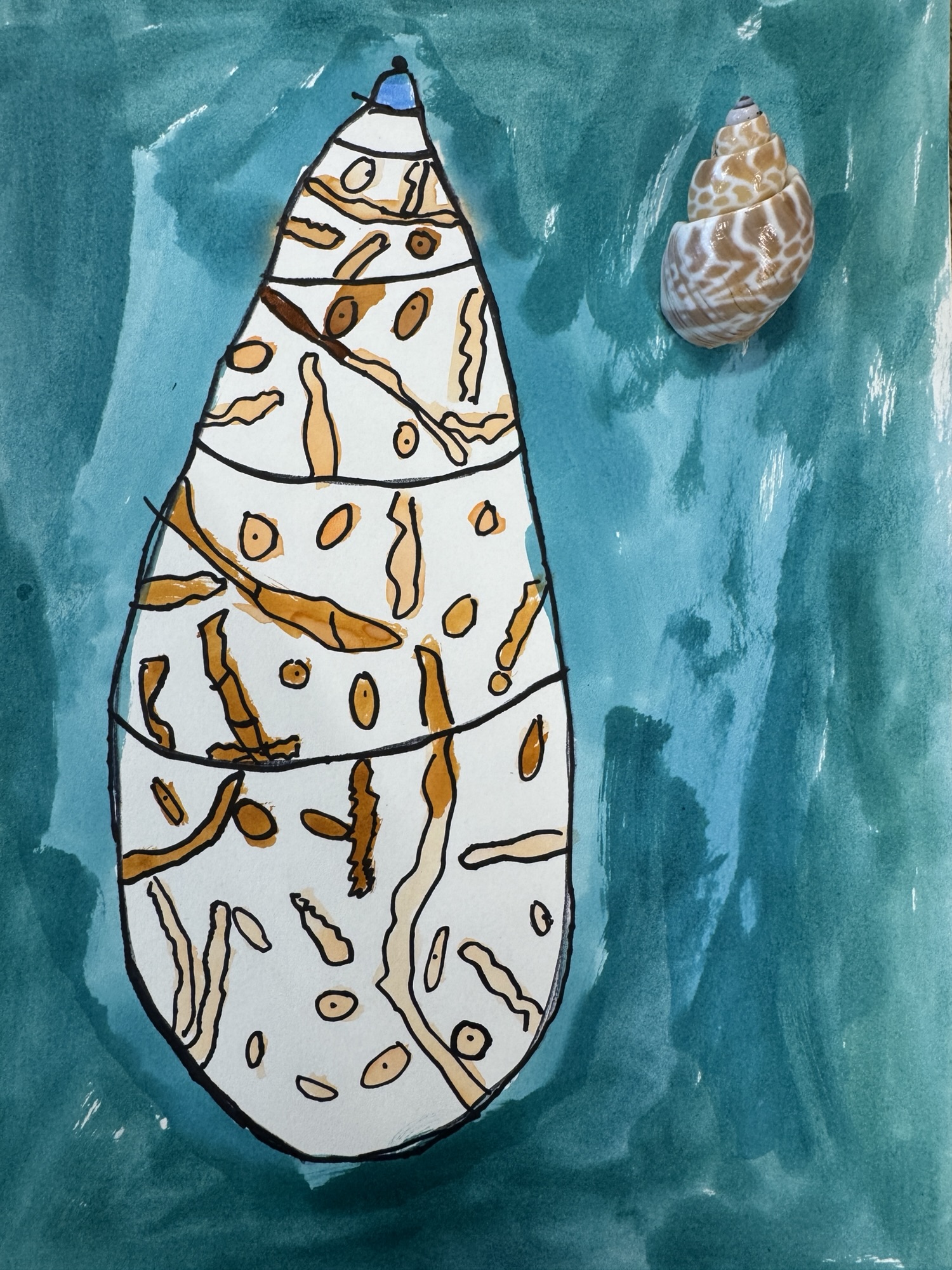
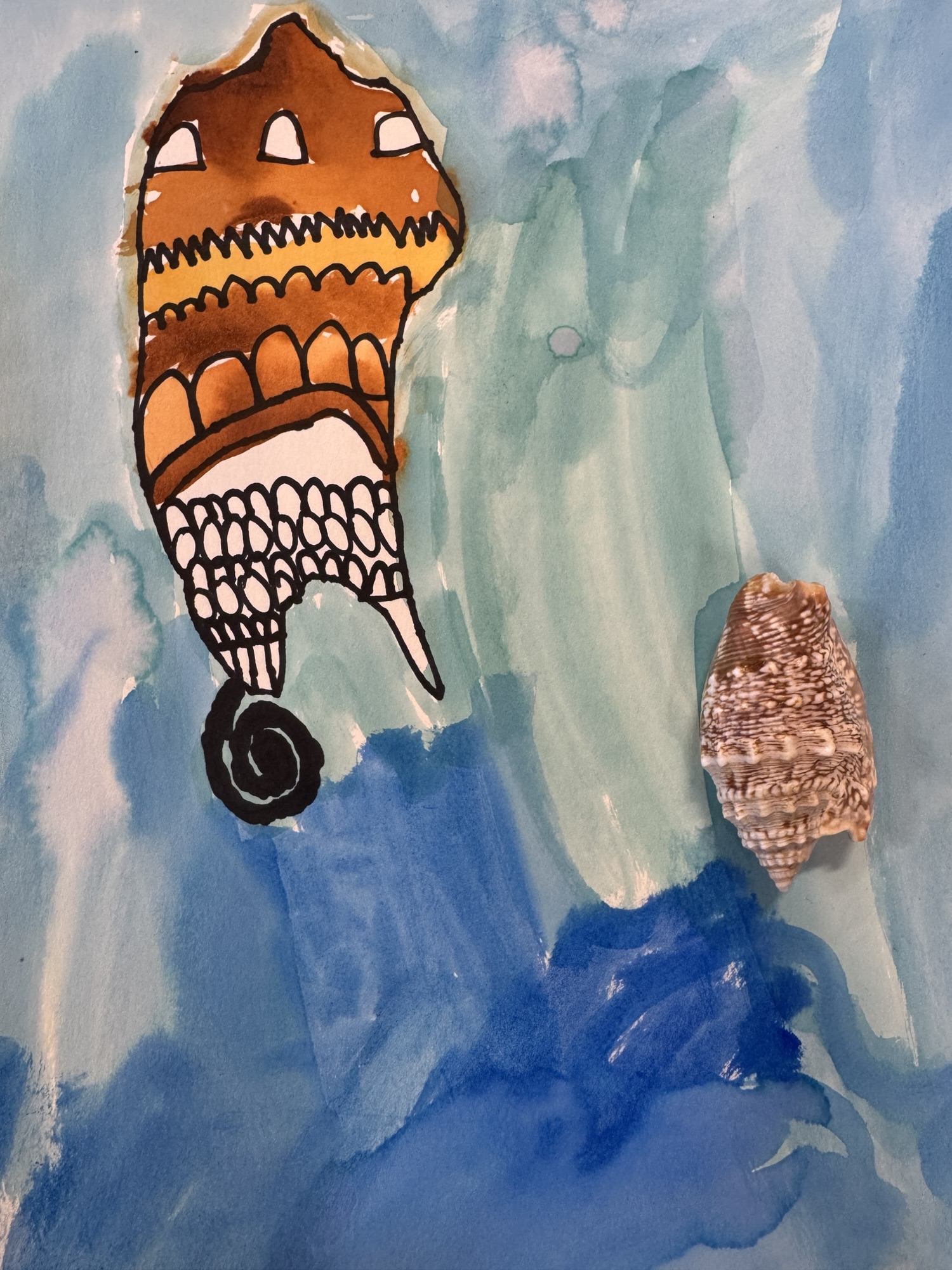
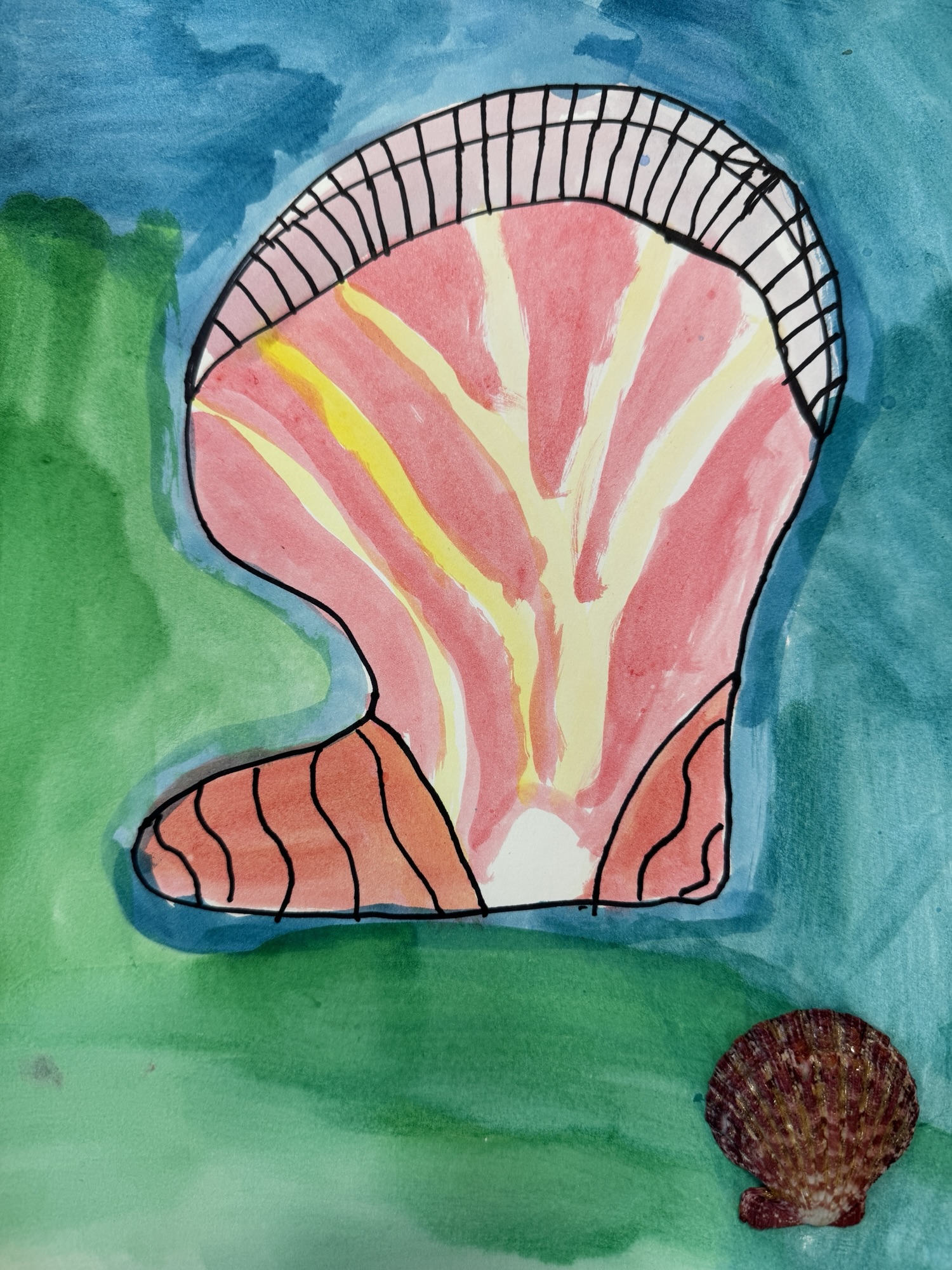
I was already excited about the work students were doing. These 6-year-olds were impressive with their attention to detail and care using watercolor paint–which can be unforgiving! My next request of them was something they initially found perplexing. I told them now we were going to paint our shells with words. What?!? I explained that our words were going to be the paint that helped others “see” the shell through our eyes. As is typical, I pulled my writer’s notebook out, took a close look at my teeny tiny shell, and started to think aloud about my shell. I wrote a few sentences, continuing to talk through my decisions. And then it was their turn.
You know that magic is happening when that hush falls over the room. First graders are not quiet writers so I get glimpses of their thinking as they work through words, help each other with spelling, ask questions about sounds, and speak the words they are putting on the page. I also knew something special was happening when no one was “done,” even when we had to stop for our reading groups and lunch. While my students were out of the classroom I walked around the room reading their words. Every single student was truly painting with words!
After lunch I gave students a few minutes to read through their writing and finish what they were working on. Then I pulled out the highlighters (first time this year!). I explained how I wanted them to use the highlighter–but first they had to pick a “golden line,” their favorite idea they had written about their shell. After highlighting we had a whip around where every student read their golden line out loud. My heart was full.
T wrote seriously, using all the time available to describe the shell.
My shell has a swirl in its window. Beige is the color that is the starting color but then white takes over. It has a pattern it goes purple to white. My shell has lines that curve to the end. My shell is very flat. In the inside there is white. If you touch its tip you would get poked on the finger. My shell has some green. It reminds me of a whale tail flaming in the ocean. My shell’s window is by the tip. It reminds me of a bucket of water filled. It’s my favorite shell.
M is an emergent reader and writer, working hard to capture sounds in words. This took effort and great perseverence to produce independently.
My shell has a triangle. My shell has a spiral inside. My shell has a window. My shell has pink.
 Thinking Through My Lens