On this first day of spring (or is actually the 4th day of summer?), I shared Raymond Souster’s poem aptly titled, “Spring” with the first graders in my class. I could hear them murmuring…that’s not a poem, it’t too short! This poem, made up of two short sentences, was perfect for this last day of parent conference week.
Our typical process with a weekly poem is that I read it aloud first, then students repeat the lines of the poem after me, and then they contribute what they have noticed. Today with this lovely short poem (maybe as short as our winter), I invited students to volunteer to read the poem aloud. So many volunteer readers at this time of the year, we heard the poem in voice after voice. (It’s about rain and roots meeting in a flower). Students noticed the two stanzas, the two sentences, a few even counted out the words. They recognized the science in the first stanza and the metaphor in the second. They even pointed out some phonics-related vowel patterns in the words. They illustrated the poem and added it to their ever growing poetry anthology.
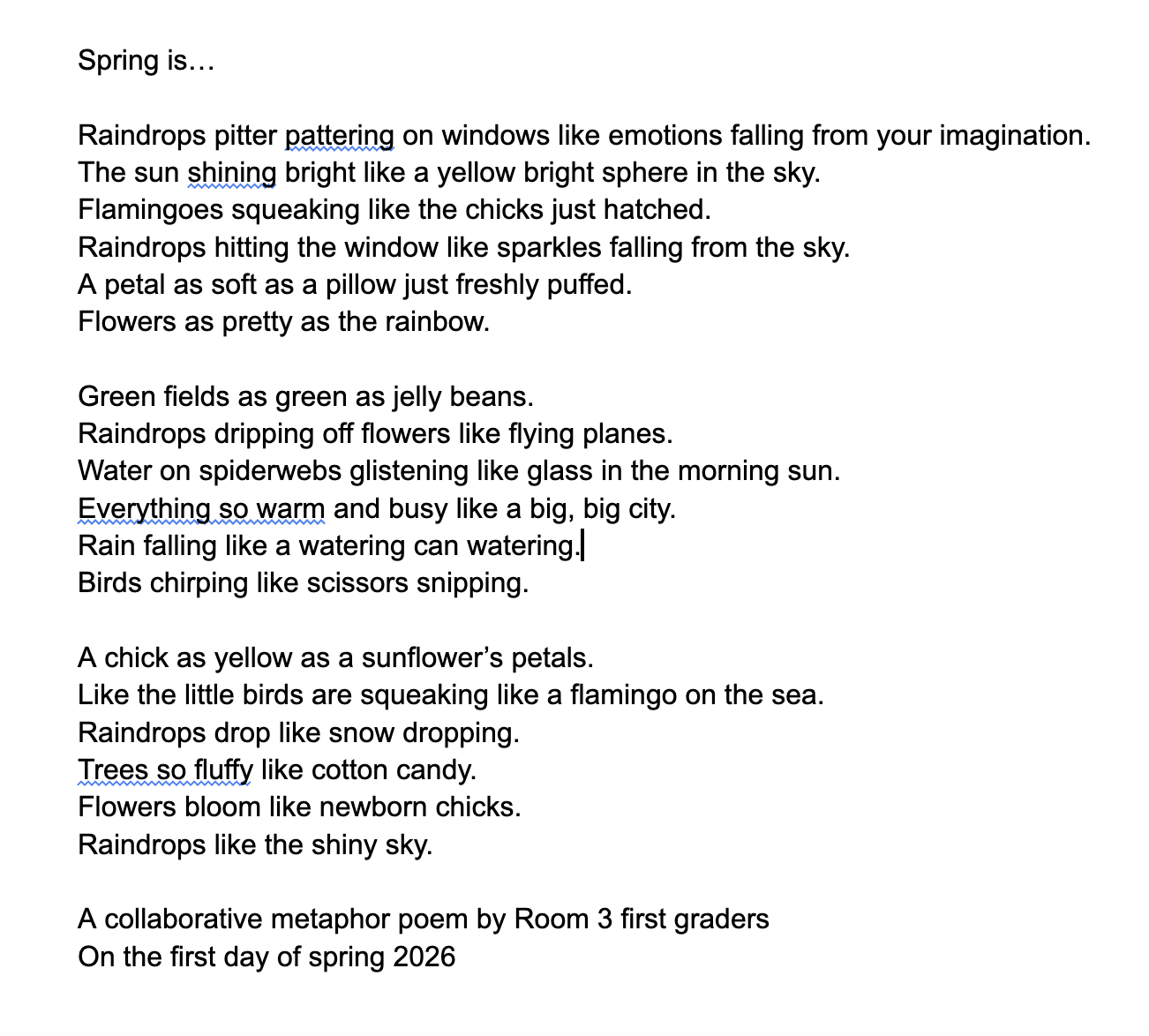
After recess I asked them to write a description of spring using metaphorical thinking. Actually, we had practiced some of these orally earlier in the day, and they were so confident then that I asked them to write three metaphors for spring (on the hopes that they would be varied and more interesting as they pushed past their first attempt). I handed them each a large index card and asked them to write their metaphors. A calm settled, and of course a few students asked if they could write more than three.
I’m counting this as a success when not a single student expressed doubt or mystery about what I was asking them to do…and that everyone easily wrote more than one spring-inspired metaphor. I collected their metaphors and picked one from each child to produce a collaborative Spring Is… metaphor poem.
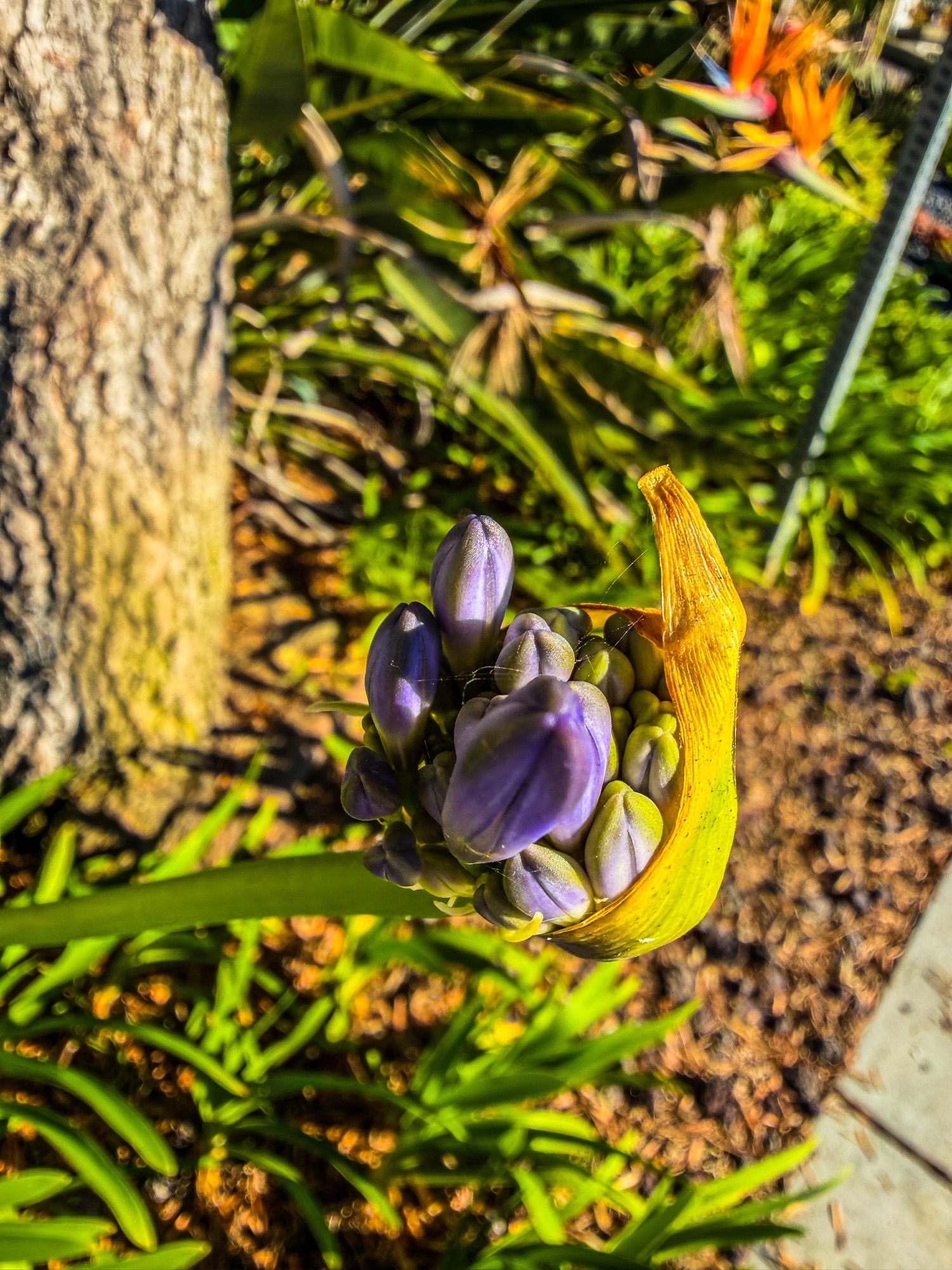
And on yesterday’s neighborhood walk I couldn’t resist stopping to take a photo of this flower beginning to unfurl–a metaphor of spring in a photo for me!
What would you contribute to this collaborative metaphorical collection about spring?
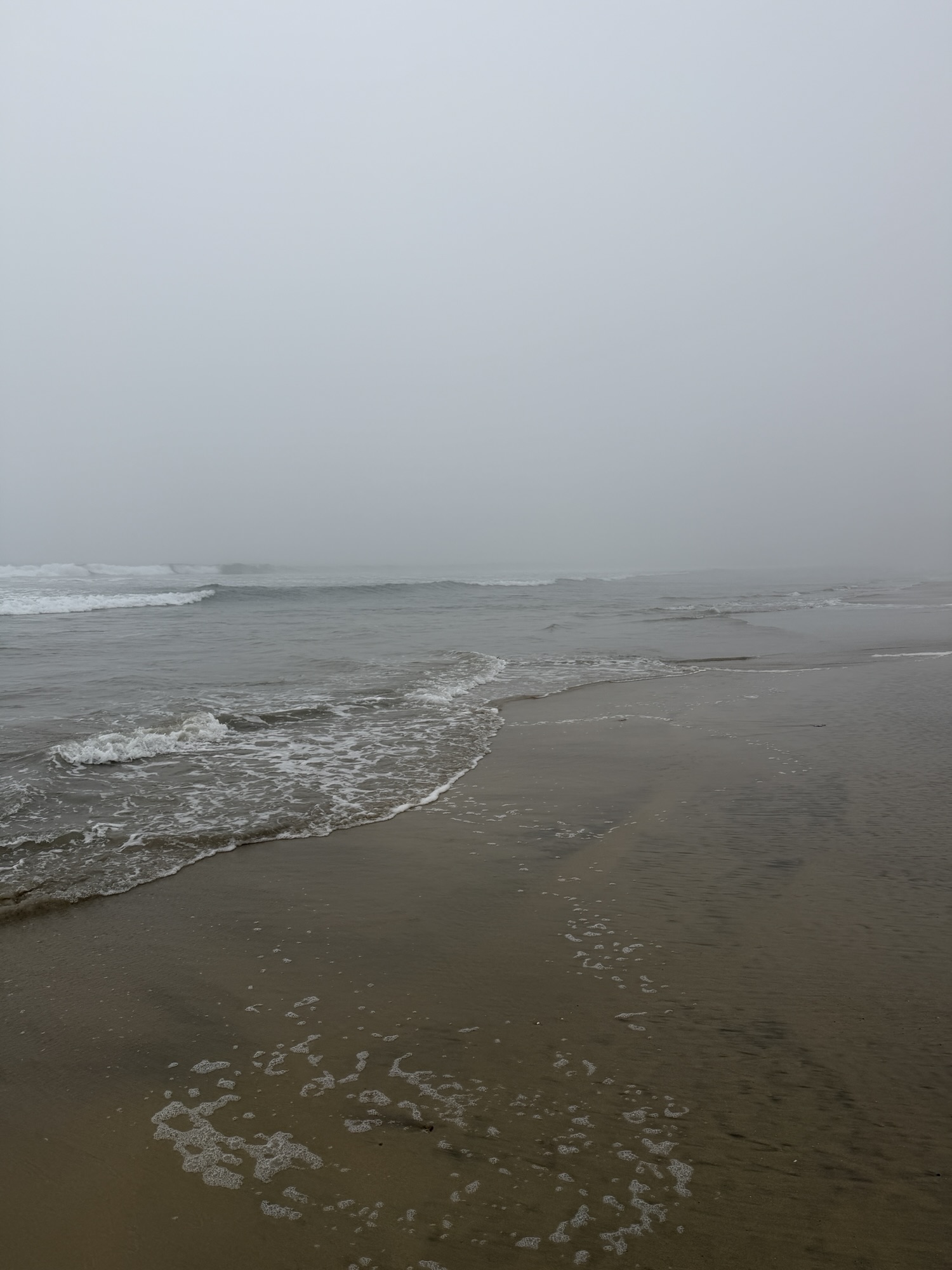
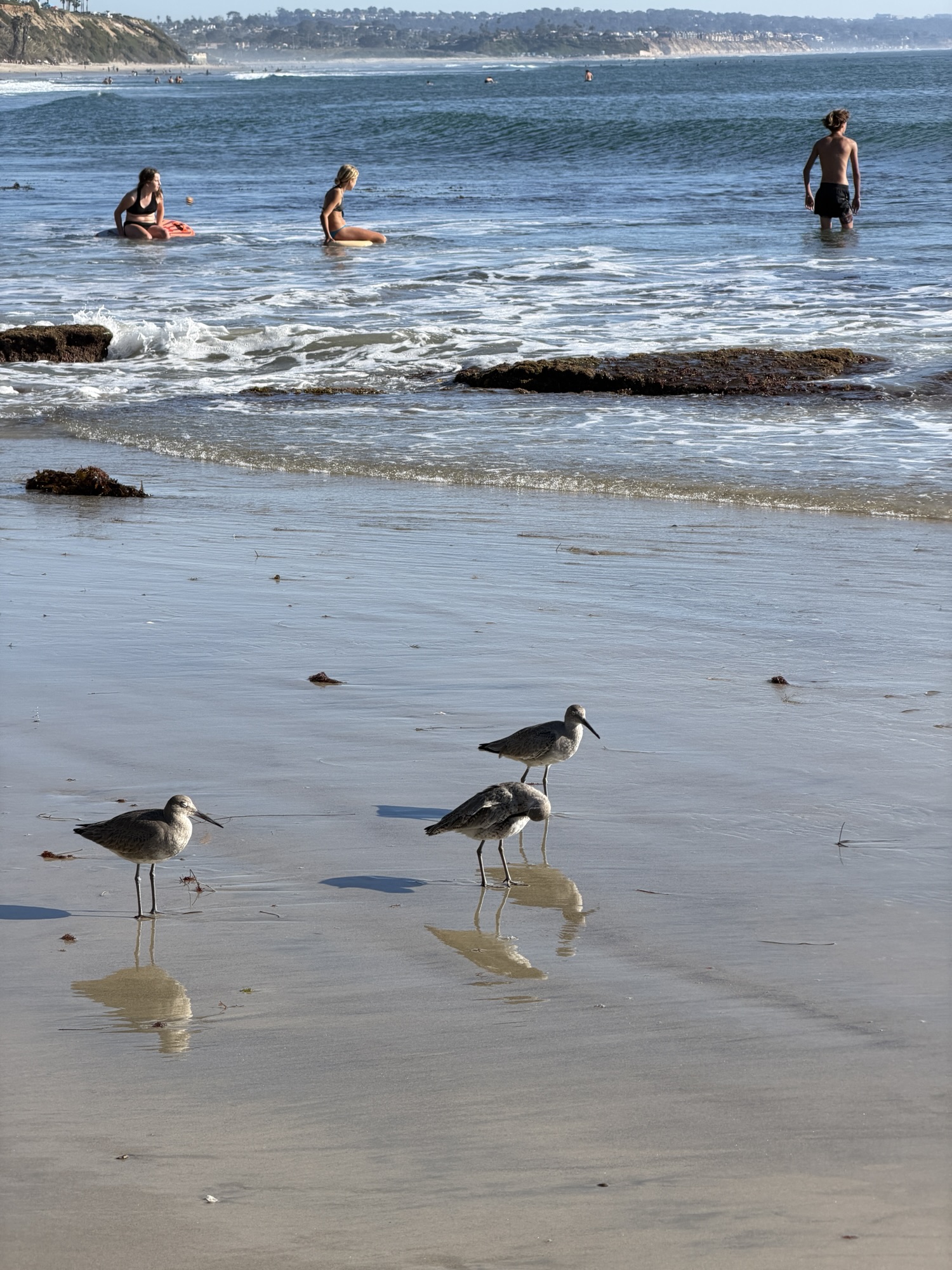
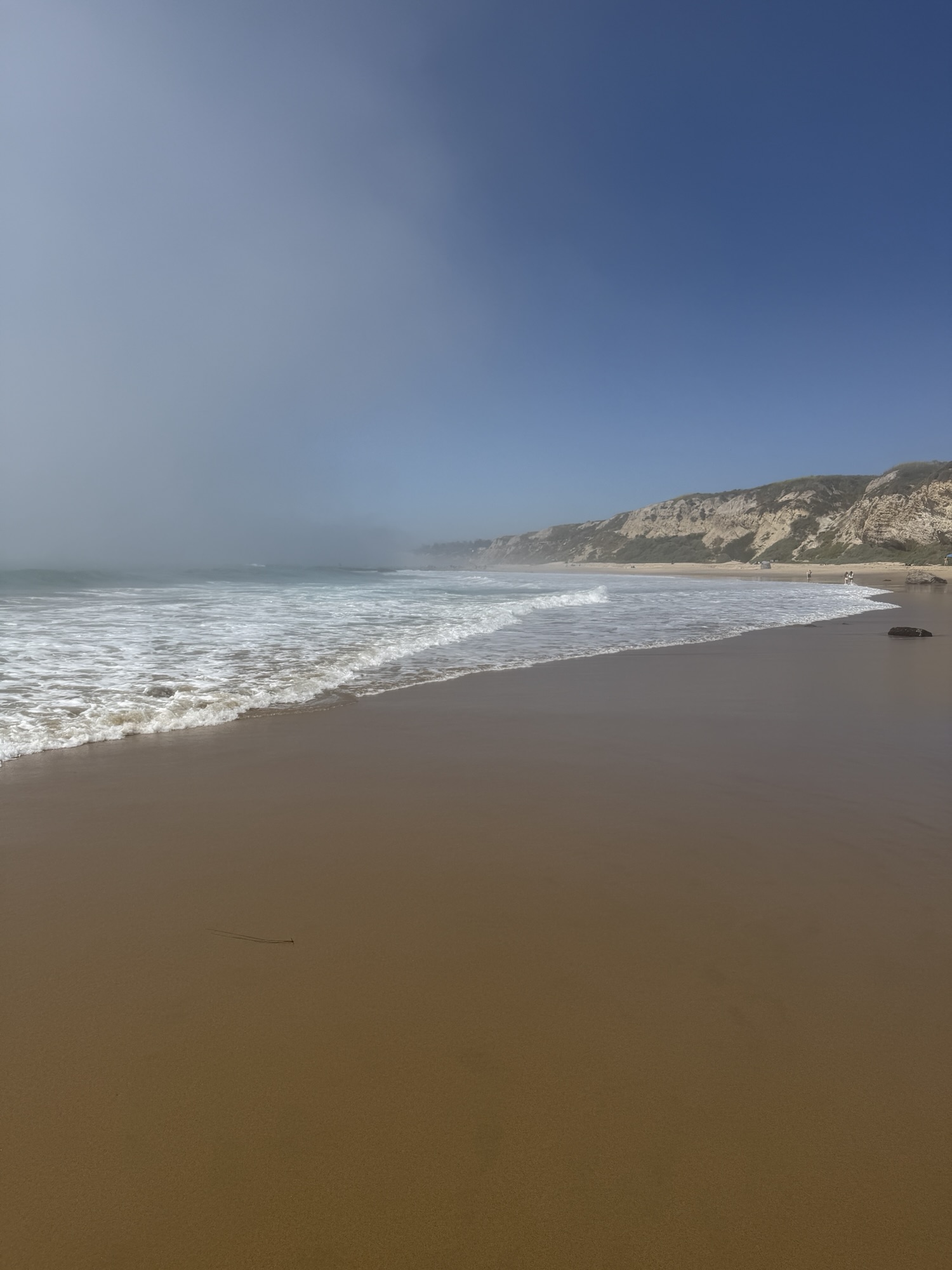
Walked in fog so thick that it was like walking in a tunnel. Cool and moist with a dash of mystery. The next day dawned bright and clear with record breaking highs for March. Both were wonderful experiences—I am grateful to have beach walks as an after work option.
Monday afternoonTuesday afternoon
Engaged in lively conversations with 18 families about their child’s progress as first graders. Many laughs and stories—first graders are such interesting (and often funny) human beings.
Had my eyes dilated and had that long solitary wait in the exam room before the doctor arrived to examine my eyes. Left with the lingering headache and sensitive eyes, but both are temporary. (Thankfully!)
Continued to read Margaret Atwood’s memoir (of sorts), Book of Lives. It’s long (600 pages), lively, and odd. And I keep reading it. Will I finish it before the library loan is up in 8 days? That’s yet to be determined.
Flip flopped dramatically between healthy eating (my husband made a Chilean vegetable stew last night with butternut squash) and a quick dinner the night before at In and Out with the best french fries! Will I ever stick to strictly healthy eating? Probably not.
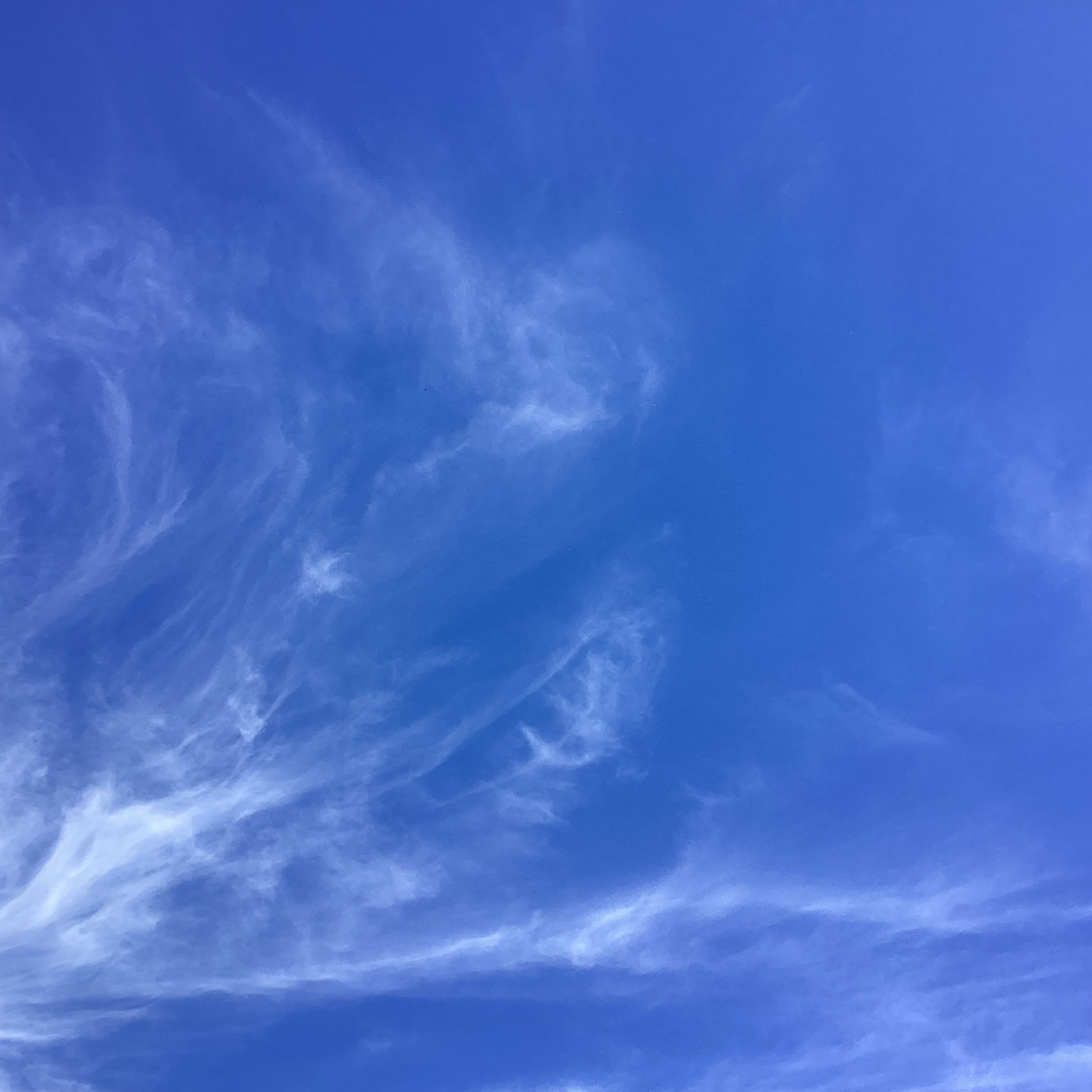
Sometimes I feel like I can only see the world through smudged glasses, details obscured or invented to serve someone’s agenda rather than the greater good. Like walking in dense fog, you can only see what is immediately in front of you rather than any insights the big picture offers.
The classroom can be like that too. Vision blurred by the marine layer created by the chemistry in the room. It’s too easy to lose focus and only see the largest obstacles rather than picking out the beauty in the diversity of details that appear when you are able to shine light on them.
It’s report card time in my school district, a time that forces me to see past the marine layer as I consider the strengths and growth of each child in the room. It’s a reminder to look and listen carefully, to find the spaces and places where the sun turns the sky from gray and colorless to vibrant and so blue that possibilities are endless.
Today we decided to drive north to walk a beach we love, but don’t get to too often. We braved some crazy traffic (a parade was taking place a block off the main road, causing gridlock) as we hoped the heavy fog would burn off by the time we arrived at the beach.
It was noon when we arrived, later than we planned for. The sky was blue and bright with sun at the parking area. As we walked toward the beach, we walked into the fog. It was warmish (high 60s) and the tide was low. As we walked south along the shore, we explored the tide pools exposed by the low tide. Sea anemones were abundant. I watched hermit crabs in their adopted shells skitter in the shallows. We could feel the damp on our faces as we walked, and the beach ahead of us disappeared. Landmarks that tell us how far we’ve gone and how much farther we have to go disappear, changing the landscape, making the familiar unfamiliar.
Near the end of the stretch of beach we walked, the sun prevailed and we stopped to watch surfers, seemingly too close to the cliffs, ride waves and duck into the brilliant translucent tubes of water. We headed back, finding the fog again…a little less dense this time. At one point I noticed the beach split between the fog and sun.
Can I read the sky like others read the palms of hands or the remains of tea leaves? Does this mean that clarity is right in front of me? Or does it mean that I need to keep wading through the fog, wiping away those smudges, shining light into dark spaces until it becomes second nature and I know clarity when I see it?
Earlier this week I read the book, Be a Treeby Maria Gianferrari to my first grade students. I’m so fortunate to have an amazing librarian at my school who seems to know just what books I’d love to read before I’ve ever heard of them! Anyway, Be a Tree is a gorgeous book that is a blending of factual information about trees and metaphorical thinking and comparisons of humans and their communities to trees and their ecosystems. And the illustrations by Felicita Sala are worth just sitting and poring over.
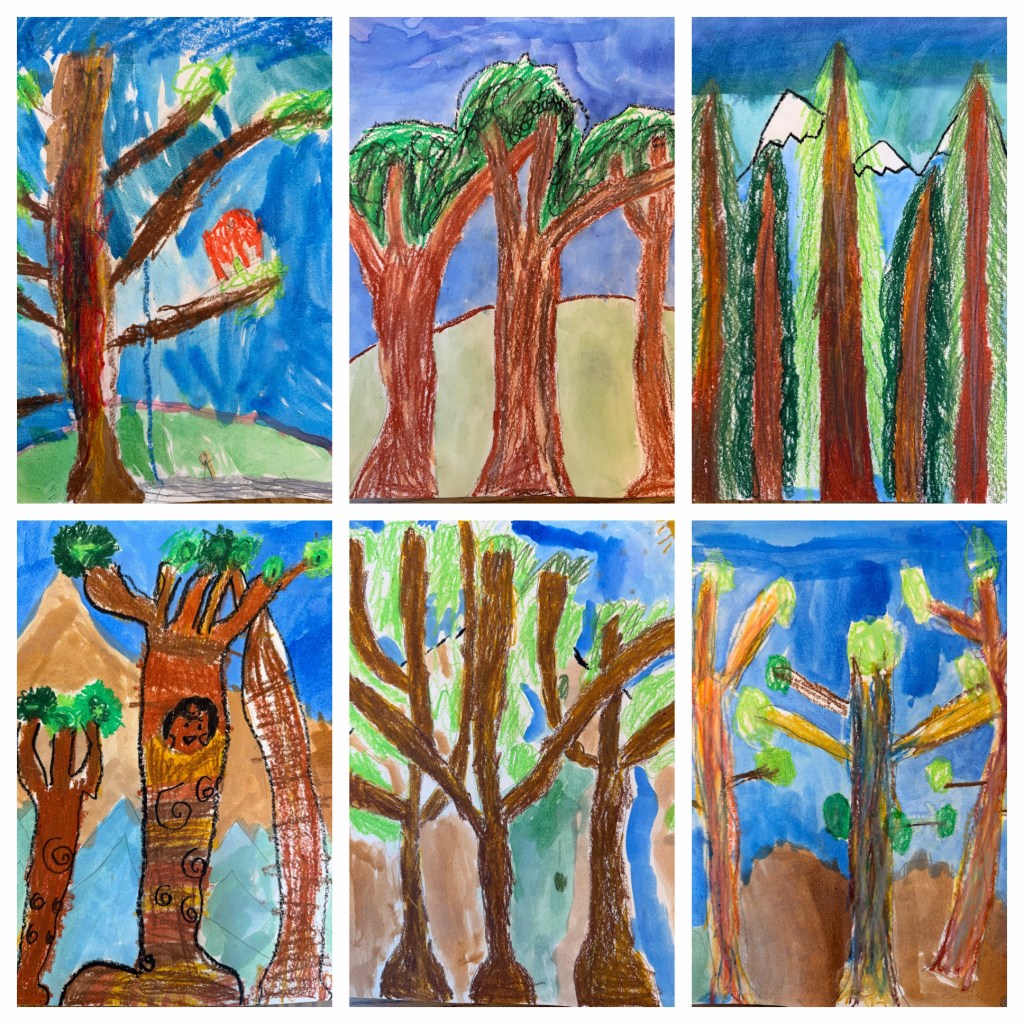
I mentioned last week that I had taught my students some photography techniques, one of which was the bug’s eye view. So after reading and examining the photos in Be a Tree, we took out our sketch books and practiced drawing a forest (okay, 2 or three trees) from a bug’s eye view…with a real focus on the trunk, looking up like a bug would from the ground. Then we also took some times to think and write a list of all the ways we need and use trees.
The next day we sketched our forest again, this time on larger watercolor paper and then used oil pastels to blend colors to create texture and depth on the trunks and branches. Today we pulled out our watercolor trays to paint in the backgrounds. Honestly, the results have exceeded my expectations.
First graders also tried their hand at writing some tree metaphors. Here’s a few:
The roots can be the tentacles of an octopus.
Trees shake their branches like hands waving.
Pine trees are as sharp as mountain tops.
Tree bark is as brown as chocolate ice cream.
I love watching students grasp a new technique and/or way of thinking. Their ability to identify a metaphor is currently much stronger than their ability to generate one of their own. But that’s all part of the learning process. and the beauty of giving space to try on new ideas.
And there’s nothing better than wrapping all this learning in an appreciation of nature and all that it offers. There’s so much to learn from trees…and kids.
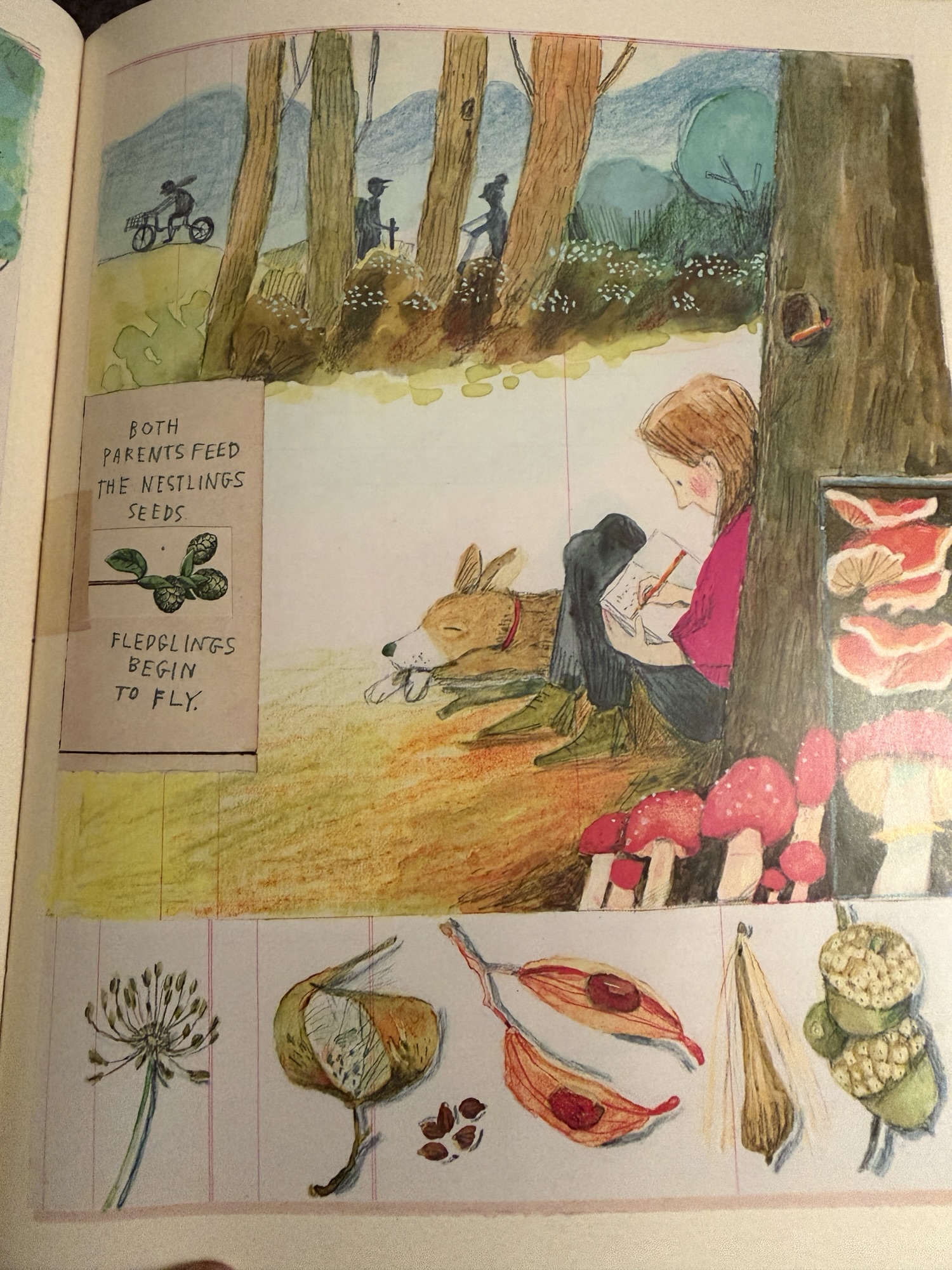
Earlier this week my social media feed introduced me to the picture book, Goldfinches by Mary Oliver, illustrated by Melissa Sweet, published this week. I was immediately drawn in, quick to look up this Mary Oliver poem. I absolutely love Melissa Sweet’s art–and have many books she has illustrated. I resisted purchasing the book for a few hours, then relented and pushed the “buy” button. It arrived on my front porch this evening.
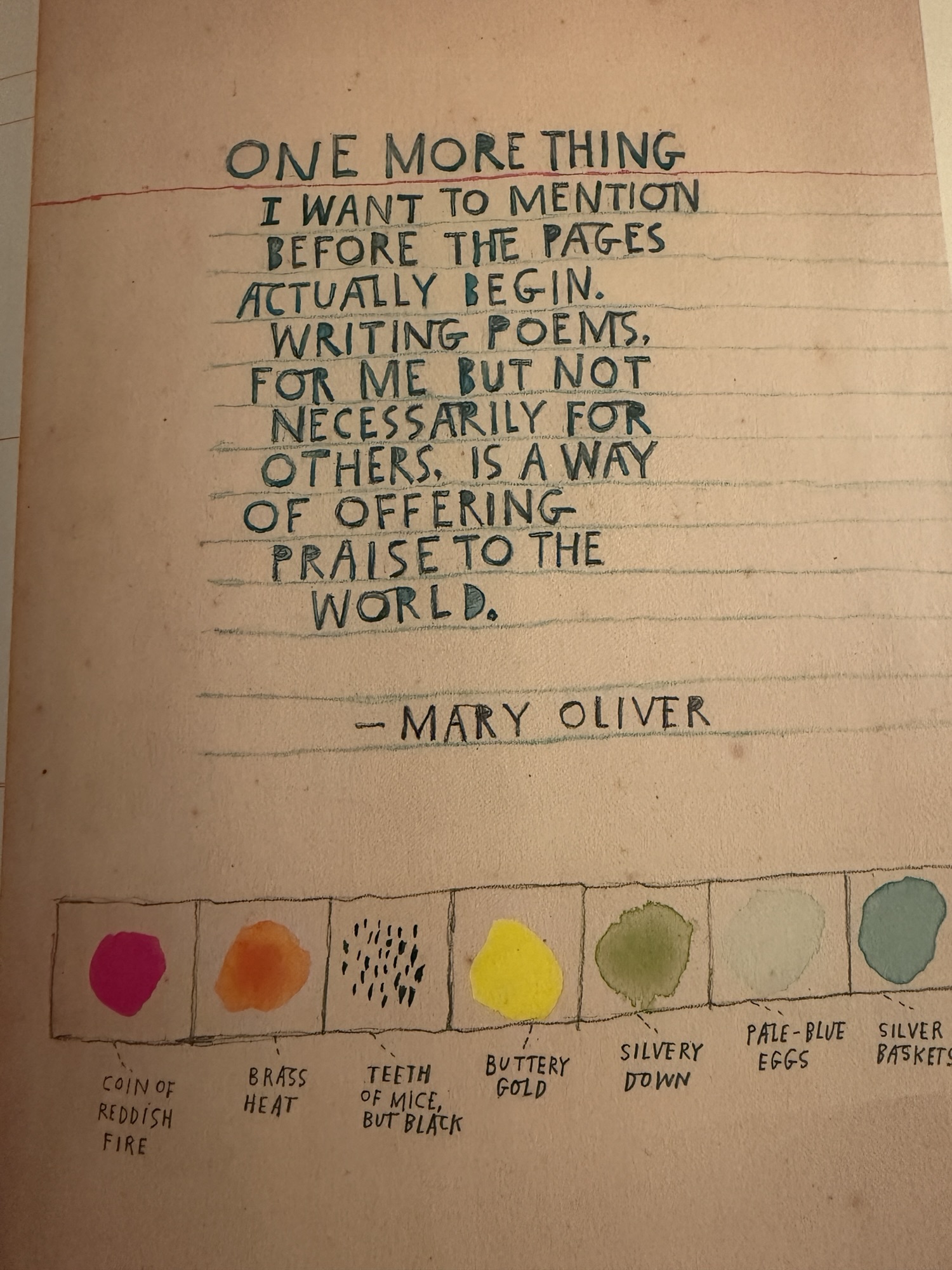
The brilliant pink of the cover along with the word Goldfinches embossed in gold had me swooning. As I open the cover I am greeted with a quote from Mary Oliver (I did check, she died in 2019) that resonates. Writing poems as a way of offering praise to the world…yes. Of encouraging close observation in the natural world. Of paying attention and appreciating what is in front of you. I know I will be using this book with my students soon.
If you asked me about a favorite poet, I might not mention Mary Oliver. I would probably say Naomi Shihab Nye (I love Valentine for Ernest Mann). I might mention Pablo Neruda (Ode to my socks or Ode to an Onion come to mind). I do love many Mary Oliver poems…and I have been discovering so many more since one of the families in my class this year gave me a copy of her collected works. I was not familiar with Goldfinches until this week. If asked my about my favorite poet today, I might just answer, Mary Oliver.
In addition to the gorgeous illustrated poem, this book also includes back pages. It includes Mary Oliver’s poem written in its standard way along with a copy of a bird list written by her. There is also a note from Melissa Sweet that begins with the Mary Oliver quote:
No poem is about one of us, or some of us, but it is about all of us.
The note includes Melissa’s process of research and learning about goldfinches so she could effectively illustrate the poem along with descriptions of Mary’s forays into the woods as a child–even stashing pencils in trees so she would always have one to write things down when inspiration struck. I love that Melissa Sweet creates pages that are like a nature notebook, including notes about the birds along with illustrations of plants.
It was love at first sight for me with this book. I know I will continue to pore over it, studying both the art and words (and the birds I see outside my own place) so I can use it effectively with my students. I can only hope they will love it as much as I do…and connect to Mary Oliver’s beautiful poem and Melissa Sweet’s amazing artwork.
For nearly 14 years I have been taking a photo (nearly) every day and posting it to social media, specifically to Instagram (you can find me @kd0602). In many ways it is a part of my writing practice. The camera helps me pay attention and when I pay attention words begin to flow. (I also started my blog at about the same time)
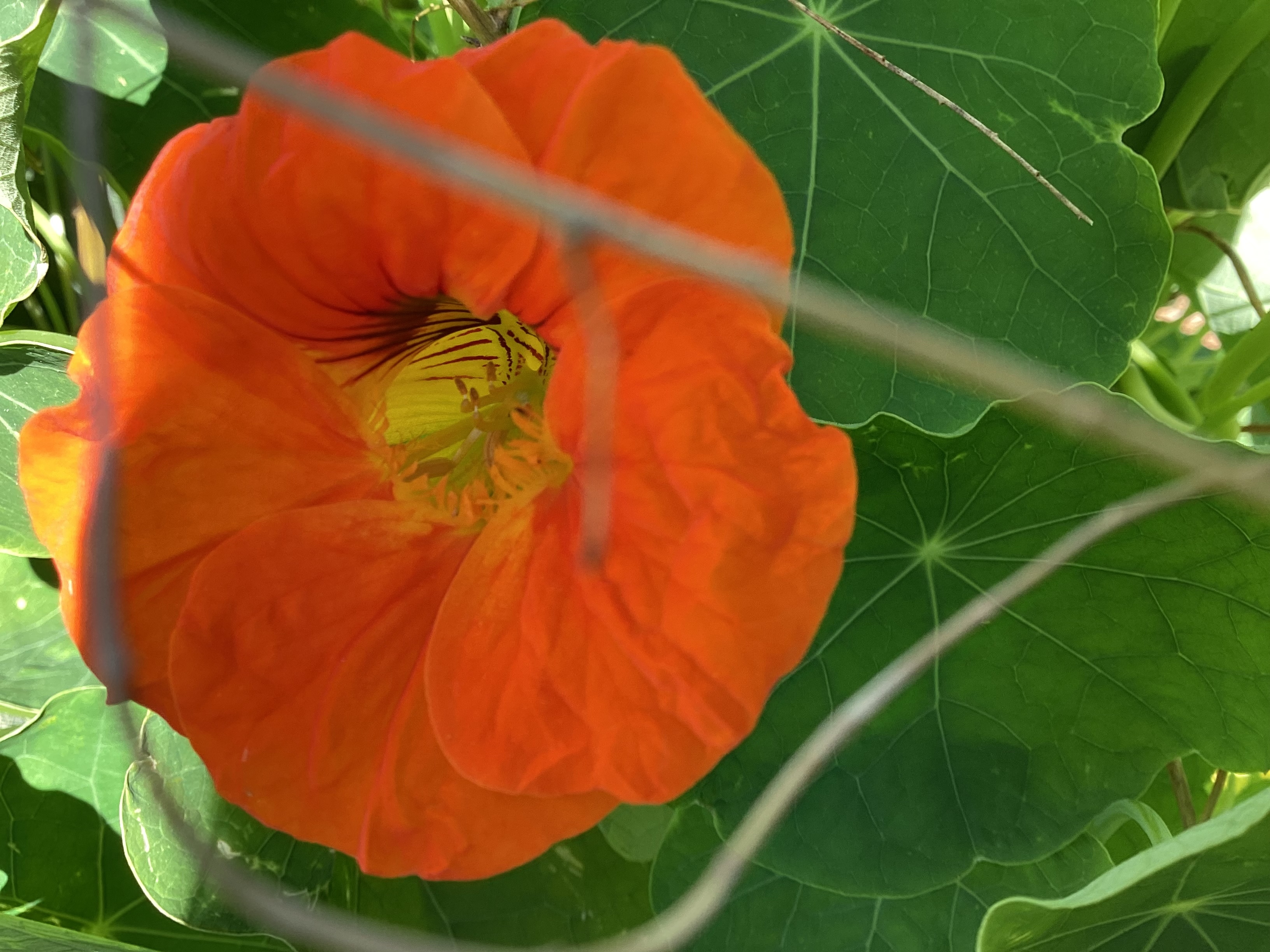
I’ve gotten in the habit of sharing my photography practice with my students, specifically teaching them some techniques to try on in their photography. Last week I showed first graders examples of photos taken from a bug’s eye view, a bird’s a view, and using the rule of thirds. They were excited to try this out! We headed out to our school garden where students were to take three photos using each technique. (And to try not to all take the same photos!). We returned to the classroom to take a close look at the 9 photos and select the one that would then become the basis of the writing we would do.
I was pleased with these photos taken my 6 and 7-year olds. I can see the bug’s eye view, the rule of thirds, and the bird’s eye view (and my students were eager to explain their perspective to me!). We are so fortunate to have such an amazing space to practice our photography.
Before we began writing, I read Kwame Alexander’s How to Sing a Song,a beautiful book filled with figurative language. We’ve been working to add metaphorical thinking to our writing (similes and metaphors). After reading and talking about the book, we began thinking about how to write about the photo we had taken.
The student who took the photo of the orange nasturtium wrote:
How to Grow a Garden
First you put a seed in a ground like putting a baby in its crib. Then you water it with care and let it grow for a little while. Now you have an orange flower. Inside there is yellow, black, and very light green. The petals are crinkly and bumpy. It has little yellow gold flaky things inside like crumbs from crackers.
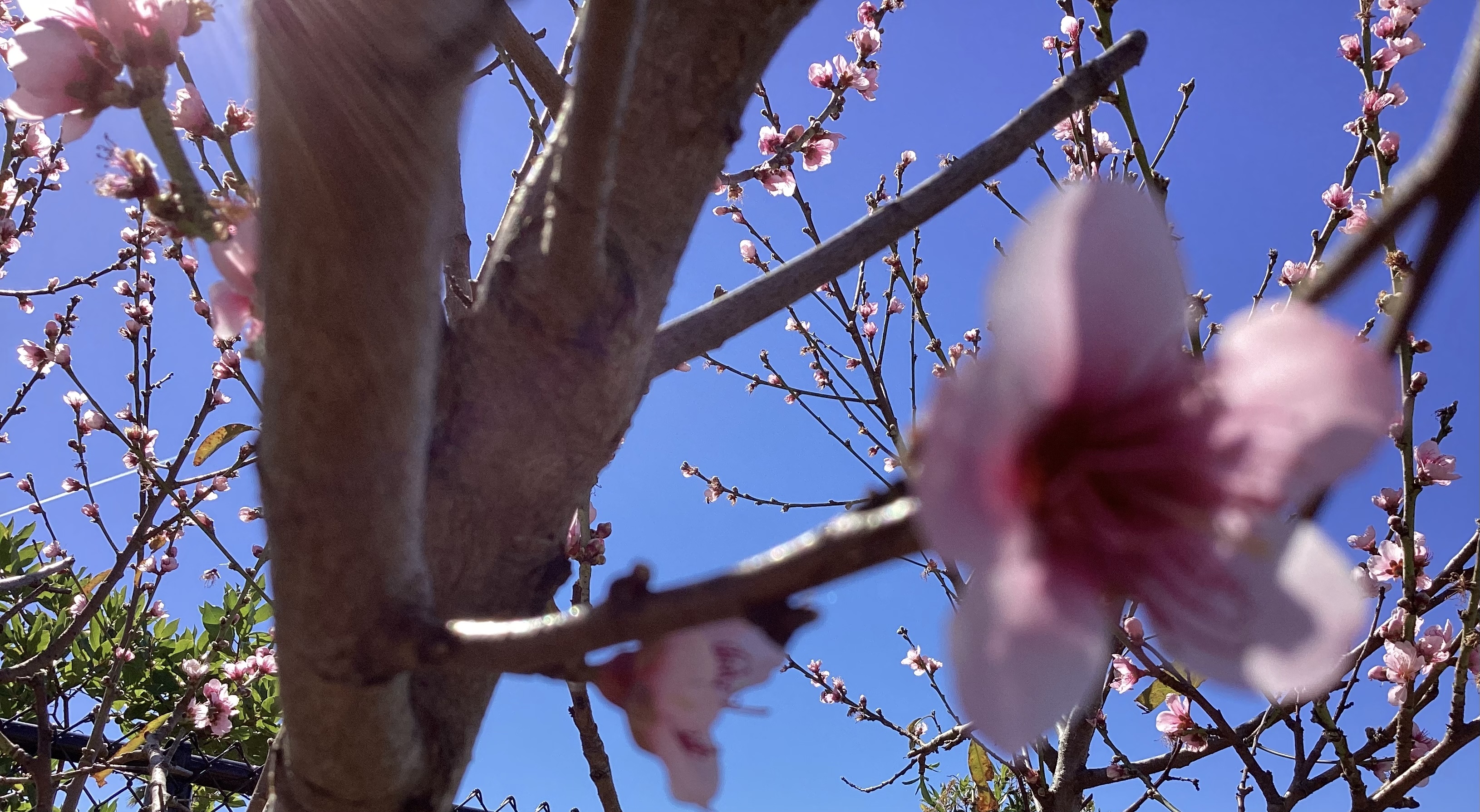
The student who took the photo of the sky wrote:
How to Love the Sky
Look up and listen. Hear the birds, don’t just listen to them, listen to them from your heart. Then hear the sky talking to you. See the blue of the sky and the white of the clouds and love.
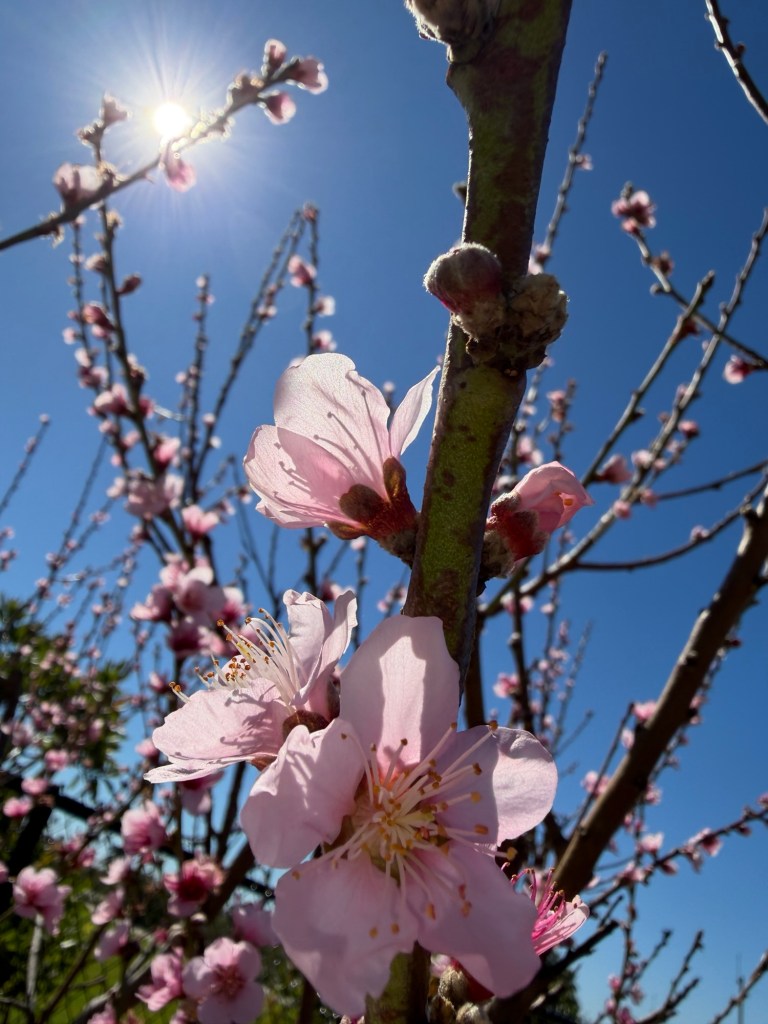
My own photo was of our cherry tree with the sun peeking through.
I only managed a sentence before students were calling me over to read their developing drafts. I borrowed the first word from How to Sing a Song.
How to Grow a Cherry Tree
Hush! Focus your eyes on the softest pink, gently dancing in the light afternoon breeze.
Maybe I’ll continue the piece one of these days, but for now I’m excited to watch my students become confident and accomplished writers…with a metaphorical flair!
Tuesday Treats: a burst of protein (deviled eggs, cheese and crackers), some blue tortilla chips with salsa, and a spoonful of pastel M&Ms. The perfect boost at recess (for teachers) for energy to manage the rest of the day. (Our students did NOT see their shadow in February and they are in full spring behaviors!)
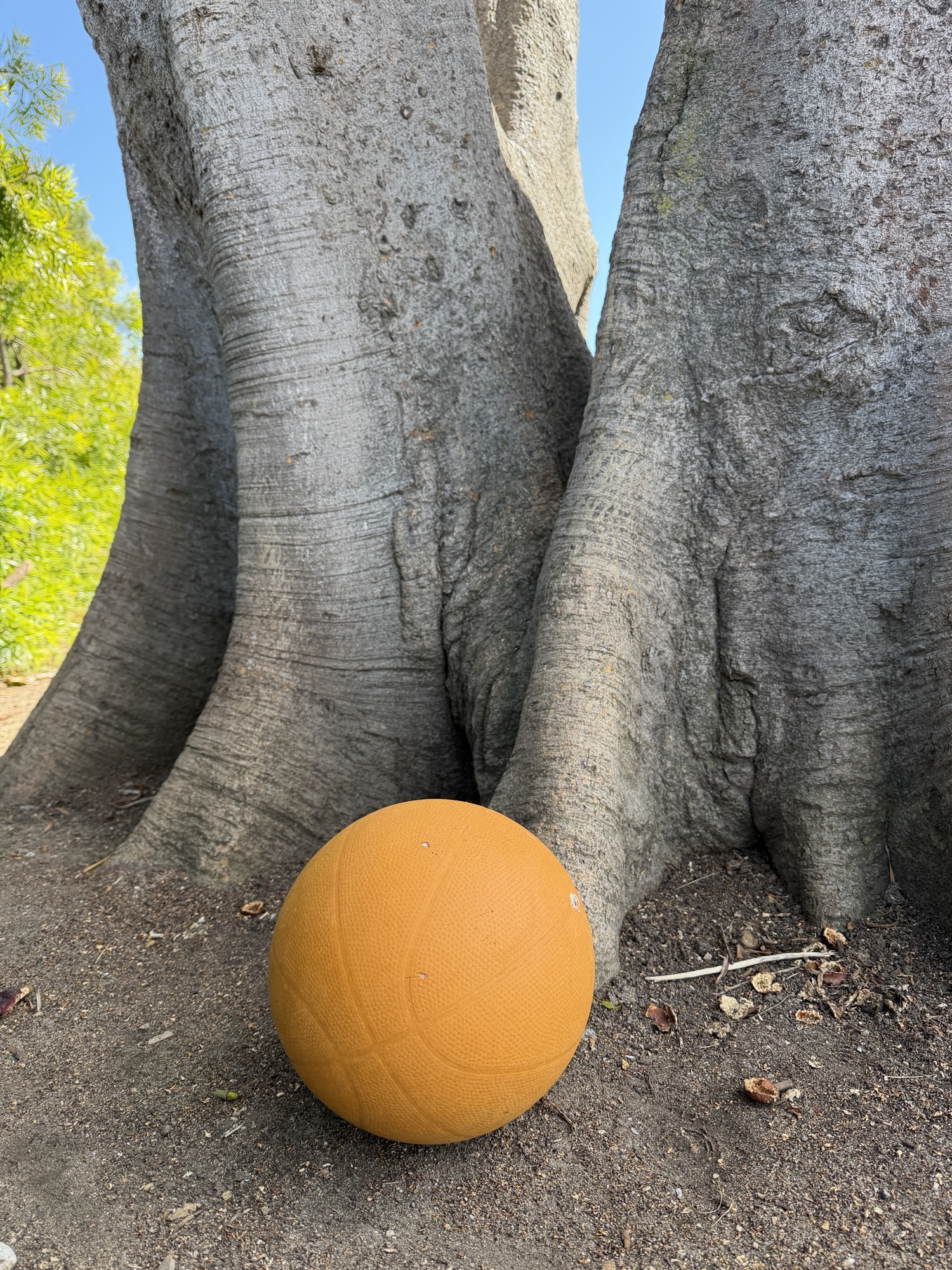
Afternoon recess duty: sunny and mild with a view of the blue Pacific Ocean. The PE teacher wrangling the competitive basketball boys to an organized line shooting baskets, so I didn’t need to put my attention there. Instead, I rescued the many basketballs that had rolled off the blacktop. As I tossed them back I noticed a couple of girls retrieving them and putting them back on the ball rack. I love when kids are helpful just for fun. A relaxing and non-stressful recess for me!
My daily walk: getting home in time to squeeze my walk in before my Zoom meeting. A chance to reconnect and debrief my day with my hubby, mentally clearing space for the complex thinking needed for planning a collaborative project with colleagues from the California Reading and Literature Project (CRLP).
Comfort Food: Yum! Spaghetti dinner prepared by our resident chef (not me!). Perfectly filling, hot and savory, satisfying without feeling heavy.
Saturday marked the 18th annual Spring Conference put on by the San Diego Area Writing Project (SDAWP). I had asked a friend and colleague if she would lead a session on writing as adults, knowing that she is writer through and through. She quickly responded that she wasn’t writing–she was struggling to find words as she dealt with some challenging life events. Instead, she replied, she was foraging, finding words in the wild using collage, black out poetry, playing cards, making zines, and more–and using these same techniques with her middle school students.
Wait! Finding words? I couldn’t get back to her fast enough. THIS was a session we needed for teachers (and their students)! Thank goodness she agreed.
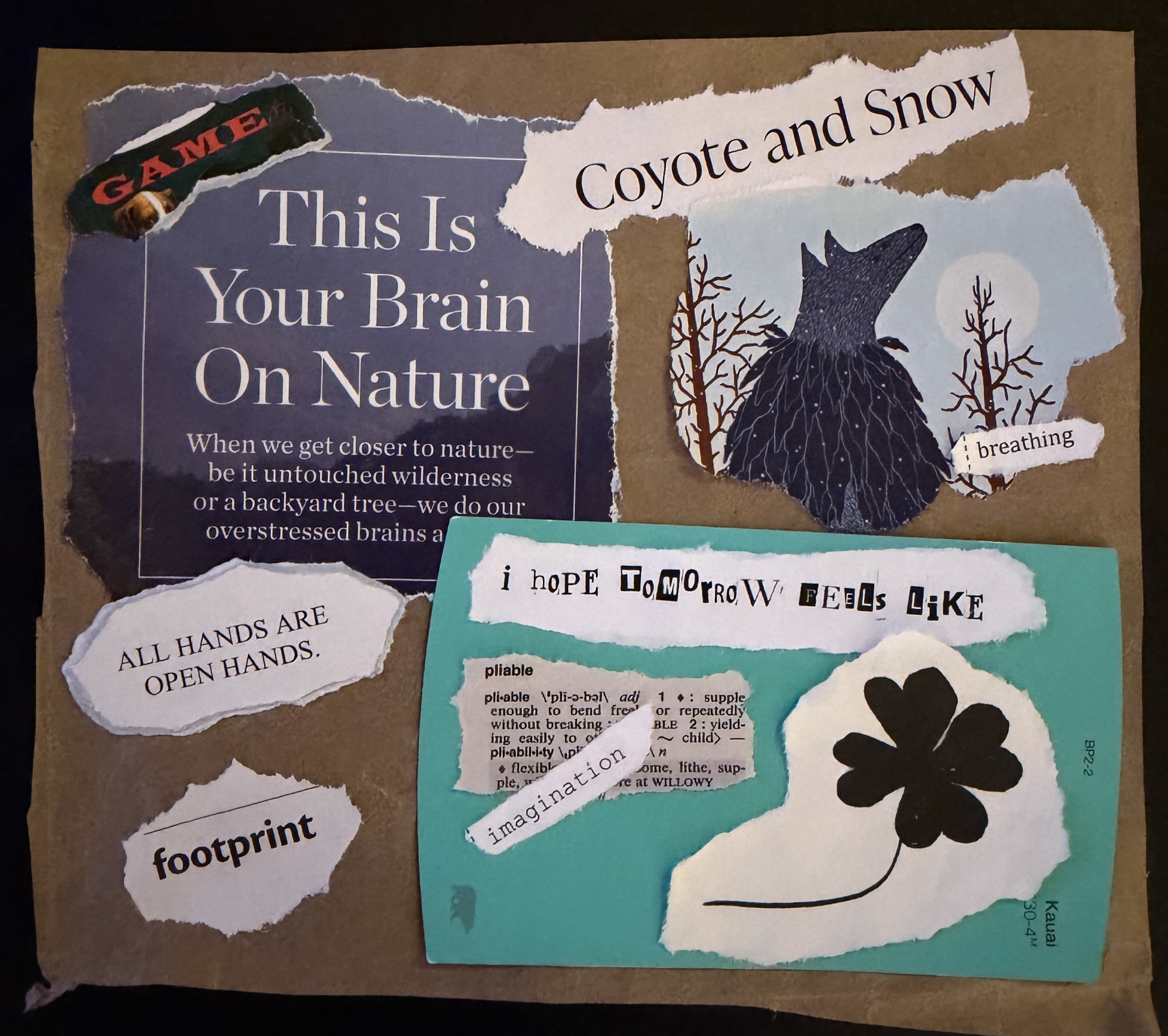
As participants walked into her session they sat down to a pile of magazines, paint chips, a page with some open ended prompts and lists of words, scissors, glue sticks and encouragement to just get started. When there weren’t enough scissors, I watched one participant pull her Swiss army knife (the kind with the little scissors) out of her backpack, other just started tearing. Maybe 5 or 10 minutes into the session, our presenter introduced herself and began talking about this premise of foraging for words as we continued to make and tear and glue.
The energy in the room was electric. Teachers cut and tore, glued and foraged. Words emerged from dictionary pages torn from books no longer in use. Images spilled words, words build images, poems emerged from black sharpie markers, playing cards became nudges to dance or sing… Students used pages torn from the novels they were reading in class (extra books acquired for this purpose) to create blackout poetry, tastes of a chapter of a book they would soon read. They folded zines, summarizing novels in 6 words (or 12 words), illustrated with found images. (Ala Cozy Classics board books)
We were reminded that sources of collage material are everywhere! That “Next Door” app on Facebook, the Friends of the Library freebies, not to mention the casual discards (like the backing papers from the nametags we used at the conference) that often are just tossed.
We left with a work in progress and ideas overflowing. Some participants left with a pile of magazines, others with an emerging piece of art. We all left with the conviction that there are multiple ways to get at writing…and to get unstuck when the words simply won’t come.
My work in progress
While I’m not sure exactly where this piece will lead me…or if it will just find a place in my notebook, I know these ideas will continue to marinate. I’m already thinking about ways to use this idea of foraging and collage with my own students.
Writers find a way…even when words are not flowing. Now to make sure that students also know that there are many ways to write…and to ignite writing. Forage away!
When I woke up this morning I discovered that today is World Kindness Day. I don’t teach on Thursdays, so I didn’t have any plans to engage students today–and to be honest, I didn’t even know it was World Kindness Day until I saw it pop up on social media.
The irony is that we have been celebrating kindness in our classroom–both last week and this week. Last week, after reading Brett Vogelsinger’s blog post on Moving Writers titled Poetry Pauses for Peace Day 2 I couldn’t wait to share the mentor poem, Peace: A Recipe, with my young students. My students have a sense of recipe–they make cookies and muffins with their parents–but making a recipe for something abstract like peace was new for them.
Even before reading Anna Grossnickle Hines’ poem, I had asked my students what ingredients they might include if they were making a recipe for kindness (Brett had suggested having students write a recipe for hope, but kindness felt like a concept my first grade students would have more ideas for). There was no hesitation as hands began to raise. Honesty was the first ingredient mentioned. How much would you include, I asked? A pound was the answer. Then students contributed other ideas: caring, sharing, and including others. Every time I asked for an amount, the response came back in pounds! Even when I suggested maybe a teaspoon or a pinch–the answer was no, 5 pounds or 3 pounds or some other number of pounds. Clearly students thought we needed a extra large batch of kindness!
Studying Hines’ poem, we noticed words that were about cooking, expanding their understanding of recipe components. We underlined those words and drew illustrations for the poem before heading out for lunch. Time got away before we had time to write–but I kept my plan for writing in the back of my head to come back to when I had time.
Monday was a strange day this week. We had school followed by a holiday on Tuesday (Veterans Day)–my students had two special classes on Monday, so my time with them was limited. But…I did have time to come back to the idea of writing a recipe for kindness. Before we began we brainstormed a variety of cooking words and then students got to the writing. They started with ingredients (that expanded past the ideas we had last week)…and they wanted to be done. But, I reminded them, you have to say what to do with the ingredients. And they did.
There was so much success, even from my more reluctant writers. In celebration of World Kindness Day, here’s one example:
Kindness: A Recipe
To make kindness
you put a pinch of honesty
And a spoonful of helping
And a handful of respect
And you mix it
And you spread it around the world
And that’s it.
Thanks Brett for the nudge and Anna for the inspiration. And to all the first graders in my class, I’m excited that you are the ones cooking up kindness to spread around the world!

 Thinking Through My Lens