Monthly Archives: September 2013

Planting Seeds

I love the opportunities to spend informal, conversational time with my students.  I often find that time on our walk to the garden.  It’s a longish walk and away from the classrooms, so some conversation doesn’t disturb anyone.  I made the walk with students four times today…twice going there and twice coming back (with my class split in half–the other half was in the classroom with my co-teacher).

photo

On my final walk back to the classroom I was bringing up the rear with some second grade girls in my class.  As I listened in to their conversation, I noticed that they were talking about math and creating math stories that included elements of the garden.  When they noticed me listening they let me know that they were planning a “math playdate.”  A math playdate!  What an amazing idea!  They had made a case to their parents that they needed this playdate…with a math focus.  They had planned that the mom at the house they were going to would write up some math problems for them to solve and they would create their own math story problems (like the one I overheard).  We talked about whether they would include some of the other strategies we use in the classroom–like the way I pose problems, “If the answer is 15, what is the question?”

Honestly, this conversation surprised me.  These are not my confident, competitive math students (yes, I have a few of those!).  These are my pretty quiet, but definitely competent girls.  I work hard to make math fun in the classroom.  We play around with numbers and math concepts daily, with an emphasis on explaining thinking and problem solving.  We look for multiple approaches to solving problems and take time to learn from our mistakes.  Learning that these students see math as a fun way to spend their time together delights me!

I got to harvest more than pumpkins today!  As teachers, we never know when those seeds will germinate and grow and blossom.  What seeds did you plant to today?
Who Are Your Mentors?

“Children want to write.”  These words written by Donald Graves before I even began my teaching career echo in my head and push me to improve my teaching…and my own writing.  Each and every day.

Donald Graves also influenced my view of myself as a teacher researcher early in my career. Through his writing and conference presentations, I learned to view my teaching as a work in progress responsive to the needs of the students in front of me.  Through his work I learned to pay close attention to my students and to listen carefully.

Children will continually surprise us if we let them.  This is what happens when we slow down, listen, and let the children lead.  That is the joy of both research and teaching.” Donald Graves

Some days teaching writing is hard.  I have students who resist and say, “I don’t know what to write.”  And I know exactly how they feel.  Some days I don’t know what to say in my writing either.  But I strive to struggle through…and I ask them to do that too.  In the Writing Project we say that the best teacher of writing is a writer his/herself.  And I know this is true, because I know what makes writing hard because I write.  And I know that writing is the answer to that struggle to write.  Some days I have to write through the struggle just to find out what I have to say.

“Write yourself. Invite children to do something you’re already doing. If you’re not doing it, ‘Hey,’ the kids say, ‘I can’t wait to grow up and not have to write, like you.’ They know. And for the short term and the long term, you’ll be doing yourself a favor by writing. All of us need it as a survival tool in a very complex world. The wonderful thing about writing is that it separates the meaningless and the trivial from what is really important. So we need it for ourselves and then we need to invite children to do what we’re doing. You can’t ask someone to sing a duet with you until you know the tune yourself.”

We all need mentors in our lives.  Donald Graves was one of mine, and his writing remains to continue to guide my thinking.  And those he mentored continue his work and provide guidance for the next generation of teachers and writers.  My students also mentor me.  They continually remind me to have high expectations and limitless patience.  And they prove Donald Graves right, “Children want to write.”

Who are your mentors?  How do you continue their work?

student reflection

September Smooth

The first week of September at #sdawpphotovoices had us looking for texture…specifically taking photos that focused on #smooth.  And while I could find photo subjects that were smooth, I found myself pushing to create more interesting photographic images.

I played with frames and framing and with cropping and the effects of filters using photography apps.  Here’s a fun one from yesterday that has nothing to do with smooth.

photo-1

This bride and her groom were being photographed on the beach…and this guy on his bicycle rode by at the perfect time to get him in the shot.  I love the juxtaposition of these people in my shot.

I think my favorite image of smoothness is this picture of a smooth rock swirling in the smoothness of the surf.  It’s funny because I had bent down to capture this smooth rock and my sunglasses fell onto the ground before I snapped the shot.  When I grabbed them and reset myself to take the shot I nearly landed in the water–the surf had come back up without me noticing and surprised me as I remained low to the ground to get my shot.  Sometimes happy accidents make the best photos!

photo-2

I was obviously not at my smoothest, but I like this #smooth shot!

A Question of Luxury

Just what is a luxury?  The word tends to bring to mind those things you buy: fancy cars, expensive homes, designer clothes…

As I mulled the idea of a luxury I wouldn’t want to live without, I found myself thinking instead of just how fortunate I am.  My basic needs are met…and more.  I live in a beautiful city…a place that others choose for vacations.

The natives have been restless this week, our weather has been hot (for us) and we’ve had unusually high humidity too.  Weather has been the topic of conversation for everyone.  Most coastal dwellers don’t have air conditioning–we’re all much more used to carrying a sweatshirt at all times since it’s more likely to be chilly (for us) rather than too hot.  So we’re all whining and complaining about discomfort and wishing for greener (and more temperate) pastures.

As I headed off to the beach this evening for relaxation and relief from the heat (it’s starting to become a habit), I realized that it is our proximity to the ocean that is the luxury that I would prefer not to live without.  I love seeing the ocean in the distance as I sit in traffic on the freeway.  I love knowing which direction west is as I watch the sun set.  I love the briny smell of foggy mornings and the woody smell of bonfires along the shore.  I love the quirky behaviors of seabirds, watching them run along the shore with bills specially adapted for the food source they seek.  I love the piles of amber kelp that wash up and become jump ropes and sandcastle decorations and fun poppers exploding under my bare feet.

I love long walks, especially at low tide, with the white noise of the surf soothing my soul and relaxing that tight knot that often forms between my shoulder blades.  The beach is definitely a luxury–and I wouldn’t want to live without it.

photo

What luxury would you not want to do without?

An Unusual Point of View

Yesterday I wrote a post about playing with frames where I was looking for different ways to photograph the ordinary in my life.  This evening I headed off to the beach (again) to cool off and enjoy the sunset.  And with my iPhone camera in hand I was again looking for new ways to explore the beach photographically.

When I sat down to write this post, I wondered about my topic.  Would I write about my school day?  Would I participate in Five Minute Friday and write about red?  I took a quick look at my blog reader and saw today’s Friday Weekly Photo Challenge on The Daily Post…and discovered that this week’s challenge is just what I have been working at!  The challenge is titled, “An Unusual Point of View” and talks about trying new ways to take photos of ordinary (or popular) views.

Back to the beach.  The tide was ultra low when we arrived and the seabirds were feasting in the wet sand.  I love sandpipers and their gently curved beaks that poke deep in the wet sand pulling up tiny shellfish and crabs.  I was stalking this pair as they searched the shore and shot this photo, capturing the reflection of the cliffs in the wet sand.  Can you spot my pair of sandpipers?

photo-2

As the sun moved lower on the horizon, I took a few shots and then felt that they were too much like the sunset photos I took last week.  How could I frame them differently?  I noticed that through my sunglasses the view looks different than it does when I look without them.  I decided to use my sunglasses as both a frame and filter for a picture of the setting sun.

photo-3

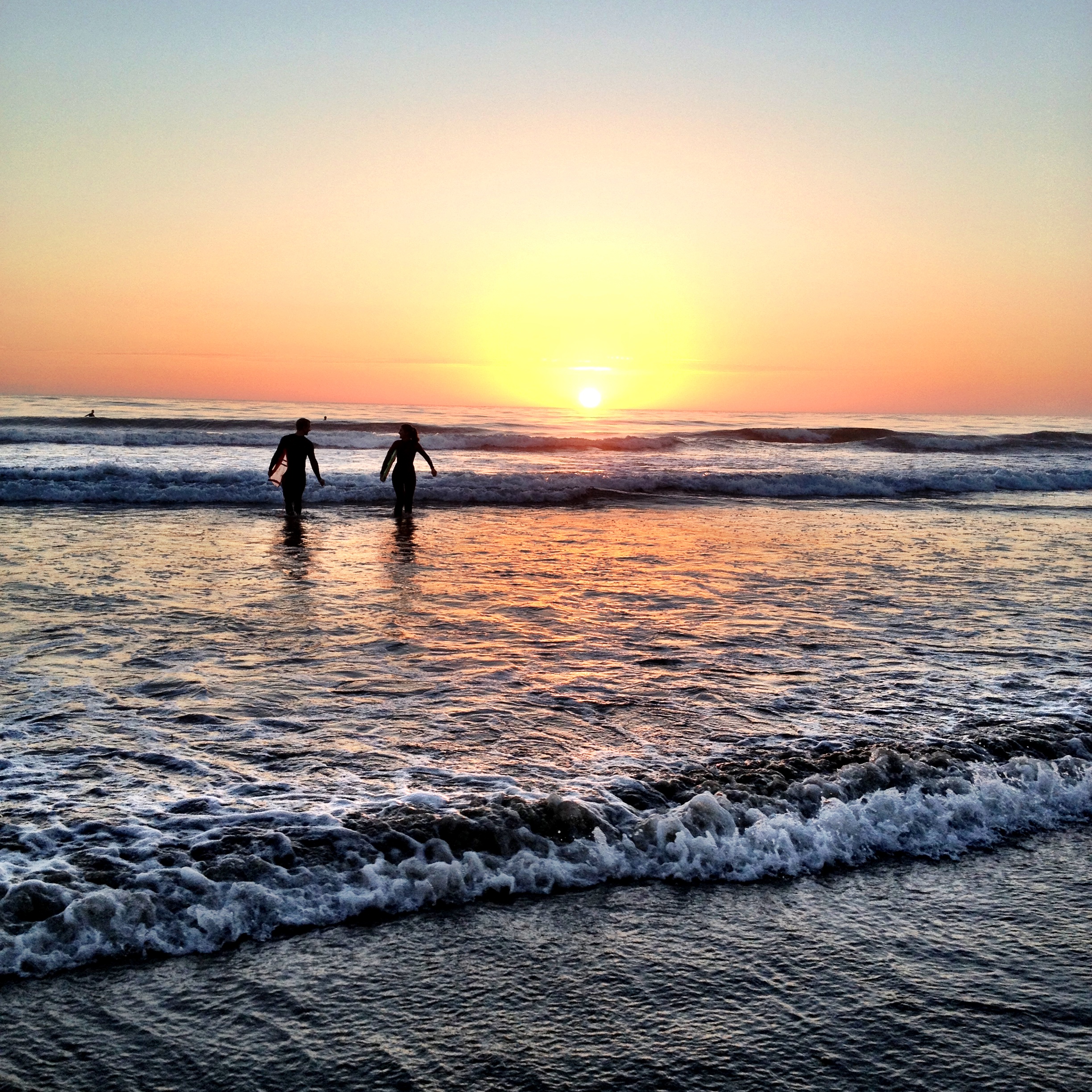
And then as the sun sat down into the water, I tried using the people in the water as features of my photos.  I tried some fishermen, some surfers…and then captured this pair which I am titling, Into the Sunset.

photo-1

I love stretching and trying out new strategies.  The experimentation adds a new dimension to my view of the world and has me alert to novel opportunities for photos.  I look forward to seeing what others produce with their unusual points of view.  What does an unusual point of view do to your craft?

Playing With Frames

Some days finding something interesting to photograph feels impossible!  When my days are filled with working and my photography is squeezed into stolen moments, inspiration can be hard to find.  I was feeling that way today.

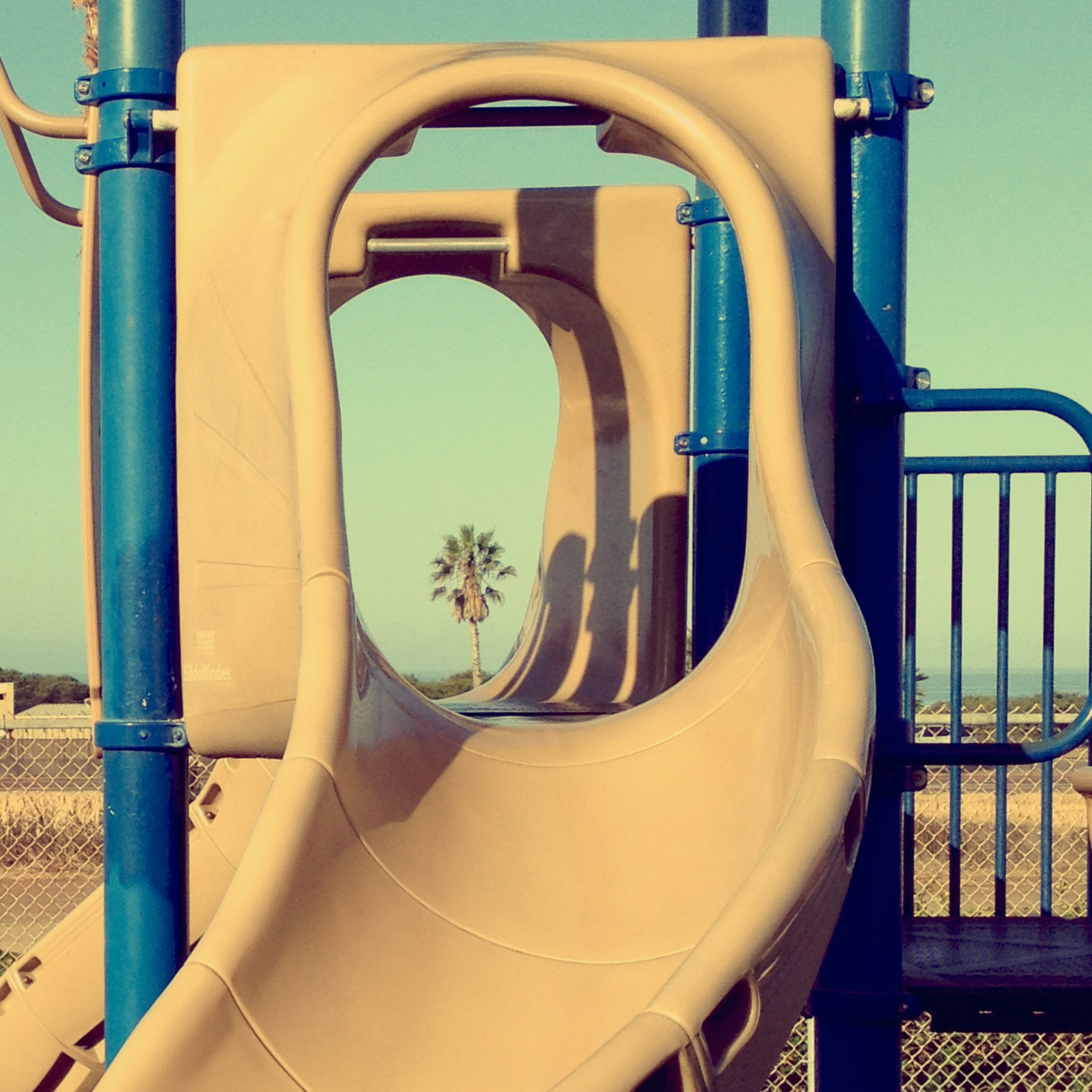
So…instead of looking for something new and different to photograph, I decided to play around with a new way to photograph something ordinary.  While I was on playground duty this morning (don’t feel sorry for me, our playground has a beautiful view of the ocean!) and chatting with kids playing on the equipment, I was also scoping out new ways to look at my surroundings.  I noticed that the playground structure created some interesting frames.  With a little editing I came up with this photo from this morning’s efforts.

photo

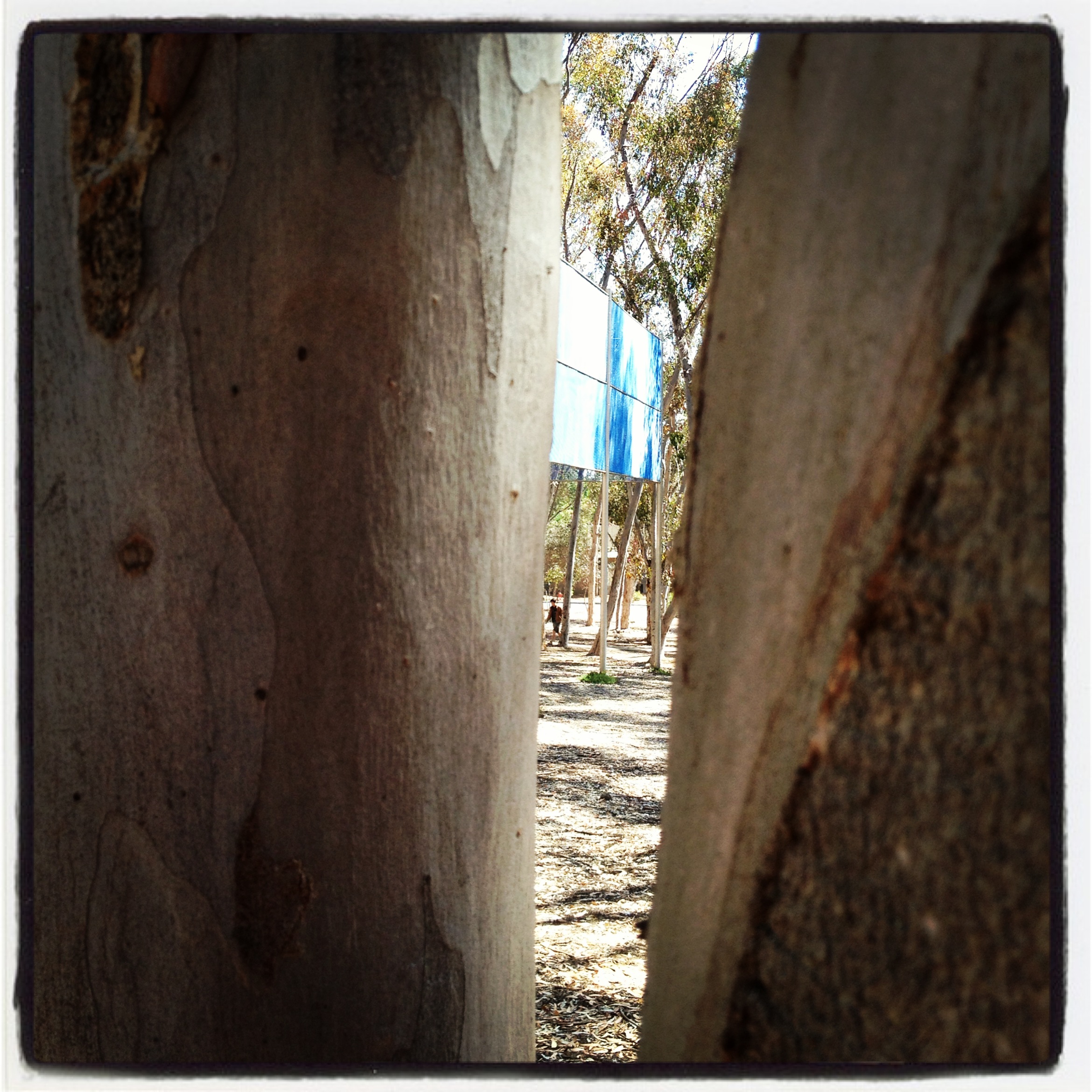
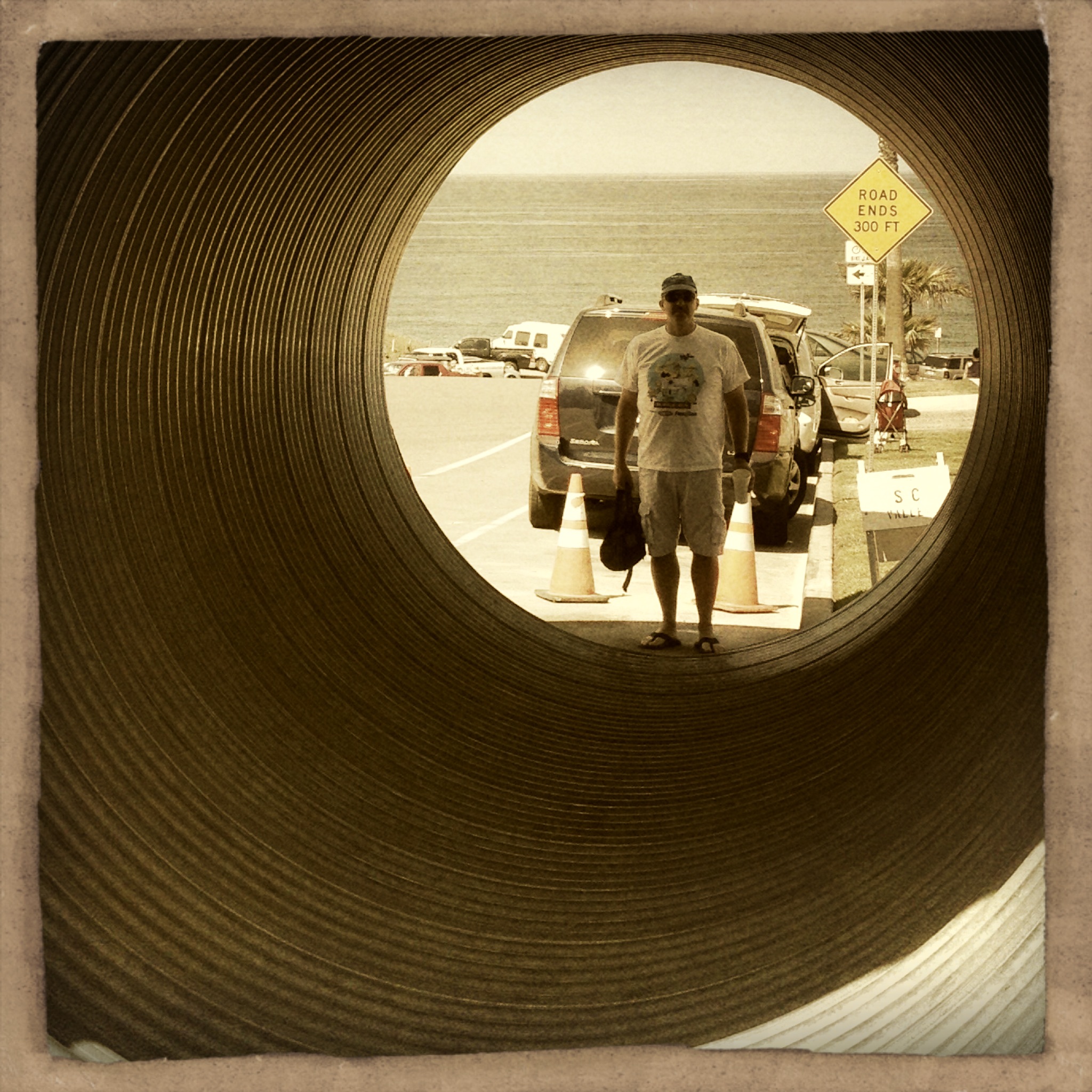
As I was editing this photo I also remembered some other shots when I played around with natural frames in the environment.  Here are a few…

photo

pipe

San Diego skyline from the Coronado Bay Bridge

San Diego skyline from the Coronado Bay Bridge

There are so many ways to think about frames and how to use them.  Back in my first blog post I was thinking about how frames shape experience and provide a focus.  Today I found myself thinking about how a frame adds dimension and interest to a photograph.  Sometimes I want a visible, decorative frame.  Other times I want the framing to be invisible, letting the photo speak for itself.  And in both cases, the framing and frame are intentional.

I reframed my photography experience today by playing with the natural frames in my environment…creating the opportunity to make something more interesting through my camera lens and changing the way I viewed my surroundings.

What do you learn when you reframe your experiences?  How can you make the ordinary extraordinary?

Sorting Quiet

Today was a sorting and categorizing kind of day in my classroom.  Yesterday we read The Quiet Book by Deborah Underwood.

quietbook

In it she describes quiet in lots of evocative ways…here’s a couple of lines:

Last one to get picked up from school quiet.  Swimming underwater quiet.  Pretending you’re invisible quiet.  Lollipop quiet.  First look at your new haircut quiet.  Sleeping sister quiet.

Then we asked our students to think about the best kinds of quiet they have experienced. They had so many wonderful ideas including things like lost in a good book quiet, waking up before everyone else quiet, playing your favorite video game quiet, watching your favorite cartoon on television quiet…  They wrote their best kind of quiet on an index card before the end of the day.

Today to help us think about sorting and categories we read Shoes, Shoes, Shoes by Ann Morris–a book about shoes from around the world used for a variety of purposes.  We thought about the categories our shoes fit into…and the ways they cross categories: school shoes, running shoes, playing shoes…  And then, in groups of four students shared their best kinds of quiet and thought about ways to group their “bests” into categories.  We asked each group of four to try to find 2 categories that their 4 index cards would fit.  They came up with lots of categories: electronics quiet, family quiet, in-the-zone quiet, playing quiet, learning quiet…

And as a class we were able to narrow their categories down to four that we will use to create a class graph of our best kinds of quiet tomorrow.  Can’t wait to see what the data tells us!

What’s your best kind of quiet?

Playing with Perspective in the Garden

We’re lucky enough to have a school garden thanks to support from our school district, our local community, and a non-profit developed by a couple of teachers at my site called Scrumptious Schoolyards.  My students had time with the gardening teacher today observing how the garden has changed over the summer…before it is harvested and cleaned up for fall planting. While watching them and listening to their comments and looking at what they noticed, I also had time to snap a few iphone photos.

I’ve been playing around with perspective and point of view, trying a variety of angles–looking up, looking down, getting down low.  Here’s one looking up into the “face” of a sunflower.

photo-2

I purposely got close, wanting to capture the texture of the sunflower’s surface.  I love the bright yellow-orange of the petals around the top…and you can see just a hint of the chain link fence around the bottom.  This photo is unedited and not cropped…it’s just as I took it.

Another unedited and uncropped photo I took today is this one of squash blossoms.  I love the slight shadow on the blossom and the peek at the squash growing in the background.

photo

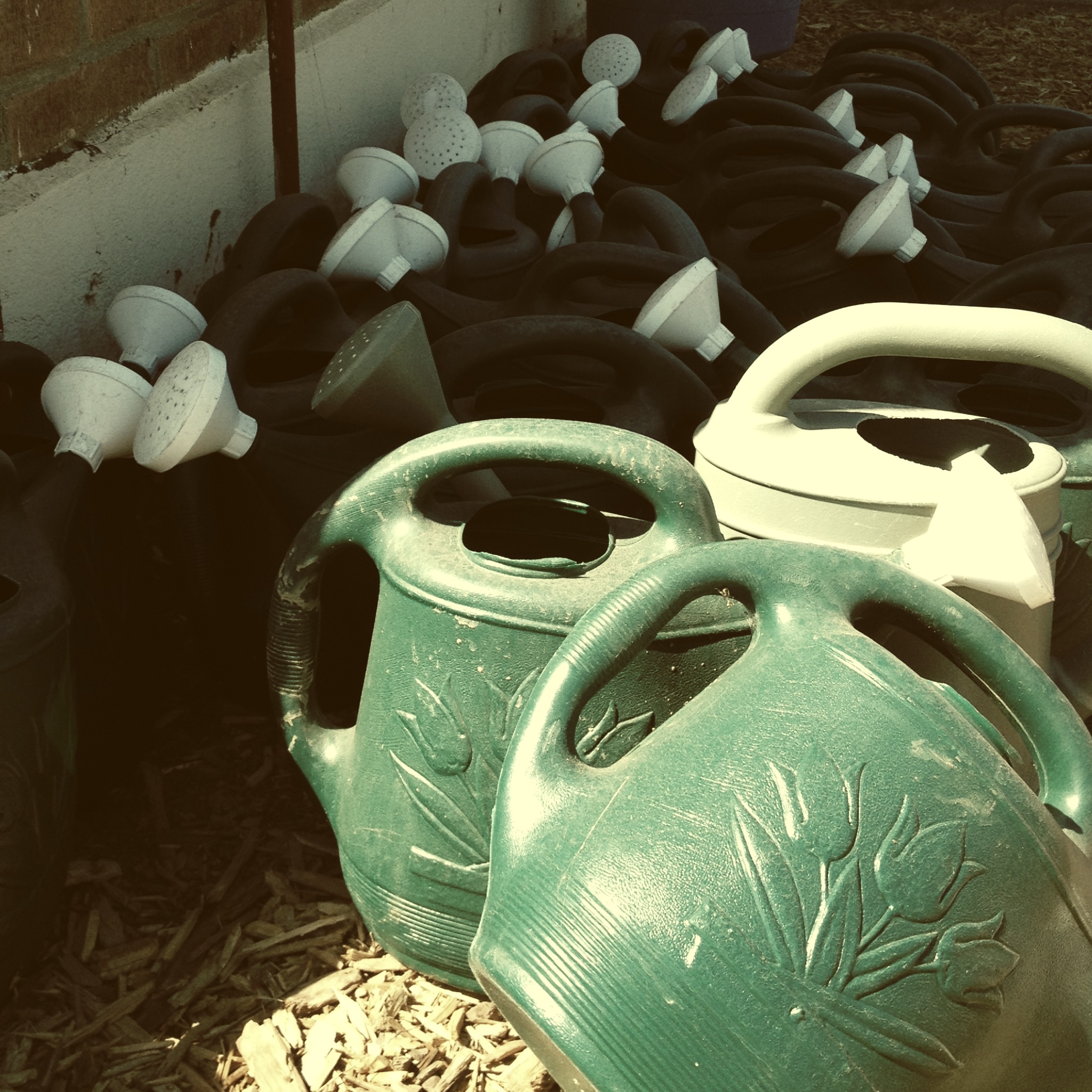
I also played around a bit with cropping and filters on this photo of the pile of watering cans. Only in a school garden would so many watering cans be sitting together just waiting to be used!

photo-1

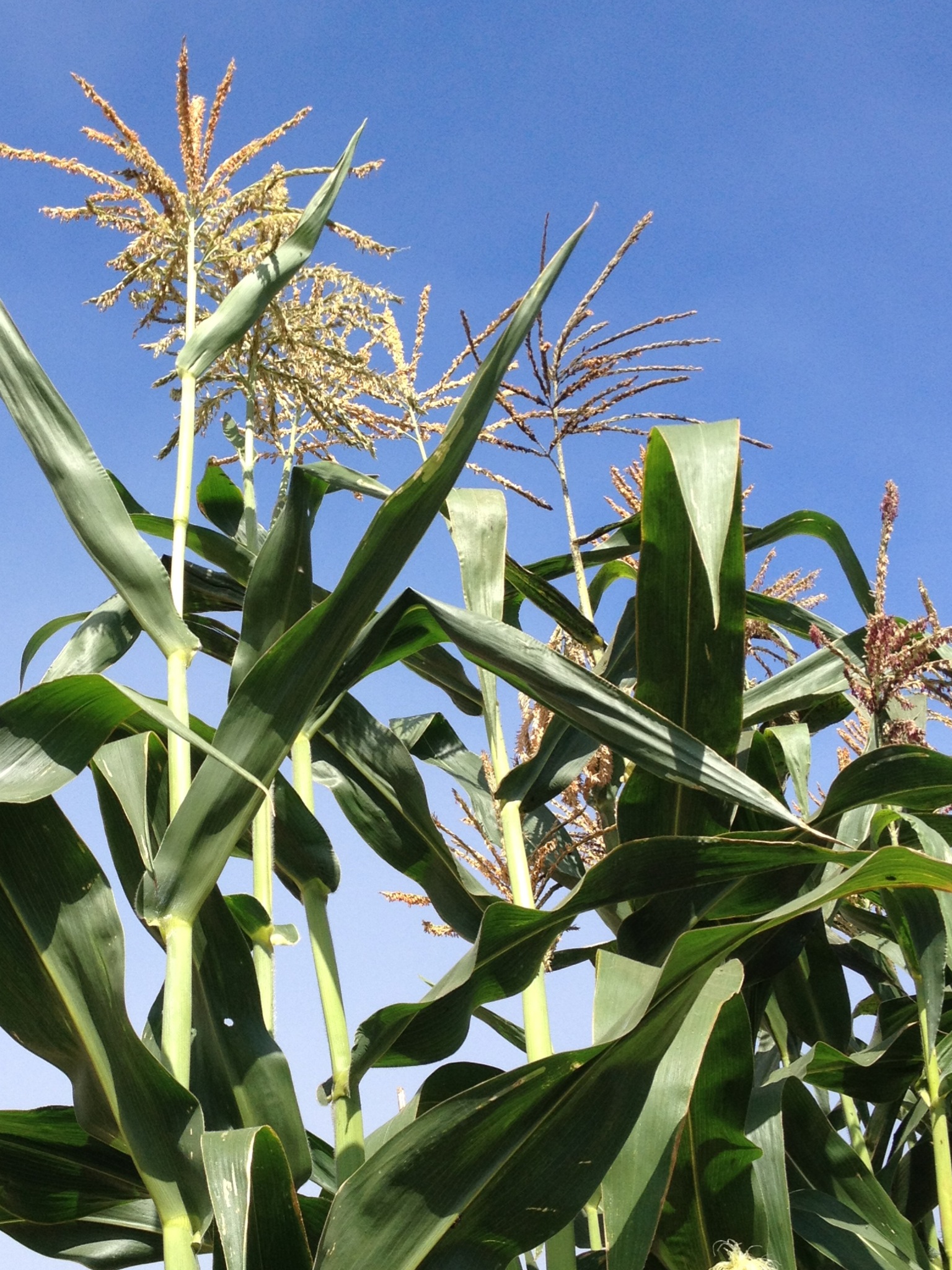
We also have a small corn crop growing tall!  With this photo I cropped to focus the photo on the corn and not on the background…and wanted to move the viewer’s eye upward to emphasize the height (while including beautiful blue sky!).

photo-4

There is so much more that I noticed in the garden today–and saw through my students’ eyes that I wasn’t able to capture in photos.  I love their wonder and fascination with bugs and plants.  They uncovered caterpillars, carefully held ladybugs (both with and without spots–how I wish I had my macro lens handy!), avoided those big green beetle bugs, and noticed the dragonflies darting overhead.  They were astounded by the size of the tomatoes (heirlooms as one student pointed out) and the pumpkins.  And they can’t wait to literally dig in and get to the real work on gardening!

What did you see today through someone else’s eyes?  How does that change your perspective?

Some Thoughts About Labor on Labor Day

Today is Labor Day, most often referred to as the unofficial end of summer.  On Friday morning when I asked my students what they knew about our upcoming holiday, they were stumped.  I even heard a comment or two saying, “My mom said she doesn’t know what Labor Day is.”  I did a bit of double-checking my own understanding of Labor Day and its history and we revisited the concept of Labor Day before the students left for the day.  We talked about labor and the ways other people’s labor helps us and how our labor helps others.  We also talked about the fact that not everyone gets the day off from work on Labor Day.

Today was not an official work day for me, and while I enjoyed my Labor Day holiday I was also thinking about labor and what that means in my work as a Writing Project director and educator.  Teachers often get a bad rap about their summers off and short work days based on the hours that students are physically present.  And yet, outside of those hours spent directly with students there is a lot of labor going on.  This invisible labor–the work of planning, preparation, communicating, collaborating, researching–frequently is not seen as work at all.  I understand that this work is not physical, backbreaking labor and yet without it the quality and effectiveness of our profession is diminished.

And I’m often reminded that I make a choice to work beyond my official work hours, and I admit that much of the work I do is a labor of love.  I love creating spaces for learning and working out ways to support the learners that walk through my doors.  But I also spend time doing things that are expected that I don’t love–preparing for standardized testing, attending meeting after meeting after meeting, writing and preparing report cards–but I do those things too.

I’m interested in the role that invisible labor plays in our society.  I am also wondering how labor is viewed depending on your point of view.  Here’s an example that comes to mind: some people in my neighborhood pay a gardener to mow their lawns and keep their yards trimmed and healthy, other people do their own yard work–often less frequently than the gardeners. Clearly the paid gardeners’ labor is acknowledged–they charge a fee and make their living doing yard maintenance. What about those who do their own yard work?  Is their labor considered a hobby?  A chore?  What role does it play in our economy?  Does the fact that some people do their own yard work somehow diminish the importance or skill required of professional gardeners?

What invisible labor do you take for granted?  Whose labor is diminished because it seems like work anyone can do?  What invisible labor do you provide?  What do you wish others knew about your work?

Hope you all had a happy Labor Day, especially if you had to work today!

Lessons Repetition Taught

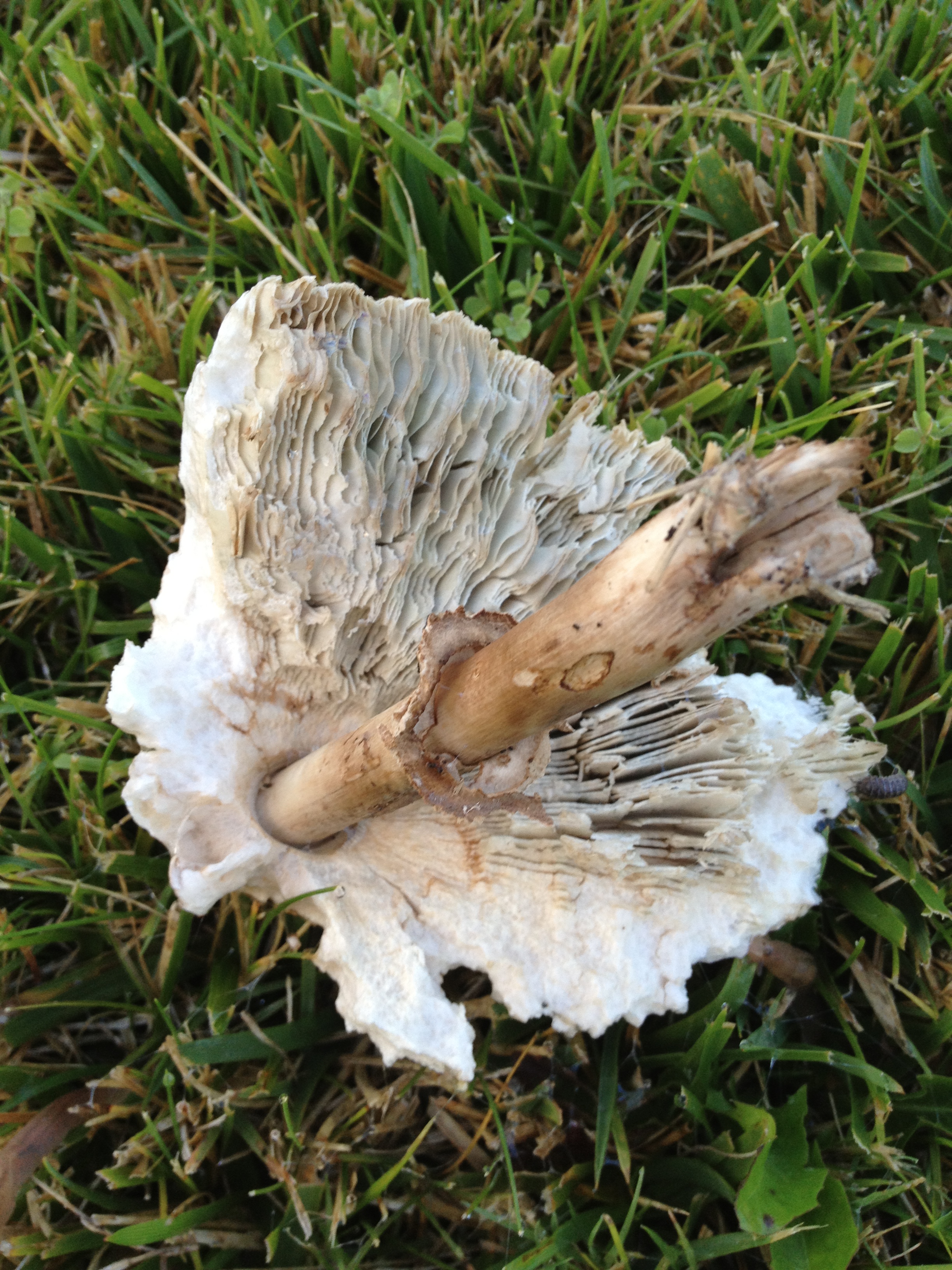
This week’s focus on repetition for #sdawpphotovoices took me in some unexpected directions.  For four days this week I took a picture of a mushroom growing in my yard.  I noticed it first on Tuesday when I got home from the first day of school.  On Wednesday when I got home it seemed significantly  larger and rounder, so I had to take another picture.  On Thursday I was looking forward to seeing the change when I got home…and no disappointment…I was wondering if it would pop!  But Friday morning it was evident that someone had kicked the mushroom.  I found it across the yard, upside down–which presented yet another photo opportunity and learning opportunity!  I could see that what looked like a round mushroom was actually more like a rounded umbrella covering the stem from view.  Here’s a few views of my mushroom.

Mushroom three days in a row

Mushroom three days in a row

Mushroom through a macro lens

Mushroom through a macro lens

The #scaly inside of a mushroom.

The #scaly inside of a mushroom.

The repetition of taking a photo of the same thing day after day had me paying close attention and asking myself questions to expand what I already knew.  I love that photos help me learn!

The focus on repetition also provoked me to drive to work using a variety of routes. (More about that here)  I didn’t want to take pictures that I had already taken, so I varied my route and looked for interesting photo options.  I rediscovered the value of exploring, even when it is as simple as taking an extra five minutes on the way to work to stop and take a photo or two.

photo-5

So…among the lessons learned this week through my photography are both to look again and again and again–there is value in repetition–and to change things up, look for variety, and be sure to take a few minutes each day to do something you enjoy simply because you enjoy it.

What does photography teach you?