Category Archives: clmooc

Blog Birthday: A Reflection

Today marks one year since I began this blog.  I began with a 30 day blogging challenge for myself–creating an urgency to blog every day for 30 days in a row.  And in retrospect, that was a smart move to help me establish a habit of writing every day, day in and day out, even when I wasn’t feeling like I had anything to say.  In the last 365 days, I posted a blog post 293 of them…that’s a little over 80% of the days in the year!

This morning I had plans to read all 293 posts and then create some kind of reflection based on that reading.  And while I think it’s a good idea to go back and read all my posts, I only managed to get through the first 30 days before my life called and I was off to the beach and running those errands that just don’t get accomplished during the work week.

(Making time to photograph and play pushes me to create more balance in my professional and personal life…a good thing, I think!)

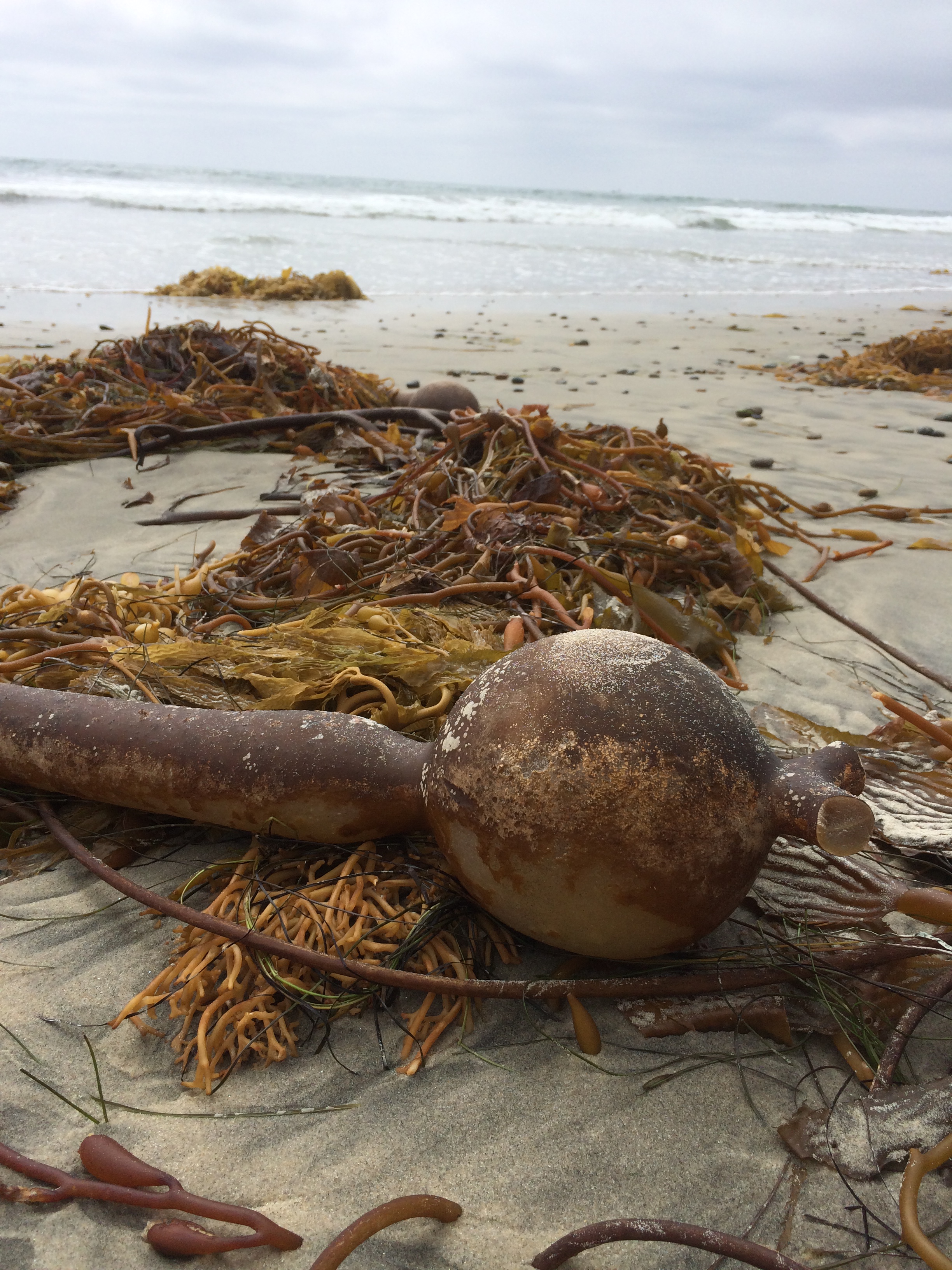
I’ve noticed lots of bull kelp on the beach in the last week.  There is something beautiful and fascinating about these large floats…definitely evokes the wabi sabi for me!

bull kelp

So instead of reflecting on the year’s worth of posts, I decided to highlight five from those first 30 days that continue to speak to me…and I know that I returned to their themes throughout the year–and may continue to return to them.

1.  Dandelions: A Photo Essay – I noticed that I had a number of posts about my fascination with the ordinary, and what I learned about myself and my students by paying attention to small details.  This particular post continues to be one of my favorites.

2.  Fireflies – This is another post about something little–that many people take for granted.  I loved learning that fireflies are the most ordinary of insects, and the most extraordinary!  We southern Californians miss so much by not having these lights in our everyday lives!

3.  Spaces for Learning – Hmmm…I just discovered I have two posts from last July with the same title!  I like this one that talks about “third spaces” for learning, outside the spaces claimed by hierarchies and organizations.  These are the spaces we claim for ourselves as learners.  I’m not done thinking about this idea… and it keeps emerging over and over again in my life…as a teacher, as a learner, and as a human.  (The other post was about Genius Hour, which is related…)

4.  A Small Orange Bead – This post is really about the power of connections and connectedness as a learner.  Opportunities to learn in a community create deep pathways and provide support that matters to learners.

5.  Boys and Bears – There is a physicality to learning that we sometimes forget as adults.  My observations of boys at the polar bear exhibit pushed me to think about how physical interactions have the power to pique curiosity and deepen learning experiences.

A year of blogging has taught me so much about myself as a writer, as a learner, as a photographer, and as an explorer in the world.  It has heightened my senses as I lean closer to my surroundings to understand them and myself through my writing and photography.  When I chose the blog title, Thinking Through My Lens, I wanted to play on the word lens to represent more than a camera’s eye…I also wanted it to represent my own biases, questions, and goals.

I look forward to another year of Thinking Through My Lens…and hope you will continue to bump your thinking against mine, sharing your insights and discoveries so that we can learn more about our world and ourselves, together.


Rubbing Elbows with Nature

The Wabi Sabi photo-a-day challenge has me looking at my surroundings differently.  I find myself looking for beauty that presents itself in unusual ways.

Today I had the opportunity to head out around the UCSD campus for a short learning walk in conjunction with a demo presented by a kindergarten teacher in our SDAWP Summer Institute. She explained how nature inspires her own writing and some of the ways she inspires writing with her students.  As I headed out with the charge to spend some time in nature, tuning in the sights, sounds, smells, and feels, I also had my phone/camera in hand ready to capture evidence of my experience.

Down the metal stairs, past the row of ATM machines, across the cement walkways, sandwiched between the architectural wonder of the Geisel Library and the tall buildings that are Warren College, lies a secret garden.  Garden often conjures lush foliage and brilliant blooms, but the space lives under a canopy of Eucalyptus trees.  And to my surprise, growing from a fallen trunk were three new tall, thin trees.

eucalyptus growing from a stump

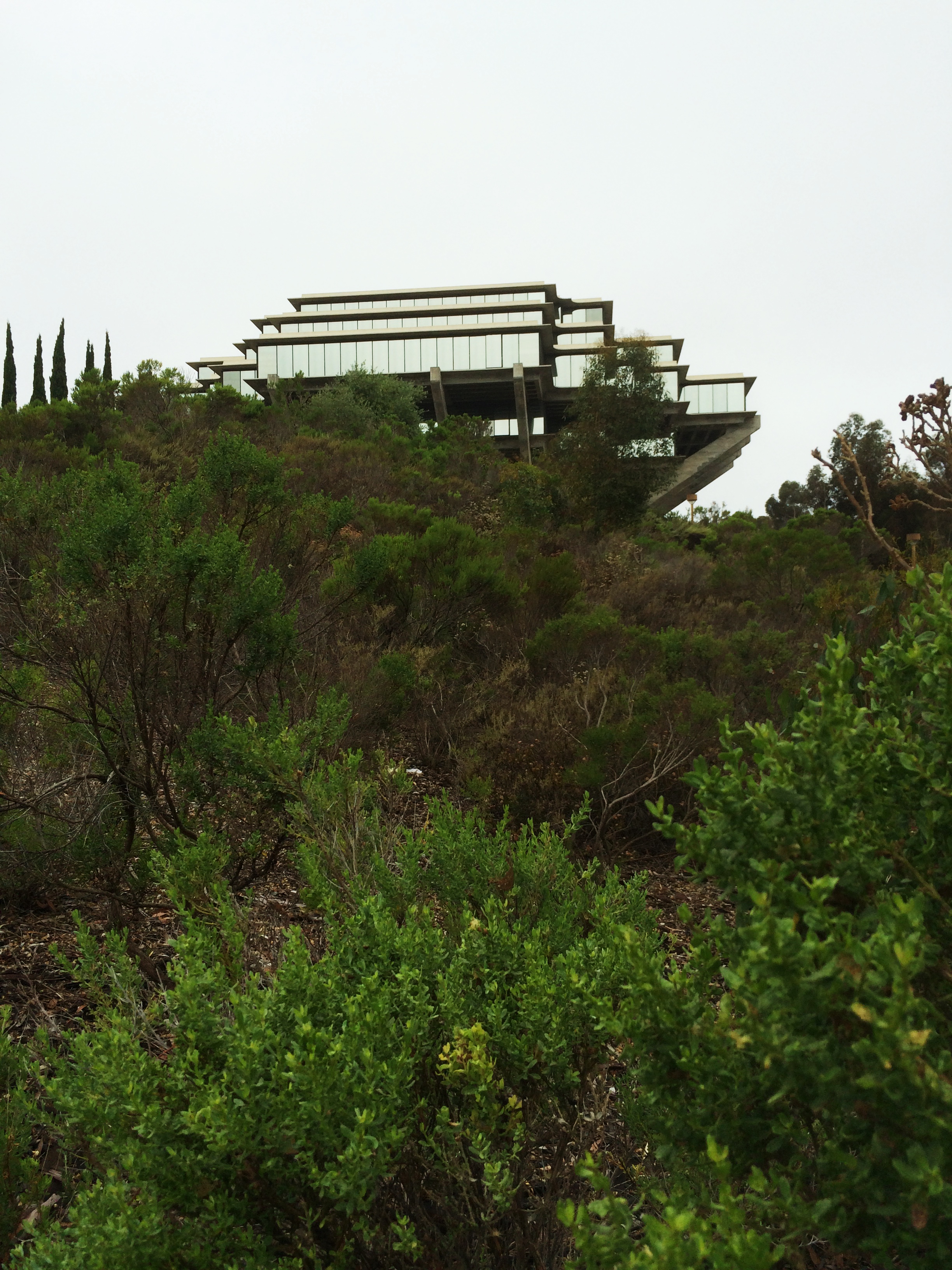
Heading off to the Snake Path, an art installation leading to the library inspired by Milton’s Paradise Lost, I found the natural beauty and familiar smells of the native plants that thrive in our arid, coastal climate.  With phone/camera in hand, I noticed the contrast of the angular, metal and glass library poking up behind the fragrant, wild-ranging brush.

library ucsd

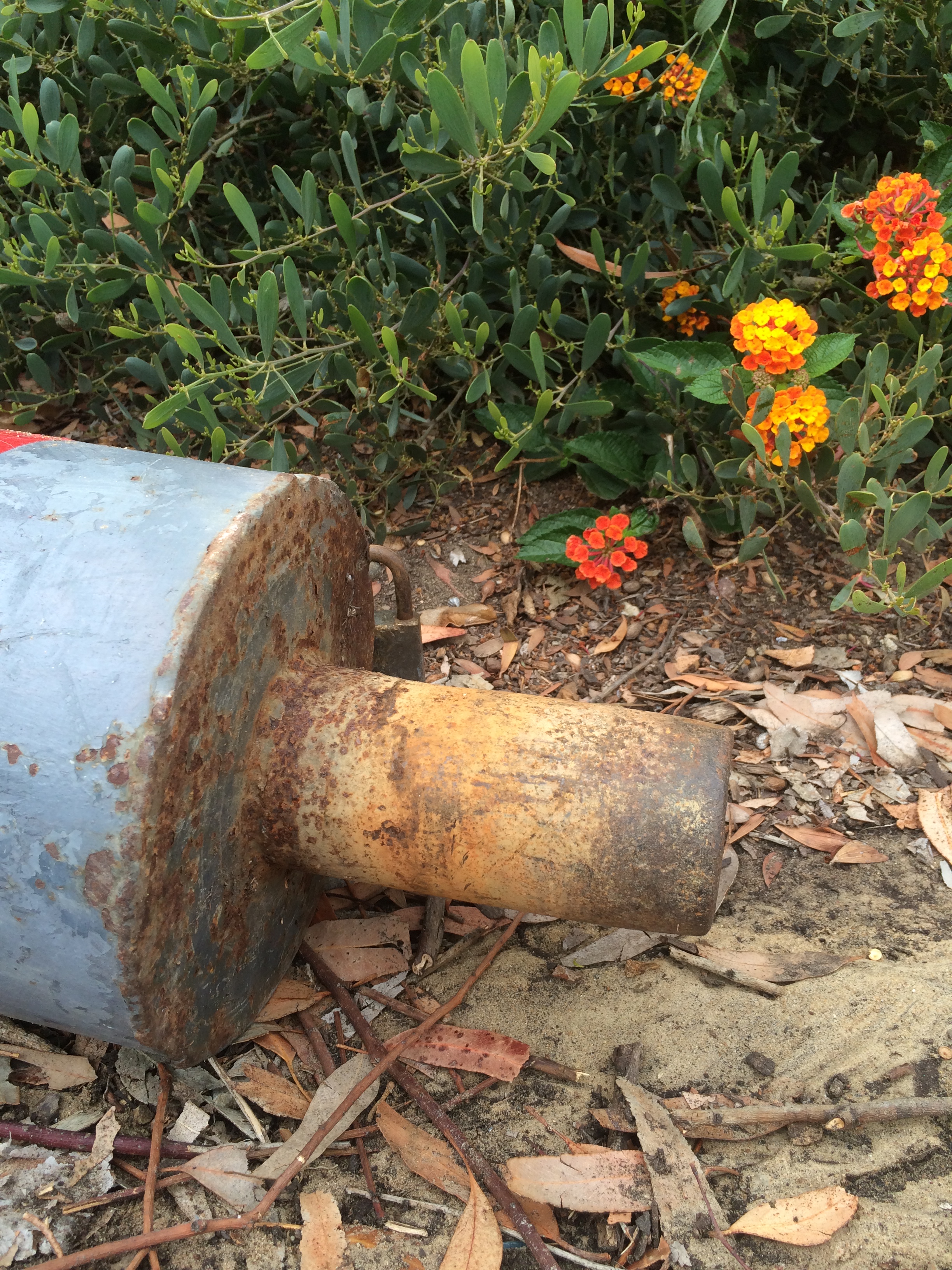
As I continued my walk, I came around the front of the library and found myself drawn to to the barrier poles laying on their side…with flowers growing nearby.

flower and pole

flower and pole 2

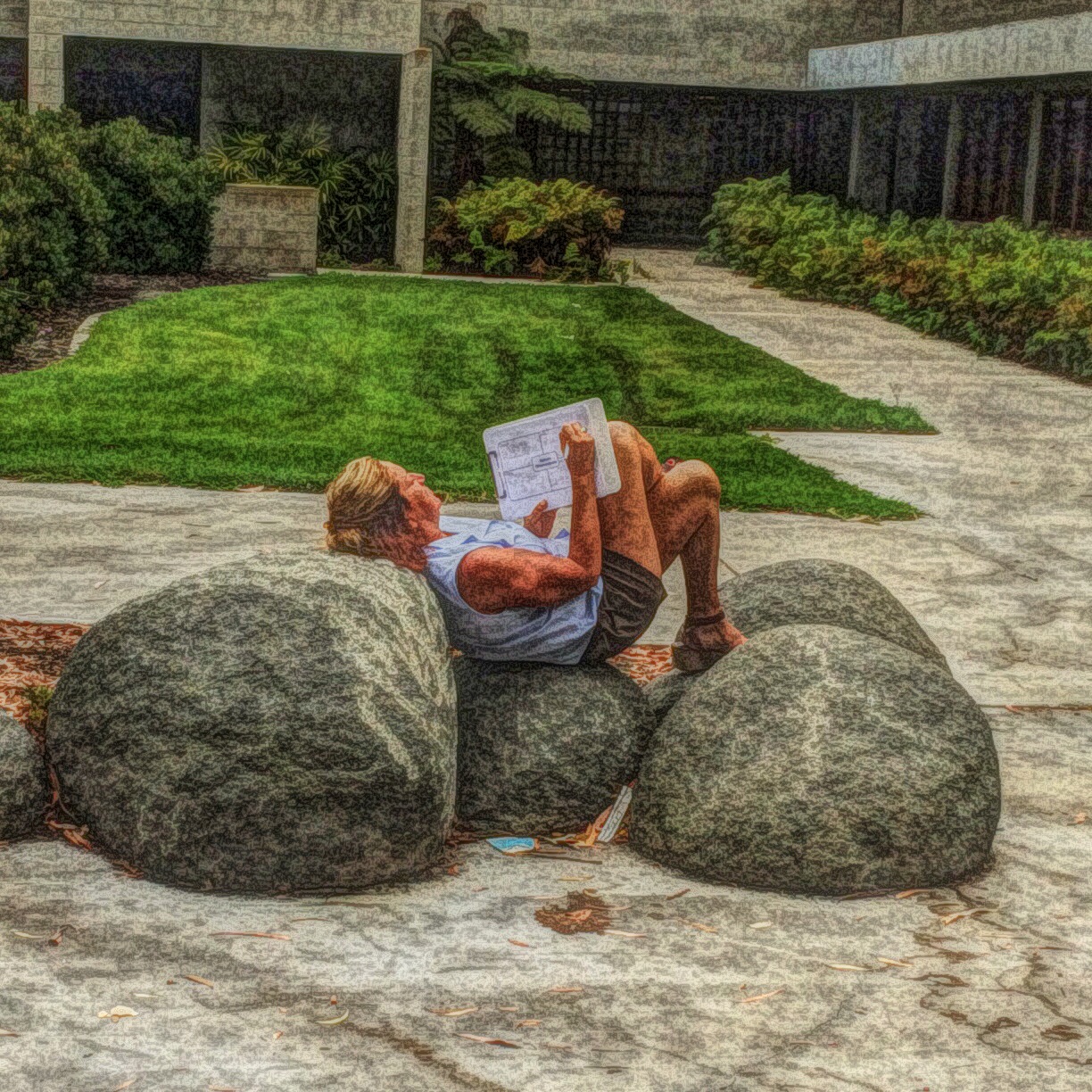
As I headed back to our meeting room, I noticed another of our participants lounging on some large boulders and working on her writing.  I admit, I snuck up on her–wanting to capture the image that tells a story in one frame.  (She does know about the photo…and has approved of it!)

writing on the rocks

I find myself looking for the Wabi Sabi of nature rubbing shoulders with the not always so beautiful man-made.  And some of that Wabi Sabi I noticed was not only visual…I heard the buzzes of insects and the chirps of birds joining with the melody of car engines, back-up beeps, and snippets of conversation in the songs that are uniquely UCSD.

Where do you find nature rubbing shoulders with man made structures?  Have you noticed any Wabi Sabi?

Finding Beauty in the Ordinary: July’s Wabi Sabi Photo-a-Day Challenge

Summer is about the ordinary, it’s often the time we rediscover our playful selfs as we encourage children (and maybe ourselves) to run through the lawn sprinklers, lick popsicles from the ice cream truck, and spit watermelon seeds as we sit on the front porch.  We roll up our sleeves, walk barefoot, and sip glass after glass of iced tea in tall frosted glasses that drip, almost crying with the pleasing coolness on a hot, summer day.

I first heard of Wabi Sabi from my friend Susan a few years ago when she asked her students to focus on the ordinary in research projects they were doing in her middle school English class.  I remember how excited she was that they were discovering the beauty in the “old school”—typewriters, rotary dial phones, handwriting…and so much more than I can’t even begin to remember now.  

Wikipedia offers us this definition:

Wabi-sabi (侘寂?) represents a comprehensive Japanese world view or aesthetic centered on the acceptance of transience and imperfection. The aesthetic is sometimes described as one of beauty that is “imperfect, impermanent, and incomplete”.

My photography has heightened my awareness of the complexities of beauty in the ordinary as I have learned to tune my eye to seek out the familiar in new ways.  So when Margit gifted me with the picture book, Wabi Sabi by Mark Weibstein, I found myself thinking about the Wabi Sabi around me.  Weibstein pairs his story of a cat named Wabi Sabi with Haiku, following the Americanized three-line, 5-7-5 syllable pattern, that helps the definition-seeking cat understand its name…and adds this definition, for us slower to understand folks, as well:

Wabi Sabi: a way of seeing the world. It finds beauty and harmony in what is simple, imperfect, natural, modest, and mysterious. It can be a little dark, but it is also warm and comfortable. It may best be understood as a feeling rather than as an idea. 

The more I have been thinking about this concept of Wabi Sabi, the more I want to explore it more intentionally through my lens.  

Here’s a few of my ideas…along with a Haiku attempt with each.  Each of these represents my interpretation of Wabi Sabi, an appreciation of the imperfect, often fleeting beauty I find through my lens.  Letting 17 syllables speak for me is a challenge, but an interesting one, creating another layer of Wabi Sabi for me.

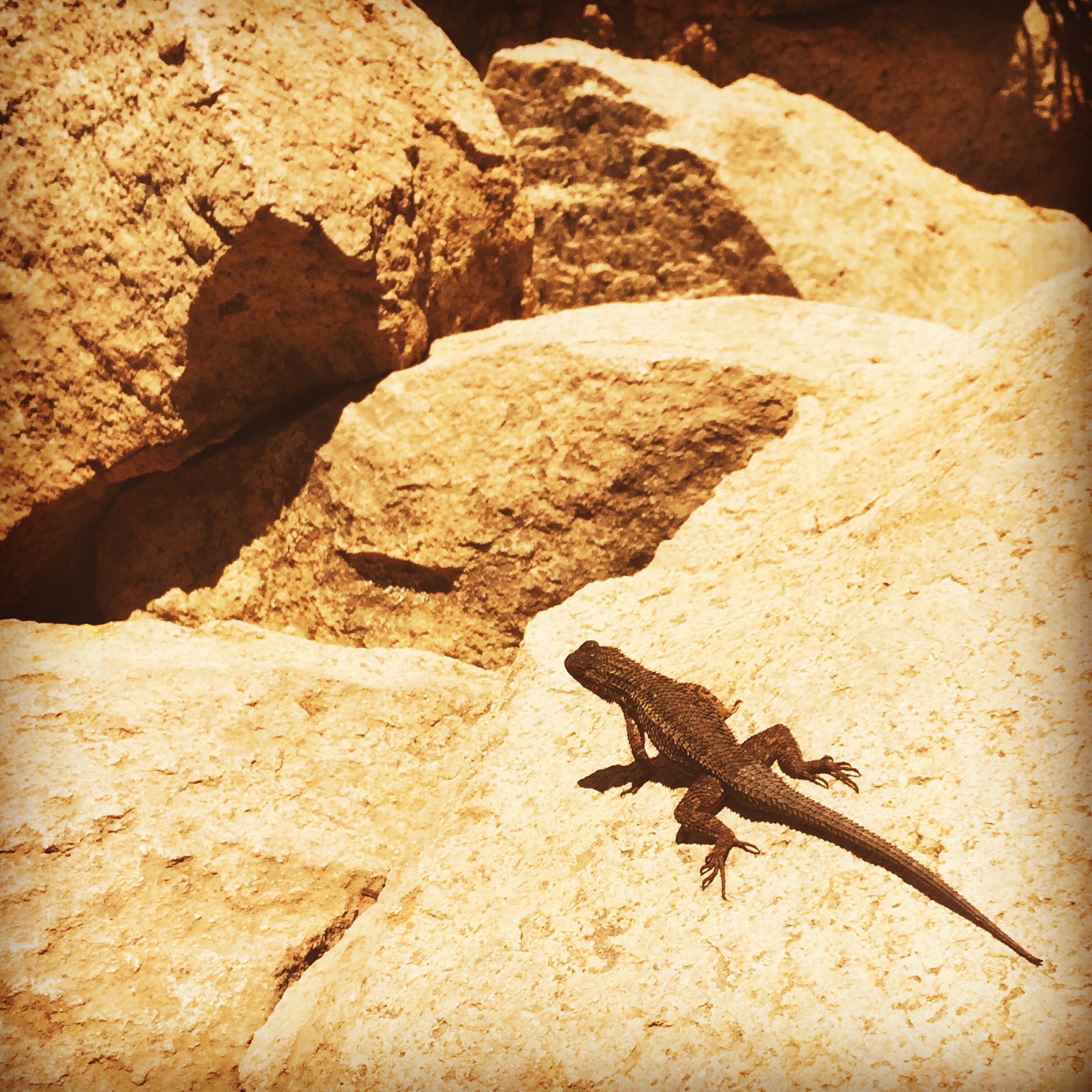
Lizard_wabi sabi

A flurry and munch!

Time for posing and sunning

Scaly modeling

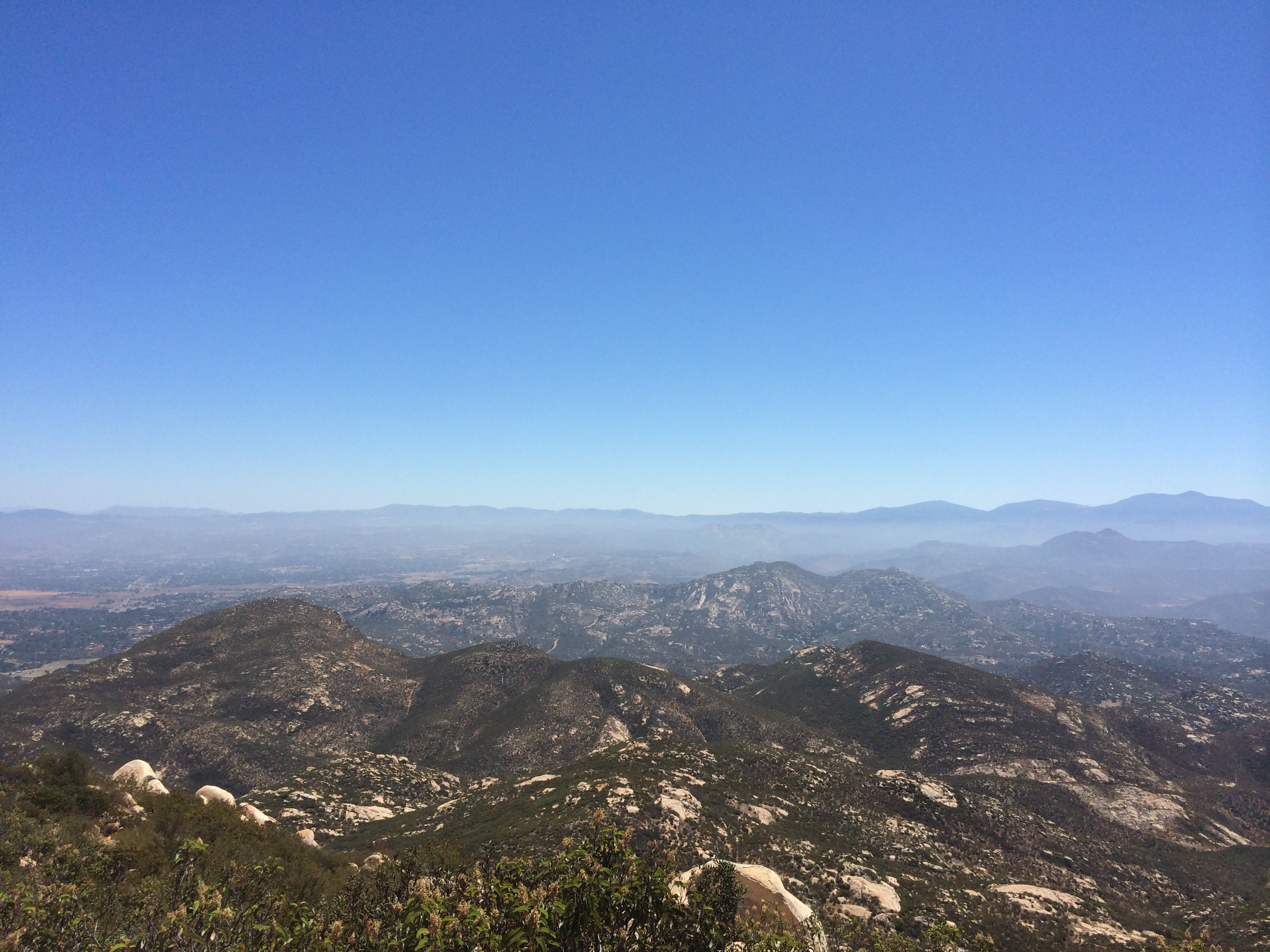
Mountains from Iron Mountain

Purple mountains stand

Off in the distance watching

Both desert and beach

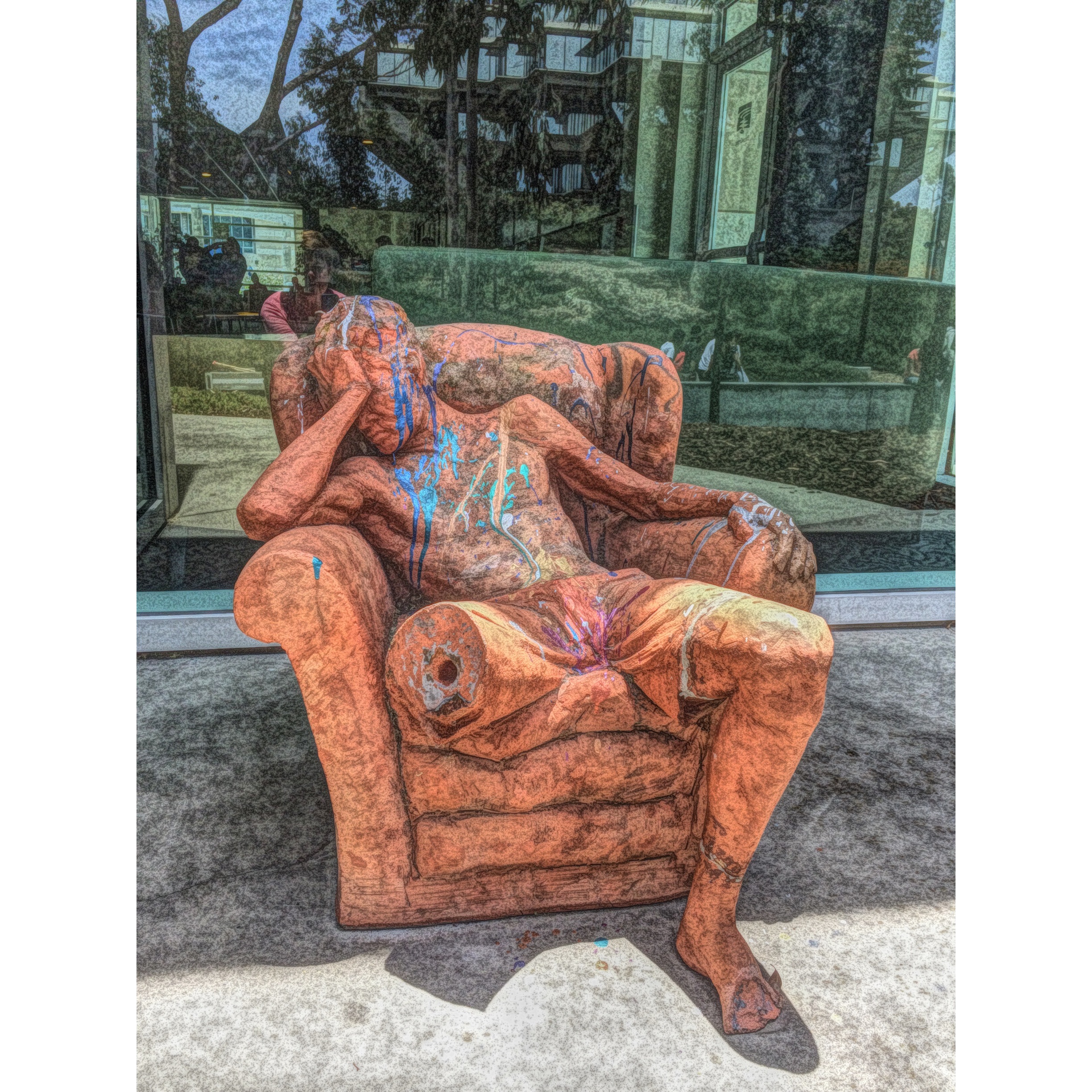
broken sculpture ucsd

It’s a hard knock life

Reflecting privilege’s promise

Strong enough to thrive

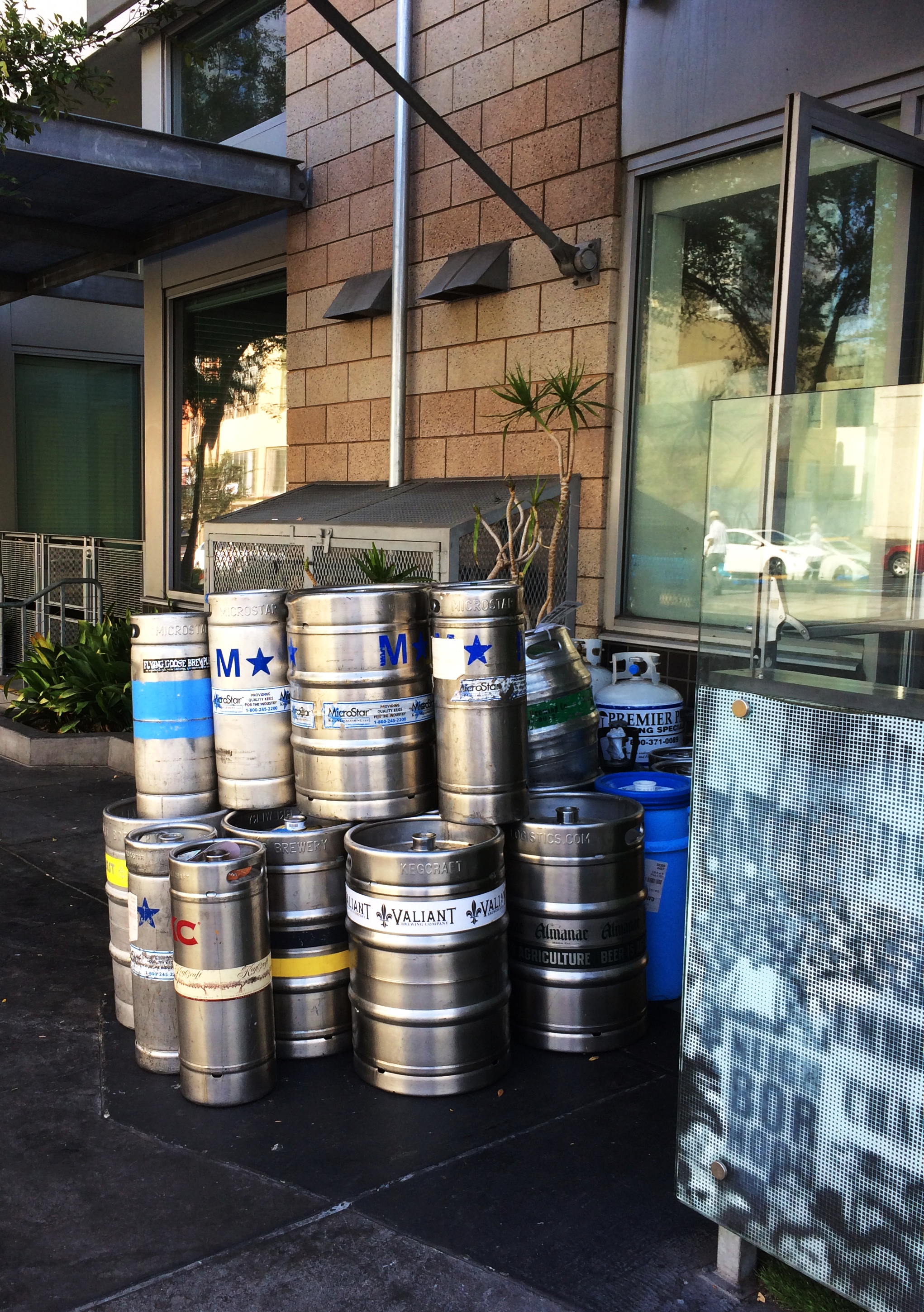
kegs

Kegs and art mingle

Chatting on a street corner

Exchanging cultural news

And to stretch my exploration (and yours too) I have come up with a list of potential prompts or categories to consider.  (I notice that I tend toward nature for my photographic exploration of beauty–these prompts are meant to push my thinking and seeing in new ways.)

1.  On the corner

2.  Nature

3.  People

4.  Celebrate

5.  Inside

6.  Under

7.  Home

8.  Outside

9.  Places

10.  Animals

11.  Food

12.  Personal

13.  Things

14.  Mood

15.  Looking up

16.  Sitting down

17.  Looking down

18.  Early

19.  Growing

20.  Morning

21.  Sound

22.  Growing

23.  Feeling

24.  Places

25.  Night

26.  Light

27.  Hot

28.  Early

28.  Travel

29.  Between

30.  Smell

31.  Icy

So now it’s your turn.  Explore what Wabi Sabi means to you as you examine the ordinary in your life this summer.  After you shoot, post a photo each day with the hashtag #sdawpphotovoices to Twitter, Instagram, Flicker, Google+ and/or Facebook (the more the better!), so that we can all enjoy the posts. Try your hand at an accompanying Haiku and explore how it expands, defines, or changes the meaning of the image you share. You are invited to create a pingback by linking to this url or post your blog address in the comment section. It’s fun for me to see what others are doing with the same prompts I am using!

With summer in full swing, it’s the perfect time for some playfulness and experimentation…look for beauty and the unexpected in the ordinary–let it surprise and delight you!  You can post every day, once a week, or even sporadically throughout the month…whatever works in your life. You can play this game by posting your pictures in the order of the prompts or post the one you find on the day you find it.  You get to make your own rules!  Be sure to share and tag your photos with #sdawpphotovoices so we can find them!


More than a Game

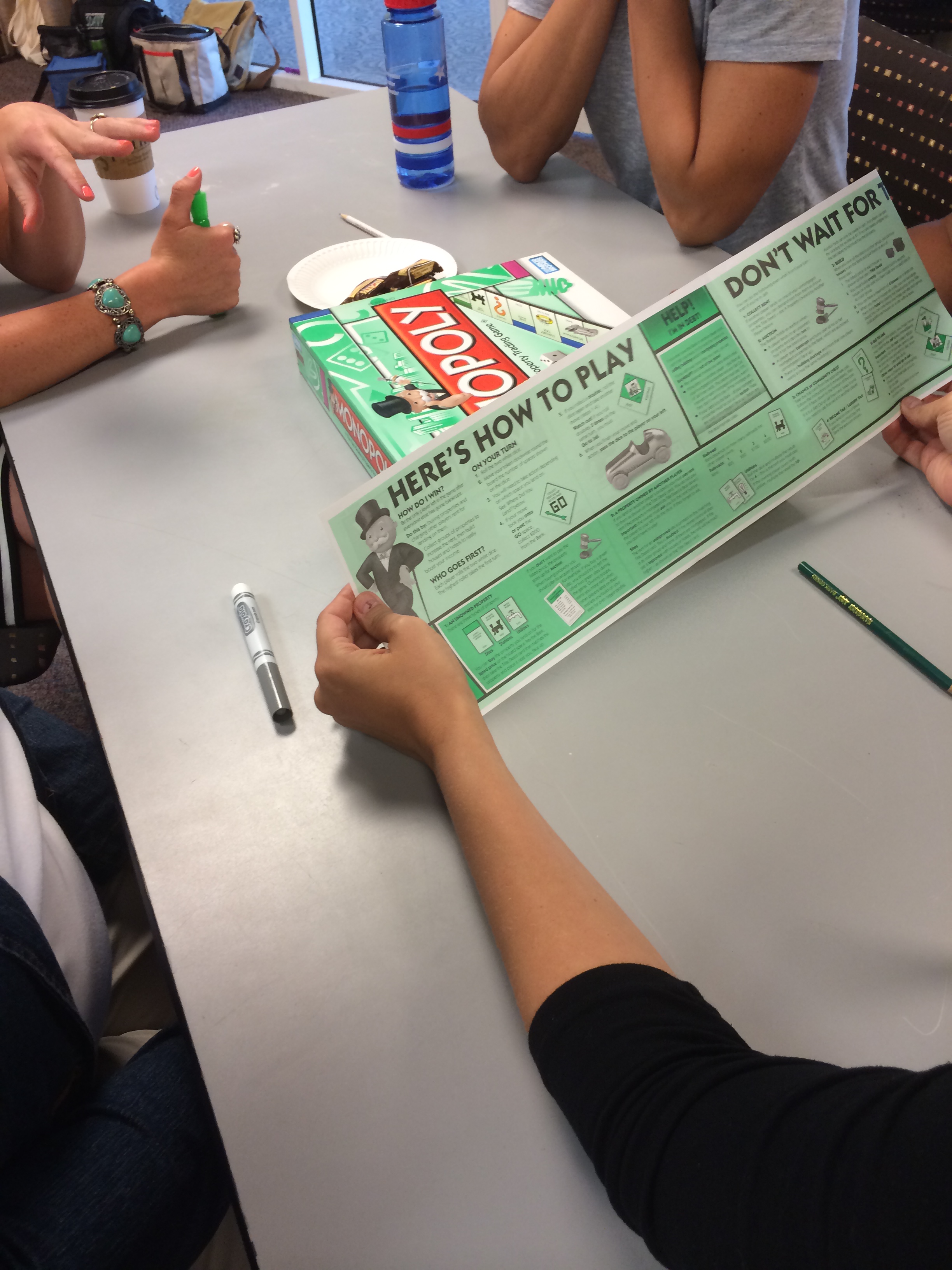
Today we played Monopoly.  We played in our Summer Institute…a leadership development program for teachers of writing.  And as you might imagine, this play had more than one purpose!

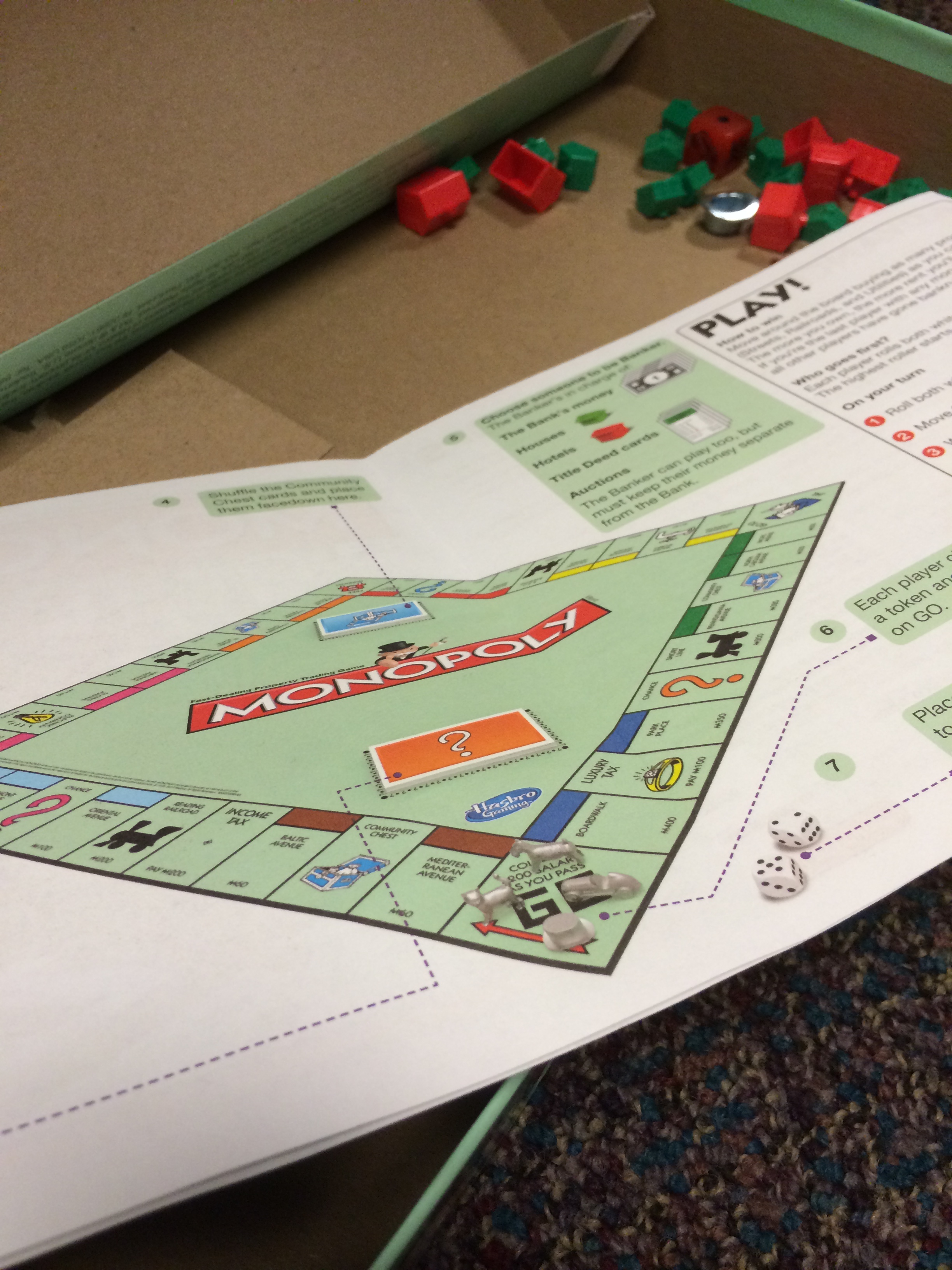
monopoly box

There is something wonderful about giving a group of dedicated educators a Monopoly box and asking them to play a game during an intensive professional development experience.  In our 4th day of a four week institute, we have already begun to bond, building trust and opening up, willing to be vulnerable even when faced with difficult topics and challenging situations.

The group seemed almost giddy about the thought of playing…even though based on the previous three and a half days, they knew this was not simply a board game break.  They started by forming groups of five or six and then selecting a writing utensil from a plate on their table.  A colored pencil, a smelly marker, a highlighter, an SDAWP pencil, and either one or two Crayola markers were mystery icons of the game to come.  After spending time as a group reviewing the written rules of the game and setting up to begin, the significance of the choice of the writing utensil became apparent.

Figuring out how to play

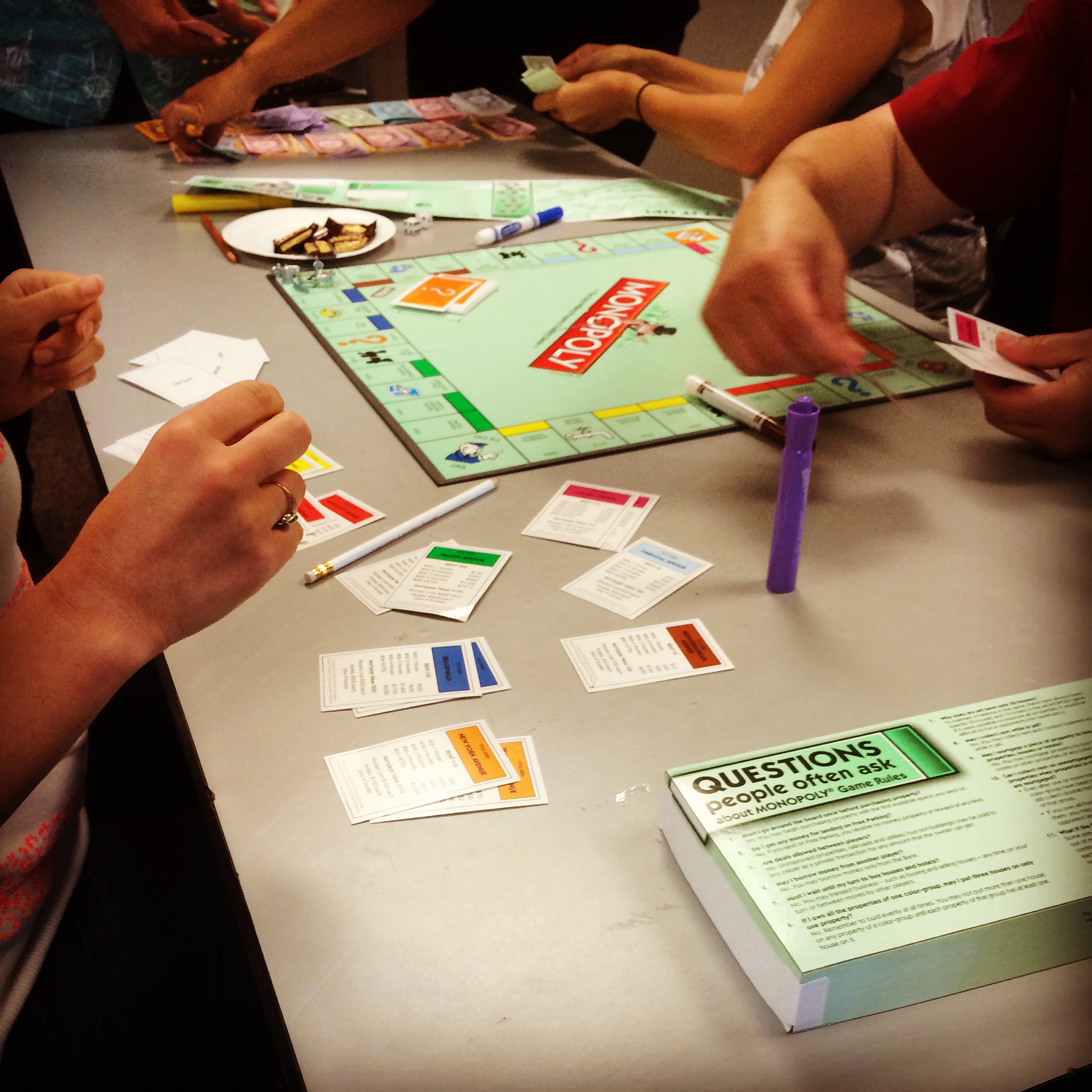
Those holding the Crayola markers were asked to begin playing…the others at the table were only allowed to watch.  In my role as observer I got watch as some started to play with trepidation while others raced forward with delight…”Hurry, let’s get what we can while we can!”  After the first player or players had played for five or ten minutes, the second group of players were invited in.  At indeterminate intervals and not knowing which category would be called next, the players who waited and watched seemed to withdraw and lose interest in the game.

playing monopoly

This version of Monopoly, which immerses players in an experience where everyone plays by the same rules…but the game is still not fair, is adapted from an article by Jost and Jost.  Our goal is to get our participants to think about equity beyond what is experienced by individuals and consider the systemic influences of poverty and racism.

As the game continued we saw our participants behave in some interesting ways.  Those that entered the game early seemed to play either with zeal…or with the weight of guilt on their shoulders.  They frequently assumed the role of helper…often moving the pieces for their late starting peers or even acting with seeming generosity, offering “get out of jail free” cards or waiving some small rents due to them.  The late starters either become apathetic about the game or downright devious…sneaking money from the bank or even wishing to land in jail so they wouldn’t have to pay fees that they saw coming as their money dwindled with each turn.

We saw early players become rule sticklers…at one point carefully explaining the rules to a late starter.

checking the rules

When time was called on the game, players were asked to take note of the results and then sent off to reflect on their experience.  What did they notice about themselves, their peers, the experience?  What implications does this experience have for them as educators, parents, human beings?

Our discussion was rich and layered…and sometimes downright contentious.  This experience opened up space for talking about systems: economic, social, educational…and the differences in access and equity that are often dismissed or not considered with our more typical focus on individuals.  And we’re not finished with these discussions…because although there are some who might ask, “What does equity have to do with the teaching of writing?”, we know that equity plays a crucial role in who has access to high quality teaching and learning…and who can see themselves as successful learners.  This game “hack” is just a beginning for us…we have much more in store in our next three weeks!


To Meme or Not to Meme

I learned about memes a few years ago…and kind of take them for granted now as commonplace, especially in places like Facebook and other social media platforms.  And I never use them…or at least I don’t think I do!

But this week, the “make” for CLMOOC is a meme.  In fact, the same person that I learned about memes from is part of the team that is inviting memes this week.  So I started out the week actively resisting participating in meme-making…why would I want to take someone else’s image, put some words on it and publish it as commentary on teaching or summer or some aspect of popular culture?

It was Anna who drew me back in with her post today:

Screen Shot 2014-06-24 at 6.02.15 PM

A comment on that thread from Scott sent me off to the PBS Idea Channel, adding to my understanding of memes.

And questions from both Terry and Scott, “What about photography?”  “Images without text?” got me thinking and wondering…  I headed over to Peter and Kim’s invitation and then clicked on James Gleick’s article, What Defines a Meme? and came across this passage in the text:

Images. In Isaac Newton’s lifetime, no more than a few thousand people had any idea what he looked like, even though he was one of England’s most famous men. Yet now millions of people have quite a clear idea—based on replicas of copies of rather poorly painted portraits. Even more pervasive and indelible are the smile of Mona Lisa, The Scream of Edvard Munch and the silhouettes of various fictional extraterrestrials. These are memes, living a life of their own, independent of any physical reality. “This may not be what George Washington looked like then,” a tour guide was overheard saying of the Gilbert Stuart portrait at the Metropolitan Museum of Art, “but this is what he looks like now.” Exactly.

And I admit, I haven’t yet read the entire article…because this got me thinking about a photo I took not too long ago at my nephew’s wedding.  I included the photo in a post back then…and will include it again here.  Is this a version of a meme?  Does it require text?  Does it only resonate with a certain audience of art lovers?

american gothic selfie

What do you think?  What caption might you include?

Play and Games

This first week of CLMOOC has reminded me again of the power of connected learning. Don’t get me wrong…I am a connected learner all year long, but there is something about the intensity and playfulness of the CLMOOC that amplifies the effect.  Earlier this week I had the opportunity to serve as a coach for an upcoming make, and when I learned the topic would be games I wondered just how much help I would be.  In online spaces when someone says games, I immediately think of Minecraft and Halo and other video games.

Instead, our conversation went to stories about games from our childhood…games we made up, unstructured time when we were left to our own devices and “forced” to entertain ourselves.  Terry brought up some research about the lack of games in children lives and I wondered how that could be true–aren’t people complaining that kids are too obsessed with gaming?  That’s when our conversation got really interesting…when we realized that game had different connotations in different contexts.  What we all worry about is how little time children seem to have that is unsupervised and free for imaginative play, exploration, making, and doing…not pre-structured by adults. (Many thanks for a rich, thought-provoking conversation Terry, Joe, Christina, and Michael!)

Here’s a link to the talk Terry had referred to:

My husband took today off from work and after we treated ourselves to breakfast out, we headed to the beach for a leisurely low tide walk.  It was warm and sunny, but not too hot, perfect beach weather.  And as we started walking I realized that my husband and I often make up our own games to keep our beach walks interesting.  Our latest “game” has been to search for beach glass as we walk.  It’s like a scavenger hunt, eyes tuned for the gleam of the glass worn by the tides.  We have very little glass on our beaches–probably in large part because glass has been banned on our beaches for a decade.  But when we started playing this game a few weeks ago, each find has become a treasure.  Here’s today’s haul.

beach glass

And Christina reminded me that my photography is a game.  And it’s become even more so managing both #sdawpphotovoices–a monthly photo a day challenge and a weekly photo challenge that I post on my blog and for the NWP iAnthology.  This week’s Weekly Photo Challenge is #two…and I couldn’t resist snapping this photo of my husband fitting our flip flops in his pockets so we don’t have to carry them on our walk.  He puts one of each of our shoes in the pocket since mine are smaller (two of his shoes won’t fit in one pocket!).

two shoes

I also took some photos that I knew I would use to play around with filters and effects. This “still life” seemed perfect for trying out a new app (thanks Bonnie for pointing to it) called painteresque.  I love the effect!

beach stifflife paintereque

And then today I added yet another game to my photographic repertoire.  I’ve been wanting to take photos of “found alphabet” letters.  My rule (self-imposed) is that I have to photograph it as it is, I don’t get to arrange it.  Here’s a couple I found at the beach today.

Here’s a Y from kelp:

Y seaweed

An M I found in the cliffs:

m beach cliff

An O formed by a sea anenome:

o sea anenome

And who can resist the i made of bird poop!  (And it was washed away by a wave right after I snapped it!)

i bird poop

And part of the fun of these games is playing them with others.  It’s fun to search for beach glass with my husband, celebrating each find.  And taking photos is even more fun when others play along and we can share with each other and learn from each other.

I’m hoping that others will join me in the found alphabet fun.  I’m thinking I have two different “sets” I am searching for: found in nature and found on the beach.

What I love best about the CLMOOC is the spirit of playfulness and the ways we build on each others’ ideas and makes.  We are free to explore, to play, and to hack the structures presented. The connections are essential because they motivate and encourage and urge us on to try one more thing.  And thanks Terry, Joe, Christina, and Michael and the rest of you CLMOOC-ers for reminding me that I do know about games. Now I can’t wait for the game-focused make cycle! I’m already making up new games!

Weekly Photo Challenge: Two

Do you speak in images? Enjoy taking photos to document your experiences or just to express what you notice in the world? Love to share them with others? Welcome to the weekly photo challenge! I post a new challenge each week…check in regularly and join the fun!

This weekend is the summer equinox, the first day of summer…and it is my wedding anniversary.  I’ve been married a long time, but it seems like just yesterday that I stood in that white dress on a beautiful first day of summer afternoon and vowed to join my life with my husband’s.  So this week I’ve been thinking about the number two and all its connotations.  I’ve often heard marriage described as two lives becoming one, but that doesn’t seem true to me. It seems more like a braiding of lives…or maybe even a weaving or tapestry–becoming inextricably linked, yet still each maintaining their unique features and substance.

So I started to look for photos that represent two…and some were easy and quite literal. There’s my two cats.  They spend lots and lots of time together…but check out their facial expressions here.  They take turns being the one who begs…obviously it’s Jack’s turn here.

cats

And then there are these two up in handstands…showing off their balance and strength. They just happen to be my teaching partner and one of our students when we were at the rock climbing gym a week ago.

handstands

Here’s a less obvious two.  This is actually two separate photos I took and then combined using the app union.  It was interesting to figure out what to put in the background and then what to put in the foreground and what to mask…much more complex than I thought when I began. (It’s a picture of a piece of driftwood and an LED light, both shot with my macro lens)  I did add some filter effects as well to create the unusual coloring.

2 photos

And here are a couple of bikes nuzzled up to each other while parked at the bike racks.

two bikes

And I better add a picture from nature…here’s a double blossom taken with my macro lens during a walk last weekend.

two blossoms

So this week’s challenge is to represent two…two of something, twice as much, double the fun, two of your favorites (like my cats and kids and blossoms)…you get to interpret two in ways you find interesting.

You can post your photo alone or along with some words: commentary, a story, a poem…maybe even a song! I love to study the photographs that others’ take and think about how I can use a technique, an angle, or their inspiration to try something new in my own photography. (I love a great mentor text…or mentor photo, in this case!)

I share my photography and writing on social media. You can find me on Instagram and Twitter using @kd0602. If you share your photos and writing on social media too, please let me know so I can follow and see what you are doing. To help our Weekly Photo community find each other, use the hashtag #two for this week and include @nwpianthology in your post.

It’s time to document the twos in your life…can’t wait to see them through your lens!


How to: Inspiring Writing

“…smell the sea, and feel the sky

let your soul and spirit fly…”

Jim Morrison

With the end of the school year and the beginning of the SDAWP Invitational Summer Institute beginning next week, I find myself with a small window of unstructured time. Don’t get me wrong, I have plenty of “work” to do…but I am determined to play this week and the CLMOOC is helping me.

This week’s “make” is to make a how-to.  You might notice that I tend not to follow directions in a literal way, but as I headed off to join the SDAWP Young Writers’ in Nature campers on a field trip to the Scripp’s Coastal Reserve today, I was thinking about how to write under the influence of nature…and science…and children.

As we headed off on our walking field trip, I already felt inspired.  There is something about kids with notebooks and their innate curiosity that sparks my own learning.  The kids had been learning about native plants–a favorite topic of mine (see this blog post) and Janis (their teacher) encouraged them to explain what they had learned to me as we walked.  I loved listening to them describe coyote brush and its adaptations and watching their keen eyes on the lookout for lemonade berry.

I love the earnestness of young writers at work.  This little guy caught my eye…and I love that he is framed with the gorgeous blue of the Pacific Ocean behind him.

Young Writer

And I decided to push out of my comfort zone and make a video of today’s experience.  I suppose you can loosely define it as a how to write under the influence of nature (and science and children) video.

Here’s a few lines from my own writing under the influence today:

Sitting on the cliff looking out into the vast endless ocean I see clouds crouch on the horizon, retreating from the blaze of the mid-morning sun.  Relentless breezes dance with my hair and with the natives on the cliffs.  Children hunch over the words that pour from their pencil tips, inspired by the sights, sounds, smells, and touch of this visit to Mother Nature’s living room.

And here is my video capturing the experience of writing under the influence of nature and writing and kids.


A Closer Look at the Ordinary

Sometimes we take things for granted.  Especially those ordinary things that we are so accustomed to that we almost don’t even notice their usefulness or necessity.  I’ve been reminded to pay attention to the ordinary in a couple of ways lately.

A blogger I follow (who takes some spectacular photos!) mentioned in a post recently that she was participating in a macro photo challenge…and was reminded that macro is not all about flowers and bugs. That prompted me to put the macro lens on my phone/camera this morning and to snap some macro shots of ordinary things around my house.

The zipper on my sweatshirt immediately attracted my attention, I like seeing how the teeth interconnect.

Zipper

I noticed the banana…and focused my lens on the dark end.  It is definitely more interesting than I originally thought!

banana tip

And then since I wrote about being more playful about ordinary things like brushing my teeth in my Summer Manifesto yesterday, I couldn’t resist a quick shot of the bristles…and the toothpaste tube!

toothbrush bristles

toothpaste

Later today while I was outside on a long walk–of the exercise persuasion–I found myself thinking about the NWP radio show I taped today.  The show focused on formative assessment and a resource, an e-book, that NWP colleagues, Beth Rimer from Ohio and Terri McAvoy from Missouri, have put together to help their writing project colleagues and other educators understand and use formative assessment effectively…in classrooms and in professional development.  (The e-book will be available on the NWP website on June 26th…and you can hear the radio show that same evening!)

I realized in my work with Terri and Beth (I acted as their coach and editor…and cheerleader!) that formative assessment is one of the taken for granted, ordinary practices that becomes nearly invisible–even to those who use it well–and totally unacknowledged and often dismissed by those who aren’t familiar with its powerful outcomes.  What I love most about the new e-book, Formative Assessment as a Compass: Looking at Student Work as an Intentional Part of Ongoing Professional Development, is that it shines a light on all the reasons this is an essential practice for educators–in classrooms and in professional development.  Like my zipper and my toothbrush, it’s easy to overlook formative assessment.  It’s not flashy and doesn’t get much press, but effective educators understand that paying attention to learners–what they “get” and what they don’t–is essential to planning for effective teaching and requires a willingness to abandon the carefully created lesson plans and attend to the learners in the moment.

Since working with Beth and Terri, I have been more aware of the use of formative assessment in my classroom and I can’t wait to use this resource in my work with my SDAWP colleagues. Like a macro lens, this e-book will help people look more closely, examining the details that are often overlooked and considering intentional and systematic practices that support learners (and teachers too!).

What of the ordinary are you overlooking or taking for granted?  How will you take a closer look and consider the consequences of doing without this thing?  I’m glad for reminders to pay attention in different ways…to make the familiar new, allowing me to appreciate what I might otherwise dismiss as ordinary.

Summer Manifesto

There’s nothing like the CLMOOC to get the creative juices flowing…and the inspiration turned up high.  Ideas are arriving–pouring in fact–in flash flood proportions.  So I’m working hard to use the inspiration and not let the flood of ideas overwhelm and distract me.

This Summer Manifesto was posted this weekend…and I knew I would take it up and create one of my own–early in the summer, before my work pushes the good intentions from my priority list.  I hope this manifesto will be something I can return to throughout the summer to help remind me of my intentions.

So here goes:

Summer Manifesto

Spend time outdoors every day: exploring with my camera, walking/hiking for exercise, enjoying the sun and sea breezes…

Explore with my camera: try new strategies and techniques, go places in my community I haven’t yet visited, and see familiar places in new ways

Celebrate moments: take the time to breathe and laugh in the moment, even when they are squeezed between obligations and obstacles

Play: find the playful moments in everything I do…I even want to make brushing my teeth more like play!

Make stuff: digitally and physically, and keep trying even if it isn’t beautiful…and even share those “makes” that don’t quite turn out

Try something new: even if it’s scary!

And most of all, enjoy my family, quiet time, and a bit of adventure!

Welcome summer!

(I originally composed this manifesto in Noteography in my attempt to tty something new and make it more beautiful.  It offered Twitter as a way to publish it…and here’s my first try at embedding a Tweet on my blog post.  If you know a better way to use Noteography or some other application for similar purposes…I’d love to learn from you!)