Schedules at school have been challenging this year. COVID protocols meant staggered lunches and as the newest member of the grade level team, I started this school year with a lunch time so early it felt like brunch! The problem with an early lunch is that the afternoon (with 6 years olds) felt interminable. I was able to negotiate a slightly later lunch after the first couple of weeks–and 20 minutes really did help, but afternoons continued to be a struggle.
A few weeks ago as the Omicron surge began to level off, the rumbles of change started vibrating through our staff. Could we have students line up on the playground instead of waiting outside the classroom as they arrived on campus in the morning? What about letting students play before school for the 10 minutes before the bell rang?
And then a more seismic shift started, could grade levels share a common lunch time? A common afternoon recess? I was definitely in favor of this change–and a complete overhaul of my daily schedule. All of my recess times would change and I would gain precious instructional minutes in the morning and shorten that afternoon when student engagement was so troubling.
It was decided that our new schedule would begin when we came back from our February Family Week break…yesterday!
My Monday was magical! No, not perfect, but the difference was so significant that I felt like singing from the rafters! My students are engaged in meaningful learning right up to our 10am recess. They come back and continue with focus up until our 11:30 lunch. After lunch we settle in for 50 minutes until our afternoon recess and manage to maintain focus right up to our 2:35 dismissal–at least that was true for the last two days.
Honestly, these have been the best 2 days of the entire school year. Do schedules really make that much of a difference? Were these last 2 days just a fluke of timing? Can a shift of 25 minutes at the start of lunch change everything about how learning happens?
I don’t yet know for sure…but it feels like the best thing that has happened in a while. Maybe “normal” is in the little things, like lunch at lunch time, play before school, and breaks with my colleagues. This schedule change feels like a win.
Like so many others on social media (at least my feeds), I have been participating in the Wordle craze. I like that I can only play once a day, that it is limited to 6 guesses, that the words are all 5 letters long and that the whole world is playing this one word each day. There is something about limitations that funnels my focus, and while my first guesses often seem fruitless, somehow I usually pull it out by guess 4 or 5.
The first graders in my classroom have been playing a math game called digit place. In this game, I think of a 2-digit number and students make guesses to determine what it is. With each guess I indicate whether there are correct digits and whether they are in the correct place. For example, if my number is 12 and students guess the number 27 I would put a 1 in the digit column to represent a correct digit (the 2) and a 0 in the place column to show that it is not in the correct place. Subsequent guesses narrow down the possibilities leading students to a correct response. At first there were lots of random guesses, but the class is becoming strategic and quite successful. (I’ve had third graders who played this game with much less strategy and success!).
We’ve been focusing on 4-letter words ending with a silent e in the last week, building word ladders and noticing how this e causes the other vowel to be a long vowel. Students are building their skills and getting better at changing just a single letter to make another word that fits the rules of this ladder. Today, I found myself thinking about Wordle, digit place, and word ladders…and decided to try my own version of Wordle–first grade style.
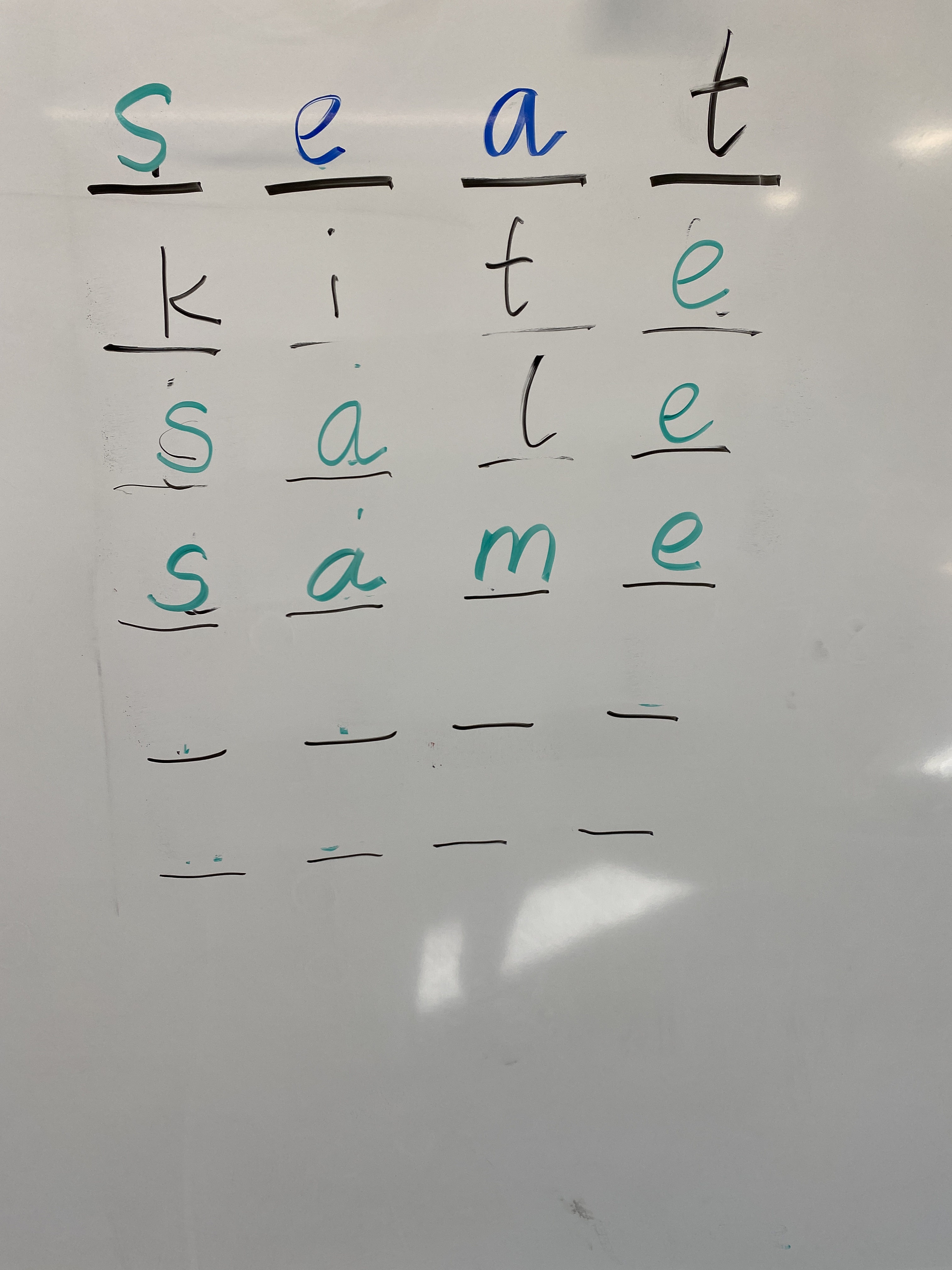
So…I introduced this new game to my students. I drew 4 lines to represent the 4 letters in the word I was thinking of. I grabbed a black, blue, and green white-board marker announcing that letters in black were not in the word, blue meant the letter was correct but in the wrong place, and green meant the letter was correct and in the right place. I wasn’t sure how this game would work out–or if it would even make sense to my students. But…it was great! Students loved this process–and caught right on. I could hear them telling each other whether a guess was a good one (“…we already know there is not an “s” or “h” in the word…) and the game definitely caught their attention. We played several rounds today…and I remembered to take a photo of the last one.
My social media involvement was put to good use in the classroom today. I love having a new engaging, educational, and no prep game in my back pocket for those few minutes that need filling from time to time. Wordle for first graders–and we don’t even need the internet!
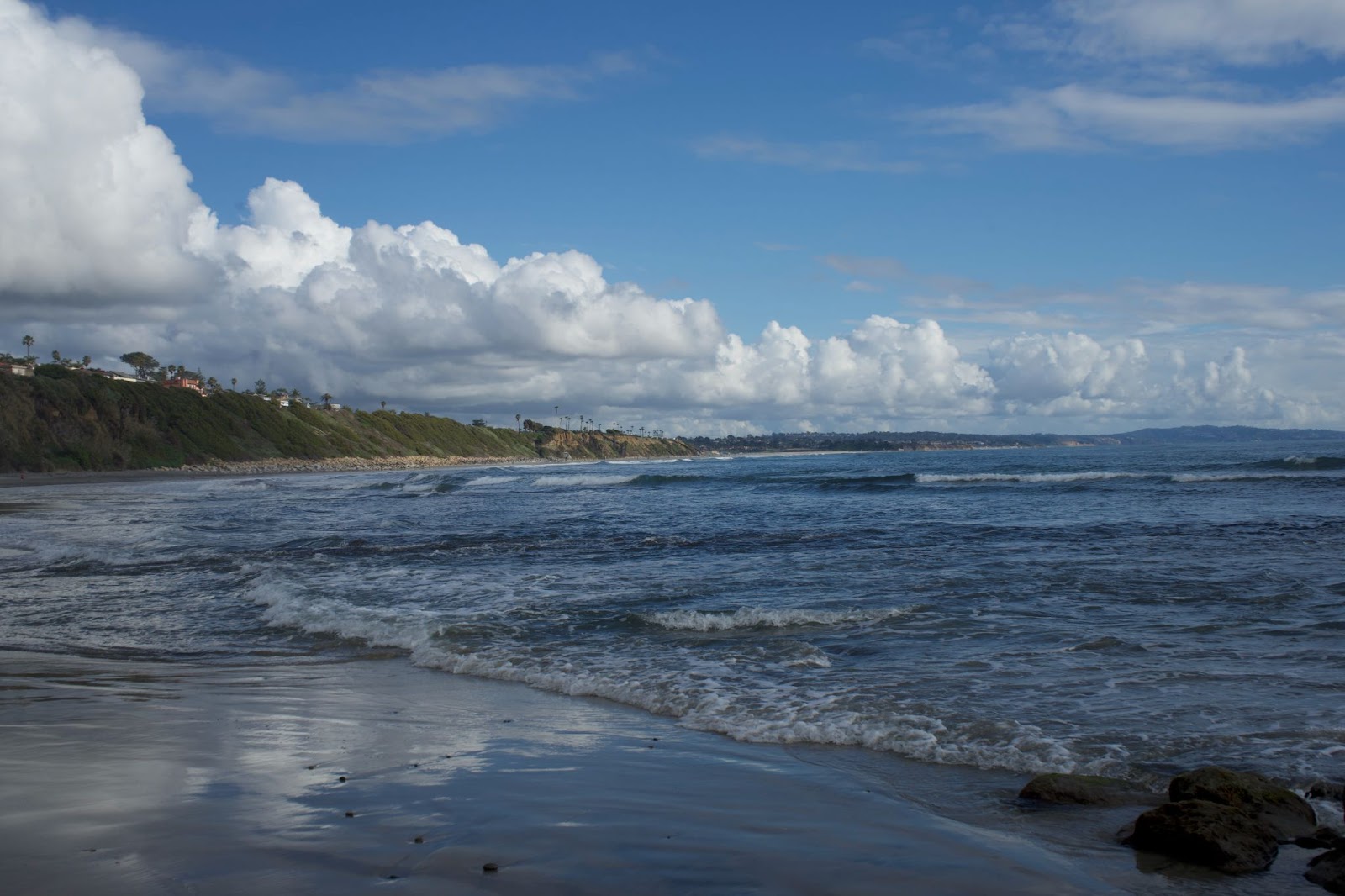
I walk the beach feeling the water-laden air kiss my cheeks as the breeze lifts my hair straight up, making me taller by inches. Water, clear as it pours from my water bottle, takes on every shade of blue as I look out to the sea on this sunny day. What is it about the qualities of water that allow us to see so many colors when we look out at the ocean? Water both absorbs and scatters light, swallowing the red, orange, yellow, and green wavelengths, leaving the shorter blues and violets for us to see as blue’s variations.
Water, also known by its formula H2O, is a miracle of chemistry. The magnetic-like attraction of hydrogen and oxygen pulls the atoms together to create this unparalleled life-giving substance. Water is a magical shape-shifter. When it heats up, it becomes a gas we call steam, rising nearly invisible into the air. When it cools down, it becomes hard and cold and incredibly strong. We call it ice and as it warms and melts, it becomes liquid water once again. Water evaporates, condenses, and precipitates in a constant state of movement through the water cycle, creating our weather, refreshing our reservoirs, blanketing mountains with snow, watering crops, cooling the surface of our planet. Earth’s surface is 70% covered by water. Scientists are constantly seeking evidence of water on other planets as a gauge for the possibility of life as we know it.
We not only depend on water, we are made of water. Human bodies are 60% water. Water quenches our thirst, cleans our bodies, refreshes us on a hot summer’s day, runs through our veins, flushes through our organs. We crave water, fear water. It lulls us to sleep and shouts for our attention.
My memories are saturated with water.
The birth of my first child came with the unexpected gush of a river of meconium-stained amniotic fluid, right after my husband told me, “Let’s not have the baby tonight–I’m exhausted.” That flow of water set in motion the activity, the worry, the joy, and the endless nature of parenting with the arrival of the most perfect baby boy–unrivaled until his brother joined us a couple of years later. And with that flow and the baby that accompanied it came more attention to bodily waters. Suddenly liquid intake and output became something to measure and worry about. Is he getting enough milk? Peeing enough back out? I found myself swimming through waves of information seeking that perfect watery balance.
We hear all the time that we should drink eight 8-ounce glasses of water each day. It seems that everyone carries large bottles of water around with them. Is it too late to drink once you feel thirsty? Can you drink too much water? I’ve heard the stories of people dying simply by drinking too much water. Water intoxication, also known as hyponatremia, happens during major sporting events, fueled by the fear that dehydrating would be worse. Water is both necessary for life and can take life away–and sometimes make it unpleasant, even when you are trying to have fun. It’s not always about drinking water, sometimes it’s the movement of water that is the culprit.
The rhythmic motion pounded, creating that endless swirl like a washing machine, constant steady movement against my forehead, from the inside out, as I tried to push against it. Then it migrated to the pit of my stomach before bouncing back, heading toward my throat. Maybe I’ll feel better in the water I thought as I adjusted my goggles and snorkel. Geoff was watching the boys as they dipped into the ocean in search of brightly colored reef fish, and trying not to watch and worry about me. Somehow the motion of the water was an exact match to the stomach churning rhythm of the boat, today was not going to be my day for snorkeling fun. Why is it that even as I love being on the water and in the water, that it can cause me so much distress?
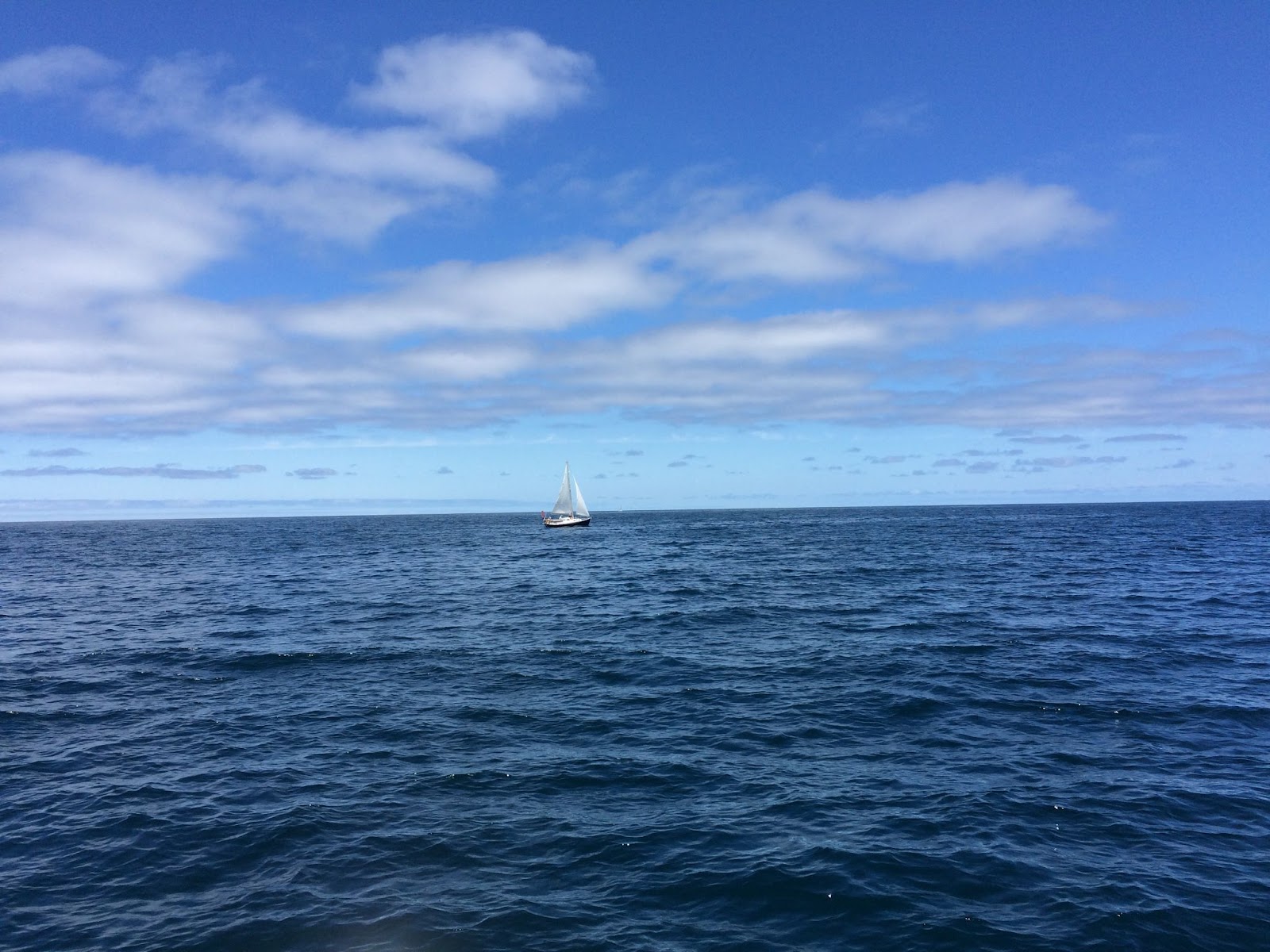
But distress is not my constant companion in watery experiences. There’s an exhilaration and playfulness that splashes over some of these watery memories. “This boat is nearly impossible to flip.” Did Dad mean it as a dare as he generously allowed my sister and I and our partners to sail out into the bay,–without him? A light wind and a sunny summer’s day enticed us to believe, inexperienced as we were, that, of course, we could sail this little sailboat without mishap. Luckily, we were all swimmers and our young men were strong enough to pull the boat upright after some ineffective sailing techniques tested the limits of the flippability of that boat.
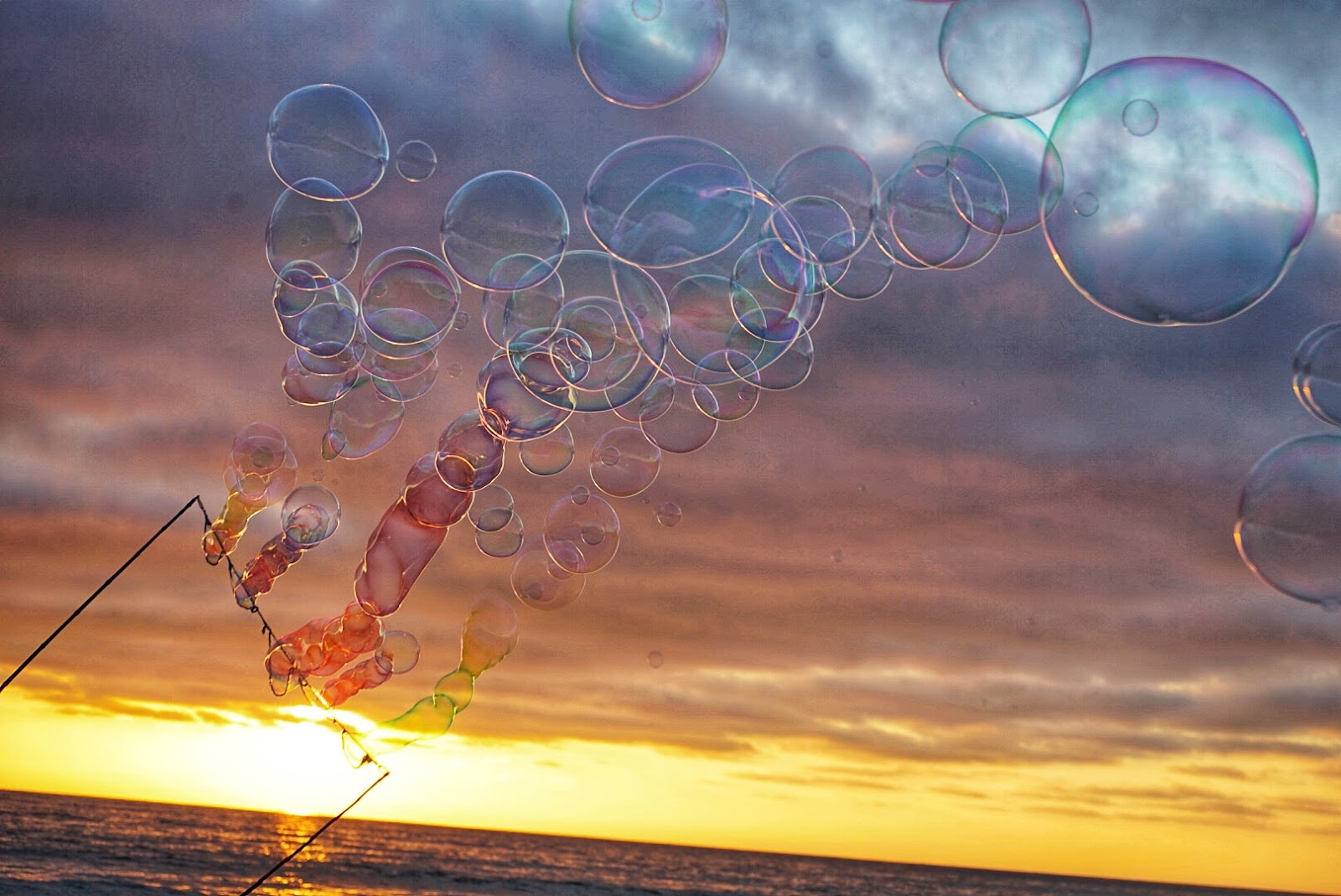
And tinier, much more usual moments can also bring so much joy. I am drawn to the beach, mesmerized by the funky smell–fishy and salty and wet, the whoosh and roar of waves as they hit the shore–echoes of the push and pull of blood through my heart, and the ever changing landscape–sculpted and shifted by tidal changes. Some days I spy the bubble man with his magic wand. He lifts his arms to the sea breeze and bubbles–a magic potion of soap and water–stretch and dance, reflecting all the colors of the rainbow. I stand transfixed, my camera at the ready, watching children–magnetized by the spectacle–running and jumping, chasing these orbs until they pop.
I wake in the night feeling water seeping from my still closed eyes, dreams and nightmares locked in an embrace, a tortured dance of real-life and deep subconsciousness. The cancer slowly erodes his strength and independence, taking away so much of what he loves about life. The smallest joys–walking around the neighborhood to see what is going on in the community, morning coffee at the local coffee shop to spin lies with the other old men–are no longer possible. There is not enough breath, not enough blood to take those extra steps, to carry on an extended conversation. He’s alive, but is he living? My tears spill over, dampening my pillow, offering relief, if only for a moment. I know the dam will burst at some point, but like him, I hold it back as a show of my strength and independence. Like father, like daughter.
***
Nature’s mirror, water reflects its surroundings. Some days you can walk on clouds, watch egrets admire their image, and see details of the landscape you missed while looking straight on. Other days are gray and flat, colors muted by the lack of sun. When the clouds are low it’s like being submerged in a small damp box, trapped inside with only your own watery thoughts to splash through. Moist thoughts stick, working their way from my head to my heart. Sometimes they gather and rise, churning, lifted by invisible forces, a storm waiting to unleash. At their best they shine, gathering the light, refracting into rainbows of colorful ideas ready to be unleashed in the world. Water is life, water takes life, and like fish, we swim in it, through it, beyond it, drinking in its lessons, flooded with memories…of water, our lifeblood.
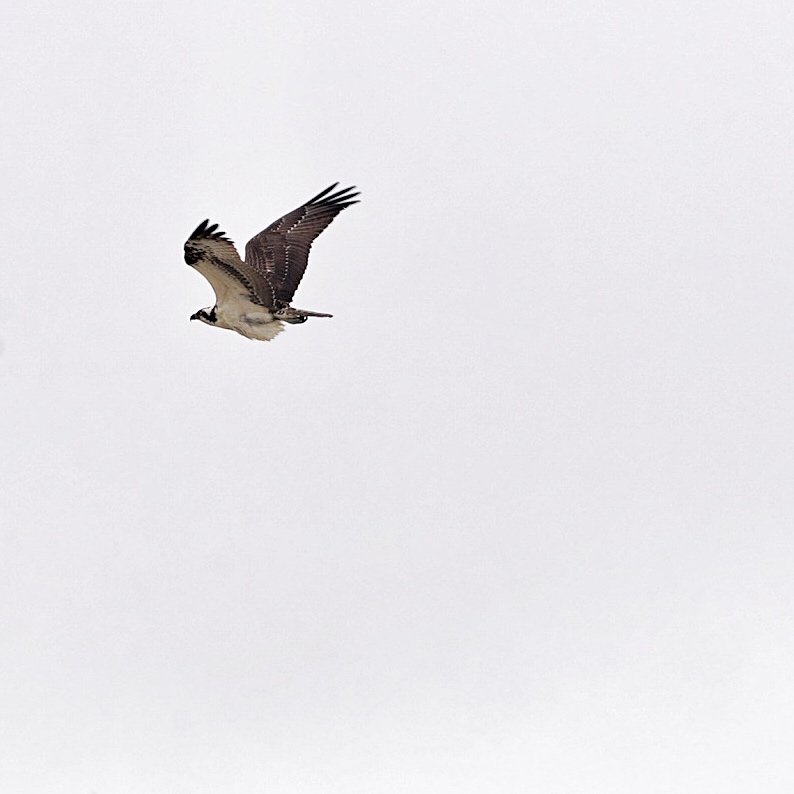
There is something magical about seeing a bird of prey in flight. Wings spread, they seem to own the sky, soaring effortlessly on those invisible air currents. Like Olympic athletes, they make it all look easy, moving with impossible speed and grace, pulling the oohs and aahs out of the watchers below. And if you are lucky enough to witness the dive and catch, it will take your breath away as you watch that skilled hunter emerge from the sea with a shiny silver fish tightly grasped in those sharp talons.
I watch with my eyes and with my camera lens, tracking and focusing, trying to capture a glimpse of raw power in pixels. A walker nearby asks, “Is it an eagle?” I know this answer–I watch these beauties regularly enough to recognize them even at a distance. “It’s an osprey,” I reply, “they’re also known as sea eagles.”
These aren’t showy birds, they dress plainly in blacks, whites, and grays. And up close you can understand how they can see fish from high above the waves, their eyes are enormous in their small heads. Even as I know that my photos will never capture the wonder and awe that I feel as I watch, I’m happy when I look back at the images. A reminder of fuller memories stored in my head.
Somehow over the years, in the process of everyday life and raising two children, we have accumulated mountains of cassette tapes, CDs, VHS tapes, DVDs–not to mention the vinyl records that were in residence before we got married. (No 8-tracks here!)
Collections of Disney movies from the 80s intermingle with ska tunes and Hammertime. Buffy the Vampire Slayer DVDs stand shoulder to shoulder with every Jimmy Buffet song ever recorded. Singing out from the corners are jazz standards, big band classics, Johnny Cash, everything Irish (think Flogging Molly and the Pogues), Blink 182, Blondie, and Pat Benatar (just to name a few) and a wide assortment of Christmas music from every era and in every style.
Geoff has been in the process of trying to corral these collectables that seem to be multiplying under the beds and in the dark corners of the closet. It might be fun to watch and listen to these time capsules, but the problem is, the devices that play these gems seem to wear out and fail long before they do.
So, what should we do with outdated technology? Maybe we should open a little free Blockbuster library on our street corner. Establish an ebay store and sell them to discerning collectors–making a fortune in the process. (Ha!) Hold a garage sale in hopes that someone near us is pining for the opportunity to own priceless bits of nostalgia (for the low price of 25 cents each or the whole lot for $10). Or just dump the whole mountain in the trash (that will never happen as long as my husband is in the picture).
Not too long ago I got a cool little photo gift–a small detachable macro lens for my iPhone. It has a little clip (kind of like a clothespin) that fits the macro lens right over my phone’s native camera lens. The fun thing about a macro lens is that it lets you get close up and magnify tiny things so you can really see them.
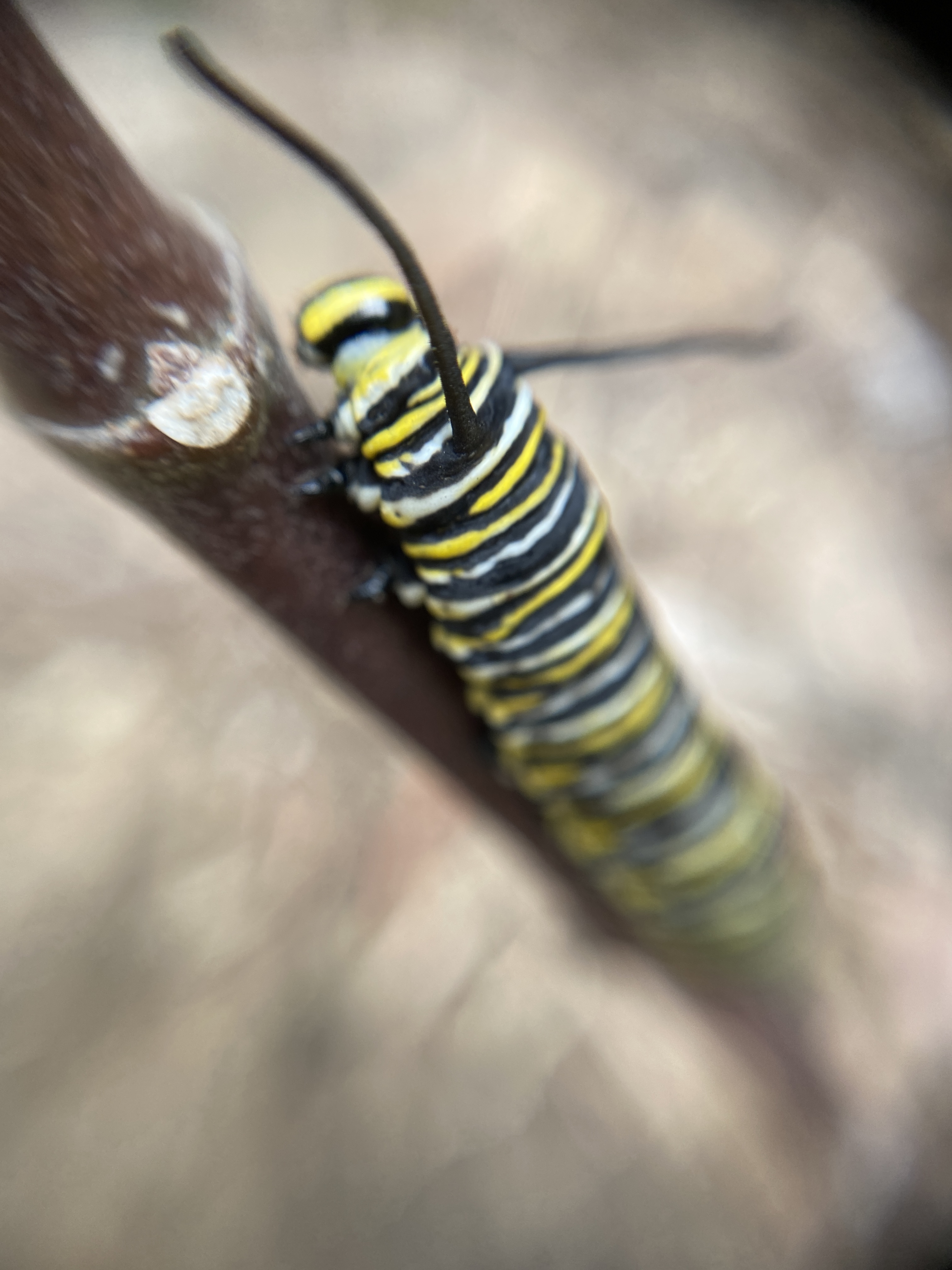
During Tuesday’s lunch break I decided to attach the macro lens to my phone and head out into the backyard in search of a photo subject. The milkweed is looking quite sickly. There are a few flowers, but the leaves have been stripped clean. Upon close examination, I did find a caterpillar–the monarch variety–cruising the stripped branches. I leaned in, took a deep breath, and held as steady as possible to snap a few photos of the yellow, white, and black crawling creature. It was a pretty big one, so I ended up with a head shot rather than a full body portrait.
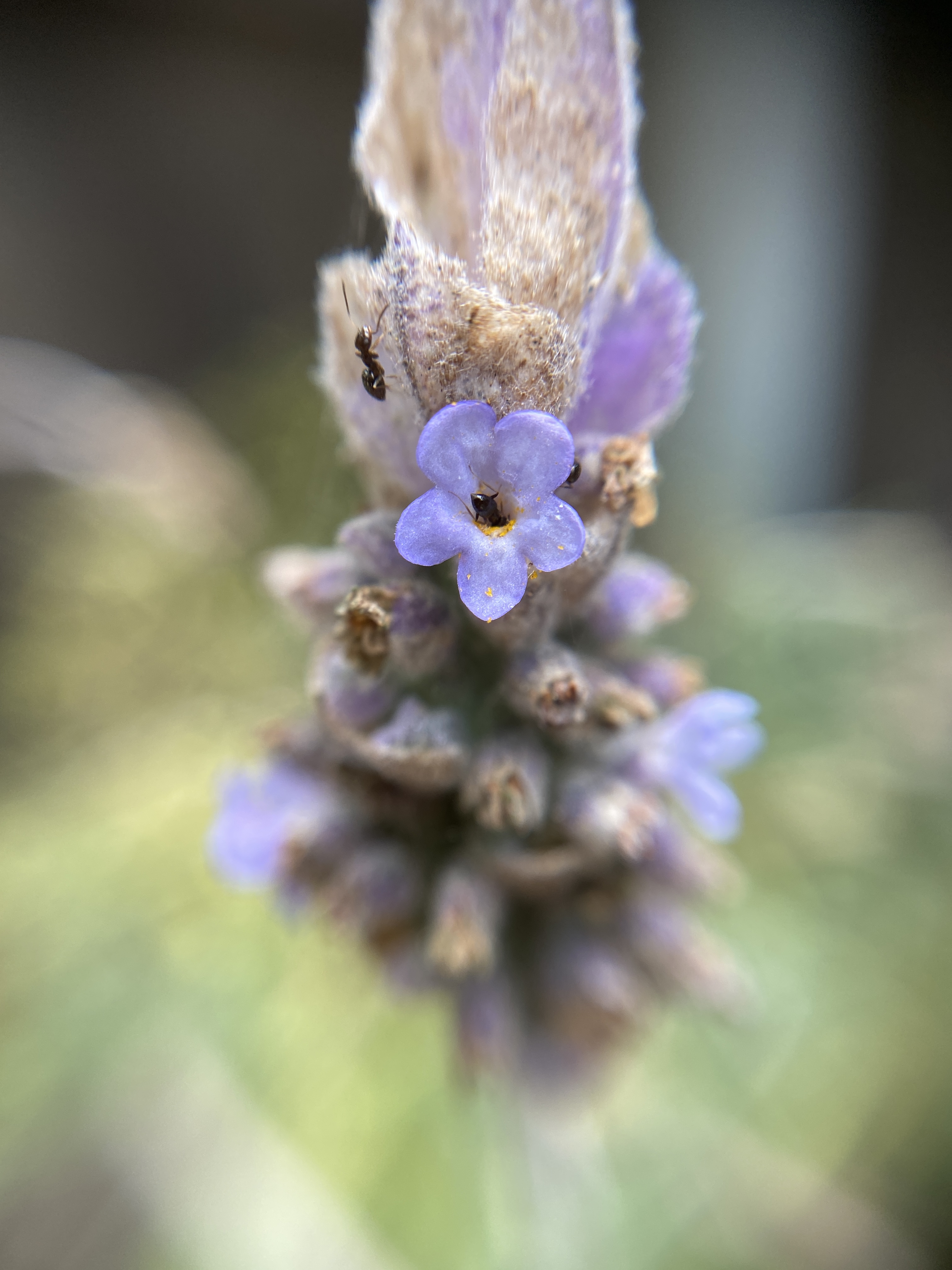
Then I turned my attention to the lavender. I love the way that lavender has tiny blossoms that make up the bloom. I aimed the macro lens at the individual blossom–and then I saw them! The tiniest ants were crawling in and out of the blossom. I moved the lens away and looked closely. I could make out the tiny ants, just barely, without the lens. I snapped a few different shots of the tiny ants exploring the blossom and then my questions started emerging. Are these ants pollinators? Do they help or hurt the lavender? What about these tiny ants–are they a different species than the regular ants I’m used to seeing, just smaller?
I love the way taking photos also creates opportunities for research and learning, piquing my curiosity as I notice something new or unexpected. Photography keeps reminding me to look at the world through fresh eyes, changing my angles…or just the camera lens!
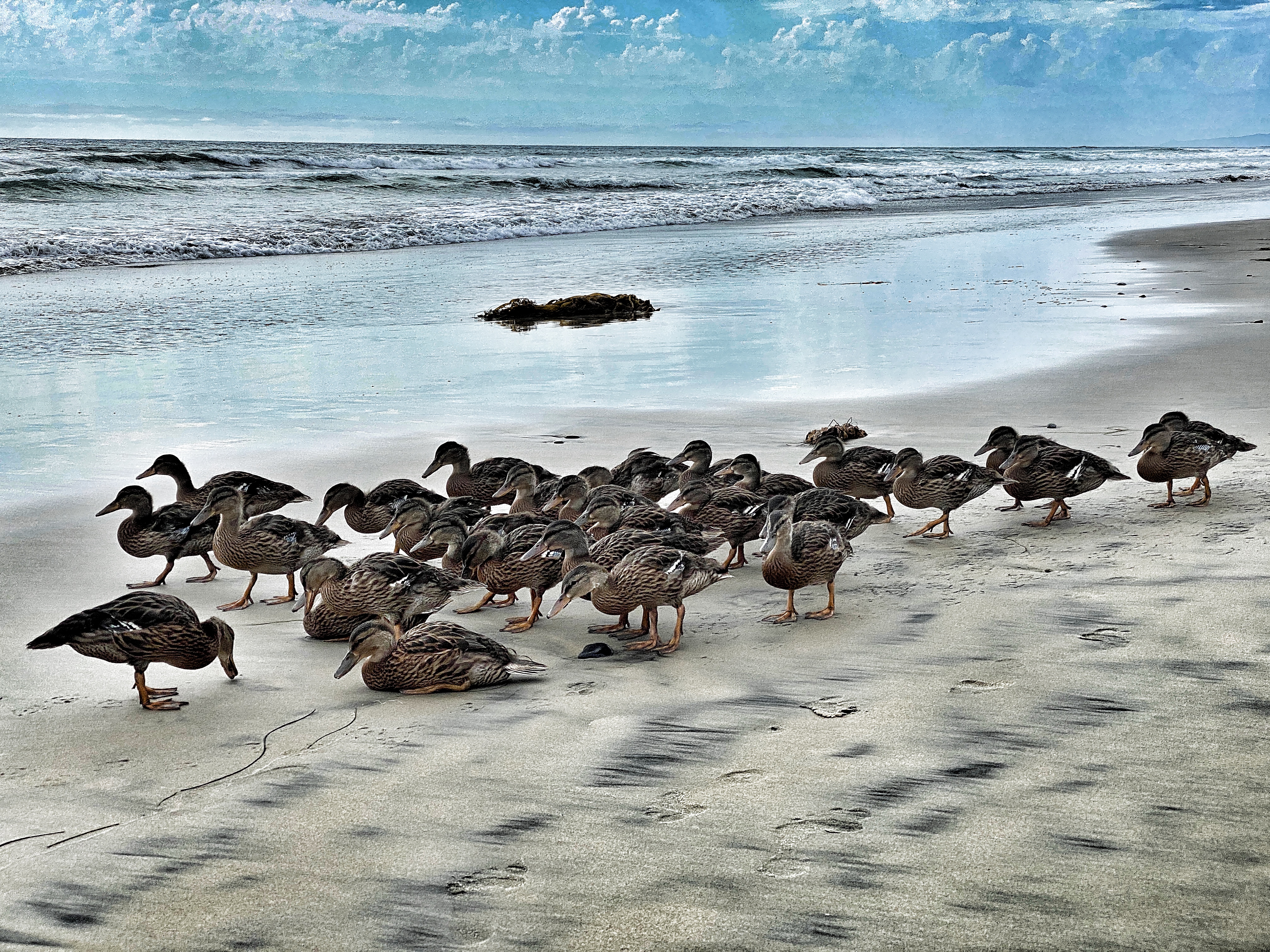
There were a lot of them. Gathered in a group, moving with purpose. Where did they come from and where are they going?
Seagulls are usual. They congregate, squawking and arguing over who gets the bag of cheetos stolen from the blanket. Shorebirds with their long thin beaks poke the wet sand in search of snacks. Whimbrels and godwits are shy, scattering as I creep near. I’m always on the lookout for egrets, tall and elegant with bright yellow feet. Sometimes they feed in pairs or triads, but mostly seem to lead a solitary life.
When the little girl approached the group, I expected them to take flight. Rise into the sky in unison. But they didn’t. As I got closer, I saw they were traveling together, one after the other like school kids heading from the classroom to somewhere. They were unperturbed when I came close with my camera from behind. And not concerned when I ran ahead and took my photos from the front of the line, in fact, the lead duck nearly walked right into me!
I’m still wondering about that sord of mallards (if they had taken flight they would have been called a flock). In all my walks on the beach over the years, this is my first sighting of mallards on a pilgrimage. Where did they come from? Where were they going?
With the school year coming to a close, I wanted to come up with an activity for students that felt like play–like a party–and still provide academic content to satisfy my ever-present need to make use of all available instructional minutes. (Yes, even in the last week of school)
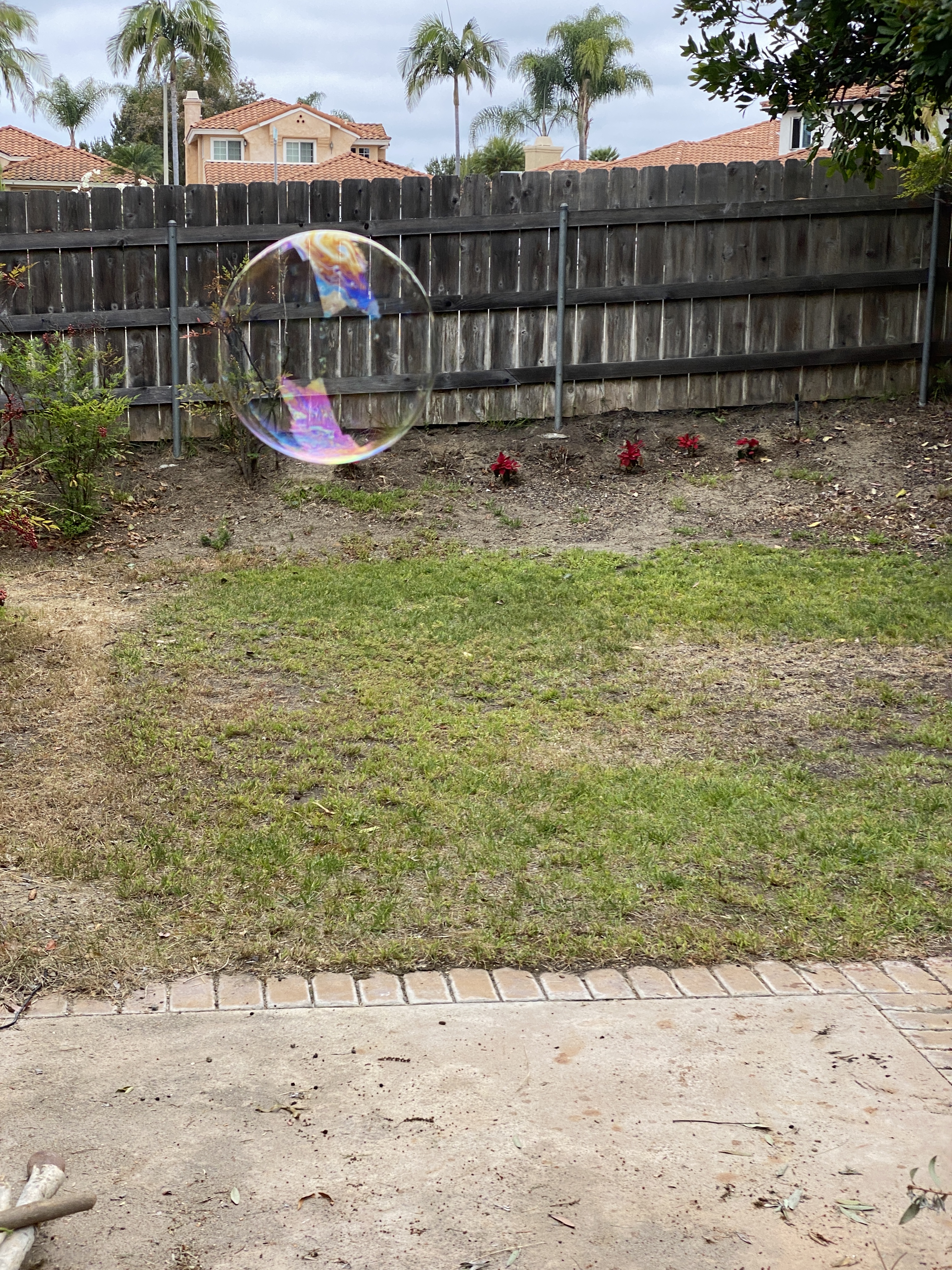
So, when I came across a blog post about making giant bubbles and bubble art, I knew I could turn this into a meaningful day of learning and fun…all wrapped up in a soapy bubble! I’m pretty fascinated by bubbles. I’ve spent quite a bit of time photographing giant bubbles at the beach and I’ve written about the “bubble man” a time or two (or more). I know that the trick to great bubbles is the solution–so prior to having my students explore and experiment, my husband and I tried our hand at bubbles over the weekend.
The basis of all bubbles is soap and water. But if you want the bubbles to be big and to have a bit of staying power, a bit of corn syrup and some glycerin need to be added to the mix. Using smoothie straws and yarn, I created a bubble wand that my students would be able to make on their own and started dipping and waving in my own attempt to create bubbles. This bubble thing is harder than it looks! I didn’t immediately get big beautiful bubbles flying from the wand. But with some patience, some tinkering, and some exploration of how to get a thin film filling with air onto my yarn…bubbles happened. At that point, with bubble solution pre-made, I was ready for a day of bubbles with third graders!
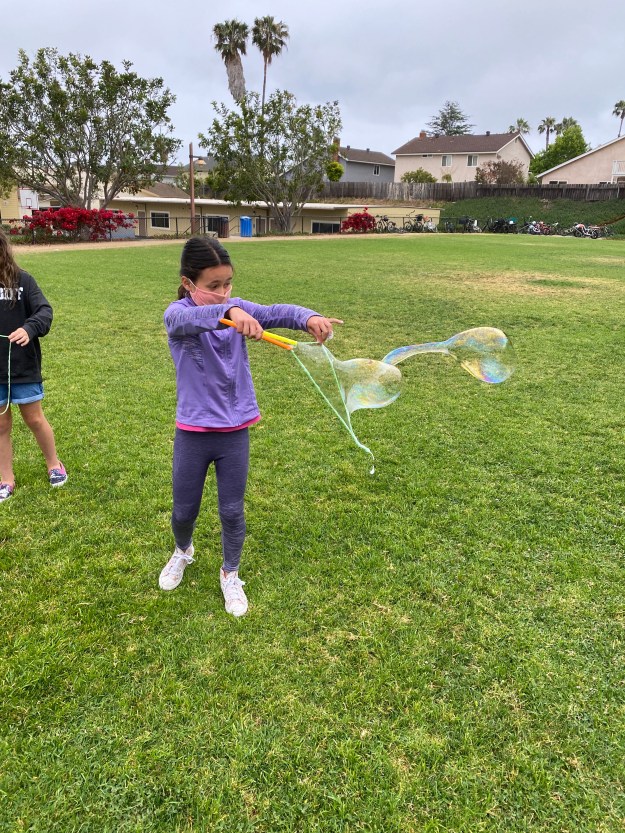
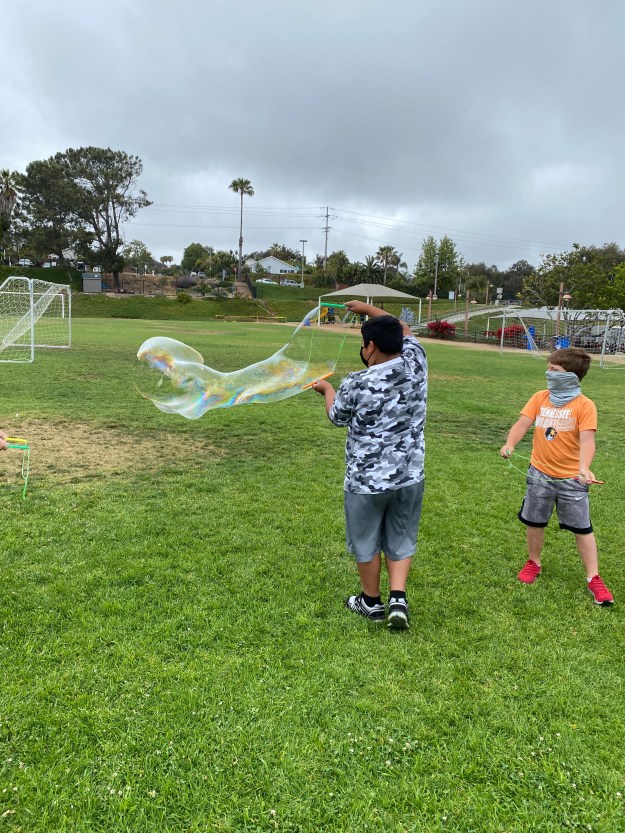
We started with a very interesting TED Talk titled, The Fascinating Science of Bubbles, from Soap to Champagne. We learned about surface tension, the geometry of bubbles and so much more. (If I were to do this in the future, I think I might devote an entire week rather than a whole day to bubbles!) Then we made our bubble wands and headed up to the field to make bubbles.
In spite of warning students that making these bubbles would take patience and experimentation, there was plenty of initial whining that “it’s not working!” I reminded them to keep trying. And then it happened…the first child experienced success! Like wildfire, bubbles emerged, filling the air with irridescent spheres.
The soap solution ran out before student interest waned, which is probably the best possible result! We headed back to the classroom with soapy hands, happy hearts and filled with visions and language about bubbles.
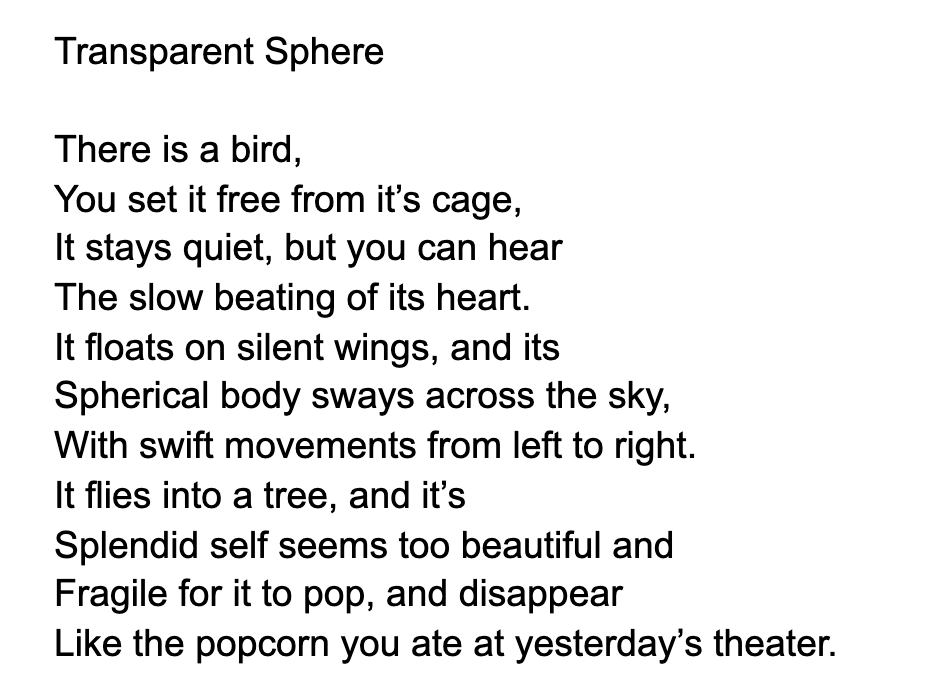
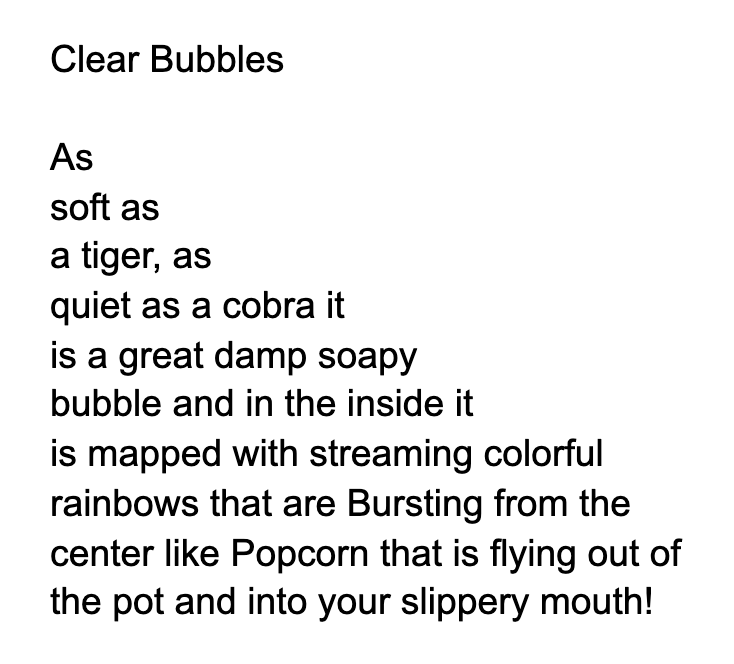
These young scientists are also prolific readers and writers, so after studying Valerie Worth’s short poem, Soap Bubbles, we created a list of bubble words and a list of potential bubble metaphors and then set the magic 7-minute writing timer and started writing. Like bubbles, colorful, delicate, evocative poems floated up, emerging from the points of students’ pencils.
Here’s a couple:
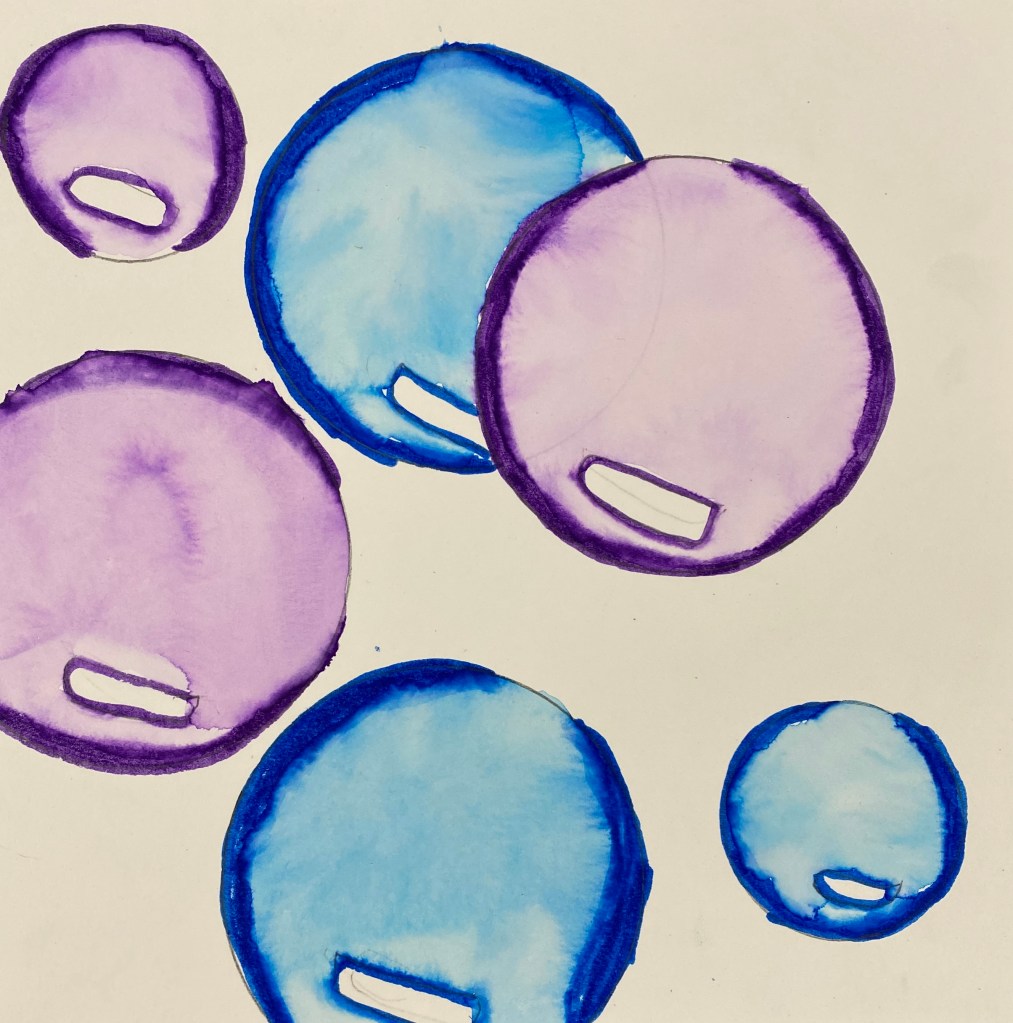
To complement the poetry and the elusive, temporary soap bubbles, we got out paper, pencils, water-based markers and some water and created bubbles…as art! Each artist created their own composition, tracing round shapes, adding a space where a light source reflected off each bubble. Then they added marker and finally, using just water and a paint brush, urged the marker to follow the water, creating beautiful dimensional bubbles on watercolor paper.
There is so much more we could have done with bubbles–including exploring the mathematics of spheres. Overall, it was an amazing day. Students could not believe that an entire school day had passed before they even realized it. Engagement was high, work quality was inspiring…it was an amazing last Monday of the school year! Based on this success, I know I will be working some bubble science into future teaching and learning!
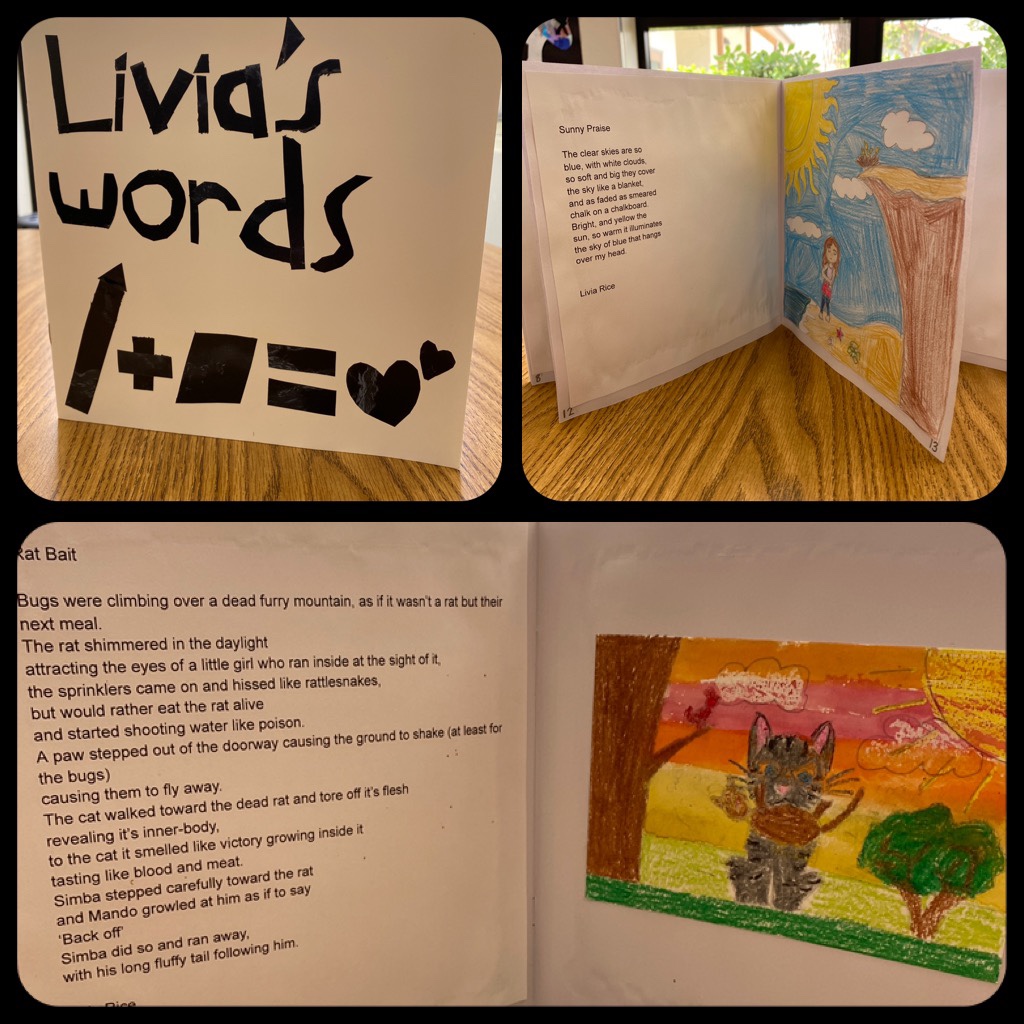
I wrote a poem a day during the month of April and challenged my students to do the same. And while not every student wrote every day, they did write a lot of poems. When you put that much effort into daily writing, it seems that something more needs to happen. I knew from past experience that drafting a poem each day is just the first step in moving my students toward seeing themselves as writers. So as the month of April wound down, my students and I started the process of curating a personal anthology of poems.
It’s not enough to simply select a poem and call it done. I had to move my students toward meaningful revision–and that meant giving them strategies and techniques to make their poems better. They re-read each poem they selected and considered how they might add a comparison (simile or metaphor), how they might personify an animal or object, how more specific details could help the reader “see” the ideas being expressed. So no matter how small the change was, each poem was revised. Because I had 16 page blank books for each student, we selected and revised ten poems and created five art pieces to go along with them.
As we worked through this intensive process, I kept asking myself, “Is it worth the time and energy–theirs and mine–to put this anthology together?” As I read poem after poem (25 students times 10 poems each), I started to see these young writers in a new way. They had gained confidence and knew what it meant to revise. I watched them own each poem, claiming their writing and making changes that satisfied each of them. I noticed some started poems from scratch. For them, the original poem was simply a pre-writing activity and a new idea emerged when faced with revision. For others, revision meant adding on to a poem, further developing the kernel of an idea that they had started earlier. Some revisions were the change of a single word–the poets were satisfied with their original effort and only went through the motions to satisfy the revision mandate.
And as we finished the last touches, gluing the final poems into place and typing up a table of contents I asked myself again…was this project worth it? There is no Open House celebration this year where families will come through and admire displays of student work products and ooh and aah the hard work done specifically for their benefit–something that has always made projects like this a necessity in the past. But still…my answer is yes, this intensive focus on poetry for more than a month has been totally worth it. Here are a few reasons why:
Students see themselves as writers. They confidently write daily and have developed both fluency and style. All those poetry techniques also make other kinds of writing better.
Revision has become ordinary. We do this routinely and resistance to going back to a piece of writing has dropped. Writers revise and we are writers.
All of our writing matters in our community of writers. Everyone will share their writing and everyone can pick out bits of excellence when they hear it in each other’s writing.
A project gives everyone a reason to persist. No one wants a half-finished book, so everyone pushed through, developing stamina as they worked through the revision of all ten poems.
250 student poems later and ten more of my own and we have created 26 individual anthologies of poetry. They are beautifully imperfect and incredibly perfect at the same time. And totally worth the time and effort.
Why commit to writing and posting for 61 days in a row? Trust me, I asked myself that question many times during the past two months. During March’s Slice of Life Challenge, once I began the challenge, it was the writing community that kept me accountable. There is something about hundreds of people writing and sharing and commenting that keeps the urgency up. And since so many are writing every day, reading their posts also creates topic possibilities and keeps the momentum moving.
Writing and posting a poem a day, especially without that dedicated writing community, is a bit more challenging. But I know me, without telling myself I will write AND POST a poem each day I simply would get lazy and not write each day. So why did I want to write a poem each day? Because I wanted my students to write a poem each day–and I know that if I am writing along with them, not only do I have more credibility, but I am also looking for ways to support them and their writing when those doldrums inevitably sneak in.
So after writing for 61 consecutive days (62 if you count today), here are some things I have learned and/or am thinking about:
Writing every day breeds more writing. When I am committed to daily writing, I write more and more often. I am in a constant search for topics, for inspiration, for meaning making.
I find myself coming up with strategies to keep myself writing. I take photographs, I pick up objects, I collect words, I listen to what others are saying. I’ve learned to put words on a page, even when i’m not sure where they are going.
I can post even when I don’t love my writing that day. This is especially true with poetry writing where I spend a of time judging myself. I tell my students that the most important part about writing is to get started, we can always make our writing better. So that commitment to write and post the poem each day means that I have to get all the way through a draft and get something that I deem post-able.
It’s okay to write short. Sometimes when I’m really stuck, I pull out a Haiku (17 syllables) or a 6-word story. Even if it’s short, I’m still writing (and posting).
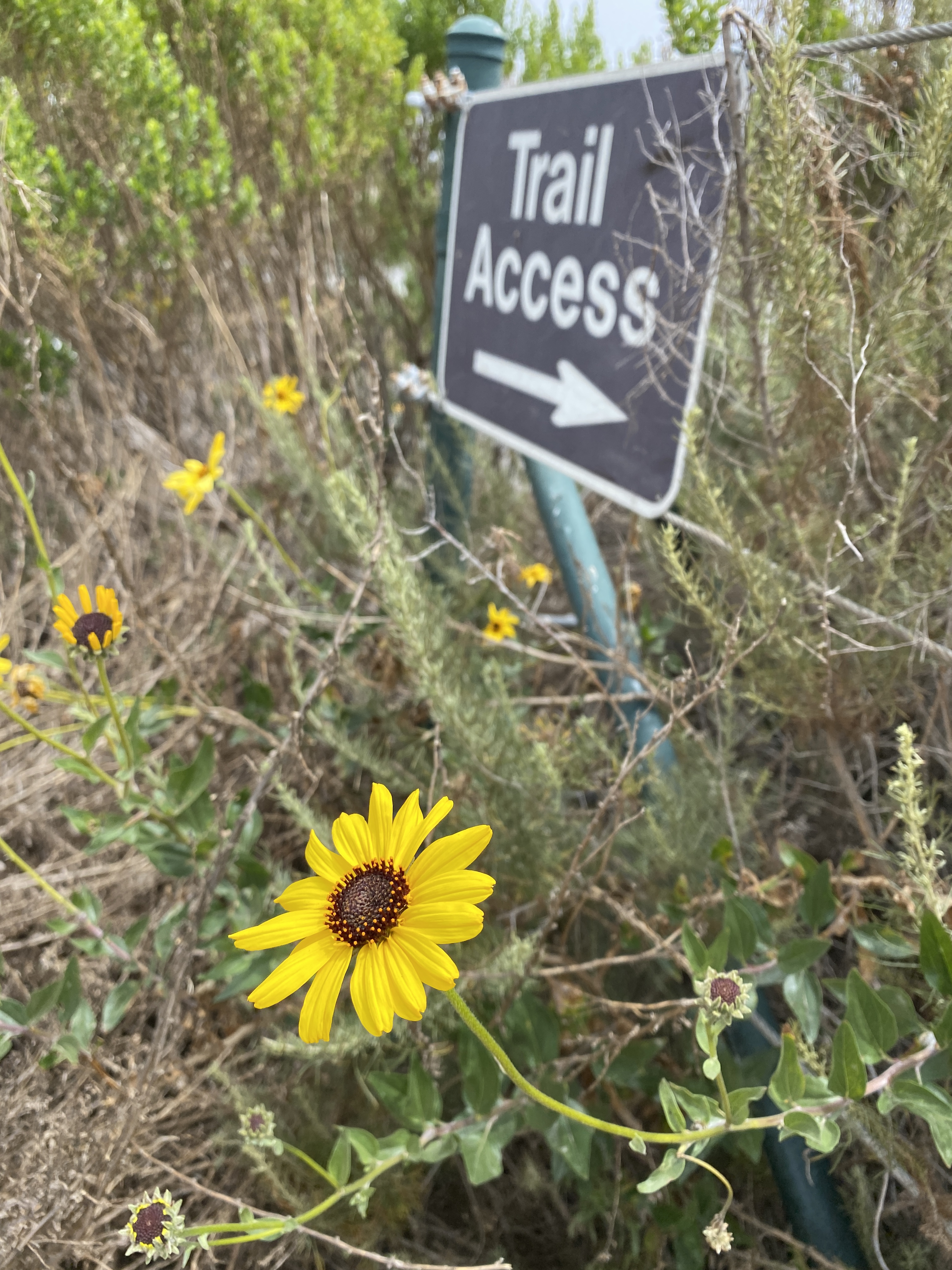
Revision is important. I keep looking for ways to help my students understand the possibilities for revision–like signs along the hiking trail–pointing to techniques to try, reminding them of things that other writers do, giving them access to the power of revision.
Writing more gets me reading more and my reading changes when I am writing. I find myself looking behind the stories and poems to examine how the writer is putting their words together. I look for more variety in my reading, searching for writers who are doing fresh and interesting things and who represent viewpoints different from my own. And I find myself sharing what I am learning from my reading with my students, pointing out sentences, ideas, and strategies that I notice as I read.
And as April turns to May, for the last several years I find myself facing the same dilemma, do I continue my daily writing and posting? Will I write daily if I don’t post? I don’t know the answers to those questions for this year. What I do know is that over the previous two years when I didn’t commit to the daily writing and posting, my writing decreased (I still always write with my students) and my posting became infrequent. I’d love to be the person who can commit to posting 2 posts a week, writing daily with that goal in mind. Maybe this is the year.




 Thinking Through My Lens